The verdict comes first. Budget $80,000 to $200,000 for a small cafe, $200,000 to $350,000 for a full service shop, and $25,000 to $75,000 for a cart or kiosk, and do not believe a plan that promises a sit down shop for less. The cost of starting a coffee shop breakdown is dominated by three lines, which are the lease and buildout, the equipment, and the working capital that carries the shop until regulars exist, and every plan that fails does so by underestimating one of those three. A second generation space, meaning a former cafe with plumbing and electrical already in place, can cut the buildout dramatically. A raw retail shell can double it.
Your format choice and your space choice matter more than your menu, because they set the budget before a single bean is bought.
The Three Budgets, Cart, Small Shop, and Raw Shell
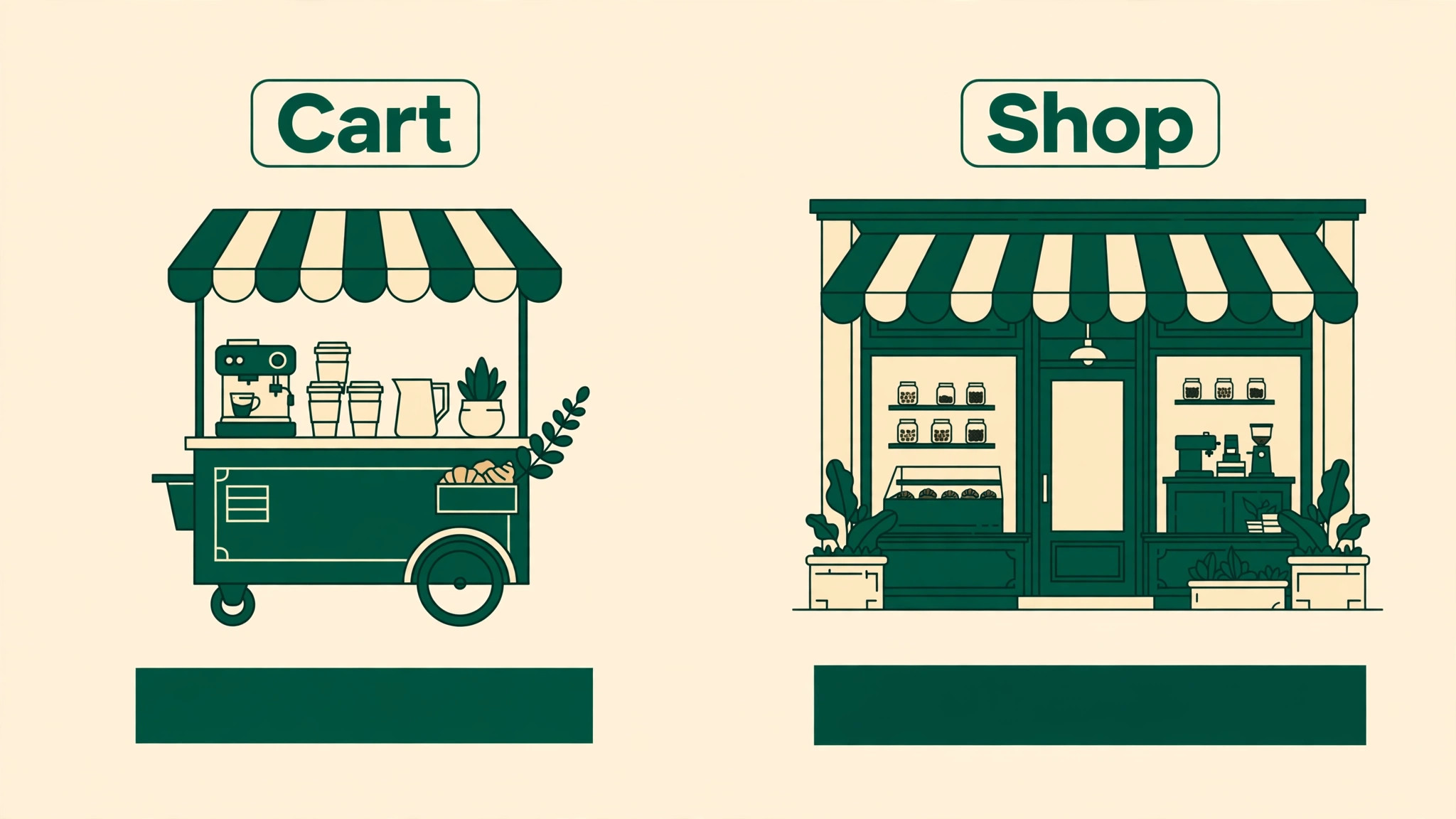
Published 2026 guides agree on the shape of coffee shop budgets even when their totals differ, and the comparison below uses one detailed three budget model that prices each path line by line. A coffee cart totals about $36,700, a small shop in a second generation space totals about $199,800, and a small shop in a raw shell totals about $421,500. The cart path has no buildout, $18,000 of equipment, $2,500 of permits, $2,000 of inventory, and $8,000 of working capital. The second generation shop has $45,000 of buildout, $52,000 of equipment, $18,000 of furniture, $6,500 of permits and legal, $14,000 of deposits and pre opening rent, and $42,000 of working capital for six months.
The raw shell has $165,000 of buildout, $78,000 of equipment, $35,000 of furniture, $11,000 of permits and legal, $26,000 of deposits and rent, and $70,000 of working capital. The lesson is not that raw shells are bad. It is that a raw shell is a construction project with a coffee shop attached, and it should be financed and managed as one.
Other guides converge on the same territory from different angles. One puts a small cafe at $80,000 to $200,000 and a full service shop at $200,000 to $350,000, with profit margins of 10 to 18 percent once established. Another puts total one time expenses at $70,600 to $281,000 and recurring monthly expenses at $9,050 to $19,400. A third puts the low to high range at $81,000 to $275,000 and above. The spread between guides is not disagreement. It is geography and format, since urban locations carry $40 to $80 per square foot annually against $15 to $30 in smaller towns, and a health permit can cost $1,200 in a major city against $300 in a rural county.
Use the guides to set your range, then replace every line with a local quote, because a national average is a starting point, not a budget.
The cost of starting a coffee shop breakdown by category
The cost of starting a coffee shop breakdown below uses the middle of the published ranges for a small sit down cafe, with the low and high ends showing how format and city move each line. Treat the table as a checklist as much as a budget, since a missing line is more dangerous than an expensive one.
| Cost category | Planning range | What moves it |
|---|---|---|
| Lease deposits and pre opening occupancy | $10,000 to $40,000 | Months of rent required, city, and landlord terms |
| Buildout and renovations | $30,000 to $150,000 | Second generation versus raw shell, plumbing and ventilation |
| Coffee and refrigeration equipment | $20,000 to $50,000 | Machine tier, grinder count, refrigeration size |
| Furniture, fixtures, smallwares | $5,000 to $25,000 | Seat count, material quality, custom millwork |
| Permits, insurance, professional fees | $2,000 to $10,000 | City fees, legal structure, insurance scope |
| Opening inventory | $3,000 to $8,000 | Menu breadth, bean quality, opening volume |
| Pre opening payroll and training | $5,000 to $20,000 | Team size, training length, opening hours |
| Branding and launch marketing | $2,000 to $8,000 | Signage scope, launch campaign size |
| Working capital reserve | $15,000 to $50,000 and above | Months of operating costs held, three to six advised |
| Total planning range | $92,000 to $361,000 | Format, city, and space condition combined |
Do not add the maximum of every line and call it the budget, because no real shop sits at the maximum of all lines at once. A second generation cafe spends little on construction but more on equipment replacement, while a raw space reverses that pattern. Build three totals instead, meaning a lean total using low ends where your situation justifies them, a realistic total using middles, and a contingency total adding 10 percent to the realistic figure. Lenders and landlords take the realistic total seriously, and the contingency total is what keeps a delayed opening from becoming a failed opening.
If financing through an SBA 7(a) loan, expect to put down 10 to 20 percent and to personally guarantee the rest, with rates recently running roughly 10 to 13 percent, and note that financing $50,000 of equipment over 48 months at about 12 percent costs roughly $1,317 a month, which is a real monthly line to carry after opening.
Lease, deposits, and the buildout trap
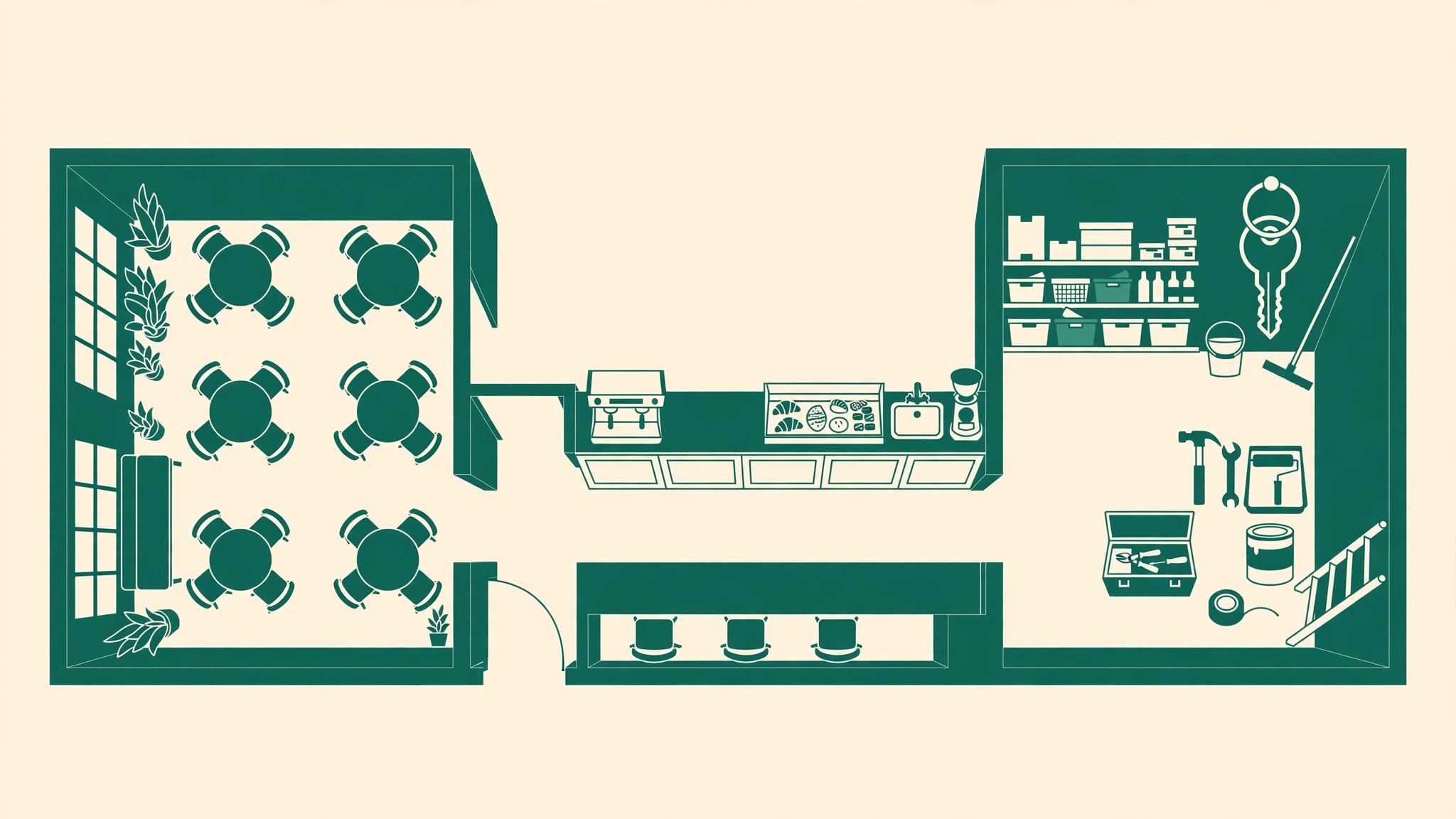
The lease is the largest single commitment and the one with the most negotiable terms, which makes it the highest return negotiation in the whole project. Before opening, a shop typically pays first and last month’s rent, a security deposit of one to three months, and buildout costs if the space needs work, with published deposit and pre opening occupancy at $10,000 to $40,000 and above. Monthly rent itself varies enormously by city, with published figures of $8,000 to $12,000 in New York City, $5,000 to $10,000 in Los Angeles, $3,000 to $6,000 in Austin, and $2,000 to $4,000 in smaller Midwest towns, and with broader guides putting monthly rent at $2,000 to $12,000 generally.
Buildout runs $150 to $300 per square foot depending on design and renovation needs, and a former cafe needing only cosmetic upgrades might cost $15,000 to $30,000, while converting a raw retail unit can cost $80,000 to $150,000 for construction, commercial plumbing, ventilation, and a custom service counter. Always negotiate a tenant improvement allowance, since many landlords will contribute toward buildout in exchange for a longer lease commitment, and that single clause can save tens of thousands of dollars. Also negotiate a rent free buildout period, because paying full rent while contractors work is paying for a shop that cannot yet sell coffee.
Equipment, the Line That Tempts Overspending
Equipment is typically the largest single category in a coffee shop startup budget, and it is where enthusiasm most reliably outruns sense. The core list is short. An espresso machine, one or two grinders, a batch brewer, refrigeration, a point of sale system, and smallwares such as pitchers, tampers, and cups. Published item ranges put espresso machines at $5,000 to $30,000, grinders at $500 to $5,000, blenders and brewing appliances at $500 to $5,000, furniture and decor at $5,000 to $20,000, and point of sale systems at $1,000 to $3,000. A fuller equipment package with refrigeration runs $20,000 to $50,000 in one guide and $10,000 to $50,000 in another, with the difference explained by machine tier and refrigeration scope.
Refrigeration alone deserves $3,000 to $8,000, covering an under counter milk fridge, a reach in commercial refrigerator, and possibly a chest freezer, with more if food service requires additional cold storage.
La Marzocco, Synesso, and the espresso machine decision
The espresso machine decision is the most discussed and most overweighted choice in the whole project, so give it a firm framework. Entry level commercial machines start around $5,000. Premium two group machines from brands such as La Marzocco or Synesso cost $15,000 to $22,000. Semi automatic machines, which require a trained barista, run $2,000 to $5,000, while super automatic machines, which do more of the work, start at $5,000 and reach about $20,000. Add a commercial grinder at $1,500 to $4,000, a batch brewer at $500 to $2,000, and any cold brew or pour over equipment the menu requires.
The right machine is the one your baristas can run consistently at peak, not the one with the most impressive specification sheet. A $20,000 machine operated by an untrained team produces worse coffee than a $7,000 machine operated by a trained one, and the training budget is therefore part of the equipment budget. Buy two grinders, because a single grinder failure during morning peak stops the shop, and the second grinder is the cheapest insurance in the building. Consider refurbished machines from reputable dealers for the first shop, since a well maintained used machine delivers most of the quality at a large discount, provided warranty and service support are confirmed in writing.
Furniture, point of sale, and the rest of the fit out
Furniture and fixtures run $5,000 to $25,000, and the range reflects seat count and material choice more than taste. Durable, easily cleaned furniture beats beautiful fragile furniture in a coffee shop, because the furniture is used hard, spilled on daily, and moved for cleaning nightly. Point of sale hardware costs $1,200 to $4,000 with additional monthly software fees, and the system should track sales and inventory, not just take payments, since inventory tracking is what prevents the quiet margin leak of over ordering perishables.
Signage runs $1,000 to $8,000 in one guide and $10,000 to $20,000 in another that includes menu boards and full branding, and the difference is scope, so price signage as a package with branding rather than as an afterthought. Smallwares, cups, lids, and cleaning supplies belong in the opening inventory line, and they are worth pricing generously, because running out of cups on a busy Saturday is a failure of planning, not of demand.
The Permit Checklist Before You Sign a Lease
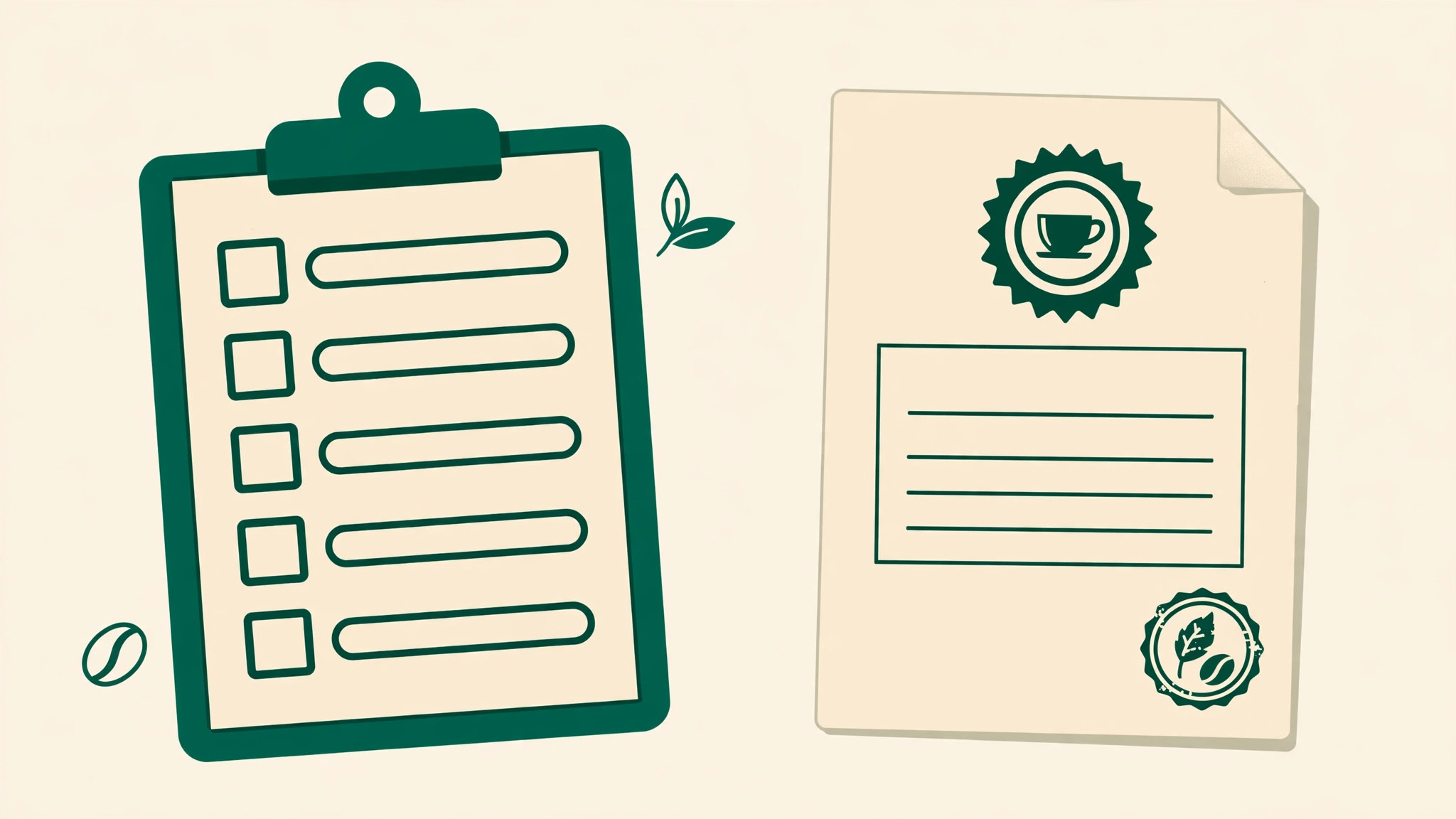
Permits and licences are the cheapest lines in the budget and the most capable of stopping an opening, which is why they deserve a checklist rather than a guess. Published ranges put permits and licences at $500 to $5,000 in one guide, $1,000 to $5,000 in another, and $3,000 to $10,000 in a third that includes professional fees, with city variation explaining most of the spread. The checklist below is the overview proof for this guide. Work through it with your city and county offices before signing a lease, because some permits take months, and a signed lease with no permit path is a monthly rent bill for a shop that cannot open.
- Business registration and entity formation, with fees typically $100 to $500
- General business licence from the city or county
- Health department permit and food handler certifications for all staff handling food
- Food service establishment permit, where the city requires one separately from the health permit
- Building and occupancy permits for any construction, plumbing, or electrical work
- Signage permit for exterior signs, which some cities restrict by size and illumination
- Fire department inspection and clearance, especially where seating and kitchen equipment combine
- Sales tax registration and employer identification numbers for tax and payroll
- Music licensing if recorded music plays in the shop, a line owners frequently overlook
- Grease trap, water, and waste requirements where the city mandates them for food premises
Start the health permit process early, because health departments inspect premises, equipment, and procedures, and a failed inspection can add weeks. Keep a file of every permit, its renewal date, and its fee, because renewals arrive quietly and lapses close shops. The cost of starting a coffee shop breakdown that omits permits is not a small error. It is a plan that assumes the shop can open on a date it legally cannot, and that assumption costs rent for every month of delay.
Monthly Operating Costs After Opening Day
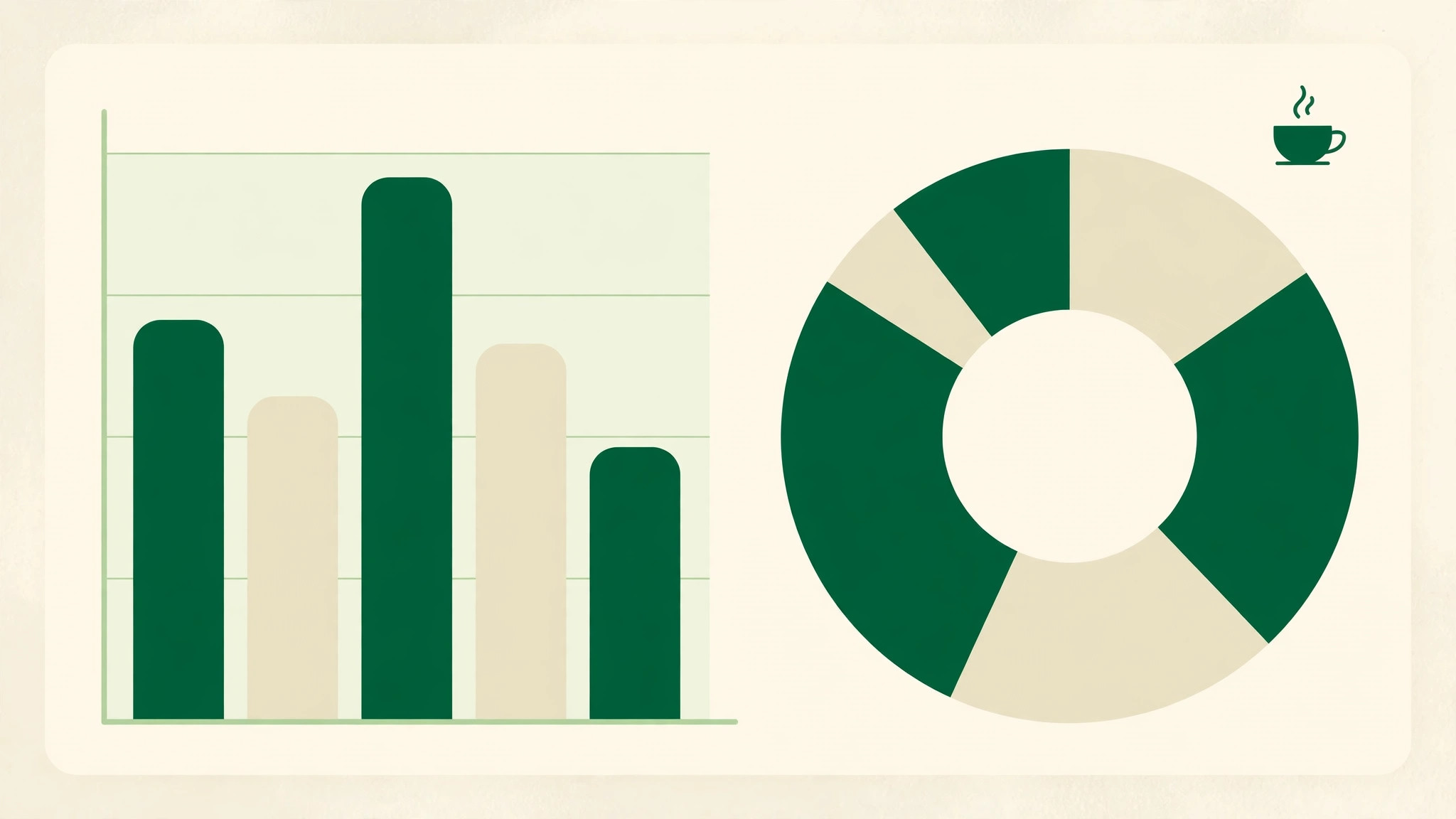
Opening costs get the attention, but monthly operating costs decide whether the shop survives, and published guides put recurring monthly expenses at $9,050 to $19,400 for a small shop. Rent runs $2,000 to $4,500 in one guide’s recurring table, utilities $1,000 to $1,200, food supplies $1,500 to $4,500, payroll $4,000 to $8,000, marketing $500 to $1,000, and software subscriptions $50 to $200. Other guides put rent at $2,000 to $12,000 and payroll at $10,000 to $25,000 for larger shops with bigger teams, and the difference is team size and city. Staffing is the swing line.
A shop with an owner operator and two part time baristas runs a fraction of the payroll of a shop with a manager and five full time staff, and the staffing model should follow the hours that actually generate revenue. Morning peak needs full cover. Mid afternoon does not, and a rota built around peaks rather than uniform cover is worth thousands a month.
Inventory discipline is the second monthly skill. Coffee beans, milk, cups, syrups, and pastries are perishable or bulky, and over ordering wastes cash while under ordering loses sales. Track usage per drink, set par levels, and review them weekly in the first quarter. A shop selling 200 drinks a day at an average ingredient cost that drifts $0.20 high loses $1,200 a month to drift alone, which is more than the marketing budget in many small shops. Price the menu with that discipline in mind. Urban shops charge $5 to $7 for a specialty latte, rural shops $4 to $5, and the price must cover ingredient cost, labour, rent share, and waste, not just the beans.
A menu priced on bean cost alone is a menu that loses money politely, one drink at a time.
Location Math, Foot Traffic Versus Rent
Rent is the only startup line that repeats every month for years, so the location decision deserves arithmetic rather than instinct. A high foot traffic corner in a business district might cost $8,000 to $15,000 a month but generate 300 to 500 transactions daily, while a lower traffic suburban location at $2,500 to $5,000 a month might produce only 100 to 200 daily transactions. The comparison that matters is rent per transaction, not rent alone. At $10,000 a month and 400 daily transactions, rent costs about $0.83 per transaction across a 30 day month. At $3,500 a month and 120 daily transactions, rent costs about $0.97 per transaction.
The dearer location is actually cheaper per sale in that example, and it also brings higher average spend, because business district customers buy larger drinks and add pastries more often. Run that calculation for every space you consider, using honest transaction estimates from counting foot traffic at the same hours you plan to trade, not from the landlord’s brochure.
Competition changes the math further. Entering a market with established specialty shops requires higher investment in equipment, design, and marketing to differentiate, and a new shop beside two strong competitors needs a clearer reason to exist than good coffee, since good coffee is the entry ticket rather than the advantage. Saturation also affects the cost of starting a coffee shop breakdown in a subtler way, because landlords in saturated streets know their spaces are contested and negotiate harder, while landlords in underserved streets may offer improvement allowances and rent free periods to attract a tenant who anchors the parade.
Visit the street at 7am, at noon, and at 4pm on a weekday and a Saturday before making an offer, and count the people who actually pass the door rather than the people on the main road a block away. A shop on a side street with a loyal morning queue beats a shop on a main road where everyone walks past without stopping, and the rent difference between those two positions is often the profit margin itself.
Mistakes That Inflate the Startup Bill
Several mistakes inflate coffee shop startup bills predictably, and all of them are avoidable with a slower first month of planning. The first is overbuilding the menu. Every additional drink family needs ingredients, equipment time, training, and storage, and a menu of forty drinks in a new shop guarantees slow service and high waste. Start with a tight menu done well, meaning espresso drinks, batch brew, cold brew, and a small food range, and add complexity only when regulars ask for it repeatedly. The second mistake is buying premium everything before knowing what sells. A premium grinder and a premium machine are justified investments.
Premium cups, premium furniture, and premium decor across the whole shop are not, until revenue proves the shop can carry them. Spend on the things customers taste and the things baristas touch every minute, and economise on the things customers glance at once.
The third mistake is underestimating the cost of time. A buildout quoted at eight weeks that takes fourteen costs six extra weeks of rent, loan payments, and wages for a team hired too early, and that overrun alone can exceed $20,000 on a mid sized shop. Hire the team two weeks before opening, not two months, and build a contingency of four extra weeks into the opening plan. The fourth mistake is opening without a marketing runway. A shop that opens quietly and hopes for discovery spends its first three months paying full costs on partial revenue, while a shop that runs a pre opening campaign, meaning tastings, local partnerships, and a founding member offer, opens with a queue.
Launch marketing at $2,000 to $8,000 is not an optional extra. It is the cheapest revenue the shop will ever buy, because opening week attention is free in a way month four attention is not. The cost of starting a coffee shop breakdown that treats marketing as an afterthought is a budget that funds the shop but starves its first customers.
Financing the Shop Without Starving It
How a coffee shop is financed changes its monthly survival odds as surely as its rent does, because debt payments join the monthly operating costs from day one. The common routes are personal savings, an SBA 7(a) loan, equipment financing, and landlord contributions, and most real shops combine two or three of them. Personal savings are the simplest and the most dangerous, because they feel free and are not. Savings spent on buildout are savings unavailable for the slow first quarter, and a shop funded entirely from savings with no reserve is a shop that cannot survive a delayed opening or a bad first month.
Keep the reserve separate from the buildout budget in the bank account, not just in the spreadsheet, because money that sits in the same account as construction payments gets spent on construction.
An SBA 7(a) loan brings discipline and a burden together. Expect 10 to 20 percent down, a personal guarantee, and rates recently running roughly 10 to 13 percent, with a lender who will scrutinise the business plan, the lease, and the operator’s experience. That scrutiny is useful, because a lender who refuses a loan is often telling you something your enthusiasm will not. Equipment financing is narrower and often smarter for the machine package, since the equipment itself secures the loan, preserving working capital for operations.
Many new operators use financing even when they have cash available, precisely because preserving operating capital improves survival odds, and financing premium equipment rather than compromising on the machine that makes every drink is a defensible trade. Landlord contributions, meaning tenant improvement allowances and rent free periods, are the cheapest financing available, because they cost no interest and no guarantee, only a longer lease commitment, and they should be negotiated before any other financing is finalised, since a landlord allowance reduces the loan amount rather than just the cash needed.
The financing test to apply before signing anything is the monthly one. Add the loan payment, the equipment payment, rent, payroll, and inventory to a single monthly total, then ask what daily transaction count at your real average ticket covers it. If the answer requires a transaction count the location has never plausibly delivered, the financing is too heavy for the shop, whatever the total startup figure says. A shop financed to need 400 transactions a day in a location that delivers 150 is not a coffee business. It is a debt repayment plan with a coffee machine attached, and it will fail on arithmetic long before it fails on quality.
Borrow for the shop the location can support, hold six months of operating reserve outside the loan, and let the first year of trade, not the opening budget, decide whether a second location or an expansion is justified.
More Reading on Stratilyze
Coffee shop startup costs sit beside the other food and mobile food budgets owners compare, so readers weighing a shop usually check the neighbouring food business guides next. The guide to the cost of starting a mobile coffee cart business shows the same trade at a fraction of the shop fit-out cost, the guide to the cost of starting a home bakery business covers the food-from-home version of the same decision, and the guide to using AI for coffee shop menu design explains the menu work that shapes the revenue side of the budget.
Frequently Asked Questions
How much does it cost to start a coffee shop?
A coffee cart or kiosk costs $25,000 to $75,000, a small cafe $80,000 to $200,000, and a full service shop $200,000 to $350,000. The cost of starting a coffee shop breakdown depends most on format, city, and whether the space is a second generation cafe or a raw shell, with raw shells adding $80,000 to $150,000 of buildout alone.
What is the most expensive part of opening a coffee shop?
Buildout and lease costs are usually the largest, running $30,000 to $150,000 for construction plus $10,000 to $40,000 of deposits and pre opening occupancy. Equipment is the second largest at $20,000 to $50,000. A raw retail space reverses the usual pattern, with construction exceeding equipment by a wide margin.
How much working capital does a coffee shop need?
Hold three to six months of operating costs, which published guides put at $15,000 to $50,000 and above for a small shop, with detailed models using $42,000 for a second generation shop and $70,000 for a raw shell. Working capital covers the gap between opening and regular trade, and shops that open without it commonly fail in the first two quarters despite good coffee.
What permits do I need to open a coffee shop?
You need business registration, a general business licence, a health department permit, food handler certifications, building and occupancy permits for any construction, a signage permit, fire clearance, sales tax registration, and possibly music licensing and grease trap compliance. Fees run $500 to $10,000 depending on city, and the health permit process should start before the lease is signed.
Is a coffee cart cheaper than a coffee shop?
Yes, substantially. A cart or trailer costs $25,000 to $75,000 all in, against $80,000 to $350,000 for a shop, with lower rent, lower payroll, and no buildout. The trade is capacity and weather dependence, since a cart cannot seat customers, cannot sell the same menu breadth, and loses trading days to bad weather.
Can I finance a coffee shop startup?
Yes, commonly through an SBA 7(a) loan with 10 to 20 percent down and a personal guarantee, at rates recently running roughly 10 to 13 percent, or through equipment financing that preserves working capital. Financing $50,000 of equipment over 48 months at about 12 percent costs roughly $1,317 a month, so include the loan payment in the monthly operating budget before signing.
The Verdict on Coffee Shop Startup Costs
The cost of starting a coffee shop breakdown rewards one discipline above all, which is matching the format to the capital. A cart proves a concept for under $75,000. A second generation cafe opens a real shop for $80,000 to $200,000. A raw shell is a construction project that happens to sell coffee, and it should only be attempted with the capital and the patience that construction demands. Choose the space before the menu, negotiate the lease before the machine, hold six months of operating reserve, and let the first shop be the one you can afford to run well, not the one you wish you could afford. That discipline is what turns a startup budget into a lasting business.