
Charge for the call only when the call itself delivers something useful, and keep it free only when a short fit check is all you need. That is the verdict in one line, and it answers how to price a discovery call small business owners ask about most often. A free 15 minute fit check and a paid 45 minute working session are not two prices for the same thing. They are two different products, and pricing them as if they were the same is where most small firms go wrong.
The rest of this guide shows you how to cost your time, choose between free and paid, set tiered lengths, protect the slot with a clear no-show rule, and turn a good call into a paid next step without turning the call into a hard sell.
What a Discovery Call Is Really Selling
A discovery call sells clarity, not time on a calendar. The buyer wants to know whether you understand the problem, whether you can help, and what working together would look like. If the call only answers those three questions, it is a sales conversation, and charging for it will feel like charging for a pitch. If the call also leaves the buyer with a diagnosis, a prioritised next step, or a short written plan they can use even if they never hire you, it is a service in its own right. That distinction should drive the price, not your hourly rate alone.
Many owners blur the two formats and then wonder why paid calls feel awkward. The fix, when you are working out how to price a discovery call small business buyers will trust, is to name the deliverable before you name the price. A fit check delivers a yes or no decision on working together. A paid session delivers a named outcome, for example a homepage audit with three fixes, a pricing review with a revised rate card, or a hiring plan for the next quarter. Write that outcome on the booking page in plain words. If you cannot name it in one sentence, the call is not ready to carry a price.
The booking page should also state what the call is not. It is not a full project, not unlimited follow-up, and not a guarantee of a particular result. Clear limits protect you and make the price feel fair. Buyers accept a fee far more readily when they can see the boundary around it.
What an Hour of Your Time Really Costs
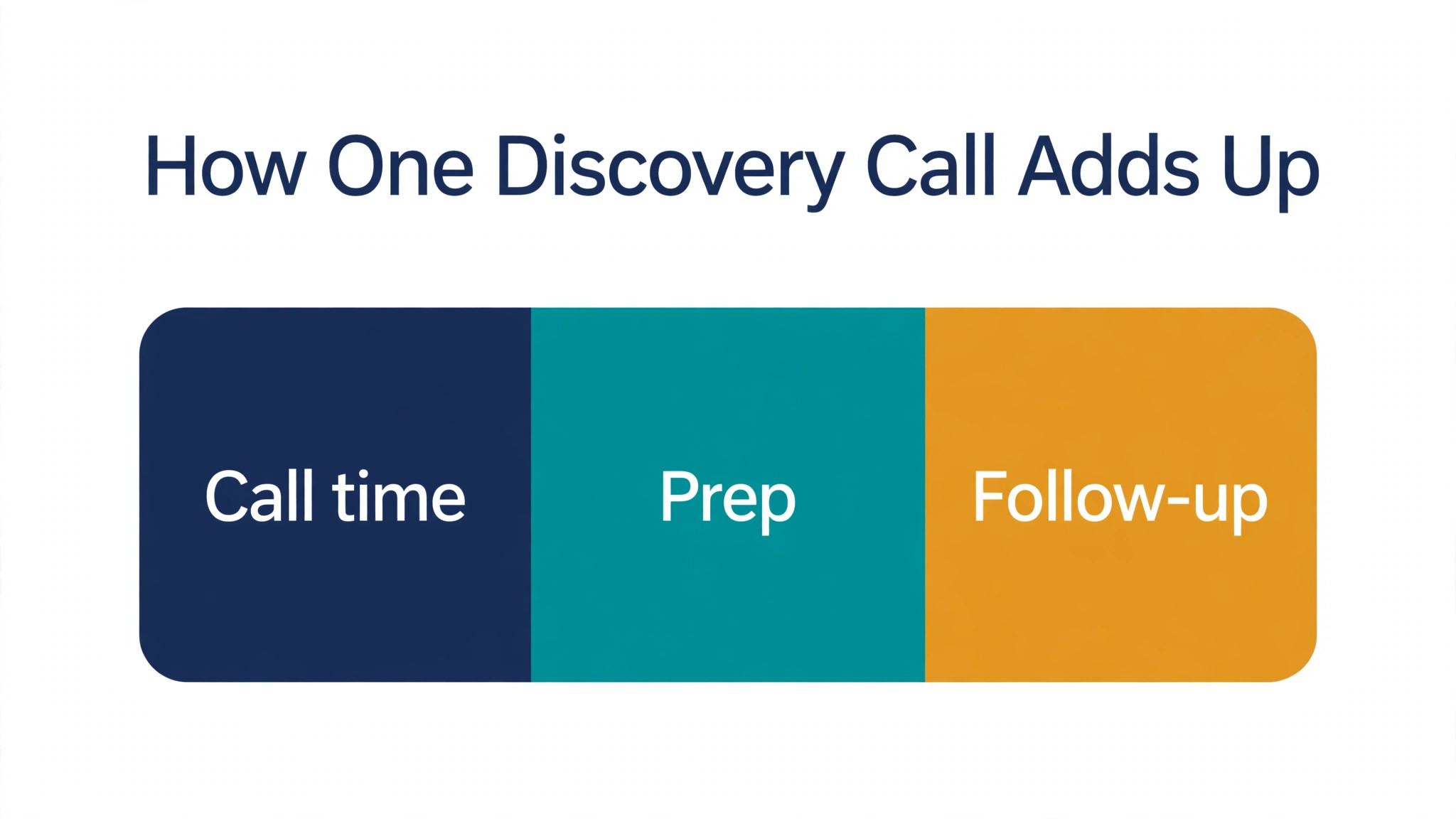
Before you pick a number, work out the cost of the hour you are selling. Most owners count only the minutes on the call. The real cost includes preparation, notes, follow-up, booking administration, and the work you could not do while you were on the call. A 30 minute call that needs 15 minutes of preparation and 15 minutes of follow-up is an hour of labour, even though the buyer only sees half of it.
Start with your target monthly income from the business, add the monthly costs of running it, and divide by the hours you can actually sell in a month. Do not divide by 40 hours a week. Admin, marketing, delivery, and holidays eat a large share of that time. Many solo owners find they have only 15 to 20 sellable hours a week once delivery and admin are counted. Using a realistic sellable-hours figure is what keeps a discovery call price from quietly subsidising everything else.
| Cost input | How to work it out | Why it matters for the call price |
|---|---|---|
| Your target monthly pay | The amount you need to take home after tax planning | Sets the floor, not the final price |
| Monthly business costs | Software, insurance, phone, accounting, marketing | These are paid from sellable hours only |
| Sellable hours per month | Hours left after delivery, admin and holidays | A small denominator raises the true hourly cost |
| Time per call, fully loaded | Call time plus prep, notes and follow-up | A 30 minute call often costs a full hour |
| No-show and reschedule rate | Counted from your last 20 bookings | Unpaid slots must be covered by paid ones |
Run the numbers once for how to price a discovery call small business owners can defend, then keep them in a simple sheet you revisit each quarter. Prices set from a guess drift downward under pressure from buyers. Prices set from a cost sheet hold, because you can explain them to yourself first. If the cost math says a paid session must be at least a certain amount to break even, do not price below that line to win a single booking. A cheaper call that loses money on every booking is not a marketing tactic. It is a leak.
Value still matters on top of cost. A call that helps a buyer avoid a costly hiring mistake or a wrong software purchase is worth more than the hour it took. Cost gives you the floor. The value of the outcome, and what comparable advisers charge for a similar session, gives you the ceiling. Price between the two, and test the result for a month before you change it again.
Free or Paid, Decided by the Job the Call Does
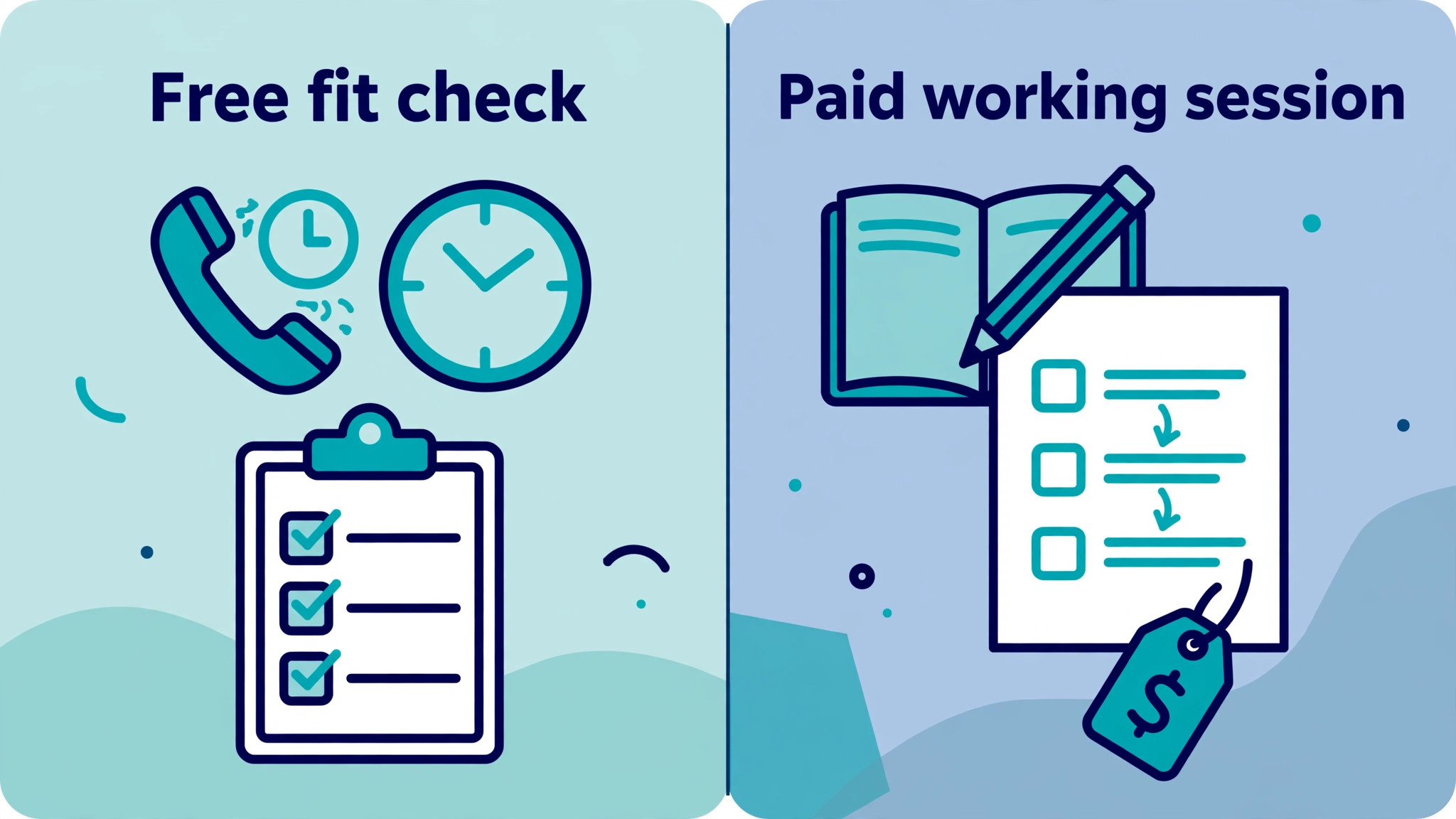
The free versus paid decision is easier once you separate fit checks from working sessions. Free works when demand is high, the service is easy to explain, and a short conversation is enough to decide fit. Paid works when demand for your time exceeds supply, when the buyer needs real advice on the call, or when no-shows are eating your week. Neither choice is morally better. Each fits a different stage of a business.
| Situation | Best choice | Reason |
|---|---|---|
| New business, few leads, simple service | Free 15 minute fit check | Low friction matters more than filtering |
| Full calendar, frequent no-shows | Paid session with a named deliverable | Payment filters for intent and covers lost slots |
| Complex service, buyer needs a diagnosis first | Paid working session, credited toward the project | The buyer pays for advice, not for a pitch |
| High ticket project with a long sales cycle | Free fit check, then a paid deep dive | Two stages keep trust high and time protected |
| Low ticket service, quick decision | Free short call or no call at all | A paid call can cost more than the sale is worth |
If you are unsure about how to price a discovery call small business buyers will accept, run a split test in the simplest honest way. Offer free fit checks for two weeks and paid sessions for the next two weeks, keeping the booking page and the audience the same, and compare show rates, close rates, and total revenue per hour of call time. Do not judge paid calls on bookings alone. A paid calendar with fewer bookings but a far higher show rate and close rate can earn more per hour than a free calendar that is always full and rarely converts.
One warning applies to paid calls in particular. Never charge for a call and then run a free-call script. Buyers who pay expect a working session, notes, and a next step they can use. If the paid call ends with only a sales pitch, refunds and bad reviews follow, and the model collapses. The deliverable is the product. The pitch is an optional extra at the end.
For owners who send proposals after calls, a short guide to proposal tools can help turn call notes into a priced offer without rebuilding the document each time. See the Stratilyze guide to the Best Proposal Software for Marketing Agencies for options that fit small teams.
Call Length Tiers That Fit Different Services
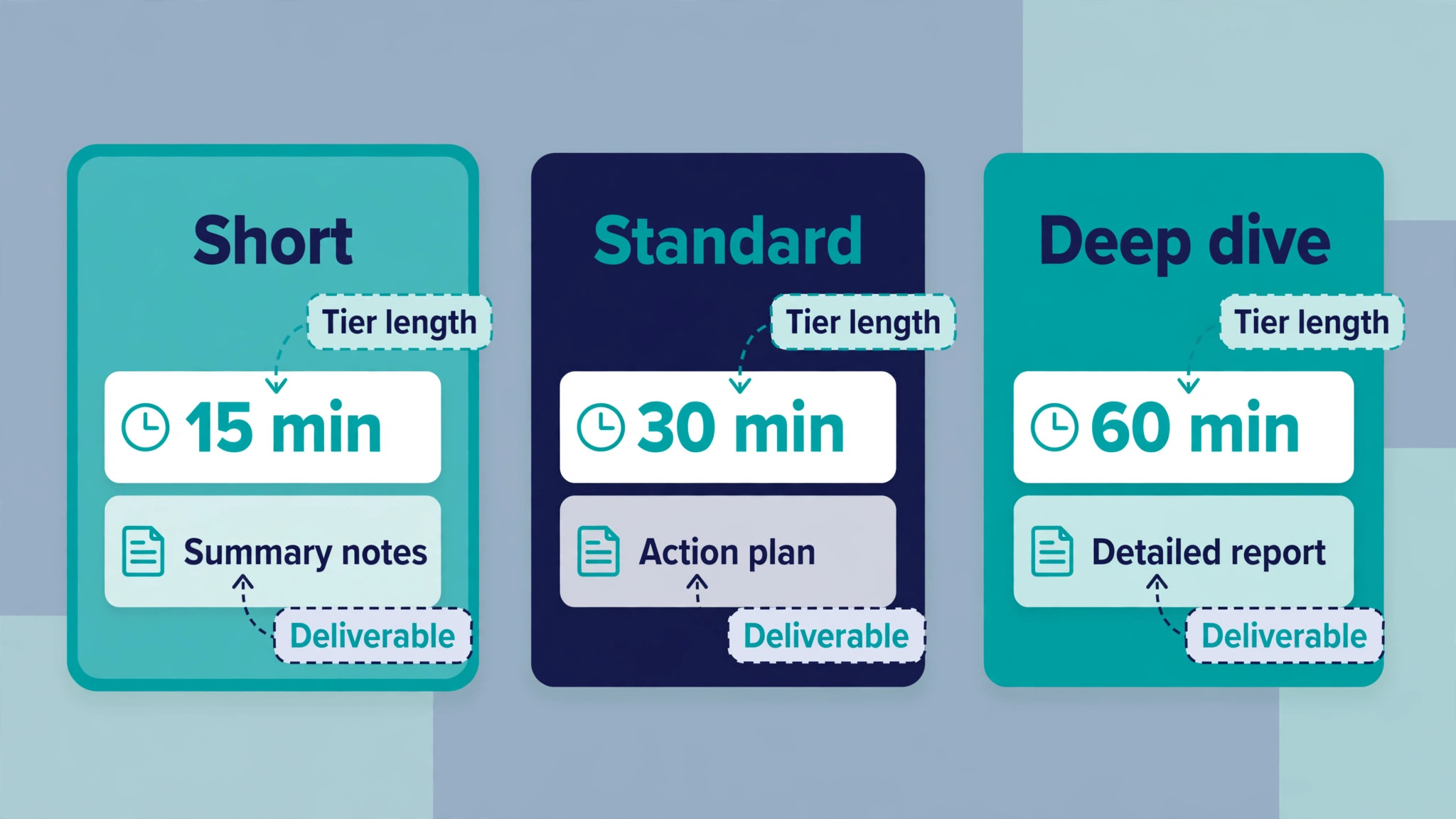
Length is a pricing tool, not just a calendar setting. Short calls force a tight agenda. Long calls invite wandering. Tier the length to the decision the buyer must make, and price each tier for the work it contains, not just the minutes on the clock.
| Tier | Best for | What it includes | Pricing note |
|---|---|---|---|
| 15 minutes, free | Fit check, simple services, referral leads | Three questions, a yes or no on fit, one next step | Keep it strictly to fit. No free advice dump |
| 30 minutes, low fee or free | Standard services with a short diagnosis | Problem review, one priority, a written summary | A good middle tier for established firms |
| 45 minutes, paid | Complex services, audits, planning | Diagnosis, options, a short action plan | This is the most common paid tier in coaching and consulting guides, often reported in the range of about 97 to 297 dollars. Check current market rates for your niche before you copy that range |
| 60 minutes, paid | Multi-person decisions, technical reviews | Full review, options with trade-offs, a decision draft | Price it as a working session, not as an hour of chat |
The 45 minute tier deserves a note of caution. Published ranges for paid strategy sessions vary widely by industry, and the range quoted above comes from coaching and consulting articles, not from a regulated price list. Use it as a starting point for research, then adjust for your niche, your costs, and what your buyers already pay for similar advice. A plumber, a designer, and a tax adviser do not share a market, and their call prices should not match.
Do not offer every tier at once when you decide how to price a discovery call small business clients will book. Two tiers are enough for most small firms. A free fit check plus one paid working session keeps the booking page simple and the decision easy. Add a third tier only when buyers keep asking for something between the two, or when a distinct service genuinely needs a longer session.
Time boundaries need enforcing on the call itself. State the end time at the start, keep a visible clock, and close with a summary in the final five minutes. Calls that overrun by 15 minutes on every booking quietly cut your sellable hours by a quarter. A short buffer between calls protects the next buyer and gives you time to write notes while the conversation is fresh.
How to Price a Discovery Call Small Business Owners Can Follow in Five Steps
Use this workflow in order. Skipping the cost step and jumping to a competitor price is the most common error, and it is also the easiest to avoid.
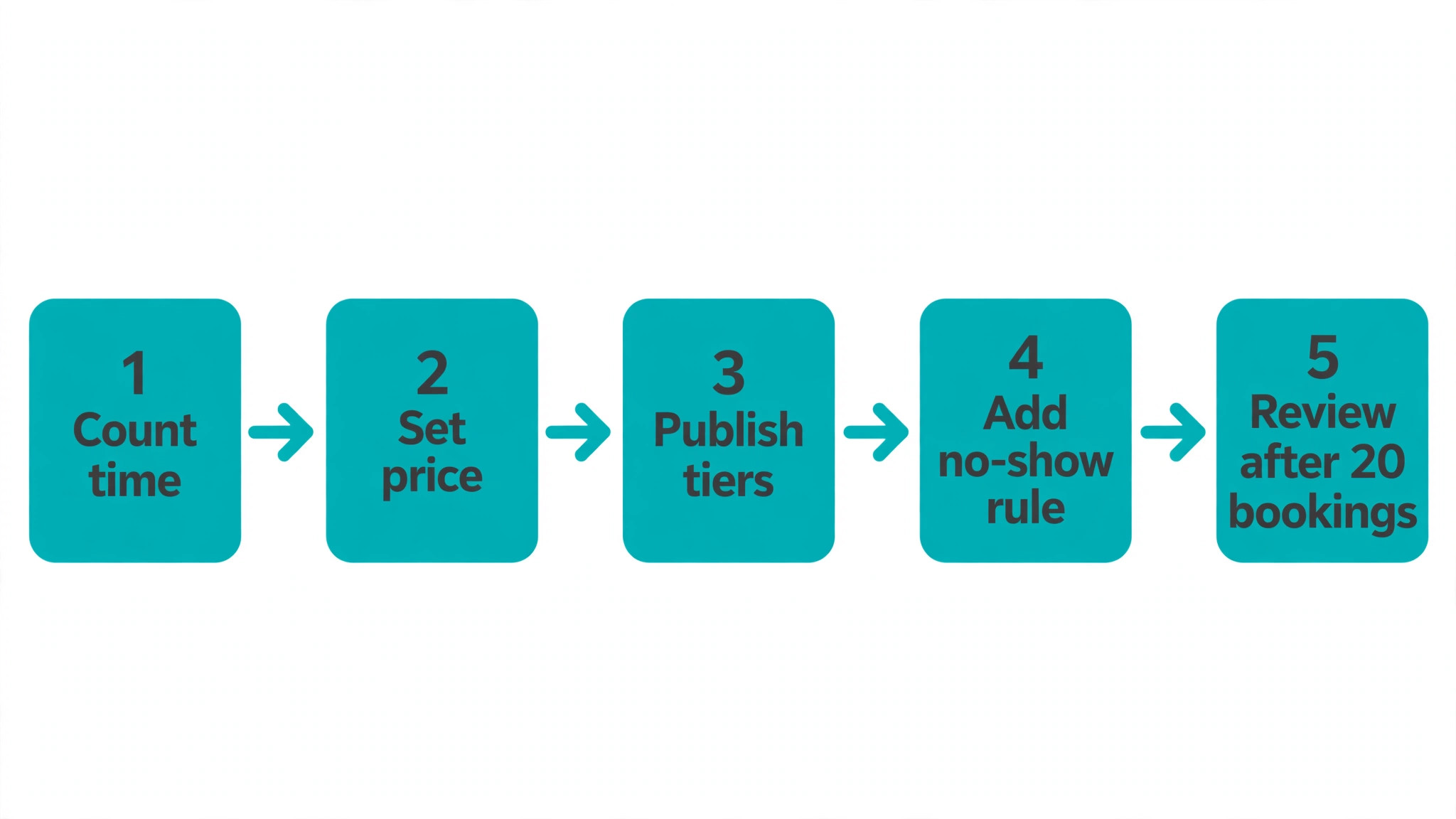
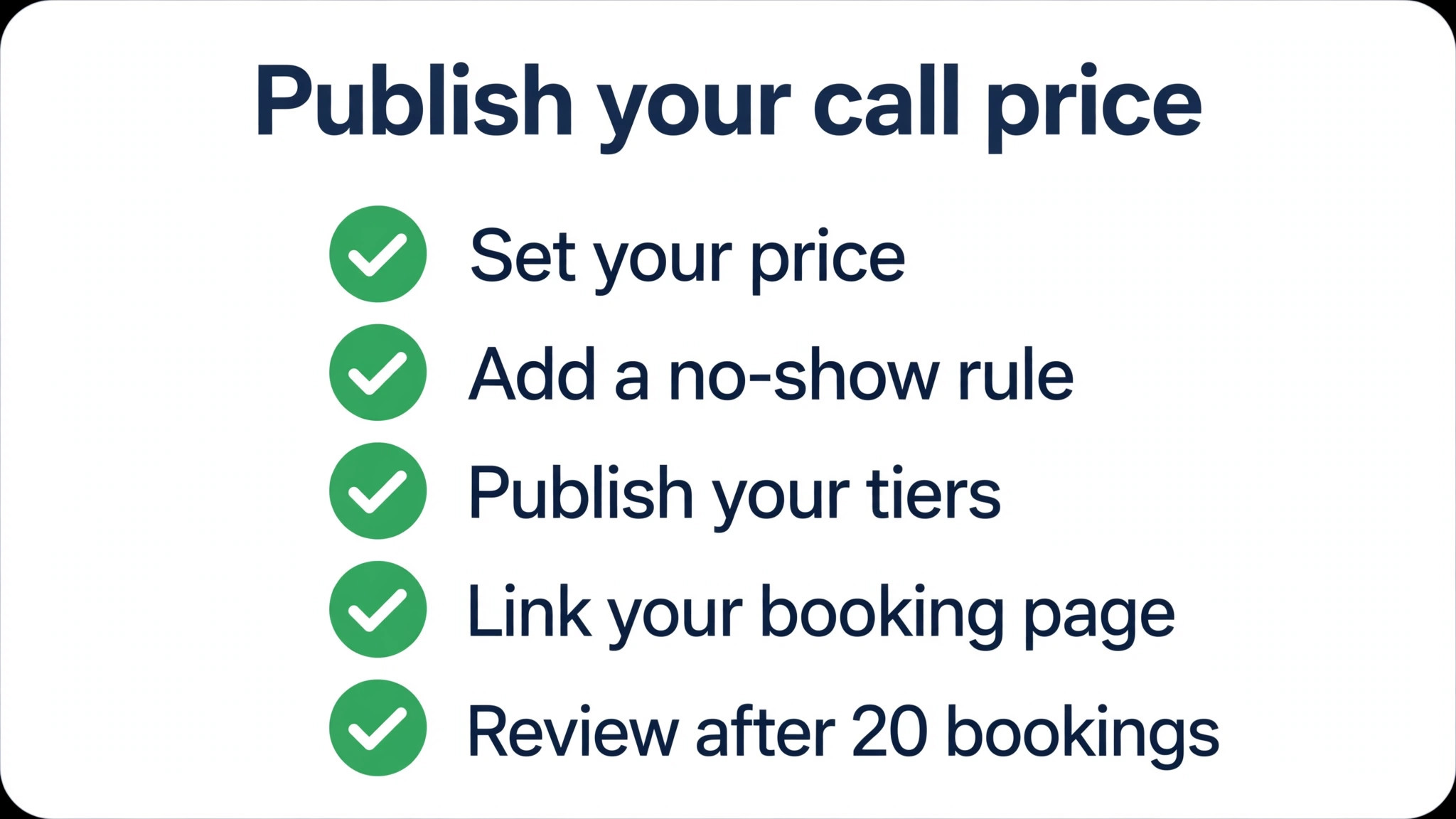
1. Count the fully loaded time per call, including prep, notes, and follow-up, for each tier you plan to offer. 2. Work out your floor price from your monthly costs and sellable hours, as described above, and write it down. 3. Research what comparable advisers in your niche charge for a similar session, and note whether their price includes a written deliverable. 4. Choose a starting price between your floor and the market ceiling, and decide whether the fee is credited toward a project if the buyer proceeds. 5. Publish the price with the deliverable, the length, the reschedule rule, and the refund rule on one booking page, then review show rate and close rate after 20 bookings.
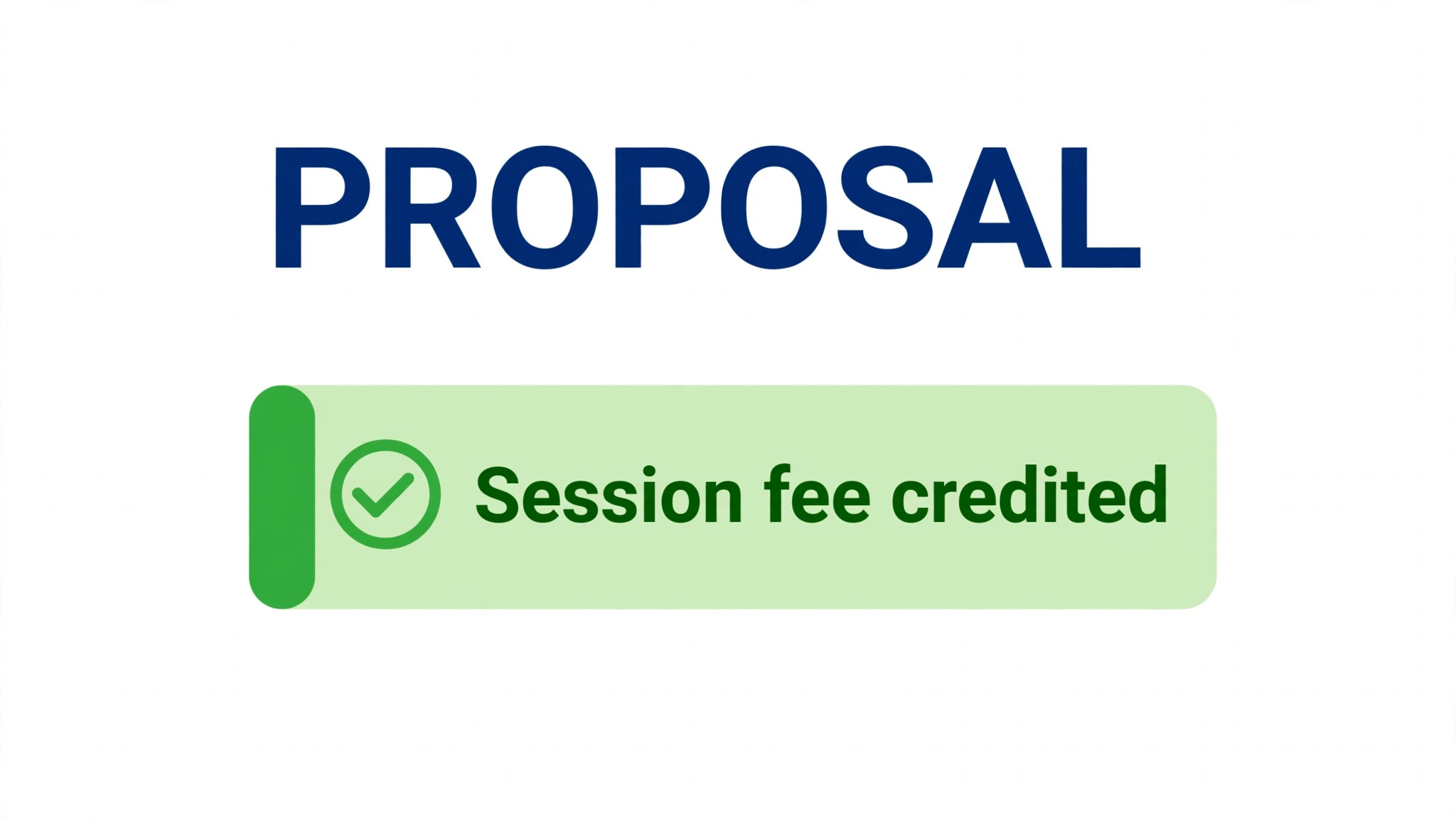
Crediting the fee toward a project is a powerful middle path. It removes the fear that the buyer is paying twice, while still filtering for intent. State the credit clearly, for example that the session fee comes off the first invoice if the buyer starts within 30 days. Put a time limit on the credit so it does not linger as an open discount for a year. If the buyer does not proceed, the fee still paid for the advice received, and that is fair to both sides.
Payment timing matters too. Collect the fee at booking, not after the call. Payment after the call recreates the no-show problem in a new form, because the buyer has no reason to attend once the calendar invite is sent. Use the payment step as part of the booking, and send the confirmation only when payment clears. For paid sessions, this single change often does more than any reminder sequence.
The No-Show Policy That Protects the Slot
A price without a no-show policy is only half a system. Free calls need reminders and a reschedule link. Paid calls need a reschedule window and a clear rule on refunds. Both need the same discipline from you, which is to follow the policy every time, including for friendly buyers.
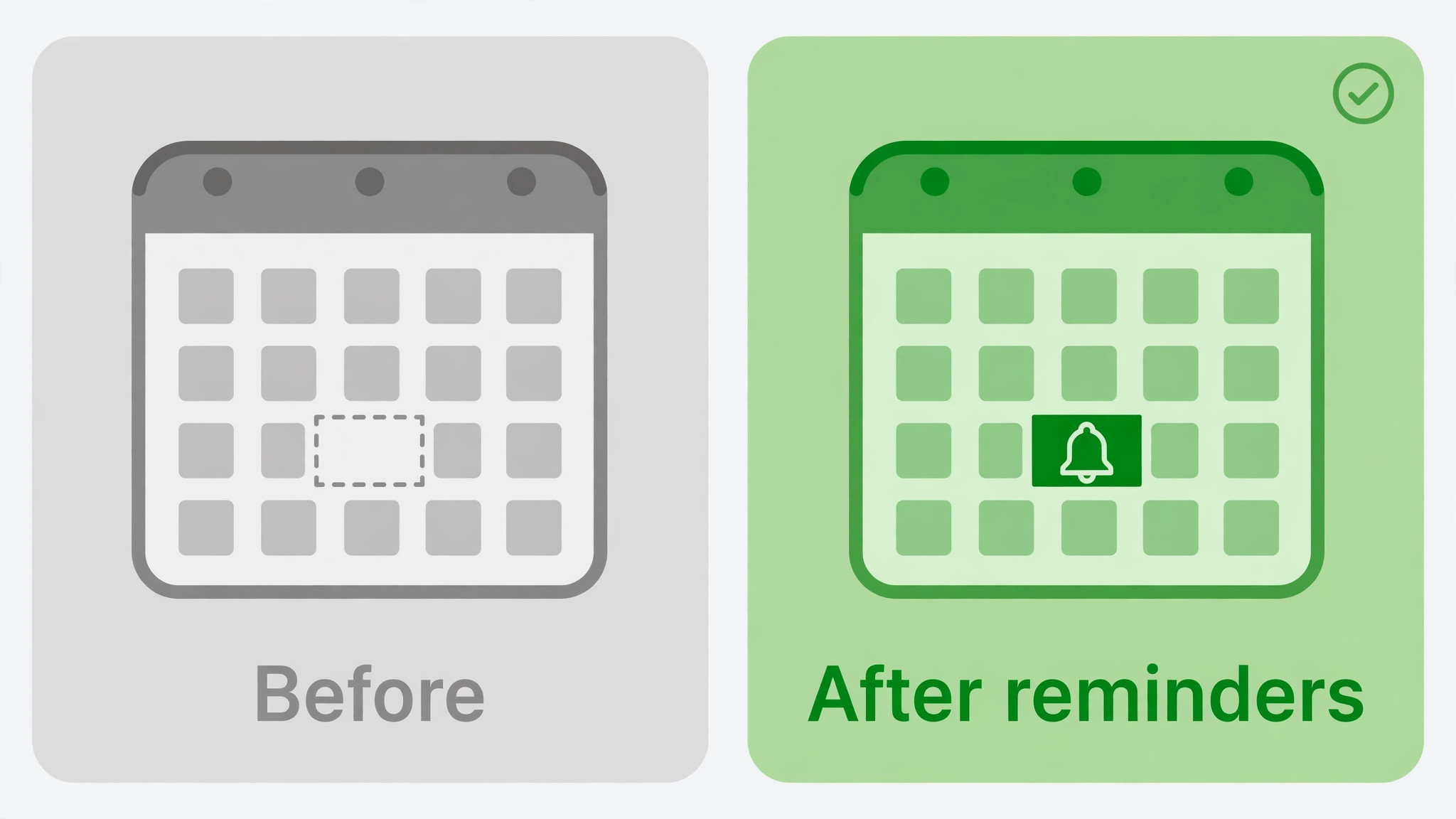
Research on reminders is genuinely useful here. A Cochrane review of eight randomised trials covering more than 6,000 people found that text reminders increased attendance compared with no reminder, and worked about as well as phone reminders at lower cost. One clinic trial cited in that literature cut its no-show rate from about 38 percent to about 24 percent after adding text reminders. Those figures come from healthcare settings, so do not treat them as a promise for your business, but the direction is consistent. Reminders work, and they cost far less than an empty slot.
Build the policy around three moments, because how to price a discovery call small business owners can enforce depends on the policy behind the price. At booking, state the length, the fee, and the reschedule deadline. Twenty four hours before the call, send a reminder with a one tap reschedule link, not just a confirmation. At the call time, wait five minutes for a late joiner, then mark the slot as missed and follow the policy you published. Owners who chase late buyers for half an hour teach buyers that the start time is flexible. It is not.
| Call type | Reschedule rule | Missed call rule |
|---|---|---|
| Free fit check | Free reschedule up to 24 hours before | One free rebook, then the buyer rejoins the queue |
| Paid working session | Free reschedule up to 48 hours before, one move included | Fee kept, with one paid rebook at a reduced rate at your discretion |
| Paid session, buyer gives notice but cannot attend | Credit held for 30 days toward a new booking | State the credit expiry on the booking page |
Keep an exception clause short and human. Illness, a family emergency, and a genuine technical failure deserve a rebook without a fight. Write that into the policy, and use it sparingly. A policy with no exceptions feels harsh and generates disputes. A policy with vague exceptions invites negotiation on every missed call. Name the exceptions, limit them, and apply them consistently.
Booking tools that handle reminders, buffers, and reschedule links reduce the admin load here. If double bookings or calendar clashes are part of the problem, the Stratilyze guide to fixing Fix Calendly Double Booking for a Small Business covers the calendar checks to run before you change anything else.
Turn One Good Call Into a Paid Next Step
The upsell path should feel like a continuation, not a switch into sales mode. End every paid session with a short summary of what was decided, the options available, and the one step you recommend. Then stop. Let the buyer respond. Silence after a clear recommendation is not awkward. It is the space where a decision happens.
Offer at most two next steps. The first is the full project or programme, priced and scoped in broad terms, with a start date. The second is a smaller paid step for buyers who are not ready, such as a deeper audit, a second working session, or a short implementation sprint. Two options keep the choice manageable. Five options stall it. If the buyer needs time, agree a decision date on the call and send a short follow-up on that date, not a drip sequence of generic nudges.
Credit the session fee where you promised to, and show it on the proposal as a separate line so the buyer can see it. Hidden credits feel like tricks. Visible credits feel like good faith. If the buyer does not proceed, send the session notes anyway, with thanks, and leave the door open. A buyer who received real value on a paid call is a future referral source even when they do not buy today.
Track conversion properly, since how to price a discovery call small business firms can repeat depends on evidence, not on gut feel. For each tier, record bookings, shows, proposals sent, and projects won, plus revenue per hour of call time. A tier that books well but never converts is a marketing cost, not a sales channel. A tier that books less often but converts at a high rate is doing its job. Review the numbers monthly, and change one variable at a time, either price, length, or deliverable, so you know what caused any change in results.
Mistakes That Quietly Kill Conversion
– Charging for a pitch. If the call has no deliverable beyond a sales conversation, keep it free or add a real deliverable first. – Pricing from a competitor page without counting your own costs. Their cost base, audience, and capacity are not yours. – Offering too many tiers. Four lengths and three prices confuse buyers who only wanted a short conversation. – Hiding the price until the call. Surprise fees destroy trust, even when the fee itself is reasonable. – Letting calls overrun. Every extra 15 minutes is an hour lost across four bookings. – Collecting payment after the call. Payment at booking is what protects the slot. – Sending no notes after a paid session. Without notes, the buyer has nothing to show for the fee. – Changing the price for every buyer. Inconsistent pricing leaks, and it undermines the buyers who paid full price. – Forgetting that how to price a discovery call small business buyers trust starts with the deliverable, not with a copied competitor rate.
Pricing Worksheet You Can Copy
Use this worksheet to set your first price, then revisit it after 20 bookings. Fill in your own numbers. Do not copy example figures as if they were yours.
| Worksheet line | Your number | Notes |
|---|---|---|
| Monthly target pay | After tax planning, not gross revenue | |
| Monthly business costs | Include software, insurance, and marketing | |
| Sellable hours per month | After delivery, admin, and holidays | |
| Fully loaded hourly cost | Monthly total divided by sellable hours | |
| Time per call, fully loaded | Call plus prep, notes, and follow-up | |
| Floor price per session | Hourly cost multiplied by loaded time | |
| Market range for your niche | Check the vendor pricing pages and comparable advisers | |
| Starting price you will test | Between floor and market ceiling | |
| Credit toward a project | Yes or no, amount, and expiry in days | |
| Reschedule deadline | 24 hours for free calls, 48 hours for paid sessions | |
| Review date after 20 bookings | Change only one variable at the next review |
Checklist before you publish the price.
– The booking page names the deliverable in one sentence. – The length, fee, and credit rule are visible before booking. – Payment is collected at booking for paid sessions. – A reminder goes out 24 hours before, with a reschedule link. – The no-show and reschedule rules are written in plain words. – Session notes go out within one business day. – Conversion is tracked per tier, not just per month.
A final test before you publish is to read the booking page as a buyer would. If you cannot tell in ten seconds what you get, how long it lasts, what it costs, and what happens if you need to move it, the page is not ready. That test catches most pricing problems, because how to price a discovery call small business buyers accept is really a test of clarity, not of cleverness.
Run that test with a colleague or a friendly client before you go live, and fix whatever they stumble on. A price that survives a fresh pair of eyes is far more likely to survive contact with real buyers, and it saves you from learning the same lesson through refunds and complaints.
Frequently Asked Questions
Should a new small business charge for discovery calls?
A new business with few leads usually benefits from a free fit check first. Friction is the bigger problem than filtering at that stage, and a short free call builds proof and referrals faster than a paid gate. Add a paid tier once your calendar fills, no-shows rise, or buyers start asking for real advice on the call. The timing matters more than the principle. Free early and paid later is a normal progression, not a failure of nerve.
How long should a discovery call last?
Fifteen minutes is enough for a fit check on a simple service. Thirty minutes suits a standard service with a short diagnosis. Forty five minutes suits a complex service that needs options and a plan. Sixty minutes suits decisions involving several people or a technical review. Longer is not automatically better. A tight 30 minute call with notes often beats a wandering hour, and it protects your sellable hours for delivery work.
What should a paid discovery call include?
It should include a named deliverable the buyer keeps, such as a written diagnosis, a prioritised action list, or a short plan with next steps. It should also include a clear agenda, a summary at the end, and notes sent after the call. A paid call that ends with only a pitch has failed its own promise, even if the buyer later buys. The deliverable is what justifies the fee, and it should be useful even if the buyer never becomes a client.
How do I handle a buyer who wants free advice on a paid call?
Hold the agenda you published. Acknowledge the extra question, answer it briefly if it fits the session, and note anything larger as a follow-up item for a paid next step. Do not expand a 45 minute session into an unpaid consulting project on the spot. Buyers respect a clear boundary when it is stated calmly and early. A boundary stated only after frustration has built feels like a rejection, so set it in the booking page and again at the start of the call.
Should I credit the call fee toward a project?
Crediting the fee is a strong option for high ticket services, because it removes the fear of paying twice while still filtering for intent. Put a time limit on the credit, show it as a separate line on the proposal, and state what happens if the buyer does not proceed. For low ticket services, a credit can cost more in admin than it gains in conversion, so a simple low fee or a free fit check may be cleaner. Test the credit for a month and compare close rates before you make it permanent.
What is a fair no-show policy for paid calls?
A fair policy gives a free reschedule up to 48 hours before the call, keeps the fee for a missed call, and allows a rebook at your discretion for genuine emergencies. Publish the rule on the booking page, send a reminder 24 hours before, and apply the rule consistently. Exceptions for illness and emergencies should be named in the policy, not invented case by case. Consistency is what makes a strict rule feel fair rather than punitive.
How often should I review my discovery call price?
Review after every 20 bookings in a tier, or quarterly, whichever comes first. Change only one variable at a time, either price, length, or deliverable, so you can tell what moved the result. Review show rate, close rate, and revenue per hour of call time together. A price rise that cuts bookings but raises revenue per hour may still be a win. A price cut that fills the calendar but lowers revenue per hour is a warning, not a success.
Can I offer both free and paid calls at the same time?
Yes, and most established firms do. Offer a free 15 minute fit check for buyers who only need to test fit, and a paid working session for buyers who need a diagnosis or a plan. Keep the two pages distinct, with different lengths, deliverables, and booking links, so buyers do not confuse them. Route buyers clearly. If a fit check reveals a complex problem, offer the paid session as the next step rather than solving it for free on the fit check.
A Closing Check, Not a Closing Pitch
Price the call for the job it does, cost it honestly, and review it after real bookings, not after opinions. Start with two tiers, a free fit check and one paid working session with a named deliverable, and let the numbers tell you whether to adjust the price, the length, or the deliverable. Small firms do not need a clever pricing model. They need a price they can explain, a policy they can enforce, and notes that prove the call was worth paying for. Get those three right, and the discovery call stops being a drain on the week and starts being a reliable first step toward paid work.
More Reading on Stratilyze
– Best Proposal Software for Marketing Agencies – Best Invoicing Software for Consultants – Fix Calendly Double Booking for a Small Business