
A pet store that rings 150 sales a day at an average of 28 dollars takes 4,200 dollars through the till, and the top 10 pos systems for pet stores exists to keep every bag of food, every grooming booking and every loyalty point in one system from the shelf to the receipt. eTailPet leads this guide because its pet-specific tools, pet catalogue and grooming were designed from the ground up around independent pet stores, starting at 99 dollars a month billed annually. The remaining nine tools cover deep inventory, free entry, online selling, hardware bundles and simple retail, and each one fits a different kind of pet store.
The first split is specialist or generalist, and it matters more than the brand. A pet-specific POS understands food flavours and bag sizes, expiry dates, grooming appointments and pet profiles, while a general retail POS treats a 40-pound bag of kibble like any other SKU. eTailPet and PetStack own the specialist lane, Lightspeed owns the inventory lane, and the detail sections below state which lane each tool serves. The ten tools below were all selling in November 2026, and the prices quoted are vendor list prices or third-party reports, so verify the current price before you pay.
Pet stores differ in size, location count and service mix, and this guide weights those differences heavily. A single shop with a grooming room needs different software than a three-location chain selling mostly online, and the recommendations below reflect that split, with the year-one cost math counting software, registers, hardware and card processing together.
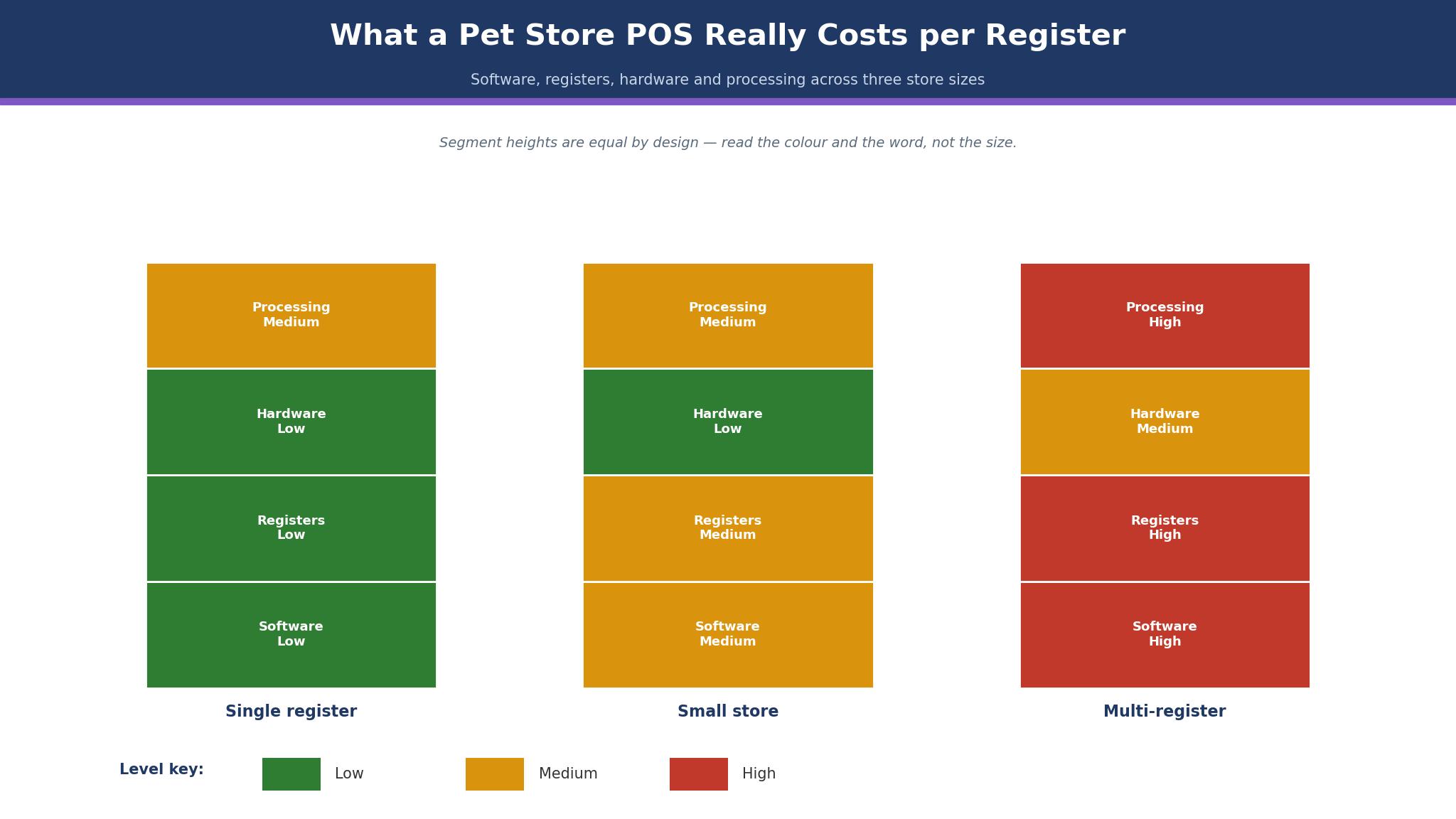
What a Pet Store POS Really Costs per Register
The sticker price of a POS is the smallest part of its cost. An 89 dollar plan looks cheap until the store adds a second register, a loyalty add-on and a barcode scanner, and the bill passes 250 dollars a month without any new sale being rung. Owners should price a tool by the full stack, not by the headline plan, and the detail sections below call out the add-ons that change the bill.
Processing fees are the bigger cost. A store taking 100,000 dollars a month in card payments at 2.6 percent plus 10 cents a transaction pays 2,600 dollars in processing, and a rate difference of 0.3 percent is worth 300 dollars a month, which dwarfs the software subscription. The top 10 pos systems for pet stores are priced on the processing rate as much as the software, and the tools below state their card-present rates plainly.
The third cost is the register that fails on Saturday. A POS that goes offline during the busiest hour of the week loses sales the store never recovers, and an owner who cannot ring a sale will watch customers walk out with full baskets. Offline capability is the metric that matters most, and the tools below were judged partly on whether the till keeps working when the internet does not.
Why Food, Grooming and Retail Need One Till
Food, grooming and retail need one till in a specific way. The first issue is the catalogue, because a pet store sells thousands of SKUs across flavours, sizes and brands, and a matrix that handles dog food flavours and bag sizes without a separate spreadsheet is the difference between a clean stock count and a mess. Lightspeed’s matrix system is built for exactly this, and a POS without matrix inventory will force the owner to track variants by hand.
The second issue is expiry. Pet food and treats expire, and a store that cannot track expiry dates will sell stale stock or write off good stock it forgot. A POS with expiry tracking and perishable stock alerts saves both the write-off and the customer complaint, and the tools below were judged on whether they handle perishables as a first-class feature.
The third issue is the service. A store that grooms dogs needs appointments, reminders and service billing in the same till as the retail sale, so a customer can buy food and book a groom in one visit. A POS without grooming will force the owner to run a second booking system, and the double entry will cost more than the software saves.
The 10 Tools at a Glance
| Tool | Main job | Best for | Starting price |
|---|---|---|---|
| eTailPet | Pet-specific POS | Independent pet stores | From 99 dollars a month billed annually |
| Lightspeed Retail | Deep inventory POS | Multi-location, complex stock | From 89 dollars a month billed annually |
| Square | Free-entry POS | New and small shops | Free, retail plans from 49 dollars a month |
| Shopify POS | Online plus in-store | Stores where online carries weight | From 39 dollars a month plus 89 dollars per POS Pro location |
| Clover | Hardware-first POS | Sleek hardware bundles | From 15 dollars a month |
| PetStack | Pet retail plus services | Stores with grooming and retail | Pricing on the vendor site |
| RetaPOS | Simple pet POS | Small shops, flat pricing | From 399 dollars a year |
| Korona POS | Retail POS, flexible processing | Processor choice, multi-store | From 59 dollars a month |
| Rain Retail | Retail plus classes | Stores offering classes and repairs | Pricing on the vendor site |
| Epos Now | Cloud POS, hardware bundles | Small retail, fast setup | Pricing on the vendor site |
Best Pick by Job
| Job type | First pick | Second tool | Why this pair works |
|---|---|---|---|
| Independent pet store | eTailPet | PetStack | eTailPet covers pet retail and PetStack adds services |
| Multi-location inventory | Lightspeed Retail | Korona POS | Lightspeed owns matrix stock and Korona adds processor choice |
| Cheapest start | Square | RetaPOS | Square starts free and RetaPOS adds flat yearly pricing |
| Online-heavy store | Shopify POS | Lightspeed Retail | Shopify sells online and Lightspeed adds inventory depth |
| Hardware bundle | Clover | Epos Now | Clover bundles sleek hardware and Epos Now adds fast setup |
A grooming shop, a multi-location chain and a brand-new store need different things from the till, so the ranking follows the sales mix. A grooming store needs appointments in the till, while a multi-location chain needs matrix inventory and a new shop needs a free start. A tool that handles all three adequately still disappoints when it weakens the sales the store depends on. Choose the first tool for the sales mix that brings in the revenue, and keep the second in the wings for the sales the first misses.
The same thinking governs the bill. A store taking 100,000 dollars a month can justify 149 dollars a month for Lightspeed Core, since the cost is a small share of one day’s sales and a single saved stockout pays for the year. A new shop should start free on Square instead, then weigh eTailPet and RetaPOS once the volume grows. The top 10 pos systems for pet stores are the ones that fit the store’s current volume without blocking the next register.
How to Judge the top 10 pos systems for pet stores
Start with the one-Saturday test, because that is where a POS either earns its fee or wastes it. Take your busiest Saturday, run the whole day through the tool on a trial, and watch what breaks. Count the seconds per sale, check whether the till works offline, and see whether the loyalty points land without a separate app. A tool that slows the queue on Saturday will cost more in lost sales than it saves in subscription.
Next, test the processing on real volume. Take last month’s card sales, multiply by the card-present rate, add the software fee and the register fees, and compare the total against the flat-rate alternative. Look for the keyed-in rate, because a phone order keyed in by hand costs more than a card tapped at the till. The top 10 pos systems for pet stores are priced on the total monthly bill, not the software alone.
Then check the catalogue on a real shelf. Load your 500 most-sold SKUs, including every flavour and bag size, and see whether the matrix holds together. A POS that cannot handle the flavour and size matrix will force the owner to track variants by hand, and the stock count will drift within a month.
The 10 Tools in Detail
Pet-specific fit sets the order below, so the tool built for pet stores leads.
1. eTailPet
eTailPet is the POS built for independent pet stores, and its pet-specific tools are the reason. It covers product variants, inventory tracking across locations, customer loyalty, grooming and real-time reporting, with a pet catalogue that understands the way pet stores actually sell. Pricing starts at 99 dollars a month billed annually, which is mid-range for the depth on offer.
The drawback is the price and the reach. At 99 dollars a month it costs more than Square’s free tier and more than RetaPOS’s flat yearly fee, and the platform is smaller than Lightspeed or Shopify, so the integration list is shorter. A store that sells mostly online will get less from it than a store that sells mostly in person.
eTailPet suits independent pet stores that want pet tools built in. It fits a shop with grooming and retail together, a store that needs a pet catalogue without workarounds, and anyone who values pet-specific features over general retail depth. Run one busy Saturday through eTailPet from first sale to last grooming booking, and if the till, the loyalty and the appointments all land in one system, eTailPet is the specialist pick.
2. Lightspeed Retail
Lightspeed Retail is the inventory-depth POS, and its matrix system is the reason. It manages complex SKUs like dog food flavours and bag sizes, with purchase order automation, landed cost tracking and multi-location support, and the wholesale catalogue gives access to supplier stock, so reordering starts from the till rather than a spreadsheet. Plans start at 89 dollars a month billed annually for Basic, with Core at 149 dollars and Plus at 289 dollars, and card-present processing is 2.6 percent plus 10 cents on every plan.
The drawback is the price climb and the add-ons. Loyalty, advanced reporting and 24/7 phone support sit on the higher tiers, and each extra register costs 59 dollars a month. A small shop will find the pricing and the feature depth more than it needs, and the Plus tier at 289 dollars a month is a big step from Basic.
Lightspeed suits multi-location stores needing inventory depth. It fits a chain with complex stock, a store with thousands of SKUs, and anyone whose inventory matrix is the business. Load your 500 most-sold SKUs into Lightspeed and run a busy Saturday through the till, and if the matrix holds and the stock count stays honest, Lightspeed is the inventory pick.
3. Square
Square is the fastest way to start selling, and its free tier is the reason. The free software tier covers fast checkout, easy onboarding and no long-term contract, with paid retail plans from 49 dollars a month adding inventory depth. The hardware is simple, the setup takes an afternoon, and the owner can be ringing sales the same day.
The drawback is the processing and the depth. Flat-rate processing can cost more at volume, and the inventory depth and multi-location tools are lighter than Lightspeed. A store that grows past one location will outgrow the free tier, and the paid plans still trail the specialists on pet-specific features.
Square suits new and small pet shops. It fits a first location, a pop-up, a market stall, and anyone who wants the lowest upfront cost. Run one Saturday through Square from first sale to last, and if the till is fast, the offline mode holds and the setup took an afternoon, Square is the right start.
4. Shopify POS
Shopify POS is the pick for stores where online sales carry real weight, and its ecommerce link is the reason. The online store and the till share one catalogue, one stock count and one customer record, so a sale online updates the shelf stock instantly. Shopify starts at 39 dollars a month, plus 89 dollars per POS Pro location, with card-present processing at 2.6 percent plus 10 cents.
The drawback is the per-location cost and the pet gap. POS Pro at 89 dollars per location adds up fast for a chain, and the platform knows nothing about pet food expiry or grooming without apps. A store that sells mostly in person will pay for ecommerce depth it never uses.
Shopify POS suits pet stores that sell online as well as in person. It fits a shop whose website carries real revenue, a store with click-and-collect, and anyone who needs one stock count across both channels. Sell one Saturday online and in store through Shopify POS, and if the stock count stays honest across both, Shopify is the omnichannel pick.
5. Clover
Clover is the hardware-first POS, and its bundles are the reason. The sleek terminals, the app marketplace and the simple setup make it the pick for a store that wants a polished counter without a long install. Software tiers start around 15 dollars a month before processing and hardware, with bank-sold packages varying widely.
The drawback is the price fog and the pet gap. Clover’s software tiers, app fees and hardware costs stack in ways that are hard to compare, and the platform knows nothing about pet-specific retail without apps. A store that needs grooming or expiry tracking will need add-ons for both.
Clover suits stores that want a polished hardware bundle. It fits a new shop that values the counter look, a store that wants an app marketplace, and anyone who prefers a bundled terminal to a bring-your-own-device setup. Ring one Saturday through Clover and check whether the hardware feels fast at the counter, and if the queue moves and the apps cover the gaps, Clover is the hardware pick.
6. PetStack
PetStack is the pet retail and services platform, and its combined till is the reason. It handles retail inventory alongside grooming and veterinary appointments, which suits a store that sells products and services from the same counter. PetStack won the 2026 Pets+ Retailer’s Choice Award, and pricing is on the vendor site, so ask for a written quote before budgeting.
The drawback is the quote-only pricing and the smaller ecosystem. A store cannot compare PetStack on price without a sales conversation, and the integration list is shorter than Shopify or Lightspeed. A pure retail store without services will pay for grooming features it never uses.
PetStack suits pet stores that sell services as well as products. It fits a shop with a grooming room, a store with vet appointments, and anyone who wants retail and services in one till. Run one Saturday through PetStack from first retail sale to last grooming booking, and if both land in the same system without a second app, PetStack is the services pick.
7. RetaPOS
RetaPOS is the flat-price pet POS, and its simplicity is the reason. It costs 399 dollars a year with all features and unlimited users, which makes it the cheapest full-featured option in this guide for a small shop. The tool covers retail inventory, service scheduling and compliance in one simple package.
The drawback is the depth. RetaPOS is thinner than Lightspeed on inventory analytics and thinner than eTailPet on pet-specific depth, and the platform is smaller, so support and integrations are limited. A multi-location chain will outgrow it, and a store that needs advanced reporting will find it light.
RetaPOS suits small pet shops that want one flat price. It fits a single-location store, an owner who hates monthly subscriptions, and anyone who wants all features for 399 dollars a year. Run one Saturday through RetaPOS and check whether the till, the stock and the appointments all hold together, and if the flat price covers the whole day, RetaPOS is the value pick.
8. Korona POS
Korona POS is the flexible-processing POS, and its processor choice is the reason. The store can choose its own payment processor rather than being locked into one, which lets a high-volume shop negotiate a better rate. Pricing starts at 59 dollars a month, with multi-location tools and offline sales for boutiques and growing chains.
The drawback is the pet gap and the setup. Korona knows nothing about pet retail without configuration, and the platform needs more setup than Square or Clover to get the catalogue right. A store that wants pet-specific tools out of the box will need to build them.
Korona POS suits stores that want processor freedom. It fits a high-volume shop negotiating card rates, a multi-store operator, and anyone who values offline sales and flexible processing. Price last month’s card volume on Korona’s processor choice against the flat-rate tools, and if the saving beats the subscription, Korona is the processing pick.
9. Rain Retail
Rain Retail is the retail-plus-classes POS, and its service range is the reason. It handles retail sales alongside classes, repairs and rentals, which suits a pet store that runs training classes or grooming alongside the shop. Pricing is on the vendor site and quoted per store, so ask for a written quote before budgeting.
The drawback is the quote-only pricing and the pet gap. A store cannot compare Rain on price without a sales conversation, and the pet-specific features are thinner than eTailPet. A pure retail store will pay for class and repair features it never uses.
Rain Retail suits pet stores that run classes and services. It fits a shop with training classes, a store that rents equipment, and anyone who needs retail and services in one till. Run one Saturday through Rain Retail from first sale to last class booking, and if the classes and the retail land together, Rain is the services pick.
10. Epos Now
Epos Now is the fast-setup cloud POS, and its bundles are the reason. The hardware and software arrive together, the setup is quick, and the cloud dashboard shows sales across locations. Pricing is on the vendor site and quoted per store, so ask for a written quote before budgeting.
The drawback is the opacity and the pet gap. Pricing that is not published makes budgeting harder, and the platform knows nothing about pet retail without apps. A store that needs grooming, expiry or matrix inventory will need add-ons for all three.
Epos Now suits small retail stores that want a fast start. It fits a new pet shop, a store that values a bundled terminal, and anyone who wants a cloud POS without a long install. Ring one Saturday through Epos Now and check whether the setup took a day and the till stayed fast, and if the counter runs clean, Epos Now is the quick pick.
The Processing-Fee Mistakes That Eat Pet Store Margin
The most expensive mistake is comparing software prices instead of total monthly cost. An 89 dollar plan with 2.6 percent processing costs 2,689 dollars a month for a store taking 100,000 dollars in card sales, while a 59 dollar plan with a negotiated 2.3 percent rate costs 2,359 dollars, and the cheaper software is the more expensive till. Price the month three ways before signing, and include the processing rate the vendor prefers to hide. The cheapest headline plan is often the most expensive stack, and the top 10 pos systems for pet stores are judged here on the full cost, not the software alone.
A second mistake is buying a POS that cannot handle the flavour and size matrix. A store that tracks dog food variants by hand will lose the stock count within a month, and the stockout that follows costs more than the software. Load the real catalogue before buying, and pick the tool whose matrix holds it.
Making the Final Call on Pet Store POS
Start by listing the non-negotiables, because the list is shorter than most owners expect. Matrix inventory, offline mode, processing rate and grooming or service billing are the four that eliminate most tools quickly. Write them down and check each tool against them, because the top 10 pos systems for pet stores all pass the same four tests.
Next, run a trial on the top two choices with a real Saturday. Measure three things, the seconds per sale, whether the till works offline, and the total monthly bill at last month’s volume. The tool that comes out ahead on those three measures is usually the right buy, even when it is not the cheapest.
Then check the human factor. Call support during the trial, ask a hard question about a stock import, and judge the answer. A store that cannot reach a knowledgeable person when the till fails on Saturday will pay for that gap later, usually at the busiest hour of the week. The trial is where you find out whether that promise holds.

Frequently Asked Questions
How much does a POS system cost for a pet store?
A pet store should expect 99 to 289 dollars a month for software, plus processing. eTailPet is 99 dollars a month billed annually, Lightspeed Basic is 89 dollars and Core is 149 dollars, and Square starts free. Processing at 2.6 percent plus 10 cents a transaction is the bigger cost, so price the whole month before signing.
Is Lightspeed or eTailPet better for a pet store?
eTailPet is better for an independent pet store, because its pet catalogue and grooming were made for pet retail from the start. Lightspeed is better for a multi-location store, because its matrix inventory and purchase order automation go deeper. A single shop should test eTailPet first, while a chain should test Lightspeed first.
What is the cheapest good POS for a pet store?
Square is the cheapest start, with a free software tier and no long-term contract. RetaPOS is the cheapest full-featured option at 399 dollars a year with all features and unlimited users. A new shop should start on Square and compare RetaPOS when the volume grows.
Do pet stores need a pet-specific POS?
Yes, once the store passes a thousand SKUs or adds grooming. A general POS can ring a sale, but it cannot handle food flavours and bag sizes, expiry dates or grooming appointments without workarounds. A pet-specific tool holds the whole shop in one system, and the double entry a general POS forces costs more than the specialist subscription, especially at the till on a busy Saturday.
Can a pet store POS handle grooming bookings?
Yes, on the specialist tools. eTailPet and PetStack both handle grooming appointments and service billing in the same till as retail, and RetaPOS covers service scheduling too. General tools like Square and Lightspeed need a separate booking app for grooming, so check the service flow before buying.
How do I move my products to a new POS?
Import the best sellers first, then the full catalogue, and leave the dead stock for later. Most tools in this guide offer a free trial and import help, and eTailPet and Lightspeed both run onboarding for new stores. Run one real Saturday through the new till before migrating the whole catalogue, and keep the old system as a backup for the first month, so a failed import never stops Saturday trading.
The Verdict on POS Systems for Pet Stores
eTailPet takes the top spot because it is the tool a pet store is least likely to regret. The pet-specific features are real, the grooming and loyalty sit in the same till, and the price is fair for the depth. The integration list is shorter than Lightspeed, but most independent stores never need the extra links.
Lightspeed is the pick for multi-location inventory, Square is the pick for the cheapest start, and RetaPOS is the pick for flat yearly pricing. The top 10 pos systems for pet stores are not the ones with the lowest software price, they are the ones that hold the flavour matrix, ring sales offline on Saturday, and cost less than the stockouts they prevent.
Choose by the sales mix first, the inventory depth second and the price third. Run a real Saturday through the top two, measure the three things that matter, and set a review date. A store that picks this way will spend less time counting stock by hand and more time selling to the customers already at the counter, which is the only work that pays the rent.