Compare two home bakers and the startup gap is striking. One starts with a home oven, basic tools, and a cottage-food permit for under 1,000 dollars, while another fits a second oven, a commercial mixer, and branded packaging for 3,000 dollars or more. Both can bake well, but only one spent money before the first order. The cost of starting a home bakery business breakdown is therefore a choice about scale, not a fixed ticket price.
This guide prices equipment, licenses, and ingredients separately, explains cottage-food rules in plain terms, and builds a first-month budget. Figures reflect published 2026 small business guides and typical United States costs, checked in October 2026. Confirm permit, labeling, and sales limits in your own state and county before you sell, since cottage-food rules vary sharply by location.
Equipment, License, and Ingredient Costs
Startup costs split into three buckets, and the cost of starting a home bakery business breakdown is easiest to control when each bucket is priced alone. Equipment is the largest bucket for most bakers, licensing is the most variable by location, and ingredients are the smallest startup line but the largest ongoing one.
| Startup line | Lean home setup | Equipped home setup | Notes |
|---|---|---|---|
| Oven and bakeware | 0 to 300 dollars | 500 to 1,500 dollars | Home oven first, second oven later |
| Stand mixer | 250 to 500 dollars | 500 to 1,000 dollars | Largest single tool purchase |
| Tools, pans, and storage | 100 to 300 dollars | 300 to 600 dollars | Scales, piping, boxes, racks |
| Business registration | 50 to 300 dollars | 50 to 500 dollars | Varies by state and structure |
| Cottage-food permit or license | 0 to 300 dollars | 100 to 500 dollars | Some states charge little or nothing |
| Food handler training | 0 to 150 dollars | 50 to 200 dollars | Often required, sometimes free |
| Liability insurance, first year | 300 to 800 dollars | 500 to 1,200 dollars | Check cottage-food requirements |
| Ingredients, first stock | 100 to 300 dollars | 200 to 500 dollars | Flour, butter, sugar, eggs, packaging |
| Packaging and labels | 50 to 200 dollars | 150 to 400 dollars | Boxes, bags, printed labels |
| Indicative startup total | 850 to 2,400 dollars | 2,350 to 5,900 dollars | Before marketing |
A home oven is the right starting point for most bakers, because a second oven or a commercial unit only pays when orders outgrow one oven’s schedule. Buy the mixer first, since it touches every dough and batter, and add specialty pans only when a product earns them. Equipment bought for a menu that never sells is the most common startup waste in home baking.
Breaking Down cost of starting a home bakery business breakdown by Setup
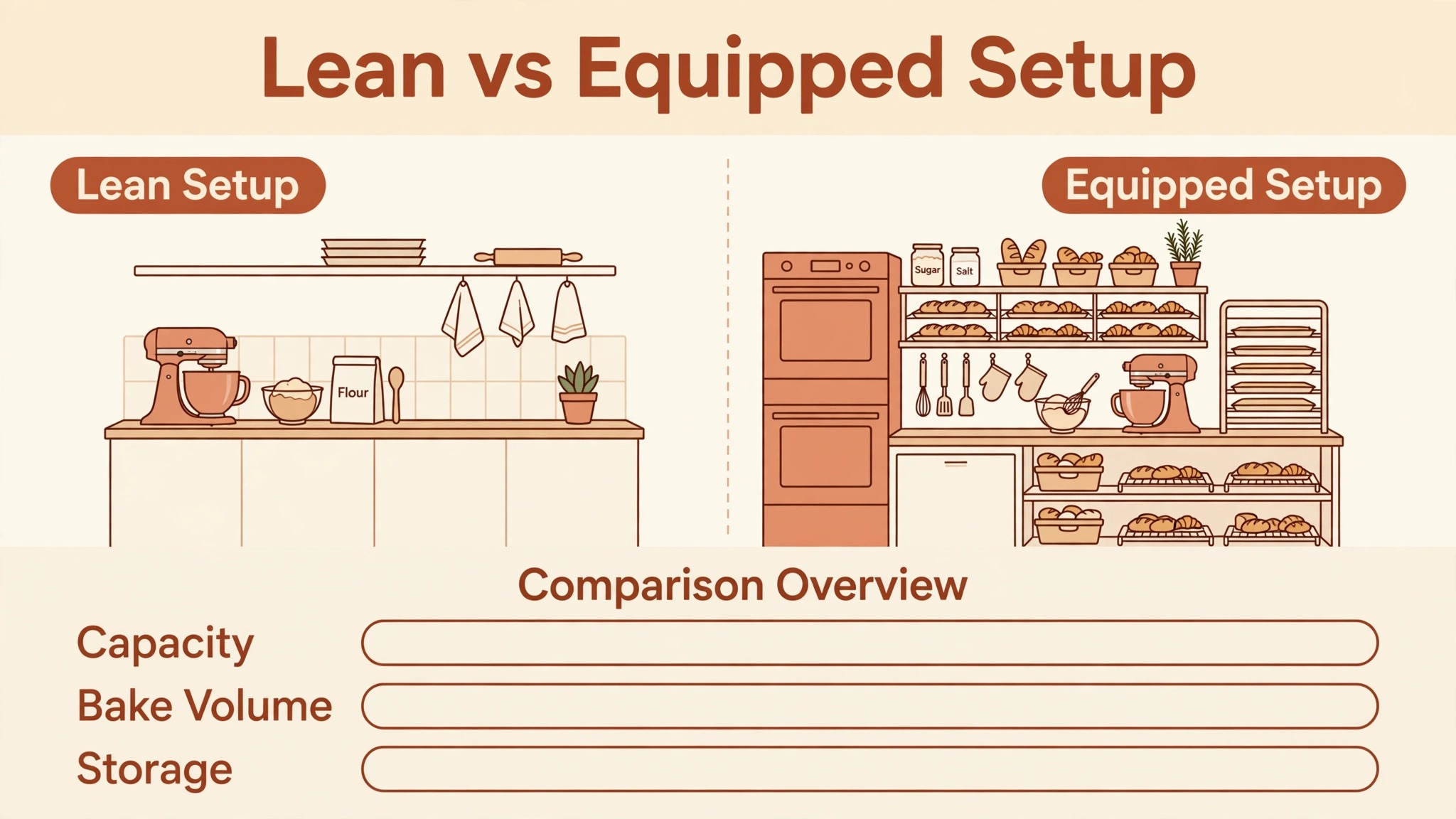
Two setups cover most home bakers, and the cost of starting a home bakery business breakdown follows the setup, not the ambition. A lean setup suits a baker testing farmers markets and friends-and-family orders, with a home oven, a stand mixer, and basic packaging. An equipped setup suits a baker launching with a full menu and regular weekly orders, with a second oven or larger mixer, more bakeware, and branded packaging.
- Lean setup. Home oven, stand mixer, core pans, and a cottage-food permit. Sell a short menu of three to five items, and let order patterns decide the next purchase.
- Equipped setup. Second oven or larger mixer, full pan range, storage racks, and branded boxes and labels. Sell a full menu with weekly pre-orders, and keep production on a fixed baking schedule.
- Market stall addition. Tent, table, display, and transport add 200 to 800 dollars, and suit bakers selling at farmers markets or local events.
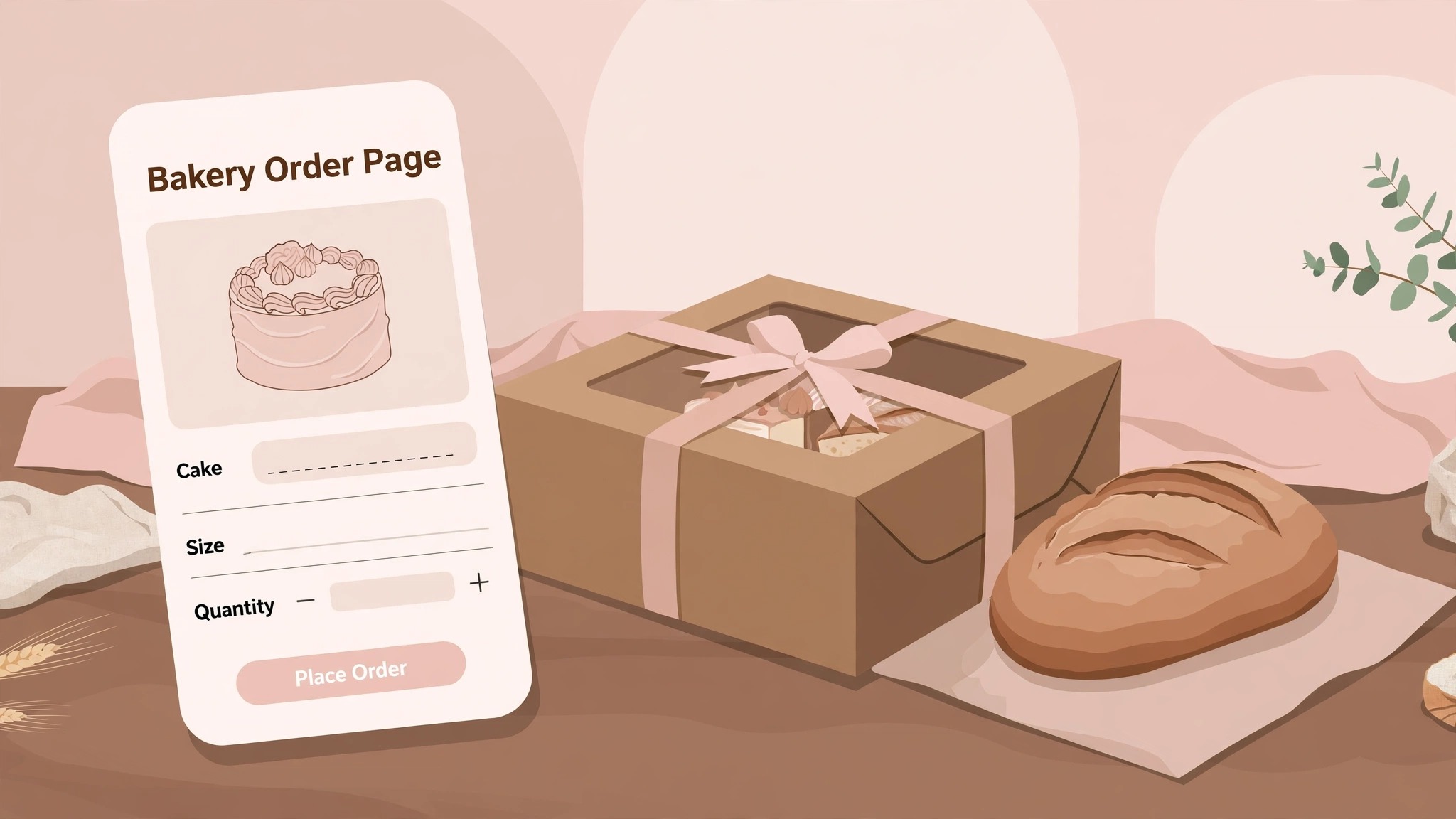
- Online ordering addition. A simple ordering page and payment setup add little in cash but need clear pickup or delivery rules, since baked goods travel badly without planning.
Do not buy the equipped setup to feel serious. Seriousness shows in consistent product, clear pricing, and on-time pickup, none of which require a second oven. Let orders outgrow the lean setup, then spend the profit on the upgrade.
Cottage-Food Rules Checklist
Cottage-food laws let home bakers sell certain low-risk foods from a home kitchen, but the rules vary by state and sometimes by county. The cost of starting a home bakery business breakdown includes the permit and training lines, but the real cost of ignoring the rules is a forced stop, so check each item before the first sale.
- Allowed foods, since most states allow baked goods but restrict cream-filled, meat, or refrigerated items.
- Annual sales caps, since some states cap cottage-food sales per year and require a commercial license above the cap.
- Permit or registration, including the fee, the application, and any home inspection requirement.
- Labeling rules, including ingredients, allergens, net weight, and a home-produced statement where required.
- Sales channels, since some states allow farmers markets and online sales while others restrict where you may sell.
- Food handler training, including whether a certificate is required and how often it renews.
- Local zoning and business license rules, since a state permit does not replace a city or county license.
- Insurance, since some markets and venues require proof of liability cover before they accept a stall.
If your product falls outside cottage-food rules, such as a refrigerated cake or a cream-filled pastry, you need a commercial kitchen or a licensed facility, and the startup math changes completely. Check the product list first, then the permit, then the price, in that order.
Pricing a Loaf, a Cake, and a Box
Pricing repays the startup fund only when it covers ingredients, packaging, labor, and overhead. The cost of starting a home bakery business breakdown is the entry ticket, but the price per item is the engine. A common method is to total ingredient and packaging cost per item, multiply by three to four to cover labor and overhead, and then adjust for the local market.
| Product | Ingredient and packaging cost | Indicative retail price | Margin logic |
|---|---|---|---|
| Sourdough loaf | 1.50 to 3 dollars | 8 to 14 dollars | Labor and oven time dominate |
| Box of 6 cookies | 2 to 4 dollars | 12 to 20 dollars | Packaging and presentation matter |
| Celebration cake | 15 to 40 dollars | 60 to 150 dollars | Design time drives the price |
| Box of 12 cupcakes | 5 to 10 dollars | 24 to 42 dollars | Batch baking improves margin |
Labor is the line most home bakers underprice. A cake that takes three hours including decorating cannot sell for 30 dollars unless the baker works for free, and working for free is not a business model. That discipline is what turns the cost of starting a home bakery business breakdown from a launch cost into a business. Time every product for a week, including cleanup, and price from the real hours, not from the fun hours.
A payback check keeps pricing honest. A 1,500 dollar lean launch repaid at 5 dollars of profit per loaf needs 300 loaves, while the same launch repaid at 25 dollars of profit per cake needs 60 cakes. That framing tells you which products carry the business and which ones are hobbies with packaging.

The First-Month Budget
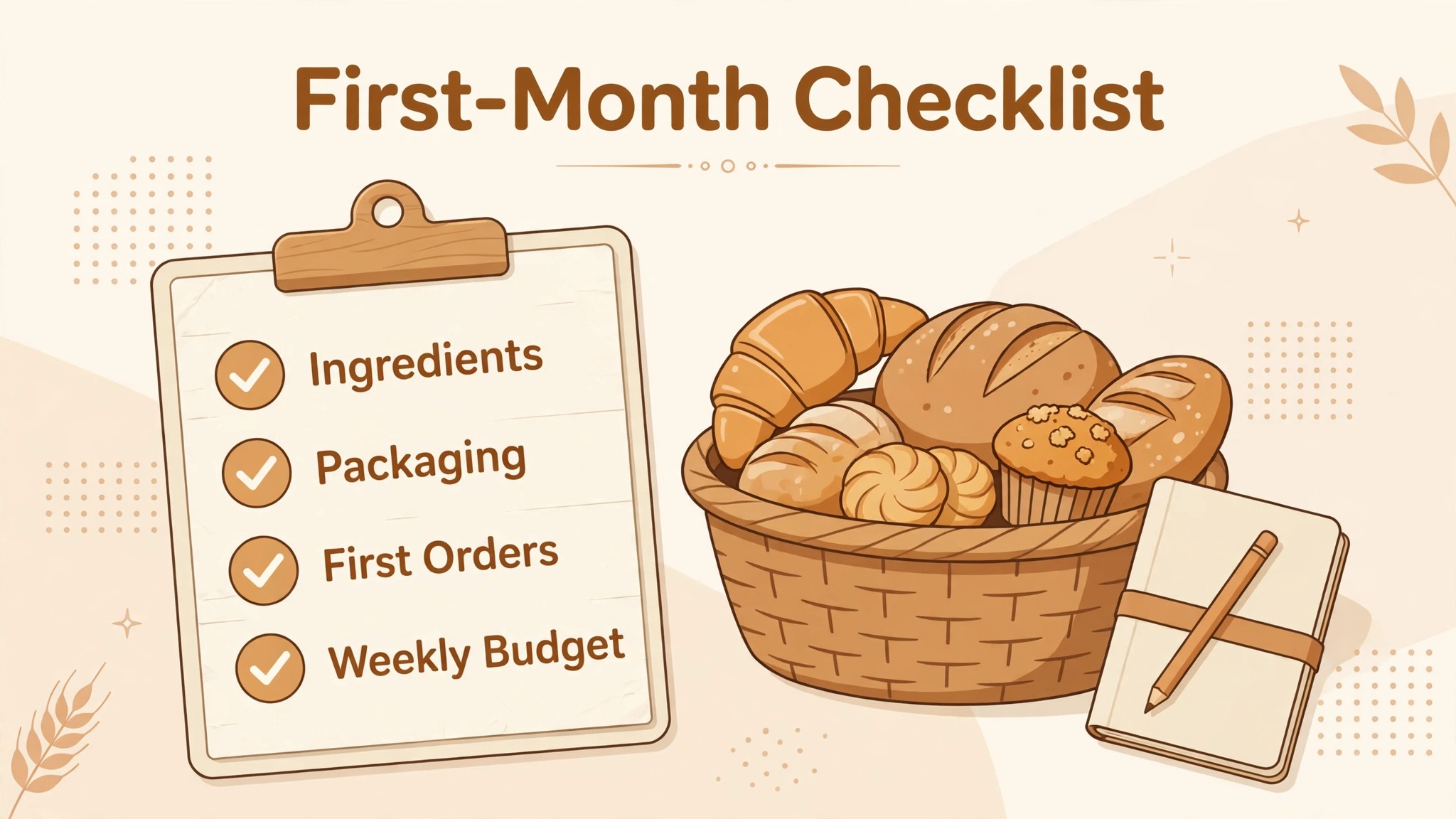
A first-month budget separates startup spending from monthly running costs, and the cost of starting a home bakery business breakdown looks different once that split is clear. Registration, permit, and equipment leave the account before the first order, while ingredients, packaging, and market fees repeat every month.
| First-month line | Amount | Type |
|---|---|---|
| Registration, permit, training | 50 to 650 dollars | One-off |
| Equipment and tools | 450 to 2,400 dollars | One-off |
| Insurance, first payment | 25 to 70 dollars a month | Monthly |
| Ingredients, first stock | 100 to 300 dollars | Monthly, grows with orders |
| Packaging and labels | 50 to 200 dollars | Monthly, grows with orders |
| Market or stall fees | 0 to 200 dollars | Monthly, if applicable |
| Marketing launch | 50 to 300 dollars | First month |
| First-month cash need | 725 to 3,900 dollars | Lean to equipped |
Keep a reserve for a slow first month, because farmers markets and online orders take weeks to build. A reserve turns a quiet start into a learning month, while spending every dollar on equipment turns the same month into a panic. Start lean, keep the reserve, and let orders fund the upgrades.
Mistakes That Eat the Margin
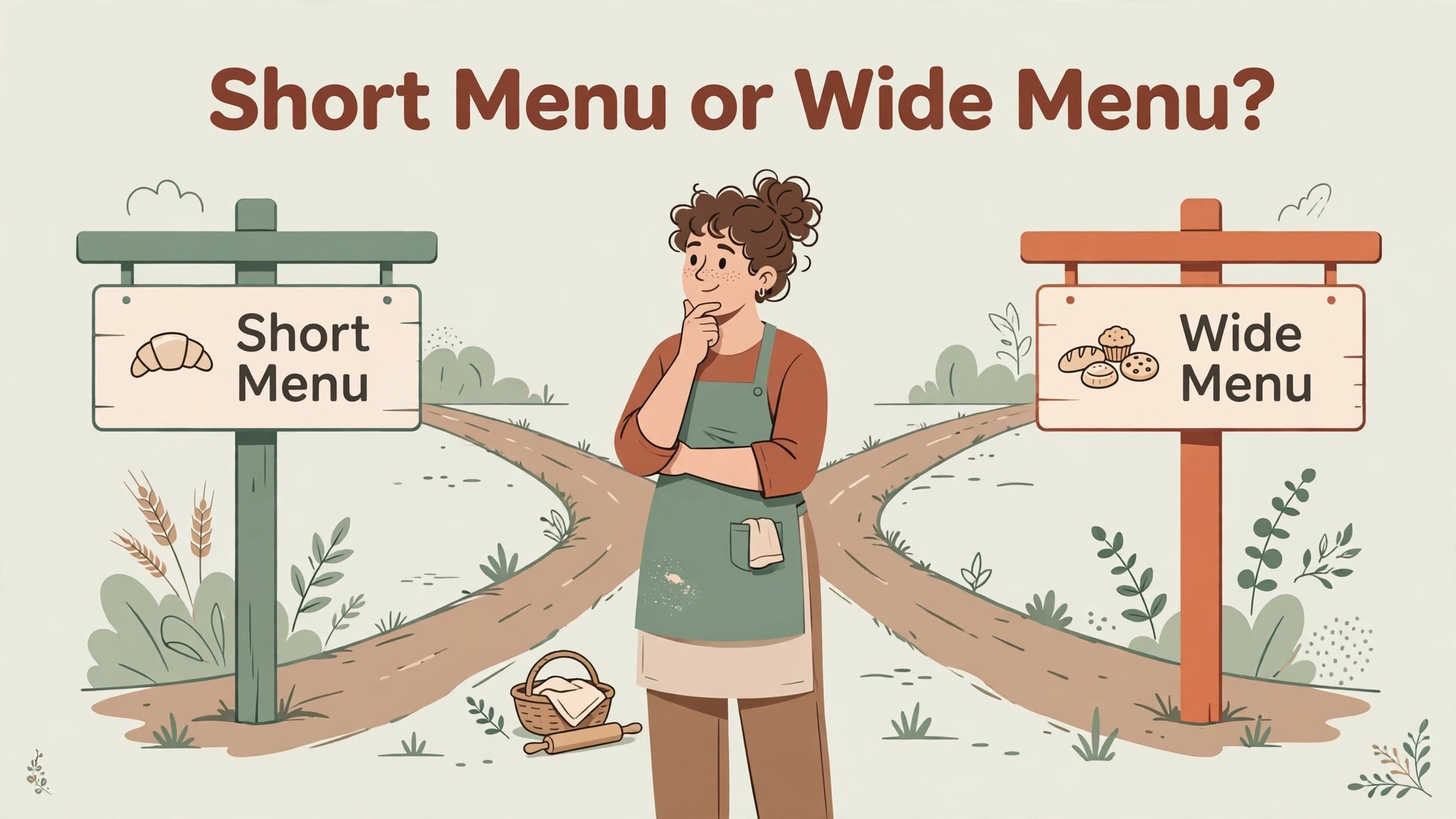
Margin mistakes in home baking follow a pattern. Those mistakes quietly raise the cost of starting a home bakery business breakdown month after month. Underpricing labor is the first, because a price that ignores decorating and cleanup time guarantees burnout. Overbuying ingredients is the second, because butter, eggs, and cream spoil, and spoilage is a direct loss. A menu that is too wide is the third, because ten products with separate ingredients and packaging cost more than four products done well.
- Pricing from ingredient cost alone, which ignores labor, oven time, and packaging.
- Buying bulk perishables before orders justify them, which turns savings into spoilage.
- Offering too many products at launch, which complicates shopping, storage, and baking days.
- Skipping labels and allergen information, which risks market rejection and legal trouble.
- Taking every custom order, which fills the calendar with low-margin work and crowds out best sellers.
The fix is a short menu, priced from real hours, with a weekly baking schedule and a shopping list tied to confirmed orders. Bakers who run that system keep margins visible, and visible margins are the difference between a hobby that pays and a business that lasts.
What Changes the Price After Year One
Prices in this guide are a snapshot, not a promise, because almost every line in a monthly budget moves within a year. Providers raise rates as their calendars fill, platforms adjust tiers and free limits, insurers reprice at renewal, and software vendors change plan structures. A budget built on today’s figures without room for movement will feel tight by the second renewal, even if nothing about your own usage changed.
Seasonality moves prices too, and it moves them in both directions. Demand peaks push freelancer rates and advertising costs upward, while quiet periods bring discounts, slower turnaround, and room to negotiate. Businesses that buy during a peak and never revisit the price pay peak rates all year, while businesses that review in a quiet month often find the same service for less. Timing a review for a quiet period is a small habit with a real payoff.
Scope creep is the quietest price rise of all, because it arrives as helpful extras rather than as a rate increase. One extra deliverable becomes two, a monthly call becomes weekly, and a small tool subscription becomes a stack. None of these is wrong alone, but together they can double a monthly total without any single decision feeling expensive. A written scope, reviewed quarterly, is the only reliable defense.
Plan for a modest annual rise in every budget, even when the current price feels fair. A buffer of five to ten percent on the monthly total absorbs most renewals without a crisis, and it turns a price rise into a routine adjustment rather than a reason to switch providers in a hurry. Providers who raise rates transparently, with notice and a clear reason, are usually worth keeping, while silent creep deserves a conversation.
The practical routine is simple. Note every renewal date in one place, review each line the month before it renews, and decide in advance whether you would accept a rise, negotiate, or switch. That routine takes less than an hour a year per provider, and it prevents the most common budgeting failure, which is discovering a price rise on the invoice instead of before it.
The Monthly Check That Keeps the Budget Honest
A monthly review sounds like admin work, and that is why most people skip it, but the version that works takes thirty minutes and prevents the slow drift that ruins budgets. The goal is not perfect bookkeeping. The goal is to catch three things early, namely money spent on unused items, deliverables that slipped, and results that stopped moving, while each one is still cheap to fix.
Start by gathering the month’s bills in one view, including platform fees, subscriptions, and any per-order or per-use charges. Compare the total with the previous month and with the budget you set, and flag any line that moved more than ten percent without a clear reason. Most months will show nothing surprising, and that quiet result is the point, because it confirms the budget is still honest.
Next, compare deliverables with the agreement. Count what was actually delivered, whether deadlines were met, and whether quality held steady. A provider who delivered less while charging the same has quietly become more expensive, and a provider who delivered more without being asked may deserve a scope conversation before the extra work becomes an expectation. Evidence from this step makes both conversations easy.
Then check results, not activity. Traffic, enquiries, orders, or hours saved are the numbers that matter, depending on what you bought. Activity without results is the warning sign, because reports full of tasks can hide a flat outcome for months. If results are flat for two consecutive months, change something specific, such as scope, provider, or target, rather than waiting for a third flat month.
Finish by writing three lines in a simple log, namely what changed, what you decided, and what to check next month. That log turns twelve monthly reviews into a yearly story you can actually use at renewal time, and it stops the same mistake from returning under a new name. Thirty minutes a month is a small price for a budget that stays honest all year.
How to Ask for a Better Price and Keep the Relationship
Most buyers negotiate price directly, and most good providers dislike that conversation, because a lower price for identical work feels like a pay cut. Negotiating scope works better for both sides. Ask what changes if the deliverable count drops slightly, if turnaround extends by a few days, or if reporting moves from weekly to monthly, and you will often find a lower price that costs the provider little and costs you nothing you valued.
Longer commitments are the second lever, and they work when trust is already earned. A quarterly or yearly commitment in exchange for a discount suits a provider you have tested for three months, but it is a poor deal for an untested provider, no matter how attractive the discount looks. Earn the right to commit by testing first, then trade commitment for price from a position of evidence.
Bundles and non-cash value are the third lever. A provider may discount for a testimonial, a case study, a referral, or a bundle of services bought together, because those items have real value beyond the invoice. Offer something specific rather than asking vaguely for a discount, since a concrete trade gives the provider a reason to say yes without setting a precedent for every client.
Trial periods and exit clauses protect both sides during negotiation. A thirty-day exit clause costs a confident provider nothing and gives you the freedom to leave if quality slips, which paradoxically makes providers work harder to keep you. If a provider refuses any exit route, treat that as information about confidence, not as a normal term, and weigh it heavily before signing.
Know your walk-away point before the conversation starts, and keep the tone friendly throughout. A provider who feels respected will often find flexibility that a pressured provider withholds, and a relationship that survives negotiation is worth more than a one-time discount that poisons it. The best negotiated deal is one both sides can describe as fair a year later.
Knowing When to Pause or Walk Away
Every monthly spend eventually faces the same question, and most people answer it too late, after months of flat results. The signals are consistent. Deliverables go unused, deadlines slip repeatedly, results stay flat for two months, or the service no longer matches the business as it stands today. Any two of those signals together mean the spend deserves a decision, not another month of hope.
Pause, switch, and stop are different decisions, and confusing them wastes money. Pause when the need is seasonal or temporary, and the provider is good, since pausing keeps the relationship and the setup intact. Switch when the need remains but the provider no longer delivers, since a new provider can fix delivery without changing the goal. Stop when the need itself has gone, since paying for a solved problem is the purest form of waste.
Before switching or stopping, check exit costs and handover items. Data, accounts, files, domains, and audience lists must transfer cleanly, and a provider who controls those items holds power over the exit. Secure access and exports before giving notice, not after, because a smooth handover is worth more than a fast exit that loses assets.
Hibernation is the middle path many budgets miss. Keep the essential lines running, such as the domain, the core tool, and the audience list, while cutting extras, advertising, and premium tiers until demand returns. Hibernation preserves the foundation for a restart at a fraction of the full monthly cost, and it beats both blind continuation and a full shutdown that must be rebuilt later.
Write the restart test before you pause or stop, so the decision to return is evidence-based rather than emotional. Name the trigger, such as three new clients, a product launch, or a seasonal date, and the budget that restarts with it. A spend with a written restart test is a paused investment, while a spend without one is usually just a habit that nobody examined.
Growing the Budget in Steps, Not Leaps
Growth changes a monthly budget in ways that feel like success but behave like scope creep. More clients, more orders, or more output all raise the workload, and the natural response is to spend more on help, tools, and capacity. That response is correct when revenue grows with it, and dangerous when spending runs ahead of revenue. The discipline is to tie each spending step to a revenue step that already happened, not to a revenue step that is merely hoped for.
A practical rule is to fund growth steps from the previous quarter’s surplus rather than from projected income. If last quarter produced extra profit, spend part of it on the next capacity step, whether that is more deliverables, a better tool, or extra hours. If last quarter produced no surplus, the growth step waits, because spending projected money is how small businesses turn a good quarter into a cash crisis.
Separate growth spending from maintenance spending in the budget, since they answer different questions. Maintenance spending keeps current results steady, while growth spending buys new results. When money is tight, maintenance comes first, because losing current results to fund speculative growth trades a certain asset for an uncertain one. Growth spending earns its place only after maintenance is fully funded.
Review growth bets after ninety days with a simple test, namely whether the spend produced the result it promised. A growth step that produced measurable new revenue, new clients, or real hours saved earns continuation. A growth step that produced activity without results should be cut or reshaped, since hope is not a result and activity reports are not revenue.
The mindset that protects growth budgets is patience with steps and impatience with drift. Move in defined, affordable steps, check each step against real numbers, and stop funding steps that do not deliver. A business that grows in funded steps grows slower in any single month and far more reliably across a year.
Keeping Every Monthly Line Visible
A budget fails silently when its lines live in different places, such as email invoices, platform dashboards, and bank statements that nobody reconciles. Visibility is the fix, and it does not require expensive software. A single spreadsheet with one row per monthly line, one column per month, and a total row at the bottom reveals drift that scattered invoices hide, and it takes an hour to build and ten minutes a month to maintain.
Three templates cover most monthly budgets. A cost tracker lists every recurring line with its renewal date and its exit terms, so nothing renews unnoticed. A deliverables log records what was actually delivered against what was promised, which turns vague dissatisfaction into evidence. A results note records the one or two outcome numbers that matter each month, such as enquiries, orders, or hours saved, so activity never substitutes for results.
Automation helps only after the manual version works. Bank and card alerts for new recurring charges catch surprise renewals, calendar reminders a month before each renewal force a decision before the invoice, and a shared folder for agreements means the scope is findable when a dispute arises. Automate the reminders, not the judgment, since judgment is the part that saves money.
Share the numbers with anyone who spends against the budget, including team members and freelancers, because hidden spending grows in the dark. A short monthly note showing the budget, the actual spend, and the decisions taken keeps everyone aligned without micromanagement, and it surfaces overspending while it is still small enough to correct.
The test of any tracking system is whether it answers three questions in under a minute, namely what are we paying, what are we getting, and what changes next month. If the system cannot answer those questions fast, simplify it until it can, because a tracking system nobody opens is worse than a simple one that gets used every month.
More Reading on Stratilyze
More Reading on Stratilyze. Read the bakery Instagram marketing workflow and the home bakery online order system setup, then the small business software guide for keeping orders and customers organized.
Frequently Asked Questions
How much does it cost to start a home bakery?
A lean home setup runs roughly 850 to 2,400 dollars, while an equipped setup runs 2,350 to 5,900 dollars. The cost of starting a home bakery business breakdown depends on equipment, permit costs, and insurance in your own state, so confirm those lines locally before you spend.
Do I need a permit to sell baked goods from home?
Most states require a cottage-food permit or registration, and some require food handler training or a home inspection. Fees range from nothing to a few hundred dollars, and the rules vary by state and county, so check your local authority first.
What foods can I sell under cottage-food laws?
Most states allow low-risk baked goods such as bread, cookies, and cakes without refrigeration, while cream-filled, meat, or refrigerated items are commonly restricted. Check your state allowed foods list before building a menu around a restricted product.
How should I price home baked goods?
Total ingredient and packaging cost per item, multiply by three to four to cover labor and overhead, then adjust for the local market. Time every product including cleanup, because labor is the line most home bakers underprice.
Is a second oven worth buying at launch?
Usually not. Start with a home oven, let orders outgrow its schedule, and buy the second oven from profit. Equipment bought for a menu that never sells is the most common startup waste in home baking.
Do I need liability insurance for a home bakery?
It is strongly advised, and some markets and venues require proof before they accept a stall. Starter policies run roughly 300 to 800 dollars a year, which is small beside the cost of a single serious claim.
Start lean, sell three to five products well, and price from ingredient cost plus real labor hours. That order keeps the cost of starting a home bakery business breakdown low and turns early orders into the funding for better equipment, instead of turning a large launch into a bet on an unproven menu.
Check cottage-food rules before the first sale, keep a reserve for a slow first month, and let orders outgrow the setup. A home bakery built that way grows on evidence, and evidence is the cheapest capital available.