
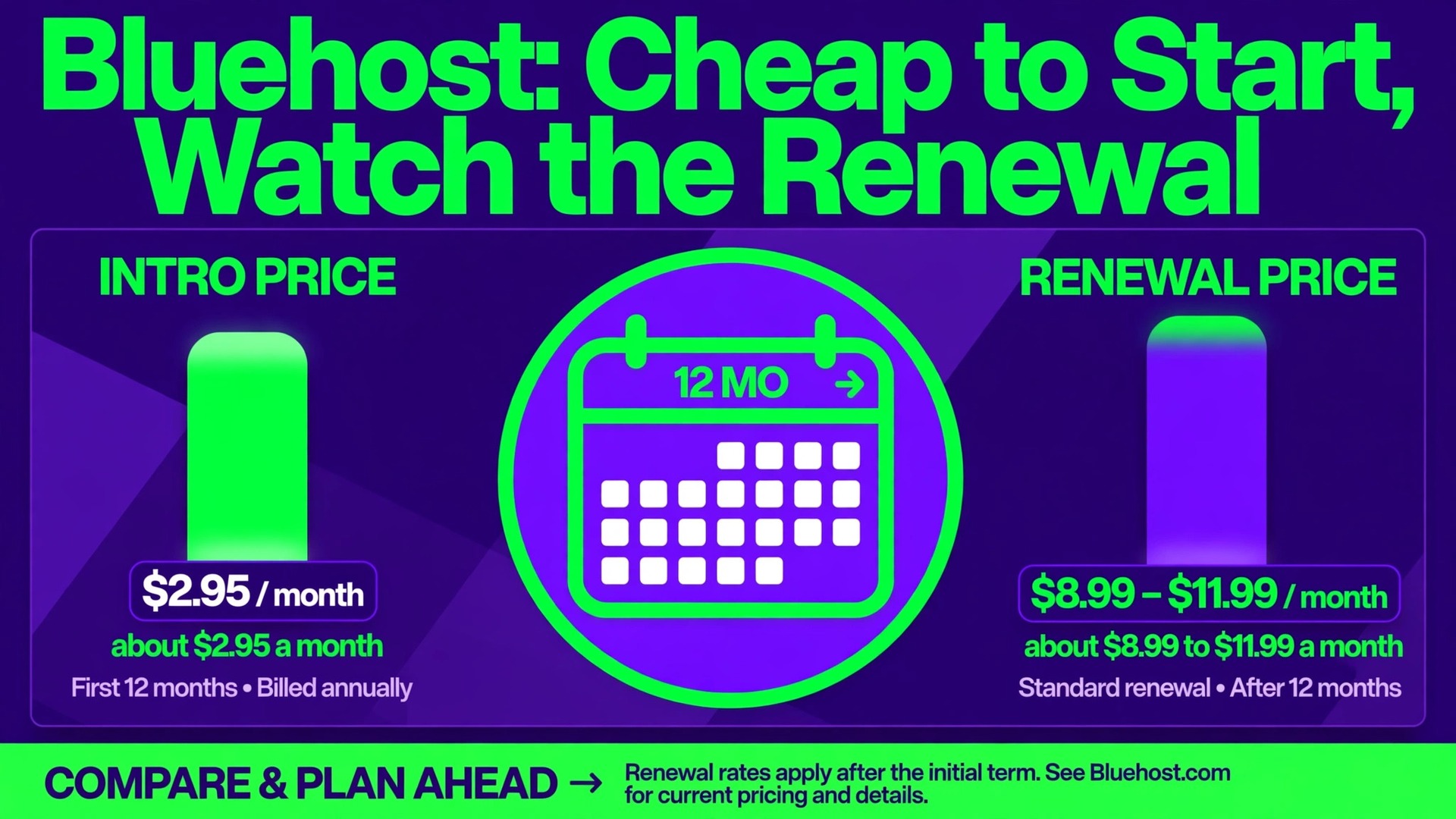
The cost of Bluehost for small business monthly starts cheap, and that starting price is genuinely good value. The problem is that the starting price ends, and the renewal price that replaces it can be three or four times higher, which turns a 3 dollar plan into an 11 dollar plan without any change in features, traffic or service. A small business that budgets only the intro rate will therefore be surprised in year two at best, and locked into an expensive renewal at worst, because migration takes time that a busy owner rarely has.
Bluehost is one of the most widely used budget WordPress hosts, recommended by WordPress itself for many years, and that popularity is not an accident. The signup flow is simple, WordPress installation takes a few clicks, and the first year cost is among the lowest in shared hosting. The honest question is not whether Bluehost is cheap to start, because it is, but whether the total cost over three to five years still beats rivals once renewals, add ons and the value of owner time are counted.
Prices in this guide are starting points drawn from published comparisons checked during research, and renewal figures vary between sources, so ranges are given where sources disagree. Confirm the exact intro price, renewal price and term on the vendor page at checkout, because promotions change frequently and the checkout page is the final word. Every total below states its assumptions plainly so it can be adjusted to a real site.
The Intro Price and the Renewal Price Are Two Different Bills
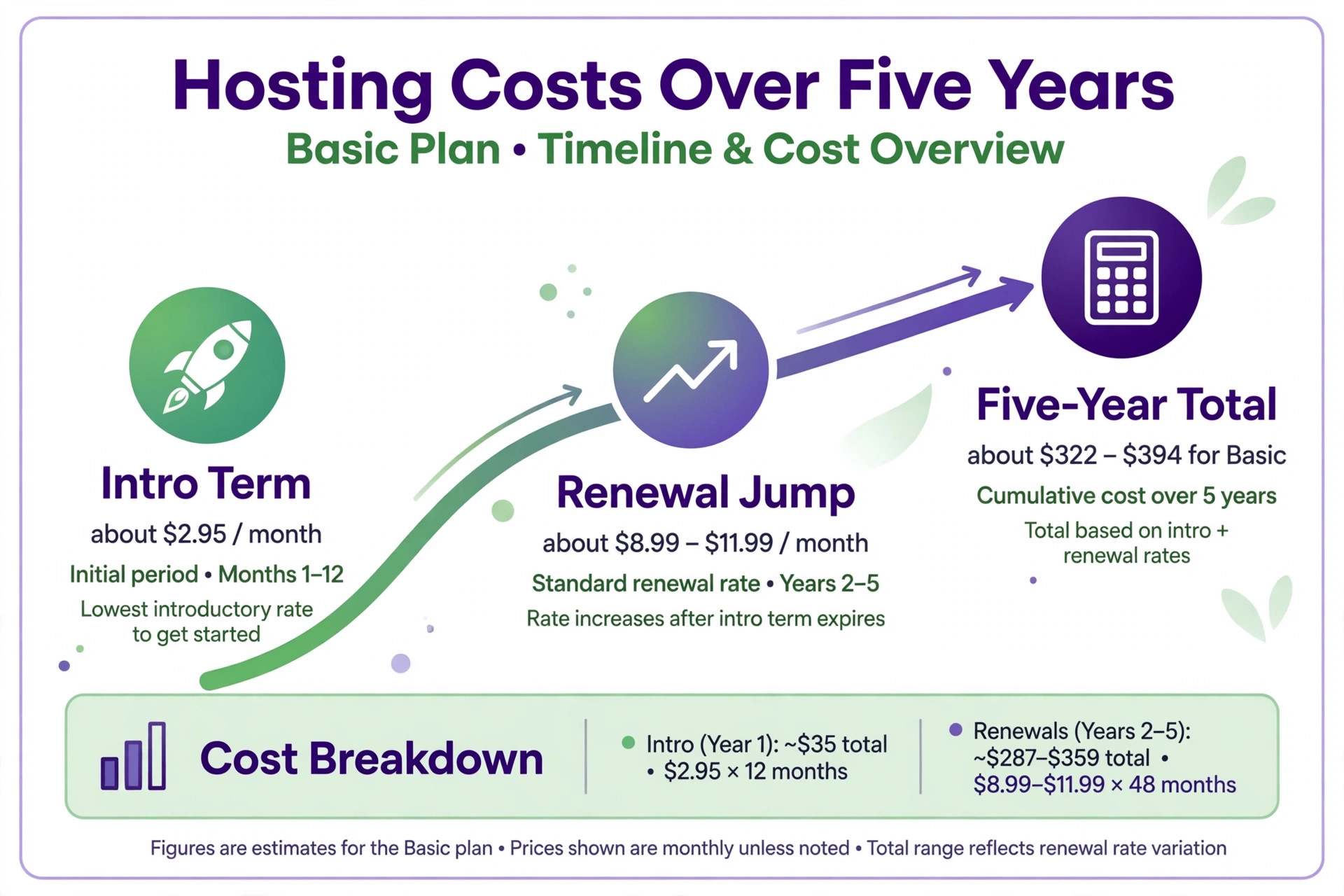
Bluehost introductory prices apply to a prepaid term, usually 12 to 36 months, and the monthly figure quoted is an average over that term rather than a monthly payment. A Basic plan advertised at about 2.95 dollars a month on a 36 month term means about 106 dollars paid up front, not 2.95 dollars leaving the account each month. That prepayment structure is standard in budget hosting, but it surprises owners who expect a monthly bill, and it matters for cash flow in the first year.
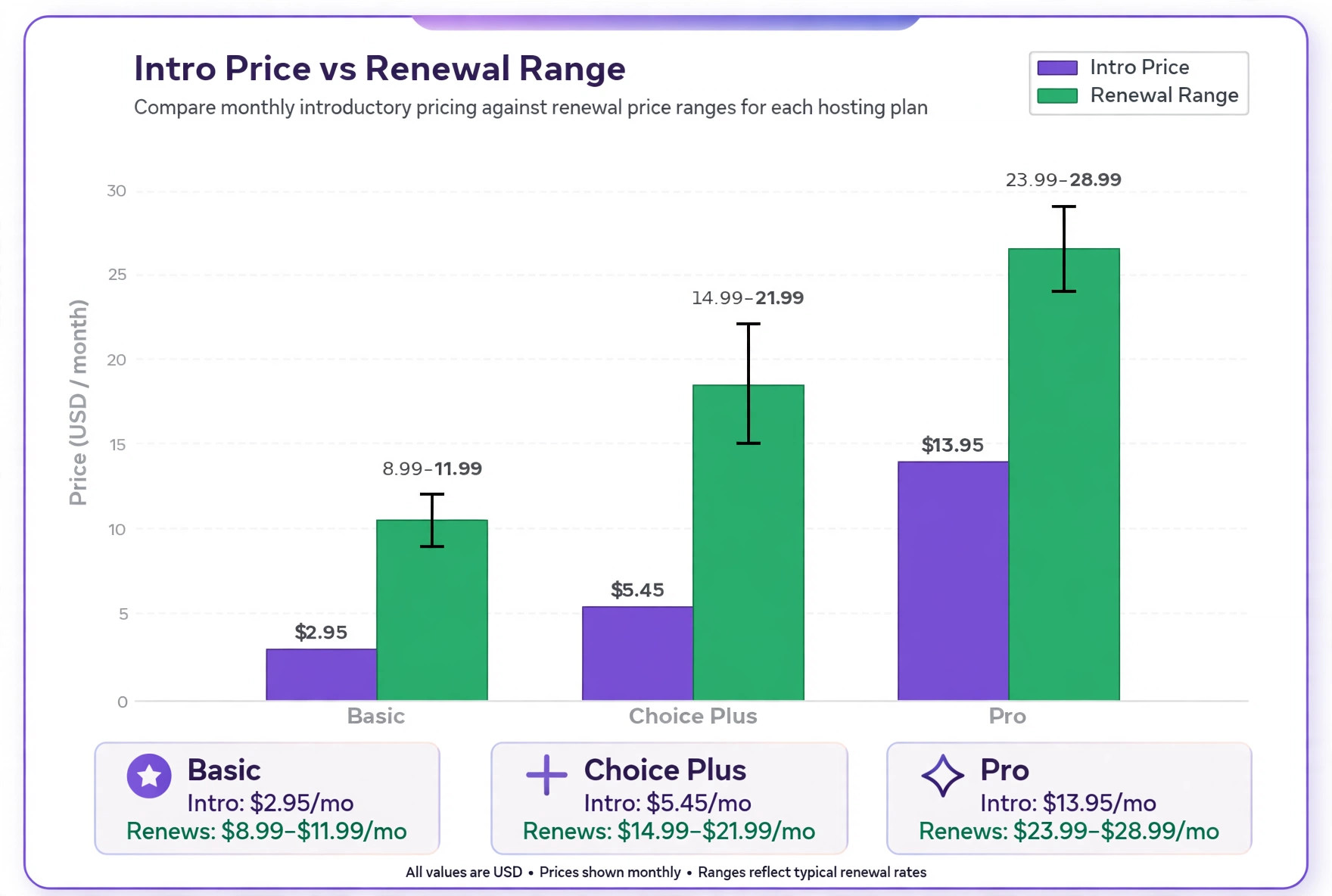
Renewal prices are where the real cost lives. Published comparisons report Basic renewing near 8.99 dollars a month in some sources and near 11.99 dollars a month in others, Choice Plus renewing near 14.99 dollars in some sources and near 21.99 dollars in others, and Pro renewing near 23.99 dollars in some sources and near 28.99 dollars in others. The range reflects different terms, regions and promotion cycles, and the only safe reading is that renewal costs roughly three to four times the intro rate on Basic, and roughly two to four times on higher tiers. A business that cannot afford the renewal price should not buy the intro price, because the renewal is the price that lasts.
Term length is the lever that controls how long the low price lasts. A 36 month term locks the intro rate for three years, which is the cheapest total for a business certain to stay, but it also prepays three years on a host the business has not yet tested. A 12 month term costs more per month and renews sooner, but it preserves the freedom to leave after a year of real experience. The cost of Bluehost for small business monthly planning should therefore start with a term decision, meaning certainty against flexibility, before any plan comparison begins.
A middle path suits many new businesses, meaning a 12 month term first, then a longer term at renewal once the host is proven. The first year costs more per month than the 36 month headline, but the business buys a cheap exit if performance or support disappoints. Once the host passes a year of real use, the longer renewal term becomes a safe saving rather than a gamble. That staged approach costs a little more in year one and removes the largest risk in the whole purchase, which is prepaying three years to a host that has not yet earned trust.
Basic, Choice Plus and Pro Compared Side by Side
Basic is the single site tier, priced near 2.95 dollars a month on a 36 month intro term in recent comparisons. It covers one website, modest storage, a free domain for the first year, free SSL and a small number of email accounts. A freelancer, a blogger or a solo professional with one brochure site will find Basic complete, provided the site stays small and photo light, because storage limits bite faster than owners expect once project photos accumulate.
Choice Plus is the value tier for most small businesses, priced near 5.45 dollars a month on a 36 month intro term in recent comparisons. It covers unlimited websites within shared limits, more storage, unlimited email accounts in most descriptions, domain privacy and automated backups for the first year in many offers. A business with a main site plus a landing page, or a business that wants backup and privacy included rather than bought separately, will find Choice Plus the sensible default, and the price gap over Basic is small against the features gained.
Pro is the performance tier, priced near 13.95 dollars a month on a 36 month intro term in recent comparisons. It covers unlimited websites with more storage, higher performance resources, a dedicated IP in many descriptions and premium support. A high traffic site, a busy store or a business running several sites that all matter will feel the performance difference, while a small brochure site will not, which is why Pro should be bought for measured traffic rather than anticipated growth.
| Plan | Intro price, 36 month term | Reported renewal range | Best for |
|---|---|---|---|
| Basic | About 2.95 dollars | About 8.99 to 11.99 dollars | One small site |
| Choice Plus | About 5.45 dollars | About 14.99 to 21.99 dollars | Most small businesses |
| Pro | About 13.95 dollars | About 23.99 to 28.99 dollars | Busy or multi site owners |
The step from Basic to Choice Plus is the important one, because it buys multiple sites, backups and privacy for about 2.50 dollars a month more on intro pricing. The step to Pro is a performance step, because it buys server headroom rather than new capabilities, and a business should upgrade when pages slow under real traffic, not before.
What the Cost of Bluehost for Small Business Monthly Really Includes
Every shared plan includes shared server resources, meaning many websites share the same CPU, memory and bandwidth, which keeps prices low and creates the performance ceiling that defines shared hosting. A quiet brochure site will never notice sharing, while a site that spikes during a promotion may slow when neighbours spike at the same time. That shared ceiling is the trade accepted for a 3 dollar starting price, and it should be understood before buying rather than discovered during a busy week.
WordPress integration is the strongest inclusion, because Bluehost installs WordPress in a few clicks, updates it automatically in many configurations and provides a control panel shaped around WordPress tasks. A business owner who wants to publish pages, add plugins and manage content without learning server administration will find that integration genuinely valuable, and it is a large part of why Bluehost remains popular despite renewal prices that look steep in isolation. The control panel, one click staging on higher tiers and built in caching all reduce the technical burden that WordPress otherwise places on an owner.
Email, domain and SSL inclusions differ by tier and by year in ways that matter. The free domain covers the first year on most plans and renews at market rates thereafter, SSL is included across plans, and email accounts range from a handful on Basic to unlimited on higher tiers in most descriptions. Domain privacy and automated backups appear on Choice Plus in many offers but may be paid add ons on Basic, so a Basic buyer who needs both should add their cost before comparing tiers. A plan that looks cheapest before add ons can become the expensive choice once privacy, backups and extra mailboxes are counted.
Worked Monthly Totals for a Brochure Site and a Store
Worked totals turn intro and renewal prices into a real bill, and the cost of Bluehost for small business monthly arithmetic must separate the intro term from the renewal term. Each scenario below states its term and renewal assumption plainly, includes only hosting unless stated, and uses the low end of reported renewal ranges for conservative totals, with the high end noted where it changes the conclusion.
A brochure site on Basic on a 36 month intro term pays about 2.95 dollars a month, which is about 106 dollars in total for three years. In year four, renewal at the low reported figure of about 8.99 dollars a month costs about 108 dollars a year, while renewal at the high reported figure of about 11.99 dollars a month costs about 144 dollars a year.
Add a domain renewal at roughly 15 to 20 dollars a year from year two onward, and the realistic monthly equivalent in the renewal years lands near 10 to 13 dollars a month all in. That renewal total is still affordable for most businesses, but it is roughly four times the intro monthly figure, which is why budgeting the intro rate alone misleads.
A brochure site on Choice Plus on a 36 month intro term pays about 5.45 dollars a month, which is about 196 dollars in total for three years. Renewal at the low reported figure of about 14.99 dollars a month costs about 180 dollars a year, while renewal at the high reported figure of about 21.99 dollars a month costs about 264 dollars a year. Add domain renewal, and the renewal years land near 16 to 23 dollars a month all in. The Choice Plus renewal total is the figure a growing business should compare against rival hosts, because it is the price that will actually be paid for most of the site life.
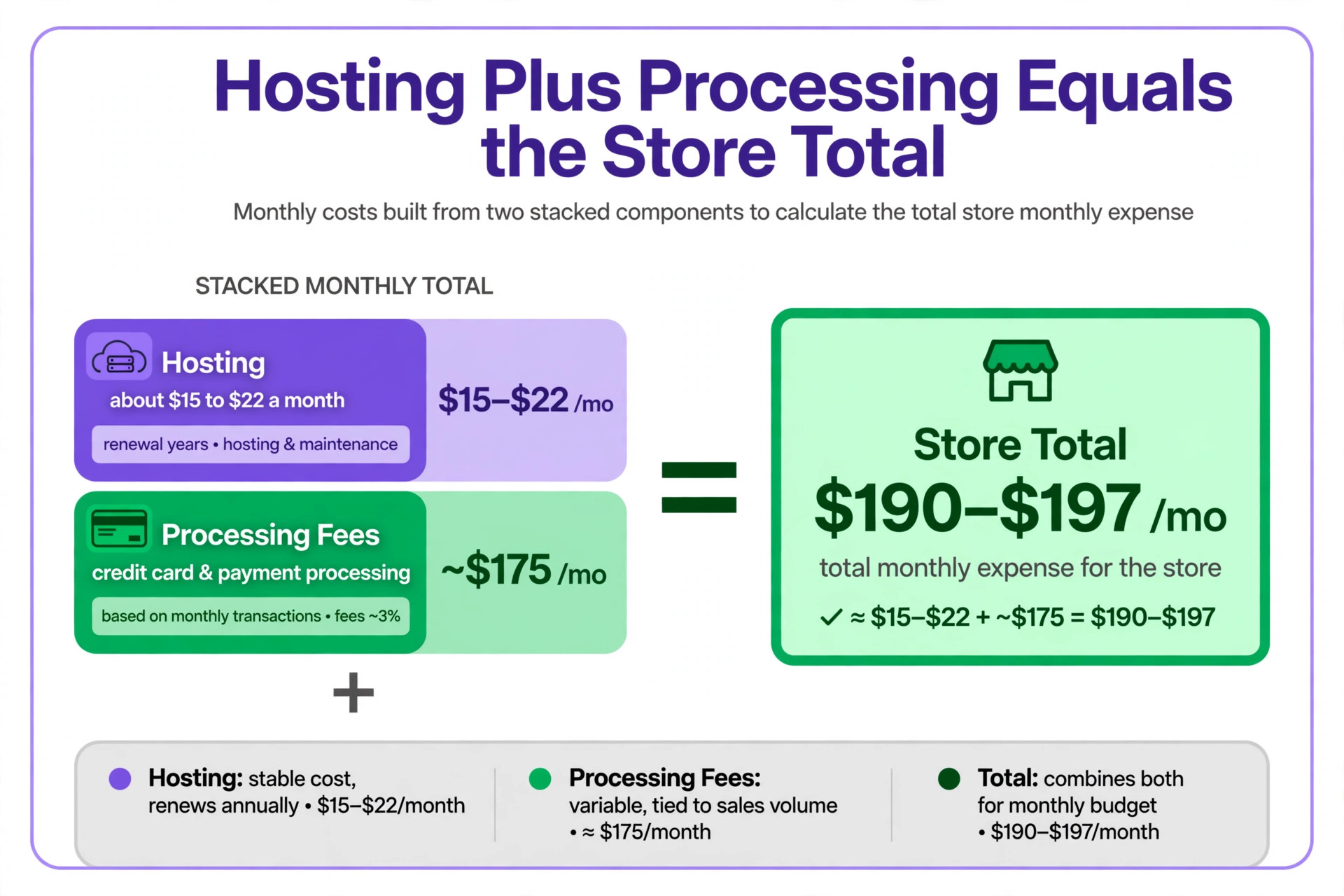
A store needs a different calculation, because hosting is only one line of a store bill. A small store on Choice Plus with WooCommerce, selling 5,000 dollars a month in 100 orders at 50 dollars average, pays about 5.45 dollars a month in hosting during the intro term plus about 175 dollars a month in card processing at the commonly reported rate of about 2.9 percent plus 30 cents per order, for a monthly total near 180 dollars before plugins and themes.
In renewal years, hosting rises to about 15 to 22 dollars a month, taking the total near 190 to 197 dollars a month. The lesson is that hosting is a small share of a store bill, and processing fees decide the real ranking, which means a store should choose hosting for reliability and speed rather than chasing the lowest hosting price.
A five year view sharpens the same point. Basic over five years, meaning three intro years plus two renewal years at the low renewal figure, totals about 322 dollars, while at the high renewal figure it totals about 394 dollars. Choice Plus over five years totals about 556 dollars at the low renewal figure and about 724 dollars at the high figure.
Those five year totals are the honest comparison against a rival host with flat pricing, because a rival charging a steady 10 dollars a month costs 600 dollars over five years, which sits between the Basic and Choice Plus totals. Flat pricing is not always cheaper, but it is always more predictable, and predictability has value for a business that hates surprises.
The Year Two Jump, Budgeting Past the Intro Term
Year two is when the starting price stops describing the bill, and the jump deserves its own budget line rather than a vague warning. A business that began on Basic at 2.95 dollars a month and renews at 8.99 dollars faces a monthly increase of about 6 dollars, which is small in cash but large in percentage, and it arrives alongside domain renewal and any add on renewals that were free in year one. The combined year two invoice can easily double or triple the year one monthly equivalent, even though nothing about the site changed.
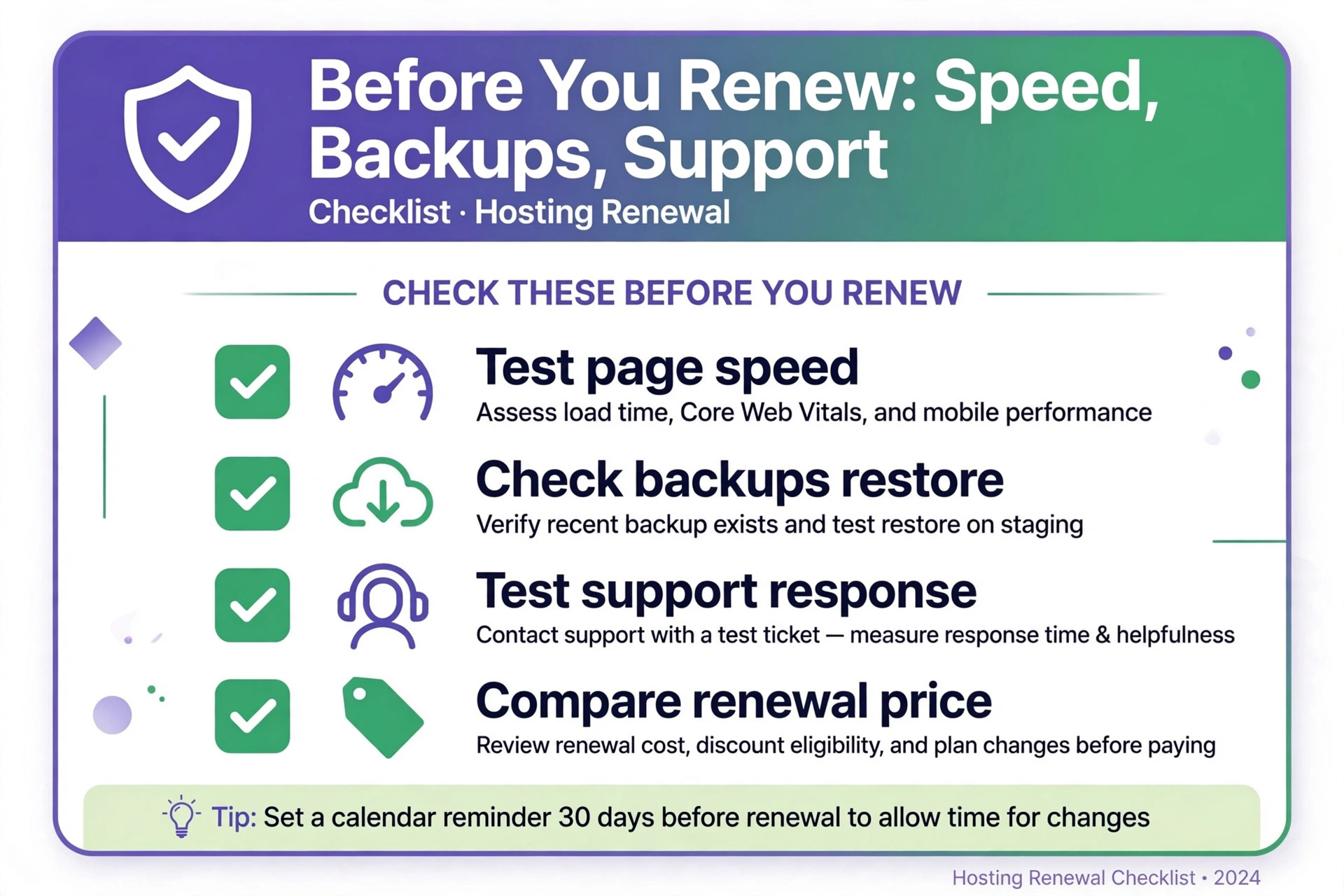
Three habits prevent the year two surprise from becoming a crisis. First, diary the renewal date and the renewal price at signup, with a reminder two weeks before renewal, so the decision to stay, downgrade or move happens on the owner timetable rather than the host timetable. Second, budget the renewal price from day one, treating the intro saving as a bonus rather than the budget, so year two feels like the plan working rather than a price rise. Third, test the host properly during the intro term, because a business that discovers performance or support problems in month 30 has already prepaid most of the term, while a business that tests in month two can still leave cheaply.
Downgrading at renewal is a legitimate strategy that owners overlook. A business that bought Choice Plus for multiple sites but now runs one site should drop to Basic at renewal and bank the saving, provided backups and privacy are preserved through other means. A business that bought Pro for traffic that never arrived should drop to Choice Plus the same way. Renewal is the one moment each year when the tier can change without penalty, and treating it as a decision point rather than an automatic charge is the simplest saving in hosting.
Checkout Upsells and Add Ons That Inflate the First Invoice
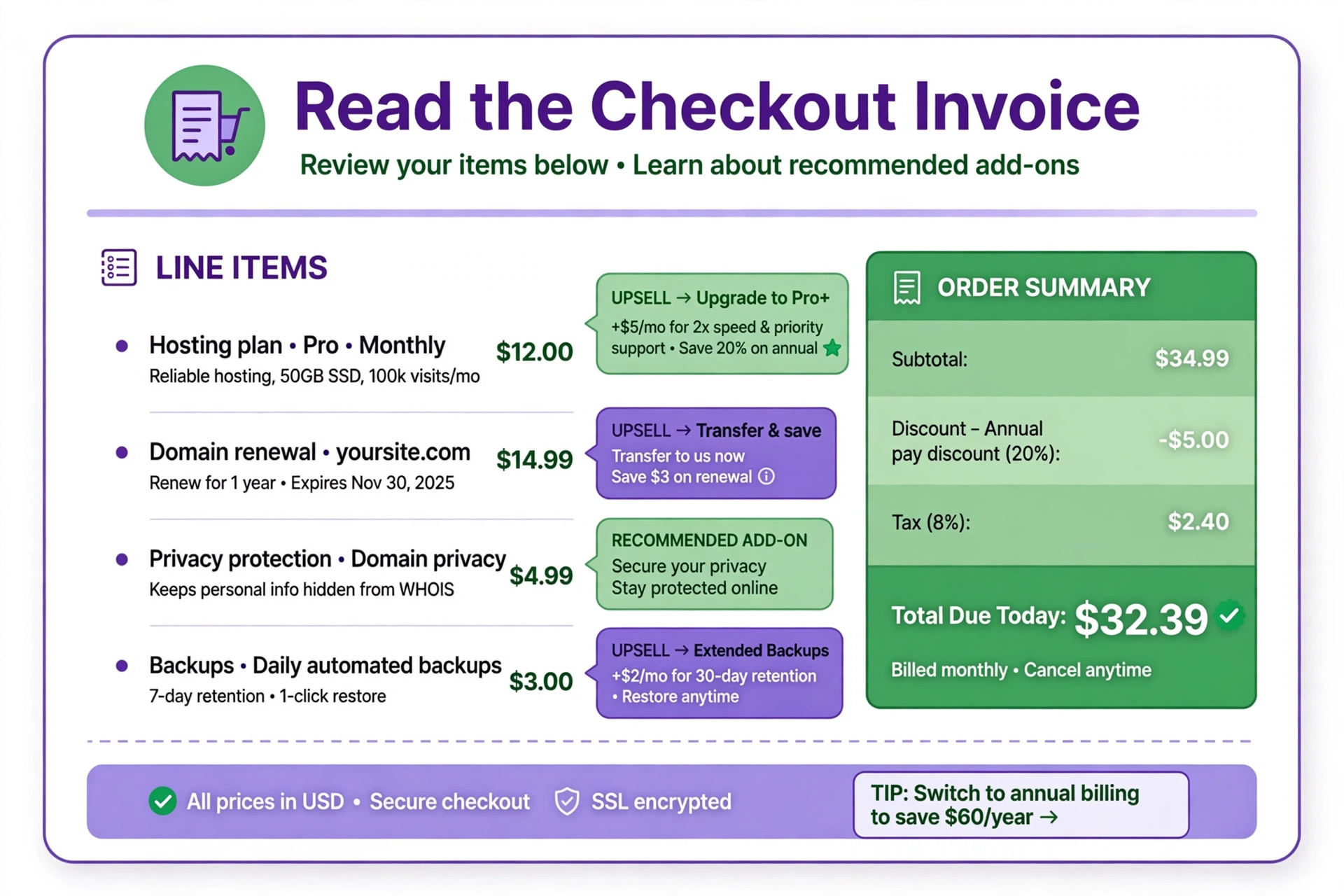
Checkout upsells are the second surprise in Bluehost pricing, because the advertised plan price is only the first line of the first invoice. Domain privacy, automated backups, security scanning, premium SSL upgrades and marketing tools can each add a few dollars a month, and a checkout that starts at 2.95 dollars a month can reach 8 or 10 dollars a month before the owner notices. The upsells are not hidden, but they are presented as recommended extras during a fast signup flow, which is exactly when owners click without reading.
The disciplined response is to buy only the plan at first checkout, then add extras deliberately after the site is live and the need is proven. Domain privacy matters for owners who do not want personal details in public domain records, and automated backups matter for any business site, but both can be bought after launch without penalty, and some needs can be met through WordPress plugins at lower cost. A security add on that duplicates a free plugin is waste, while a backup add on that actually runs daily and restores cleanly is worth paying for, and the difference can only be judged after the site exists.
Marketing credits and trial offers deserve the same scepticism. Search advertising credits, email marketing trials and SEO tool trials that arrive with signup often convert to paid subscriptions after a short period, and an owner who forgets the conversion date pays for tools never used. Note every trial end date at signup, cancel trials that produced no result, and treat any credit as a discount on a planned spend rather than a reason to spend. The first invoice should be reviewed line by line before payment, because a five minute review at signup can save a year of unwanted add ons.
Performance and Support, What the Low Price Buys
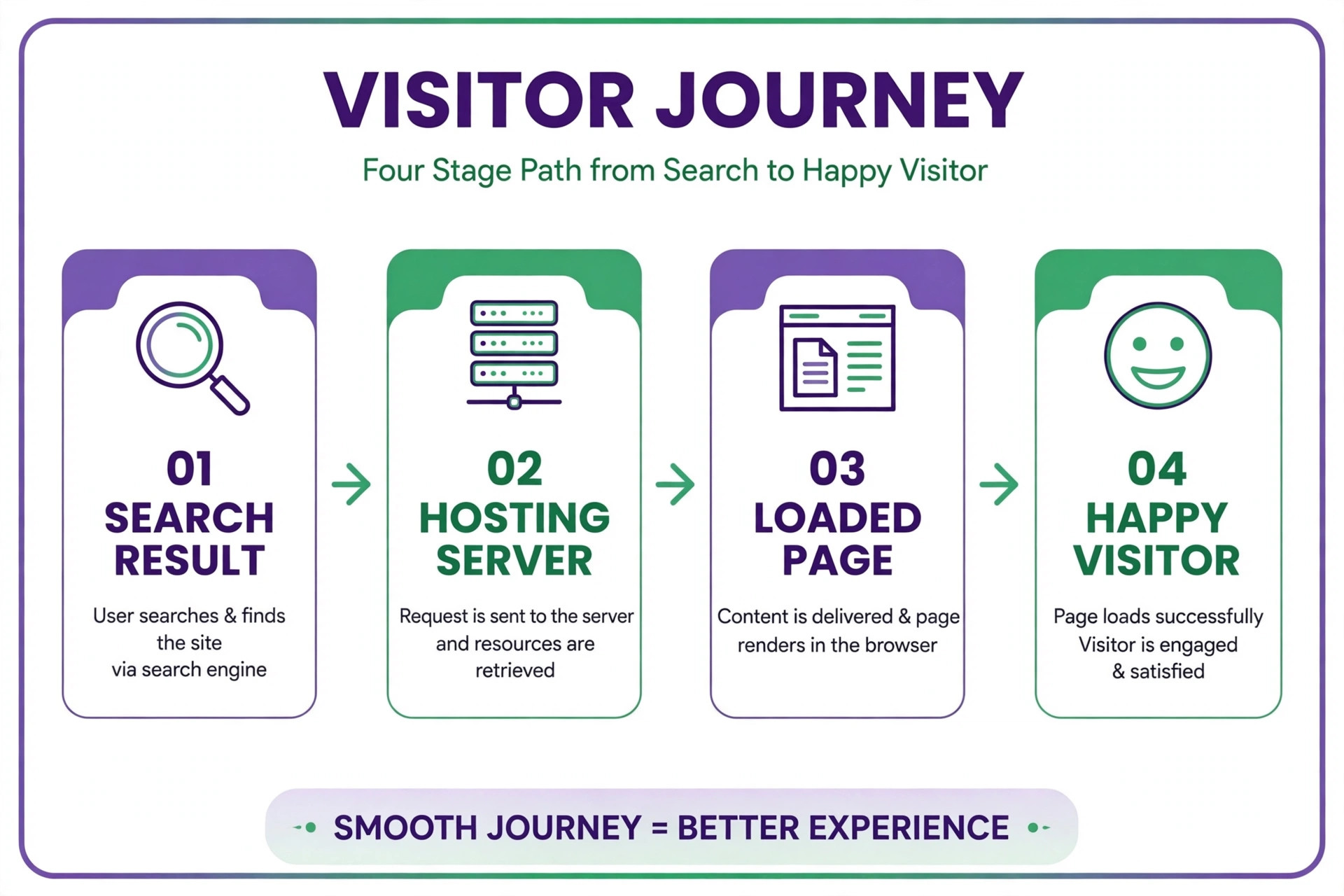
Shared hosting performance is adequate for brochure sites and small stores, and inadequate for busy sites, and the boundary depends on traffic patterns rather than page counts. A brochure site with a few hundred visitors a day will load acceptably on Basic or Choice Plus with caching enabled and images optimised, while a store with traffic spikes during promotions may slow on the same tiers when server neighbours spike simultaneously. Performance testing should use real pages with real images on a phone connection, not a demo page on office wifi, because customers browse on phones in weak signal areas.
Support quality is the second half of the value question, and it matters most when something breaks. Bluehost provides support around the clock through chat and phone in most descriptions, and the quality of that support varies by issue complexity, with simple tasks resolved quickly and complex WordPress problems taking longer. A business owner who can fix basic WordPress issues independently will rarely need deep support, while an owner who depends on support for every plugin conflict should weigh support responsiveness alongside price, because a day of downtime during a promotion costs more than a year of hosting difference.
Uptime guarantees and backup behaviour complete the picture. Shared hosts publish uptime figures that sound strong, but the practical question is how the host behaves during the rare outage, meaning communication, restoration speed and backup availability. A business site should have its own backup routine independent of the host, because a backup that only the host controls is not a backup the owner can rely on during a dispute. Export the site regularly, store a copy away from the host, and test restoration once, because a backup never tested is a hope rather than a plan.
Caching and image optimisation are the two levers an owner controls that most affect shared hosting speed. A caching plugin that serves static pages, plus images compressed before upload, can make a shared plan feel far faster than its price suggests, while unoptimised images and dozens of plugins can make even a higher tier feel slow. Before upgrading for speed, optimise first and measure again, because an upgrade that papers over unoptimised content wastes money every month. The cost of Bluehost for small business monthly value improves most when the site itself is lean, since lean sites run well on shared resources and leave headroom for traffic spikes.
When Bluehost Fits, and When a Different Host Fits Better
Bluehost fits a business that wants the cheapest honest start on WordPress, with simple setup, a familiar control panel and a low first year cost. A freelancer launching a portfolio, a new business testing whether a website earns its keep, or a blogger building an audience on a tight budget will find Bluehost a sensible starting point, provided the renewal price is budgeted from day one. The platform rewards owners who keep sites lean, images optimised and plugins few, because lean sites run well on shared resources.
A different host fits better in three situations. A busy store with steady traffic and revenue at stake should consider managed WordPress hosting or a higher performance plan, because speed and reliability directly affect conversion at that scale. A business with several important sites should compare flat priced hosts, because Bluehost renewal totals over five years can exceed a steady rival price. A business that hates renewal surprises should choose a host with transparent flat pricing, even at a higher starting price, because predictability removes the annual negotiation and diary management that Bluehost demands.
The deciding test is a real site under real conditions. Launch the site, load it with real content, test speed on a phone, submit the contact form, restore a backup once and contact support with a real question. A host that passes those five tests during the intro term is worth its renewal price, while a host that fails two of them should be left before the term locks the owner in. That one week test answers the value question better than any pricing table.
Seasonal businesses face a special version of the same decision, because traffic spikes during a peak season can expose shared limits that quiet months hide. A business with a Christmas rush, a summer season or an event driven spike should test under simulated load before the peak, not during it, and should consider Pro or a higher performance option for the peak months if tests show strain. The cost of Bluehost for small business monthly planning for a seasonal business should therefore include a pre season performance test, because a slow site during the only weeks that matter costs more than a year of hosting upgrades.
A Sensible Way to Buy Hosting Without Regret
Start on Choice Plus if the business runs more than one site or wants backups and privacy included, start on Basic if the site is truly one small brochure property, and move to Pro only when measured traffic or performance tests justify it. Buy the longest term only when the business is certain to stay, buy a shorter term when the host is still unproven, and diary the renewal date and price at signup without exception. That sequence captures the intro saving while keeping the exit open during the riskiest period.
Budget in two layers, meaning hosting plus system. The hosting layer is the plan and its renewal, while the system layer is domain renewal, email, premium themes and plugins, backups and owner time spent maintaining WordPress. A brochure site system total in renewal years near 12 to 15 dollars a month on Basic, or near 18 to 25 dollars a month on Choice Plus, is a realistic figure on the assumptions in this guide, and a store total must add processing fees before any comparison is meaningful. Review both layers at each renewal against real numbers, meaning traffic, storage used, sites live and add ons actually used, rather than against a feeling that a bigger plan must be better.

Frequently Asked Questions
How much does Bluehost cost per month for a small business?
A small business pays about 2.95 dollars a month for Basic, about 5.45 dollars a month for Choice Plus and about 13.95 dollars a month for Pro on 36 month intro terms in recent comparisons. Renewal prices are higher, reported near 8.99 to 11.99 dollars for Basic, 14.99 to 21.99 dollars for Choice Plus and 23.99 to 28.99 dollars for Pro. Those figures together describe the cost of Bluehost for small business monthly across the intro and renewal years.
Why is my Bluehost renewal price so much higher than the signup price?
Renewal prices reflect the regular rate, while signup prices reflect a promotional rate tied to a prepaid term. The promotion ends when the term ends, and the account renews at the regular rate unless the owner changes plan or provider before renewal. Budgeting the renewal price from day one removes the surprise, and diarying the renewal date gives time to decide before the charge lands.
Which Bluehost plan is best for a small business?
Choice Plus is the best fit for most small businesses, because it covers multiple sites, adds domain privacy and backups in many offers, and costs only a few dollars a month more than Basic on intro pricing. Basic suits a single small site with modest storage needs, while Pro suits busy sites or owners running several important properties. Start on the tier that fits real sites and traffic, not anticipated growth.
Does Bluehost include a free domain and email?
Most plans include a free domain for the first year, which renews at market rates from year two onward, and free SSL across plans. Email accounts range from a handful on Basic to unlimited on higher tiers in most descriptions, so a business with several staff mailboxes should confirm the email allowance for its tier before buying. The cost of Bluehost for small business monthly planning should include domain renewal from year two in every total.
Can I leave Bluehost before my term ends?
A business can move its site away at any time by exporting WordPress content and pointing the domain to a new host, but prepaid months are generally not refunded after the initial guarantee window, so leaving mid term wastes the prepayment. That is why term length matters, because a 36 month prepayment is cheap only if the business stays. Test thoroughly in the first weeks, and choose a shorter term when the host is still unproven.
Is Bluehost good for a WooCommerce store?
Bluehost can run a small WooCommerce store well, particularly on Choice Plus or Pro with caching and optimised images, and a dedicated online store plan exists for sellers who want store features bundled. A busy store with steady traffic should weigh managed hosting or higher performance tiers, because speed affects conversion and shared resources have limits. Price the store on system total, meaning hosting plus processing fees, rather than hosting alone.
More Reading on Stratilyze
For a closer look at how other builders price the same site, read Cost of Squarespace for a Small Business Monthly and Cost of Wix for a Small Business Monthly. Comparing those guides against Bluehost hosting plus WordPress costs shows where a builder bundle is cheaper in total and where self hosted WordPress wins on flexibility.