

A SaaS founder can build a pitch deck the old way, by opening a blank presentation, staring at the first slide, and spending a week moving boxes around while the fundraising window closes. That way produces a deck eventually, and it also costs the founder the week they should have spent talking to investors. The newer way gives an AI tool the company story, the numbers and the ask, and gets a structured first draft back in minutes, leaving the founder free to refine the argument instead of the layout. This comparison of the best ai pitch deck makers for saas founders looks at twelve tools that build investor decks, judged on how well they handle a SaaS story.
The stakes are specific to software companies. An investor does not want a pretty slide, they want to see the problem, the product, the traction, the market, the business model and the ask, in that order, with numbers that hold up. A deck tool that produces beautiful slides with no room for a revenue chart or a cohort table is useless to a SaaS founder, no matter how fast it works.
Price is friendly in this category. Most tools start between 9 and 20 dollars a month, with free tiers that are genuinely usable for a first draft. Each entry states the starting price from the vendor’s own published rates, and every figure should be confirmed on the vendor page before you pay.
Why a SaaS Pitch Deck Is Not a Sales Deck
A sales deck persuades a customer to buy, while a pitch deck persuades an investor to believe, and the difference shapes every slide. The best ai pitch deck makers for saas founders understand that an investor reads a deck looking for reasons to say no, scanning the traction slide for real numbers, the market slide for a credible size, and the team slide for evidence the founders can execute. A tool built for sales will fill the deck with benefit statements and miss the numbers an investor actually checks.
The second difference is the financial story. A SaaS deck needs room for monthly recurring revenue, growth rate, churn, net revenue retention and the unit economics that show whether the business works. Those numbers belong in charts, not in bullet points, and the tool has to make a clean chart from a small set of figures without the founder fighting the layout.
The third difference is the audience. A founder sends the same deck to ten investors, and each one reads it alone, without the founder in the room. The deck has to explain itself, with a clear narrative, a readable font and slides that work on a phone as well as a projector. Analytics matter here too, since knowing which investor opened the deck and which slide they read tells the founder who is actually interested.
The 12 Tools at a Glance
| Tool | Main job | Best for | Starting price |
|---|---|---|---|
| Gamma | Prompt to finished deck, docs and sites | Fast first drafts | From 9 dollars a month |
| Beautiful.ai | Brand-locked decks with smart templates | Investor decks that must stay polished | From 15 dollars a month |
| Pitch | Collaborative decks with analytics | Teams that build decks together | From 13 dollars a month |
| Plus AI | AI generation inside PowerPoint and Slides | Teams that must stay in native files | From 10 dollars a month |
| Canva | Design platform with AI deck tools | Founders who design everything in one place | From 12 dollars a month |
| Slidebean | Investor templates and financials | First-time founders raising a seed round | From 7 dollars a month |
| Decktopus | Quick decks with lead-gen forms | Fast decks with forms built in | From 10 dollars a month |
| Visme | Data-heavy decks and reports | Decks with charts and infographics | From 12 dollars a month |
| Prezi | Non-linear, zooming presentations | Founders who present live | From 7 dollars a month |
| Copilot in PowerPoint | AI inside Microsoft PowerPoint | Microsoft 365 users | From 10 dollars a month |
| Gemini in Google Slides | AI inside Google Slides | Google Workspace teams | From 14 dollars a month |
| SlidesAI | AI slides from text in Google Slides | Turning notes into slides quickly | From 10 dollars a month |
Best Pick by Job
| Job type | First pick | Second tool | Why this pair works |
|---|---|---|---|
| First seed deck, solo founder | Gamma | Slidebean | Gamma drafts fast and Slidebean adds investor structure |
| Series A, brand matters | Beautiful.ai | Pitch | Beautiful.ai keeps the brand tidy and Pitch adds analytics |
| Team already on PowerPoint | Plus AI | Copilot in PowerPoint | Plus AI generates in the file and Copilot refines it |
| Data-heavy deck, many charts | Visme | Gamma | Visme draws the charts and Gamma drafts the story |
| Live presentation, demo day | Prezi | Canva | Prezi moves well on stage and Canva covers the handouts |
The best ai pitch deck makers for saas founders depend on the round and the team. A solo founder raising a first seed round needs speed and investor structure, while a team raising a Series A needs brand control and analytics. The pairing above works because the first pick fits the main job and the second covers the gap.
How to Judge the best ai pitch deck makers for saas founders
Start with the investor structure. Ask the tool to build a deck from the company story, and check whether it produces the slides an investor expects, problem, solution, product, traction, market, business model, competition, team and ask, in a sensible order. A tool that produces a generic marketing deck with no traction or financial slides is not a pitch deck maker, whatever its name says.
Next, test the chart and data handling. Give the tool a small set of numbers, monthly revenue for twelve months, churn and growth, and see whether it draws a clean chart without the founder rebuilding it by hand. A weak tool turns the numbers into a decorative graphic that an investor cannot read.
Finally, check the export and the analytics. A founder needs to export to PowerPoint or PDF without the layout breaking, and needs to know who opened the deck and which slides they read. Confirm the number on the vendor page before you pay.
The 12 Tools in Detail
1. Gamma
Gamma is the quickest route from a prompt to a designed deck, and it has become the default first draft tool for founders. A founder types the company story or pastes notes, and Gamma builds a structured deck, with design, layout and images, in minutes. The free plan offers 400 one-time AI credits, Plus costs 9 dollars a month per seat billed annually, Pro 18 dollars, and Business 40 dollars a month per member.
The speed is the strength. Gamma 5, released in October 2026, starts creation as a conversation, asking about the goal and the audience, proposing a plan for the story and the look, and building once the founder approves it. The free plan already exports to PDF, PowerPoint, PNG and Google Slides.
The limits are the credit meter and the format. The free credits do not refresh, the output lives in Gamma’s own format, and export fidelity needs testing, since a deck that looks good in Gamma can shift in PowerPoint.
Gamma fits a solo founder who needs a strong first draft fast and is comfortable refining it. Among the best ai pitch deck makers for saas founders, it is the best starting point, and pairing it with a more structured tool for the final version gets the best of both.
2. Beautiful.ai
Beautiful.ai is the deck tool for founders who care about polish, with smart templates that keep layouts tidy no matter how many people edit the deck. It generates slides from a prompt, then keeps the design locked, so a team cannot accidentally break the brand. There is no free plan, only a 14-day trial, and Pro costs 15 dollars a month billed annually, with Team at 40 dollars a month per user.
The brand control is the main advantage. Smart Slides adapt automatically as content changes, keeping text inside the layout and images aligned, which matters when a deck goes through ten revisions before an investor meeting. The templates are designed for business and investor use, and the viewer analytics show who read the deck.
The trade-off is cost and flexibility. There is no free tier, the monthly price on short billing is steep, and the AI generation is less conversational than Gamma. A founder who wants to experiment freely will find the plan structure more restrictive.
Beautiful.ai fits a founder sending an investor deck where polish matters, especially a Series A founder whose deck will be read by partners. A first-time founder on a budget should start with Gamma, but for a high-stakes deck the polish here is worth paying for.
3. Pitch
Pitch is the collaborative deck platform, built for teams that build presentations together, with real-time co-editing, comments, templates and sharing analytics. The free workspace covers up to five members with unlimited presentations, Plus costs 13 dollars a month billed yearly, Team 19 dollars a month per seat, and Business 25 dollars a month per seat.
The collaboration is the strength. A founder, a co-founder and an advisor can edit the same deck at once, leave comments on a slide, and track which investor opened the deck and how long they spent on each slide. The templates are clean, and the brand controls keep the deck consistent.
The limits are the AI credit pool and the export. Pitch has a smaller AI credit allowance than Gamma Pro, and PowerPoint export sits on the Team plan and above, which means the cheapest paid plan cannot export to the format many investors expect.
Pitch fits a founding team that builds the deck together and wants analytics on who reads it. A solo founder may find Gamma faster, but a team that needs collaboration and tracking will get more from Pitch.
4. Plus AI
Plus AI generates presentations inside the file the team already uses, PowerPoint or Google Slides, which is its whole appeal. A founder who must stay in a native file, because the investors expect PowerPoint or the company standardises on Google Slides, can generate slides without leaving the application. Pricing starts at 10 dollars a month for Basic on annual billing, with Pro at 20 dollars and Teams at 25 dollars a month per seat.
The native file is the advantage. The generated deck is a real PowerPoint or Google Slides file from the start, so there is no export step to break the layout, and the team can edit it with the tools they already know. The generation is solid, with sensible structure and clean layouts.
The trade-off is breadth. Plus AI has no standalone site or document builder, no analytics, and a smaller template library than Canva or Beautiful.ai. The AI is good at structure and less good at visual distinction.
Plus AI fits a team that must stay in PowerPoint or Google Slides, especially a SaaS company with a corporate template or an investor who expects a native file. A solo founder who wants speed and design should start with Gamma instead.
5. Canva
Canva is the design platform most founders already use, and its AI deck tools turn it into a credible pitch deck maker. Magic Design generates slides from a prompt, the template library covers investor decks, and the brand kit keeps colours, fonts and logos consistent across every slide. Pricing is free with limited AI uses, Pro costs 144 dollars a year, and Teams pricing varies by seat.
The breadth is the strength. A founder can build the deck, the one-pager, the social posts and the demo-day handouts in one place, with one brand kit across every format. The template library is the largest on this list, and the export to PowerPoint works well.
The limits are the AI quality and the investor structure. Canva’s AI deck output is less polished than Gamma or Beautiful.ai, and the tool does not enforce an investor structure, so a founder has to know which slides to include. The analytics are anonymous on Pro.
Canva fits a founder who already designs everything in Canva and wants the deck in the same place. A founder who needs investor structure and analytics should pair it with Slidebean or Pitch, but for a mixed team making decks, social and print together, Canva is the practical choice.
6. Slidebean
Slidebean is built for investor pitch decks, with templates designed around the slides an investor expects and financial tools that help a founder build the numbers. The free tier offers templates without sharing or exports, and the Starter plan costs 84 dollars a year, with higher tiers adding more features. It is the most investor-focused tool on this list.
The investor structure is the strength. Slidebean’s templates follow the standard pitch flow, problem, solution, product, traction, market, business model, team and ask, and the financial tools help a founder model revenue, costs and the ask. The view tracking on Starter and above shows who opened the deck.
The limits are the free tier and the design range. The free plan does not allow sharing or exports, so a founder has to pay to send the deck anywhere, and the templates are more uniform than Gamma or Beautiful.ai, which means decks can look similar.
Slidebean fits a first-time founder raising a seed round who wants investor structure and financial help. A founder who already knows the pitch flow may find Gamma faster, but for a founder learning what an investor wants, Slidebean is the best teacher on this list.
7. Decktopus
Decktopus builds decks quickly and adds lead-generation forms inside the deck, which makes it a different kind of tool from the pure pitch makers. A founder can create a deck, embed a form to capture investor interest, and track who engages. The first deck is free, Pro costs 10 dollars a month billed yearly, and Business plans add more features.
The speed and the forms are the strengths. A founder can go from a prompt to a finished deck in minutes, with a clean design and sensible structure, and the embedded form turns the deck into a capture tool rather than a static document. The analytics on Pro show who viewed the deck.
The trade-off is depth. Decktopus is built for quick decks and internal updates, and the investor structure is less developed than Slidebean, while the design is less polished than Beautiful.ai. The AI credit allowance is modest on the lower tiers.
Decktopus fits a founder who needs a fast deck with a form built in, especially for an early conversation or a demo day. A founder raising a priced round should use Slidebean or Gamma for the main deck, and Decktopus for the quick version.
8. Visme
Visme is the tool for data-heavy decks, reports and infographics, with charts, forms and interactive content built in. A SaaS founder who needs to show revenue, growth, churn and market data will find Visme’s chart tools the strongest on this list. Pricing starts at 12 dollars a month for Starter on annual billing, with higher tiers adding more features and AI credits.
The charts are the strength. Visme lets a founder build clean, readable charts from a small set of numbers, add interactive elements, and present the data in a way an investor can actually read. The templates cover reports and investor decks, and the brand controls keep the deck consistent.
The limits are the AI allowance and the learning curve. The AI credit allowance is modest on the lower tiers, and the interface has more to learn than Gamma, with features spread across several panels. The deck generation is also less conversational than Gamma, producing solid slides that need more manual work to feel like a story.
Visme fits a SaaS founder whose deck is data-heavy, with charts that have to be readable and accurate. Among the best ai pitch deck makers for saas founders, it is the strongest choice when the numbers carry the argument, while a founder who needs speed and story above all should start with Gamma.
9. Prezi
Prezi is the non-linear presentation tool, where slides sit on a single canvas and the presenter zooms between them, which makes it a different experience from a standard deck. It shines when presenting live, and a founder who pitches on stage will find it more engaging than a linear slide deck. Pricing starts at 7 dollars a month for Standard, with Plus and Premium tiers adding more features.
The live experience is the strength. A founder can zoom from the market overview to a product detail and back, following the investor’s questions rather than the slide order, which makes a live pitch feel like a conversation. The visuals are distinctive, and the templates are clean.
The trade-off is the format. Prezi is not a standard deck, and an investor who receives a Prezi link may find it harder to read alone than a PowerPoint or PDF. The AI features are limited compared with Gamma, the export options are narrower, and the tool is less suited to a deck that must be read without the founder present.
Prezi fits a founder who presents live, especially at a demo day or a conference, and wants the pitch to feel like a conversation. A founder who sends the deck by email should use Gamma or Beautiful.ai for the reading version, and Prezi for the stage.
10. Copilot in PowerPoint
Copilot in PowerPoint brings AI into the presentation tool most companies already use, generating slides, summarising content and suggesting design changes inside PowerPoint itself. It requires a Microsoft 365 subscription, with Personal at 10 dollars a month and the Copilot Business add-on at 21 dollars a month per user on yearly billing.
The integration is the strength. A founder who already lives in Microsoft 365 can generate a deck, refine it with Copilot, and share it through OneDrive and Teams without leaving the ecosystem. The AI understands the company’s documents and keeps the deck in a native PowerPoint file that any investor can open.
The limits are the price and the generation quality. The Copilot add-on is an extra cost on top of Microsoft 365, and the slide generation is less visually striking than Gamma or Beautiful.ai, producing solid corporate slides rather than distinctive designs. The tool is also less suited to a founder who wants a fast first draft from a prompt.
Copilot in PowerPoint fits a SaaS founder whose company already runs on Microsoft 365 and wants AI inside the tools they use daily. A founder who wants the fastest first draft should start with Gamma, but a Microsoft team will get more from Copilot over time.
11. Gemini in Google Slides
Gemini in Google Slides brings Google’s AI into the presentation tool that many startups use, generating slides, images and summaries inside Google Slides. It is available through Google Workspace Business Standard at 14 dollars a month per user on annual billing, or Google AI Pro at 20 dollars a month, with a Workspace Experiments option for personal accounts.
The Workspace integration is the strength. A founder can generate slides from a Google Doc, pull numbers from a Sheet, and collaborate in real time with the team, all inside the tools the startup already uses. The image generation is solid, and the output is a native Google Slides file that any investor can open.
The trade-off is the generation quality and the limits. Gemini’s slide generation is less visually distinctive than Gamma, and the per-user limits on AI use can slow a founder who iterates a lot. The tool is also less focused on investor structure than Slidebean, so a founder has to know which slides to include.
Gemini in Google Slides fits a SaaS founder whose startup already runs on Google Workspace and wants AI inside the tools they use. A founder who wants the fastest first draft should start with Gamma, but a Google team will find Gemini a natural extension.
12. SlidesAI
SlidesAI turns text into slides inside Google Slides, which makes it the simplest tool on this list for a founder who already has notes. A founder pastes text, chooses a style, and SlidesAI builds a deck with a sensible structure and clean design. Pricing starts at 10 dollars a month, with higher tiers adding more presentations and features.
The simplicity is the strength. A founder who has written the company story in a document can turn it into slides in minutes, without learning a new tool or writing a prompt. The output is a native Google Slides file, and the tool handles the layout so the founder can focus on the argument.
The limits are depth and distinction. SlidesAI is a text-to-slides tool, not a full pitch platform, with no analytics, no investor templates and no financial tools. The designs are clean but uniform, and a deck built only with SlidesAI can look generic.
SlidesAI fits a founder who has written notes and wants slides quickly, especially a founder who works in Google Slides and wants a first draft without a learning curve. A founder raising a serious round should use it for the draft and a more investor-focused tool for the final version.
What a Founder Pays for AI Deck Tools in a Year
The monthly fee is the smallest part of the real cost. A founder comparing the best ai pitch deck makers for saas founders should add the credit cost, since most AI deck tools meter generation by credits, and a founder who iterates a lot will burn through a monthly allowance quickly. A 9 dollar plan that needs an 18 dollar upgrade after two decks is not a 9 dollar plan.
The second cost is time. A deck tool that saves a week of layout work is worth far more than its subscription to a founder whose time is the scarcest resource in the company, while a tool that produces a deck the founder has to rebuild by hand is a cost, not a saving.
Finally, watch the renewal and the export limits. Free plans often limit exports, watermark slides or cap the number of decks, and paid plans can limit the AI credits or the analytics. Confirm the number on the vendor page before you pay, and pay monthly for the first two months.
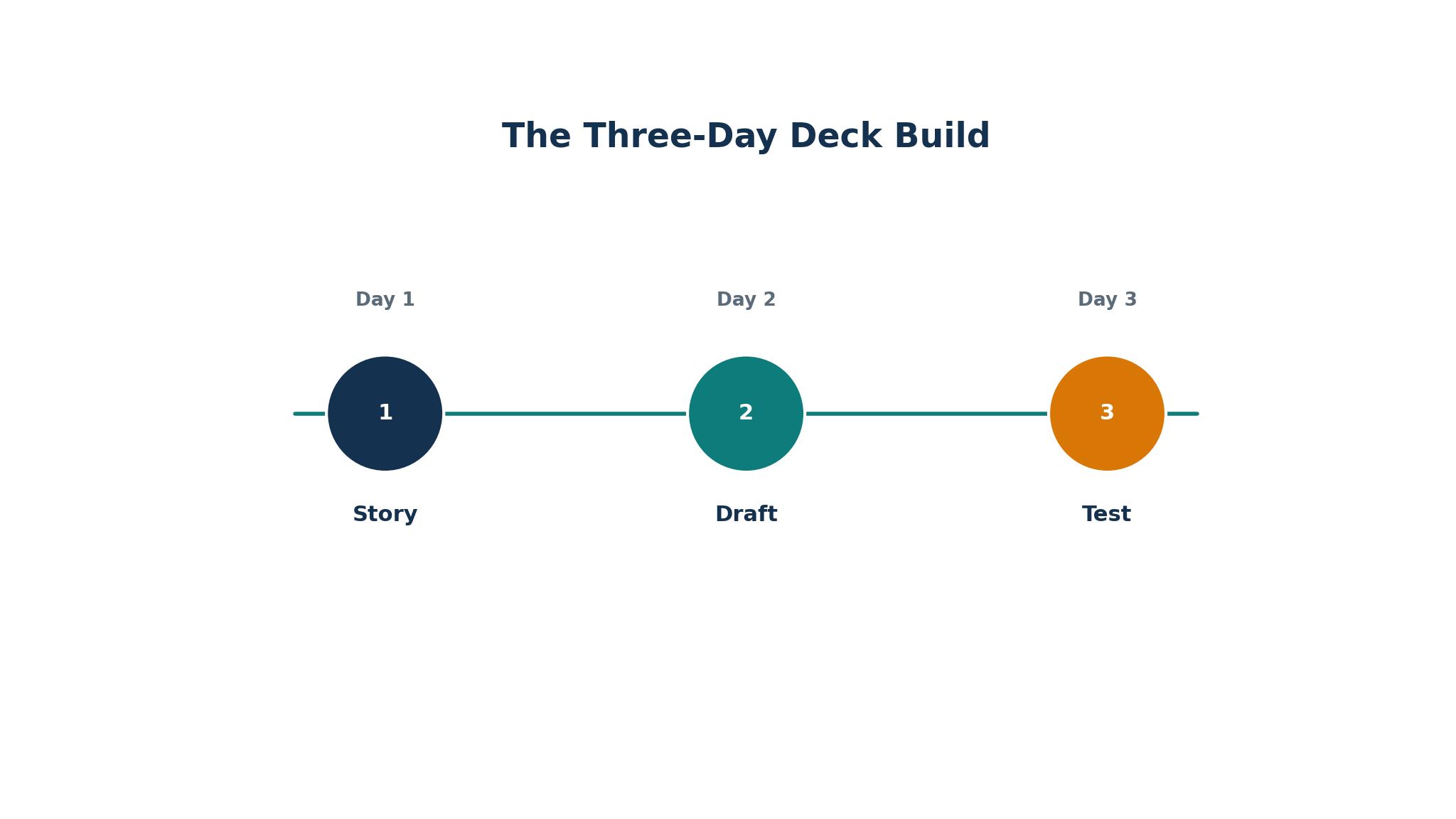
Building an Investor Deck in Three Days
Day one is for the story. Write the company story in a document, with the problem, the solution, the product, the traction, the market, the business model, the competition, the team and the ask, each in a few sentences. Do not open a deck tool yet, since a tool cannot fix a story that is not clear.
Day two is for the draft. Give the story to the chosen tool from the best ai pitch deck makers for saas founders, let it build the first draft, and then fix the structure, the numbers and the ask. Check every chart, verify every number, and cut any slide that does not help an investor decide.
Day three is for the test. Send the deck to a friendly advisor, watch which slides they spend time on, and fix the ones they skip. Export to PowerPoint and PDF, check the layout on a phone, and make sure the file opens cleanly. Then send it to the first investor.
– Write the story in a document before opening any deck tool. – Let the AI build the first draft, then fix the structure and numbers. – Cut any slide that does not help an investor decide. – Test the export on a phone and in PowerPoint before sending. – Send to one friendly advisor first, then to investors.

Frequently Asked Questions
Will investors know the deck was made by AI?
Probably, and it does not matter if the story is strong. Investors care about the numbers, the traction and the team, not about which tool built the slides. A deck with a strong story will succeed whatever tool built it, while a deck with a weak story will fail. The founder should always rewrite the AI output in their own voice and verify every number before sending.
Can I export the deck to PowerPoint?
Yes, most tools on this list export to PowerPoint, PDF, PNG or Google Slides, but the fidelity varies. Gamma exports to all four formats, Beautiful.ai exports editable PowerPoint, and Plus AI generates inside PowerPoint from the start. Always test the export with the real deck before sending it.
Which tool is best for financial slides?
Visme is the strongest for financial slides, because its chart tools are built for data-heavy decks and the charts stay readable. Slidebean is the best for the financial story, since its templates and financial tools help a founder model revenue, costs and the ask. A founder who needs both should build the charts in Visme and the story in Gamma or Slidebean.
Do I need a designer to make a good pitch deck?
No, not with the tools on this list. Gamma, Beautiful.ai and Canva all produce professional designs from a prompt, and the smart templates keep the layout tidy. A designer helps for a Series B or a brand-critical deck, but a seed-stage founder can build a strong deck alone.
How long does it take to build an investor deck?
A first draft takes an afternoon with an AI tool, and a deck worth sending takes three days, including the story, the draft, the numbers and a test with an advisor. A founder who tries to build a deck in a day will send a weak deck, and a founder who spends a month will miss the fundraising window.
What about data rooms and analytics?
Several tools on this list include analytics, with Pitch offering per-recipient tracked links and Beautiful.ai showing viewer and slide analytics. Slidebean tracks views on its Starter plan and above. A founder who needs a full data room should use a dedicated tool for that, but the deck analytics here are enough to see which investor is actually reading the deck.
The Deck Tool That Gets a SaaS Founder Funded
A solo founder raising a first seed round should start with Gamma, because it turns a story into a deck faster than any other tool here. A founder raising a Series A should choose Beautiful.ai, because the polish and brand control matter when partners read the deck. A team that must stay in PowerPoint should choose Plus AI, and a data-heavy deck should be built in Visme. The best ai pitch deck makers for saas founders all do the same job in different ways, and the right one is the one that fits the round, the team and the story.
Write the story first, let the AI build the draft, and send the deck to one friendly advisor before any investor sees it. The first time an investor replies asking for a meeting, the value of a good deck will be obvious.