

Instantly is the best cold email software for startups sending their first serious campaign, because the Growth plan at $47 a month includes 5,000 emails and unlimited warmup, which covers a real outreach program without a per seat meter. Smartlead is the pick for startups that need deliverability depth, at $39 a month for the Base plan on annual billing. The fifteen tools below compare price, sending limits, warmup and inbox rotation, so a startup can pick the tool that protects its domain while it books meetings.
Cold email is the cheapest way for a startup to reach buyers it does not know yet, and it is also the fastest way to burn a domain. The difference is not the email copy. It is the sending setup, which means warmed inboxes, rotated sending domains, verified lists and reply handling that keeps the domain out of spam folders.
Most startups buy the wrong tool first. They pick the cheapest plan, send 500 emails on day one from the main company domain, and wonder why replies stop arriving in week two. This guide sorts the fifteen tools by the deliverability features that decide whether those emails land in the inbox.
The 15 Tools at a Glance
| Tool | Main job | Best for | Starting price |
|---|---|---|---|
| Instantly | High volume sending with warmup | Startups scaling outreach | $47/mo |
| Smartlead | Deliverability first sending | Startups that fear spam folders | $39/mo |
| lemlist | Multichannel outreach with personalisation | Startups adding LinkedIn steps | $69/mo |
| Apollo | Prospecting database plus sequences | Startups that need contacts too | Free plan |
| Woodpecker | Simple sequences with warmup | Small teams, clean sending | Not published |
| Mailshake | Outreach with built in data finder | Startups without a list | Not published |
| Reply.io | Multichannel sales engagement | Startups running full sequences | Not published |
| Saleshandy | Affordable sending with warmup | Budget startups | Not published |
| GMass | Gmail based bulk sending | Startups living in Gmail | Free plan |
| Snov.io | Prospecting plus cold email | Startups building lists | Not published |
| Hunter Campaigns | Verified emails plus sending | Startups that verify first | Not published |
| Klenty | Sales engagement for growing teams | Startups with an SDR team | Not published |
| Outreach | Enterprise sales execution | Funded startups scaling sales | Quote-based |
| Mixmax | Gmail sequences with tracking | Gmail first startups | Free plan |
| Yesware | Gmail and Outlook sales tracking | Startups tracking every open | Not published |
Best Pick by Job
| Job type | First pick | Second tool | Why this pair works |
|---|---|---|---|
| First campaign, wants volume fast | Instantly | Smartlead | Instantly sends 5,000 emails cheaply, Smartlead protects deliverability |
| Deliverability matters most | Smartlead | Instantly | Smartlead leads on inbox placement, Instantly adds volume |
| Needs contacts as well as sending | Apollo | Snov.io | Apollo has the bigger database, Snov.io is cheaper to start |
| Lives in Gmail, small budget | GMass | Mixmax | GMass sends bulk from Gmail free, Mixmax adds sequences |
| Multichannel with LinkedIn steps | lemlist | Reply.io | lemlist is simpler to run, Reply.io scales further |
A startup sending its first campaign should start with Instantly Growth at $47 a month, or $37.60 on annual billing. The plan includes 5,000 emails, 1,000 uploaded contacts and unlimited warmup, which is enough for a real program of 50 to 100 emails a day. The flat price means adding a teammate costs nothing extra, and that matters when the whole founding team sends.
A startup that has already burned a domain once should start with Smartlead Base at $39 a month, or $32.50 on annual billing. The Base plan includes 6,000 sends and 2,000 contacts, with inbox rotation and deliverability tools that catch problems before they become a blocklist. That is the core test when you compare the best cold email software for startups, because a cheap tool that lands in spam costs more than an expensive tool that lands in the inbox.
Which Cold Email Tool Is Best for a Startup Sending Its First Campaign?
Instantly is the best first tool for most startups, because the Growth plan at $47 a month buys 5,000 emails, unlimited warmup and unlimited inboxes on higher plans without a per seat charge. A two person founding team can run separate inboxes from one subscription, and the warmup runs automatically in the background while the team writes the first sequence.
Smartlead is the better first tool if the startup sends to large lists from day one. Base at $39 a month on annual billing includes 6,000 sends, inbox rotation and a deliverability dashboard that shows which inbox is struggling before the whole campaign suffers. The per send limits are generous, and the Pro plan at $94 a month jumps to 90,000 sends for a team that scales fast.
Woodpecker is the quiet third option for a team that wants the simplest possible setup. The sequences are clean, the warmup is included, and the learning curve is the shortest in this guide.
How to Choose the Best Cold Email Software for Startups
Start by counting sends, not seats. A startup sending 100 emails a day needs about 2,000 sends a month, which fits the entry plan of almost every tool here. A startup sending 500 a day needs 10,000 sends, which pushes it to Instantly Hypergrowth at $97 a month or Smartlead Pro at $94 a month. The send limit, not the headline price, decides the real cost.
Next, check warmup and inbox rotation. The best cold email software for startups includes automatic warmup that raises sending volume slowly, and rotation across several inboxes so no single inbox carries the whole load. A tool without warmup forces the startup to buy a second product, which wipes out any saving on the plan price.
Then look at the list. A startup without contacts needs a database, and Apollo and Snov.io bundle prospecting with sending. A startup with a list already needs verification, and Hunter Campaigns verifies before sending.
The 15 Tools in Detail
The fifteen tools below cover high volume senders, deliverability specialists, Gmail natives and enterprise platforms. Each one is judged on price, sending limits, warmup and the real cost of scaling, so this roundup of the best cold email software for startups stays practical.
1. Instantly
Instantly Growth costs $47 a month, or $37.60 on annual billing, and includes 5,000 emails, 1,000 uploaded contacts and unlimited warmup. Hypergrowth costs $97 a month, or $77.60 annual, and raises the limit to 125,000 emails. There is no per seat charge, so the whole team sends from one subscription, and the inbox rotation spreads volume across as many inboxes as the startup connects.
The analytics are thinner than the enterprise tools here, and the support is mostly chat based, so a team that needs a dedicated manager will find less hand holding. The sending itself is the strength, and the flat price makes budgeting simple for a startup that hates surprise bills.
It suits startups scaling outreach fast. The 5,000 email Growth plan covers a real program, and the jump to Hypergrowth is cheap when volume grows.
Start on Growth with two warmed inboxes and 50 emails a day, and raise the volume only after a week of clean inbox placement.
2. Smartlead
Smartlead Base costs $39 a month, or $32.50 on annual billing, and includes 6,000 sends and 2,000 contacts. Pro costs $94 a month, or $78.30 annual, and raises the limit to 90,000 sends. The platform leads on deliverability, with inbox rotation, spam word checks and a dashboard that shows placement by inbox before a problem spreads.
The interface is busier than Instantly, and the learning curve is steeper for a first time sender. The Base plan also caps contacts at 2,000, so a startup with a large list pays for Pro sooner than the send limit alone would suggest.
It suits startups that care about inbox placement more than raw volume. The rotation and monitoring catch deliverability problems early, which is worth more than a few extra sends.
Run the deliverability dashboard daily for the first two weeks, and move a struggling inbox to warmup before it drags the campaign down.
3. lemlist
lemlist Email costs $69 a month, or $55 on annual billing, and includes 50,000 emails. Multichannel costs $109 per user per month, or $87 annual, and adds LinkedIn steps, calls and a database. The personalisation is the draw, with custom images and landing pages that lift reply rates, and the multichannel steps suit a startup that prospects on LinkedIn as well as email.
The per user price on Multichannel adds up fast for a team, because every sender pays $109 a month. A three person team pays $327 a month before sending a single email, which is far above the flat plans here. The Email plan is the better value for a startup that only needs email.
It suits startups that run LinkedIn alongside email. The multichannel sequence keeps the prospect warm across two channels, and the personalisation lifts replies above plain text campaigns.
Test the Email plan first with one sequence, and only move to Multichannel once LinkedIn steps are part of the weekly routine.
4. Apollo
Apollo combines a prospecting database with cold email sequences, and the free plan lets a startup search contacts and send a small volume before paying. The database is the largest in this guide, which suits a startup that has no list at all, and the sequences, tracking and analytics run in the same product as the prospecting.
The sending limits on the free and lower paid plans are tight, and the deliverability tools are thinner than Instantly or Smartlead. A startup that sends serious volume will need the higher tiers, and the per user pricing on paid plans adds up across a team.
It suits startups that need contacts as much as sending. Finding the right buyer and emailing them from one tool saves a second subscription and a list export step.
Start on the free plan to test the database on your target accounts, and upgrade only when the sending volume outgrows the free limit.
5. Woodpecker
Woodpecker is the simplest sequencer in this guide, with clean campaigns, automatic warmup and reply detection that stops the sequence when a prospect answers. Woodpecker lists no price on its main pricing page, so the table carries no figure for it. The focus is on doing the basics well, without the extra modules that clutter bigger platforms.
The simplicity is also the ceiling. There is no prospecting database, no LinkedIn steps and no advanced deliverability dashboard, so a startup that outgrows basic sequences moves to Instantly or Smartlead within a year. The lack of a published price is a needless friction for a first time buyer.
It suits small teams that want the shortest learning curve. A founder can build the first campaign in an afternoon and understand every setting without a demo.
Ask Woodpecker for the current price in writing, and run the first campaign at 30 emails a day while the warmup builds.
6. Mailshake
Mailshake pairs outreach sequences with a built in data finder, so a startup can find contacts and email them from one product. The sequences cover email, calls and social steps, and the reply detection stops follow ups when a prospect answers. Mailshake publishes no price on its main page, so the table shows no figure rather than a guess.
The data finder is smaller than Apollo, and the deliverability tools are lighter than Smartlead, so Mailshake sits in the middle on both counts. A startup that needs the biggest database or the deepest deliverability monitoring will find better tools above, and the missing price makes comparison harder than it should be.
It suits startups without a list that want one tool for finding and emailing. The data finder covers the common buyer titles, and the sequences are easy to run.
Request the price and the data finder limits before the trial, and verify a sample list against your target accounts first.
7. Reply.io
Reply.io is a multichannel sales engagement platform, with email sequences, LinkedIn steps, calls and SMS in one flow. The reporting is strong, and the platform scales from a single founder to a full SDR team without a migration. Reply.io shows no price on its main pricing page, so the table leaves the cell blank.
The breadth is also the weight. A startup that only needs cold email pays for channels it will not use, and the setup takes longer than the simpler tools here. The platform suits a team with a sales process already, rather than a founder sending the first campaign.
It suits startups running a full outbound motion. The multichannel sequences keep a prospect warm across email and LinkedIn, and the reporting shows which step earns the reply.
Book a demo with your real sequence in mind, and ask for the price for your exact seat count before the trial starts.
8. Saleshandy
Saleshandy is the budget option in this guide, with affordable sending, automatic warmup and reply detection at a price that undercuts the leaders. The sequences are simple, the tracking is clear, and the tool does the core job without extra modules. Saleshandy lists no current price on its main page, so the table omits the figure.
The sending limits and the deliverability tools are lighter than Instantly or Smartlead, so a startup that scales fast will outgrow it. The support is also thinner than the bigger platforms, which matters when a campaign lands in spam and the team needs help fast.
It suits budget startups sending their first few hundred emails a month. The low cost removes the risk of the first purchase, and the warmup keeps the domain safe while the team learns.
Start with a small list and 30 emails a day, and move to Instantly or Smartlead once the volume passes 2,000 sends a month.
9. GMass
GMass runs inside Gmail, and the free plan lets a startup send bulk email from the inbox it already uses. The paid plans add sequences, tracking and reporting, and the setup is the fastest in this guide, because there is no new app to learn. A founder who lives in Gmail can send the first campaign within the hour.
The Gmail ceiling is the drawback. Google limits daily sending, and a startup that scales past a few hundred emails a day hits the limit fast. The deliverability tools are also lighter than the dedicated platforms, and there is no inbox rotation across domains.
It suits Gmail first startups sending low volume. The free plan is genuinely useful, and the paid plans stay cheap for a team that sends under 1,000 emails a month.
Send the first campaign from a secondary Gmail account, not the main company inbox, and watch the daily limit before you scale.
10. Snov.io
Snov.io combines prospecting with cold email, so a startup can find verified emails and send sequences from one product. The free trial covers a small volume, and the paid plans add more contacts and sends. The email verifier is the strength, because it checks addresses before the campaign runs and cuts the bounce rate.
The sending features are thinner than Instantly, and the deliverability monitoring is lighter than Smartlead. A startup that sends high volume will find the limits tight, and the interface takes a day to learn properly.
It suits startups building lists from scratch. The verifier plus the sender in one tool removes the export step, and the trial is enough to test the workflow.
Verify a sample of 100 addresses first, and check the bounce rate before you pay for a larger plan.
11. Hunter Campaigns
Hunter Campaigns pairs the well known Hunter email finder with sending sequences, so a startup can verify an address and email it without leaving the product. The verification is the draw, because it cuts bounces, and the sequences cover the basics well. Hunter shows no Campaigns price on its main page, so the table carries no number for it.
The sending volume is modest compared with Instantly, and the multichannel features are thin. A startup that needs LinkedIn steps or high volume sending will find better tools above, and Hunter is best used as a verification first tool rather than a sending first one.
It suits startups that verify before they send. The bounce rate is the number that kills a domain, and Hunter keeps it low from the first campaign.
Run the free verification on your whole list before the first send, and drop every address Hunter flags as risky.
12. Klenty
Klenty is a sales engagement platform for growing teams, with email sequences, calls, LinkedIn tasks and reporting in one flow. The cadences are easy to build, and the platform suits a startup that has hired its first SDRs and needs them all working from the same playbook. Klenty publishes no price on its main page, so the table leaves the figure blank.
The platform is heavier than a founder needs for a first campaign, and the setup takes longer than Instantly or Woodpecker. A single sender pays for team features that sit unused, and the price is only visible after a sales conversation.
It suits startups with a small SDR team. The shared cadences and the reporting keep two or three senders consistent, which is where Klenty earns its keep.
Ask for the price per seat in writing, and build one cadence with the whole team before you roll it out.
13. Outreach
Outreach is the enterprise sales execution platform in this guide, and pricing is quote based. It runs sequences, calls, LinkedIn tasks and forecasting for large sales teams, with reporting that shows which play earns revenue rather than just replies. Funded startups that scale a sales team use it as the system of record for outbound.
The enterprise focus makes it a poor fit for an early startup. There is no self-serve tier, no published price and no trial, so a buyer commits to a sales process and an implementation before sending a single email. The first year cost runs far above any tool in this list.
It suits funded startups scaling a sales team past ten SDRs. The forecasting and coaching tools matter at that size, and the platform scales without a migration.
Request a quote only when the sales team is big enough to need forecasting, and run the simpler tools until then.
14. Mixmax
Mixmax runs inside Gmail, with sequences, tracking, templates and meeting scheduling in the inbox. The free plan covers the basics, and the paid plans add more sequences and reporting. The setup is fast, because the team never leaves Gmail, and the tracking shows opens and clicks without a separate tool.
The sending volume is limited by Gmail, and there is no dedicated deliverability dashboard or inbox rotation. A startup that scales past a few hundred emails a day outgrows Mixmax fast, and the per user price on paid plans adds up across a team.
It suits Gmail first startups that want sequences without a new app. The meeting scheduler alone saves a round of back and forth on every reply that turns into a call.
Start on the free plan with one sequence, and move to a dedicated sender when the daily volume passes the Gmail comfort zone.
15. Yesware
Yesware runs inside Gmail and Outlook, with email tracking, templates, sequences and reporting for sales teams. The tracking shows opens, clicks and reply rates, and the templates keep the team consistent. Yesware lists no price on its main pricing page, so the table shows no figure for it.
The sending is tied to the mailbox, so there is no dedicated sending infrastructure or inbox rotation. A startup that sends high volume cold email will find the limits tight, and Yesware is better as a sales tracking tool than a cold email engine.
It suits startups tracking every open and reply. The data shows which template earns meetings, and the Outlook support suits teams that do not live in Gmail.
Ask for the current price before the trial, and test the tracking on a real sequence before you pay.
Instantly vs Smartlead: Volume Against Deliverability
Price is close between these two. Instantly Growth is $47 a month for 5,000 emails, while Smartlead Base is $39 a month for 6,000 sends. The $8 gap is small, and the annual prices of $37.60 and $32.50 keep the same order.
The difference is what each tool optimises for. Instantly optimises for volume and simplicity, with unlimited warmup, no per seat charge and a clean sending flow that scales to 125,000 emails on Hypergrowth. Smartlead optimises for inbox placement, with rotation, spam checks and a dashboard that shows which inbox is struggling before the campaign suffers.
Pick Instantly if the startup needs to send a lot, fast, from one flat subscription. Pick Smartlead if the startup has burned a domain before, or sends to lists where placement is uncertain. That split is the cleanest way to read the best cold email software for startups when the choice narrows to two.
What Does Cold Email Software Cost per Month?
The published range runs from $39 to $109 a month for the tools that publish a price. Smartlead Base is $39 a month, or $32.50 on annual billing. Instantly Growth is $47 a month, or $37.60 annual, and Hypergrowth is $97 a month, or $77.60 annual. lemlist Email is $69 a month, or $55 annual, and Multichannel is $109 per user per month, or $87 annual.
The free plans change the math for a startup with no budget. Apollo, GMass and Mixmax all offer free plans that cover a small volume, and those are enough to test the first campaign. The quote based tools, Outreach and several others here, hide the price until a sales call, which is a sign the startup is not their target buyer yet.
The cost that matters is the cost per meeting, not the cost per month. A $47 tool that books five meetings beats a free tool that books none, because the domain damage from the free tool costs more than the subscription. Budget for the tool that protects the domain, and the meetings will follow.
Will Cold Email Hurt Our Domain Reputation?
Yes, if the startup sends from the main company domain at full volume on day one. A new domain with no sending history that suddenly sends 500 emails looks like spam to every filter, and the main domain carries the company website, the investor emails and the customer support. Burning it hurts everything, not just the campaign.
The fix is a separate sending domain, warmed slowly over two to four weeks, with the volume rising a little each day. The best cold email software for startups includes warmup that does this automatically, and inbox rotation that spreads the load so no single inbox looks suspicious. A startup that follows the warmup plan and sends 30 to 50 emails a day in week one keeps the domain safe.
The other protection is the list. Verified addresses, a bounce rate under 2 percent, and a reply rate that shows real people answering all signal to the filters that the mail is wanted.
A 4-Week Warmup and First Campaign Plan
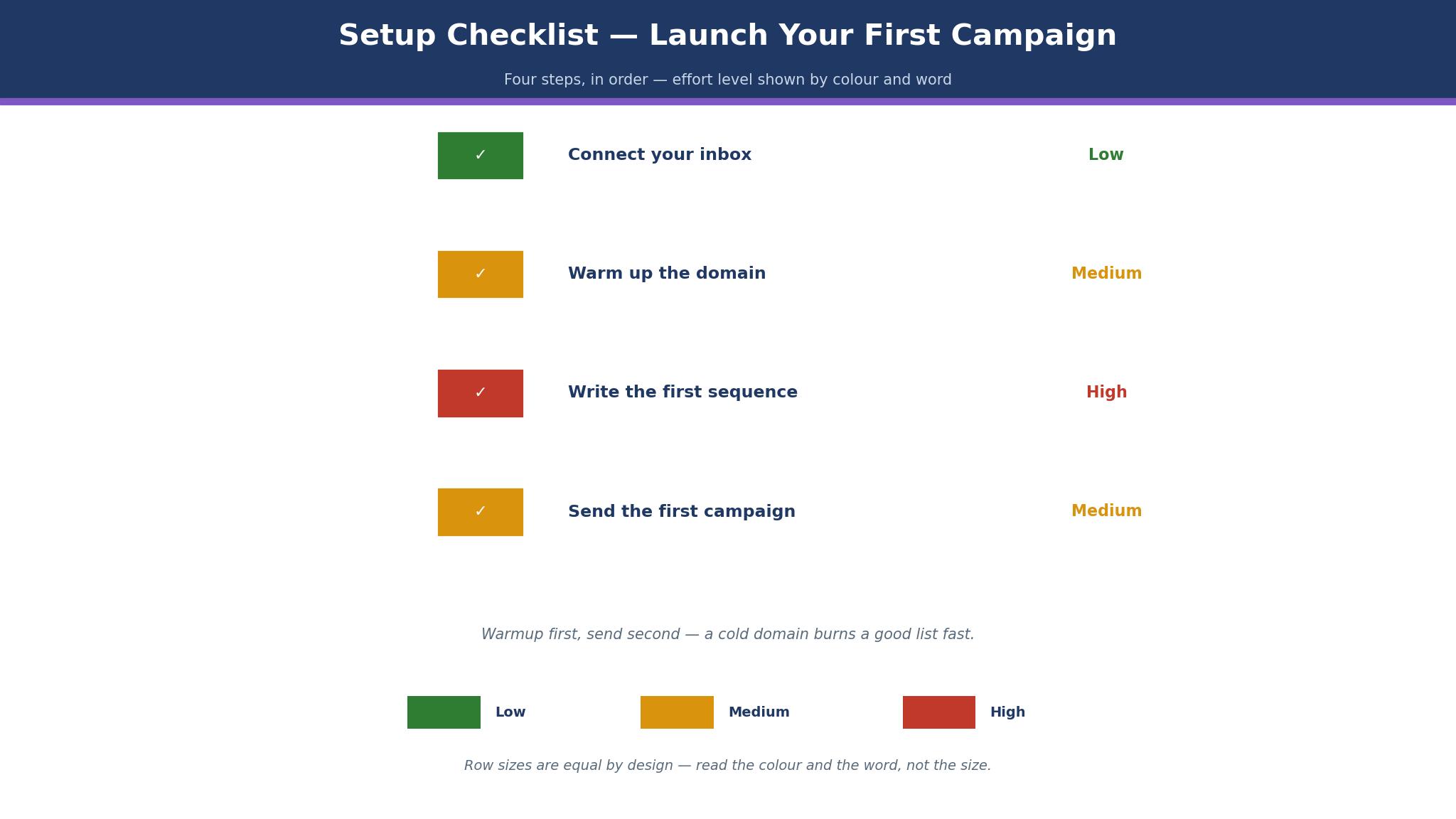
Week one is the setup. Buy a secondary sending domain, connect two inboxes, and turn on warmup with no real sending at all. Verify the list and drop every risky address, because a bounce in week one hurts more than a bounce in week four.
Week two is the first real send. Send 30 emails a day to the warmest prospects, and watch the open rate and the spam placement daily.
Week three is the scale. Raise the volume to 50 emails a day, add a second inbox, and start the first follow up sequence. Week four is the review. Count the meetings booked, the reply rate and the bounce rate, then decide whether to raise the volume or fix the copy. A startup that follows this plan books its first meetings in week three without burning the domain.

Frequently Asked Questions
How many cold emails can a startup send per day?
A warmed domain should send 30 to 50 emails a day in the first week, rising to 100 a day by week four. Instantly Growth covers 5,000 emails a month, which is about 160 a day, and Smartlead Pro covers 90,000 sends a month. The limit is the domain reputation, not the plan, so warmup matters more than the send cap.
Is Instantly better than Smartlead for a startup?
Instantly is better for volume and simplicity, at $47 a month for 5,000 emails with no per seat charge. Smartlead is better for deliverability, at $39 a month with inbox rotation and placement monitoring. A startup that has never burned a domain should start with Instantly, and a startup that has should start with Smartlead.
Does lemlist work for cold email only?
No. lemlist Email at $69 a month covers email only, while Multichannel at $109 per user per month adds LinkedIn steps, calls and a database. A startup that only needs email should buy the Email plan, because the Multichannel price is per user and adds up fast across a team.
Can a startup send cold email from Gmail?
Yes, with GMass or Mixmax, and both offer free plans. The Gmail daily sending limit caps the volume at a few hundred emails a day, so a startup that scales past that needs a dedicated sender like Instantly or Smartlead. Always send from a secondary account, never the main company inbox.
What is the cheapest cold email tool for a startup?
The free plans on Apollo, GMass and Mixmax cost nothing for a small volume. Among paid plans, Smartlead Base at $39 a month, or $32.50 on annual billing, is the cheapest published price in this guide. The best cold email software for startups is not the cheapest plan, because a tool that lands in spam costs more than the subscription saves.
Do I need a separate domain for cold email?
Yes. Sending cold email from the main company domain risks the website, the investor mail and customer support if the domain is flagged. Buy a secondary domain that looks like the main one, warm it for two to four weeks, and send the campaign from there.
The Startup Pick, in One Paragraph
Instantly Growth at $47 a month is the pick for most startups, because 5,000 emails, unlimited warmup and no per seat charge cover a real first campaign without a surprise bill. Smartlead Base at $39 a month is the pick for a startup that has burned a domain before, because the rotation and monitoring protect the next one. Start with one of the two, warm the domain for two weeks, send 30 emails a day in week one, and let the reply rate decide the next step.