

History exams reward students who can recall dates, causes, and arguments under pressure, not students who merely recognise them while rereading notes. When you use Anki for history exam revision, spaced repetition schedules each fact for review just before it is likely to be forgotten, which builds durable recall far more efficiently than rereading a textbook the night before. That difference matters most in history, where the syllabus is wide and the exam rewards precise, connected knowledge rather than vague familiarity.
This guide builds a history revision system that survives a full syllabus. You will structure decks by topic and period, design cards that test understanding rather than trivia, set a daily routine, handle source and essay skills alongside facts, and plan exam week without cramming. Anki itself is free for desktop, web, and Android, with a paid iOS app, so the main cost is the time to build good cards, which this guide keeps as efficient as possible.
Why This Approach Works
Spaced repetition works for history because it forces active recall, which is the act of producing an answer from memory rather than recognising it on a page. Rereading feels productive because the material looks familiar, but familiarity fades quickly under exam pressure, while recall practice builds the exact skill the exam tests. Anki schedules reviews based on how easily you recalled each card, so strong facts appear less often and weak facts appear more often, which focuses study time where it is needed most. For a wide syllabus, that targeting is essential, because time spent re-studying already known facts is time stolen from weak topics.
History cards must go beyond dates alone, because exams test causes, consequences, turning points, and arguments, not just isolated facts. A good history deck therefore mixes fact cards, cause and consequence cards, comparison cards, and source analysis prompts, so revision builds the thinking skills the exam rewards. Cards that only ask for a date will produce students who know dates but cannot explain why they matter, while cards that ask for causes and significance will produce students who can write stronger essays. Design cards for the exam you will actually sit, not for a trivia quiz, and the deck will serve you far better.
How to use Anki for history exam revision Step by Step
Build the deck in the order below, starting with structure, not with card creation. When you use Anki for history exam revision, a clear deck structure prevents the most common revision failure, which is a single huge deck where weak topics hide among strong ones and study time cannot be targeted.
- **Structure decks by topic and period.** Create a parent deck for the course, with subdecks by topic, such as causes of war, revolutions, or economic change, and by period within each topic where the syllabus is long. Keep subdeck names consistent with your syllabus headings, so revision can target a weak topic in one session. A structured deck lets you study one topic deeply when it is weak, rather than reviewing everything shallowly every day.
- **Turn notes into questions, not summaries.** Convert each syllabus point into a question that requires an answer, such as what caused an event, what changed afterwards, or why historians disagree. Avoid cards that copy a paragraph onto the back, because long answers cannot be recalled cleanly and hide which part was actually known. One question, one answer, with a short supporting detail, is the rule that keeps cards usable.
- **Design four card types for history.** Use fact cards for dates, names, and terms, cause cards for why events happened, consequence cards for what changed, and comparison cards for similarities and differences between events or periods. Add source cards that show a short quote or image and ask for origin, purpose, and reliability. Four card types cover the skills history exams test, while a single card type will leave gaps.
- **Add context and a source to each card.** Write the answer with a short context sentence, such as the wider situation or the historian’s view, and note the textbook or source page where the fact comes from. Context prevents isolated memorisation, because a date with its cause and consequence is easier to recall than a date alone. Sources also let you check a disputed card quickly, instead of arguing from memory about what the textbook actually said.
- **Set new cards and review limits realistically.** Set new cards per day to a number you can sustain, such as 20 to 30 for a busy term, and set review limits high enough that due reviews are not capped. A limit that hides due reviews creates a backlog that feels impossible and leads to abandoned decks. It is better to add fewer new cards daily and complete all reviews, than to add many cards and fall behind within a week.
- **Study in short, daily sessions.** Review daily in sessions of 20 to 30 minutes, with a short break between sessions if more time is available, rather than in one long weekly session. Answer honestly, marking cards as again when you truly did not know them, even if the answer feels familiar after seeing it. Honest grading is what makes the schedule work, because inflated grades schedule weak facts too far ahead.
- **Use tags for weak topics and essay themes.** Tag cards by theme, such as causes, turning points, or historiography, and by confidence, so you can create filtered study sessions for weak themes before an exam. Tags let you target revision without restructuring decks, which is essential in exam season when time is short and specific weaknesses matter most. Review tagged weak topics more often, but do not abandon daily reviews of other topics entirely.
- **Practise essays alongside cards.** Use cards for recall, and use timed essay practice for argument, structure, and source use, because cards alone cannot teach essay writing. After a card session, write one short paragraph answering a past exam question that uses the facts just reviewed, so recall and writing practise reinforce each other. A deck plus essay practice beats either method alone, because exams test both knowledge and its use.
After each week, review your retention and your backlog, and adjust new card numbers before problems grow. If reviews take longer than planned, reduce new cards rather than skipping reviews, because skipped reviews create a backlog that is harder to clear than a slower intake. A sustainable deck that is reviewed daily will beat an ambitious deck that is abandoned by exam season.
Options Compared
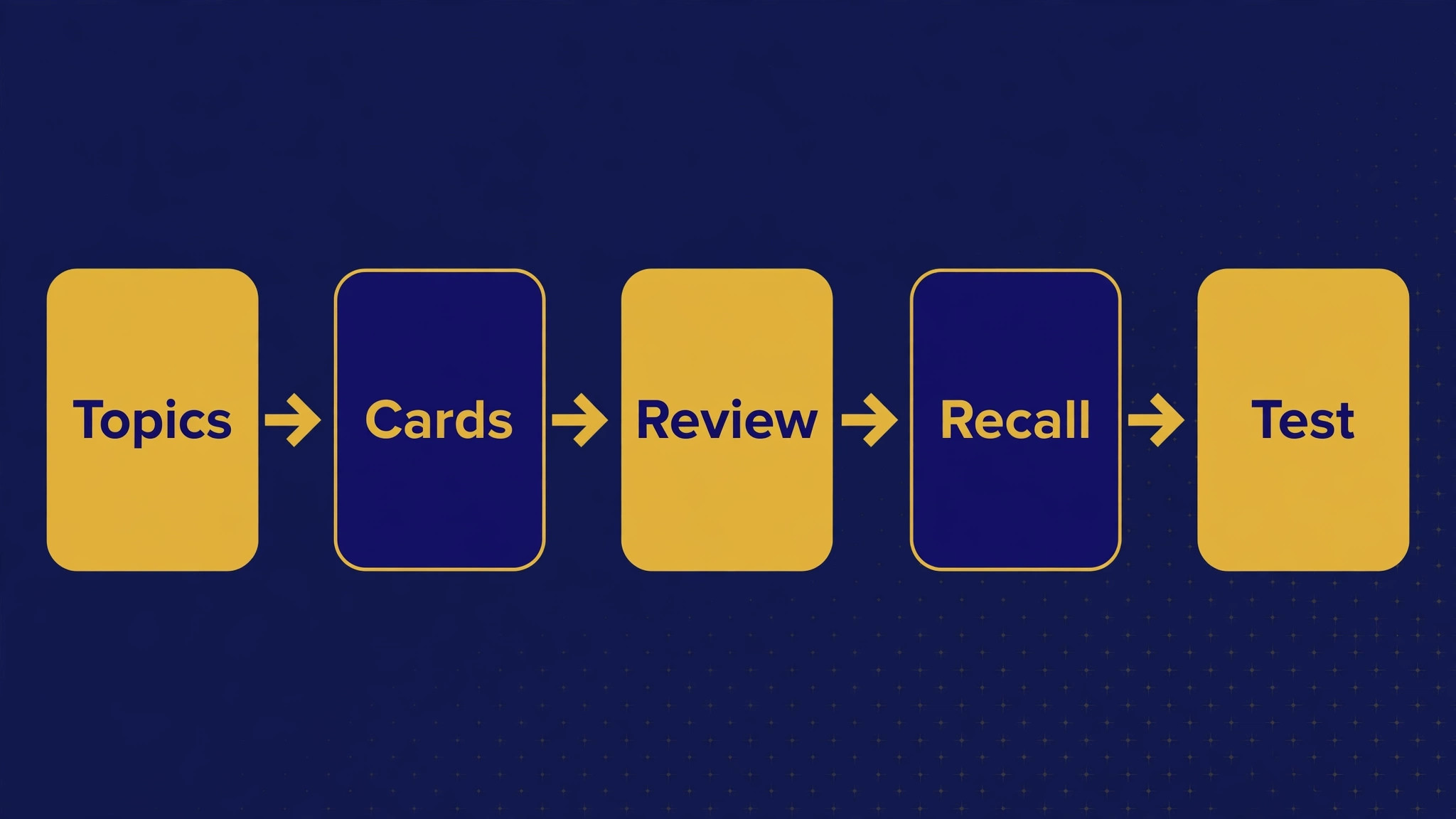
Revision methods suit different history skills, and Anki should be one part of a wider system, not the whole system. When you use Anki for history exam revision, the table below compares the main methods, so cards are used where they excel and other methods cover the skills cards cannot teach.
| Revision method | Best for | Watch out for |
|---|---|---|
| Anki flashcards | Recall of facts, causes, dates | Weak for essay structure alone |
| Timed essays | Argument, structure, source use | Needs feedback to improve |
| Timelines | Sequence and turning points | Can become copying, not recall |
| Mind maps | Connections between topics | Hard to test recall from |
| Past papers | Exam technique and timing | Needs marking against criteria |
Combine methods in a weekly plan, with daily Anki reviews, two or three timed essays per week in exam season, and a timeline review for each topic before its essay practice. A combined plan covers recall, argument, and timing, while a single method plan will leave at least one exam skill unpractised. Let Anki handle the facts so essay time can focus on argument rather than on remembering dates mid paragraph.
Costs and Tools to Budget For
Budget for history revision in time first, because Anki desktop, web, and Android versions are free, while the iOS app is a paid purchase. The main cost is card creation time, which can be reduced by making cards as you study each topic, rather than in a large batch at the end of term. Making 20 cards after each lesson takes less total time than making 500 cards in exam season, and it spreads revision across the term, which improves retention. If you buy the iOS app, treat it as a one off cost for mobile reviews, and check the current price in the app store before buying.
Time budgeting should protect daily reviews above all else, because a missed week creates a backlog that can take longer to clear than the original reviews would have taken. Budget 20 to 30 minutes daily for reviews during term, and more in exam season for filtered weak topic sessions and essay practice. A routine that fits into a normal day, such as reviews after breakfast or before bed, will survive busy weeks far better than a routine that requires a free afternoon.

Template and Checklist
Run this checklist when building a deck and again before exam season. When you use Anki for history exam revision, the checklist is the gate that stops a deck full of long, vague, or untestable cards from wasting revision time.
- Decks are structured by topic and period, matching syllabus headings.
- Each card asks one question with a short, recallable answer.
- Card types cover facts, causes, consequences, comparisons, and sources.
- Answers include a short context sentence, not only an isolated fact.
- Sources are noted on cards where facts are disputed or detailed.
- New cards per day are set to a sustainable number, such as 20 to 30.
- Review limits are high enough that due reviews are not hidden.
- Daily review sessions are short, regular, and honestly graded.
- Tags cover themes and weak topics for filtered exam season sessions.
- Essay practice is scheduled alongside cards, using reviewed facts.
- Backlog is checked weekly, with new cards reduced if reviews grow.
- A pre exam filtered session plan exists for weak topics and themes.
Keep the completed checklist with your deck plan, noting which topics are strong and which are weak. When exam season arrives, the checklist and the tag system together let you target revision precisely, instead of rereading everything in panic. A deck built with a checklist will still need essay practice, but it will not waste revision time on cards that cannot be recalled cleanly.
Mistakes to Avoid
History revision with Anki fails in predictable ways, usually because cards are built for recognition rather than recall. When you use Anki for history exam revision, watch for these five mistakes, because each one wastes study time while feeling productive.
- **Making cards that are too long.** Cards with paragraph answers cannot be recalled cleanly, because the student never knows which part was actually known. Split long answers into several short cards, each asking one thing. Short cards are faster to review, easier to grade honestly, and far more useful under exam pressure.
- **Copying notes onto cards.** Copying a summary onto the back of a card creates a reading exercise, not a recall exercise. Turn each point into a question that must be answered before flipping, and keep the answer short. If a card can be passed by recognising the text, it is not testing recall at all.
- **Grading honestly is skipped.** Marking a card as known when the answer was only vaguely familiar schedules it too far ahead, so weak facts disappear until exam week. Grade strictly, marking again when the answer was not produced confidently. Honest grading feels slower in the short term, but it is what makes spaced repetition work.
- **Only studying facts, not arguments.** A deck of dates and names alone will not produce strong essays, because exams reward explanation, comparison, and judgment. Add cause, consequence, comparison, and historiography cards, and pair card sessions with timed essay practice. Knowledge without argument is only half of a history exam.
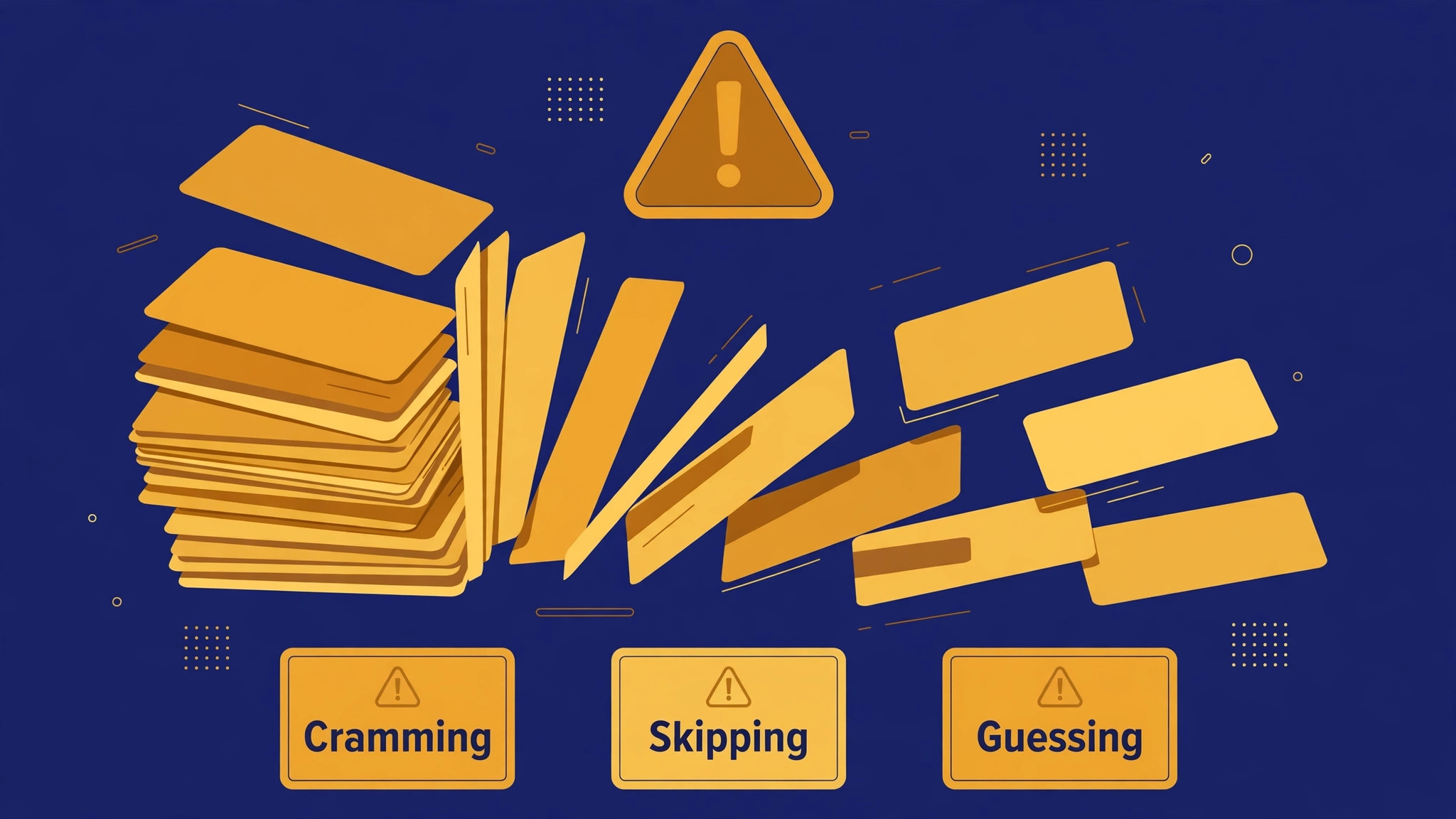
- **Cramming new cards in exam week.** Adding hundreds of new cards in exam week creates a review mountain that cannot be completed, and new facts learned by cramming fade quickly. Stop adding new cards at least a week before the exam, and use exam week for reviews, filtered weak topic sessions, and essay practice. A mature deck reviewed well beats a large deck reviewed in panic.
If a deck feels overwhelming, reduce new cards immediately and focus on completing daily reviews, even if that means pausing new intake for a week. A smaller, fully reviewed deck will serve an exam better than a large deck with a growing backlog. Recovery from backlog starts with honesty about what can be reviewed each day, and a sustainable number that is actually kept.
A Worked Example
A student facing a history exam in six weeks had a syllabus that covered revolutions across two centuries, and a set of notes that grew longer every week without getting easier to recall. Rereading felt productive because the material looked familiar, but practice questions exposed the gap, because dates came back while causes and consequences did not. The student rebuilt revision around a deck structured by topic and period, with a parent deck and subdecks for each revolution named to match the syllabus headings, so a weak topic could be studied alone instead of being buried in a general review.
Card building started with turning notes into questions, not summaries. Each syllabus point became one question with a short answer and a context sentence, such as the wider situation or a historian view, plus a note of the textbook page where the fact came from. Four card types covered the exam, fact cards for dates, names, and terms, cause cards for why events happened, consequence cards for what changed, and comparison cards for similarities and differences between revolutions, plus source cards for short quotes, asking for origin, purpose, and reliability.
Cards were made after each lesson, at twenty to thirty new cards a day, rather than in a large end of term batch, which spread revision across the term and kept daily reviews manageable.
Daily sessions ran twenty to thirty minutes, usually after breakfast, with honest grading throughout, marking a card as again whenever the answer had not been produced confidently, even if it felt familiar after flipping. Tags marked themes such as causes, turning points, and historiography, and a weekly check of retention and backlog decided whether new card numbers stayed or dropped for a week. After each card session, the student wrote one short paragraph answering a past exam question from the facts just reviewed, so recall and writing practice reinforced each other, and a timeline review of a topic came before its essay practice.
In the final week, new cards stopped entirely, and exam week was given to reviews, filtered sessions on tagged weak topics, and timed essay practice. Filtered sessions targeted turning points and historiography, the two themes where grading had been strictest, while daily reviews of other topics continued so strong topics did not fade. The deck went into the exam as a record of what had actually been recalled under practice conditions, not as notes that had merely been read, and the weekly revision notes showed which topics had improved and which had needed extra sessions.

Advanced Tips Worth Trying
Once daily reviews feel routine, five refinements lift a history deck from adequate to exam ready. The first is building cards during the lesson week, not at the end of term, because twenty cards made after a lesson cost less total time than five hundred made in exam season, and they spread the first reviews across the term, which is where retention is actually built.
- Split any card that keeps failing into two or three shorter cards, each asking one thing, because a long answer hides which part was actually known and makes honest grading impossible.
- Add a comparison card whenever two events look similar, such as two revolutions with shared causes but different outcomes, because exams reward distinguishing similar cases more than recalling either one alone.
- Use filtered sessions by tag for weak themes in exam season, but never abandon daily reviews of other topics entirely, because a weak theme improved at the cost of a strong theme fading is not progress.
- Run a timeline review for a topic before its essay practice, so sequence and turning points are fresh when argument and structure are being practised, and let the essay expose which facts still need cards.
- Check the backlog every week and cut new cards the moment reviews start growing, because a backlog that feels impossible leads to abandoned decks, while a smaller fully reviewed deck serves an exam far better.
A final refinement is keeping a short note beside the deck plan of which topics are strong and which are weak, updated at each weekly check. That note turns the deck from a pile of cards into a revision map, and it is what makes exam season a matter of targeting known weaknesses instead of rereading everything in panic. That note also guides what to build next, because a topic marked weak for two weekly checks in a row earns new cards before a strong topic earns any, and a card type that fails often earns a rewrite before it earns additions.
How to Measure Success
Judge a history deck by four measures, recorded weekly in a short log kept beside the deck plan. The first is reviews completed against reviews due, which shows whether the daily routine is actually holding. The second is retention on mature cards, counted as cards answered confidently divided by cards reviewed, which shows whether grading is honest and whether cards are short enough to recall cleanly. The third is backlog size, counted as due reviews still outstanding at the end of the week, which shows whether new card intake matches available study time. The fourth is time per session, counted in minutes from the start of reviews to the end, which shows whether the routine still fits a normal day.
Add one exam skill measure alongside the four, which is timed essay paragraphs completed per week, counted from practice sessions that used facts reviewed in cards. A deck can look healthy on retention while essay practice is being skipped, and the exam tests both knowledge and its use, so the log should show both. Record all five numbers on the same day each week, while the session details are fresh, and compare each with the previous week rather than judging a single week alone, because one busy week can distort any single number.
Act on patterns, not on single readings. Falling retention usually points to cards that are too long or grading that has grown generous, so split the failing cards and grade strictly for a week before adding study time. A growing backlog usually points to new card intake being too high, so reduce new cards until reviews are completed daily for a full week. Rising session time with steady retention usually points to cards accumulating faster than they are being retired, so pause new intake and let the deck settle. Change one thing at a time, so any improvement can be traced to its cause.
Review and Next Steps
Review the deck weekly with the four measures, reviews completed, retention on mature cards, backlog size, and time per session, plus the weekly count of timed essay paragraphs. If retention falls, check whether cards are too long or grading is too generous, rather than simply adding more study time, because longer sessions on unfixable cards waste the extra time. If backlog grows, reduce new cards until reviews are completed daily for a week, and do not restore the higher intake until the backlog has stayed at zero for a full week.
Keep a weekly revision note with the four measures, weak topics identified by tag, and essay practice completed. When you use Anki for history exam revision on a regular weekly cycle, that note becomes the revision history that guides exam season, showing which topics improved, which still need filtered sessions, and which card types produced the most failures. Share the note with a study partner or tutor where possible, because external accountability helps daily routines survive busy weeks, and a tutor can spot a weak theme that the numbers alone do not explain.
Use the note to plan the next week, not only to judge the last one. A weak theme gets filtered sessions and new comparison or source cards, while a strong theme keeps daily reviews only, so study time moves toward the gap instead of being spread evenly. A card type that keeps failing, such as source cards on reliability, gets rewritten in shorter form before more cards of that type are added. An essay theme that keeps appearing in practice questions gets a timeline review before the next essay, so sequence is fresh when argument is practised.
Let the note shape card design, not only study time. A cause card that fails repeatedly may be asking two things at once, such as a cause and a consequence, and splitting it usually fixes the failure faster than extra reviews. A comparison card that fails may be comparing events that are too far apart in the syllabus, and choosing a closer pair usually makes the distinction clearer. A source card that fails may be quoting too much text, and trimming the quote to the lines that carry the argument usually makes origin, purpose, and reliability easier to recall.
Record each rewrite in the note beside the card type, so the next deck built from this one starts with shorter, sharper cards, and the same design mistakes are not repeated for the next topic.
As the exam approaches, shift the plan in stages. Stop adding new cards at least a week before the exam, and give exam week to reviews, filtered weak topic sessions, and essay practice. After the exam, keep the deck and the revision notes for the next term, retire cards that no longer match the syllabus, and add a subdeck for the next topic with the same structure, so the next course starts from a working system instead of a blank deck. A deck that survives one exam season intact is the foundation for the next, and the review habit is what keeps it intact.
For related reading on Stratilyze, the guide to medical exam revision with Anki shows the same tool for a different subject, and the guide to language vocabulary with Anki covers recall for language learning. Read the medical guide first if your history course includes heavy factual load, because card design habits there transfer directly, and the method here for use Anki for history exam revision shares the same spaced repetition discipline.
Frequently Asked Questions
How many new Anki cards should I add per day for history?
Twenty to thirty new cards per day is sustainable for most students during term, because it keeps daily reviews manageable. Adding far more creates a backlog that grows quickly and leads to abandoned decks. Reduce new cards if reviews take longer than planned, and prioritise completing due reviews over adding new material.
Should history cards focus on dates?
Dates matter, but they should not dominate a history deck, because exams test causes, consequences, comparisons, and arguments as well. Mix fact cards with cause, consequence, comparison, and source cards, so revision builds the thinking skills exams reward. A date with its cause and significance is far more useful than a date alone.
Is Anki free for history revision?
Anki desktop, web, and Android versions are free, while the iOS app is a paid purchase. The main cost is the time to build good cards, which can be kept efficient by making cards as you study each topic rather than in a large batch at exam time. Check the current iOS price in the app store before buying.
How long should a daily Anki session be?
Twenty to thirty minutes daily during term is a realistic target, with longer filtered sessions for weak topics in exam season. Short, daily sessions beat long, infrequent sessions for spaced repetition, because the schedule depends on regular reviews. A routine tied to a daily habit, such as after breakfast, survives busy weeks best.
Can Anki help with history essays?
Anki helps essays indirectly, by building recall of facts, causes, and arguments that essays need, but it cannot teach essay structure or source analysis alone. Pair card sessions with timed essay practice, using reviewed facts in paragraphs that answer past exam questions. That combination covers both knowledge and its use in writing.
How do I use Anki for history exam revision for a history course with a very wide syllabus?
Structure decks by topic and period, tag cards by theme, and prioritise weak topics with filtered sessions, while maintaining daily reviews of all topics. Stop adding new cards at least a week before the exam, and use exam week for reviews and essay practice. A wide syllabus needs structure and targeting more than it needs more cards.
A Revision System That Holds Up
A history deck that holds up under exam pressure has a clear structure, short cards that test causes and consequences as well as facts, honest grading, and daily reviews that are actually completed. Pair cards with timed essay practice, tag weak topics for targeted sessions, and stop adding new cards a week before the exam. When you use Anki for history exam revision in that disciplined way, recall becomes reliable, essays become stronger, and exam week becomes a review of known material rather than a first encounter with it.