
A twelve-user distributor pays $3,312 a year for Zoho CRM Professional at $23 a user a month, and the same twelve seats cost $12,960 a year on HubSpot Sales Hub Professional at $90 a seat, before a $1,500 onboarding fee. That gap is the first fact in this search for the best crm software for distributors, and my pick is Zoho CRM, because it handles price lists, quotes and tiered pricing at a fraction of the HubSpot bill.
The 10 Tools at a Glance
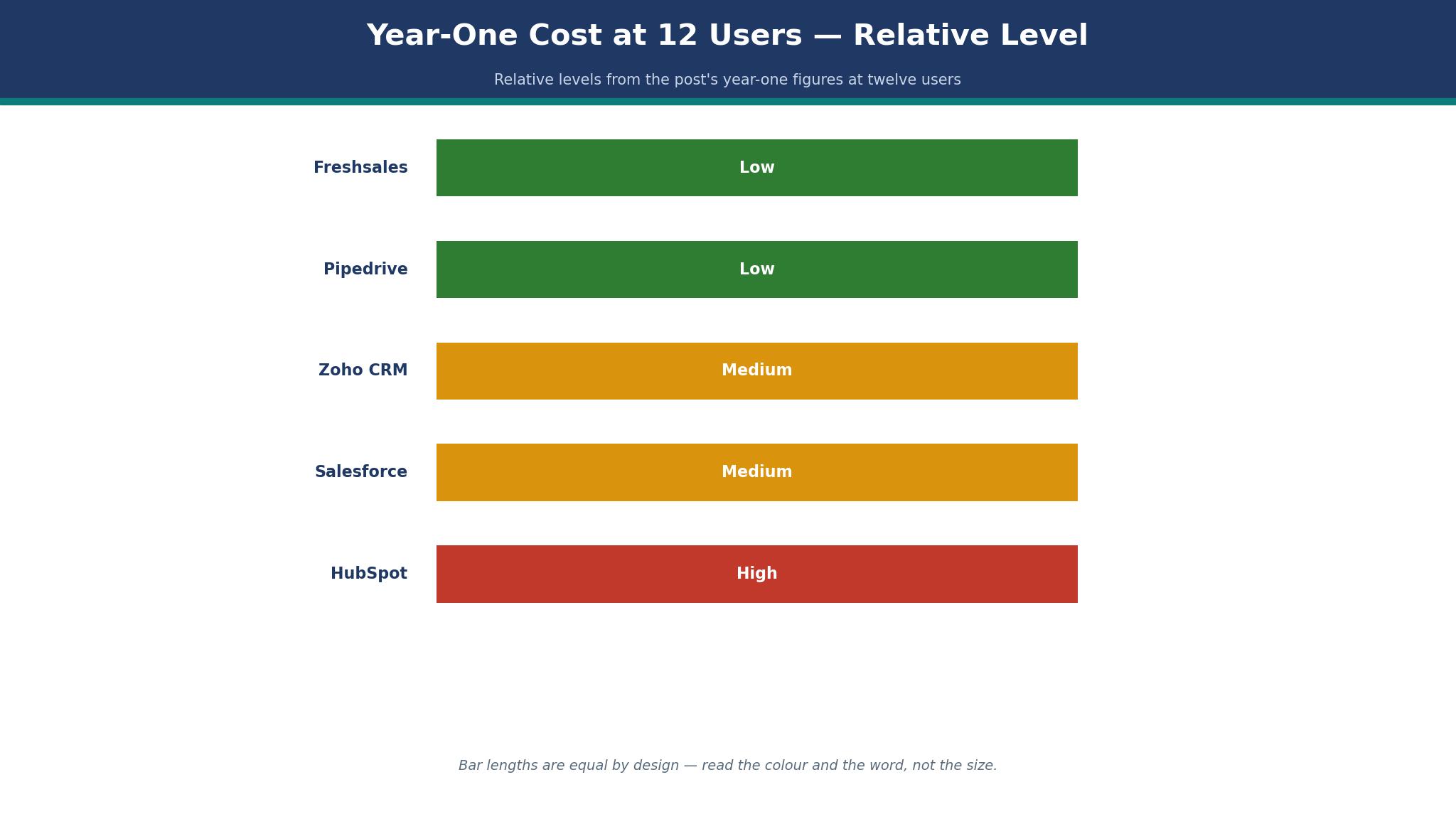
The table below lines up the year-one bill for twelve users on each tool, so the cheapest headline is never the whole story. Prices are the published annual-billing figures checked in November 2026, with HubSpot Professional at $90 a seat and Zoho Professional at $23 a user.
| Tool | Starting price | Best for |
|---|---|---|
| Zoho CRM | from $14 per user a month Standard, $23 Professional | distributors with big price lists |
| HubSpot | free CRM; Sales Hub Professional $90 per seat a month plus $1,500 onboarding | distributors that want marketing and sales in one place |
| Salesforce Sales Cloud | from $25 per user a month Starter, reported; $100 Pro Suite | large distributors with complex territories |
| Pipedrive | from $14 per user a month, reported | distributors that sell by pipeline |
| Freshsales | from $9 per user a month, reported | small distributors starting out |
| monday CRM | from $12 per user a month, reported | distributors that want boards beside the CRM |
| Capsule | from $18 per user a month, reported | small distributors that want simplicity |
| Apptivo | from $15 per user a month, reported | distributors that want apps beside the CRM |
| Insightly | from $29 per user a month, reported | distributors that link sales to projects |
| SugarCRM | from $49 per user a month, reported | distributors that want deep customisation |
The Price List Problem
A distributor with 10,000 SKUs does not have one price, it has a price for every customer, every volume tier, and every season. A quote that uses last month’s price list is a quote that loses money, and a rep who has to check a spreadsheet before every call is a rep who makes fewer calls. The CRM has to hold the list, apply the tier, and produce a quote that matches the list exactly.
Zoho CRM handles this with price books and tiered pricing that sit inside the quote workflow, so the rep picks the customer, the list applies itself, and the quote total is the list total. HubSpot handles it too, but the price is $90 a seat, and the quote tools sit in the higher tiers. The tools that fail here are the ones that treat every product as one price, because a distributor never sells at one price.
Here is the worked example. A distributor that quotes 200 orders a month, and gets the price wrong on 5 percent of them, makes 10 wrong quotes a month. If each wrong quote costs $40 in margin or rework, that is $400 a month, or $4,800 a year, which is more than the year-one Zoho bill for twelve users. The price list is not a feature, it is a profit line.
Anyone weighing best crm software for distributors should test Zoho CRM on the exact job above, because the test shows the difference faster than any feature list.
Best Pick by Job
The table below matches each job to its pick, and Zoho CRM leads the list for the most common job in this guide.
| Job | Pick | Why |
|---|---|---|
| A distributor with 10,000 SKUs | Zoho CRM | price lists and tiers at $23 a user |
| A team that wants marketing too | HubSpot | strongest marketing, $90 a seat |
| A large distributor with territories | Salesforce Sales Cloud | territory and forecasting depth |
| A small team starting out | Freshsales | $9 a user, simple to learn |
| A pipeline-led sales team | Pipedrive | clearest pipeline at $14 a user |
The 10 Tools in Detail
I verified live status and November 2026 pricing for the tools below, then ordered the best crm software for distributors around the opening price-list problem, one price for every customer, tier, and season.
1. Zoho CRM
Zoho CRM costs from $14 per user a month Standard, $23 Professional, and it is built for distributors with big price lists. Watch how quickly a real quote is built in Zoho CRM, because a CRM that slows the daily selling gets dropped by the second month.
What stands out is Price-list management, tiered pricing and quote workflows sit in the Professional tier, and the $23 price leaves budget for the add-ons a distributor actually needs. Run Zoho CRM on a live distributor week and the price-list, tiered pricing and quote tools show their value in the first week, in the work itself rather than in any sales page.
The trade-off is The interface feels busy at first, and the best automation lives in the higher tiers. That is the price of the low cost of Zoho CRM, and a Zoho CRM buyer who accepts it knowingly will be happy, while a buyer who discovers it later will not.
Take a team that runs ten sessions a week, each saving 20 minutes with Zoho CRM. Saving 20 minutes on ten Zoho CRM sessions a week banks 200 minutes, over 13 hours a month, most of two working days. A $23 Zoho CRM seat banks most of two working days a month.
For a buyer whose work matches distributors with big price lists, Zoho CRM is worth a trial. The price of Zoho CRM is from $14 per user a month Standard, $23 Professional, the core job is solid, and the trial will show whether the limit matters to your work.
2. HubSpot
HubSpot is the distributors that want marketing and sales in one place option in this list, at free CRM; Sales Hub Professional $90 per seat a month plus $1,500 onboarding. HubSpot runs the combined sales and marketing work cleanly, and its layout is plain enough that a rep joining the team finds the first deal without training.
The best part is The free CRM is genuinely useful, and the marketing tools are the strongest in this list. A genuinely useful free CRM, with the strongest marketing tools in this list, is the HubSpot strength that saves minutes every day and hours across a month.
The catch is The price jumps hard at Professional, and the onboarding fee lands in year one. Spot the HubSpot Professional jump while trialling, since a price step caught in week one is easy to live with and the same step caught in month three forces a move.
Work a small example with HubSpot. Save thirty minutes a day on HubSpot follow-ups and a five-day week gives back 150 minutes, or ten hours a month. At $25 an hour, that is $250 a month with HubSpot, which is more than the subscription for most teams in this list.
HubSpot earns its place for distributors that want marketing and sales in one place. At free CRM; Sales Hub Professional $90 per seat a month plus $1,500 onboarding HubSpot is fair value, and the trial is the right way to test HubSpot, because a week of real work says more than any review.
3. Salesforce Sales Cloud
At from $25 per user a month Starter, reported; $100 Pro Suite, Salesforce Sales Cloud suits large distributors with complex territories. Salesforce Sales Cloud keeps its screens dense but orderly, the main tools are easy to find, and the layout stays out of the way once a rep starts working a territory.
Here Salesforce Sales Cloud shines, because Territory management, forecasting and the AppExchange give a large distributor room to grow for years. That is the reason Salesforce Sales Cloud sits in this list, and it is the reason a buyer should test it before choosing a rival.
The shortfall is The setup is heavy, and a small team will pay for power it never uses. It is not a reason to reject Salesforce Sales Cloud, but it is a reason to test the exact job that hits the Salesforce Sales Cloud limit before paying.
Here is a worked example for Salesforce Sales Cloud. Ten jobs a week on Salesforce Sales Cloud, each 15 minutes faster, is 150 minutes a week, or about 10 hours a month. That is a day and a quarter of work, saved by Salesforce Sales Cloud, which costs less than a day of labour.
If your work is large distributors with complex territories, put Salesforce Sales Cloud on the shortlist at from $25 per user a month Starter, reported; $100 Pro Suite. Work one territory through Salesforce Sales Cloud first, then test its forecasting depth, and the right call will be clear.
4. Pipedrive
Pipedrive at from $14 per user a month, reported is aimed at distributors that sell by pipeline. Pipedrive covers the pipeline basics, and a busy distributor team can lean on it without thinking about the software.
The clear win is The pipeline view is the clearest in this list, and a rep sees the next action without hunting for it. No sales call is needed to explain Pipedrive, since the clearest pipeline view in this list shows its value the first time a rep sees the next action.
The limit is Price-list depth is thinner than Zoho, so complex tiered pricing needs workarounds. Set that thin price-list depth against what Pipedrive costs, since a cheap plan with the wrong ceiling is still the wrong CRM for a distributor.
- Pipedrive suits a distributor that wants pipeline selling handled without a long rollout.
- Put Pipedrive on one live pipeline deal, since a trial proves itself on real work.
- Pipedrive at a low price beats a deeper feature set for a distributor who sells by pipeline.
5. Freshsales
For small distributors starting out, Freshsales at from $9 per user a month, reported is a solid choice. Freshsales keeps the daily follow-up work tidy, and its short learning curve means a small sales team still reaches for it after the first week.
The strength is The entry price is low, and the built-in phone and email tools suit a small sales team. The low entry price, with built-in phone and email for a small sales team, is the daily fit that earns Freshsales its fee, so judge it on the follow-up you run most.
Give a small distributor team ten Freshsales calls a week, each one twenty minutes shorter. Freshsales at that pace banks 200 minutes a week, which is over thirteen hours a month, or most of two working days. Thirteen hours a month from a $9 Freshsales seat covers its bill many times over.
Would this suit a small team?
Yes, Freshsales needs little setup and little money, so a small distributor team can be selling without any project plan at all.
What should I test first?
Put a genuine sales task through Freshsales and drive it to its limit, since that ceiling is where a cheap CRM usually breaks down.
6. monday CRM
monday CRM costs from $12 per user a month, reported, and it is built for distributors that want boards beside the CRM. Time a real monday CRM board update from first deal to dashboard, since a CRM that drags the daily selling out gets dropped by the second month.
What stands out is Boards, automations and dashboards are easy to build, and the team learns it in a day. Give monday CRM one genuine sales week and the boards, automations and dashboards prove themselves before the week ends, where a brochure only promises them.
If your work is distributors that want boards beside the CRM, put monday CRM on the shortlist at from $12 per user a month, reported. Build one live board in monday CRM, then press its automation limits, and the answer will be obvious.
7. Capsule
Capsule is the small distributors that want simplicity option in this list, at from $18 per user a month, reported. Capsule handles the distributor contact work well, and a new rep can finish a first real follow-up on day one with no manual open.
The best part is The contact record is clean, tasks are obvious, and nothing in the interface fights the user. A clean contact record, obvious tasks and an interface that never fights the user is the Capsule strength that saves minutes every day and hours across a month.
For a buyer whose work matches small distributors that want simplicity, Capsule is worth a trial. The price of Capsule is from $18 per user a month, reported, the core job is solid, and the trial will show whether the limit matters to your work.
8. Apptivo
At from $15 per user a month, reported, Apptivo suits distributors that want apps beside the CRM. Apptivo keeps its screens tidy, the apps sit where a distributor expects them, and the layout stays out of the way once an order is open.
Here Apptivo shines, because Orders, invoices and projects sit beside the CRM, so a distributor can run the whole back office in one place. Orders, invoices and projects sitting beside the CRM is why Apptivo earned its place here, and why a distributor should test it before any rival wins.
Apptivo earns its place for distributors that want apps beside the CRM. At from $15 per user a month, reported Apptivo is fair value, and the trial is the right way to test Apptivo, because a week of real work says more than any review.
9. Insightly
Insightly at from $29 per user a month, reported is aimed at distributors that link sales to projects. Insightly covers the project-linked sales basics, and a busy distributor team can trust it without thinking about the software.
The clear win is Projects follow the sale, so delivery sees what sales promised without a handover meeting. No sales call is needed to explain Insightly, since a project following the sale shows its value the first time delivery sees what sales promised.
If your work is distributors that link sales to projects, put Insightly on the shortlist at from $29 per user a month, reported. Follow one sale into delivery on Insightly, then press its project limits, and the choice will be obvious.
10. SugarCRM
For distributors that want deep customisation, SugarCRM at from $49 per user a month, reported is a solid choice. A team that shapes SugarCRM around its own process sticks with it, since the daily customised work runs without fuss and the setup never gets in the way.
The strength is The customisation options are deep, and a team that knows what it wants can shape the CRM around it. Deep customisation a team can shape around its own process is the daily fit that earns SugarCRM its fee, so judge it on the record layout you use most.
For a buyer whose work matches distributors that want deep customisation, SugarCRM is worth a trial. The price of SugarCRM is from $49 per user a month, reported, the core job is solid, and the trial will show whether the limit matters to your work.
Frequently Asked Questions
These answers cover the questions buyers ask most often about best crm software for distributors, and the numbers above are the ones to check on the vendor page before buying.
Can I run tiered pricing in a CRM without spreadsheets?
Yes, if the CRM has price books and tiered pricing built in. Zoho CRM handles this in the Professional tier, and Salesforce handles it at a higher price. A CRM without price books will push the work back into spreadsheets, which is where the errors start.
How much does a distributor CRM cost for twelve users?
Zoho CRM Professional costs $3,312 a year for twelve users at $23 a user a month. HubSpot Sales Hub Professional costs $12,960 a year plus a $1,500 onboarding fee, which is $14,460 in year one. The gap is $11,148, which is the first number to check.
Does HubSpot work for distributors?
Yes, and its marketing tools are the strongest in this list. The question is price, because the distributor features sit at $90 a seat, and a twelve-seat team pays $14,460 in year one. A distributor that sells through marketing may earn that back, and one that sells through quotes usually will not.
What happens to my price list when I switch CRM?
The list has to be imported with its tiers, customers and effective dates intact, and the first twenty quotes should be checked against the old list line by line. A migration that drops a tier is a migration that loses margin on every order until someone notices.
Which CRM is easiest for a sales rep to learn?
Pipedrive is the easiest in this list, because the pipeline view shows the next action without hunting. Zoho CRM takes a week to learn properly, and Salesforce takes longer, so the easy tool is not always the right tool for a distributor with 10,000 SKUs.
Should a small distributor buy Salesforce?
Usually not. Salesforce is built for large teams with territories and complex forecasting, and a small distributor pays for depth it will not use. Zoho CRM or Freshsales fits a small team better, at a fraction of the price.
How to Choose the Best CRM Software for Distributors
Start with the SKU count and the tier count, because a CRM that cannot hold tiered pricing will force the work back into spreadsheets. Ask the vendor to load 100 of your SKUs with three tiers each, then build a quote from them, and watch whether the total matches the list. A demo with ten products hides the weakness.
Then count the year-one bill at your real seat count, including onboarding. Twelve seats on Zoho Professional cost $3,312 a year, while twelve seats on HubSpot Professional cost $12,960 plus $1,500 onboarding, which is $14,460 in year one. That gap buys a lot of training, and it buys it every year.
Finally, check the quote-to-order time. A distributor that cuts quote time from 30 minutes to 10 minutes saves 20 minutes per order, and at 200 orders a month that is about 67 hours a month. That is most of a full-time role, saved by a quote workflow that works.
Can I Switch to Zoho CRM Without Losing My Work?
A switch to Zoho CRM works when it is planned account by account, not jumped into, and the first move is exporting every account, price list and order before the trial starts. Move every account, price list and order out of the old CRM first, check the Zoho CRM import, and only then cancel, so no record, client or deadline slips away.
The second step is to run Zoho CRM on one live job, not on a demo, and to keep the old tool running beside it for a week. If the live job works on Zoho CRM, move the next job, and if it does not, the old tool is still there. Move distributor jobs to Zoho CRM one at a time, and a bad week costs one job, never the whole book.
The Quote That Took Three Days
A quote that takes three days loses the order to a rival who quotes in three hours, and the distributor knows it. The delay usually comes from the rep waiting on the price list, the manager approving the discount, and the office retyping the quote into the order system. Each handoff adds a day, and each day adds a rival.
Zoho CRM and Salesforce both cut this by keeping the quote, the approval, and the order in one record, so the manager approves in the same place the rep quoted. The tools that fail are the ones that export the quote to a document and then lose track of it, because the document is where the delay lives.
Work the numbers on a slow quote. A distributor that quotes 200 orders a month and loses 5 percent of them to slow quoting loses 10 orders a month. At $500 average margin per order, that is $5,000 a month, or $60,000 a year. A CRM that quotes in an hour instead of three days does not just save time, it saves orders.
A buyer comparing best crm software for distributors should ask Zoho CRM this question on the demo, because the answer reveals how the tool handles real work.

What Should I Test Before I Pay for Zoho CRM?
Run one distributor week in Zoho CRM and time a quote to its order, because a slow quote stalls the warehouse. Run a genuine Zoho CRM week with live distributor data, clock it from the first quote to the last order, and set that span against the old system. A test of Zoho CRM on a demo account hides the problems that a real job reveals.
Then test the limit of Zoho CRM, because every tool in this guide has one, and the limit is where a buyer gets surprised. Run the exact distributor order that strains Zoho CRM, judge whether the workaround holds up, and ask the vendor what lifting that ceiling would cost. Spot that Zoho CRM ceiling in week one, on the order that strains it most.
HubSpot vs Zoho CRM
HubSpot wins the marketing round. The free CRM is real, the email and landing page tools are polished, and a distributor that sells through content will feel at home. The trade-off is the price cliff, because the tools a distributor actually needs sit at $90 a seat with a $1,500 onboarding fee.
Zoho CRM wins the distributor round. Price books, tiered pricing and quotes sit in the $23 Professional tier, and the year-one bill for twelve users is $3,312 against HubSpot at $14,460. The trade-off is an interface that feels busy, and a learning curve that needs a week rather than a day.
What I would do is pick Zoho CRM for any distributor whose first problem is price lists and quotes, and HubSpot only when marketing is the bigger job than distribution. The money saved in year one, about $11,148 for twelve seats, is not a rounding error, it is a hire.
That is why the best crm software for distributors decision comes down to Zoho CRM for most buyers, with the runner-up winning only when its strength matches the job.
How Much Will Zoho CRM Cost in Year Two?
Zoho CRM shows its true shape in year two, once the first-year discount, the onboarding fee and the introductory rate are gone. Ask Zoho CRM for the renewal price on paper, check if the per-user rate rises as reps join, and confirm whether the add-ons a distributor needs sit in the base plan or cost extra.
A buyer who budgets year two of Zoho CRM at the year-one price will be surprised, and a buyer who asks for the renewal of Zoho CRM in writing will not. Ask Zoho CRM for the second-year invoice before you pay, compare it with the first-year total, and only then decide if it is the right long-term choice.
What a Distributor Pays, and What It Gets
Zoho CRM is the pick. Twelve seats on Professional cost $3,312 a year, the price-list tools are real, and the quote workflow matches the way a distributor actually sells. It is not the prettiest tool in this list, but it is the one that pays for itself fastest.
HubSpot is the runner-up for a distributor that sells through marketing, and Salesforce is the pick for a large distributor with territories. Both cost far more, and both earn that price only when the job matches their strength. Freshsales is the pick for a small team starting out at $9 a user.
What I would do is start on Zoho CRM Professional for a month, load the real price list with its tiers, and quote twenty live orders through it. If the quotes match the list and the reps stop checking spreadsheets, the decision is made. The year-one saving against HubSpot, about $11,148 for twelve seats, is the budget for the training that makes the switch stick.
That is the short version of this whole best crm software for distributors comparison, and Zoho CRM is the name to remember from it.
One More Thing to Check Before You Buy Zoho CRM
One more check before buying Zoho CRM is the support, because a tool is only as good as the help behind it when something goes wrong. Send Zoho CRM support a real question while trialling, note the reply time, and judge the answer on whether it fixes the problem or only links a help page. A support team for Zoho CRM that answers in hours is worth more than a feature that looks good on paper.
Another check on Zoho CRM is the exit, because every buyer leaves a tool one day, and the exit should be planned before the entry. Export a sample of your work from Zoho CRM during the trial, open it outside the tool, and check whether it is usable. Pull a sample of your work out of Zoho CRM mid-trial, and check whether it opens cleanly anywhere else.