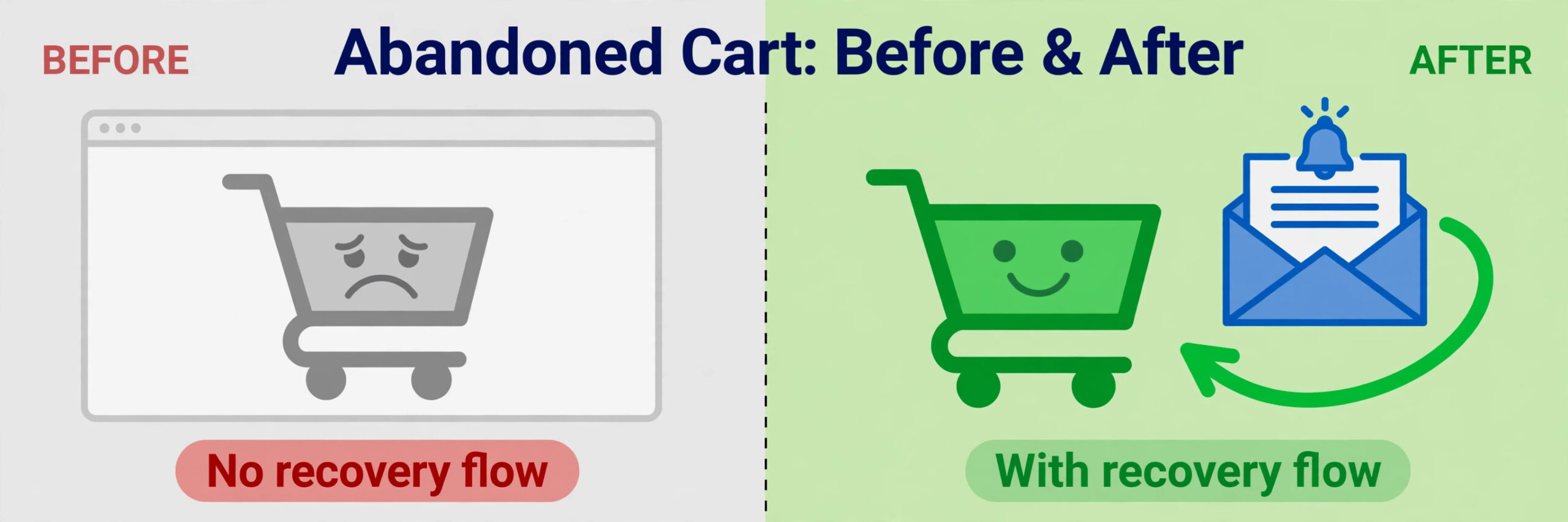
Most stores lose most checkouts before payment. Baymard Institute puts average cart abandonment near 70 percent, which means a store with 1,000 carts a month may watch about 700 shoppers walk away. The best email tool for ecommerce abandoned cart recovery is the one that reaches the shoppers you can still identify, shows the exact items they left behind, and gives them a clear reason to return without training them to wait for a discount every time.
That last point matters more than most tool comparisons admit. A recovery flow is not a newsletter with a product photo in it. It is a timed, personal message sent to someone who was minutes away from buying. The shopper already chose the product and already saw the price. Your job is to remove the friction that stopped them, answer the doubt that made them pause, and make returning to the cart take one click. Prices below are starting prices checked against vendor pricing pages and reputable pricing roundups in October 2026. Treat every figure as a planning figure and confirm it at checkout, because vendors change tiers often.
What a Good Recovery Flow Actually Does
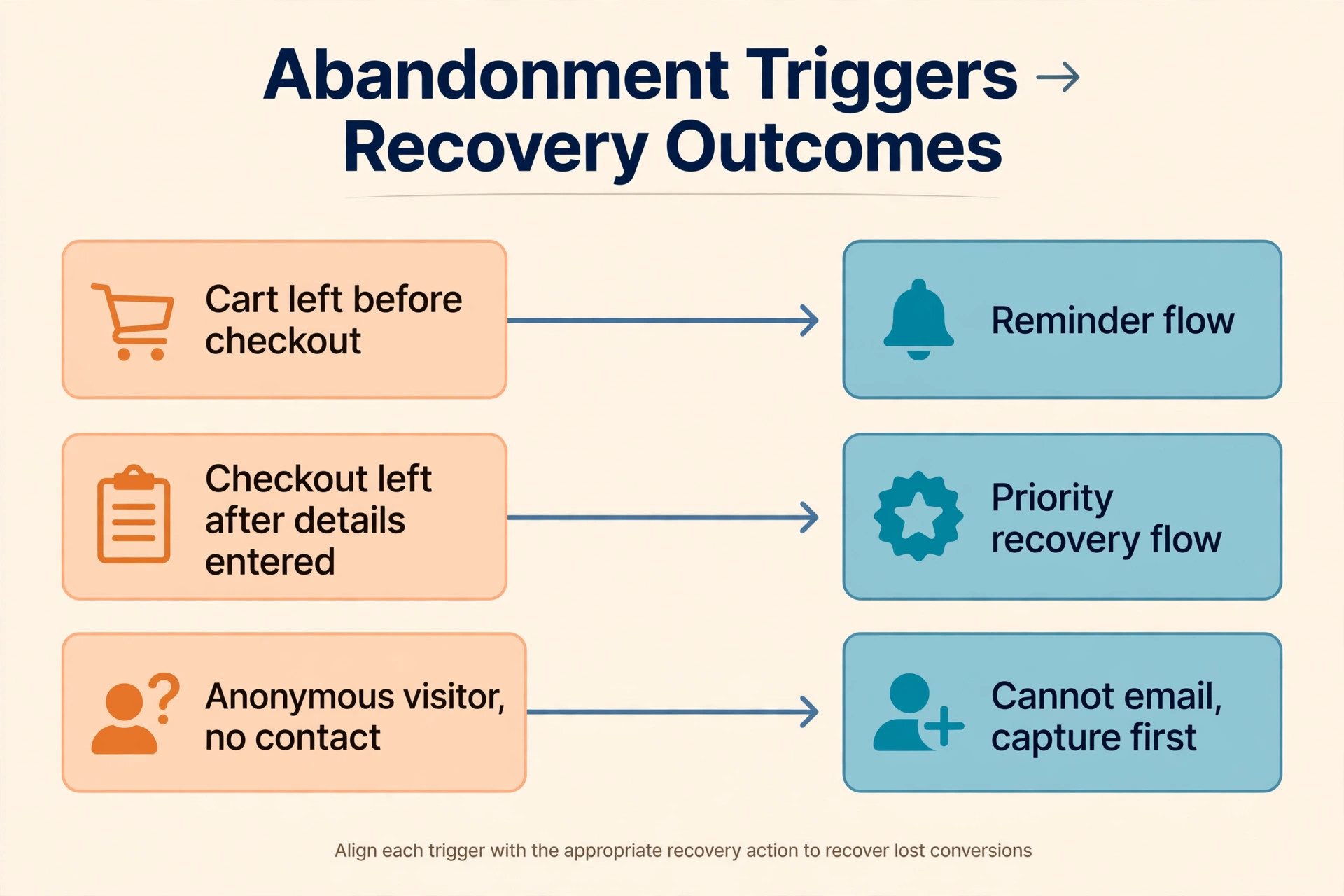
A cart and a checkout are not the same abandonment. Cart abandonment happens when a shopper adds items and leaves before starting checkout. Checkout abandonment happens later, after the shopper has entered contact details and often a shipping address. Checkout abandoners are usually more valuable to chase, because you are more likely to have an email address for them and because they were closer to paying. Some tools, including the built-in Shopify option, only track checkout abandonment in their free automation. No email tool can email an anonymous visitor it has never identified, no matter what its marketing page implies.
A strong flow has four parts, and you should check for all four before you pay.
- A trigger that fires on the real cart event, not on a page view. It should stop the flow the moment the shopper buys, so nobody gets a cart reminder after checkout.
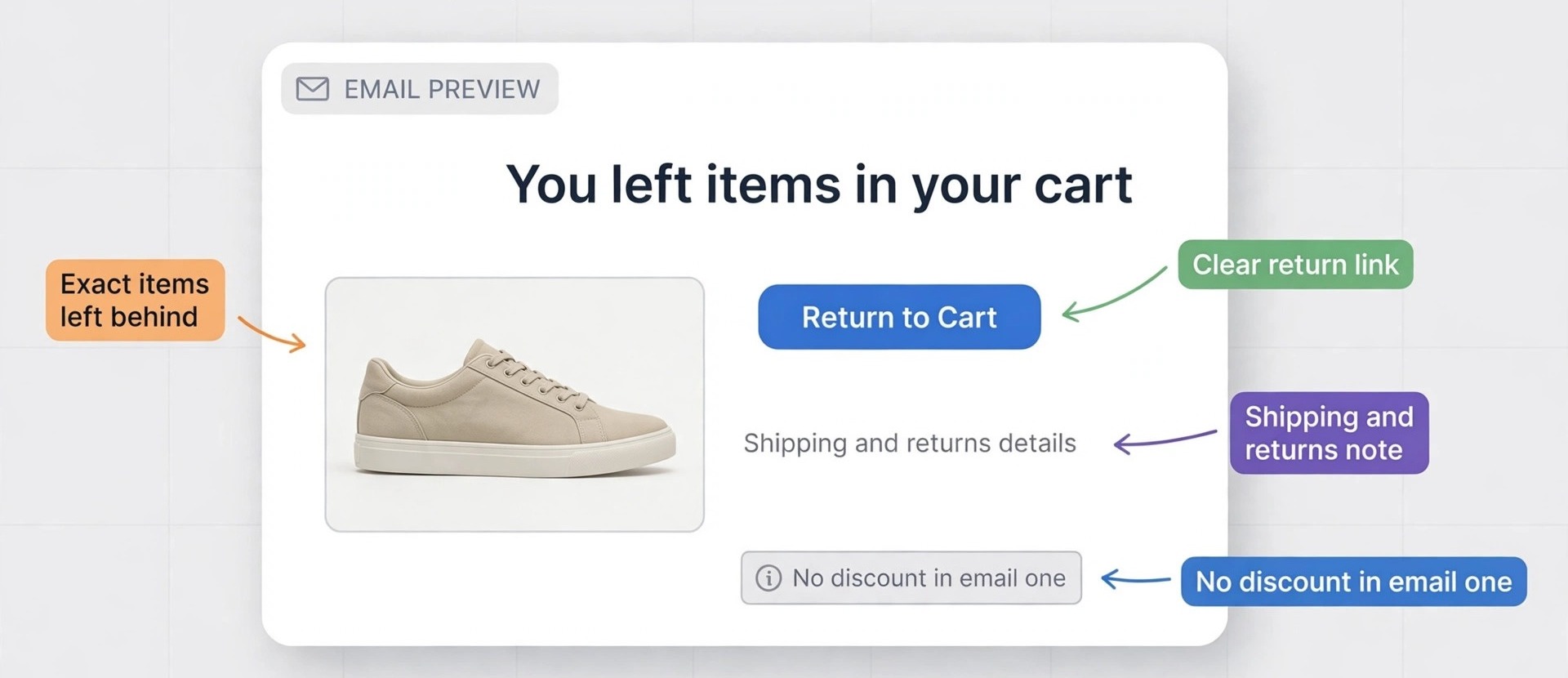
- A cart block that inserts the abandoned items, images, prices, and a working return link without manual copying.
- A delay and branch structure you can control, with a fast first reminder, a later message that answers objections, and a final message that can carry an incentive.
- Reporting that shows recovered orders and recovered revenue per flow, not just opens and clicks.
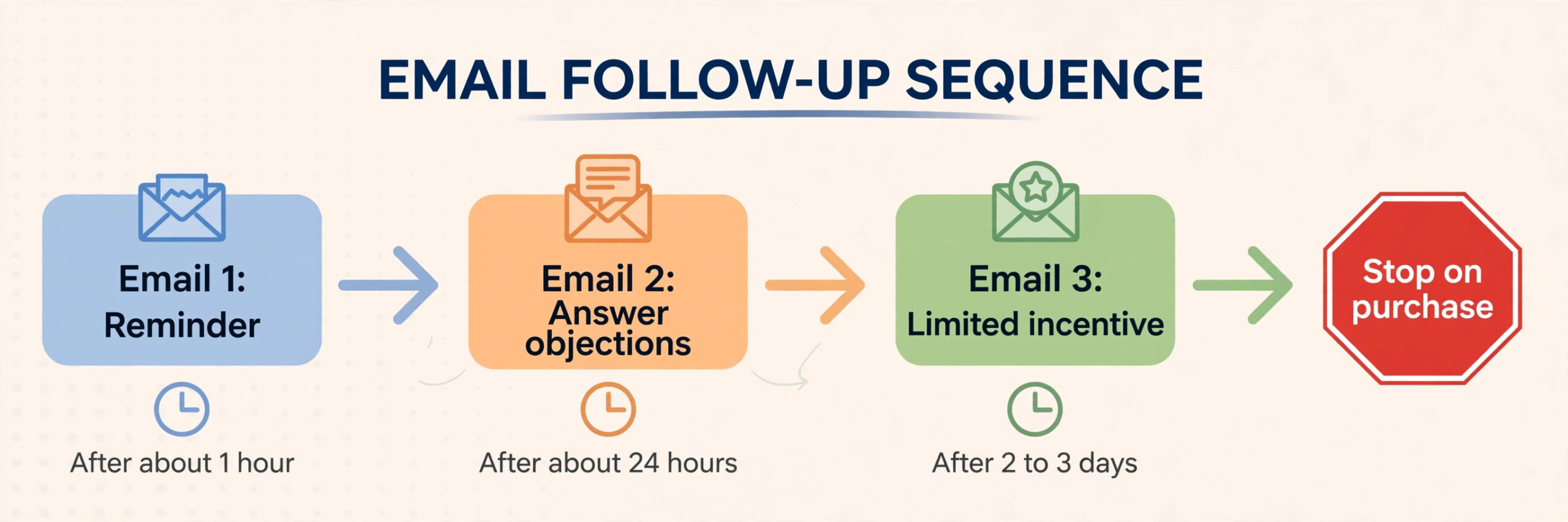
Timing is where most stores either annoy shoppers or lose them. A first reminder after about one hour catches shoppers who were distracted. A second message after about 24 hours has room for reviews, shipping details, and returns information. A third message after two or three days is the right place for a limited incentive, if you use one at all. Sending a discount in the first email teaches shoppers that abandoning a cart is the fastest way to get a lower price. Holding the discount until the third message protects your margin and still gives hesitant buyers a reason to finish.
Flow Comparison for the best email tool for ecommerce abandoned cart
The table below is the quickest way to narrow the list. Starting price is the lowest published monthly price at a small list size, not the price at 10,000 contacts, and several tools rise steeply as the list grows. That is why this comparison judges the best email tool for ecommerce abandoned cart on flow control and reporting, not on the entry price alone.
| Tool | Flow shape | Channels | Starting price | Suits best |
|---|---|---|---|---|
| Klaviyo | Multi-step flows with branching | Email and SMS | Free to 250 profiles, then from $20 a month | Shopify stores wanting deep segmentation |
| Omnisend | Pre-built multi-step flows | Email, SMS and push | Free to 250 contacts, then from $16 a month | Stores wanting one omnichannel flow |
| Mailchimp | Single reminder, multi-step on Standard | Email, SMS as add-on | Free to 250 contacts, then from $13 a month | Stores already using Mailchimp |
| Drip | Visual workflows, revenue per workflow | Email and SMS | From $39 a month for up to 2,500 people | Stores judging flows by revenue |
| Shopify Email | Built-in checkout automation | Email only | Included with Shopify, 10,000 free emails a month | New Shopify stores |
| ActiveCampaign | Branching automations with CRM | Email and SMS | From $15 a month at 1,000 contacts, annual billing | Stores with a sales workflow |
| Brevo | Workflow builder, send-based pricing | Email, SMS and push | Free to 300 emails a day, then from $9 a month | Large lists sending selectively |
| MailerLite | Simple automations, clean editor | Email only | Free to 250 subscribers, then from $12 a month | Budget stores wanting tidy flows |
| GetResponse | Cart recovery on Marketer and above | Email, SMS and push | Free to 500 contacts, then from $19 a month | Stores also wanting funnels |
| Moosend | Automation with recommendations | Email only | From $9 a month for 500 contacts | Budget stores wanting automation |
| AWeber | Simple automations, capped lower tiers | Email only | Free to 500 subscribers, then from $15 a month | Small stores valuing phone support |
| Constant Contact | Template-led automations | Email and SMS | From $12 a month | Small businesses wanting one general tool |
| Privy | Cart recovery beside popups | Email and SMS | Free to 100 subscribers, then from $30 a month | Stores needing capture plus recovery |
| Sendlane | Behaviour-based automations | Email and SMS | From about $100 a month | Larger stores with complex segments |
A tool that costs $16 a month but only sends one reminder will recover less than a tool that costs $39 a month and runs a tested three-step sequence with proper exit rules. Work out the value of one recovered order, multiply it by the abandoned carts you see each month, and compare that figure with the monthly price.
Recovery-rate notes, and how not to be fooled by them
Recovery rates are quoted in at least three different ways, and vendors rarely label which one they mean. Some quote the share of all abandoned carts that later complete a purchase. Some quote the share of flow recipients who buy after receiving an email. Some quote the share of opened recovery emails that lead to an order. Those numbers can differ by a factor of five for the same store, so a vendor claim of 20 percent recovery and another claim of 5 percent may describe the same result measured differently. When judging the best email tool for ecommerce abandoned cart work, always ask which denominator sits behind a rate before you compare two tools.
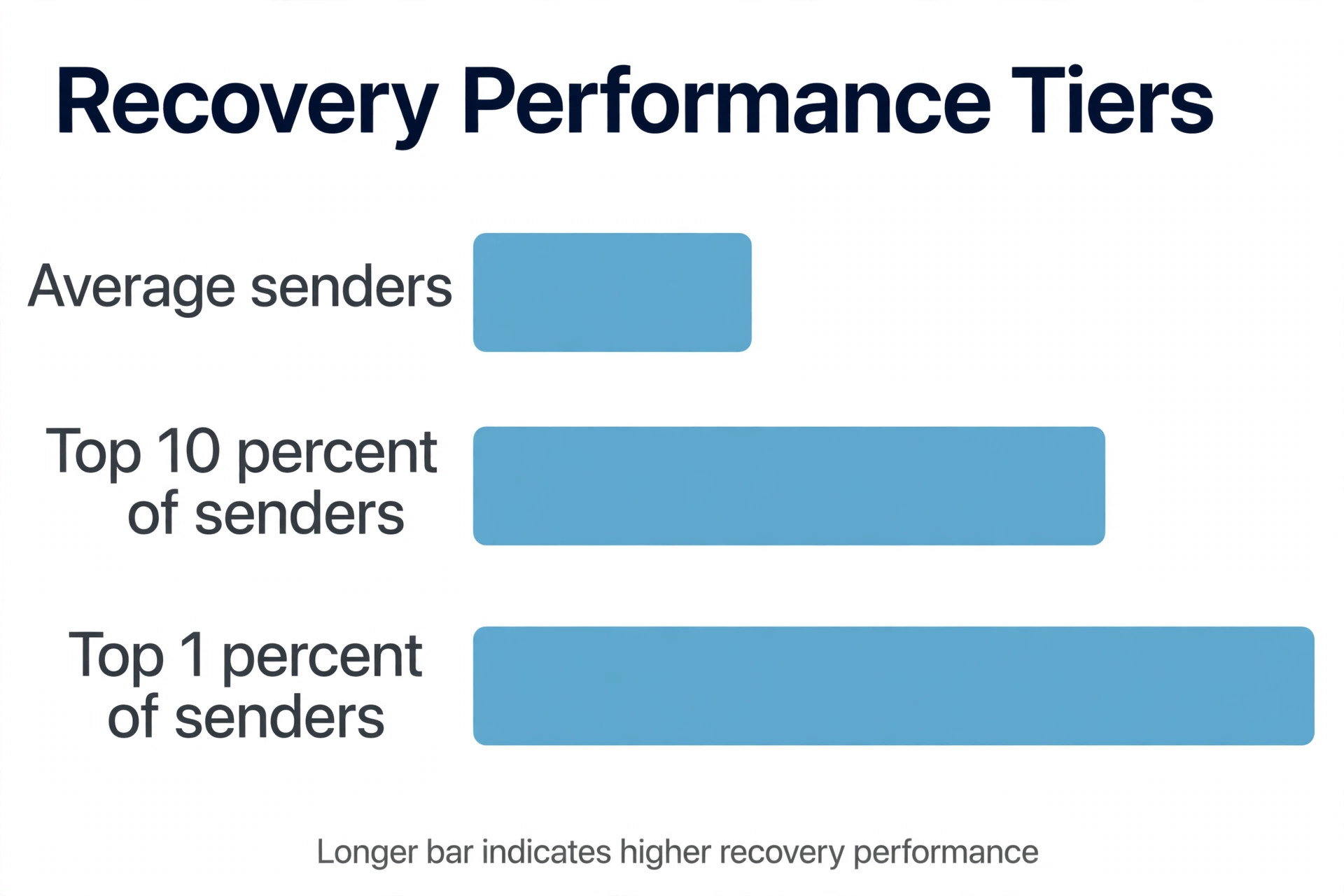
Published benchmarks give a sober baseline. Klaviyo has published an average abandoned cart recovery rate of about 3.33 percent, with the top 10 percent of senders near 7.69 percent and the top 1 percent near 12.4 percent, measured as recovered carts against abandoned carts. That range is useful precisely because it is modest. If a store abandons 1,000 carts a month at an average order value of $60, a 3 percent recovery rate returns about 30 orders and about $1,800 in revenue. A 10 percent rate returns about 100 orders and about $6,000. Both justify a $20 to $150 monthly tool many times over, but neither fixes a checkout that charges unexpected shipping, forces account creation, or fails on mobile.
The 14 Tools in Detail
The 14 reviews below judge the best email tool for ecommerce abandoned cart recovery on the same order every time. Flow first, then pricing, then the store it suits, then the catch to check before you commit. Prices are monthly figures in US dollars unless annual billing is stated.
1. Klaviyo
Klaviyo is the default recommendation for Shopify stores, and the reason is data depth. Its Shopify integration syncs products, orders, and customer behaviour quickly, and its flow builder branches on what a shopper viewed, bought before, or left in a cart worth $30 or $300. Predictive segments for likely buyers sit on top of that. Pricing starts free up to 250 active profiles, then from $20 a month for 500 profiles, about $100 a month at 5,000 profiles, and about $150 a month at 10,000 profiles, with SMS sold separately. The catch is list hygiene. Klaviyo bills on active profiles, so unengaged contacts push the bill up over time. Clean suppressed profiles on a schedule.
2. Omnisend
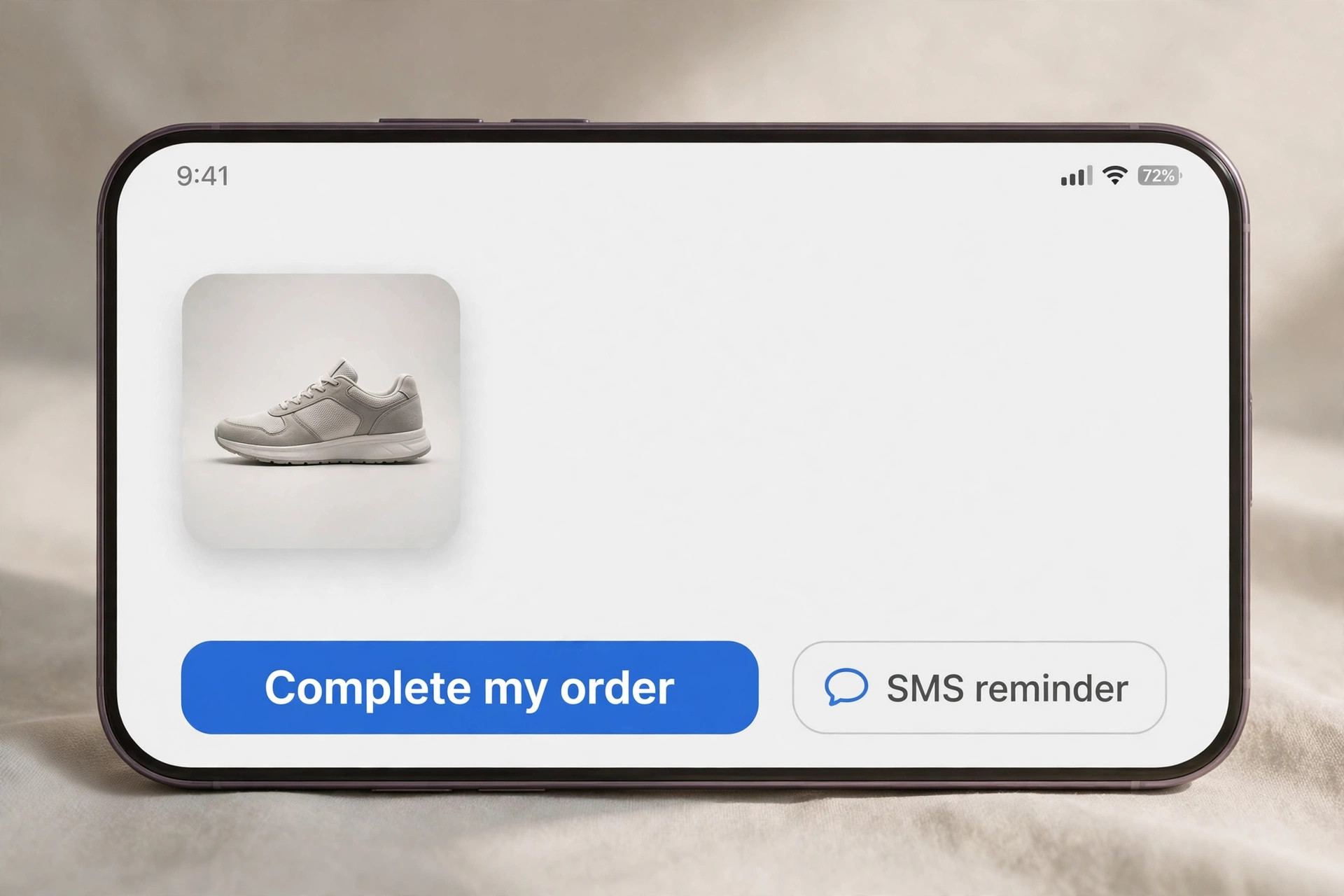
Omnisend is built for ecommerce from the start. Its abandoned cart workflow is pre-built, the product picker pulls items from the store catalogue, and one automation can combine email, SMS, and web push in a single sequence. A shopper who ignores the email can get a push notification or a text next, without rebuilding the flow in a second tool. Pricing starts free up to 250 contacts with 500 emails a month. Standard starts from $16 a month for 500 contacts, and Pro from $59 a month for 2,500 contacts with unlimited emails. The catch is that contact pricing rises steeply, with Standard reported near $115 a month at 10,000 contacts, so check the price at your actual list size.
3. Mailchimp
Mailchimp is the familiar choice for a team that already runs newsletters and segments in one place. Abandoned cart emails are available on Essentials, while multi-step customer journeys, advanced segmentation, and up to 200 automation flows arrive on Standard. That tier split is the decision point. A store that only needs a single reminder can stay on Essentials. A store that wants a three-step sequence with branches needs Standard. Pricing starts free up to 250 contacts. Essentials starts from $13 a month, Standard from $20 a month, and Premium from $350 a month. At 10,000 contacts, Essentials is about $110 a month and Standard about $135 a month. The catch is counting.
Mailchimp charges for all contacts, including unsubscribed ones, until they are archived or deleted.
4. Drip
Drip is an ecommerce CRM built around shopper behaviour, and its strongest feature is revenue attribution per workflow. Every flow shows the dollars it generated from store order data, so you can see whether the cart flow earned far more than a welcome series. The builder is clean, more than 15 workflow templates ship with the product, and a shopper who buys mid-sequence exits automatically. Pricing is a single tier with every feature included. It starts from $39 a month for up to 2,500 people, $89 a month for up to 5,000 people, and $154 a month for up to 10,000 people, with unlimited sends and a 14-day trial.
The catch is the cap of 50 workflows and the absence of an ongoing free plan.
5. Shopify Email
Shopify Email, now part of Shopify Messaging, is the baseline every Shopify store should switch on before buying anything else. It is included with Basic, Grow, Advanced, and Plus plans, and the built-in abandoned checkout automation sends a recovery email without a separate subscription. The email pulls store branding and abandoned products, and the return link takes the shopper back toward checkout. Every plan includes 10,000 free emails each calendar month, then charges $1 per 1,000 emails up to 300,000. Abandoned checkout emails are always free and do not count toward that allowance, while other marketing automations do count. The catch is scope.
It is a single checkout reminder, not a multi-step sequence, and it covers checkout abandonment rather than earlier cart abandonment.
6. ActiveCampaign
ActiveCampaign suits a store where recovery sits beside a sales process or a CRM. Its builder branches on behaviour, purchase history, tags, and lead scores, so one trigger can route a wholesale buyer, a repeat customer, and a first-time shopper down different paths. That depth is overkill for three reminder emails, but it is valuable for high-value products or enquiries that need sales follow-up. Pricing starts from $15 a month at 1,000 contacts on annual billing for Starter, with Plus at $49 a month on the same basis. Starter limits automations to five actions each, so most stores with serious recovery ambitions will need Plus. The catch is complexity. Budget for the tier that holds the flow you actually want.
7. Brevo
Brevo charges for emails sent rather than contacts stored, which flips the usual maths for a store with a large list that sends selectively. A store with 50,000 contacts that mails twice a month can pay far less here than on a contact-based tool. The workflow builder handles triggered sequences, and the platform also covers SMS, push, and transactional messages, so order confirmations and recovery emails can live under one vendor. Pricing starts free at 300 emails a day, then Starter from $9 a month for 5,000 emails, with Standard reported near $69 a month for 20,000 emails. The catch is tier gating.
Read the plan comparison first, because the automation features a recovery flow needs do not all sit on the cheapest paid tier.
8. MailerLite
MailerLite is the tidy budget option. The editor is clean, the automation builder is easy to follow, and a small team can build a welcome sequence and a cart reminder without a specialist. Comfort includes templates, landing pages, and a solid set of automations, and the platform counts only active unique subscribers, so a subscriber in several segments still counts once. Pricing starts free up to 250 subscribers, then Comfort from $12 a month for 500 subscribers, about $19 a month at 1,000 subscribers, and about $89 a month at 10,000 subscribers. The catch is ecommerce depth.
Its cart triggers, product blocks, and revenue reporting are thinner than Klaviyo, Omnisend, or Drip, so it suits simple reminder flows rather than behaviour-led retention plans.
9. GetResponse
GetResponse is a broad marketing platform, and its recovery value depends entirely on buying the right tier. Starter, from $19 a month for 1,000 contacts, includes newsletters and exactly one custom automation workflow, which is not enough for a store that also needs a welcome series and a post-purchase flow. Marketer, from $59 a month for 1,000 contacts, adds unlimited workflows, advanced segmentation, abandoned cart recovery, sales funnels, promo codes, and revenue reports. That tier is the real entry point for recovery work. The free plan covers up to 500 contacts with limits, including branding on messages. The catch, beside the tier gate, is focus.
A store that only needs cart recovery may pay for webinars and course tools it never opens.
10. Moosend
Moosend is the low-price automation option for a store that wants behaviour-based flows without paying for a large platform. Its builder handles cart abandonment and product recommendations, sends are unlimited on the paid plan, and a small team can build a three-step sequence without training. Pricing starts from $9 a month for 500 contacts on monthly billing, or about $7 a month on annual billing, rising with list size, with a 30-day free trial and no ongoing free plan. The catch is the ecosystem. Moosend has fewer native integrations than Mailchimp or Klaviyo, no phone support, and less depth in predictive segmentation. Check that your store platform and review app connect cleanly before you migrate.
11. AWeber
AWeber is the long-running small business option, and its appeal is simplicity plus human support. The free plan covers up to 500 subscribers with 3,000 emails a month, one list, one landing page, and one automation, which is enough to test a single recovery reminder. Lite, from $15 a month for up to 500 subscribers, adds unlimited sends, three automations, three landing pages, and three users. Plus, from $30 a month, removes the automation cap. Phone support on paid plans is rare at this price and useful when a flow stops firing. The catch is the Lite automation cap.
A store needing a welcome series, a cart flow, a browse flow, and a post-purchase flow will outgrow three automations quickly, so budget for Plus from the start in that case.
12. Constant Contact
Constant Contact is a general small business tool covering email, simple automations, social posting, and landing pages under one login. Its editor is friendly, its templates are plentiful, and its support team is reachable, which matters for an owner who runs marketing alongside everything else. A store can build a basic cart reminder and keep a simple automation programme going without a specialist. Pricing starts from $12 a month, with a trial rather than an ongoing free plan, and prices rise with contact count, becoming steep past 10,000 contacts in reviewer reports. The catch is ecommerce depth.
Its cart triggers, product recommendations, and revenue reporting are thinner than the ecommerce-first tools, so a store whose revenue depends on recovery should shortlist those instead.
13. Privy
Privy is different because it starts with capture and then adds recovery. Its popups, spin-to-win forms, and signup tools grow the email and SMS list, and its abandoned cart emails then chase the shoppers those tools identified. Privy also publishes a clear three-email shape, with a reminder first, an incentive after 24 to 48 hours, and a stronger offer for high-value carts a few days later. Pricing starts free up to 100 subscribers, with paid plans from $30 a month for 1,500 subscribers and unlimited sends. The catch is breadth. It is not a full email platform, so rich newsletters and deep reporting will still need another tool.
14. Sendlane
Sendlane is the deep segmentation option for larger stores that have outgrown simple flows. Its builder supports behaviour-based triggers, multivariable segmentation by visits, purchase history, devices, and location, and event tracking across the customer journey. An abandoned cart automation can check whether an order was placed after the trigger, apply wait nodes between messages, and end cleanly when the shopper buys. That control helps a store with many product lines and many customer types. Pricing starts from about $100 a month, which rules it out for a new store. The catch, beside price, is learning curve.
A small team without someone to own automation may not use the features it pays for, while Omnisend or Drip would deliver more value at a fraction of the price.
How to Set Up a Three Email Recovery Sequence
Use this sequence as the starting point on whichever tool you pick as the best email tool for ecommerce abandoned cart recovery, then test one change at a time. Changing timing, subject line, and discount in the same week tells you nothing about which change worked.
- Email one, after about one hour. Show the exact items left behind, with images, prices, and a single return link. Add a short line about shipping or returns only if it answers a common checkout doubt. No discount yet.
- Email two, after about 24 hours. Answer objections with reviews, delivery details, or returns information. Keep the return link prominent and the message short.
- Email three, after two or three days. This is the only step where a limited incentive belongs by default. Offer free shipping over a threshold or a small percentage off, with a clear expiry, restricted to carts above a value that protects your margin.
- Exit rule, always on. Stop the sequence the moment the shopper completes the purchase.
- Test plan, one variable at a time. Test the first delay first, then the subject line of email one, then whether email three needs an incentive at all. Record recovered revenue per step, not just opens.
Only send recovery emails to shoppers who gave you permission to contact them, through a subscription, an account, or checkout consent that your store platform records. Gmail and Yahoo now expect bulk senders to authenticate with SPF, DKIM, and DMARC, keep spam complaints low, and offer one-click unsubscribe. A recovery flow that ignores those rules will land in spam for the shoppers most likely to buy.
Mistakes That Quietly Kill Recovery
Most recovery programmes fail for boring reasons, not for lack of a clever tool. Check this list before you blame the platform.
- The return link is broken, goes to the home page, or drops the cart contents on mobile. Test it on a real phone before the flow goes live.
- The flow keeps sending after purchase. A reminder for a paid order damages trust faster than a missed reminder loses a sale.
- Every abandoner gets a discount in email one. Margin leaks, and shoppers learn to abandon on purpose. Hold incentives for the final step.
- The email shows a generic product grid instead of the abandoned items. A shopper who left a specific variant behind wants to see that variant.
- The store emails unidentified or non-consenting shoppers. That hurts deliverability and, in many regions, breaks consent rules. Capture comes first, recovery second.
- Nobody reviews the flow after launch. Prices change, products go out of stock, and discount codes expire. Check links, codes, and images every quarter.
If recovery is your first serious automation, it helps to see how it fits beside the rest of the store, and this related reading puts the best email tool for ecommerce abandoned cart questions in wider context. Our guide to AI tools for ecommerce covers the wider toolkit a store owner juggles, while our guide to email marketing tools compares general platforms for senders who also run newsletters. Stores already on Mailchimp should read our Mailchimp versus Klaviyo comparison before choosing a recovery tier, and stores planning a move can use our Mailchimp to Klaviyo migration checklist to avoid losing flows and segments in the switch.
If you sell on Shopify, our breakdown of the monthly cost of running a Shopify store helps place the email bill beside hosting, apps, and payment fees.
Frequently Asked Questions
How many recovery emails should a store send
Three emails is the right starting point for most stores. The first reminds, the second answers objections, and the third carries a limited incentive for shoppers who still have not returned. More than three messages rarely adds revenue in proportion to the annoyance it creates. Test a two-email version against a three-email version on your own audience before adding a fourth message.
Does an email tool recover carts from shoppers who never gave an email address
No. An email tool can only message an identified, consenting shopper. Anonymous visitors who never logged in, subscribed, or entered an email during checkout cannot receive a recovery email, which is why capture tools and checkout email fields matter as much as the flow itself. Push notifications can reach some anonymous visitors, but they need their own permission, and they are not a substitute for email consent.
Should the first recovery email include a discount
Usually not. A discount in the first email teaches shoppers that abandoning a cart earns a lower price, and it gives away margin on sales that a plain reminder might have recovered. Hold the incentive for the third message, restricted to high-value carts or shoppers who engaged with earlier messages. Judge the result on profit per recovered order, not on recovery count alone.
What is a realistic recovery rate to expect
Use published benchmarks as a starting point, not a promise. Klaviyo has published an average near 3.33 percent, with top performers near 7.69 percent for the top 10 percent of senders and 12.4 percent for the top 1 percent, measured against abandoned carts. Your rate will move with product price, shipping surprises, checkout friction, and the share of abandoners you can identify. A store with a smooth checkout and a fast first reminder should expect the middle of that range over time.
Is Shopify Email enough, or does a store need a dedicated tool
Shopify Email is enough to start, and every Shopify store should switch on its free abandoned checkout automation before spending on another platform. It becomes limiting when a store needs multi-step sequences, branching by cart value, SMS or push follow-ups, and revenue reporting per flow step. That is the moment to move to Omnisend, Klaviyo, or Drip. Keep the Shopify flow as the fallback while the new flow is tested, then switch the old one off to avoid double messages.
How do I choose between Klaviyo and Omnisend for a Shopify store
For a Shopify store, the best email tool for ecommerce abandoned cart work often comes down to depth against simplicity. Choose Klaviyo when segmentation depth, predictive segments, and revenue reporting matter most, and when the team will maintain complex flows and clean the list regularly. Choose Omnisend when the priority is a pre-built omnichannel sequence that combines email, SMS, and push without a steep learning curve, and when the budget is tighter at a small list size. Both tools recover carts well.
Your First Flow, Live by Friday
The honest verdict is that the tool matters less than the flow, and the flow matters less than whether anyone maintains it. A three-step sequence with a working return link, a clean exit rule, and revenue reporting will outperform a sophisticated platform that nobody opens after setup week. That is why the shortlist here is short in practice, even though it covers 14 tools in full. In the end, the best email tool for ecommerce abandoned cart recovery is the one your team will actually run, test, and review every quarter.
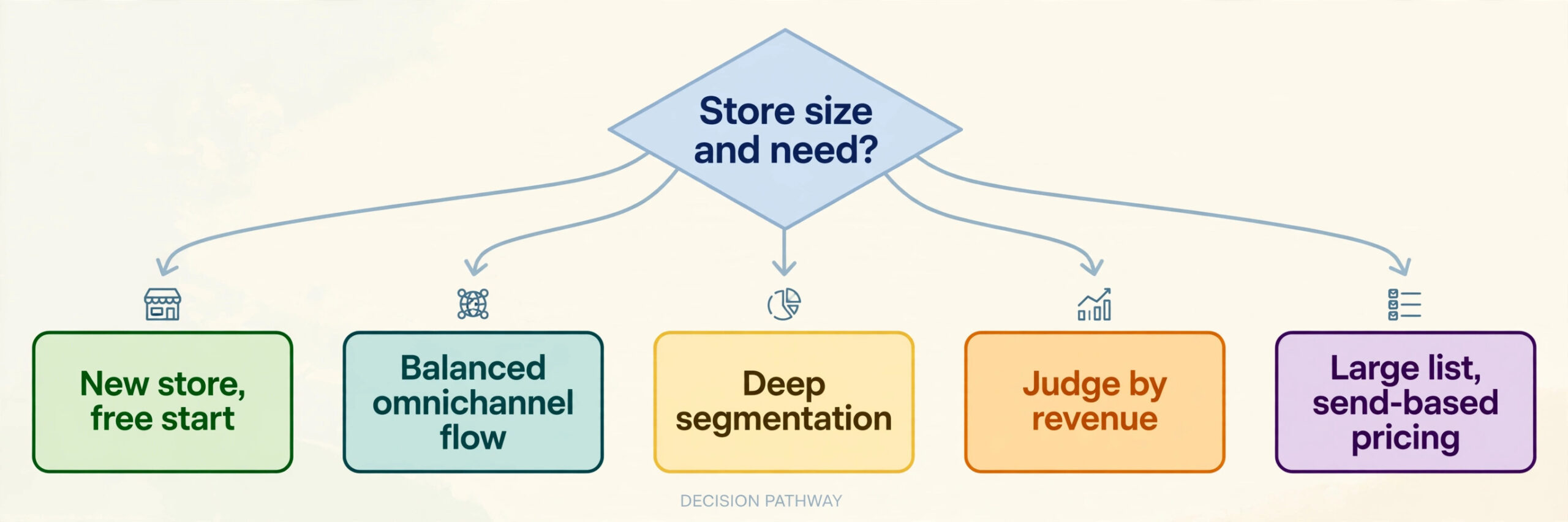
For most Shopify stores starting recovery properly, Omnisend is the balanced pick. It combines email, SMS, and push in one pre-built sequence, starts free, and stays affordable at a small list size. For a store that has outgrown simple flows, Klaviyo is the upgrade, provided the team commits to list hygiene. For a store that judges everything by revenue, Drip is the cleanest reporting choice. For a tight budget, MailerLite or Moosend will run a tidy reminder sequence, and for a store with no flow at all, Shopify Email is the free first step that should go live today.
Whatever you pick, launch with one flow, one test at a time, and one number that decides success. That number is recovered profit per month, after discount costs and after the subscription, not opens, not clicks, and not a vendor claim measured on an unknown denominator. Build the flow, test the delay, protect the discount, and review the sequence every quarter.
| Job | Best pick | Why it fits |
|---|---|---|
| New Shopify store with no flow yet | Shopify Email | Free abandoned checkout automation with no new subscription |
| Balanced omnichannel recovery on a budget | Omnisend | Email, SMS and push in one pre-built sequence from a free plan |
| Deep segmentation and predictive audiences | Klaviyo | Branching flows and revenue reporting for growing Shopify stores |
| Judging every flow by revenue | Drip | Dollar attribution per workflow with automatic exit on purchase |
| Simple tidy flows at low cost | MailerLite | Clean builder and active-subscriber counting for small teams |
| Large list that sends selectively | Brevo | Send-based pricing that follows volume rather than contacts |
| Sales and CRM beside the shop | ActiveCampaign | Branching automations with lead scoring for higher-value sales |
| Capture and recovery together | Privy | Popups that build the identified audience the flow then chases |