
Payroll goes wrong in exactly the ways a busy owner cannot afford. A missed tax deposit draws a penalty of 2 to 15 percent of the taxes owed. A misclassified worker creates a liability that surfaces months later. A late filing in a second state creates a second problem on top of the first. The cost of hiring a payroll service monthly is the price of handing those risks to a provider whose entire business is getting payroll right, and for most small teams that price is far lower than owners expect.
Published 2026 pricing puts basic payroll software at $20 to $100 a month plus $4 to $12 per employee, and full service payroll at $40 to $180 a month plus $6 to $15 per employee. A 10 person team typically pays $60 to $120 a month for basic software or $100 to $300 for full service payroll, and those numbers are the starting point for everything that follows.
What a Payroll Service Actually Takes Off Your Plate
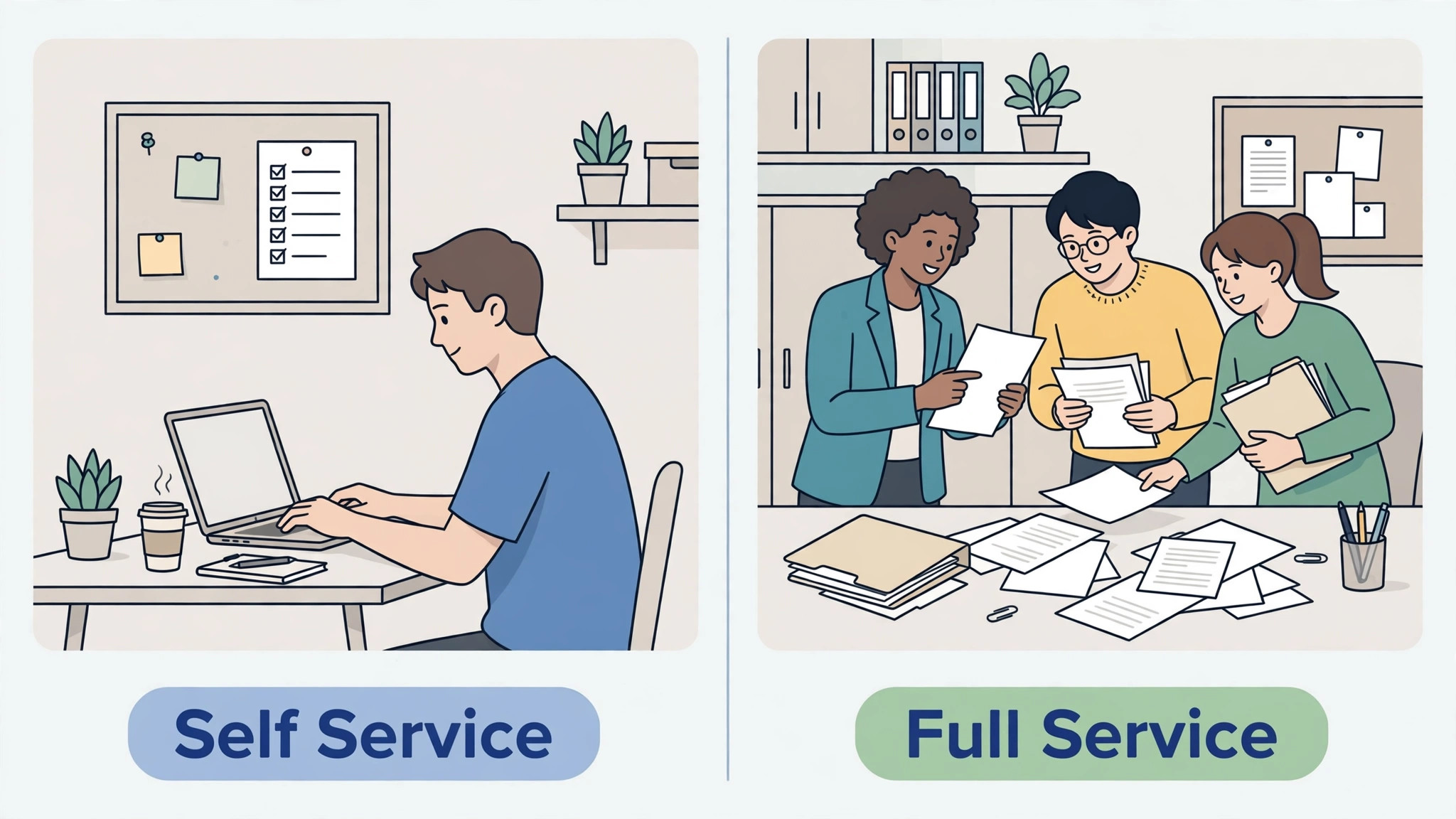
A payroll service does three jobs that look simple and are not. First, it calculates pay, meaning gross wages, withholdings, deductions, and employer taxes, for every employee and contractor on every cycle. Second, it files and pays payroll taxes at federal, state, and sometimes local level, and produces year end forms such as W-2s and 1099s. Third, it keeps the records and compliance trail that protect you when a question arrives from a tax agency or a former employee. The difference between basic software and full service payroll is who does the work. With basic software, you run the payroll and the software calculates and files. With full service payroll, the provider runs it, and you approve it.
That distinction is worth real money, because the time cost of DIY payroll runs 5 to 10 hours a month for a small owner, and the average cost of a payroll mistake has been reported at $291 per error.
The second distinction is what sits outside payroll itself. Time tracking, benefits administration, workers compensation, retirement plans, and HR compliance tools are often separate modules, and they are where a cheap headline price grows. A provider that charges $40 a month plus $6 per employee can easily reach $150 a month for a 10 person team once time tracking, multi state filing, and benefits administration are added. That is not dishonest pricing, but it does mean you should compare providers on an all in monthly total for your actual headcount and your actual add-ons, not on the base fee.
Ask every candidate for a written all in quote for your team size, including year end forms, off cycle runs, and multi state fees, before you compare.

The cost of hiring a payroll service monthly by headcount
The cost of hiring a payroll service monthly follows a simple formula, which is base fee plus per employee fee times headcount, times twelve for the annual figure. The base fee is the floor, the per employee fee is the slope, and the slope is what matters as you grow. A provider with a low base fee and a high per employee fee looks cheap at five employees and expensive at forty. A provider with a higher base fee and a lower per employee fee shows the opposite pattern. The table below uses published 2026 prices from Gusto, OnPay, Square Payroll, and Paychex, and shows the monthly total at three team sizes on entry level plans, before add-ons.
| Provider, entry plan | Base fee | Per employee | 5 employees | 10 employees | 25 employees |
|---|---|---|---|---|---|
| Gusto Simple | $40 to $49 | $6 | $70 to $79 | $100 to $109 | $190 to $199 |
| OnPay | $40 | $6 | $70 | $100 | $190 |
| Square Payroll | $35 | $6 | $65 | $95 | $185 |
| Paychex Flex, quoted | $39 and above | $3 to $9 | $54 to $84 | $69 to $129 | $114 to $264 |
| Patriot Basic, self service | $17 | $4 | $37 | $57 | $117 |
| ADP RUN, quoted | $79 and above | $4 to $6 | $99 and above | $119 and above | $179 and above |
Two patterns in that table deserve attention. First, the cheapest headline provider is not always the cheapest all in provider, because Patriot Basic at $17 plus $4 does not include tax filing, which its Full Service tier adds for about $20 more a month. Second, quote based providers such as ADP and Paychex can be competitive at larger headcounts even when their base fee looks high, because their per employee rates can sit at the low end of the range once a quote is negotiated.
For a 15 person team, published guides put the typical all in monthly figure near $150 to $265 before add-ons, and for a 25 person team, outsourcing costs roughly $2,400 to $6,200 a year against an in house payroll specialist costing $64,865 a year on average plus benefits, a total often above $80,000. The break-even point for hiring in house typically falls at 100 or more employees with multi state complexity, which means almost every small business is better off outsourcing on cost alone, before counting the compliance benefit.
Why per employee pricing is not the whole story
Per employee fees hide three variations that change the bill. Some providers charge per employee paid in a cycle, which is kinder to teams with seasonal or part time staff, while others charge per employee on record, which bills you for dormant records. Some providers charge contractors at a separate rate, and Gusto’s contractor only plan at about $35 a month plus $6 per contractor is an example of a distinct contractor price. And some providers charge per payroll run rather than per month, which punishes businesses that run weekly payroll or frequent off cycle corrections. Before signing, ask three questions in writing. Do you charge per employee paid or per employee on record. What do contractors cost.
And what do off cycle runs cost. The answers to those three questions can move the cost of hiring a payroll service monthly by 20 percent or more, and they are the questions most buyers forget to ask.
Gusto, ADP, and Paychex, the Three Names You Will Compare First
Most small business owners start with the same three names, and each suits a different buyer. Gusto is the transparency choice. Its Simple plan is published at about $40 to $49 a month plus $6 per person, its Plus plan at about $80 plus $12, and its Premium plan at about $180 plus $22, all month to month with unlimited payroll runs and no long term contract. Gusto suits tech comfortable teams of 1 to 20 employees that want to sign up online and run payroll themselves, with HR tools arriving at the Plus tier. Its weaknesses, reported by users, are slower support resolution and basic reporting, and year end filings that can carry extra fees on some plans.
ADP RUN is the scale choice. It is quote based for all four packages, starting near $79 a month plus $4 per employee in published comparisons, with multi year contracts and setup fees common, and its value is deep compliance, SUI management, garnishment handling, and an HR help desk that smaller providers cannot match. ADP suits businesses above 20 employees, regulated industries, and owners who expect to grow well past 50 employees. Paychex Flex sits between the two, starting near $39 a month plus $5 per employee in published comparisons, with 24 hour phone support and strong time and benefits add-ons, but with add-on costs that rise quickly beyond the base estimate.
For a team of 1 to 10, Paychex often has the lowest base cost. For a team of 25 to 50, published comparisons find ADP surprisingly competitive and Gusto the most expensive, because Gusto’s per employee fees compound at scale.
OnPay, Square Payroll, and the Simple Priced Alternatives
OnPay and Square Payroll are the quiet value picks in this market, and they deserve attention precisely because they do not advertise as loudly. OnPay charges $40 a month plus $6 per employee, with full tax filing, W-2 and 1099 filing, and HR tools included rather than gated behind higher tiers, and it suits budget conscious multi state teams. Square Payroll charges $35 a month plus $6 per person paid, with unlimited pay runs and deep integration with Square point of sale and timecards, which makes it the natural choice for retail and restaurant teams already running Square. Both are simpler products than ADP or Paychex, and that simplicity is the point.
If your payroll is single state or lightly multi state, with hourly staff and straightforward benefits, a simple provider at $65 to $100 a month for a 10 person team is usually the right buy, and the money saved against a premium provider can fund the benefits or time tracking add-on you actually need.
Patriot, QuickBooks Payroll, and Rippling at the Edges
Patriot, QuickBooks Payroll, and Rippling each win a specific buyer. Patriot is the budget floor, with Basic at $17 a month plus $4 per worker for self service payroll and Full Service at $37 plus $5 with tax filing included, and it suits very small teams that want the lowest possible bill and are comfortable doing more themselves. QuickBooks Payroll is the accounting integration choice, sold bundled with QuickBooks accounting at list prices near $88 a month for a starter bundle plus $6.50 per employee, with a mid level bundle near $125, and it suits businesses already living in QuickBooks.
Rippling is the platform choice, starting near $8 per employee a month for payroll only with modules adding cost and full platform pricing quote based, and it suits tech startups and remote first teams of 10 to 500 that want payroll, HR, IT provisioning, and device management in one workflow. Rippling’s payroll fee looks low in isolation, but the platform cost is the real number, so compare it on the full module stack you will actually use.
The Add-On Fees That Change the Monthly Total
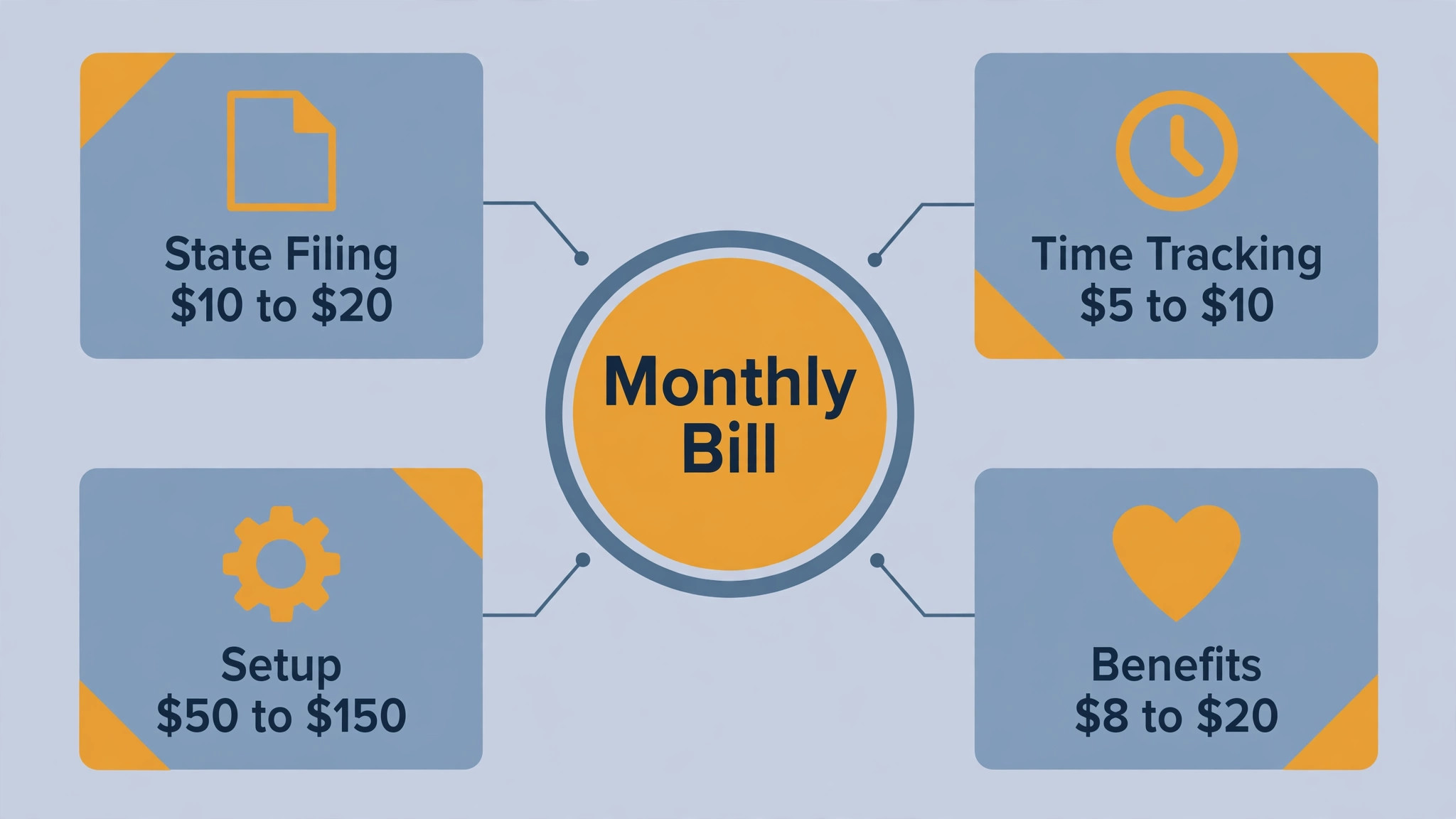
The cost of hiring a payroll service monthly is only honest when it includes the add-ons, and the add-on list is where most buyers get surprised. Published guides put multi state filing at $10 to $20 a month per extra state, advanced HR and compliance modules at $8 to $20 per employee a month, native time tracking at $5 to $10 per employee a month when not bundled, year end form batches at $30 to $50, and setup or implementation fees at $50 to $150. Same day direct deposit, off cycle runs, garnishment handling, and terminated employee reporting can each carry small per instance fees of $1 to $5.
None of these is large alone, but a 20 person team in three states with time tracking and benefits administration can easily add $200 to $400 a month to a base quote of $160, more than doubling the bill. The defence is a written all in quote and a quarterly review of the add-on list, because add-ons are often switched on during onboarding and never revisited.
| Add-on or fee | Typical extra cost | Who pays it most |
|---|---|---|
| Extra state filing | $10 to $20 per state per month | Multi state and remote teams |
| Time tracking module | $5 to $10 per employee per month | Hourly and shift based teams |
| Benefits administration | $8 to $20 per employee per month | Teams offering health or retirement plans |
| Year end W-2 and 1099 batches | $30 to $50 per batch, sometimes extra | Every business, once a year |
| Off cycle and correction runs | $1 to $5 per instance, sometimes free | Teams with frequent corrections |
| Setup or implementation | $50 to $150 one time | New customers, often waived on promotion |
The other cost that never appears on a provider price page is your own time. Published surveys put small business owners at 3 to 10 hours a month on payroll administration when doing it themselves, and 2 to 4 hours per cycle even with software, against under an hour per cycle with full service outsourcing. At a conservative owner time value of $50 an hour, five hours a month is $250 of hidden cost, which is more than the software fee itself for a small team. That is why the cheapest software is not always the cheapest payroll function.
A provider that saves you four hours a month has paid for its own premium, even before counting the penalty risk it removes.
The Compliance Checklist Before Your First Pay Run
Payroll compliance is a checklist, not a feeling, and the items below are the ones that generate penalties when missed. Work through them with your provider before the first pay run, not after the first notice arrives. The checklist below is the overview proof for this guide, and it is worth keeping beside the provider contract.
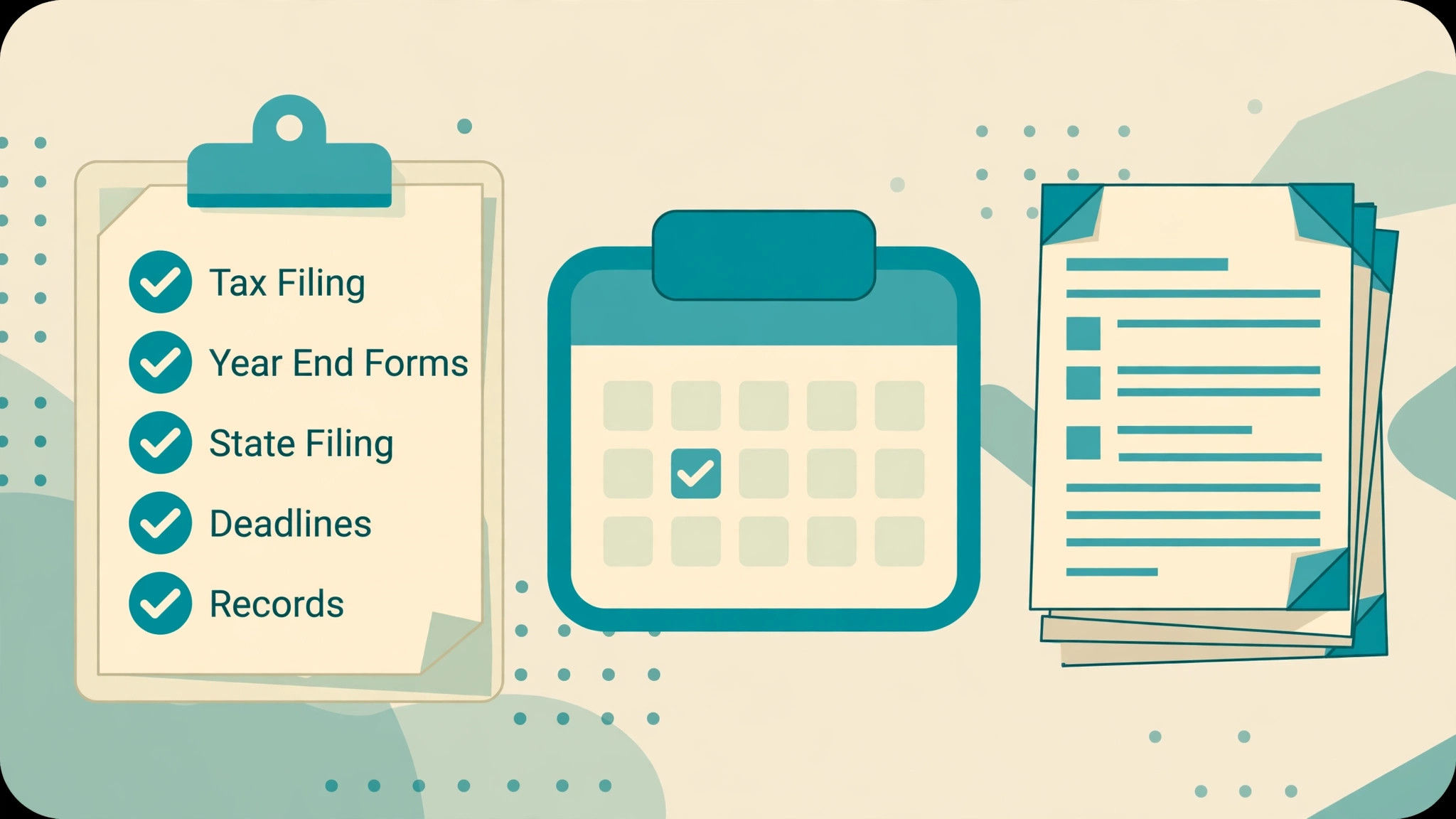
- Confirm federal, state, and local tax registration in every state where employees live and work, not just where the office sits
- Confirm worker classification for every person on payroll, meaning employee versus contractor, with the reasoning documented
- Confirm pay frequency rules, overtime rules, and final pay rules for each state where you employ people
- Confirm new hire reporting deadlines and the provider’s process for meeting them
- Confirm how the provider handles garnishments, wage attachments, and child support orders
- Confirm year end responsibilities, meaning who files W-2s and 1099s, and whether the fee is included
- Confirm what happens if the provider makes an error, meaning who pays the penalty and how quickly it is corrected
- Confirm data security, meaning who can access pay data, how it is stored, and what happens to it if you leave
Two of those items deserve emphasis. The first is multi state registration, because remote work has made it the most common compliance trap for small businesses. An employee who moves to another state can create a new filing obligation without anyone noticing, and providers differ in how proactively they flag it. The second is error responsibility. ADP’s published comparisons note that it absorbs fines and penalties in case of its own errors, and that kind of guarantee is worth asking every provider about in writing. A provider that will not stand behind its filings is selling software, not a service, and should be priced accordingly.
Keep the completed checklist with the contract, and revisit it every time you hire in a new state or change pay structure.
DIY, Software, Full Service, or a PEO
Four routes cover almost every small business, and the cost of hiring a payroll service monthly differs sharply between them. DIY with a spreadsheet costs nothing in cash and 5 to 10 hours per cycle in time, with high compliance risk, and it only makes sense below five employees on simple single state payroll. Payroll software at $40 to $80 a month plus $4 to $12 per employee suits teams that want control and are comfortable running payroll themselves, with moderate time cost and moderate risk.
Full service outsourcing at $80 to $150 a month plus $8 to $25 per employee suits teams that want payroll handled, with low time cost and low risk, and it is the sweet spot for most businesses between 5 and 50 employees. A PEO, meaning a professional employer organisation that co employs your staff and bundles benefits, HR, and compliance, costs $79 to $210 per employee a month, and it suits businesses that want enterprise grade benefits and are willing to share employer responsibilities to get them.
The PEO figure looks shocking next to software pricing, but it includes benefits access and HR depth that software does not, so compare it against your total benefits and HR spend, not against the software fee alone.
Switching Providers Without Breaking a Pay Cycle
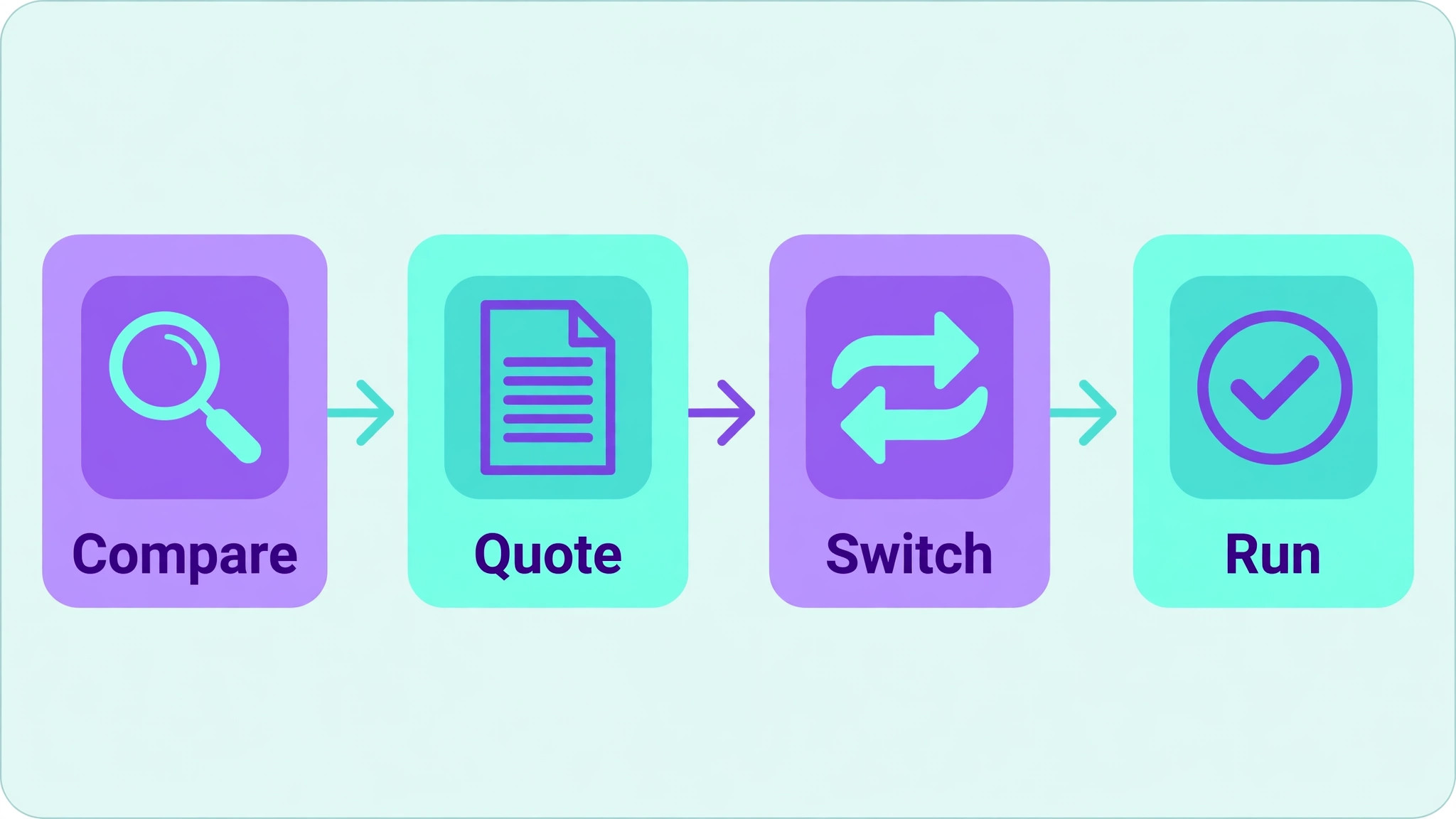
Switching payroll providers is the moment most owners dread, and it is usually smoother than feared if timed well. The safest window is the start of a calendar quarter, and the safest of all is the start of a calendar year, because year to date wage and tax figures reset cleanly. Before switching, export or request year to date totals, employee records, tax filing history, and benefits deduction records from the old provider, and confirm in writing who files the year end forms for the transition year. Run one parallel cycle if the team is large enough to justify it, meaning the new provider calculates a cycle that you compare against the old provider’s figures before going live.
Tell employees what changes for them, which is usually just a new pay stub format and a new self service login, and tell them before the first new pay run, not after. Most switches complete in two to four weeks, and the most common failure is not technical but administrative, meaning a missed state registration or a benefits deduction that did not carry over. A clean switch protects the cost of hiring a payroll service monthly from surprise catch up fees, because errors discovered late are billed as corrections rather than included in the standard cycle. The compliance checklist above, reused at switch time, catches both.
What Payroll Costs at 1, 5, 25, and 100 Employees
Headcount scenarios make the formula real, because the same provider looks like a different deal at each size. The scenarios below use published entry level pricing before add-ons, and they assume monthly pay cycles with straightforward deductions. Your own figures will differ with pay frequency, states, and benefits, but the shape of the curve will not.
A solo owner with one employee and no contractors is the simplest case. Gusto Simple at about $40 plus $6 lands near $46 a month, OnPay at $40 plus $6 lands at $46, and Square Payroll at $35 plus $6 lands at $41. At this size, the honest question is whether a service is needed at all. The answer is usually yes once tax filing enters the picture, because a single missed quarterly deposit costs more than a year of the service. The solo case is also where contractor only plans matter.
An owner paying three contractors and no employees might use a contractor plan near $35 plus $6 per contractor, or about $53 a month, rather than a full employee plan. The trap at this size is buying a premium tier for HR tools that a one person team will never open. Start on the entry tier, and upgrade when a real need appears, such as multi state hiring or benefits administration.
A five person team is where software starts to pay for itself clearly. Entry level totals cluster near $65 to $79 a month, meaning $780 to $948 a year, against DIY time of roughly 5 to 10 hours a month. At an owner time value of $50 an hour, DIY costs $250 to $500 a month in time alone, so the service wins even before penalty risk is counted. At this size, the add-on decision that matters most is time tracking. An hourly team of five on a time tracking module at $5 to $10 per employee adds $25 to $50 a month, and it usually pays for itself by ending timesheet disputes and buddy punching.
A salaried team of five gains nothing from time tracking and should not buy it. The second decision is benefits. A five person team offering health insurance will need benefits administration, and that module is often cheaper bought through the payroll provider than administered separately, even though it lifts the monthly bill.
A 25 person team is where the provider choice starts to bite. Entry totals sit near $185 to $199 a month for Gusto and OnPay, while quote based providers can land anywhere from $114 to $264 depending on the negotiated per employee rate. At this size, multi state filing becomes common, because a team of 25 often includes remote workers in two or three states, adding $20 to $60 a month. Benefits administration at $8 to $20 per employee adds $200 to $500 a month if the whole team is enrolled, which is why the all in monthly figure for a 25 person team often lands near $400 to $700 rather than the $190 headline.
This is also the size where support quality starts to matter as much as price. A payroll problem affecting 25 paychecks is a company wide event, and a provider with slow support resolution becomes expensive fast. Ask for support response times in writing at this size, and weight them beside the price.
A 100 person team is a different purchase entirely. Entry level per employee pricing would imply $640 a month for Gusto Simple at $40 plus $6 times 100, but no 100 person business should be on an entry tier. At this size, the realistic comparison is a mid or premium tier with HR tools, benefits administration, and dedicated support, against an in house hire. Published guides put outsourcing for a 25 person company at $2,400 to $6,200 a year, and the curve rises with headcount, but even at 100 employees the outsourced total usually stays well below an in house specialist at $64,865 plus benefits.
The break-even point near 100 employees is real, but it assumes multi state complexity and a dedicated hire. Many 100 person businesses still outsource, because the hire only makes sense when payroll complexity, not just headcount, justifies a full time specialist. If your 100 person payroll is single state with standard deductions, outsourcing remains the better buy. If it spans ten states with union rules and multi entity structures, hire the specialist and keep the provider for software and filing support.
More Reading on Stratilyze
Payroll is one monthly cost among several that a growing business carries, so readers comparing providers usually check the neighbouring operations guides next. The guide to the monthly cost of hiring a bookkeeper shows the closest companion hire, since payroll and bookkeeping usually land on the same monthly invoice, the guide to the monthly cost of a website maintenance service covers the other retainer most small businesses pay without thinking, and the guide to the best accounting software for a small business helps readers who would rather run payroll and books in one tool.
Frequently Asked Questions
How much does a payroll service cost per month for a small business?
Most small businesses pay $20 to $300 a month depending on team size and service level. A 10 employee business typically pays $60 to $120 a month for basic software or $100 to $300 for full service payroll. The cost of hiring a payroll service monthly for a 15 person team often lands near $150 to $265 before add-ons.
What is the per employee cost of a payroll service?
Payroll software typically charges $4 to $12 per employee a month, and full service payroll charges $6 to $15, on top of a base fee of $20 to $180 a month. Contractors are often billed at a separate rate, so confirm both rates before comparing quotes, and ask whether the fee is per employee paid or per employee on record.
Is Gusto or ADP cheaper for a small business?
Gusto is cheaper and more transparent for small teams, with published prices from about $40 plus $6 per person. ADP RUN is quote based and usually more expensive for small teams, but it becomes competitive above 25 employees and offers deeper compliance and HR support. If predictable pricing matters most, start with Gusto. If you expect to grow past 50 employees, get an ADP quote and compare it line by line.
Watch for multi state filing at $10 to $20 per state, time tracking at $5 to $10 per employee, benefits administration at $8 to $20 per employee, year end form batches, off cycle run fees, and setup fees. Ask for a written all in quote for your headcount and your add-ons, and review the add-on list quarterly, because add-ons switched on at onboarding are rarely revisited.
When does hiring an in house payroll person make sense?
The break-even point typically falls at 100 or more employees with multi state complexity. Below that, outsourcing a 25 person team costs roughly $2,400 to $6,200 a year, against an in house specialist costing about $64,865 a year plus benefits. The only exception is a business with unusual payroll complexity, such as union rules or multi entity structures, where dedicated expertise pays regardless of headcount.
How long does it take to switch payroll providers?
Most switches complete in two to four weeks, and the safest window is the start of a calendar quarter or year. Export year to date totals and filing history from the old provider, confirm who files year end forms for the transition year, and run a parallel cycle for larger teams. The most common failure is a missed state registration or a benefits deduction that did not carry over.
The Verdict on Monthly Payroll Costs
The cost of hiring a payroll service monthly is one of the few business expenses where the cheapest option is rarely the best and the dearest is rarely necessary. For most teams between 5 and 50 employees, a full service provider at $100 to $300 a month buys back hours of owner time and removes a category of risk that can cost thousands in a single penalty. Start from your headcount, add the modules you actually need, demand an all in written quote, and run the compliance checklist before the first pay run. Payroll done well is invisible, and invisible is exactly what you are paying for.
