

A single missed booking, a wrong price or a week of empty slots can cost a small business more than most owners realise, and that is why the way you use AI for veterinary clinic appointment reminders matters more than the tool you pick first. When you use AI for veterinary clinic appointment reminders with a clear routine behind it, the work stops depending on memory, on one staff member or on a lucky week, and starts running the same way every week.
This guide sets out that routine in order, from the first decision to the weekly check that keeps it working, so you can judge each step against your own numbers instead of copying a template that was written for a different business.
The sections below move in the order you will actually use them. First comes the reason this work pays, then the options worth comparing, then the workflow itself, then the template you can copy, then the costs, the mistakes to avoid and the numbers to track. Read the whole guide once, then work through it with a notebook open, because the value is in the decisions you write down for your own business, not in reading about someone else’s. Where a price or a feature is given, check it on the vendor page before you buy, since pricing changes and the right choice depends on your list size, your team size and your location.
Why This Work Pays for a Veterinary Clinic
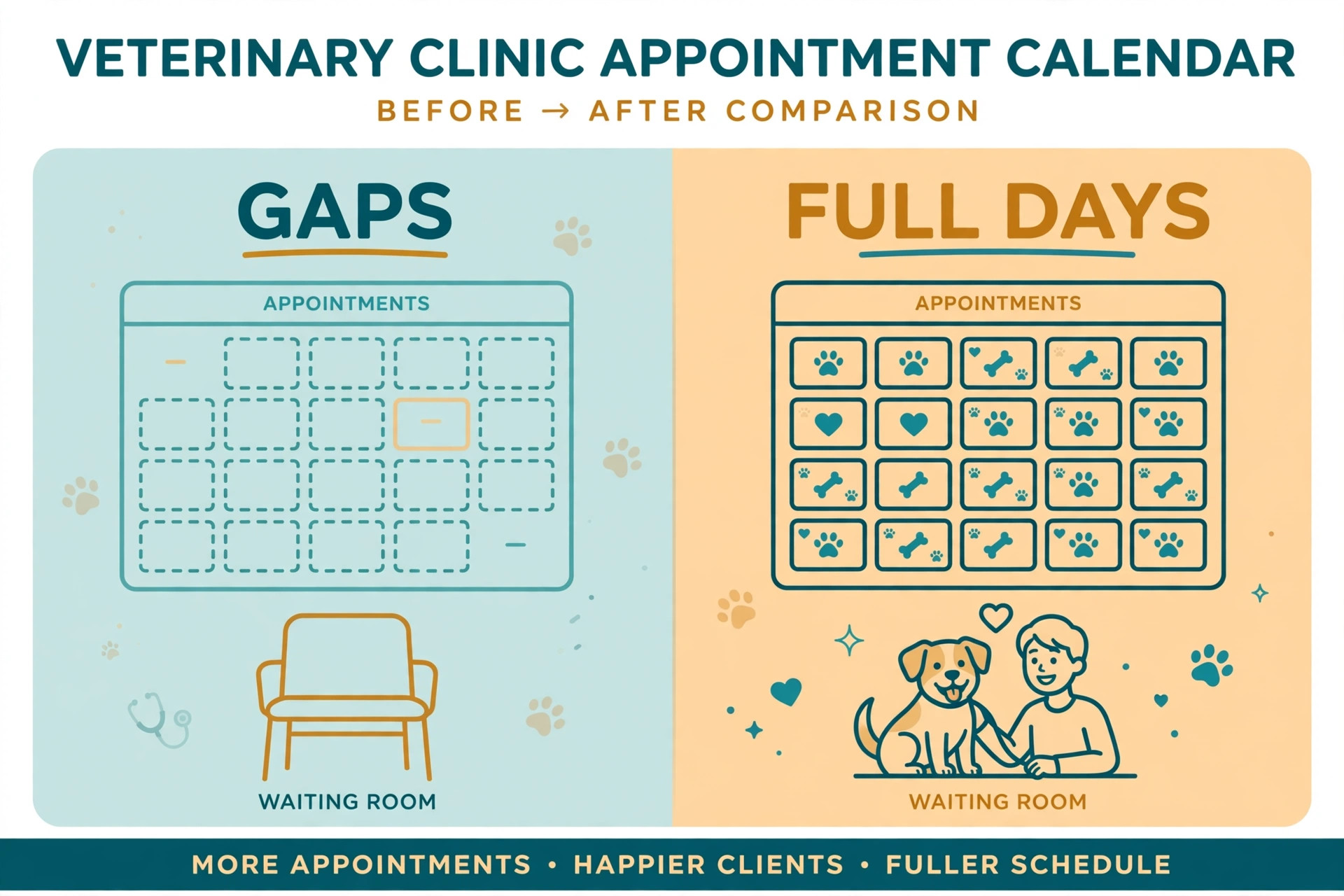
A clinic with 2000 active patients and a yearly vaccination cycle has about 40 vaccinations falling due every week on average, so a recall system that runs weekly, without fail, is what keeps that workload steady instead of lumpy and stressful. The gain rarely comes from one dramatic change. It comes from small improvements that repeat every week, and that is why a written routine matters more than enthusiasm in the first week. A business that improves one small number by a few percent every month ends the year in a very different place from a business that tries a big change once and then drifts back to old habits.
There is a second reason to do this work properly, which is that pet owners notice consistency before they notice cleverness. A pet owners who gets the same clear message, the same fair price and the same reliable service every time trusts the business more than a pet owners who gets a brilliant experience once and a confusing one the next time. Consistency is not glamorous, but it is what turns a first visit into a repeat visit, and repeat visits are where most small businesses make their money.
The third reason is staff time. When a routine is written down, new staff can learn it in a day instead of shadowing someone for a week, and experienced staff spend less time answering the same questions. That time goes back into serving pet owners, improving the offer or simply finishing the day on time, which keeps good staff longer. Any system that only works when the owner is present is not a system at all, it is a habit, and habits do not scale.
How to Use AI for veterinary clinic appointment reminders in Practice
Start by writing down the outcome you want in one sentence, then work backwards from it, because when you use AI for veterinary clinic appointment reminders without a written outcome, it is easy to buy a tool or to copy a routine that solves a different problem. A good outcome sentence names the result, the time frame and the measure, such as fewer empty slots in 8 weeks, or a clearer price list by the end of the month. Once that sentence exists, every later choice can be tested against it, and choices that do not serve it can be dropped without argument.
The next step is to look at how the work happens today, before any new tool arrives. Watch one full week of the current routine, note where time is lost, where pet owners get confused and where staff improvise, and write those points down. Most businesses find that only two or three problems cause most of the pain, and fixing those two or three things well beats fixing ten things badly. This honest look at the current week is the most useful hour you will spend on the whole project.
Only then should you compare tools or build the workflow, and the comparison should be short. List three options at most, score each against your outcome sentence, and pick the one that your team will actually use. A powerful tool that staff avoid is worth less than a simple tool that everyone uses daily, and the best test is a one week trial with real work, not a demo with sample data. If the trial feels harder than the old way, stop and simplify before you pay for a year.
Options Worth Comparing
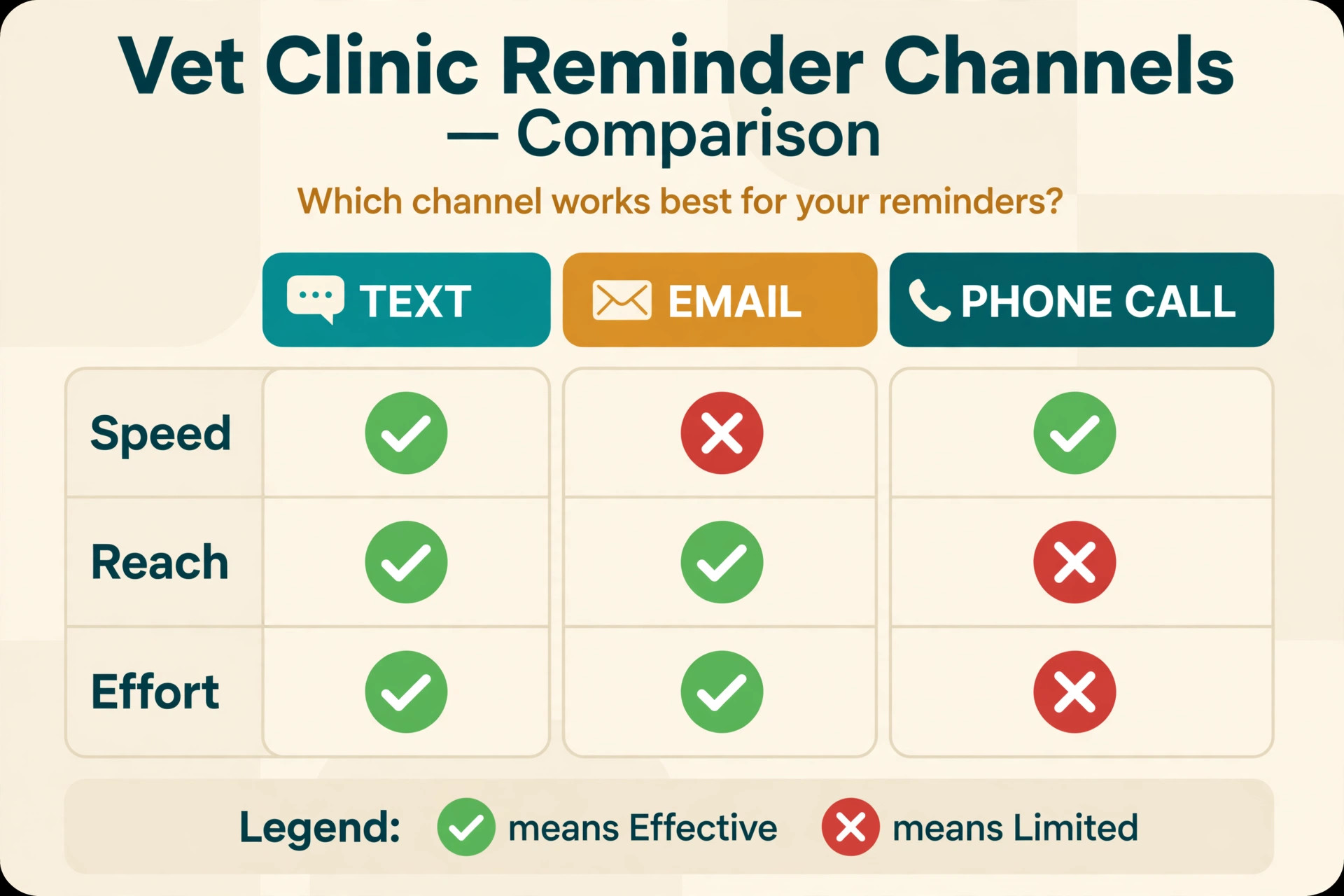
The table below gives the short version of the options for a veterinary clinic that wants to use AI for veterinary clinic appointment reminders without buying everything at once. Start with the option that fits your current setup, run it for a month, and only add a second tool when a clear gap appears, because stacking tools before the routine is settled creates confusion that no software can fix.
| Option | What it does | Best for |
|---|---|---|
| ezyVet or similar vet practice software | records plus reminders for clinics | A veterinary clinic starting this routine |
| Mailchimp or SMS tools | reminder messages to owners | A veterinary clinic starting this routine |
| ChatGPT, Claude or Gemini | drafting reminder wording and recall letters | A veterinary clinic starting this routine |
ezyVet or similar vet practice software
ezyVet or similar vet practice software is worth a look because it handles records plus reminders for clinics in a way that fits a small team. Try it with real work for a week, judge it on whether staff use it without prompting, and keep it only if it saves time or reduces errors compared with the old way. A tool that needs constant chasing is not saving time, even if its feature list looks impressive on the sales page.
Mailchimp or SMS tools
Mailchimp or SMS tools is worth a look because it handles reminder messages to owners in a way that fits a small team. Try it with real work for a week, judge it on whether staff use it without prompting, and keep it only if it saves time or reduces errors compared with the old way. A tool that needs constant chasing is not saving time, even if its feature list looks impressive on the sales page.
ChatGPT, Claude or Gemini
ChatGPT, Claude or Gemini is worth a look because it handles drafting reminder wording and recall letters in a way that fits a small team. Try it with real work for a week, judge it on whether staff use it without prompting, and keep it only if it saves time or reduces errors compared with the old way. A tool that needs constant chasing is not saving time, even if its feature list looks impressive on the sales page.
The Workflow Step by Step
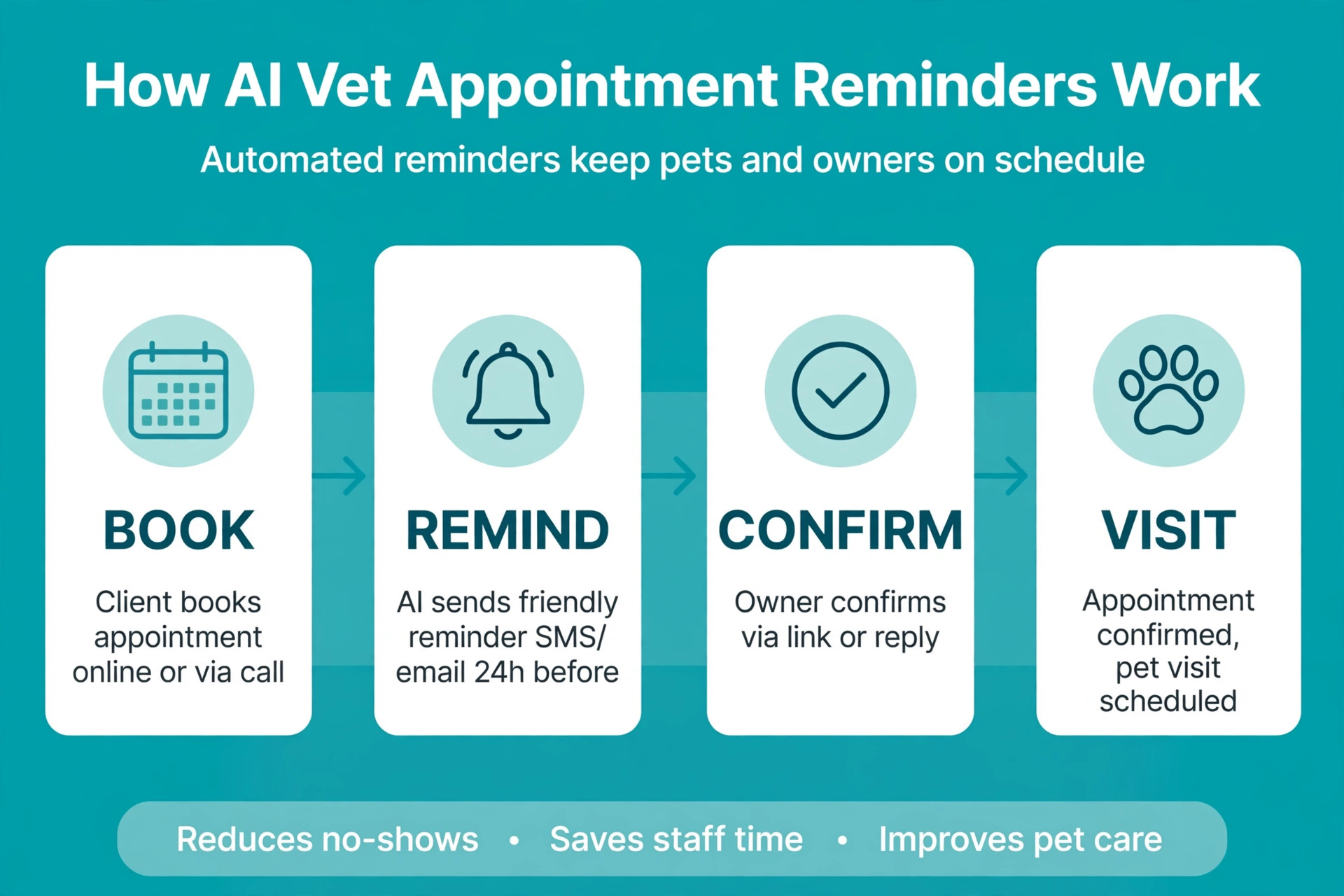
Use this workflow to use AI for veterinary clinic appointment reminders in order, because the order matters. Skipping ahead to messages or promotions before the basics are recorded creates work that has to be redone, while following the steps in order means each step builds on a finished earlier step. Print the list, tick each step off, and do not move on until the current step works with a real pet owners.
- Pull the due list from patient records. Pull the due list from patient records matters because it turns a vague intention into a job someone can actually do. Write down who owns this step, what finished looks like, and how long it should take in your veterinary clinic, then test it once with a real pet owners or a real vet appointments before you roll it out to everyone. If the test feels slow or confusing, simplify the step rather than adding a workaround, because a routine that staff avoid is worse than no routine at all, and a simple step done every time beats a clever step done only when someone remembers.
- Group by visit type. Group by visit type matters because it turns a vague intention into a job someone can actually do. Write down who owns this step, what finished looks like, and how long it should take in your veterinary clinic, then test it once with a real pet owners or a real vet appointments before you roll it out to everyone. If the test feels slow or confusing, simplify the step rather than adding a workaround, because a routine that staff avoid is worse than no routine at all, and a simple step done every time beats a clever step done only when someone remembers.
- Set reminder timing per type. Set reminder timing per type matters because it turns a vague intention into a job someone can actually do. Write down who owns this step, what finished looks like, and how long it should take in your veterinary clinic, then test it once with a real pet owners or a real vet appointments before you roll it out to everyone. If the test feels slow or confusing, simplify the step rather than adding a workaround, because a routine that staff avoid is worse than no routine at all, and a simple step done every time beats a clever step done only when someone remembers.
- Write a clear reminder message. Write a clear reminder message matters because it turns a vague intention into a job someone can actually do. Write down who owns this step, what finished looks like, and how long it should take in your veterinary clinic, then test it once with a real pet owners or a real vet appointments before you roll it out to everyone. If the test feels slow or confusing, simplify the step rather than adding a workaround, because a routine that staff avoid is worse than no routine at all, and a simple step done every time beats a clever step done only when someone remembers.
- Add a booking link or phone number. Add a booking link or phone number matters because it turns a vague intention into a job someone can actually do. Write down who owns this step, what finished looks like, and how long it should take in your veterinary clinic, then test it once with a real pet owners or a real vet appointments before you roll it out to everyone. If the test feels slow or confusing, simplify the step rather than adding a workaround, because a routine that staff avoid is worse than no routine at all, and a simple step done every time beats a clever step done only when someone remembers.
- Send a same day reminder for procedures. Send a same day reminder for procedures matters because it turns a vague intention into a job someone can actually do. Write down who owns this step, what finished looks like, and how long it should take in your veterinary clinic, then test it once with a real pet owners or a real vet appointments before you roll it out to everyone. If the test feels slow or confusing, simplify the step rather than adding a workaround, because a routine that staff avoid is worse than no routine at all, and a simple step done every time beats a clever step done only when someone remembers.
- Follow up a missed visit once. Follow up a missed visit once matters because it turns a vague intention into a job someone can actually do. Write down who owns this step, what finished looks like, and how long it should take in your veterinary clinic, then test it once with a real pet owners or a real vet appointments before you roll it out to everyone. If the test feels slow or confusing, simplify the step rather than adding a workaround, because a routine that staff avoid is worse than no routine at all, and a simple step done every time beats a clever step done only when someone remembers.
- Review recall rates monthly. Review recall rates monthly matters because it turns a vague intention into a job someone can actually do. Write down who owns this step, what finished looks like, and how long it should take in your veterinary clinic, then test it once with a real pet owners or a real vet appointments before you roll it out to everyone. If the test feels slow or confusing, simplify the step rather than adding a workaround, because a routine that staff avoid is worse than no routine at all, and a simple step done every time beats a clever step done only when someone remembers.
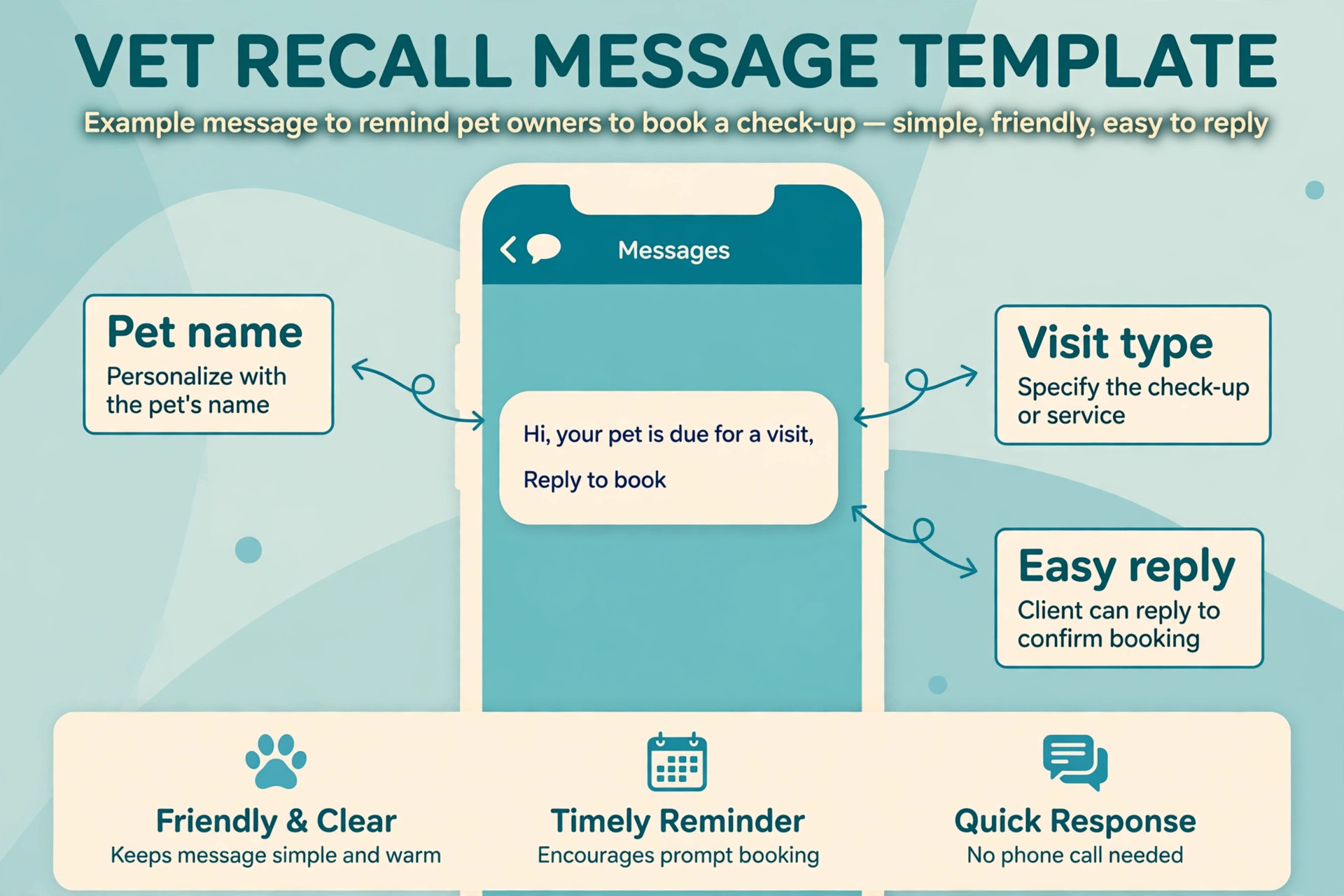
Recall template for a veterinary clinic
Use this template to use AI for veterinary clinic appointment reminders without starting from a blank page each time. Copy it, fill it in with your own numbers and names, and keep the filled version where staff can see it. A template that lives in a drawer helps nobody, while a template on the wall or in the shared folder becomes the way the business actually works.
| Item | What to write down |
|---|---|
| Patient and owner | pet name, owner name and contact |
| Due item | vaccination, dental check or senior screen |
| Due date | the date the item falls due |
| Reminder sent | date and channel of each message |
| Booked or still due | the outcome, updated after every contact |
Fill the template in with real numbers from your own business, not with guesses, because a template filled with guesses gives confident answers that are wrong. If a number is unknown, write unknown and find it before you act on that row, since a single guessed cost or time can undo an otherwise sound plan. Review the filled template every month for the first quarter, then every quarter after that, and update it when prices, staff or suppliers change.
The template also helps when someone new joins the team. A new starter who can read the template understands the routine in an hour, while a new starter who must learn it by asking questions takes a week and still misses details. Keep the language plain, keep the rows short, and remove any row that nobody uses, because a short template that everyone follows beats a long template that everyone ignores.
Costs and Numbers to Check
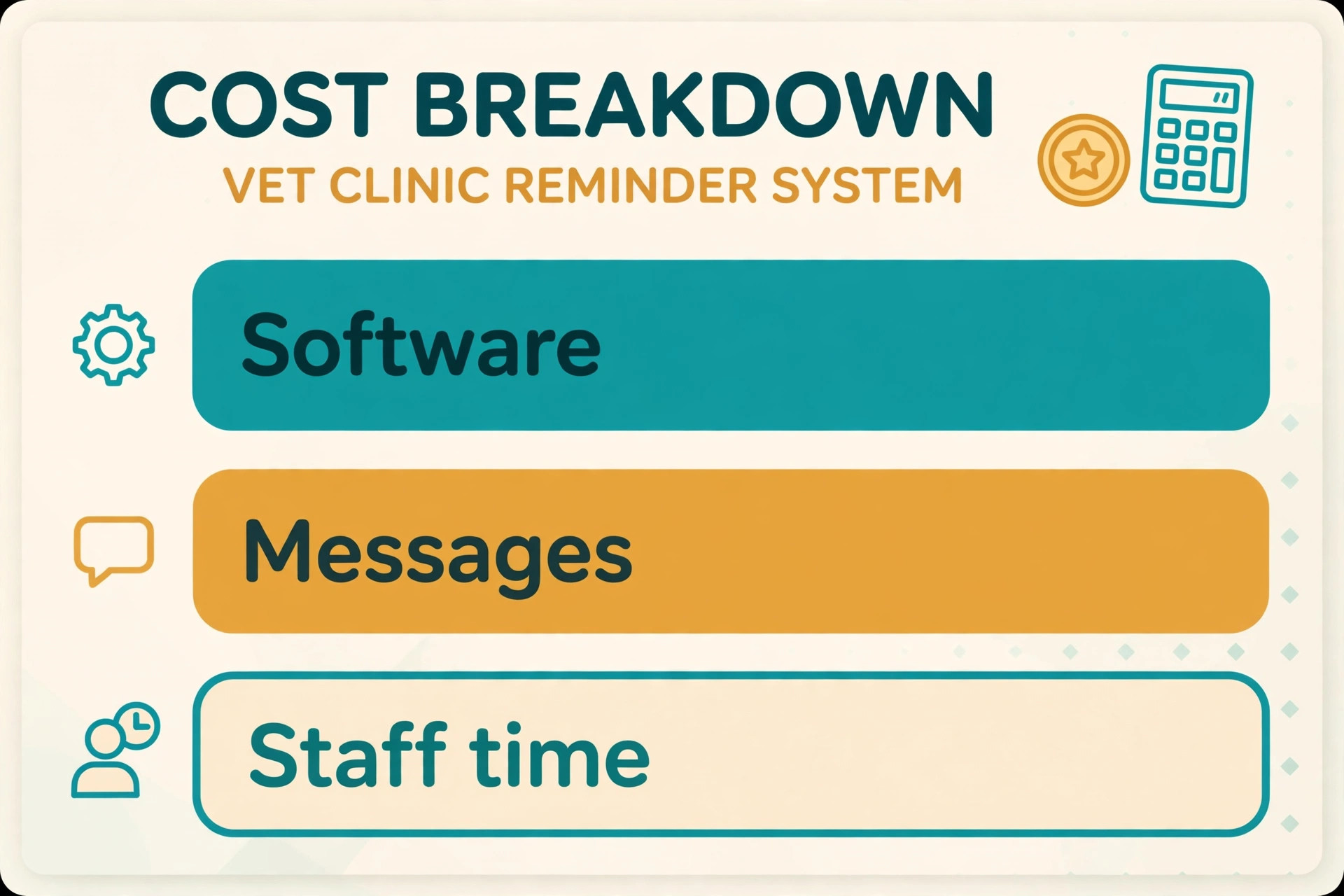
Before you commit money or time, write down the costs of the current way of working, because when you use AI for veterinary clinic appointment reminders you need a baseline to judge the new way against. Count staff time, wasted stock or empty slots, refunds and remakes, and the cost of the tool itself, then compare the total with the same total after one month of the new routine. If the new total is not lower, or the service is not clearly better for pet owners, change one thing and measure again rather than adding more tools.
Price the tool honestly, including the monthly fee, any per user fee, payment processing and the time spent learning it. A tool that costs 20 dollars a month but takes 5 hours a month to maintain costs far more than a tool that costs 40 dollars a month and runs itself, once staff time is priced at a realistic hourly rate. Always ask what happens when you stop paying, because your customer list, your booking history and your templates should stay yours.
Watch for hidden costs that appear only after launch, such as charges for extra messages, for additional team members or for higher volumes. Read the pricing page for the tier you will actually land on in 6 months, not the starter tier you land on today, because a tool that is cheap for 50 pet owners and expensive for 500 pet owners can punish growth. Set a calendar reminder to review the bill every quarter.
Mistakes That Quietly Undo the Work
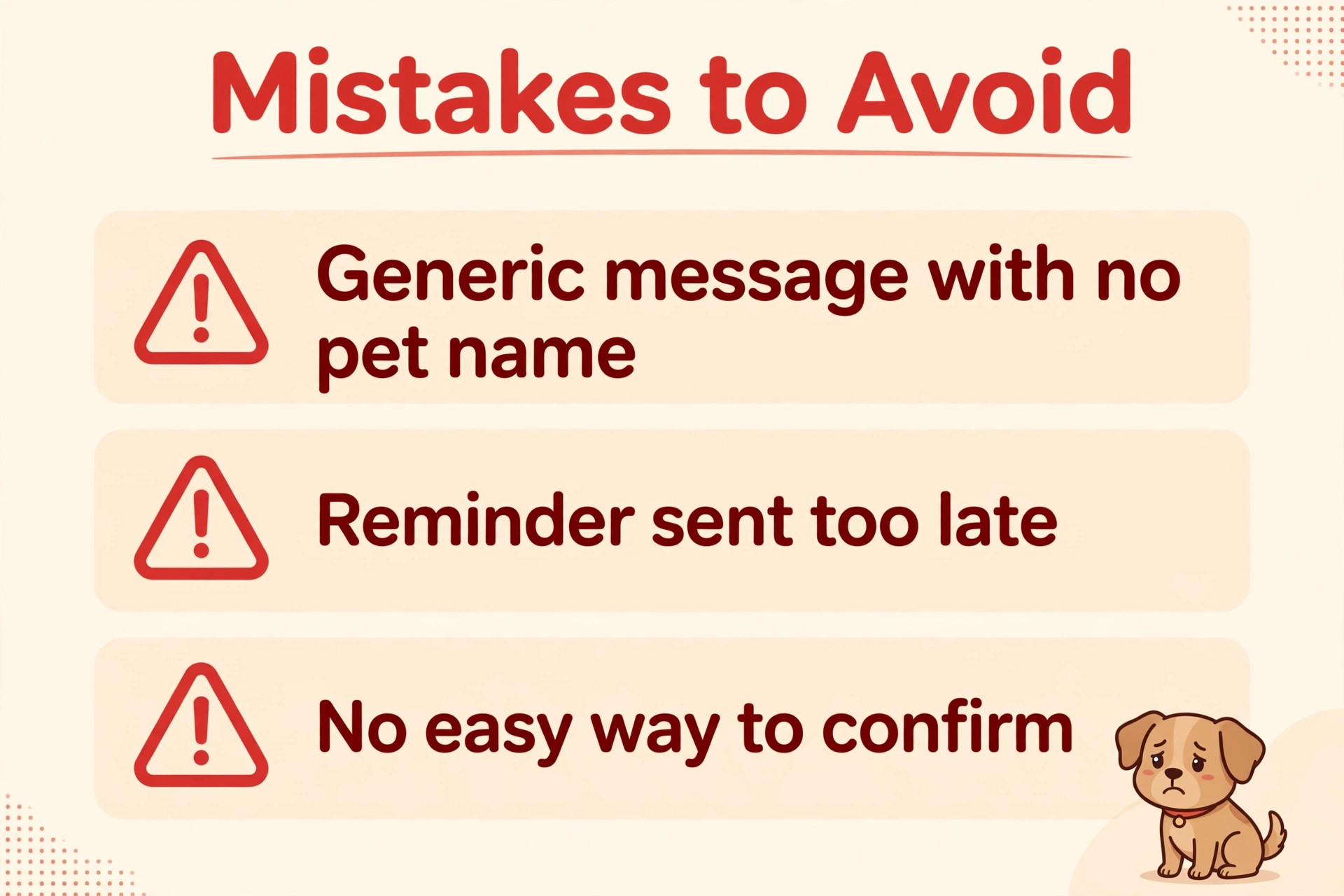
The mistakes below are common because each one feels reasonable at the time, and when you use AI for veterinary clinic appointment reminders it helps to name them before they happen. Read the list with your team, agree which mistake your business is most likely to make, and put one guard in place against it, because a named mistake is far easier to avoid than a vague warning to be careful.
- Buying the tool before writing the routine. A new tool layered on a messy routine makes the mess faster, not smaller. Write the routine first, then buy only the tool that fits it.
- Sending too many messages. Messages that arrive too often train pet owners to ignore you, so that an important message later gets ignored too. Send fewer messages, each with a clear benefit, and stop any message that nobody acts on.
- Guessing prices instead of costing them. A price built on a guess feels fine until the month end numbers arrive. Cost every item honestly, including the small costs, because small costs repeated hundreds of times become large costs.
- Letting one person hold all the knowledge. If only one staff member knows how the system works, holidays and sick days break it. Write the routine down and train a second person on every key step.
- Never reviewing the numbers. A system that is never reviewed drifts, because prices change, pet owners change and staff change. Review the key numbers on the same day each month, change one thing at a time, and keep a note of what changed and why.
How to Tell Whether It Is Working
Pick four numbers and track them monthly, because when you use AI for veterinary clinic appointment reminders you need evidence, not a feeling, about whether the work is paying. Choose numbers you can actually collect without extra admin, such as repeat visits, empty slots, errors or margin per sale, and record them in one sheet on the same day each month. A trend over 3 months tells you far more than a single good or bad week, which may reflect weather, holidays or one unusual event.
Compare the new numbers with the baseline you recorded before the change, and be honest about what the numbers say. If a number improves, keep doing what caused it and say so to the team, because staff repeat work that is praised. If a number gets worse, change one thing, not five, so you can tell what helped. Changing five things at once leaves you guessing, even when the numbers improve.
Ask pet owners directly as well, with one short question at the point of service or in a follow up message. A number tells you what happened, while a short answer tells you why, and the why is what lets you fix a problem properly. Keep the question to one sentence, read the answers monthly, and act on the most repeated point first, because the most repeated point is usually the cheapest fix with the largest effect.
Set a review date now, 90 days from launch, and put it in the calendar with the name of the person who owns the review. Without a named owner and a date, reviews slip, and a slipped review means a system that slowly stops matching the business. The review itself need not take long, since one hour with the four numbers and the customer answers is enough to decide what to keep, what to change and what to stop.
One practical detail that separates businesses that stick with a new routine from those that abandon it is the first week. Plan the first week to be easy, with a small number of pet owners and a team member whose job is to answer questions, rather than launching to everyone at once on the busiest day. An easy first week builds confidence, while a chaotic first week creates a story that the new way does not work, and stories like that are hard to undo even after the system improves.
More Reading for This Kind of Business
For the systems around this one, Stratilyze also covers the dental clinic reminder guide the pet grooming appointment guide the pet store order system guide. Read the guide that matches your next bottleneck first, because fixing the biggest bottleneck next gives a larger gain than polishing a part of the business that already works well.
Frequently Asked Questions
How many reminders should a vet clinic send for a due vaccination?
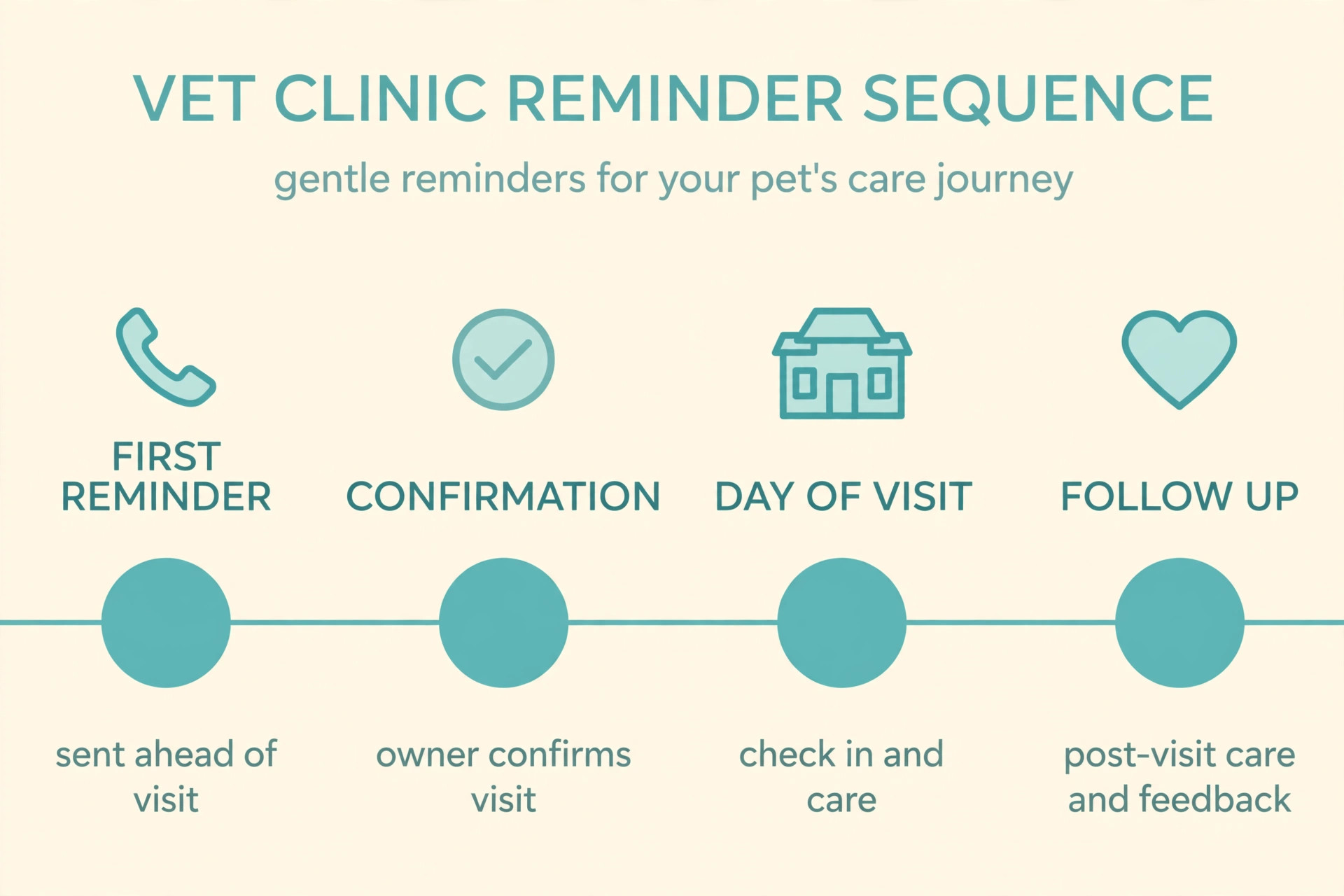
Send two reminders and then one final recall message. The first goes 2 weeks before the due date, the second on the due date, and the final recall 4 weeks after the due date if nothing is booked. More than three messages annoys owners, while one message alone is too easy to miss in a busy inbox.
How much does it cost to set this up for a veterinary clinic?
Most veterinary clinic businesses can start for the cost of one tool and a few hours of setup time, with the main cost being staff time rather than software. A free or low cost tool covers the first month for many small businesses, and the paid tier becomes worth it only when volume grows or when a feature such as automated messages saves several hours a week. Budget for the tool, for payment fees if you take payments, and for one hour a month of review time, then judge the total against the time or revenue it saves.
What is the biggest mistake a veterinary clinic makes here?
The biggest mistake is copying a routine from a larger business without adapting it to a small team. A large business can run a complex system because it has staff to run it, while a small veterinary clinic needs a short routine that works when the owner is away and when the day is busy. Keep the routine to the steps that directly help pet owners or save staff time, drop the rest, and review the routine monthly so it stays matched to the size of the business today, not the size it was a year ago.
How long does it take to get this running?
Most small businesses can run a basic version within 2 weeks, with the first week spent deciding the routine and the second week spent testing it with real pet owners. A fuller version, with messages, payments and a monthly review, usually takes 4 to 6 weeks to settle, because the first version always reveals details that need fixing. Do not wait for a perfect version before launching, since a simple version used daily teaches you more than a perfect plan that never launches.
Can a veterinary clinic start without paid software?
Yes, in most cases. A spreadsheet, a form and a messaging app cover the core of this routine for a small veterinary clinic, and many businesses run that way for months before paying for a dedicated tool. Paid software becomes worth it when manual work takes several hours a week, when errors start appearing, or when the business grows beyond what one person can track by hand. Start free, measure the time spent, and buy only when the time saved clearly covers the monthly fee.
How do I know whether this is working for my veterinary clinic?
Pick the four numbers from the measurement section, record them before you start, and check them on the same day each month for 3 months. Look for a trend, not a single week, and ask pet owners one short question as well, because numbers show what happened while answers show why. If the trend improves and pet owners mention the change positively, keep going. If nothing moves after 3 months, change one part of the routine rather than abandoning the whole system.
The Verdict for Real Workdays
Start with the outcome sentence, then the routine, then the review date, and do those three things this week rather than waiting for a quieter month, because a quieter month rarely arrives. A veterinary clinic that runs a simple, written routine well will serve pet owners better than a competitor with a fancier tool and no routine, and that advantage grows every month the routine runs. Pick the first step today, test it with a real pet owners tomorrow, and let the numbers over the next 90 days tell you what to improve next.
That disciplined approach is what makes the work of use AI for veterinary clinic appointment reminders pay, rather than becoming another project that starts with enthusiasm and fades within a month.