

For most independent gyms, TeamUp is the best membership software for gyms, because its pricing follows active customer count, its memberships and class scheduling live in one place, and its setup stays simple enough for a small team to run without a dedicated administrator. A gym that needs a consumer marketplace and multi site scale should look at Mindbody instead, while a boutique chain should get a quote from Glofox before deciding.
That verdict reflects how gyms actually earn money. Membership software is not just a billing tool. It controls who can enter, which classes a member can book, when payments fail, and how a freeze or cancellation is handled. A system that handles those moments cleanly keeps members longer and saves front desk hours every week, while a system that handles them badly creates complaints at exactly the moments when a member is deciding whether to stay.
This guide compares five tools on membership types, class handling, payment failure, member apps and total monthly cost, including add-ons that change the real price. Prices are starting points where published, and quote only tools are labelled as such, so you can compare honestly rather than guessing at hidden tiers.
Five membership systems at a glance
Use this table to shortlist by gym type and budget, then read the tool sections for the details that matter at renewal, freeze and cancellation time. A low starting price means little if the branded app, payment processing or multi location features sit behind expensive add-ons.
| Tool | Starting price | Best for |
|---|---|---|
| Mindbody | From $79 per month per location, higher tiers by quote | Established studios and multi site operators |
| Glofox | Check the vendor page, quote only | Boutique fitness chains |
| TeamUp | From $119 per month for up to 100 active customers | Independent gyms and class studios |
| PushPress | Free plan, paid from $159 per month | New gyms and CrossFit style boxes |
| Zen Planner | From $99 per month | Membership driven gyms and martial arts schools |
Why the best membership software for gyms beats a billing tool alone
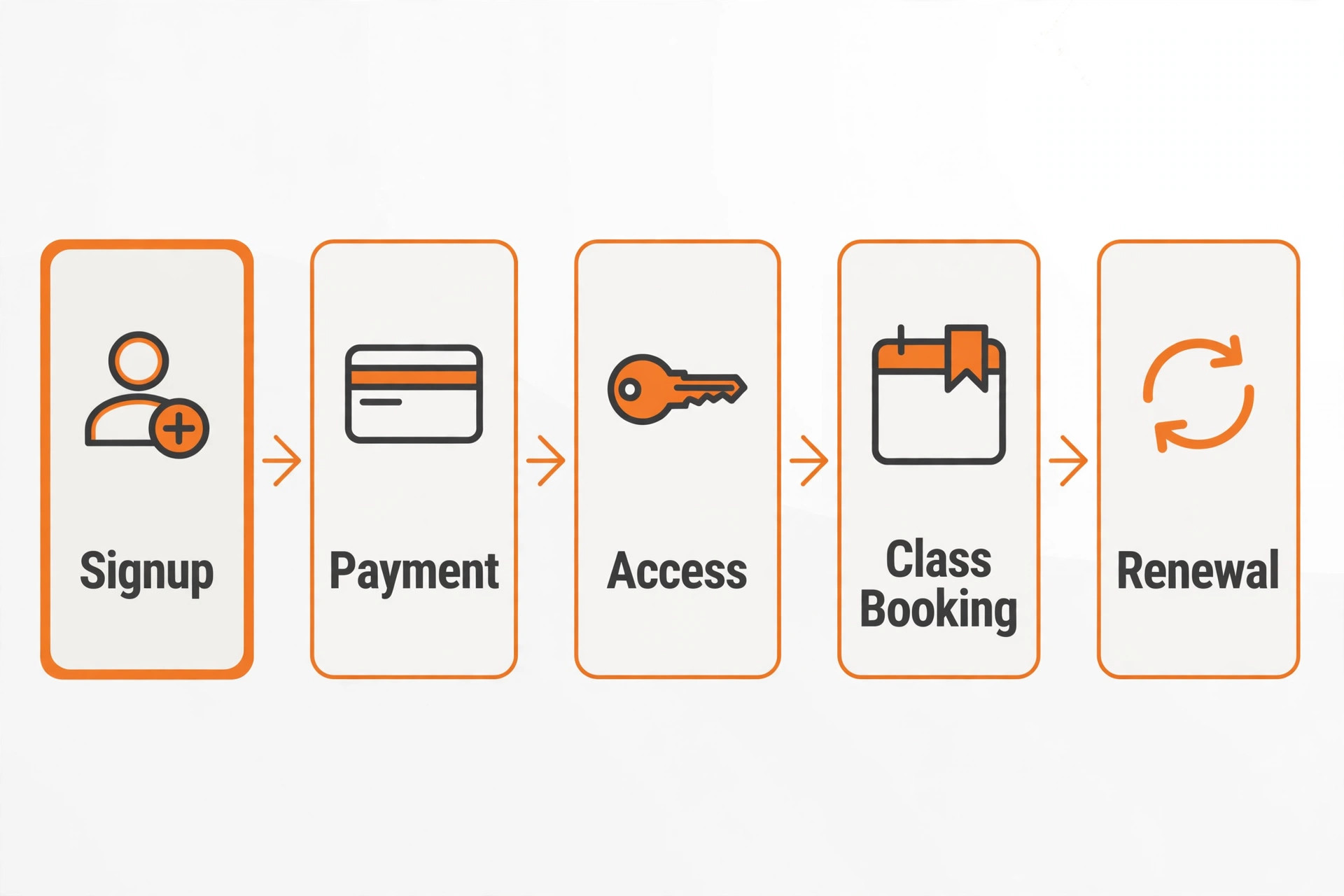
A billing tool collects money. Membership software manages access, and access is what a member actually buys. When a member pays, the system must unlock the door, allow class bookings, show the right membership in the app, and block access cleanly when payment fails or a membership ends. A generic billing tool cannot do that without manual work, and manual work at the front desk is where errors and awkward conversations happen.
Membership types add a second layer of complexity. An open gym may sell monthly, annual and off peak memberships, plus day passes and family plans. A class studio may sell class packs, unlimited monthly plans and course blocks, each with different booking rules, expiry dates and transfer rules. A personal training business may sell session packs, recurring coaching plans and small group blocks. The software must handle all of those types without forcing every member into one template.
Payment failure handling is a third difference, and it directly affects retention. Cards expire, banks decline, and members change accounts. A good system retries failed payments, notifies the member with a clear update link, and keeps access working for a short grace period, so a temporary payment problem does not become a cancelled membership. A poor system simply stops access, and the member discovers the problem at the door.
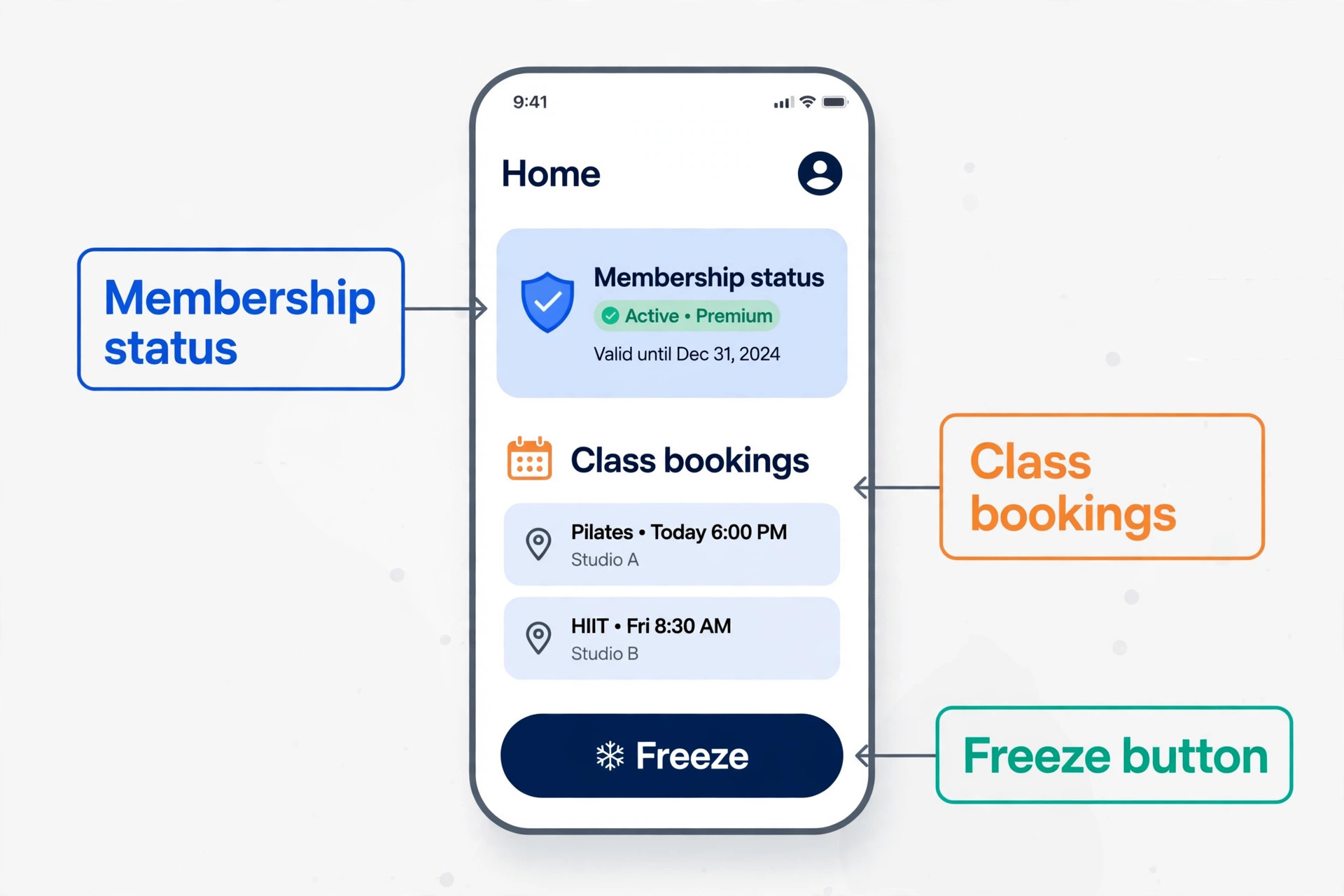
Finally, membership software shapes the member experience every day. The member app, the booking flow, the freeze request and the cancellation flow all tell a member how the gym treats them. A smooth freeze process keeps a member who is injured or travelling, while a difficult cancellation process may keep a member for one extra month but lose any chance of a return. The best systems make the honest moments easy, not just the sales moments.
Mindbody
Mindbody is the most widely used fitness studio platform, and its strength is scale plus discovery. It covers scheduling, membership management, marketing, staff management and reporting at a depth few rivals match, and its consumer marketplace can bring new members to a studio that would otherwise rely only on local advertising. For a large, multi service facility or a growing studio group, that combination of depth and marketplace exposure is hard to replace, especially when each location needs consistent reporting and staff controls.
The cost is the catch. The Starter price looks reasonable, but add-ons for a branded app, marketing tools and higher tier features can push the real monthly total to $500 or more, according to published comparisons. The interface also feels dated to some users, and price increases are a recurring complaint in reviews. Choose Mindbody for scale, marketplace reach and multi site depth, and skip it if you want a simple, predictable monthly bill for a single independent gym.
Glofox
Glofox, now part of ABC Fitness, targets boutique fitness chains that want a branded member experience across locations. Its strengths are a custom branded app, centralised management for multiple studios, chain level reporting, and a polished booking experience that suits premium studios selling classes, packs and memberships together. A chain that wants every location to feel like the same brand, with the same app and the same booking rules, will find Glofox built for that job in a way that single site tools are not.
Pricing is the main drawback. Glofox does not publish rates, showing prices only after a sales conversation, and gyms report costs from about $100 to $600 or more per month depending on features and locations. That opacity makes comparison hard, and smaller gyms may find the sales process heavier than a self serve signup. Choose Glofox for a branded, multi site boutique experience, and skip it if you want published pricing and a quick start for one site.
TeamUp
TeamUp is the simplest all inclusive option in this list, and that simplicity is its main selling point. It prices by active customer count, so a small studio pays from $119 per month for up to 100 customers, rising to around $189 per month for 101 to 200 customers, with no setup fee stated. Memberships, course packs and class scheduling live together, the interface is clean, and a small team can run bookings, billing and member management without learning a large enterprise platform or paying for features it will never open.
The limits are integration breadth and advanced features. TeamUp has no payroll, a narrower integration ecosystem than Mindbody, and a branded app costs extra, reported around $99 per month. A large chain or a gym needing deep marketing automation may outgrow it. Choose TeamUp for a fair, customer count based price and a clean all in system, and skip it if branded app depth or chain reporting is the priority.
PushPress
PushPress offers the lowest risk start in this list, with a genuinely free Core plan for gyms starting from zero, and paid Pro from $159 per month and Max from $229 per month. That free start suits a new CrossFit box, martial arts school or functional gym that needs memberships, class reservations and payments before revenue is steady, without committing to a large monthly bill. Its published pricing is also clearer than quote only rivals, so a new owner can budget with confidence and upgrade when member numbers justify it.
The free plan carries real limits, including higher payment processing fees, reported around 4.99 percent plus 30 cents, compared with lower rates on paid plans. It is also more focused on CrossFit and functional training than on general open gym access or boutique class chains. Choose PushPress to start free and grow into paid tiers, and skip it if you need a polished boutique app or a large multi site platform from day one.
Zen Planner
Zen Planner suits membership driven gyms, martial arts schools and studios that bill hundreds of members on recurring plans. It covers memberships, class scheduling, billing, attendance tracking and reporting in one system, with a focus on retention tools like belt and rank tracking for martial arts schools, automated billing reminders and member engagement reporting. A gym that lives on monthly memberships, rather than drop in classes alone, will find its billing and retention features well matched to that model, and its starting price from $99 per month is competitive for the depth offered.
The drawbacks are a less modern member app experience than Glofox or Mindbody branded apps, and a narrower marketplace presence, so new member discovery relies more on the gym own marketing. Top tiers can also reach $289 per month, so the full cost depends on member count and features. Choose Zen Planner for membership billing depth and martial arts friendly features, and skip it if a premium branded app or consumer marketplace is the main reason you are buying.
Best system for each kind of gym
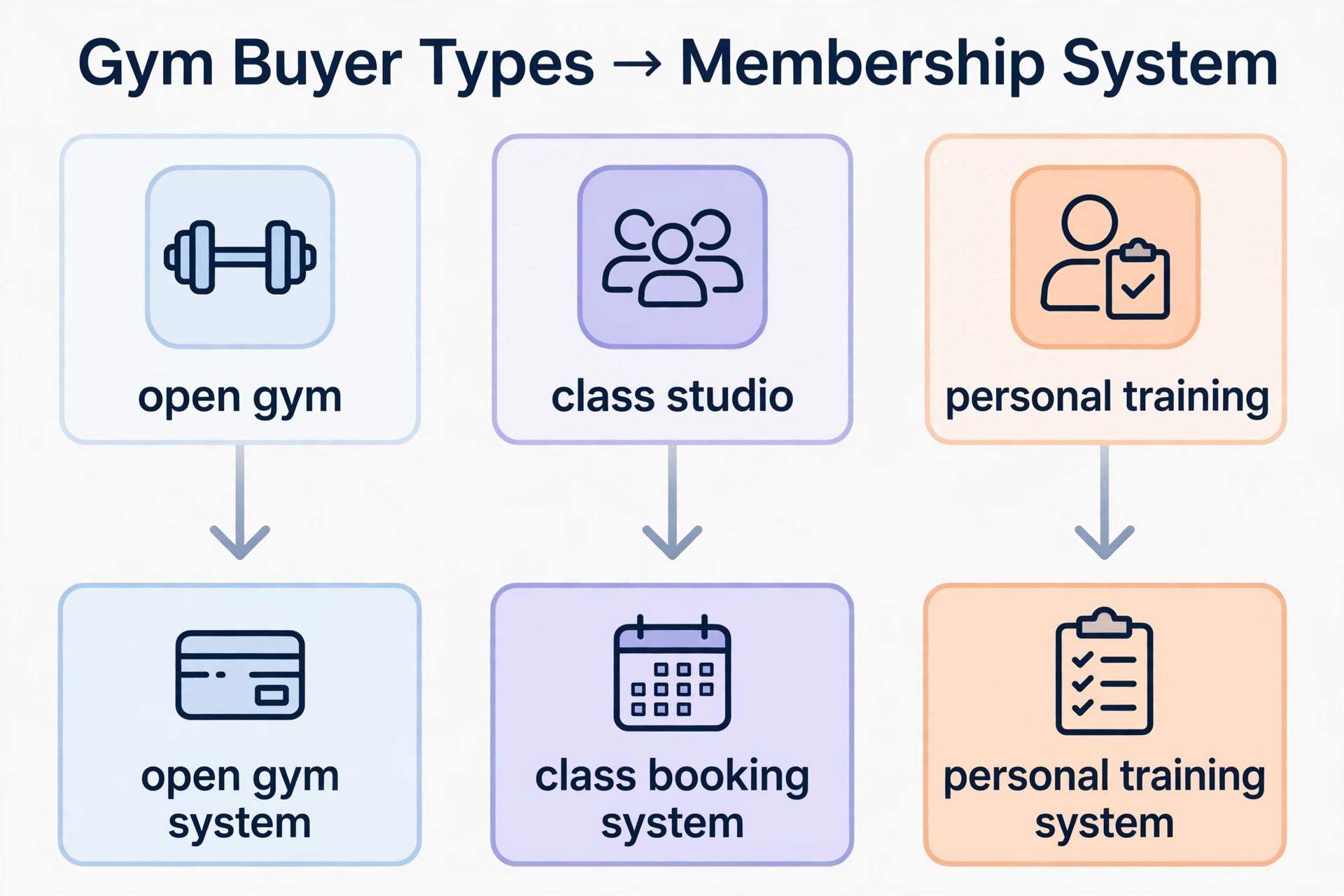
An open gym, a class studio and a personal training business buy different software, even when they all say membership. This table matches the system to the gym type, so you do not pay for class pack features when you sell open access, or buy an open gym tool that cannot handle course bookings. The best membership software for gyms for a class studio is rarely the best pick for an open gym.
| Your situation | Best pick | Why it fits |
|---|---|---|
| Open gym, access led | TeamUp | Simple memberships, customer count pricing, clean booking |
| Classes, pack led | Zen Planner | Class packs, recurring billing and attendance tracking together |
| Personal training, session led | PushPress | Low start cost, session and membership handling in one place |
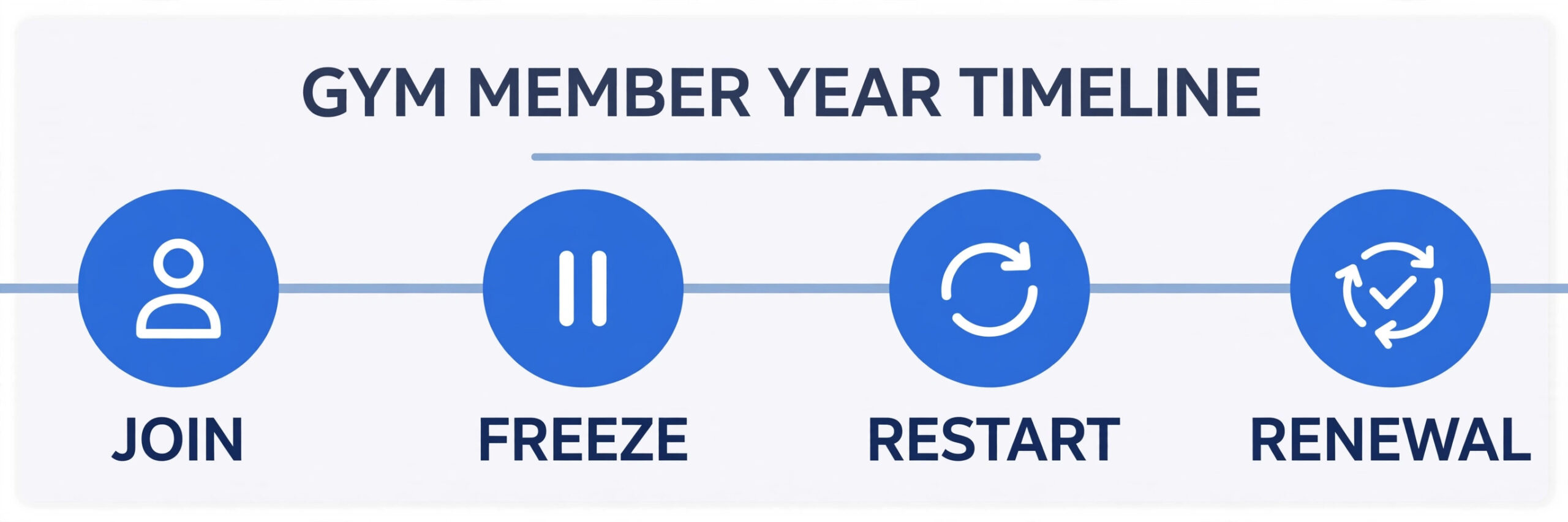
Freeze and cancel checklist that keeps members
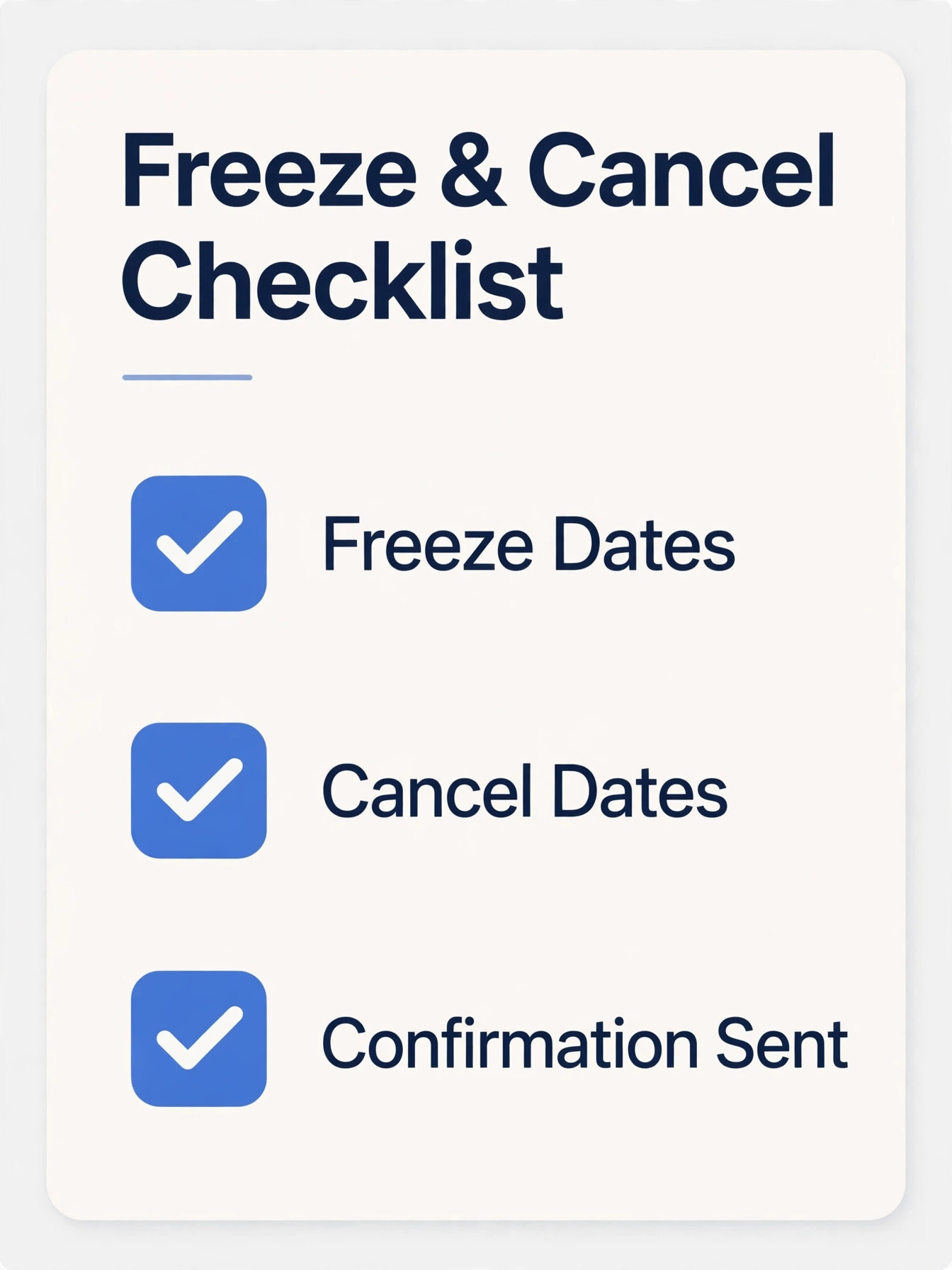
How a gym handles freezes and cancellations decides whether a member returns. A clear, fair process keeps goodwill, while a difficult process creates complaints and chargebacks. Use this checklist to set up both flows before launch, and train front desk staff on the exact wording to use.
– Offer a freeze option in the member app, with a clear start date, end date and maximum freeze length. – Charge a small freeze fee only if it is stated at signup, and waive it for injury or medical reasons where policy allows. – Keep class booking history and membership details visible during a freeze, so return feels easy, not like starting over. – Send a return reminder one week before a freeze ends, with class times and a simple reactivation link. – Allow cancellation in the app or by a short form, without requiring a phone call or an in person visit. – Confirm cancellation in writing the same day, with the final payment date and last access date stated clearly. – Ask one optional exit question at cancellation, and use the answers monthly to fix real problems. – Invite cancelled members back after ninety days with one relevant offer, then stop if they decline twice.

The full monthly bill, beyond the headline price
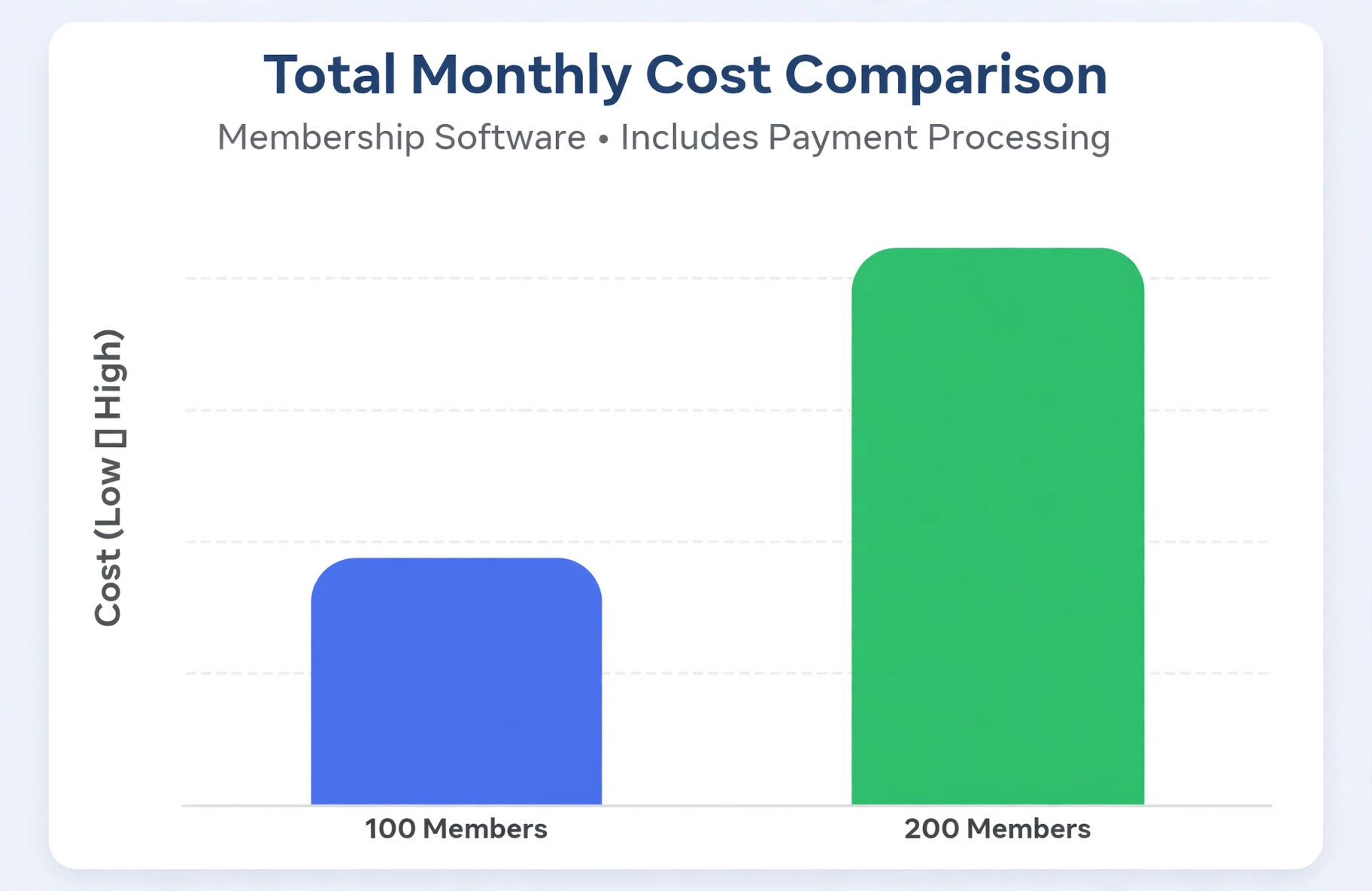
Start with the subscription at your member count, not at the entry tier. TeamUp at $119 per month for up to 100 customers and around $189 for 101 to 200 customers is easy to model, while Mindbody from $79 per location and Zen Planner from $99 per month both rise with tiers and add-ons. A gym with 150 members should compare all three at 150 members, including the branded app, marketing tools and reporting tiers it actually needs, not at the smallest published price.
Payment processing is often larger than the subscription. Card fees commonly run from about 2.7 percent to 3.5 percent plus around 30 cents per charge, so a gym collecting $12,000 a month in memberships may pay $350 to $450 a month in processing alone, before any software subscription. PushPress free plan processing near 4.99 percent plus 30 cents shows why a free subscription is not free overall. Compare the combined subscription plus processing total, not the subscription alone.
Add messaging, hardware and onboarding next. SMS reminders, a branded app, door access hardware, website integration and onboarding or migration help can each add tens or hundreds a month. Mindbody and Glofox add-ons are the classic example, where a reasonable base price grows as each useful feature is added. Ask for a written total for your member count, locations and app needs before signing, and keep that quote for comparison.
Finally, plan for growth and for quiet months. A customer count priced tool like TeamUp rises only as members rise, which suits a growing gym. A per location tool with add-ons may stay flat in a quiet month but cost more overall. A quote only tool may offer a discount for an annual contract, but locks in cost through a slow season. Choose the pricing model that matches your growth pattern, and review the total each quarter against member numbers.
Member onboarding is where retention is won or lost, and membership software should support it from day one. A new member who receives a welcome message, a class booking guide and an invitation to an induction session will settle quickly. A new member who receives only a payment receipt may feel lost on their first visit and never return. Build an onboarding sequence inside the system, track who completes it, and follow up personally with members who do not attend their first class within a week.
Class pack expiry rules need careful design, because they affect both revenue and goodwill. A pack that expires too quickly frustrates members who travel or fall ill, while a pack that never expires creates a liability that grows quietly. Set expiry periods that match real usage patterns, allow one extension on request, and send expiry reminders before a pack ends. Members who feel treated fairly on expiry are far more likely to buy the next pack without hesitation.
Family and corporate memberships add complexity that single member plans hide. A family plan needs linked accounts, shared payment and individual booking rights, while a corporate plan needs an employer contact, usage reporting and a renewal conversation that involves a third party. Test those plan types during a trial with real scenarios, and confirm that reporting separates family and corporate usage clearly. A system that handles individual plans well can still struggle with linked accounts.
Door access integration is a practical test that many gyms skip until launch day. A member whose payment succeeds should gain access promptly, a frozen member should lose access for the freeze period, and a cancelled member should lose access on the stated date, without manual intervention. Test each transition with a real access device during the trial, and confirm what happens when a payment fails. Access errors at the door create the worst member experiences, because they happen in public.
Retention reporting should guide weekly management, not just monthly summaries. Track joins, cancellations, freezes and reactivations each week, broken down by plan type and by how members joined. A sudden rise in cancellations from one plan, or a fall in class attendance for new members, signals a problem that can be fixed quickly. A gym that reviews retention monthly will discover problems a month late, after dozens of members have already left for the same reason.
Personal training integration deserves attention for gyms that sell coaching alongside memberships. A system that handles session packs, trainer availability, session reminders and trainer pay in one place reduces admin and prevents double bookings. A system that treats personal training as a generic membership type will force trainers to manage sessions elsewhere, creating two records that drift apart. Test a full training journey, from pack purchase to session booking to trainer payment, before committing.
Marketing automation inside membership software should be used carefully. Welcome messages, class reminders, birthday messages and win-back offers can all be automated, but automation that feels generic will be ignored. Personalise messages with the member name, their usual class and their membership type, and limit automated marketing to a few messages a month. A member who receives useful, relevant messages will stay engaged, while a member who receives daily promotions will unsubscribe or cancel.
Multi location reporting changes decisions for a growing gym group. A group owner needs to compare membership growth, class occupancy, payment failure and cancellation rates across sites, without exporting and combining spreadsheets. Test combined reporting during a trial with two locations, and check whether staff permissions can be set per location. A system that reports well for one site but poorly for a group will become a bottleneck as soon as a second site opens.
Finally, plan the migration as carefully as the purchase. Membership data, payment details, class history and freeze records must move accurately, and members should experience no interruption to access or bookings. Migrate in a quiet period, run the old and new systems in parallel for a week if possible, and communicate the change to members in advance with a clear message about what stays the same. A smooth migration builds trust, while a chaotic migration loses members who had no reason to leave.
Choosing the best membership software for gyms for a growing gym means modelling cost at three member counts, not just at launch. A tool that is cheapest at 100 members may be the most expensive at 300 members, especially when processing fees, branded app costs and add-ons are included. The best membership software for gyms for a gym with a waiting list is the one that stays affordable as that list converts into paying members, without forcing a disruptive switch at the busiest moment of growth.
Member communication after joining matters as much as the sales message before joining. A new member who receives a welcome series, a class guide and a personal check in during the first month is far more likely to still be a member at month six. The best membership software for gyms should make that welcome series easy to automate, with messages triggered by join date, first class attendance and first month anniversary, so no new member slips through because staff were busy on the floor.
Access control and payment status must stay in sync, because a member who paid but cannot enter will complain immediately, while a member who cancelled but can still enter will cost revenue quietly. Test the link between payment, freeze, cancellation and door access during the trial, with real scenarios for each transition. The best membership software for gyms is the one that keeps access accurate without daily manual checks, freeing front desk staff to welcome members instead of fixing access problems.
Membership mistakes that drive members away
One common mistake is making cancellation hard while making signup easy. A member who must call, visit or argue to leave will leave angry, and an angry former member will not return and will tell others. A clear cancellation flow, with a written confirmation, costs one month of revenue at most and preserves the chance of a return, which is worth far more.
Another mistake is ignoring failed payments until access stops. A card expires, a payment fails, and the member discovers the problem at the door, in front of other members. A system that retries, notifies and offers a simple update link, with a short grace period, turns a payment problem into a two minute fix instead of a lost membership.
A third mistake is selling only one membership type. An open gym member, a class regular and a personal training client need different plans, and a single unlimited plan either overcharges casual members or undercharges heavy users. Offering a small range of plans, with clear booking rules for each, increases conversion and reduces complaints about fairness.
A fourth mistake is never reviewing membership data. A gym that does not track joins, freezes, cancellations and class attendance by plan cannot see which offer works, which class is losing members, or which price point drives retention. A monthly review of those numbers, even for thirty minutes, turns membership software from a billing tool into a management tool.
Testing finalists with real members before you switch
Test with a small group of real members, not with staff accounts alone. Migrate twenty members across different plan types, including a class pack, a monthly membership and a frozen membership, and ask them to book, pay, freeze and cancel in the trial system. Their confusion points are the points that will generate front desk calls after a full launch.
Test payment failure deliberately. Use a test card that declines, check the retry and notification flow, and confirm that access handling matches your policy. A system that handles success beautifully but failure badly will create its worst experiences at the moments when members are most likely to leave, so test failure first, not last.
Test the front desk workflow on a busy class night. Check in members, handle a walk in, sell a day pass and resolve a booking clash, all inside the trial system, while a class is starting. A tool that works in a quiet demo but slows down under real front desk pressure will frustrate staff and members alike.
End with a migration and exit check. Ask how existing member records, payment details and class history move across, how long migration takes, and how data can be exported if you leave. Membership software holds years of member history, so a clear migration plan and a usable export path matter as much as the monthly price.
More Reading on Stratilyze
– Best Email Marketing Software for Gyms – Best Fitness Class Booking Software for Studios – Best CRM Software for Fitness Coaches – Best Gym Management Software for Small Gyms
Frequently Asked Questions About Gym Membership Software
How much does gym membership software cost per month?
Published starting prices run from free on PushPress Core to $99 a month on Zen Planner, $119 a month on TeamUp for up to 100 customers, and from $79 a month per location on Mindbody, with higher tiers by quote. Add payment processing, which often exceeds the subscription, for the true total.
Should a small gym start on a free plan?
A free plan suits a new gym with low revenue and simple needs, especially PushPress Core. Watch processing fees and feature limits, and plan the upgrade point in advance, so growth does not force a rushed switch during a busy period.
Can members freeze and cancel online?
Most modern tools allow online freezes and cancellations, but the exact flow, fees and notice periods vary. Test both flows with a real member account during the trial, and check that confirmation messages state the final payment and access dates clearly.
Do I need a branded member app?
A branded app helps a boutique studio or chain present professionally and keeps bookings in one place. A small independent gym can often start with a web booking flow and add a branded app later, once member numbers justify the extra monthly cost.
How does membership software handle failed payments?
Good systems retry the payment, notify the member with an update link, and allow a short grace period before access stops. Test this flow deliberately during the trial, since it directly affects retention and front desk workload.
Is Mindbody or TeamUp better for a single gym?
TeamUp usually wins for a single independent gym on price simplicity and ease of use. Mindbody wins when marketplace discovery, multi site reporting or deep marketing tools matter more than a low, predictable monthly bill.
The verdict for gym owners
TeamUp is the best starting point for most independent gyms, because its customer count pricing, combined membership and class handling, and clean interface deliver the core job without enterprise complexity. PushPress is the best start for a new gym with no revenue yet, Zen Planner is the best fit for a membership driven or martial arts gym, and Mindbody and Glofox remain the picks for scale and branded multi site operations.
The cheapest subscription is rarely the cheapest system. Compare subscription plus processing plus app and add-on costs at your true member count, test freeze, cancellation and failed payment flows with real members, and choose the pricing model that grows with you rather than punishing growth.
Switching membership software is disruptive, so choose carefully, migrate in a quiet period, and train the front desk on the new flows before launch. A system that members find easy to join, book, freeze and return to will keep more members than any single feature, and that retention is the real return on the monthly bill.