
About 77 percent of civilian workers in the United States received paid holidays in March 2018, averaging 8 paid holidays per year, according to a Bureau of Labor Statistics holiday profile cited in recent holiday coverage guides. That figure is older than this guide, and holiday provision varies by industry and employer, but the point still holds. Clients expect holiday cover, staff expect time off, and a small service business must satisfy both at once, usually with a team too small to absorb a surprise absence. This guide shows how to plan a service business holiday schedule small business owners can publish early, staff fairly, and hold through the busiest weeks of the year.
Start With Demand, Not With Dates
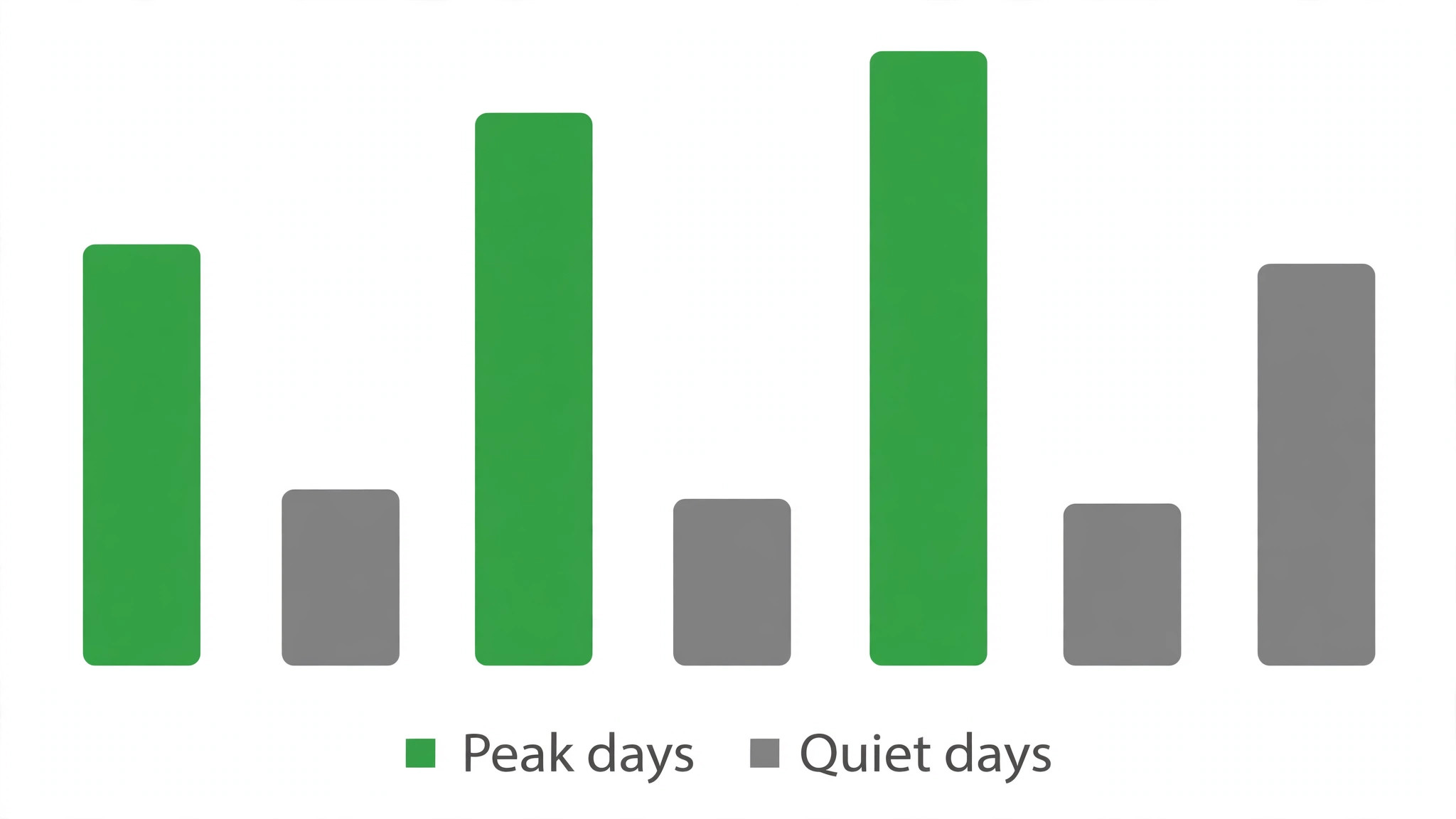
Most holiday schedules fail because they start with a calendar and a list of who wants time off. Start instead with demand. Look at the last two or three years of bookings, calls, and jobs, and mark which days spiked, which services brought urgent work, and which channels filled first. A salon, a plumbing firm, and a cleaning service do not share a peak calendar, and a generic holiday list will mislead all three. Your own history is the best forecast you have, and it is free.
Sort the work into three buckets for each holiday period. Critical work must happen even on a holiday, such as emergency callouts, care visits, or jobs with a hard deadline. Important work should happen but can move by a day or two, such as routine maintenance or non-urgent installs. Deferrable work can wait until after the holiday without harming the client. When staffing is tight, critical work gets the team first, important work gets the next available slots, and deferrable work is honestly rescheduled with notice. That sorting protects revenue and sanity at the same time.
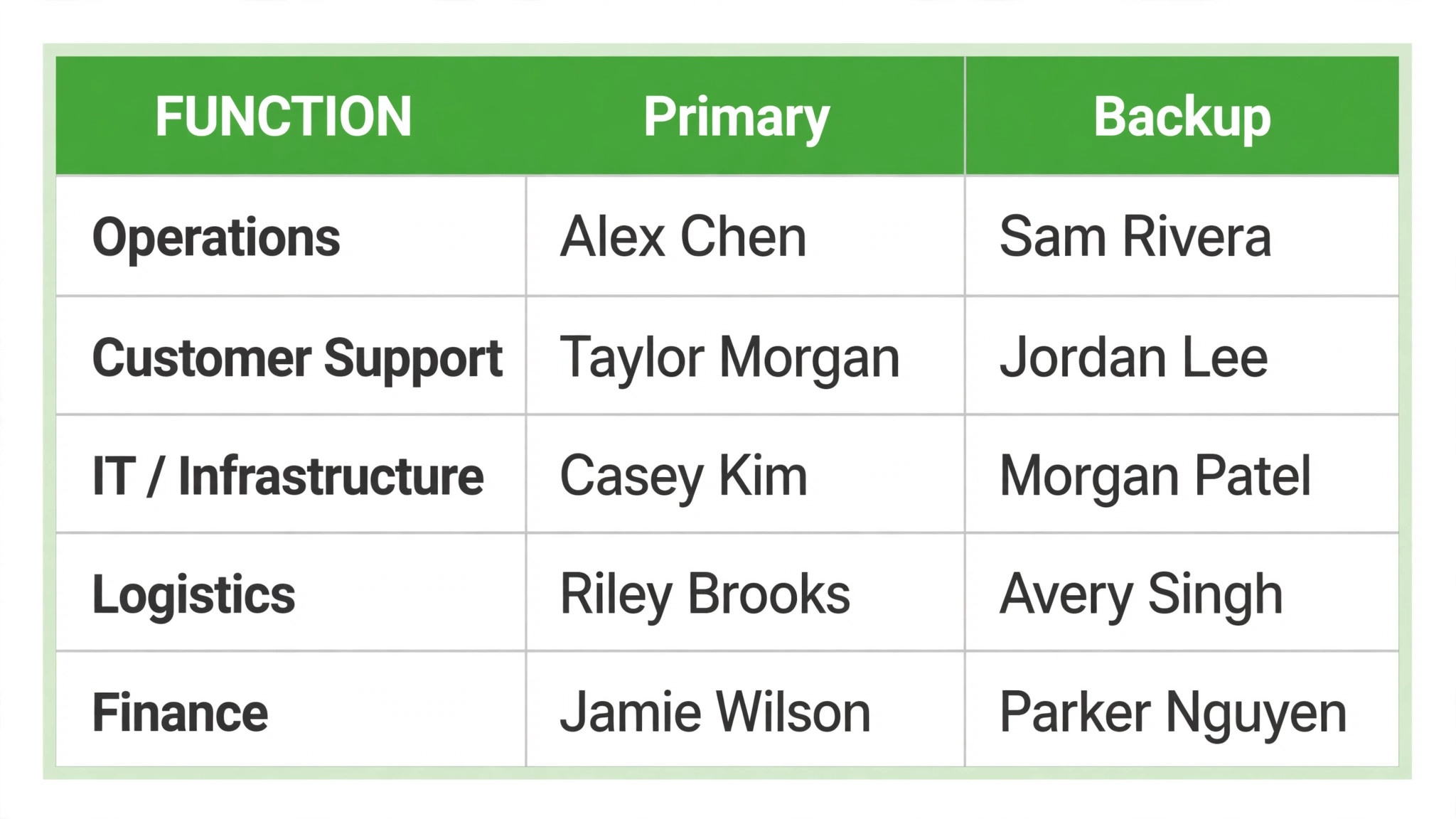
Count the work by function, not just by headcount. You may have six staff, but if only two can run a particular machine, drive a particular vehicle, or sign off a particular job, those two are your bottleneck. A holiday roster that looks full on paper but leaves a bottleneck uncovered will fail on the first urgent call. Name the bottleneck roles first, then build coverage around them, with a trained backup for each one.
How to Plan a Service Business Holiday Schedule Small Business Teams Can Staff
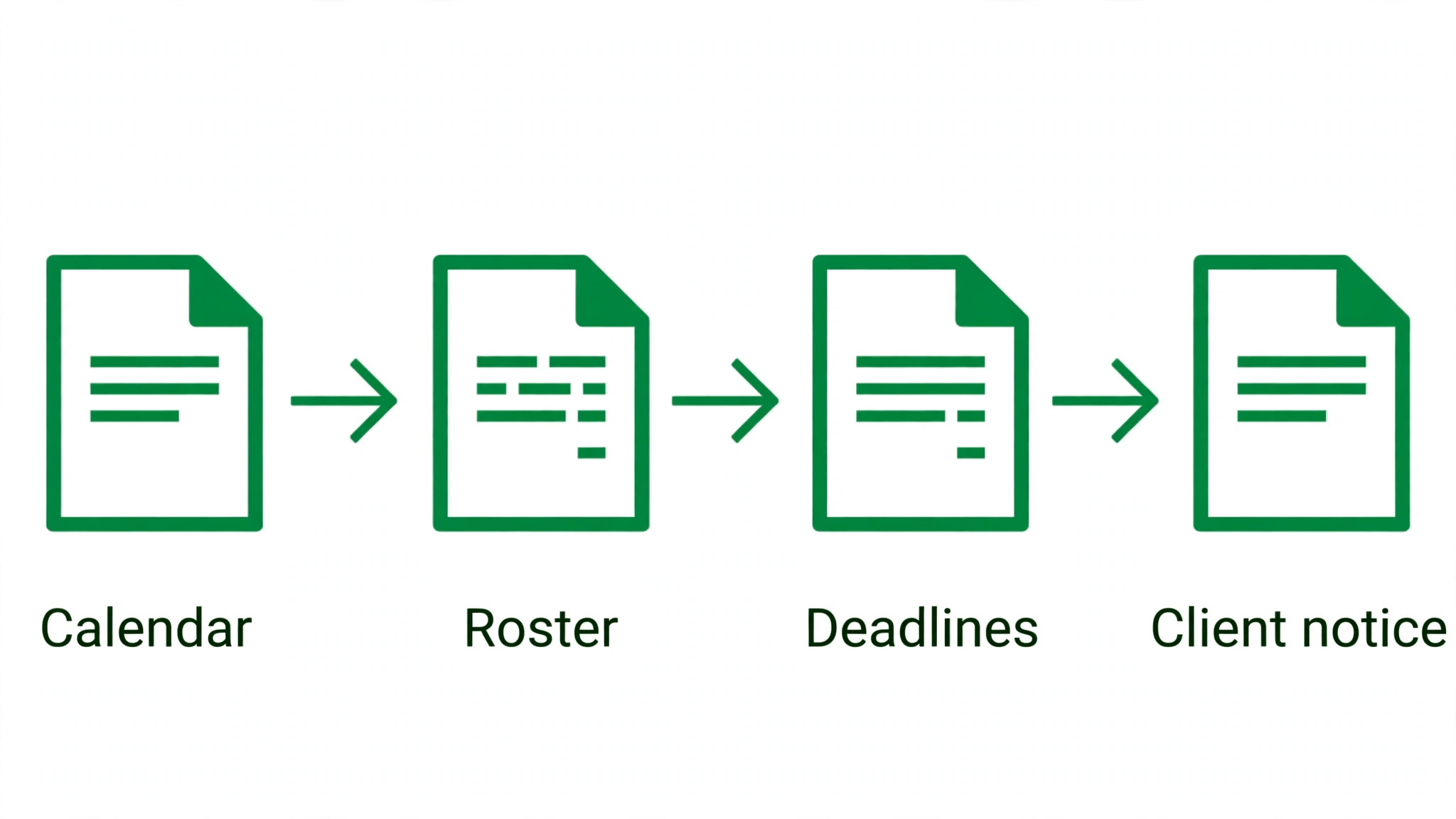
A staffable schedule has four documents, and none of them needs to be fancy. The first is the holiday calendar itself, listing open days, closed days, reduced hours, and blackout dates. The second is the coverage roster, naming a primary and a backup for each critical function on each open day. The third is the time-off request deadline and the tie-breaker rule for competing requests. The fourth is the client notice, stating hours, emergency cover, and response times. Publish all four together, or staff and clients will work from different versions of the plan.
Set the time-off deadline early, typically six to eight weeks before a major holiday period, and publish final assignments at least two weeks before the holiday. Those lead times appear in holiday coverage guidance from operations teams, and they exist for a practical reason. Early deadlines give you time to hire seasonal help, train backups, and rearrange deferrable work. Late deadlines force you to decide under pressure, and pressured decisions feel unfair even when they are reasonable.
Collect availability before you publish assignments, not after. Ask each team member for their holiday availability, their preferred days off, and any hard constraints, such as family commitments or travel already booked. Record the answers in one place, and use the same tie-breaker for every competing request. Common tie-breakers include rotation, where whoever worked last year holiday gets first choice this year, and seniority, which is simple but leaves newer staff never getting a popular holiday off. Rotation usually feels fairer in a small team, because everyone gets a turn over time.
Seasonal hiring, where needed, should start before the time-off deadline, not after it. Hire against the peak dates you identified from demand data, collect peak-date availability at interview, and schedule the first shifts on quiet weekdays alongside an experienced colleague. Seasonal staff grouped together on a peak day, without experienced cover, create risk exactly when you can least afford it. Mix seasonal and regular staff on every peak shift.
Blackout Dates Without Burning Out the Team
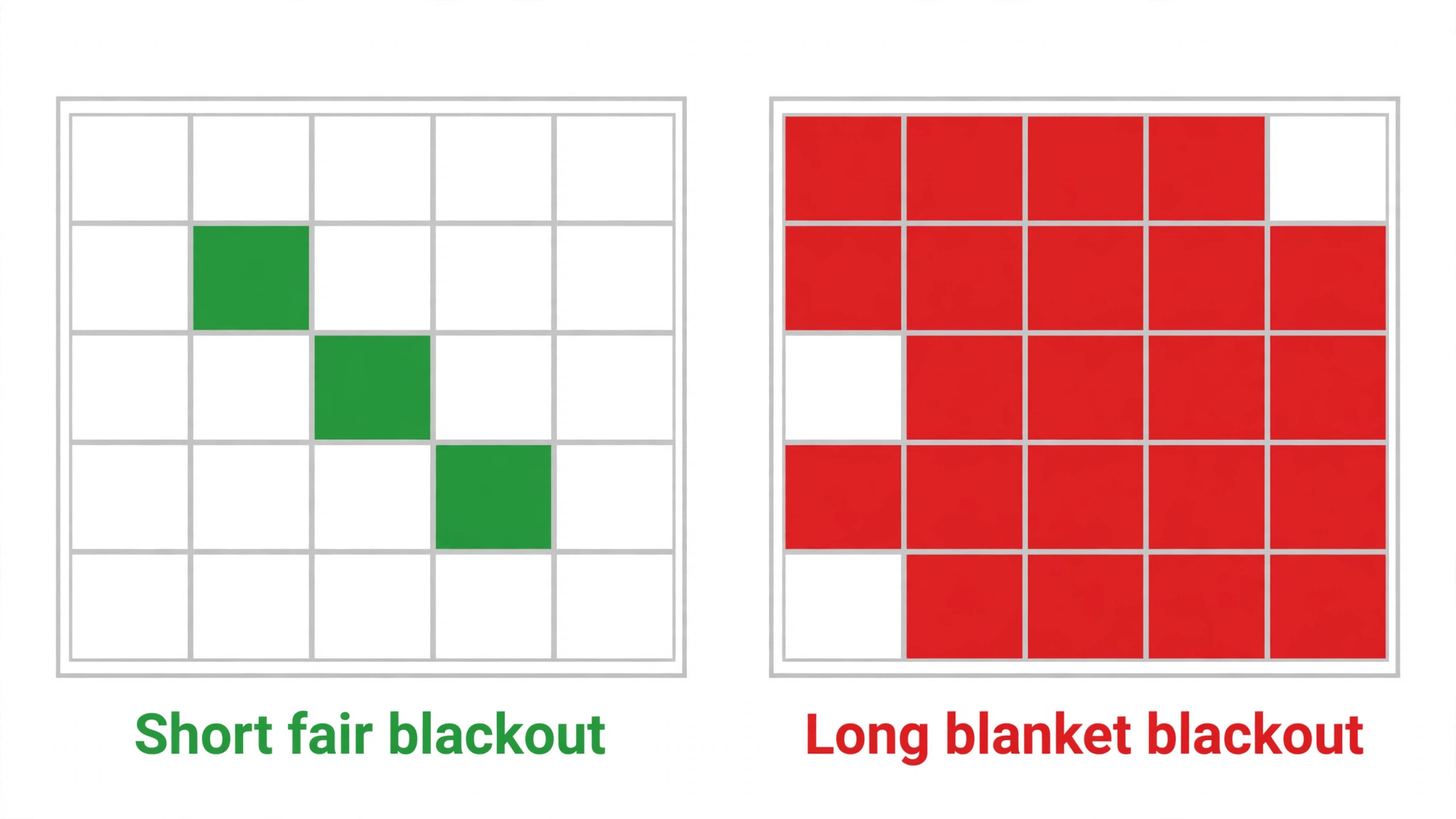
Blackout dates are periods when time off is restricted or blocked because demand is at its peak. They are legitimate when they are announced early, applied consistently, and limited to real peak days. They become a morale problem when they cover a whole month, appear with no notice, or apply to some staff but not others. Name the actual peak days, not a vague season, so staff can plan the rest of their time off around them.
| Blackout choice | When it fits | Fairness check |
|---|---|---|
| No requests on named peak days | Retail peaks, Black Friday weekend, last Fridays before Christmas | Publish the dates before hiring seasonal staff |
| Limited requests, capped per day | Service firms with a small team and steady demand | Cap applies equally across teams and roles |
| Rotation for popular holidays | Teams where the same people always worked Christmas | Whoever worked last year gets first choice this year |
| No blackout, premium pay instead | Firms that can afford to pay for holiday cover | Premium rate is written down before the roster is built |
Keep blackout periods as short as demand allows, because how to plan a service business holiday schedule small business staff will accept depends on blackouts feeling targeted, not blanket. A two week blackout around the true peak is defensible. A six week blackout that includes quiet days in between is not, and staff will treat it as a blanket ban rather than a plan. Review last year roster after each holiday period, and trim blackout days that turned out quiet. A blackout list that shrinks each year as your data improves is a sign the system is working.
Offer something in return for blackout work, even when premium pay is not possible. Priority choice on the next holiday, extra time off in January, or a first pick of shifts in a quieter month all soften the cost of working a popular holiday. What matters is that the exchange is stated before the roster is built, not invented afterwards as a thank-you. Staff trust a stated exchange. They discount a surprise one.
For firms that already use scheduling tools, blackout dates can be set in the tool so requests on those dates are blocked or capped automatically. The Stratilyze guide to the Best HR Software for Restaurants covers scheduling and time-off tools in a different niche, but the blackout and request-deadline habits transfer directly to service firms.
Build Coverage in Layers, Not With One Hero
Single-person coverage is the most fragile holiday plan. If one person covers phones, bookings, and emergency callouts, and that person falls ill, the whole system stops. Build coverage in layers. A primary person handles each function. A named backup can step in. A third layer, such as a call answering service, a voicemail with a clear callback time, or an on-call manager, catches overflow. Layers cost planning time, but they cost far less than a missed emergency call.
Assign every person a primary lane and a backup lane, and write both on the roster, since how to plan a service business holiday schedule small business teams can hold together depends on backups being named, not assumed. The backup lane should be a function the person can actually perform, not a name on a list. Cross-train backups before the holiday period, with at least two supervised shifts in the backup role. A backup who has never done the job under supervision is not a backup. They are a hope, and hopes fail on peak days.
Phone and message cover needs its own layer. If the office closes, say so clearly on voicemail, on the website, and in an email to active clients, with the reopening date and the emergency route. If the office stays open with reduced hours, publish those hours everywhere clients look, not just on one page. Unanswered holiday calls are lost demand, and a client who cannot reach you will call a competitor who answers. A simple message that states when you will reply, and then replying at that time, preserves more business than an ambitious promise nobody keeps.
Federal law in the United States does not require private employers to pay for holidays not worked, or to pay a premium simply because work falls on a holiday. The Fair Labor Standards Act requires overtime pay of at least one and a half times the regular rate for hours actually worked over 40 in a workweek for covered non-exempt employees. Paid holiday hours that were not worked do not normally count toward that 40 hour threshold. Those are federal rules, and state rules, contracts, and your own handbook promises can add requirements, so check the rules that apply in your state and to your staff before you publish pay rates.
Because holiday premium pay is usually a matter of your own policy rather than a federal mandate, writing it down before the roster is built is essential. Once you promise a rate in a handbook, an offer letter, or a roster note, staff reasonably treat it as binding, even when the law did not require it. Decide the rate, the days it applies to, and whether it stacks with overtime, and publish all three together. Ambiguity here creates payroll disputes in January, when goodwill from the holiday period has already faded.
| Pay choice | What it means | When to use it |
|---|---|---|
| Standard rate, no premium | Holiday work paid as normal, overtime only over 40 hours worked | Closed or quiet holidays, or where staff prefer time off later |
| Time and a half for holiday shifts | Holiday hours paid at 1.5 times the regular rate | Peak holidays where cover is hard to fill |
| Double time for named days | Two times the regular rate for Christmas Day or similar | Very few days, very high demand, or emergency cover |
| Premium plus time off in lieu | Extra pay plus a day off in a quiet period | Teams that value time as much as money |
Cost the premium before you promise it. Multiply the premium rate by the planned holiday hours, add any overtime effect where holiday hours push a week over 40 hours worked, and check the total against the revenue those holiday shifts are expected to bring in. A premium that makes holiday opening unprofitable should be reconsidered, either by reducing hours, raising holiday prices where the market allows, or closing on the quietest holiday days. Pricing and pay decisions belong together, not in separate meetings.
Keep payroll records that match the roster. Record hours worked, holiday premium hours, and time off taken, separately, so overtime calculations use hours actually worked. Mixing paid holiday hours into the overtime count is a common error, and it leads to overpayment in some weeks and disputes in others. A clean roster plus clean payroll notes prevents most of those disputes before they start.
Tell Clients Early, and Tell Them Twice
Client notice should go out in two waves. The first wave, four to six weeks before a major holiday period, states open days, closed days, reduced hours, and the last booking date for work that must finish before the holiday. The second wave, in the week before the holiday, repeats the hours, the emergency route, and the reopening date, in a short message clients can check on a phone. Two waves catch clients who missed the first and clients who booked after it.
Use every channel clients already use, because how to plan a service business holiday schedule small business clients will follow depends on the notice reaching them where they already look. Email the active client list, update the website hours and voicemail, post the hours on the booking page, and add a note to invoices or job sheets in the weeks before the holiday. A single channel notice, however well written, will be missed by clients who use a different channel. Consistency across channels matters more than design. The hours on the website, the voicemail, and the booking page must match, or clients will trust none of them.
Emergency cover needs a plain definition. State what counts as an emergency for your service, who to contact, and how fast you will respond. A plumbing firm emergency is a leak. A cleaning firm emergency is different, and may mean no emergency service at all, with a clear reopening date instead. Clients accept limited holiday cover far more readily when the limit is stated early than when they discover it by calling a silent phone.
Price and surcharge rules for holiday work, where you use them, must appear in the first notice wave, not on the invoice after the job. State any holiday rate, minimum callout fee, or reduced service list before the client books holiday work. Surprise surcharges after a holiday job damage trust out of proportion to the amount, because the client had no chance to choose a different date. Early, written holiday pricing is part of the schedule, not an afterthought to it.

The 90 Day Holiday Countdown
Use this countdown for each major holiday period, starting about 90 days out. Shorter periods, such as a single bank holiday, can compress the early steps, but do not skip the demand review or the client notice, because those two steps prevent most holiday problems.
| When | Action | Owner |
|---|---|---|
| 90 days out | Review last two years of demand, name peak days, sort work into critical, important, and deferrable | Owner or manager |
| 75 days out | Set blackout dates, premium pay rules, and time-off deadlines, and publish them to staff | Owner or manager |
| 60 days out | Collect availability, hire seasonal help where needed, and start cross-training backups | Manager and team leads |
| 45 days out | Publish the draft roster, resolve competing requests with the stated tie-breaker, and confirm bottleneck cover | Manager |
| 30 days out | Send the first client notice, update website, voicemail, and booking hours, and freeze deferrable bookings | Owner and admin |
| 14 days out | Publish the final roster, confirm every primary and backup, and brief seasonal staff on emergency routes | Manager |
| Holiday week | Monitor cover daily, backfill gaps fast, and log any uncovered hours or missed calls | Manager on duty |
| Week after | Review what worked, trim quiet blackout days, and record lessons for the next holiday | Owner or manager |
During holiday week, check the roster every morning, not just on the first day. Illness and transport problems do not respect rosters, and a gap found in the morning can still be filled. A gap found at the time of an urgent call cannot. Keep a short backfill list of staff willing to take extra shifts, with their availability and premium rate already agreed, so backfill calls are quick and fair.
After the holiday, review three measures. Uncovered hours, missed calls, and staff overtime all show whether the roster matched demand. Client complaints about holiday hours show whether notice was clear enough. Staff feedback on fairness shows whether the tie-breaker and blackout rules held. Record all five in a short note, and use that note to adjust the next holiday calendar. A schedule that improves each year is worth more than a perfect schedule attempted once.
Holiday Calendar Template You Can Copy
Copy this template for each holiday period, fill in your dates, and publish it to staff and clients in the same wording. Keep the staff roster separate, with names and backup lanes, and keep the client version focused on hours and emergency routes.
Holiday Schedule for [Business Name], [Holiday Period].
Open days and hours. [List each open day with hours, or state reduced hours clearly].
Closed days. [List each closed day, with the reopening date and time].
Blackout dates for staff time off. [List named peak days only, with the request deadline].
Emergency cover. [State what counts as an emergency, who to contact, and the expected response time, or state that no emergency cover is offered and give the reopening date].
Holiday rates. [State any premium rate, minimum fee, or reduced service list, or state that standard rates apply].
Last booking date for pre-holiday work. [Date by which work must be booked to finish before the holiday].
Reopening and normal hours resume. [Date and time].
Staff roster note, internal only. Primary and backup for each critical function on each open day. Tie-breaker used for competing requests. Premium pay rate and overtime treatment. Backfill list with agreed availability. Keep this note with payroll records for the period.
That template works because it separates what clients need from what staff need, while keeping the dates identical in both versions. Date mismatches between a staff roster and a client notice are a common source of holiday confusion, and a single template with two views prevents them.

Handle the Weeks Nobody Plans For
Every holiday plan meets a week it did not predict. A storm closes roads, a key team member falls ill, or a local event sends demand far above last year level. The plan should include a response for those weeks, decided in advance, so the team does not improvise under stress. Name the trigger, the decision maker, and the first three actions for each likely disruption, and keep that note with the roster.
Weather disruption is the most common case. Decide in advance at what point you close, reduce service, or move to emergency-only cover, and who makes that call. Publish the decision route to clients as soon as it is made, through the same channels as the original holiday notice, and offer rebooking dates immediately. Clients accept a weather closure far more readily when the message arrives early, states the reopening plan, and does not leave them guessing whether anyone will call back.
Illness cover works only if the backup system was trained before the holiday. A backup who has done supervised shifts can take over with a short handover. A backup who has only read a manual cannot. During holiday week, check availability every morning, and call the backfill list as soon as a gap appears, not at the time the shift starts. Early backfill calls also protect fairness, because staff who agree to cover at short notice should receive the premium or time-off benefit already promised in the plan.
Demand surges need a different response from disruption. When bookings exceed the roster, do not simply stretch every shift longer, because tired staff make mistakes and then fall ill, which creates a second gap. Instead, prioritise critical work, offer earlier or later dates for important work with a clear explanation, and pause new deferrable bookings until cover is confirmed. That triage keeps quality up and prevents a surge week from becoming a burnout month.
Learning how to plan a service business holiday schedule small business teams can adapt is therefore about building slack into the plan, not about predicting every event. One trained backup per bottleneck, one backfill list with agreed rates, and one decision maker for disruptions give you options when the plan meets reality. Without that slack, every surprise becomes a crisis, and crises are what staff remember long after the holiday ends.
After each disruption, record what triggered it, what action was taken, and whether the action worked. That short record turns a bad week into a better plan next year, and it shows staff that their extra effort led to a change, not just to exhaustion. Owners who learn how to plan a service business holiday schedule small business teams trust usually point to these records, not to the original calendar, as the reason the next holiday ran more smoothly.
Frequently Asked Questions
How far ahead should a service business plan its holiday schedule?
Start about 90 days before a major holiday period, with time-off deadlines six to eight weeks out and final rosters at least two weeks out. That lead time allows seasonal hiring, backup training, and client notice without rushed decisions. For a single quiet holiday, a shorter timeline works, but keep the demand review and the client notice, because those steps prevent most problems. Planning late does not save time. It moves the work into holiday week, when every decision is harder.
What are blackout dates, and are they fair to staff?
Blackout dates are named peak days when time-off requests are restricted or blocked, so the team can cover demand. They are fair when announced early, limited to real peak days, applied equally, and paired with a stated tie-breaker for other holidays or a return benefit such as priority choice next time. They feel unfair when they cover a whole quiet month, appear without notice, or apply to some staff only. Keep the list short, publish it before hiring, and trim quiet days after each holiday based on your data.
Does a small business have to pay extra for holiday work?
Under federal law in the United States, private employers are not generally required to pay a premium simply because work falls on a holiday, and paid holiday hours not worked do not normally count toward overtime. Overtime pay is generally required for hours actually worked over 40 in a workweek for covered non-exempt employees. State rules, contracts, and handbook promises can add requirements, so check the rules that apply to your staff and location. This guide is general information, not legal advice, and a local adviser is the right check for payroll decisions.
How do I handle two staff members who want the same holiday off?
Use the tie-breaker you published before requests were collected, such as rotation based on who worked that holiday last year. Apply it consistently, explain the outcome briefly, and offer the losing staff member first choice on the next holiday or extra time off in a quiet period. Do not decide by who asked first in a private message, or by who argues longest, because both methods reward pressure rather than fairness. A published tie-breaker turns a personal dispute into a routine decision.
Should a service business close completely over the holidays?
Closing completely suits firms where demand falls sharply, where emergency work is rare, or where the whole team needs a break to return refreshed. Staying open with reduced hours and emergency cover suits firms where urgent work continues, where clients expect cover, or where competitors stay open. Decide from your demand data, not from habit. If you close, publish the reopening date early and give clients a last booking date for pre-holiday work, so closure feels planned rather than abrupt.
How do I cover emergency calls when the office is closed?
Define what counts as an emergency for your service, name one contact route, and state the expected response time in the client notice. Options include an on-call rota, a call answering service that passes urgent messages to the on-call person, or a voicemail that states the reopening date where no emergency cover is offered. Test the route before the holiday with a trial call, because a route that fails on Christmas Eve cannot be fixed until after the holiday. Log every emergency contact and response, and review the log afterwards.
What if a staff member falls ill during a holiday week?
Use the backup lane on the roster, then the backfill list, in that order, and check cover every morning during holiday week. Cross-training before the holiday is what makes backup cover real, so a backup who has done supervised shifts can step in without a long handover. If no backup is available, prioritise critical work, reschedule important work honestly with notice, and defer the rest. Record uncovered hours, because they show where the next roster needs a deeper backup.
How do I tell clients about holiday hours without losing bookings?
Tell them early, tell them twice, and use every channel they already use, including email, website, voicemail, and the booking page, with identical hours in each place. State any holiday rates and the last booking date in the first notice, so clients can choose an earlier date if they prefer standard rates. Clients accept planned closures and reduced hours far more readily than surprise closures, and early notice often moves bookings forward rather than losing them.
A Calm December Is Planned in September
A holiday schedule that works is not a clever spreadsheet. It is demand data turned into peak days, peak days turned into blackout dates and a roster with backups, pay rules written before the roster, and client notice sent twice with identical hours. Start 90 days out, publish early, hold the tie-breaker fairly, and review the week after so the next holiday is easier. That routine is how to plan a service business holiday schedule small business teams can actually staff, and it is what turns the busiest weeks of the year from a crisis into a normal, if busy, week of work.
More Reading on Stratilyze
– Best HR Software for Restaurants – Cost of Homebase for Small Business Monthly – Cost of Deputy for Small Business Monthly