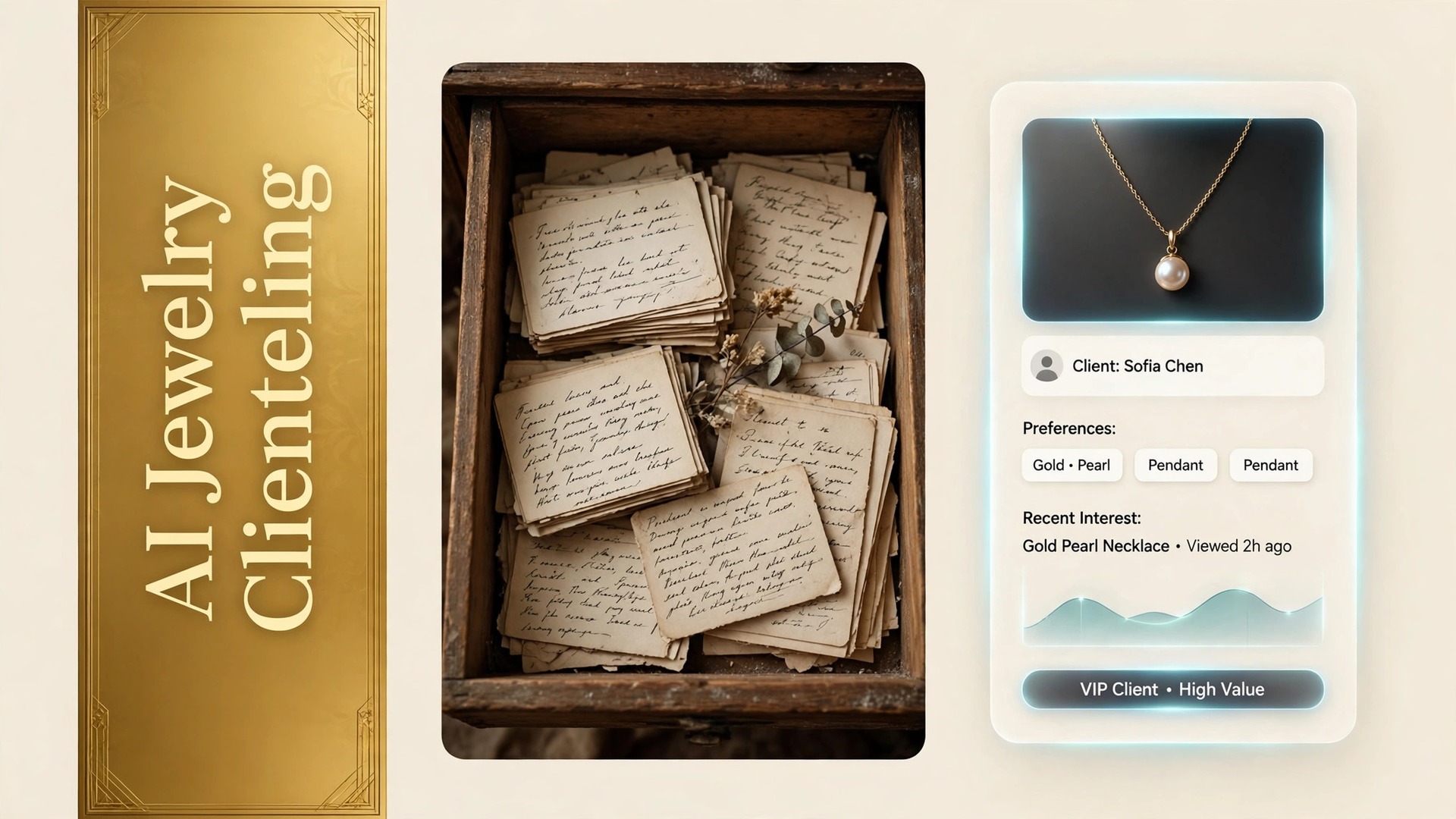
A customer buys an engagement ring in your store, and then hears nothing from you for three years. In that time they celebrate anniversaries, buy gifts for family, need a cleaning, consider an upgrade, and walk past other jewelry stores that remember them. The problem is not a lack of warmth on your team. It is that nobody owns the follow-up, and that gap is exactly what you fix when you use AI for jewelry store clienteling. Jewelry is a relationship business, but most stores run it on memory, and memory fails exactly when the customer is ready to buy again.
Clienteling is the disciplined answer to that problem. It means keeping a shared record of what each customer owns, what they like, which occasions matter to them, and what they have said they want next, and then acting on that record with timely, personal outreach. When you use AI for jewelry store clienteling, you are not buying a machine that pretends to know your customers. You are buying a system that surfaces the right customer, at the right moment, with the right suggestion, so your associates can do the human work of the conversation. This guide gives you a step workflow for purchase history, anniversary triggers, and private-viewing invites, plus a clienteling-playbook template you can copy for your team.
Artificial intelligence fits this work in a narrow and useful way. It can group customers by occasion and taste, draft outreach messages in an associate’s voice, flag anniversaries and service dates, and suggest pieces that match a customer’s collection. It cannot replace the associate who remembers how a customer reacted to a stone, or the judgement that says this customer wants a call while that one wants a text. Those decisions stay human. The rest of this guide keeps that boundary clear, and it qualifies every figure that comes from a vendor page rather than from your own sales data, so you can test the system against your own repeat purchase rate instead of trusting a marketing claim.
Why Jewelry Stores Lose Repeat Business They Already Earned
Repeat business is where jewelry stores make their money, because a customer who returns for an anniversary gift, an upgrade, or a repair is far cheaper to serve than a new customer who must be won from scratch. Vendor guides make the same point in different words. Jewel360 notes that one sale can grow into far larger lifetime value when the customer returns for repairs, adjustments, anniversary gifts, and upgrades, while Endear describes clienteling as the way to turn one-time gift buyers into repeat customers and collectors. Treat those vendor statements as directional, not as measured results for your store, and measure your own repeat rate before you believe any of them.
Stores lose that repeat business in predictable ways. The first is fragmented data. Purchase history sits in the point of sale system, conversation notes sit in a notebook or a phone, and occasion dates sit nowhere at all, so no single associate can see the full picture when a customer walks in. The second is silent gaps. A customer buys, receives a receipt, and hears nothing until they happen to return, which means the store is absent at exactly the moments when jewelry purchases happen, such as anniversaries, birthdays, and milestones. The third is generic outreach. A mass email about a sale goes to everyone, including the customer who just bought, and it teaches customers to ignore your messages.
The fourth loss is the missed service moment. A ring that needs cleaning, a watch that needs servicing, or a clasp that needs checking is a reason for a customer to return, and a return visit is a reason to browse. Stores that track service dates and follow up on them create natural, welcome reasons to come back. Stores that do not track them wait for the customer to remember, and customers forget. Measure your own gaps before you automate. Count customers who bought in the last two years but have not returned, occasions you recorded versus occasions you acted on, and service dates that passed without a message. Those numbers show you where clienteling will pay first.
What Clienteling Tools Actually Do
Clienteling platforms for jewelry share a core set of features, and it helps to know what you are adding AI to. Endear describes unified customer data across stores and online channels, purchase and conversation history in one profile, anniversary and milestone tracking, and personalised outreach from real associates. Clientbook, built specifically for jewelry retail, describes deep point of sale integration with systems such as The Edge, Jewel360, and Lightspeed, plus the ability to text product images from designer catalogs. Jewel360 describes customer profiles with purchase history, metal types, stone details, and preferences, plus loyalty and service tracking. Check the vendor’s current page for the exact feature set and price before you buy, because integrations and tiers change.
Pricing claims deserve the same caution. A Clientbook page reports that IntentTracker, a focused jewelry CRM, charges 299 to 499 dollars per month on its Essential and Professional plans, and notes that it integrates with The Edge while listing other integrations as absent. Treat that as a vendor-reported comparison, not as a verified price list, and confirm current pricing with the vendor directly. The useful lesson is not the number. It is the question the number raises, which is whether the tool you choose connects to your point of sale system, because a clienteling tool without purchase history flowing in automatically will depend on manual entry, and manual entry will stop within weeks.
AI adds a drafting and ranking layer on top of that profile. Given a clean customer record, it can suggest which customers to contact this week, draft a message that references their actual purchase and occasion, and sort outreach by likely value and by timing.
It can also group customers by taste, such as yellow gold versus white gold, or by occasion, such as bridal, anniversary, or self-purchase, so associates spend less time sorting lists and more time talking. The condition for all of that is a clean profile. If purchase history is incomplete, if occasion dates are missing, or if two records exist for one customer, AI will draft confident messages about the wrong piece, and associates will stop trusting it.
Building a Customer Profile Worth Acting On
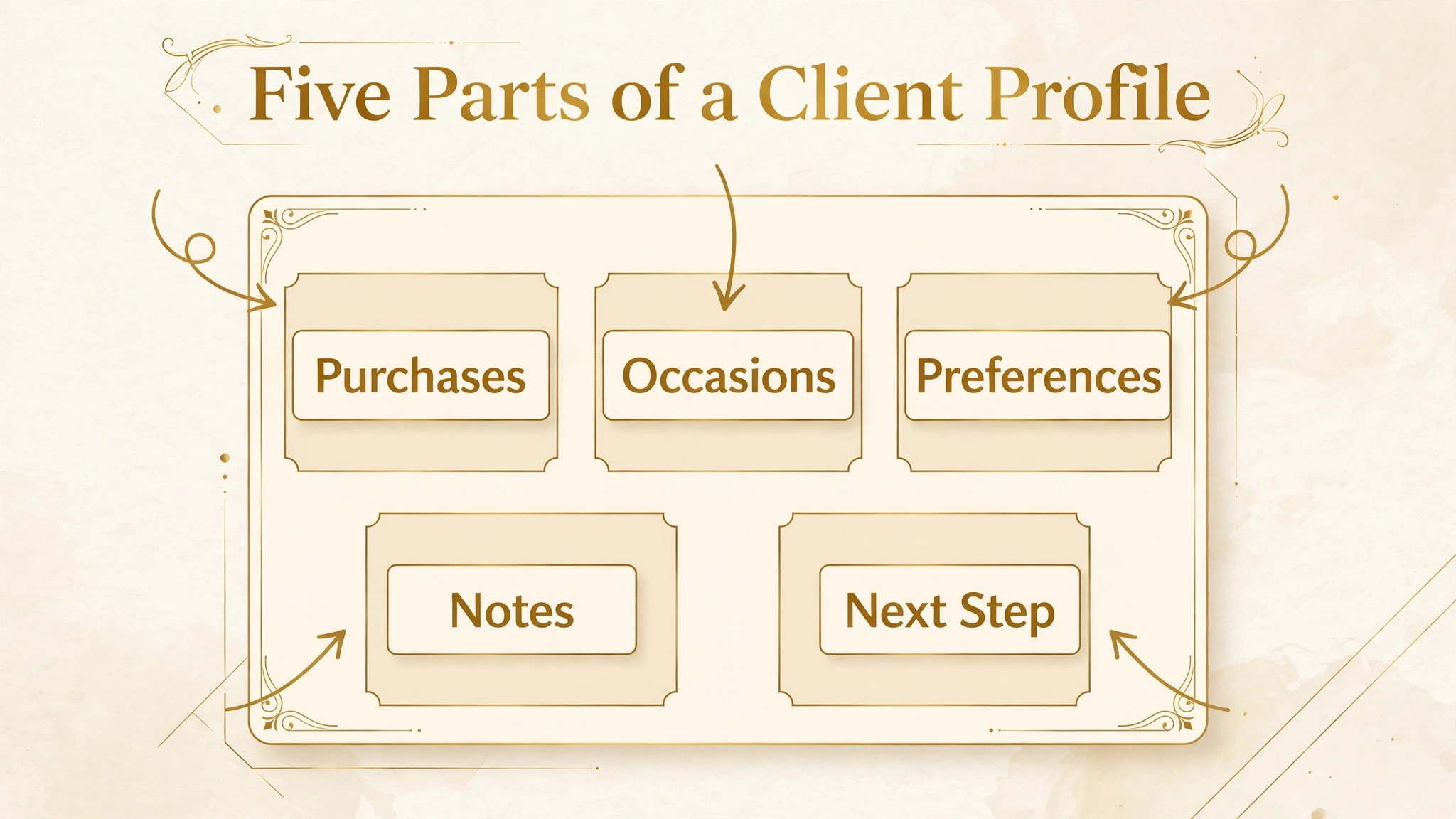
A useful profile has five parts, and each part earns its place by changing what an associate does. Purchase history, meaning what the customer bought, when, in which metal and stone, and at what price band, so suggestions match their collection rather than the current promotion.
Preferences, meaning style, metal, stone, designer, and budget signals, recorded from conversations and from browsing where the customer consented to share it. Occasions, meaning anniversaries, birthdays, weddings, and personal milestones, with the date, the person it relates to, and the piece it connects with. Service history, meaning cleanings, repairs, sizings, and warranty dates, so follow-up has a natural reason. And conversation notes, meaning what the customer said they want next, in their own terms, not in sales shorthand.
Capture those parts at the moments when they are easiest to record. At purchase, confirm the occasion, the recipient, and the next milestone, and ask permission to follow up before that date. At pickup or delivery, note the reaction and any comment about a future piece. At a service visit, note the condition of the piece and any interest the customer showed while waiting. AI can draft the note from a short associate dictation, and the associate can correct it in seconds, which is far more reliable than asking staff to write full notes at the end of a busy day. A profile built from small, timely notes will beat a profile built from a quarterly data cleanup every time.
Privacy and consent belong in the profile too. Record whether a customer consented to text, email, or calls, and whether they consented to marketing messages as distinct from service messages about their own piece. A customer who welcomed a service reminder may not welcome a promotion, and messaging after an opt-out loses trust fast. AI can respect those preferences at scale, but only if they are recorded in the first place. Keep a simple rule that any message beyond service and order updates requires consent, and let the tool enforce that rule by blocking drafts to customers who opted out.
A Step Workflow for History, Anniversaries, and Private Viewings
This workflow assumes a single store or a small chain with a point of sale system, a clienteling tool or CRM, and an AI-assisted drafting tool, with associates approving every message before it is sent. Adapt the tools, keep the order, and run it weekly, not only before holidays.
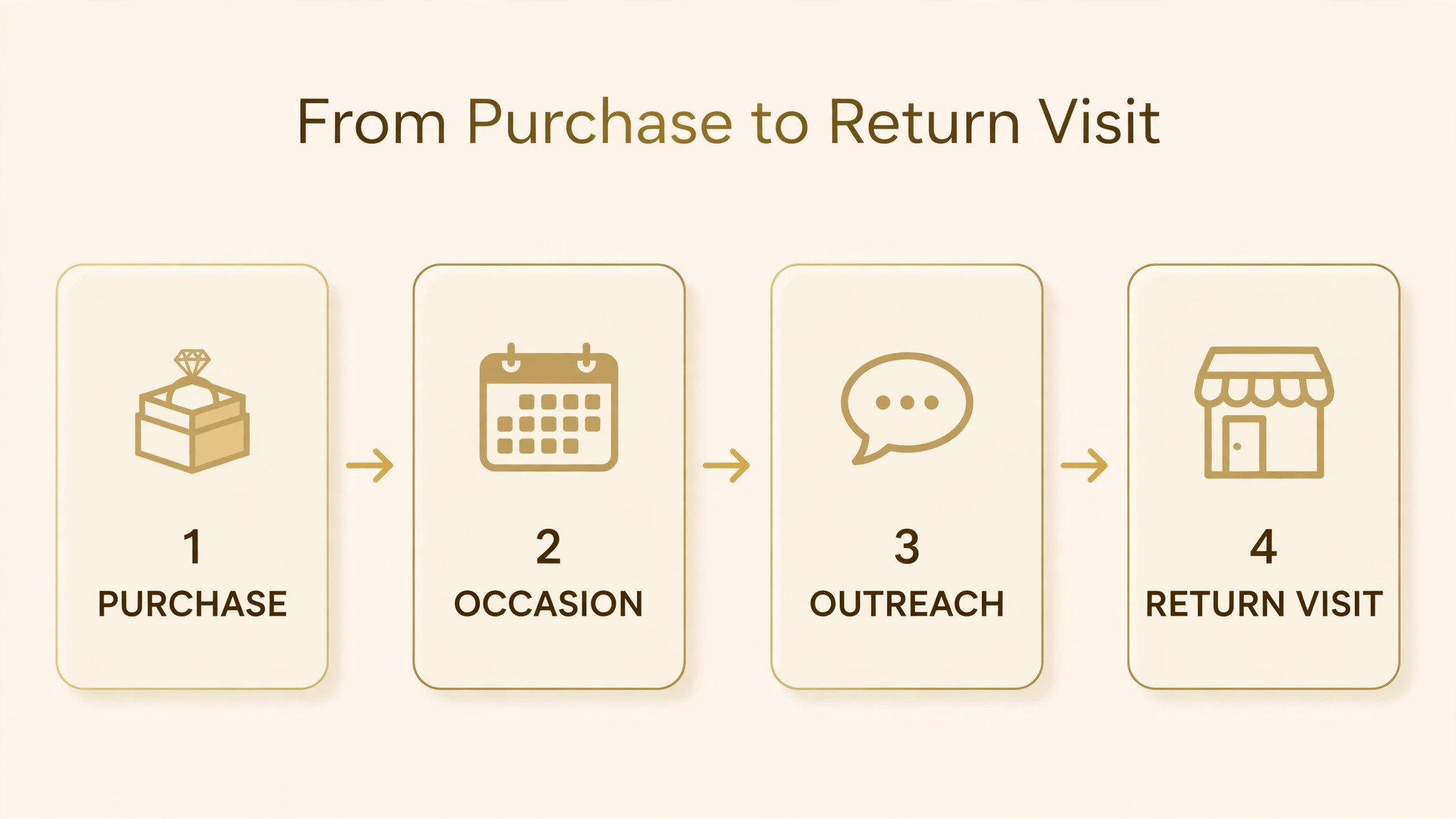
Step 1, clean and complete the top customer profiles
Each week, review the profiles of customers due for outreach in the next month. Merge duplicates, fill missing occasion dates, and check that purchase history matches the point of sale record. AI can flag duplicates and gaps, but an associate should confirm merges, because merging two customers by mistake creates a worse problem than a duplicate. Start with your highest-value and most recent customers, and expand the cleaned set month by month, rather than trying to clean the whole database at once.
Step 2, build the weekly outreach list by occasion and service
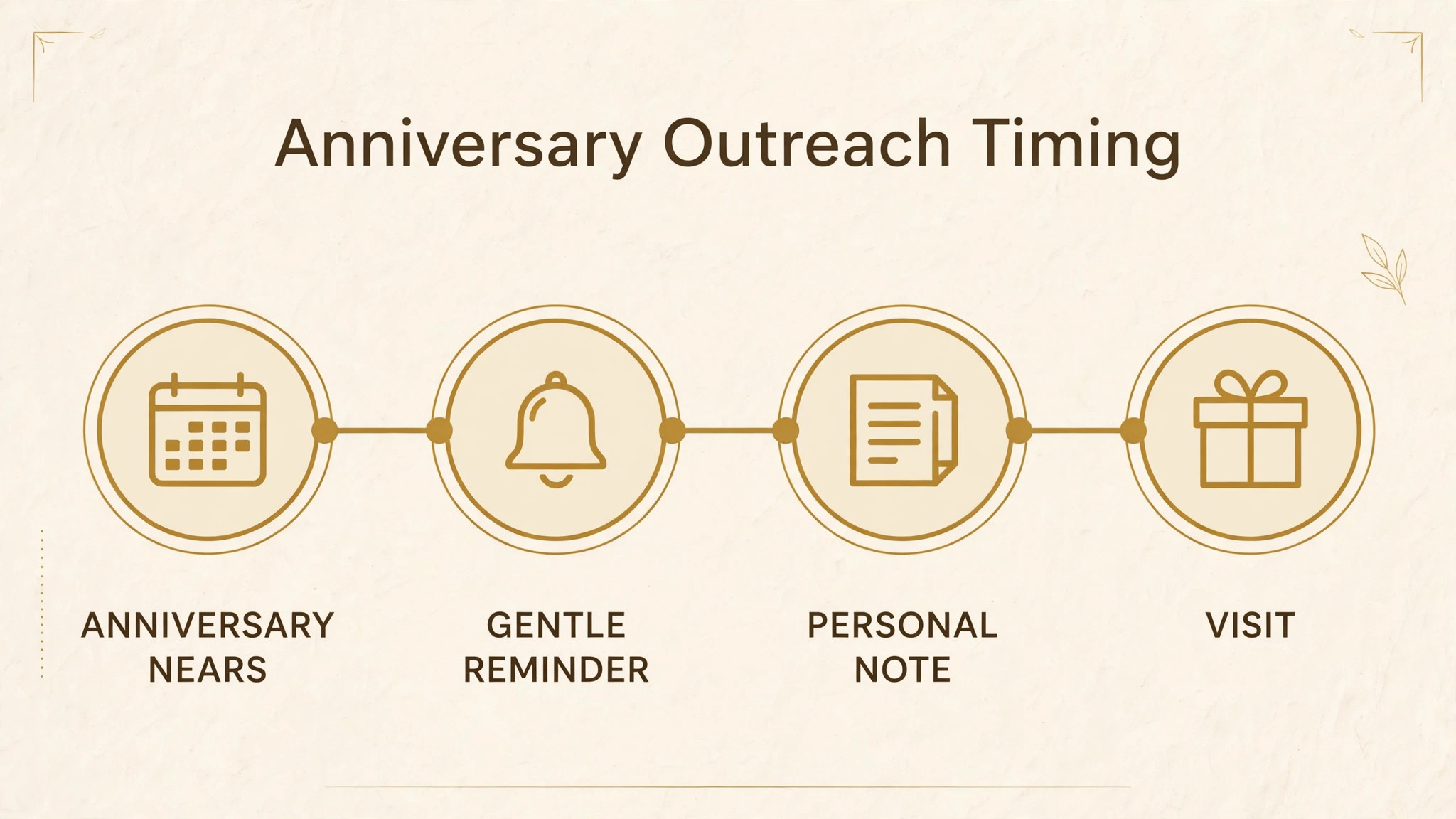
Sort the coming month’s outreach into three buckets. Occasion outreach, such as anniversaries and birthdays approaching in the next 30 to 45 days. Service outreach, such as cleanings, sizings, and warranty checks due. And interest outreach, such as customers who asked about a piece, a designer, or a future purchase. AI can build that list and rank it by timing and by likely value, but the associate should review the ranking, because a long-standing customer with a modest purchase history may matter more than a recent high-value buyer, and only a person knows that.
Step 3, draft personal messages, not campaign blasts
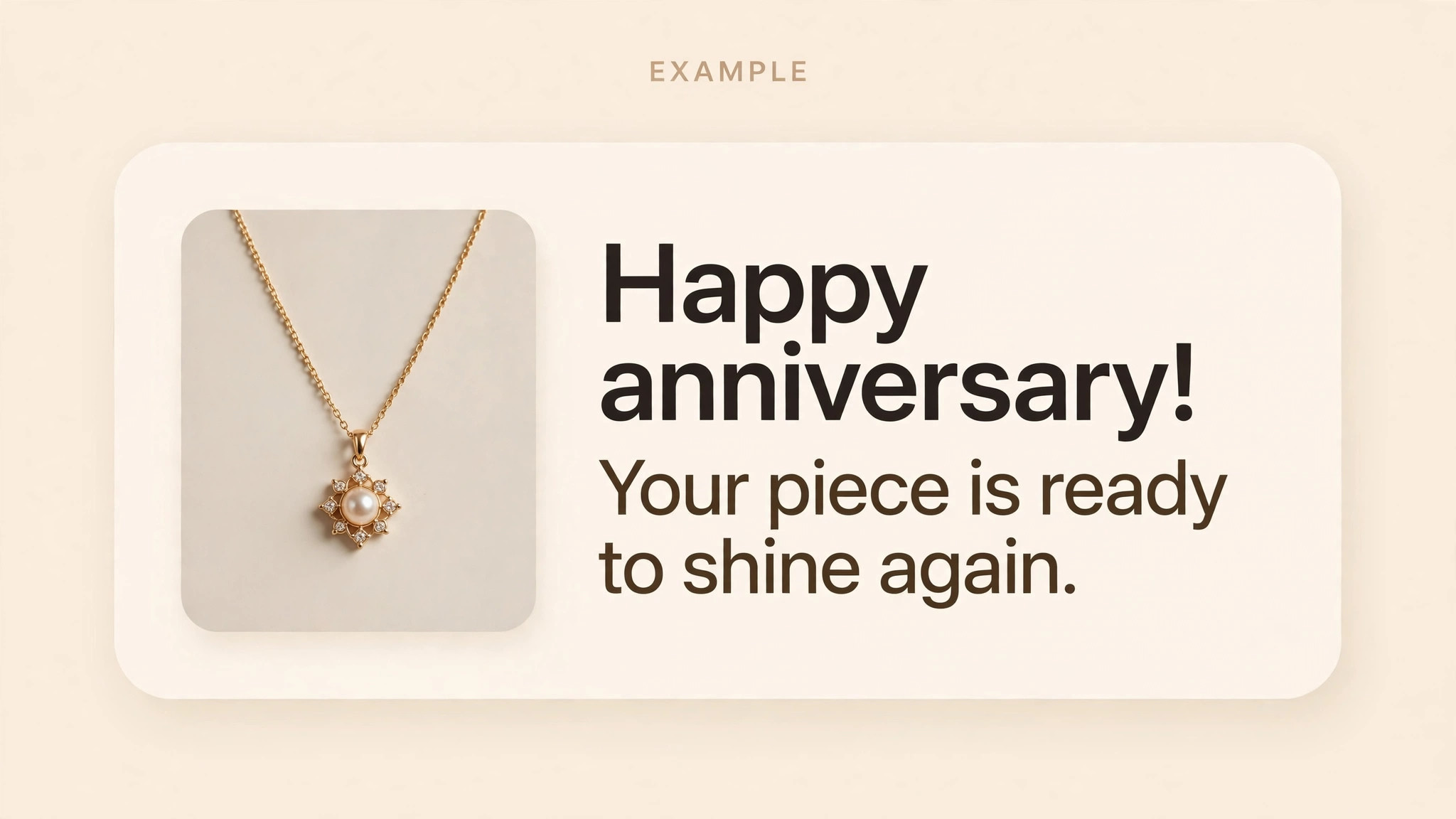
For each customer, draft a message that references their actual purchase, their occasion, and a specific suggestion, such as a matching piece, an upgrade, or a private-viewing invitation. AI can draft from the profile, but the associate should edit the draft until it sounds like something they would actually say. A message that says “we thought of you because your tenth anniversary is next month, and the piece you bought in 2019 pairs with this new arrival” will outperform a generic sale announcement every time, and it will not train customers to ignore you.
Step 4, run private viewings as curated invitations, not open sales
A private viewing works when the guest list is small, the pieces are chosen for the guests, and the associate who invited each guest is present. Use AI to match pieces to guests from their profiles, and to draft invitations that name the piece or the designer, the date, and the host. Keep the event small enough that every guest gets attention, and follow up within two working days with a personal note, not a mass thank-you. A private viewing that feels like a sale event will not bring guests back. One that feels like a personal invitation will.
Step 5, follow up after every purchase and every service visit
After a purchase, send a thank-you message from the associate, not from the store, and confirm care instructions and the next service date. After a service visit, confirm the work done, note the next due date, and mention anything the customer showed interest in while waiting. AI can draft both messages and set the next follow-up date automatically, but the associate should approve the wording for high-value purchases, because a generic thank-you after a major purchase feels careless. These two follow-ups are the cheapest clienteling a store can do, and they are the most often skipped.
Step 6, review results monthly and retire what does not work
Each month, review outreach sent, replies received, visits booked, and purchases attributed to outreach, using the same definitions each month. Also review opt-outs and complaints, because a list that grows opt-outs is a list being messaged too often or too generically. AI can summarise those results, but the team should decide what changes, such as fewer messages, better timing, or different suggestions. Retire outreach types that consistently produce no replies, and double down on the ones that produce visits, because a playbook that never changes is a playbook that slowly stops working.
The Clienteling-Playbook Template
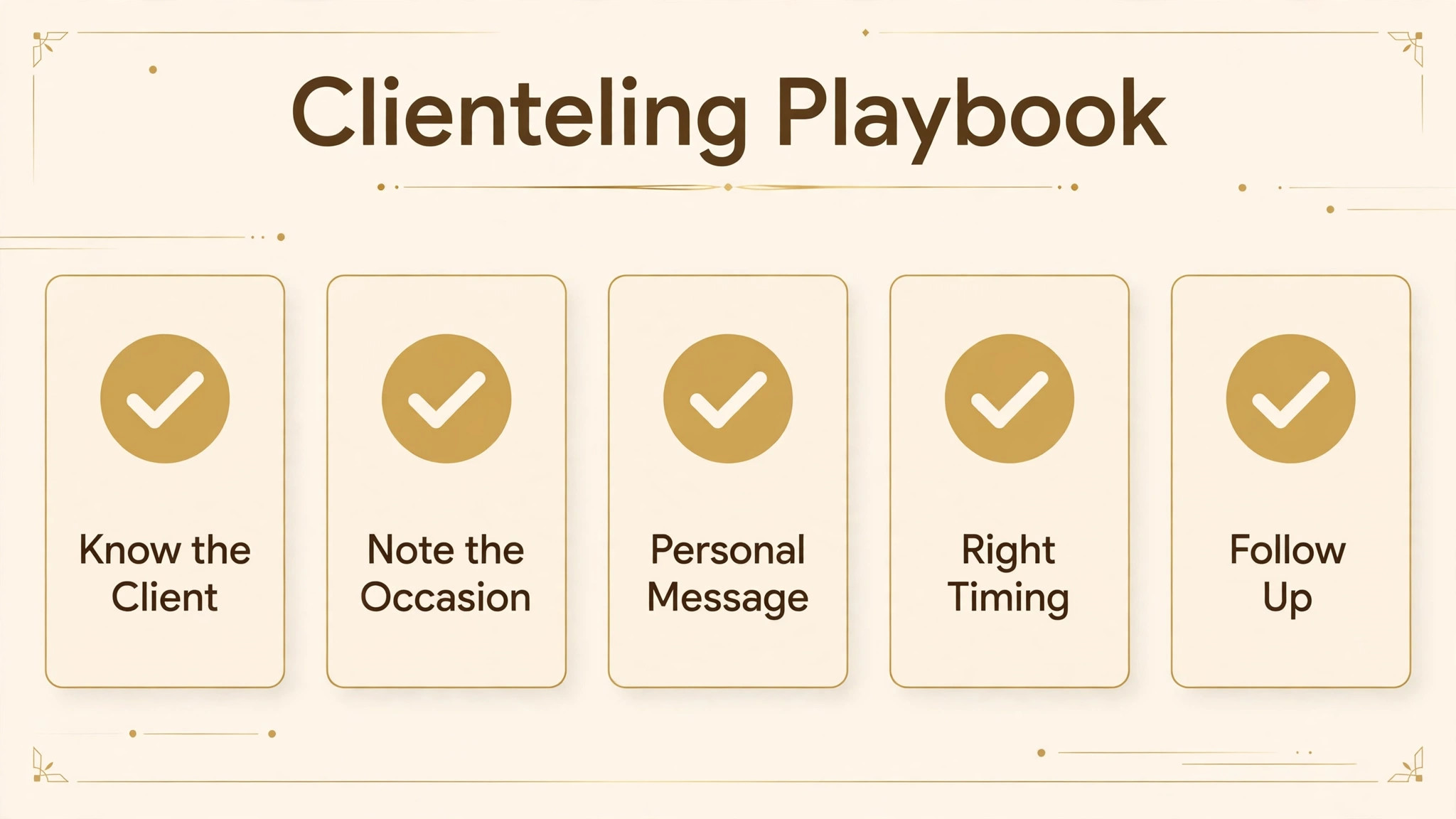
Copy this template, adapt it to your store, and keep one copy per associate, so every customer has a named owner. It covers the full year, not only the holiday season, and it gives each outreach type a timing rule, so nobody has to guess when to act.
Weekly rhythm. Monday, review the coming month’s occasion and service lists, and assign each customer to an associate. Tuesday to Thursday, send personal outreach, with high-value and time-sensitive messages first. Friday, review replies, book visits, and update profiles from the week’s conversations. One hour of protected time per associate per week is enough to run this rhythm for a small store, and it should be scheduled, not squeezed between customers.
Occasion rules. Anniversaries, message 30 to 45 days before, with a suggestion tied to the original piece. Birthdays, message 14 to 21 days before, with a gift suggestion in the customer’s usual price band. First-purchase anniversaries, message with a complimentary cleaning offer for the original piece. Milestones such as a tenth anniversary or a graduation, message earlier, and consider a private-viewing invitation rather than a product message.
Service rules. Cleaning due, message with a booking link and a note about what the check includes. Repair completed, message with care instructions and the next check date. Warranty expiring, message before expiry, with a clear statement of what is covered. Every service message should offer a booking, not only information, because a service visit is a browsing visit too.
Private-viewing rules. Guest list built from profiles, not from last month’s buyers alone. Pieces chosen for the guests, with the associate’s name on each invitation. Invitations sent three to four weeks before, with one reminder one week before. Follow-up within two working days, personal, from the host associate. Attendance and purchases recorded per guest, so the next guest list improves.
Ownership rules. Every customer has one associate owner, even if another associate serves them on the day. The owner writes the outreach, follows up, and updates the profile. When an associate leaves, their customers are reassigned explicitly, with a handover note, not left ownerless. AI can flag ownerless customers, but a manager should make the reassignment, because a customer who loses their associate without an introduction will feel the loss.
Taste, Timing, and the Difference Between Personal and Intrusive
Personal outreach works when it references what the customer chose to share, and it turns intrusive when it references what the store inferred without permission. A message that mentions a piece the customer bought is personal. A message that mentions a piece they browsed online, a gift they received from someone else, or a life event they did not tell you about can feel like surveillance, even if the data came from a legitimate source. Keep a simple rule that outreach references purchase history, stated preferences, and occasions the customer gave you, and nothing else, unless the customer invited a broader conversation.
Timing has the same boundary. An anniversary message sent a month before is helpful. The same message sent on the day, when the customer has already bought elsewhere, is a reminder of a missed moment. A birthday message sent two weeks before is a gift idea. A string of messages in the final days before an occasion feels like pressure. AI can suggest timing from past reply patterns, but the store should set timing windows per occasion type, and let those windows override any suggestion. Customers should feel remembered, not chased.
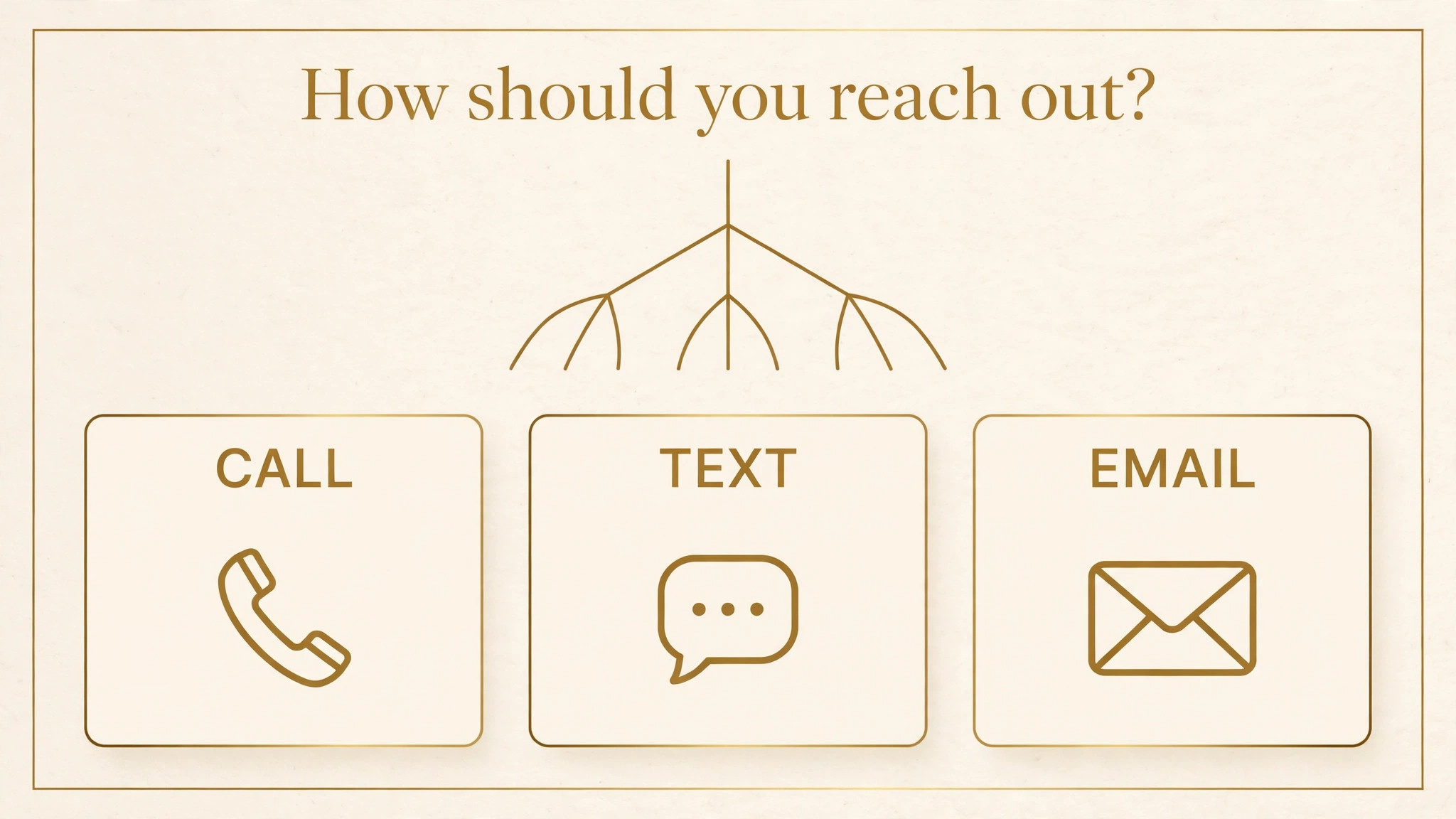
Channel choice matters too. Some customers want a call from their associate. Others want a text with a photo of a piece. Others want email they can read at leisure. Record the preference, and let AI draft for that channel, rather than sending the same long email as a text. A photo message works well for jewelry, because a piece is visual, but only send photos of pieces that match the customer’s taste and price band. A beautiful photo of the wrong piece teaches a customer that your messages are not for them.
Mistakes That Undo Good Clienteling
The first mistake when you use AI for jewelry store clienteling is automating a dirty profile. Duplicate records, wrong occasion dates, and missing purchase history will produce confident, wrong messages, and one wrong message can cost a customer who took years to win. Clean the top profiles first, and keep cleaning weekly. The second mistake is letting AI write the message without an associate’s edit. A draft that sounds like marketing copy will undo the personal relationship that clienteling is supposed to build. Edit every draft until it sounds like the associate who owns the customer.
The third mistake is messaging too often. A customer who receives a message every week will opt out, and an opt-out ends the relationship that clienteling exists to protect. Set a cap per customer per month, count service messages separately from marketing messages, and respect the cap even during holiday peaks. The fourth mistake is measuring only sales attributed to outreach, and ignoring visits, replies, and opt-outs. A message that brings a customer in for a cleaning, where they then browse and return later, is a success that a narrow sales attribution will miss. Track visits and replies alongside sales.
The fifth mistake is forgetting the in-store moment. Clienteling that only lives in messages will fail if the associate in the store cannot see the profile, does not know the customer’s occasion, or greets a loyal customer as a stranger. Make the profile visible at the counter, in a form the associate can read in seconds, and train staff to use it before the greeting, not after. The message brings the customer in. The greeting keeps them.
How to Use AI for Jewelry Store Clienteling Across the Holiday Season
The holiday season compresses a quarter of clienteling into a few weeks, and it exposes every weakness in a store’s list. Customers who were due for outreach in November get the same generic holiday message as everyone else, associates run out of time for personal follow-up, and the customers who matter most feel like one name on a blast list. A holiday plan should therefore start in October, not in December, with the occasion list, the service list, and the private-viewing list already built and assigned before the rush begins.
Use AI to sort holiday outreach into three waves. The first wave, in late October or early November, goes to customers with a specific occasion or a stated interest, with a personal suggestion and an invitation to view pieces before the rush. The second wave, in late November, goes to gift buyers from previous years, with suggestions based on what they bought before and for whom. The third wave, in December, is deliberately small, limited to customers who replied, visited, or asked to be reminded, because messaging everyone in December adds noise when attention is scarcest. When you use AI for jewelry store clienteling across a holiday season, that wave structure protects both staff time and customer trust.
Holiday staffing deserves the same planning. Name one associate per day who owns outreach replies, so a customer who replies to a message does not wait two days for an answer while the store is busy. Keep a short list of pieces reserved for private-viewing guests, and update it daily, so an associate never invites a customer to view a piece that sold yesterday. After the season, review which wave produced visits, which produced sales, and which produced opt-outs, and carry those answers into next year’s plan. A holiday season run this way does not just sell more in December. It leaves January with a cleaner list, warmer relationships, and customers who expect to hear from you again.
Measuring Whether Clienteling Is Working
After three months using AI for jewelry store clienteling, compare your numbers with the previous quarter, using the same definitions. Repeat purchase rate, visits from outreach, reply rate to personal messages, opt-out rate, service visits booked, and private-viewing attendance and conversion. Look at the breakdown by associate, because an overall improvement can hide one associate whose outreach is not landing, and that associate may need coaching or a smaller list, not blame.
After six months, add lifetime measures. How many customers bought a second time, how many moved to a higher price band, and how many referred a friend. Also track staff time, because clienteling should save sorting and drafting time, not add admin. If associates spend more time managing the tool than talking to customers, the tool is misconfigured, and the fix is usually fewer lists, better data, or clearer ownership, not more features.
Keep a log of playbook changes, timing changes, and template changes, with dates. When a number moves suddenly, that log helps you tell whether the cause was a playbook change, a holiday season, a new collection, or a system error. Without a log, every change becomes a debate about memory. With a log, it becomes a testable question, and that discipline is what turns a clienteling tool into a clienteling system.
For related reading, see yoga studio waitlist management, holiday schedule planning, setting up a client feedback loop, content marketing strategy and therapist session note summaries. Those posts cover adjacent follow-up and scheduling problems, and the same lesson applies when you use AI for jewelry store clienteling. Automate the sorting and the drafting, keep a human for the conversation, and measure visits and trust, not just sales.

Frequently Asked Questions
How often should a jewelry store contact a customer?
For most customers, one personal message per occasion or service moment is enough, plus a small number of curated invitations per year. Set a cap per customer per month, count service messages separately from marketing messages, and respect opt-outs immediately. A customer who feels remembered will return. A customer who feels messaged will opt out, and that ends the relationship clienteling exists to protect.
Can AI write clienteling messages on its own?
AI can draft, but an associate should edit and approve, especially for high-value customers and sensitive occasions. A draft that sounds like marketing copy will undo the personal relationship that clienteling builds. Use AI to draft from the actual profile, then edit until the message sounds like the associate who owns the customer, and keep a human approval step for private-viewing invitations.
What customer data matters most for clienteling?
Purchase history, stated preferences, occasions the customer gave you, service history, and conversation notes about what they want next. Those five parts change what an associate does, which is the test for keeping a field. Data that never changes a suggestion or a message should not be collected, because it adds risk without adding value, and customers notice when a store knows things it never needed to know.
How do you run a private viewing that actually converts?
Keep the guest list small and matched to the pieces, name the associate host on each invitation, and follow up personally within two working days. Guests should feel invited, not sold to, and every guest should get attention from the associate who invited them. Record attendance and purchases per guest, so the next guest list is built on evidence, not on last month’s buyers alone.
Should small jewelry stores use clienteling software?
A small store benefits most from the basics, which are clean profiles, occasion tracking, and personal follow-up, with AI drafting added once those basics are solid. You do not need an enterprise system to get value. A shared profile, a weekly outreach list, and a playbook that the team actually follows will improve repeat business before any advanced feature matters.
How do you handle a customer who opts out of marketing but still wants service messages?
Record the two consents separately, and let the tool enforce the split. Service messages about their own piece, such as a cleaning due date or a repair update, can continue where the customer consented to service contact. Marketing messages, including promotions and new collection announcements, must stop immediately. If the distinction is unclear for a particular message, treat it as marketing and do not send it.
A Quiet Verdict
Clienteling grows when profiles are clean, occasions are acted on early, messages reference real purchases, private viewings feel like invitations, and every customer has a named associate who owns the relationship. AI helps with sorting, drafting, and flagging, but it does not replace the associate who knows how a customer reacted to a stone, or the judgement that says this customer wants a call while that one wants a text. Stores that use AI for jewelry store clienteling as a helper for associates, rather than a replacement for them, tend to see more return visits, more second purchases, and fewer customers quietly drifting away. That is the honest claim, and it is enough.