
One gymnastics platform promises easy enrollment, another promises meet management, and a third promises the lowest price, yet only one of them will fit the way your gym actually runs, which is why the best class management software for gymnastics studios is a comparison worth doing properly. A tool built for open gym access will frustrate you the first time a parent tries to move a child between levels mid term, and a tool built for dance recitals will miss what a competitive team needs.
Gymnastics is enrollment based. A student holds a spot in a Level 2 Wednesday class, pays for a term, progresses through skills and may join a team with meet fees on top. That model needs term billing, waitlists, skill tracking, family accounts and make up classes, and most generic booking tools handle none of them well.
This guide compares twelve platforms used by gymnastics clubs, academies and multi activity centers. Prices come from published comparison pages and vendor listings, and they change, so check the vendor current pricing page before you commit. Judge each tool on your mix of recreational classes, teams and camps, not on a generic feature count.
What the Comparison Shows
The table below sorts the twelve tools by their natural home, and it is a useful first pass at the best class management software for gymnastics studios. A low starting price looks attractive, but per student scaling, transaction fees and quote only pricing can change the real cost fast. Use the table to shortlist three tools, then trial them with a real term, a real waitlist and a real skill progression.
| Tool | Best for | Starting price |
|---|---|---|
| iClassPro | large multi program facilities running gymnastics with cheer, dance or swim | Published comparison pages list iClassPro from about $139 a month per location on its Signature tier. Check the vendor current pricing page for the latest figure. |
| Jackrabbit Class | established clubs with complex class structures and team programs | Published comparison pages list Jackrabbit Class from about $49 a month, scaling with student count. Check the vendor current pricing page for the latest figure. |
| Gymdesk | very small programs that want simplicity and a low bill | Published comparison pages list Gymdesk from $75 a month for up to 50 active members. Check the vendor current pricing page for the latest figure. |
| Classcard | growing academies that want the full student lifecycle in one place | Published comparison pages list Classcard from $99 a month. Check the vendor current pricing page for the latest figure. |
| Pembee | small clubs that want flat predictable pricing | Published comparison pages list Pembee from $45 a month flat for the whole team. Check the vendor current pricing page for the latest figure. |
| Uplifter | clubs that run meets and want competition tooling | Published comparison pages list Uplifter with a free Lite tier and paid tiers from about $29 a month. Check the vendor current pricing page for the latest figure. |
| Jumbula | after school programs and camps alongside gymnastics classes | Published comparison pages list Jumbula from about $15 a month on a usage based model. Check the vendor current pricing page for the latest figure. |
| Amilia SmartRec | recreation centers and multi activity sites that also run gymnastics | Amilia SmartRec prices by quote, based on usage plus a share of transactions. Check the vendor current pricing page or ask the vendor directly for current terms. |
| StudioDirector | combined gymnastics and dance studios | StudioDirector prices by custom quote and does not publish a standard starting price. Check the vendor current pricing page or ask the vendor directly for current terms. |
| Class Manager | budget conscious clubs that prefer paying per transaction | Published comparison pages list Class Manager with a free plan that charges per transaction. Check the vendor current pricing page for the latest figure. |
| GoMotion | clubs that want a modern registration and team app experience | GoMotion does not publish a standard starting price, so expect a quote after a demo. Check the vendor current pricing page or ask the vendor directly for current terms. |
| Sawyer | clubs that sell classes, camps and parties through one storefront | Sawyer does not publish a standard starting price, so expect a quote after a demo. Check the vendor current pricing page or ask the vendor directly for current terms. |
Best Class Management Software For Gymnastics Studios by Job Type
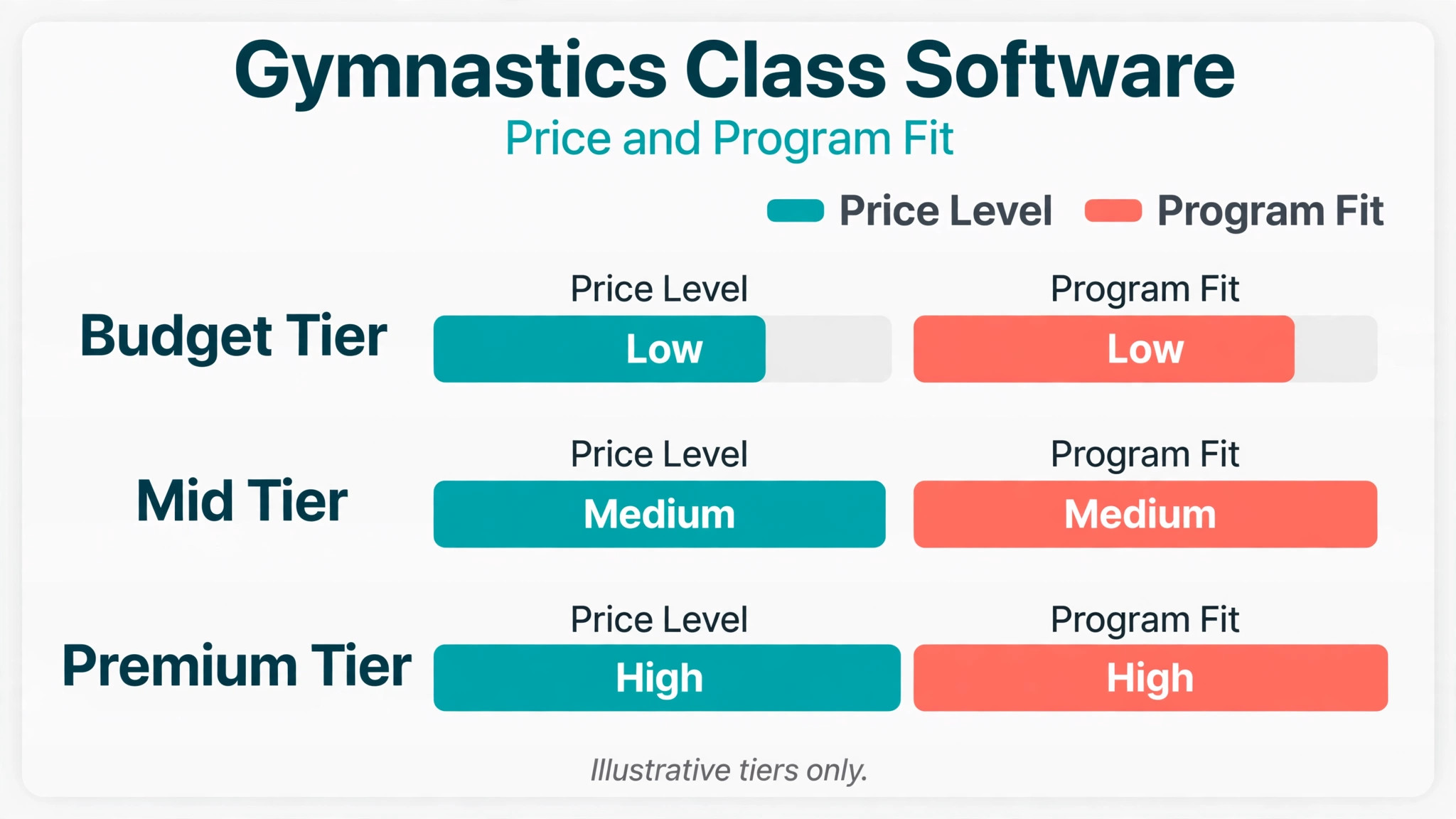
Your program mix should decide the shortlist for the best class management software for gymnastics studios. Recreational classes need smooth enrollment and make up handling, competitive teams need skill and meet tooling, and camps need fast seasonal registration. The rows below match a pick to each job, so you do not pay for a meet system your recreational gym will never open.
| Job type | Best pick | Why it fits |
|---|---|---|
| Recreational classes | Pembee | Simple registers, flat pricing and parent messaging that suit term classes |
| Competitive teams | Jackrabbit Class | Skill tracking, team billing and meet fee handling in one system |
| Camps | Jumbula | Seasonal registration and camp booking built for school breaks |
Skill Progression Checklist
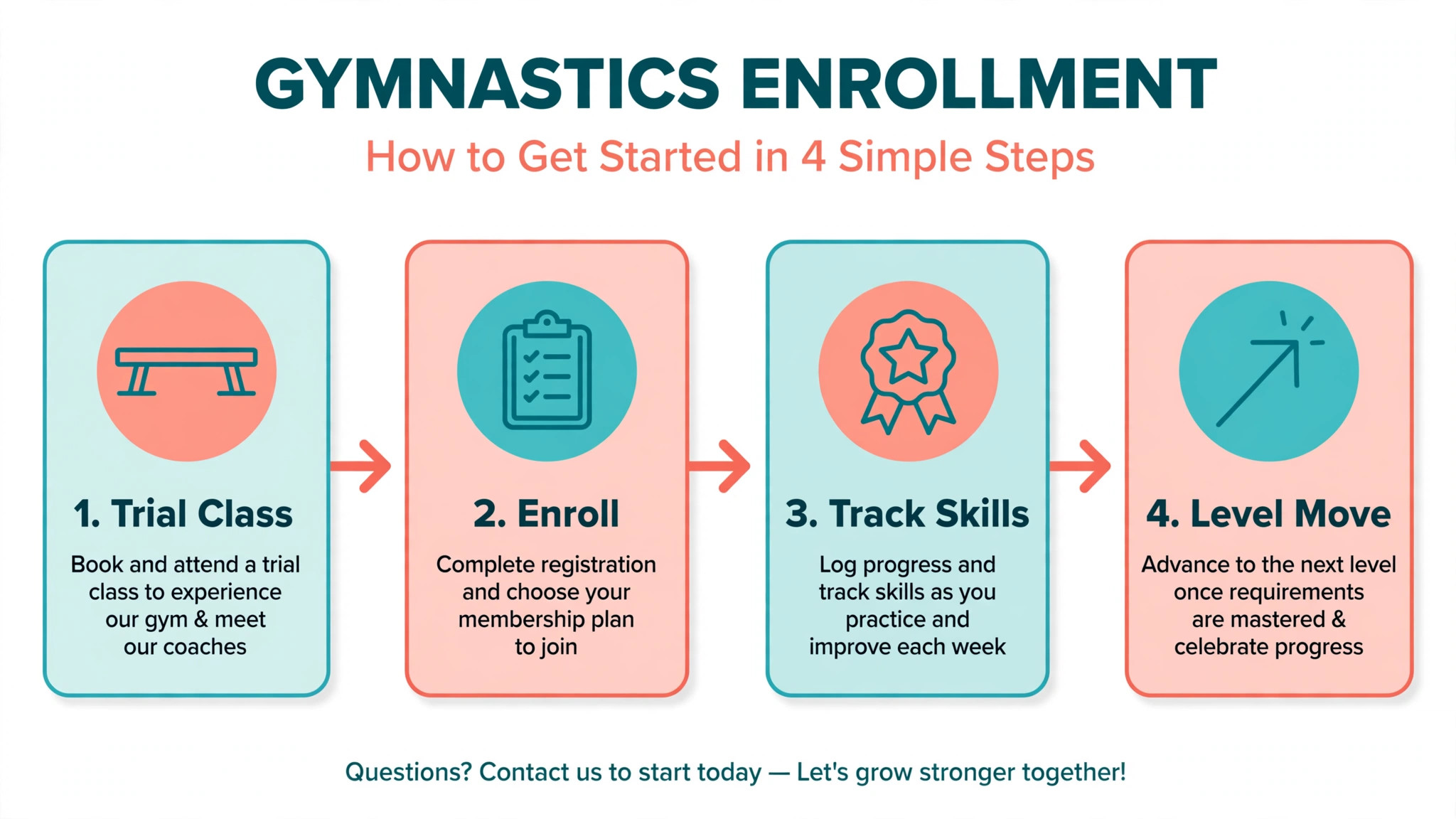
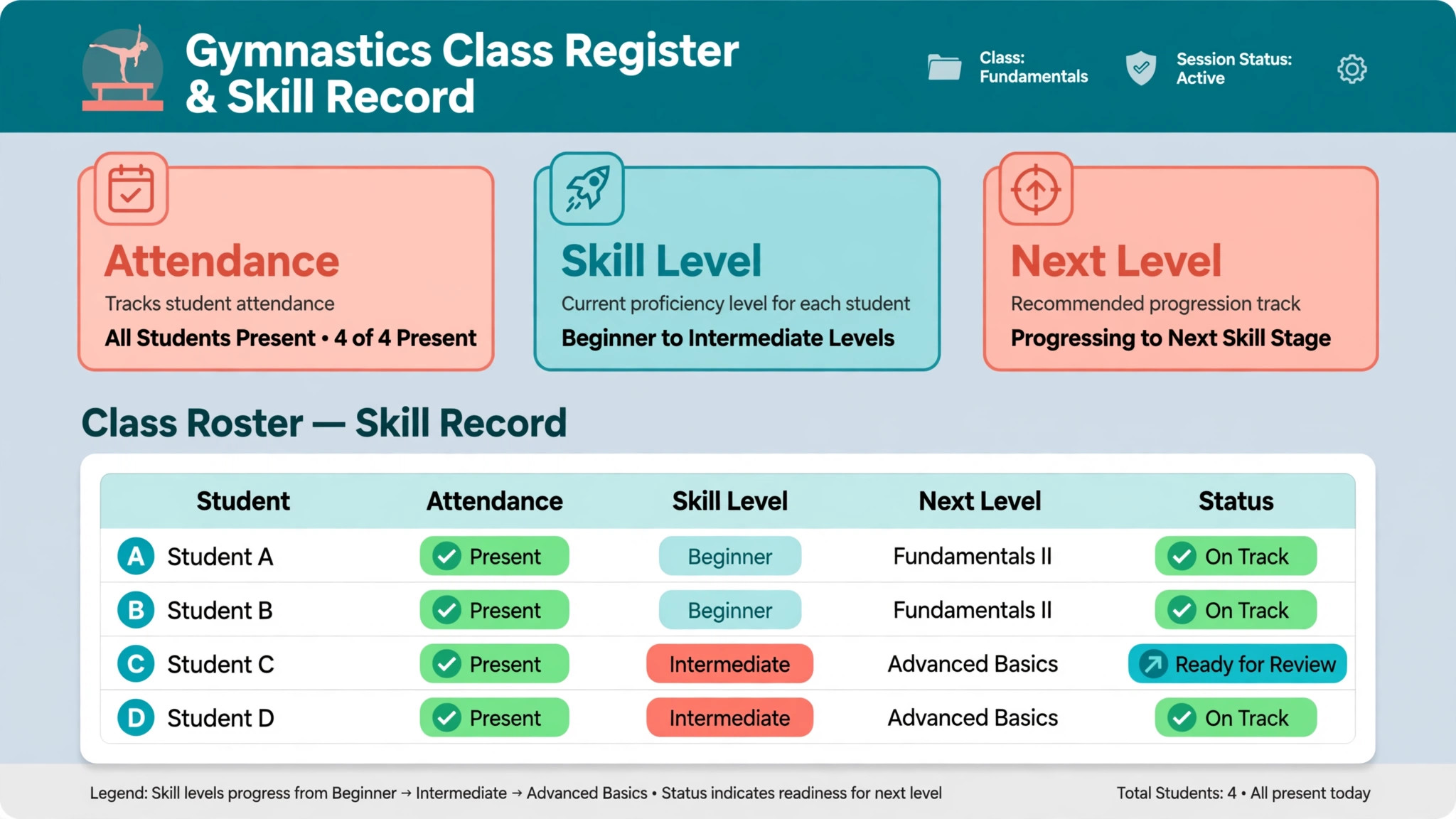
Skill tracking is where gymnastics software earns its keep or falls apart. Parents want to see progress, coaches want a clear record, and front desk staff want level moves to update billing without a spreadsheet. Check these points in any trial before you trust a platform with progression.
– Record skills per student with a level, a date and the coach who signed it off, not just a free text note. – Move a student between levels mid term and confirm that billing, class roster and parent portal all update together. – Show parents a simple progress view they can open on a phone, without needing to ask the front desk. – Handle make up classes when a student misses a session, with expiry rules you control. – Track trial students separately from enrolled students, so trial conversion can be measured honestly. – Attach meet fees and team charges to team students only, without confusing recreational billing. – Export skill and attendance records when a student leaves, so their history is not locked inside one vendor. – Give coaches a register that shows medical notes and photo consent before class starts.
The Tools in Detail
Each platform below is judged on class enrollment first, then on skill tracking, billing and parent communication. A pretty booking page means little if term billing breaks at renewal.
1. iClassPro
iClassPro is built around enrollment, not open gym access, which is exactly how gymnastics works. Students hold a spot in a named class at a set level, and the system handles term billing, waitlists, skill tracking and a parent portal that families actually open. Best for large multi program facilities running gymnastics with cheer, dance or swim. Published comparison pages list iClassPro from about $139 a month per location on its Signature tier. Check the vendor current pricing page for the latest figure.
The trade off is depth that small clubs may not need. Setup takes real time, and the price per location adds up for multi site clubs, so a tiny recreational program can feel like it bought a system built for a much bigger gym. Test it with a real week of bookings before you commit, and bring the staff who will use it every day into the trial.
2. Jackrabbit Class
Jackrabbit has served gymnastics and dance schools for well over a decade, and that history shows in skill tracking, meet billing, team billing and staff time tracking. Clubs with competitive teams get meet fee handling and parent communication in the same system as recreational classes. Best for established clubs with complex class structures and team programs. Published comparison pages list Jackrabbit Class from about $49 a month, scaling with student count. Check the vendor current pricing page for the latest figure.
The trade off is a busier interface and tier complexity. Newer owners sometimes find the learning curve steep, and lead management is thinner than in newer class platforms, so clubs that live on trial class conversion should check that workflow closely. Test it with a real week of bookings before you commit, and bring the staff who will use it every day into the trial.
3. Gymdesk
Gymdesk is the simplest tool on this list, and that is its strength for a small club. Memberships, class scheduling, billing and a member app are easy to learn, and a coach can run the whole system without an admin hire. Best for very small programs that want simplicity and a low bill. Published comparison pages list Gymdesk from $75 a month for up to 50 active members. Check the vendor current pricing page for the latest figure.
The trade off is gymnastics depth. There is no real skill progression tracking or meet tooling, so a club that grows into competitive teams will outgrow it. Treat it as a starter system with a clear upgrade path, not a forever home for a large academy. Test it with a real week of bookings before you commit, and bring the staff who will use it every day into the trial.
4. Classcard
Classcard was designed around class based academies, with terms, levels, progression, trials and parent communication built for the enrollment model. Automation helps chase trial families and lapsed students without adding admin hours, which is where many growing academies leak revenue. Best for growing academies that want the full student lifecycle in one place. Published comparison pages list Classcard from $99 a month. Check the vendor current pricing page for the latest figure.
The trade off is that it is newer and less proven at very large scale than Jackrabbit or iClassPro. Clubs with complex multi location needs should trial reporting and staff permissions hard, and confirm that meet handling matches their competitive program. Test it with a real week of bookings before you commit, and bring the staff who will use it every day into the trial.
5. Pembee
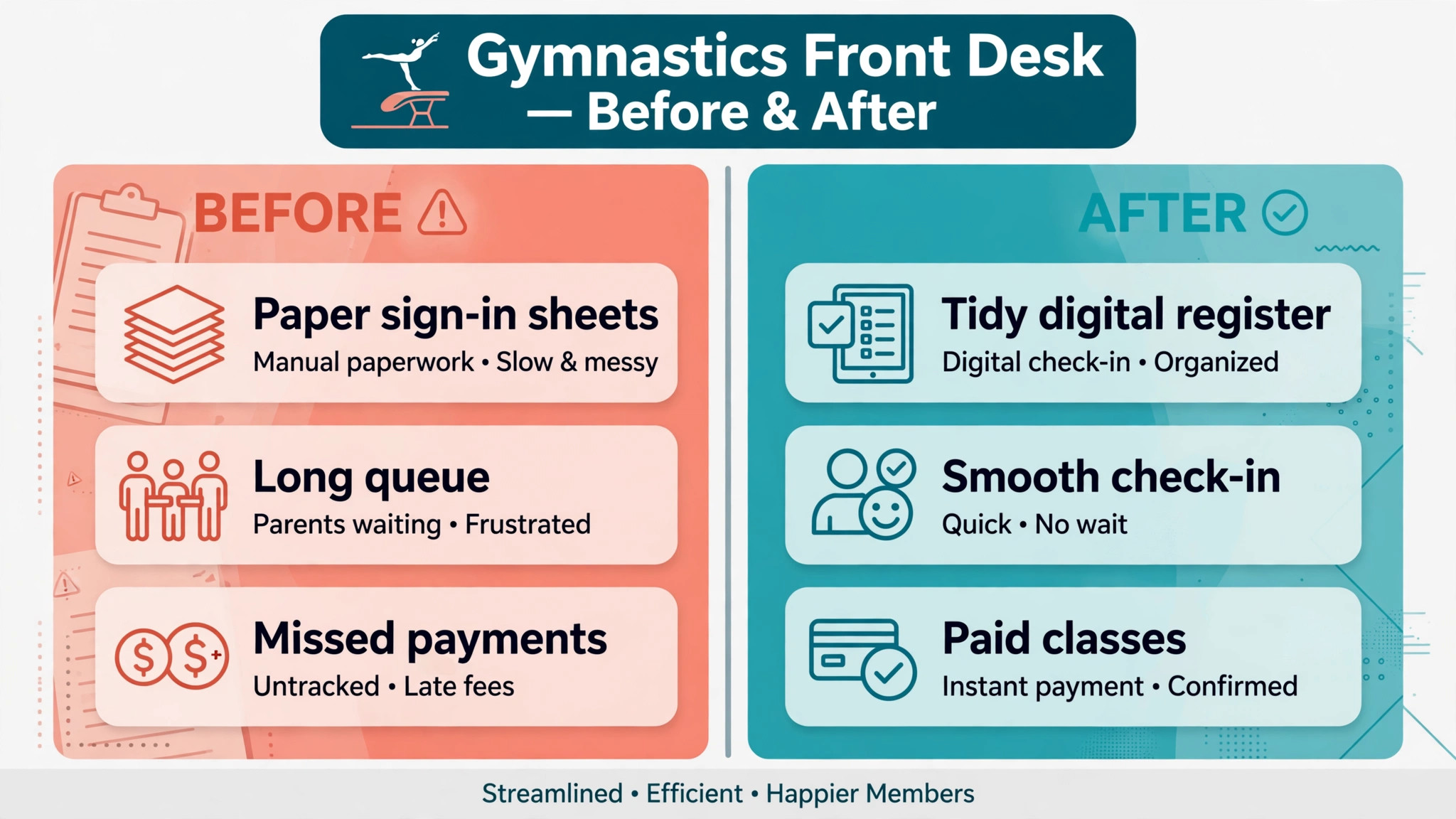
Pembee puts booking, registers, payments, waivers and parent messaging in one tidy system, and its digital register shows check in, medical notes and photo consent on one screen. Coaches see what matters before class starts, and parents book and pay without phone calls. Best for small clubs that want flat predictable pricing. Published comparison pages list Pembee from $45 a month flat for the whole team. Check the vendor current pricing page for the latest figure.
The trade off is scale and meet depth. Larger academies with many locations or heavy competitive programs may need deeper reporting and meet tools. For a single club, though, the flat price and simple registers are hard to beat. Test it with a real week of bookings before you commit, and bring the staff who will use it every day into the trial.
6. Uplifter
Uplifter covers registration, memberships and class management, and it stands out for competition and meet management. Clubs that host or enter meets can handle entries, schedules and results without bolting on a separate meet system. Best for clubs that run meets and want competition tooling. Published comparison pages list Uplifter with a free Lite tier and paid tiers from about $29 a month. Check the vendor current pricing page for the latest figure.
The trade off is polish in everyday class workflows. Recreational only clubs get little value from meet modules and may prefer a simpler register and billing tool. Judge it on your meet calendar, not on features your recreational program will never open. Test it with a real week of bookings before you commit, and bring the staff who will use it every day into the trial.
7. Jumbula
Jumbula handles registration, camps, after school programs and class bookings with flexible pricing that suits seasonal programs. A club that runs summer camps as well as term classes can keep both in one registration flow, which parents appreciate. Best for after school programs and camps alongside gymnastics classes. Published comparison pages list Jumbula from about $15 a month on a usage based model. Check the vendor current pricing page for the latest figure.
The trade off is gymnastics specificity. Skill progression and team billing are thinner than in gymnastics first tools, so a competitive academy should not expect deep meet or level tracking. It fits best where camps and seasonal programs drive revenue. Test it with a real week of bookings before you commit, and bring the staff who will use it every day into the trial.
8. Amilia SmartRec
Amilia is recreation first, built for YMCAs, community centers and multi activity sites, with online registration, memberships, class scheduling, payments and an activity catalog. A center that runs gymnastics next to swim, dance and camps gets one catalog for everything. Best for recreation centers and multi activity sites that also run gymnastics. Amilia SmartRec prices by quote, based on usage plus a share of transactions. Check the vendor current pricing page or ask the vendor directly for current terms.
The trade off is focus. Gymnastics only clubs pay for breadth they do not need, and skill tracking is not the core strength. It earns its place where gymnastics is one program among many, not the whole business. Test it with a real week of bookings before you commit, and bring the staff who will use it every day into the trial.
9. StudioDirector
StudioDirector, formerly The Studio Director, handles class scheduling, enrollment, billing and parent communication for studios that mix gymnastics and dance. A combined studio avoids running two systems for two programs, and families with children in both see one account. Best for combined gymnastics and dance studios. StudioDirector prices by custom quote and does not publish a standard starting price. Check the vendor current pricing page or ask the vendor directly for current terms.
The trade off is the quote only buying route and thinner gymnastics depth than specialist tools. Competitive gymnastics clubs should check skill and meet handling in a trial, and get the full price in writing before comparing it with published price rivals. Test it with a real week of bookings before you commit, and bring the staff who will use it every day into the trial.
10. Class Manager
Class Manager appeals to clubs that hate monthly bills, because the free tier earns its keep from transaction fees instead of a subscription. Class scheduling, enrollment and payments are covered, and a new club can start without committing to a monthly fee it cannot yet afford. Best for budget conscious clubs that prefer paying per transaction. Published comparison pages list Class Manager with a free plan that charges per transaction. Check the vendor current pricing page for the latest figure.
The trade off is cost at scale and feature depth. As transaction volume grows, per transaction fees can pass the cost of a flat subscription, and advanced skill or meet tooling is limited. Track the real monthly fee after three months, not just the headline free label. Test it with a real week of bookings before you commit, and bring the staff who will use it every day into the trial.
11. GoMotion
GoMotion is known in youth sports for registration, team communication and mobile friendly parent tools, and gymnastics clubs can use that same flow for classes, camps and teams. Parents get a modern app experience, and coaches can message groups without separate chat tools. Best for clubs that want a modern registration and team app experience. GoMotion does not publish a standard starting price, so expect a quote after a demo. Check the vendor current pricing page or ask the vendor directly for current terms.
The trade off is gymnastics depth. It is a youth sports platform first, so skill progression, level tracking and meet billing need careful checking in a trial. Clubs should confirm that class enrollment, not just team rostering, matches how their terms actually run. Test it with a real week of bookings before you commit, and bring the staff who will use it every day into the trial.
12. Sawyer
Sawyer gives activity businesses a storefront for classes, camps and events, with scheduling, registration and payments that parents find easy to use. A gymnastics club that also sells camps, open gym and birthday parties can present all of them in one place. Best for clubs that sell classes, camps and parties through one storefront. Sawyer does not publish a standard starting price, so expect a quote after a demo. Check the vendor current pricing page or ask the vendor directly for current terms.
The trade off is back office depth for competitive programs. Skill tracking and meet management are not its core, so an academy with a large team program may still need a second tool. It fits best where discovery and easy booking drive growth. Test it with a real week of bookings before you commit, and bring the staff who will use it every day into the trial.
How to Choose
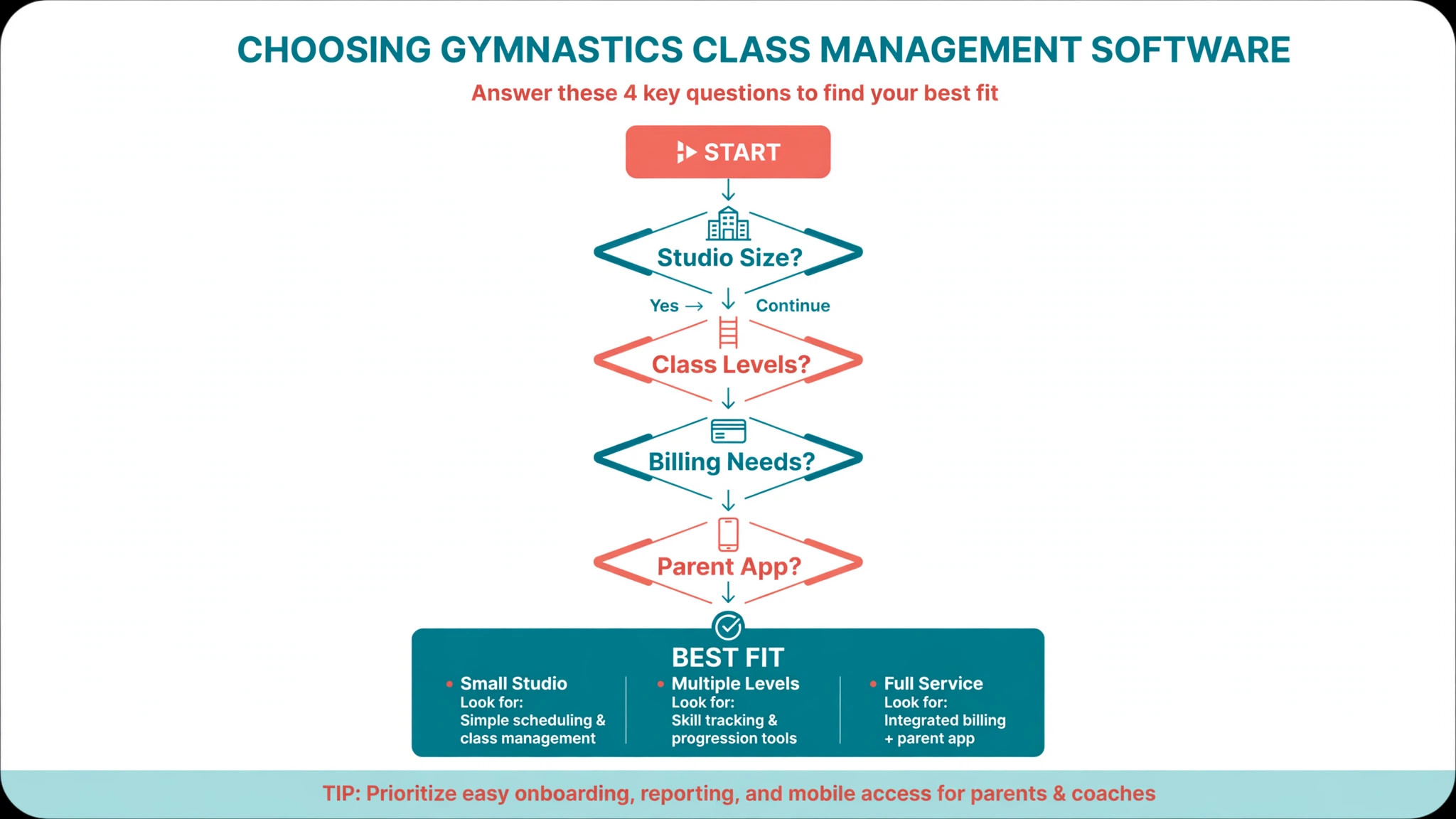
Start with your enrollment model when you judge the best class management software for gymnastics studios. Write down how terms run, how levels work, how waitlists move and how make up classes are handled. Any tool that cannot model those rules will force staff back to spreadsheets, and the spreadsheet quickly becomes the real system.
Next, test the parent experience with a real family account. A parent with two children in different levels should be able to book, pay, view progress and message the gym without calling. If the parent portal confuses your trial families, it will confuse your paying families too, and front desk calls will not fall.
Then check billing in detail, including sibling discounts, term proration, late fees and failed payments. Gymnastics billing is seasonal and family based, and a system that handles single adult memberships well can still fail on family term billing. Ask for a worked example with your own fee structure.
Finally, count the true cost at your student count, not at the demo size. Per student pricing, transaction fees and per location charges scale very differently, so model the bill at your current enrollment and at twenty percent growth. A cheap starter tier that doubles at your real size is not cheap.
Mistakes to Avoid
The most common mistake is choosing a gym membership tool for a class business. Open access memberships, class passes and term enrollment are different models, and a tool built for the first will fight you on rosters, levels and term billing from day one. If the demo never shows a term roster, walk away.
Another mistake is ignoring make up classes and waitlists. These two workflows create most front desk work in a gymnastics gym, and a system that handles them badly will keep staff on the phone all week. Trial them with real scenarios, including a full class, a sick coach and a student who misses three weeks.
A third mistake is buying meet tooling for a recreational gym, or skipping it for a competitive gym. Meet fees, entries and results are either central to your season or irrelevant to it, and paying for the wrong side wastes money and adds setup work. Match the tool to your actual calendar, not to an imagined future.
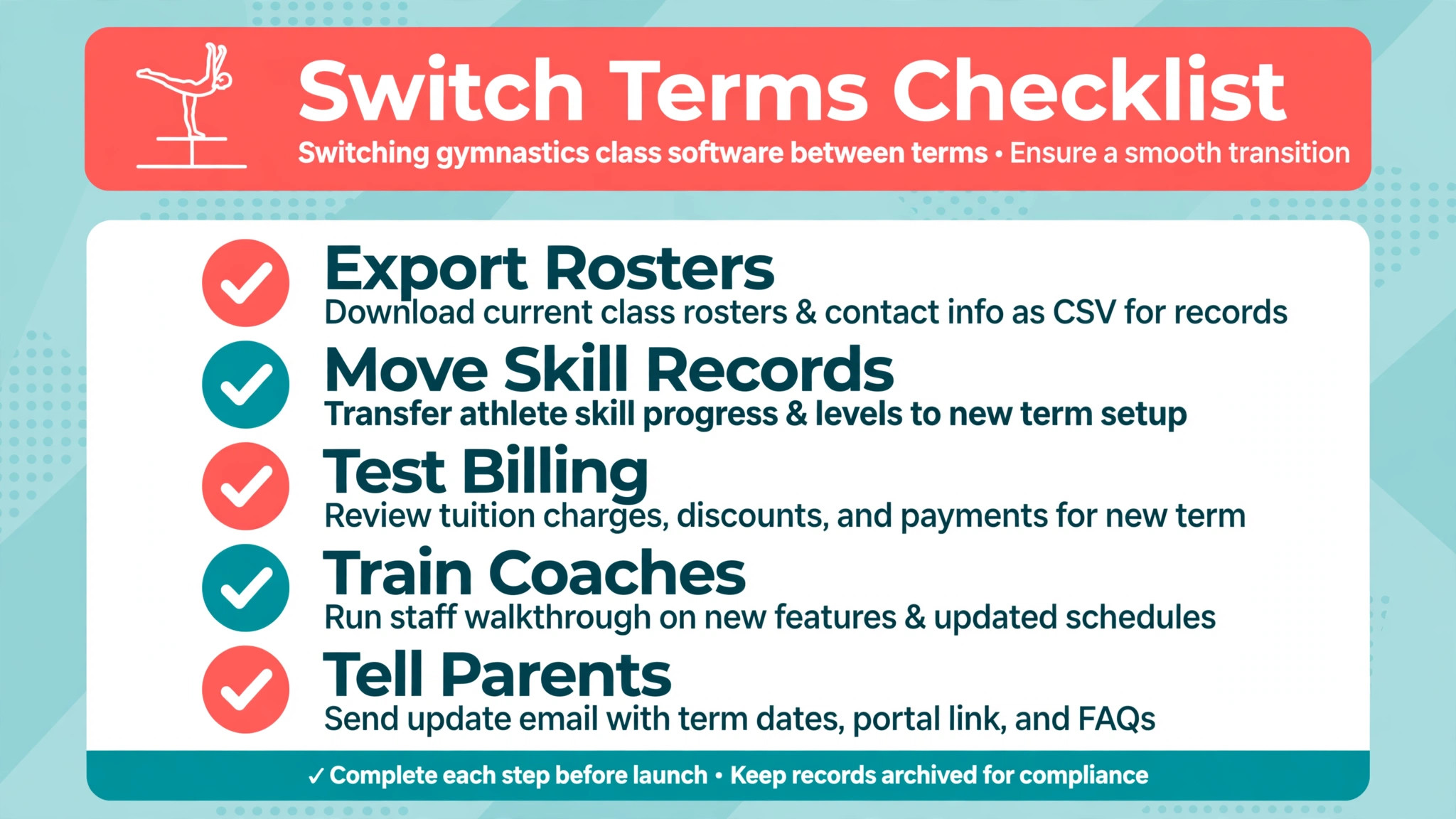
The last mistake is switching mid term. Data migration, parent re registration and staff retraining all collide with classes, and families feel the disruption. Plan a switch between terms, run both systems for one enrollment cycle if you can, and keep the old records exported and safe.
Frequently Asked Questions
What is class management software for a gymnastics studio?
It is software that handles class enrollment, term billing, rosters, waitlists, skill tracking and parent communication for a gymnastics business. Unlike a generic booking tool, it understands that a student holds a spot in a named class at a set level for a whole term, and it manages progress and billing around that model.
How much does gymnastics class software cost?
Published comparison pages put most tools for the best class management software for gymnastics studios between about $45 and $139 a month, with some free or transaction based tiers and some quote only platforms. The real cost depends on student count, location count and transaction fees, so model the bill at your actual enrollment before you compare headlines.
Do I need skill tracking if I only run recreational classes?
You still benefit from it, because parents stay longer when they can see progress, and coaches plan better with a shared record. The best class management software for gymnastics studios treats skill tracking as a retention tool, not just a competitive team feature, but a recreational gym can start simple and deepen it later.
Can one tool handle classes, teams and camps?
Yes, several tools on this list do, but depth varies by job. Jackrabbit Class and iClassPro cover teams well, Jumbula suits camps, and multi activity centers may prefer Amilia SmartRec. Trial your weakest job first, because the tool that handles your strongest job well may still fail your weakest one.
How do waitlists and make up classes work?
Good systems let parents join a waitlist online, notify them automatically when a spot opens, and book make up sessions within rules you set, such as expiry dates and class level limits. Test these flows with real families in a trial, because they generate most of the questions your front desk will answer.
Should parents pay online or at the front desk?
Online payment with automatic term billing saves the most admin time and reduces late fees disputes. Keep a front desk option for families that prefer it, but make online payment the default, and check how failed payments and payment plans are handled before you commit.
What should I check before switching systems?
Export your current student, class, skill and billing records first, and confirm the new tool can import them cleanly. Plan the switch between terms, train coaches on registers and skill entry, and tell parents early what will change about booking and payment, so the first week of term is not also a support crisis.
Is a free plan good enough for a new gymnastics club?
A free or transaction based plan can work for a very small club with simple classes, and it removes the monthly bill risk at launch. Watch the transaction cost as you grow, and check whether skill tracking, family accounts and reporting are included, because a free plan that lacks them can cost more in admin time than a paid tier.
The Bottom Line for Gym Owners
If you run a single recreational club and want a calm first system, start your trial list with Pembee and Classcard. If you run a large academy with competitive teams, Jackrabbit Class and iClassPro deserve the first trials, because their skill and meet depth matches that workload. Camp heavy clubs should add Jumbula, and multi activity centers should add Amilia SmartRec.
Whatever you pick, trial it with a real term, not a demo class. Enroll a family, move a student between levels, run a waitlist, bill a term and record a skill, then ask your coaches whether the system made their day easier. The best class management software for gymnastics studios is the one your coaches and parents both keep using after the novelty fades.
Think about coach permissions early. Coaches need registers, skill entry and messaging, but they should not all see billing or be able to change fee structures. Check that permission roles are simple to set and easy to audit, because a system where everyone is an admin will eventually produce a billing accident.
Also plan how trial classes convert. A trial family that has a great first class but a clumsy booking and payment follow up is a lost enrollment. Check that trial booking, reminders, conversion offers and enrollment happen in one flow, and measure trial conversion weekly rather than guessing whether trials are working.
Coach permissions should be set before launch, not after a billing accident. Coaches need registers, skill entry and messaging, but they should not all see billing or change fee structures. Check that permission roles are simple to set and easy to audit, because a system where everyone is an admin will eventually produce a costly mistake.
Trial class conversion deserves weekly attention. A trial family that enjoys a first class but faces a clumsy booking and payment follow up is a lost enrollment, and a system that tracks trials, reminders and conversion in one flow will outperform one that leaves follow up to memory. Measure trial conversion every week rather than guessing whether trials are working.
More Reading on Stratilyze
These guides cover booking, memberships and the business side of running a class based business.
– Best Membership Software for Dance Studios – Best Booking Software for Music Schools – Best Booking Software for Escape Rooms – Best Time Tracking Software for Creative Agencies – Best Invoicing Software for Consultants