

Speed wins landscaping work before price does. A homeowner who requests three quotes on a Monday will usually have two prices in hand by Wednesday, and the third company, however good its work, will be answering a decision that is already half made. That timing gap is the reason the best quote software for landscaping companies is a sales tool first and an admin tool second.
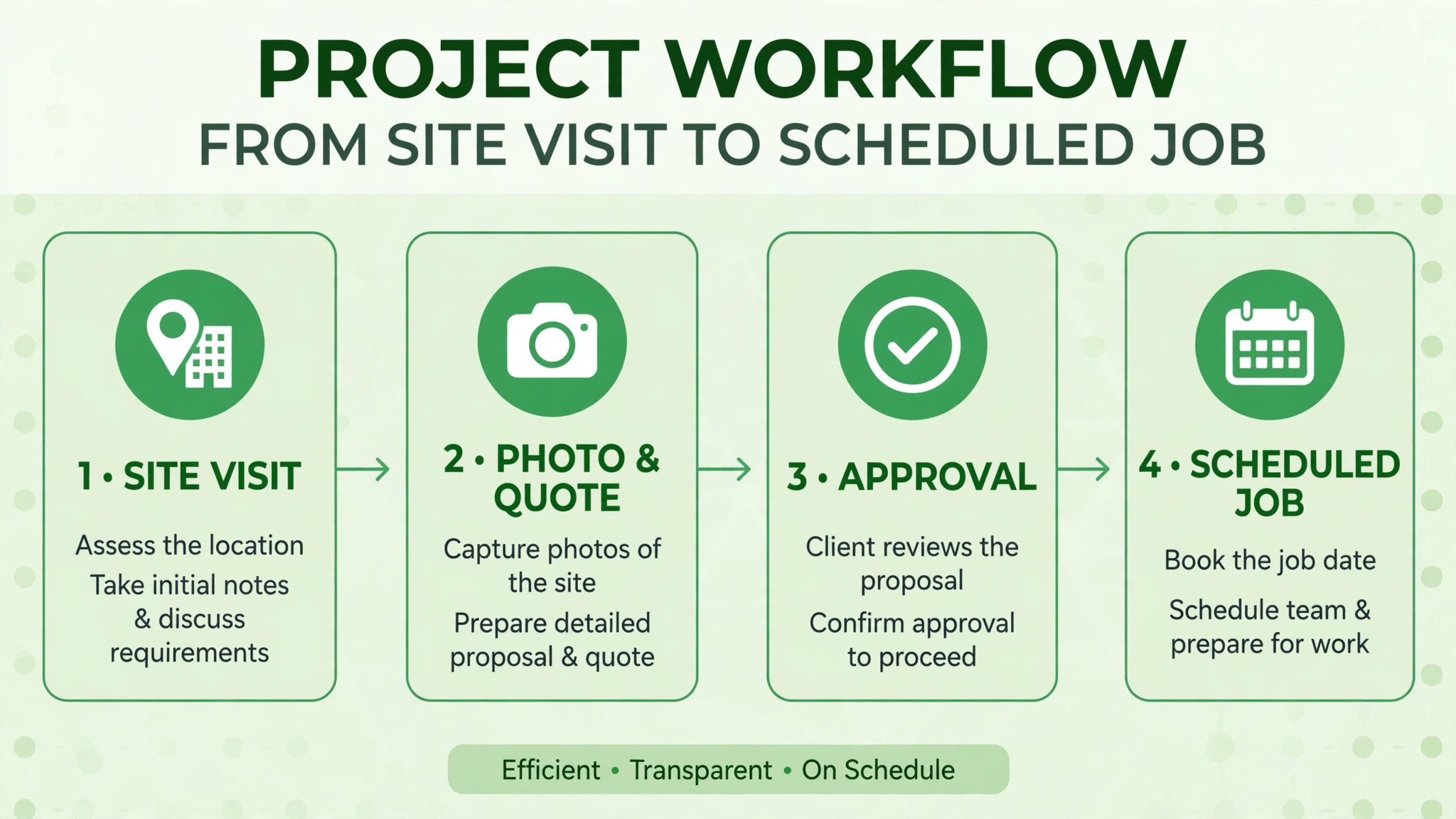
Landscaping quotes are harder than they look. A job can include mowing, planting, irrigation, hardscape, lighting, and seasonal cleanups, each with different materials, labour, and site conditions. A quote built on site, with photos and clear line items, will be trusted and approved faster than a round number sent days later from the office. A quote that is vague will be compared on price alone, which is the worst ground for a quality firm to compete on.
This guide compares nine tools used by landscaping companies, from simple quoting apps to full job management platforms with estimating, scheduling, and invoicing. Prices vary by user count and feature tier, so every price entry here says to check the vendor pricing page. Request a written quote for your real crew size, and confirm whether photo quoting, templates, and customer approval are included or charged separately.
Why Landscaping Quotes Go Stale So Fast
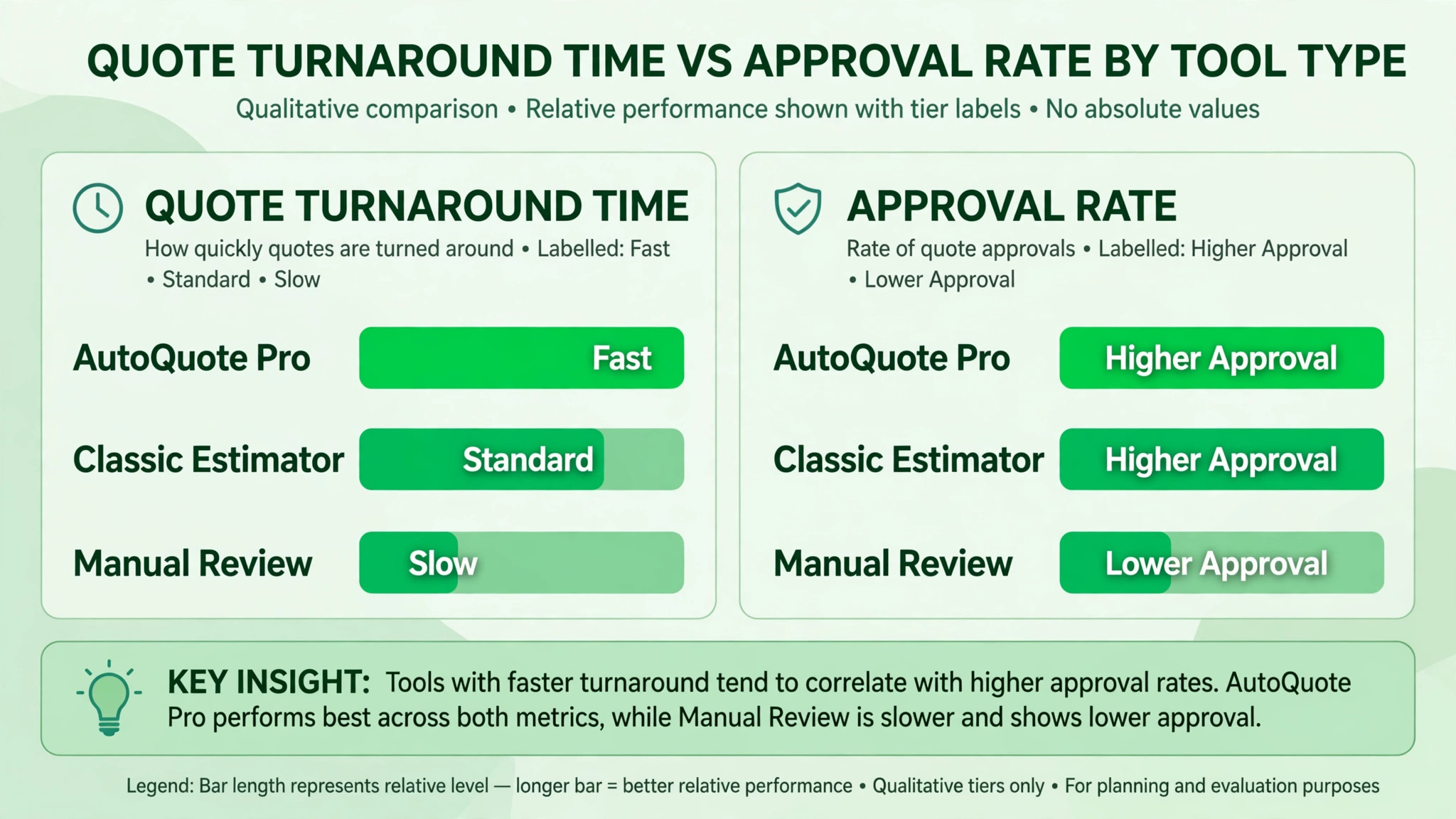
A landscaping quote has a short shelf life because the customer is comparing while the work is still fresh in mind. The homeowner walks the garden with each company, hears a different plan from each one, and then chooses based on clarity as much as cost. A company that sends a clear, itemised quote the same evening stays in that conversation. A company that sends a single total a week later has to re-sell the whole job from scratch.
Site conditions add a second problem. Slope, access, soil, drainage, and existing planting all change the price, and those details are easy to forget once the estimator leaves the property. A quoting tool that captures photos, measurements, and notes on site will produce a quote that matches the real job. A quote built later from memory will either underprice the work or pad it so heavily that it loses the job.
Approval friction is the third problem. A homeowner who must print, sign, scan, and return a quote will delay, and every delay is a chance for a competitor to close. A quote that can be approved on a phone, with a deposit paid at the same time, removes that friction, and it also creates a clear record of what was agreed, which protects both sides if the scope is questioned later.
Seasonal pressure makes all three problems worse at once. In spring, site visits pile up, crews are fully booked, and the office has less time to build quotes carefully.
That is exactly when a quoting tool earns its cost, because templates, saved price lists, and photo capture let a busy estimator produce a clear quote in minutes rather than rebuilding it from scratch each evening. A firm that still quotes by hand in peak season will either work late every night or send quotes late, and both outcomes cost jobs. A quote that can be approved on a phone, with a deposit paid at the same time, removes that friction. That approval step is where many landscaping firms lose work they have already won in the garden.
The 9 Tools at a Glance
| Tool | Starting price | Best for | Quoting depth |
|---|---|---|---|
| Jobber | Check the vendor pricing page | Growing firms with full job cycles | Strong |
| Yardbook | Check the vendor pricing page | Small firms wanting simple quoting | Good |
| LMN | Check the vendor pricing page | Estimating and job costing | Strong |
| Service Autopilot | Check the vendor pricing page | Maintenance routes and recurring work | Strong |
| SingleOps | Check the vendor pricing page | Design-build estimating | Strong |
| Aspire | Check the vendor pricing page | Larger firms with detailed costing | Strong |
| Arborgold | Check the vendor pricing page | Tree and garden service firms | Good |
| Housecall Pro | Check the vendor pricing page | Fast setup with online booking | Good |
| ServiceTitan | Check the vendor pricing page | Larger firms with high job volume | Good |
Pricing in this market depends heavily on user count, route size, and estimating depth, so a comparison of the best quote software for landscaping companies should start with a written quote for your real team size and job mix. A simple quoting app can be cheaper for a solo operator, while a full estimating platform can pay for itself on one large design-build job that is priced accurately.

Best Pick by Job
| Job type | First pick | Why it fits | Watch out for |
|---|---|---|---|
| Solo landscaper | Yardbook | Simple quoting, scheduling, and invoicing in one place | Less depth for large design-build estimates |
| Design-build firm | SingleOps | Detailed estimating for complex multi-element projects | Setup effort for templates and price lists |
| Maintenance-route firm | Service Autopilot | Recurring routes, visits, and billing handled together | Confirm pricing as route size grows |
The job type that fills most of your week should decide the shortlist for the best quote software for landscaping companies. A solo landscaper who buys a large estimating platform will spend more time building templates than quoting jobs, while a design-build firm that buys a simple quoting app will struggle to price a project with dozens of materials and labour lines.
Site Visit Checklist
Use this checklist on every site visit, so the quote you send matches the job you will actually perform.
– Confirm the full scope with the customer, including what is included, what is excluded, and what the customer will handle themselves. – Photograph the site from several angles, including access points, slopes, drainage, and anything that will affect labour or materials. – Measure the areas to be worked on, and record those measurements in the quote record rather than on loose paper. – Note soil, shade, irrigation, and existing planting that will affect plant choice, survival, and ongoing care. – List materials with quantities where the job is large enough to need them, so the quote can be checked against the real cost later. – Record the customer decision maker, the approval method, and the deadline for the work, so follow-up does not stall on the wrong contact. – Send the itemised quote the same day where possible, with photos attached and a clear approval button for the customer. – Follow up once if the quote is unapproved after a few days, with a short message and an offer to answer questions, rather than a discount.
Software helps this checklist only if photos, measurements, line items, and approval all live in the same quote record. If those details live in a phone gallery, a notebook, and an email thread, the quote will be slower, vaguer, and harder to defend when the customer compares it with a competitor.

The 9 Tools in Detail
1. Jobber
Jobber combines quoting, scheduling, dispatch, invoicing, and customer messaging for service companies, and it is widely used by landscaping firms that are growing past a single crew. Quotes can be built on site, sent to the customer, and approved on a phone, while the job, schedule, and invoice follow from the same record.
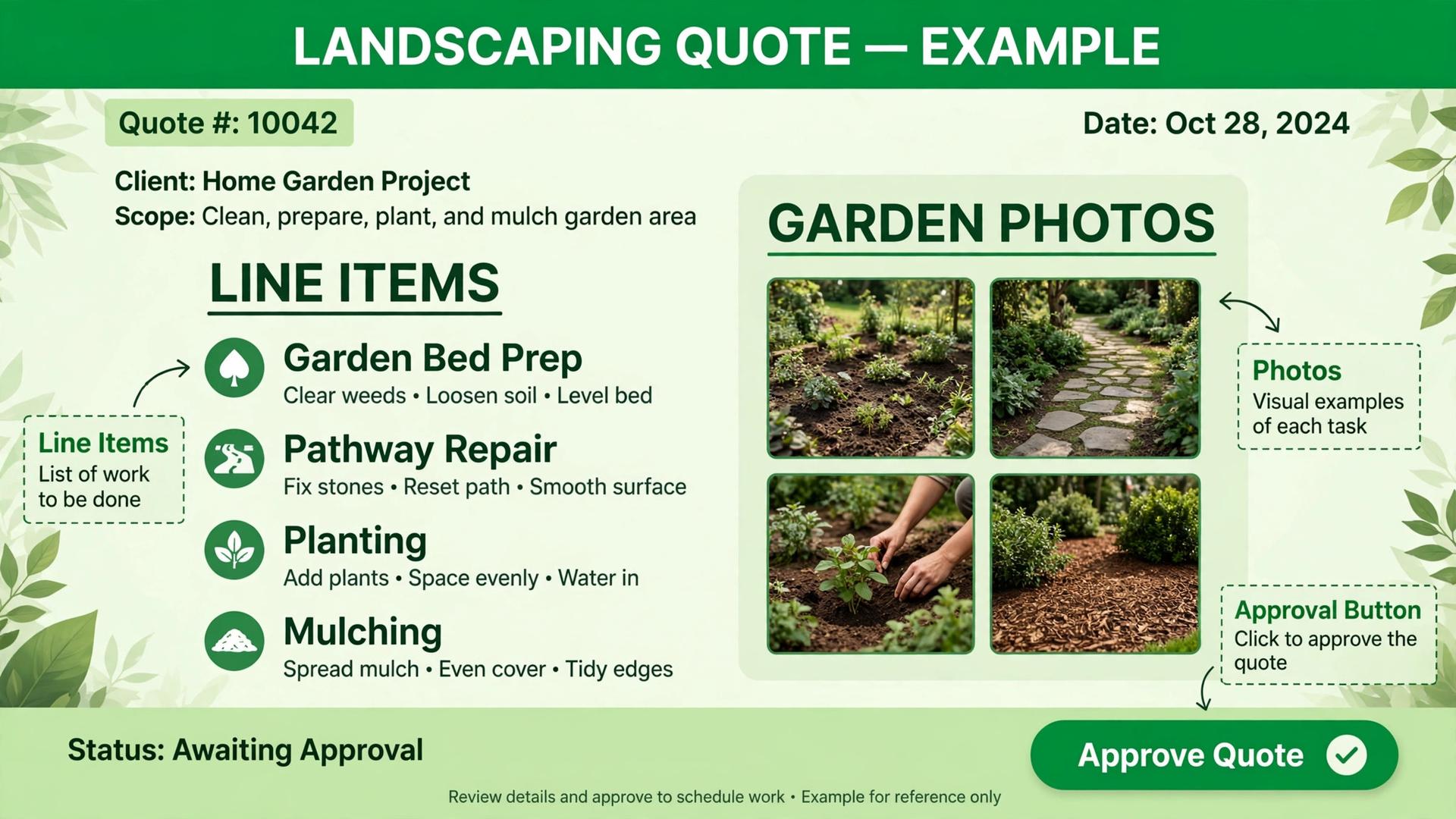
The strength is the full job cycle in one system. A quote does not need to be retyped into a schedule or an invoice, which reduces errors and speeds up the path from site visit to booked work. The limit is estimating depth for very large design-build projects. A firm that prices complex multi-element projects should test whether its line items, materials, and labour breakdowns hold up at that scale.

2. Yardbook
Yardbook is a simple business management tool for lawn and garden service companies, covering quoting, scheduling, invoicing, and customer records. It suits a small firm or solo landscaper that wants to move from paper quotes to professional digital quotes without a long setup.

The strength is simplicity and speed. A landscaper can build a quote, send it, and invoice the job from the same place, and customers get a clear professional document. The limit is depth for larger operations. A firm with several crews, complex estimating, and detailed job costing may outgrow it, so check the ceiling before committing the whole business to it.
3. LMN
LMN, short for Landscape Management Network, is an estimating and job costing platform for landscaping companies. It helps firms build accurate estimates from real labour, material, equipment, and overhead costs, and then track whether the completed job matched the estimate.
The strength is pricing accuracy. A firm that knows its true costs can quote with confidence, protect margins, and spot which job types make money and which ones do not. The limit is the work required to set up accurate cost data. A firm that rushes setup with guessed rates will get neat looking estimates that still lose money, so allow time to build the price list properly.
4. Service Autopilot
Service Autopilot is a business management platform for lawn care and landscaping companies, with scheduling, routing, invoicing, quoting, and customer management. It is particularly strong for maintenance-route firms that run recurring visits across many properties each week.
The strength is recurring work. Routes, visit schedules, and recurring billing sit together, so a maintenance firm can quote a season of work, schedule it, and invoice it without rebuilding the job each time. The limit is complexity for a firm that only does one-off projects. A design-build firm should test whether the estimating side matches its project workflow, or whether a specialist estimating tool fits better.
5. SingleOps
SingleOps is a business management platform for tree care and landscaping companies, with estimating, scheduling, invoicing, and job management. It is well suited to design-build work, where a quote may include many elements, materials, and labour lines that must be presented clearly to the customer.
The strength is estimate presentation for complex jobs. A customer can see what each part of the project costs and why, which builds trust and reduces price-only comparison. The limit is setup effort for templates, price lists, and workflows. A firm should budget time for that setup, and test a full project quote in the trial before judging the platform on a simple mowing quote.
6. Aspire
Aspire is a business management platform for landscaping companies, covering estimating, scheduling, invoicing, job costing, and reporting. It suits larger firms that need detailed cost tracking across many crews, properties, and job types, and that want to manage the business from real job data.
The strength is depth for a larger operation. Estimates, actual costs, and margins can be compared job by job, which helps a firm price the next season from evidence rather than habit. The limit is cost and implementation scope. Check the vendor pricing page, request a quote for your crew size, and confirm what onboarding and training are included before committing.
7. Arborgold
Arborgold is a business management platform for tree care and garden service companies, with scheduling, quoting, invoicing, customer records, and job management. It suits firms that mix recurring maintenance with larger one-off jobs, and that need a clear record per property over time.
The strength is property history. A firm can see what was done at a property, when, and at what price, which helps with repeat quoting and seasonal recommendations. The limit is that its fit depends on job mix. A pure design-build firm should test estimating depth explicitly, while a maintenance-heavy firm will likely find the recurring workflow a natural fit.
8. Housecall Pro
Housecall Pro is a field service platform built around online booking, scheduling, dispatch, estimates, invoicing, and payments. For a landscaping firm, its value lies in fast setup, professional estimates, and customer messaging that keeps the quote conversation moving after the site visit.
The strength is speed from visit to approval. A firm can send an estimate, answer questions by message, and take a deposit without extra admin steps. The limit is estimating depth for complex projects. A firm that prices large design-build work should test whether its estimate format can carry the detail a customer needs to approve a five-figure project with confidence.
9. ServiceTitan
ServiceTitan is a full field service platform for larger service companies, covering scheduling, dispatch, estimates, invoicing, payments, and marketing. For a landscaping firm with high job volume, its value lies in handling many quotes, jobs, and crews from one system with strong reporting.
The strength is scale and reporting. A larger firm can track quote conversion, crew performance, and job margins across the business. The limit is price and setup effort for a smaller firm. A solo landscaper or small crew should confirm the total cost, including onboarding, before assuming the depth is worth it for a modest quote volume.
What a Good Quote Does After It Is Sent
A good quote keeps selling after it leaves the office, because the customer re-reads it while comparing competitors. A clear quote answers the questions the customer will ask next, including what each item costs, when the work will happen, how long it will take, and what happens if conditions change. A vague quote forces the customer to call with those questions, and every call is a chance for doubt to grow.
Follow-up is the second act of quoting. A short message a few days after sending, offering to walk through the quote or adjust the scope, will close more work than a discount sent too early. A quoting platform that shows which quotes are unopened, unapproved, or awaiting a deposit lets the office follow up with purpose, rather than guessing which customer needs attention. That visibility also stops the common mistake of following up the loudest customer while a quieter, readier customer waits without a word.
Timing that follow-up well matters as much as sending it. A message sent the morning after the quote can feel rushed, while a message sent two weeks later can feel forgotten. A few days is usually the right gap, long enough for the customer to read and discuss the quote, short enough that the site visit is still fresh. A platform that reminds the office at that moment turns follow-up from a memory task into a routine, and routines are what close work in a busy season.
The third act is learning from lost quotes. When a quote is lost, the reason matters more than the price. Was the scope wrong, was the timing wrong, was the presentation unclear, or was the customer simply not ready. A platform that records the outcome and the reason, even briefly, will show patterns over a season that a pile of old PDFs never will. Over time, that pattern is what turns quoting from guesswork into a repeatable sales process, and it is one of the quieter reasons to judge the best quote software for landscaping companies on its reporting, not only on its quote template.
A fourth act is the deposit and the schedule. A customer who approves a quote but cannot pay a deposit or see a start date will drift, even after saying yes. A quoting platform that links approval to deposit payment and to a real crew date keeps that yes from cooling. That link matters most in spring, when every firm is busy and the customer who waits longest is the customer most likely to be lost.
Pricing Maintenance Work Versus Pricing Projects
Maintenance pricing and project pricing are different skills, and a quoting tool should respect that difference. Maintenance work is priced by visit, by season, or by property size, and the customer wants a simple recurring price they can budget for. Project work is priced by scope, materials, and labour, and the customer wants to see what each element costs before committing to a large total. A tool that forces both into the same quote format will frustrate one side of the business.
For maintenance, the key test is the seasonal quote. Can the firm quote a full season, turn it into a route schedule, and invoice each visit without rebuilding the job. Can price changes be applied across the route when fuel or labour costs rise, without editing dozens of separate quotes. A platform that handles those steps cleanly will save the office hours every single week through the season.
For projects, the key test is the change order. Customers change scope mid-project, and a quoting tool should handle a revised quote, an approved extra, and an updated invoice without losing the original agreement. Judged on those two tests, the best quote software for landscaping companies is the tool that handles both the simple recurring quote and the complex project quote well, because most growing firms need both, and running two quoting systems will double the admin work.
How to Choose the Best Quote Software for Landscaping Companies
Start with a real site visit, not a demo quote. Take a property with mixed work, including planting, a hardscape element, and a maintenance option, and build the quote on site in the trial. Check whether photos, measurements, and line items stay attached to the quote, and whether the customer can approve it on a phone without a printout.
Next, test the quote-to-job path. Approve the quote, schedule the crew, and invoice the completed work, and count how many times the same details must be retyped. A platform that retypes scope, price, and customer details at each step will create errors on busy weeks, while a platform that carries the quote forward will keep the job clean.
Then price the full stack for the best quote software for landscaping companies in your firm. Add extra users, messaging, payment fees, and estimating modules to the subscription, and model the total at your current crew size and at the next size up. A tool that is cheap for one crew and expensive for three will punish growth just as surely as a bad estimate will.
Common Mistakes When Buying Landscaping Quote Software
One mistake is quoting a total without line items. A single number invites price comparison and hides the value of good materials, skilled labour, and proper preparation. Itemise the work clearly, even on smaller jobs, so the customer can see what they are paying for.
Another mistake is forgetting the site visit record. A quote built from memory a week later will miss access problems, drainage issues, and scope changes that were obvious on site. Capture photos and notes during the visit, and build the quote from that record.
A third mistake is discounting too early. A discount offered before the customer has asked a question trains customers to wait for the next discount. Follow up with clarity first, adjust scope if needed, and only discuss price when the scope and value are already understood.
A fourth mistake is ignoring follow-up. Many quotes are lost not because the price was wrong, but because nobody followed up while the customer was still deciding. Assign quote follow-up as a fixed weekly job, and use the platform to show which quotes need attention.
A fifth mistake is buying estimating depth the team will not use. A powerful estimating platform is only valuable if someone maintains the price list and builds the templates. If nobody owns that job, a simpler quoting tool used well will beat a powerful tool used badly.
Frequently Asked Questions
How fast should a landscaping quote be sent after a site visit?
Same day is the right target for most jobs, and next day is the outer limit for anything competitive. A quote sent the same evening, with photos and clear line items, will usually be read while the site visit is still fresh. A quote that takes a week will be compared against competitors that answered faster, often on price alone.
Should landscaping quotes be itemised or given as one total?
Itemised quotes win more work in most cases, because the customer can see what each element costs and can adjust scope without renegotiating the whole job. A single total can work for a simple repeat service, but for design-build or multi-element work, itemisation builds trust and makes approval easier.
Can quote software handle recurring maintenance pricing?
Yes, several platforms in this guide handle recurring visits, routes, and seasonal billing, with Service Autopilot particularly strong for that model. The test is whether a seasonal quote can be turned into a recurring schedule and regular invoices without rebuilding the job each time. Test that full cycle, not only the first quote.
What should a landscaping quote include besides the price?
It should include the scope, the materials, the schedule, the payment terms, the exclusions, and the approval method, plus photos from the site visit where helpful. Clear exclusions matter as much as inclusions, because they prevent disputes about work the customer assumed was covered but was never quoted.
How do I follow up a quote without seeming pushy?
Send one short follow-up a few days after the quote, offering to answer questions or adjust the scope, and then leave the customer to decide. A helpful follow-up that adds clarity will be welcomed, while repeated discount messages will feel like pressure. Use the platform to time that one follow-up well, rather than sending several.
Is estimating software worth it for a small landscaping firm?
Estimating software is worth it when the firm regularly prices jobs where a small error costs real money, such as large planting, irrigation, or hardscape work. For simple repeat maintenance, a simpler quoting tool may be enough. Judge the investment by the cost of one badly priced job, not only by the monthly subscription.
Should deposits be taken when a quote is approved?
Yes, for most project work. A deposit taken at approval confirms the booking, covers early materials, and separates serious customers from shoppers. Confirm the deposit terms in the quote itself, and make sure the platform can take payment at approval without a separate invoicing step that delays the start.
Test Quotes on Real Properties Before You Sign
Do not choose from a demo estimate. Run a two week trial on your two finalists, using real site visits with real customers. In week one, build quotes on site and measure how fast they go out and how clearly they read. In week two, follow up the unapproved quotes, convert the approved ones into jobs, and invoice the completed work.
The tool that produces the clearest quotes, the fastest approvals, and the fewest retypes through that cycle is the right choice for your firm, and it will also be the strongest candidate when you judge the best quote software for landscaping companies against real properties rather than a demo estimate.
A final check before you sign is the price list itself. Ask who will maintain it, how often it will be updated, and what happens when a material price jumps mid-season.
A quoting tool with a stale price list will produce confident looking quotes that lose money, while a tool with a maintained price list will protect margins even when costs move. That maintenance habit, more than any single feature, decides whether quoting software pays for itself.
Price matters, but a cheap quoting tool that loses jobs to slower follow-up will cost more in a month than a mid-priced tool that closes work the same evening. Choose the system that makes the site visit, the quote, and the approval feel like one smooth conversation with the customer.
When the trial ends, compare the two finalists on one measure alone if you must, and that measure should be approved quotes per week, because it captures speed, clarity, and follow-up in a single number the whole firm can understand, and that number will tell you quickly which tool is truly earning its place.
More Reading on Stratilyze
– Best Booking Software for Music Schools – Best Booking Software for Escape Rooms – Best Booking Software for Boat Rentals – Best Membership Software for Dance Studios – Best Membership Software for Gyms