
The verdict is direct. Dealerships should use AI for car dealership lead follow up as a fast, disciplined first response system, not as a replacement for salespeople. AI should answer within minutes, qualify the lead, book the appointment, and hand a warm, well documented conversation to a human. When that handoff is clean, the store gains speed without losing trust. When it is messy, the store gains activity without gaining appointments. The difference is rarely the tool. It is the workflow around the tool.
Most lost car deals do not start with a bad price or a bad vehicle. They start with a slow reply, a vague reply, or no reply at all. A shopper sends a form at night, compares three stores by morning, and visits the store that answers first with a clear next step. AI changes that race because it can respond at midnight, on a Sunday, and during a busy Saturday rush when the floor team is tied up. It does not get tired, distracted, or stuck on another call. Used well, it gives every lead the same prompt, polite, and useful first experience.
This post gives you a complete workflow you can copy. It covers triage by lead source, a day by day plan for seven days, message templates, AI prompts, appointment handoffs, and the numbers that show whether the system works. It is written for independent dealers, small dealer groups, and larger stores that want tighter follow up without adding a night shift. You do not need a large technology budget to start. You need clear rules, one owner for the process, and a simple way to measure show rate and close rate.
How to use AI for car dealership lead follow up in a real store
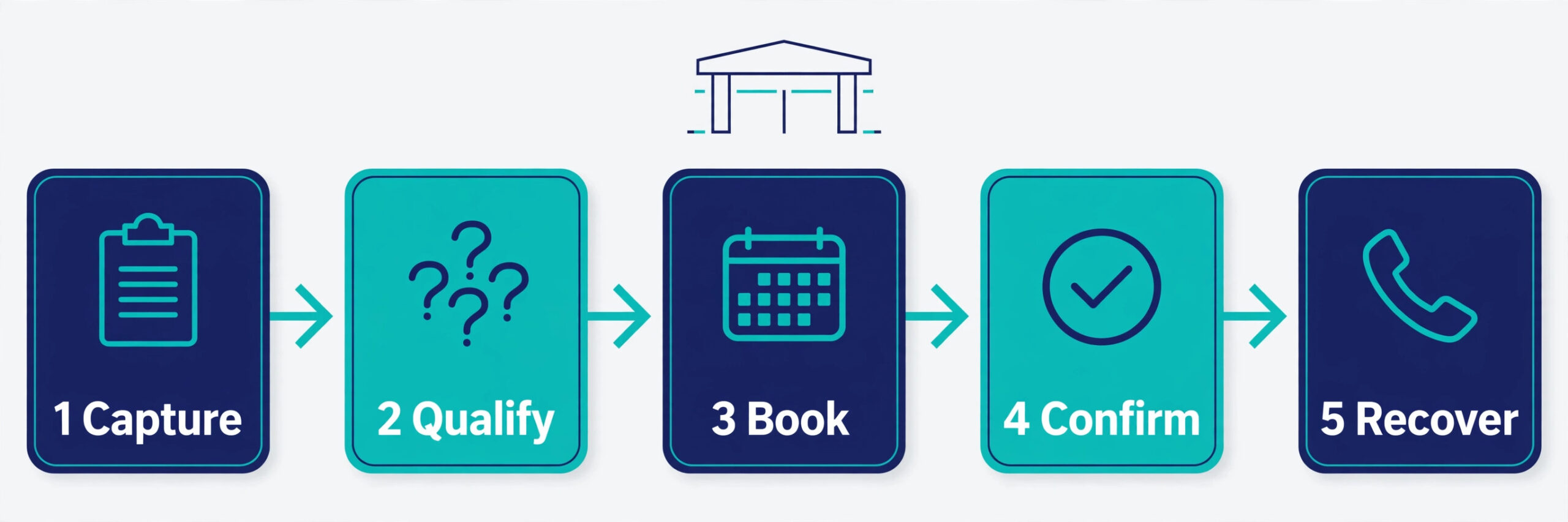
A good way to use AI for car dealership lead follow up has four parts. First, it captures the lead and the context in one place. Second, it sends a fast, relevant first message. Third, it asks a small number of useful questions. Fourth, it moves the shopper toward a booked appointment or a clear human handoff. If any part is missing, the result feels like spam. If all four parts work, the result feels like a helpful store that was ready when the shopper was ready.
Start by connecting every lead source to one inbox or CRM queue. Website forms, chat, text messages, third party marketplaces, service drive inquiries, and walk in notes should land in the same place. Many stores already use a CRM such as VinSolutions, Elead, or DealerCenter. The AI layer should read from that queue and write back to it, so no conversation lives only inside a separate chat tool. A salesperson who opens the CRM should see the full thread, the vehicle of interest, the trade question, the budget signal, and the appointment status.
Next, define what AI may do and what it must not do. AI may confirm availability, explain the next step, offer two appointment times, answer common process questions, and collect basic details. AI must not invent a price, promise a trade value, approve financing, or claim that a vehicle is held. Those answers need a human or a live inventory and pricing check. A short guardrail list prevents the most common AI mistake in car sales, which is confident language about a fact the system has not verified.
The five step workflow every store can run
Step one is capture and confirm. The system records the name, contact method, vehicle, source, time, and any stated need. It sends a short confirmation within minutes. The message names the vehicle or the question, thanks the shopper, and states the next step. It does not ask five questions at once. One clear next step beats a long form in a text thread.
Step two is qualify with three questions only. Ask about timing, trade or current vehicle, and preferred appointment window. Those three answers tell a salesperson whether this is a today buyer, a weekend buyer, or an early researcher. If the shopper answers only one question, use that answer and move on. Do not restart the full question set in every message. Shoppers stop replying when follow up feels like an interrogation.
Step three is offer a real appointment. Give two specific times, name the person or team if possible, and explain what will happen at the visit. A strong offer sounds like a plan, not a plea. It might say that the vehicle will be ready for a test drive, that a trade appraisal takes about fifteen minutes, or that paperwork help is available at the visit. The goal is to remove uncertainty. People book when they know what the visit involves.
Step four is confirm and prepare. The day before the appointment, AI sends a short reminder with the time, the address, and one useful detail, such as bringing a driver license or trade title information. It asks the shopper to confirm with a simple yes or to pick another time. If the shopper does not confirm, the system flags the appointment for a human call. A reminder is not just polite. It protects the calendar from no shows.
Step five is recover and learn. If the shopper misses the appointment, AI sends a short, low pressure message the same day. It offers a new time and asks whether the vehicle, the timing, or the budget changed. If the shopper says no, the system records the reason and stops pushing. If the shopper says not now, the system moves the lead to a longer nurture track. Every outcome should teach the store something, even a lost sale.
Sort leads before you send anything
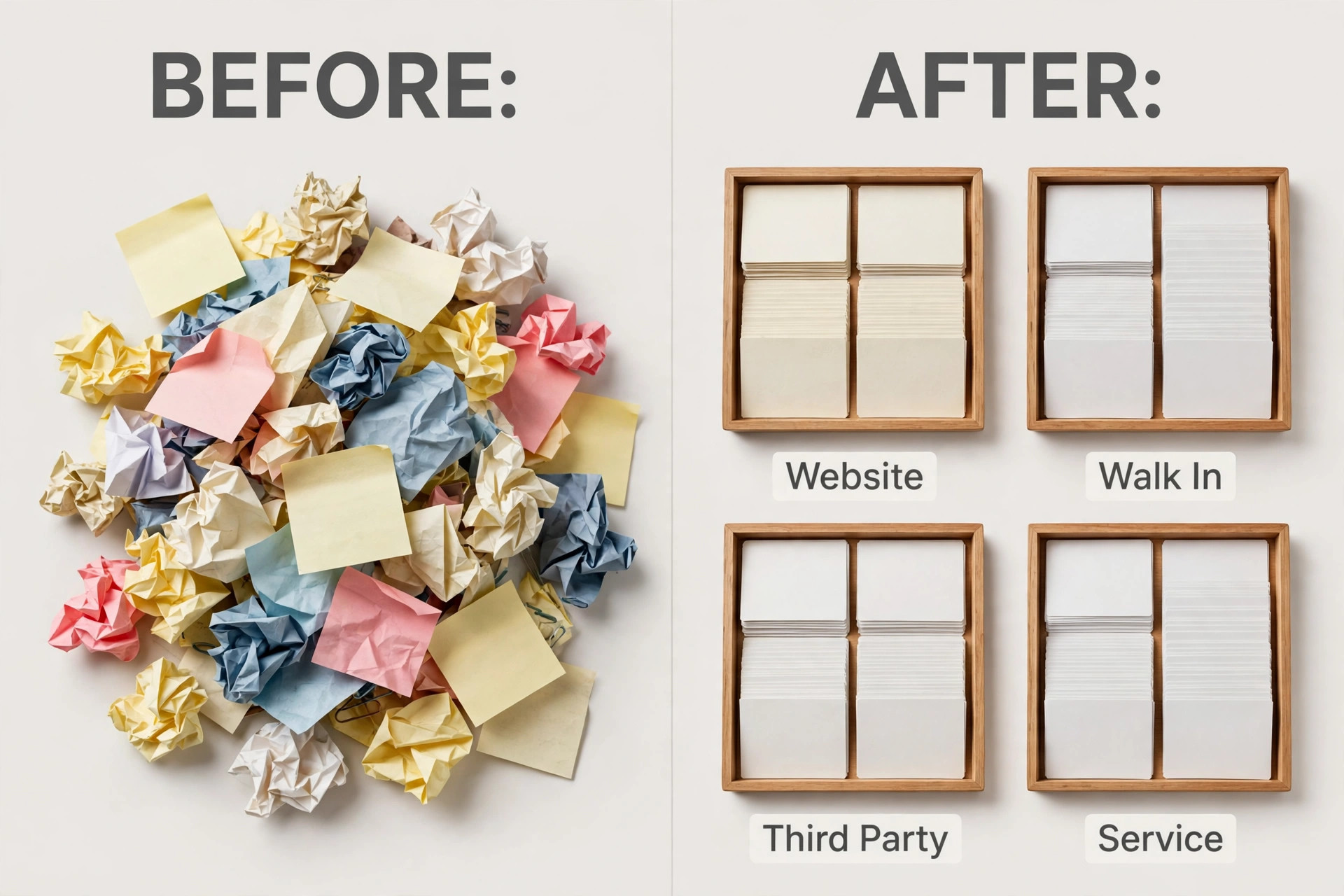
When you use AI for car dealership lead follow up, lead triage is the step most stores skip, and it is the step that makes AI sound smart instead of generic. A lead is not just a name. It is a source, a level of intent, and a clock. The source tells you how much information the shopper already gave. Intent tells you how direct the next message should be. The clock tells you how fast the reply must be. Build a simple triage rule and apply it the same way every time.
Website leads usually carry the strongest signal. The shopper chose your store, viewed a vehicle, and asked a direct question. Reply within five minutes during business hours and within minutes after hours if AI is active. Name the vehicle, confirm the next step, and offer two appointment times. Do not send a broad inventory list. The shopper already narrowed the choice. Your job is to help that choice move forward.
Walk in visitors who leave without buying need a different approach. They have seen the store, met a person, and still left. The first follow up should come from the salesperson when possible, with AI supporting reminders and notes. Thank the visitor for coming in, repeat the vehicle discussed, and address the reason for the pause if it is known. If price was the issue, offer a clear next step such as a payment review. If timing was the issue, offer a later date rather than pressure for today.
Third party leads need the fastest and simplest first message. These shoppers often contact several stores at once, and they may not remember which store sent which message. State your store name, the vehicle, and one next step in the first two sentences. Ask one question, not four. If the shopper replies, move quickly to an appointment. If the shopper does not reply, use a short, varied cadence rather than repeating the same message every day.
Service drive leads are often the most overlooked opportunity. A customer in for service may be thinking about a trade, a newer model, or a payment change. AI can send a helpful check in after the visit, ask about the current vehicle, and offer a trade appraisal if the customer shows interest. Keep the tone helpful and low pressure. A service customer trusts the store for maintenance. That trust is damaged fast if every service visit turns into a hard sales push.
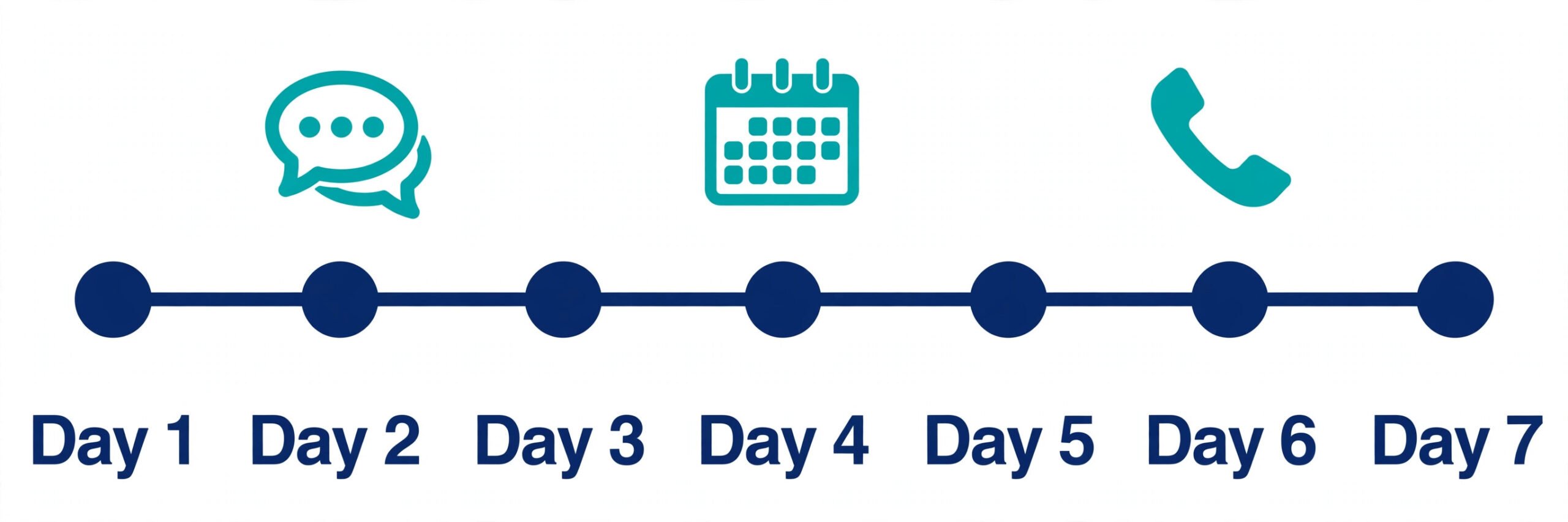
The 7 day follow up template
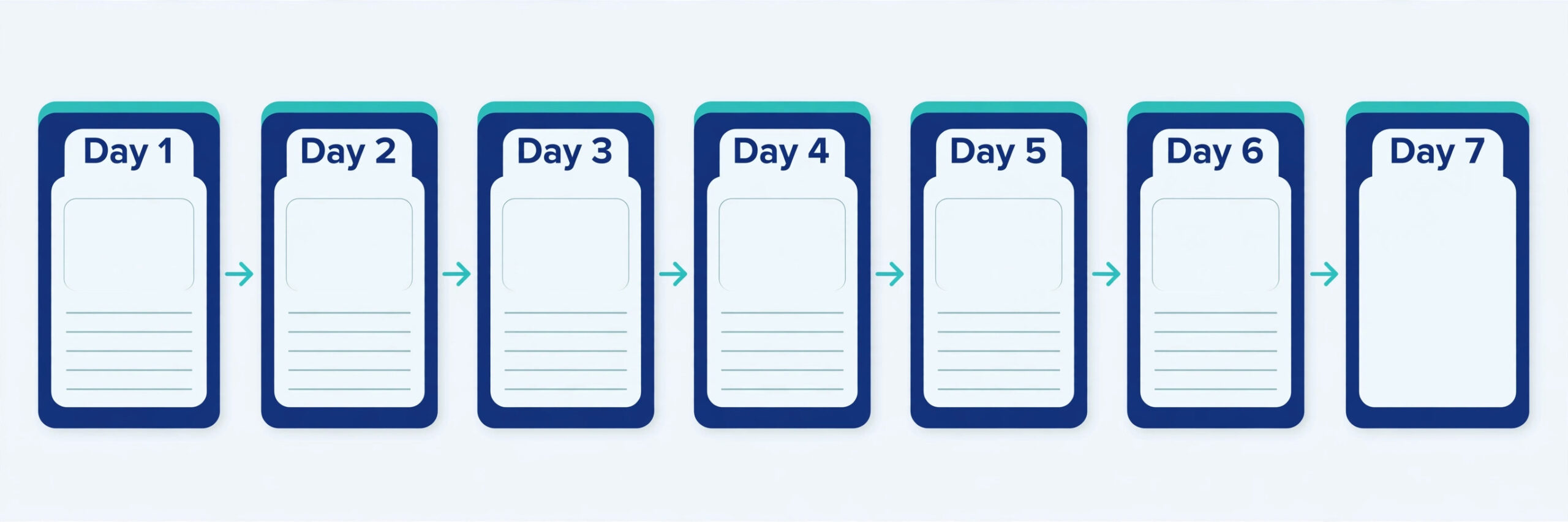
This template shows how to use AI for car dealership lead follow up across a full week without sounding repetitive. Each day has one job. The job changes from confirming interest, to helping with a decision, to offering a clear appointment, to giving space. Use the message ideas as a base and adjust the vehicle, the name, and the timing to fit the real lead. Do not send every day to a shopper who already booked. Once an appointment is set, switch to confirmation and preparation messages only.
| Day | Job | Message focus |
|---|---|---|
| Day 1 | Respond and book | Confirm the vehicle, ask one timing question, offer two appointment times |
| Day 2 | Help the decision | Share one useful detail such as a test drive plan, trade step, or payment review |
| Day 3 | Remove friction | Answer the likely blocker, such as trade value, financing, or vehicle availability |
| Day 4 | Pause and listen | Ask a short open question about what matters most in the next vehicle |
| Day 5 | Offer a new time | Give two fresh appointment options and a simple reason to visit |
| Day 6 | Add useful proof | Share a short customer review theme, service note, or inspection point |
| Day 7 | Close the loop | Ask whether to pause, keep helping, or stop messages for now |
Day 1 should feel immediate and personal. A useful first message names the vehicle and offers a next step in plain language. It might read as a short greeting, a confirmation of the vehicle, and a question about the best time to visit. Keep it under four short sentences. A long first message looks automated even when a human wrote it. Short messages invite a reply.
Day 2 should add value rather than repeat the ask. If the shopper asked about a sport utility vehicle, explain the test drive route or the seating check that helps families decide. If the shopper asked about a truck, mention towing or bed checks that matter in real use. The point is to show that the store understands the vehicle, not just the lead form. One useful detail is enough.
Day 3 is the blocker day. Many shoppers go quiet because one question is unanswered. It may be trade value, monthly payment, down payment, insurance, or whether the exact trim is still available. AI should ask directly but kindly what is holding the decision back. If the shopper answers, route that answer to a human fast. A payment or trade question is a buying signal, not a reason to send another generic reminder.
Day 4 should slow down. Send a short message that invites the shopper to talk about priorities. Ask whether fuel economy, space, safety features, or payment matters most. This kind of question helps a salesperson prepare a better visit. It also gives a quiet shopper an easy way back into the conversation without feeling chased. If there is no reply, do not treat silence as rejection yet.
Day 5 returns to the appointment with fresh times. Avoid repeating the same two times from day 1. Offer a weekday evening and a weekend slot, or a morning and a late afternoon option. State what will be ready at the visit. A new time plus a clear plan feels like progress. The same time plus the same ask feels like a loop.
Day 6 should add proof without making a claim you cannot support. Mention that the vehicle passed its store inspection, that the service team checked a common item, or that recent buyers valued a simple buying process. Keep the claim modest and true. Shoppers trust specific, ordinary details more than broad praise. If you do not have a verified detail, skip this day rather than inventing one.
Day 7 closes the loop with respect. Ask whether the shopper wants to pause, wants help later, or wants messages to stop. This message often gets a reply because it gives the shopper control. A clear no is useful. It frees the team from chasing a closed lead and keeps the store from damaging its reputation with endless messages. A pause is also useful. It moves the lead to a monthly check in rather than a daily chase.
AI prompts and message templates that sound human
When you use AI for car dealership lead follow up, good prompts start with role, context, limits, and output shape. A vague prompt produces a vague message. A tight prompt produces a short, useful reply that a salesperson can approve in seconds. Write prompts for the exact job, not for general sales talk. Each prompt below can be adapted to your CRM, your inventory feed, and your store voice.
A first response prompt should include the shopper name, vehicle, source, and time of inquiry. It should instruct the AI to write a short message under four sentences, name the vehicle, ask one question, and offer two appointment times. It should forbid invented pricing, trade values, and availability claims. It should require a human review flag if the shopper asks about price, financing approval, or trade value. That flag is the safety net.
A qualification prompt should ask the AI to read the thread and return three facts only. Those facts are timing, trade status, and appointment preference. If a fact is missing, the prompt should say unknown rather than guessing. This summary helps a salesperson scan a lead in seconds. It also stops AI from turning a short reply into a long profile built on assumptions.
A missed appointment prompt should be gentle and practical. It should instruct the AI to apologise briefly, offer two new times, and ask whether the vehicle or timing changed. It should not use guilt language or repeat the original appointment time as a complaint. A missed appointment is often a schedule problem, not a lost buyer. The recovery message should make it easy to rebook.
A price question prompt needs the strictest limits. AI should acknowledge the question, explain that a salesperson will confirm the current price, and ask about timing or trade details that help prepare an accurate answer. It should not quote a number from an old listing or a general web result. A wrong price in a text message creates a trust problem that a later correction rarely fixes.
Use these short templates as starting points and rewrite them in your store voice. For a website lead, a first message can confirm the vehicle and ask about the best visit time. For a third party lead, the first message should state the store name early and keep the ask to one question. For a walk in follow up, the message should thank the visitor and repeat the vehicle discussed. For a service lead, the message should reference the visit and offer a trade check only if the customer shows interest.
Speed to lead and clean appointment handoffs
When you use AI for car dealership lead follow up, speed to lead is the time between a shopper inquiry and the first useful reply. In car sales, that time matters more than message length. A fast, simple reply beats a slow, polished reply because the shopper is still in decision mode. Set a clear target for your store. Five minutes during business hours is a strong target. After hours, an AI reply within minutes keeps the lead warm until the team returns.
AI should not wait for a perfect answer before replying. A short confirmation that names the vehicle and promises a next step is better than silence while a salesperson checks inventory. The confirmation buys time and shows attention. The detailed answer can follow once a human checks the facts. This two step pattern protects accuracy while keeping speed high.
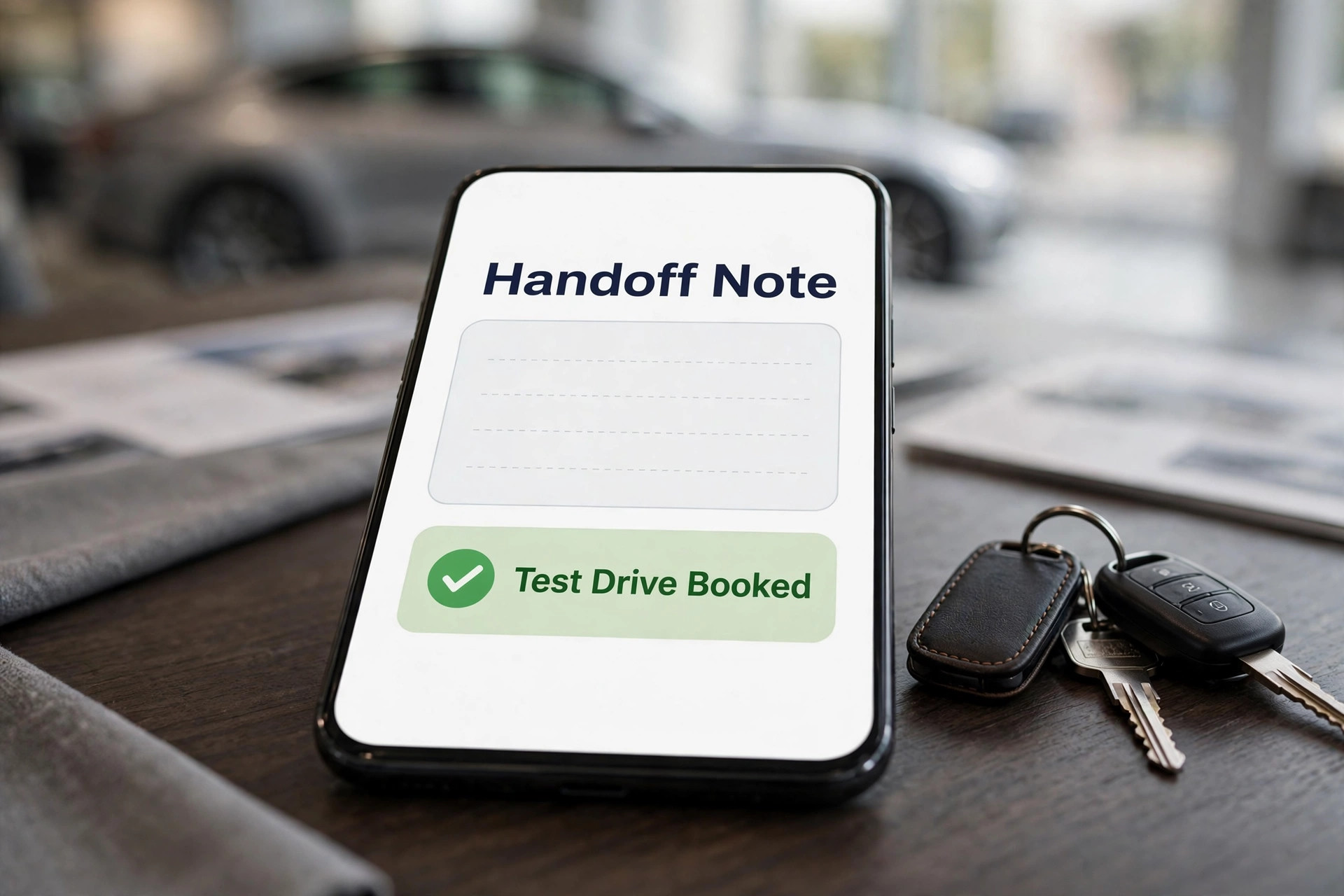
Handoffs need a clear trigger. AI should hand the conversation to a human when the shopper asks about price, trade value, financing, a specific vehicle condition, or a complaint. It should also hand over when the shopper books an appointment, asks to speak with a person, or replies with confusion. The handoff message should be short and warm. It should name the next person or team and state what will happen next.
The handoff note inside the CRM matters as much as the customer message. It should include the vehicle, the source, the answers already given, the open question, and the appointment status. A salesperson who receives that note should not need to ask the shopper to repeat the whole story. Repeat questions make a store look disorganised and make AI feel like a barrier rather than a bridge.
Appointment setting also needs a calendar rule. AI should offer times that are actually open and should confirm the booking in the CRM at once. If AI offers a time that is already taken, the store creates a second problem while solving the first. Connect the AI tool to the real calendar or to a booking queue that a human confirms quickly. A booked appointment that later moves without notice damages trust fast.
For stores that want a broader view of customer systems, a comparison of tools for independent dealers can help frame the CRM choice before adding an AI layer. Read the guide to best CRM for independent car dealers and check whether your current system already supports lead routing, notes, and appointment tracking. The AI workflow works best when the CRM already holds clean lead data. If the CRM is messy, fix lead capture first and add AI second.
Measure show rate, close rate, and reply quality
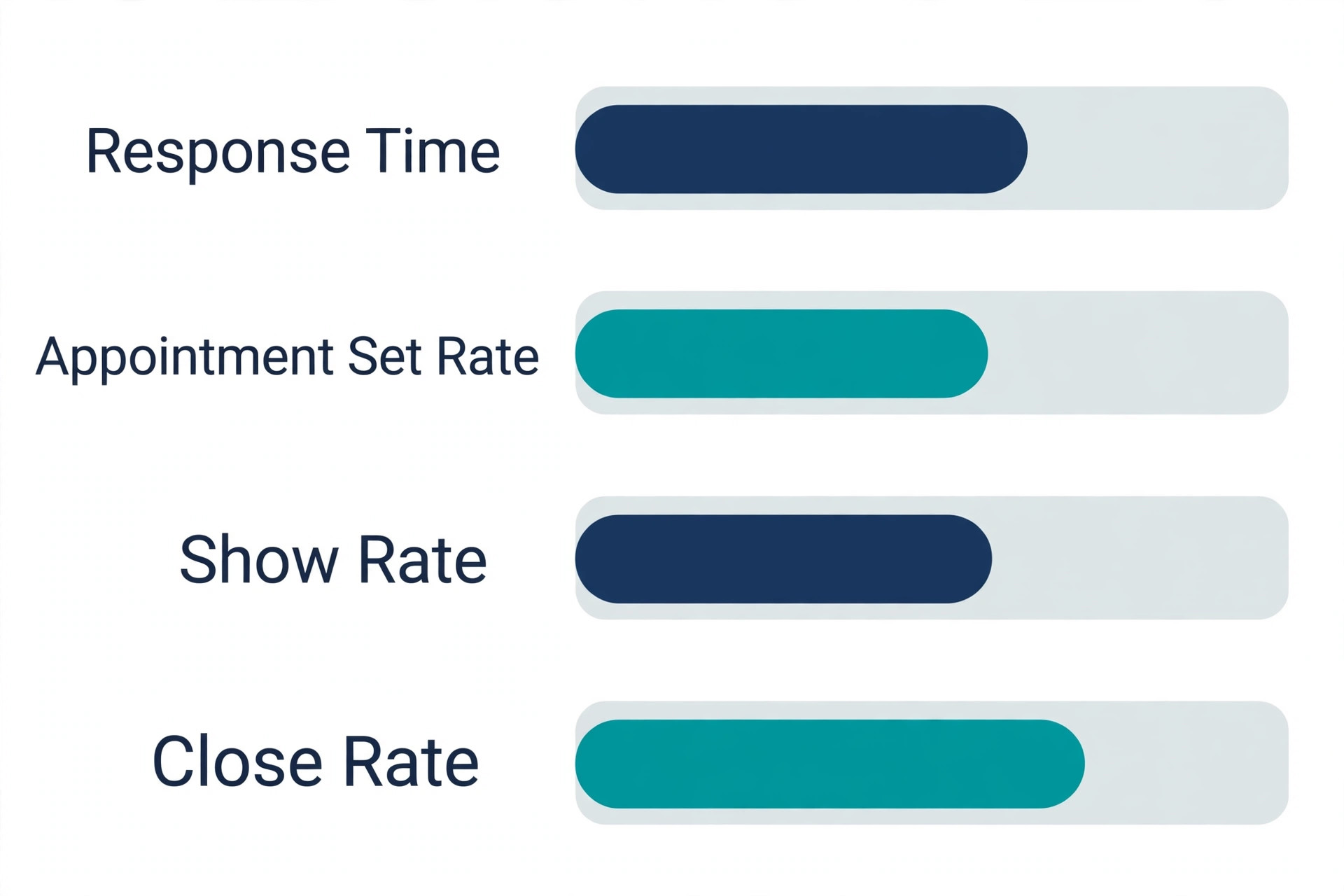
A system to use AI for car dealership lead follow up without measurement becomes a habit rather than a strategy. Track a small set of numbers every week and review them with the team. The goal is not to chase a perfect score. The goal is to find where leads stall and fix that step. Start with response time, reply rate, appointment set rate, show rate, and close rate.
Response time is the minutes from inquiry to first useful reply. Reply rate is the share of leads that answer at least once. Appointment set rate is the share of leads that book a visit. Show rate is the share of booked appointments that arrive. Close rate is the share of leads that buy, and a second close rate can be measured from shown appointments only. Together, these numbers show whether the problem is speed, message quality, booking, attendance, or closing.
Review the numbers by lead source. Website leads, walk ins, third party leads, and service leads will not perform the same way. A low show rate for third party leads may point to weak qualification. A low reply rate for service leads may point to tone or timing. A high appointment rate with a low show rate may point to weak confirmation or a booking that was too easy to make and too easy to skip. Source level review prevents a store wide fix for a narrow problem.
Set realistic targets and change one variable at a time. If response time is slow, fix routing before rewriting templates. If reply rate is low, shorten first messages before adding more days. If show rate is low, strengthen confirmation before increasing lead volume. A workflow improves fastest when the team knows which step is weak and fixes that step alone.
For appointment heavy businesses, booking habits from other service fields can still offer useful ideas about reminders and no show reduction. The guide to best booking software for nail salons shows how clear booking steps and reminders shape attendance, and the same discipline applies to test drive bookings. The lesson is not the industry. It is the structure of a clear booking, a useful reminder, and an easy reschedule path.
Common mistakes that make AI follow up feel like spam
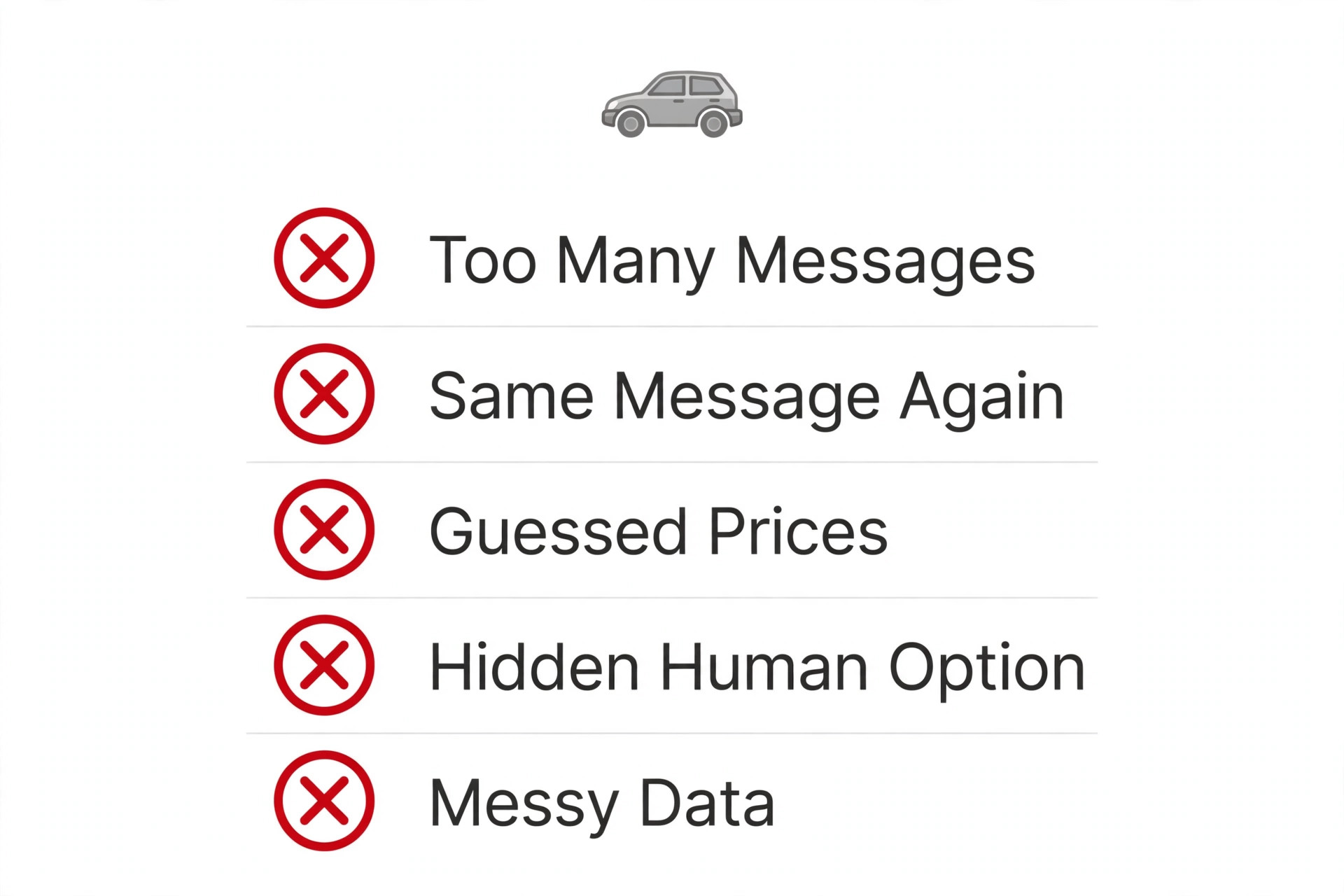
The first mistake is sending too many messages too fast. A shopper who gets four messages in one day learns to ignore the store. Space messages by day, change the job each day, and stop when the shopper books or asks for a pause. Frequency is not persistence. Useful timing is persistence.
The second mistake is repeating the same message with small word changes. Shoppers notice repetition fast. If day 1 and day 3 say the same thing, the store looks automated in the worst way. Each message should add a new detail, ask a new question, or offer a new time. If you have nothing new to say, wait a day rather than sending a filler message.
The third mistake is letting AI answer pricing and trade questions without a check. A confident but wrong number creates a dispute at the desk. Build a hard rule for those topics. AI acknowledges, collects context, and routes to a human. That pause is not slow service. It is accurate service.
The fourth mistake is hiding the human option. Every AI thread should make it easy to reach a person. A simple line that offers a call or a salesperson handoff builds trust. Shoppers accept AI help when they know a person is one step away. They resist AI when it feels like a wall.
The fifth mistake is poor data hygiene. Duplicate leads, wrong vehicle details, and missing source tags make AI messages look careless. Clean the CRM weekly. Merge duplicates, fix vehicle names, and check that new lead sources map to the right queue. Good follow up starts with good records.
Client management lessons from other fields can also sharpen follow up discipline. The guide to best client management software for travel advisors shows how clean notes, clear next steps, and timely check ins keep clients moving, and car leads benefit from the same habits. A lead record should read like a short, useful story. It should show what the shopper wants, what was promised, and what happens next.
Frequently Asked Questions
How fast should AI reply to a car lead?
AI should reply within minutes, with five minutes as a strong target during business hours and an immediate confirmation after hours. Speed matters because shoppers often contact several stores at once. A short, accurate confirmation beats a long, delayed message. The detailed answer can follow once a human checks price, trade, or availability.
Can AI book test drives without a salesperson?
AI can offer times and collect a booking request, but the booking should sync with a real calendar or a fast human confirmation. Offer two open times, confirm the booking in the CRM, and send a reminder before the visit. If the calendar is not connected, AI should collect the preferred time and promise a quick confirmation from the team.
What should AI never say in a car sales message?
AI should never invent a price, trade value, financing approval, or vehicle availability claim. It should also avoid promising that a vehicle is held or that a deal is approved. Those answers need a live check by a person or a verified system. A safe reply acknowledges the question, explains the next step, and routes the lead to a human quickly.
How many follow up messages are too many?
Seven days of varied, useful messages is a reasonable outer limit for an active lead, with one message per day at most. Stop sooner if the shopper books, asks for a pause, or says no. After day 7, move quiet leads to a monthly check in rather than daily messages. The goal is helpful persistence, not pressure.
Do small dealers need an expensive AI platform to start?
No. A small dealer can start with a simple AI reply tool connected to one CRM queue, one lead source at a time, and a clear handoff rule. Start with website leads, prove the response time and show rate, then add third party and service leads. Clean data and clear templates matter more than a large feature list.
How do you stop AI messages from sounding robotic?
Keep messages short, name the real vehicle, ask one question, and vary the job each day. Read templates aloud, remove filler phrases, and add a specific detail from the lead. Give shoppers an easy path to a human. A short message with a real detail sounds human. A long message with generic praise sounds automated.
The final verdict for dealers
The final verdict is simple. Use AI to be faster, more consistent, and better organised, and use people to close, advise, and build trust. AI should handle the first reply, the routine questions, the reminders, and the recovery messages. People should handle price, trade, financing, vehicle condition, and any moment where the shopper needs judgment. That split gives shoppers speed without losing the human judgment that sells cars.
Start with one source, one workflow, and one weekly review when you use AI for car dealership lead follow up. Connect website leads first, use the 7 day template, and track response time, show rate, and close rate by source. Fix the weakest step before adding new tools. Over time, add walk in recovery, third party triage, and service drive check ins as separate workflows. A system that grows in small, tested steps will last longer than a large launch that no one reviews.
Operational habits from other retail settings can also help a dealer think about the full customer journey. The guide to best POS system for farmers market vendors shows how a simple, well organised checkout shapes trust, and a car purchase needs the same clarity at the desk. The vehicle, the trade, the payment, and the next step should each be clear before the shopper signs.
The same care applies to paperwork and payment follow up after a sale. The guide to best invoicing software for creative freelancers is a useful reminder that clean records and clear payment steps reduce confusion, and dealers should apply that standard to deal paperwork, trade documents, and delivery checklists. A sale that ends with clear paperwork earns referrals. A sale that ends with confusion earns complaints.
If you build the workflow in this guide, you will not need to guess whether AI helps. You will see it in faster replies, more booked visits, higher show rates, and cleaner lead records. That evidence is the real test. AI is worth keeping when it brings more real shoppers into the store and helps the team serve them better. When it does not, change the workflow, not just the tool.