
A lot with 40 cars, 12 fresh leads a week, and three salespeople faces a simple maths problem. If each lead needs five follow-ups before it buys or goes cold, that lot needs 60 follow-up actions a week, every week, without fail. No salesperson remembers 60 follow-ups from memory, and no shared spreadsheet keeps them straight for long. That gap between lead volume and follow-up capacity is why the best CRM for independent car dealers is a sales tool first and a contact list second.
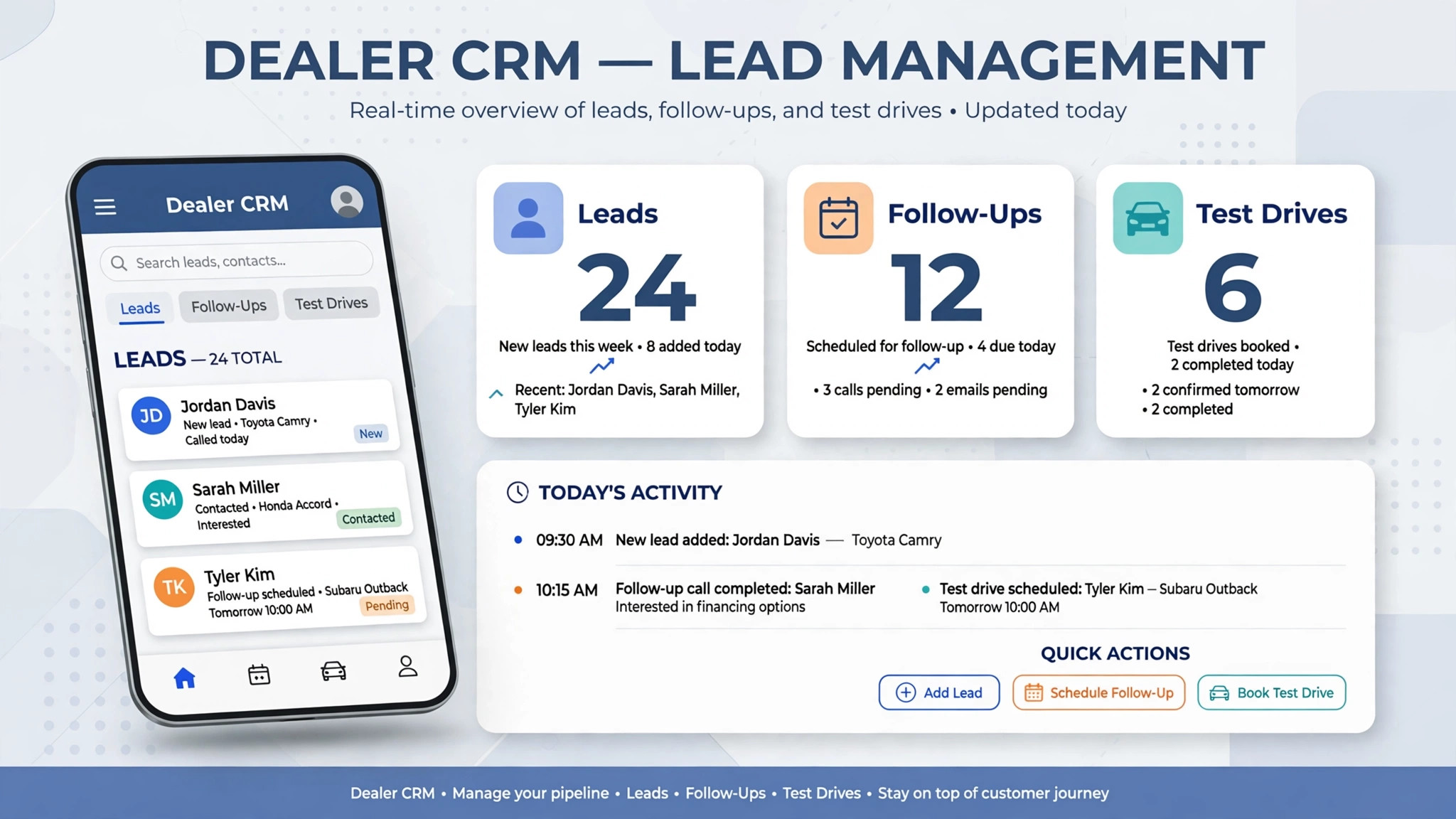
An independent dealer CRM must capture leads from a website, third party listing sites, walk-ins, and phone calls, assign them quickly, remind salespeople to follow up, track test drives and offers, and keep vehicle interest beside each lead. For buy-here-pay-here lots, it must also track payments and collections contact in the same customer record. A generic sales CRM can store contacts and tasks. It cannot easily match a lead to a vehicle in stock, track a deal through desking and finance, or handle the payment rhythm of a buy-here-pay-here customer.
This guide compares 10 tools, from dealer specific CRM and dealer management platforms to general sales tools that independent dealers adapt. Prices are starting prices where published, and several dealer tools quote by rooftop, user count, or feature tier. Check the vendor pricing page before you budget, since per user charges and add-on modules change the monthly total fast as a sales team grows.
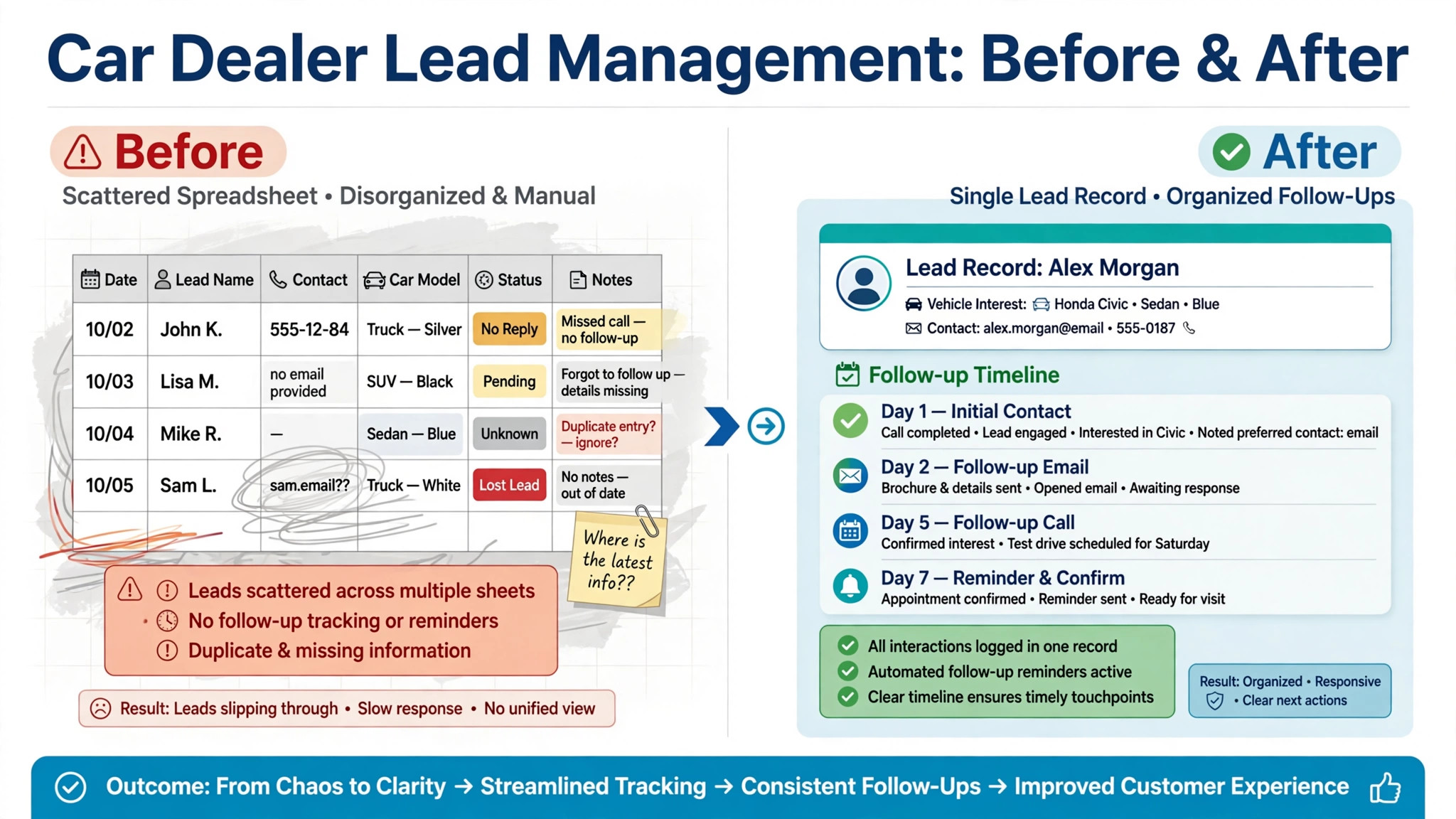
Why Dealer Leads Go Cold on a Generic CRM
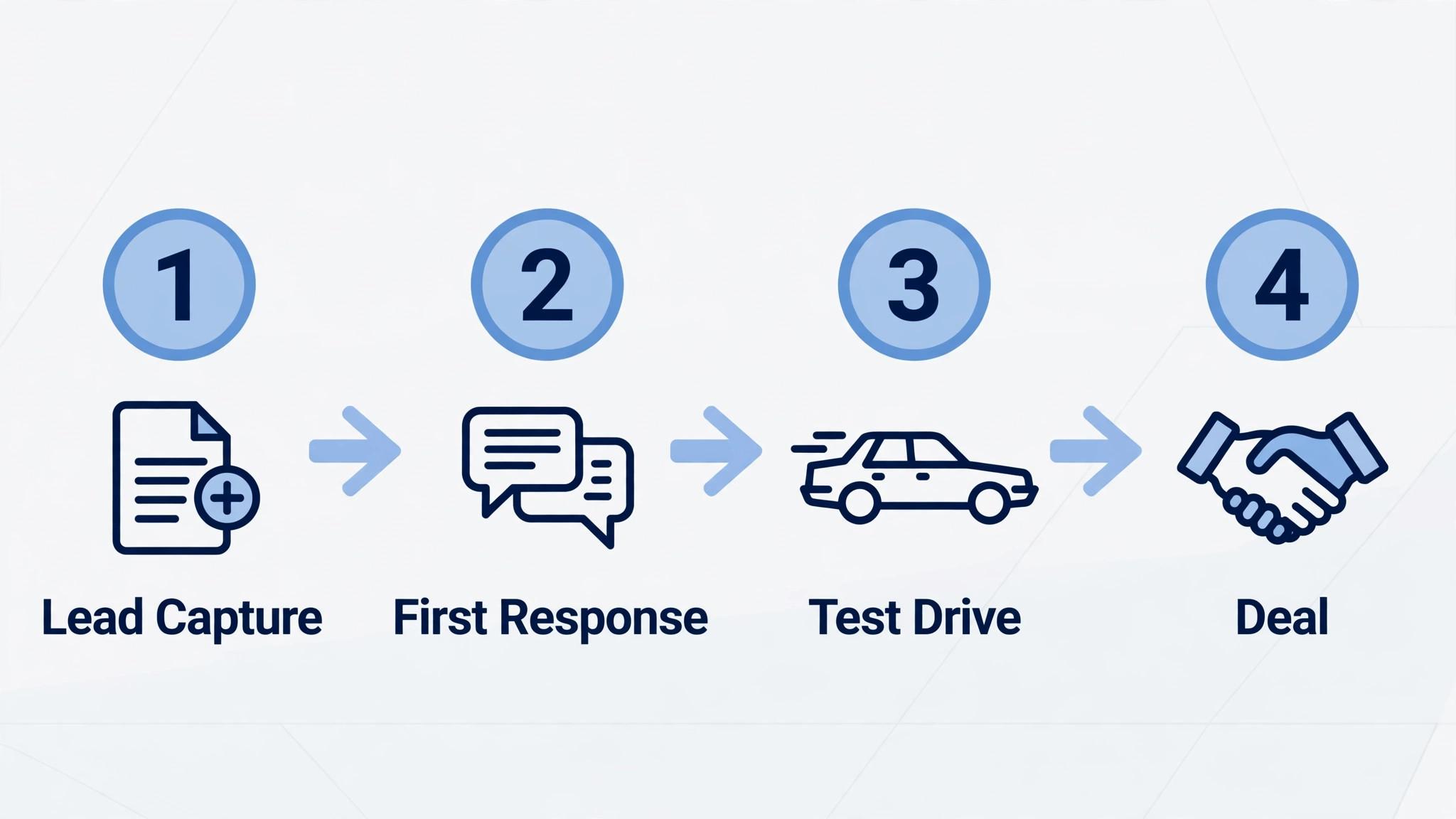
Speed is the first reason a generic CRM falls short. A car lead that waits hours for a first response is far more likely to buy elsewhere, since most buyers contact several dealers at once. A dealer CRM that captures a lead instantly, assigns it to the right salesperson, and prompts a first call or text within minutes will protect more deals than a CRM that merely stores the lead for later. That speed needs automation, not good intentions.
Vehicle matching is the second reason. A lead rarely wants any car. The lead wants a specific type, price range, and payment range, and the salesperson who replies with a matching vehicle in stock will move the conversation forward. A generic CRM that stores a lead without vehicle interest, stock matches, or test drive history will force the salesperson to search inventory separately for every reply. A dealer CRM that links leads to inventory will shorten that reply and make it more useful.
Follow-up discipline is the third reason. Most car deals need several contacts, across calls, texts, and emails, over days or weeks. A CRM that schedules the next follow-up automatically, shows overdue follow-ups clearly, and keeps the full contact history in one lead record will keep that rhythm going. A CRM that relies on salespeople remembering to follow up will lose deals quietly, with no clear record of where they went.
The 10 Tools at a Glance
| Tool | Starting price | Best for | Dealer depth |
|---|---|---|---|
| DealerCenter | Check the vendor pricing page | Independent dealer CRM plus DMS | Strong |
| Frazer | Check the vendor pricing page | Buy-here-pay-here dealers | Strong |
| DealerSocket | Check the vendor pricing page | Dealer CRM and inventory | Strong |
| VinSolutions | Check the vendor pricing page | Dealer CRM with desking | Strong |
| Elead | Check the vendor pricing page | Dealer CRM and sales process | Strong |
| DealerMine | Check the vendor pricing page | Service and sales CRM | Good |
| AutoRevo | Check the vendor pricing page | Dealer websites plus CRM | Good |
| Dealertrack | Check the vendor pricing page | Dealer management and finance | Good |
| CarGurus | Check the vendor pricing page | Listing leads plus dealer tools | Good |
| Dealer.com | Check the vendor pricing page | Websites, leads, and advertising | Good |
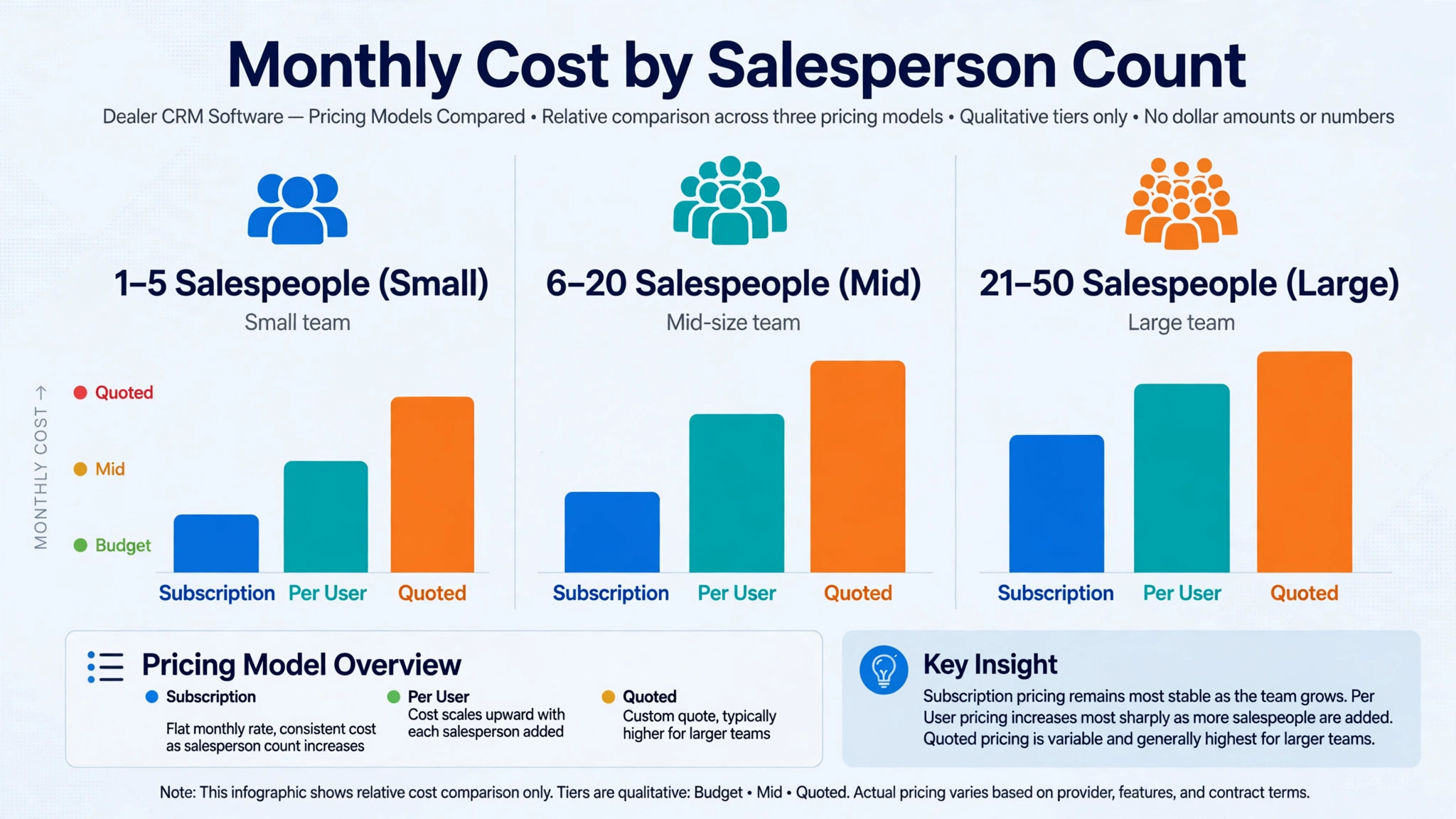
Pricing in this market is rarely a single number, since several tools charge by rooftop, user count, or module bundle. That is why a comparison of the best CRM for independent car dealers should start with a written quote for your real rooftop count, salesperson count, and monthly lead volume, not with a directory starting price alone. Confirm whether texting, desking, inventory, and payment tracking sit inside the quote or on top of it.
Best Pick by Job
| Job type | First pick | Why it fits | Watch out for |
|---|---|---|---|
| Single lot | DealerCenter | Dealer CRM plus management in one system | Confirm pricing per user |
| Small multi-lot dealer | DealerSocket | CRM and inventory across rooftops | Implementation scope for a group |
| Buy-here-pay-here lot | Frazer | Payments and collections beside sales | Check CRM depth for retail leads |
The job type that matches most of your deals should decide the shortlist for the best CRM for independent car dealers. A single lot that buys a full group platform will pay for multi-rooftop controls it never uses. A buy-here-pay-here lot that buys a retail only CRM will struggle with payment tracking, which is a core part of its customer relationship, not an add-on.
Lead Follow-Up Checklist
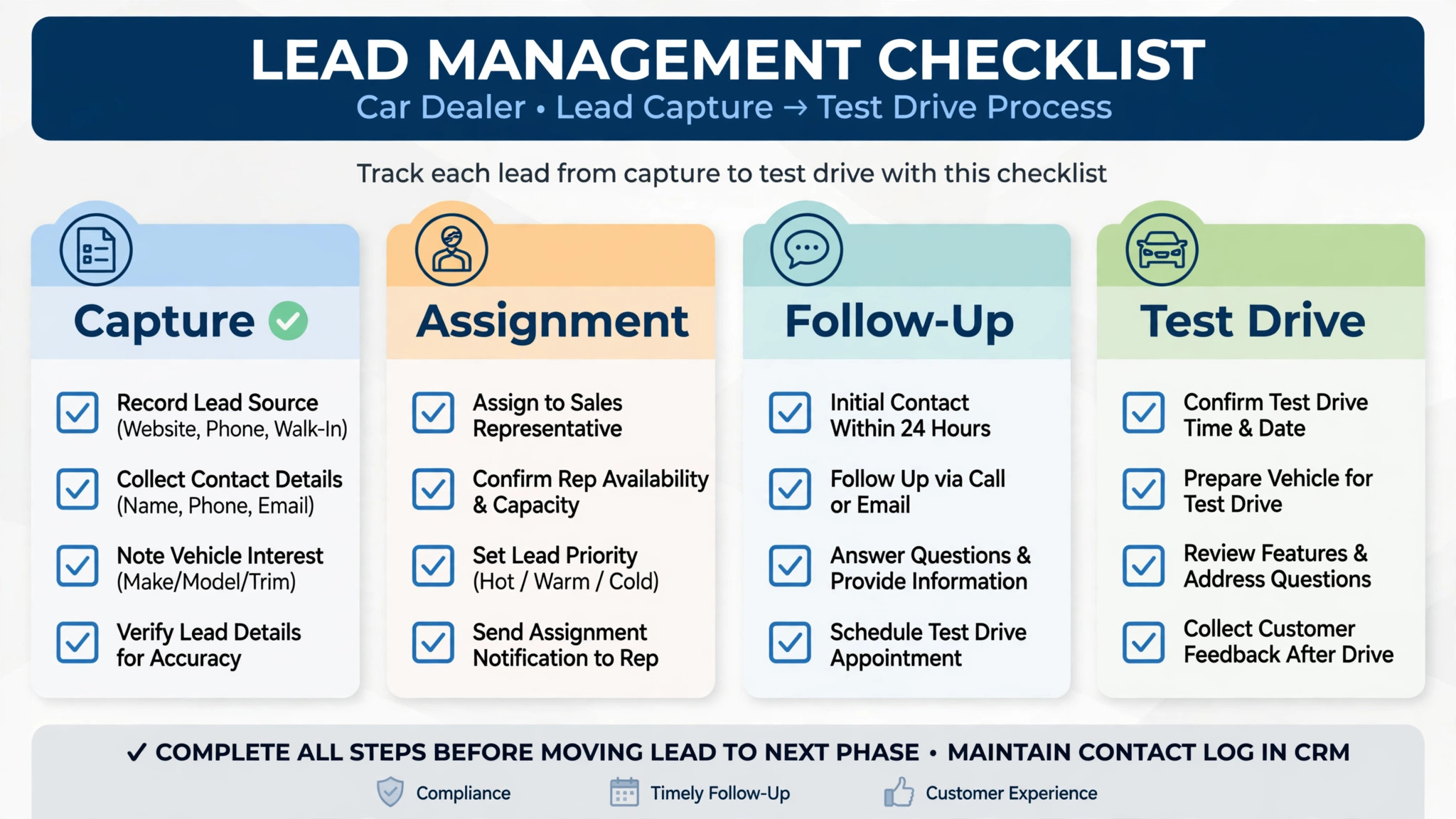
Use this checklist every day to keep leads warm and follow-ups on time. It turns lead data into sold cars, rather than leaving follow-up to memory.
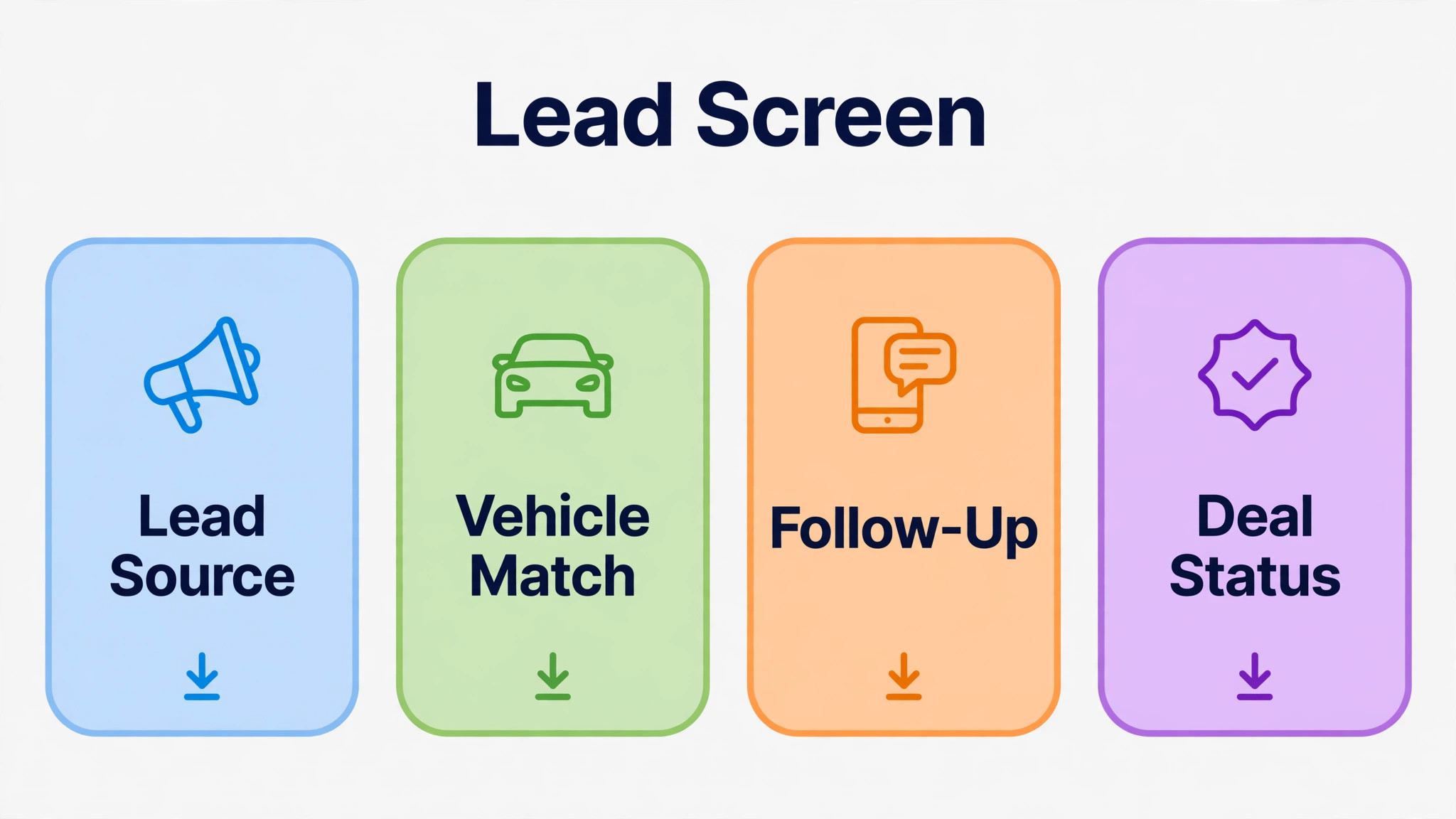
– Capture every lead in the CRM at once, from website, listing site, walk-in, and phone, with source recorded. – Assign each lead to one salesperson within minutes, and prompt a first call or text the same day. – Record vehicle interest, price range, and payment range on the lead, and match it to vehicles in stock. – Schedule the next follow-up before closing the current contact, so no lead sits without a next step. – Log every call, text, email, and test drive in the lead record, so any salesperson can pick up the conversation. – Review overdue follow-ups every morning, and reassign leads that have had no contact in two days. – Track test drives, offers, and desking outcomes in the lead record, not in separate notes. – Close lost leads with a reason, and set a future follow-up date for leads that may buy later.
Software helps this checklist only if leads, vehicle matches, follow-ups, and deal outcomes live in one lead record. If those details live in separate tools, the checklist becomes a manual reconciliation exercise on the busiest sales day of the week.
The 10 Tools in Detail
1. DealerCenter
DealerCenter is a dealer management and CRM platform built for independent dealers, with lead management, inventory, desking, and accounting tools in one system. A single lot can capture leads, manage vehicles in stock, work deals, and handle back office tasks without running a separate CRM, inventory tool, and accounting tool. That combination is the main reason DealerCenter leads many independent dealer shortlists.
The strength is the all-in-one independent dealer workflow. Leads, inventory, deals, and accounting sit together, so a salesperson can move from lead to test drive to deal without retyping vehicle or customer details. The limit is scope for a larger group. A multi-rooftop dealer should test multi-location inventory, reporting, and user controls explicitly, since a single lot system may handle those areas more lightly than a group platform.
Best for a single lot or a small independent dealer that wants CRM plus dealer management in one system. Check the vendor pricing page and confirm pricing per user and per rooftop.
2. Frazer
Frazer is dealer software built for independent dealers, with a strong focus on buy-here-pay-here operations, including sales, inventory, accounting, and payment tracking. A buy-here-pay-here lot can manage leads and sales beside payment schedules, collections contact, and customer payment history, which is essential when the dealer is also the lender.
The strength is the payment side of the customer relationship. Sales, payment schedules, and collections contact sit in one customer record, so staff can see the full history before calling a customer. The limit is retail CRM depth compared with DealerSocket or VinSolutions. A lot that also sells many retail deals with finance through outside lenders should test lead follow-up, desking, and lender workflows explicitly.
Best for a buy-here-pay-here lot that needs payments and collections beside sales in one system. Check the vendor pricing page for payment and accounting module terms.
3. DealerSocket
DealerSocket is a dealer CRM and inventory platform for dealers of many sizes, with lead management, inventory, desking, and sales reporting. A small multi-lot dealer can manage leads and vehicles across rooftops, keep sales processes consistent, and review performance by salesperson and rooftop from one system.
The strength is CRM plus inventory at group scale. Lead follow-up, vehicle matching, and deal tracking work across locations, which suits a dealer growing from one lot to several. The limit is implementation scope and cost for a single lot. A small single lot should confirm pricing and whether it will actually use multi-rooftop reporting before choosing a group platform over DealerCenter or Frazer.
Best for a small multi-lot dealer that needs CRM and inventory across rooftops. Check the vendor pricing page and confirm implementation scope in writing.
4. VinSolutions
VinSolutions, part of the Cox Automotive group, is a dealer CRM with desking, lead management, inventory, and sales reporting, used by dealers across the market. Sales teams can capture leads, follow up by call, text, and email, work deals through desking, and track performance, with inventory and customer records linked through the deal.
The strength is the sales process depth. Desking, follow-up, and reporting are built for a dealer sales floor, which helps a sales manager see where deals stall and which follow-ups are overdue. The limit is cost and complexity for a very small lot. A three person sales team should confirm the monthly total at its user count, and test whether the sales process fits its simpler workflow or adds steps it does not need.
Best for an independent dealer with a structured sales process that wants CRM plus desking in one system. Check the vendor pricing page for per user pricing and desking terms.
5. Elead
Elead, also written as eLead, is a dealer CRM with lead management, sales process tools, desking, and service scheduling, used by dealers who want a full sales and service customer record. A dealer can manage retail leads, track deals, and keep service contact in the same customer history, which helps when a sales customer later returns for service.
The strength is the combined sales and service record. A customer who buys and then services at the same dealer stays in one record, which supports repeat sales and service retention. The limit is fit for a small independent lot. Elead depth suits a dealer with a structured sales team, and a very small lot should test setup effort and monthly cost before choosing it over a simpler independent dealer platform.
Best for an independent dealer that wants sales CRM plus service contact in one customer record. Check the vendor pricing page for user pricing and service module terms.
6. DealerMine
DealerMine is a dealer CRM with a focus on sales and service customer engagement, including lead follow-up, service reminders, and customer communication tools. A dealer can keep sales leads and service customers in one system, send reminders, and track engagement across the ownership cycle, rather than treating sales and service as separate businesses.
The strength is the ownership cycle view. Sales follow-up and service reminders sit together, which helps a dealer stay in touch after the sale and win the next sale. The limit is inventory and desking depth compared with DealerSocket or VinSolutions. A dealer that needs strong desking and multi-rooftop inventory should test those areas explicitly before choosing DealerMine.
Best for a dealer that wants sales plus service engagement in one CRM. Check the vendor pricing page for communication and reminder terms.
7. AutoRevo
AutoRevo provides dealer websites, inventory management, and CRM tools for independent dealers, with a focus on the online side of selling cars. A dealer can present inventory online, capture website leads, and manage those leads in a CRM connected to its stock, so a website enquiry becomes a tracked lead rather than an inbox message.
The strength is the website to lead connection. Inventory listings, website leads, and CRM follow-up sit together, which suits a dealer whose main lead source is its own website. The limit is full dealer management depth. A dealer that also needs accounting, buy-here-pay-here payments, or advanced desking should check how AutoRevo fits beside those tools, rather than assuming it replaces a full DMS alone.
Best for an independent dealer that wants websites, inventory, and CRM from one provider. Check the vendor pricing page for website and CRM bundle terms.
8. Dealertrack
Dealertrack, part of Cox Automotive, provides dealer management, finance, and registration tools, with CRM and sales workflow features connected to lender and deal processes. A dealer can work deals, handle finance submissions, and manage back office tasks in a system built for the finance side of car selling, which is where many deals succeed or stall.
The strength is the finance and deal workflow. Lender connections, deal paperwork, and back office handling sit close to the sales record, which reduces retyping between sales and finance. The limit is CRM first fit for a small independent lot. Dealertrack is strongest as a deal and finance platform, so a lot that mainly needs lead follow-up should test CRM depth explicitly before choosing it as its primary CRM.
Best for an independent dealer that wants strong deal and finance workflow beside CRM. Check the vendor pricing page for deal and finance module terms.
9. CarGurus
CarGurus is a car shopping marketplace with dealer tools, including lead management, inventory listings, and dealer performance insights. An independent dealer can list vehicles where buyers already search, capture marketplace leads, and manage those leads with dealer tools connected to its listings. That discovery side is the main draw, since many buyers start on a marketplace rather than on a dealer website.
The strength is buyer traffic and lead flow. A dealer in a competitive market can pick up leads from buyers browsing nearby stock, and listing performance tools help it understand which vehicles attract attention. The limit is CRM dependence on a marketplace. The dealer competes on the same screen as nearby rivals, and marketplace lead costs can change the economics of a sale. Keep your own website lead capture active too.
Best for an independent dealer that wants marketplace lead flow alongside CRM. Check the vendor pricing page for listing and lead terms before committing.
10. Dealer.com
Dealer.com, part of Cox Automotive, provides dealer websites, digital advertising, and lead management tools, with CRM connections that help dealers capture and follow up online leads. A dealer can run its website and advertising from one provider, capture leads from those channels, and track follow-up in a connected CRM workflow.
The strength is the website and advertising to lead connection. A dealer whose leads come mainly from search and advertising can keep those channels and lead follow-up aligned, with reporting that shows which channels produce leads that actually buy. The limit is full CRM depth for a dealer that needs desking, inventory, and buy-here-pay-here payments in the same system. Those areas should be tested explicitly, or handled by a connected DMS.
Best for an independent dealer that wants websites, advertising, and lead capture from one provider. Check the vendor pricing page for website, advertising, and CRM bundle terms.
How Fast Follow-Up Changes a Sales Week
Fast follow-up changes a sales week before it changes any monthly total. When every lead gets a first response within minutes, salespeople spend their time talking to buyers who are still shopping, rather than chasing leads that have already bought elsewhere. That shift in conversation quality matters more than any single feature, since a salesperson who talks to warm leads will close more deals from the same lead volume.
The second change is the morning list. A CRM that shows overdue follow-ups clearly gives a sales manager a simple morning routine, with each salesperson working a visible list rather than a private memory. That visibility helps a small team most, since one missed follow-up in a three person team is a larger share of the week than in a large team. A CRM that creates follow-up tasks nobody reviews will not create that routine, no matter how good the lead capture looks.
The third change is learning from lost deals. A CRM that records lost reasons, vehicle interest, and last contact lets a dealer see patterns, such as leads lost on price, on vehicle availability, or on slow response. That pattern view helps a dealer fix stock, pricing, or response speed, rather than guessing why deals were lost. A dealer that closes lost leads without a reason will keep losing the same deals for the same unknown cause.
There is also a repeat business benefit that grows over time. A dealer that keeps clean customer records, service contact, and past vehicle interest can contact past buyers when matching stock arrives, rather than waiting for them to search again. That repeat contact is cheaper than a new marketplace lead, and it is one of the main long term returns on a CRM. A dealer that only uses the CRM as a lead list will miss that return, even if daily follow-up feels smoother.
How to Choose the Best CRM for Independent Car Dealers
Start with the lead test. Take a real week of leads, including a website lead, a marketplace lead, a walk-in, and a phone lead. Enter that week in the trial and see whether the system captures each source, assigns it quickly, prompts a first response, and links vehicle interest correctly. If that test fails, the tool will fail on a busy sales week.
Next, test the deal journey from first contact to desking. Can a salesperson log calls, texts, and test drives, match the lead to vehicles in stock, work an offer, and record the outcome without retyping. Count the retyping steps required. A CRM that still needs a separate spreadsheet for deals has not solved the sales problem, even if the lead list looks good.
Then test buy-here-pay-here or finance handling where relevant. Record a payment schedule, a collections contact, or a lender submission, and check that the customer record reflects it. The system should carry payment or finance details in the same customer record as sales contact. If those details live in a separate tool the sales team rarely opens, the customer record will drift from reality.
Finally, price the full CRM stack. Add per user charges, texting costs, desking fees, inventory costs, and any per rooftop charges to the subscription. A low subscription with expensive per user or texting costs can cost more than a mid priced full system once the sales team grows. Get the monthly total for your real salesperson count and lead volume in writing before comparing tools, and check that the best CRM for independent car dealers on your shortlist still looks affordable at peak lead volume, not only at average volume.
Common Mistakes When Buying Dealer CRM Software
The first mistake is buying a contact list and calling it a CRM. A contact list stores names. A dealer CRM captures leads fast, assigns them, schedules follow-ups, matches vehicles, and tracks deals. Test lead speed and follow-up, not only the contact view.
The second mistake is ignoring vehicle matching. Many lost deals are matching problems, not effort problems. A salesperson who replies without a matching vehicle in stock will lose the buyer to a dealer who replies with one. Vehicle matching should be a required step in the trial, not an afterthought.
The third mistake is forgetting overdue follow-ups. A CRM without a clear overdue list and a morning review routine will not improve follow-up discipline, even if it makes lead capture easier. Test the overdue view, the morning list, and the reassignment workflow, and confirm whether texting is included in the price.
The fourth mistake is buying for the dealer group you hope to become, not the lot you run. A full group platform with multi-rooftop reporting is valuable for a group, but it adds setup and training burden for a single lot. Start with the tool that fits current salesperson count, and check that it can grow when rooftop count and lead volume rise.
The fifth mistake is neglecting data export. Lead histories, customer records, and deal outcomes are the dealer business history. Before signing, confirm that those records can be exported in a usable format, and that the dealer is not locked into a platform by its own data.
Frequently Asked Questions
How much does dealer CRM software cost?
Costs for the best CRM for independent car dealers range from tiered subscriptions on dealer platforms to quoted pricing by rooftop, user count, and module bundle. The final cost depends on salesperson count, rooftop count, lead volume, texting, desking, and inventory modules. A dealer with high lead volume should model per user and texting costs at that volume, since those charges grow with every salesperson and every message. Get a written quote for your real salesperson count, including texting and desking terms, before comparing headline prices.
What is the best CRM for a single independent car lot?
For many single lots, DealerCenter is a strong starting point, because it combines dealer CRM with inventory, desking, and accounting in one system built for independent dealers. Frazer is the alternative for a buy-here-pay-here lot. The right choice depends on whether retail deals or payment tracking dominate, and on the quote at your salesperson count.
Can a dealer CRM capture leads from listing sites and a website?
Yes, on most tools in this guide. Leads from a dealer website, marketplace listings, walk-ins, and phone calls can be captured in one CRM, with source recorded for each lead. The test is whether capture is fast and automatic, with assignment and a first response prompt, rather than a manual import that salespeople must remember to run.
Do dealer CRMs handle buy-here-pay-here payments?
Specialist tools such as Frazer handle payment schedules and collections contact beside sales in one customer record. General dealer CRMs can record sales and finance outcomes, but payment tracking depth differs sharply. Test payment scheduling on a real customer pattern, including payment history and collections contact, before choosing a retail CRM for a buy-here-pay-here lot.
How does a CRM improve lead follow-up?
A dealer CRM assigns each lead, schedules the next follow-up automatically, shows overdue follow-ups clearly, and keeps every call, text, email, and test drive in one lead record. That structure keeps follow-up going across days and weeks, even when a salesperson is busy or away. Confirm that texting is included or priced clearly, since text follow-up is a core dealer channel.
Should an independent dealer offer online leads and walk-in sales together?
Yes, for most dealers. Online leads capture buyers who search and enquire outside lot hours, while walk-ins serve buyers who visit the lot directly. The CRM should keep both channels in one lead record system, so a walk-in cannot duplicate an online lead, and salespeople can see the full customer history in one place.
How long does it take to switch dealer CRM software?
A single lot can switch in two to three weeks if leads, inventory, and customer records are prepared in advance. A small multi-lot dealer should allow four to six weeks, including salesperson training and parallel running on live leads. A buy-here-pay-here lot should allow extra time for payment history migration and checks.
A One Week Sales Trial
Do not choose from a feature list. Run a one week sales trial on your two finalists. On day one, enter a real week of leads from website, marketplace, walk-in, and phone sources. On day two, let salespeople work follow-ups and check how many leads need manager fixes. On day three, test texting, test drive logging, and a desking outcome. On day four, check an overdue list and a lost lead reason for a real pattern. On day five, ask salespeople whether lead capture, vehicle matching, and follow-ups actually helped them sell, or only helped the office.
The tool that passes that week with the fewest fixes, the fewest overdue follow-ups, and the least salesperson confusion is the best CRM for independent car dealers for your operation, and the tool to keep. Price matters, but a cheap tool that creates daily lead fixes will cost more in lost deals than a mid priced tool that runs cleanly. Choose the system that makes follow-up faster, salespeople better informed, and buyers more likely to return for their next car.
More Reading on Stratilyze
– Best Membership Software for Dance Studios – Best Booking Software for Veterinary Clinics – Best Booking Software for RV Rental Businesses – Best Scheduling Software for Home Inspection Companies – Best CRM for Dental Clinics at a Small Practice