
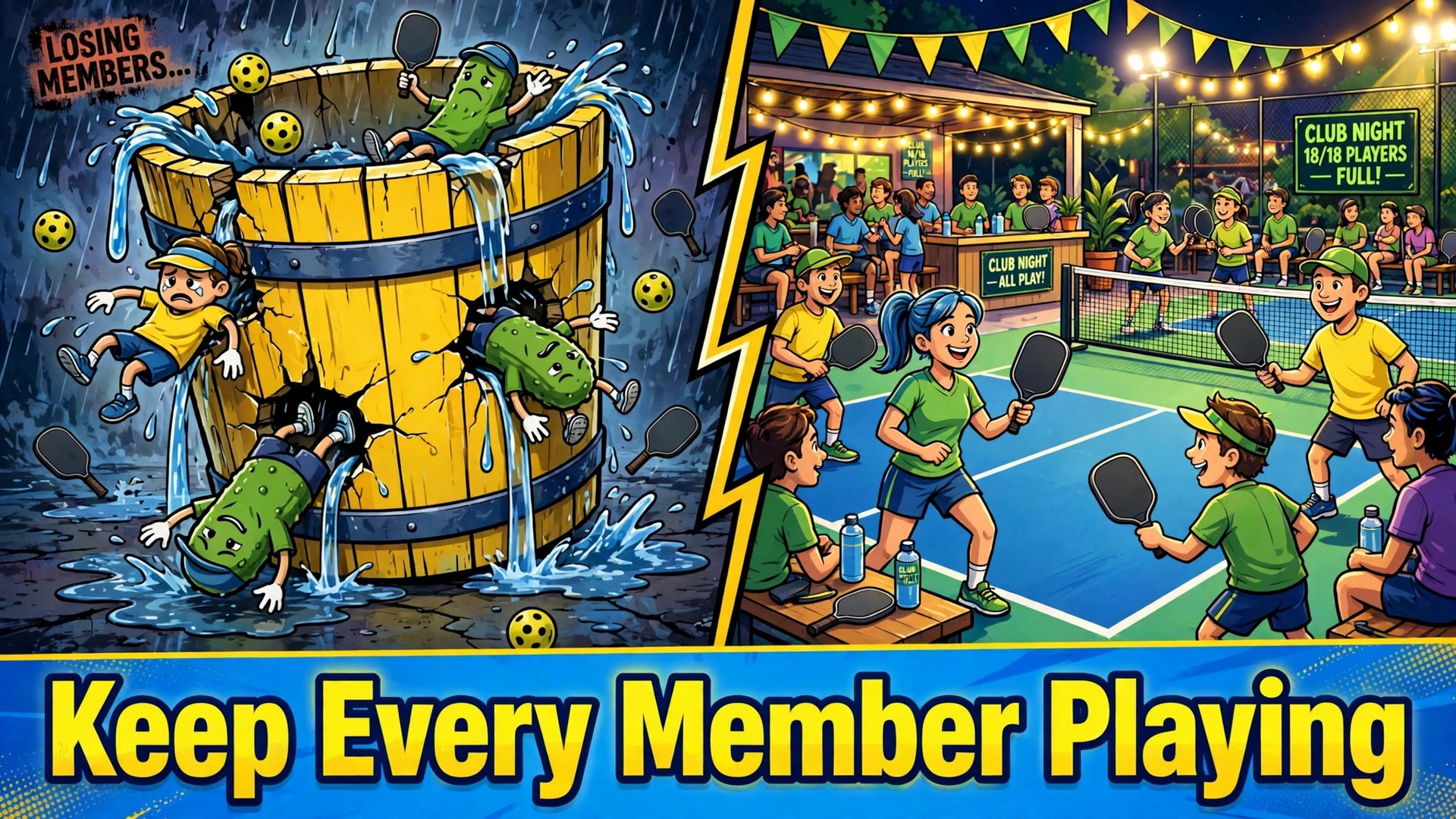
A pickleball club does not usually die from a lack of new players. It dies from a slow leak of the players it already has, one quiet cancellation at a time, while the committee celebrates a busy open play night. Retention beats recruitment on cost alone, and club guides regularly note that acquiring a new customer can cost many times more than keeping an existing one, with one club source citing a range of five to 25 times. If you want to use AI for pickleball club membership retention, start from that leak, not from a membership drive.
Find the members who are drifting, give them a reason to play this week, and make renewal the easiest decision on their calendar.
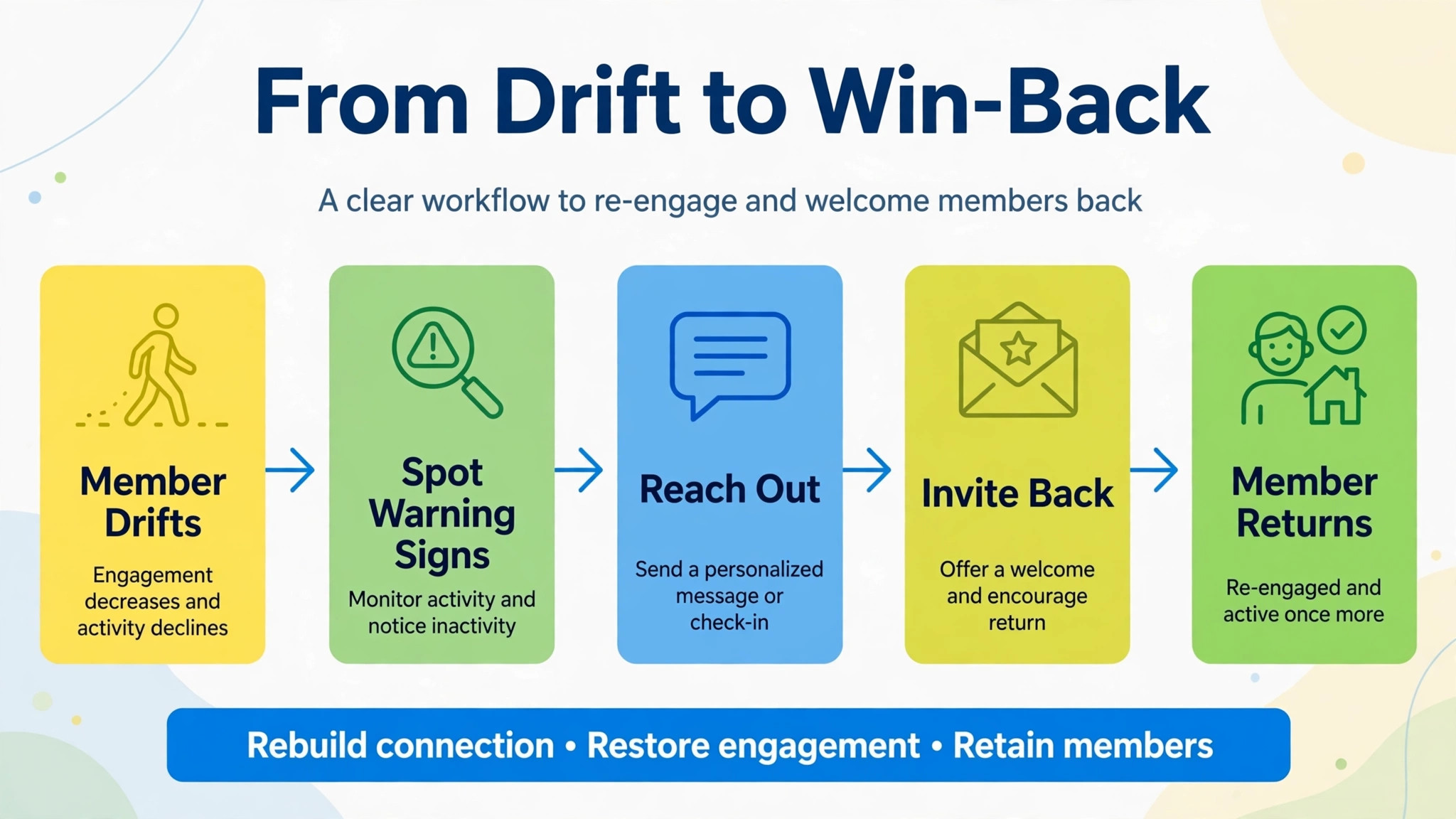
The warning signs are rarely dramatic. A member who played three times a week drops to once, then to a monthly social, then to silence. Another member keeps paying but never books, which looks fine on revenue until the renewal date arrives and the membership quietly lapses. A third member loves the game but cannot get a court at a playable hour, or feels shut out of established groups, and leaves for a club that mixes players better. Each of these members can be won back, but only if the club notices the drift before the renewal email.
This guide gives you a retention workflow built for real clubs. You will learn which engagement signals matter, how to sort members into groups that need different messages, what to send at 90, 30 and seven days before renewal, and how to fix the court access and social problems that cause most exits. At the end you get a renewal checklist that any club manager can run every month, plus the guardrails that keep AI messages feeling like they came from the club, not from a system.
Why members leave quietly long before they cancel
Most clubs still run this work by memory, inbox and a spreadsheet that one person understands. That works until the busy season, a staff holiday or a simple sick day breaks the chain, and then the members who needed a reply hears nothing. The cost is invisible at first, because nobody complains about a message they never expected, yet the empty seat, the missed visit or the lost booking shows up in the numbers weeks later. Reading a guide like membership software for pickleball clubs shows the same pattern in a neighbouring niche, where the system, not the effort, decides who gets served on time.
The reason to use AI for pickleball club membership retention is not fashion. It is that the repetitive parts of this work, namely drafting, reminding, ranking and tracking, are exactly the parts a machine handles well, while the judgement parts, namely pricing, clinical or safety calls and personal conversations, must stay human. A workflow that respects that split will feel helpful to members and to staff. A workflow that ignores it will feel cold, and members will notice within a week.
Start with the record, not the tool. If the underlying list of members, dates and promises is messy, automation will only send messy messages faster. Clean the list, write the rules, and then add one automation at a time, checking each one for a full cycle before adding the next. That discipline is what separates a club that uses AI well from one that merely owns AI tools, as any reader of client retention offers for nail salons will recognise from their own booking work.
Before the workflow, here is the decision shortcut for the whole guide. When you know which situation a member is in, you know what to send, and use AI for pickleball club membership retention becomes a set of small decisions rather than a large project. Keep this table near the weekly routine until the habit is automatic.
| Situation | Best first move | What to avoid |
|---|---|---|
| Members is ready but has not replied | Short personal message with one clear next step | Another generic message with no detail |
| Members is overdue or drifting | Personal contact that names the real reason to act | A discount offered before the reason is known |
| Members just completed a visit or booking | Thank you plus the next date or step, booked now | Silence until the next cycle, when it is too late |
Every step that follows supports one row of that table. If a proposed automation does not help a row, leave it out, because extra messages cost attention, and attention is the scarcest resource a small business owns.
The tools that spot a quiet member early
Three tools carry this workflow, and each one fits a different club size. use AI for pickleball club membership retention works best when each tool owns one job and the record stays in one place, so resist the urge to buy a new tool for every small gap. Fix the gap with a rule first, and buy only when the rule proves the need.
CourtReserve
CourtReserve fits pickleball and tennis clubs because memberships, court booking, lessons and events can share one member record. The retention win is the booking history. When a manager can see who has stopped booking, who only plays at peak hours, and whose membership renews next month, the at-risk list writes itself. Renewal guardrails such as grace periods and grandfathered pricing also live in the same system, which prevents the accidental drop-off that a billing surprise causes.
PlayRez
PlayRez is built around growing and running pickleball clubs, with an emphasis on programming, clinics and member experience. Its lesson for retention is programming as the funnel. Beginner clinics, mixed-skill socials and structured open play give new members confidence and friends, which are the two things that actually keep people paying. A club that only sells court time will lose members to any club that sells belonging.
General AI drafting assistant
A general AI assistant drafts renewal and win-back messages from real member data, such as last play date, favourite session and skill group, under rules you set. It should never invent a playing history or a personal detail. A manager reviews drafts for at-risk members before sending, especially for long-standing members, because one wrong detail in a win-back message ends the relationship faster than silence.
Email and survey tools you already use
A simple email tool and a short survey can carry the parts of retention that do not need a club platform, such as a quarterly member pulse survey and a welcome series for new joiners. Keep surveys to five questions and publish one change that came from the answers, because members who see their feedback change something are far more likely to answer the next survey and to renew.
How to use AI for pickleball club membership retention without discounting your way out
The workflow below is written in the order work actually happens, not in the order tools are sold. Read it as a weekly routine, and note where a human must approve before anything reaches a member. use AI for pickleball club membership retention succeeds when the routine runs even in a busy week, so keep each step small enough to survive one.
Step 1. Build the at-risk list every Monday
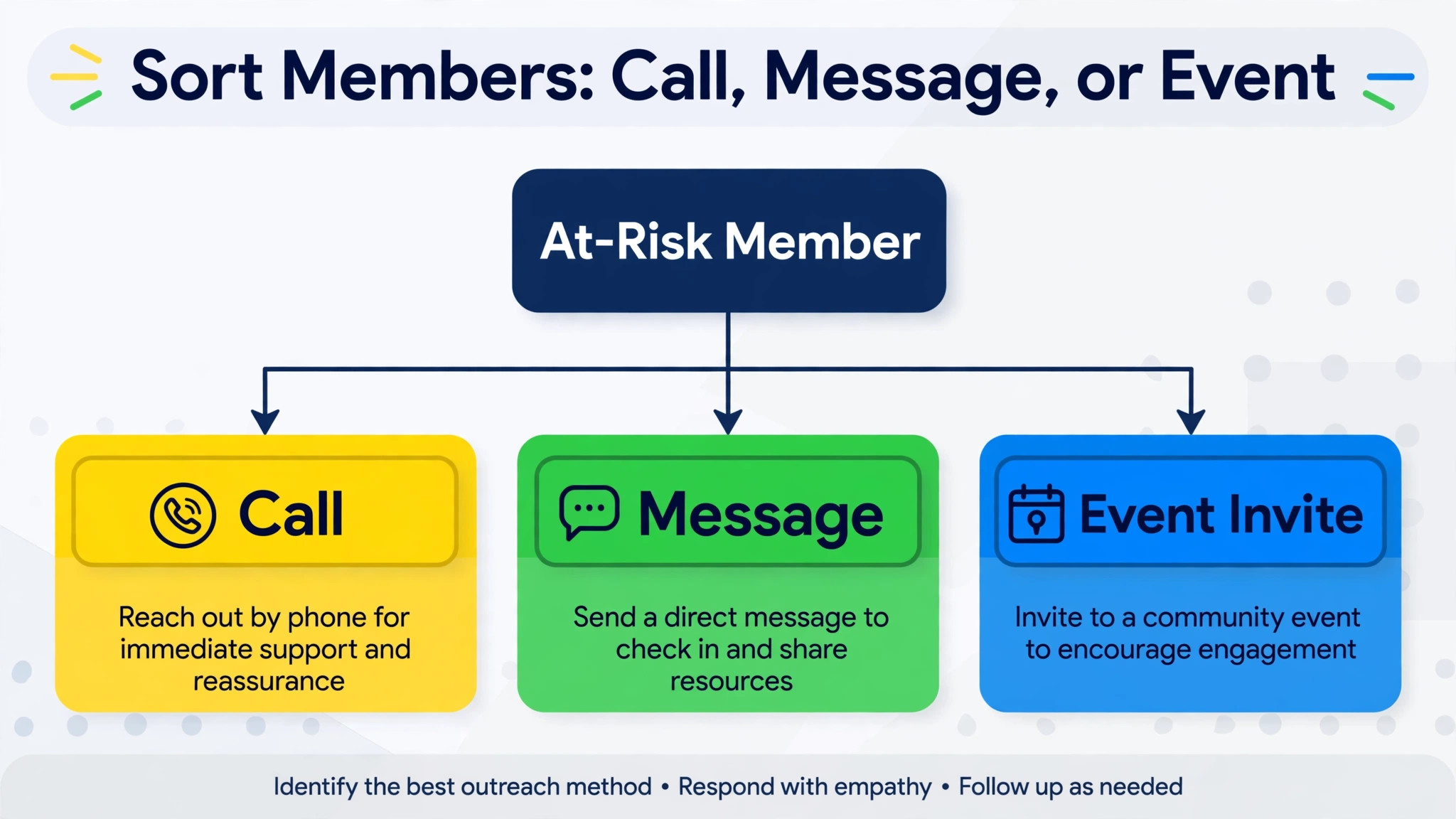
Each Monday, list members who have not booked in 14 days, members whose play dropped by half over the last month, and members with a renewal in the next 90 days. Rank them by tenure and by past engagement, so a three year member who went quiet gets a personal call while a new member who missed a week gets a friendly message. AI can prepare this list from booking data, but a manager should check it, because a member on holiday is not at risk and a member with an injury needs a different message entirely.
Step 2. Fix the court access problem before you send messages
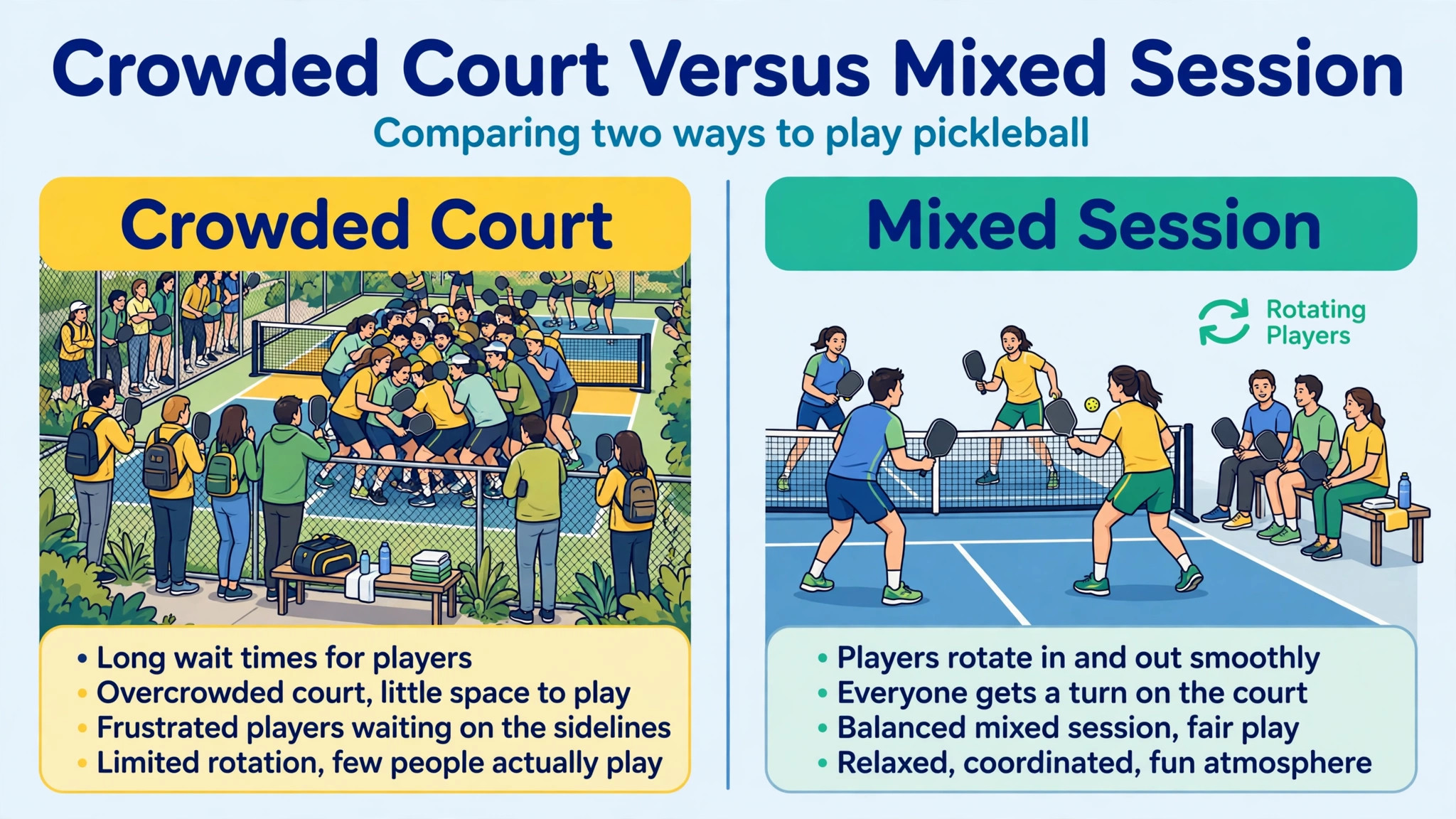
Check the court to player ratio for open play, especially at peak hours, and watch for sessions where regular groups fill every court before newcomers can book. One club guide warns that a ratio below one court per eight active members for open play drives long waits and attrition. If access is the problem, add sessions, rotate partners, or cap membership honestly, because no message campaign will retain a member who cannot play.
Step 3. Mix the groups on purpose
Run mixed-skill socials, rotate partners during open play, and pair each new member with a buddy from a different social circle. Clubs that actively mix groups report higher satisfaction and lower churn, because new members gain friends beyond their point of entry. AI can suggest balanced groups from skill ratings and past pairings, but a human host on the night makes the mixing feel welcoming rather than engineered.
Step 4. Send the 90 day renewal warm-up
Ninety days before renewal, send a message that reminds the member what they played, what they improved and what is coming next season, with no payment link yet. Mention their real sessions, such as a clinic they attended or a league they joined, and invite them to one upcoming event. This message builds the value case early, so the renewal message later feels like a formality rather than a surprise bill.
Step 5. Send the 30 day renewal message with a clear choice
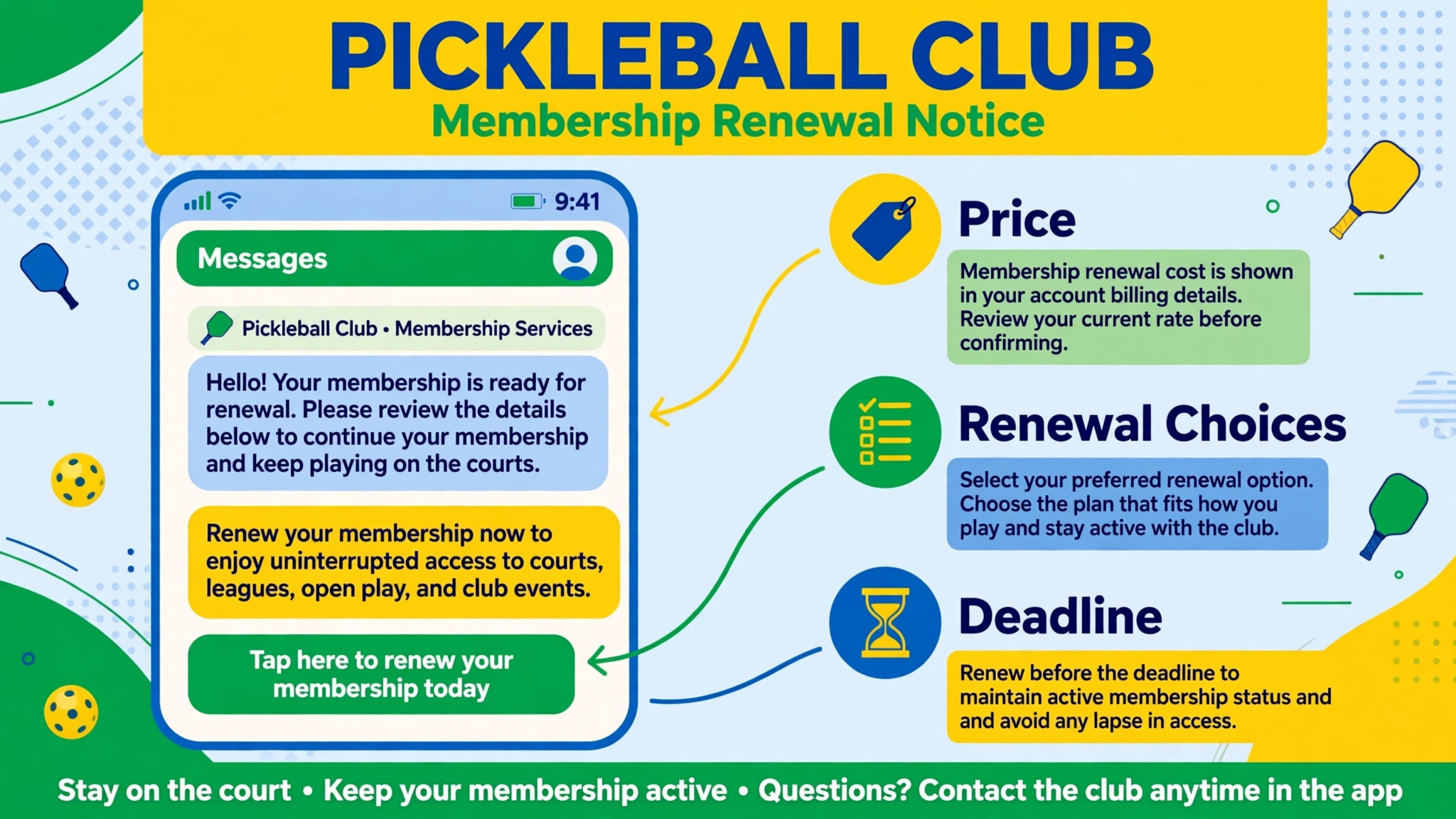
Thirty days before renewal, send the renewal terms plainly, including the price, the payment date and what changes, if anything. Offer a clear choice, such as renew, pause for a month, or switch to a lighter membership, and make each choice one tap or one reply. Members leave over surprise price changes more than over price itself, so grandfather loyal members where you promised to, and say so explicitly.
Step 6. Send the seven day reminder and the personal nudge
Seven days before renewal, send a short reminder with the payment date and a one tap renewal link. For members who have not opened it, or for long-standing members who have gone quiet, add a personal nudge from a manager or a coach, naming something specific about their play. AI can draft the nudge, but the sender should be a person the member knows, because a renewal saved by a personal note is worth ten saved by a system reminder.
Step 7. Win back the lapsed member within two weeks
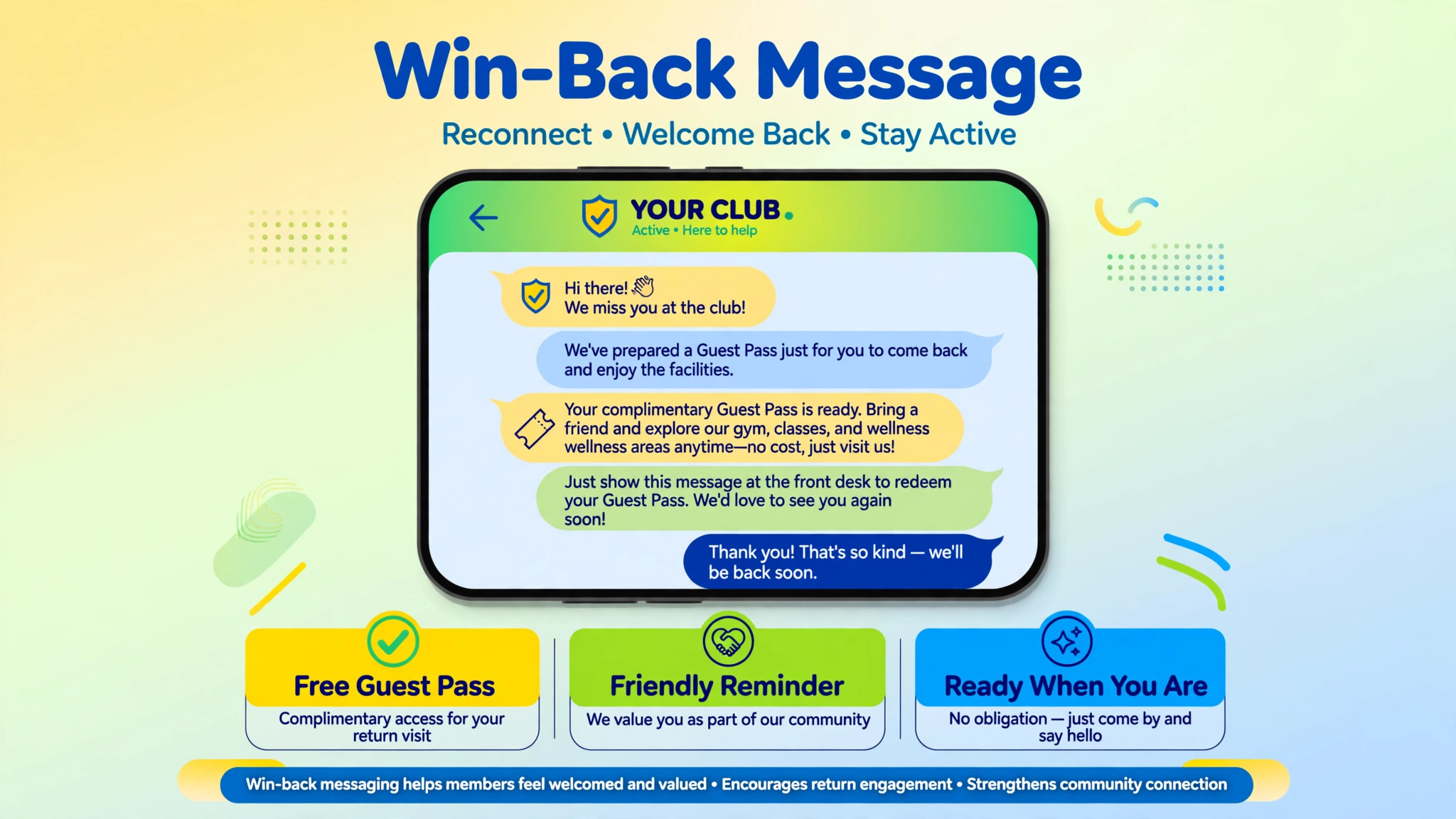
When a membership lapses, wait two days, then send a warm win-back message that asks what changed and offers a simple return path, such as a guest pass, a free clinic place or a month at the lighter tier. Survey lapsed members with three questions, namely access, programming and community, and record the answers. AI can draft the win-back from the member’s history, but the offer must be real and the reply must go to a person who can actually book it.
Step 8. Review churn every month and fix one cause
Each month, review how many members left, why they left, and which at-risk actions worked. If more than one in ten members leaves in a month, pause recruitment spending and focus entirely on retention until the leak slows, a threshold one club guide recommends. Pick the largest cause, fix it, and report the fix to members. A club that visibly fixes its own problems retains members who would otherwise drift away in silence.
The membership-renewal checklist for every month
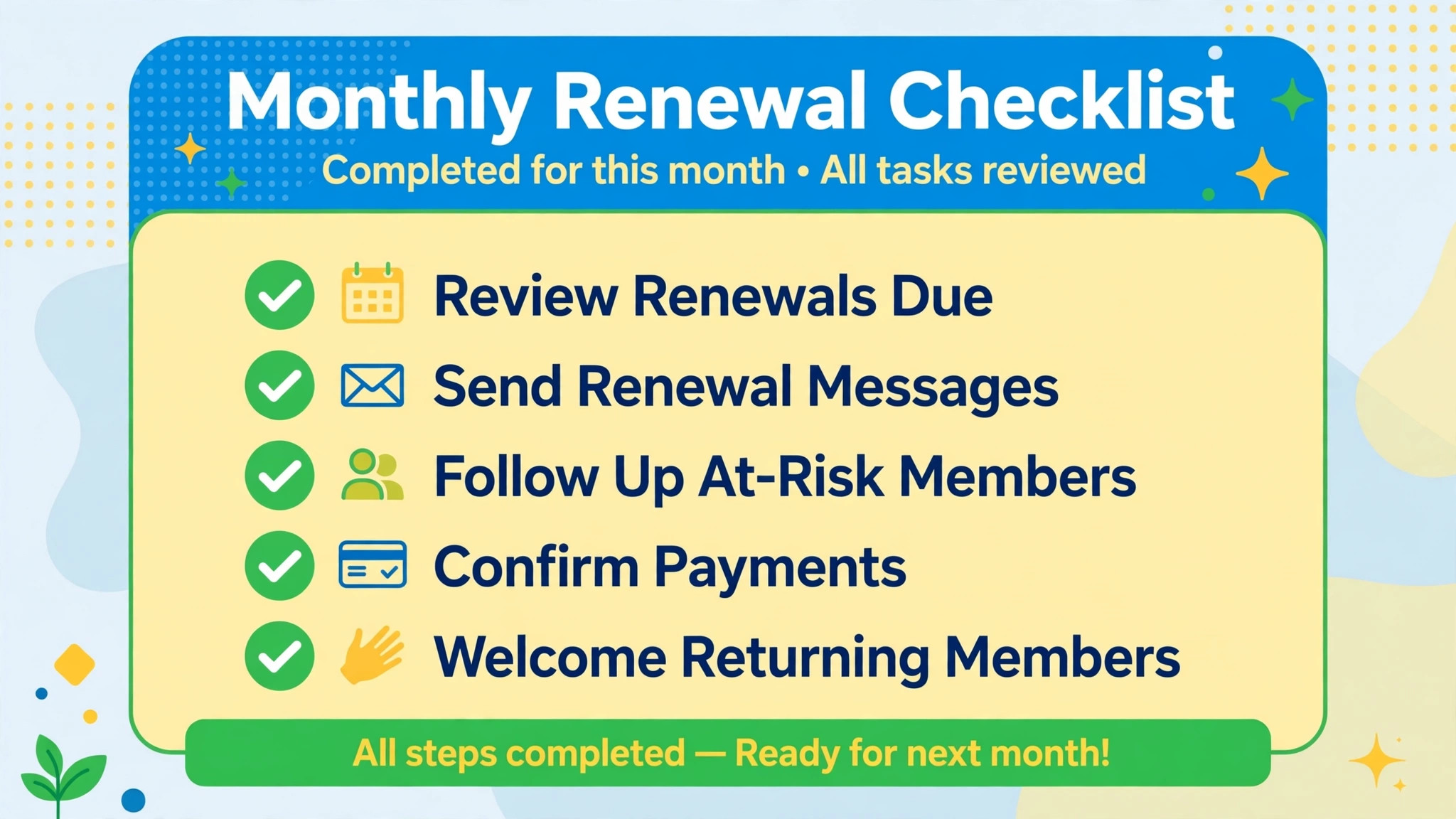
Run this checklist in full the first time, then run it as a weekly habit. use AI for pickleball club membership retention is only as strong as its weakest step, and a checklist is how a busy team keeps the weak step visible instead of forgotten.
- At-risk list built every Monday, covering no booking in 14 days, play halved in a month, and renewal within 90 days.
- Court access checked for peak hours, with new sessions or partner rotation added where waits are long.
- New members paired with a buddy from a different social circle within their first two weeks.
- Mixed-skill socials on the calendar at least twice a month, with a named host for each one.
- Ninety day renewal warm-up sent, recalling real sessions and inviting the member to one upcoming event.
- Thirty day renewal message sent with price, payment date and choices stated plainly, including pause or lighter tier.
- Seven day reminder sent with a one tap renewal link, plus a personal nudge for quiet long-standing members.
- Lapsed member win-back sent within two weeks, with a real return offer and a three question exit survey.
- Grace period and grandfathered pricing rules checked before renewal season, so no member gets a billing surprise.
- Monthly churn review held, with one largest cause fixed and the fix reported back to members.
Copy this list into your task system, assign one owner per item, and review it together each week. A checklist nobody owns is a poster, not a workflow, and the difference shows up in the first month.
Messages that bring quiet members back
The messages below are starting points, not scripts to copy blindly. Adapt each one with a real detail from the record, a real date and a real name, and keep the tone close to how your team actually speaks. A message that sounds like your team will be answered. A message that sounds like a system will be ignored.
The first message should confirm, not sell. Name the person, name the booking or visit, and give one clear next step with a reply route that works. Keep it under four short sentences, because a long message on a phone screen is a message that gets saved for later and then forgotten.
The second message should add value from the real record. Mention the last visit, the last class or the last conversation, and add one useful detail the recipient did not have, such as a date, a preparation note or a choice between two options. Value is what earns the next reply, and a message with no new information earns nothing.
The third message should make deciding easy. Restate the choice plainly, name the deadline honestly, and offer help with the decision rather than pressure to decide. If the recipient has a concern, this is the message that surfaces it, so end with a question that is easy to answer in one line.
The final message should close the loop with respect. Thank the person, state what happens next, and leave the door open with a real route back. A respectful close-out protects the relationship for the next cycle, and many lost bookings return months later to the business that closed gracefully.
Recruitment cost versus retention cost in plain terms
Measure four numbers weekly, namely response rate, conversion or completion rate, overdue rate and time from first contact to decision. use AI for pickleball club membership retention should move at least two of those four within a month, or the workflow needs a timing change before it needs a tool change. Do not measure message volume, because sending more messages is easy and means nothing on its own.
Compare the new numbers with the same period before the workflow, not with another business, because seasons, prices and local competition differ too much for outside comparison to help. A guide such as party bookings for indoor play centers makes the same point for its own niche, where the honest baseline is your own past performance, measured the same way every week.
| Measure | What good looks like | What to change first |
|---|---|---|
| Response rate | Rising week on week | Message timing and first line |
| Overdue rate | Falling toward zero | The record step, not the message step |
| Decision time | Shorter, without more chasing | The clarity of the next step |

What the first renewal cycle teaches a club
Programming is the retention engine that most clubs underrate. A club that runs only open play will keep its strongest players and slowly lose everyone else, because beginners feel exposed, intermediates feel stuck, and advanced players feel bored by the same rotation. A simple ladder of clinics, leagues, socials and ladders gives every member a next step, and AI can help schedule that ladder around court availability and coach hours. The test is simple. Can every member point to one thing next month that is designed for their level. If not, programming is the gap.
Pricing structure shapes retention as much as programming does. A low-cost membership that unlocks discounted court access suits players who play twice a month, while an unlimited model suits daily players, and a club that offers only one of them will lose the other group. Annual membership paid monthly can ease the commitment, and grandfathering loyal members through a price rise protects the members who built the club. Review the mix each year, and let members switch tiers without a penalty conversation, because a member who downgrades stays a member, while a member who must cancel to save money is gone.
Community is the moat that no competing club can copy quickly. Post-game coffee, a club WhatsApp group with a real host, volunteer roles for setup and scoring, and an annual social that is not about winning all build ties that survive a price rise or a busy month. AI can draft the invitations and summarise survey feedback, but the community itself is built by hosts who remember names, welcome newcomers by name, and notice who has gone quiet. Invest in those hosts as carefully as you invest in courts.
Finally, measure retention like a club, not like a spreadsheet. Track monthly churn, renewal rate by cohort, at-risk recovery rate, and the share of members who play at least twice a month. Share one of those numbers with members each quarter, along with the fix it prompted, because transparency builds the trust that keeps people paying. A club that talks honestly about its own retention earns the loyalty it is trying to measure.
Getting retention running before the next renewal month
Week one starts with an audit, not a purchase. List every active members, every open date and every promise that is currently tracked only in someone’s head or inbox, then move that list into one shared record with one owner. Write the rules for timing, channel and escalation on a single page, and get the whole team to agree them before any message goes out. An audit like this usually takes a day, and it prevents the most common failure, which is automating a messy list and then blaming the tool for messy results.
In the second half of week one, draft the templates and test them on real records. Pick five past cases that cover the normal range, from the easy win to the awkward exception, and draft every message for those cases by hand first. Then let the AI draft the same messages and compare the two sets side by side, keeping whatever is clearer and discarding whatever sounds generic. This comparison teaches the team what good input looks like, and it builds trust that the AI drafts will be checked rather than sent blind.
Week two is a pilot with a small group, not a launch to the whole list. Choose one segment, such as one class, one route, one month of renewals or one recall group, and run the full workflow for that segment only. Watch reply rates, watch complaints, and watch the time staff spend on review, because a workflow that saves an hour of drafting but costs two hours of fixing has not saved anything. Meet at the end of the pilot week and decide one change, not ten, so the effect of that change can actually be seen.
The most common pilot fixes are timing, channel and record gaps. A message sent at the wrong hour gets ignored, a message sent on the wrong channel never arrives, and a message built from a missing record field looks careless. Fix those three before you touch wording, because wording rarely causes a failed pilot. Also check the edge cases the pilot revealed, such as a duplicate record, a family with two contacts, or a customer who opted out on one channel but not another, and write a rule for each one.
Week three is the full rollout, and it should feel boring rather than exciting. Move the remaining segments onto the workflow one at a time, keep the weekly review meeting, and publish a one page monthly report showing response rate, overdue rate and decision time. Boring is the goal, because a workflow that only works when someone is excited about it will stop working in the first busy month. A workflow that runs quietly, with a named owner and a weekly review, will still be running next year.
Keep one rule above all others through the rollout. No message goes out without a named human approving it, no record stays in a private inbox, and no overdue item waits for the month-end meeting. Those three habits cost minutes a week, and they are what keep the workflow honest when the team is busy and the season is at its peak.
Frequently Asked Questions
How do you spot a member who is about to leave?
Watch booking frequency, not complaints. A member whose play halves in a month, who stops booking after a league ends, or who pays but never plays is showing the classic drift pattern. Combine that signal with renewal date, and you get a short at-risk list that a manager can actually work through each week.
What is a healthy monthly churn rate for a pickleball club?
One club guide suggests treating monthly churn above 10 percent as a signal to focus entirely on retention before spending on growth. Smaller clubs should watch the trend over a quarter rather than a single month, because holidays and seasons move the number. The direction matters more than any single month.
Should renewal be automatic?
Automatic renewal suits members who play regularly and know the terms, while a clean annual re-enrollment suits clubs that want a fresh commitment each year. Whichever you choose, state it plainly before the first payment, send reminders before the charge, and give members a simple pause option. Surprise charges cause more exits than price rises.
Do discounts save at-risk members?
Sometimes, but a discount alone rarely fixes the real cause. A member who cannot get a court needs access, a member who feels excluded needs a social connection, and a member who outgrew beginner sessions needs better programming. Offer a discount alongside the fix, not instead of it, or the member will leave at the next renewal anyway.
How should AI messages avoid sounding fake to members?
Use only real member data, name real sessions and real people, and keep a manager reviewing messages to long-standing members. Never let AI invent a compliment about someone’s game or a memory of an event they did not attend. One invented detail destroys trust that took a season to build.
What should a new member’s first month look like?
A welcome message, a beginner clinic place, a buddy from another group, and an invitation to a mixed social within the first two weeks. Members who gain skill and friends in the first month renew at far higher rates than members who are left to find their own way onto crowded courts.
The verdict for club managers
The verdict is a comparison worth remembering. A club that chases new members while losing one in ten each month is filling a leaking bucket, while a club that fixes access, mixes its groups and renews members personally keeps the water it already has. AI helps the second club by surfacing drift early and drafting the right message, but the retention itself comes from courts people can book, groups that welcome them, and a renewal that never surprises them. use AI for pickleball club membership retention is a discipline before it is a technology, and the discipline is a clean record, a clear rule and a message approved by a human.
Run the checklist for one renewal season and watch three numbers, namely at-risk recovery, renewal rate and monthly churn. If recovery rises and churn falls, keep the system and add one more program for the group you lose most. If they do not move, fix court access first, because no message can retain a member who cannot play. For a neighbouring view on keeping customers close, see booking software for indoor play centers and booking software for kayak rental outfitters, which cover the same habit of noticing drift early and acting on it personally.