

For years, most nurseries marketed the same way. A busy spring arrived, the owner posted a few photos when there was a spare minute, and the rest of the year went quiet. Then came the frantic discount in late summer, the empty yard in winter, and the same rush again next spring. It was hard work, but it was not a plan. When you use AI for plant nursery seasonal marketing, that pattern changes. The work is still real, the plants still need care, and customers still want honest advice. What changes is the timing, the preparation, and the consistency of the message.
The old way waits for the season to arrive and then reacts. The AI assisted way prepares the season before it arrives, then keeps a steady drumbeat of useful content while the owner is busy watering, potting, and serving customers. One approach leaves marketing to chance. The other turns it into a repeatable workflow, with a calendar, a set of prompts, and a short weekly routine that even a small team can hold to.
The Old Way vs the AI Way
In the old way, a nursery owner relied on memory and habit. Spring meant a banner and a weekend sale. Summer meant hoping regulars would return for feed and pest care. Fall meant a quiet clearance table. Winter meant closed gates and no contact at all until March. Customers forgot the nursery existed, then rediscovered it only when a neighbour mentioned it.
The AI assisted way starts with the customer calendar, not the nursery calendar. It asks what a gardener worries about in each month, then answers that worry before the customer has to ask. In February, the answer is seed starting and soil preparation. In May, it is watering and transplant shock. In October, it is fall planting and frost protection. In January, it is planning, gift cards, and workshop bookings. Each answer becomes an email, a social post, a short guide, or a workshop, and each one is prepared in a batch, not written in a panic.
| Area | Old way | AI assisted way |
|---|---|---|
| Planning | React when the season starts | Plan one season ahead in a single sitting |
| Content | A few photos when time allows | A batch of posts, emails, and guides per month |
| Stock messages | Generic sale signs | Restock alerts tied to real inventory |
| Customer contact | Silent for months | A short useful message every week or two |
| Winter | No marketing at all | Planning content, gift events, and bookings |
The difference is not the technology. It is the discipline that the technology makes affordable. A small nursery cannot hire a marketing team, but it can use AI tools to draft, organise, and schedule the same kind of steady communication that larger garden centres already use. The owner still checks every claim, still corrects plant advice, and still decides what goes on sale. AI does the first draft and the organising. The owner keeps the judgement.
How to Use AI for Plant Nursery Seasonal Marketing
This section is the core workflow. It runs in seven steps, and it repeats every season. Once you have run it twice, the whole cycle takes about two to three hours of focused work per month, plus a short weekly check. That is the point. A workflow that needs ten hours a week will be abandoned in the first busy spring. A workflow that fits around real nursery work will survive.
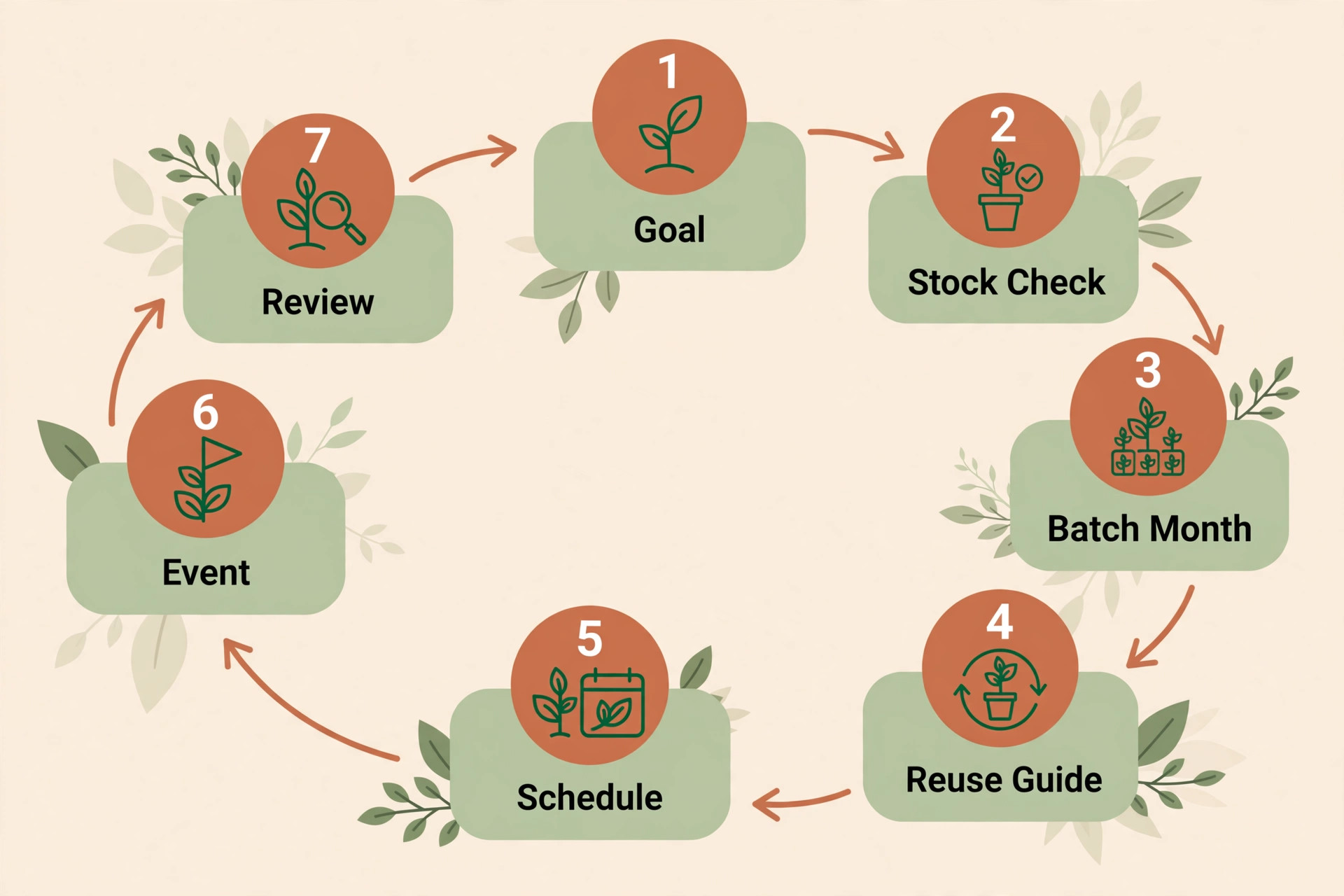
Step 1. Pick one seasonal goal
Every season gets one clear goal, not five. Spring might aim for more first time visitors. Summer might aim for repeat care purchases. Fall might aim for larger fall planting orders. Winter might aim for workshop bookings and gift card sales. One goal keeps every post, email, and event pulling in the same direction, and it makes measuring results simple at the end of the season.
Write the goal down in one sentence, with a number in it. For example, book forty workshop seats in February, or sell two hundred bags of mulch before the first frost. A vague goal like doing better on social media cannot be checked. A numbered goal can be, and the check at the end of the season tells you whether to repeat the campaign or change it.
Step 2. Check stock before you promise anything
Nothing damages trust faster than promoting a plant that is out of stock. Before any campaign is drafted, check what is actually on the benches, what is arriving in the next delivery, and what will be ready in three weeks. Build the campaign around plants you can sell, not plants you wish you had. This is also where good records pay off, and a look at inventory software for plant nurseries can help a nursery owner compare tools that track stock by variety, size, and location.
AI helps here by turning a stock list into campaign ideas. Paste a plain list of available plants and ask for five campaign angles that use only those plants, grouped by customer problem. The result might pair shade tolerant shrubs with a shady garden guide, or pair drought tolerant perennials with a low water garden email. The owner then deletes any angle that does not match real stock and keeps the rest.
Step 3. Build the month in one batch
Batching is the habit that saves the season. Set aside one morning, or two short evenings, and draft the whole month at once. That means four social posts, one email, one short care guide, and one event or offer announcement, all written, checked, and scheduled before the month starts. During the month itself, the owner only answers comments, posts a few real photos from the yard, and handles the event.
AI drafting makes batching possible for a busy owner. Ask for a month of posts around a single theme, such as fall planting, then edit each one for local frost dates and real prices. Ask for three versions of an email subject line, then pick the clearest one. Ask for a short care guide outline, then fill in the details from experience. The drafts arrive fast. The expertise still comes from the nursery.
Step 4. Turn one guide into five pieces of content
A single good guide should never be used once. A guide on fall planting can become a social carousel, a short email, a printed handout at the counter, a workshop outline, and a set of answers to common questions. AI can rework the same checked facts into each format, keeping the advice consistent while changing the length and tone for each channel.
Step 5. Schedule, then stay present in person
Scheduling tools take the pressure off daily posting. Load the month, set the times, and let the posts go out while the owner is serving customers. But scheduling is not the same as disappearing. The owner or a staff member should still reply to comments within a day, answer plant questions honestly, and post real photos of the yard at least once a week. Customers can tell the difference between a scheduled post and a real nursery.
Step 6. Add one event or offer per month
Content alone rarely fills a yard. An event or a clear offer gives people a reason to visit on a particular day. A spring repotting workshop, a summer pest clinic, a fall planting day, or a winter wreath event all work, provided the event fits the season and the stock. The event does not need to be large. Twelve people at a well run workshop beat fifty people at a chaotic sale.
AI can draft the event description, the reminder emails, and the follow up message in one pass. The owner adds the date, the price, the seat limit, and the plants that will be used. Booking stays simple, with a clear limit on seats so the workshop stays useful. Small service businesses in other trades use the same pattern, and the way booking software for nail salons handles appointments is a useful model for how simple a workshop booking page can be.
Step 7. Review the season in thirty minutes
At the end of each season, spend thirty minutes on a simple review. Which posts got replies and questions. Which emails led to visits or orders. Which event filled, and which one did not. Write down one thing to repeat and one thing to stop. That short note becomes the starting point for the same season next year, so the nursery improves every cycle instead of starting from scratch.
AI can help with the review by summarising comments and sales notes into themes, but the owner makes the decision. If a workshop filled because regulars loved the teacher, repeat the teacher, not just the topic. If an email failed because the offer was unclear, rewrite the offer, not just the subject line. The review is short, honest, and practical, and it is the step most nurseries skip.
Your Seasonal Calendar Template
A calendar template turns good intentions into dates. The table below is a full year template that a nursery can copy and fill in with its own frost dates, delivery dates, and event dates. Each season has a theme, a main campaign, a weekly content rhythm, and one event. The template is deliberately simple, because a calendar that needs a spreadsheet expert will not be used.
| Season | Theme | Main campaign | Weekly rhythm | One event |
|---|---|---|---|---|
| Spring | Get growing | Spring rush and first planting | Two posts, one email every two weeks | Repotting workshop |
| Summer | Keep it alive | Summer care and watering help | Two posts, one care tip weekly | Pest and watering clinic |
| Fall | Plant for next year | Fall planting and soil care | Two posts, one email every two weeks | Fall planting day |
| Winter | Plan and gift | Winter planning and gift events | One post weekly, one email monthly | Wreath or planning workshop |
To use the template, fill in four dates for each season. First, the date the campaign starts, usually two to three weeks before the season peaks. Second, the delivery dates for the plants the campaign will feature. Third, the event date, with a booking deadline one week before. Fourth, the review date, one week after the season ends. Those four dates, written on a wall calendar or in a shared document, are enough to keep the whole plan on track.
Copy this monthly checklist into the same document as the calendar, and tick it off each month.
– Goal and offer written in one sentence, with a number attached – Stock checked against every plant named in the campaign – Four social posts drafted, checked, and scheduled – One email drafted, checked, and scheduled – One care guide or handout finished and printed if needed – Event page live, with date, price, and seat limit shown – Review notes from last month read before the new month starts
A nursery that follows this checklist will market in winter as well as in spring, and that steadiness is the real advantage. Customers who hear from the nursery in January are far more likely to visit in March than customers who hear nothing for four months.
Campaigns That Fit Each Season
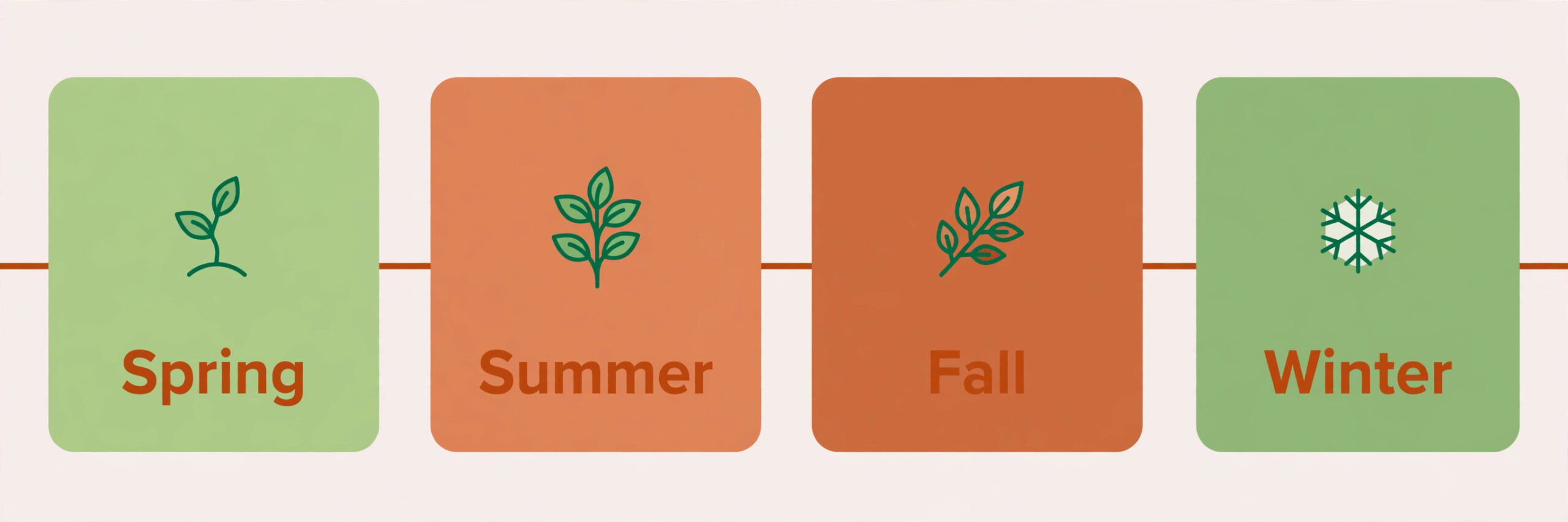
Campaigns work best when they match what gardeners are already thinking about. A spring campaign that talks about frost protection in July will be ignored, however well written it is. A winter campaign that talks about spring planting too early will feel out of touch. The campaigns below follow the gardener year, not the retail year, and each one can be run with the workflow above.
Spring rush campaigns
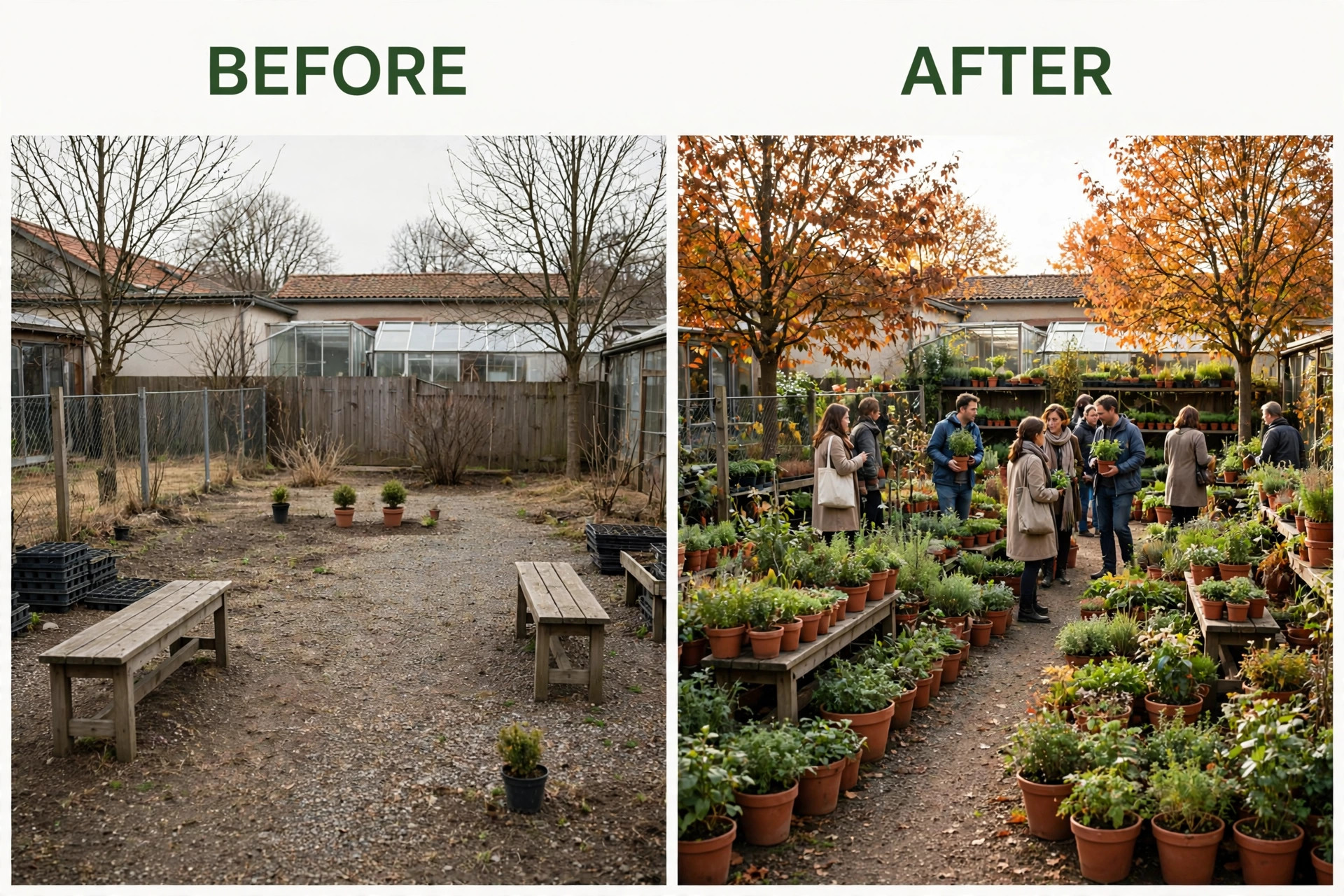
Spring is the busiest and most forgiving season, because demand is already high. The job of marketing in spring is to direct that demand, not create it. Restock alerts work well here, with short messages when a popular variety arrives. A simple message that names the plant, the sizes available, and the date it arrived will bring serious buyers faster than a general sale announcement.
Workshops also work well in spring, especially repotting, seed starting, and soil preparation. Keep groups small, charge a fair price that includes materials, and send a follow up email with care steps and a small offer on the plants used in the workshop. That follow up turns a one day visitor into a repeat customer, and it gives the nursery a reason to email again without sounding pushy.
Summer care campaigns
Summer is the season when gardeners need help, not more plants. Watering guides, pest identification help, and feeding schedules are the content that gets saved, shared, and asked about at the counter. A short weekly care tip, tied to the actual weather, is more useful than a daily stream of product photos. If a heatwave is coming, a watering post before the heat arrives is genuinely helpful, and customers remember who helped them.
Fall planting campaigns
Fall is the most underused season in nursery marketing, and that makes it a real opportunity. Many gardeners do not know that fall is a strong time to plant trees, shrubs, and bulbs, so a clear fall planting campaign can stand out. The message is simple. Plant now, let roots establish over winter, and enjoy stronger growth in spring. That message, backed by a short guide and a planting day event, gives customers a reason to visit when they might otherwise wait until spring.
Winter planning and gift campaigns
Winter is where most nurseries lose the year. The yard is quiet, the staff is smaller, and marketing stops. But winter customers are planning, buying gifts, and looking for indoor plants. A winter campaign can serve all three groups with a light touch. One post a week, one email a month, and one event are enough, provided the content is useful and the event is well run.
Gift events work well in winter, especially wreath making, indoor plant gifts, and gift cards paired with a spring planting guide. A gift card sold in December is a spring visit already booked. Planning workshops work well too, with customers bringing garden photos and leaving with a simple plan and a plant list. That plant list becomes spring demand, and the nursery that helped plan the garden is the natural place to buy the plants.
Preorders deserve a place in the winter plan as well. If customers can reserve popular spring varieties in January, the nursery can order with more confidence and the customer feels looked after. Clear preorder terms matter here, with dates, deposits, and pickup windows stated plainly. Other small businesses handle preorders every day, and the discipline behind order management software for meal prep businesses shows how a simple preorder list, kept accurately, prevents the confusion that puts customers off.
Prompts and Templates You Can Copy
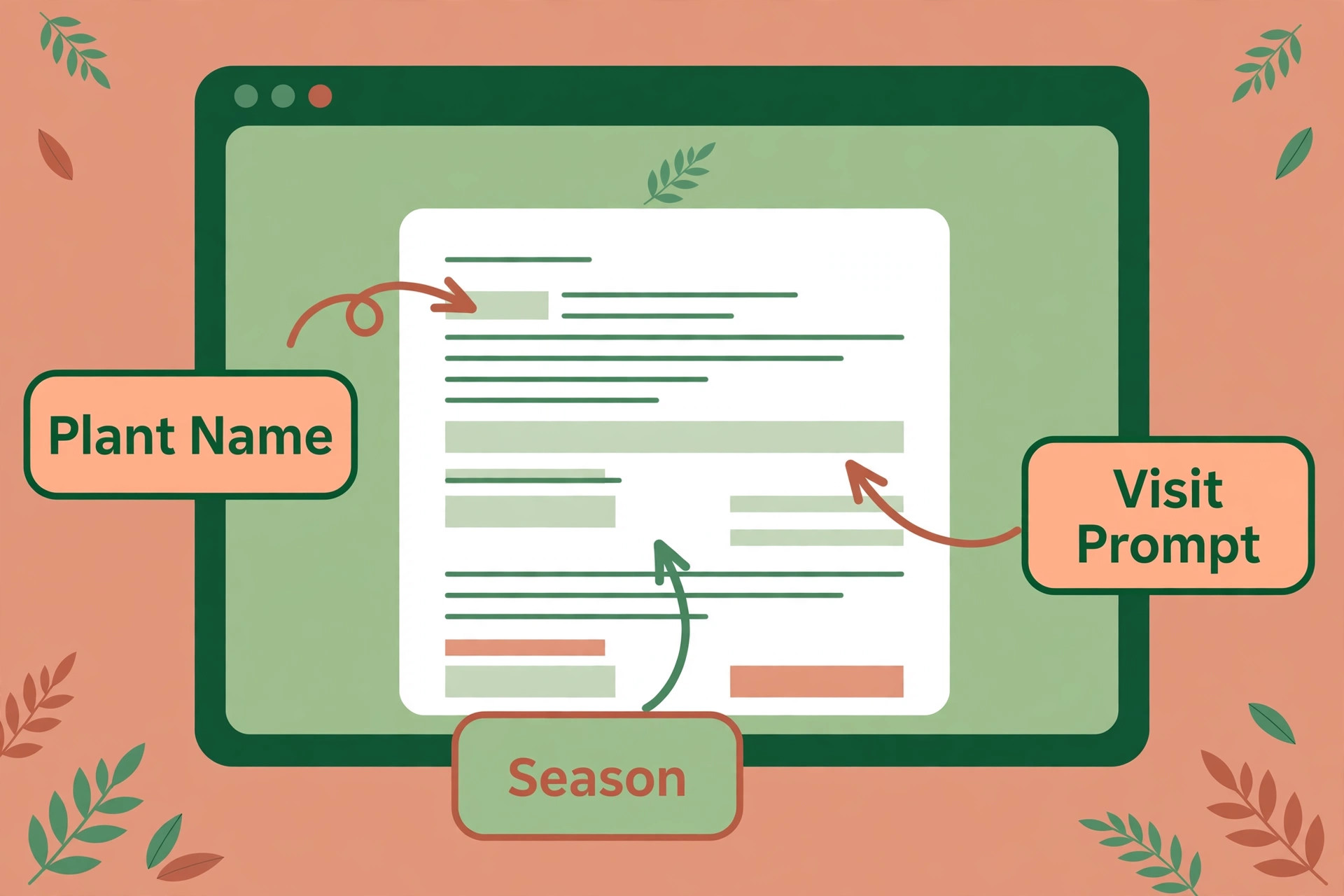
Good prompts are specific. They name the plant, the season, the customer, and the format, and they tell the tool what not to do. Vague prompts produce vague posts. Specific prompts produce drafts that need only a short edit. The prompts below are written for a nursery owner to copy, fill in the brackets, and check before use. When you use AI for plant nursery seasonal marketing in this way, the tool does the drafting and you keep the expertise.
Use these prompts as starting points, not as finished posts. Always replace the bracketed details with real stock, real prices, and real local dates before anything goes out.
– Write a 120 word social post for gardeners in [town] about [plant] in [season]. Mention [size and price] only. End with one clear visit prompt. – Turn this care guide into three short emails for [season]. Each email covers one problem, one fix, and one plant we stock. – List ten customer questions about [topic] in [season], then answer each in two sentences using only this guide. Flag uncertain answers. – Draft a workshop description for [event] on [date]. Include seat limit, price, what is included, and what customers take home. – Rewrite this post for a beginner. Explain [term] in plain words and keep every care instruction exactly as written.
Email templates benefit from the same discipline. A good nursery email has one subject, one main message, and one clear next step. It names two or three plants that are actually in stock, gives one useful tip, and invites the reader to visit, book, or reply with a question. Long emails with ten offers and no clear point get deleted. Short emails with one useful idea get saved.
Before choosing an email tool, check the real monthly cost for a list of your size, because a tool that is cheap for fifty subscribers can become expensive at two thousand. A clear look at the cost of Mailjet for small business shows how pricing changes with list size, and that kind of check should happen before any campaign is built around a tool. Mailchimp, ConvertKit, and similar tools all work well for nurseries, provided the owner picks one, learns its scheduling and list features, and sticks with it for a full year.
Local search is where many nursery customers start. They search for a nursery near them, for a plant by name plus their town, or for a workshop on a weekend. A nursery that appears with correct hours, recent photos, and real answers will win visits that a prettier but outdated listing will lose. When you use AI for plant nursery seasonal marketing for local content, the goal is accurate, local, and useful, not clever for its own sake.
Start with the basics, and check them every season. The business profile should show correct hours, including seasonal changes, a current phone number, and photos from the last month. The website or profile should name the town and the areas served in plain words, list the main plant groups stocked, and show the next event date. AI can draft the descriptions, but the owner must check every hour, price, and date, because a customer who arrives to closed gates after trusting a listing rarely returns.
Local content ideas that work well for nurseries include the following.
– A monthly what to plant now post, written for the local frost dates and soil – A short video or photo series showing a new delivery being unpacked – A customer question of the week, answered in plain words with a plant suggestion – A seasonal checklist that customers can save and bring to the nursery – A market stall or event announcement with the exact location and times
Social content should also show the people behind the plants. Staff tips, short explanations of why a plant was chosen for the region, and honest notes about what is hard to grow locally all build trust. Customers buy from nurseries they trust, and trust comes from specific, local knowledge, not from generic garden quotes. A post that says which tomato varieties cope with local heat, and which ones struggle, will do more for sales than ten polished photos of plants that cannot survive the summer.
For nurseries that also sell at markets, the same local discipline applies to the stall. Clear signage, a simple card reader setup, and a short list of what is available that day all help, and comparing a POS system for farmers market vendors can help a nursery owner pick a checkout setup that works outdoors, with or without a strong signal. The market stall is marketing too, because every happy market customer is a potential visitor to the main yard.
Measuring What Actually Worked
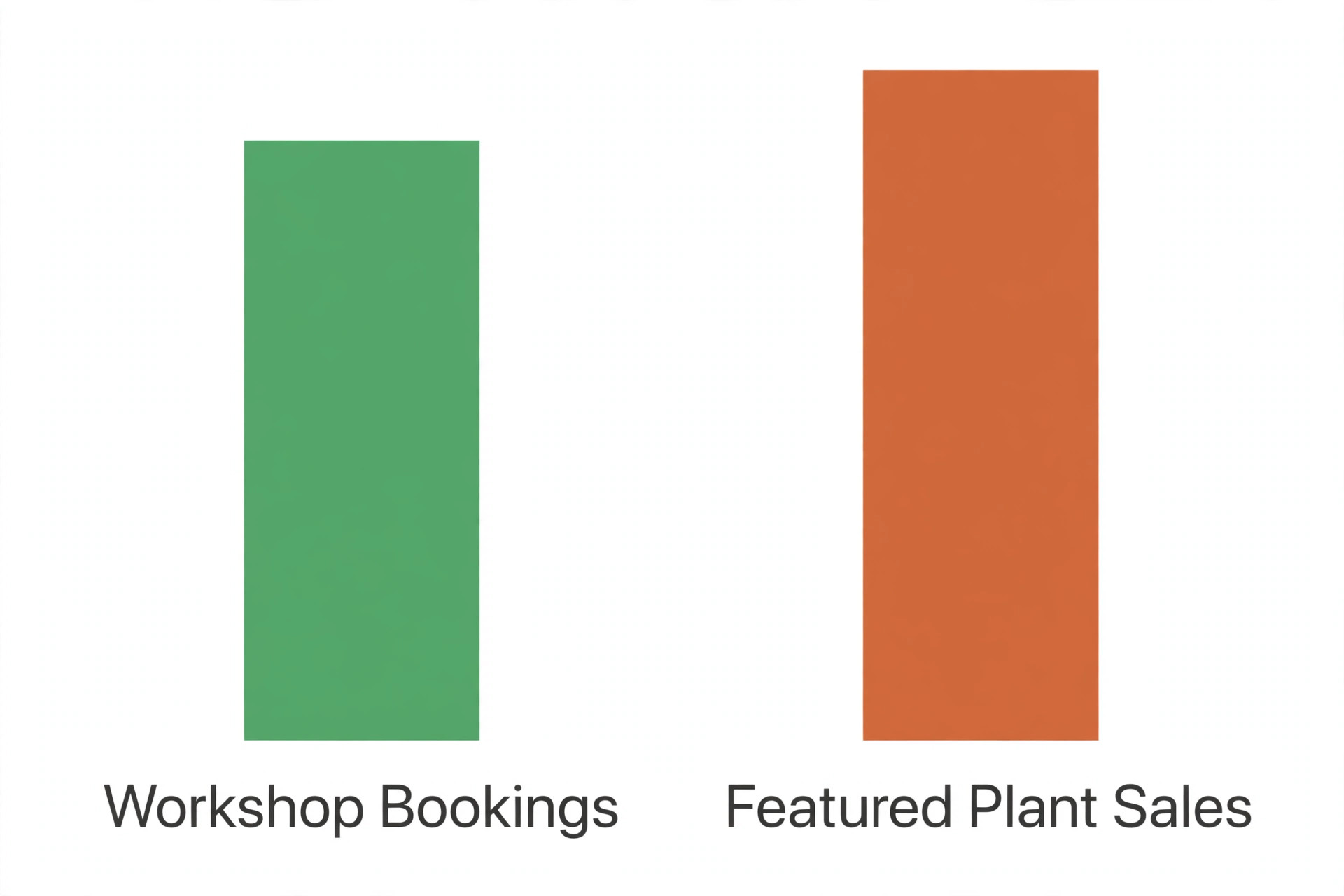
Marketing without measurement is guessing, and guessing wastes seasons. The good news is that a nursery does not need complex analytics to measure what matters. Four numbers, checked at the end of each season, tell most of the story. Foot traffic on event days, email replies and visits linked to an offer, workshop bookings and no shows, and sales of the plants featured in the campaign. Those four numbers, compared with the season goal, show whether the campaign worked.
When you use AI for plant nursery seasonal marketing, keep the measurement simple enough to repeat. AI can summarise comments into themes, group questions by topic, and draft the review note, but the owner should still look at the raw numbers. If a post got many likes but no visits, it was entertainment, not marketing. If an email got few opens but brought ten serious buyers, it was a success, even if the open rate looked modest. Judge campaigns by visits, bookings, and sales, not by applause.
A simple end of season review sheet helps. For each campaign, record the goal, the offer, the dates, the cost in time and money, the visits or bookings, and the sales of featured plants. Then add one line on what to repeat and one line on what to stop. After two years, that sheet becomes a valuable record of what works for this nursery, in this town, with these customers. No generic guide can replace that local record, because every nursery serves a different climate and a different community.
Mistakes That Waste a Season
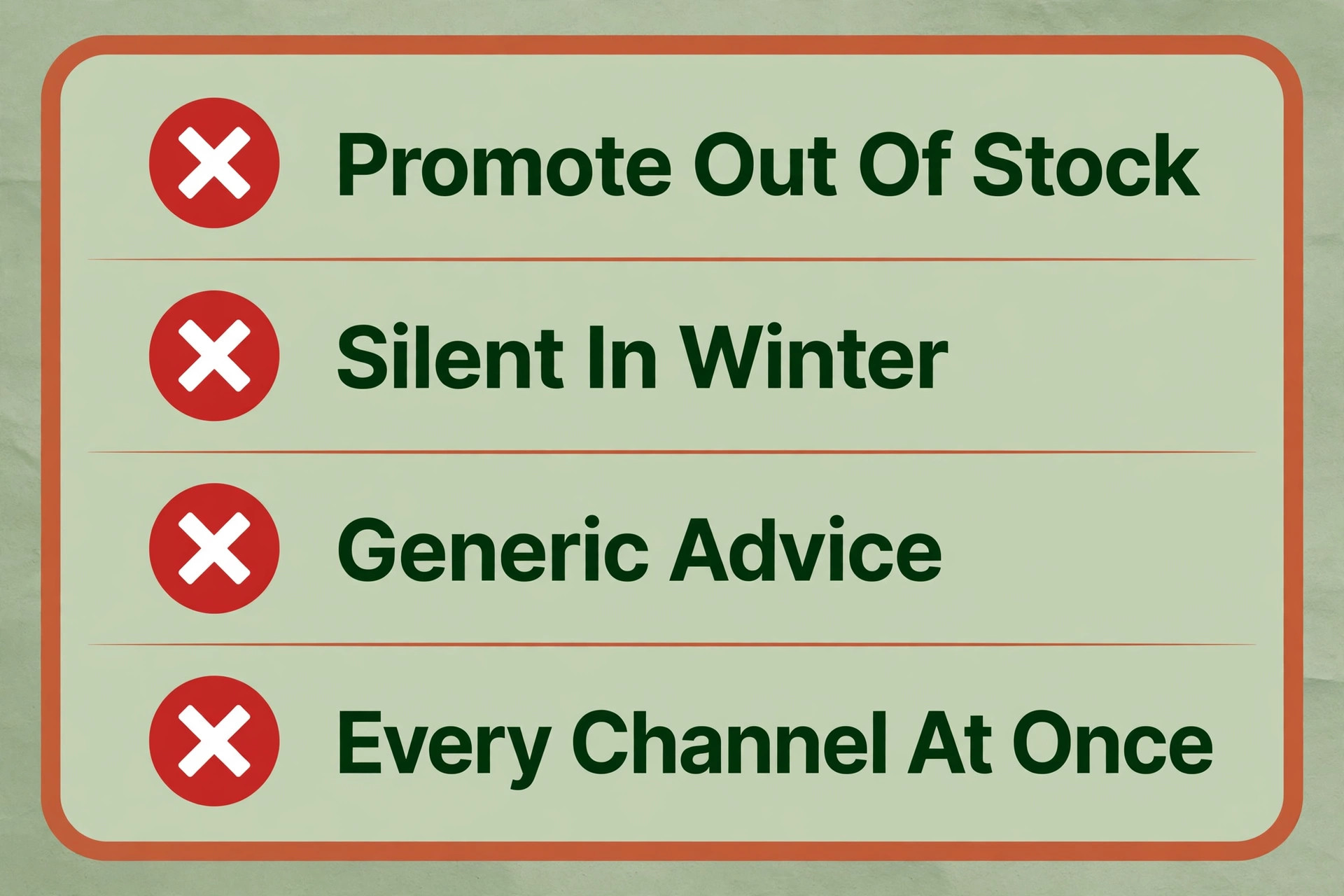
Most nursery marketing failures are not caused by bad tools. They are caused by predictable mistakes that repeat every year. The first is promoting plants that are not in stock, which wastes trust and sends buyers to a competitor. The second is going silent in winter, which forces the nursery to rebuild its audience every spring. The third is copying generic garden advice that does not fit the local climate, which confuses customers and damages credibility.
Another common mistake is trying to be on every channel at once. A nursery with a small team does not need five social platforms, a blog, a video channel, and a podcast. It needs one or two channels done well, plus email for customers who have already visited. Choose the channels where local customers actually are, post there consistently, and ignore the rest without guilt. Consistency on one channel beats sporadic effort on five.
A further mistake is making every post a sale. Customers will tolerate an offer when it is useful and well timed, but they will stop reading if every message is a discount. The balance that works for most nurseries is roughly three useful posts for every one sales post. Care tips, guides, answers to questions, and real yard updates earn attention. Offers then land with an audience that is already listening, instead of an audience that has tuned out.
Finally, many nurseries forget to ask customers what they want. A short question at the counter, a reply to an email asking what to cover next month, or a simple poll about workshop topics can guide the whole next season. When you use AI for plant nursery seasonal marketing, use it to analyse those answers and spot themes, but let the customers set the agenda. Marketing that answers real counter questions will always beat marketing that guesses.
Frequently Asked Questions
How much time does AI seasonal marketing take each week?
Most nurseries can run this workflow in two to three hours per month for batching, plus about thirty minutes a week for replies, real photos, and small updates. The first month takes longer, because the calendar, templates, and prompts are being set up for the first time. After that, the routine shortens fast, provided the owner resists adding new channels and sticks to the plan.
Do I need expensive software to start?
No. A nursery can start with a free or low cost AI writing tool, a simple email tool, a scheduling tool, and a shared document for the calendar. Inventory and booking tools help as the nursery grows, but they are not required on day one. Start with the calendar and the batching habit, then add tools only when a clear bottleneck appears, such as stock confusion or workshop booking chaos.
Will AI content sound generic and harm my reputation?
It can, if it is published without checking. The safeguard is the human edit. Every draft must be checked for local climate, real stock, real prices, and correct care advice before it goes out. When the owner rewrites the local details and adds real yard experience, the content stops sounding generic, because it carries facts that only this nursery could provide.
What should I post in winter when the yard is quiet?
Post planning content, indoor plant care, gift ideas, and workshop announcements. One post a week and one email a month are enough in winter. Planning workshops, gift events, and preorders all give winter content a purpose, and they turn quiet months into preparation for spring. A nursery that stays in touch in winter does not have to reintroduce itself in March.
How do I handle plant advice that AI gets wrong?
Correct it before publishing, and never publish advice you have not checked. If a draft recommends a plant for the wrong light, soil, or frost zone, rewrite that part from experience. If you are unsure about a care claim, leave it out or check a reliable reference first. Customers forgive a short post. They do not forgive wrong advice that kills their plants.
Can a one person nursery really follow this workflow?
Yes, provided the scope stays small. One goal per season, one event per month, one email per fortnight in busy seasons, and one post a week in quiet seasons is enough. The workflow is designed for a busy owner, not for a marketing team. If a month gets too busy, protect the email and the event, and let extra social posts wait. The calendar survives a missed post. It does not survive a missed season.
The Verdict for a Busy Nursery
Seasonal marketing does not need to be loud, expensive, or constant. It needs to be timely, useful, and steady, with one goal per season, one event per month, and content that answers real gardener questions. AI makes that steadiness affordable for a small nursery, by drafting fast and organising the calendar, while the owner keeps control of advice, stock, and prices. That partnership is the whole idea, and it works best when it stays honest about its limits.
When you use AI for plant nursery seasonal marketing, start with the next season, not with a perfect year. Pick one goal, check your stock, batch one month of content, run one event, and review the result in thirty minutes. Repeat that cycle for a full year, and the nursery will have something most competitors lack, which is a marketing record built from its own customers, its own climate, and its own plants. That record, more than any single campaign, is what fills the yard season after season.