
Compare two nurseries at the start of spring. One knows exactly how many five litre Japanese maples are ready in block C, how many are still in propagation, and which orders await them. The other knows it has maples somewhere, and spends the morning walking the yard with a clipboard. Both nurseries sell plants. Only one can promise a customer a plant, a size, and a delivery date without guessing. That gap is what the best inventory software for plant nurseries closes.
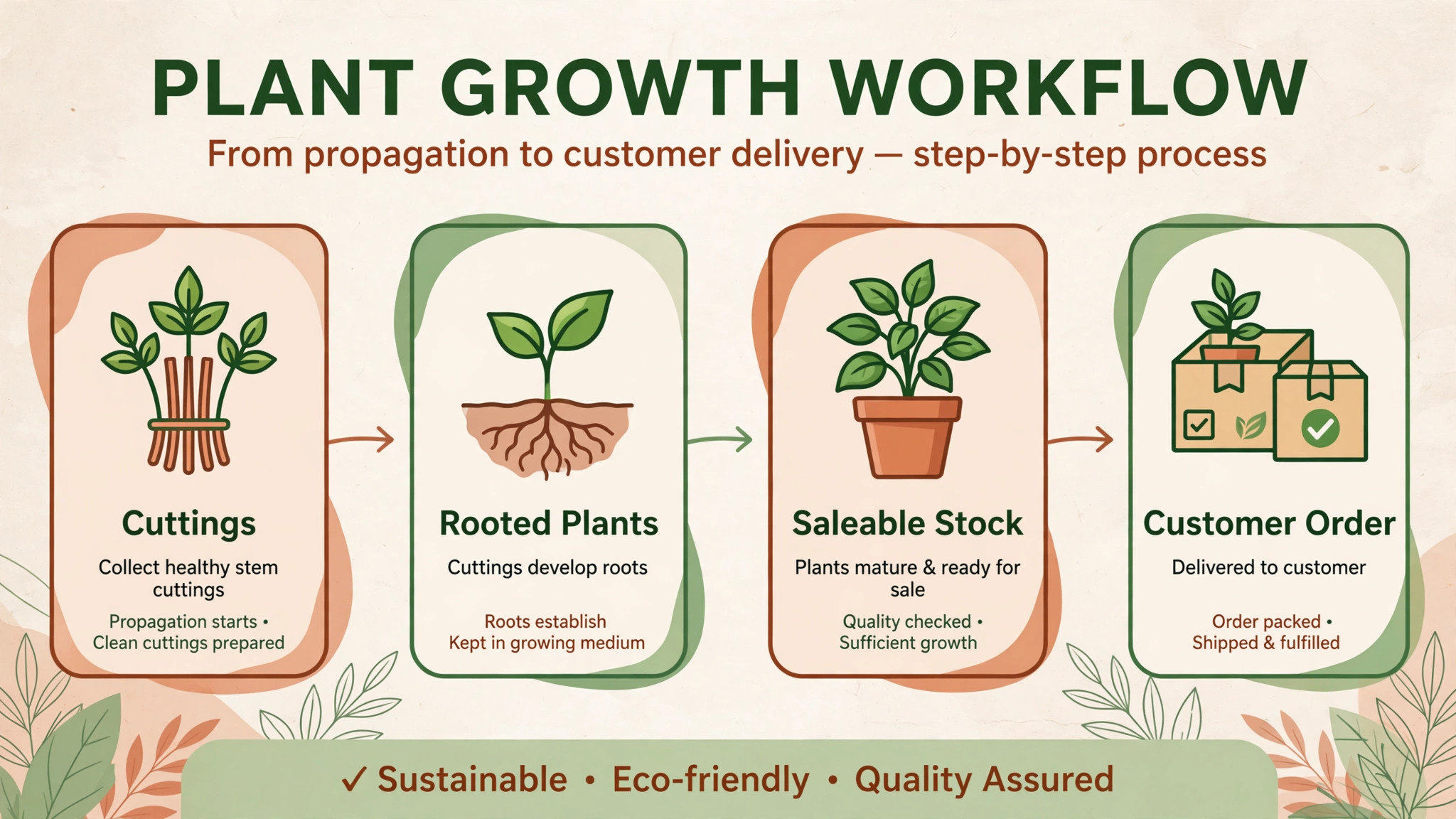
Nursery stock is living stock, and that changes inventory in ways a normal retail system does not handle well. A plant grows, changes pot size, moves from a greenhouse to a hardening area to a sales bench, and may die along the way. A batch of cuttings becomes rooted plants, then saleable stock, and the system must follow that journey without losing the count at each step.
This guide compares fifteen tools, from simple stock apps to full platforms nurseries adapt to living stock. Prices are starting prices where published. Where a price is not confidently known, the note reads Check the vendor pricing page, because user counts and order volume change the real monthly figure.
Why Nursery Stock Breaks a Normal Inventory System
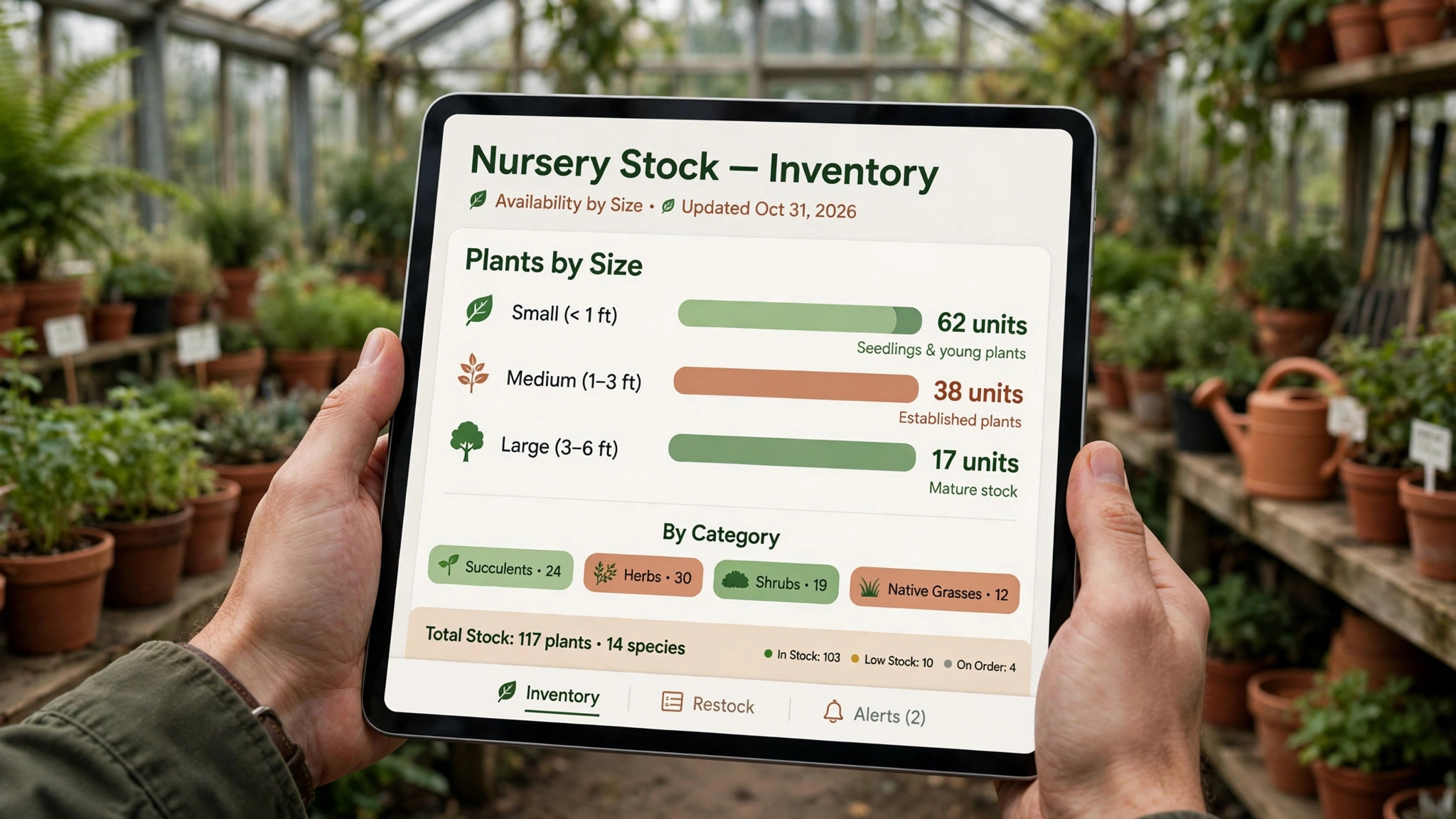
A normal inventory system tracks a product, a quantity, and a location. A nursery tracks a plant, a batch, a pot size, a growth stage, and a changing location. A batch of lavender may start as one thousand cuttings in a propagation house, become eight hundred rooted plants in a greenhouse, and end as six hundred saleable plants on a retail bench. Each stage has a different count and value, and a system that records only a single quantity will lose the story at the first move.
Seasonality adds a second problem. A nursery may hold most of its stock value in spring, sell heavily for eight weeks, and then carry a smaller range through summer and autumn. Staff numbers rise and fall with the season, and the system must be simple enough for seasonal staff to use correctly on day one, or it will be bypassed and its counts will not be trusted by midsummer.
Online sales add a third problem. A plant listed online must be the plant that actually exists, in the size listed, ready to ship as promised. A customer who orders a three litre olive and receives a one litre olive will not order again. A nursery with online sales therefore needs one stock truth for yard, shop, and website, with size and batch accuracy, not just a total plant count.
The 15 Tools at a Glance
| Tool | Starting price | Best for | Nursery depth |
|---|---|---|---|
| Sortly | Check the vendor pricing page | Small nurseries wanting visual stock | Good |
| Zoho Inventory | Check the vendor pricing page | Nurseries wanting orders plus stock | Good |
| Cin7 Core | Check the vendor pricing page | Growing nurseries with multi channel sales | Strong |
| inFlow Inventory | Check the vendor pricing page | Small nurseries with simple stock control | Good |
| Odoo Inventory | Check the vendor pricing page | Nurseries wanting a full business system | Good |
| Fishbowl | Check the vendor pricing page | Nurseries with warehouse style stock | Good |
| Katana | Check the vendor pricing page | Growers tracking production batches | Good |
| Unleashed Software | Check the vendor pricing page | Mid size nurseries with purchasing | Strong |
| Dear Systems | Check the vendor pricing page | Nurseries with manufacturing style batches | Good |
| QuickBooks Commerce | Check the vendor pricing page | Nurseries already on QuickBooks | Good |
| Lightspeed Retail | Check the vendor pricing page | Retail nurseries with a shop counter | Good |
| Square for Retail | Check the vendor pricing page | Small retail nurseries starting out | Good |
| Erply | Check the vendor pricing page | Nurseries with multi site stock | Good |
| Finale Inventory | Check the vendor pricing page | Nurseries selling on several channels | Good |
| Ordoro | Check the vendor pricing page | Nurseries with online order shipping | Good |
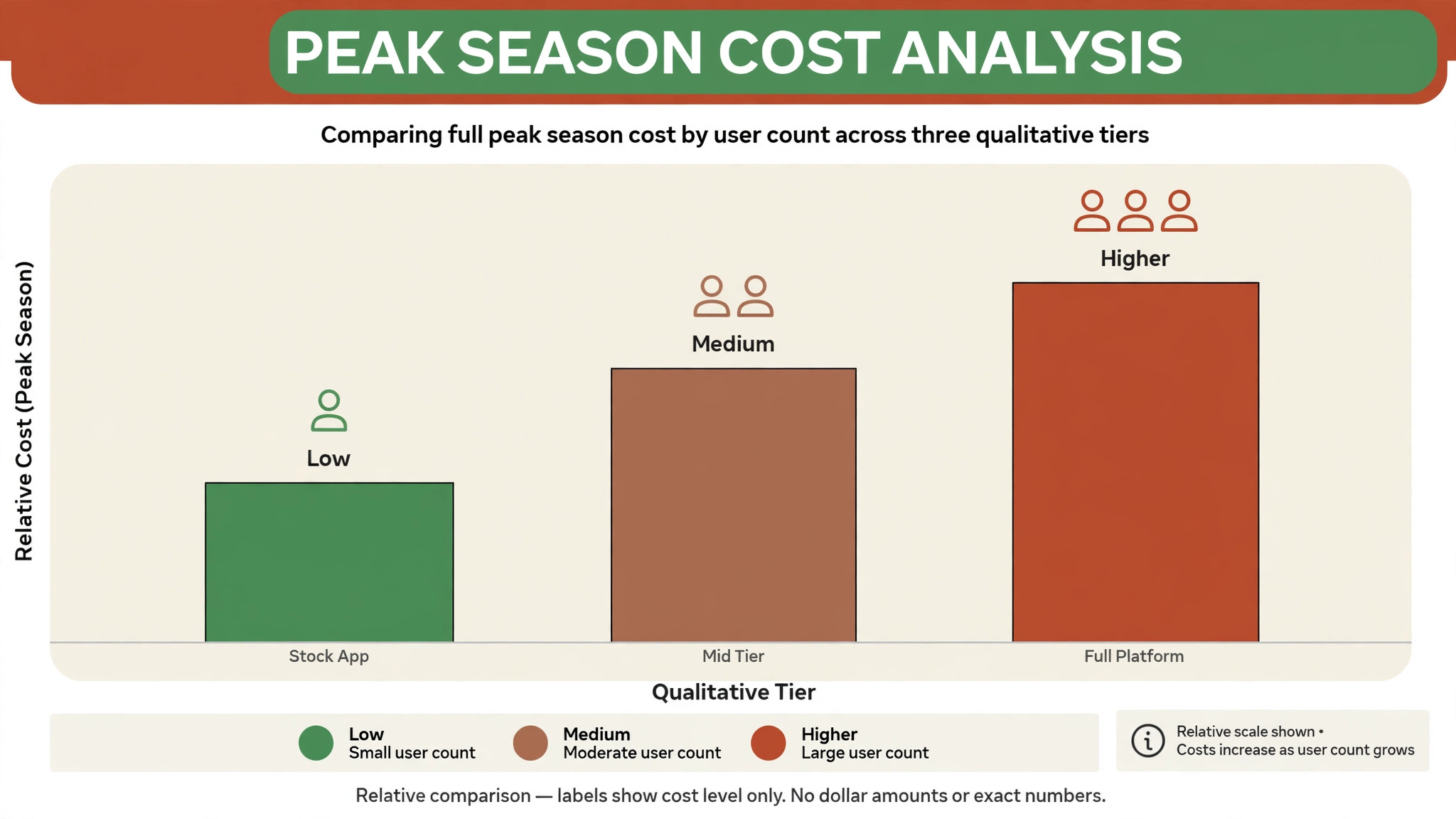
Inventory pricing is rarely a single figure. User seats, warehouse or location counts, order volume, and added modules for purchasing or manufacturing all change the monthly total. That is why a comparison of the best inventory software for plant nurseries should be priced on a real spring month, including seasonal staff seats, rather than on a headline starting price alone. Ask each vendor for a written quote for your peak user count and location count before comparing totals.
Best Pick by Job
| Job type | First pick | Why it fits | Watch out for |
|---|---|---|---|
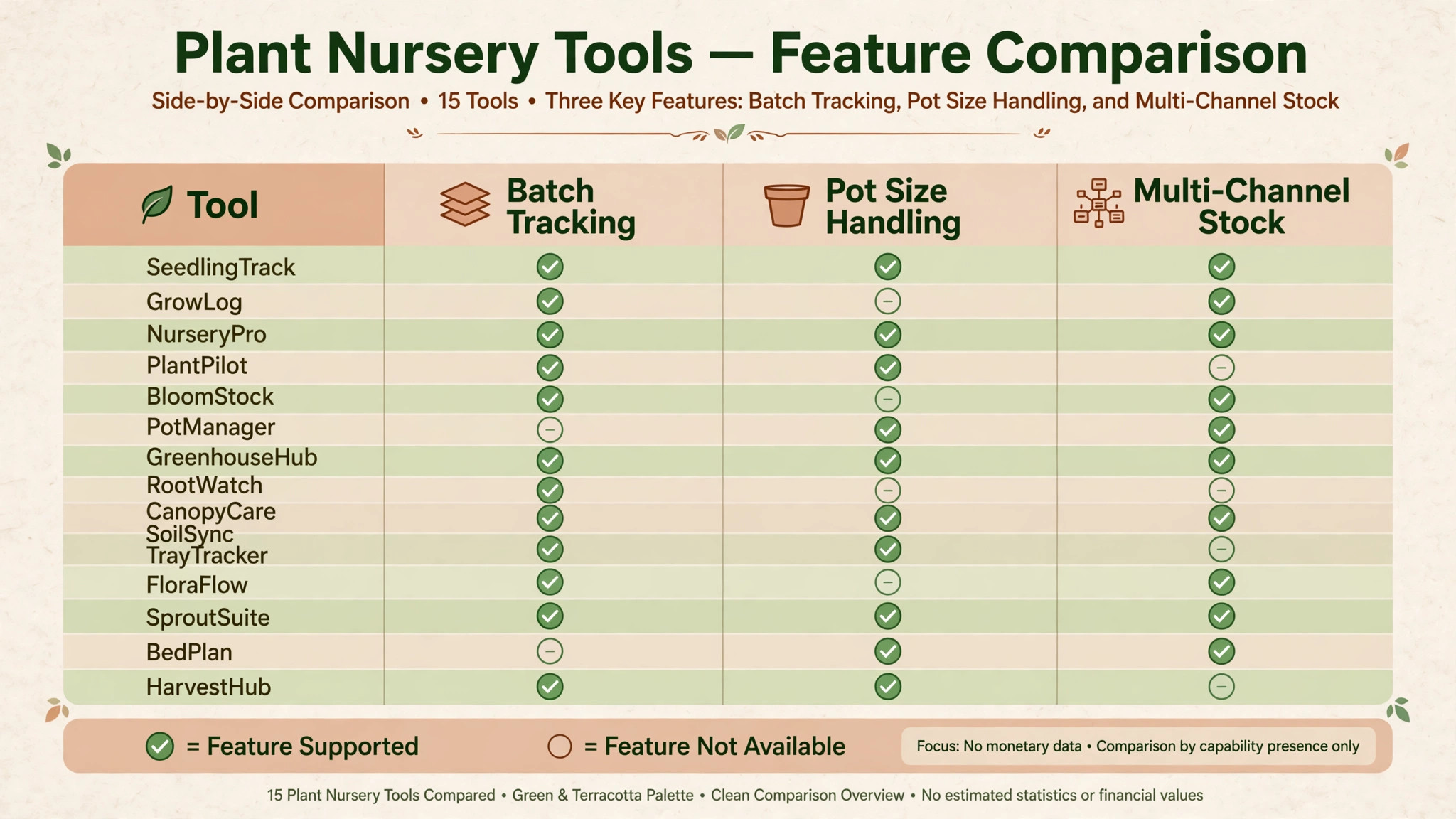
| Retail nursery | Lightspeed Retail | Shop counter plus stock control | Confirm batch and pot size handling |
| Wholesale grower | Katana | Production batch tracking | Confirm sales channel needs |
| Nursery with online sales | Cin7 Core | Multi channel stock in one system | Setup effort and monthly cost |
| Small nursery start | Sortly | Visual stock with low setup effort | Limited batch depth at scale |
| Purchasing led nursery | Unleashed Software | Purchasing and stock control together | Confirm seasonal seat pricing |
The job type that matches most of your sales should decide the shortlist for the best inventory software for plant nurseries. A retail nursery that buys a production system will pay for batch manufacturing tools it never opens. A wholesale grower that buys a simple stock app will struggle with batch stages, propagation counts, and availability by size. Match the system to the job first, then compare price within that shortlist.
Seasonal Stock Checklist
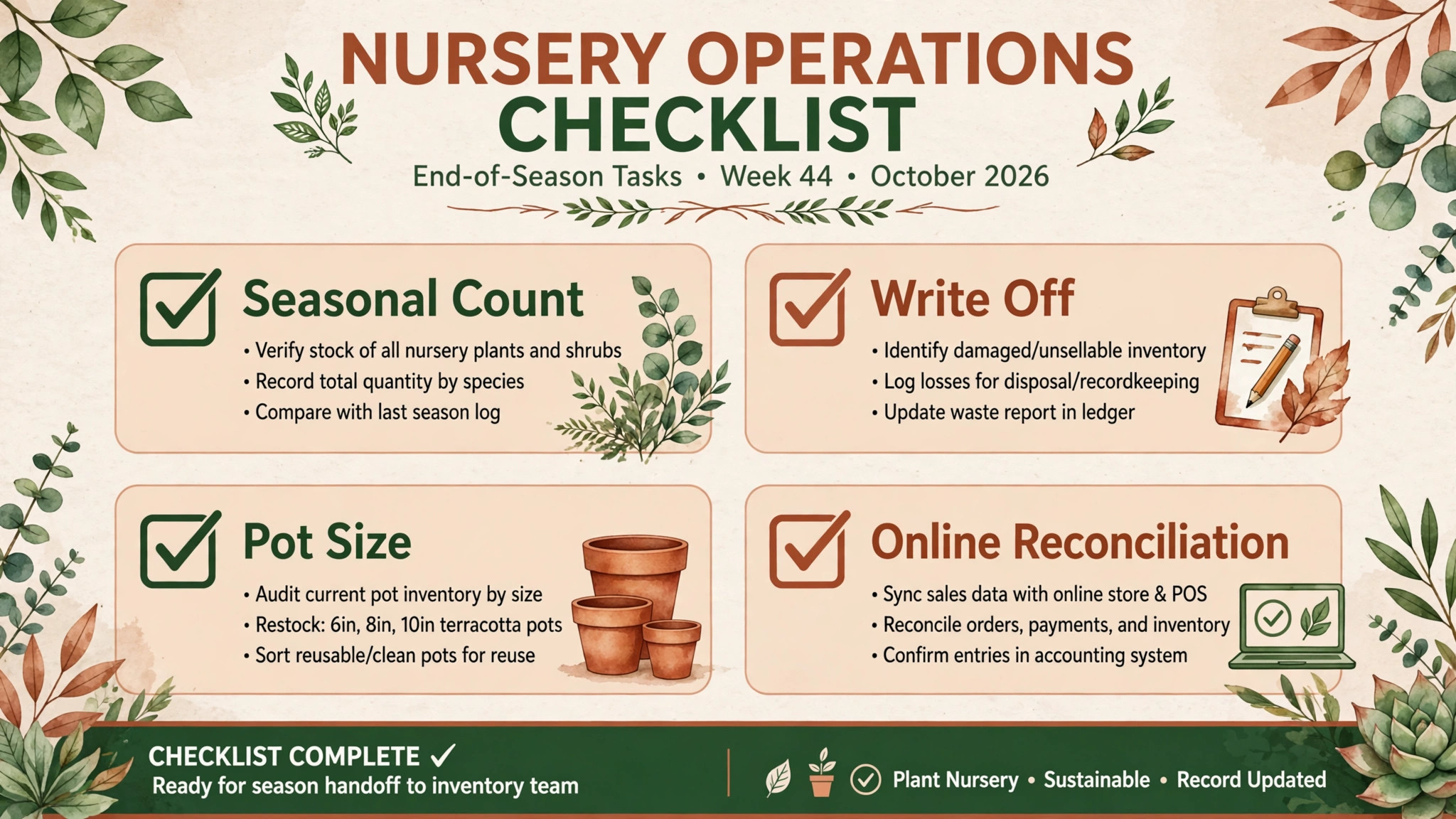
Use this checklist at the start of each season, and again before the spring peak. It turns stock data into saleable availability, rather than leaving availability to a yard walk.
– Count every batch by plant, pot size, growth stage, and location, and reconcile the count with the system. – Write off dead, damaged, or unsaleable plants in the system, so they cannot be promised to a customer. – Move plants that changed pot size into their new size record, and update the price band for that size. – Confirm which batches are ready for sale, which are still growing, and which are held for wholesale orders. – Reconcile online listings with yard stock, and remove any size that is sold out from every channel. – Check that seasonal staff can find a plant, record a sale, and record a move without help. – Review slow stock from last season, and decide for each line whether to discount, move, or write it off. – Confirm supplier orders for the coming season are recorded, with expected delivery dates. – Check that wholesale orders have reserved stock, so retail sales cannot sell a reserved batch. – Run an end of season stock report, and use it to plan next season buying by size and category.
Software helps this checklist only if batch, pot size, stage, location, and reserved stock live in one record. If batch counts live in a notebook and online stock lives in a separate system, the checklist becomes a reconciliation exercise at the busiest time of the year.
The 15 Tools in Detail
1. Sortly
Sortly is a visual inventory app that suits a small nursery starting with digital stock control. Staff can photograph plants, record quantities by item, and track stock across locations from a phone or tablet. That visual approach helps seasonal staff, who can recognise a plant by photo and location rather than by a code they have not memorised.
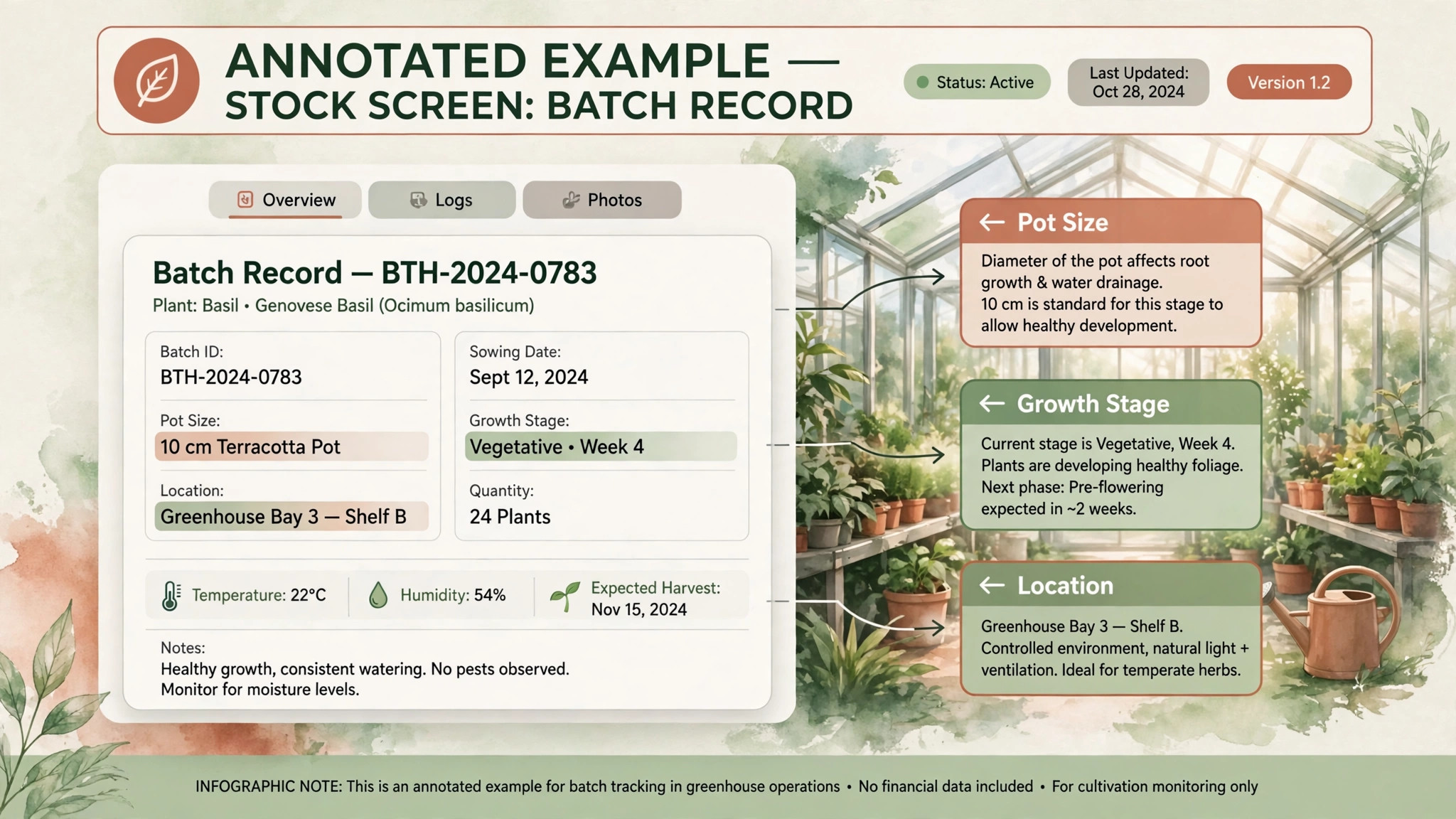
The strength is ease of use. A small nursery can be counting stock on day one, with barcode or QR scanning for moves and sales. The limit is batch depth. A nursery that needs propagation stages, batch splits, and pot size changes will find Sortly simpler than its full needs, and should test a batch journey end to end before committing.
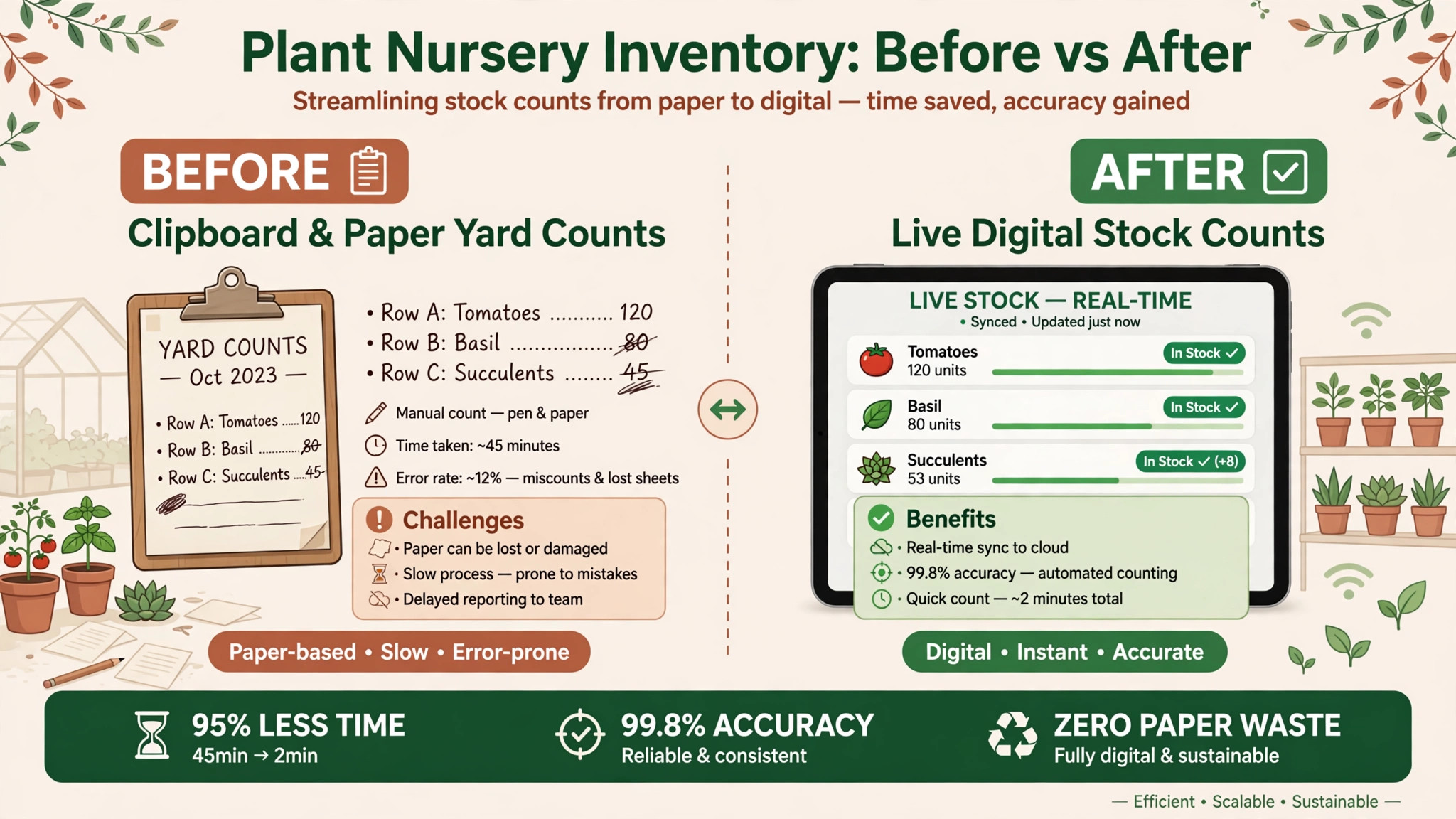
Best for a small nursery that wants visual, phone based stock control. Check the vendor pricing page for user and item limits on the chosen tier.
2. Zoho Inventory
Zoho Inventory covers stock, orders, and purchasing in one system, which suits a nursery that sells through a shop, a website, and wholesale orders. Staff can track stock by location, manage purchase orders from suppliers, and handle sales orders with picking and packing. That order plus stock combination matters when the same batch serves retail and wholesale customers.
The strength is breadth for the price. A nursery gets stock, orders, and purchasing without three separate tools. The limit is living stock specificity, since batch stages and pot size changes need careful item setup, so test that setup on a real batch.
Best for a nursery that wants orders and stock in one affordable system. Check the vendor pricing page for order volume and user tiers.
3. Cin7 Core
Cin7 Core is a full inventory platform for multi channel sellers, with stock, orders, purchasing, and manufacturing style batch features. A nursery with online sales can keep one stock truth across its website, marketplaces, and shop, so a plant sold online disappears from the yard count at once. That single truth is the core requirement for online plant sales.
The strength is multi channel control at scale. Stock, orders, and purchasing sit in one system, with reporting by channel, category, and size. The limit is setup effort and cost, and a very small nursery may find that investment hard to justify.
Best for a nursery with online sales at the heart of the business. Check the vendor pricing page for a quote based on users, locations, and order volume.
4. inFlow Inventory
inFlow Inventory is a straightforward stock system for small businesses, covering products, stock levels, purchase orders, and sales orders. A small nursery can track plants by item and location, set reorder points for bought in stock, and record supplier orders without a complex implementation. The interface is clear enough for a small team to learn quickly.
The strength is simplicity with real stock discipline. Reorder points, purchase orders, and sales history give an owner buying evidence without enterprise complexity. The limit is batch and growth stage depth. A grower that needs propagation stages and batch splits should test that workflow carefully, since inFlow is built for general stock rather than living stock stages.
Best for a small nursery with simple stock control needs. Check the vendor pricing page for the tier that includes the locations needed.
5. Odoo Inventory
Odoo Inventory is part of the wider Odoo business system, which covers sales, purchasing, accounting, and stock in linked apps. A nursery that wants one system for the whole business, rather than stock plus separate tools for sales and accounts, can build that system from Odoo modules. Stock can be tracked by location, with moves, adjustments, and reporting across the business.
The strength is the linked system. A sale, a stock move, and an invoice can flow through one platform, which reduces duplicate entry. The limit is implementation effort, and a nursery should budget time for configuration and seasonal staff training.
Best for a nursery that wants a full business system, not only stock control. Check the vendor pricing page for module and user pricing.
6. Fishbowl
Fishbowl is an inventory system with warehouse style stock control, including locations, barcoding, and order management. A larger nursery with a warehouse, a packing area, and several growing areas can use it to track stock movements between those areas with discipline. That warehouse logic suits a nursery where plants move through several stages and sites.
The strength is movement control. Stock moves, locations, and order picking are handled with warehouse rigour. The limit is fit for a small retail nursery, which may find warehouse features heavier than needed, and living stock stages still need careful setup.
Best for a larger nursery with warehouse style operations. Check the vendor pricing page for a quote based on users and locations.
7. Katana
Katana is a manufacturing and inventory platform that tracks production batches, raw materials, and finished stock. That batch logic maps well to a wholesale grower, where a batch of cuttings becomes a batch of rooted plants and then a batch of saleable stock. A grower can follow a batch through stages, record losses at each stage, and see what is ready for sale.
The strength is batch stage tracking. Losses, stage changes, and finished quantities are recorded in the batch record. The limit is sales channel breadth, so a grower that also sells retail and online should confirm how Katana handles shop and website stock.
Best for a wholesale grower tracking production batches. Check the vendor pricing page for batch and user tiers.
8. Unleashed Software
Unleashed Software is an inventory platform with strong purchasing and stock control for mid size businesses. A nursery that buys large volumes from suppliers, tracks landed costs, and manages stock across locations can use it to keep purchasing and stock in one system. Reporting by supplier, category, and location helps buying decisions.
The strength is purchasing discipline. Purchase orders, supplier history, and stock levels sit together, so an owner can see what was bought, what arrived, and what remains. The limit is seasonal seat pricing, since a nursery may need many users in spring and few in winter, so confirm how seasonal seats are billed.
Best for a purchasing led nursery with mid size volume. Check the vendor pricing page for user and location pricing.
9. Dear Systems
Dear Systems, now known in some listings under the Cin7 banner, is an inventory platform with manufacturing style batch features, purchasing, and multi channel sales. A nursery should confirm the current product name with the vendor before comparing quotes, since the naming overlap with Cin7 can confuse a shortlist. The platform covers stock, orders, and batch style production.
The strength is batch plus sales breadth. A nursery that grows and sells can track batches and sell across channels in one system. The limit is the naming confusion and the setup effort of any full platform, so confirm product, tier, and features in writing.
Best for a nursery that grows and sells across channels. Check the vendor pricing page and confirm the current product name.
10. QuickBooks Commerce
QuickBooks Commerce is an inventory and order system for businesses already using QuickBooks accounting. A nursery on QuickBooks can add stock and order management that links to its accounts, so sales, stock, and invoices stay connected. That link removes the duplicate entry of recording a sale in stock and again in accounts.
The strength is the accounting link. A nursery that already runs QuickBooks gets stock control without a separate accounting reconciliation. The limit is living stock depth, which again needs item variant setup for pot sizes and batch stages. A grower with complex batch journeys should test that setup on a real batch.
Best for a nursery already on QuickBooks that wants linked stock control. Check the vendor pricing page for user and order tiers.
11. Lightspeed Retail
Lightspeed Retail is a retail platform with a shop counter, stock control, and reporting, which suits a retail nursery with a garden centre shop. Staff can ring up sales at the counter, track stock by category and location, and run reports on popular plants and sizes. The counter experience is clean for customers buying plants, pots, and sundries together.
The strength is the retail counter plus stock combination. A garden centre can sell plants and sundries from one till, with stock updating at sale. The limit is batch and pot size handling, which must be confirmed in the trial, since retail item setup may treat each size as a separate product rather than a stage of one batch.
Best for a retail nursery with a garden centre shop. Check the vendor pricing page for the tier that includes multi location stock.
12. Square for Retail
Square for Retail suits a small retail nursery starting with digital sales and stock. A nursery can take card payments, ring up plants and sundries, and track basic stock from a tablet at the counter, with an online store option for local delivery or collection. That simplicity suits a nursery with a small team and a single site.
The strength is low setup effort and a clean counter. A small nursery can be selling with stock tracking on the first weekend, without a large implementation. The limit is batch depth and wholesale handling. A nursery that grows large batches or sells wholesale should test batch stages and wholesale orders before relying on Square alone.
Best for a small retail nursery starting out. Check the vendor pricing page for card rates and retail tier features.
13. Erply
Erply is a cloud retail and inventory platform with multi site stock control, which suits a nursery with more than one site, such as a growing site and a retail site. Stock can be tracked across sites, transferred between them, and reported centrally, so an owner can see availability at each site without visiting it. That visibility matters when retail staff promise a plant that is actually at the growing site.
The strength is multi site stock truth. Transfers, central reporting, and site level availability keep promises accurate across sites. The limit is living stock specificity, which still needs variant setup for pot sizes and batch stages, so trial it with a real transfer between sites.
Best for a nursery with more than one site. Check the vendor pricing page for site and user pricing.
14. Finale Inventory
Finale Inventory is an inventory platform for multi channel sellers, with stock control, order management, and barcode scanning. A nursery selling through its website, marketplaces, and a shop can keep one stock list across channels, so a plant sold in one channel disappears from the others. Barcode scanning helps staff count and move stock accurately in the yard.
The strength is multi channel stock accuracy. Channel sales draw from one list, which protects online promises. The limit is batch stage depth, which needs careful setup for growth stages and pot size changes. A grower should test a full batch journey, not only a simple stock count, in the trial.
Best for a nursery selling on several channels. Check the vendor pricing page for channel and user tiers.
15. Ordoro
Ordoro is an inventory and shipping platform for online sellers, covering stock, orders, and shipment handling. A nursery with online sales can manage orders, pick and pack plants, and ship with tracking from one system. That shipping workflow matters for plants, where packing quality and delivery timing affect whether a plant arrives in good condition.
The strength is the order to shipment flow. Online orders, stock allocation, and shipping labels sit together, which reduces manual steps between order and dispatch. The limit is yard and growing stock depth, so a nursery that grows large batches should confirm how Ordoro handles batch stages.
Best for a nursery with online order shipping at the heart of the business. Check the vendor pricing page for order volume tiers.
How to Run a Spring Stock Count That Staff Trust
A spring stock count fails when it is treated as a one day event rather than a routine. The count should start with the system, not with the yard. Print or load a count list by location, with each batch, size, and stage listed, and count location by location without skipping the back benches and the propagation house. Every difference between the system and the yard should be recorded with a reason, such as a write off, a pot size move, or a sale that was never recorded, rather than simply adjusted away.
The second part of a trusted count for any buyer comparing the best inventory software for plant nurseries is the follow up. Differences should be reviewed the same week, and the causes fixed, whether that means a training gap, a missing write off step, or a sale that left without a stock deduction. A count that only corrects numbers will be wrong again by midsummer. A count that fixes causes will get more accurate each season.
The third part is timing. Count before the spring peak, not during it, when the yard is fullest and staff are busiest. A pre peak count gives a clean starting point for the busiest weeks, and reveals slow stock that can be discounted or moved before crowds arrive. That timing turns a count from an admin chore into a sales tool.
How to Choose the best inventory software for plant nurseries
Start with a batch journey, not a feature list. Take a real batch, from cuttings to rooted plants to saleable stock, with a pot size change and a loss along the way, and enter it in the trial. Check that the system shows the right count at each stage, the right size after the move, and the right availability for sale. If that journey fails, the system will fail on real nursery stock, however good its general inventory features look.
Next, test online accuracy with a real listing. List a plant in two sizes, sell one size online, and check that the yard count and the website update together. Then sell the same size in the shop, and check that the website removes it. A system that needs a daily manual reconciliation will eventually allow an online sale of a plant that no longer exists, and that broken promise costs a repeat customer.
Then test seasonal staff use. Give a new seasonal worker a phone, a plant to find, a sale to record, and a move to record, without training beyond a short briefing. Count the mistakes and the questions. A system that seasonal staff can use correctly on day one will stay accurate through spring. A system that needs expert users will be bypassed, and bypassed systems produce counts nobody trusts.
Finally, price a peak season in full. Add seasonal user seats, location counts, and order volume charges to the subscription, and model the result for a spring month, not an average month. A platform that is cheap in winter and expensive in spring will surprise a nursery exactly when cash flow should be strongest. Get the peak season total in writing before comparing tools.
Common Mistakes When Buying Nursery Inventory Software
The first mistake is tracking plants as if they were fixed products. A plant changes size, stage, and location, and a system that only records a product and a quantity will lose that story. Test a batch journey with a pot size change and a loss before signing.
The second mistake is running online and yard stock on separate lists. Separate lists feel manageable with twenty listings and become unmanageable at two hundred. One stock truth for every channel is the core requirement for online plant sales.
The third mistake is skipping write offs. Dead and damaged plants that stay in the system will be promised to customers, and a customer who receives a substitution or a cancellation will not return. Write offs should be a routine step, not a year end correction.
The fourth mistake is buying for the nursery you hope to become, not the nursery you run. A full multi channel platform is valuable for a large nursery, but it adds setup and training burden for a small nursery. Start with the tool that fits current stock complexity, and check that it can grow when batch volume and channel count rise.
The fifth mistake is neglecting seasonal staff training. The owner may master a system quickly, but seasonal staff record most spring sales and moves. If they cannot find a plant, record a sale, or record a move without help, the system will be bypassed, and bypassed systems produce bad data that nobody trusts.
Frequently Asked Questions
What is the best inventory software for a small plant nursery?
For many small nurseries, Sortly is a strong starting point, because it offers visual, phone based stock control with low setup effort. Zoho Inventory is the alternative for a nursery that also wants orders and purchasing in one system. The right choice depends on whether simple visual counting or order handling matters more.
Can inventory software track plants by pot size and batch?
Yes, but the method varies. Some systems treat each pot size as a separate item or variant, while batch focused systems follow a batch through growth stages. The reliable test is to enter a real batch, change its pot size, record a loss, and check that the saleable count and size are correct at the end. If that journey works, the system handles nursery stock well enough to trust.
How does nursery software handle plants that die or are damaged?
It records a write off against the batch, so the dead plants leave the saleable count and cannot be promised to a customer. That write off should be easy for yard staff to record at the time, not a back office correction weeks later. A system that makes write offs hard will carry dead stock in its counts all season.
Should a nursery sell online and in store from the same stock list?
Yes, in almost every case. One of a kind batches and limited sizes make a double sale likely when channels run on separate lists, and a plant sold twice cannot be fixed by growing another one quickly. A single stock list for the yard, the shop, and the website removes that risk.
What is the difference between retail inventory software and grower inventory software?
Retail inventory software controls shop stock, sales, and reorder points for finished products. Grower inventory software follows a batch through propagation, growth stages, and pot size changes to saleable stock. A nursery that both grows and sells often needs elements of both, and the trial should test a batch journey and a shop sale together.
How much does nursery inventory software cost per month?
Monthly cost ranges from a low tier stock app to a mid priced multi channel platform, with user seats, locations, and order volume on top. The best inventory software for plant nurseries for a given nursery is the one whose full peak season total, including seasonal seats, fits the nursery margin, not the one with the lowest headline subscription alone.
A Shortlist to Take to Trial
Start with Sortly for a small nursery, Lightspeed Retail for a retail nursery, Katana for a wholesale grower, and Cin7 Core for serious online sales, and trial two on a real batch journey. Run a pot size change, a loss, an online sale, and a shop sale, and let seasonal staff judge ease of use. The system that keeps batch, size, and channel counts accurate through that journey is the best inventory software for plant nurseries for your operation, even if it is not the cheapest option on the list. A nursery earns its year in a few busy weeks, and the inventory system must be accurate in exactly those weeks.
More Reading on Stratilyze
– Best Inventory Software for Furniture Retailers – Best Order Management Software for Florists – Use AI for Farm Stand Weekly Box Marketing – Use AI for Bookstore Inventory Replenishment – Best POS System for Independent Bookstores