
A startup founder can sit through twenty sales calls in a month and remember almost nothing useful from any of them. The prospect’s real objection hides in a sentence halfway through call nine, the competitor’s name surfaces once on call fourteen, and the pricing question that killed three deals never gets written down. The best ai sales call analysis tools for startups exist because a small team cannot afford to lose that knowledge, and human memory is the leakiest CRM ever built.
Every lost insight costs a startup more than it costs a large company, because there are no spare deals to absorb the mistake. A rep who keeps hearing the same objection and never flags it will keep losing the same way, and a founder who never hears the calls cannot coach what they cannot see. The gap between what prospects say and what the team learns is where early revenue leaks away, quietly and repeatedly.
This guide compares twelve call analysis tools that record, transcribe and analyse sales conversations, judged on price, coaching value and fit for a team that is still finding its pitch. Each entry names what the tool does well, where it falls short and who should buy it, so a startup can shortlist two or three and trial them on real calls before spending a dollar.
Why Startup Sales Calls Vanish Into Thin Air
A startup sales call is a research interview disguised as a pitch, because the product, the pricing and the positioning are all still moving. The prospect’s words are the cheapest market research available, and they arrive free with every call, yet most startups throw them away the moment the call ends. Notes get written from memory, memory favours the last five minutes, and the detail that mattered most disappears by dinner.
The problem compounds as the team grows, because the founder’s ear no longer covers every call. Two reps hear the same objection and handle it two different ways, and nobody notices until the pipeline review shows a pattern nobody can explain. Coaching becomes guesswork, onboarding becomes folklore, and the playbook stays in one person’s head instead of in a system the whole team can read.
Recording and analysis change the shape of the job by turning every call into searchable evidence. A rep can find the exact moment a deal turned, a founder can hear the objection in the prospect’s own words, and the team can build its pitch from what buyers actually said. The best ai sales call analysis tools for startups make that evidence cheap enough for a five-person team, and the guide below shows which ones do it best.
The 12 Tools at a Glance
| Tool | Main job | Best for | Starting price |
|---|---|---|---|
| Gong | Revenue intelligence on calls | Enterprise-grade deal insight | Custom quote |
| Chorus by ZoomInfo | Call recording with coaching | ZoomInfo customers | Custom quote |
| Avoma | Meeting notes plus call intelligence | Mid-market value | 19 dollars a recorder a month |
| Fireflies.ai | Transcription with conversation search | Lean teams on a budget | 10 dollars a seat a month |
| Otter.ai | Live transcription and summaries | Fast meeting notes | 16.99 dollars a user a month |
| Clari Copilot | Real-time coaching and battlecards | Live call guidance | 60 dollars a user a month |
| Jiminny | Coaching scorecards and analytics | Structured sales coaching | Custom quote |
| Sybill | Behavioural insight from calls | Reading buyer engagement | Free plan available |
| Observe.AI | Contact-centre call analysis | High-volume call teams | Custom quote |
| Balto | Real-time agent guidance | Live talk-track prompts | Custom quote |
| Fathom | Meeting notes with coaching | Free starting point | 25 dollars a user a month |
| Wingman | Call analysis inside Clari | Clari customers | Custom quote |
Best Pick by Job
| Job type | First pick | Second tool | Why this pair works |
|---|---|---|---|
| Two-person founding team | Fireflies.ai | Fathom | Fireflies.ai transcribes cheaply, Fathom adds coaching free |
| Growing five-rep team | Avoma | Sybill | Avoma covers notes and scoring, Sybill reads buyer signals |
| Coaching-led sales org | Jiminny | Clari Copilot | Jiminny scores the calls, Copilot guides them live |
| High-volume outbound | Observe.AI | Balto | Observe.AI analyses the volume, Balto steers each call |
Pick by team size and call volume, because a tool built for a hundred reps will drown a team of three in process. Trial the first pick among the best ai sales call analysis tools for startups on two weeks of real calls, add the second when the first leaves a gap, and let the reps who live on the phone judge the result. A tool the reps ignore helps no one, no matter how good its analytics look in a demo.
How to Judge the Best AI Sales Call Analysis Tools for Startups
Judge a tool by what it does with a real call, not by its feature page, because every vendor promises transcription, summaries and insights. Play back a tough call, read the summary, and ask whether it caught the objection, the competitor mention and the moment the prospect went quiet. The best ai sales call analysis tools for startups surface those moments without a human hunting for them, and the ones that bury them in a generic summary are not doing the job.
Price needs the same honesty, because the category hides its real cost behind quotes and add-ons. Gong and Chorus do not publish prices, Avoma charges 19 dollars a recorder a month before a 29-dollar intelligence add-on, and Fireflies.ai keeps its paid plans at 10 and 19 dollars a seat. Add the add-on to the seat price, ask about seat minimums, and get the total in writing before you sign.
Coaching value decides the winner more than transcription quality, since every tool here transcribes well enough. Look for scorecards that match your sales method, topic trackers that catch competitor mentions, and CRM sync that writes the summary where the next rep will read it. Trial with the reps who will be coached, and keep the tool that changes how they sell, not the one with the prettiest dashboard.
The 12 Tools in Detail
Twelve tools made this list because each one is live, analyses real sales calls, and fits a distinct startup shape. The entries keep the table order, and each one gives the price, the strength and the catch.

1. Gong
Gong is the heavyweight of conversation intelligence, recording calls, emails and meetings, then layering deal boards, forecasting and AI agents on top. Its AI flags deal risk, tracks competitor mentions and predicts which opportunities need attention, drawing on a revenue graph built from millions of deals. Pricing is by quote, with per-user licences plus a platform fee that scales with team size.
The analytics depth is unmatched, and the deal intelligence is the reason large revenue teams standardise on Gong. Pipeline views, coaching scorecards and forecasting sit in one system, and the AI agents handle follow-up drafting and risk alerts. For a startup that plans to scale into a serious sales organisation, the ceiling is the highest here.
The price is the problem for a startup, with reports putting a bundled package near 250 dollars a user a month plus platform fees above 5,000 dollars. The platform needs volume and process to justify itself, and a five-person team will use a fraction of what it buys. Gong suits the future, not the first ten reps.
Choose Gong when the startup has funding, a real pipeline and a VP of Sales who will run the system properly. It fits funded teams building a revenue organisation rather than a team finding its first pitch.
2. Chorus by ZoomInfo
Chorus records and analyses calls, meetings and emails with a focus on coaching, onboarding and deal intelligence, and it pulls ZoomInfo company data into the transcript. When a prospect joins, the tool shows their company profile, tech stack and intent signals beside the conversation. Pricing is by quote through the ZoomInfo sales team.
The ZoomInfo connection is the unique strength, because the call view carries the account context a rep would otherwise look up separately. Coaching scorecards and deal intelligence are solid, and the onboarding workflows help new reps ramp faster. For a team already paying for ZoomInfo, the integration is genuinely convenient.
Chorus does not publish pricing, and third-party data puts entry near 8,000 dollars a year for three seats, with extra seats near 1,200 dollars a year each. Contracts run two years, and the ZoomInfo bundle pressure pushes the total higher. A startup outside the ZoomInfo world gains little and pays a lot.
Pick Chorus when the team already runs on ZoomInfo and wants call intelligence inside that ecosystem. It fits ZoomInfo customers, and it is a poor buy for everyone else.
3. Avoma
Avoma is an all-in-one meeting assistant that grows into full conversation intelligence through add-ons, covering recording, transcription in over seventy languages, AI notes and CRM sync. The conversation intelligence add-on brings call scoring, custom scorecards for methods like SPICED and MEDDICC, and smart topic trackers. Startup lists at 19 dollars a recorder a month billed yearly.
Published pricing is the first advantage, because Avoma is the one serious tool here that shows its rates openly. The add-on model lets a startup buy notes now and intelligence later, and viewer seats are free, so the whole company can read call summaries without paying. For a mid-market team, the value is the best in the category.
The full intelligence stack costs 48 dollars a seat a month once the 29-dollar add-on joins the 19-dollar base, which changes the comparison. Tier names have shifted more than once, so the plan you trial may not be the plan you buy. Avoma suits teams of ten to fifty that need solid coaching without enterprise pricing.
Choose Avoma when the team wants real conversation intelligence at a published price. It fits growing startups that will use scorecards and topic tracking every week.
4. Fireflies.ai
Fireflies.ai joins Zoom, Teams and Google Meet calls on its own, transcribes in over a hundred languages and builds a searchable archive with its AskFred assistant. The free tier includes unlimited transcription with 800 minutes of storage, Pro runs 10 dollars a seat a month billed yearly, and Business at 19 dollars unlocks conversation intelligence features.
Volume is the strength, because Fireflies.ai handles more calls, more languages and more integrations than anything near its price. The search across meetings finds the moment a topic surfaced weeks ago, and the CRM sync pushes summaries where the team works. For a lean startup, the free tier alone covers the first months.
Coaching depth is thinner than Avoma or Jiminny, with scorecards and deal analytics sitting on the higher tiers. The interface is busy, and the free storage cap forces a paid plan once the archive grows. Fireflies.ai answers the question of what was said, and leaves the coaching to the manager.
Pick Fireflies.ai when the budget is tight and the team needs reliable transcription and search first. It fits early startups that want every call recorded without a procurement process.
5. Otter.ai
Otter.ai records and transcribes meetings in real time across Zoom, Google Meet and Microsoft Teams, then generates a summary with highlighted action items. The free Basic plan gives 300 transcription minutes a month, Pro lists at 16.99 dollars a user a month, and Business at 30 dollars removes the monthly minute limit.
Transcription accuracy is the draw, with reliable speaker identification and fast search across hours of meetings. The live transcript helps a rep follow a call without taking notes, and the summaries are clean enough to send to a prospect. For a team that mainly needs notes, Otter.ai is the veteran choice.
Otter.ai is a notetaker first and a sales tool second, with no call scoring, no deal analytics and no coaching scorecards. The Pro minute allowance of 1,200 minutes a month suits individuals better than a busy sales team. A startup that needs coaching will outgrow it quickly.
Choose Otter.ai when the job is accurate notes and summaries rather than sales coaching. It fits founders and small teams that want the transcript, not the analytics layer.
6. Clari Copilot
Clari Copilot, formerly Wingman’s sibling product, gives real-time coaching during live calls, with battlecards, talk tracks and objection handling that appear as the conversation unfolds. The platform also scores calls after the fact and feeds the data into Clari’s revenue platform. Pricing starts near 60 dollars a user a month, based on 720 dollars a user a year.
Live guidance is the feature no other tool here matches, because the rep gets help during the call instead of feedback days later. Battlecards surface the right answer when a competitor is named, and the post-call scoring ties directly to pipeline data. For a team selling a complex product, the in-call support changes outcomes.
The price is high for a startup, and the full value needs the wider Clari platform behind it. A small team buying Copilot alone pays enterprise money for one feature, and the onboarding takes longer than a simple notetaker. Clari Copilot suits a funded team with a real revenue stack.
Pick Clari Copilot when live coaching matters more than post-call analysis and the budget allows it. It fits teams selling complex deals where one objection can end the conversation.
7. Jiminny
Jiminny focuses on structured sales coaching, with scorecards, call analytics and onboarding workflows built around the team’s own sales method. Managers score calls against custom criteria, track rep progress over time and run coaching sessions from the recorded evidence. Pricing is by quote, based on team size.
Coaching structure is the strength, because Jiminny turns vague feedback into scored, trackable improvement. The analytics show which reps struggle with which stage, and the onboarding tools help new hires reach productivity faster. For a sales leader who coaches every week, the workflow is the most complete here.
The quote-only pricing slows evaluation, and the platform is less useful without a manager committed to scoring calls regularly. Transcription and notes are competent rather than leading, and the tool assumes a coaching culture that a young startup may not have yet. Jiminny rewards discipline and punishes neglect.
Choose Jiminny when the sales leader will score calls weekly and wants the coaching process formalised. It fits growing teams where coaching, not just recording, is the goal.
8. Sybill
Sybill analyses the behavioural side of sales calls, reading engagement signals such as talk patterns, pauses and emotional tone to show how the buyer reacted. The platform surfaces moments when a prospect leaned in or checked out, and it writes summaries that include those signals. A free plan is available, with paid tiers above it.
Behavioural insight is the unique angle, because most tools report what was said while Sybill reports how it landed. The engagement signals help a rep see which parts of the pitch worked, and the summaries are genuinely readable. For a team refining its pitch, the feedback is different from anything else on this list.
Sybill is newer and narrower than the leaders, with less depth on deal analytics, forecasting and CRM workflows. The behavioural signals need careful reading, since a pause can mean thought as easily as doubt. Treat the signals as clues, not verdicts, and the tool earns its place.
Pick Sybill when the pitch itself is the problem and the team wants to know how buyers react. It fits early startups iterating on messaging with real call evidence.
9. Observe.AI
Observe.AI analyses high-volume contact-centre calls with AI, scoring agent performance, tracking compliance and surfacing coaching opportunities across thousands of conversations. The platform handles quality assurance at a scale that manual review cannot touch, with topic detection and sentiment analysis throughout. Pricing is by quote, based on volume.
Scale is the reason to buy, because Observe.AI scores every call rather than a sample, and the compliance tracking catches issues a human reviewer would miss. The coaching workflows route the right calls to the right manager, and the analytics show patterns across the whole operation. For a team running hundreds of calls a week, the coverage is unmatched.
The platform is built for contact centres, not startup sales teams, and the quote-only pricing reflects enterprise deals. A five-rep startup will find the setup heavy and the price out of reach, and the sales-specific features are thinner than Gong or Avoma. Observe.AI suits volume, not early-stage selling.
Choose Observe.AI when call volume is high and quality assurance matters more than deal coaching. It fits support and sales operations running hundreds of calls weekly.
10. Balto
Balto guides agents in real time, listening to the live call and prompting the next best thing to say, from compliance lines to upsell offers. The prompts appear on screen as the conversation unfolds, and the platform learns which prompts work best. Pricing is by quote, based on seats and volume.
Real-time prompting is the product, and it helps most when the talk track is strict or the compliance risk is high. New reps sound experienced faster, because the guidance carries them through the hard moments, and managers can push new prompts to the whole team instantly. For regulated or scripted selling, the control is valuable.
Balto is a guidance tool, not an analysis platform, with thinner post-call analytics than the leaders here. The quote-only pricing and enterprise focus put it beyond most startups, and the prompting can feel rigid for consultative selling. It suits teams that sell from a script, not teams that improvise.
Pick Balto when the team needs live guidance on every call and the talk track must stay consistent. It fits high-volume, scripted sales operations rather than founder-led selling.
11. Fathom
Fathom records meetings, writes clean summaries and adds coaching features on its Business plan, starting from a genuinely useful free tier. The free plan covers recording and summaries, while Business at 25 dollars a user a month billed yearly adds coaching, CRM field sync and deeper analytics. The interface is calm and fast.
The free tier is the best starting point in this category, because a startup can record every call for nothing and upgrade only when coaching matters. Summaries are accurate, the CRM sync writes fields the team actually uses, and the learning curve is near zero. For a team that wants to start today, Fathom is the easiest yes.
Coaching depth is lighter than Avoma or Jiminny, and the sales-specific analytics are newer. The free tier has limits that appear as volume grows, and a large team will want the deeper scorecards elsewhere. Fathom is a notetaker that grew coaching, not a coaching platform that added notes.
Choose Fathom when the team wants the best free start and a gentle path to paid coaching. It fits early startups that need good notes now and analysis later.
12. Wingman
Wingman, now part of Clari, analyses sales calls with deal intelligence, coaching scorecards and CRM sync, aimed at small and mid-size teams that want Gong-style insight at a lower price. The platform records calls, flags key moments and tracks talk ratios, objections and competitor mentions. Pricing is by quote through Clari.
The Clari backing gives Wingman a stronger revenue story than most mid-market tools, with deal data flowing into the wider platform. Call analysis is solid, the scorecards are flexible, and the setup is lighter than Gong. For a team that will grow into Clari, the path is clear.
Quote-only pricing removes the transparency that made Wingman attractive as an independent tool, and the product now sits in Clari’s shadow. A startup buying Wingman alone may find the roadmap bends toward the enterprise platform. The tool is good, and the buying experience is murkier than it was.
Pick Wingman when the team plans to grow into Clari and wants call analysis that fits that future. It fits funded startups with a revenue stack in mind.
Running Your First Call-Review Week With One Tool
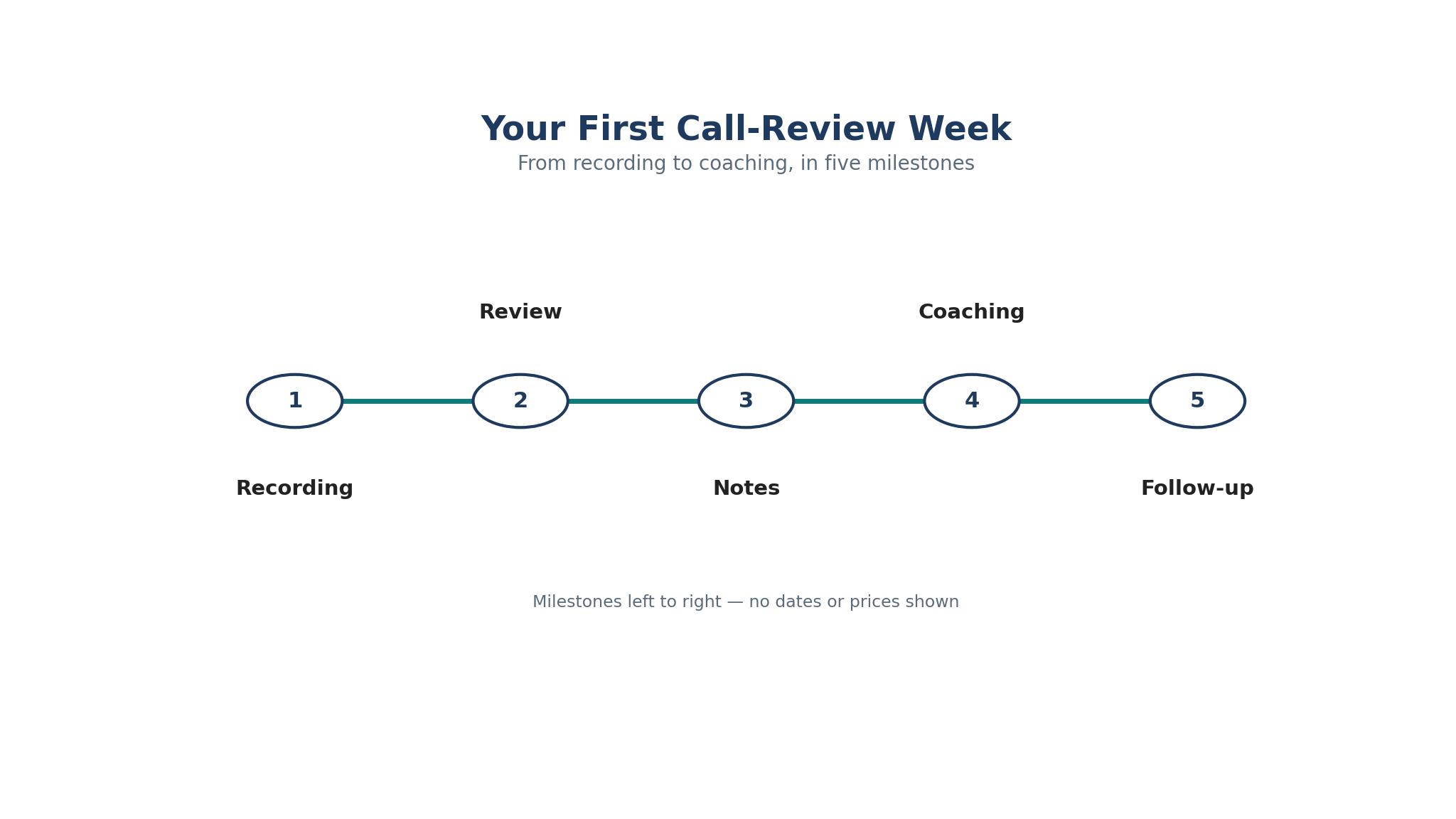
A call analysis tool earns its keep in the first week, because the team either listens to its own calls or it does not. Run a structured review week with one tool, one rep cohort and one question, and the best ai sales call analysis tools for startups show their value in the reps’ behaviour rather than in a dashboard.
1. Pick one tool, connect it to the team’s calendar, and record every call for five days. 2. Choose one question for the week, such as how the team handles the pricing objection. 3. Each rep listens to two of their own calls and writes down the moment the deal turned. 4. Hold a thirty-minute review where the team plays the best and worst objection handling. 5. Score the week’s calls against a simple three-point rubric the team agrees on. 6. Decide on Friday whether the tool changed how the team sells, and keep it only if it did.
The review meeting matters more than the analytics, because a team that hears its own calls improves faster than a team that reads a report. Play the audio, name the moment, and let the rep who handled it well explain what they did. Coaching that starts from real evidence sticks.
Five Ways Startups Waste Money on Call Intelligence
The first waste is buying an enterprise platform for a team of three, where the per-user price, the platform fee and the onboarding cost dwarf the value of the calls recorded. A free or cheap notetaker covers the first fifty calls, and the enterprise tool earns its place only when the pipeline justifies it. Start small and upgrade on evidence.
The second waste is paying for seats nobody uses, because viewer seats are free on several tools here and only the people who record and coach need paid seats. Count the recorders, not the headcount, and check whether the vendor charges for viewers before you sign. The difference can halve the bill.
The third waste is ignoring the add-on, where a 19-dollar base price becomes a 48-dollar real price once the intelligence module joins. Avoma is the clearest example, but the pattern repeats across the category, and the trial rarely shows the add-on cost. Ask for the total price with the features you will actually use.
The fourth waste is recording calls nobody reviews, which turns the tool into an expensive archive. A recording without a review habit is a cost with no return, and the review habit needs a named owner and a weekly slot. Assign the review before you buy the tool, or the subscription will quietly renew while the archive gathers dust.
The fifth waste is choosing on transcription quality alone, since every tool here transcribes well enough for a startup. The decision should turn on coaching, CRM sync and the review workflow, because those are the features that change how the team sells. A beautiful transcript that nobody acts on is worth nothing, and the best ai sales call analysis tools for startups earn their price by changing behaviour, not by spelling words correctly.
Frequently Asked Questions
Do we need consent to record sales calls?
Yes, in most places, and the rules depend on the state or country where the prospect sits. Some regions need one-party consent and others need all parties, so the safe practice is to announce the recording at the start of every call. Most tools here can play an automatic announcement, and the consent note should sit in your call script.
Which call analysis tool is cheapest for a startup?
Among the best ai sales call analysis tools for startups, Fireflies.ai and Fathom lead on price, because both offer genuinely useful free tiers and paid plans from 10 and 25 dollars a user a month. Sybill also offers a free plan for behavioural insight. Start free, measure whether the team reviews the calls, and pay only when the review habit proves the value.
Can call analysis tools integrate with our CRM?
Yes, the stronger tools sync summaries, action items and call links into HubSpot, Salesforce and Pipedrive automatically. Avoma, Gong, Fathom and Fireflies.ai all push notes to the CRM, while lighter tools may only link the recording. Check that the sync writes to the fields your team actually reads, or the integration is cosmetic.
How accurate is AI call transcription in 2026?
Accuracy is high for clear English on a good connection, with speaker identification reliable enough for coaching use. Accents, crosstalk and poor audio still cause errors, so treat the transcript as a working record rather than a legal one. The summary matters more than the word-perfect transcript, and the best tools flag low-confidence passages.
Will call analysis replace sales coaching?
No, it makes coaching possible at scale by giving the manager evidence instead of anecdotes. The AI finds the moments, scores the calls and drafts the summary, while the human coach still explains what to do differently and why. A team that buys the tool and skips the coaching has bought an archive, not an improvement.
Let the Next Ten Calls Teach You What to Fix
The fastest way to improve a startup’s sales is to listen to the last ten calls with fresh ears and fix the one pattern that repeats. Trial Fireflies.ai or Fathom free, run the review week in this guide, and let the evidence decide whether the team needs scoring, live coaching or just better notes. The best ai sales call analysis tools for startups turn conversations into a playbook, and the playbook is what lets the next ten calls go better than the last ten.
Start recording this week, hold the first review on Friday, and write down the single objection the team handles worst. Fix that one thing, record the next ten calls, and watch the pattern move. The tool is the instrument, and the improvement is the work, but the instrument is what makes the work possible.