

Forty-one of the top fifty producing teams in the United States build their business on Follow Up Boss, according to a 2026 team CRM guide. That number tells a luxury agent something important. At the top of the market, the CRM is not a contact list. It is the system that decides which past buyer gets called this week, which seller lead gets answered in four minutes instead of four hours, and which eight-figure listing gets a marketing plan rather than a prayer. The best real estate crm for luxury agents earns its price on those decisions, not on the number of contacts it can store.
Luxury work differs from ordinary agency work in three ways. The deal values are larger, so one missed follow-up can cost more than a year of software. The clients expect discretion and personal service, so a mass email blast feels like an insult. And the database is the business, because a past buyer who sells in five years is worth more than a hundred cold leads.
This guide compares ten CRMs that fit a luxury practice in 2026. All prices in this guide were verified against vendor pages and 2026 buyer guides during November 2026. BoldTrail and Lofty do not publish prices, so this guide gives the reported figures from third-party reviews and marks them as reported rather than as list prices. The verdict at the end names one pick for a solo luxury agent and one for a team.
A luxury agent does not need the CRM with the longest feature list. The agent needs the one that turns a database of past clients into listing appointments without ever making a client feel like a row in a spreadsheet.
What a Luxury Practice Needs From a CRM
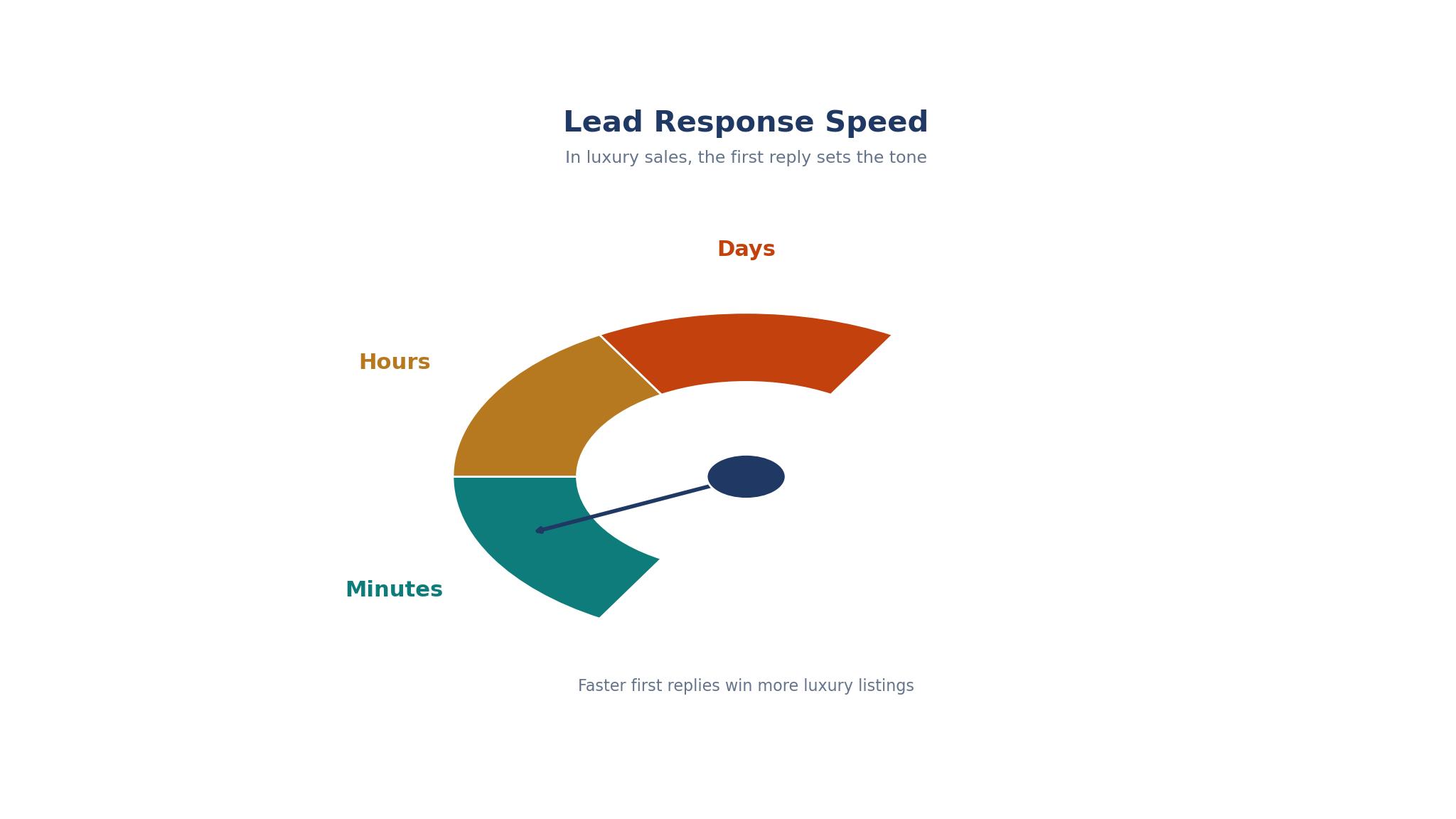
Speed to lead comes first, and it matters more at the top of the market than anywhere else. A seller who inquires about a three-million-dollar home and hears nothing for a day has already spoken to two other agents by the time the first one calls back. The best real estate crm for luxury agents routes a new lead to the right person in seconds, starts a follow-up plan automatically, and flags the lead again if nobody touches it within the hour.
Second, the system has to treat the sphere with care. A luxury database is mostly past buyers, past sellers and referrals, and those people need personal, well-timed contact rather than a generic drip. The stronger tools here segment the database by equity events, by anniversary dates and by seller intent signals, so the agent calls the right ten people this week instead of emailing a thousand.
Third, the presentation has to match the price point. A luxury listing deserves a branded website, a polished presentation and marketing that looks expensive, because the client is judging the agent by the materials as much as by the advice. A CRM that bundles a high-end IDX site and listing presentations saves the agent from buying those tools separately.
The Price Range Is Wider Than It Looks
The cheapest real CRM in this guide costs 17 dollars per user per month, and the most expensive enterprise platforms run past 1,500 dollars a month with setup fees on top. Follow Up Boss Grow starts at 69 dollars per user per month, or 58 dollars billed annually, while Pro runs 499 dollars a month for up to ten users. Wise Agent costs 49 dollars a month for up to five people, which makes it the cheapest full real estate CRM a solo luxury agent can buy.
The all-in-one platforms price differently. Lofty Core is reported at about 449 dollars a month, Premier at about 700 dollars, and Enterprise at about 1,500 dollars, with setup fees from 299 to 1,499 dollars. BoldTrail is quote-only, with third-party reviews placing solo costs near 499 dollars a month and brokerage costs above 1,000 dollars. Sierra Interactive publishes 359.95 dollars a month for one user on a twelve-month agreement, plus a 500 dollar setup fee.
The honest comparison is cost per closed deal. A luxury agent who closes six homes a year at a median price above a million dollars earns enough from one extra closing to pay for any CRM in this guide for a decade. The software is cheap. The missed follow-up is expensive, and that math should drive the decision more than the monthly price.
The 10 Tools at a Glance
The table below gives the short version of the best real estate crm for luxury agents, with the starting price each vendor lists or the reported figure where pricing is quote-only. Read it as a shortlist, then use the detailed sections to check lead speed, database tools and the listing presentation before choosing.
| Tool | Main job | Best for | Starting price |
|---|---|---|---|
| Follow Up Boss | Team CRM with fast follow-up | High-producing teams and solo agents | $69 per user per month |
| BoldTrail | All-in-one CRM, site and leads | Brokerages wanting one contract | Custom quote |
| Lofty | AI-first all-in-one CRM | Agents buying leads and site together | Custom quote |
| Luxury Presence | Branded platform with AI CRM | Luxury branding and nurture | Custom quote |
| Sierra Interactive | CRM plus IDX website | Agents wanting site and CRM together | $359.95 per month |
| Real Geeks | Website-led lead generation | Agents wanting the site to do the work | $399 per month |
| CINC | Lead generation plus CRM | Teams buying leads and follow-up together | Custom quote |
| Wise Agent | Database-first CRM | Past-client and referral businesses | $49 per month |
| Cloze | Relationship CRM with AI | Agents managing a large sphere | $17 per user per month |
| Aveliox | All-in-one CRM | Solo agents wanting everything included | $149 per month |
Best Pick by Job
No single CRM fits every luxury practice, so the table below matches the best real estate crm for luxury agents to the five most common buying situations. Find the row that describes the practice, then test the two tools named there with real leads and real past clients before paying.
| Job type | First pick | Second tool | Why this pair works |
|---|---|---|---|
| Solo luxury agent, referral business | Wise Agent | Cloze | Wise Agent runs the database cheaply, while Cloze adds AI relationship tracking |
| Team buying online leads | Follow Up Boss | Lofty | Follow Up Boss answers leads fastest, while Lofty adds the site and AI nurture |
| Brokerage, one system for all | BoldTrail | Follow Up Boss | BoldTrail bundles site, CRM and leads, while Follow Up Boss fits teams that build their own stack |
| Luxury branding first | Luxury Presence | Sierra Interactive | Luxury Presence gives the most polished brand, while Sierra adds a strong IDX site |
| Agent wanting everything in one bill | Aveliox | Sierra Interactive | Aveliox includes every feature at 149 dollars, while Sierra pairs CRM with a proven website |
How to Judge the Best Real Estate CRM for Luxury Agents
Judging the best real estate crm for luxury agents starts with a lead, not a demo. Send a test inquiry through the website at 9 p.m., and time how long it takes for the system to assign it, start a follow-up plan and alert the agent. The tools that do all three in under five minutes are the ones that will win a real seller. The tools that need a human to notice the lead first will lose it.
Next, test the database. Pick twenty past buyers, and ask the CRM to show who has equity to sell, who bought five years ago and who has not heard from the agent in a year. A good luxury CRM answers that question in one screen. A weak one makes the agent export a spreadsheet and guess.
Finally, check the exit. Ask how the contacts, the notes and the history export, and test the export with real records before signing. A CRM that holds the database hostage owns the practice, and a luxury agent whose database is the business cannot afford that risk.
The 10 Tools in Detail
Each entry below covers what the tool does best, where it falls short, and who it fits, plus a practical test to run during the trial. The order follows the glance table, and the prices are the starting figures from the best real estate crm for luxury agents shortlist above.
1. Follow Up Boss
Follow Up Boss is the CRM most high-producing teams build on, and it is used by 41 of the top 50 teams in the United States. Speed to lead is its core strength, with action plans, calling workflows and deep integrations to almost every lead source an agent buys. Grow starts at 69 dollars per user per month, or 58 dollars billed annually, Pro at 499 dollars a month for up to ten users, and Platform at 1,000 dollars a month for up to thirty.
The drawback is ownership and scope. Follow Up Boss is owned by Zillow Group, and a November 2025 privacy update lets Zillow use mutual customer data from agent accounts, which worries some luxury agents. It is also a dedicated CRM rather than an all-in-one, so the agent still needs a website and lead generation elsewhere.
Follow Up Boss suits a luxury team that buys online leads and needs them answered fast, every time. It is the strongest pick for a practice built around paid leads and disciplined follow-up.
To test it honestly, send five test leads from five different sources in one hour, and check that each one gets an action plan, an assignment and a first call within ten minutes. Speed is the feature being bought here.
2. BoldTrail
BoldTrail, formerly kvCORE, is the all-in-one platform that bundles the CRM, the IDX website, lead generation and smart campaigns in one contract. Its behavior-driven campaigns trigger outreach from what a visitor does on the site, like saving a search or viewing a listing three times, rather than from a fixed drip calendar. That targeting fits luxury buyers who browse for months before they call.
The drawback is price and contract. Inside Real Estate does not publish BoldTrail pricing, with third-party reviews placing solo costs near 499 dollars a month and brokerage costs above 1,000 dollars, often with setup fees and annual contracts. Buyers should read the contract carefully before signing.
BoldTrail suits a brokerage or a team of twenty or more agents that wants one system for the website, the leads and the CRM. It is too much system, and too much contract, for a solo luxury agent.
To test it honestly, browse the demo IDX site as a buyer for a week, save searches and view listings, and check whether the smart campaigns react to that behavior or just send the same drip to everyone. The behavior trigger is the promise.
3. Lofty
Lofty, formerly Chime, has made the boldest AI push of any major real estate CRM in 2026. Its Homeowner Agent scans existing contacts for seller-intent signals like equity events and refinance activity, then automates listing-side outreach that turns a past-buyer database into a listing pipeline. Core is reported at about 449 dollars a month, Premier at about 700 dollars, and Enterprise at about 1,500 dollars, with setup fees from 299 to 1,499 dollars.
The drawback is that pricing is quote-only and the AI features cost extra in places, with the AI Sales Agent as a separate add-on from 60 dollars a month. There is no free trial, so a buyer commits on the strength of a demo and a quote.
Lofty suits an agent or team that buys leads, runs an IDX site and wants AI to find sellers hiding in the database. It fits a practice where the listing side matters more than the buyer side.
To test it honestly, load a hundred real past-buyer contacts, run the seller-intent scan, and check whether the top ten flags match the ten the agent already suspects are ready to sell. If the AI finds the same people, it is working.
4. Luxury Presence
Luxury Presence is built for the top of the market, pairing a polished branded website with an AI CRM and AI lead nurture in one platform. Its nurture automatically enriches contacts, prioritizes daily follow-ups and drafts agent-approved sends, so the agent stays in touch with a large sphere without writing every message by hand. Pricing is custom quote, which reflects the premium positioning.
The drawback is the quote-only pricing and the focus. A buyer must go through sales to learn the cost, and the platform is strongest for agents who want branding and nurture together. An agent who only needs a CRM will pay for a website and design services they may not want.
Luxury Presence suits a luxury agent or team whose brand is the business and who wants the website, the CRM and the nurture in one polished package. It is the most premium option in this guide.
To test it honestly, ask the vendor to show a live luxury site built on the platform, then send a test lead through it and watch how the AI nurture handles the first week. The brand and the follow-up should both feel expensive.
5. Sierra Interactive
Sierra Interactive pairs a strong IDX website with a real CRM, and it publishes its price, which is 359.95 dollars a month for one user on a twelve-month agreement, plus a 500 dollar setup fee. The website does the warming, with property-alert nurture tied to what a visitor searches for and saves, so the agent calls people who have already shown intent.
The drawback is the contract. A twelve-month agreement with a setup fee locks the agent in, and the price is high for a solo agent who only needs the CRM. The platform is also more website-led than CRM-led, so a team that buys leads from many sources may find the CRM lighter than Follow Up Boss.
Sierra Interactive suits an agent who wants the website and the CRM in one system and is comfortable with an annual commitment. It fits a practice where the site generates most of the leads.
To test it honestly, run the demo site for a week as a buyer, save a search, and check whether the nurture emails match the saved criteria or just send generic listings. The match is the value.
6. Real Geeks
Real Geeks is a website-led platform that starts at 399 dollars a month plus a 500 dollar setup fee, with property-alert nurture tied to site search behavior. It serves agents who want the website to warm leads before the agent calls, and its IDX sites are proven lead generators in many markets.
The drawback is that it is a lead generation system first and a CRM second. The CRM features are thinner than Follow Up Boss or Lofty, and the setup fee plus the monthly price adds up for a solo agent. A luxury agent who already has a strong sphere may not need the lead engine.
Real Geeks suits an agent building a lead business from the website outward, especially in a market where IDX search drives inquiries. It fits a practice that needs more leads rather than better database care.
To test it honestly, compare the cost per lead from the demo data against the cost per lead from the agent current sources, and check the lead quality by calling ten of them. Volume without quality is the trap here.
7. CINC
CINC bundles lead generation with the CRM and the follow-up, and its AI add-on engages new leads within seconds of the inquiry. The platform is quote-priced, with the CINC AI add-on reported from 200 dollars a month, and it suits a team that wants to buy leads and follow-up together rather than assembling the stack from separate vendors.
The drawback is cost and commitment. CINC is a premium platform with required ad spend in many packages, and the total cost can run into thousands a month once the lead budget is included. A solo agent will find it expensive, and a team should model the full cost before signing.
CINC suits a team that buys leads at volume and wants the platform, the AI first response and the CRM in one contract. It is the wrong tool for a referral-based luxury practice.
To test it honestly, ask the vendor for the cost per closed deal from a team of similar size in a similar market, not the cost per lead. The closed deal is the only number that matters.
8. Wise Agent
Wise Agent is the cheapest full real estate CRM in this guide, at 49 dollars a month for up to five people, with no per-user charge. It is database-first, built for agents whose business comes from past clients, sphere and referrals rather than from paid leads. It covers contacts, transactions, marketing and follow-up without the complexity of an enterprise platform.
The drawback is that it is not built for high-volume lead buying. The speed-to-lead tools and the integrations are lighter than Follow Up Boss, and an agent who buys hundreds of leads a month will outgrow it. It is a sphere tool, not a lead machine.
Wise Agent suits a luxury agent whose business is referrals and repeat clients, and who wants a solid CRM at the lowest honest price. It is the best value in this guide for a solo practice.
To test it honestly, load the full past-client database, set up the anniversary and equity reminders, and check that the system flags the right ten people to call this week. The database is the test.
9. Cloze
Cloze is a relationship CRM that starts at 17 dollars per user per month, the lowest per-user price in this guide, and it uses AI to track the strength of each relationship, flag who needs contact and pull together every email, call and meeting with a person. For a luxury agent with a large sphere, that relationship intelligence is genuinely useful.
The drawback is that it is a general CRM rather than a real estate specialist. There is no IDX website, no lead generation and no real estate transaction management, so the agent still needs other tools for the property side of the business.
Cloze suits a luxury agent with a big sphere who wants to know exactly who to call, when, and why. It fits a practice where relationships are the pipeline.
To test it honestly, connect the email and the calendar, let it score the relationships for a week, and check whether the top ten people it flags are the ten the agent already knows need a call. If the scores match the instinct, the AI is earning its place.
10. Aveliox
Aveliox is an all-in-one CRM at 149 dollars a month with no contract and no setup fee, and every feature is included on every plan. It covers the CRM, the website, the marketing and the transaction tools in one bill, which makes it the simplest pricing story in this guide. There is nothing to add on and nothing to negotiate.
The drawback is that it is a newer and smaller platform than the established names, so the integration list and the track record are thinner. A team that relies on a specific third-party tool should check the integration before switching.
Aveliox suits a solo agent or a small team that is tired of paying for five tools and wants one bill, one login and no contract. It is the strongest value for a practice that wants everything included.
To test it honestly, build a listing presentation and a marketing email in the trial, and check whether the output looks expensive enough to send to a million-dollar seller. The presentation is the test for a luxury practice.
First-Year Bill for a Luxury Practice
Price the year per closed deal, because that is how a luxury practice thinks. A solo agent on Wise Agent pays 588 dollars a year, which is less than the commission on a single showing. A solo agent on Follow Up Boss Grow at 58 dollars a month billed annually pays 696 dollars a year. Either figure is trivial against one extra closing, and both are cheaper than a single month of the enterprise platforms.
The all-in-one platforms look different. Sierra Interactive at 359.95 dollars a month plus a 500 dollar setup fee costs about 4,819 dollars in year one. Lofty Core at a reported 449 dollars a month costs about 5,388 dollars a year before setup fees. BoldTrail at a reported 499 dollars a month costs about 5,988 dollars a year. Those figures are still small against a luxury commission, but they are only justified when the website and the lead generation inside the platform actually produce appointments.
Add the lead budget separately, because it dwarfs the software. A team buying leads from portals can spend thousands a month on the leads themselves, and the CRM is a small line beside that spend. The best real estate crm for luxury agents is the one that turns those expensive leads into appointments, not the one with the lowest subscription.

Mistakes That Waste the First Year
The most common mistake is buying the CRM and never loading the database. A luxury practice lives or dies on its past clients, and a CRM with 200 contacts loaded is a toy. The first week should be spent importing every past buyer, every past seller and every referral source, with notes and dates, before any automation is built.
The second mistake is automating the personal touch away. A mass email to a past buyer who spent four million dollars with the agent feels like a form letter, and it damages the relationship the CRM was bought to protect. Use automation to remind the agent to call, not to replace the call.
The third mistake is ignoring the exit. Ask how the contacts, the notes and the history export, and test the export with real records before signing. A CRM that holds the database hostage owns the practice, and a luxury agent whose database is the business cannot afford to discover that during a dispute.
Frequently Asked Questions
How much does a real estate CRM cost for a luxury agent?
A solo luxury agent can run Wise Agent at 49 dollars a month or Cloze at 17 dollars per user per month, while Follow Up Boss Grow costs 69 dollars per user per month. All-in-one platforms cost more, with Sierra Interactive at 359.95 dollars a month and Lofty reported near 449 dollars a month. The software is cheap against a luxury commission, so the decision should turn on follow-up quality rather than the monthly price.
Is Follow Up Boss good for luxury agents?
Yes, especially for teams that buy online leads. Follow Up Boss answers leads fast, runs disciplined action plans and connects to almost every lead source. The drawback is the Zillow ownership and the November 2025 privacy update, which lets Zillow use mutual customer data. A luxury agent who is comfortable with that trade will find it the strongest CRM in this guide for lead-driven work.
What is the best CRM for a referral-based luxury practice?
Wise Agent is the best value, at 49 dollars a month for up to five people, because it is database-first and built for past clients and referrals. Cloze is the best alternative, at 17 dollars per user per month, with AI that tracks relationship strength and flags who needs a call. Both beat the lead-generation platforms for a practice that does not buy leads.
Do luxury agents need an IDX website with their CRM?
It helps when the website generates the leads, and it matters less when the business comes from referrals. Sierra Interactive, BoldTrail, Lofty and Real Geeks bundle the IDX site with the CRM, which saves the agent from buying it separately. An agent whose leads come from past clients can skip the IDX bundle and run a dedicated CRM like Follow Up Boss or Wise Agent instead.
Is BoldTrail or Lofty better for a luxury team?
BoldTrail is stronger for a brokerage that wants the site, the CRM and lead generation in one contract with behavior-driven campaigns. Lofty is stronger for AI-first work, with its Homeowner Agent finding sellers hiding in the past-buyer database. Both are quote-only, so a team should get written quotes for both and trial each one with real leads before deciding.
Can a luxury agent switch CRMs without losing the database?
Yes, if the export is tested before signing. A good CRM exports contacts, notes, tags and history in a usable format, and the agent should test that export with real records during the trial. A CRM that exports only names and email addresses, or that charges a fee for the export, is a warning sign. Never sign an annual contract before the export test passes.
Our Verdict for a Luxury Agent Buying a CRM in 2026
For a solo luxury agent whose business runs on referrals and past clients, Wise Agent is the pick. It costs 49 dollars a month for up to five people, it treats the database as the business, and it does not charge for features a referral practice will never use. A team that buys online leads should buy Follow Up Boss instead, because speed to lead is the whole game there.
The decision rule is simple. Load the real database, send five real test leads, and time the first response. The CRM that flags the right past clients and answers the new leads fastest is the right one, whatever the ranking says. Revisit the choice every year, because the database grows and the practice changes, and the CRM should change with it.