
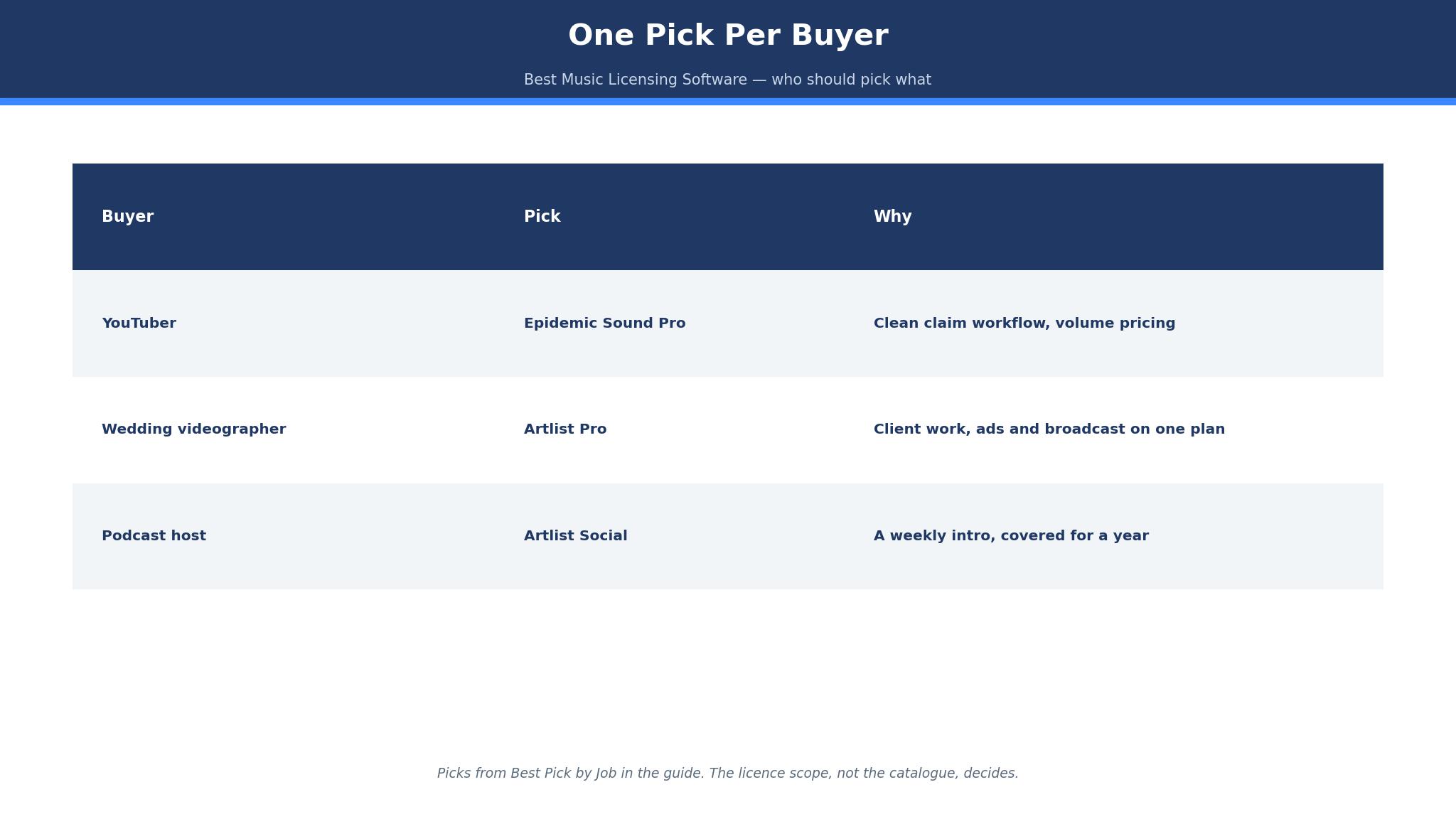
Three buyers need the best music licensing software this week, and each of them needs a different answer: a YouTuber who publishes twice a week and needs a licence that covers every upload, a wedding videographer who delivers one film to one couple and needs a licence that covers a paying client, and a podcast host who needs intro music that will not get the show claimed. This guide answers each of them separately, because the licence that fits one buyer can cost another their video. The short answer is that Epidemic Sound Pro fits the YouTuber, Artlist Pro fits the videographer, and Artlist Social fits the host.
The YouTuber: One Channel, One Licence
The YouTuber publishes two videos a week, which is 104 videos a year, and every video needs music that will not trigger a claim. The licence must cover the channel, the sponsored videos on that channel, and the clips cut for short-form platforms, because a licence that covers only the long video leaves the short clip exposed.
The maths decides the shortlist. Artlist Pro costs $299.04 a year, which is $2.88 per video at 104 videos. Epidemic Sound Pro costs $203.88 a year, which is $1.96 per video. Soundstripe Pro costs $239 a year, which is $2.30 per video. Those three are the only subscriptions here that cover client work, paid ads and broadcast together, and the per-video cost is the number that matters, not the headline price.
The YouTuber’s trap is the channel limit. Artlist Social covers one channel per platform, and Pro covers three. Epidemic Sound Creator covers one channel, and Pro covers three. A YouTuber with a second channel, or a channel owned by a business, needs the Pro tier, and the cheaper plan will not cover the second channel at all. That is the detail most buyers in the best music licensing software market miss, and it is the detail that causes the claim.
The 8 Tools at a Glance
| Tool | Best for | Starting price | Licence that matters |
|---|---|---|---|
| Artlist | Client work, ads and broadcast on one plan | Social $119.88 a year; Pro $299.04 a year | Pro covers client work, ads and broadcast |
| Epidemic Sound | Volume creators, cleanest claim workflow | Creator $119.88 a year; Pro $203.88 a year | Pro covers client work and ads |
| Soundstripe | Plain-English terms and stems | Personal $119 a year; Pro $239 a year | Pro covers client work |
| Musicbed | Films that need a real artist and a real record | Individual from $29.99 a month; Business from $99.99 a month | Business covers client work |
| PremiumBeat | Single tracks for a single project | Creator $9.99 a month; Standard $24.99 a month | Standard covers client work |
| Uppbeat | Cheapest legal route into client work | Pro about $115 a year, reported | Pro covers client work |
| AudioJungle | One track at a time, no subscription | Per track from $19, reported | Standard licence per track |
| Lickd | Real chart music for YouTube videos | Per-track pricing; see website | Per-track licence for YouTube |
The table is the short version, and the detail sections below are the long one. The prices were checked against vendor pages and current comparison sources in late 2026, and a figure that two sources list differently is called out as reported. The licence column matters more than the price column, because a cheap licence that does not cover the job is not cheap. The ranking in this best music licensing software roundup is built on licence scope first, catalogue second, and price third.
The Wedding Videographer: A Client, A Deadline
The wedding videographer delivers one film to one couple, and the licence must cover a paying client, a film that will be shared, and music that will still be licensed in five years when the couple watches it again. The budget is one film at a time, and the licence must be bought once and forgotten, not renewed every year to keep the film legal.
The maths is different from the YouTuber’s. A videographer delivering 20 weddings a year needs 20 licences, and a subscription that costs $299.04 a year works out at $14.95 per wedding. A per-track licence at $19 to $49 per track works out at $380 to $980 a year for the same 20 films, and the subscription wins on price as well as on simplicity. Musicbed is the exception, because its catalogue is built for films that need a real artist, and its Business tier starts from about $1,199.88 a year, which is $59.99 per wedding at 20 weddings.
The videographer’s trap is the cancellation rule. Artlist and Epidemic Sound both state that videos published during an active subscription stay licensed after you cancel, with conditions, so a film delivered in June stays legal in December even if the subscription ends. Musicbed’s licence terms do not address cancelling, which means a videographer should ask in writing before relying on it. That question is worth an email, because the answer decides whether the film stays legal.
The Podcast Host: An Intro That Will Not Get Claimed
The podcast host needs one piece of music, an intro of fifteen seconds, and it must play at the start of every episode without a claim. The host publishes weekly, which is 52 episodes a year, and the intro is the same every week, so the licence must cover repeated use across a whole series, not a single episode.
The maths is the simplest of the three buyers. A subscription at $119.88 a year works out at $2.31 per episode, and a per-track licence at $19 works out at $19 for the whole series if the licence covers repeated use. The per-track route wins on price, and the subscription wins on choice, because the host can change the intro without buying a new licence. A host who knows the intro they want should buy the track. A host who will change it should buy the subscription.
The host’s trap is the platform. A podcast is audio, and a licence that covers YouTube does not always cover a podcast feed, so the host must check the licence names the platform. Epidemic Sound and Artlist both cover podcasts on their creator plans, and that is the check that matters before paying.
The 8 Tools in Detail
Artlist leads on licence scope, Epidemic Sound leads on value, and Soundstripe leads on plain terms, with five more behind them. Below is the licence evidence for each, with a year-one cost at a stated size and the gap that matters most in this best music licensing software list. The opening three sections are the ones most buyers need, because they cover the licences every working creator has to choose between, and the rest are for the narrower jobs.
1. Artlist
Artlist takes first place because its Pro tier is the only mid-priced self-serve plan here that covers client work, paid advertising and broadcast at once. A creator who buys Pro does not need to ask whether a sponsored video, a client film or a broadcast is covered, because the answer is yes, and that certainty is worth more than a lower price with a narrower licence.
The price is clear. Music and SFX Social costs $119.88 a year, and Music and SFX Pro costs $299.04 a year. Social is for personal creators and covers one channel per platform. Pro covers three channels per platform, client work, paid ads and broadcast, and projects published during the term stay licensed after you stop paying. A YouTuber publishing 104 videos a year pays $2.88 per video on Pro, and a wedding videographer delivering 20 films pays $14.95 per film.
Artlist’s strength is the catalogue and the stems. The music is curated, the sound effects library is large, and stems let an editor pull a track back under a spoken welcome, which is a real editing advantage. Its weakness is the price jump. Pro costs 2.5 times Social, and a creator who only needs client work for one video a year will feel that jump. The Max tier, from about $40 a month, adds footage and templates, and a creator who does not need those should not pay for them.
2. Epidemic Sound
Epidemic Sound is the volume creator’s tool, and its claim workflow is the cleanest here. A creator connects the channel once, and claims are cleared automatically, which saves the hours that other libraries cost in dispute emails. That workflow is the reason many YouTubers stay with Epidemic Sound even when a rival is cheaper.
The price is also clear. Creator costs $119.88 a year, and Pro costs $203.88 a year. Creator covers sponsored content on the creator’s own channels, but not digital advertising. Pro adds digital ads and client work. A YouTuber publishing 104 videos a year pays $1.96 per video on Pro, which is $0.92 less per video than Artlist Pro, and $95.16 less a year. That saving is real, and it is the reason Epidemic Sound wins on value for a creator who never needs broadcast.
Epidemic Sound’s trade-off is broadcast. Pro does not cover broadcast in the way Artlist Pro does, so a creator whose video reaches television needs Artlist. Its strength is the catalogue size and the search, which is the fastest here for finding a track that fits a mood. A creator who publishes daily will feel that search speed every day.
3. Soundstripe
Soundstripe is the plain-English tool, and its licence terms are the clearest here. A buyer can read the terms and understand what is covered, which is rarer than it should be in music licensing. Its stems are also excellent, and an editor who needs to shape a track around dialogue will find them the most useful in this list.
The price is simple. Personal costs $119 a year, and Pro costs $239 a year. Personal covers one channel, and Pro covers up to five, with client work included. A YouTuber publishing 104 videos a year pays $2.30 per video on Pro, which sits between Epidemic Sound and Artlist. A year on Pro costs $35.12 more than Epidemic Sound Pro, and the buyer gets clearer terms and better stems for that money.
Soundstripe’s weakness is the catalogue, which is smaller than Artlist or Epidemic Sound, and a creator who needs a very specific sound may not find it. Its strength is the honesty of the terms, and for a buyer who has been burned by a claim, that honesty is worth the smaller catalogue.
4. Musicbed
Musicbed is the film tool, and it suits a project that needs a real artist and a real record rather than a library track. Its catalogue is curated from real bands and real songwriters, and a wedding film or a short film with a Musicbed track sounds like a film, not like a video with library music.
The price is the highest here. Individual starts from about $29.99 a month, which is $359.88 a year, and Business starts from about $99.99 a month, which is $1,199.88 a year. A wedding videographer delivering 20 films pays $59.99 per film on Business, which is four times the per-film cost of Artlist Pro. That is a serious premium, and it only makes sense when the music itself is part of the product.
Musicbed’s trade-off is the cancellation rule. Its licence terms do not state what happens to a film when the subscription ends, so a buyer should ask in writing before relying on it. Its strength is the music, and for a film where the song matters, no library here matches it.
5. PremiumBeat
PremiumBeat is the single-track tool for a single project. It is owned by Shutterstock, and its catalogue is curated for video, with a search that finds a track by mood, tempo and genre quickly. A creator who needs one track for one video will find it the simplest route.
- Starting price: Creator $9.99 a month; Standard $24.99 a month.
- Best use: one track for one project, with a licence that covers the project.
- Weakness: a subscription that only covers one project at a time is dear for a creator publishing weekly.
- Worked cost: a creator buying one Standard month for a single client film pays $24.99, which beats a $299 annual subscription for a one-off job.
- Verdict: buy it per project, never as the weekly tool.
PremiumBeat’s strength is the per-project simplicity. A creator who needs music twice a year should buy PremiumBeat twice, not subscribe to Artlist for a year. A creator who publishes weekly should subscribe instead.
6. Uppbeat
Uppbeat is the cheapest legal route into client work in this list, and that is a real achievement. Its Pro tier costs about $115 a year, reported, and it covers client work, which makes it the cheapest subscription here that legally covers a paying client. A creator starting out, with a small budget and a first client, should look at Uppbeat first.
Q: What does Uppbeat cost? A: Pro costs about $115 a year, reported, which is $9.58 a month. That is less than half the price of Artlist Pro, and it covers client work.
Q: Who should pick it? A: A new creator with a first client, a small budget, and a need for a legal licence. Uppbeat is the entry point, not the destination.
Q: What does it give up? A: It gives up catalogue size and the broadcast cover of Artlist Pro. A creator who outgrows the catalogue will move to Epidemic Sound or Artlist, and that move is easy when the budget grows.
7. AudioJungle
AudioJungle is the marketplace, and it suits a creator who wants one track and no subscription. It is part of Envato, and its catalogue is vast, with tracks for every mood and every project. A creator who needs music twice a year will find it the cheapest route of all.
Pricing is per track, from $19 reported for a standard licence, with longer licences costing more. A creator buying ten tracks a year pays about $190, which is less than any subscription here except Uppbeat. AudioJungle’s weakness is the licence work. Each track needs its own licence, and a creator publishing weekly will spend more time buying licences than making videos. Its strength is choice, and for a one-off project that choice is unmatched.
8. Lickd
Lickd is the chart music tool, and it is the only tool here that licences real chart songs for YouTube videos. A creator who wants a song the audience already knows, rather than a library track, will find Lickd the only legal route to it. That is a real advantage for a video that needs a recognisable song.
Pricing is per track, and the price depends on the song and the channel size, so no single figure is published. A creator should get a quote for the song they want before planning the video around it. Lickd’s trade-off is the price and the platform. It covers YouTube, and a creator who needs the same song on other platforms must check the licence. Its strength is the song itself, and for a video where the song is the hook, that strength wins.
Artlist vs Epidemic Sound
The duel that decides most purchases is Artlist against Epidemic Sound, and the answer depends on broadcast and on the claim workflow. Artlist Pro costs $299.04 a year and covers client work, paid ads and broadcast. Epidemic Sound Pro costs $203.88 a year and covers client work and paid ads, but not broadcast in the same way. The difference is $95.16 a year, and the buyer must decide whether broadcast is worth that money.
On the claim workflow, Epidemic Sound wins. A creator connects the channel once, and claims are cleared automatically, which saves hours of dispute emails. Artlist also clears claims, but the workflow is less automatic, and a creator who publishes daily will feel the difference. On the catalogue, both are strong, and the choice is taste rather than quality. Artlist’s music is curated for film, and Epidemic Sound’s is curated for volume creators.
On the cancellation rule, both win, because both state that videos published during an active subscription stay licensed after you cancel, with conditions. That rule matters more than the price, because it decides whether a video stays legal after the subscription ends. The honest advice is to buy Epidemic Sound if you never touch broadcast, and buy Artlist if you might, because the $95.16 a year is cheaper than a single broadcast claim. That choice is the one most buyers in the best music licensing software market face, and it is the choice this section exists to make easy.
The Track That Was Fine Until the Video Went Viral
A creator published a video with a track that was fine for a small audience, and the video went viral. The views jumped from a thousand to a million, and the licence that covered a small channel did not cover a viral one. The claim arrived, the revenue went to the rights holder, and the creator learned that licence scope changes when views jump.
That is the failure this section is about, and it is the failure most buyers discover too late. A personal licence covers personal use. A creator licence covers a creator’s own channels. A Pro licence covers client work, ads and broadcast. The track does not change, but the use does, and the licence must match the use at the moment the video goes viral, not at the moment it was published.
The practical rule follows from the failure. Buy the licence for the audience you might reach, not the audience you have today. A YouTuber with a thousand subscribers who buys a Pro licence pays $95.16 a year more than the Creator tier, and that money buys the right to go viral without a claim. A YouTuber who buys the cheaper licence saves $95.16 and risks the revenue of a viral video, which is worth far more. The licence is insurance, and the premium is small.
Best Pick by Job
| Job | Best pick | Year-one cost |
|---|---|---|
| YouTuber, 104 videos a year | Epidemic Sound Pro | $203.88, $1.96 per video |
| YouTuber who might reach broadcast | Artlist Pro | $299.04, $2.88 per video |
| Wedding videographer, 20 films | Artlist Pro | $299.04, $14.95 per film |
| Wedding film where the song matters | Musicbed Business | About $1,199.88, $59.99 per film |
| Podcast host, weekly intro | Artlist Social or a per-track buy | $119.88, or $19 per track |
| New creator, first client, small budget | Uppbeat Pro | About $115 a year, reported |
| One track, one project | PremiumBeat Standard | $24.99 for the month |
The table is the short version of the whole guide. Let your work pick the row, and let the section behind it make the case before you pay. The picks in this best music licensing software guide are the same ones the detail sections recommend, so the table and the text agree.
How to Choose Music Licensing Software Without Losing a Video?
Start with the use, not the music. Write down where the video will play, who owns the channel, whether it is sponsored, and whether it might reach broadcast. A video that plays on one channel, owned by the creator, with no sponsor, needs a Creator tier. A video for a client, a sponsored video, or a video that might reach broadcast needs a Pro tier. That list decides the shortlist, and buyers in the best music licensing software market who skip it buy the wrong licence.
Then read the cancellation rule before you pay. Ask what happens to a video published during the subscription after the subscription ends, and get the answer in writing if the terms do not state it. Artlist and Epidemic Sound state the rule. Musicbed does not, and that gap is worth an email before a film depends on it.
Finally, test the claim workflow with one video. Publish, watch for a claim, and time how long it takes to clear. A library that clears claims automatically saves hours a year, and a library that needs a dispute email for every video costs that time. That test is free, and it measures the working week, not the feature page.
What Does the Best Music Licensing Software List Miss About Going Viral?
Most lists get one thing wrong about going viral, and it is the thing that costs creators their revenue. They compare prices at a small size, when the licence that matters is the one that covers the large size. A Creator tier is cheap for a small channel and useless for a viral video, and a list that recommends it without naming that limit is recommending a claim.
The second mistake is treating all subscriptions as the same. A subscription that covers client work is a different product from a subscription that does not, even when the price is the same. A creator who buys the cheaper tier for a client film has bought a licence that does not cover the job, and the saving is not a saving.
The third mistake is forgetting the short-form clip. A video cut into a short clip needs a licence that covers the short platform too, and a licence that covers only the long video leaves the clip exposed. Check the platforms the licence names before you pay, because the clip is where the audience is.
Frequently Asked Questions
Can I switch music licensing libraries without losing my old tracks?
Yes, for the tracks you already published, if the old library states that published videos stay licensed after you cancel. Artlist and Epidemic Sound both state that rule, with conditions, so a video published during the subscription stays legal. A new video needs the new library’s licence, and the old library’s tracks cannot be used in new videos after you cancel.
How much does music licensing cost a YouTuber in year one?
A YouTuber publishing 104 videos a year pays $119.88 on a Creator tier, $203.88 on Epidemic Sound Pro, $239 on Soundstripe Pro, and $299.04 on Artlist Pro. The per-video cost runs from $1.15 to $2.88, and the Pro tiers are the ones that cover client work and ads. The cheapest year one is $115 on Uppbeat Pro, reported, for a new creator with a first client.
Will my video get claimed if I use licensed music?
It can be claimed, and the claim is usually cleared automatically if the channel is connected to the library. Epidemic Sound clears claims automatically once the channel is connected, and Artlist does the same with a little more work. A claim that is not cleared means the licence does not cover the use, and the fix is to check the licence scope before publishing.
Can I use one licence for YouTube and a podcast?
Not always. A licence that covers YouTube does not always cover a podcast feed, so the host must check the licence names the platform. Epidemic Sound and Artlist both cover podcasts on their creator plans, and that is the check that matters before paying for a podcast intro.
What happens to my videos if I cancel?
Videos published during an active Artlist or Epidemic Sound subscription stay licensed after you cancel, with conditions, so a video published in June stays legal in December. New videos need a new licence. Musicbed’s terms do not state the rule, so a buyer should ask in writing before relying on it.
Is per-track licensing cheaper than a subscription?
For a creator who needs music twice a year, yes. Ten tracks at $19 each cost $190, which is less than any subscription here except Uppbeat. For a creator publishing weekly, no. A subscription at $203.88 a year covers 104 videos, which is $1.96 per video, and per-track buying at that volume costs far more.
Which Licence Would Each Buyer Actually Buy?
The YouTuber would buy Epidemic Sound Pro, because 104 videos a year at $1.96 per video is the cheapest honest price for a licence that covers client work and ads, and the claim workflow is the cleanest here. The wedding videographer would buy Artlist Pro, because a film for a paying client needs broadcast cover and a cancellation rule in writing, and $14.95 per film is a small price for that certainty.
The podcast host would buy Artlist Social, because one intro for 52 episodes at $2.31 per episode is fair, and the licence covers the podcast feed. Those three answers are different, and that is the point. The right licence depends on the buyer, and the wrong licence is the one bought without reading what it covers.