

Couples paid 2,300 dollars on average for a wedding videographer in 2025, with a median of 1,900 dollars, according to The Knot survey of 10,474 couples, while other published guides put the national average near 3,993 dollars with a typical range of 3,200 to 4,800 dollars, and WeddingWire style guides put the average lower, near 1,799 dollars with most couples spending 1,000 to 2,500 dollars. Those averages disagree because wedding videography pricing packages pool different markets, coverage lengths, and package scopes, including short bookings and full day productions, into single numbers. A six hour single shooter package and a ten hour two shooter cinematic production are not the same product, and averaging them hides the choice couples actually face.
If you want to understand wedding videography pricing packages, start with what a package contains, because hours, crew, deliverables, and add-ons move price far more than any national average ever will.
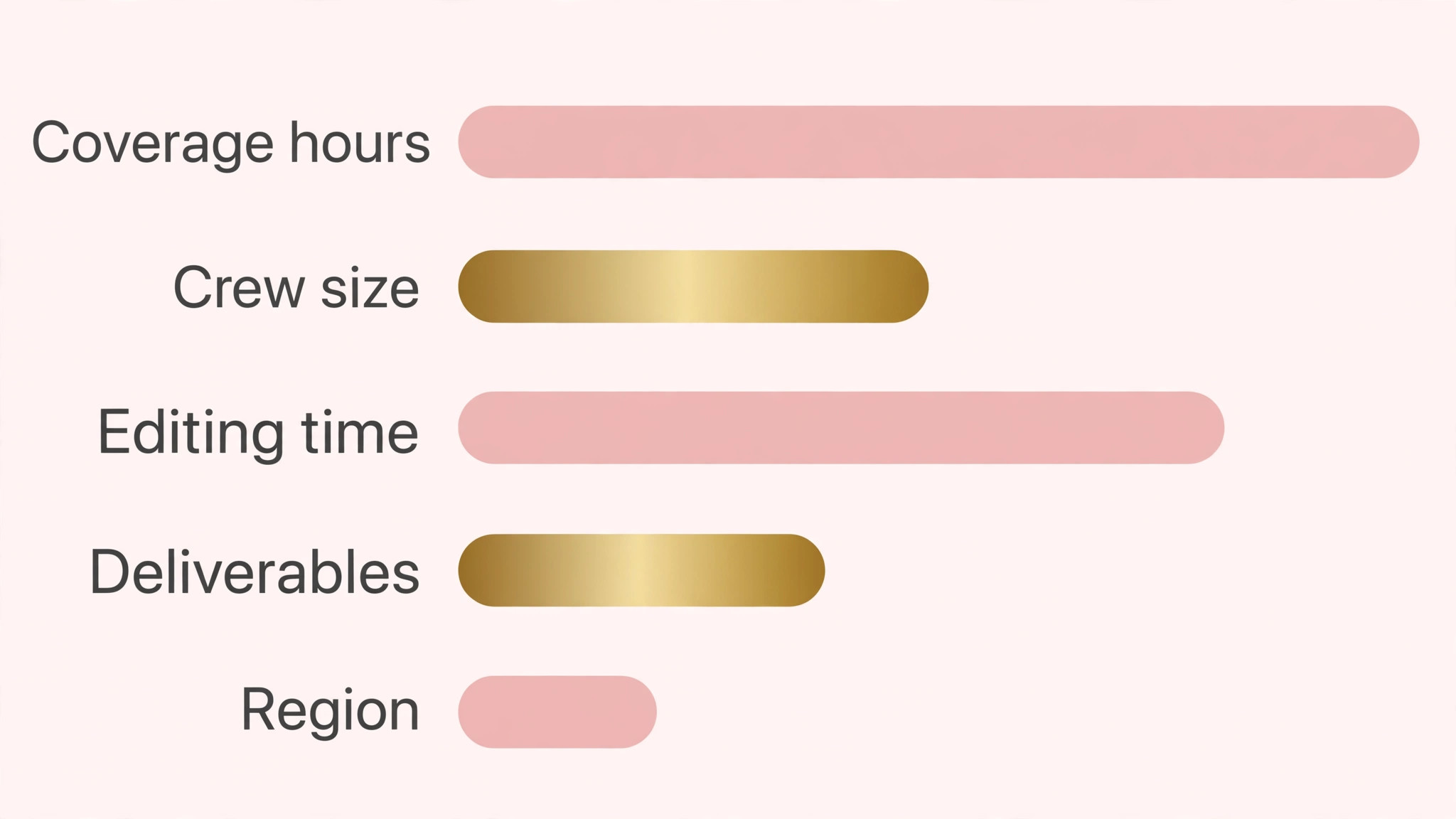
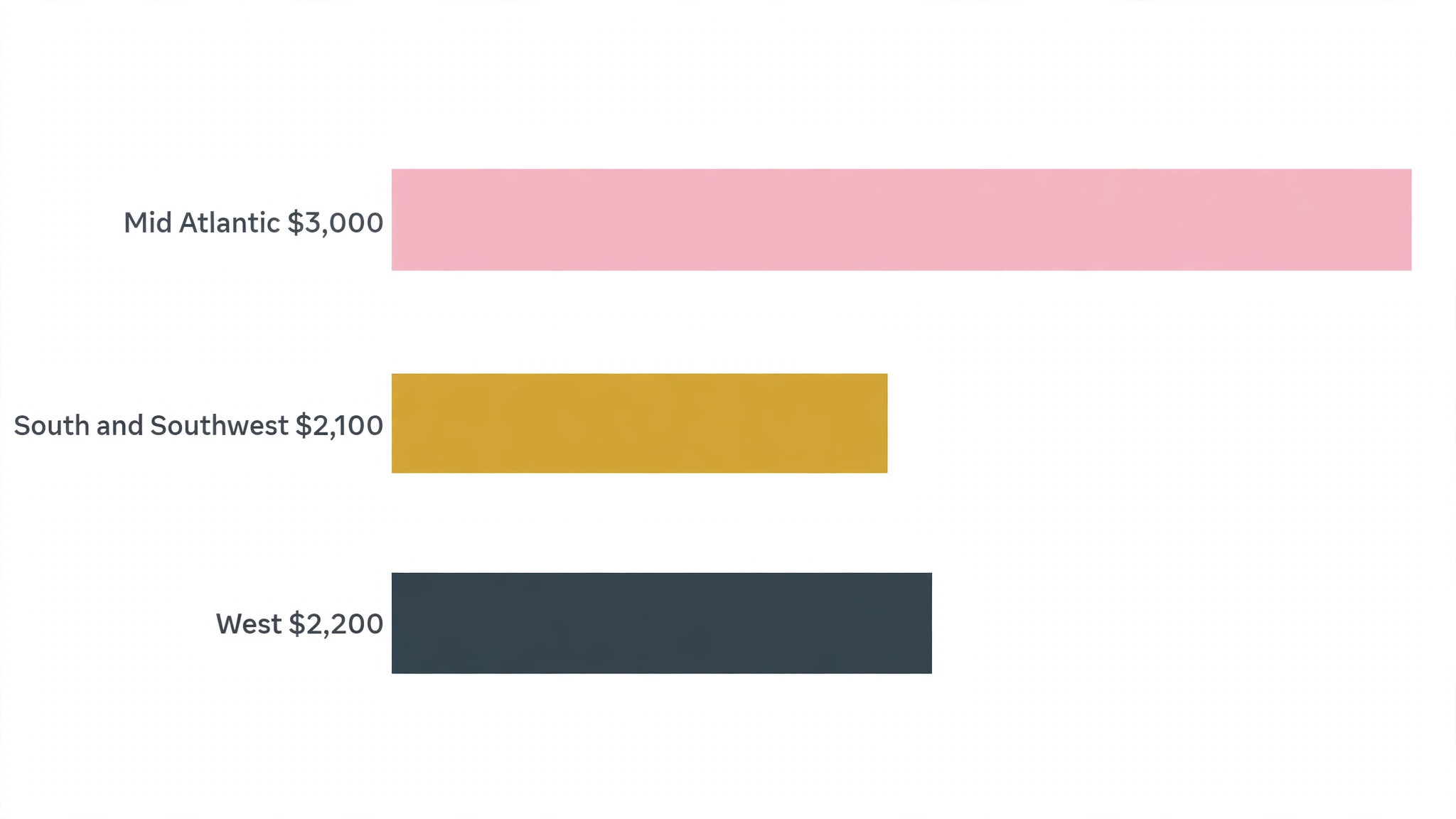
Videography pricing follows a simple structure once you see it. Coverage time is the base, crew size multiplies it, editing workload determines the post production cost, and deliverables decide what you actually receive. A highlight film, a full ceremony edit, speeches, a trailer, drone footage, and raw footage are separate deliverables with separate editing costs, and packages bundle them differently. Regional markets shift the whole structure, with Mid Atlantic averages near 3,000 dollars against about 2,100 dollars in the South and Southwest and about 2,200 dollars in the West in the same Knot study, and major cities such as New York sitting above national averages for full day coverage.
This guide unpacks each element, compares packages honestly, and shows how add-ons and timing choices move a quote from a base price to a final total.
Wedding Videography Pricing Packages Compared
| Package | Typical price range | Coverage and crew | Core deliverables |
|---|---|---|---|
| Budget or beginner | 1,000 to 2,500 dollars | 6 to 8 hours, one videographer | Highlight film 3 to 5 minutes, ceremony edit |
| Mid range | 2,500 to 5,000 dollars | 8 to 10 hours, one to two videographers | Highlight film 5 to 8 minutes, ceremony, speeches, teaser |
| Premium or cinematic | 4,500 to 8,000 dollars | 10 to 12 hours, two videographers | Feature film, highlight, ceremony, speeches, drone, teaser |
| Luxury production | 8,000 to 20,000 dollars and up | 12 hours and up, larger crew | Multiple films, documentary edit, aerials, custom soundtrack |
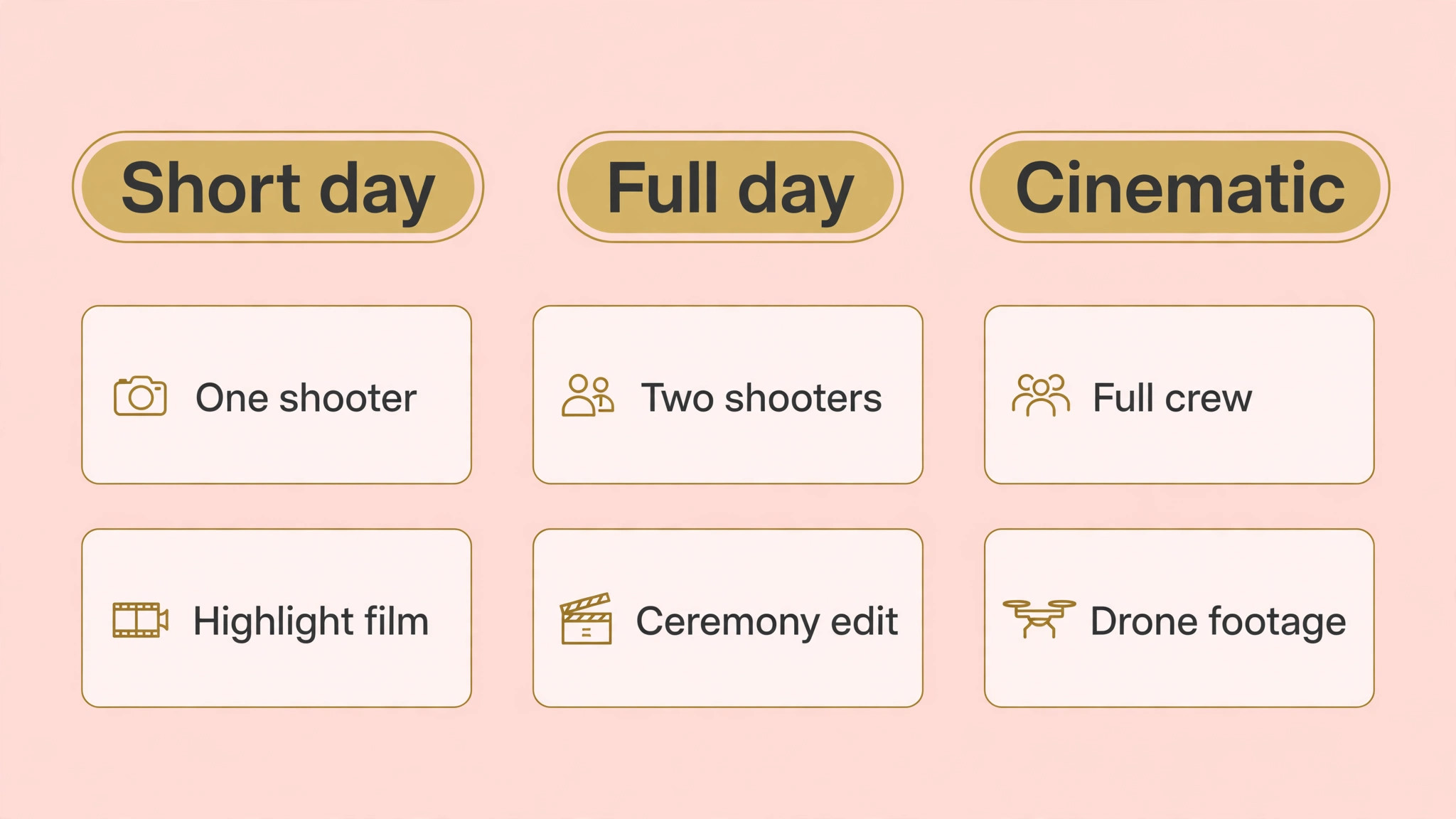
Budget packages suit simple weddings with one location, a straightforward timeline, and a couple who mainly want a shareable highlight and a ceremony record. Mid range packages suit most full weddings, with two locations, a longer day, and a couple who want speeches and a teaser alongside the highlight. Premium packages suit couples who want cinematic storytelling, multiple angles, drone coverage, and a longer feature film, with a crew that can cover preparations, ceremony, and reception simultaneously. Luxury productions suit multi day events, celebrity level production, large crews, helicopter aerials, and custom soundtracks, and their prices reflect crew size and post production scale rather than a single videographer day rate.
Package names mislead, so compare contents line by line, not by tier label. One provider budget package may include raw footage, while another premium package charges extra for it. One mid range package may include drone footage, while another charges 300 to 700 dollars for it as an add-on. One highlight film may run 3 minutes, another 8 minutes, with very different editing hours behind each. Ask for coverage hours, crew count, deliverable list with lengths, delivery timeline, revision policy, music licensing, and travel terms in writing, for each package you compare. A package comparison without those lines is a price comparison without a product comparison, and it will mislead you toward the cheapest label rather than the best value.
What Moves the Price Most
Coverage hours move price first and most predictably. Each extra hour costs roughly 100 to 350 dollars in published provider pricing, with some guides citing 125 to 350 dollars per extra hour, and a 12 hour wedding averaging 1,500 dollars or more above an 8 hour booking on hours alone. Hours matter because they extend crew time, increase footage volume, and increase editing time together. Trimming hours is the most effective saving available, provided you trim wisely. Cutting early morning preparations or late night dancing saves money with little loss for many couples, while cutting ceremony or speeches to save an hour loses the moments most couples value most. Choose hours around moments, not around round numbers.
Crew size moves price second. A second videographer adds roughly 500 to 1,500 dollars in published add-on pricing, and it buys simultaneous angles, ceremony and reaction coverage at once, and backup if one camera fails. A single videographer can still produce a beautiful film, but they cannot be in two places at once, so preparations for both partners, or a ceremony with a wide and a close angle, will be limited. Two videographers also generate more footage, which increases editing time, so the second shooter cost is not just a day rate, it is a day rate plus editing. For a small wedding with one location and a simple timeline, one videographer is often sufficient.
For a large wedding with two preparation locations, a church ceremony, and a big reception, two videographers are close to essential for cinematic coverage.
Editing workload is the hidden driver that couples underestimate. Editing 10 hours of footage into a polished film commonly takes 40 to 60 hours of post production, including selecting moments, colour grading, audio mixing, music licensing, and revisions. Fancy effects, slow motion, colour grading, and multiple deliverables add 500 dollars and up to that workload. A package with a highlight, a feature, a ceremony edit, speeches, and social clips contains several distinct edits, not one edit cut five ways, and each edit needs its own time.
When a quote seems high for a day of filming, remember that you are paying for weeks of editing as well as a day of shooting, and that editing quality is what separates a watchable film from a forgettable one.
Location and logistics move price through travel, accommodation, and access constraints. Destination weddings commonly add flights near 300 to 800 dollars, plus two to three hotel nights near 600 to 1,200 dollars, before crew fees. City weddings with short venue access windows, travel between two Manhattan locations that can take an hour on a Saturday, and weekend dates booked months ahead, cost more for the same hours, because logistics compress the working day and raise demand. Rural weddings with long drives, multiple venues, and limited vendor availability can cost similarly through travel time. Ask whether travel, accommodation, parking, and meals are included or extra, since a quote that excludes them will grow after booking.
Add-On Costs That Change the Total
| Add-on | Typical price range | What it buys |
|---|---|---|
| Second videographer | 500 to 1,500 dollars | Simultaneous angles and backup coverage |
| Drone footage | 300 to 700 dollars | Aerial venue and portrait shots, weather permitting |
| Extra coverage hour | 100 to 350 dollars per hour | Longer day, more moments, more editing |
| Social media teaser, about 1 minute | 100 to 200 dollars, or included in higher tiers | Short shareable clip for social platforms |
| Raw footage delivery | 300 to 500 dollars, or included in some tiers | All unedited clips, large files, no polish |
| Super 8 film look | 900 dollars in one published New York example | Vintage film aesthetic for selected moments |
| Extra edited film or feature edit | 750 dollars and up per extra edit | Additional full length or themed edit |
| Rush delivery | 50 to 100 dollars for editing rush in one guide | Faster turnaround than standard delivery |
| Love story or engagement film | Extra fee, varies by provider | Pre wedding story film for the wedding day or invitations |
| Live stream service | Varies, often a separate package | Live broadcast for guests who cannot attend |
Add-ons stack quickly, and a worked provider scenario in published pricing research moves from 2,600 dollars to 4,800 dollars after adding a teaser, drone footage, a full feature video, and a second videographer. That jump is not upselling for its own sake, each add-on adds crew time, equipment, or editing hours, but it shows why a base package price should never be treated as a final total. Decide add-ons by viewing value, not by excitement on the booking day. Drone footage delights at venues with striking grounds and disappoints at venues with flight restrictions, weather limits, or no outdoor space. Raw footage pleases couples who want everything, but most couples rarely watch hours of unedited clips after the highlight arrives.
A teaser pleases couples who share socially, while a feature film pleases couples who rewatch the full day.
Music licensing deserves a specific question, since it affects both quality and legality. Professional videographers use licensed music for commercial delivery, while a favourite commercial song may not be licensed for a wedding film distributed online. Ask whether music is licensed, whether you can request a style or a specific licensed track, and whether the film can be shared on social platforms without takedown risk. A film with unlicensed music may be muted or removed from a platform, which turns a beautiful deliverable into a silent one. Licensed music costs the videographer, and that cost sits inside package pricing, so a suspiciously cheap package that promises any song may be cutting that corner.
Delivery timeline and format also affect value. Standard delivery commonly runs several weeks to a few months depending on season and editing load, while rush delivery costs extra and may still take weeks. Ask for delivery format, including online gallery, downloadable files, USB presentation, and file sizes, and ask how long files remain available online. A film delivered only as a streaming link with a short expiry is less valuable than a film delivered as downloadable files you own, and that difference should be reflected in price comparison.
How to Compare Quotes and Negotiate Fairly
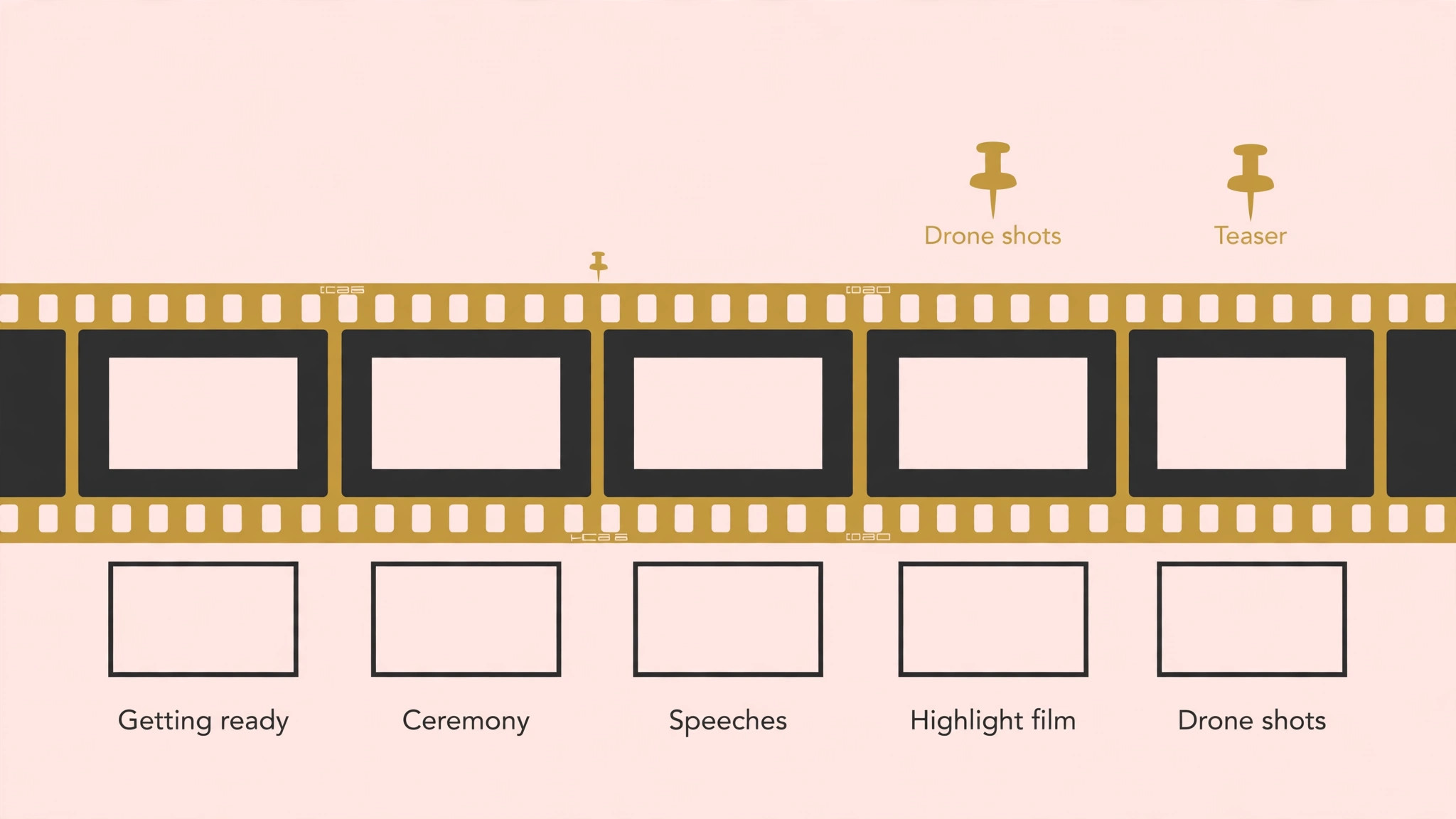
Compare quotes on a like for like sheet before negotiating price. List coverage hours, crew count, deliverable names and lengths, drone inclusion, raw footage inclusion, teaser inclusion, music licensing, travel inclusion, delivery timeline, revision count, and total price including add-ons you actually want. Fill that sheet for each provider, and the best value usually becomes obvious without haggling. A lower base price with expensive add-ons often totals higher than a higher base price with inclusions, and a sheet makes that visible in a way that sales conversations hide.
Negotiate on scope, not just on price, because a price cut without a scope change usually cuts editing time or crew quality invisibly. If a quote exceeds budget, ask which deliverable can move to a later purchase, such as raw footage or an extra edit, or which hours can be trimmed around low value moments, rather than asking for the same package cheaper. Videographers can often offer a shorter highlight, a single shooter for part of the day, or a longer delivery timeline at a lower price, and those scope trades preserve quality for the moments that matter.
Also ask about off season, Friday, or Sunday pricing, since booking outside peak Saturday demand commonly lowers price, and bundling photo and video with one team commonly saves compared with hiring separate teams.
Check what happens if plans change. Ask about rescheduling fees, cancellation terms, backup videographer arrangements if the lead is ill, equipment backup, and data backup during editing. A videographer with no backup plan for illness or card failure is a risk, not a bargain, especially for a wedding that cannot be reshot. A professional contract should cover deliverables, payment schedule, timeline, travel, cancellation, rescheduling, music licensing, image and film usage, and data retention. Read the contract before paying a deposit, and keep a copy with the payment receipt, since wedding planning spans months and details fade.
Review portfolios by film type, not just by highlight reel. A highlight reel shows the best 60 seconds from many weddings, while a full ceremony edit or a full feature film shows sustained quality, audio handling, and storytelling across a whole day. Ask to see a full film from a wedding similar to yours in venue, size, and lighting, and listen for clean vows, balanced speeches, and music that supports rather than overwhelms. A videographer whose full films sound clean in a echoing church and a noisy reception will handle your day better than a videographer whose highlights look beautiful but whose full audio is muddy.

Saving Without Losing the Moments That Matter
Book early, since booking 9 to 12 months in advance often locks current rates and secures preferred dates before peak pricing. Trim coverage hours around low value periods rather than core moments, and consider a Friday or Sunday wedding, or an off season date, where provider pricing softens. Bundle photo and video with one team where that team offers both well, since a combined team shares timeline planning and often prices below separate teams, though only if both photo and video portfolios meet your standard independently. Do not bundle with a weak partner just for a discount, since a weak film or weak gallery will disappoint regardless of saving.
Limit add-ons to those you will actually watch and share. A teaser and a highlight may be watched dozens of times, while raw footage may sit unwatched on a drive. Drone footage may be essential at a scenic outdoor venue and irrelevant at an indoor city venue with flight restrictions. A second shooter may be essential for a large wedding and unnecessary for an intimate wedding with one location. Each add-on should pass a simple test, which is whether you can picture watching or sharing it in a year. If you cannot, skip it and spend the saving on a longer highlight or better audio, which you will notice every viewing.
Consider a shorter package with a longer highlight rather than a longer package with many deliverables you will not use. A six hour package with a polished 6 minute highlight and a clean ceremony edit often satisfies couples better than a ten hour package with five deliverables that arrive late and overwhelm. Editing quality beats deliverable quantity, and a videographer who spends editing time on one excellent film will outperform a videographer who spreads the same time across many average edits. Ask videographers how they allocate editing time, and choose the allocation that matches how you will actually watch the film.

Regional Differences and Seasonal Timing
Regional pricing differences are large enough to change package choice. The Knot study cited earlier puts Mid Atlantic averages near 3,000 dollars, Southern and Southwestern averages near 2,100 dollars, and Western averages near 2,200 dollars, while New York full day packages start where national averages end, with local quotes for eight to ten hours starting above the national average. Those differences reflect labour costs, venue logistics, demand, and travel, not just videographer greed, and a quote that looks high nationally may be normal locally. Compare quotes within your market first, and use national averages only as a sanity check, not as a negotiation target.
Seasonal timing matters similarly. Peak wedding season, commonly late spring through early autumn in many regions, plus Saturdays, commands premium pricing and early booking. Off season dates, Fridays, and Sundays commonly offer lower prices or added inclusions, since providers fill otherwise empty dates. If your date is flexible, ask providers for off peak pricing before fixing a Saturday in peak season, since a date shift can save more than any negotiation on the same date. If your date is fixed for personal reasons, book early and accept peak pricing as the cost of that date, rather than expecting off peak rates on a peak Saturday.
Destination weddings add a further layer, with travel and accommodation for crew, plus local permits for drone use, venue access rules, and equipment transport. A destination quote should itemise travel, accommodation, and local costs separately from filming and editing, so you can compare a local provider flown in against a local provider at the destination. A destination specialist may cost more in filming but less in travel, while a home provider flown in may cost less in filming but more in travel and logistics. Compare totals, not day rates, for destination weddings.
Mistakes Couples Make With Videography Budgets
The first mistake is budgeting videography last, after venue, catering, photography, and attire have consumed the budget. Videography then becomes the item cut to save money, even though it is the only deliverable that captures vows, speeches, and movement. Budget videography alongside photography from the start, as a pair, since both capture the day in different media and both require similar booking lead times. A wedding without video is a common regret, while a wedding with video rarely is, according to many couple surveys and videographer testimonials.
The second mistake is choosing on highlight reel alone. Highlights are marketing, and every competent videographer can produce a beautiful 3 minute highlight from a good wedding. Full films, audio quality, and delivery reliability separate professionals from highlight makers. Watch full films, listen to vows and speeches, and ask about audio capture methods, including venue sound board feeds and lavalier microphones, since clean audio is what makes a film rewatchable.
The third mistake is ignoring the contract and delivery terms until after payment. Delivery timeline, revision count, music licensing, raw footage ownership, and cancellation terms should be clear before a deposit, not discovered months later when a film is late or a song is muted online. Read the contract, ask questions in writing, and keep the signed version. A professional videographer will welcome contract questions, while evasiveness about terms is a warning sign.
The fourth mistake is adding every add-on on booking day out of excitement, then regretting the total when the final invoice arrives. Add-ons should be decided after comparing the like for like sheet, with a night to consider which deliverables you will actually watch. Most add-ons can be purchased later, such as raw footage or an extra edit, provided the footage is retained, so ask about post wedding purchase windows and retention periods. Deciding later, with the highlight in hand, often produces a wiser add-on choice than deciding in the excitement of booking.
Audio, the Part Couples Notice Most
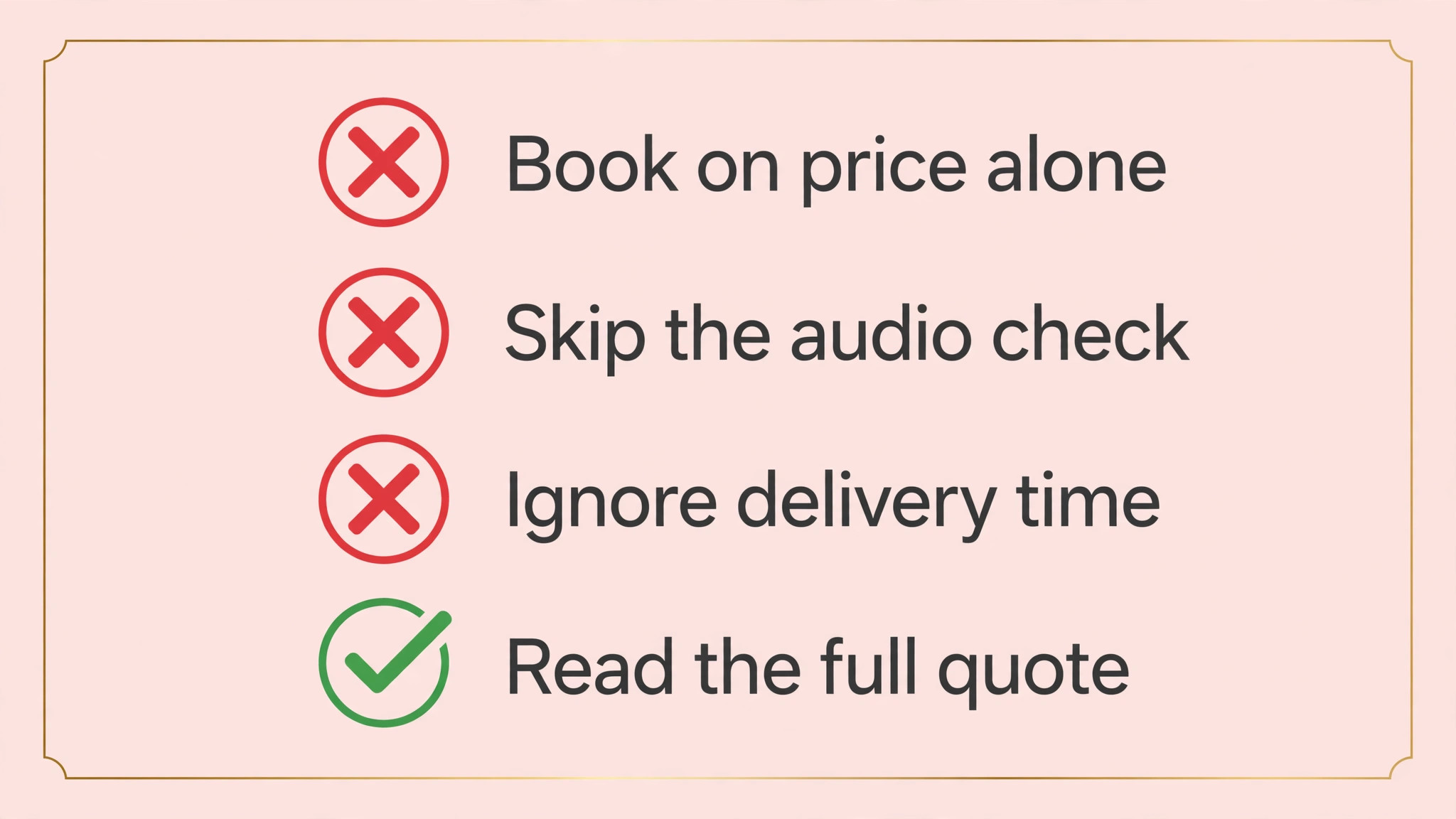
Couples judge films by pictures first and by sound second, but sound is what makes a film rewatchable over years. Clean vows, audible speeches, and music that supports rather than overwhelms separate professional films from amateur ones, and audio capture methods should be part of every package comparison. Professional videographers capture ceremony audio from multiple sources, commonly including a feed from the venue sound system, a lavalier microphone on the officiant or groom, and a directional microphone on camera as backup. That redundancy matters, because a single audio source can fail, distort, or pick up wind, and a wedding has no second take for vows.
Reception audio needs similar care. Speeches recorded from a distance with a camera microphone sound echoing and thin, while speeches recorded with a dedicated microphone near the speaker, or a feed from the DJ or band system, sound present and warm. Ask videographers how they capture speeches, whether they use a separate audio recorder, and how they mix speech, music, and ambient sound in editing. A videographer who answers with specific microphones and backup methods is more reliable than one who answers only with camera models, since cameras matter less to rewatchability than microphones do.
Audio also affects add-on value. Drone footage is silent by nature and needs music or ambient sound added in editing, while a ceremony edit without clean vows is nearly worthless no matter how beautiful the pictures look. When you compare wedding videography pricing packages, weight audio capture as heavily as camera count, because a second camera angle cannot rescue unintelligible vows, while clean audio can rescue a single camera ceremony. Ask to hear a full ceremony and a full speech set from a previous wedding, in a venue similar to yours, before booking, and let that listening test decide as much as any highlight reel.
A package that invests in audio will sound as good in ten years as it looks today, and that longevity is what justifies videography pricing packages that cost more than the cheapest quote.
More Reading for Wedding and Business Planning
If videography pricing is clearer now, the wider guides on Stratilyze cover neighbouring planning and business costs. The guide to running a food truck monthly compares fixed and variable costs in event catering, the guide to hiring a virtual assistant monthly prices admin help during busy planning periods, the guide to building a mobile app for a small business covers a larger project budget, and the guide to headphones for online teaching helps you judge audio gear that also matters for film sound. Read the food truck guide next if catering costs are part of the same wedding budget, since its fixed and variable logic helps balance the whole day.
Frequently Asked Questions
How much does a wedding videographer cost on average?
Couples paid 2,300 dollars on average in 2025 according to The Knot survey of 10,474 couples, with a median of 1,900 dollars and a middle half spending 1,000 to 3,300 dollars. Those averages frame wedding videography pricing packages, but package contents decide real value. Other guides put the national average near 3,993 dollars with a typical range of 3,200 to 4,800 dollars, and lower guides put the average near 1,799 dollars with most couples spending 1,000 to 2,500 dollars. Averages differ by market, hours, crew, and package scope, so compare like for like packages in your market rather than trusting a single national figure.
What do wedding videography pricing packages usually include?
Most packages include a set number of coverage hours, a crew of one or two videographers, a highlight film, and a ceremony edit, with higher tiers adding speeches, a teaser, drone footage, a feature film, and raw footage. Comparing those inclusions line by line is how couples judge wedding videography pricing packages fairly. Lower tiers commonly offer 6 to 8 hours with one videographer and a 3 to 5 minute highlight, mid tiers offer 8 to 10 hours with a longer highlight plus speeches and teaser, and premium tiers offer 10 to 12 hours with two videographers, drone, and multiple films. Always compare deliverable lists line by line, since package names vary and inclusions differ widely between providers.
How much do wedding videography add-ons cost?
Common add-on ranges include a second videographer at 500 to 1,500 dollars, drone footage at 300 to 700 dollars, extra coverage at 100 to 350 dollars per hour, a social teaser at 100 to 200 dollars, raw footage at 300 to 500 dollars, and extra edited films starting near 750 dollars each. Add-ons are where wedding videography pricing packages grow from base price to final total, so decide them deliberately. A worked example moves a total from 2,600 dollars to 4,800 dollars after adding a teaser, drone, a feature film, and a second shooter. Decide add-ons by whether you will watch and share them in a year, and ask whether add-ons can be purchased after the wedding from retained footage.
Is wedding videography worth the cost?
For most couples who book it, yes, because video captures movement, sound, vows, laughter, and music in a way photos cannot, and it becomes a keepsake for family who could not attend and for future generations. Value depends on how much you value those elements and on choosing a package whose deliverables you will actually watch. A highlight and ceremony edit that you rewatch yearly justifies the cost more than a large package with deliverables you never open, so choose deliverables by viewing habits, not by tier label.
How far in advance should I book a wedding videographer?
Book 9 to 12 months in advance where possible, especially for peak season Saturdays, since popular videographers fill early and early booking often locks current rates. That lead time also allows portfolio review, full film viewing, contract discussion, and timeline planning with the photographer and venue. If your date is within a few months, contact providers promptly and ask about remaining availability and off peak options, since short notice bookings may still be possible on Fridays, Sundays, or off season dates.
What should I check in a wedding videography contract?
Check coverage hours, crew count, deliverable names and lengths, music licensing, travel and accommodation inclusion, payment schedule, delivery timeline, revision count, cancellation and rescheduling terms, backup videographer and equipment arrangements, data retention, and raw footage ownership. Confirm who owns the final films, how long files remain available, and what happens if the videographer is ill or equipment fails. A clear contract protects both sides across months of planning, and questions about terms before deposit are a sign of professionalism, not distrust.
Choose the Film, Not Just the Hours
Hours, crew, and add-ons are the inputs, but the film is the product, and it is the film you will watch, share, and keep. A package that buys clean vows, balanced speeches, a highlight that moves you, and a delivery you can actually watch is worth more than a longer package with more deliverables you never open. When you compare wedding videography pricing packages by deliverables, audio quality, full film examples, and total cost including the add-ons you want, the right choice usually becomes clear without haggling over a few hundred dollars.
Budget videography alongside photography from the start, book early, trim hours around low value moments rather than core moments, and choose add-ons by viewing value. That discipline gives you a film that justifies its price every time you watch it, which is the only return a wedding film ever needs to provide.