
Ocrolus processes roughly 750,000 credit applications a month, and Zest AI reports its models approve 25 percent more loans without increasing default risk. Zest AI is the best ai tools for mortgage underwriting pick for large lenders that need explainable machine learning models with fair lending documentation, because the model risk exam is the test every underwriting tool must survive. Ocrolus is the pick for a lender whose bottleneck is documents, and Candor is the pick for a lender that wants the underwriting decision automated end to end.
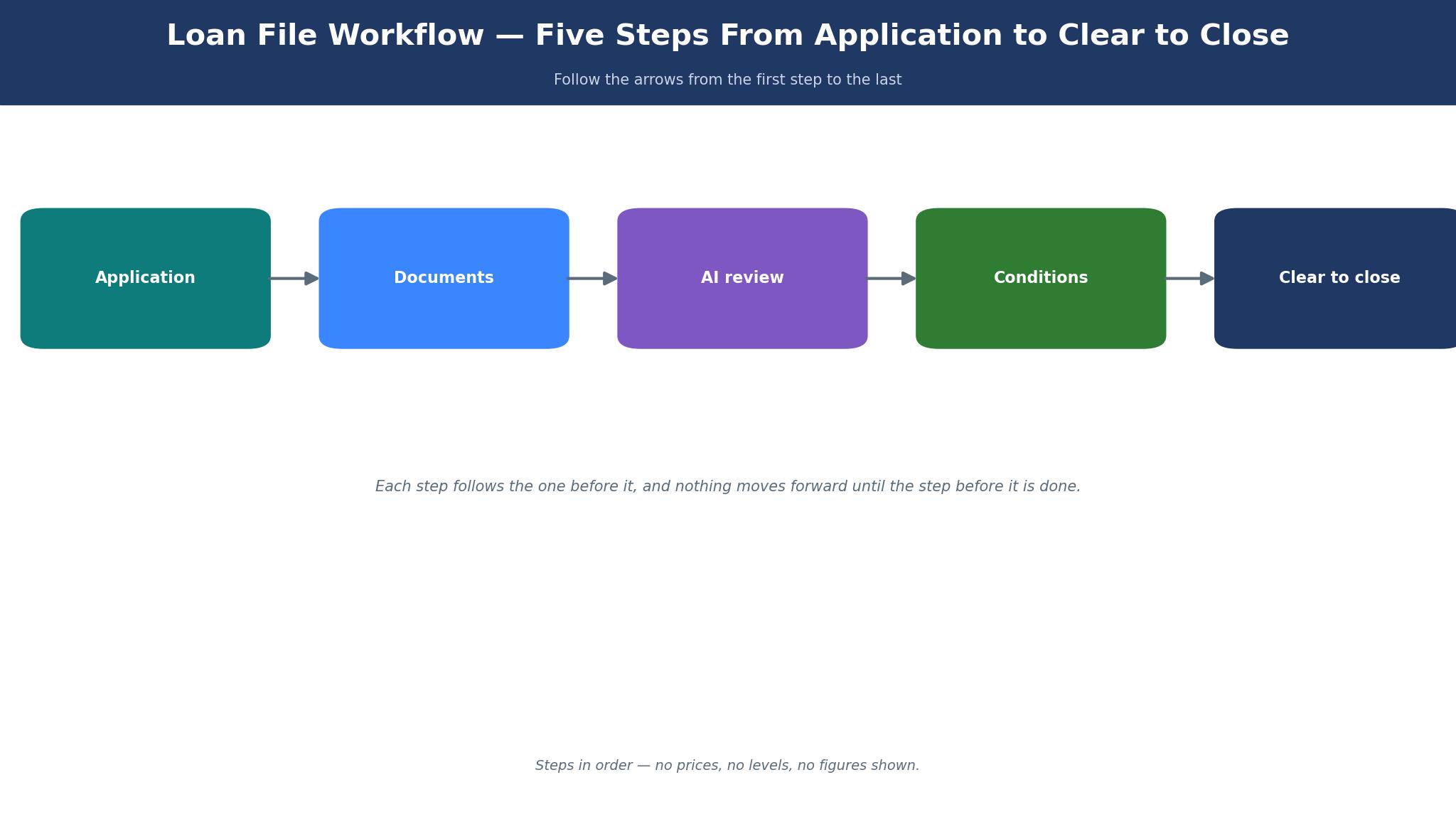
The job is not a chatbot. The job is the credit decision, the income calculation, the asset verification, the condition list and the fraud check, and a tool that only reads documents will not make the decision, while a tool that only scores credit will not read the pay stub. A lender buys underwriting AI to cut the days from application to clear to close, and the tool that cuts the most days without adding fair lending risk is the one that earns its keep.
Price is the hardest part of this category, because nearly every vendor sells on a custom quote, often six figures a year, with per decision or per loan pricing. A lender doing 500 loans a month pays a very different bill from a credit union doing 50, so this guide says plainly when a vendor only quotes, works out the cost model for a mid size lender, and compares the tools on what they automate rather than on a sticker price that does not exist.
The 10 Tools at a Glance
| Tool | Main job | Best for | Starting price |
|---|---|---|---|
| Zest AI | Explainable ML credit underwriting | Large lenders, credit unions | Quote, often six figures a year |
| Ocrolus | Document and cash flow analysis | Lenders whose bottleneck is documents | Free, on demand and commit tiers |
| Candor | Automated underwriting decision engine | Lenders that want decisions automated | Quote only |
| Vesta | Loan origination system with automation | Lenders rebuilding their LOS | Quote only |
| Maxwell | Digital mortgage and underwriting | Mid size lenders | Quote only |
| Polly | Pricing engine and capital markets | Lenders that price loans daily | Quote only |
| LenderLogix | Point of sale and pricing | Lenders that want a modern POS | Quote only |
| Capacity | AI support automation for lenders | Lenders drowning in borrower questions | Quote only |
| Inscribe | Document fraud detection | Lenders that need fraud checks | Quote only |
| Tavant | LOS automation and FinXperience | Lenders modernising the origination stack | Quote only |
Best Pick by Job
| Job type | First pick | Second tool | Why this pair works |
|---|---|---|---|
| Credit decisioning at scale | Zest AI | Ocrolus | Zest AI scores the risk, Ocrolus reads the documents |
| Document bottleneck | Ocrolus | Inscribe | Ocrolus extracts the data, Inscribe checks the fraud |
| Full decision automation | Candor | Vesta | Candor decides, Vesta originates |
| Mid size lender, modern stack | Maxwell | LenderLogix | Maxwell runs the mortgage, LenderLogix runs the front door |
| Borrower questions at scale | Capacity | Ocrolus | Capacity answers the questions, Ocrolus reads the documents |
A large lender should start with Zest AI. The platform builds custom machine learning risk models, with model assessment, regulatory compliance, performance management and model monitoring built in, and the models analyse hundreds or thousands of variables rather than the fewer than twenty a traditional score uses. The price is quote only, often six figures a year with per decision pricing, so the lender needs a written quote for its loan volume.
A lender whose underwriting is stuck on documents should start with Ocrolus instead. The AI engine classifies documents, extracts data, detects fraud and produces cash flow and income analysis, processing roughly 750,000 credit applications a month with audit ready output. The best ai tools for mortgage underwriting for a document heavy lender are the ones that turn a stack of bank statements into a decision ready number, and Ocrolus is built for exactly that job. Free, on demand and commit tiers are offered, with the commit tier quoted.
Which AI Tool Is Best for a Mid Size Mortgage Lender?
For a mid size lender doing 100 to 500 loans a month, Ocrolus is the strongest answer, because the document work is the bottleneck at that size, and the volume based pricing fits a lender that cannot justify a six figure platform fee. The automated conditioning launched in April 2026 extends the same intelligence through document classification, income and asset analysis and condition resolution, and the company signed nearly 90 new mortgage lender customers in the year leading into that launch.
Zest AI is the better answer when the credit decision itself is the bottleneck and the lender is large enough to justify the platform. The models are built for fair lending documentation, which matters when the model risk exam comes, and the 25 percent more approvals figure is the return a large lender measures. The trade off is the contract, because the platform fee is often six figures a year, and a mid size lender will find the price hard to justify until the volume grows.
Candor is the better answer when the lender wants the decision automated rather than only assisted. The CogniTech decision engine analyses loan data and borrower documents, scores loans consistently and prepares conditions for underwriters, which cuts the underwriter hours per file. The price is quote only, so the lender needs a written quote for its loan volume, and should compare the quote against the underwriter hours the engine saves.
What Does Mortgage Underwriting AI Cost in Year One?
The honest answer is that the vendors do not publish prices, and the year one bill is a quote for the loan volume. Zest AI is reported as often six figures a year with per decision pricing, Ocrolus offers free, on demand and commit tiers with the commit tier quoted, and the rest of the tools in this guide are quote only. A lender should ask every vendor for the same three numbers, the platform fee, the per loan or per decision rate, and the implementation cost, because the quote that omits one of those lines is the quote that surprises the lender later.
| Tool | Pricing model | What the vendor publishes |
|---|---|---|
| Zest AI | Quote, per decision | Often six figures a year |
| Ocrolus | Free, on demand, commit | Volume based, commit quoted |
| Candor | Quote only | No published price |
| Vesta | Quote only | No published price |
| Maxwell | Quote only | No published price |
| Polly | Quote only | No published price |
| LenderLogix | Quote only | No published price |
| Capacity | Quote only | No published price |
| Inscribe | Quote only | No published price |
| Tavant | Quote only | No published price |
Two costs hide behind the platform fee. The first is implementation, because an underwriting platform needs to connect to the loan origination system, the document store and the credit data, and that integration takes weeks of work. The second is the model risk review, because a machine learning underwriting model must survive the model risk exam, and the documentation work is part of the year one cost. Budget the platform fee plus the implementation plus the review, and the year one number reflects the real cost of automating underwriting.

Zest AI vs Ocrolus, Which One Should a Lender Buy?
Zest AI wins on the credit decision. The platform builds custom machine learning risk models with explainable outputs, fair lending monitoring and model performance management, and the models analyse hundreds or thousands of variables. A lender that needs to approve more borrowers without increasing default risk will find the Zest AI model the strongest answer, and the 25 percent more approvals figure is the return the board measures. The price is quote only, often six figures a year with per decision pricing.
Ocrolus wins on the document work. The AI engine processes roughly 750,000 credit applications a month, converting bank statements, pay stubs and tax forms into audit ready cash flow and income analytics plus fraud detection, and the automated conditioning launched in April 2026 extends that intelligence through condition resolution for mortgage lenders specifically. The best ai tools for mortgage underwriting for a document heavy lender are the ones that remove the manual data entry, and Ocrolus is built for exactly that bottleneck.
The choice comes down to the bottleneck. A lender whose underwriters spend their day reading documents should buy Ocrolus, because the document work is the cost to cut. A lender whose credit decisions are too conservative and whose approvals are too low should buy Zest AI, because the model is the return to chase. A large lender should buy both, because the document engine feeds the decision engine, and the pair cuts more days from application to close than either tool alone.
How to Choose the Best AI Tools for Mortgage Underwriting
Start with the bottleneck, not the feature list. A lender whose documents pile up needs a different tool from a lender whose credit decisions are too slow, and a lender whose borrowers ask the same questions all day needs a third tool entirely. Write down where the file sits longest, documents, credit, conditions or borrower questions, and buy the tool that moves that stage first.
Next, check the LOS integration, because the underwriting tool must read from and write to the loan origination system, and a tool that does not integrate forces the team to copy data by hand. A lender on Encompass, Blend or Vesta should check the native integration before the demo, and a lender on a legacy LOS should ask for the integration cost in writing.
Then check the fair lending documentation, because a machine learning model must survive the model risk exam, and the vendor should provide the explainability and the monitoring the examiner asks for. Finally, check the per loan cost, because a per decision price that looks cheap at 50 loans a month can be the expensive one at 500.
- Name the bottleneck, documents, credit, conditions or borrower questions.
- Name the LOS the lender actually runs, and check the native integration.
- Ask for the fair lending documentation before the demo, not after.
- Get the platform fee, the per loan rate and the implementation cost in writing.
- Run a pilot on real files, and measure the days from application to clear to close.
The 10 Tools in Detail
The ten tools below cover credit decisioning, document analysis, decision automation, loan origination and borrower support. Each one is judged on the job it automates, the integration with the loan origination system, and whether the fair lending documentation survives the model risk exam, so this roundup of the best ai tools for mortgage underwriting stays honest about the quote behind the platform.
1. Zest AI
Zest AI publishes no price, and the platform is sold on a custom quote, often six figures a year with per decision pricing. The product is AI driven credit underwriting software, offering custom machine learning risk model development, model assessment, regulatory compliance, performance management and model monitoring. The models analyse hundreds or thousands of variables, including alternative data, and the platform is built for banks, credit unions and specialised lenders.
The strength is explainable underwriting at scale. The models are built for fair lending documentation, which is what the model risk exam demands, and the reported 25 percent more approvals without increasing default risk is the return a large lender measures. The best ai tools for mortgage underwriting for a large lender are the ones that survive the exam, and Zest AI is built for exactly that test. It suits large lenders and credit unions. Get a written quote for the loan volume, and ask for the fair lending documentation before the demo.
The limit is the contract size. The platform fee is often six figures a year, and a small lender will find the price hard to justify, while the implementation takes weeks of integration work with the LOS and the credit data. It suits large lenders only. Buy it when the loan volume and the approval rate justify the fee, and keep Ocrolus for the document work until then.
2. Ocrolus
Ocrolus offers free, on demand and commit tiers, with the commit tier quoted, and the platform is AI document and cash flow analysis for lending. The engine classifies documents, extracts data, detects fraud and produces cash flow and income analysis, processing roughly 750,000 credit applications a month with audit ready output. In April 2026 the company launched automated conditioning for mortgage lenders, and signed nearly 90 new mortgage lender customers in the year leading into that launch.
The strength is document speed at scale. A lender whose underwriters spend their day reading bank statements and pay stubs will cut the most time with Ocrolus, and the audit ready output means the file is ready for review without rework. It suits mortgage and small business lenders whose underwriting speed is bottlenecked by manual document review. Start with the free tier, and move to the commit tier when the volume justifies the rate.
The limit is scope. Ocrolus reads documents and produces the numbers, but it does not make the credit decision, so a lender that needs decisioning must pair it with Zest AI or Candor. It suits document heavy lenders. Buy it for the document bottleneck, and add a decision engine when the credit decision becomes the bottleneck.
3. Candor
Candor publishes no price, and the platform is sold on a custom quote after a demo. The product is AI driven automated underwriting, built around the CogniTech decision engine, which analyses loan data and borrower documents, scores loans consistently and prepares conditions for underwriters. The company was founded in 2018 and is based in Alpharetta, Georgia, and serves the mortgage lending sector.
The strength is decision automation. A lender that wants the underwriting decision made consistently, with the conditions prepared for the underwriter, will cut the underwriter hours per file, and the consistent scoring removes the variation between underwriters. It suits lenders that want the decision automated rather than only assisted. Get a written quote for the loan volume, and compare it against the underwriter hours the engine saves.
The limit is the quote and the change. Automating the decision changes the underwriter workflow, and the team needs time to trust the engine, while the price is set by quote and the lender cannot budget from a published number. It suits lenders ready to automate the decision. Run a pilot on real files first, and measure the underwriter hours saved before signing.
4. Vesta
Vesta publishes no price, and the platform is sold on a custom quote after a demo. The product is a loan origination system with customisable workflows, open architecture and an interface built to reduce operational costs, improve loan quality and accelerate closing times. The company was founded in 2020 and is based in San Francisco, and the platform is designed to support the customer experience through automation and data analysis.
The strength is the modern LOS. A lender rebuilding its origination stack gets a system built for automation rather than a legacy platform with automation bolted on, and the open architecture means the AI tools connect without a custom project. It suits lenders rebuilding their LOS. Get a quote for the loan volume, and ask how the AI tools integrate with the workflows the lender actually runs.
The limit is the rebuild. Replacing the LOS is a large project, and a lender that only wants underwriting AI should buy Ocrolus or Zest AI rather than rebuilding the whole stack. It suits lenders already planning a rebuild. Buy it for the rebuild, and keep the point tools for the underwriting job until the rebuild is planned.
5. Maxwell
Maxwell publishes no price, and the platform is sold on a custom quote after a demo. The product is a digital mortgage platform covering the borrower experience, the processor workflow and the underwriting support, with automation across the origination process. The platform is built for mid size lenders, with a focus on the digital experience that borrowers expect and the workflow that processors need.
The strength is the mid size fit. A mid size lender gets a digital mortgage platform sized for its volume, without the enterprise price of the largest platforms, and the underwriting support covers the document and condition work that slows the file. It suits mid size lenders. Get a quote for the loan volume, and compare it against the cost of the legacy stack the lender runs today.
The limit is the quote and the scope. Maxwell is a platform, not a point tool, so a lender that only needs document analysis should buy Ocrolus, and the price is set by quote. It suits mid size lenders modernising the stack. Buy it for the platform, and keep the point tools for the specific bottleneck.
6. Polly
Polly publishes no price, and the platform is sold on a custom quote after a demo. The product is a pricing engine and capital markets platform, covering loan pricing, rate locks and secondary marketing, with AI driven pricing that updates as the market moves. The platform is built for lenders that price loans daily and need the pricing to reflect the market in real time.
The strength is pricing accuracy. A lender that prices loans daily will find the AI driven pricing faster and more accurate than a manual rate sheet, and the capital markets tools cover the secondary sale. It suits lenders that price loans daily. Get a quote for the loan volume, and compare the pricing accuracy against the rate sheet the lender uses today.
The limit is the scope. Polly prices the loan, but it does not underwrite it, so a lender that needs underwriting AI must pair it with Zest AI, Ocrolus or Candor. It suits lenders that price daily. Buy it for the pricing, and keep the underwriting tools for the decision.
7. LenderLogix
LenderLogix publishes no price, and the platform is sold on a custom quote after a demo. The product is a point of sale and pricing platform, covering the borrower application, the pricing and the handoff to the LOS, with a modern interface that borrowers complete on a phone. The platform is built for lenders that want a modern front door without rebuilding the whole origination stack.
The strength is the borrower experience. A borrower who completes the application on a phone, with pricing shown in real time, will finish the application rather than abandon it, and the handoff to the LOS is clean. It suits lenders that want a modern point of sale. Get a quote for the loan volume, and test the application flow on a phone before buying.
8. Capacity
Capacity publishes no price, and the platform is sold on a custom quote after a demo. The product is AI support automation for lenders, answering borrower questions, routing internal questions and automating the support work that slows the team. The platform learns from the lender’s own documents and systems, and the answers are drawn from the lender’s knowledge rather than a generic model.
The strength is support at scale. A lender whose team answers the same borrower questions all day will cut the support load, and the internal routing means the right person answers the question the first time. It suits lenders drowning in borrower questions. Get a quote for the team size, and measure the support tickets before and after the pilot.
9. Inscribe
Inscribe publishes no price, and the platform is sold on a custom quote after a demo. The product is document fraud detection, analysing bank statements, pay stubs and tax documents for signs of tampering, and flagging the files that need a human review. The platform is built for lenders that need a fraud check on every file without slowing the underwriting queue.
The strength is the fraud check. A lender that misses a tampered document takes a loss, and Inscribe flags the file before the decision, which is cheaper than the loss after closing. It suits lenders that need a fraud check on every file. Get a quote for the loan volume, and run a pilot on real files to measure the flag rate.
10. Tavant
Tavant publishes no price, and the platform is sold on a custom quote after a demo. The product covers LOS automation and the FinXperience platform, with automation across the origination workflow, from application to closing. The vendor is a large technology company serving mortgage lenders, with a focus on modernising the origination stack and the borrower experience.
The strength is the automation breadth. A lender modernising the origination stack gets automation across the whole workflow, rather than a point tool for one stage, and the vendor scale means the platform is supported for the long term. It suits lenders modernising the stack. Get a quote for the loan volume, and ask how the automation maps to the workflow the lender actually runs.
Frequently Asked Questions
Which AI tool is best for mortgage underwriting?
Zest AI is the best pick for large lenders that need explainable machine learning models with fair lending documentation, because the model risk exam is the test every underwriting tool must survive. Ocrolus is the pick for a lender whose bottleneck is documents, processing roughly 750,000 applications a month. Candor is the pick for a lender that wants the underwriting decision automated end to end.
How much does mortgage underwriting AI cost?
Nearly every vendor sells on a custom quote. Zest AI is reported as often six figures a year with per decision pricing, Ocrolus offers free, on demand and commit tiers with the commit tier quoted, and the rest of the tools in this guide are quote only. A lender should ask every vendor for the platform fee, the per loan or per decision rate, and the implementation cost in writing.
Is Ocrolus good for mortgage lenders?
Yes. Ocrolus processes roughly 750,000 credit applications a month, converting bank statements, pay stubs and tax forms into audit ready cash flow and income analytics plus fraud detection. In April 2026 the company launched automated conditioning for mortgage lenders, and signed nearly 90 new mortgage lender customers in the year leading into that launch. Free, on demand and commit tiers are offered.
What is the difference between Zest AI and Ocrolus?
Zest AI builds the credit decision, with custom machine learning risk models, fair lending monitoring and model performance management. Ocrolus reads the documents, with classification, extraction, fraud detection and cash flow analysis. A lender whose bottleneck is the credit decision should buy Zest AI, and a lender whose bottleneck is documents should buy Ocrolus. A large lender should buy both.
Can AI underwriting pass a fair lending exam?
Yes, when the vendor provides the explainability and the monitoring the examiner asks for. Zest AI is built for fair lending documentation, with model assessment, regulatory compliance and performance management built in. A lender should ask for the fair lending documentation before the demo, not after, and confirm the model monitoring covers the exam requirements.
Does AI replace mortgage underwriters?
No. The best ai tools for mortgage underwriting automate the routine work, reading documents, calculating income, preparing conditions and flagging fraud, and leave the final decision to a human underwriter. A lender that automates the document work cuts the days from application to clear to close, and a lender that tries to automate the decision entirely will fail the model risk exam.
The Mortgage Underwriting Verdict
A large lender should buy Zest AI, because the explainable machine learning models with fair lending documentation survive the model risk exam, and the reported 25 percent more approvals is the return the board measures. A lender whose underwriting is stuck on documents should buy Ocrolus, because the engine processes roughly 750,000 applications a month and turns a stack of bank statements into a decision ready number. A lender that wants the decision automated should get a Candor quote.
Whatever the pick, the best ai tools for mortgage underwriting are the ones that cut the days from application to clear to close without adding fair lending risk, so name the bottleneck, check the LOS integration, ask for the fair lending documentation before the demo, and run a pilot on real files. The bottleneck decides the tool, the LOS decides the integration, and the days to close decide whether the platform earns its keep.