

A course creator and a SaaS company buy the same SEO tool and get a different result, because the course creator needs lesson pages, curriculum pages and instructor pages to rank, while the SaaS company needs feature pages to rank. Semrush is the best seo tools for online courses pick for most course businesses, at 139 dollars a month, because it covers keyword research, rank tracking, site audits and content planning in one account. Ahrefs is the pick for a creator who lives in backlink research, and Rank Math is the pick for a WordPress course site that wants the on page work done free.
The course SEO job is specific. The sales page for a course must rank for the topic the course teaches, the curriculum page must rank for the syllabus searches, and the blog must answer the questions a buyer asks before enrolling. A tool that only tracks rankings will not write the lesson outline, and a tool that only scores content will not show which competing course is winning the keyword. The course creator needs research, content scoring and technical checks in one stack, and the stack must cost less than the course revenue it protects.
Price is the second problem. The big suites start at 99 to 139 dollars a month, the content tools add 49 to 189 dollars, and a creator who buys three tools can spend 400 dollars a month before a single student enrolls. This guide prices the same course site on every tool, works out the year one bill for a one person creator and for a small course team, and says plainly when a free tool does the job well enough.
The 15 Tools at a Glance
| Tool | Main job | Best for | Starting price |
|---|---|---|---|
| Semrush | All in one SEO suite | Most course businesses | 139 dollars a month |
| Ahrefs | Backlink and keyword research | Creators who research competitors | 29 dollars a month |
| Moz Pro | Rank tracking and authority | Small teams that want pro data cheap | 49 dollars a month |
| Surfer | Content scoring and optimisation | Lesson pages that must outrank rivals | 59 dollars a month |
| SE Ranking | Rank tracking and audits | Teams that want value in one suite | 129 dollars a month |
| Ubersuggest | Keyword ideas on a budget | Solo creators starting out | 29 dollars a month |
| Mangools | Keyword research and tracking | Small teams that want a simple suite | 29 dollars a month |
| Rank Math | On page SEO for WordPress | WordPress course sites | Free, Pro 59 dollars a year |
| Yoast SEO | On page SEO for WordPress | WordPress sites that want guidance | 99 dollars a year |
| Screaming Frog | Technical site audits | Sites with crawl and structure problems | 259 pounds a year |
| Frase | Content briefs and AI writing | Creators who outline lessons fast | 14.99 dollars a month |
| Clearscope | Content grading against rivals | Pages that must beat a strong rival | 189 dollars a month |
| AnswerThePublic | Question research | Blog topics buyers actually ask | 9 dollars a month |
| Keysearch | Keyword research on a budget | Solo creators with a small budget | 17 dollars a month |
| LowFruits | Low competition keywords | New course sites with no authority | 25 dollars a month |
Best Pick by Job
| Job type | First pick | Second tool | Why this pair works |
|---|---|---|---|
| One course, solo creator | Ahrefs Starter | Rank Math | Ahrefs finds the keywords, Rank Math optimises the pages free |
| Growing course business | Semrush | Surfer | Semrush researches, Surfer scores the lesson pages |
| WordPress course site | Rank Math Pro | Yoast SEO | Rank Math is the value pick, Yoast is the guided pick |
| New site, no authority | LowFruits | Keysearch | LowFruits finds winnable keywords, Keysearch tracks them cheap |
| Beating a strong rival page | Clearscope | Surfer | Clearscope grades the page, Surfer fixes the gaps |
A solo creator should start with Ahrefs Starter at 29 dollars a month plus Rank Math free on WordPress. The Starter plan covers the keyword research and competitor teardown a new course needs, and Rank Math handles the on page work, schema and sitemaps without a bill. The year one cost is 348 dollars plus the hosting the creator already pays, which is the cheapest honest stack in this guide.
A growing course business should start with Semrush instead. The SEO plan at 139 dollars a month covers five websites and 500 keywords tracked daily, with site audits, content planning and AI search visibility tracking built in. The best seo tools for online courses for a team are the ones that replace three subscriptions, and Semrush replaces the research tool, the rank tracker and the audit tool in one account. Add Surfer at 59 dollars a month when the lesson pages need to outrank a named rival.
Which SEO Tool Is Best for a New Online Course?
For a new course, LowFruits is the strongest starting point, because a new site has no authority and cannot win the keywords the big course platforms already own. LowFruits finds the low competition keywords where a new page can actually rank, which is the only research that matters in month one. For a creator weighing the best seo tools for online courses, the winnable keyword is the deciding factor.
Ahrefs Starter is the better answer when the creator wants to understand the competition before writing anything. The 29 dollar plan shows which pages rank for the target keyword, which sites link to them, and where the content gaps are, which is the research a course outline needs. The 750 tracked keywords on Lite are more than a new course needs, so Starter is enough until the catalogue grows past five courses.
Semrush is the better answer when the course business already earns and needs one platform for everything. The keyword research, rank tracking, site audit and content planning sit in one account, and the team stops paying for three tools. The 139 dollar price is the highest entry point in this guide, so the creator should only buy it when the course revenue covers it, and keep Ahrefs Starter plus Rank Math until then.
What Does an SEO Stack Cost a Course Creator in Year One?
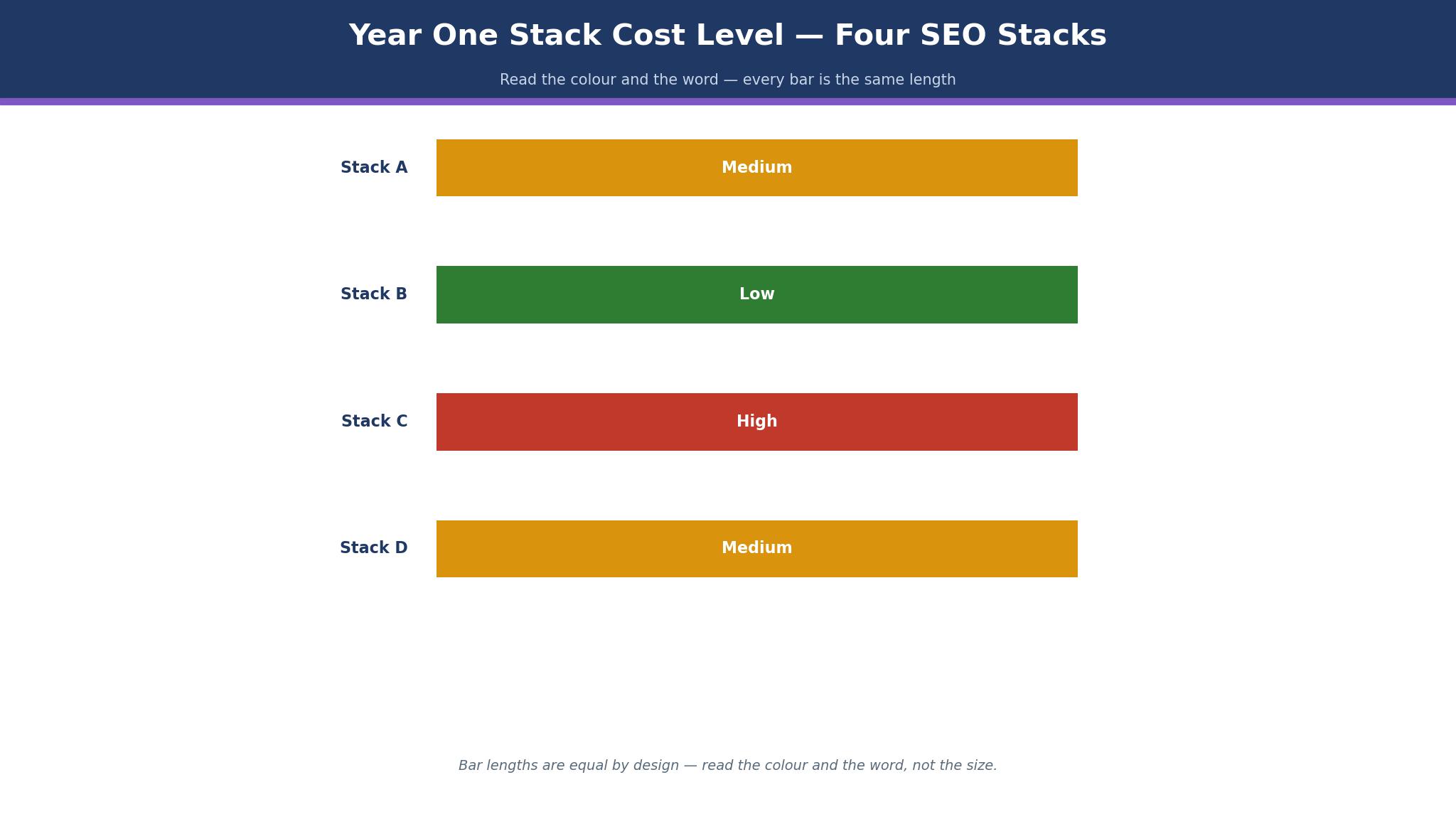
The stack is the real bill, because no single tool does the whole job. A solo creator needs a research tool and an on page tool, a growing business needs a suite plus a content scorer, and a team chasing a rival needs a content grader on top. The table below works out the year one bill for three realistic stacks, using the entry plans on monthly billing.
| Stack | Tools | Year one cost |
|---|---|---|
| Solo creator | Ahrefs Starter, Rank Math free | 348 dollars |
| Solo creator, budget | Keysearch, Rank Math free | 204 dollars |
| Growing business | Semrush, Surfer Discovery | 2,376 dollars |
| Growing business, value | SE Ranking Core, Frase Basic | 1,728 dollars |
| Rival beating | Semrush, Clearscope | 3,936 dollars |
| WordPress only | Rank Math Pro, Yoast SEO | 158 dollars |
Two costs hide behind the subscription. The first is the seat, because Semrush and Ahrefs charge per user and per project, and a team of three pays more than the headline price. The second is the content, because a tool that scores a lesson page does not write it, and the creator still pays for the writing time or the writer. Budget the stack plus one day a week of content work, and the year one number reflects the real cost of ranking a course.

Semrush vs Ahrefs, Which One Fits a Course Business?
Semrush wins on breadth. The suite covers keyword research, rank tracking, site audits, content planning, PPC research and AI search visibility in one account, and the team that buys it stops paying for three separate tools. The SEO plan at 139 dollars a month, or 117.33 dollars billed annually, covers five websites and 500 keywords, with a free plan that allows ten reports a day. A course business with several courses and a blog will use every part of it.
Ahrefs wins on depth. The backlink index is the deepest in this guide, the competitor teardown shows exactly which pages earn links and why, and the Starter plan at 29 dollars a month is the cheapest entry into serious SEO data. The best seo tools for online courses are not always the biggest suite, and Ahrefs proves it, because a creator who understands the competition writes a better course page than a creator with a bigger dashboard.
The choice comes down to the catalogue size. A creator with one course should buy Ahrefs Starter and Rank Math free, and spend the saving on content. A creator with five courses and a blog should buy Semrush, because the suite replaces three subscriptions and the team needs one place to work. Either way, run the free plans first, and buy the suite only when the course revenue covers the monthly bill.
How to Choose the Best SEO Tools for Online Courses
Start with the course catalogue, not the feature list. A creator with one course needs keyword research and on page optimisation, a creator with ten courses needs rank tracking and content planning, and a creator with a blog needs question research and content scoring. Write down the number of courses, the number of lesson pages and the number of blog posts, and price the stack against those numbers.
Next, check the platform, because a WordPress course site gets Rank Math or Yoast free or cheap, while a Teachable or Thinkific site needs a suite that works without a plugin. The on page tool must fit the platform, or the creator pays for a tool that cannot touch the pages.
Then check the authority, because a new site cannot win the keywords a big platform owns, and the research tool must find winnable keywords. Finally, check the content workflow, because a tool that scores a lesson page is only useful if the creator writes the page the tool recommends.
- Count the courses, lesson pages and blog posts before comparing any tool.
- Name the platform, WordPress, Teachable or Thinkific, and check the plugin fit.
- Find ten winnable keywords with LowFruits or Keysearch before buying a suite.
- Run the free plan of the suite for two weeks on the real site.
- Buy the content scorer only when a named rival page must be beaten.
The 15 Tools in Detail
The fifteen tools below cover all in one suites, backlink research, content scoring, on page plugins and budget keyword tools. Each one is judged on the plan a course creator would realistically buy, the year one bill for a solo creator, and whether it fits the course platform, so this roundup of the best seo tools for online courses stays honest about the stack behind the single tool price.
1. Semrush
Semrush SEO costs 139 dollars a month, or 117.33 dollars billed annually, and the plan covers five websites and 500 keywords tracked daily. The suite includes keyword research, rank tracking, site audits, content planning and AI search visibility tracking, with a free plan that allows one demo project and ten reports a day. The Starter plan at 199 dollars a month adds 50 tracked AI prompts.
The strength is breadth. A course business with several courses and a blog uses every part of the suite, and the team stops paying for three separate tools. The best seo tools for online courses for a growing business are the ones that replace the research tool, the rank tracker and the audit tool, and Semrush does all three. It suits course businesses earning enough to cover the 139 dollar bill. Start with the free plan, and buy the SEO plan when the catalogue passes three courses.
2. Ahrefs
Ahrefs Starter costs 29 dollars a month, and Lite is 129 dollars a month with 750 tracked keywords and five tracked AI prompts. The suite includes keyword research, backlink analysis, site audits and competitor teardown, with a free plan for sites the creator verifies. The backlink index is the deepest in this guide, and the competitor research shows which pages earn links and why.
The strength is depth. A creator who studies the rival course page before writing will build a better lesson page than a creator with a bigger dashboard, and the 29 dollar Starter plan is the cheapest entry into serious SEO data. It suits solo creators and small course teams. Start with Starter, and move to Lite when the tracked keyword count passes 750 or the catalogue grows past five courses.
3. Moz Pro
Moz Pro starts at 49 dollars a month for one site, and Standard is 99 dollars a month, or 79 dollars billed yearly, with 300 tracked keywords. The suite includes keyword research, rank tracking, site audits and link research, with Domain Authority baked into every report. A free Moz Community account gives limited access to MozBar, Keyword Explorer and Link Explorer.
The strength is the low entry price. A small team that wants pro SEO data for 49 dollars a month will find Moz Pro the cheapest credible suite, and Domain Authority is the metric clients and partners ask about. It suits small teams and solo creators who want a suite without the 139 dollar Semrush bill. Start with the 49 dollar plan, and move to Standard when the team needs more tracked keywords.
4. Surfer
Surfer Discovery costs 59 dollars a month, or 49 dollars billed yearly, for 120 documents a year, and Standard is 99 dollars a month with AI search visibility tracking. The Content Editor scores a draft against the top ranking pages in real time, showing the terms, structure and length the page needs to compete. The tool is a content optimiser, not a full SEO suite, so it sits alongside a research tool.
The strength is the score. A lesson page that scores 80 plus in Surfer will outrank a page written on instinct, and the editor shows exactly which terms to add and which headings to fix. It suits course creators who must beat a named rival page. Buy Discovery for a small catalogue, and add it to Semrush or Ahrefs rather than buying it alone.
5. SE Ranking
SE Ranking Core costs 129 dollars a month, or 103.20 dollars billed annually, and Growth is 279 dollars a month. The suite includes daily rank tracking, site audits, keyword research and AI search visibility tracking, with 2,000 tracked keywords on Core. A 14 day trial is available, and the platform is built for agencies and small teams that want value in one suite.
The strength is value. Core covers 2,000 tracked keywords for 129 dollars a month, which is four times the Semrush count at a similar price, and the AI search visibility tracking is included rather than an add on. It suits course businesses with many lesson pages to track. Start with Core, and move to Growth when the team needs more projects and deeper reporting.
6. Ubersuggest
Ubersuggest costs 29 dollars a month, with a lifetime plan reported at 290 dollars, and the tool covers keyword ideas, rank tracking, site audits and content ideas. The keyword database is smaller than Semrush or Ahrefs, but the price is low and the interface is simple, which suits a creator who wants keyword ideas without learning a suite. A free plan with limited searches is available.
The strength is the price. A solo creator starting out gets keyword research, rank tracking and content ideas for 29 dollars a month, and the lifetime plan removes the monthly bill entirely. It suits solo creators on a tight budget. Start with the monthly plan, and buy the lifetime plan only after three months of regular use prove the tool earns its place.
7. Mangools
Mangools is reported from 29 dollars a month, and the suite covers keyword research, rank tracking, SERP analysis and backlink checking through KWFinder, SERPChecker, SERPWatcher, LinkMiner and SiteProfiler. The interface is one of the simplest in this guide, and the tools are built for small teams that want a suite without a learning curve. A free trial is available.
The strength is simplicity. A creator who wants keyword research and rank tracking without a 139 dollar suite will find Mangools the easiest tool to learn, and the SERP analysis shows exactly what the top ten results look like. It suits small teams and solo creators. Confirm the current price on the vendor page before buying, because published Mangools prices vary between sources, and the 29 dollar figure is the most commonly reported entry rate.
8. Rank Math
Rank Math is free for the core plugin, and Pro costs 59 dollars a year. The plugin covers on page SEO, schema markup, sitemaps, redirections and content analysis for WordPress, with a setup wizard that configures the site in minutes. The free plan covers most of what a course site needs, and Pro adds advanced schema, rank tracking and analytics.
The strength is the free value. A WordPress course site gets on page optimisation, course schema and sitemaps without a bill, and the Pro plan at 59 dollars a year is the cheapest paid upgrade in this guide. It suits every WordPress course site. Install the free plugin first, and buy Pro only when the course schema and rank tracking justify the 59 dollars.
9. Yoast SEO
Yoast SEO costs 99 dollars a year for the premium plugin, and the free version covers on page SEO, readability analysis and sitemaps for WordPress. The premium plan adds internal linking suggestions, redirect management and AI powered content tools. The plugin is the oldest name in WordPress SEO, and the guidance is written for a non technical site owner.
The strength is the guidance. A creator who has never done SEO will find Yoast explains each fix in plain language, with a traffic light score that shows whether the page is ready. It suits WordPress course sites that want a guided workflow. Start with the free plugin, and buy Premium when the internal linking and redirect tools save more time than they cost.
10. Screaming Frog
Screaming Frog costs 259 pounds a year for the paid licence, and the free version crawls up to 500 URLs. The tool is a technical site audit crawler, finding broken links, duplicate pages, missing meta data, redirect chains and crawl problems across the whole site. The interface is technical, and the output is a spreadsheet rather than a dashboard.
The strength is the crawl. A course site with hundreds of lesson pages will have broken links, duplicate titles and orphan pages, and Screaming Frog finds all of them in one crawl. It suits sites with technical problems and creators who manage the site themselves. Run the free crawl first, and buy the licence when the site passes 500 URLs or the audit becomes a monthly job.
11. Frase
Frase costs 14.99 dollars a month for the Basic plan, and the tool builds content briefs, outlines and AI assisted drafts from the top ranking pages. The brief shows the questions the page must answer, the headings the rivals use, and the terms the content should cover, which is exactly what a lesson outline needs. A free trial is available.
The strength is the brief. A creator who outlines a lesson with Frase will cover the questions buyers actually ask, and the AI draft gives the writer a starting point rather than a blank page. It suits creators who outline lessons fast and teams that produce a lot of content. Start with Basic, and use it alongside Surfer when the page must both answer the questions and beat the rival score.
12. Clearscope
Clearscope is reported from 189 dollars a month, and the tool grades a draft against the top ranking pages, showing the terms, readability and comprehensiveness the page needs. The grading is stricter than Surfer, and the reports are built for teams that must beat a strong rival page. The price is quote based on higher tiers, so the creator should confirm the current entry rate before buying.
The strength is the grade. A lesson page that earns an A grade in Clearscope will beat most rival pages, and the report shows exactly which terms are missing and which sections are thin. It suits course businesses chasing a competitive keyword. Buy it for the pages that must win, and keep Surfer for the everyday lesson pages, because Clearscope is too expensive to run on every page.
13. AnswerThePublic
AnswerThePublic costs 9 dollars a month for the entry plan, and the tool shows the questions, prepositions and comparisons people search around a topic. The output is a visual map of what buyers ask, which is the raw material for blog posts, FAQ sections and lesson titles. A free plan with limited searches is available.
The strength is the questions. A course creator who writes the blog post that answers the exact question buyers type will earn the click, and AnswerThePublic shows those questions without a keyword database. It suits creators building a blog around a course. Start with the 9 dollar plan, and use the questions to plan three months of blog content before buying a bigger suite.
14. Keysearch
Keysearch costs 17 dollars a month, and the tool covers keyword research, rank tracking, backlink checking and content analysis. The keyword database is smaller than the big suites, but the price is low and the interface is simple, which suits a solo creator who wants research and tracking in one cheap account. A free trial is available.
The strength is the price. A solo creator gets keyword research and rank tracking for 17 dollars a month, which is the cheapest paid research tool in this guide, and the difficulty score shows whether a new site can win the keyword. It suits solo creators with a small budget. Start with Keysearch, and move to Ahrefs Starter when the catalogue grows and the backlink research matters.
15. LowFruits
LowFruits costs 25 dollars a month, and the tool finds low competition keywords where a new page can actually rank. The method is simple, it shows the keywords where the top ten results are weak, forums, thin pages and outdated content, and the creator targets those first. The tool is built for new sites with no authority, which is exactly the course creator in month one.
The strength is the winnable keyword. A new course site that targets the obvious keyword will wait a year for traffic, while a site that targets ten LowFruits keywords will see enrolments in three months. It suits new course sites and creators launching a first course. Buy it for the first six months, and keep it until the site authority grows enough to target the harder keywords.
Frequently Asked Questions
Which SEO tool is best for a new online course?
LowFruits leads the best seo tools for online courses for a new course, at 25 dollars a month, because it finds the low competition keywords a new site can actually win. Ahrefs Starter at 29 dollars a month is the pick for competitor research, and Rank Math free is the pick for the on page work on WordPress. A new creator should start with LowFruits plus Rank Math free.
How much does SEO cost for an online course in year one?
A solo creator pays 204 to 348 dollars in year one on a budget stack, using Keysearch or Ahrefs Starter plus Rank Math free. A growing business pays 1,728 to 2,376 dollars for a suite plus a content scorer. A team chasing a rival keyword pays up to 3,936 dollars for Semrush plus Clearscope. The stack, not the single tool, is the real bill.
Is Semrush worth it for a course creator?
Yes, when the course business earns enough to cover 139 dollars a month. Semrush replaces the research tool, the rank tracker and the audit tool in one account, and the suite covers five websites and 500 keywords. A creator with one course should start with Ahrefs Starter at 29 dollars a month and Rank Math free, and move to Semrush when the catalogue passes three courses.
Can I do SEO for a course with free tools?
Yes, up to a point. Rank Math free covers the on page work on WordPress, AnswerThePublic has a free plan for question research, and Ahrefs has a free plan for verified sites. A new creator can rank with free tools plus LowFruits at 25 dollars a month, and should only buy a suite when the course revenue covers the monthly bill.
What is the difference between Surfer and Clearscope?
Surfer scores a draft against the top ranking pages in real time and costs 59 dollars a month, while Clearscope grades a draft more strictly and is reported from 189 dollars a month. Surfer suits everyday lesson pages, and Clearscope suits the pages that must beat a strong rival. A creator should buy Surfer first and add Clearscope only for the competitive keywords.
Does SEO work for courses on Teachable or Thinkific?
Yes, with a suite rather than a plugin. Rank Math and Yoast only work on WordPress, so a Teachable or Thinkific creator needs Semrush, Ahrefs or SE Ranking for the research and tracking, and Surfer or Frase for the content scoring. The platform decides the on page tool, and the suite does the research regardless of where the course lives.
The Course SEO Verdict
A solo creator should buy Ahrefs Starter at 29 dollars a month plus Rank Math free, because the research is serious and the on page work costs nothing, and the year one bill is 348 dollars. A growing course business should buy Semrush at 139 dollars a month, because the suite replaces three subscriptions and the team needs one place to work. A new site should add LowFruits at 25 dollars a month, because winnable keywords are the only research that matters in month one.
Whatever the stack, the best seo tools for online courses are the ones that fit the catalogue size, the platform and the authority of the site, so count the courses, name the platform, find ten winnable keywords, and buy the suite only when the course revenue covers the bill. The keyword research decides the topics, the content score decides the ranking, and the enrolments decide whether the stack earns its keep.