

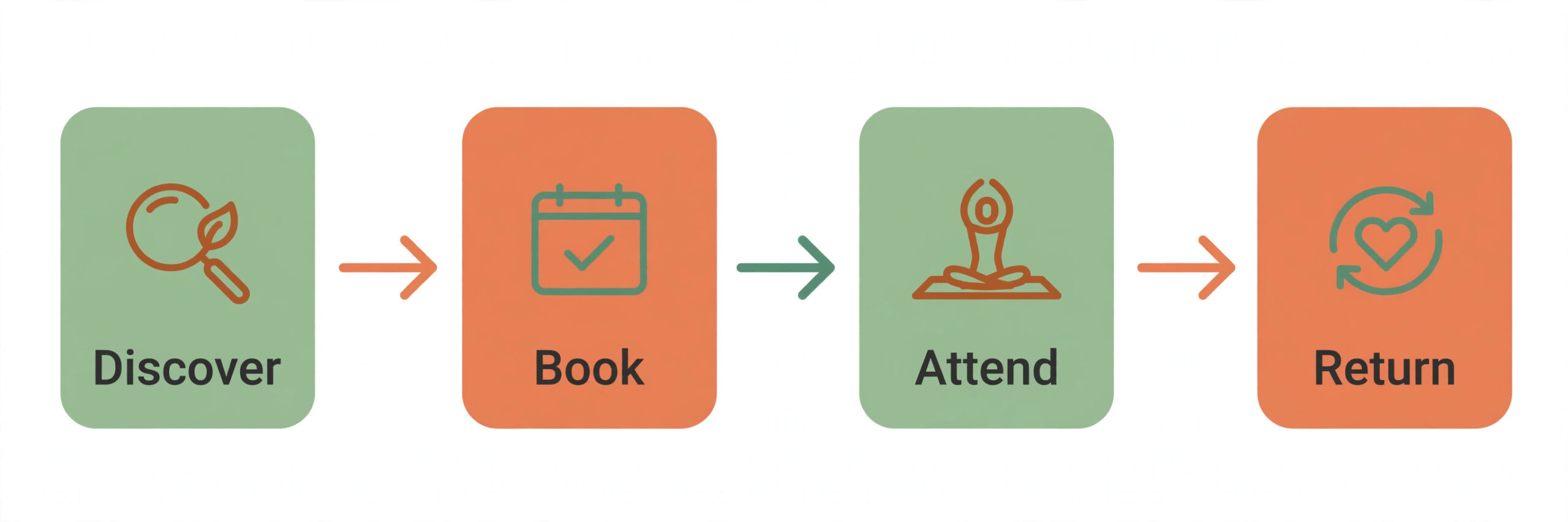
About four in ten new students who try a class never book a second one when booking feels awkward, and that single fact explains why the best booking software for yoga studios matters more than a pretty website. A student who can book, pay and cancel in under a minute will return, while a student who must email the studio, wait for a reply and pay in person will drift to a rival with a smoother first step.
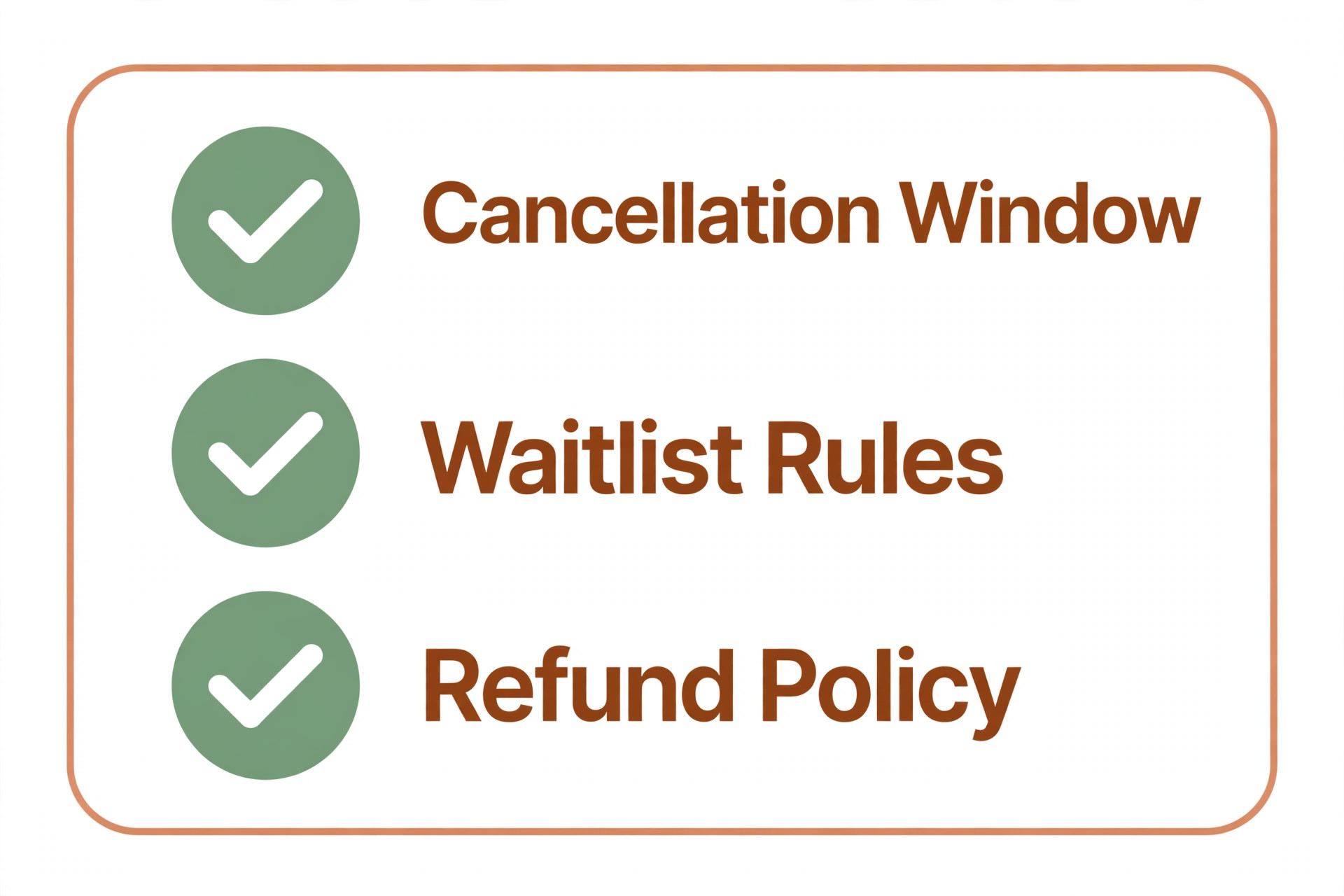
A yoga studio sells three things at once, and most general booking tools handle only one of them well. Drop in classes need fast checkout, class packs need visit tracking and expiry rules, and memberships need recurring billing with pauses, freezes and failed payment recovery. A tool that treats all three as the same product will create front desk work every week, and that work grows with every new student.
This guide compares twelve tools on the same questions. What does the entry plan actually include, what does the bill become as the studio grows, which sales models does each tool handle well, and where does each tool fall short. Prices are starting points checked at writing time, so confirm the current price on the vendor page before you buy.
Yoga Studio Tools at a Glance
Read the table as a shortlist, not as a ranking. The free tool suits a starting teacher perfectly, while the quote led platform suits a growing multi room studio. Pick three finalists, then read their full sections before committing to an annual plan. Use this table to start choosing the best booking software for yoga studios for your size and budget.
| Tool | Starting price | Best for |
|---|---|---|
| Momoyoga | solo yoga teachers and small studios | Free plan, Standard from €29 a month on annual billing |
| Fitogram | European yoga and fitness studios | Check the vendor page |
| Glofox | growing studios that want a branded app | From $99 a month in recent comparisons |
| Mindbody | established studios that want discovery | From $79 a month per location |
| WellnessLiving | studios mixing classes and appointments | From $69 a month |
| TeamUp | class based studios billing many members | From $119 a month |
| Vagaro | appointment led small studios on a budget | From $30 a month |
| Punchpass | small studios that sell passes | From $59 a month |
| OfferingTree | wellness teachers needing booking plus a website | From $26 a month |
| BookSteam | small studios that want a simple timetable | Check the vendor page |
| Gymdesk | small gyms and martial arts schools | From $75 a month |
| Zen Planner | membership driven gyms and yoga studios | From $99 a month |
Why best booking software for yoga studios Beats a General Calendar
A class calendar shows times and names. A studio system runs the business behind those times. It sells memberships and packs, bills them on time, chases failed payments, manages freezes and cancellations, fills waitlists automatically and reports which classes, instructors and times actually earn money. A studio that only buys a calendar will still chase payments by hand, and payment chasing is the job that eats front desk hours fastest.
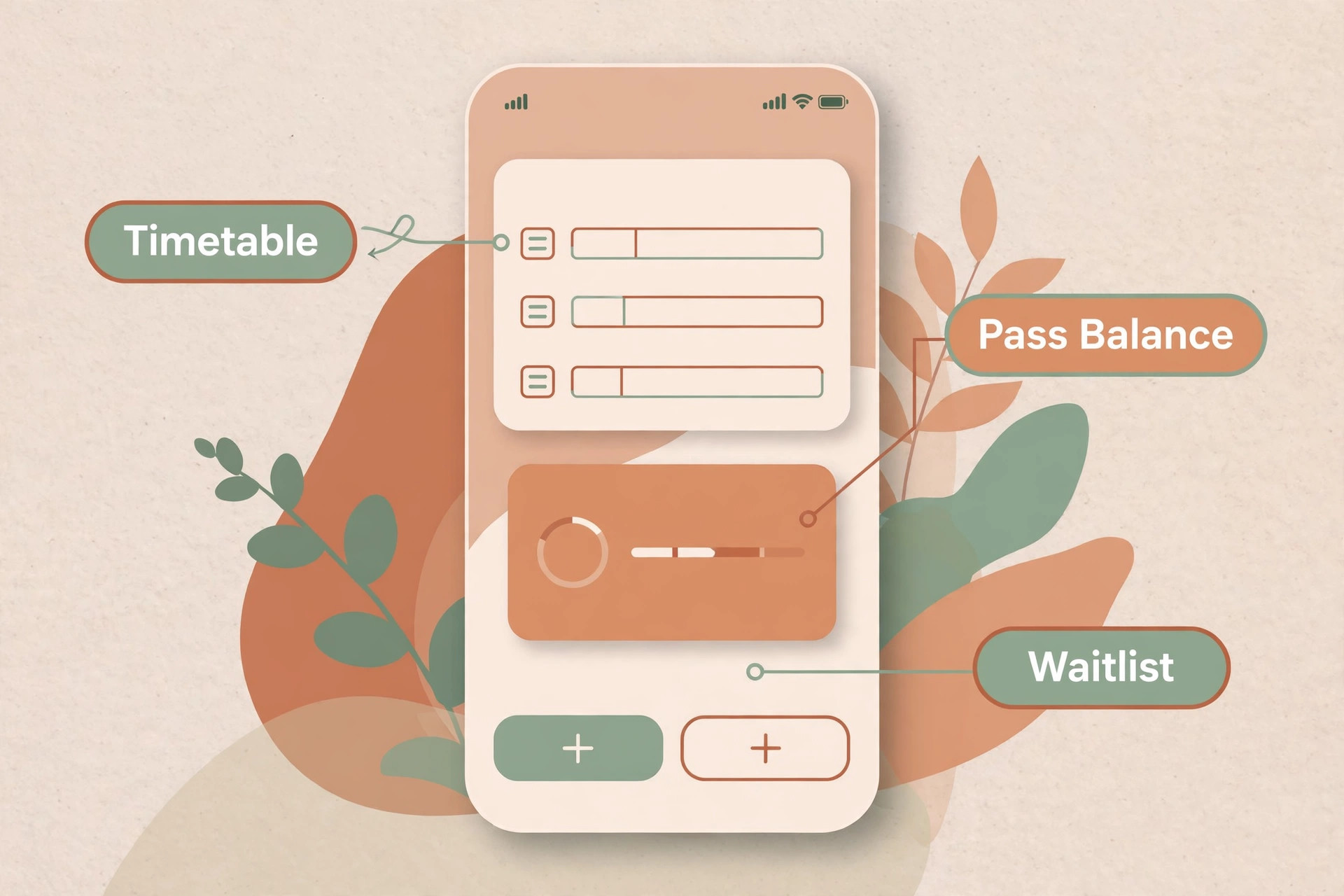
Member experience is the second difference. Members book from an app or a web page, check in fast, see their remaining pack visits and get reminders that reduce no shows. A clumsy booking flow loses bookings to friction, especially for early morning classes booked the night before. A branded app helps a premium studio, but it is an expensive add on on many platforms, so it should be bought for member retention evidence, not for looks alone.
The third difference is the business model fit. A class pack studio needs expiry and visit tracking, a membership studio needs recurring billing and failed payment recovery, and a workshop led studio needs event booking with deposits. A tool that handles one model beautifully and another weakly will force workarounds as the studio adds new offers. Test all three models the studio sells, or plans to sell, before choosing.
Start the trial with a real week of work, not with a demo account filled with perfect test data. Load your actual timetable, your real customers and your true prices, then ask the team to run the daily routine exactly as they would after launch. A trial that mirrors real work exposes slow screens, missing fields and confusing steps before any money changes hands. If a task takes three clicks in the demo and seven in real use, that gap will cost hours every week.
Twelve Tools, Reviewed One by One
Momoyoga
Momoyoga is the pick for Free plan, Standard from €29 a month on annual billing. It covers class timetables, passes, memberships, payments and teacher tools built for yoga, with a student app for booking and checking remaining credits. The free plan lets a solo teacher start without a monthly bill, which is rare in this category. At solo yoga teachers and small studios, it sits in a price band a small business can judge against the hours it saves or the revenue it protects.
The limit is breadth, because it suits yoga and similar small studios rather than large multi location fitness brands, and payment terms on the free plan need checking before launch. Choose Momoyoga if the job above matches your daily work and the price fits your budget at your real size. Skip it if that job is only a small part of what you need, because a tool bought for one job rarely excels at a different one.
Fitogram
Fitogram is the pick for Check the vendor page. It covers class schedules, memberships, passes and payments, with a booking app and a marketplace option so students can book from the studio website. Local payment options and support hours suit studios in Europe with international students. At European yoga and fitness studios, it sits in a price band a small business can judge against the hours it saves or the revenue it protects.
The limit is regional fit, because a studio outside Europe should check payment, tax and support coverage carefully before committing to a platform built for one region. Choose Fitogram if the job above matches your daily work and the price fits your budget at your real size. Skip it if that job is only a small part of what you need, because a tool bought for one job rarely excels at a different one.
Glofox
Glofox is the pick for From $99 a month in recent comparisons. It covers memberships, scheduling, automated payments, reporting and a branded member app, with tools for several locations in one dashboard. A studio that plans to grow past one room will value the way pricing and policy stay consistent across sites. At growing studios that want a branded app, it sits in a price band a small business can judge against the hours it saves or the revenue it protects.
The limit is price transparency, because much pricing sits behind quotes in some comparisons, and the full stack suits growing brands better than a single small studio. Choose Glofox if the job above matches your daily work and the price fits your budget at your real size. Skip it if that job is only a small part of what you need, because a tool bought for one job rarely excels at a different one.
Mindbody
Mindbody is the pick for From $79 a month per location. It covers class scheduling, appointments, memberships, payments and reporting, plus a large consumer marketplace and booking apps that can bring new students. A studio in a competitive city may gain bookings from discovery alone. At established studios that want discovery, it sits in a price band a small business can judge against the hours it saves or the revenue it protects.
The limit is total cost, because add ons push real bills well above the starter price, and owners report higher tier pricing far above the entry figure in several comparisons. Choose Mindbody if the job above matches your daily work and the price fits your budget at your real size. Skip it if that job is only a small part of what you need, because a tool bought for one job rarely excels at a different one.
WellnessLiving
WellnessLiving is the pick for From $69 a month. It covers class scheduling, appointments, room booking, livestream, memberships and payments, which suits mixed wellness studios. Retention tools link booking to reminders and win back messages for lapsed students. At studios mixing classes and appointments, it sits in a price band a small business can judge against the hours it saves or the revenue it protects.
The limit is app placement, because the branded app sits only on the highest tier in recent comparisons, so a studio wanting its own app pays a premium. Choose WellnessLiving if the job above matches your daily work and the price fits your budget at your real size. Skip it if that job is only a small part of what you need, because a tool bought for one job rarely excels at a different one.
TeamUp
TeamUp is the pick for From $119 a month. It covers class scheduling, memberships, packs, appointments and payments with strong customer management. The bill grows with active customers, so a studio pays more only as it grows, and appointment handling suits studios mixing classes and private sessions. At class based studios billing many members, it sits in a price band a small business can judge against the hours it saves or the revenue it protects.
The limit is waitlist handling and app cost, because waitlists need messaging work rather than full automation in some setups, and the branded app adds a real monthly cost. Choose TeamUp if the job above matches your daily work and the price fits your budget at your real size. Skip it if that job is only a small part of what you need, because a tool bought for one job rarely excels at a different one.
Vagaro
Vagaro is the pick for From $30 a month. It covers online booking, payments, marketing and reporting, with a marketplace for discovery. Personal teachers and small teams get a low cost full stack without a gym platform bill, and setup is fast. At appointment led small studios on a budget, it sits in a price band a small business can judge against the hours it saves or the revenue it protects.
The limit is class and membership depth, because class packs, waitlists and multi class timetables are thinner than on dedicated class platforms, so a class heavy studio will feel the gap. Choose Vagaro if the job above matches your daily work and the price fits your budget at your real size. Skip it if that job is only a small part of what you need, because a tool bought for one job rarely excels at a different one.
Punchpass
Punchpass is the pick for From $59 a month. It covers class scheduling, passes, memberships, waitlists and private sessions, with a clear setup for a studio where selling passes and filling classes is the core job. The focus keeps daily work simple. At small studios that sell passes, it sits in a price band a small business can judge against the hours it saves or the revenue it protects.
The limit is app and scale, because there is no branded app at any price in recent comparisons, so members book through the platform app or web page, and larger multi location studios may need more. Choose Punchpass if the job above matches your daily work and the price fits your budget at your real size. Skip it if that job is only a small part of what you need, because a tool bought for one job rarely excels at a different one.
OfferingTree
OfferingTree is the pick for From $26 a month. It covers booking, a website, payments and memberships in one system for solo teachers and boutique studios. A teacher who needs a presentable site as well as a timetable gets both without stitching two tools together. At wellness teachers needing booking plus a website, it sits in a price band a small business can judge against the hours it saves or the revenue it protects.
The limit is scale, because studio plans rise steeply in price, and a busy multi teacher timetable may need deeper class management than a website first tool provides. Choose OfferingTree if the job above matches your daily work and the price fits your budget at your real size. Skip it if that job is only a small part of what you need, because a tool bought for one job rarely excels at a different one.
BookSteam
BookSteam is the pick for Check the vendor page. It covers schedules, class passes, memberships, waitlists, payments and reminders without a large extra feature set. A small studio can set it up in a day, students can book in a few taps, and the owner sees who is coming at a glance. At small studios that want a simple timetable, it sits in a price band a small business can judge against the hours it saves or the revenue it protects.
The limit is growth, because multi location reporting, advanced marketing and complex membership rules may be thin, so plan for a possible move and keep the student list exportable. Choose BookSteam if the job above matches your daily work and the price fits your budget at your real size. Skip it if that job is only a small part of what you need, because a tool bought for one job rarely excels at a different one.
Gymdesk
Gymdesk is the pick for From $75 a month. It covers class scheduling, memberships, billing, waitlists that fill on cancellation and attendance, with a focus on simple gym operations. A gym under 50 members gets a focused system without paying for enterprise features it will not use. At small gyms and martial arts schools, it sits in a price band a small business can judge against the hours it saves or the revenue it protects.
The limit is scale pricing, because the bill climbs in steps as members and locations grow, and larger studios may find broader platforms better value. Choose Gymdesk if the job above matches your daily work and the price fits your budget at your real size. Skip it if that job is only a small part of what you need, because a tool bought for one job rarely excels at a different one.
Zen Planner
Zen Planner is the pick for From $99 a month. It covers scheduling, memberships, billing, attendance and reporting, with a branded app as a paid add on. A studio billing hundreds of members gets attendance, billing and retention tools without a premium platform bill. At membership driven gyms and yoga studios, it sits in a price band a small business can judge against the hours it saves or the revenue it protects.
The limit is polish and reach, because the interface feels functional rather than fresh, and there is no large consumer marketplace like the biggest rival offers. Choose Zen Planner if the job above matches your daily work and the price fits your budget at your real size. Skip it if that job is only a small part of what you need, because a tool bought for one job rarely excels at a different one.
Best Pick by Job for Yoga Studios
The right platform changes with the sales model. Drop in classes, class packs and memberships are different billing problems, and the tool that wins one may not win another. Use this table to match the pick to the job, then confirm the fit by testing that exact model in a trial. That matching step turns a general search for the best booking software for yoga studios into a shortlist that fits real work.
| Job | Best pick | Why it wins |
|---|---|---|
| Drop in classes | Momoyoga | Free start and fast checkout for single classes |
| Class packs | Punchpass | Simple passes, waitlists and class fill at low cost |
| Memberships | TeamUp | Scales with active customers, strong billing |
| European studios | Fitogram | Local payments and support for European studios |
The Cancellation Policy Checklist Before You Pay
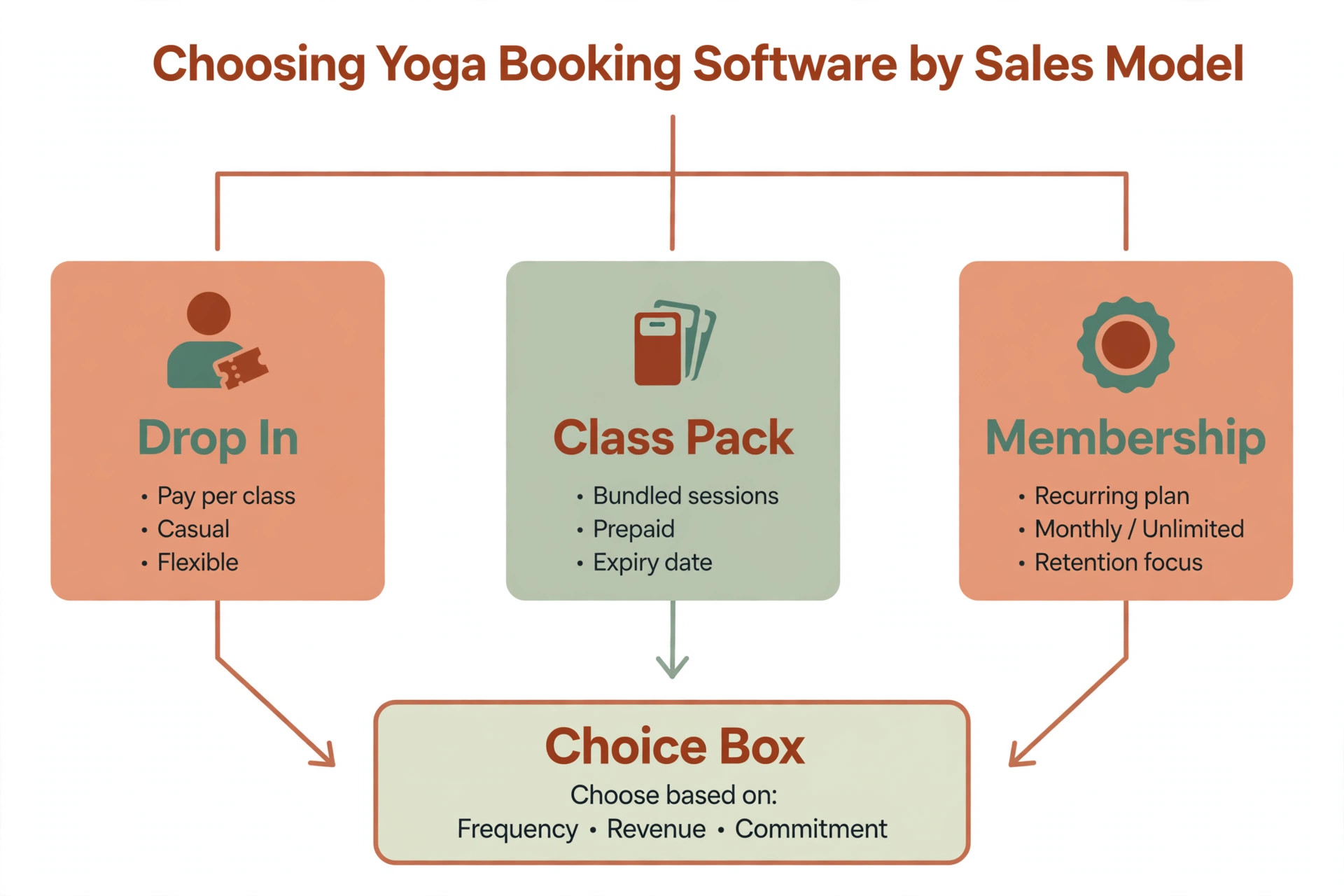
Run through this checklist on every finalist before signing. A platform that fails two or more items will cost more in front desk hours than it saves in subscription fees, because cancellation arguments are where studio systems earn or lose trust. Run the same checks when comparing the best booking software for yoga studios, because a policy that looks fair on paper must also work in the app.
– Check that drop ins, packs and memberships can each be sold, frozen, cancelled and expired under rules you control, with no manual workaround for common cases. – Check that late cancellation and no show rules are clear to students before they book, with fees or visit deductions applied automatically and fairly. – Check that waitlists fill automatically when a place frees up, with a message that gives the student a fair window to confirm before the place passes on. – Check that refunds, credits and transfers are simple for staff, with a clear record that both the studio and the student can see. – Check that payment failures trigger a polite retry and a message, rather than silently cancelling a membership a loyal student meant to keep. – Check that your student list, pass history and payment records can be exported, so the studio is never locked into a tool it cannot leave.
What a Yoga Studio Really Pays Each Month
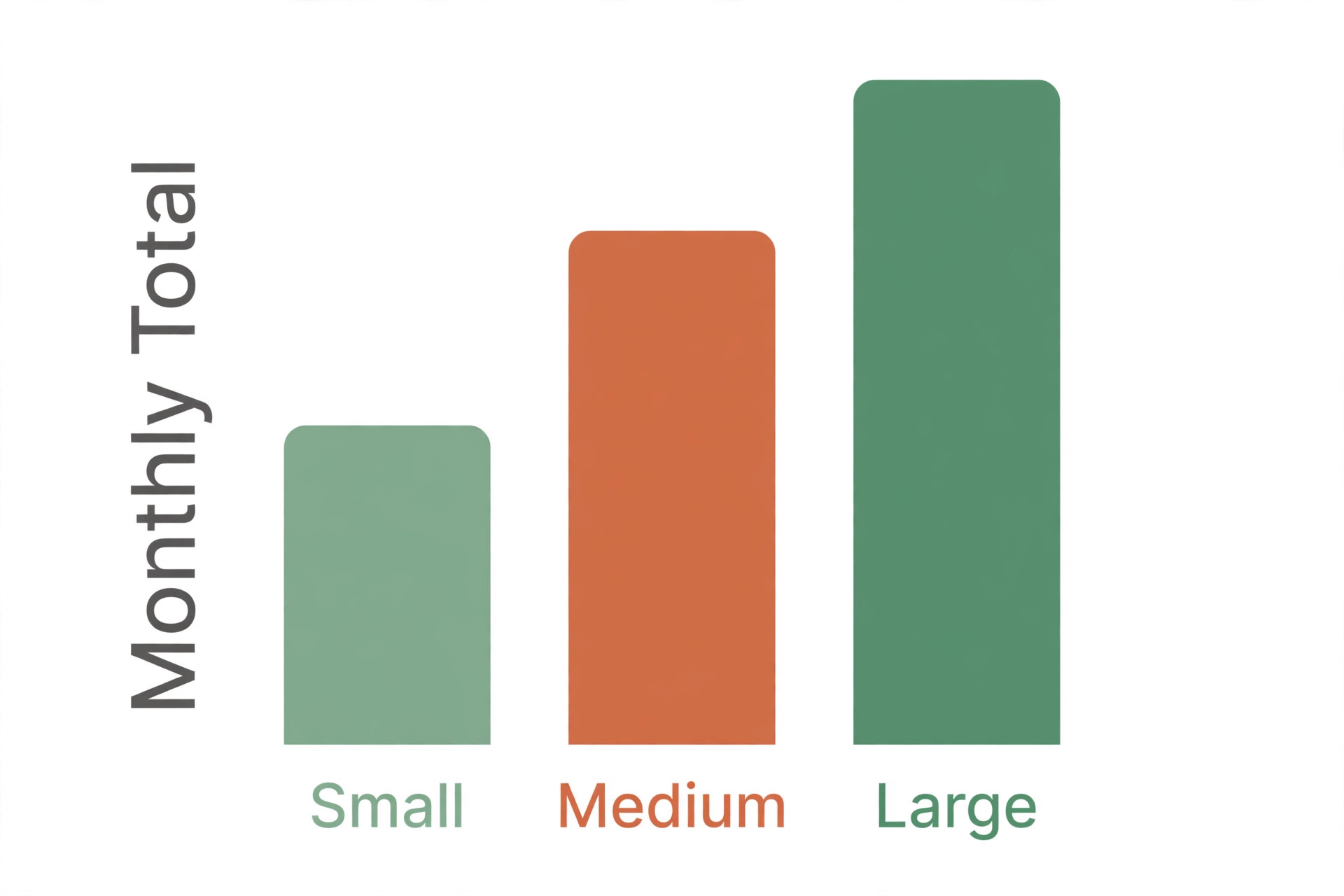
The headline subscription hides the real decision, because payment processing, app fees and add ons move the total by a wide margin. A studio doing 200 card payments a month at a typical processing rate will spend several hundred a month on processing alone, which can exceed the subscription itself. Compare the full monthly total at real volume, not the headline plan price, and ask every vendor for the all in effective rate at your monthly volume. That total is the real price to compare when choosing the best booking software for yoga studios.
At a small size, the maths favours a free or low cost start. A solo teacher on a free plan or a 26 dollar plan keeps almost all revenue, while a teacher on a 119 dollar plan needs many extra bookings to justify the gap. At a larger size, the maths flips, because a platform that fills waitlists, recovers failed payments and reduces no shows can pay for itself from recovered revenue alone.
Mistakes That Empty a Yoga Timetable
The most common mistake is choosing on subscription price alone. A free plan with a high processing rate can cost more per month than a paid plan with a lower rate once volume grows, and a cheap plan that lacks waitlist automation will cost front desk hours every week. Compare the full monthly total at real volume, not the headline subscription.
The second mistake is signing an annual plan before the student test. Book a class as a new student on a phone, cancel it, join the waitlist, buy a class pack and check what messages arrive. If any step is confusing, students will message the studio instead, and the system will have added work rather than removed it. That student test matters more than any feature list for the best booking software for yoga studios.
How to Test Three Yoga Finalists in Two Weeks
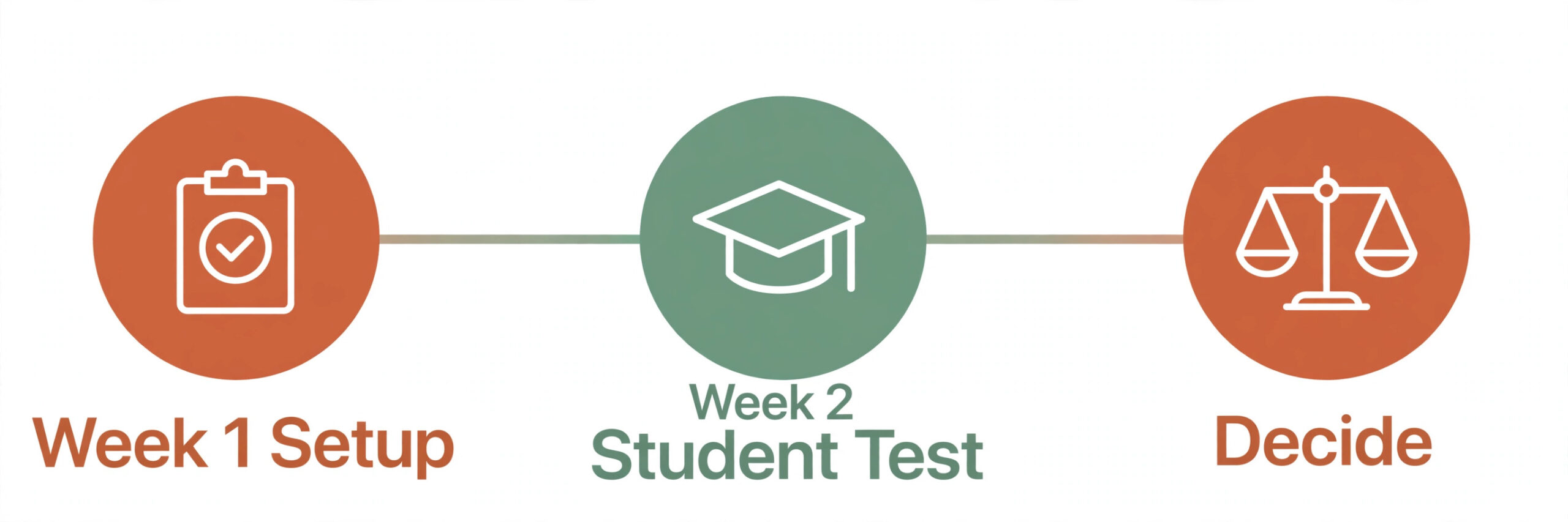
Give each finalist the same real week of work. Load the true timetable, the real class names, the actual prices and a small group of test students, then run bookings, cancellations, waitlist fills and a failed payment through each system. Score each tool on the same sheet, so the decision rests on evidence rather than on the smoothest sales demo. A fair trial is the only honest way to compare the best booking software for yoga studios.
Test the student journey on a phone, not on a desktop, because most students book on phones in the evening. Check how fast a new student can create an account, buy a pack and book a class, and how clear the cancellation message feels. A system that feels fast in week one usually stays fast, while a system that feels slow rarely improves with familiarity.
More Reading on Stratilyze
–
[
B
e
s
t
B
o
o
k
i
n
g
S
o
f
t
w
a
r
e
f
o
r
F
i
t
n
e
s
s
S
t
u
d
i
o
s
]
(
h
t
t
p
s
:
/
/
s
t
r
a
t
i
l
y
z
e
.
c
o
m
/
b
e
s
t
–
b
o
o
k
i
n
g
–
s
o
f
t
w
a
r
e
–
f
o
r
–
f
i
t
n
e
s
s
–
s
t
u
d
i
o
s
/
)
–
[
B
e
s
t
A
I
T
o
o
l
s
f
o
r
Y
o
g
a
I
n
s
t
r
u
c
t
o
r
s
]
(
h
t
t
p
s
:
/
/
s
t
r
a
t
i
l
y
z
e
.
c
o
m
/
b
e
s
t
–
a
i
–
t
o
o
l
s
–
f
o
r
–
y
o
g
a
–
i
n
s
t
r
u
c
t
o
r
s
/
)
–
[
B
e
s
t
A
p
p
o
i
n
t
m
e
n
t
R
e
m
i
n
d
e
r
S
o
f
t
w
a
r
e
f
o
r
a
S
m
a
l
l
B
u
s
i
n
e
s
s
]
(
h
t
t
p
s
:
/
/
s
t
r
a
t
i
l
y
z
e
.
c
o
m
/
b
e
s
t
–
a
p
p
o
i
n
t
m
e
n
t
–
r
e
m
i
n
d
e
r
–
s
o
f
t
w
a
r
e
–
f
o
r
–
s
m
a
l
l
–
b
u
s
i
n
e
s
s
/
)
Frequently Asked Questions About Yoga Studio Booking Software
Do I need a branded app for a small yoga studio?
No, not at first. A good mobile web booking page covers most small studios, and a branded app only earns its fee once the studio has enough regulars to justify the extra cost. Start with web booking, measure repeat bookings, and add an app when students ask for it by name.
What is the cheapest honest way to start?
A free plan with clear processing terms is the cheapest honest start for a solo teacher, followed by a low cost paid plan once pack sales grow. Check the processing rate on the free plan carefully, because a high rate can cost more than a modest subscription once volume rises.
How do class packs differ from memberships in software?
Class packs sell a fixed number of visits with an expiry date, so the system must track visits used, visits left and expiry. Memberships sell time based access with recurring billing, so the system must handle pauses, freezes, failed payments and renewals. A good tool handles both without manual tracking.
Can I move my student list if I switch later?
Usually yes, if you check before signing. Ask for a sample export during the trial and open it to confirm that names, contact details, pass history and payment records come out cleanly. A vendor that blocks exports should be treated as a risk, whatever its price.
Should a yoga studio use a general fitness platform?
It can work, but a yoga specific tool usually fits pass types, class language and teacher schedules better from day one. A general fitness platform may suit a studio that also runs gym classes or open gym hours, where broader features matter more than yoga specific detail.
How long does setup usually take?
A simple studio can launch in a few days, while a multi teacher studio with memberships, packs and workshops should allow two to three weeks. The slow part is rarely the software itself. It is writing cancellation rules, loading the timetable and testing the student journey before the first live class.
The Verdict for Yoga Studios
For most small yoga studios, Momoyoga is the sensible first trial, because it starts free, understands yoga pass types and keeps the monthly bill low while the studio grows. That shortlist is a practical way to choose the best booking software for yoga studios without paying for features you will not use. Studios that sell mainly memberships should trial TeamUp next, and European studios should trial Fitogram for local payment fit. Larger studios that want discovery should price Mindbody honestly, with add ons included, before deciding.
Whichever tool you shortlist, test it with real students, real prices and a real cancellation before you pay for a year. The best system is the one students book on without thinking, staff run without chasing payments by hand, and owners can leave without losing their student list. That test, run properly, will choose the tool for you.