
The best donation software for animal shelters is the tool that turns a moment of compassion into a completed gift, a thank you and a second gift later. A shelter does not need enterprise fundraising power. It needs a fast donation form, easy recurring gifts, sponsorship options for individual animals and reports that show which appeal actually worked.
Shelters face a specific mix of income. One off gifts arrive after rescues and emergencies, monthly sponsors support long stay animals, and events and auctions bring in bursts of community money. A tool that handles only one of those streams forces staff to juggle spreadsheets and payment links, and that juggling is where donors slip away unthanked.
Prices below are starting points from vendor and comparison pages in late 2026, and you should check the vendor page before you buy. Processing fees matter as much as subscription prices here, because a free platform funded by donor tips and a paid platform with a low processing rate can end up costing a shelter very different amounts.
At A Glance For Busy Shelter Teams
Use the table to shortlist fast, then read the tool sections for recurring gift handling, sponsorship features and fee reality. A platform that looks free can still take a share through tips or processing, so read the fee notes beside each price.
| Tool | Starting price | Best for |
|---|---|---|
| Givebutter | Free | Small shelters that want fundraising, events and a donor system at no subscription cost |
| DonorPerfect | From $99 per month | Established shelters with complex multi channel fundraising |
| Tithe.ly | Check the vendor page | Faith linked shelters and community groups that already give through a church platform |
| Bloomerang | From $40 per month for Fundraising | Shelters that want to keep donors, not just record gifts |
| Donorbox | Free Standard plan | Shelters that need a fast, clean donation form first |
| Zeffy | Free | Small shelters that want zero fees of any kind |
| Little Green Light | $45 per month | Small shelters moving from spreadsheets to a real donor database |
Why Shelter Giving Needs Its Own Tool
General payment links collect money, but they do not steward donors. The best donation software for animal shelters needs automatic receipts, donor records, recurring gift management and campaign pages that tell an animal story well. When those pieces sit together, a small team can thank donors fast, spot lapsed sponsors and repeat the appeal that worked.
Animal sponsorship is a second reason. Donors often want to support a named dog, cat or rescue case each month, and that promise needs a record that links the gift to the animal and the update that follows. A generic form cannot carry that story, while a shelter focused setup keeps sponsor, animal and communication in one place.
Events and peer fundraising are a third reason. Adoption days, fun runs and online auctions bring gifts from people who have never donated before, and a good tool captures those new donors instead of losing them in a payment inbox. That capture turns a one day event into a donor list that supports the shelter all year.
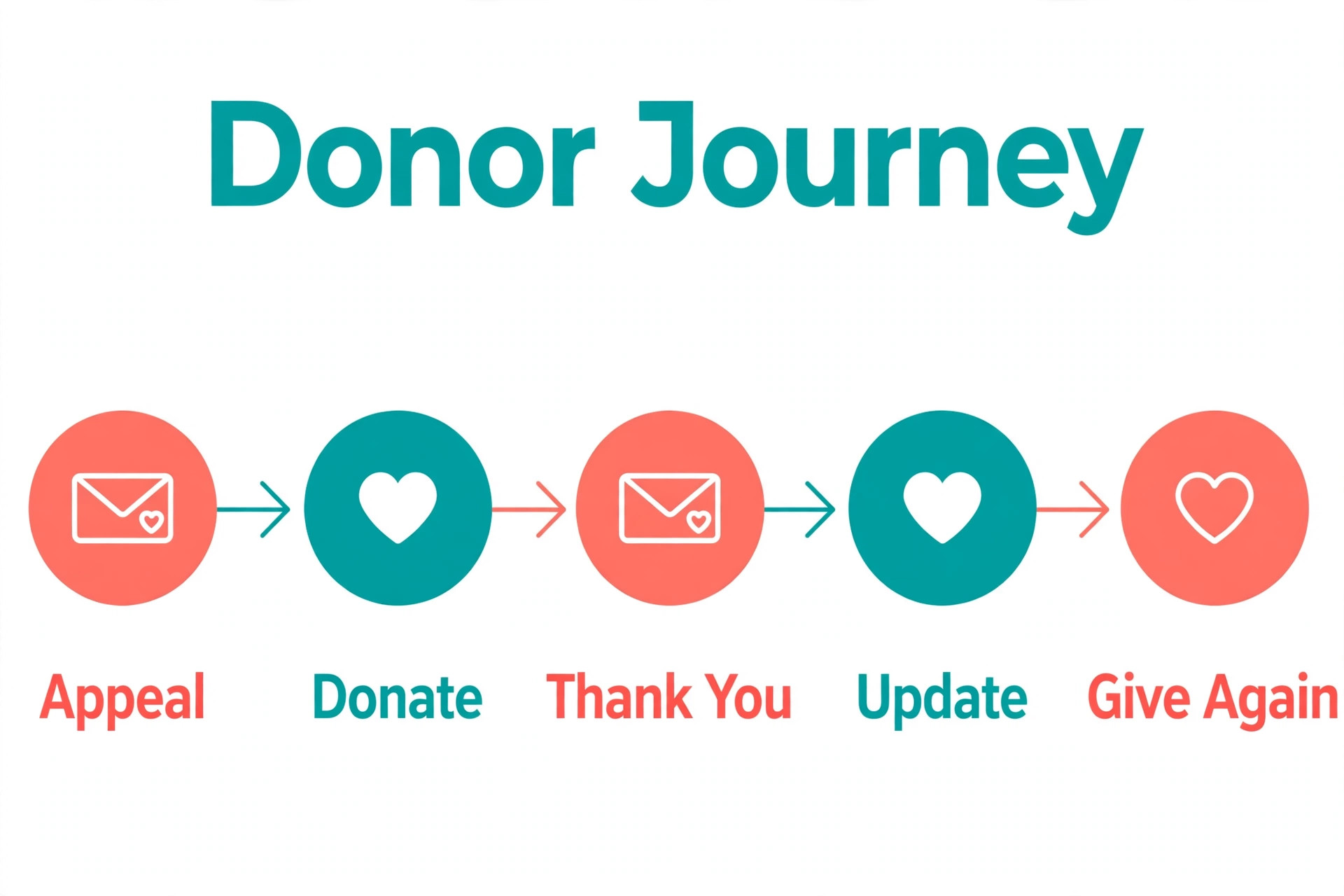
Thank you speed is the first test of any shelter fundraising system, because a donor who gives after an emotional rescue story expects acknowledgement while that feeling is still fresh. An automatic receipt should arrive within minutes, with the animal name, the gift amount and a warm note about what the gift will support, and a personal update should follow within a few days. Shelters that thank fast tend to keep donors longer, because the donor feels seen rather than processed, and that feeling is worth more than any clever campaign design.
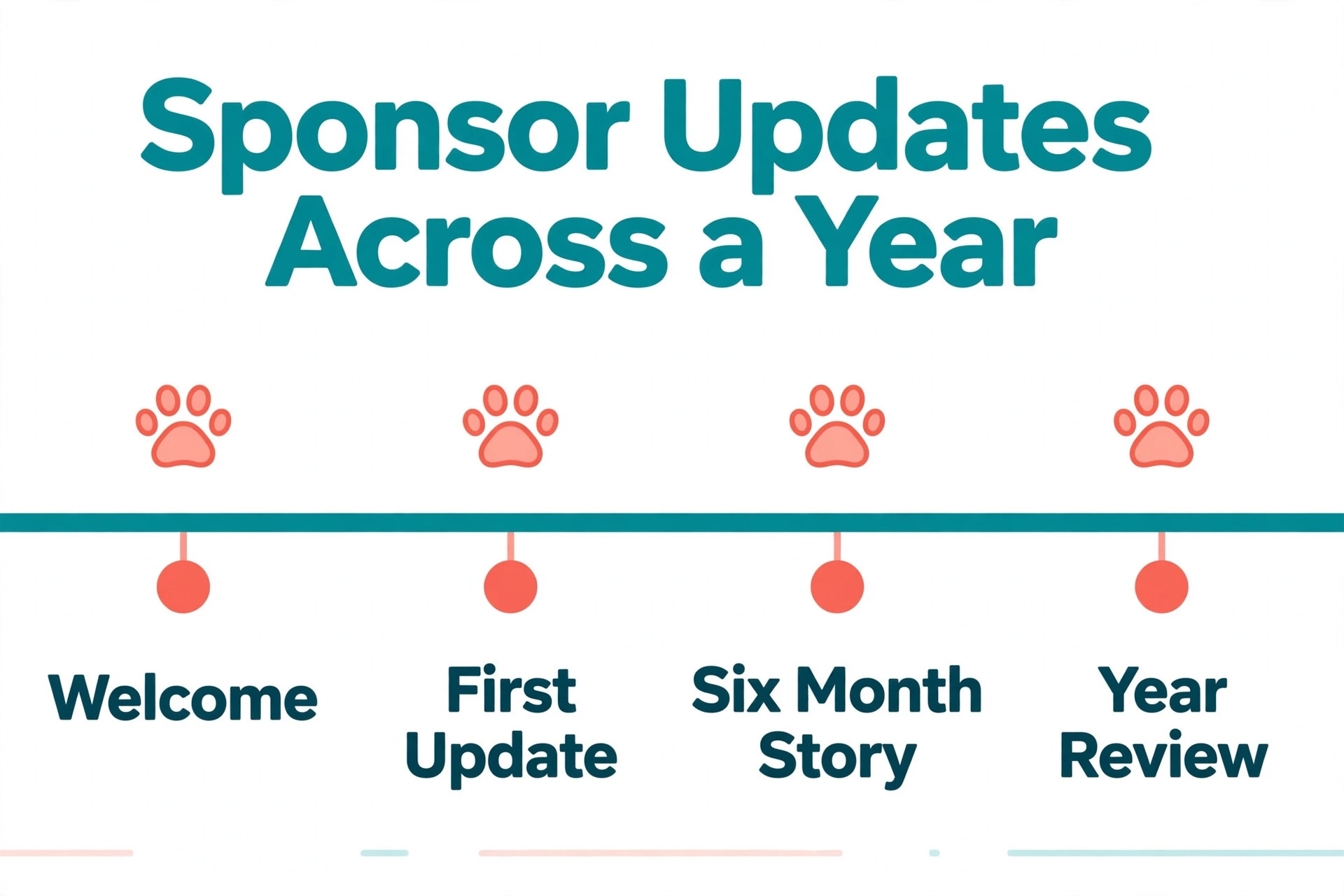
Sponsor updates are the product that monthly donors actually buy, because a sponsor does not simply give money, they adopt a relationship with an animal in their mind. A good system should link each sponsor to a named animal, schedule regular photo and health updates, and flag animals whose sponsors have heard nothing for too long. When updates stop, sponsors assume the animal was adopted or the shelter forgot them, and both assumptions lead to cancellation, even though the animal may still need support every day.
Event follow up is where most shelters lose value, because an adoption day or a fun run brings dozens of new names who never hear from the shelter again. Every event ticket buyer, auction bidder and raffle entrant should enter the donor system with a source tag, so the shelter can thank them, share a rescue story and invite a first monthly gift within two weeks. Without that follow up, an event is a fun day that pays once, while with it, an event becomes a donor pipeline that pays all year.
Volunteer and donor records should not live in separate worlds, because many of the most loyal donors start as volunteers who already love the animals. When volunteer hours, foster placements and donation history sit in one record, a shelter can thank a volunteer donor properly, invite a foster carer to sponsor a long stay animal, and avoid sending a generic appeal to someone who already gives time every week. That joined up view also prevents embarrassing duplicate mailings, which make a small shelter look disorganised to the people who care most.
Email and text follow up need different rules, because email suits stories and updates while text suits urgent appeals and event reminders. A shelter should use email for longer rescue stories, monthly sponsor updates and appeal results, and reserve text for short, time sensitive messages such as an emergency intake or a last day auction reminder. Sending every message by every channel annoys donors quickly, while a thoughtful channel plan keeps open rates high and unsubscribes low across the whole year.
Major donor handling is different from mass appeal handling, because a donor who gives a large gift expects a personal call, a specific project update and a clear sense of impact. The donor system should flag large gifts, record personal preferences and past conversations, and remind staff to follow up personally rather than with an automated series. Even a small shelter with only a handful of major donors benefits from that discipline, because one major gift can fund a medical case that dozens of small gifts cannot cover alone.
Seven Tools For Shelters
1. Givebutter
Givebutter is free to use when donor tips are enabled, with donation forms, fundraising pages, events, auctions, peer fundraising and a built in donor system in one place. That breadth suits a small shelter team, because one login covers an emergency appeal, a gala ticket page and a monthly sponsor drive. The modern pages also look good on a phone, where most donors now give. Starting price is free.
The fee model needs reading carefully. With tips off, a platform fee applies on top of card processing, and some advanced features sit on the paid Plus plan from $29 a month. Offline donation tracking can also feel clumsy. Choose Givebutter for low cost breadth, and test tip behaviour with real donors before relying on it.
2. DonorPerfect
DonorPerfect is a mature donor system with forms, automation, reporting and multi channel fundraising that suits a shelter with a larger donor file and regular campaigns. Staff can segment donors, automate thank yous and report on appeal performance without exporting to spreadsheets. That depth helps a shelter that already raises steadily and wants to grow retention. Starting price is From $99 per month.
The price and setup are the barriers for a small rescue. From $99 a month is a real commitment, and the system rewards a team that will learn its reporting and automation properly. A tiny shelter with a few hundred donors may find it heavier than needed. Shortlist it when donor volume and campaign complexity justify a full system.
3. Tithe.ly
Tithe.ly is best known for church giving, but its simple donation forms, recurring gifts and mobile giving suit a shelter with faith community support. Donors who already give through a familiar platform face less friction, and recurring gift setup is straightforward for a small team. For a shelter rooted in a faith community, that familiarity can lift response. Starting price is not published, so check the vendor page.
The fit is narrower than a general shelter platform. Animal sponsorship, adoption event fundraising and auction tools are not its core strengths, so a shelter that leans on those streams may need a second tool. Choose Tithe.ly when community giving is the main channel, and pair it carefully if events and sponsorships matter more.
4. Bloomerang
Bloomerang centres on donor retention, with engagement scoring, a retention dashboard and a donor system that shows who is slipping away. Fundraising plans start from $40 a month, while the fuller donor system costs more, so a shelter should price the plan that matches its needs. For a shelter tired of losing first time donors, that retention focus is valuable. Starting price is From $40 per month for Fundraising.
The cost rises when the full donor system is added, and processing fees sit on top of subscription. A very small shelter may also find the retention tools more than it can act on with one staff member. Choose Bloomerang when keeping donors is the measured problem, and make sure someone owns the follow up work it reveals.
5. Donorbox
Donorbox gives a shelter a clean, fast donation form with recurring options, donor portals and integrations to several donor systems. The free Standard plan lets a small rescue start online giving quickly without a subscription, and the form works well embedded on a shelter website or shared on social media. For an emergency appeal, speed matters. Starting price is free standard plan.
Platform fees apply on the free plan, and the fuller Pro plan costs $150 a month, so a shelter should compare total fee cost against a free tip funded rival. Donorbox is also a form tool first, not a full shelter system, so donor stewardship may need a linked system. Pick it when the form itself is the bottleneck.
6. Zeffy
Zeffy is funded by optional donor tips and charges no platform or transaction fees, which makes it genuinely free for a small shelter in a way few rivals match. Donation forms, events, peer fundraising and automatic tax receipts cover the core needs of a community shelter, and the lack of a subscription removes a barrier for a new rescue. Starting price is free.
The trade off is depth and donor system power compared with DonorPerfect or Bloomerang. Larger shelters with complex segmentation, major donor tracking and advanced reporting may find Zeffy light. Choose it when every dollar must reach animals and the team is small, and review the fit again as donor volume grows.
7. Little Green Light
Little Green Light offers a lean donor database with every feature included on a record based price, starting at $45 a month for up to 2,500 records. That simplicity suits a shelter leaving spreadsheets, because staff do not face tier puzzles to get reporting, forms and mailings. The record model also keeps costs predictable as the donor file grows slowly. Starting price is $45 per month.
Recurring gift handling needs care, because staff must resubmit unpaid instalments after a donor updates a card, and some payment types cannot be updated in place. That manual step matters for a sponsor heavy shelter. Choose it for database clarity and price predictability, and test failed payment handling before moving sponsors across.
How The Best Donation Software For Animal Shelters Fits Each Giving Type
The pick depends on which gift type drives most income, so start from the stream below and then check fees and donor follow up for that pick.
| Job | Best pick | Why it fits |
|---|---|---|
| One off gifts | Donorbox or Zeffy | Fast forms and low or zero fees suit impulse gifts after a rescue story. |
| Sponsorships | Givebutter or Bloomerang | Recurring handling plus donor records keep monthly sponsors engaged. |
| Events | Givebutter | Event, auction and peer pages capture new donors in one system. |
A shelter that lives on events should not buy a database first, and a shelter that lives on sponsors should not buy a form only tool. Match the pick to the income stream that pays the vet bills, then add depth only where donor volume proves it is needed.
Recurring Gift Checklist For Sponsors
The best donation software for animal shelters should pass this recurring gift checklist, because a lost sponsor often leaves quietly and is hard to win back.
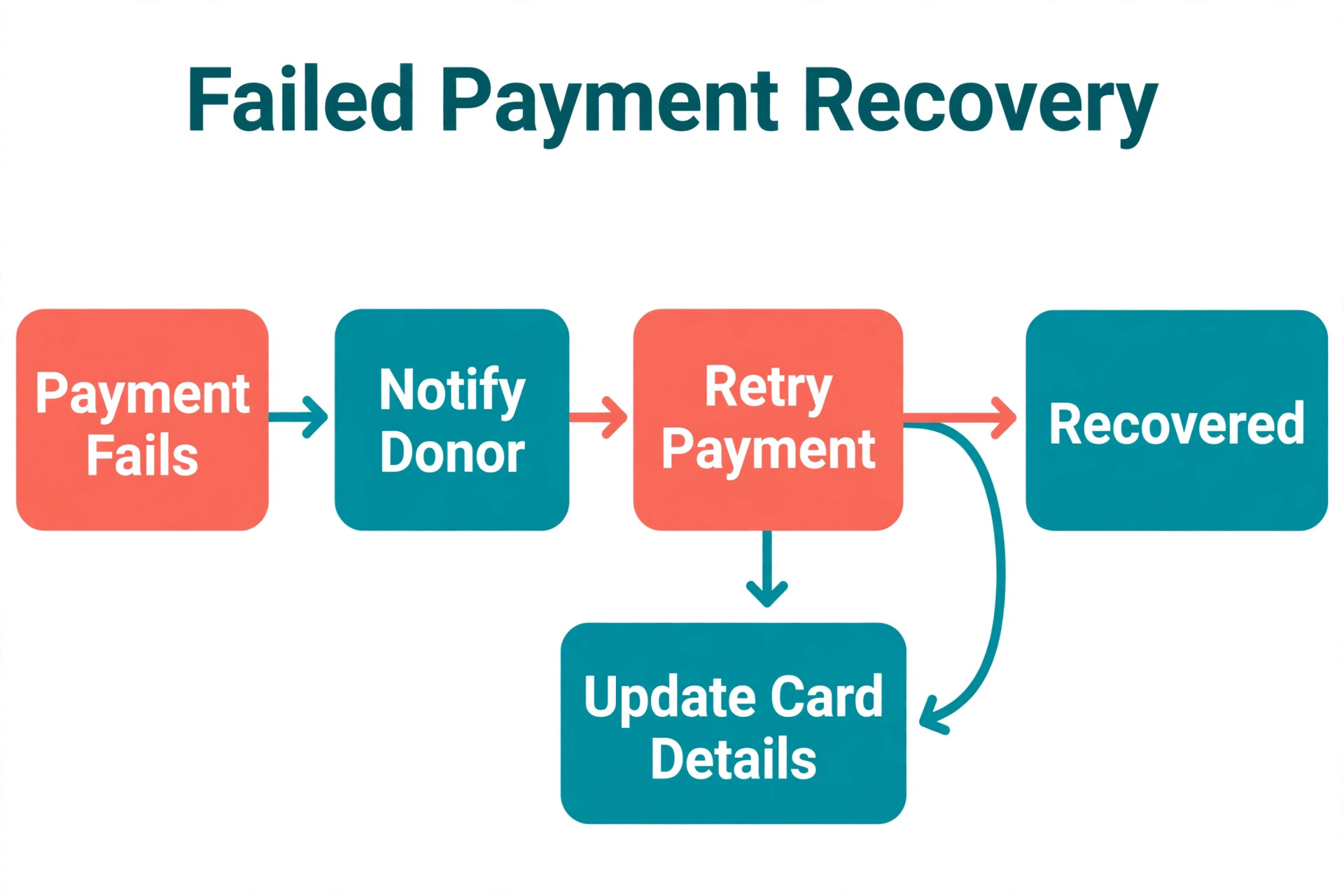
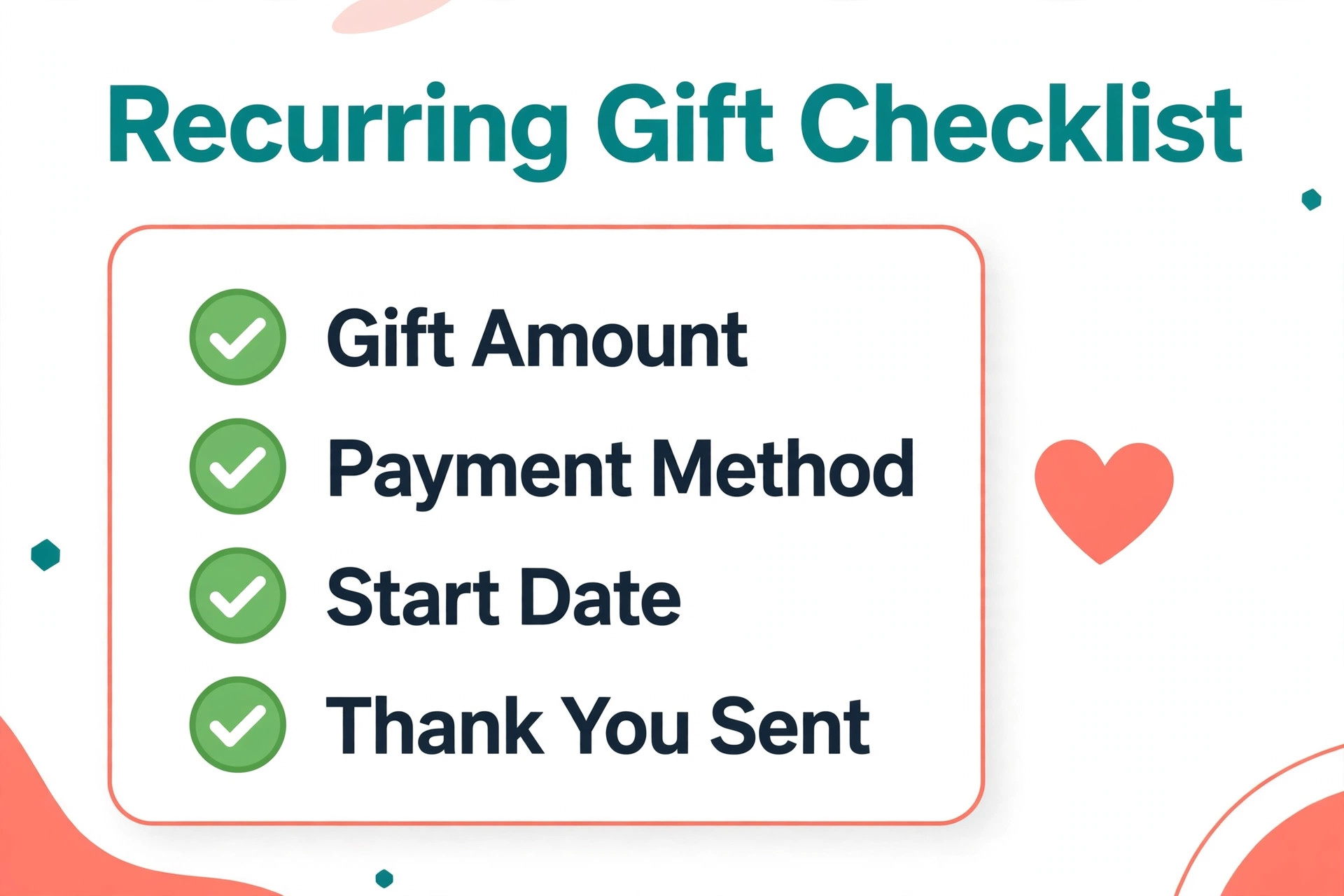
– Confirm that donors can start, pause and update a monthly gift themselves without emailing the shelter. – Check what happens when a card expires or a payment fails, including retries and staff alerts. – Verify that each sponsor gift links to the correct animal or programme in the donor record. – Test that tax receipts go out automatically for recurring gifts, not only for one off donations. – Confirm that lapsed sponsors appear in a simple report the team can work through each month. – Check that a sponsor can increase a gift easily, because upgrade prompts are a major income source.
Run this checklist with a real sponsor card in a trial, including a failed payment test where possible. A tool that handles happy path gifts well but fails on card expiry will lose sponsors in silence, and that loss rarely shows up in a vendor demo.
What a Real Month Costs an Animal Shelter
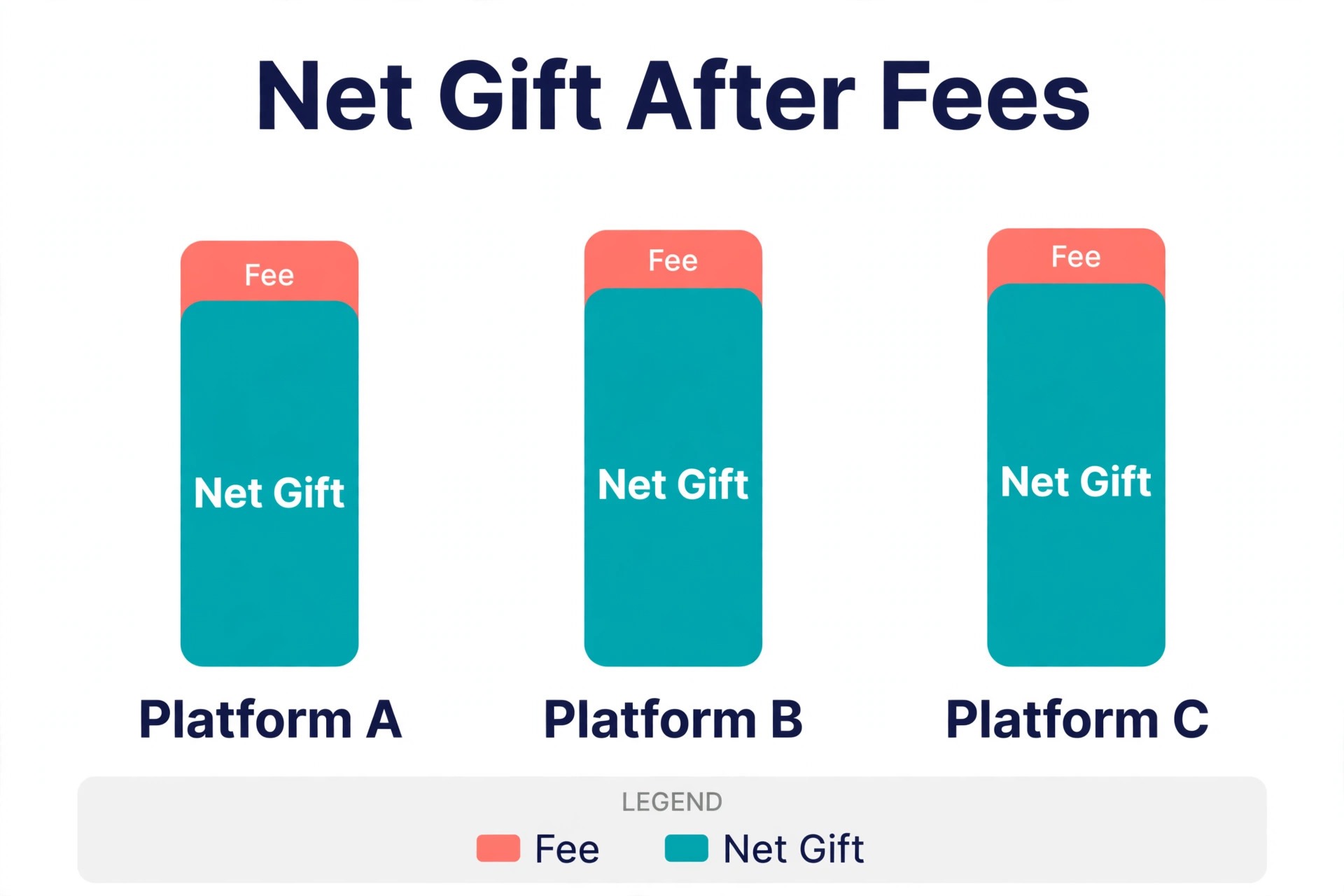
Subscription price is only part of the bill. Card processing near 2.9 percent plus 30 cents per gift, platform fees on some plans, and text or mail add ons all reduce the net gift. That fee maths applies to the best donation software for animal shelters as much as to any other fundraising tool. A shelter raising $5,000 a month through cards should expect processing alone to take well over $150, before any platform fee is counted.
Tip funded platforms change the maths. Givebutter and Zeffy can cost a shelter nothing in platform fees when donors choose to tip, but tip rates vary and a shelter should watch net income for three months before calling the tool free. If tips fall short, the platform fee option may be cheaper than it first looks.
Paid donor systems earn their cost through retention, not through forms. DonorPerfect and Bloomerang cost more each month, but a single recovered sponsor or a better appeal repeat rate can repay that cost quickly. Price them against donor lifetime value, not against a free form alone, and review the maths after one full appeal cycle.
Mistakes That Lose Donors Quietly
The best donation software for animal shelters cannot rescue a gift journey that thanks donors late, and the mistakes below lose support without a complaint ever arriving.
Thanking donors late or not at all. A donor who hears nothing for a week assumes the gift vanished, so automate a warm receipt at once and follow with an animal update within days. Speed of thanks matters more than design polish.
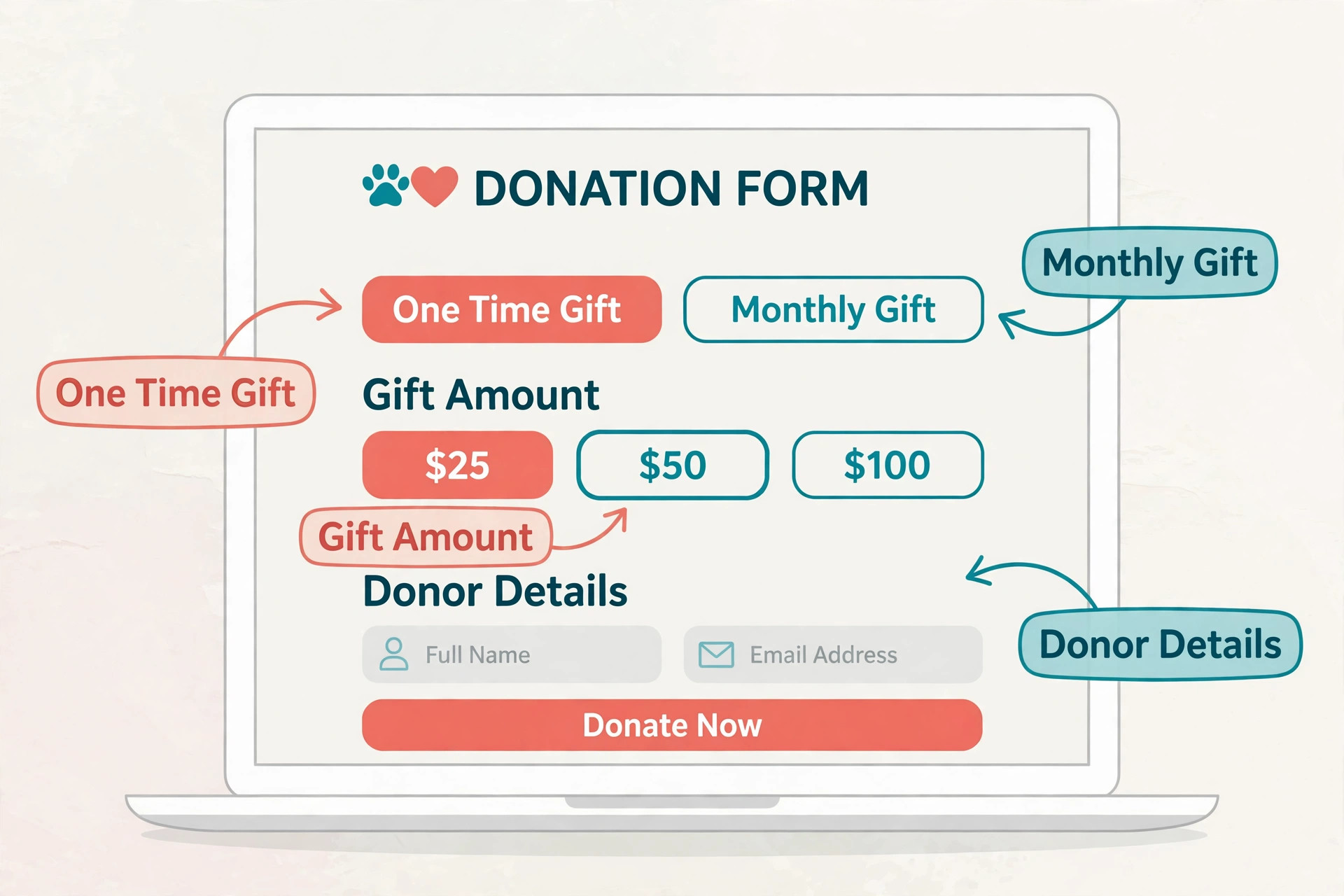
Hiding the recurring option. When monthly giving sits below a long form or on a second page, sponsors never find it. Put a clear monthly option beside the one off amount on the main form, with a sponsor story beside it.
Asking for too much on the first form. Long forms kill impulse gifts, especially on a phone after a rescue video. Ask for gift, name and email first, and collect address and preferences in the thank you flow instead.
Never working the lapsed list. Sponsors lapse for card reasons more often than for lost interest, so a monthly lapsed report with a kind retry message recovers income that a new appeal cannot replace. Assign one person to that list each month.

How To Test Finalists With A Real Appeal
Test finalists with a real small appeal, not a demo page. Send a rescue story to a small segment, track form completion, receipt speed, recurring uptake and donor record quality for each tool. Real donor behaviour beats a feature demo every time, because friction shows up only when money is involved.
Ask two volunteers to donate on a phone and on a desktop, including a monthly gift and a failed card update if the tool allows it. Note every confusing step, every slow page and every missing receipt. Those notes are the trial score, and they matter more than a long feature list from a sales call.
Compare net income, not gross gifts, after the test. Subtract processing and platform fees, count the time staff spent on manual fixes, and note how many new donors entered the system cleanly. The tool with the best net result and the cleanest donor list is usually the right long term pick.
Rolling Out Donation Software Without Losing Donors
Migrate donors in small batches, starting with current monthly sponsors, because they are the donors most at risk if a move goes wrong. For each sponsor, confirm the gift amount, the payment method, the animal or programme link and the next payment date before moving them, and test a single sponsor payment in the new system before migrating the rest. A careful sponsor migration protects the steadiest income a shelter has, while a rushed bulk migration can create failed payments that look like cancellations. Clean the donor file before migration, because duplicates, old addresses and test records will pollute every report in the new system. Merge duplicate donors, remove obvious test entries and standardise how names, animal links and campaign sources are recorded, so the new system starts clean. A clean start also makes segmentation honest, because appeal results will reflect real donor behaviour rather than the mess left by years of spreadsheet imports. Train the whole team on thank you and receipt workflows, not only on how to create a campaign page, because donor trust is built in the hours after a gift. Every staff member who might answer a donor query should know how to find a gift, resend a receipt, update a card and pause a monthly gift without guessing. That shared knowledge prevents the common shelter problem where only one person knows the system and donor queries wait until that person returns. Plan the first appeal in the new system as a test, not as a major fundraiser, by sending it to a loyal segment first and watching form completion, receipt delivery and record quality closely. A test appeal reveals broken links, confusing form steps and missing receipts while the audience is forgiving, whereas a major appeal with the same faults can damage trust at scale. Fix every friction the test reveals before the next large appeal goes out. Set a monthly donor health review, looking at new donors, lapsed sponsors, failed payments and average gift size in one short meeting each month. That review turns the donor system from a payment inbox into a management tool, because trends become visible before they become crises. A shelter that reviews donor health monthly can act on a rising lapse rate in weeks, while a shelter that checks only at year end discovers the problem after a full year of lost income. Build a year end giving plan around the new system, because December giving, tax receipts and sponsor renewals all arrive together and need a calm, tested workflow. Prepare receipt templates, segment year end appeals by donor history, and schedule sponsor renewal messages before the holiday rush, so staff are not building templates during the busiest week. A planned year end raises more and stresses staff less, which matters for a small team that cannot afford burnout. Report results back to donors after every major appeal, showing how much was raised, which animals were helped and what remains to be done, because donors who see results give again. Use the donor system to segment that report, so first time donors, sponsors and major donors each receive a version that matches their relationship. A shelter that closes the loop honestly builds a donor base that grows year after year, rather than a list that must be rebuilt after every appeal.
Foster carer communication deserves its own workflow, because foster carers are both volunteers and storytellers who can bring new donors to the shelter. Keep foster placements, animal updates and carer contact details in the donor system, and share adoption success stories with carer permission after a placement. A carer who feels thanked and informed is more likely to foster again and to share the shelter appeal with friends, which is a donor channel no paid advert can replace.
Matching gift opportunities are often missed, because donors do not know their employer will match a gift and shelters do not ask. Add a simple matching gift prompt to the thank you page and to year end appeals, and record employer matches in the donor record so follow up is possible. Even a small number of matched gifts can fund a significant medical case, and the prompt costs nothing once it is built into the thank you flow.
Board reporting should be simple enough for non fundraisers to understand, because trustees need income, donor retention and campaign results without jargon. Produce a one page monthly summary from the donor system showing gifts received, new donors, lapsed sponsors and net income after fees, and share it before each board meeting. A board that understands fundraising results will support investment in donor care, while a board that sees only totals will judge every appeal by gross income alone.
More Reading on Stratilyze
– Best donation software for nonprofits, a plain text guide on Stratilyze to read next. – Best fundraising software for small charities, a plain text guide on Stratilyze to read next. – Best CRM software for nonprofits, a plain text guide on Stratilyze to read next.
Frequently Asked Questions
What is the cheapest way for a small shelter to start online giving
Zeffy and Givebutter let a small shelter start with no subscription, funded by optional donor tips. Compare net income after processing for three months, because tip rates vary, and move to a paid plan only when donor volume or reporting needs justify it.
How do monthly animal sponsorships work in these tools
A donor chooses an animal or programme, sets a monthly amount and manages the gift through a donor portal. The shelter record should link each gift to the animal, send automatic receipts and flag lapses, so sponsor updates can be sent with confidence.
Do donors trust tip funded platforms
Most donors accept an optional tip when the choice is clear and the shelter still receives the full gift. Transparency helps, so explain on the form that tips support the platform and that the shelter gift itself is not reduced by a hidden platform charge.
Can one tool handle events and donations together
Yes. Givebutter and Zeffy cover events, peer fundraising and donations in one system, which helps a shelter capture event donors into its main list. A form only tool may need a linked donor system to get the same follow up benefit.
What should a shelter check about processing fees
Check the card rate, the per gift fixed fee, any platform fee and whether donors can cover fees. Small gifts suffer most from fixed fees, so a shelter with many $10 gifts should model net income carefully before choosing a high fixed fee plan.
When should a shelter move to a paid donor system
Move when donor volume, segmentation or retention work exceeds what a free tool handles cleanly. Signs include a growing lapsed list, appeal reports built by hand and major donors tracked outside the system, all of which cost more in staff time than a subscription.
The Final Verdict for Animal Shelters
The best donation software for animal shelters for most small teams is Givebutter, because it covers one off gifts, sponsorships, events and donor records with no subscription when tips are enabled. Zeffy is the better pick when zero fees matter most, while Bloomerang suits shelters whose main problem is keeping donors rather than finding them.
Test with a real appeal, watch net income rather than gross gifts, and run the recurring gift checklist before moving sponsors. The tool that thanks fast, recovers failed cards and keeps sponsor records clean will raise more over a year than the tool with the longest feature list.