

For most gyms, the best email marketing software for gyms is Mailchimp, because it covers class promos, renewal reminders and win-back campaigns in one place without a steep learning curve. A small gym can start free, send a weekly class schedule, and add simple automation as the list grows. Larger gyms get segmentation by membership type, attendance and location, so messages stay relevant instead of landing as generic blasts.
That verdict comes with a condition. A gym that lives on beautiful class announcements may prefer Flodesk, and a gym that sends a high volume of short offers may save money on Brevo. The right choice depends on list size, send frequency and how much time staff have each week. This guide compares nine tools on those exact points, with starting prices and honest limits, so you can pick once and stick with it.
Gyms do not need the most powerful marketing platform on the market. They need reliable delivery, a signup form that works on a phone, and automation that runs while coaches are on the floor. The tools below were judged on those day to day needs, not on feature lists that look good in a demo and gather dust afterwards.
The shortlist at a glance
This table gives the starting point for each tool. Prices move with list size, so treat them as entry points and confirm the price at your current subscriber count before you commit. The best email marketing software for gyms in your case may sit one tier above the entry price once automation is included.
| Tool | Starting price | Best for |
|---|---|---|
| Mailchimp | From $13 per month | Most gyms starting out |
| Constant Contact | From $12 per month for Lite | Gyms running events and local offers |
| Flodesk | From $25 per month for Lite | Gyms that lead with design |
| MailerLite | From $19 per month at 1,000 subscribers | Gyms on a tight budget |
| Brevo | From $9 per month for Starter | Gyms that send often |
| ActiveCampaign | From $29 per month, check the vendor page | Gyms that want deep automation |
| Kit | From $33 per month at 1,000 subscribers, billed annually | Gyms selling coaching and courses |
| Omnisend | From about $16 per month | Gyms with a shop or merch |
| GetResponse | From $19 per month | Gyms wanting funnels and webinars |
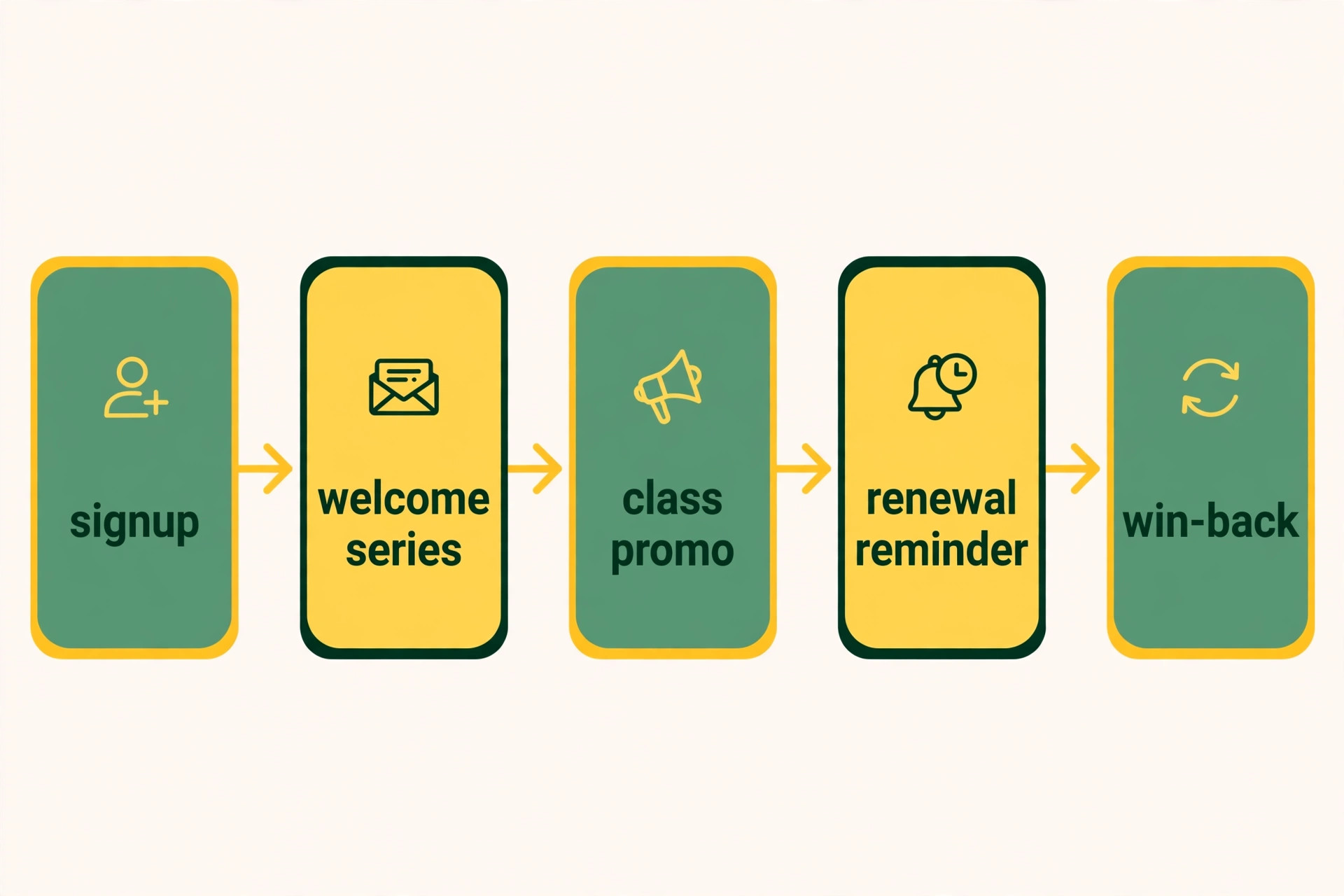
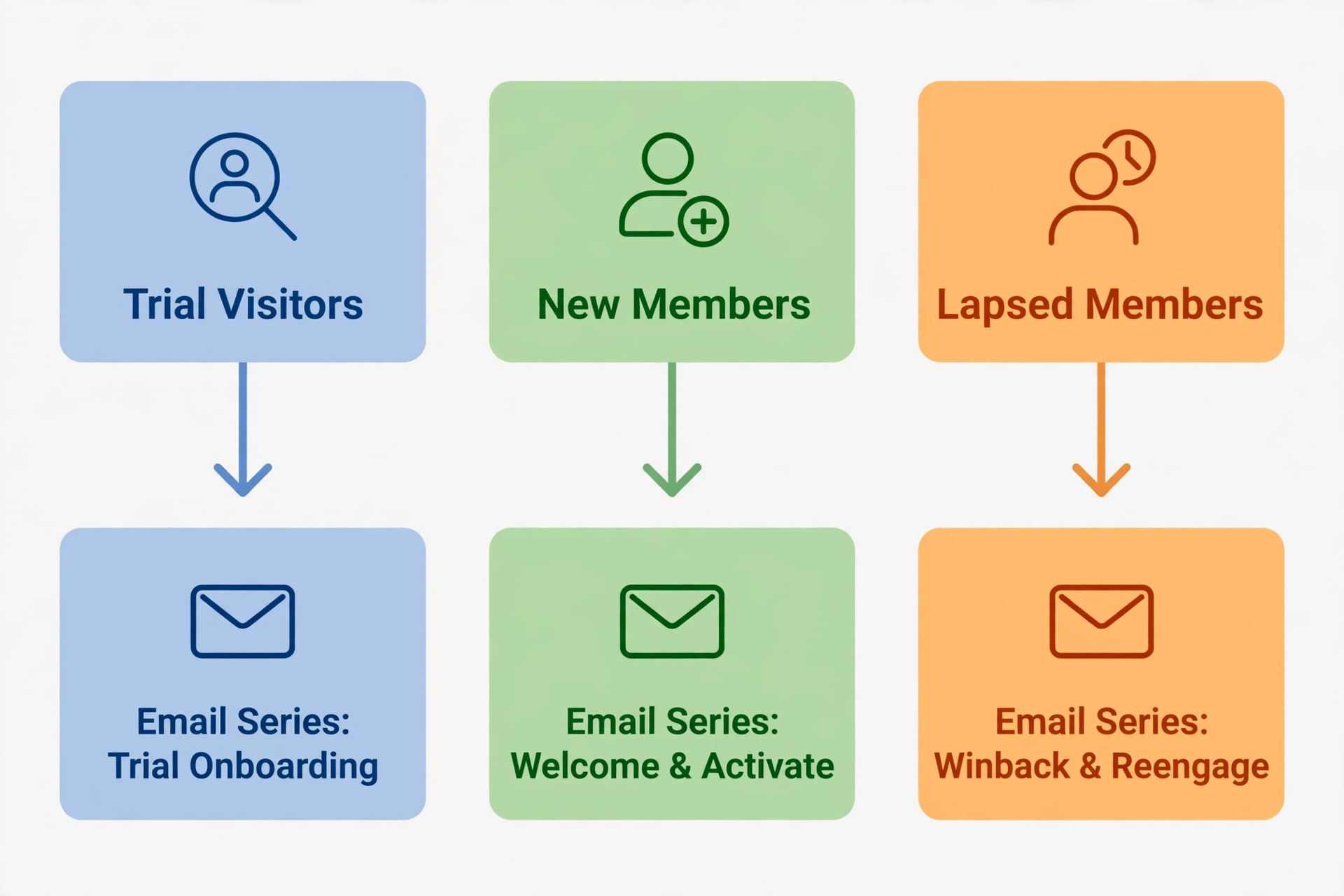
A general newsletter tool sends the same message to everyone. A gym list is not one audience. Prospects need trial offers, new members need onboarding, regulars need class updates, and lapsed members need a reason to return. A tool built for this kind of split list makes those groups easy to build and keeps them updated as members join, freeze or leave.
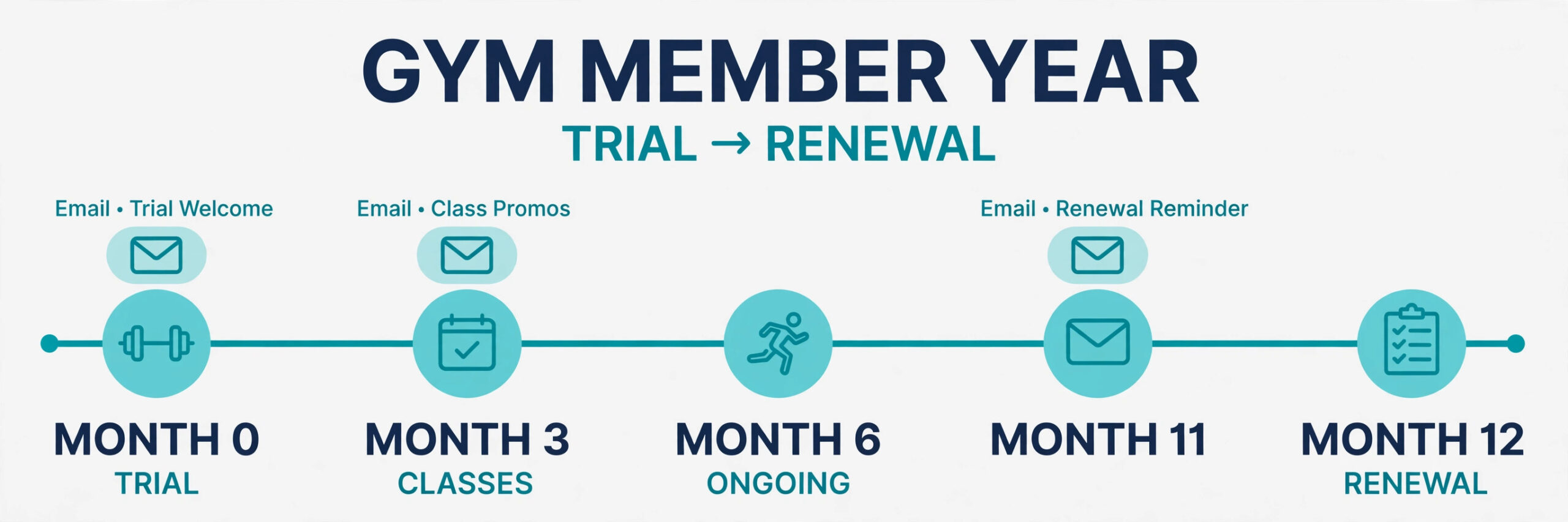
Timing matters as much as design. A renewal reminder sent three days before a card expires saves a membership. A win-back offer sent ninety days after the last visit can bring back a member who simply drifted away. Both need automation tied to dates and behaviour, not a manual send that staff remember only when the front desk is quiet.
Gyms also collect signups in places a normal business does not. The front desk, a trial form, a class booking page and an open day each produce contacts with different intent. A good tool captures the source of each signup, so a trial visitor does not receive the same series as a ten year member. That detail is what keeps open rates up and complaints down.
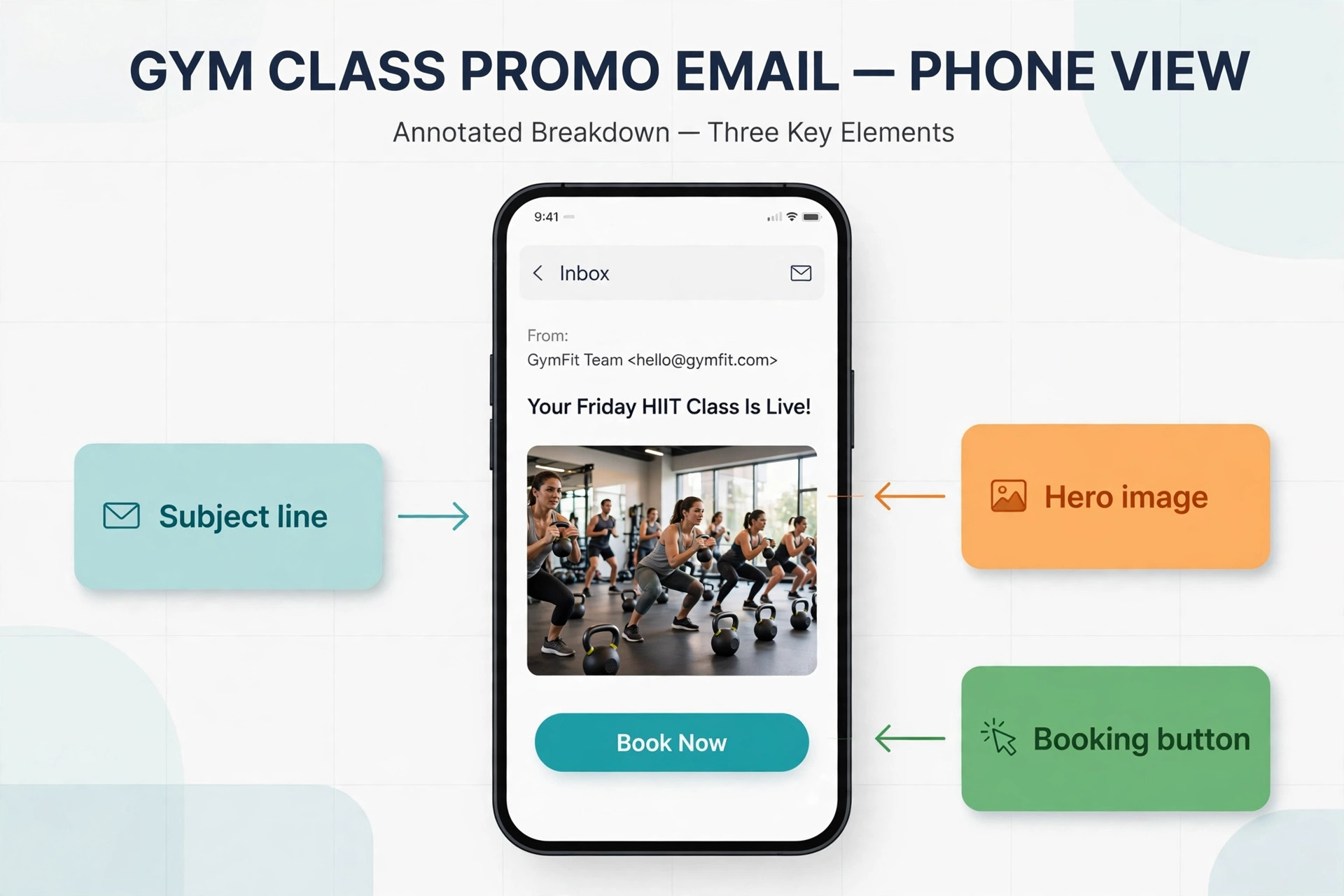
Finally, gym email must work on a phone, because most members read it between sets or on the way to a class. Templates that look sharp on a laptop and cramped on a phone cost bookings. Every tool in this guide was checked for mobile friendly templates, simple signup forms and reporting that shows opens, clicks and unsubscribes in plain numbers.
Mailchimp
Mailchimp suits a gym that wants one tool for the whole job. It offers a free plan for up to 500 contacts, a large template library, signup forms, landing pages and automation for welcome series, renewals and win-back messages. Integrations with booking and payment tools are broad, so member data can flow in without manual exports each week.
Prices rise with contact count, so a growing list can outgrow the cheap tier faster than expected. Advanced automation and multivariate testing sit on higher plans, and the interface can feel busy for a front desk team that only sends two emails a week. Choose it for breadth and scale, and skip it if you only need beautiful, simple sends.
Constant Contact
Constant Contact is a strong fit for gyms that run open days, challenges and local promotions. Its Lite plan starts low, its event tools handle registrations, and its templates are easy for non designers to edit. Support by phone and chat is a real plus for a small team that cannot wait days for an answer during a launch week.
Automation starts on the Standard plan from $35 per month, so the cheapest tier is mostly manual sending. There is no free plan, only a trial, and the price steps up with contacts. Choose it for events and dependable support, and skip it if automated renewal and win-back flows are the main reason you are buying.
Flodesk
Flodesk produces the most attractive emails in this list with the least effort. Its templates suit class announcements, transformation stories and seasonal challenges, and the builder stays simple even for a coach with no design background. Unlimited sends on paid plans remove the worry about mailing the list twice in a busy week.
Automation is basic compared with Mailchimp and ActiveCampaign, with Lite including only one workflow and fuller automation on Pro. Pricing is now subscriber based for new users, so the old flat rate story no longer applies. Choose it when design drives bookings, and skip it when complex renewal logic is the priority.
MailerLite
MailerLite gives a small gym a clean builder, solid automation and fair pricing without the clutter of an enterprise platform. Its free tier covers a new gym, and paid plans add automation, landing pages and better reporting at a price that stays friendly as the list grows toward a few thousand members.
The template range is smaller than Mailchimp, and approval of new accounts can take time, which frustrates a gym trying to launch a challenge this week. Ecommerce depth is thinner, though most gyms do not need it. Choose it for value and simplicity, and skip it if you need deep integrations on day one.
Brevo
Brevo prices by emails sent rather than contacts, which suits a gym with a large list that mails only a few times a month, or a busy gym that sends short, frequent updates. The free tier allows 300 emails a day, and the Starter plan covers 5,000 emails a month, so a weekly schedule email stays affordable for a long time.
The builder and template library are serviceable rather than beautiful, and advanced automation sits on the higher Standard plan. A gym sending daily offers will climb tiers quickly, since the bill follows volume. Choose it when send volume, not list size, drives your cost, and skip it if polished design is the top priority.
ActiveCampaign
ActiveCampaign is the automation leader here. It can tag members by class attendance, trial status and membership tier, then trigger renewal, upgrade and win-back series without staff intervention. Its CRM features also help a gym track trial visitors from first enquiry through to paid membership in one record.
The power comes with a learning curve, and the price is higher than the budget tools in this list. A small gym with one weekly email will not use half of what it pays for. Choose it when automation and trial follow up drive revenue, and skip it if your team wants a tool they can learn in an afternoon.
Kit
Kit, formerly ConvertKit, suits a gym that sells online coaching, courses or a paid newsletter alongside memberships. Its visual automation builder is clear, its forms and landing pages convert well, and its free plan covers up to 10,000 subscribers with limited automation for a gym testing an online offer.
Paid automation starts on the Creator plan, and the design tools are plainer than Flodesk, so class announcement emails look simpler. It is built for creators first, so gym specific features like class schedules need a booking integration. Choose it for coaching products, and skip it for pure in person class marketing.
Omnisend
Omnisend combines email with SMS, which helps a gym promote a flash sale, a new class time or a last minute place in a popular session. Its automation for welcome, win-back and post purchase messages is strong, and its reporting shows revenue tied to each campaign, which makes the value of email easy to prove to an owner.
The focus is ecommerce, so a gym without a shop will pay for features it never opens. The free plan is small, and SMS costs add up if used weekly. Choose it when merch, supplements or online programs matter, and skip it when email alone covers your marketing.
GetResponse
GetResponse adds funnels, landing pages and webinars to email, which suits a gym running a free webinar, a nutrition challenge or a paid online program. Its templates are varied, its automation is capable, and its webinar tool removes the need for a separate platform for a monthly member workshop.
The interface packs in many features, so a team that only sends a schedule email may find it heavier than MailerLite or Flodesk. Pricing rises with list size, and the best automation sits above the entry tier. Choose it for challenges and webinars, and skip it if you want the simplest possible weekly sender.
Best pick by job, not by brand
A single winner rarely fits every gym. Use this table to match the tool to the job you actually send most often, then check the price at your list size before deciding. The best email marketing software for gyms for class promos is not always the same tool that handles renewals best.
| Your situation | Best pick | Why it fits |
|---|---|---|
| Class promos and announcements | Flodesk | Beautiful templates that members open and read fast |
| Membership renewals | ActiveCampaign | Date based automation tied to membership status |
| Win-back for lapsed members | Mailchimp | Segmentation plus automation at a fair starting price |
Your list growth checklist before you send anything
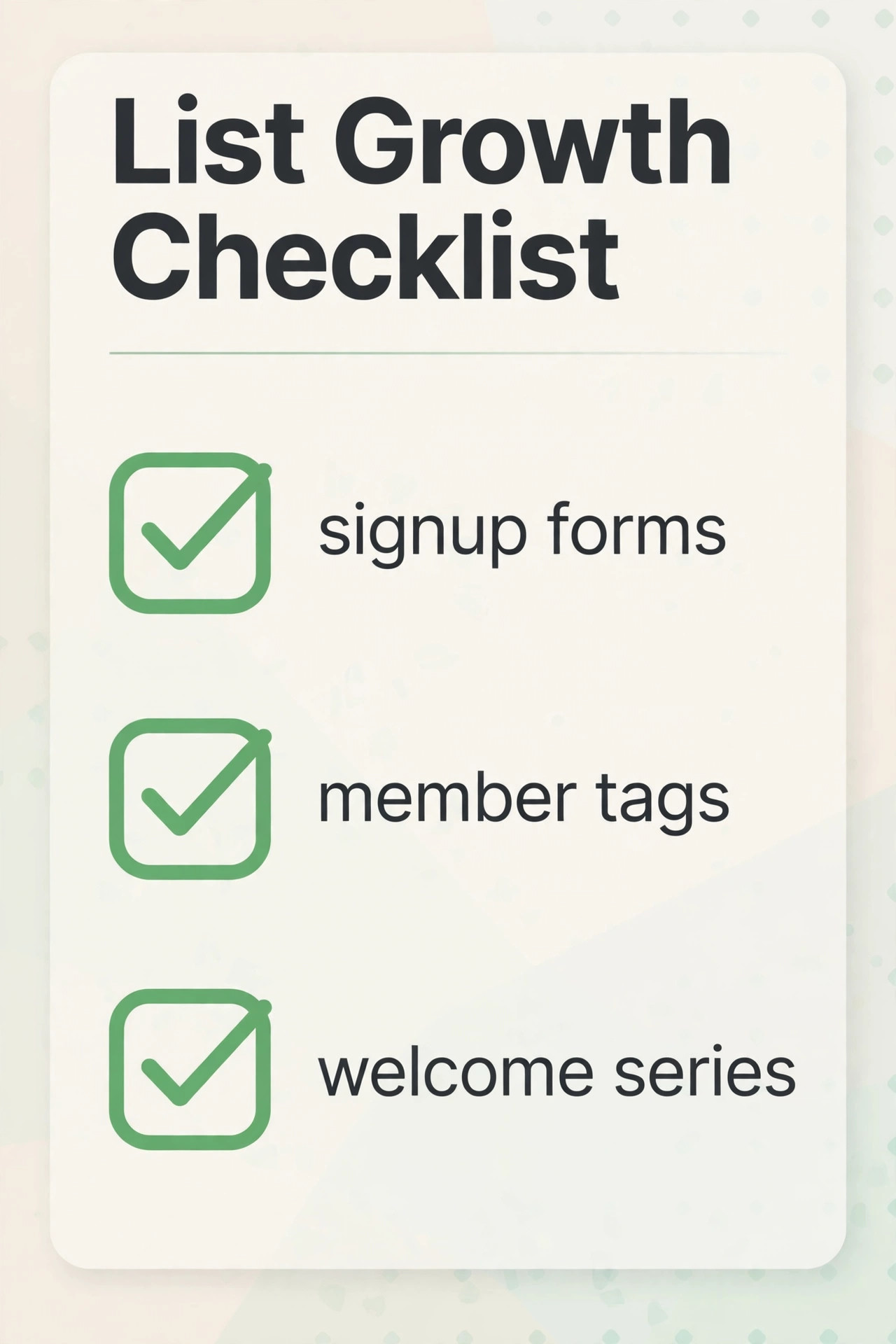
A good tool cannot fix a weak list. Work through this checklist in your first month, and your emails will reach people who asked to hear from you, which protects delivery and keeps complaints low. The best email marketing software for gyms still needs clean data to work well.
– Add a signup form to the trial booking page, the class schedule page and the front desk tablet, with one clear consent box. – Tag every signup by source, so trial visitors, class guests and members receive different first messages. – Send a welcome series in the first week, with class times, what to bring and a simple reply prompt for questions. – Ask new members for their main goal at signup, then segment future offers by fat loss, strength, classes or general fitness. – Clean the list every quarter, removing hard bounces and long term non openers after one re-engagement attempt. – Test subject lines on a small group first when a launch matters, and keep the winner for the full list. – Record every class promo result, noting which class, time and offer produced bookings, not just opens. – Give lapsed members one clear return offer, then stop mailing them if they ignore two win-back attempts.
What a gym really pays each month
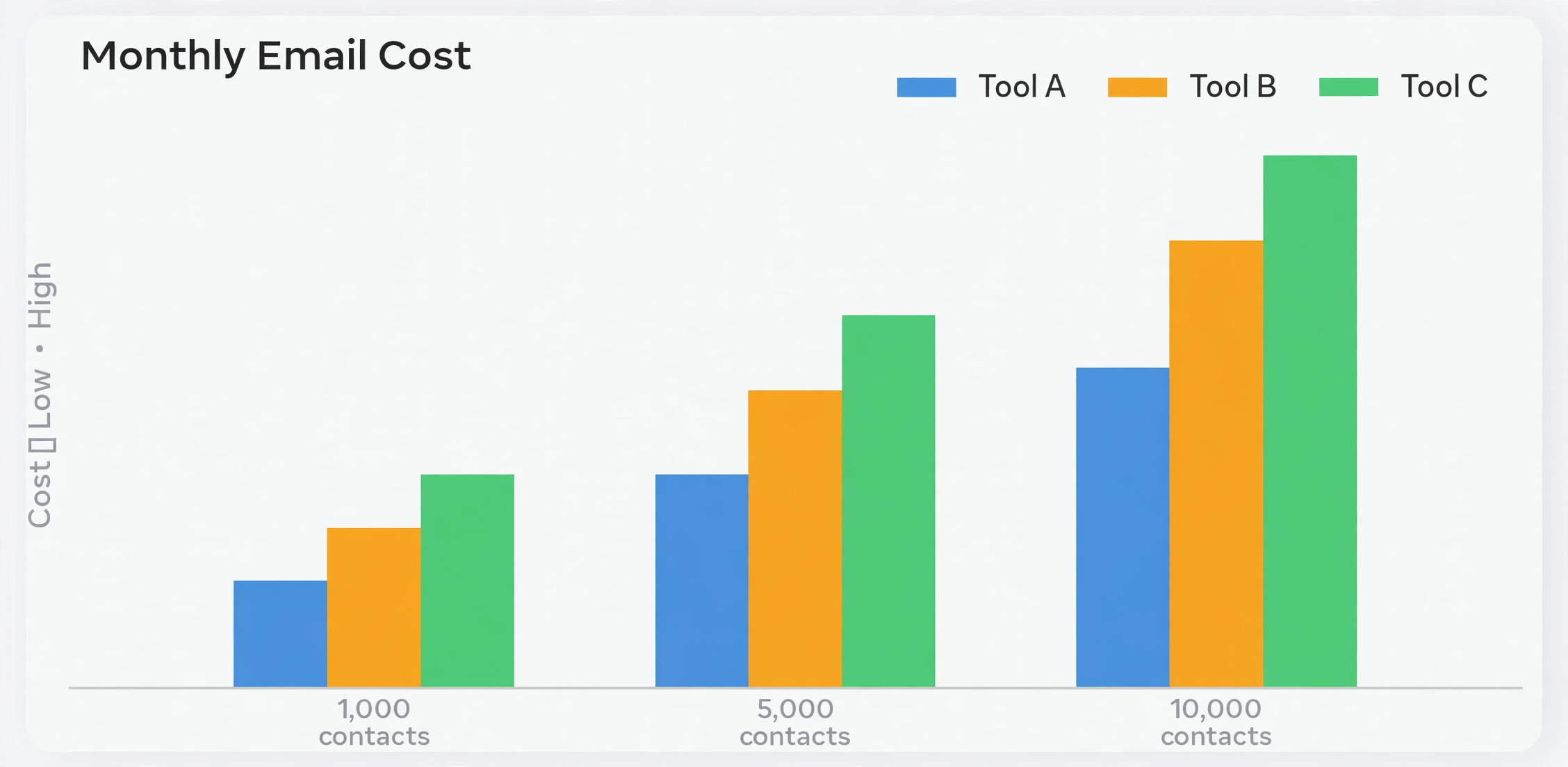
Start with the subscription, then add the costs that hide behind it. A gym on Mailchimp at $13 a month for a small list may pay $75 a month at 5,000 contacts on the Essentials plan, while Flodesk Lite at a similar size is reported around $52 a month. Brevo can stay cheaper for a large list mailed rarely, because it charges for sends, not contacts. The right comparison is always at your own list size and send frequency, never at the headline entry price.
Staff time is the second cost. A tool that takes two hours to build a class email costs more than a tool that takes twenty minutes, even if the subscription is cheaper. Count the hours for one month of sends, including design, list checks and reporting, and price that time at the hourly rate of whoever does it. Simple tools often win this test for small gyms.
Add integration and SMS costs next. A booking integration may be free on one plan and paid on another, and SMS for last minute class places can add a meaningful monthly charge if used weekly. Check whether automation, landing pages and extra users are included, or whether each one pushes you to a higher tier. A quote that looks cheap at signup can double once the features you need are added.
Finally, protect against list growth surprises. Set a budget ceiling for the year, note the price at 1,000, 5,000 and 10,000 contacts, and review it each quarter. If growth is fast, a tool priced by sends or with a gentler contact ladder may save hundreds over a year. If growth is slow, a richer tool at a low tier may be better value than a cheap tool that wastes staff time.
Segmentation deserves more attention than template choice, because a gym list contains at least four different audiences. New trial visitors need reassurance and a simple first step. New members need onboarding and class guidance. Regular members need schedule changes and community news. Lapsed members need a reason to return that feels personal, not generic. A tool that makes those segments easy to build and keeps them updated automatically will outperform a beautiful tool that mails everyone the same message every week.
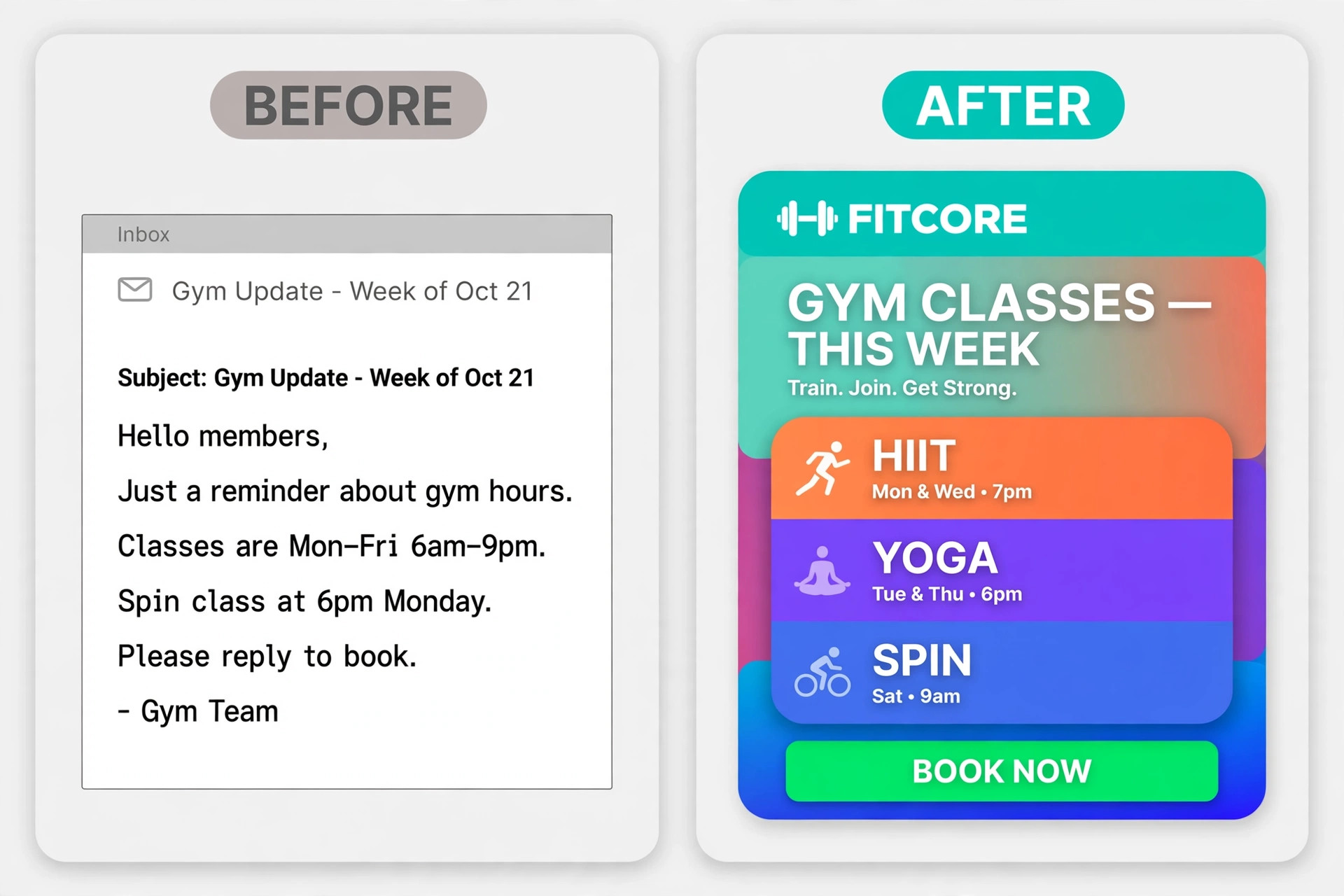
Class schedule emails work best when they are short, visual and sent at a consistent time. Members should see the week ahead, spot a new class or a changed time, and book with one tap. A long newsletter that buries the schedule below news, offers and stories will be skimmed and forgotten. Keep the schedule at the top, keep the booking link visible, and move longer stories below the fold where interested members can still find them.
Trial follow up is where many gyms lose revenue without noticing. A trial visitor who receives no message after a first visit may assume the gym does not care, while a visitor who receives a helpful message the same evening is far more likely to return. Build a three message trial series that thanks the visitor, answers common questions about what to bring and what to expect, and offers a clear next step with a deadline. Track how many trial visitors convert, and adjust the timing until conversion improves.
Seasonal campaigns need planning, not panic. January, back to school and summer shape gym demand, and a gym that plans those campaigns a month ahead can prepare templates, offers and landing pages without rushing. A gym that starts a January campaign on January second will send weaker messages and miss the early decision window. Use the quiet weeks to build the next campaign, test subject lines on a small group, and prepare the follow up series before launch day arrives.
Deliverability is a quiet risk for gyms that buy lists or mail old contacts. Purchased lists, old trial lists and inactive addresses all harm sender reputation, and a damaged reputation sends even good messages to spam. Never buy a list, always use confirmed signup where possible, and remove addresses that bounce repeatedly. A smaller, engaged list will always outperform a large, stale list on bookings, even though the larger list looks better in a report.
Reporting should focus on bookings, not just opens. Open rates are inflated by privacy changes on phones, and click rates alone do not show revenue. Track how many class bookings, trial bookings and membership starts follow each campaign, and compare campaigns on that basis. A class promo with modest opens but twenty bookings beats a beautiful newsletter with high opens and no bookings, and the gym should spend more time repeating the first kind of message.
Staff roles inside the email tool matter for a busy gym. The owner may need full access, a front desk team member may need sending rights for schedule updates, and a coach may need access only to class announcements. Setting those roles in advance prevents accidental sends to the wrong segment and protects the list from well meaning edits. Review access when staff leave, and keep one person responsible for list hygiene and automation health each month.
Integration with booking and payment systems saves hours each week, but only if the connection is tested. A signup that should enter the trial segment, a payment that should trigger a welcome series, and a cancellation that should stop renewal reminders all need to work without manual exports. Test each flow with a real signup and a real payment during the trial, and document which fields flow across. A broken integration that nobody notices can quietly send the wrong message to hundreds of members.
Finally, respect the member inbox as a trust asset. Every message should earn its place by being useful, timely or genuinely interesting. A gym that mails only when it has something worth saying will keep open rates high and complaints low for years. A gym that mails daily discounts will train members to ignore it, and rebuilding that trust takes far longer than building it in the first place. Send less, but send better, and let automation handle the timely messages that people actually need.
Choosing the best email marketing software for gyms is not a one time decision, because list size, class mix and staff capacity all change over a year. A tool that fits a 500 member list may strain at 3,000 members, and a tool that suits a class heavy studio may frustrate an open gym that rarely sends class promos. Review the choice each year against real send volume, automation use and staff time, and be willing to switch if the fit has changed. The best email marketing software for gyms in year one is not automatically the best choice in year three, and a planned review prevents a painful forced switch later.
Re-engagement campaigns deserve a separate plan, because a list that only grows and never shrinks will eventually harm delivery. Every six months, identify members who have not opened in ninety days, send them one honest message asking whether they still want gym updates, and remove those who do not respond. This keeps the list engaged, reduces cost on contact based plans, and improves the chance that important messages reach the inbox. A smaller list of people who actually read gym emails will always produce more bookings than a large list of people who stopped paying attention long ago.
Mistakes that quietly shrink a gym list
One common mistake is mailing the whole list with every message. Trial visitors do not need member only offers, and long term members do not need beginner guides. Untargeted mail drives unsubscribes, and each unsubscribe is a lost chance to sell a renewal, a class pack or a personal training block later.
Another mistake is sending only when there is a sale. A list that hears from the gym only during promotions learns to ignore every message until a discount appears. A weekly class update, a member story or a simple training tip keeps the gym familiar, so a promotion lands with people who already trust the sender.
A third mistake is ignoring the signup source. A form that promises a free trial class should trigger trial information, not a generic newsletter. When the first message matches the promise, the new contact stays engaged. When it does not, the contact marks the mail as spam, which harms delivery for the whole list.
A fourth mistake is never cleaning the list. Old, bouncing and disengaged addresses drag down delivery rates and can push a gym toward spam filters. A quarterly clean, with one honest win-back message first, keeps the list smaller, healthier and cheaper to mail, since most tools charge by contact count.
How to test two finalists in fourteen days
Pick two finalists, not five. Import a small segment of engaged members, build the same welcome email in both tools, and send it to similar groups. Compare build time, mobile appearance and reporting clarity, not just open rates, since a small test cannot settle delivery differences. The tool your team builds faster in is often the tool you will actually use.
In week two, build one automation in each tool. A renewal reminder or a win-back series is a good test, because it exposes how easy it is to set triggers, add delays and exclude members who already renewed. If either tool needs a tutorial for a basic automation, that friction will repeat every month.
Check the signup flow on a phone during the trial. Visit the trial page, submit a test signup and read the welcome message as a member would. A broken form, a slow landing page or a welcome email that arrives hours late will cost trial conversions. Fix or reject the tool based on that real experience, not on the demo.
End the trial with a price check at three list sizes. Ask for the cost at your current size, at double that size and at the size you expect in a year. A tool that looks affordable now but jumps sharply at the next tier may still be the right pick, but you should choose it knowing the future cost, not discovering it later.
More Reading on Stratilyze
– Best Gym Management Software for Small Gyms – Best Fitness Class Booking Software for Studios – Best CRM Software for Fitness Coaches – Best Social Media Scheduling Tools for Gyms
Frequently Asked Questions About Gym Email Software
How much should a small gym pay for email marketing?
A small gym with under 1,000 contacts can often start free or for $12 to $25 a month. The bill rises with list size and automation needs, so check the price at 5,000 contacts too. A gym that mails weekly should budget for the tier that includes automation, not just sending.
Do gyms need automation, or is a weekly email enough?
A weekly email covers class updates, but automation covers money moments. Renewal reminders, trial follow up and win-back messages happen on dates that staff forget. Even two simple automations can recover memberships that a weekly blast alone would miss.
What is the best free option for a new gym?
Mailchimp free plan and Kit free plan both suit a new gym, with Mailchimp offering more templates and Kit offering a larger free subscriber allowance with limited automation. Pick based on whether design or subscriber headroom matters more in your first year.
How often should a gym email members?
Most gyms do well with one weekly update plus automated messages for trials, renewals and lapses. Daily promotions tire members fast. If you add a second weekly mail, make it useful, like a class tip or schedule change, rather than another discount.
Should a gym use SMS as well as email?
SMS works for urgent, short messages like a last minute class place or a same day offer. It costs more per message and annoys members if overused. Keep SMS for time sensitive alerts and email for stories, schedules and offers that need more detail.
Can email software connect to gym booking tools?
Many tools connect to booking, payment and CRM platforms, either directly or through an integration service. Check the exact connection for your booking system before buying, and test a signup flowing into the right segment during the trial.
The verdict for gym owners
Mailchimp remains the safest all round pick for most gyms, because it balances price, templates, segmentation and automation in a way that grows with the business. A gym that is unsure where to start can begin there, build a clean list, and add automation step by step without switching tools in six months.
Flodesk is the pick when design leads, Brevo is the pick when send volume drives cost, and ActiveCampaign is the pick when automation drives revenue. None of these is a bad choice. The costly choice is the tool that staff avoid using, because an unused platform sends no renewals, no win-back offers and no class promos at all.
Start with the job you send most, test two finalists for fourteen days, and check the price at three list sizes. Then commit, clean the list quarterly, and let automation handle the dates that people forget. That routine, more than any single feature, is what turns email into steady membership revenue.