
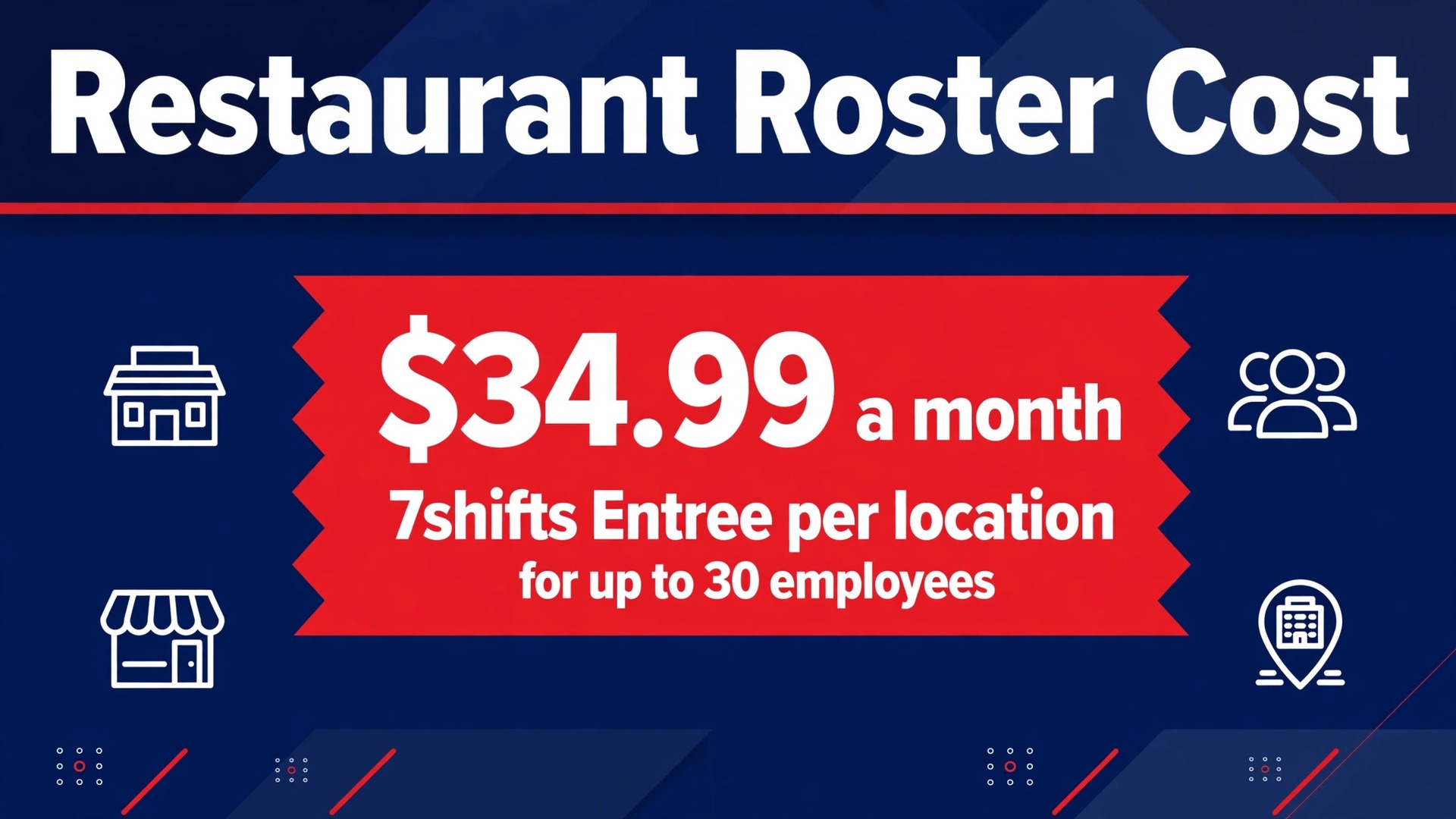
A restaurant owner who pays per employee watches the software bill rise with every hire, even when a new hire works only a few shifts per week. A restaurant owner who pays per location watches the bill stay flat while the team grows, then jump when a second site opens. That difference is the starting point for the cost of 7shifts for small business monthly, because 7shifts charges per location per month, not per employee. The plan you choose matters, but the number of sites you run matters more, and a small group can pay several times more than a single restaurant with a larger team.
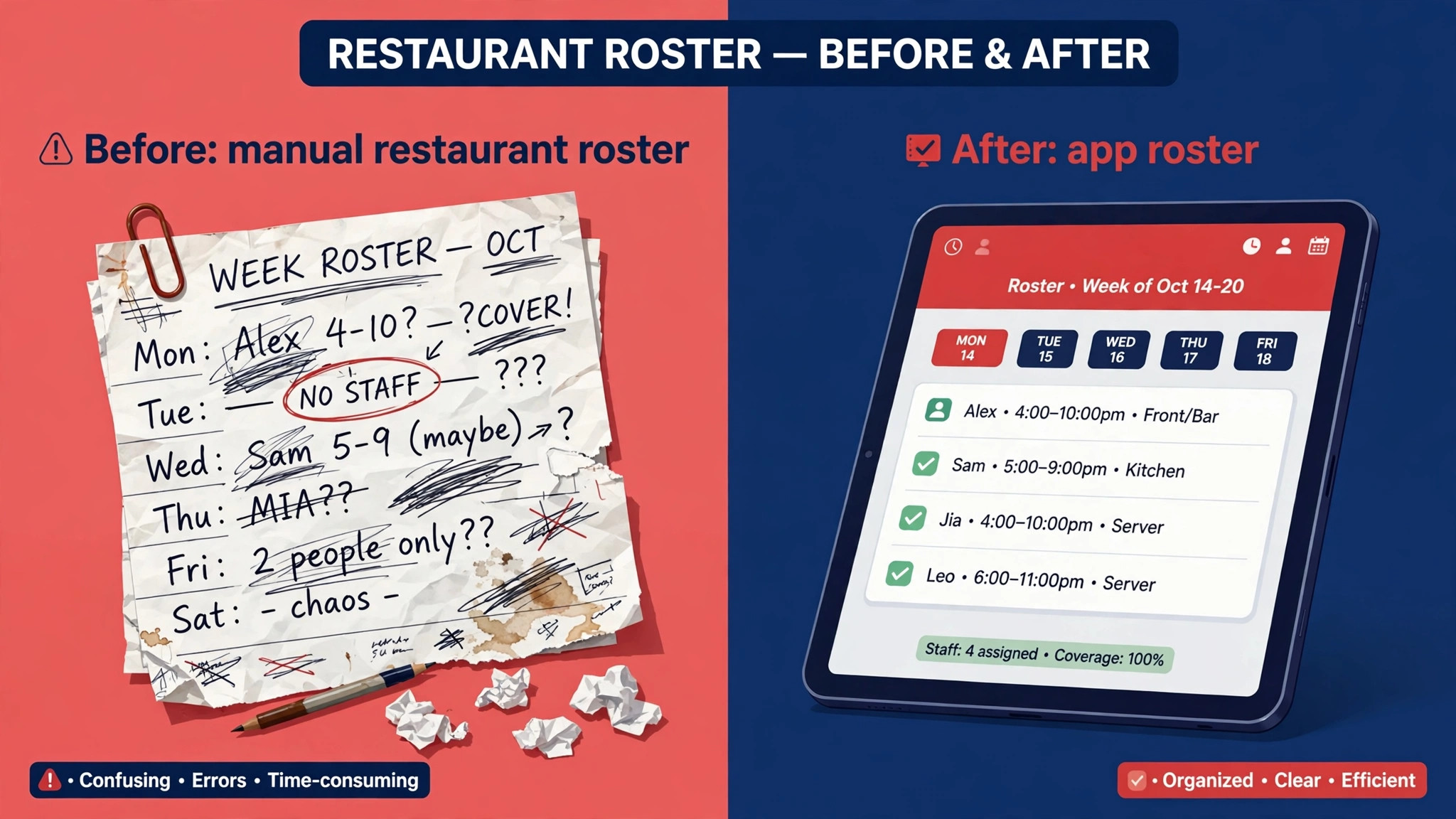
7shifts is built specifically for restaurants, which shows in its tools. It covers scheduling, time clock, timesheets, team communication, hiring, labour budgeting, sales forecasting, and payroll as an add-on, with point of sale connections that bring sales data into staffing decisions. Restaurant scheduling is not generic shift work, because demand swings by hour, by day, and by season, and because roles such as kitchen, floor, and bar have different skills and pay rates. Software that understands those patterns helps a manager build a roster that fits service, rather than a roster that merely fills slots.
Cost of 7shifts for Small Business Monthly, Plans and Location Rates
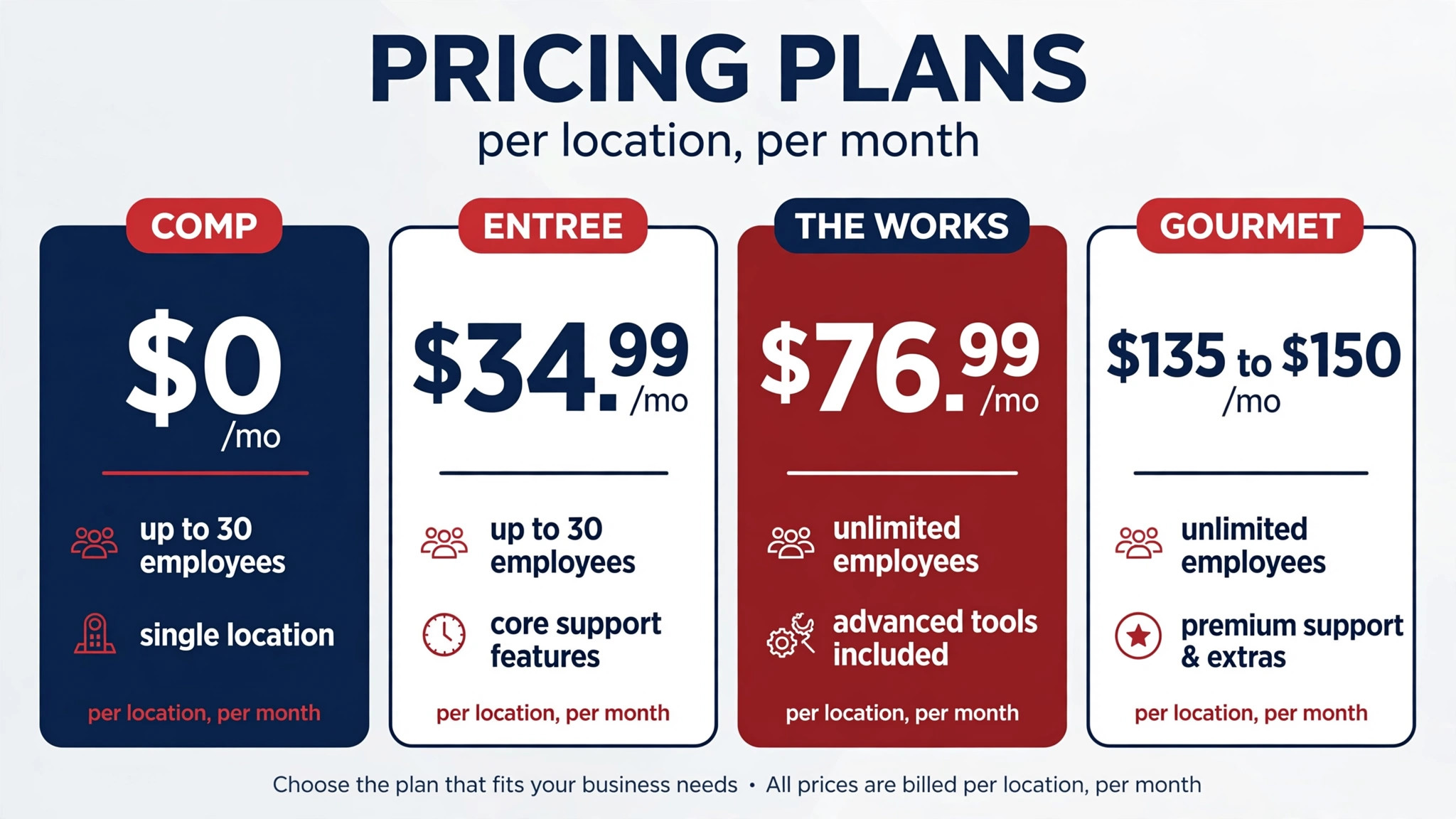
Reported 7shifts pricing lists four tiers priced per location per month. Comp is free for a single location with up to 30 employees in most listings, although some listings cap the free tier at 20 employees, so confirm the current free limit before relying on it.
Entree is reported at 34.99 dollars per location per month for up to 30 employees, The Works at 76.99 dollars per location per month for unlimited employees, and Gourmet at 135 dollars to 150 dollars per location per month for unlimited employees and unlimited locations in some enterprise listings. Some newer listings show a starting paid rate of 39.99 dollars per location per month, which may reflect a price update or a different billing term, so treat 34.99 dollars as the most widely reported Entree rate and confirm the live figure before budgeting.
The brief for this guide names the tiers as Compass, Entree, and Gourmet, and Compass here refers to the free Comp tier. Comp covers basic scheduling, time off and availability, time clock and timesheets, team chat, hiring tools, and point of sale integration for a single location. That free set is strong for a small restaurant testing whether staff will use an app, because it already covers the daily roster and clock job. The limits that force a paid move are usually employee count, location count, or the need for budgeting and forecasting tools that sit on paid tiers.
| Plan | Per location per month | Employee limit | Best fit |
|---|---|---|---|
| Comp, free tier | 0 dollars | Up to 30 employees, single location | A small single restaurant testing scheduling |
| Entree | 34.99 dollars | Up to 30 employees | A single restaurant that needs budgeting and reporting |
| The Works | 76.99 dollars | Unlimited employees | A busy restaurant that needs forecasting and compliance tools |
| Gourmet | 135 dollars to 150 dollars | Unlimited employees | A group or enterprise operation that needs automation and planning |
Entree adds schedule templates, unlimited scheduling, and that step is central to the cost of 7shifts for small business monthly, labour budgeting and sales forecasting, paid time off and overtime tracking, sales and labour reporting, and read receipts on top of the free tier. Those tools change roster decisions from guesswork to numbers, because a manager can see labour cost against expected sales before publishing a week. A restaurant with tight margins will use labour budgeting weekly, while a very small restaurant with stable demand may find the free tier sufficient for longer. Entree is therefore the first paid tier most single restaurants should price seriously.
The Works adds compliance management tools, a manager logbook, labour forecasting, shift feedback, and related operational tools on top of Entree, with unlimited employees. Forecasting is the key step here, because it predicts staffing needs from sales patterns rather than only reporting past labour cost. A busy restaurant with variable covers will benefit from forecasting, while a quiet restaurant with predictable trade may not use it enough to justify more than double the Entree price. The Works is a middle tier that suits growth, yet it is often skipped by small restaurants that jump straight from Entree to a group level decision.
Gourmet adds task management, auto scheduling, operational planning tools, an enterprise dashboard, and predictive scheduling, with dedicated account support for larger groups in some listings. That tier is built for multi site groups and larger operations where central control, automation, and planning across sites matter daily. A single restaurant rarely needs Gourmet, because task management and predictive scheduling solve problems that appear at scale rather than at one site. A group with several sites, however, may find Gourmet valuable precisely because it standardises operations across locations.
A Single Restaurant, Worked Out in Full
A single restaurant on Comp pays zero dollars per month, provided it stays within the free employee limit and operates one location. That free tier covers scheduling, clock, timesheets, chat, and hiring, which is enough for a small restaurant to replace paper rosters and group messages. The risk is the employee cap, because a restaurant with 28 staff sits close to a 30 person limit, and seasonal hiring can cross it quickly. Count all staff on record, including part time and casual workers, and plan the Entree move before a busy season forces it.
A single restaurant on Entree pays 34.99 dollars per location per month, which totals 419.88 dollars per year. If the live paid starting rate is instead 39.99 dollars, the same restaurant pays 479.88 dollars per year, a difference of 60 dollars per year that shows why confirming the current rate matters. Entree gives a single restaurant labour budgeting, forecasting basics, reporting, and overtime tracking for a modest monthly fee that is smaller than one hour of unnecessary labour on a busy night. That comparison is the right test, because scheduling software should be judged against labour spend, not against its own price alone.
A single restaurant on The Works pays 76.99 dollars per location per month, which totals 923.88 dollars per year. The gap over Entree is 42 dollars per month, or 504 dollars per year, which buys forecasting, compliance tools, a manager logbook, and shift feedback. A busy restaurant with variable covers and several managers may use those tools weekly, while a quiet restaurant may use them rarely. Test forecasting with real sales data during a trial, and check whether managers actually read the logbook and feedback, before committing to the higher tier.
A single restaurant on Gourmet pays 135 dollars per location per month at the lower reported rate, which totals 1,620 dollars per year, or 150 dollars per month at the upper reported rate, which totals 1,800 dollars per year. Some enterprise listings describe Gourmet as quote based for larger groups, so a single restaurant may receive a custom figure rather than a standard rate. Either way, Gourmet is a large step for one site, and it should be chosen only when task management, auto scheduling, and operational planning solve daily problems that Entree and The Works cannot. Most single restaurants should stay on Entree or The Works and revisit Gourmet only when a second site appears.
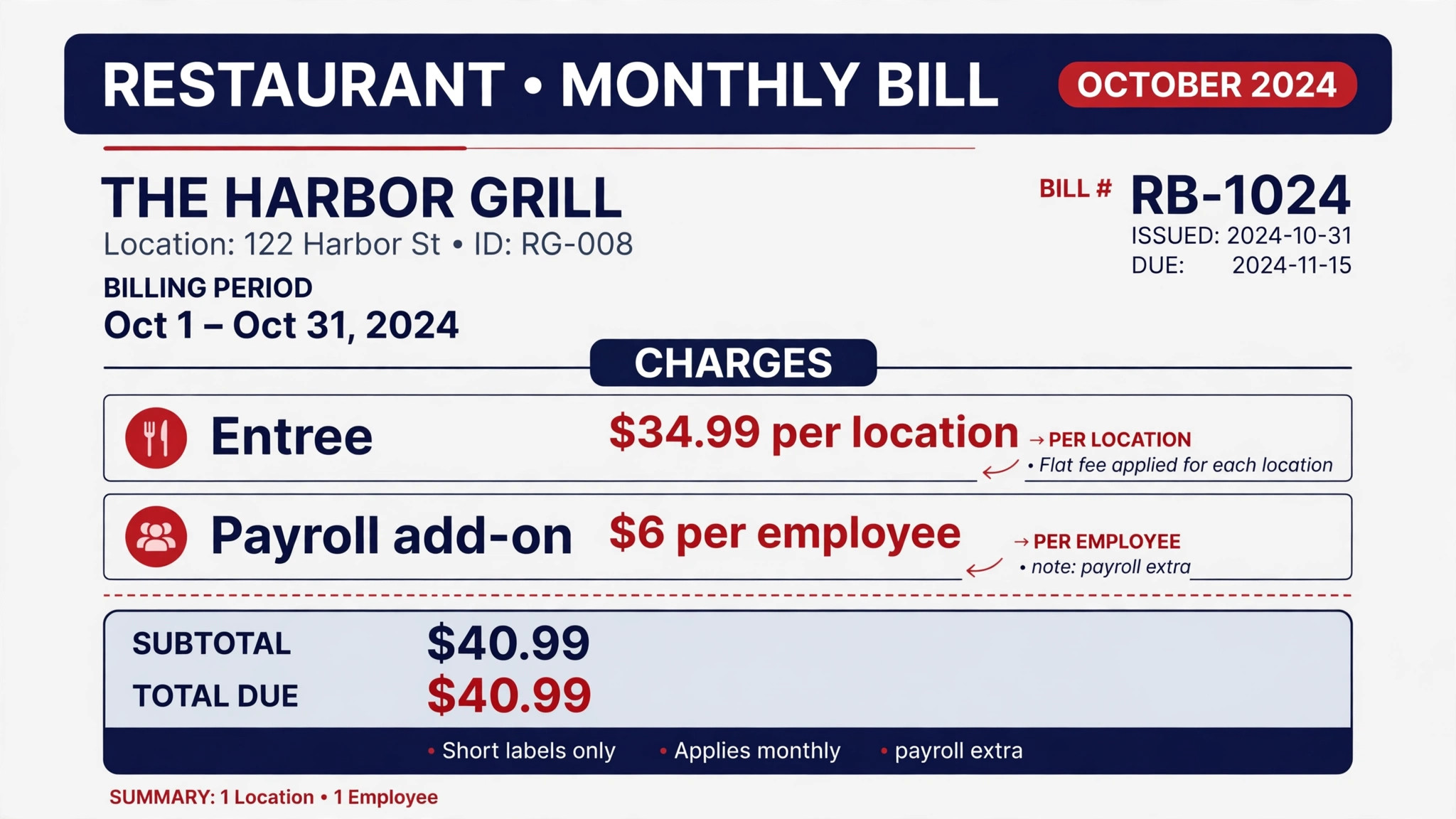
Payroll changes the cost of 7shifts for small business monthly for a single restaurant substantially. Reported 7shifts Payroll pricing is 39.99 dollars per location per month plus 6 dollars per employee. For a single restaurant with 20 employees on Entree, the combined monthly total is 34.99 dollars for Entree plus 39.99 dollars payroll base plus 120 dollars for 20 employees, which equals 194.98 dollars per month. The same restaurant on Gourmet at 135 dollars pays 294.98 dollars per month with payroll. Those combined figures are the honest budgets for a restaurant that wants scheduling and payroll together, and they show why payroll must be priced alongside the base plan.
A Three Site Group, Where Location Fees Multiply
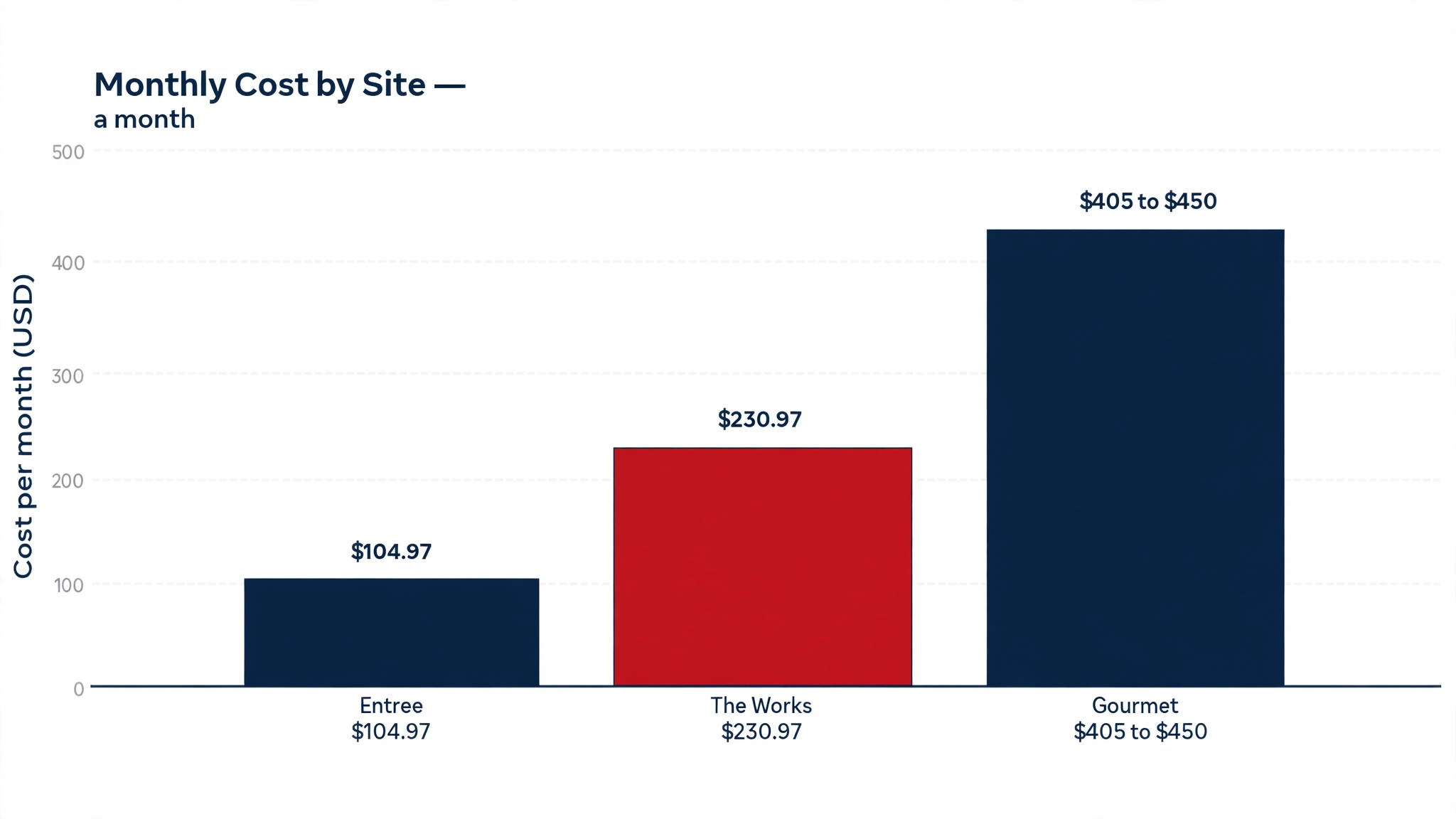
A three site group multiplies the per location price by three, while staff numbers within each site do not raise the subscription on tiers with unlimited employees, and only matter on capped tiers. On Entree at 34.99 dollars per location per month, three sites cost 104.97 dollars per month, or 1,259.64 dollars per year. On The Works at 76.99 dollars, three sites cost 230.97 dollars per month, or 2,771.64 dollars per year. Those totals stay the same whether each site has 15 staff or 28 staff, provided the Entree cap is not crossed, which is a clear advantage for staff heavy restaurants.
On Gourmet at 135 dollars per location per month, three sites cost 405 dollars per month, or 4,860 dollars per year. At 150 dollars per location, three sites cost 450 dollars per month, or 5,400 dollars per year. If Gourmet is quoted custom for a group, the group total may differ from those multiplications, so ask for a group quote that states the per location rate and any group discount explicitly. A group should not budget Gourmet by multiplying a single site web rate without confirming whether a group rate applies, because enterprise pricing often differs from standard list rates.
Payroll for a three site group needs the same written confirmation as for Homebase style groups, because the base fee may apply per location. As an illustration only, payroll at 39.99 dollars base plus 6 dollars per employee per site would add a large amount across three sites with 20 employees each. Do not use that illustration as a quote. Ask 7shifts to price payroll for your exact site count and headcount, with the base fee scope stated, before finalising a group budget. The scheduling subscription alone is easy to calculate, while payroll scope is where group budgets most often go wrong.
Location pricing also affects expansion planning inside the cost of 7shifts for small business monthly for restaurant groups. Opening a small second site with only eight staff still adds a full second location fee, while hiring eight more staff at the existing site adds nothing on unlimited tiers. That incentive suits restaurants that grow by adding staff to a busy site, and it penalises groups that expand through many small sites. A group planning several small sites should therefore compare per location pricing with per user alternatives on the same site plan, because the winner depends on sites per staff member rather than on headline rate alone.
Annual Terms, Trials, and What to Confirm
Paid 7shifts plans have been reported with a 14 day trial, which is shorter than some competitors offer, so a restaurant should plan the trial carefully. Use the trial with a real roster week, real sales data, and a real pay period, not with sample shifts. Build a roster from a sales forecast, publish it through the app, record clock-ins, approve timesheets, and export the result for payroll. A trial that only tests roster design will not reveal whether forecasting, reporting, or payroll export actually save time during a busy service.
Billing term and discount handling also need confirmation, because some listings show a 10 percent annual discount for certain tiers while others show monthly rates only. Ask whether your quoted rate assumes monthly or annual billing, whether an annual discount applies, and what happens if a site closes mid term. A group that opens a seasonal site should ask whether charges pause during closure, because paying a full location fee through a closed period wastes money. Get billing term, discount, and closure handling in the same written quote as the per location rate.
Tip pooling is another feature that can affect the total, because it has been reported as a 24.99 dollar per location per month add-on in some listings. A restaurant that pools tips should confirm whether tip pooling is included in its chosen tier or charged separately, and whether it applies per location. A three site group adding tip pooling at that rate would pay an extra 74.97 dollars per month, which is large enough to change a tier comparison. List every operational feature you need, including tip handling, before choosing a tier, rather than discovering an add-on after launch.
Integration scope also belongs in the pre purchase checklist. Confirm which point of sale systems connect at your tier, whether sales data flows automatically into forecasting and labour budgeting, and whether payroll export matches your payroll provider without manual fixes. A forecasting tool that needs manual sales entry will not save manager time, and a payroll export that needs manual correction every period will create the very admin the software was meant to remove. Test both connections with real data during the trial.
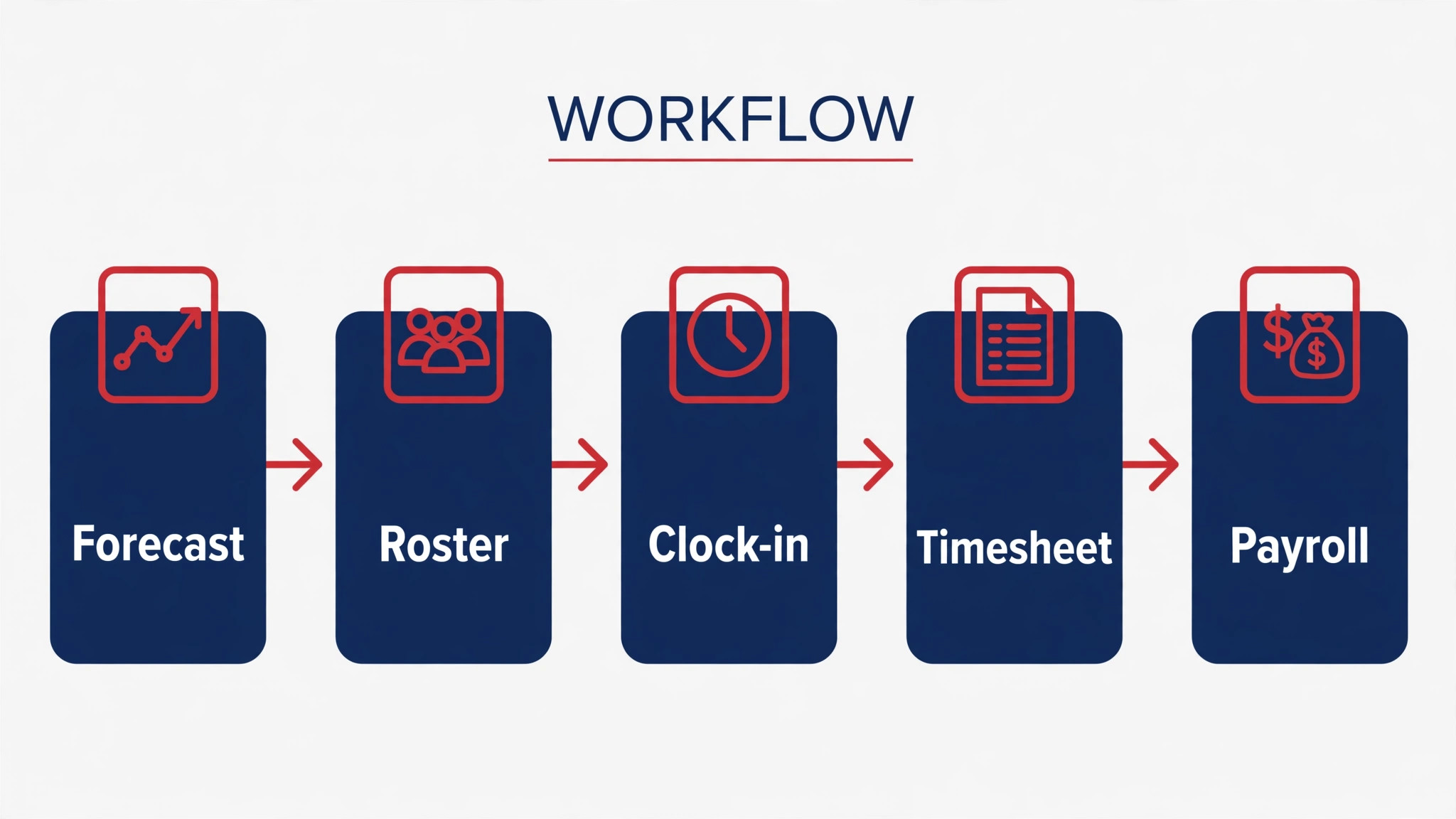
Payroll is the largest separate cost inside the cost of 7shifts for small business monthly, as shown above, because it adds a base fee plus a per employee charge on top of a flat location subscription. A restaurant that budgets only for scheduling will underestimate the combined total by more than 100 dollars per month for a 20 person team. Price scheduling and payroll together from the start, and compare that combined total with other scheduling plus payroll combinations on the same basis. The combined figure is the only fair comparison for a restaurant that wants one system for both jobs.
Add-ons form a second hidden group, including tip pooling where charged separately, task management on lower tiers, and any premium communication or analytics modules. Each add-on may look small per location, yet a group multiplies every add-on by site count. A 24.99 dollar add-on across three sites costs 74.97 dollars per month, which exceeds the entire Entree subscription for two sites. Audit add-ons per site, switch off modules that only one site uses unless that site justifies the group cost, and require a named owner for each add-on that stays.
Hardware and setup form a third group. Most restaurants can use staff phones for clock-ins and scheduling, yet a restaurant that wants a dedicated clock tablet at each entrance may face device costs. Setup time also matters, because entering staff, roles, pay rates, availability, and point of sale connections takes hours for a busy restaurant. Assign one manager to own setup, test pay rules with a small group first, and keep the old roster method for one pay period as a backup. That caution prevents a payroll error during the first live week, when staff trust in a new system is fragile.
Manager adoption is a fourth cost that is easy to overlook. Scheduling software saves time only when managers publish rosters early, staff check the app, and shift swaps follow the system rather than private messages. A restaurant that launches 7shifts without training will see staff miss messages, call the manager anyway, and clock in late, which recreates old workload in a new app. Plan a launch week, publish a simple guide for swaps and clock-ins, and review roster publication time and late clock-ins weekly for the first month.
Choosing the Right Tier for a Restaurant
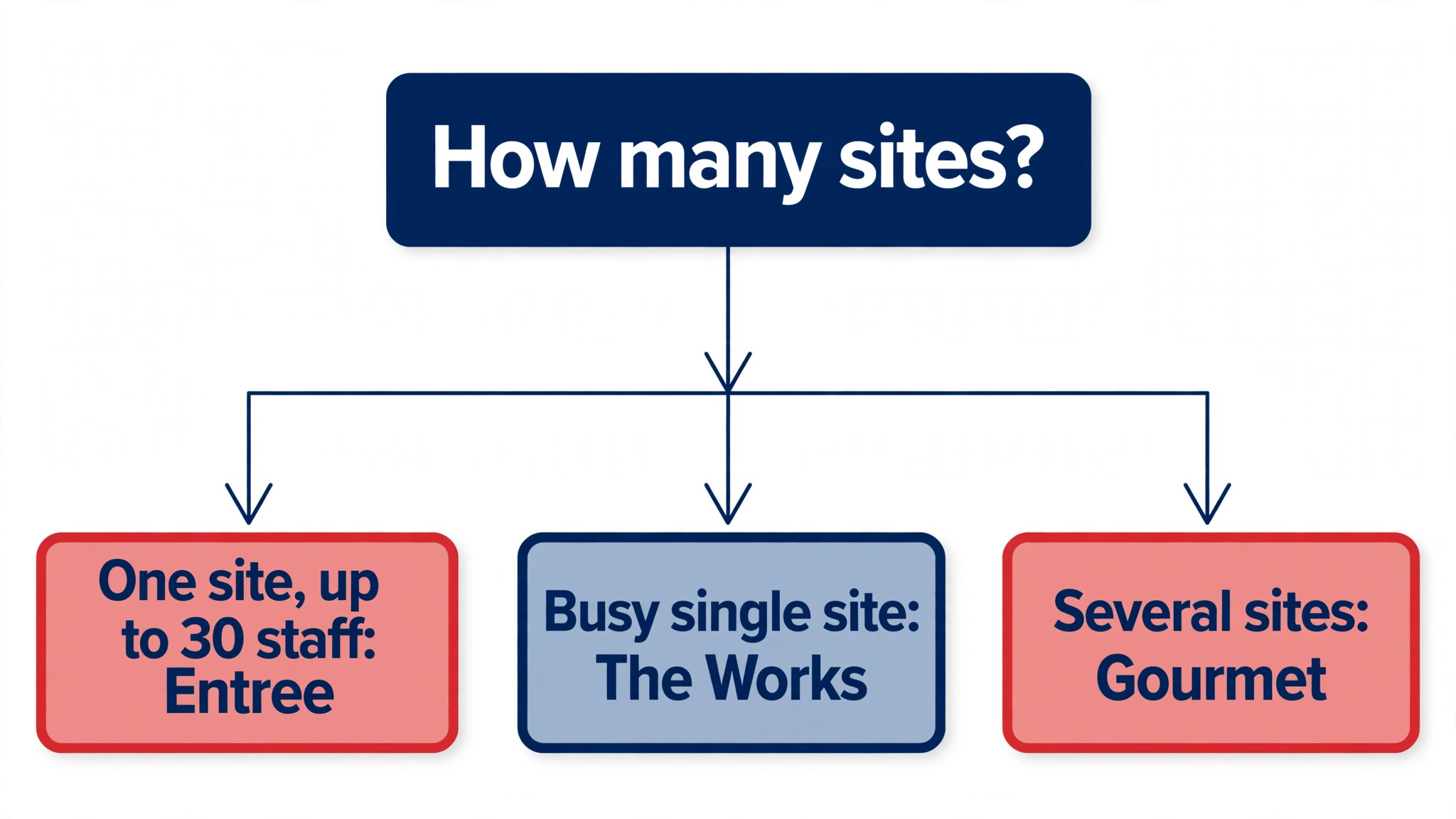
Start with site count and staff count per site when you judge the cost of 7shifts for small business monthly, because those numbers set the price structure immediately. A single restaurant with 20 staff fits Comp or Entree comfortably, while a single restaurant with 35 staff exceeds the Entree cap and needs The Works or Gourmet for unlimited employees. A three site group with 20 staff per site fits Entree on headcount, yet may need Gourmet for central planning and automation across sites. Write down sites and staff per site before comparing features, because that table already narrows the tier choice.
Next, list the weekly pains that cost money in a restaurant. Labour overspend on quiet shifts points to budgeting and forecasting, payroll disputes point to accurate clock and timesheet tools, and inconsistent service points to task management and manager logbooks. Entree covers budgeting and reporting, The Works adds forecasting and compliance, and Gourmet adds task management and automation. Match the tier to the pain, not to the feature list that looks most complete in a demo, because an unused feature is wasted money every month.
Test the chosen tier with a full service week, including a busy Friday, a quiet Tuesday, and a staff absence that forces a swap. Check whether the roster fitted sales, whether labour cost stayed within budget, whether clock-ins matched scheduled shifts, and whether timesheets exported cleanly. Ask kitchen and floor leads whether the app helped them, not only whether managers liked the dashboard. A tier that managers love but staff ignore will fail, because restaurant scheduling depends on hourly staff actually opening the app.
Review the plan every quarter, because staff numbers, site count, and sales patterns change with seasons. A restaurant that grows from 28 to 35 staff will outgrow Entree, while a group that closes a site should remove that location promptly. A quarterly review that checks locations billed, staff per site, add-ons active, and labour against sales takes little time and prevents paying for a closed site or an unused module. When you review the cost of 7shifts for small business monthly on that cycle, the subscription stays tied to the restaurant as it actually trades.
Budgeting the First Year, Restaurant and Group Examples
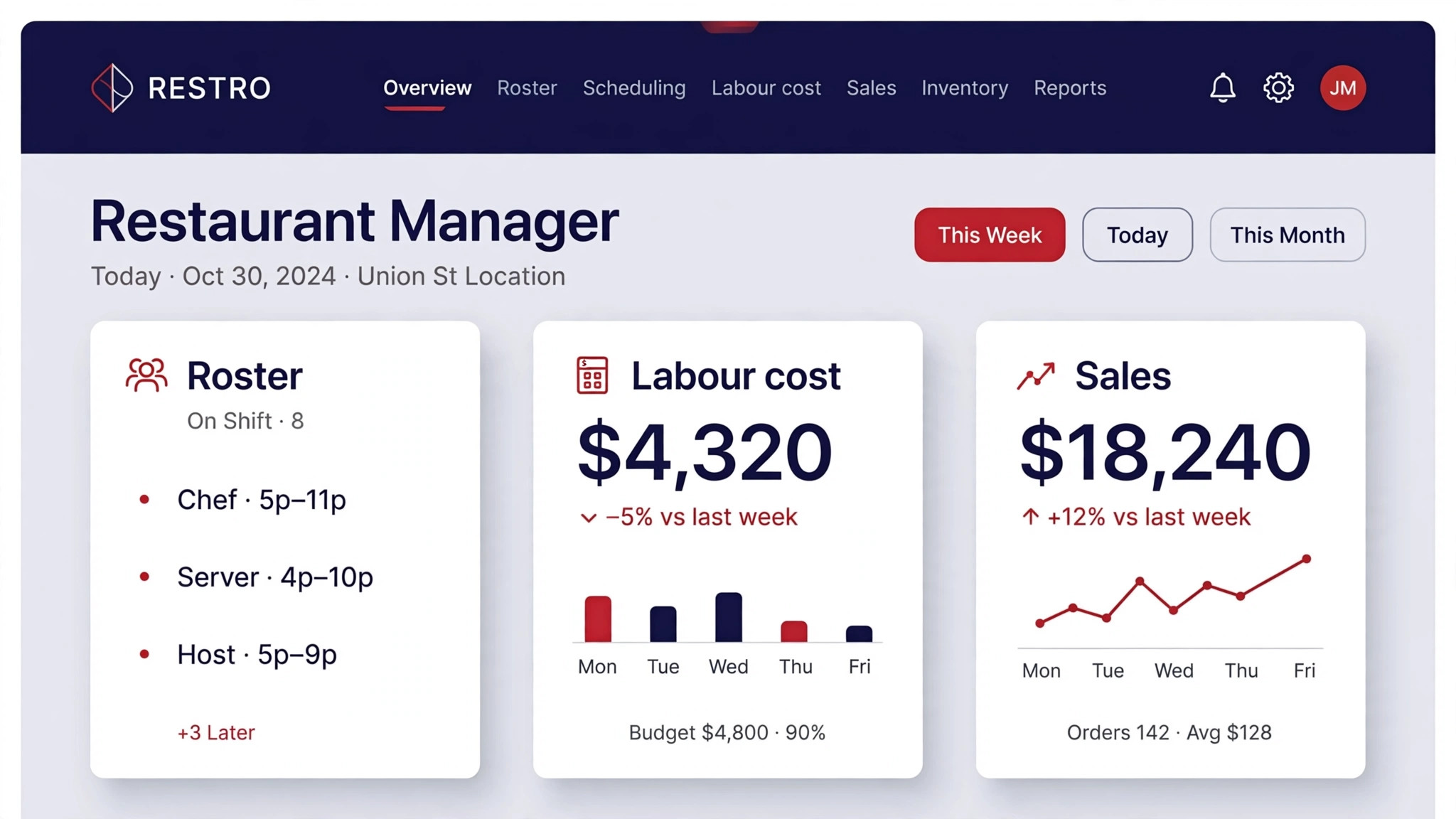
A single restaurant with 20 staff on Entree without payroll pays 34.99 dollars per month, or 419.88 dollars per year. Add payroll at 39.99 dollars base plus 120 dollars for 20 employees, and the monthly total rises to 194.98 dollars, or 2,339.76 dollars per year. That combined total is a realistic first year budget for a restaurant that wants scheduling, clock, timesheets, and payroll in one system. Compare it with labour spend, because a restaurant paying 20 staff will spend far more on wages in a week than on software in a month.
The same restaurant on The Works without payroll pays 76.99 dollars per month, or 923.88 dollars per year. Add payroll and the monthly total rises to 236.98 dollars, or 2,843.76 dollars per year. The extra 42 dollars per month over Entree buys forecasting, compliance tools, and a manager logbook, which pay when they prevent overstaffing or a compliance error. Track labour cost as a percentage of sales before and after the upgrade, and keep The Works only while that percentage improves or manager time falls clearly.
A three site group with 20 staff per site on Entree without payroll pays 104.97 dollars per month, or 1,259.64 dollars per year. On Gourmet at 135 dollars per location, the same group pays 405 dollars per month, or 4,860 dollars per year, before payroll and add-ons. The gap between Entree and Gourmet for three sites is 300.03 dollars per month, which must be justified by automation, task management, and central planning benefits across all three sites. A group should pilot Gourmet at one site first, measure task completion and roster time, and roll it out only when the pilot shows a clear gain over Entree.
A seasonal restaurant should budget for peak and quiet scenarios separately. A restaurant with 30 staff in summer and 18 staff in winter fits Entree all year on headcount, yet labour patterns differ sharply by season. Model summer roster cost, winter roster cost, and payroll totals for each season, and ask how site charges apply during any closed period. That scenario method keeps cash flow realistic and prevents a quiet month subscription from feeling like a surprise when it was actually a fixed location fee.
Mistakes That Inflate the Bill
The most common mistake in judging the cost of 7shifts for small business monthly is choosing Gourmet for a single restaurant that only needs Entree. Task management and predictive scheduling sound valuable, yet a single site with stable trade and one manager may use them rarely. The extra 100 dollars per month over Entree for a single site buys features that sit idle, while the same money could fund staff training or marketing. Start on Entree, measure labour and roster time, and upgrade only when a specific Gourmet feature solves a repeated weekly problem.
Another mistake is ignoring the employee cap on Entree when hiring seasonally. A restaurant with 28 permanent staff that hires ten seasonal workers will cross the 30 person cap during peak season, yet may budget Entree all year. That oversight can force a mid season upgrade to The Works, with setup disruption during the busiest weeks. Plan seasonal headcount in advance, and choose The Works from the start when peak headcount regularly exceeds 30 people, rather than upgrading under pressure.
A third mistake is budgeting for scheduling alone when payroll and tip pooling are also planned. Payroll for 20 staff adds 159.99 dollars per month on top of the base plan, and tip pooling where charged separately adds further cost per location. A restaurant that discovers those costs after launch may feel the whole system is expensive, even though scheduling alone remains cheap. Price the full stack before launch, including payroll, tip handling, and any add-ons, and compare the full stack with alternatives on the same basis.
Verdict, Which Plan Fits Which Restaurant
For a small single restaurant with up to 30 staff, Comp at zero dollars is a fair starting point, because it covers scheduling, clock, timesheets, and hiring without a monthly charge. Watch the employee cap and the need for budgeting tools, and move to Entree when labour budgeting or reporting becomes necessary. Free should be a testing ground for staff adoption, not a permanent home for a restaurant that needs labour control to protect margins.
For most single restaurants, Entree at 34.99 dollars per location per month is the sensible default, with a note to confirm whether the live rate is 39.99 dollars. It covers budgeting, reporting, overtime tracking, and schedule templates for a fee smaller than a single hour of wasted labour on a busy night. A single restaurant with stable to variable trade, up to 30 staff, and a need for labour visibility will find Entree hard to beat on value.
For busy single restaurants and growing groups, The Works at 76.99 dollars per location per month earns its price through forecasting, compliance tools, and unlimited employees. Choose it when peak headcount exceeds 30, when demand varies sharply, or when several managers need logbooks and feedback tools to run service consistently. Track labour as a percentage of sales after the upgrade, and keep The Works while forecasting and compliance benefits exceed the 42 dollar monthly uplift over Entree.
For multi site groups, Gourmet at 135 dollars to 150 dollars per location per month, or a custom group quote where applicable, may pay through task management, auto scheduling, operational planning, and central dashboards. A three site group pays 405 dollars to 450 dollars per month on standard rates, so the automation and planning tools must be used across all sites to justify the total. Pilot Gourmet at one site, measure task completion and roster time, and expand only when the pilot proves the gain.
Frequently Asked Questions
Is the free Comp tier enough for a small restaurant
Comp can be enough for a small single restaurant with up to 30 employees that mainly needs scheduling, clock-ins, timesheets, team chat, and hiring tools. It lacks labour budgeting, advanced forecasting, and some reporting tools that sit on paid tiers, so a restaurant with tight margins or variable demand will usually need Entree. Use Comp to test staff adoption, then move to Entree when budgeting or reporting becomes a weekly need.
How much does a single restaurant pay per month on Entree and Gourmet
A single restaurant pays 34.99 dollars per month on Entree in the most widely reported rate, or 39.99 dollars if the newer starting rate applies, while Gourmet is reported at 135 dollars to 150 dollars per month. Payroll adds 39.99 dollars base plus 6 dollars per employee, so a 20 person restaurant on Entree with payroll pays 194.98 dollars per month at the 34.99 dollar Entree rate. Confirm the live Entree rate and payroll scope before finalising a budget.
How much does a three site group pay per month
A three site group pays three times the per location rate, so Entree costs 104.97 dollars per month, The Works costs 230.97 dollars per month, and Gourmet costs 405 dollars to 450 dollars per month on standard reported rates. Staff numbers do not raise the subscription on unlimited tiers, so the group total depends on site count rather than headcount. Payroll and add-ons such as tip pooling sit on top and must be priced per site in writing.
Does hiring more staff raise the 7shifts subscription
Hiring more staff does not raise the subscription on unlimited tiers, because 7shifts charges per location, but it can raise the bill on capped tiers and always raises payroll cost where payroll is used. A restaurant that grows from 28 to 35 staff will outgrow Entree and need The Works or Gourmet, while payroll cost rises by 6 dollars per extra employee regardless of tier. Check the employee cap for your tier before a seasonal hiring round.
Should a seasonal restaurant choose a higher tier for peak headcount
A seasonal restaurant should choose a tier that covers peak headcount, not average headcount, because a mid season upgrade disrupts rosters during the busiest weeks. If peak headcount regularly exceeds 30 people, The Works with unlimited employees is safer than Entree, even though it costs more in quiet months. Model peak, average, and quiet headcount, and choose the tier that handles the peak without a forced upgrade.
When is Gourmet worth the extra money over Entree
Gourmet is worth the extra money when task management, auto scheduling, operational planning, and central dashboards solve daily problems across several sites. A single restaurant rarely needs those tools, while a multi site group that standardises operations, tracks tasks centrally, and automates rosters can benefit weekly. Pilot Gourmet at one site first, measure roster time and task completion, and expand only when the pilot shows a gain that exceeds the monthly uplift.