
Five projects, 500 tracked keywords and 100,000 crawled pages per month. Those three limits define Semrush Pro, and they also define the point where many small businesses discover whether an SEO tool earns its keep or simply reports numbers nobody acts on. Pro costs 139.95 dollars per month on month to month billing, or 117.33 dollars per month when billed annually. For a business that checks rankings once a month and writes one blog post a week, that price can feel steep. For a business that uses keyword research to choose every page it publishes, it can pay for itself with a single well ranked service page. This guide works out cost of Semrush for small business monthly for a solo marketer and a small team, bundle included.
This guide sets out the cost of Semrush for small business monthly use with the current SEO Classic tiers, Pro, Guru and Business, plus the extra seat prices that change team totals more than most buyers expect. It also covers the newer SEO plus AI Search bundles that Semrush now sells alongside the classic tiers, because a buyer who only compares Pro, Guru and Business may miss a bundle that fits better or costs more. Prices below reflect reports from October 2026, and Semrush changes its lineup often, so confirm the live pricing page before you subscribe.
Cost of Semrush for Small Business Monthly at a Glance
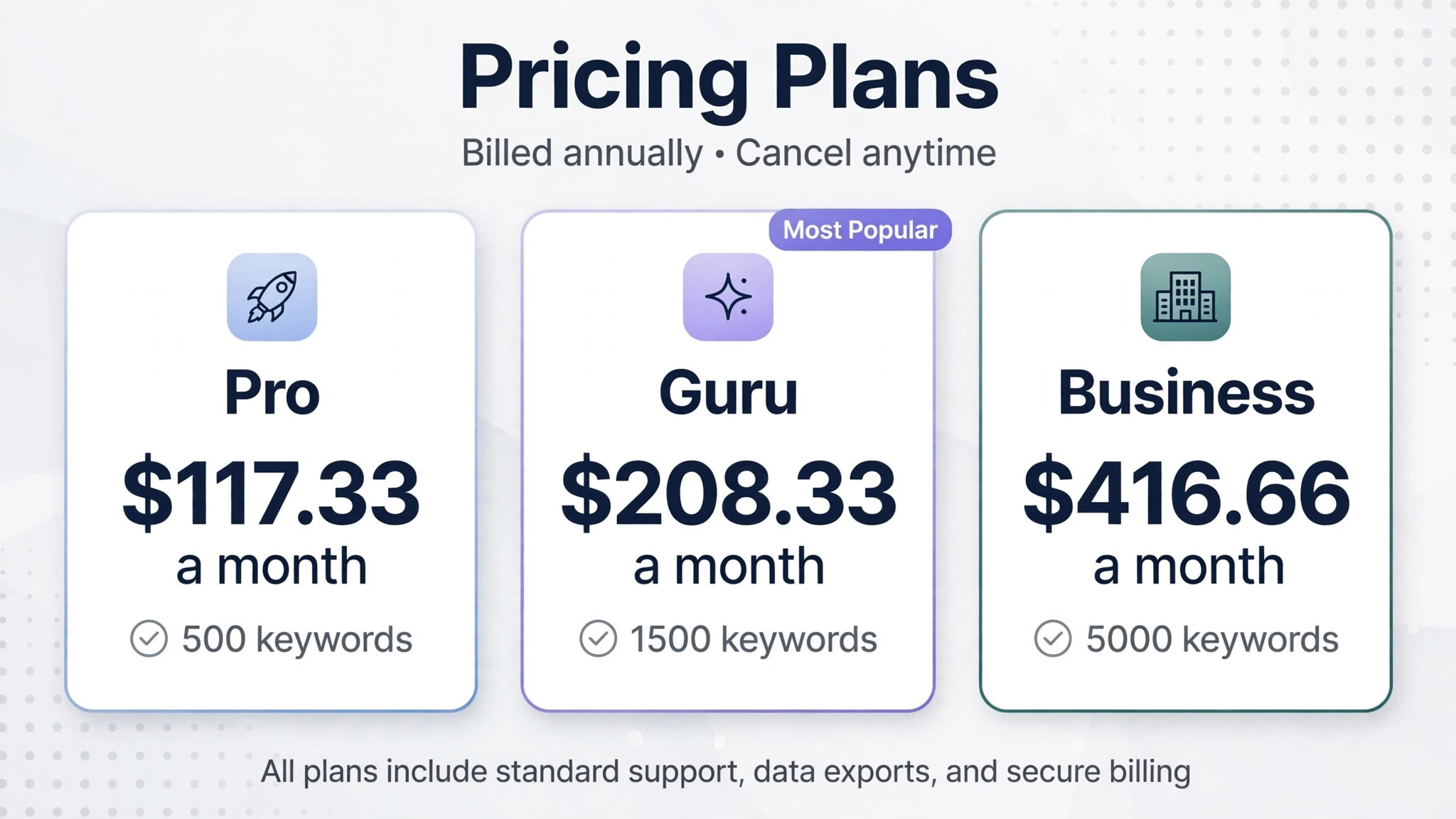
Semrush SEO Classic has three tiers. Pro costs 139.95 dollars per month, or 117.33 dollars per month billed annually, which totals 1,407.96 dollars per year. Guru costs 249.95 dollars per month, or 208.33 dollars per month billed annually, which totals 2,499.96 dollars per year. Business costs 499.95 dollars per month, or 416.66 dollars per month billed annually, which totals 4,999.92 dollars per year. Annual billing saves roughly 17 percent on each tier, equal to about two months free compared with paying month to month all year, but it requires the full annual amount up front.
Limits rise sharply with each tier. Pro allows 5 projects, 500 keywords tracked daily and 10,000 results per report. Guru allows 15 projects, 1,500 keywords tracked daily and 30,000 results per report, plus historical data and the full content marketing toolkit. Business allows 40 projects, 5,000 keywords tracked daily and 50,000 results per report, plus API access and white label reporting. A small business rarely needs Business limits, but it may need Guru features, especially historical data and content tools, long before it needs Business scale.
| Plan | Month to month | Billed annually, per month | Projects and tracked keywords |
|---|---|---|---|
| Pro | 139.95 dollars | 117.33 dollars | 5 projects, 500 keywords |
| Guru | 249.95 dollars | 208.33 dollars | 15 projects, 1,500 keywords |
| Business | 499.95 dollars | 416.66 dollars | 40 projects, 5,000 keywords |
Extra seats are priced separately and reported at 45 dollars per user per month on Pro, 80 dollars on Guru and 100 dollars on Business. Those seat prices apply on top of the base subscription, and they are the reason a three person team total looks very different from the headline tier price. A Guru team of three therefore pays far more than 208.33 dollars per month on annual billing, once two extra seats are added, and this guide works those totals out in full below.
The Newer Bundles Buyers Meet First
Semrush now leads its main pricing page with a newer lineup built around AI search visibility, while SEO Classic remains available on a separate page. Reports from October 2026 list the newer bundles at 139 dollars for SEO, 199 dollars for Starter, 299 dollars for Pro Plus and 549 dollars for Advanced on month to month billing, with lower annual equivalents such as 248.17 dollars for Pro Plus. A standalone AI Visibility toolkit is also reported at 99 dollars per month per domain. These bundles add AI visibility tracking, such as prompts monitored per day, to the core SEO tools, which matters if your customers now discover businesses through AI answers as well as through classic search results.
Do not assume the newer bundles include every classic feature line for line. Reports warn that feature lists have not been confirmed as identical between Guru and Pro Plus, for example, even though their prices are close. A buyer who needs historical data, a specific content tool or a particular report limit should compare the two lineups feature by feature before choosing on price alone. The safer route is to list five tasks you will do every week in Semrush, such as tracking a keyword set, auditing a site, researching a competitor and briefing a writer, then check that each task is possible on the exact plan you are about to buy.
For most small businesses, the choice is between classic Pro or Guru and the newer Starter or Pro Plus bundle, not between all seven options at once. If AI visibility reporting is a client deliverable or a board metric for you, the bundle may be worth the premium. If your work is still classic ranking, traffic and content research, classic Guru often gives more proven value per dollar. Either way, avoid paying for AI tracking you will glance at once and ignore, just as you should avoid paying for API access you will never call.

What Pro Handles Well, and Where It Stops
Pro handles the core job for a solo marketer or a single website business. You can research keywords, track a focused set of terms, audit a site, check backlinks and monitor a handful of competitors. Five projects cover a main site plus a few test or client sites, and 500 tracked keywords cover the terms that actually drive enquiries for most local or niche businesses. A plumber, a clinic or a small software firm rarely needs to track thousands of terms daily, because only a few dozen terms bring paying customers, and the rest are useful for research rather than daily tracking.
Pro stops short in two places that matter for content led businesses. First, it does not include the full content marketing toolkit or historical data in the way Guru does, so trend analysis and content optimisation workflows are thinner. Second, its report limits and crawl limits can bind during a large site audit or a competitor research sprint, forcing you to split work across days or to prioritise. Neither limit makes Pro unusable, but both create friction at exactly the moments when a team is trying to move fast, such as before a site relaunch or a seasonal campaign.
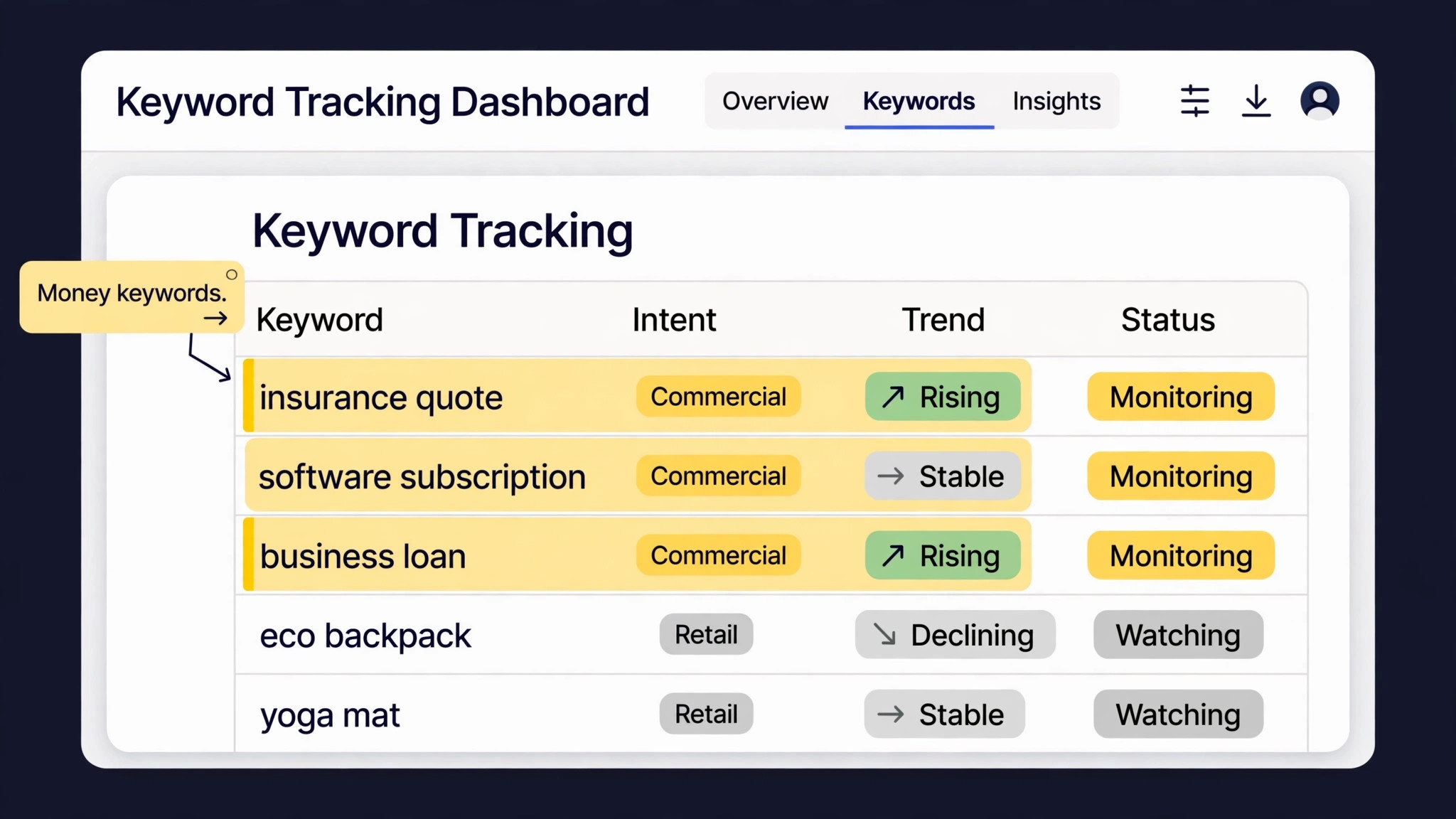
A practical test of the cost of Semrush for small business monthly use is a four week sprint. Track your money keywords, run a site audit, research ten competitor pages and publish two optimised posts using only Pro tools. If the sprint produces clear actions and you never hit a limit that blocked work, Pro is enough for now. If you keep wishing for historical comparisons or content briefs, that wish is evidence for Guru, not just curiosity about a higher tier. Record the blocked tasks during the sprint, because that list becomes your upgrade case.
Why Guru Is the Usual Sweet Spot
Guru adds the tools that turn research into a publishing system. Historical data lets you see whether a ranking change is a blip or a trend, which prevents panicked rewrites after a single week of movement. The content marketing toolkit supports topic research, briefs and optimisation checks, which helps a small team publish consistently without hiring a separate content strategist. Higher limits also remove the daily friction of Pro, with 15 projects and 1,500 tracked keywords giving room for a main site, a blog, a few landing page tests and a competitor set.
For a small business judging the cost of Semrush for small business monthly use that publishes weekly and competes in a crowded niche, Guru often pays for itself through better topic choice. One post that ranks for a buying intent term can bring enquiries for months, while several posts chosen on guesswork bring little. The difference between those outcomes is rarely writing quality alone.
It is keyword selection, search intent matching and content structure, all of which Guru supports more fully than Pro. That does not guarantee rankings, because competition, site authority and content depth still matter, but it removes a common reason small business content underperforms, namely writing for terms nobody searches or for terms dominated by far stronger sites.
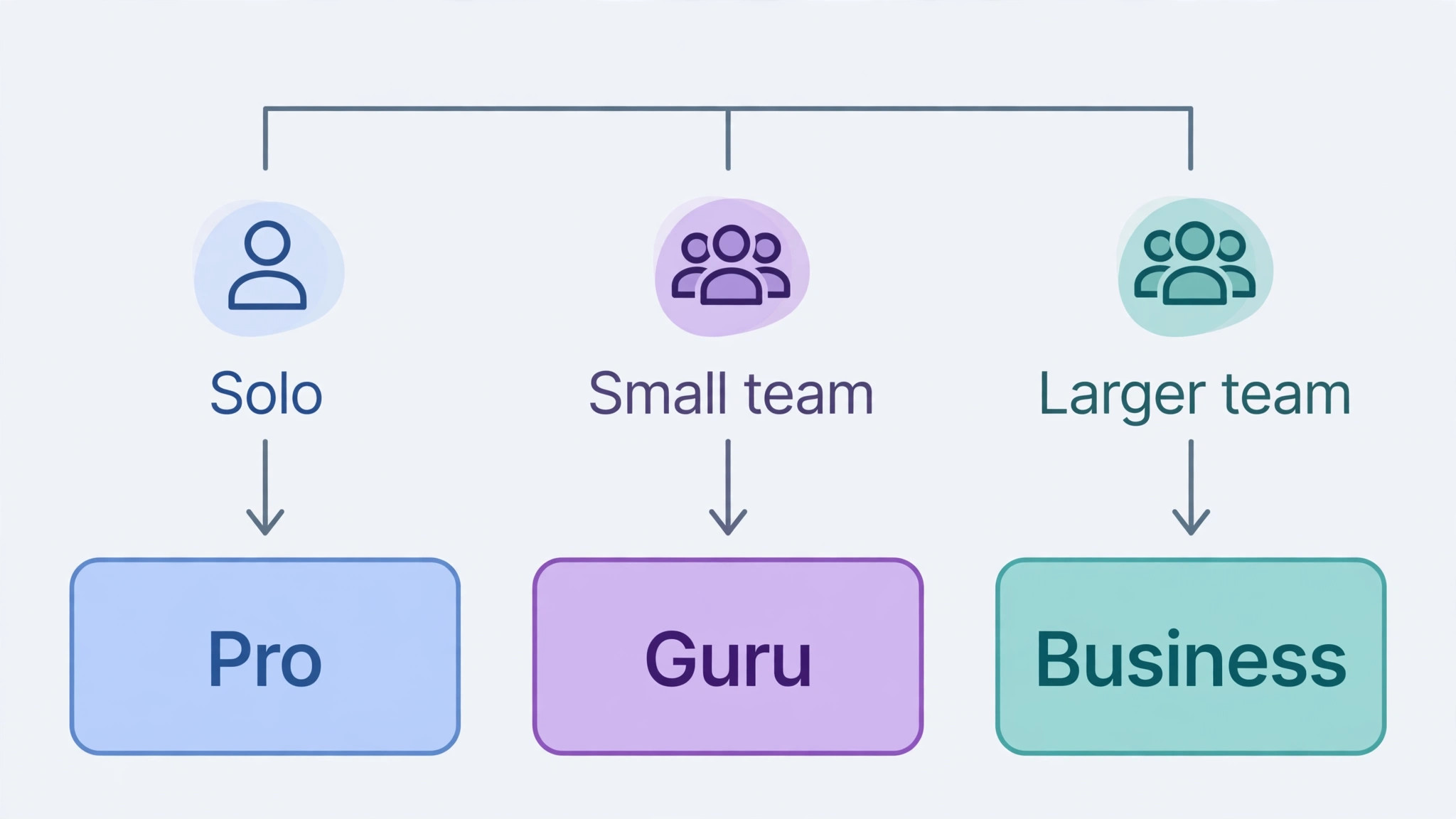
Guru also fits a small team better than Pro, because its seat and project structure supports shared work without constant limit juggling. Two or three people can work on different projects, compare notes on the same keyword sets and hand work over without exporting everything to spreadsheets. The subscription is roughly double Pro on annual billing, so the case must rest on use, not on prestige. If only one person uses the tool for an hour a week, Guru is overbuying. If two or three people use it daily for research, briefs and reporting, Guru is the tier that stops the tool from getting in the way.
What Business Adds, and Who Should Skip It
Business adds scale and agency features that most small businesses do not need. Forty projects, 5,000 tracked keywords, one million crawled pages per month, API access and white label reporting suit agencies reporting to many clients, large sites with complex technical SEO needs, and teams that feed Semrush data into other systems automatically. A small business with one site and a three person team will rarely use even half of those limits, and paying 416.66 dollars per month on annual billing for unused capacity is a poor use of a marketing budget that could fund content or links.
API access deserves special attention, because it is often cited as a Business reason when a simpler export would do. If you need to pull ranking data into a dashboard automatically every day, or to combine Semrush data with sales data at scale, API access matters. If you need a monthly report for a manager or a client, scheduled reports and exports from Guru usually cover it without API costs or developer time. White label reporting follows the same test. If clients see reports with your branding and that branding wins business, it has value. If reports stay internal, white label branding is invisible and therefore worthless to the buyer.
When judging the cost of Semrush for small business monthly use, skip Business unless you can name the project count, keyword count or integration that Pro or Guru cannot meet. A count above 15 projects, a keyword set above 1,500 tracked terms, or a documented API workflow are valid reasons. A vague sense that a growing business should be on the top tier is not. Growth should be funded by revenue from the work the tool supports, and Business should be bought when Guru limits block that work repeatedly, not when a sales page suggests it as the next step.
A Solo Marketer, Worked Out Month by Month
Take a solo marketer running one business site on Pro with annual billing. The subscription equivalent is 117.33 dollars per month, paid as 1,407.96 dollars for the year. On month to month billing, the same plan costs 139.95 dollars per month, so annual billing saves 22.62 dollars per month, or 271.44 dollars over a year, in exchange for paying the year up front. Add no extra seats, because a solo user is included in the base price on reported terms, and the subscription total is therefore the headline price, before tax and before any add on toolkits.
Processing or transaction fees do not apply in the same way as for a course platform, because Semrush is a subscription, not a payment processor for your sales. The surrounding costs are different. A solo marketer may also pay for a rank tracking supplement, a content writing tool, a site audit follow up tool or freelance writing, and those costs can exceed the Semrush subscription itself. A realistic solo stack might therefore total 200 to 350 dollars per month including Semrush Pro on annual billing plus one writing aid and a small email tool, while the Semrush line alone stays at 117.33 dollars.
Break even on the cost of Semrush for small business monthly use for a solo marketer is best judged in enquiries, not in reports. If Semrush research helps one extra service page rank and that page brings two extra enquiries per month, and one enquiry in four becomes a client worth several hundred dollars, the tool pays for itself many times over. If the tool is opened once a month to glance at a ranking chart, it does not, regardless of how accurate the chart is. Judge the subscription on actions taken and pages improved, and cancel or downgrade if a quarter passes with no action traceable to the tool.
A Three Person Team, Worked Out Month by Month
A three person team changes the arithmetic through seats. On Guru with annual billing, the base equivalent is 208.33 dollars per month. Two extra seats at a reported 80 dollars per user per month add 160 dollars, giving a subscription total of 368.33 dollars per month, or 4,419.96 dollars per year if seat prices stay flat across the year. On month to month billing, the base is 249.95 dollars plus the same 160 dollars for seats, giving 409.95 dollars per month. Seat prices should be confirmed at purchase, because Semrush has adjusted seat pricing in the past and team totals are sensitive to even a small per seat change.
Compare that with the same team on Pro. Annual base at 117.33 dollars plus two extra seats at 45 dollars each, totalling 90 dollars, gives 207.33 dollars per month. Month to month Pro for three people gives 139.95 dollars plus 90 dollars, totalling 229.95 dollars per month. The Guru premium for a three person team on annual billing is therefore 161 dollars per month over Pro, which is the price of historical data, content tools and higher limits for three users. That premium is justified only if at least one team member uses those Guru tools weekly to improve content or reporting.
On Business, a three person team on annual billing pays a base equivalent of 416.66 dollars plus two extra seats at a reported 100 dollars each, totalling 616.66 dollars per month. That is 248.33 dollars per month more than the Guru team total, for limits and API access most small teams will not use. The worked totals therefore point to a clear ladder. Solo on Pro sits near 117 dollars per month annual, a three person team on Pro sits near 207 dollars, a three person team on Guru sits near 368 dollars, and a three person team on Business sits near 617 dollars, all before tax and add on toolkits.

Add on toolkits are the main hidden cost in Semrush, because the base tiers do not include every specialised tool. Local listing management, social media management, advertising research extras and the AI Visibility toolkit can each add a monthly charge, and a team that ticks several add ons during signup can see its bill rise well above the tier price. The discipline is to start with the base tier only, use it for a month, and add an add on only when a specific task cannot be done without it. A free trial of an add on is useful, but a trial that rolls into a paid add on without a decision date is a classic budget leak.
Seat creep is a second hidden cost in the cost of Semrush for small business monthly use. Teams often add a seat for a colleague who wants to glance at a report, then keep paying for that seat long after the colleague stops logging in. Review seats quarterly, check last login activity if available, and remove seats that have not been used in a month. A seat that costs 80 dollars per month on Guru and sits unused for a year wastes 960 dollars, which is more than the annual saving from choosing annual billing in the first place. Treat seats like licences, not like permanent headcount.
Training and time are a third cost that never appears on an invoice. Semrush is a deep tool, and a new user can spend weeks learning reports without producing a ranking improvement. Budget onboarding time, use the built in courses or a short internal training session, and assign one owner for keyword tracking and reporting. Without an owner, a team subscription often becomes a shared login that nobody maintains, with keyword lists growing stale and audits going unread. The subscription price is fixed, but the value depends entirely on whether someone owns the workflow.
Choosing Between Classic and Bundle, and Between Tiers
Choose classic Pro if you are solo, if your keyword set is focused, and if you do not need historical data or full content tools every week. Choose classic Guru if you publish regularly, if you need historical trends to judge ranking changes, or if content briefs and optimisation checks are part of your weekly work. Choose Business only if project count, keyword count or API needs exceed Guru limits on a regular basis. Those three sentences cover most small business decisions, and any decision that does not fit them deserves a written reason before you pay.
Choosing between classic and the newer bundles needs a different test. List whether AI visibility is a reporting requirement for you, such as a client asking how often your brand appears in AI answers, or whether it is simply interesting. If it is a requirement, price the bundle that includes it and compare it with classic plus the standalone AI Visibility toolkit at a reported 99 dollars per month per domain, because the cheaper route depends on how many domains you track. If AI visibility is only interesting, stay on classic and revisit the bundle when a client or a manager asks for it by name.
Billing choice follows proof, as with most subscriptions. Month to month billing costs more and preserves the option to cancel after a trial quarter, which is valuable when you are unsure whether the team will adopt the tool. Annual billing saves about 17 percent and makes sense after two or three months of steady use, when seat count is stable and no add on is about to change the total. Switching billing mid year is possible in many cases, but confirm the terms at purchase, because refund and credit rules vary and should not be assumed.
– Core tasks listed, with a named owner for tracking and reporting – Classic versus bundle compared on required features, not on headline price – Seat count reviewed quarterly, with unused seats removed promptly – Add ons added one at a time, only for a task the base tier cannot do – Annual billing chosen after steady use, not before adoption is proven
Mistakes That Waste a Semrush Budget
The most expensive mistake is buying Guru or Business for a team that never logs in. A subscription bought during a busy launch, then ignored during delivery work, still charges every month. Set a weekly use habit from day one, such as a Monday keyword check and a Friday content brief, and review use after thirty days. If use is low, downgrade or pause rather than hoping next month will be different, because hope is not a workflow.
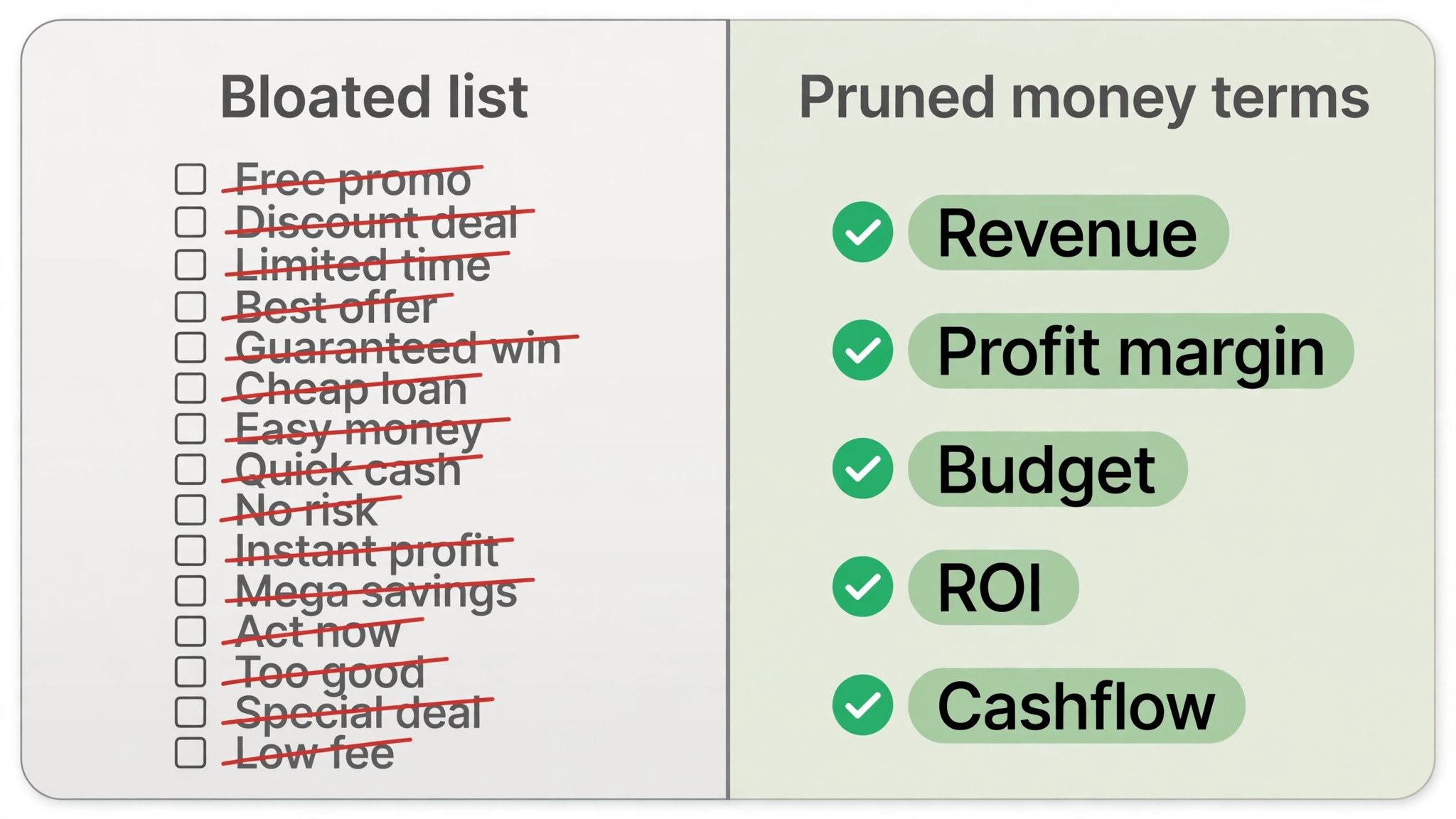
A second mistake is tracking too many keywords. A list of 1,500 tracked terms looks impressive and tells you little if only fifty terms drive business. Tracking everything dilutes attention, creates noisy reports and pushes teams toward higher tiers for limits they do not need. Track money terms daily, research terms in batches, and prune the tracking list quarterly. A smaller, sharper keyword set often produces better decisions than a larger list that nobody reviews.
A third mistake is treating Semrush data as a verdict rather than as evidence. A keyword difficulty score, a traffic estimate or a competitor gap is an estimate, not a guarantee, and acting on a single metric without checking search intent, page quality and site authority leads to wasted content. Pair every Semrush finding with a manual check of the actual search results, the top pages and what a buyer would need from your page. That habit protects both budget and credibility, because it stops the team from chasing terms that look easy in a tool and prove hard in reality.
Verdict for a Small Business
For a solo marketer, Pro on annual billing at 117.33 dollars per month is the value starting point, provided the tool is used weekly for research, tracking and audits. For a content led small team, Guru is usually the better buy, with a three person annual total near 368.33 dollars per month including seats, because historical data and content tools support the publishing rhythm that drives rankings. Business is a specialist tier for agencies and large sites, not a natural next step for a growing small business, and the newer AI bundles are worth paying for only when AI visibility reporting is a real requirement.
Before you subscribe, run a one month trial on the tier you think fits, list the tasks it blocked, and price the team total with seats and any add ons included. If the trial produces published improvements and a clear reporting habit, keep the tier and switch to annual billing. If it produces only charts, downgrade or cancel and spend the saving on content or site fixes that move rankings directly. Check current prices on the official Semrush pricing page at https://www.semrush.com before you pay, because bundles and seat prices change.
Frequently Asked Questions
What is the cheapest Semrush plan for a small business?
Pro is the cheapest paid classic tier, at 139.95 dollars per month or 117.33 dollars per month billed annually. A limited free plan exists for basic checks, but it does not support serious tracking, audits or content work, so most small businesses that use the tool weekly will need Pro at least.
How much does the cost of Semrush for small business monthly use rise with extra seats?
Extra seats are reported at 45 dollars per user per month on Pro, 80 dollars on Guru and 100 dollars on Business, on top of the base subscription. A three person team therefore pays the base plus two seat charges, which is why team totals in this guide are far higher than headline tier prices.
Is Guru worth double the price of Pro?
Guru is worth it when historical data, content tools and higher limits are used weekly to choose topics, brief writers or judge ranking trends. It is not worth it when one person uses the tool lightly for occasional checks, in which case Pro covers the core job at a lower price.
Should a small business buy the newer AI bundle instead of classic Guru?
Buy the bundle when AI visibility reporting is a requirement from a client or a manager, and compare the bundle price with classic plus the standalone AI toolkit for your domain count. If AI visibility is only interesting, classic Guru usually gives better proven value for classic ranking and content work.
Can you cancel or downgrade Semrush easily?
Semrush allows plan changes and cancellation through account settings on reported terms, but annual billing refunds and credits depend on the terms at purchase, so check them before paying annually. Month to month billing gives more flexibility during a trial period, at a higher monthly price.
How does the cost of Semrush for small business monthly use compare with hiring an SEO freelancer?
A freelancer often costs several times a Semrush subscription per month, but brings expertise and execution that a tool alone does not provide. Many small businesses get the best return from a tool plus a few hours of expert help per month, rather than from a tool alone or from a full agency retainer.
No, several specialised toolkits, including local and social extras, are add ons with separate charges on reported terms. Start with the base tier, then add an add on only for a task you cannot complete without it, and review add ons quarterly.
Is Business ever right for a small business?
Business can be right when project count exceeds 15, tracked keywords exceed 1,500, or an API workflow is documented and used regularly. Without one of those conditions, Business usually adds limits and agency features a small team will not use, at a substantial premium over Guru.