The cost of hiring a freelance graphic designer monthly confuses owners who start with a logo refresh and end up with a quote that covers everything from a single social post to a full brand system, with monthly prices that differ by thousands of dollars and no clear reason why. That confusion is normal, because designer retainers are priced by scope, experience, and turnaround, not by the hour alone, and two designers with similar portfolios can charge very different amounts for the same month of work. The mistake is comparing the headline price instead of the scope behind it, which is how businesses overpay for work they do not need or underpay and get work they cannot use.
This guide breaks down the cost of hiring a freelance graphic designer monthly by scope and experience, so you can judge a quote by what it actually buys.
What a Monthly Design Retainer Actually Buys
A retainer is a reservation, not a pile of files. You pay a fixed monthly fee for a set amount of a designer’s time or a set number of deliverables, and in return you get priority in their schedule, a designer who already understands your brand, and a predictable bill. The typical freelance retainer covers 10 to 40 hours a month, or a defined bundle such as 12 social graphics, two blog headers, and one landing page refresh. Turnaround is usually 24 to 72 hours per request, and revisions are capped, most often at two or three rounds per piece. What it does not buy is unlimited everything.
Rush work, new brand identity, packaging, and motion work usually sit outside the retainer and are priced separately, and that boundary is where most retainer disputes start.
The alternative shapes matter because they change the effective price per piece. Hourly billing suits short, undefined work, but it punishes you for hiring someone fast, since a designer who finishes in two hours bills less than one who takes five. Project pricing suits a defined deliverable with a clear finish line, such as a logo or a pitch deck. A retainer suits a steady drumbeat of work. Published guides put the break-even point at roughly three to four design requests a month. Below that, project pricing is usually cheaper. Above it, a retainer wins on cost per piece and on the time you stop spending briefing a new designer for every job.
Before you sign anything, count your real request volume over the last three months, not the volume you hope to reach. Retainers reward honest counts and punish optimistic ones.
The cost of hiring a freelance graphic designer monthly, broken down by scope
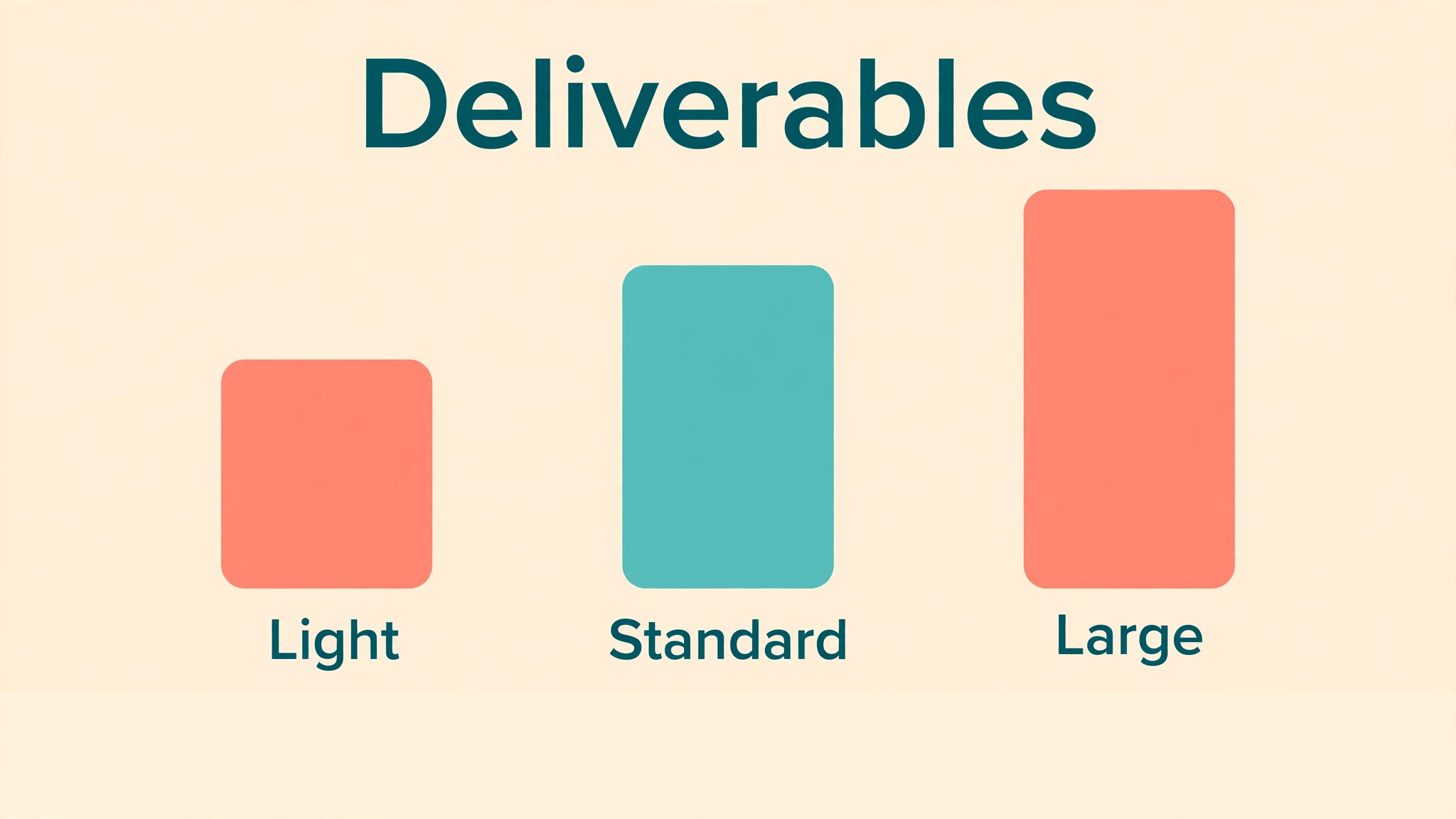
The cost of hiring a freelance graphic designer monthly depends on three things more than any other, and they are scope, experience, and location. Scope is the volume and complexity of the work. A retainer that covers social templates is a different product from one that covers ad creative, email design, and sales decks. Experience is the designer’s seniority and specialism. A generalist who makes clean social graphics charges less than a packaging specialist or a brand designer whose work has to survive on a shelf next to competitors. Location is the designer’s home market.
US based freelancers charge the most, designers in Eastern Europe and Southeast Asia typically charge 30 to 60 percent less for comparable execution, and that gap narrows fast when the work needs deep brand judgment or same day collaboration in your time zone.
The table below gives planning ranges built from published 2026 guides. Treat them as starting points for a quote, not as prices anyone is obliged to accept. A designer with a waiting list and a portfolio in your industry will quote above these ranges, and a designer building a portfolio will quote below them. Both can be good value, but only if the scope matches.
| Retainer scope | Typical monthly range | What it usually covers |
|---|---|---|
| Light social support | $500 to $1,000 | 8 to 12 social graphics from templates, light resizing, basic scheduling assets |
| Standard marketing retainer | $1,000 to $2,500 | 15 to 25 mixed assets, social, blog headers, email graphics, ad variations |
| Brand and campaign retainer | $2,500 to $4,000 | Campaign creative, landing pages, sales decks, brand stewardship across channels |
| Senior specialist retainer | $4,000 to $8,000 | Packaging, brand identity evolution, motion, or design direction plus execution |
Those ranges line up with the hourly math. A mid level freelancer at $45 to $85 an hour on a 20 hour monthly block lands at $900 to $1,700, and a senior at $100 to $150 an hour on the same block lands at $2,000 to $3,000. The retainer discount, where one exists, comes from the designer trading a lower hourly equivalent for guaranteed income. If a quote implies an hourly rate far above the designer’s market level, ask what is inside the scope that justifies it, such as strategy, art direction, or licensed assets. If a quote implies a rate far below it, ask what is missing, because something always is, usually revisions, source files, or turnaround speed.
Rates by Experience, From Junior to Senior Specialist
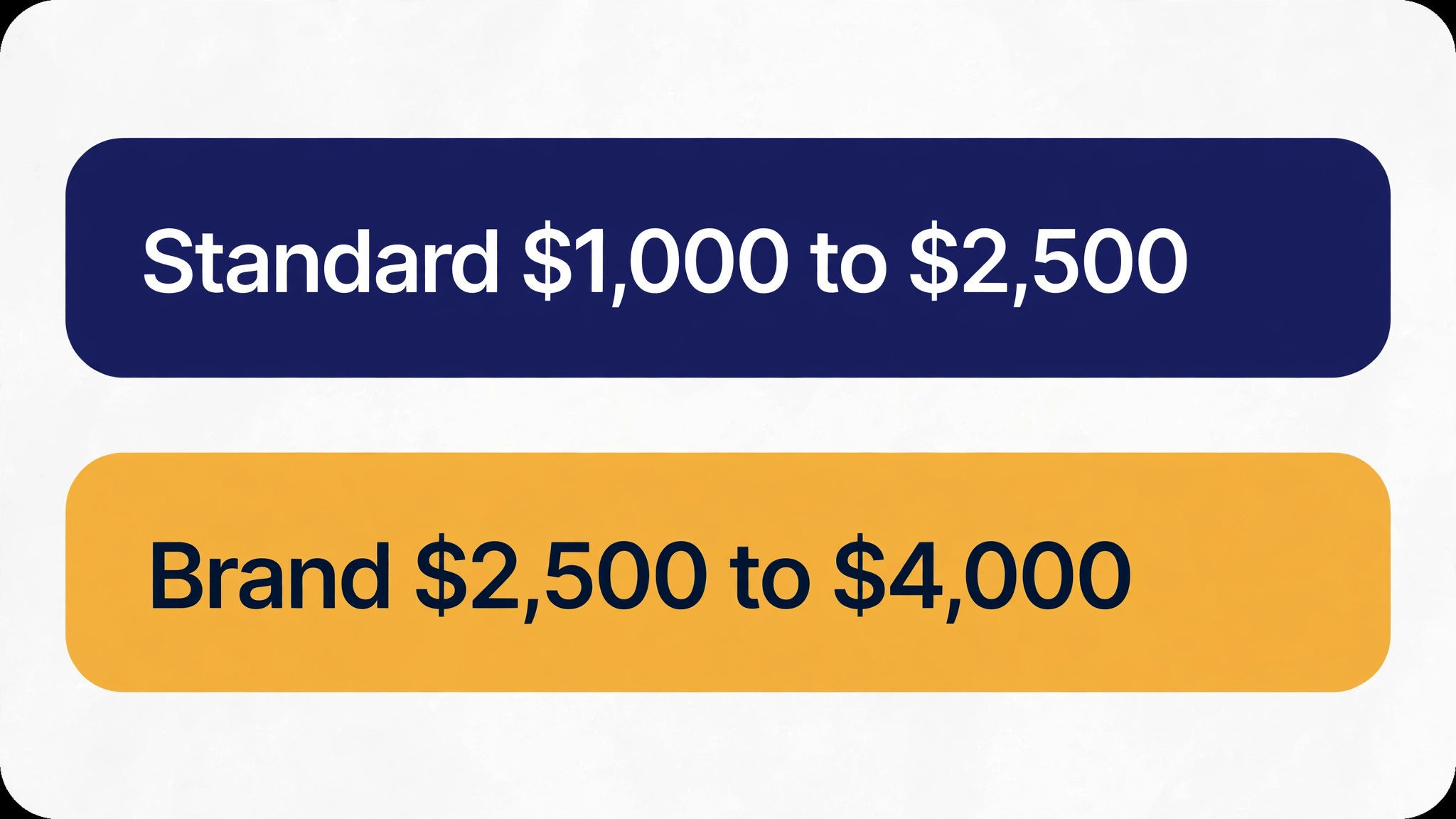
Experience is the single biggest lever on price, and it is worth understanding what each tier actually delivers rather than treating the rate as a quality score. Junior designers, in their first two years, typically charge $25 to $40 an hour. They are a sensible choice for template driven work, resizing, and straightforward social graphics where you supply the direction and the copy. They are a poor choice for work that needs judgment, such as a rebrand or a campaign concept, because the hours you save on rate you often spend on direction and revisions. Mid level designers with three to five years behind them charge $40 to $75 an hour and are the workhorse tier for most small businesses.
They can run a brand system without constant supervision, spot a weak layout before it ships, and handle a mixed monthly workload without hand holding.
Senior designers and specialists charge $75 to $150 an hour and more, and the premium buys judgment rather than speed. A senior brand designer will tell you when a requested layout weakens the brand, a packaging specialist knows what survives print and shelf lighting, and a motion designer knows how long a viewer will actually watch. For a monthly retainer, senior specialists often prefer a smaller hour block at a higher rate, or a deliverable based retainer, because their value is concentrated in fewer, higher stakes decisions. One practical rule is to match the tier to the stakes of the work.
Use junior and mid level talent for volume, and buy senior hours for the few pieces that carry the brand, such as the homepage, the pitch deck, and the packaging. Mixing tiers inside one retainer is possible with some freelancers, but most solo designers are one tier, so a mixed need often means a small team or a subscription service rather than one person.
How location changes the monthly bill
Location moves the price more than most buyers expect, and it moves it in both directions. A US based mid level freelancer at $60 an hour costs $1,200 for a 20 hour month. A comparably skilled designer in Eastern Europe or Southeast Asia might charge $30 to $45 an hour, putting the same block at $600 to $900. The saving is real, but it is not free. Time zone gaps slow feedback loops, cultural nuance in copy heavy design can miss, and a designer twelve hours away cannot join a same day campaign sprint. For template driven production work, the offshore saving usually wins.
For brand led work where you need quick calls and shared context, the local premium often pays for itself in fewer revisions. The middle path many businesses take is a local designer for brand and campaign work plus an offshore designer for production volume, with the local designer setting the templates the offshore designer follows.
What project prices tell you about retainer value
Project prices are a useful cross check on any retainer quote. Published guides put a freelance logo at $200 to $800 for a basic mark and $1,000 to $5,000 for a full branding package, social graphic sets at $50 to $500, landing pages at $600 to $3,000, brochures at $300 to $2,000, and infographics at $200 to $1,500. If your retainer month regularly includes work that would cost $2,000 bought project by project, a $1,500 retainer is good value. If the month’s work would cost $800 project by project, the same retainer is a bad deal. Run that comparison on your last three months of actual requests before renewing a retainer, and do it again every quarter.
Volumes drift, and a retainer that was good value in a launch quarter can become an expensive habit in a quiet one.
Hourly, Project, and Retainer Pricing Compared Side by Side
Choosing a pricing model is really choosing who carries the risk of a job running long. Hourly billing puts that risk on you. Project pricing puts it on the designer, which is why designers pad project quotes for uncertainty. Retainers split it, since you commit to a floor of work and the designer commits to capacity. The table below compares the three models on the dimensions that actually affect a monthly budget, using published 2026 ranges for freelancers.
| Model | Typical cost | Best when | Biggest risk |
|---|---|---|---|
| Hourly | $25 to $150 per hour | Work is undefined or sporadic | Slow work costs more, and scope creep is invisible until the invoice |
| Per project | $100 to $5,000 per deliverable | Deliverables are defined and infrequent | Every change becomes a change order, and briefing repeats each time |
| Monthly retainer | $700 to $4,000 per month | Steady weekly demand of 3 or more requests | You pay in quiet months, and unused hours usually expire |
| Design subscription | $499 to $2,599 per month | High volume, mixed design types | One queue, no dedicated designer, and turnaround varies with demand |
The subscription row deserves attention because it is the main competitor to a freelance retainer. Services such as Penji and ManyPixels sell flat monthly plans with unlimited requests, and their published entry points sit around $499 a month, rising to about $2,599 for a dedicated team. For pure production volume, a subscription often beats a freelancer on output per dollar. For brand judgment, continuity, and work that needs one person who knows your customers, a freelancer usually wins. A useful test is to ask who will notice when a design breaks a brand rule. With a freelancer, the answer is a person who knows your brand. With a subscription, the answer is a queue, and you are the quality control.
That difference is worth paying for when the work is customer facing and high stakes, and it is not worth paying for when the work is internal or template driven.
What Moves Your Quote Up or Down
Six factors move a retainer quote more than the headline rate does, and knowing them gives you negotiating room that haggling over the rate never will. That is why the cost of hiring a freelance graphic designer monthly varies so much between two quotes that look similar on the surface. First is turnaround speed. Same day or next day delivery costs more than a 72 hour standard, because it forces the designer to hold capacity open. Second is revision rounds. Two rounds is standard, and unlimited revisions is a red flag in either direction, since it either inflates the price or guarantees a frustrated designer. Third is asset licensing.
Stock photos, premium fonts, and illustration libraries are sometimes included and sometimes billed through, and a single premium font licence can cost more than a month of a light retainer. Fourth is the number of brands or product lines. One brand system is one set of rules. Three product lines with different looks is three times the mental overhead, even if the deliverable count is the same.
Fifth is meeting and management load. A retainer that includes a weekly strategy call, a shared Slack channel, and reporting costs more than an email brief and a delivery folder, because it buys senior attention rather than production hours. Sixth is exclusivity and rights. Full transfer of source files and unlimited usage rights is standard with most freelancers, but confirm it in writing, especially for logos and brand marks. Some designers retain the right to show work in their portfolio, which is normal, but a clause that limits where you can use a design you paid for is not. When a quote surprises you, ask which of these six is driving it before you negotiate the number.
Cutting a factor you do not need is a better deal than cutting the rate of a designer you do need.
The retainer is rarely the whole monthly design bill, and budgeting only for it is how businesses get surprised. Stock imagery and font licences can add $50 to $300 a month depending on usage. Printing, if any of the work goes to print, is a separate production cost entirely. Copywriting is another, since most designers will polish a headline but will not write your campaign copy, and a copywriter costs extra. Photography, illustration commissions, and video editing are specialist services that sit outside a graphic design retainer. Finally, there is your own time. Briefing, reviewing, and approving design takes two to four hours a month even with a good designer, and that time has a value.
Add these lines to the budget before you compare quotes, because a complete view of the cost of hiring a freelance graphic designer monthly includes licences, tools, and your own review time, not just the retainer figure.
The Hiring Checklist That Prevents a Bad Retainer
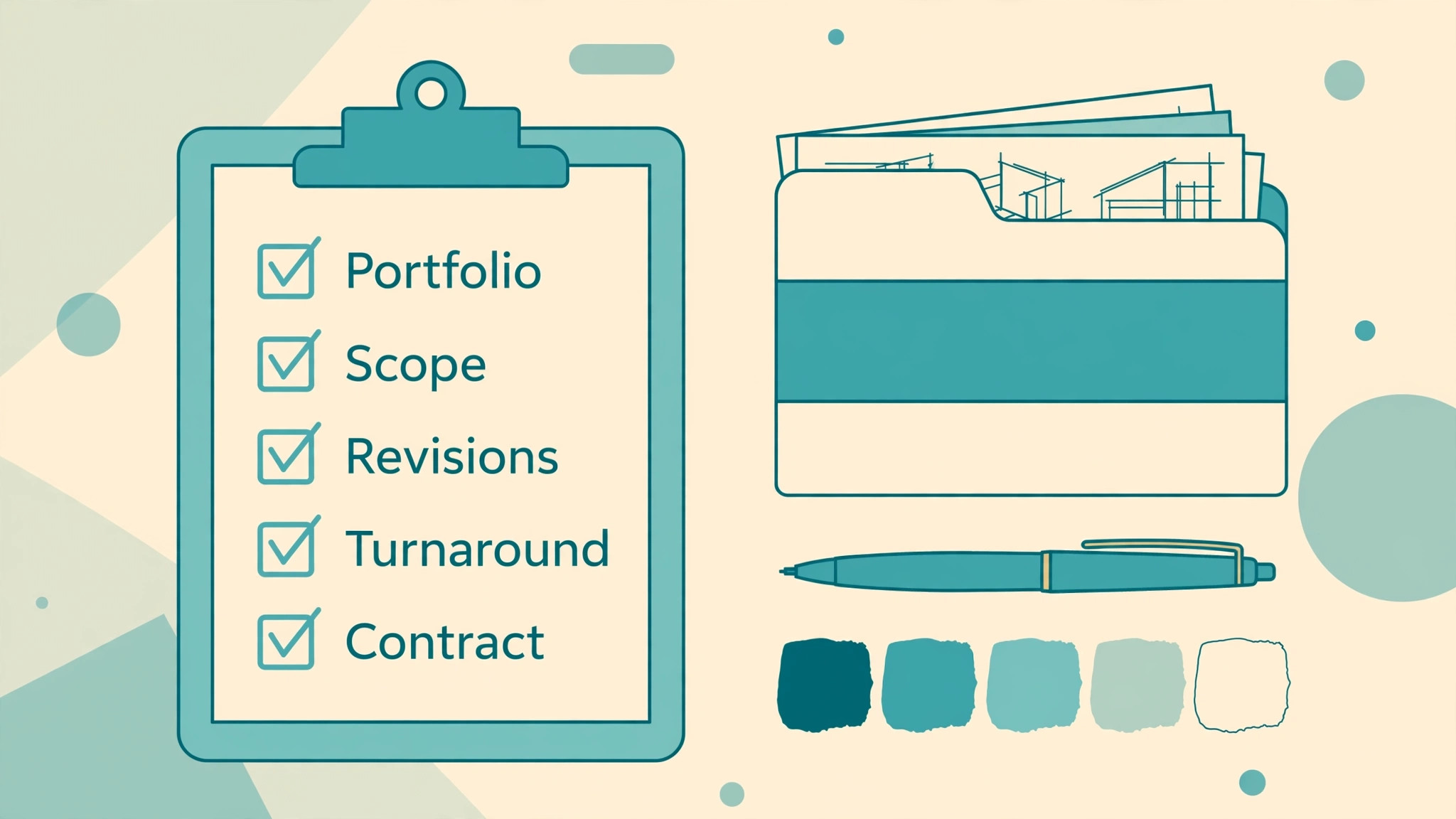
A good hire starts before the first brief, with a short checklist that filters out the most common failure modes. Work through it in order, and treat a miss on any of the first five items as a reason to pause, not a detail to fix later. The checklist below is the overview proof for this guide, and it is worth printing before your first call with a candidate.
- Define the monthly deliverable list in writing, with counts per asset type, before asking for a price
- Confirm the designer’s available hours, turnaround standard, and what counts as a rush job
- Agree revision rounds per piece, what happens to unused hours, and the notice period for pausing or ending the retainer
- Confirm source file delivery, usage rights, and who holds font and stock licences
- Check the portfolio for work in your industry or a close cousin, not just attractive work in general
- Run a paid trial of two to three real pieces before committing to a monthly term
- Agree a single feedback channel and a named approver on your side, so revisions do not arrive from four directions
- Set a monthly review, a 30 minute call to compare delivered work against the retainer scope and adjust it
The paid trial deserves emphasis because it is the cheapest insurance in this whole process. Two or three real pieces, paid at the designer’s normal rate, tell you more than a portfolio and three reference calls combined. You learn how they interpret a brief, how they handle a revision you dislike, and how fast they actually turn work around. A designer who resists a paid trial is telling you something about how they handle scrutiny. A designer who welcomes one is usually confident about the working relationship, and that confidence is a good sign. Price the trial into your first month budget, and treat it as part of the hiring cost rather than a saving to skip.
Red flags that should end the conversation
Some signals predict a bad retainer so reliably that they should stop the process. A quote with no scope attached, just a monthly number, will grow in dispute later. A designer who cannot show process, such as how they handle revisions or file delivery, will improvise under pressure. A portfolio of only personal projects, with no client work, suggests untested client handling. Vague answers about availability, such as promising unlimited turnaround without a queue system, usually mean overcommitment. Finally, a price far below market for senior level work is not a bargain, it is a designer who will either raise the price once you depend on them or quietly deprioritise your work for better paying clients.
Any one of these is a reason to keep looking, because retainers are sticky and a bad one costs months, not days.
Freelancer, Agency, or In House, and When Each Wins
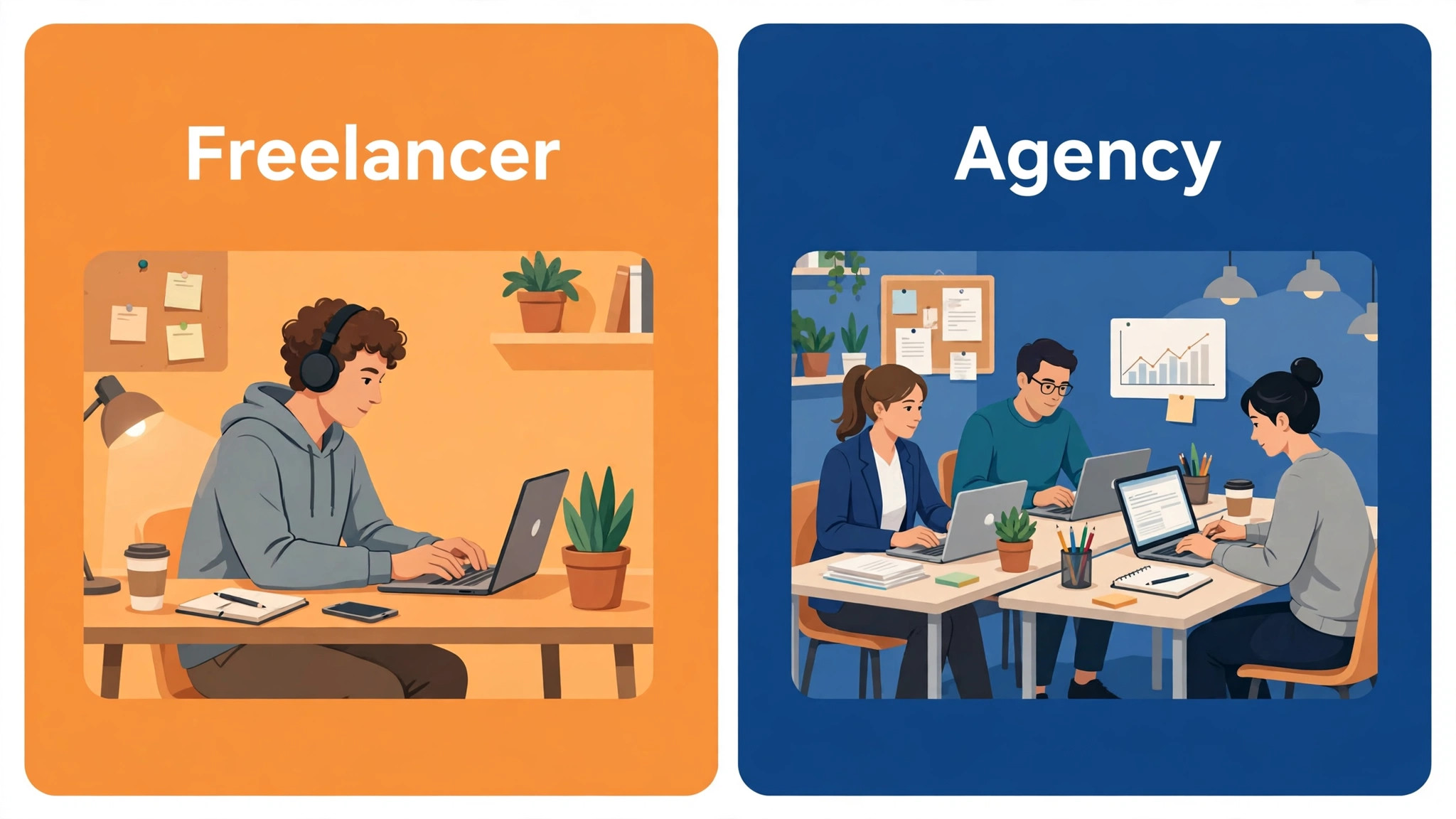
The cost of hiring a freelance graphic designer monthly only makes sense next to the alternatives, because the cheapest option on paper is often the most expensive in practice. An agency retainer typically starts at $1,500 a month and runs past $10,000 for full service creative support, with hourly rates of $75 to $175. What you buy is a team, art direction, project management, and cover when someone is sick or on holiday. For a business that needs campaigns conceived and executed across channels, that team is worth it. For a business that needs a steady stream of competent assets, it is overhead you do not need.
An in house designer costs $50,000 to $100,000 a year in salary for a mid level hire, and $100,000 to $160,000 for a senior, plus benefits, equipment, and software. That is $4,200 to $8,300 a month before overhead for the mid level band, which only makes sense when design demand fills a full time week.
A freelancer sits between the two. You get a dedicated person and brand continuity without the salary commitment, and you can scale hours up or down as demand changes. The trade is capacity and cover. One person has a ceiling, roughly 100 to 140 billable hours a month, and no backup when they are ill. If your business cannot tolerate a week without design output, buy the freelancer plus a backup arrangement, such as a second designer on a small standby retainer, or a subscription service as overflow. The right structure depends on how much design you truly need. Under 10 hours a month, buy project by project.
From 10 to 40 hours, a freelancer retainer is usually the sweet spot. Above 40 hours, compare a senior freelancer, a small agency, and an in house hire on total cost including management time, because at that volume the management overhead of freelancers starts to eat the saving.
Penji, ManyPixels, and the subscription alternative
Subscription design services deserve a direct comparison because their pricing is public and their model is genuinely different. Penji and ManyPixels publish plans from around $499 a month at entry level to about $2,599 for a dedicated multi designer team, with unlimited requests and revisions inside a queue system. The strength is volume and predictability. The weakness is continuity, since requests may be handled by different designers, and brand judgment is thinner than with a dedicated freelancer. A practical hybrid is common. Businesses keep a freelancer for brand led work and use a subscription for production overflow, such as resizing, template variations, and event graphics.
That hybrid is often cheaper than a large freelancer retainer alone, and it protects the freelancer relationship from volume burnout.
Negotiating Without Damaging the Relationship
When you compare quotes, the cost of hiring a freelance graphic designer monthly should be judged on total scope delivered, not on the headline rate alone, because a cheaper retainer that excludes revisions is often the dearer one by month two. Offer a longer commitment, such as a three month minimum, in exchange for a lower monthly fee or a rollover of a few unused hours. Offer faster payment terms, such as payment on invoice rather than net 30, which many freelancers value more than a small rate increase. Offer a clean brief and a single approver, which reduces the designer’s revision load and is worth real money to them.
Offer a retainer review after 60 days, so both sides can adjust the scope to reality instead of living with a wrong guess. What does not work is asking for senior work at a junior rate, or demanding unlimited revisions inside a fixed fee. Both signal that the relationship will be extractive, and good designers will decline or deprioritise you.
A first month budget makes the whole decision concrete. Take a standard marketing retainer at $1,500, add $100 for stock and font licences, $60 for a shared review tool or file storage, and the cost of a paid trial of $300 if you are still hiring, and the first month lands near $1,960. From month two onward, the same retainer runs near $1,660 all in. Compare that against the project priced equivalent of your actual request volume, and against an agency quote for the same scope, before you sign. If the retainer is not clearly cheaper or clearly better on continuity, do not sign it.
The best retainer is one you would renew without hesitation after 90 days, and that test is worth applying before the first invoice, not after the sixth.
More Reading on Stratilyze
Creative hire costs sit beside the other monthly freelancer fees a small business compares, so readers weighing a designer usually check the neighbouring hiring guides next. The guide to the monthly cost of hiring a freelance copywriter shows the same retainer math applied to writing, the guide to the monthly cost of hiring a freelance video editor covers the video side of the same creative budget, and the guide to the cost of running a freelance graphic design business gives the view from the designer’s side of the invoice.
Frequently Asked Questions
How much does a freelance graphic designer cost per month on retainer?
Most US freelancers on retainer charge $700 to $3,000 a month, with $1,000 to $2,500 the common band for a standard marketing workload. That is the realistic band for the cost of hiring a freelance graphic designer monthly for most small businesses. Light social only retainers can start near $500, and senior specialist retainers run $4,000 to $8,000. The range reflects hours, experience, and scope, so always compare the deliverable list behind the number.
Is a monthly retainer cheaper than paying per project?
It is cheaper when you need design every week, roughly three or more requests a month. Below that volume, project pricing usually wins, because you stop paying in quiet weeks. Count your last three months of real requests before deciding, and recheck the math every quarter as volume changes.
What should a design retainer agreement include?
It should define what counts as one request, how many revision rounds are included, turnaround standards, what happens to unused hours, source file delivery, usage rights, font and stock licence ownership, rush pricing, and the notice period for pausing or ending the agreement. Get a lawyer to review any agreement with serious money attached.
Do I own the designs my freelancer creates?
Usually yes, but only if the agreement says so. Confirm full transfer of final files and source files, plus unlimited usage rights, before work starts. Portfolio display rights for the designer are normal and separate from your usage rights, and a clause limiting where you can use work you paid for should be challenged.
How many hours does a typical monthly retainer cover?
Most freelance retainers cover 10 to 40 hours a month, or a defined deliverable bundle of equivalent size. A 20 hour block is the most common middle ground, enough for a steady marketing workload without approaching full time. Ask the designer to state the hour or deliverable cap in writing, since an uncapped promise is not a real commitment.
Should I hire a freelancer, an agency, or a subscription service?
Hire a freelancer when you need brand continuity and a dedicated person at 10 to 40 hours a month. Hire an agency when you need a team, art direction, and campaign conception. Use a subscription when volume is high and the work is template driven. Many businesses combine a freelancer for brand work with a subscription for production overflow.
The Verdict on Monthly Designer Costs
The cost of hiring a freelance graphic designer monthly is best treated as a capacity decision, not a price hunt. Start from your real request volume, match the tier to the stakes of the work, and buy the smallest retainer that covers a typical month, with a clear route to add hours when a campaign spikes. Run a paid trial, write the scope down, and review the retainer after 90 days against what was actually delivered. Done that way, a $1,500 retainer is not an expense to minimise. It is a predictable way to keep a brand looking like it belongs to a business that takes itself seriously, and that is worth more than the cheapest quote on the table.