

The cost of hiring a social media manager monthly can run 500 dollars a month or 15,000 dollars a month, and both figures can be correct, because the job covers everything from scheduling three posts a week to paid campaigns, video production, community management, and analytics across five platforms. Published 2025 pricing guides put freelance managers at 500 to 2,500 dollars a month, or 20 to 50 dollars an hour for typical freelancers, with beginners near 20 to 35 dollars and experts at 75 to 150 dollars an hour. Agency starter retainers appear near 500 to 2,000 dollars a month, growth tiers near 2,000 to 5,000 dollars, and full service tiers at 5,000 to 15,000 dollars and up.
An in-house specialist salary averages about 65,623 dollars a year in United States listings, which is roughly 5,470 dollars a month before employer costs. If you want to understand the cost of hiring a social media manager monthly, start with scope, because scope, not title, sets the price, and a vague scope is how a 1,000 dollar retainer quietly becomes a 3,000 dollar disappointment.
The first decision is what you are actually buying. Content planning and posting is one job. Content creation, including video editing and design, is a second job that often costs as much again. Community management, answering comments and messages daily, is a third job. Paid advertising management is a fourth, usually priced separately from organic management, with ad spend on top. Strategy, analytics, and reporting tie those jobs together, but they are not free. A manager who does all five for 500 dollars a month is either cutting corners, working very few hours, or misunderstanding the scope, and the result will show up as generic posts, slow replies, and reports that nobody reads.
Define the five jobs, decide which ones you need, and price those, not the title.
| Scope | Freelancer monthly | Agency monthly | Typical hours |
|---|---|---|---|
| One platform, 3 to 5 posts a week, basic engagement | 500 to 1,000 dollars | 500 to 2,000 dollars | 10 to 20 hours |
| Two platforms, 5 to 10 posts a week, daily community | 1,000 to 2,500 dollars | 2,000 to 5,000 dollars | 20 to 40 hours |
| Three to five platforms, video, strategy, reporting | 2,500 to 5,000 dollars | 5,000 to 15,000 dollars | 40 to 80 hours |
| Full service plus paid ads management | 3,000 to 7,000 dollars plus ad spend | 5,000 to 15,000 dollars plus ad spend | 60 hours and up |
| Single project, such as a launch or campaign | 500 to 3,000 dollars per project | 1,000 to 20,000 dollars per project | Project based |
Freelancer ranges reflect published guides that place most freelancers at 500 to 2,500 dollars a month, with basic packages at 750 to 1,500 dollars for one to two platforms and 3 to 5 posts a week, standard packages at 1,500 to 3,000 dollars for two to three platforms and 5 to 10 posts a week, and premium packages at 3,000 to 7,000 dollars and up for three to five platforms with strategy and paid ads. Agency ranges reflect starter, growth, and full service tiers published across the same guides. Hourly rates follow experience, with beginners at 20 to 35 dollars, mid level managers at 35 to 75 dollars, and experts at 75 to 150 dollars an hour.
Use hours to sanity check any retainer. A retainer that claims 40 hours of work for 500 dollars implies an hourly rate near 12 dollars, which is below typical professional rates, and something in the scope will give way.
Ad spend sits outside management fees in almost every pricing model, and confusing the two is a common budgeting error. A 2,000 dollar agency retainer plus a 2,000 dollar ad budget costs 4,000 dollars a month in cash, even though the proposal may headline only the retainer. Paid social management alone is published near 650 to 6,000 dollars a month for management, with ad spend on top, depending on scale and complexity. Always ask for management fee and ad budget as separate lines, and ask who controls the ad account, who owns the creative, and what happens to campaigns if you end the contract. Those answers matter more than a small retainer discount.
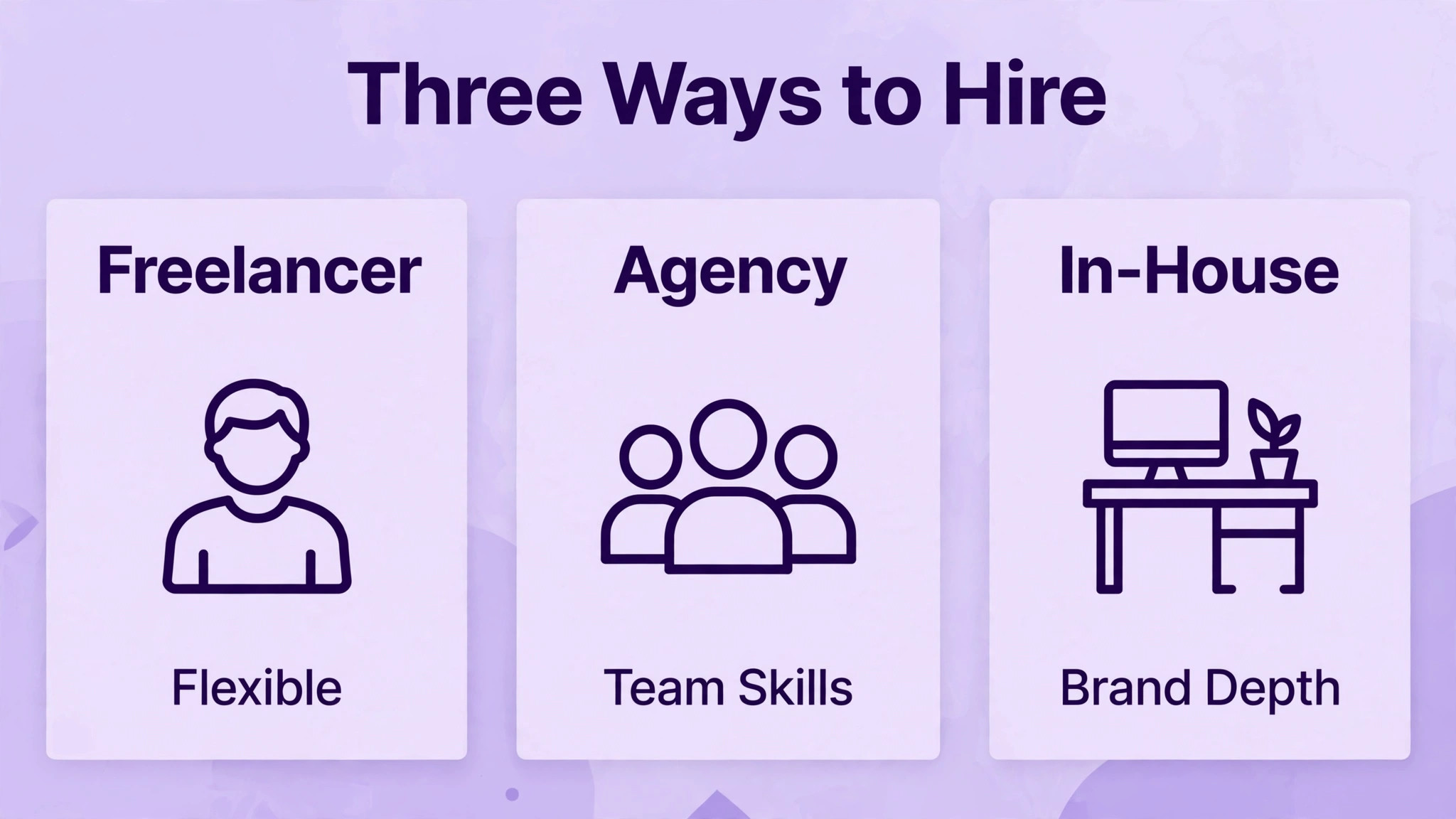
Freelancer, Agency, or In-House
Freelancers suit small businesses with one to three platforms, a clear content direction, and a need for direct communication with the person doing the work. You get flexibility, lower overhead, and a manager who learns your voice quickly, but you also get a single point of failure. If the freelancer is ill, on holiday, or overloaded, posting stops, and video skills, design skills, and strategy depth vary widely between individuals. Vet freelancers on platform specific experience, deliverables per week, whether engagement is included or billed separately, and whether software costs are included or passed through, since freelancers rarely include scheduling and analytics tools in their fee.
Agencies suit businesses that need multiple skills at once, such as copywriting, design, video, and paid ads under one roof, or businesses managing several brands or regions. You pay for a team, for redundancy, and for process, but you also pay for account management overhead, and the person pitching may not be the person posting. Agencies often charge retainers from 1,000 to 20,000 dollars and up depending on project size, with hourly equivalents above 100 dollars when broken down across team roles. Ask an agency who will do the daily work, how many clients that person handles, how approval works, and how quickly comments and messages get answered.
A beautiful strategy deck means little if daily community management lags by days.
In-house hiring suits businesses where social is a core daily channel, such as a restaurant, a retailer, or a creator led brand, and where speed and brand intimacy matter more than external perspective. An in-house specialist costs about 4,700 dollars a month in salary in some published comparisons, while an in-house manager averages about 65,623 dollars a year, and employer costs, tools, and benefits sit on top of salary. In-house staff learn the brand deeply and react instantly, but they need management, training, and cover for holidays, and a single hire rarely covers strategy, video, design, and paid ads at expert level all at once.
Many businesses end up with a hybrid, which is an in-house lead plus a freelancer or agency for video or paid ads, and that hybrid often delivers the best value once volume justifies it.

What the Retainer Should Actually Include
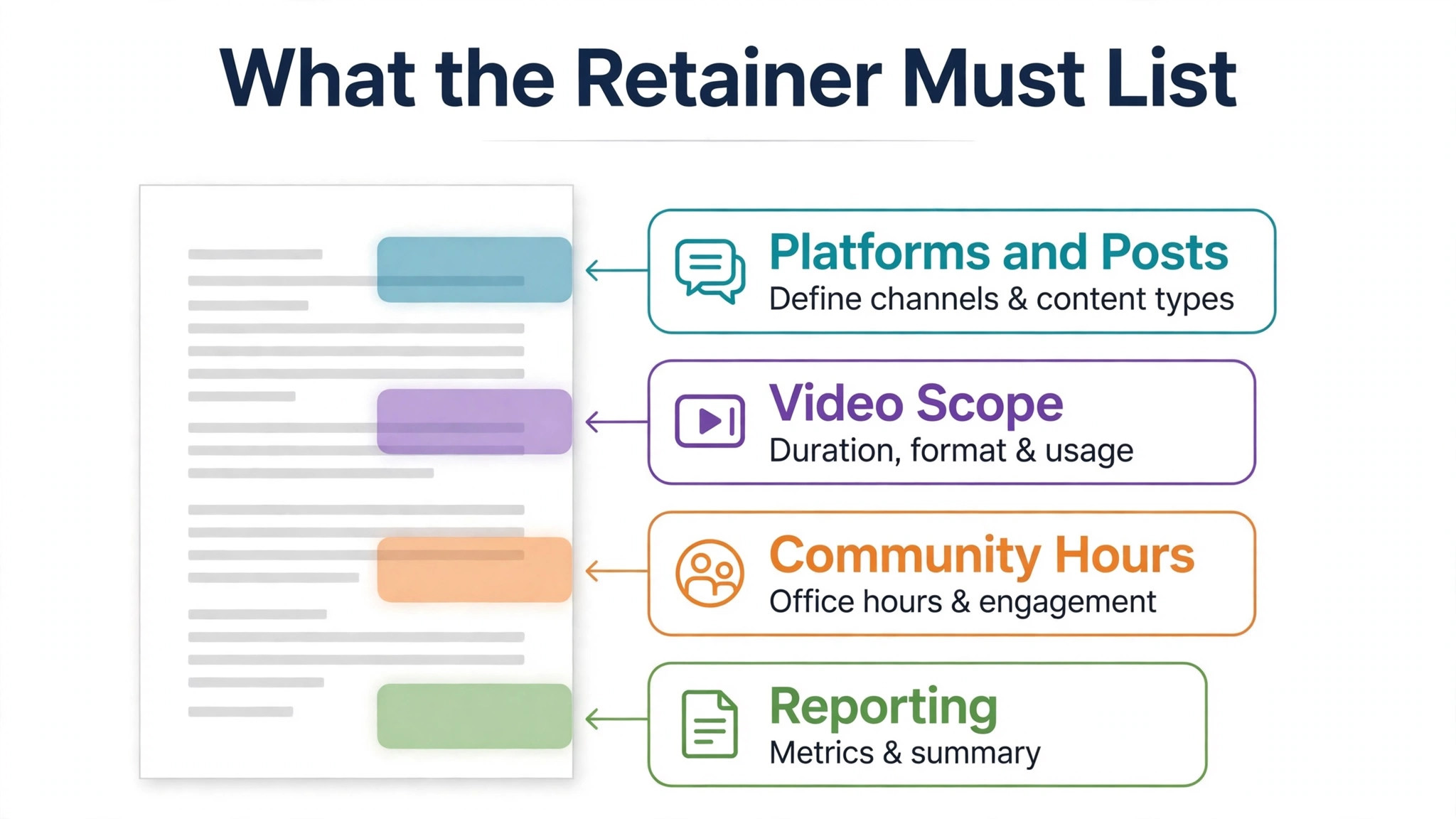
A retainer that does not list deliverables is a blank cheque, and it should be rewritten before signing. Insist on platform count, posts per week per platform, format mix, such as static, carousel, and video, revision rounds, community management hours and response time, reporting frequency and metrics, and meeting cadence. Video deserves a separate line, since a short video takes two to four times longer than a static post and is published near 150 to 500 dollars per video in some guides, or 200 to 500 dollars per video post in others. Bundling unlimited video into a basic retainer guarantees either rushed video or scope disputes, so price video separately and clearly.
Software costs also need a line. Scheduling, analytics, listening, and design tools can run from free to 2,000 dollars and up a month depending on scale, and freelancers rarely include them. Ask who pays for tools, who owns the accounts and data, and what happens to scheduled content and audience data if the contract ends. Ownership matters, because a manager who owns the scheduling account, the ad account, or the content library leaves you starting from zero on exit. Insist that business accounts, ad accounts, and content files belong to the business, with the manager granted access, not ownership.
Content ownership and approval workflow need writing down too. Who writes captions, who approves posts, how many revision rounds are included, and what happens when approval is late. A manager waiting days for approval cannot post consistently, and a business that approves everything after posting cannot complain about tone. Agree a turnaround, such as approval within one business day, and a default rule for what happens if approval does not arrive. That single clause prevents more retainer disputes than any price negotiation.
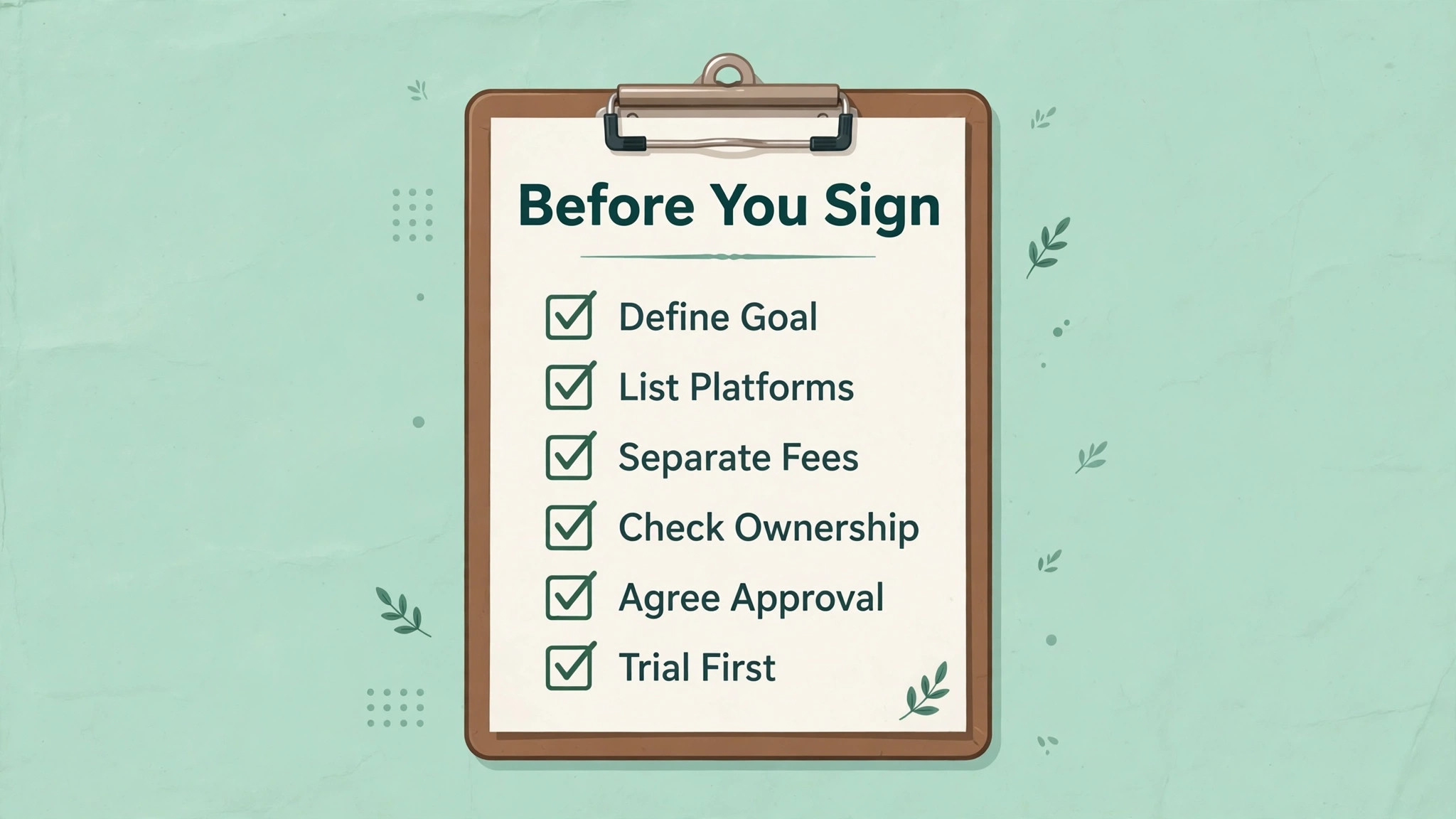
Hiring Checklist Before You Sign
- Define the goal in one sentence, such as bookings, sales, leads, or brand awareness, and name the metric that proves it.
- List platforms, posts per week, formats, and whether video, design, and community are included.
- Separate management fee, ad spend, software costs, and content production costs into distinct lines.
- Ask for platform specific examples and results, not just follower counts, and check who did the work.
- Confirm who owns accounts, ad accounts, content files, and audience data on exit.
- Agree approval turnaround, revision rounds, response times, and reporting frequency in writing.
- Start with a 90 day trial with a review point, rather than a long lock in, and define exit terms.
- Check references from a similar sized business in a similar industry, and ask what went wrong, not just what went well.
A checklist used before signing saves more money than any negotiation after signing, because most cost overruns come from scope that was never defined, not from rates that were too high. Walk through the checklist with the candidate, and note any answer that stays vague after a direct question. Vagueness before signing becomes scope creep after signing, and scope creep is billed at the highest rate.
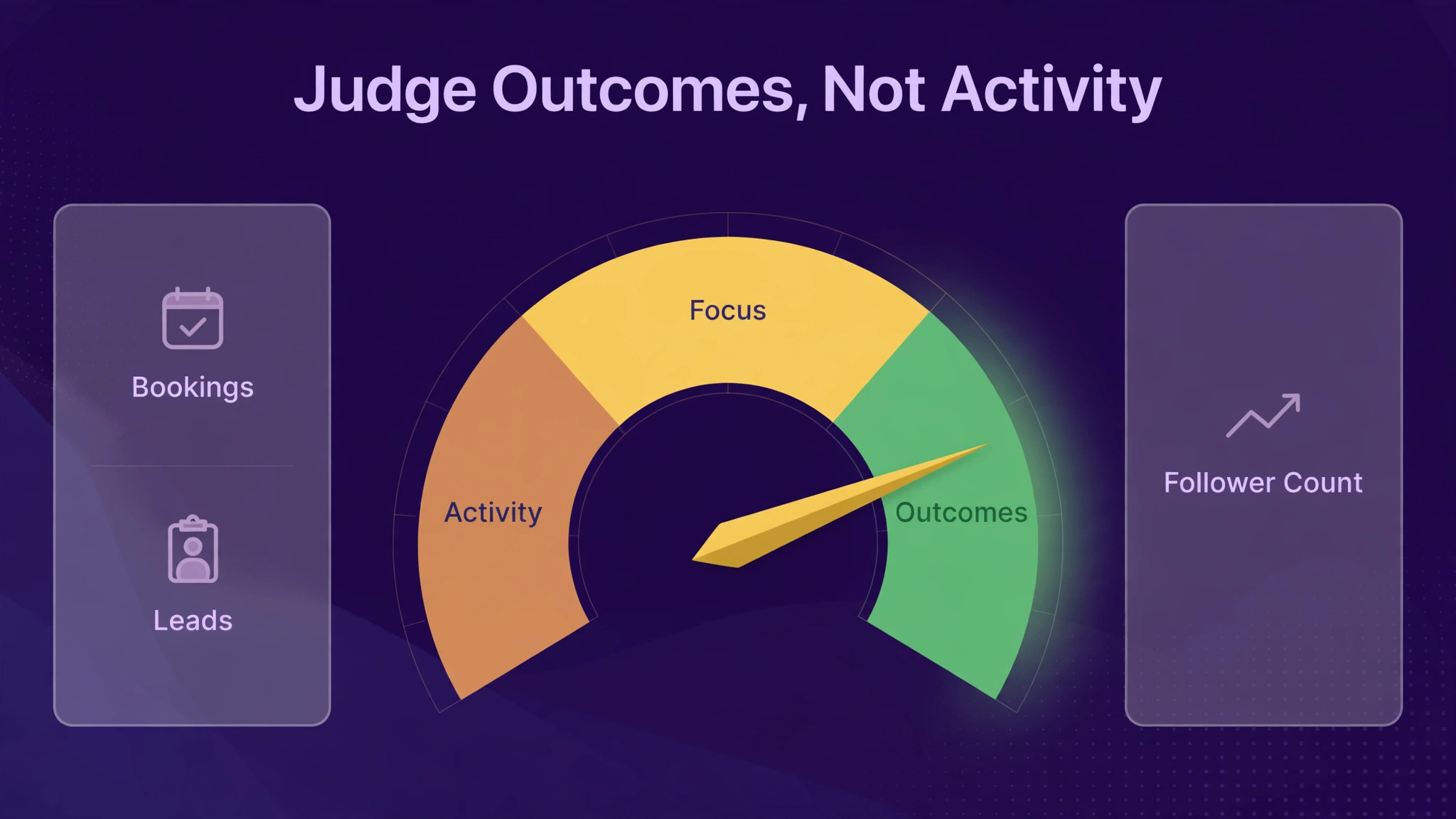
How to Judge Value and When to Walk Away
Judge value by outcomes tied to your goal, not by activity alone. Posting volume is activity. Bookings, sales, qualified leads, email signups, or measurable brand searches are outcomes. A manager who posts daily but moves no outcome metric in 90 days is not delivering value, even if the feed looks busy. Agree outcome metrics and reporting at the start, review them monthly, and compare against a baseline from before hiring. A good manager will welcome that discipline, because it protects good work from being judged on vanity metrics, and a weak manager will resist it, which is itself useful information.
Watch for warning signs in the first month. Missed posting days without explanation, generic captions that could belong to any business, slow community replies, reports that list only follower counts, and upsells for basic tools are all signs of a retainer that is not delivering its scope. Raise them early, in writing, with a specific fix and a date. If the same issue repeats after a clear warning, end the trial at the review point rather than hoping month four will differ from months one to three. Hiring is a test, and a trial that is never used as a test is just a long contract.
Also judge your own contribution honestly. A manager cannot create strategy from a business that will not share goals, offers, photos, or approval time. Provide brand guidelines, product photos, offer details, and a single approval contact, and respond within the agreed turnaround. Many retainer failures are joint failures, where the business starves the manager of input and then blames output. If you cannot commit approval time, buy a smaller scope that you can support well, rather than a large scope you will starve.
Costs by Business Size and Stage
A solo business or early startup usually needs the smallest scope that keeps one platform alive and credible, which is one platform, 3 to 5 posts a week, and basic engagement, at 500 to 1,500 dollars a month from a freelancer. Spending more before product market fit is premature, since social cannot fix an unclear offer, and the money is better spent on product, pricing, and customer conversations. At this stage, the owner should stay involved in content direction, even if a manager posts, because nobody knows the customer better than the founder in the early months.
A growing small business with steady sales can justify two to three platforms, video, and daily community, at 1,500 to 5,000 dollars a month depending on freelancer or agency route. This is the stage where consistency matters most, because irregular posting after an initial burst damages credibility more than a smaller consistent presence would have. Budget for video separately, since video is what grows reach at this stage, and a manager without video capacity will plateau on static posts alone. Review outcome metrics quarterly at this stage, and scale scope only when outcomes justify it, not when a competitor posts more.
A mid market business with multiple locations, products, or audiences needs a team, whether in-house, agency, or hybrid, at 5,000 to 15,000 dollars a month and up. At this scale, paid ads, influencer coordination, social listening, and crisis response enter the scope, and a single freelancer cannot cover them all well. Budget for tools, ad spend, and content production as separate lines, and appoint an internal owner who manages the agency or team, because an unmanaged agency drifts toward activity over outcomes. The internal owner does not need to post, but they need to approve strategy, review reports, and hold the team to outcome metrics.
An enterprise or multi brand business operates at a different level entirely, with dedicated strategy, creative, community, paid, and analytics roles, and retainers that exceed the small business ranges by multiples. Those budgets are outside this guide scope, but the same principles apply, which are defined scope, separate lines for management and ad spend, owned accounts, and outcome based review. Scale changes the numbers, not the discipline.

Negotiating Without Damaging the Relationship
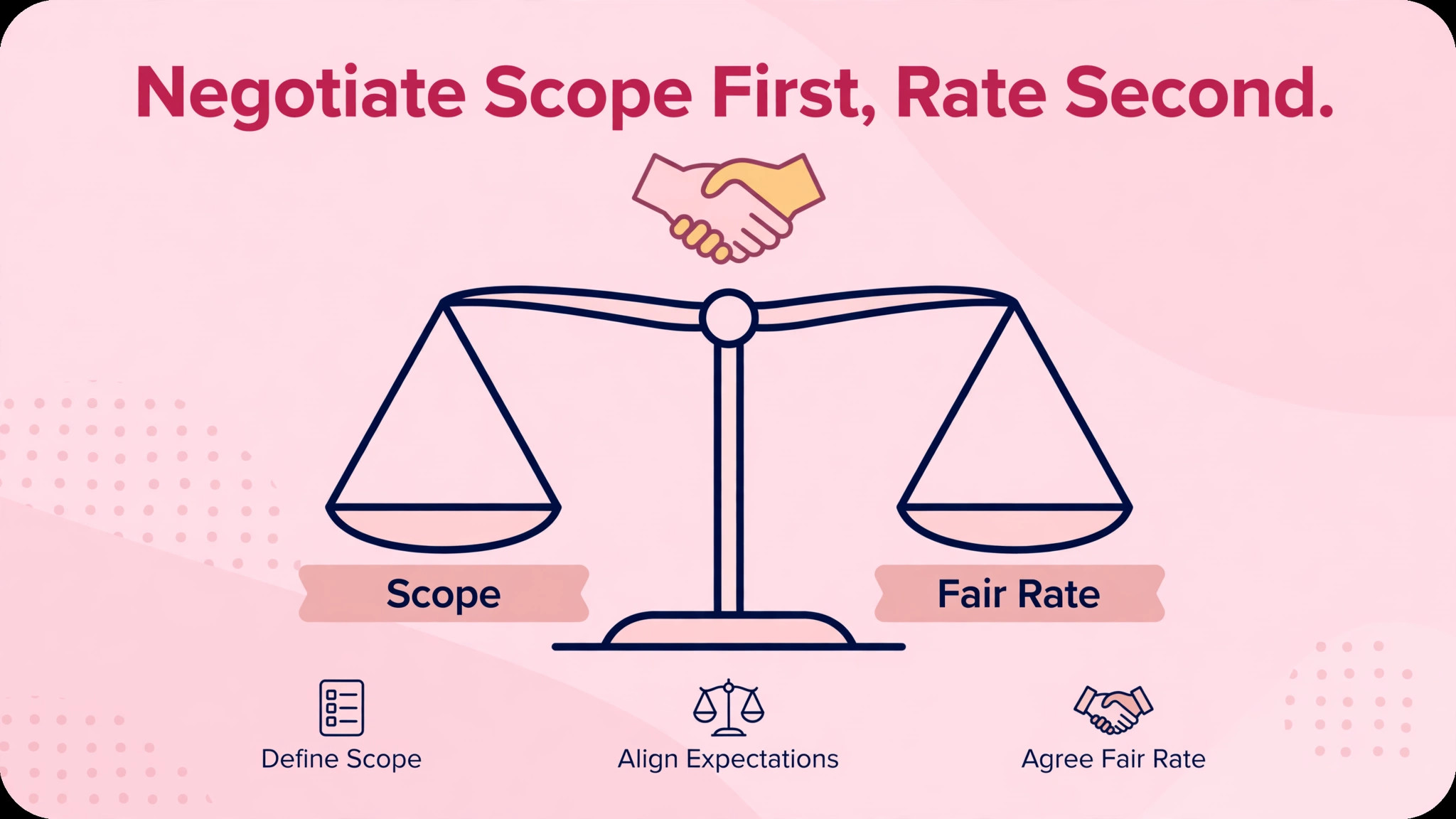
Negotiate scope before rate, because a rate cut that keeps scope unchanged usually cuts quality invisibly. If a quote exceeds budget, ask which deliverables can move to a later phase, such as a third platform, daily community, or weekly video, and price the reduced scope fairly. A manager who agrees to a lower rate for the same scope will either overwork or underdeliver, and neither outcome helps you. A manager who agrees to a smaller scope at a fair rate will deliver that scope well, and you can expand later from a position of trust.
Ask for a trial project before a retainer where possible, such as a content bundle of 10 to 20 posts, published near 750 to 2,500 dollars in some guides, or a platform launch and setup near 500 to 2,000 dollars. A trial project tests working style, quality, and turnaround without a monthly commitment, and it gives both sides a portfolio of real work to judge. If a trial goes well, converting to a retainer is easy. If it goes poorly, you have learned cheaply.
Pay attention to payment terms as well as price. Monthly in advance is common for retainers, while project work often splits between start and delivery. Avoid paying a large sum upfront for an unproven retainer, and avoid a manager who demands a year upfront without a trial or a break clause. A 90 day initial term with a monthly rolling continuation after review balances commitment and flexibility for both sides, and it is the term structure most healthy retainers use.
The first mistake is hiring for follower growth alone. Followers bought through giveaways, engagement pods, or irrelevant viral content rarely become customers, and they distort analytics for months. Hire for your business goal, whether bookings, sales, or leads, and judge growth in that metric, not in follower count. A smaller engaged audience that buys beats a large audience that scrolls past.
The second mistake is paying for every platform at once. Each platform needs native content, community time, and analytics, and spreading a small budget across five platforms produces five weak presences instead of one strong one. Start with the platform where your customers actually spend time, master it, and add a second only when the first runs consistently. Platform count is a cost multiplier, and it should grow with results, not with enthusiasm.
The third mistake is bundling video, ads, and community into one vague retainer and then disputing every extra. Price each job separately, even inside one retainer, so that adding video or ads changes the price transparently. Separate lines prevent the most common retainer argument, which is whether a task was included, and they let you scale one job without renegotiating everything.
The fourth mistake is keeping a failing retainer out of sunk cost thinking. Three months of poor outcomes, missed posts, and vague reports will not become a good retainer in month four without a specific change in scope, person, or management. Use the trial review point honestly, end or restructure at that point, and treat the trial cost as the price of learning, not as a reason to continue paying.
Red Flags in Proposals and Interviews
Proposals reveal quality before any work starts, and several red flags should pause a hire even when the price looks attractive. A proposal with no deliverables, only promises such as growth, virality, or engagement, is selling hope, not work. Ask for platforms, post counts, formats, community hours, and reporting in writing, and treat a refusal to specify those items as a reason to walk away, not as a detail to settle later. A manager who cannot specify work before signing will not specify it after signing either, and the retainer will drift.
Guaranteed follower counts, guaranteed viral posts, or guaranteed sales from organic social alone are red flags of a different kind, because no honest manager can guarantee platform outcomes that depend on algorithms, competition, and audience behaviour. Guarantees usually signal bought followers, engagement tricks, or a definition of success so loose that any result counts. A credible proposal promises work, process, and reporting, and discusses outcomes as targets with a review point, not as guarantees. That honesty is worth more than a guaranteed number that arrives through low quality followers who never buy.
A third red flag is a proposal that bundles everything, including video, ads, design, community, and strategy, into one low price with no breakdown. Bundling hides which job is underfunded, and the underfunded job is usually video or community, since those take the most time. Ask for a breakdown by job, even inside a single retainer total, so you can see whether video is priced at a realistic level or included as a token. A transparent breakdown also makes scaling fair, because adding a platform or a video series changes the relevant line, not the whole relationship.
Finally, watch how a candidate talks about your business during interviews. A candidate who asks about goals, customers, offers, and approval capacity is learning the business, while a candidate who talks only about posting frequency and tools is selling activity. Ask candidates to sketch a first month plan for your business specifically, including topics, formats, and metrics, and compare plans rather than personalities. When you weigh the cost of hiring a social media manager monthly, weigh it against a specific first month plan, because a cheap retainer with a generic plan costs more in wasted months than a fair retainer with a plan built for your customers.
A proposal that survives those checks, with deliverables, honest outcome language, a job breakdown, and a business specific plan, is a proposal worth trialling, and the trial will then test execution rather than promises.
More Reading for Business and Marketing Costs
If hiring costs are clearer now, the wider guides on Stratilyze cover the team and marketing around social. The guide to hiring a virtual assistant monthly prices admin support that frees a manager to create, the guide to email tools for abandoned carts covers a channel that converts social traffic, the guide to Instagram tools helps you compare posting tools, and the guide to CRM software for small business explains how to track leads that social generates. Read the virtual assistant guide next if admin tasks are eating the hours you planned for content direction, since buying back time is often cheaper than buying more social scope.
Frequently Asked Questions
Most freelancers charge 500 to 2,500 dollars a month, with basic packages at 750 to 1,500 dollars for one to two platforms and standard packages at 1,500 to 3,000 dollars for two to three platforms. Those ranges frame the cost of hiring a social media manager monthly for most small businesses. Agency starter retainers run near 500 to 2,000 dollars a month, growth tiers near 2,000 to 5,000 dollars, and full service tiers at 5,000 to 15,000 dollars and up. In-house managers average about 65,623 dollars a year in salary, before employer costs and tools. The right figure depends on platforms, post volume, video, community, and paid ads, so price scope, not title.
A small business with one to two platforms, 3 to 5 posts a week, and basic engagement should budget 500 to 1,500 dollars a month for a freelancer, or 500 to 2,000 dollars for an agency starter tier. That budget is a practical starting point for the cost of hiring a social media manager monthly without overcommitting. Add video, daily community, or paid ads management as separate lines, since those jobs cost extra and are often excluded from a basic retainer. Ad spend sits outside management fees, so a small business budget should list management fee and ad budget separately to avoid underestimating cash needed each month.
Hire a freelancer for one to three platforms, direct communication, and lower overhead, provided you vet platform experience and deliverables carefully. Hire an agency when you need multiple skills at once, such as design, video, and paid ads, or when you manage several brands or regions and need team redundancy. Hire in-house when social is a core daily channel and speed and brand intimacy matter most. Many growing businesses use a hybrid, with an in-house lead plus a freelancer or agency for video or paid ads.
Almost never. Management fees pay for planning, posting, community, and reporting, while ad spend is the money paid to platforms to show ads, and it sits on top. Paid social management alone is published near 650 to 6,000 dollars a month, with ad spend extra. Always ask for management fee and ad budget as separate lines, confirm who owns the ad account and creative, and set a monthly ad cap, so total cash per month is clear before campaigns start.
Judge outcomes tied to your goal, such as bookings, sales, leads, or email signups, against a baseline from before hiring, over a 90 day trial. Outcome review is how you prove the cost of hiring a social media manager monthly earns its price, rather than assuming it does. Posting volume alone is activity, not value, and follower growth alone rarely proves business value. Agree outcome metrics, reporting frequency, and a review point at the start, and review monthly. If outcome metrics do not move after 90 days despite agreed scope being delivered, restructure scope, change provider, or reconsider whether social is the right channel for that goal at that budget.
A contract should list platforms, posts per week and formats, video and design scope, community hours and response times, revision rounds, approval turnaround, reporting metrics and frequency, meeting cadence, tool costs and ownership, account and content ownership on exit, payment terms, trial length, and exit terms. Separate management fee, ad spend, software, and production costs into distinct lines. A contract that lists deliverables prevents most scope disputes, and a 90 day trial with a review point gives both sides a fair test before a longer commitment.
Hire for Hours You Can Measure
Social media management pricing looks chaotic until you price it as hours and scope, and then it becomes orderly. A freelancer at 500 dollars for 10 hours, an agency at 5,000 dollars for a team, and an in-house manager at 5,470 dollars a month in salary are all understandable once you know what each buys, and which jobs sit outside the headline figure. When you judge the cost of hiring a social media manager monthly by deliverables, separate lines, owned accounts, and outcome metrics, you stop buying a title and start buying work you can measure.
Start small, define scope in writing, trial for 90 days, and scale only when outcomes justify it. That discipline protects both sides, because a manager who delivers a defined scope well will welcome a larger scope, and a business that measures outcomes will know exactly when that larger scope earns its price. Hire the hours you need, measure what they produce, and let results, not proposals, set the next budget.