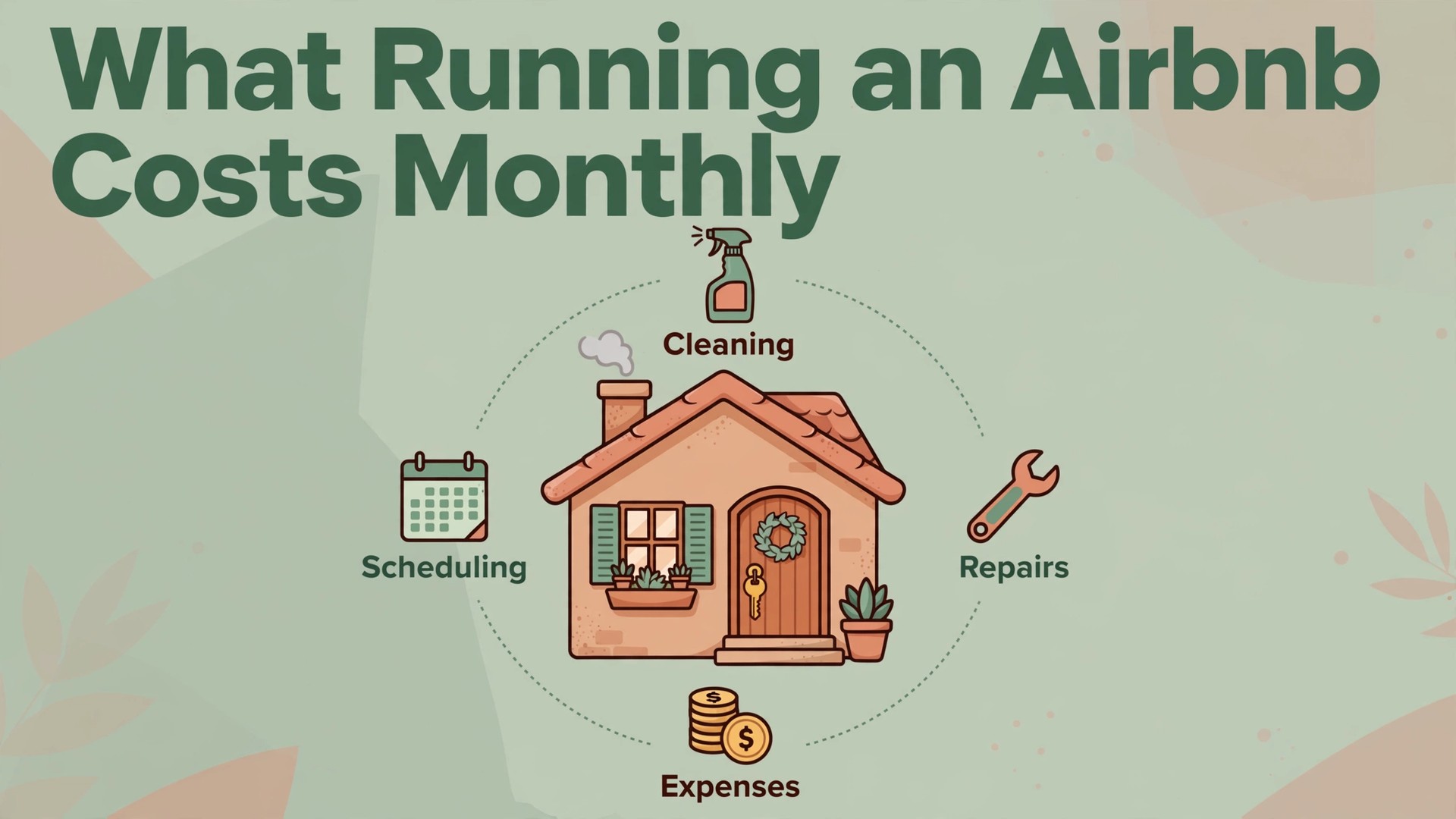
Compare two new hosts with the same property. One prices the nightly rate from the mortgage and the cleaning fee, while the other prices from the full stack of platform fees, utilities, supplies, and management. The first host discovers the gap in a surprising bill, while the second host planned for it from day one. On a property grossing 3,500 dollars a month, a full-service manager at 20 percent takes 700 dollars, utilities take 200 to 400 dollars, and cleaning takes hundreds more. The cost of running an Airbnb monthly is a stack, and the nightly rate has to carry all of it.
This guide breaks that stack into fixed and variable lines, prices cleaning and management honestly, and shows how the 2026 platform fee change reshapes host math. Fee figures were checked against published host guides in October 2026. Confirm the fee structure on your own Airbnb account before repricing, since fee models changed during 2026.
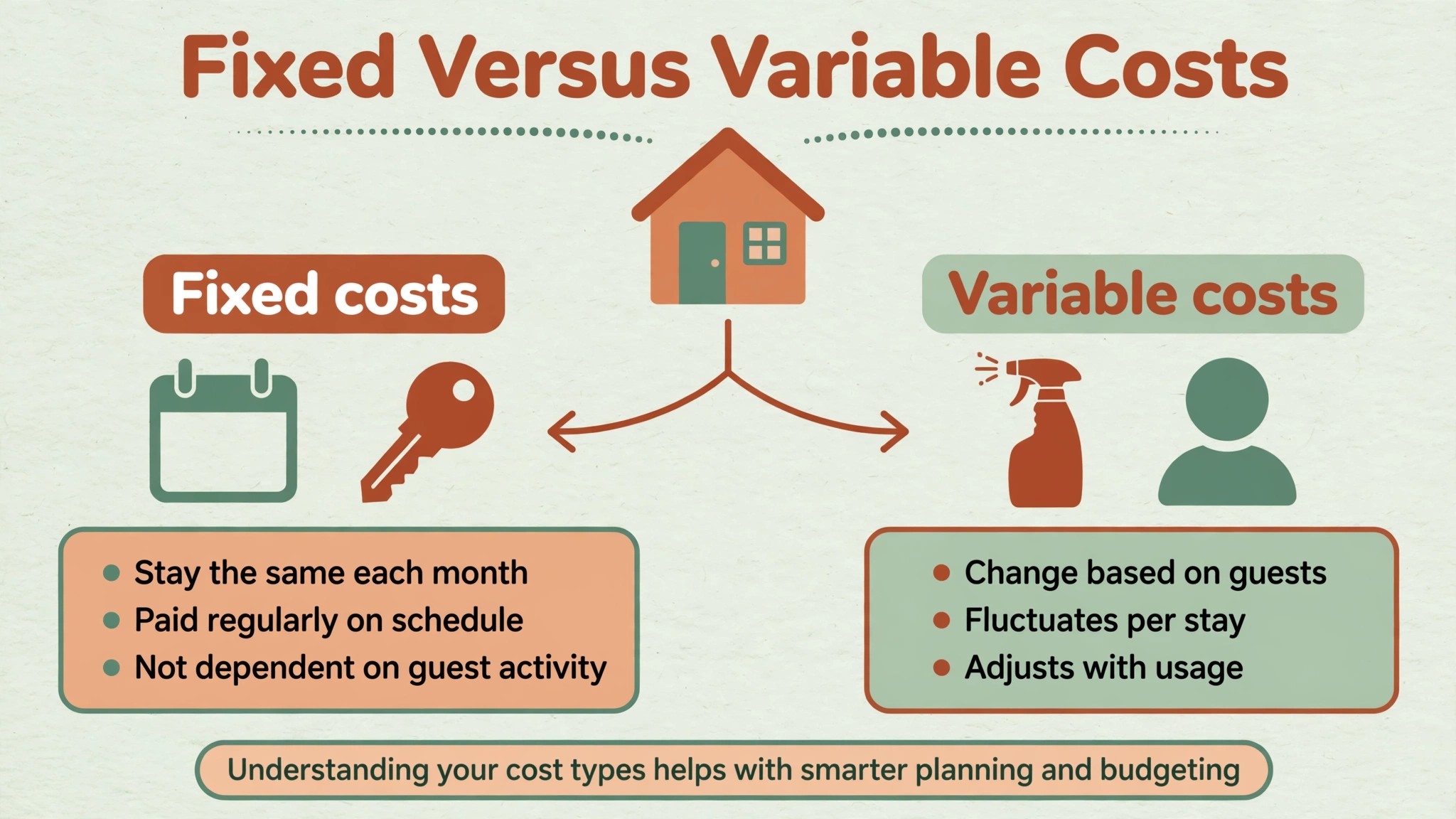
Fixed Versus Variable Costs
Fixed costs arrive whether guests stay or not, and variable costs scale with bookings. Separating them is the first step to a nightly rate that survives a quiet month. The cost of running an Airbnb monthly looks manageable in a busy month and harsh in an empty one, and the fixed lines are the reason.
| Cost line | Type | Typical monthly range | Notes |
|---|---|---|---|
| Mortgage or rent | Fixed | Varies by property | Largest line for most hosts |
| Utilities and internet | Mostly fixed | 200 to 400 dollars | Guest use runs 30 to 50 percent above long-term rental use |
| Insurance and taxes | Fixed | Varies by location | Short-term cover costs more than standard cover |
| Software and tools | Fixed | 50 to 100 dollars | Pricing, messaging, and channel tools |
| Cleaning | Variable | 375 to 1,250 dollars | Per turn, depends on size and turns |
| Platform fees | Variable | 3 percent or 15.5 percent of subtotal | Depends on fee model |
| Supplies and restocking | Variable | 50 to 200 dollars | Linens, toiletries, consumables |
| Maintenance reserve | Variable | 100 to 300 dollars | Small repairs and replacements |
Utilities deserve attention because guests do not conserve like owners. Published host guides put electricity at 80 to 200 dollars, water at 40 to 80 dollars, gas or heating at 30 to 100 dollars, internet at 60 to 100 dollars, and trash at 20 to 40 dollars for a typical two to three bedroom property. Properties with pools, hot tubs, or electric heating in cold climates run higher, so budget from your own bills, not from averages.
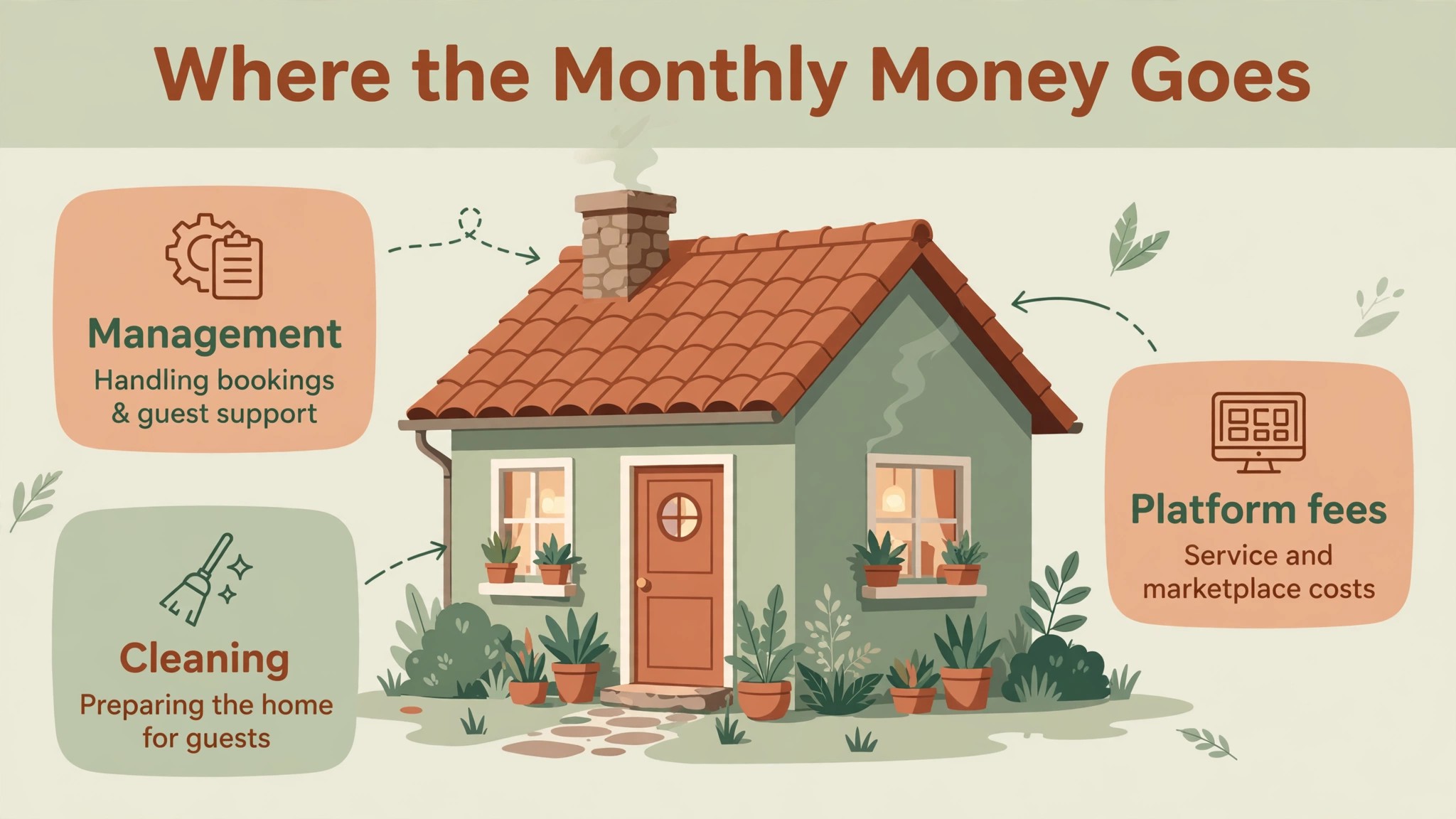
Breaking Down cost of running an Airbnb monthly by Cleaning, Management, and Fees
Cleaning is the largest variable line for most hosts, and it scales with turns, not with nights. That trio of cleaning, management, and fees is the core of the cost of running an Airbnb monthly. A one bedroom property runs 75 to 120 dollars per clean, a two to three bedroom property runs 100 to 175 dollars, and a four bedroom property runs 150 to 250 dollars. At five to eight turns a month, a one bedroom property spends 375 to 960 dollars on cleaning alone, before linen service and deep cleans every two to three months at 200 to 400 dollars each.
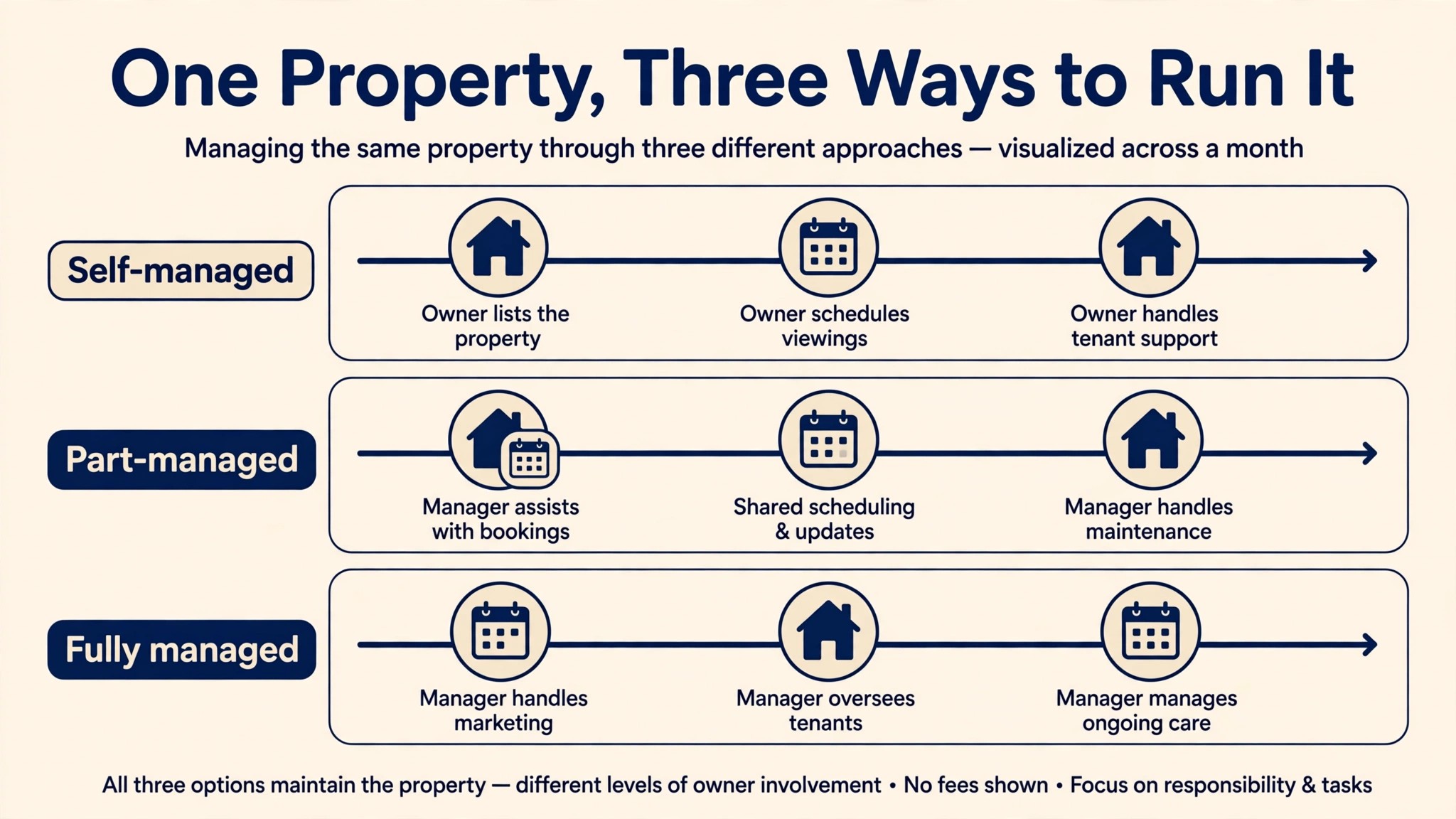
Management is the largest single line for hosts who outsource. Full-service managers charge 20 to 25 percent of revenue, covering pricing, messaging, cleaning coordination, and maintenance. Partial or co-hosting arrangements charge 10 to 15 percent, covering guest communication and pricing while the owner handles maintenance. Self-managing costs no percentage, but it costs your time plus roughly 50 to 100 dollars a month in software.
Platform fees changed during 2026, and this is the line most hosts must recheck. Under the old split-fee model, hosts paid about 3 percent of the booking subtotal while guests paid a separate service fee near 14.2 percent. From September 2026, most non-EU hosts moved to a single host-paid fee of 15.5 percent for most hosts, with guests no longer seeing a separate service fee line. Published host math shows that holding the same payout requires raising a previous rate by about 14.8 percent, because the fee applies to the whole subtotal including cleaning and pet fees.
A Worked Example. One Property, Three Ways to Run It
Take a two bedroom property grossing 3,500 dollars a month in bookings. Self-managed on the single host fee, the host pays about 543 dollars in platform fees, 700 dollars in cleaning at five turns, 300 dollars in utilities and internet, 125 dollars in supplies, and 150 dollars in maintenance reserve, leaving roughly 1,682 dollars before mortgage, insurance, and tax. The same property with a full-service manager at 20 percent loses another 700 dollars to management, leaving roughly 982 dollars on the same lines.
| Running model | Platform fee | Management | Cleaning | Other monthly | Left before mortgage |
|---|---|---|---|---|---|
| Self-managed | About 543 dollars | 0 dollars | About 700 dollars | About 575 dollars | About 1,682 dollars |
| Co-hosted at 12 percent | About 543 dollars | About 420 dollars | About 700 dollars | About 575 dollars | About 1,262 dollars |
| Full-service at 20 percent | About 543 dollars | About 700 dollars | About 700 dollars | About 575 dollars | About 982 dollars |
The lesson is not that management is bad. Management buys time, consistency, and often better pricing, and a good manager can raise revenue enough to cover the fee. The lesson is that the cost of running an Airbnb monthly must be modeled before you sign, because a 20 percent fee on a thin-margin property leaves little room for a quiet month.
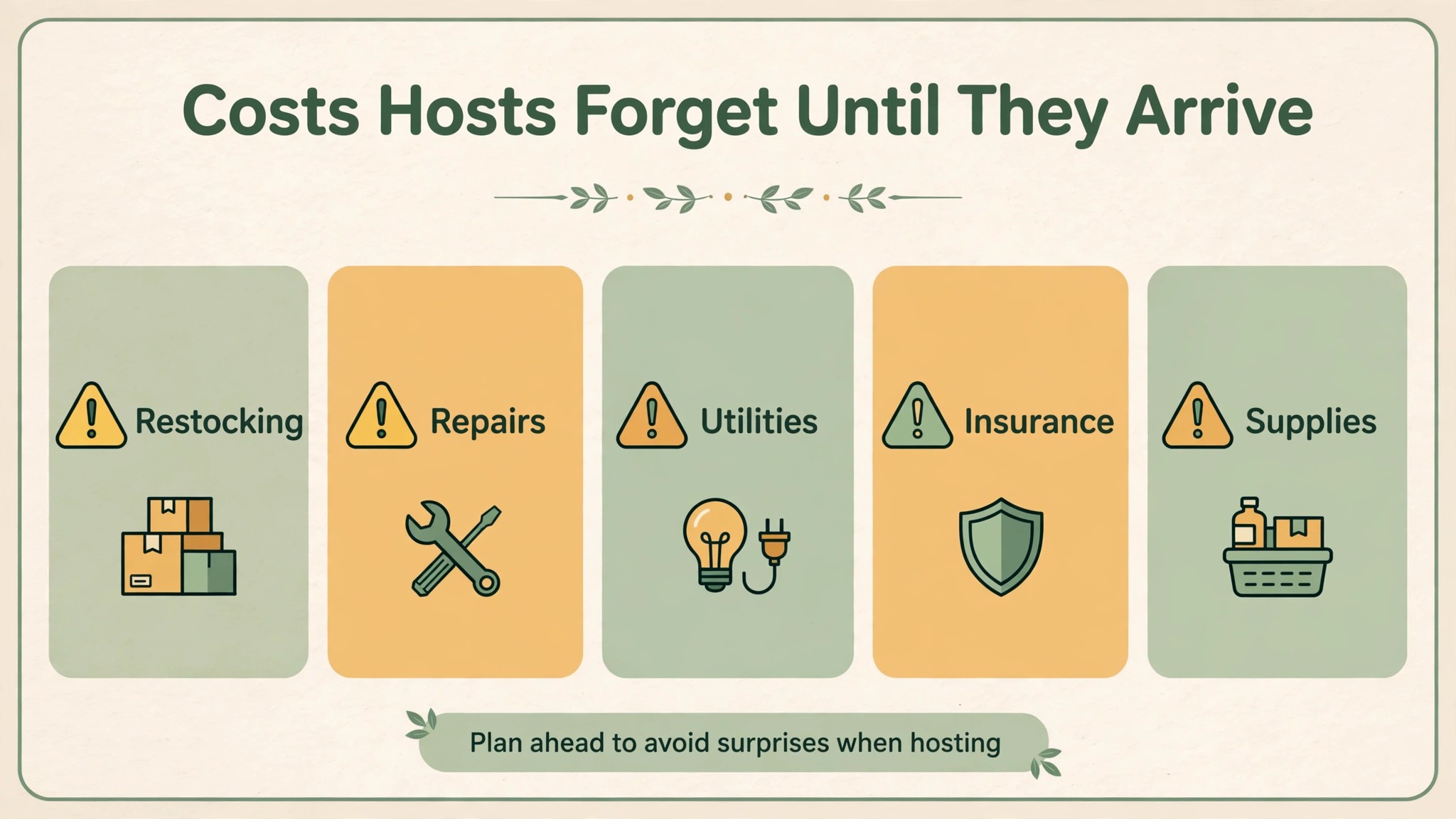
Costs Hosts Forget Until They Arrive
Forgotten costs cluster in five places. Together they shape the cost of running an Airbnb monthly more than any single line. Linen replacement, because sheets and towels wear out faster with guest turnover than with home use. Deep cleaning, because a standard turn does not cover ovens, grout, and high dusting. Small repairs, because guests report drips, remotes, and light bulbs that owners tolerate for months. Regulatory costs, because permits, licenses, and lodging taxes vary by city and change often. And vacancy, because a property that sits empty still pays mortgage, utilities, and insurance.
Seasonality makes all of this harder. A property that earns strongly in summer and weakly in winter needs a yearly budget, not a monthly one. Average the fixed lines across twelve months, keep a reserve for two quiet months, and set the nightly rate from the yearly math rather than from the best month. Hosts who price from peak months run out of cash in the first quiet stretch.
Tax deserves a professional check, not a guess. Short-term rental income, lodging taxes, and deductible expenses follow local rules, and the platform may collect some taxes while leaving others to you. A short accountant conversation before the first booking costs less than a correction later, and it clarifies which costs are deductible in your area.
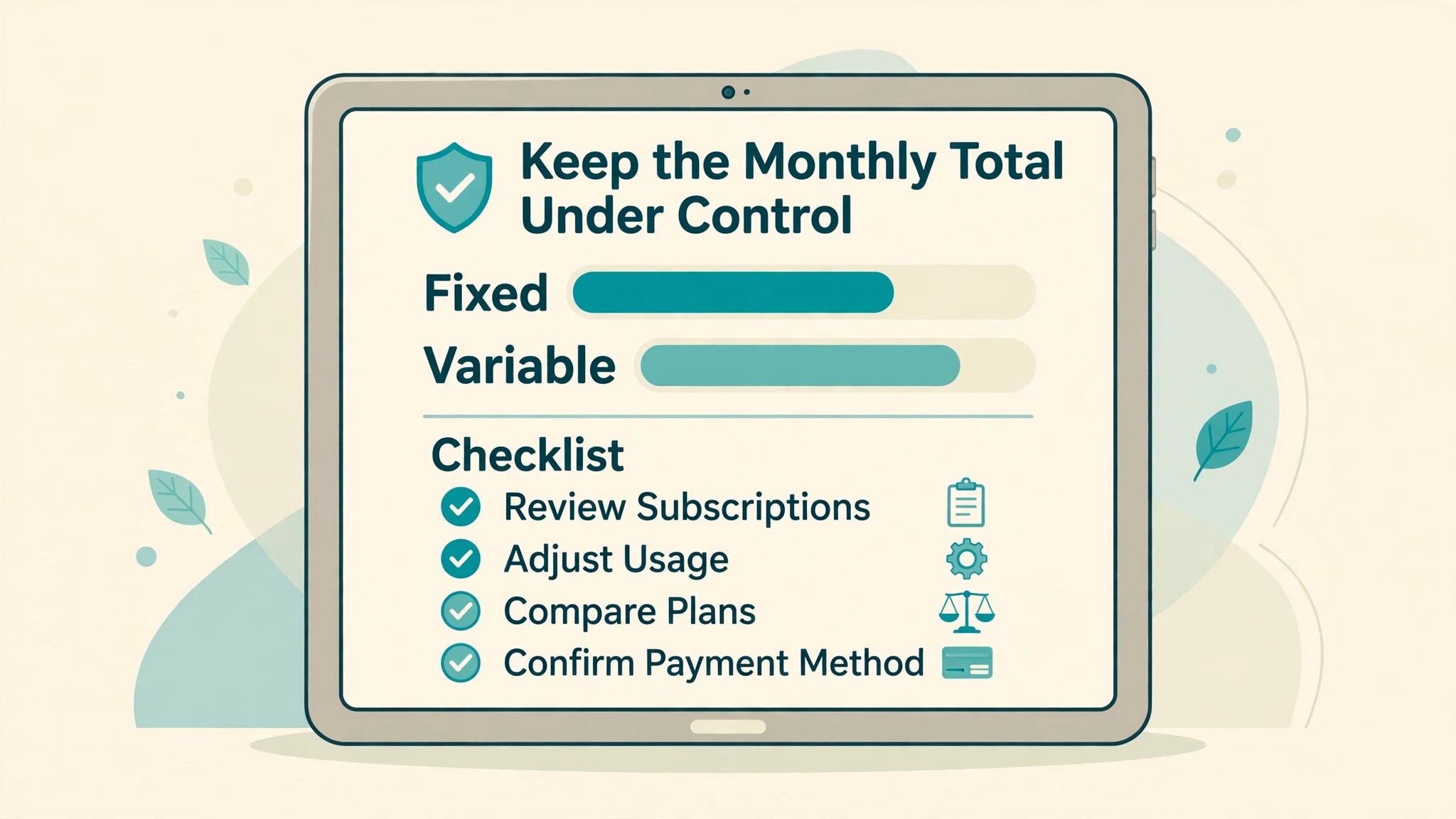
How to Keep the Monthly Total Under Control
Control starts with the cleaning line, because it is the largest variable cost you can actually negotiate. Each control below lowers the cost of running an Airbnb monthly without hurting reviews. A reliable cleaner on a standing schedule costs less per turn than last-minute bookings, and a clear turnover checklist cuts re-cleans. Photograph the property after each turn for the first month, so quality problems surface early instead of in a guest review.
Next, control utilities with simple rules. A smart thermostat with sensible limits, clear house guidance on heating and cooling, and energy efficient bulbs cut the guest premium without hurting comfort. Small caps on hot tub heating hours and clear laundry guidance save more than hosts expect, and guests rarely notice limits that are explained politely.
Finally, review pricing monthly. Occupancy, average nightly rate, and revenue per available night tell you whether the rate is right. If occupancy is high and reviews are strong, the rate is probably low. If occupancy is low and the calendar has gaps, the rate or the listing photos are the problem, not the market in general.
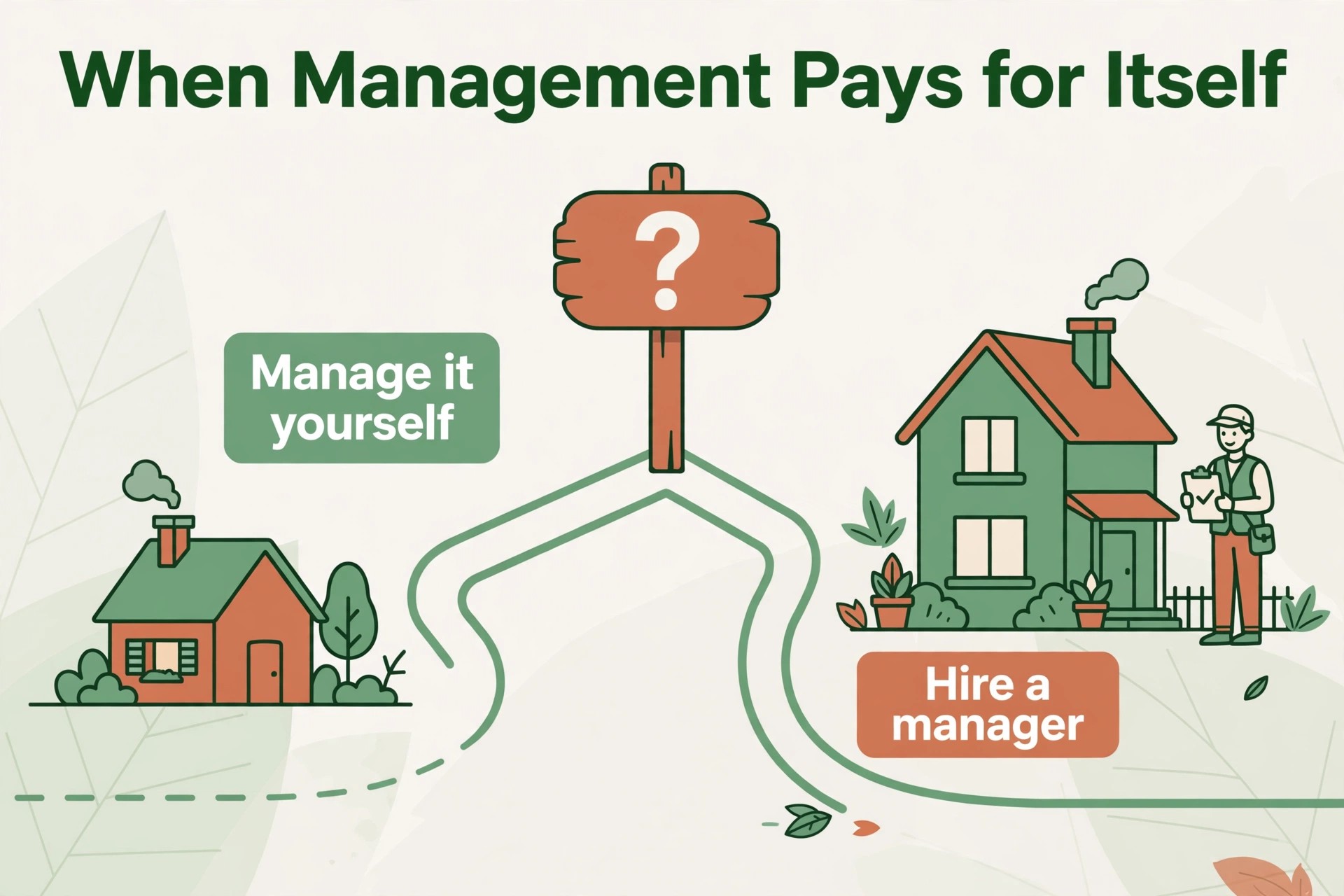
When Management Pays for Itself
Management pays for itself when your time is worth more than the fee, when you live far from the property, or when the property needs pricing skill you do not have. A manager who raises occupancy by ten points or lifts the nightly rate by fifteen percent can cover a 20 percent fee on revenue that would otherwise not exist. Ask candidates for occupancy and revenue figures from comparable properties, not just a fee percentage.
Management does not pay when the property is thin-margin, local to you, and already well reviewed. In that case, self-managing with good software keeps 700 dollars a month in your pocket, and the hours are manageable once systems are set. The cost of running an Airbnb monthly decision is therefore personal, and it should follow your time value and distance, not a general rule.
Fee figures checked against published host guides in October 2026. Confirm your own fee model in your Airbnb account before repricing, since reservations already on the calendar keep the structure they were booked under.
What Changes the Price After Year One
Prices in this guide are a snapshot, not a promise, because almost every line in a monthly budget moves within a year. Providers raise rates as their calendars fill, platforms adjust tiers and free limits, insurers reprice at renewal, and software vendors change plan structures. A budget built on today’s figures without room for movement will feel tight by the second renewal, even if nothing about your own usage changed.
Seasonality moves prices too, and it moves them in both directions. Demand peaks push freelancer rates and advertising costs upward, while quiet periods bring discounts, slower turnaround, and room to negotiate. Businesses that buy during a peak and never revisit the price pay peak rates all year, while businesses that review in a quiet month often find the same service for less. Timing a review for a quiet period is a small habit with a real payoff.
Scope creep is the quietest price rise of all, because it arrives as helpful extras rather than as a rate increase. One extra deliverable becomes two, a monthly call becomes weekly, and a small tool subscription becomes a stack. None of these is wrong alone, but together they can double a monthly total without any single decision feeling expensive. A written scope, reviewed quarterly, is the only reliable defense.
Plan for a modest annual rise in every budget, even when the current price feels fair. A buffer of five to ten percent on the monthly total absorbs most renewals without a crisis, and it turns a price rise into a routine adjustment rather than a reason to switch providers in a hurry. Providers who raise rates transparently, with notice and a clear reason, are usually worth keeping, while silent creep deserves a conversation.
The practical routine is simple. Note every renewal date in one place, review each line the month before it renews, and decide in advance whether you would accept a rise, negotiate, or switch. That routine takes less than an hour a year per provider, and it prevents the most common budgeting failure, which is discovering a price rise on the invoice instead of before it.
The Monthly Check That Keeps the Budget Honest
A monthly review sounds like admin work, and that is why most people skip it, but the version that works takes thirty minutes and prevents the slow drift that ruins budgets. The goal is not perfect bookkeeping. The goal is to catch three things early, namely money spent on unused items, deliverables that slipped, and results that stopped moving, while each one is still cheap to fix.
Start by gathering the month’s bills in one view, including platform fees, subscriptions, and any per-order or per-use charges. Compare the total with the previous month and with the budget you set, and flag any line that moved more than ten percent without a clear reason. Most months will show nothing surprising, and that quiet result is the point, because it confirms the budget is still honest.
Next, compare deliverables with the agreement. Count what was actually delivered, whether deadlines were met, and whether quality held steady. A provider who delivered less while charging the same has quietly become more expensive, and a provider who delivered more without being asked may deserve a scope conversation before the extra work becomes an expectation. Evidence from this step makes both conversations easy.
Then check results, not activity. Traffic, enquiries, orders, or hours saved are the numbers that matter, depending on what you bought. Activity without results is the warning sign, because reports full of tasks can hide a flat outcome for months. If results are flat for two consecutive months, change something specific, such as scope, provider, or target, rather than waiting for a third flat month.
Finish by writing three lines in a simple log, namely what changed, what you decided, and what to check next month. That log turns twelve monthly reviews into a yearly story you can actually use at renewal time, and it stops the same mistake from returning under a new name. Thirty minutes a month is a small price for a budget that stays honest all year.
How to Ask for a Better Price and Keep the Relationship
Most buyers negotiate price directly, and most good providers dislike that conversation, because a lower price for identical work feels like a pay cut. Negotiating scope works better for both sides. Ask what changes if the deliverable count drops slightly, if turnaround extends by a few days, or if reporting moves from weekly to monthly, and you will often find a lower price that costs the provider little and costs you nothing you valued.
Longer commitments are the second lever, and they work when trust is already earned. A quarterly or yearly commitment in exchange for a discount suits a provider you have tested for three months, but it is a poor deal for an untested provider, no matter how attractive the discount looks. Earn the right to commit by testing first, then trade commitment for price from a position of evidence.
Bundles and non-cash value are the third lever. A provider may discount for a testimonial, a case study, a referral, or a bundle of services bought together, because those items have real value beyond the invoice. Offer something specific rather than asking vaguely for a discount, since a concrete trade gives the provider a reason to say yes without setting a precedent for every client.
Trial periods and exit clauses protect both sides during negotiation. A thirty-day exit clause costs a confident provider nothing and gives you the freedom to leave if quality slips, which paradoxically makes providers work harder to keep you. If a provider refuses any exit route, treat that as information about confidence, not as a normal term, and weigh it heavily before signing.
Know your walk-away point before the conversation starts, and keep the tone friendly throughout. A provider who feels respected will often find flexibility that a pressured provider withholds, and a relationship that survives negotiation is worth more than a one-time discount that poisons it. The best negotiated deal is one both sides can describe as fair a year later.
Knowing When to Pause or Walk Away
Every monthly spend eventually faces the same question, and most people answer it too late, after months of flat results. The signals are consistent. Deliverables go unused, deadlines slip repeatedly, results stay flat for two months, or the service no longer matches the business as it stands today. Any two of those signals together mean the spend deserves a decision, not another month of hope.
Pause, switch, and stop are different decisions, and confusing them wastes money. Pause when the need is seasonal or temporary, and the provider is good, since pausing keeps the relationship and the setup intact. Switch when the need remains but the provider no longer delivers, since a new provider can fix delivery without changing the goal. Stop when the need itself has gone, since paying for a solved problem is the purest form of waste.
Before switching or stopping, check exit costs and handover items. Data, accounts, files, domains, and audience lists must transfer cleanly, and a provider who controls those items holds power over the exit. Secure access and exports before giving notice, not after, because a smooth handover is worth more than a fast exit that loses assets.
Hibernation is the middle path many budgets miss. Keep the essential lines running, such as the domain, the core tool, and the audience list, while cutting extras, advertising, and premium tiers until demand returns. Hibernation preserves the foundation for a restart at a fraction of the full monthly cost, and it beats both blind continuation and a full shutdown that must be rebuilt later.
Write the restart test before you pause or stop, so the decision to return is evidence-based rather than emotional. Name the trigger, such as three new clients, a product launch, or a seasonal date, and the budget that restarts with it. A spend with a written restart test is a paused investment, while a spend without one is usually just a habit that nobody examined.
Growing the Budget in Steps, Not Leaps
Growth changes a monthly budget in ways that feel like success but behave like scope creep. More clients, more orders, or more output all raise the workload, and the natural response is to spend more on help, tools, and capacity. That response is correct when revenue grows with it, and dangerous when spending runs ahead of revenue. The discipline is to tie each spending step to a revenue step that already happened, not to a revenue step that is merely hoped for.
A practical rule is to fund growth steps from the previous quarter’s surplus rather than from projected income. If last quarter produced extra profit, spend part of it on the next capacity step, whether that is more deliverables, a better tool, or extra hours. If last quarter produced no surplus, the growth step waits, because spending projected money is how small businesses turn a good quarter into a cash crisis.
Separate growth spending from maintenance spending in the budget, since they answer different questions. Maintenance spending keeps current results steady, while growth spending buys new results. When money is tight, maintenance comes first, because losing current results to fund speculative growth trades a certain asset for an uncertain one. Growth spending earns its place only after maintenance is fully funded.
Review growth bets after ninety days with a simple test, namely whether the spend produced the result it promised. A growth step that produced measurable new revenue, new clients, or real hours saved earns continuation. A growth step that produced activity without results should be cut or reshaped, since hope is not a result and activity reports are not revenue.
The mindset that protects growth budgets is patience with steps and impatience with drift. Move in defined, affordable steps, check each step against real numbers, and stop funding steps that do not deliver. A business that grows in funded steps grows slower in any single month and far more reliably across a year.
Keeping Every Monthly Line Visible
A budget fails silently when its lines live in different places, such as email invoices, platform dashboards, and bank statements that nobody reconciles. Visibility is the fix, and it does not require expensive software. A single spreadsheet with one row per monthly line, one column per month, and a total row at the bottom reveals drift that scattered invoices hide, and it takes an hour to build and ten minutes a month to maintain.
Three templates cover most monthly budgets. A cost tracker lists every recurring line with its renewal date and its exit terms, so nothing renews unnoticed. A deliverables log records what was actually delivered against what was promised, which turns vague dissatisfaction into evidence. A results note records the one or two outcome numbers that matter each month, such as enquiries, orders, or hours saved, so activity never substitutes for results.
Automation helps only after the manual version works. Bank and card alerts for new recurring charges catch surprise renewals, calendar reminders a month before each renewal force a decision before the invoice, and a shared folder for agreements means the scope is findable when a dispute arises. Automate the reminders, not the judgment, since judgment is the part that saves money.
Share the numbers with anyone who spends against the budget, including team members and freelancers, because hidden spending grows in the dark. A short monthly note showing the budget, the actual spend, and the decisions taken keeps everyone aligned without micromanagement, and it surfaces overspending while it is still small enough to correct.
The test of any tracking system is whether it answers three questions in under a minute, namely what are we paying, what are we getting, and what changes next month. If the system cannot answer those questions fast, simplify it until it can, because a tracking system nobody opens is worse than a simple one that gets used every month.
A Final Check Before You Decide
Run a trial weekend with friends as mock guests before the first paying booking, because a friendly trial exposes problems that a checklist misses. Ask your guests to arrive, use everything, and report honestly on the bed, the shower pressure, the Wi-Fi, the check-in instructions, and anything confusing or broken.
Time the full turnover afterward, including cleaning, laundry, restocking, and photography, so your cleaning and pricing math rests on real minutes rather than guesses. Fix the top three complaints before listing, since early guest reviews shape the listing for months and a strong start is far easier than a recovery from weak early scores. A property that passes a mock weekend is ready for real guests, and a property that fails it just saved you from a public lesson.
More Reading on Stratilyze
More Reading on Stratilyze. For tools that cut hosting work, read the AI tools for Airbnb hosts guide and the direct booking website checklist for small stays before you add another platform to the stack.
Frequently Asked Questions
What is the biggest monthly cost of running an Airbnb?
Usually the mortgage or rent, followed by management if outsourced and cleaning if self-managed. On a 3,500 dollar revenue month, management at 20 percent takes 700 dollars and cleaning takes 375 to 1,250 dollars depending on size and turns.
How much does Airbnb charge hosts in 2026?
Most hosts moved to a single host-paid fee of 15.5 percent of the booking subtotal during 2026, replacing the old split model where hosts paid about 3 percent. That change reshaped the cost of running an Airbnb monthly for most hosts. The fee applies to the whole subtotal including cleaning and pet fees, so check your own account for your exact model.
How much should I budget for cleaning each month?
Budget per turn, not per month. A one bedroom property runs 75 to 120 dollars per clean, a two to three bedroom property runs 100 to 175 dollars, and a four bedroom property runs 150 to 250 dollars, plus deep cleans every two to three months.
Is a property manager worth 20 percent?
It depends on your time value, distance from the property, and current occupancy. A manager who lifts occupancy or nightly rate enough can cover the fee, while a thin-margin local property often earns more self-managed with good software.
What costs do new hosts most often forget?
Linen replacement, deep cleaning, small repairs, permits and lodging taxes, and vacancy months. Each one is small alone, but together they can erase the margin on a property priced from the mortgage alone.
How do I set a nightly rate that covers monthly costs?
Model the full year, not the best month. Add fixed lines across twelve months, add variable lines per expected turn, add the platform fee on the subtotal, then divide by expected booked nights with a reserve for quiet months.
Price From the Full Stack, Not From the Mortgage
Add every line before you set the nightly rate, because the cost of running an Airbnb monthly includes platform fees, cleaning, utilities, supplies, and management, not just the mortgage. A rate built on the full stack survives quiet months, while a rate built on one line does not.
Model self-managed, co-hosted, and full-service versions of your own property, then choose on time value and margin, not on habit. Reprice when the fee model changes, and review occupancy and revenue monthly, so the property earns its keep all year.