
Industry analyses of millions of reservations have found that direct bookings carry higher value than OTA bookings, and that OTA cancellation rates in 2025 ran near 21.8 percent against about 10.6 percent for direct bookings. That gap is the reason a small hotel direct booking website matters. It is not only a prettier place to show rooms. It is a sales channel that keeps more of each stay, gives the hotel the guest relationship, and reduces the share of bookings that disappear before arrival.
This guide is written for an independent property with roughly 8 to 40 rooms, a small team, and a limited marketing budget. It covers the rooms and rates a guest must see, the booking engine and payment setup that must work on a phone, the SEO work that helps local searchers find the property, and a launch checklist you can work through before you send traffic to the site. Prices change often, so check the vendor page and checkout before you pay for any platform named here.
Why Direct Bookings Are Worth the Work
An OTA does useful work. It brings demand a small hotel could not reach alone, especially from travellers who do not know the town or the property name. The problem is the price of that demand. Booking.com commission is commonly reported in a range of 10 percent to 25 percent, with about 15 percent used as a typical baseline for independent properties. Expedia is commonly reported in a range of 15 percent to 25 percent, with the effective cost rising higher once visibility programmes are added. Your own contract sets your actual rate, so read that document before you use any range in a business plan.
A simple example shows why the range matters. On a 200 dollar stay, a 15 percent commission is 30 dollars. On a 20 room hotel that shifts 100 stays a year from an OTA to direct booking, that is 3,000 dollars kept before payment fees. At 20 percent, the same shift keeps 4,000 dollars. Those figures are not profit on their own, because a direct site has its own costs for software, payments, hosting and marketing. They do show the margin pool a direct channel protects, and they explain why a small saving on each booking can fund better photos, a better breakfast, or a room refresh.
Direct bookings also change who controls the stay. When a guest books direct, the hotel holds the email address, the arrival details, the preferences and the permission to send a pre arrival message. When a guest books through an OTA, the hotel often gets a masked email and a thinner guest record. That difference matters at check in, when a room request or an early arrival note can be handled without a search through a third party inbox. It matters again after checkout, when a direct guest can be invited back with a member rate, while an OTA guest may simply return to the OTA and book a competitor next time.
What a small hotel direct booking website Must Do Before It Looks Good
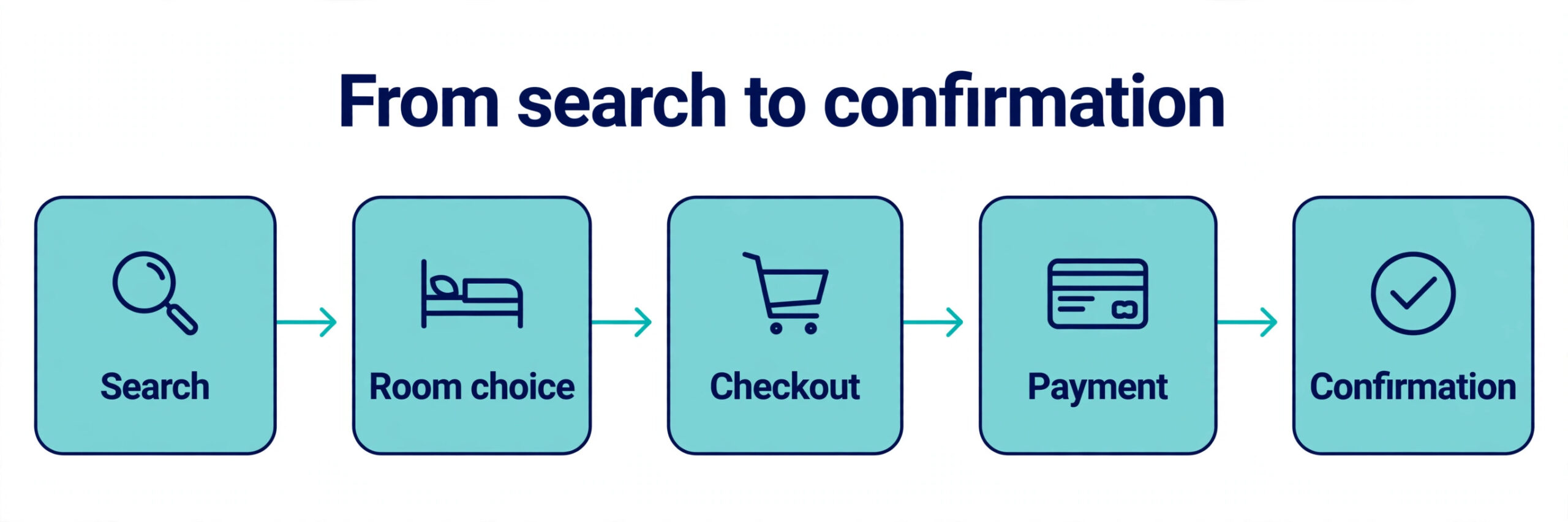
A booking site has one job, and it is not to impress other hoteliers. It must let a tired traveller on a phone find a room, see the total price, choose dates, and pay without confusion, in under a few minutes. Every design choice should be judged against that test. A beautiful homepage that hides the booking button, a gallery that loads slowly, or a rate page that shows a nightly price and then adds taxes and fees at the last step will all cost bookings.
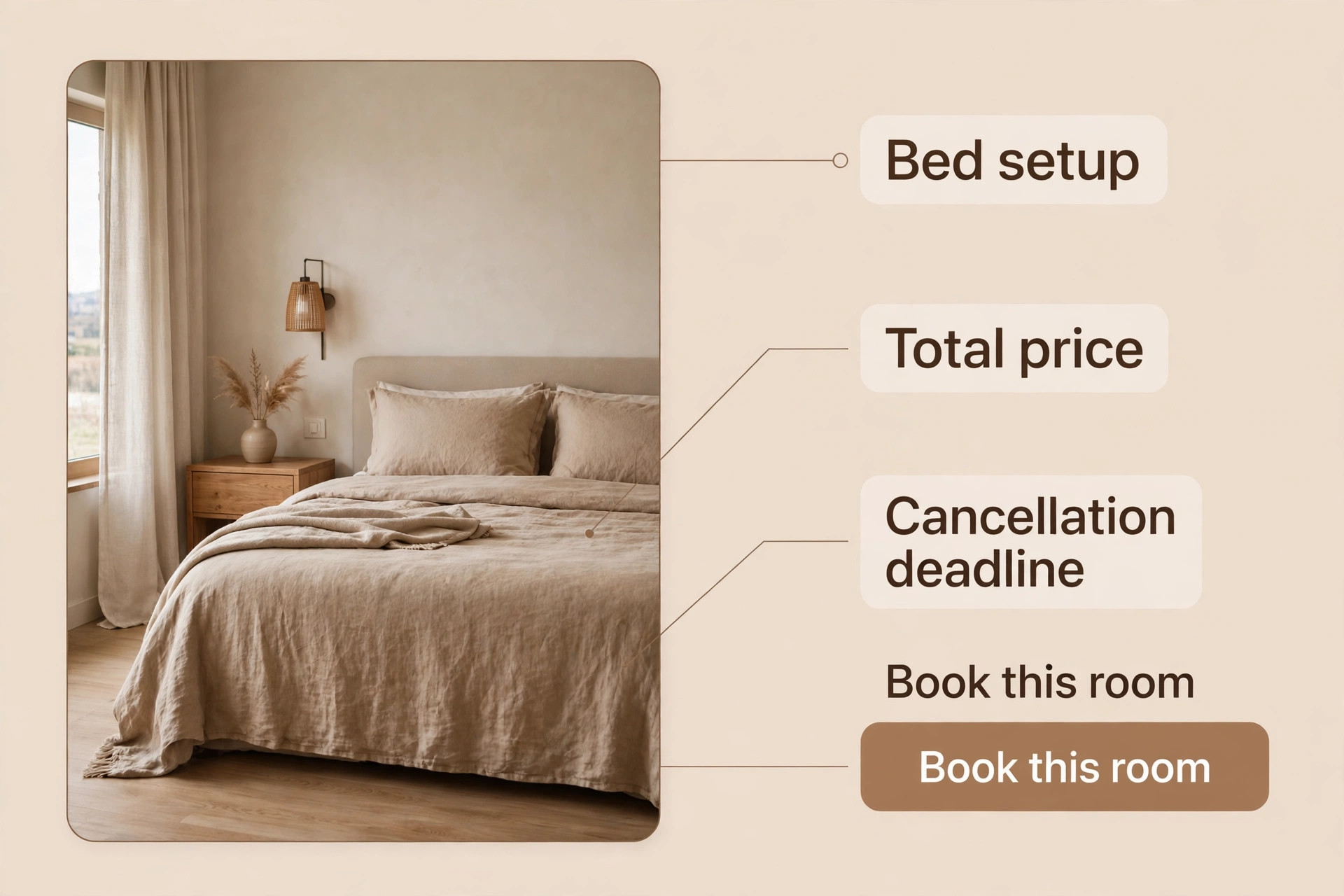
Start with the booking path, not the homepage. The search box should sit at the top of every page, with check in date, check out date, adults, children and a clear search button. The results page should show each room type with a real photo, the bed setup, the maximum guests, the total price for the stay including taxes and fees where the law allows that display, and one primary button to select the room. A guest should never have to guess whether breakfast is included, whether parking costs extra, or whether the price shown is per night or per stay.
Speed and mobile behaviour decide more bookings than most owners expect. Most hotel searches now start on a phone, and a slow page or a booking form that needs pinching and zooming will push a guest back to an OTA app that feels instant. Compress images, keep the booking steps to three screens or fewer, test the full flow on a mid priced Android phone as well as an iPhone, and test it on a slow connection. If a step fails on mobile, fix that step before you add a new feature.
Rooms, Rates and Photos That Answer Real Questions
Room pages should answer the questions a guest would ask at the front desk. How many people sleep here, and in what beds. Is there a desk, a kettle, air conditioning, a safe, a hair dryer, blackout curtains, or a quiet side of the building. Is the bathroom a shower only, or does it have a bath. Is there a lift, and is the room step free. Guests with accessibility needs, families with small children, and business travellers with work to do all filter on these details, and a page that omits them will lose those guests to a listing that states them clearly.
Use one honest photo set per room type, not a single hero image reused across types. Show the bed from the door, the bathroom, the desk or seating area, and the view or window light. Add a floor plan note or a room size in square metres or square feet where you have it, because size is the detail most often missing from small hotel sites. Avoid wide angle photos that make a 14 square metre room look like a suite. A guest who arrives to a room that looks smaller than the photo will leave a review that hurts far more than an honest photo would have cost in bookings.
Rate plans need names a guest can understand. A flexible rate, a non refundable rate, a breakfast included rate, and a stay longer rate are clear. A rate called premium, deluxe plus, or smart saver tells the guest nothing about what changes. For each rate, state the cancellation deadline in a date and time, not only in a phrase like flexible, and state what happens to a deposit if the guest cancels after that deadline. That clarity reduces refund disputes and reduces the number of phone calls asking staff to explain a policy the site should have explained.
The Launch Checklist to Work Through Before You Go Live
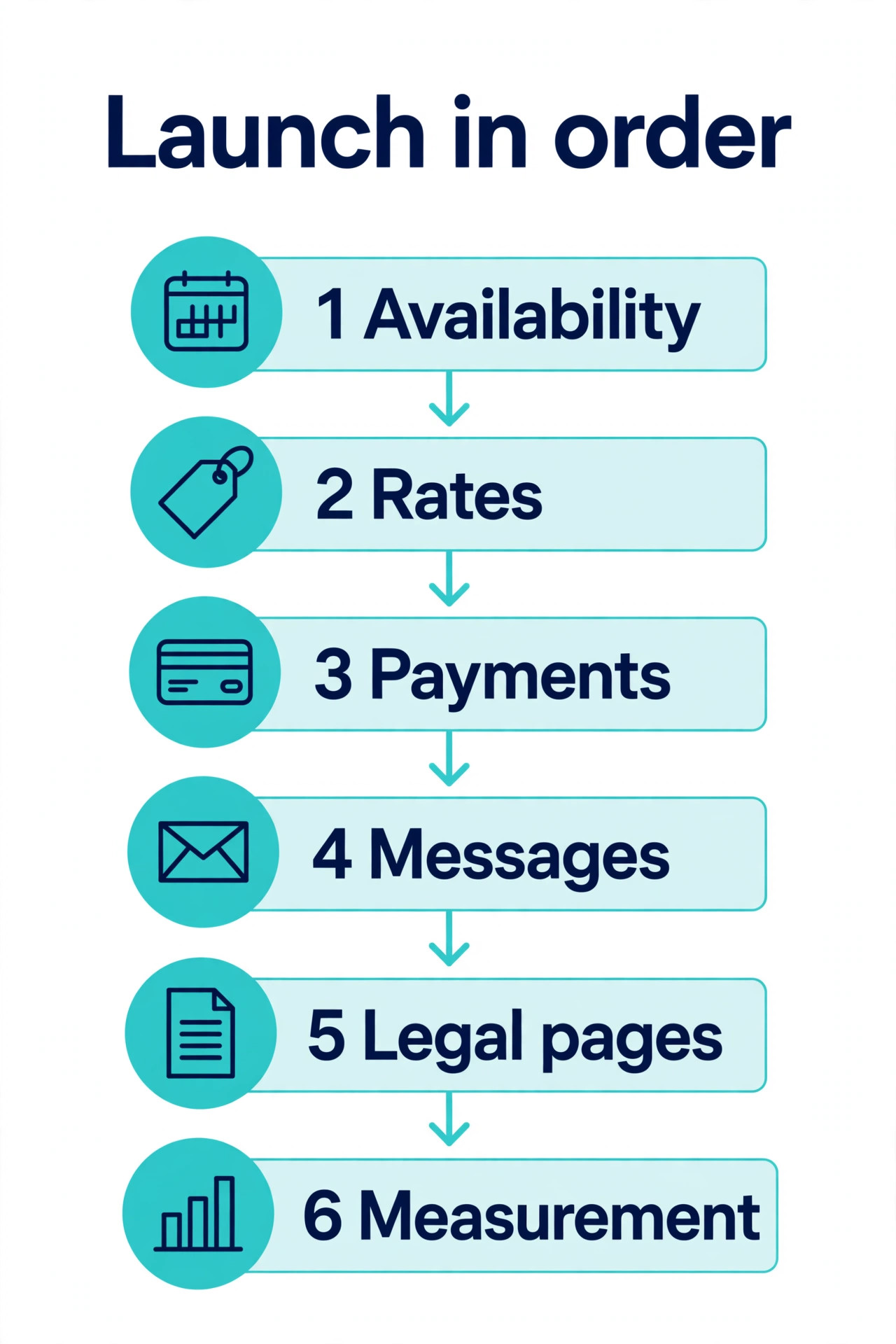
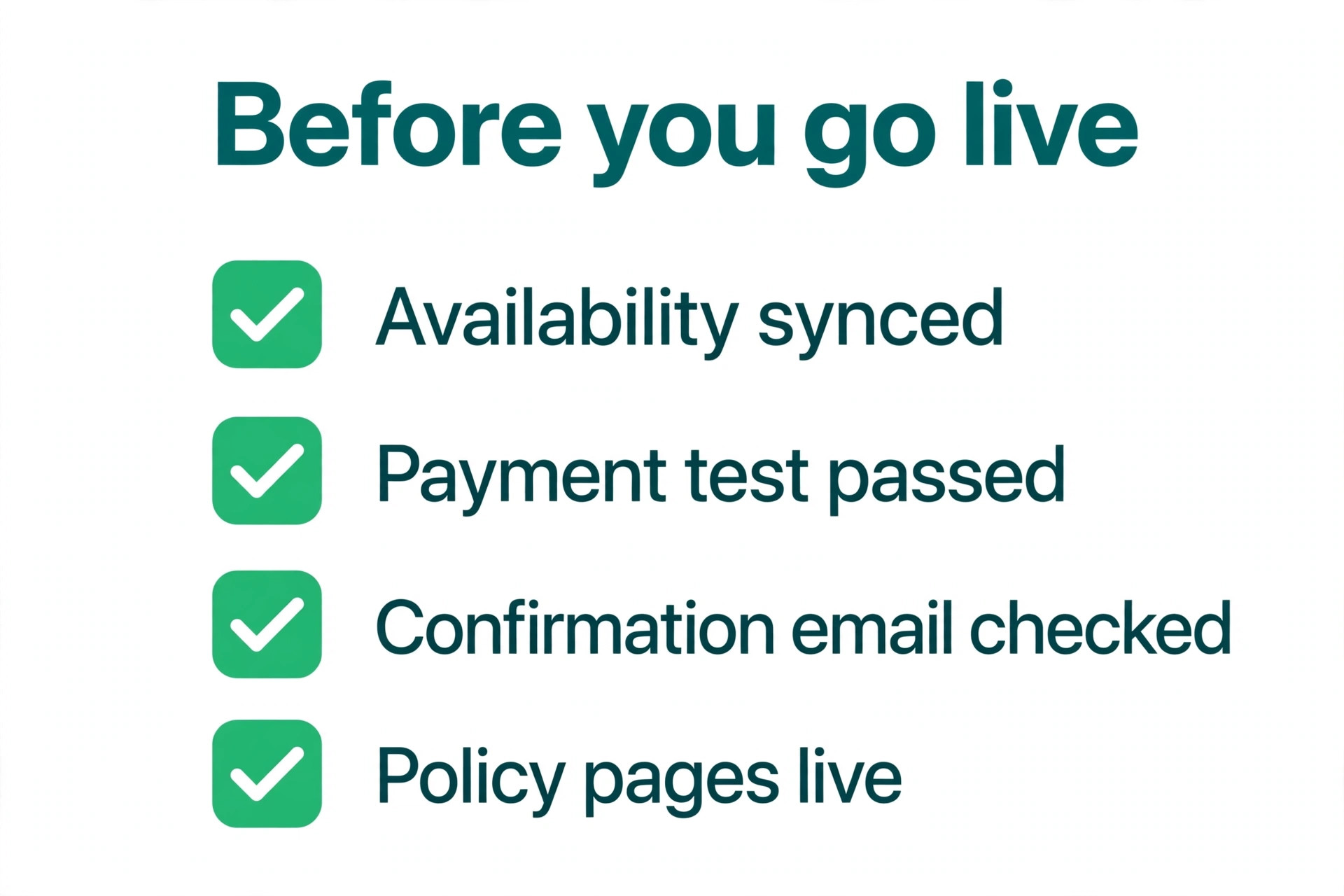
A launch checklist prevents the most common direct booking failure, which is a site that looks finished but cannot take money, cannot sync rooms, or cannot answer a guest who books at midnight. Work through this list in order, and test each item with a real booking, not only with a preview. A small hotel direct booking website earns trust in its first week, and a double booking or a failed payment in that week will cost more than a delayed launch.
First, confirm the inventory connection. The booking engine must read live availability from the property management system or channel manager, and it must push a direct booking back to that system at once. If availability is updated by hand, a room will eventually sell twice, and the hotel will have to move a guest or cancel a stay. Test this with a booking for tonight, a booking for a sold out date, and a booking that is then cancelled, and check that availability returns correctly in each case.
Second, confirm the room and rate data. Every room type, bed setup, occupancy limit, tax rule and fee must match what the front desk charges. Check a one night stay, a three night stay, a stay that crosses a rate change, and a stay with an extra guest charge. Check the confirmation email for the same total the guest saw at checkout. A mismatch of even a few dollars will generate a dispute at check in, and the guest will remember the dispute longer than the stay.
Third, confirm payments and policies. Decide whether you take full payment, a deposit, or payment at the hotel, and make that choice visible before the guest enters card details. Set up refunds, no show charges and pre authorisation rules in writing, and make sure the staff member on night duty knows them. Test a successful payment, a declined card, and a refund, and keep the test receipts for your records.
Fourth, confirm guest communication. A booking confirmation, a pre arrival message with check in time and directions, and a post stay thank you should all send automatically, with the hotel phone number and a reply address that staff actually monitor. Send each message to your own inbox and to a phone, read it as a guest would, and fix any placeholder text, wrong times, or broken links. A confirmation that says check in at the wrong hour is worse than no confirmation at all.
OTA Fee Comparison and the True Cost of a Direct Booking
Use the table below when you plan a small hotel direct booking website, as a planning range, not as a quote. Your OTA contract, your market, and any visibility programme you join will set your real rate. The point of the table is to compare the shape of the costs, not to promise a single number for every property.
| Channel | Typical cost range | What the cost buys | What to watch |
|---|---|---|---|
| Booking.com | 10 percent to 25 percent commission, plus 1.1 percent to 3.1 percent payment processing where the platform collects payment | Demand, search visibility, and a familiar checkout | Visibility programmes and guest discounts that raise the effective rate |
| Expedia Group | 15 percent to 25 percent commission, with effective costs higher where visibility programmes are added | Demand across Expedia, Hotels.com and partner sites | The rate set in Partner Central for your property, plus any promotion cost |
| Agoda | About 15 percent to 25 percent in independent estimates, varying by market and payment model | Demand, strong in several Asia Pacific markets | Commissionable items, taxes, and programme costs in your agreement |
| Direct website with card payments | About 2.9 percent plus 30 cents per successful US online card transaction through Stripe standard pricing, plus a monthly booking engine or platform fee | The guest relationship, repeat bookings, and control of rates and policies | International card surcharges, currency conversion, and monthly software fees |
| Direct website with no card taken online | No card fee at booking, but higher no show risk and more manual work | A lower upfront cost and a simple setup | Cancellations, card handling at check in, and lost deposits |
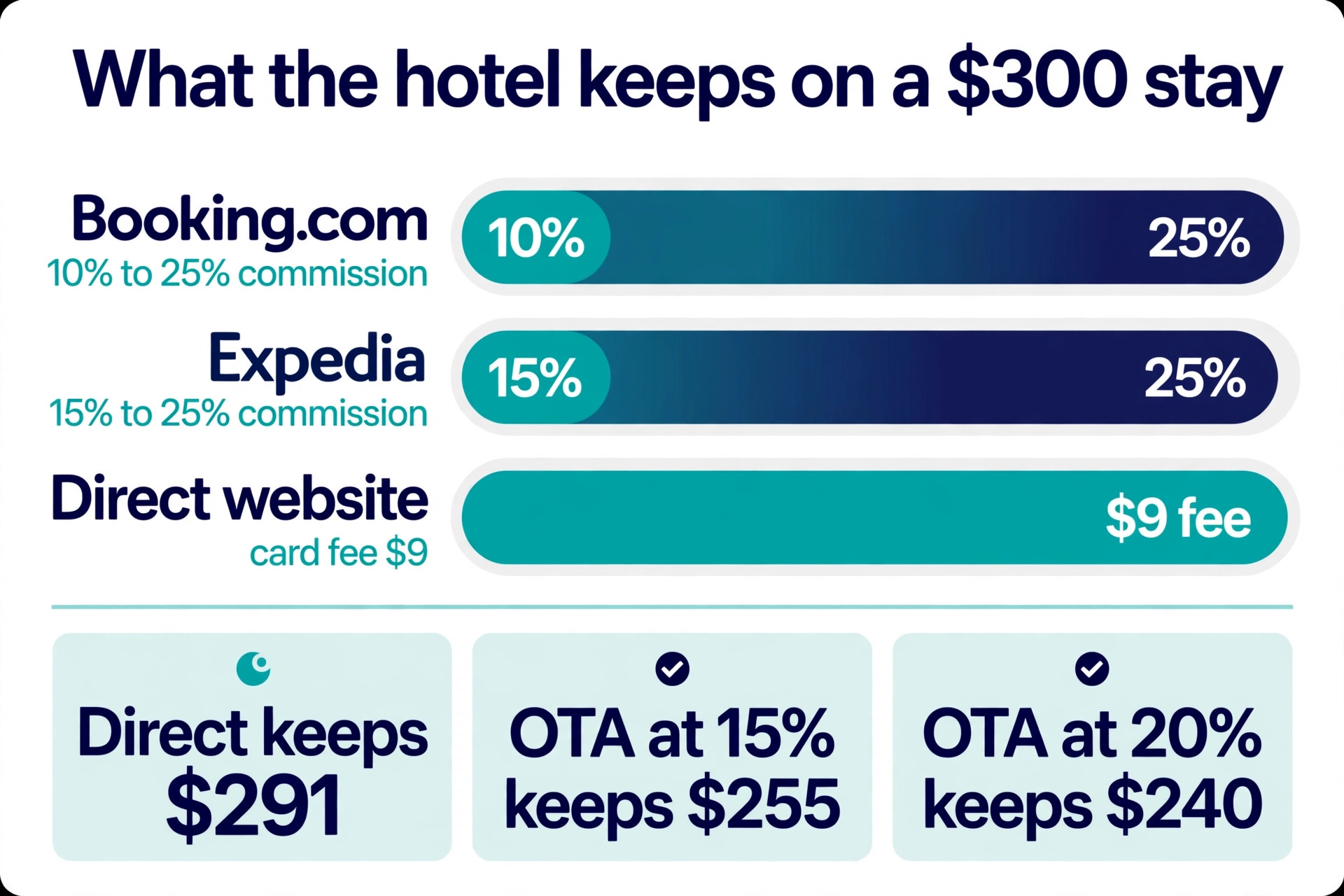
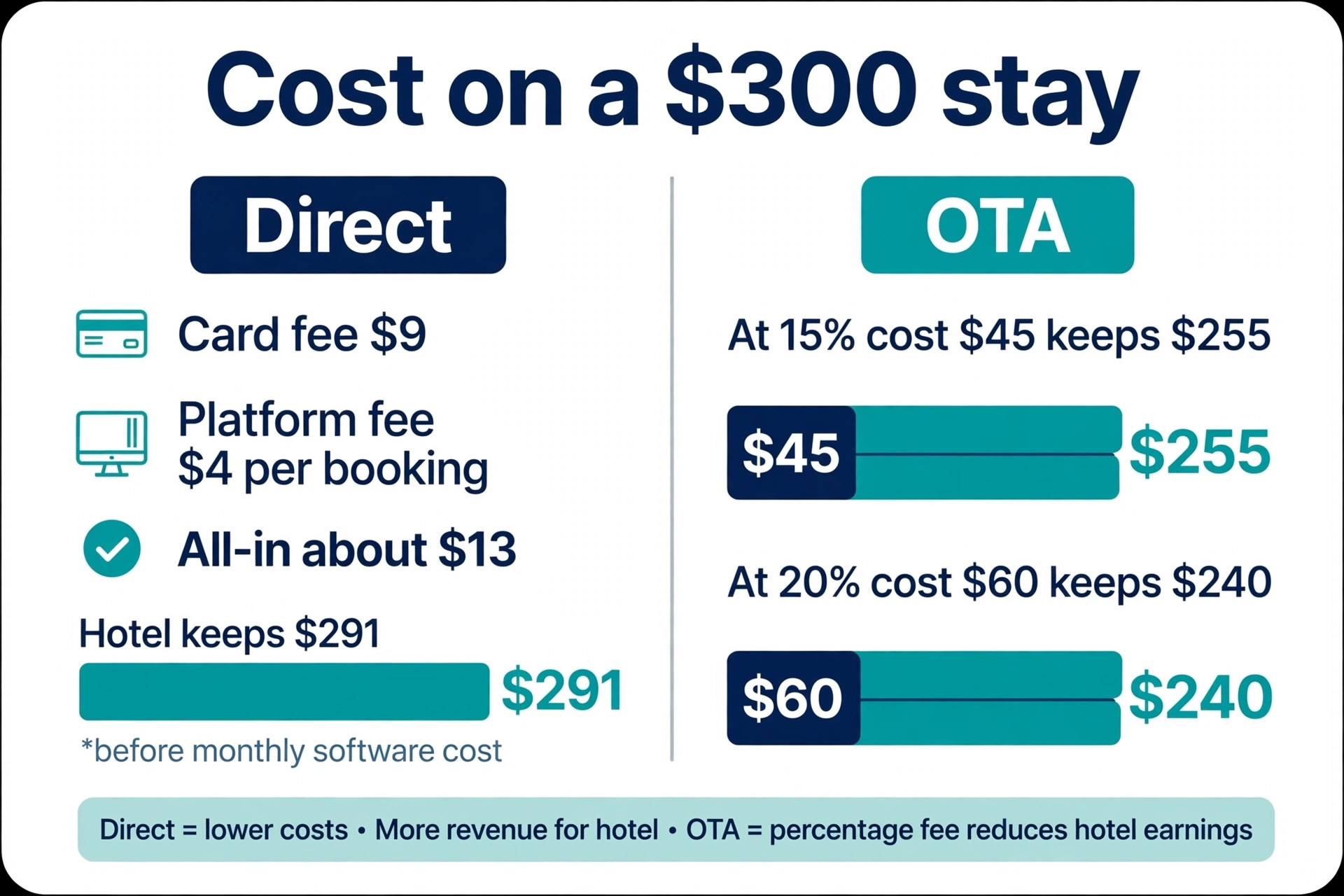
The direct row needs a worked example to be useful. Take a 300 dollar two night stay booked direct in the United States. At Stripe standard pricing of 2.9 percent plus 30 cents, the card fee is 9 dollars. That leaves 291 dollars before any monthly software cost. The same stay through an OTA at 15 percent commission costs 45 dollars, leaving 255 dollars before any payment processing add on. At 20 percent, the OTA cost is 60 dollars, leaving 240 dollars. The direct saving in this example is 36 dollars to 51 dollars per stay, before the monthly cost of the booking engine is spread across bookings.
Spread that monthly cost honestly. If a booking platform costs 200 dollars a month in third party listings, and the hotel takes 50 direct bookings a month, the platform cost is 4 dollars per booking. Add the 9 dollar card fee from the example, and the all in direct cost is about 13 dollars on a 300 dollar stay, or just over 4 percent. If the hotel takes only 10 direct bookings a month, the same platform costs 20 dollars per booking, and the all in cost rises to about 29 dollars, or just under 10 percent.
That is still below a 15 percent OTA rate in most cases, but it shows why a direct site needs volume to pay for itself, and why a hotel should not buy the most expensive platform before it has the traffic to justify it.
How to Choose a Booking Engine and Website Platform
There are three sensible routes for a small hotel direct booking website, and the right one depends on staff skill, existing systems, and budget. The first route is an all in one hotel platform, where the website, booking engine, property management system and channel manager come from one vendor. Cloudbeds is often listed from about 200 dollars a month for its channel tools in third party comparisons, with fuller platform listings higher, while SiteMinder is often listed from about 500 dollars a month in the same comparisons. Those listings conflict across sources and change with property size, so treat them as a starting range and get a written quote for your room count before you decide.
The second route is a WordPress site with a hotel booking plugin or an embedded booking engine from a specialist vendor. This route gives more control over design and SEO, and it can cost less in monthly software fees, but it needs someone to maintain updates, backups and security. A hotel that has a reliable web person or agency can do well here. A hotel where no one owns the website will find that a plugin breaks after an update, or that a booking form stops syncing, and no one notices for a week.
The third route is a website builder with a booking engine integration, which suits a hotel that wants a simple site fast and does not need deep customisation. The trade off is less control over SEO structure, page speed, and booking flow details. Whichever route you choose, test the same five things before you sign. Real time availability sync, a mobile checkout in three steps or fewer, support for deposits and cancellation policies, a confirmation email you can customise, and an export of guest data that you own and can take with you if you switch vendors.
Payments, Deposits and Fraud Checks That Protect a Small Team
Payment choice is a conversion choice as much as a finance choice. Guests expect to pay by card, and many expect Apple Pay or Google Pay on a phone. Stripe standard pricing in the United States is 2.9 percent plus 30 cents per successful online card transaction, with extra charges for international cards and currency conversion, so check the pricing page for your country before you budget. PayPal is a useful second option for guests who prefer it, but it adds a second reconciliation step, so only add it if your booking engine reports PayPal bookings cleanly in the same system.
Decide on deposits with the guest experience in mind. A full prepayment suits a non refundable rate and a peak date, but it will reduce bookings on a flexible rate where guests are still comparing options. A one night deposit is a common middle ground. It secures the booking, reduces no shows, and leaves the balance to be paid at the hotel. Whatever you choose, show the deposit amount and the balance due at checkout, in the confirmation email, and in the pre arrival message, so no guest arrives expecting a different total.
SEO for a Small Hotel Site, Built Around Place and Stay Type
Hotel SEO is local SEO first. Most direct bookers are not searching for a generic hotel idea. They are searching for a place, a date range, and a stay type, such as a hotel near a beach, a quiet hotel for a work trip, or a family hotel with parking. A small hotel direct booking website should build pages that match those searches, rather than stuffing one homepage with every keyword the owner can think of.
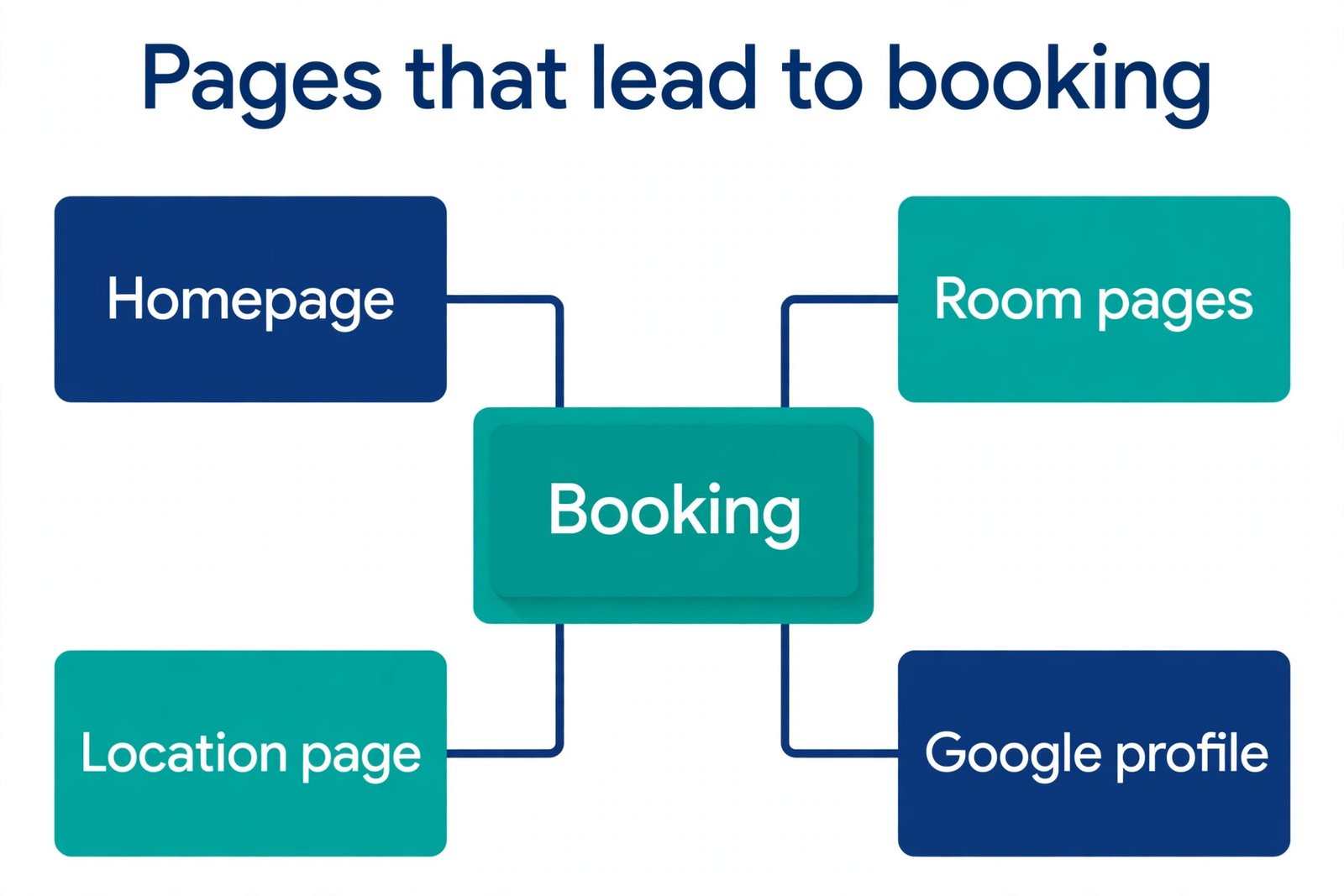
Start with the core pages. A homepage that states the town, the stay type, and the direct benefit in the first screen. A rooms page for each room type, with its own title, description, photo set, and booking button. A location page that names nearby attractions, transport links, and walking times, with honest distances. An offers page that lists current packages with total prices. A frequently asked page that answers check in time, parking, breakfast times, pet policy, and cancellation rules in the same words guests use when they call. Each page should have one clear booking button, and each page title should include the place name where it reads naturally.
Add hotel schema markup so search engines can understand the property, its rooms, its prices, its address, its phone number, and its reviews. Schema does not guarantee a rich result, but it gives search engines clean facts to use, and it reduces the chance that a search result shows an old price or a wrong phone number. Keep the schema price and availability in step with the booking engine, because a search result that promises a room you do not have will send a guest to an OTA to find one you do have.
Your Google Business Profile is part of the site, even though it lives on Google. Claim it, keep the name, address and phone number identical to the website, add real photos each season, answer reviews politely, and post offers and events when they are real. When a traveller searches for the hotel name, the profile is often the first thing they see, and a profile with an old phone number or no photos will lose a direct booking before the website gets a chance. Ask happy guests to review on Google as well as on OTAs, because a strong Google review count helps both search visibility and trust at booking time.
Getting Found Beyond Search, With Google Links, Email and Repeat Guests
Google free booking links are one of the most useful free channels for a small hotel. When a traveller searches for your hotel by name, Google can show your direct rate in the hotel booking module, alongside OTA rates, with no cost per click, provided your rates and availability are connected through a booking partner. Google states that partners pay no fee for free booking links and that Google does not collect payment for placement or engagement with those links. Ask your booking engine vendor whether it supports this connection, and test it by searching for your own hotel name after setup.
If your direct rate does not appear, the connection is not working, and you are leaving free visibility unused.
Email is the second channel that repays effort. Collect permission at booking, at check in, and through a simple newsletter signup on the site, and send a short seasonal offer, a local event note, or a repeat guest rate a few times a year. Keep each email to one offer, one date range, and one booking link. A long newsletter with five offers and no clear price will be deleted. A short email that says a returning guest can book a specific weekend at a specific total price will be opened and acted on.
Never buy an email list, and never add a guest who did not agree to marketing messages, because a spam complaint damages deliverability for every future email you send.
Repeat guests deserve a simple loyalty offer that does not need an app or a points system. A member rate for direct bookings, a free breakfast on a second stay, or a room upgrade when available are all easy to explain and easy to honour. State the offer on the booking page, apply it automatically where possible, and train front desk staff to recognise a returning guest by name. Small hotels win repeat trade on recognition, not on points balances, and a guest who is greeted by name is more likely to book direct next time than a guest who received a generic loyalty email.
Mistakes That Quietly Kill Direct Bookings
The first mistake is hiding the total price. A nightly rate that excludes taxes, resort fees, parking, or breakfast, and then reveals them at checkout, feels like a trick, even when the final total is still fair. Show the total early, explain what is included, and let the guest compare that total with an OTA total on equal terms. A direct site that looks more expensive at first glance because it shows the full price, while an OTA shows a partial price, will lose the comparison it should have won.
The second mistake is a booking form that asks for too much. A guest does not need to create an account, answer a survey, or enter a loyalty number to book a room for two nights. Ask for name, email, phone, dates, guests, room type, rate, and payment details, and nothing else at checkout. Move preferences, such as floor, pillow type, or arrival time, to the confirmation page or the pre arrival message, where they do not block payment.
The fifth mistake is measuring only bookings, not the steps before booking. If many guests start a booking and abandon it at payment, the problem may be the payment options, the deposit amount, or a form error on mobile. If many guests visit room pages but never start a booking, the problem may be price clarity, photo quality, or a missing trust signal. Check the booking funnel monthly, fix the step with the biggest drop, and test again. A small hotel direct booking website improves by fixing one weak step at a time, not by redesigning the whole site every year.
For related reading, best AI tools for hotels covers guest messaging and operations tools that pair well with a direct site, best AI website builders helps if you are still choosing a platform, automate small business with AI shows where automation saves staff time without harming guest contact, and best AI tools for Airbnb hosts is useful if you also let rooms through short stay channels.
Frequently Asked Questions
Do I still need OTAs if I build a direct booking site?
Yes, for most small hotels, at least at first. OTAs bring discovery from travellers who do not know your property, and they fill rooms in peak periods and in new markets. A small hotel direct booking website should grow alongside OTAs, not replace them on day one. Aim for a healthier mix over time, with direct bookings covering repeat guests, brand searches, and local demand, while OTAs cover new discovery.
How much does a direct booking site cost to run each month?
It depends on the route you choose. A WordPress site with a booking plugin may cost mainly hosting, a plugin fee, and payment fees, while an all in one hotel platform may cost a few hundred dollars a month in third party listings. Add payment fees of about 2.9 percent plus 30 cents per US online card transaction through Stripe standard pricing, plus any marketing spend. Get a written quote for your room count, spread the monthly fee across your expected direct bookings, and check checkout before you commit.
Can a small hotel really beat OTA prices without breaking parity rules?
Often yes, but not always by publishing a lower public room rate. Check your OTA contract first, because parity clauses vary. Member rates, package rates, breakfast included rates, free parking, late check out, and room upgrades are common direct only benefits that do not require a public price cut. A direct site can also show the total price clearly, which often makes the direct offer look better than an OTA price that adds fees later.
What is the fastest way to get direct bookings after launch?
Start with guests who already know you. Email past guests with a direct offer, add a book direct button to your Google Business Profile and email signature, and ask your booking engine vendor to connect Google free booking links so your direct rate appears in hotel search. Then ask happy guests to book direct next time, and make that offer easy to use, with a clear rate and a simple booking link.
How long does it take to launch a direct booking site?
A simple site with a connected booking engine can launch in two to four weeks if room data, photos, rates, and policies are ready. An all in one platform with a property management system migration can take longer, especially if staff need training and old bookings need to be moved. Allow extra time for testing payments, availability sync, and confirmation emails, because a rushed launch with a broken checkout costs more than a launch delayed by a week.
Should I take full payment online or payment at the hotel?
It depends on the rate and the risk. Full prepayment suits non refundable rates and peak dates, and it reduces no shows. A one night deposit suits flexible rates, because it secures the booking without asking a comparing guest to pay in full. Payment at the hotel suits regular guests and local trade, but it carries higher no show risk. Many hotels use a mix, with the rule stated clearly at checkout for each rate.
Launch Small, Book Direct, Keep the Margin
A direct booking site does not need to be large, clever, or expensive to work. It needs live rooms, honest total prices, a mobile checkout that takes payment without friction, clear policies, and a way for guests to reach a human when they need one. Build those pieces first, test them with real bookings, and launch only when availability, payments, and confirmation emails all work. A small hotel direct booking website that does those basics well will beat a larger site that looks impressive and fails at payment.