

Email still returns more revenue per dollar than almost any other channel a small business can buy, which is why a price rise in this category deserves a close look rather than a shrug. MailerLite changed its pricing in June 2026, renamed its paid plans, raised prices across every subscriber tier, and cut its free plan to 250 subscribers and 2,500 emails a month. A business that budgeted on the old numbers will find its bill higher than expected, and a business choosing today needs the new numbers, not the ones in older reviews. What follows prices cost of MailerLite for small business monthly at every list size, after the June 2026 reprice.
The cost of MailerLite for small business monthly now starts at zero on the free plan for very small lists, 12 dollars a month for the Comfort plan at 500 subscribers, and 25 dollars a month for the Power plan at the same list size. At 10,000 subscribers, those paid figures rise to 89 and 129 dollars a month. The gap between Comfort and Power is modest at small list sizes and grows with the list, and the choice between them comes down to send limits, automation depth, and seats, not just price.
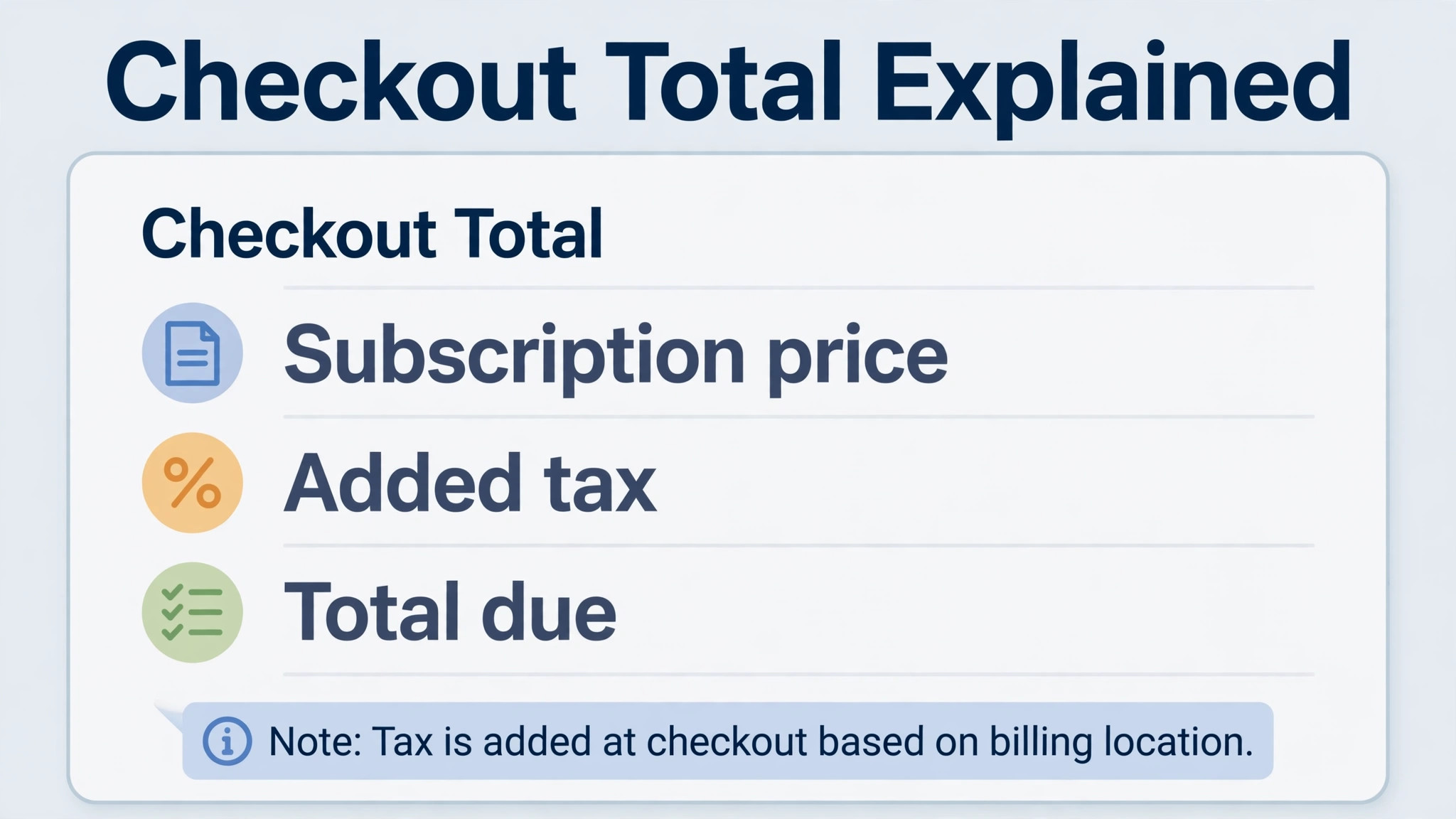
This guide works through the current plan names and prices, explains the June 2026 changes in plain terms, gives worked monthly totals at 500, 2,000, and 10,000 subscribers, and covers the costs that sit outside the subscription. Prices are in US dollars and exclude taxes, which MailerLite adds at checkout based on billing location. Confirm the live pricing page before paying, since MailerLite has repriced twice in less than a year.
The Cost of MailerLite for Small Business Monthly at a Glance
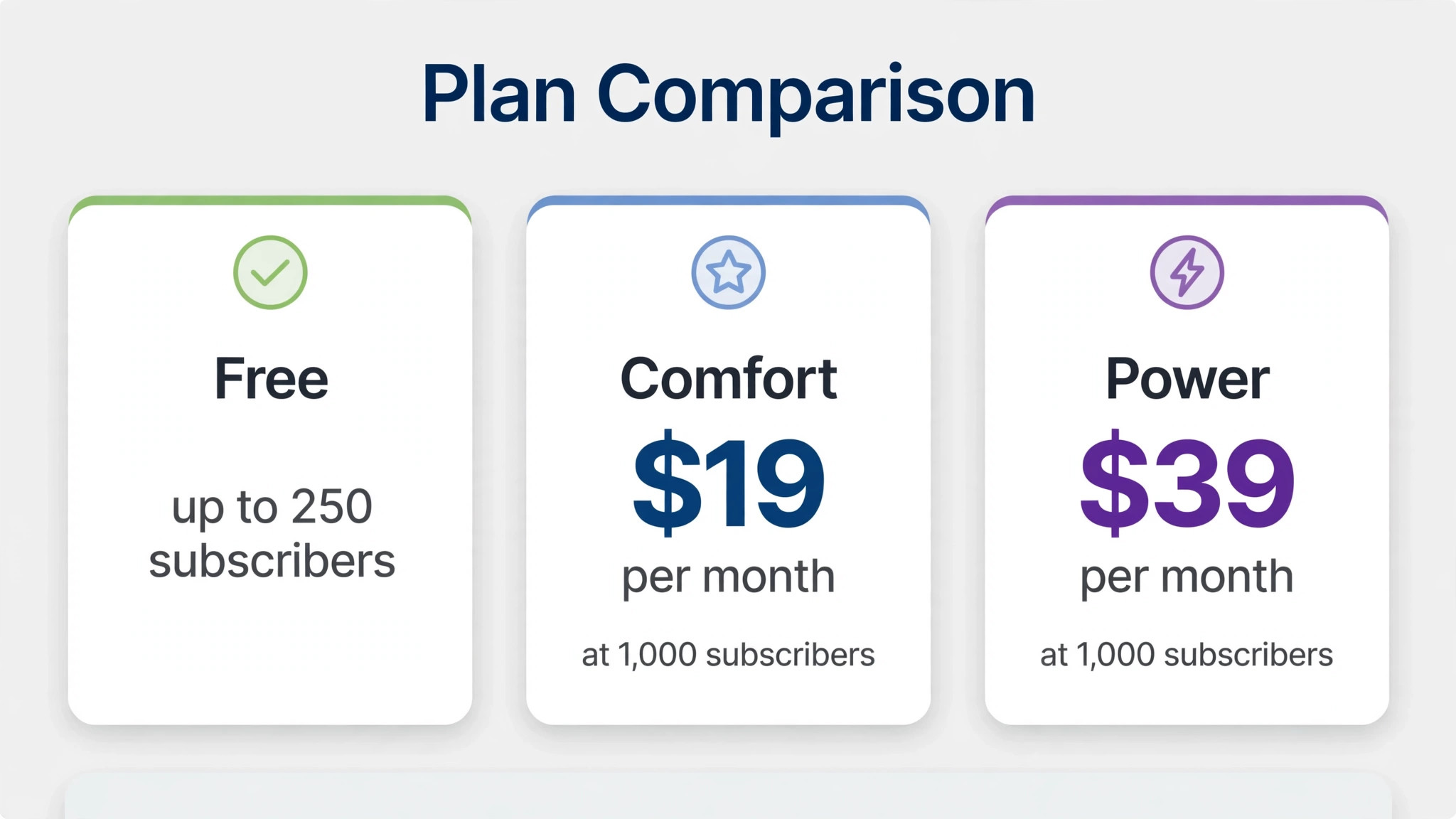
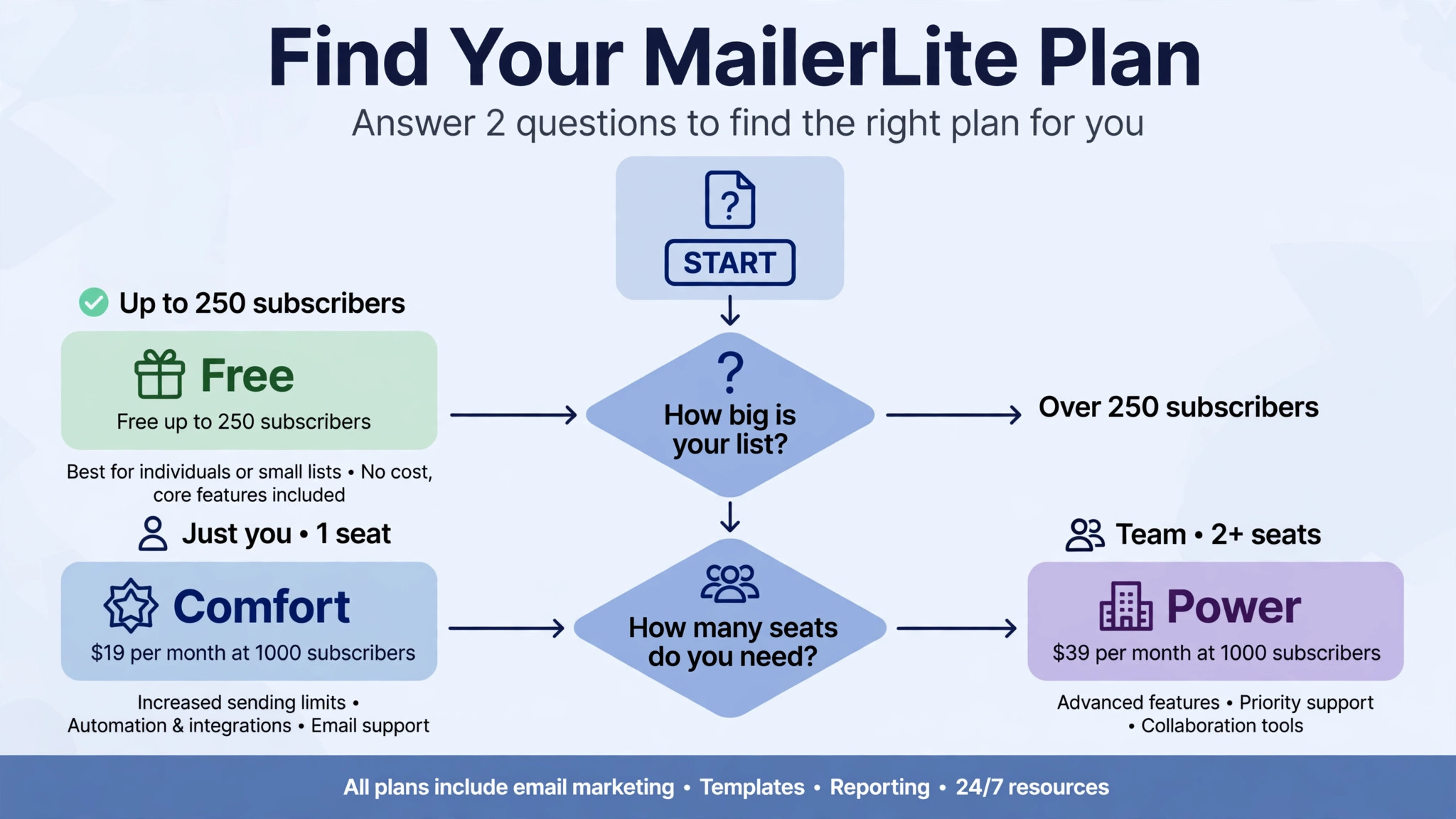
MailerLite now sells four plans. Free covers up to 250 subscribers and 2,500 emails a month. Comfort is the standard paid plan, starting at 12 dollars a month for 500 subscribers. Power is the advanced paid plan, starting at 25 dollars a month for 500 subscribers. Enterprise is custom priced for very large lists.
Comfort was previously called Growing Business, and Power was previously called Advanced. The June 2026 reprice retired those names and raised prices by roughly 10 to 30 percent across tiers. Older reviews that quote Growing Business at 10 dollars and Advanced at 20 dollars are describing the pre June 2026 prices. Those figures are no longer what a new subscriber pays, and this guide uses the current names and prices throughout, with the old names noted so you can map older reviews to the current plans.
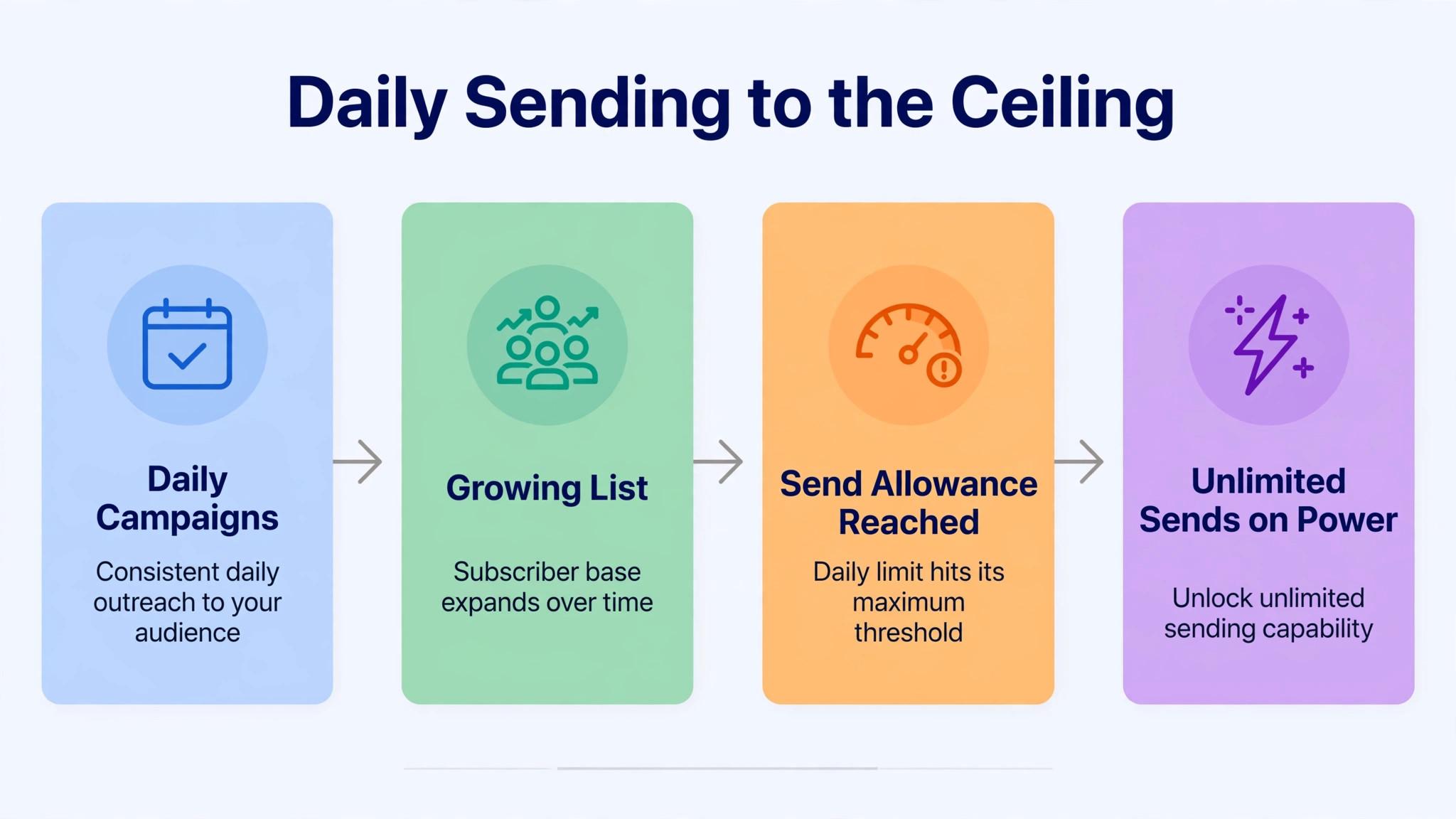
Pricing is based on subscriber count, not on emails sent, with one important exception. Comfort carries a monthly send allowance that scales with the tier, while Power includes unlimited sends. At 500 subscribers, Comfort allows 5,000 emails a month. At 1,000 subscribers, it allows 10,000 emails a month. At 2,500 subscribers, it allows 25,000 emails a month. At 5,000 subscribers, it allows 50,000 emails a month. Those allowances suit most small businesses, since they work out to roughly ten emails per subscriber per month, but a business that sends daily to its whole list should check the allowance against its real sending pattern.
| Subscribers | Free | Comfort, monthly | Power, monthly |
|---|---|---|---|
| Up to 250 | Zero, 2,500 emails a month | Not available | Not available |
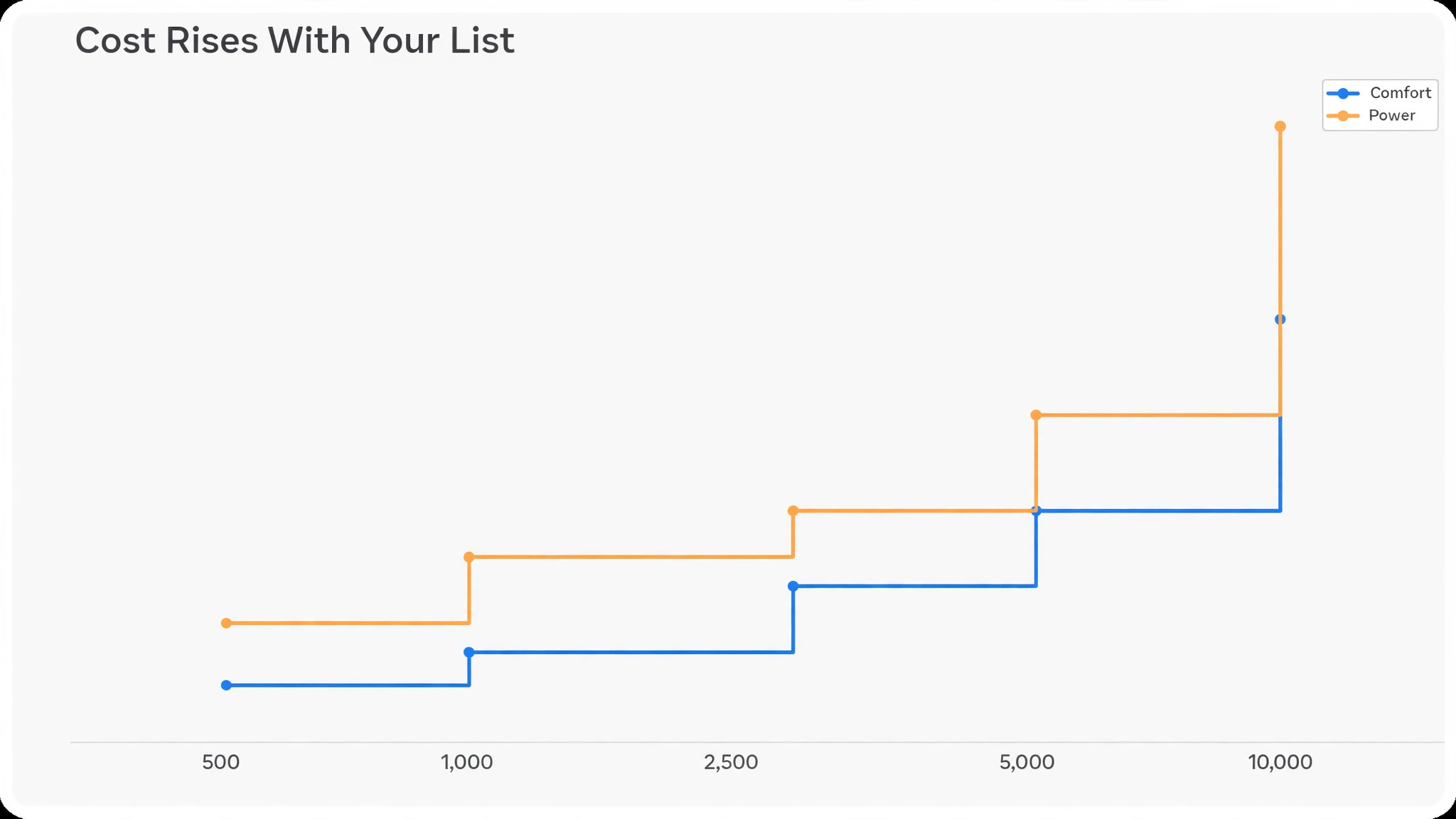
| 500 | Not available | 12 dollars | 25 dollars |
| 1,000 | Not available | 19 dollars | 39 dollars |
| 2,500 | Not available | 33 dollars | 49 dollars |
| 5,000 | Not available | 49 dollars | 69 dollars |
| 10,000 | Not available | 89 dollars | 129 dollars |
Annual billing saves about 10 percent on paid plans, which brings Comfort at 500 subscribers to about 10 dollars and 80 cents a month, and Power at the same size to 22 dollars and 50 cents a month. Paid plans include a 14 day free trial with no credit card required. Only active subscribers count toward your limit. Bounced and unsubscribed contacts do not count, which is fairer than it sounds, since a list with a messy history does not punish you for contacts who already left.
One more structural point matters. When your list crosses a subscriber threshold, your plan moves to the next tier automatically. That is convenient, and it is also how a growing list produces a bill that rises without any action from you. A list growing by a few dozen subscribers a month will cross bands several times a year, and each crossing lifts the monthly price. Budget for the band above your current size, not just the band you are in today.
What the Free Plan Covers and Where It Stops
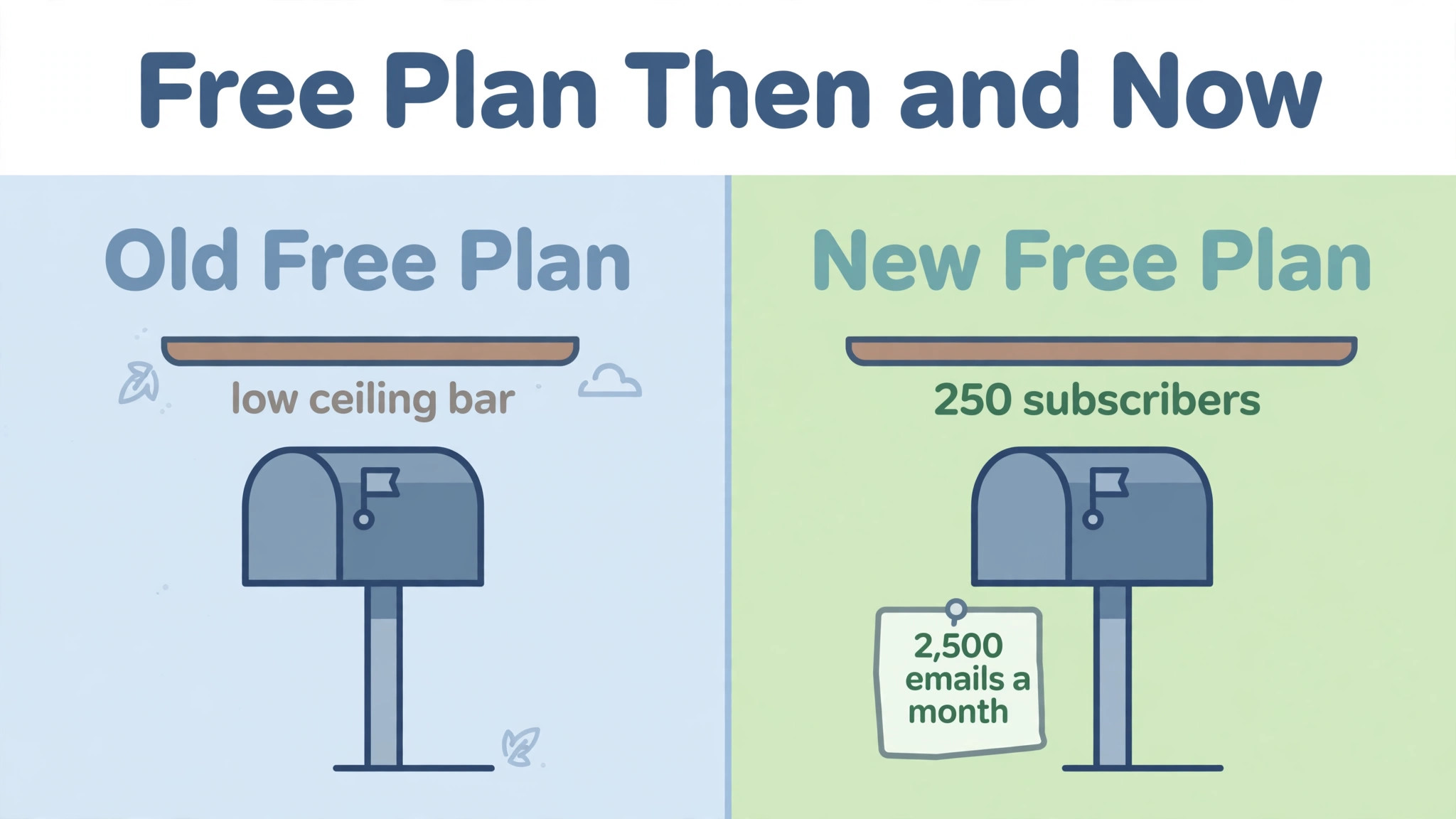
The free plan is now a testing plan more than a running plan. It covers up to 250 subscribers and 2,500 emails a month, with a drag and drop editor, landing pages, and basic automation. It includes a limited number of automations, forms, and landing pages, and it carries MailerLite branding. For a business validating an idea or building its first list, that is enough to learn the tool and send real campaigns.
The limits arrive quickly. At 250 subscribers, a single successful lead magnet, a market stall, or a month of steady website signups can push you past the free tier. At 2,500 emails a month, a list of 250 subscribers can receive ten emails a month, which sounds generous until you run a launch sequence or a weekly newsletter plus a welcome series. The free plan also limits users to one seat, which means a team cannot share the account properly.
The history of the free plan is worth knowing, because it explains why older reviews praise it so warmly. In September 2025, the free plan dropped from 1,000 subscribers to 500 subscribers. In June 2026, it dropped again to 250 subscribers, with emails cut to 2,500 a month. Each cut made the free plan less useful as a long term home and more useful as a trial. If you read a review calling the MailerLite free plan generous, check its date. A review from before June 2026 is describing a different plan.
The practical advice is simple. Use the free plan to learn the editor, build your first landing page, and send your first campaigns. Do not build a business process that depends on staying free, because the ceiling is low and the next step is a paid plan. The moment your list passes 250 subscribers, you are paying 12 dollars a month for Comfort or 25 dollars for Power, and that is the real starting price for a growing business.
What Comfort Gives a Growing Business
Comfort is the standard paid plan, and it is where most small businesses should start their comparison. At 500 subscribers it costs 12 dollars a month, at 1,000 subscribers 19 dollars, at 2,500 subscribers 33 dollars, at 5,000 subscribers 49 dollars, and at 10,000 subscribers 89 dollars. Annual billing cuts about 10 percent from each figure.
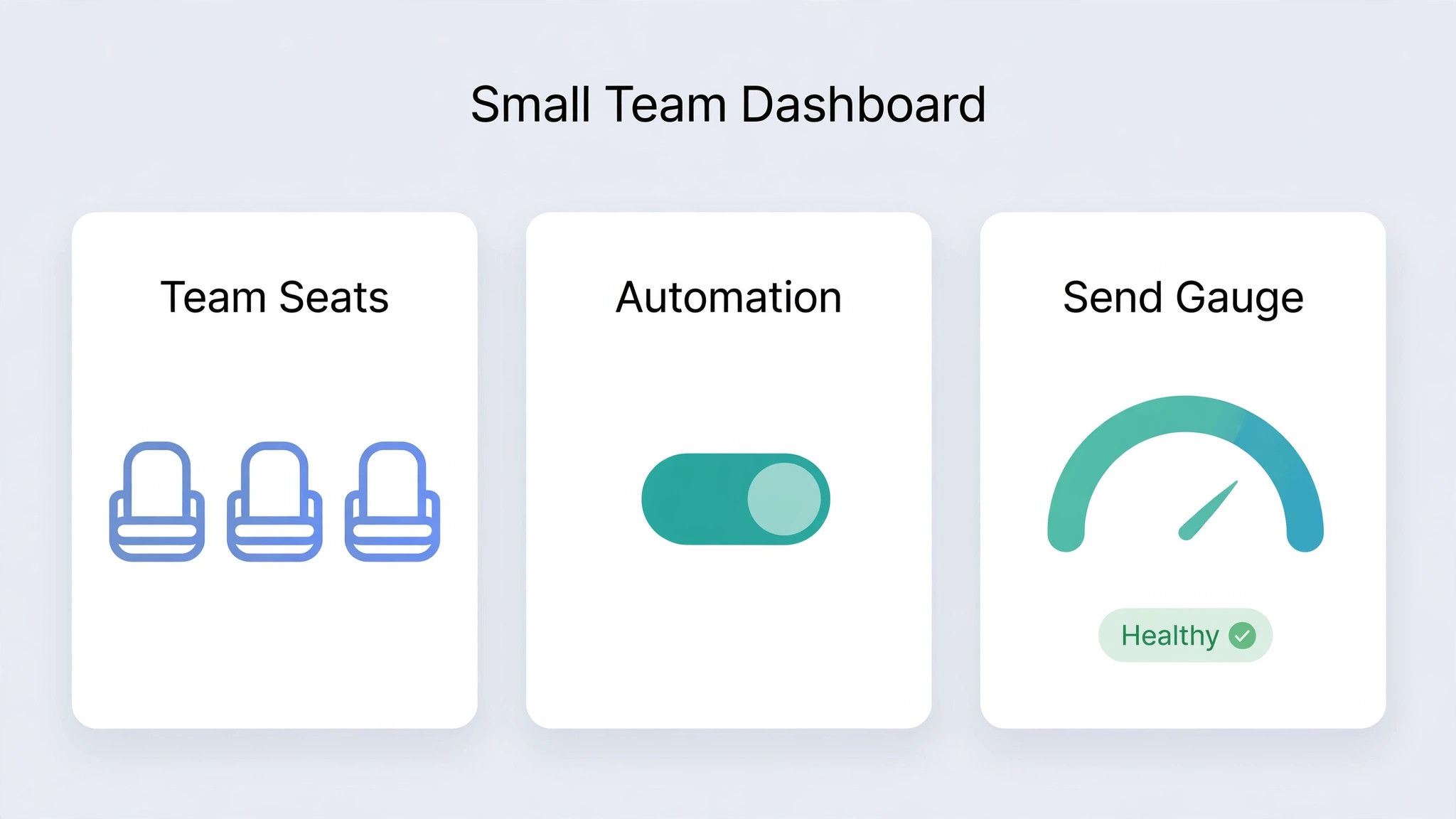
Comfort includes unlimited templates, three user seats, advanced automation, A/B testing, and removal of MailerLite branding. It also includes digital products, which suit creators selling a guide, a template, or a short course directly from their emails. The send allowance scales with the tier, from 5,000 emails a month at 500 subscribers up to larger allowances at larger tiers, and that allowance is the main practical difference from Power for most senders.
Three seats is enough for a small team. An owner, a marketer, and an assistant can each work in the account without sharing a login, which is better for security and for knowing who changed what. Advanced automation covers welcome sequences, abandoned cart flows for shops, and behaviour based follow ups, which are the automations a growing business actually uses. A/B testing lets you test subject lines and content on a portion of the list before sending to everyone, which improves open rates over time without guesswork.
Comfort does not include everything. The AI writing assistant, multivariate testing, custom HTML editing, and unlimited seats wait on Power. For many small businesses, none of those is a deal breaker. The AI assistant is convenient but not essential. Multivariate testing matters more at large list sizes, where small percentage gains translate into large numbers. Custom HTML matters if you build emails by hand rather than in the drag and drop editor. Unlimited seats matter for larger teams, not for a team of three.
Comfort is the right plan if you send regular campaigns, run standard automations, have a team of three or fewer, and do not need the advanced testing or AI tools. It is the value plan in the range, and it stays good value up to 10,000 subscribers, where 89 dollars a month for a list of that size is competitive by any measure.
What Power Adds and Who Needs It
Power is the advanced plan, starting at 25 dollars a month for 500 subscribers, then 39 dollars at 1,000 subscribers, 49 dollars at 2,500 subscribers, 69 dollars at 5,000 subscribers, and 129 dollars at 10,000 subscribers. Annual billing cuts about 10 percent from each figure. The gap between Comfort and Power is 13 dollars a month at 500 subscribers, 20 dollars at 1,000 subscribers, 16 dollars at 2,500 subscribers, 20 dollars at 5,000 subscribers, and 40 dollars at 10,000 subscribers.
Power adds unlimited sends, unlimited user seats, the AI writing assistant, multivariate testing, custom HTML editing, and deeper automation options. Unlimited sends is the most practical addition for a heavy sender. A business that emails daily, runs multiple sequences at once, or sends to segments repeatedly can hit a Comfort allowance eventually, even though the allowance is generous. Power removes that ceiling entirely, which is peace of mind for a business whose sending volume is growing faster than its list.
Unlimited seats matter for agencies and larger teams, where five or ten people may need access. The AI writing assistant helps draft subject lines and email copy, which saves time for teams that send often, though it does not replace judgment about what to say. Multivariate testing goes beyond A/B testing by testing several variables at once, which suits larger lists where the data is rich enough to read the results properly. Custom HTML editing suits teams that design emails outside the drag and drop editor and import finished code.
Power is the right plan if any of these apply. You send heavily enough that a send allowance feels like a constraint. Your team is larger than three people. You rely on AI drafting to keep up with your sending schedule. You test at a scale where multivariate results are meaningful. You build emails in HTML. If none of those apply, Power is a premium you can postpone, and Comfort will serve you well for a long time.
One caution applies to Power at larger list sizes. The gap between Comfort and Power widens to 40 dollars a month at 10,000 subscribers, and it keeps widening as the list grows. At that size, the decision should be driven by a specific Power feature you use, not by a general sense that the advanced plan must be better. Pay for the feature, not the label.
Worked Monthly Totals at 500, 2,000, and 10,000 Subscribers
Here are worked totals for the three list sizes this guide promised, using current monthly list prices, with annual equivalents alongside. Taxes are excluded, since they vary by billing location.
At 500 subscribers, Comfort costs 12 dollars a month, or about 10 dollars and 80 cents a month on annual billing. Power costs 25 dollars a month, or 22 dollars and 50 cents a month on annual billing. The annual totals are about 130 dollars for Comfort and 270 dollars for Power. This is the starting band for a business that has outgrown the free plan, and both figures are easy to justify against the revenue a healthy list produces.
At 2,000 subscribers, the bill sits at the 2,500 subscriber band, since MailerLite prices by subscriber bands and a list of 2,000 falls into the band priced at the 2,500 subscriber step. Comfort at that band costs 33 dollars a month, or about 29 dollars and 70 cents a month on annual billing. Power costs 49 dollars a month, or about 44 dollars and 10 cents a month on annual billing. The annual totals are about 356 dollars for Comfort and 529 dollars for Power. A list growing toward 2,500 subscribers should budget at this band now, rather than being surprised by the step when it arrives.
At 10,000 subscribers, Comfort costs 89 dollars a month, or about 80 dollars and 10 cents a month on annual billing. Power costs 129 dollars a month, or about 116 dollars and 10 cents a month on annual billing. The annual totals are about 961 dollars for Comfort and 1,393 dollars for Power. At this size, the list is a genuine business asset, and the monthly cost should be judged against the revenue it produces, not against the free plan you left behind long ago.
| List size | Comfort, monthly | Comfort, annual per month | Power, monthly | Power, annual per month |
|---|---|---|---|---|
| 500 subscribers | 12 dollars | About 10 dollars and 80 cents | 25 dollars | 22 dollars and 50 cents |
| 2,000 subscribers, billed at the 2,500 band | 33 dollars | About 29 dollars and 70 cents | 49 dollars | About 44 dollars and 10 cents |
| 10,000 subscribers | 89 dollars | About 80 dollars and 10 cents | 129 dollars | About 116 dollars and 10 cents |
Per subscriber, the economics improve as the list grows, then flatten. At 500 subscribers, Comfort costs about 2 cents and 40 hundredths per subscriber per month. At 10,000 subscribers, it costs under 1 cent per subscriber per month. That is the normal pattern for subscriber based pricing, and it is why a growing list feels cheaper per head even as the total bill rises. The total bill is what leaves your account, though, so judge the plan by the total, not by the per subscriber figure.
The Costs That Sit Outside the Subscription
Taxes are the first extra. MailerLite adds tax at checkout based on your billing location, and published summaries note that buyers in the US, EU, or Switzerland should expect a meaningful addition to the quoted price. The exact amount depends on location, so the totals in this guide are pre tax figures. Check the checkout total, not just the pricing page, before you compare MailerLite against a tool that quotes tax inclusive prices.
Paid add ons and services are the second extra. MailerLite sells additional features and services beyond the plan, and a business that needs advanced design help, dedicated sending infrastructure, or migration support may pay for those separately. Most small businesses will not need them, but a business moving a large list from another tool should ask about migration support costs before assuming the move is free.
List growth itself is the third extra, and it is the one owners forget. Because pricing moves in bands, a list growing steadily will cross a band every few months, and each crossing lifts the bill. A list growing from 500 to 2,500 subscribers over a year will pass through the 1,000 subscriber band on the way, paying 19 dollars, then 33 dollars on Comfort. That is not a hidden fee. It is the pricing model working as designed. But it means your MailerLite bill at the end of the year will be higher than at the start, even if you never change plans, and your budget should allow for it.
Deliverability is a cost of a different kind. A cheap plan that lands in spam is expensive, because it wastes the list you built. MailerLite has a solid deliverability record for small businesses that follow good practices, like cleaning inactive subscribers and avoiding purchased lists. Keeping your list clean also keeps your subscriber count honest, since inactive contacts still count toward your band if they remain active subscribers. Regular list hygiene is free, and it keeps both deliverability and billing under control. Taxes, growth, and deliverability together explain why the cost of MailerLite for small business monthly rises even when you change nothing.
How to Pay Less Without Losing What You Need
Clean your list before you judge the price. Inactive subscribers who never open your emails still count toward your band, and removing them can drop you a band or delay the next step. A list of 2,600 subscribers with 300 inactive contacts is really a list of 2,300, and cleaning it can move you from the 2,500 band toward the 1,000 band. That is a real saving for an afternoon of work, and it improves deliverability at the same time.
Use annual billing once you are committed. The saving is about 10 percent, which is about 14 dollars a year at 500 subscribers on Comfort and about 107 dollars a year at 10,000 subscribers on Comfort. The saving grows with the list, so it matters more exactly when the bill gets larger. Pay monthly while you are testing, then switch to annual once the tool has earned a year.
Stay on Comfort until a Power feature earns its keep. The gap between the plans is 13 to 40 dollars a month across the bands in this guide, and that gap buys unlimited sends, unlimited seats, AI drafting, multivariate testing, and custom HTML. If you use none of those heavily, the gap is pure extra cost. If you use one heavily, it is money well spent. Make the decision feature by feature, not by plan label.
Watch your sending pattern against the Comfort allowance. At 500 subscribers, Comfort allows 5,000 emails a month, which covers a weekly newsletter plus a welcome sequence comfortably. If your sending grows past the allowance, Power removes the ceiling, but so does a simpler fix, which is sending less often to the whole list and more often to engaged segments. Segmented sending improves results and keeps you inside the allowance, which is a rare case where the cheaper option is also the better marketing. Those four habits keep the cost of MailerLite for small business monthly close to the published band price.
Who Should Pick Which Plan
Free fits a business validating an idea, building its first list, or learning the tool, with 250 subscribers or fewer and modest sending. It does not fit a business with a growing list, a team, or a regular sending schedule, because the ceiling arrives quickly.
Comfort fits most small businesses. It fits a business sending regular campaigns, running standard automations, with a team of three or fewer, that does not need unlimited sends, AI drafting, multivariate testing, or custom HTML. It fits lists from 500 to 10,000 subscribers and beyond, and it is the plan to compare everything else against.
Power fits heavy senders, teams larger than three people, agencies managing client accounts, and businesses that rely on AI drafting or multivariate testing at scale. It also fits businesses that build emails in HTML and need the custom editor. If you match one of those descriptions, Power is worth the premium. If you do not, Comfort is the better buy.
Enterprise fits very large lists with custom needs, dedicated infrastructure, or specific compliance requirements. Most small businesses will never need it, and it is priced on application, so there is no list price to budget against. If your list reaches that scale, the conversation with MailerLite will be about your specific setup, not about the published bands. Whichever plan you pick, the cost of MailerLite for small business monthly should be reviewed each time your list crosses a band.
Verdict
A small business with 500 subscribers should budget 12 dollars a month for Comfort or 25 dollars for Power, falling to about 11 and 23 dollars on annual billing. At 2,000 subscribers, budget at the 2,500 band, which is 33 dollars for Comfort or 49 dollars for Power. At 10,000 subscribers, budget 89 dollars for Comfort or 129 dollars for Power. The free plan is a starting point, not a long term home, after the June 2026 cut to 250 subscribers.
Our recommendation is Comfort for most small businesses, bought monthly while you test and switched to annual billing once you commit. Power earns its premium for heavy senders, larger teams, and businesses that use its advanced testing and AI tools heavily. The June 2026 reprice made MailerLite more expensive than its reputation suggests, but at 89 dollars a month for 10,000 subscribers on Comfort, it remains competitive for what it delivers.
The cost of MailerLite for small business monthly is therefore best quoted with its date attached. Before June 2026, the answer was 10 and 20 dollars at 500 subscribers. Today, it is 12 and 25 dollars, with a free plan that covers far less. Budget on today’s numbers, clean your list regularly, and let the plan grow with the list rather than ahead of it.
Mistakes That Inflate the Cost of MailerLite for Small Business Monthly
The most common mistake is paying for a dirty list. Inactive subscribers who never open your emails still count toward your band if they remain active subscribers, and a list of 2,600 contacts with 300 inactive ones is really a list of 2,300 that is paying at the higher band. Cleaning inactive subscribers can drop you a band or delay the next step, and it improves deliverability at the same time. The cost of MailerLite for small business monthly follows the subscriber count you keep, not the subscriber count you wish you had, so list hygiene is a billing task as much as a marketing one.
The second mistake is buying Power for the label rather than a feature. The gap between Comfort and Power runs from 13 dollars a month at 500 subscribers to 40 dollars at 10,000 subscribers, and it buys unlimited sends, unlimited seats, AI drafting, multivariate testing, and custom HTML. If you use none of those heavily, the gap is pure extra cost. Make the decision feature by feature. If unlimited sends matter because you email daily, Power earns its keep. If you send weekly to a small team, Comfort is the better buy.
The third mistake is budgeting from the old prices. Reviews from before June 2026 quote Growing Business at 10 dollars and Advanced at 20 dollars, with a free plan covering 1,000 subscribers. None of those figures applies to a new subscriber today. Current prices at 500 subscribers are 12 and 25 dollars, and the free plan covers 250 subscribers. The cost of MailerLite for small business monthly changed twice in less than a year, so check the date on any review you read and confirm the live pricing page before you commit.
The fourth mistake is staying on monthly billing after committing. Annual billing saves about 10 percent, which is about 14 dollars a year at 500 subscribers on Comfort and about 107 dollars a year at 10,000 subscribers. The saving grows with the list, so it matters most exactly when the bill gets larger. Pay monthly while testing, then switch to annual once the tool has earned a year.
Frequently Asked Questions
How much does MailerLite cost per month for a small business?
For a new subscriber, Comfort starts at 12 dollars a month for 500 subscribers and Power starts at 25 dollars a month. At 1,000 subscribers, the figures are 19 and 39 dollars. At 2,500 subscribers, they are 33 and 49 dollars. At 10,000 subscribers, they are 89 and 129 dollars. Annual billing saves about 10 percent. The free plan covers up to 250 subscribers and 2,500 emails a month.
What happened to Growing Business and Advanced?
They were renamed in June 2026. Growing Business became Comfort and Advanced became Power, with prices raised by roughly 10 to 30 percent across tiers. Older reviews quoting 10 and 20 dollars at 500 subscribers describe the pre June 2026 prices. Current prices at 500 subscribers are 12 and 25 dollars.
Is MailerLite really free?
Up to a point. The free plan costs nothing and covers up to 250 subscribers and 2,500 emails a month, with a drag and drop editor, landing pages, and basic automation. It is limited to one user and carries MailerLite branding. A business with more than 250 subscribers, or one that sends more than 2,500 emails a month, needs a paid plan.
What happens when my list grows past my subscriber band?
Your plan moves to the next tier automatically, and your monthly price rises to that tier. Only active subscribers count, so bounced and unsubscribed contacts do not push you into a higher band. Cleaning inactive subscribers regularly can delay a band step and keep your bill lower.
Does Comfort include unlimited emails?
No. Comfort carries a monthly send allowance that scales with the tier, starting at 5,000 emails a month at 500 subscribers and rising with larger tiers. Power includes unlimited sends. Most small businesses fit inside the Comfort allowance, but heavy senders should check their real monthly volume against it.
Which plan is best for a small business with 2,000 subscribers?
Comfort at the 2,500 subscriber band, which costs 33 dollars a month, or about 29 dollars and 70 cents on annual billing. Power at the same band costs 49 dollars a month. Choose Power only if you need unlimited sends, more than three seats, AI drafting, multivariate testing, or custom HTML editing.