

Published startup summaries for photography businesses put total starting costs anywhere from 2,870 to 9,900 dollars and up for a lean setup, and from 5,000 to 30,000 dollars for a fuller professional setup, depending on gear, computer, insurance, and marketing choices. That wide range is honest, because a portrait photographer starting with one camera and one lens faces a very different bill from a wedding photographer who needs two bodies, several lenses, lighting, backups, and insurance before the first booking. The difference is the cost of starting a freelance photography business done properly, not ambition. A wedding cannot be reshot, so redundancy and insurance are not luxuries there, they are the product.
If you want to understand the cost of starting a freelance photography business, start with the jobs you will actually shoot in year one, because those jobs decide the gear, the insurance, and the marketing you must buy before you can charge for them.
Photography businesses fail on cash flow more often than on talent. Gear is bought upfront, clients pay after delivery, and marketing must run before bookings exist. A photographer who spends everything on a flagship camera and has nothing left for a website, insurance, or ads will struggle to find clients to photograph. A photographer who spends modestly on gear, properly on insurance and backup, and consistently on client acquisition will book work sooner and upgrade gear from profit rather than debt. This guide prices gear, clients, and insurance separately, shows a lean and a professional tier, and ends with a monthly budget that keeps the business alive between bookings.
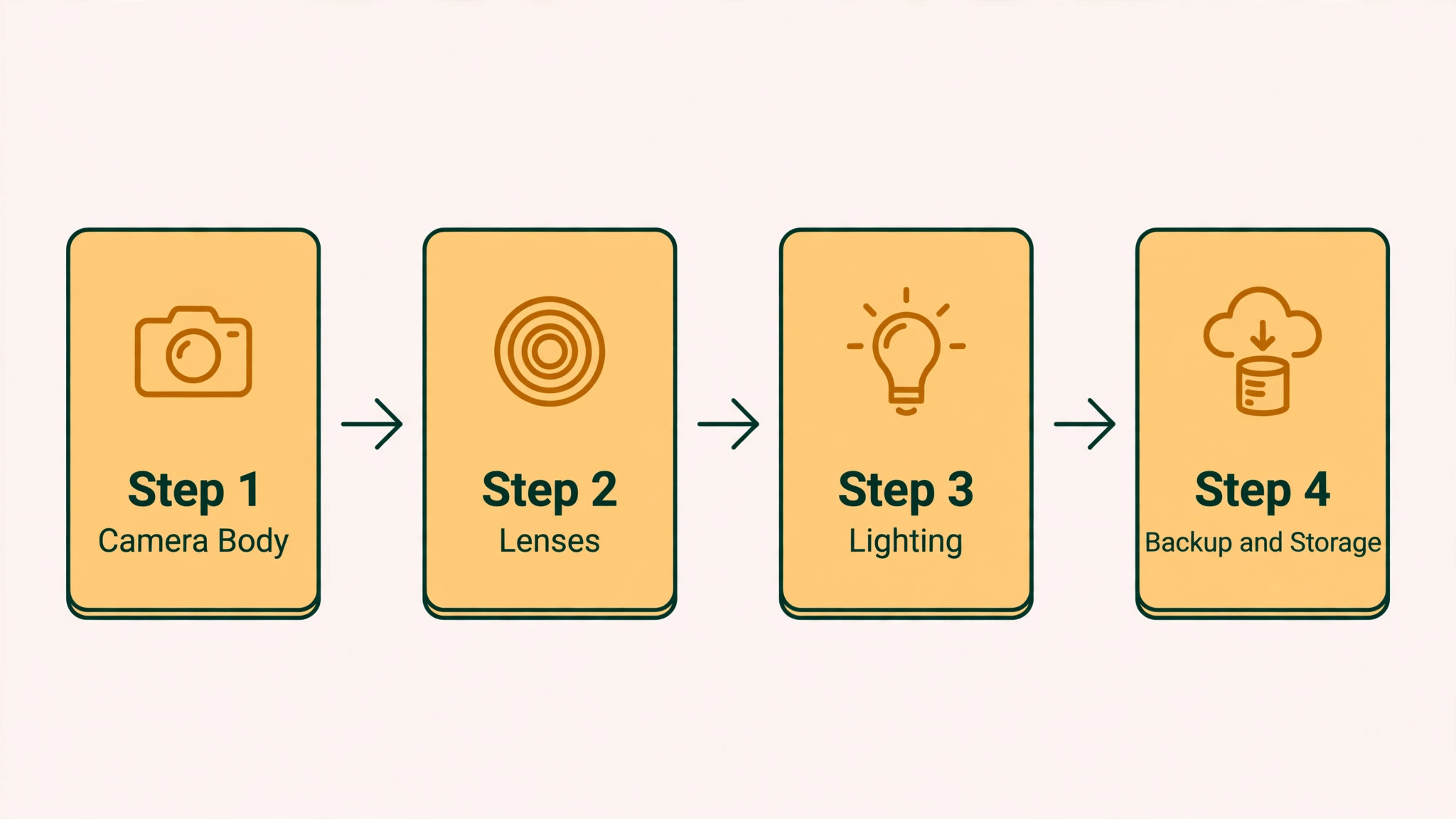
Gear, Computer, and Software Costs
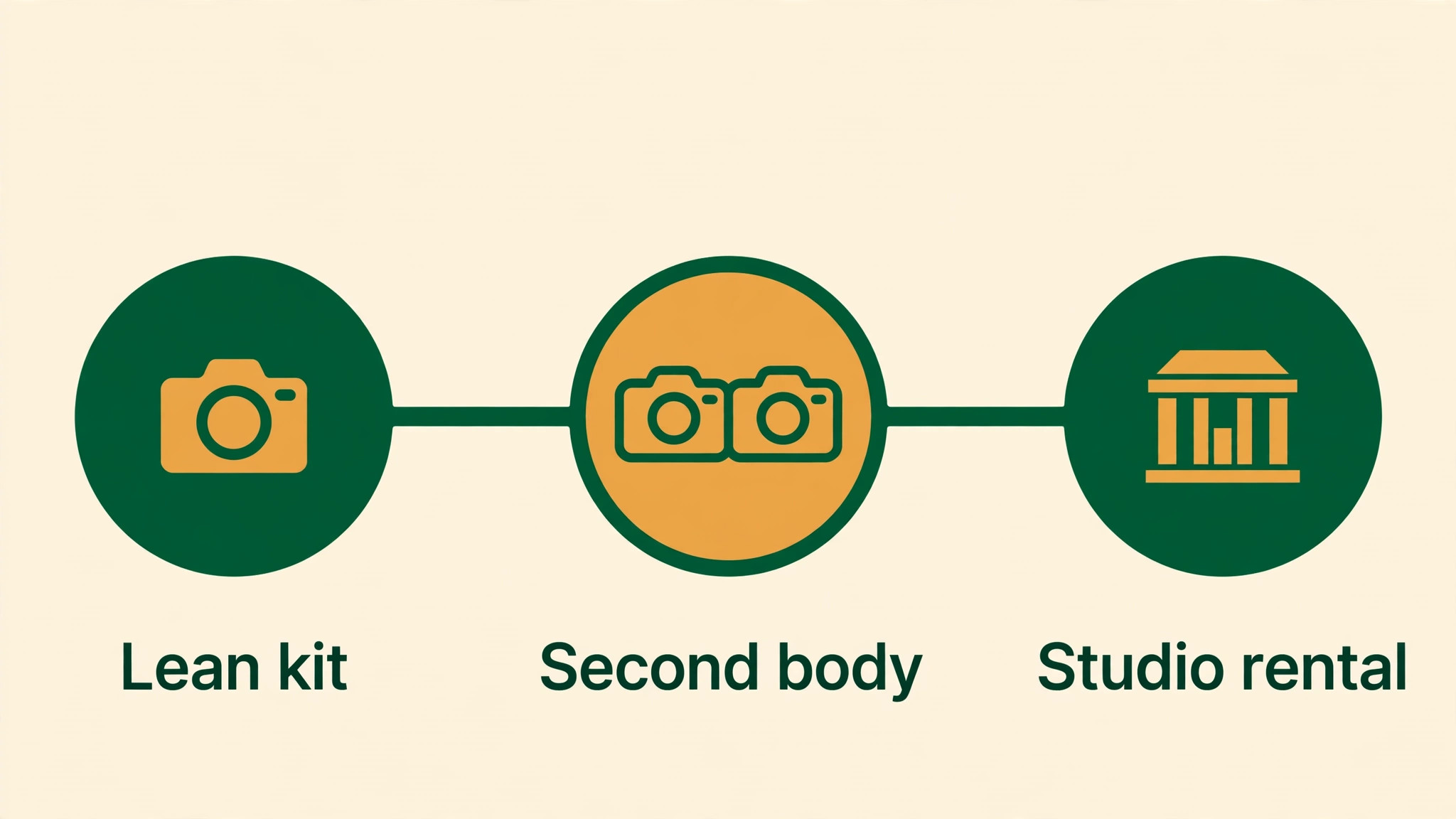
Camera bodies are the headline cost, and they range widely. Published breakdowns put professional bodies near 1,500 to 6,000 dollars each, with two to three quality lenses adding 1,000 to 5,000 dollars. A lean starter can begin with one capable body and one versatile lens, such as a 24 to 70 millimetre equivalent or a fast prime, for 1,500 to 3,000 dollars combined, and add a second body and specialised lenses from earnings. A wedding or event photographer should budget for a second body from the start, because a single body failure mid wedding is a business ending event, not an inconvenience.
Renting a second body for early weddings is a sensible bridge, since rental costs a fraction of purchase while bookings are still building.
Lenses follow the niche. Portrait photographers need a fast portrait lens with pleasing background rendering. Wedding photographers need a wide zoom for venues, a standard zoom for ceremonies, and a fast prime for low light receptions. Real estate photographers need an ultra wide lens and a tripod system. Product photographers need a macro or a sharp standard lens plus lighting control. Buying lenses for every niche before choosing one wastes thousands, so buy for the niche you will shoot first, and rent specialised lenses for occasional jobs until that niche proves itself with repeat bookings.
Lighting, tripods, and accessories add 300 to 3,000 dollars depending on scope. A basic lighting kit with one flash, a modifier, a light stand, and triggers covers portrait and small event work. A full studio lighting set with strobes, modifiers, backdrops, and stands suits studio portraits and product work, but it is unnecessary for a natural light outdoor portrait business. Tripods, memory cards, batteries, bags, and cleaning supplies add 200 to 800 dollars in most starter kits, and they should be budgeted as a line, not discovered one purchase at a time.
Memory cards deserve particular attention, since dual card slots and a card workflow with immediate backup protect against the single most expensive failure in photography, which is lost images.
Computer and software costs are often underestimated by photographers who focus only on cameras. A capable editing computer costs near 1,000 dollars and up, depending on specifications, and editing software such as Adobe photography plans costs about 10 dollars a month, or 120 dollars a year, for Lightroom and Photoshop. Published software ranges run 120 to 600 dollars a year for a starter, and 300 to 1,500 dollars a year for a fuller professional stack including catalogue and delivery tools. Add storage, including fast working drives and a backup drive or cloud backup, at 200 to 600 dollars in year one.
An editing computer that stutters on large raw files wastes hours per job, and those hours are the photographer profit, so a capable computer is a business investment, not a luxury.
Gear and Client Cost Table
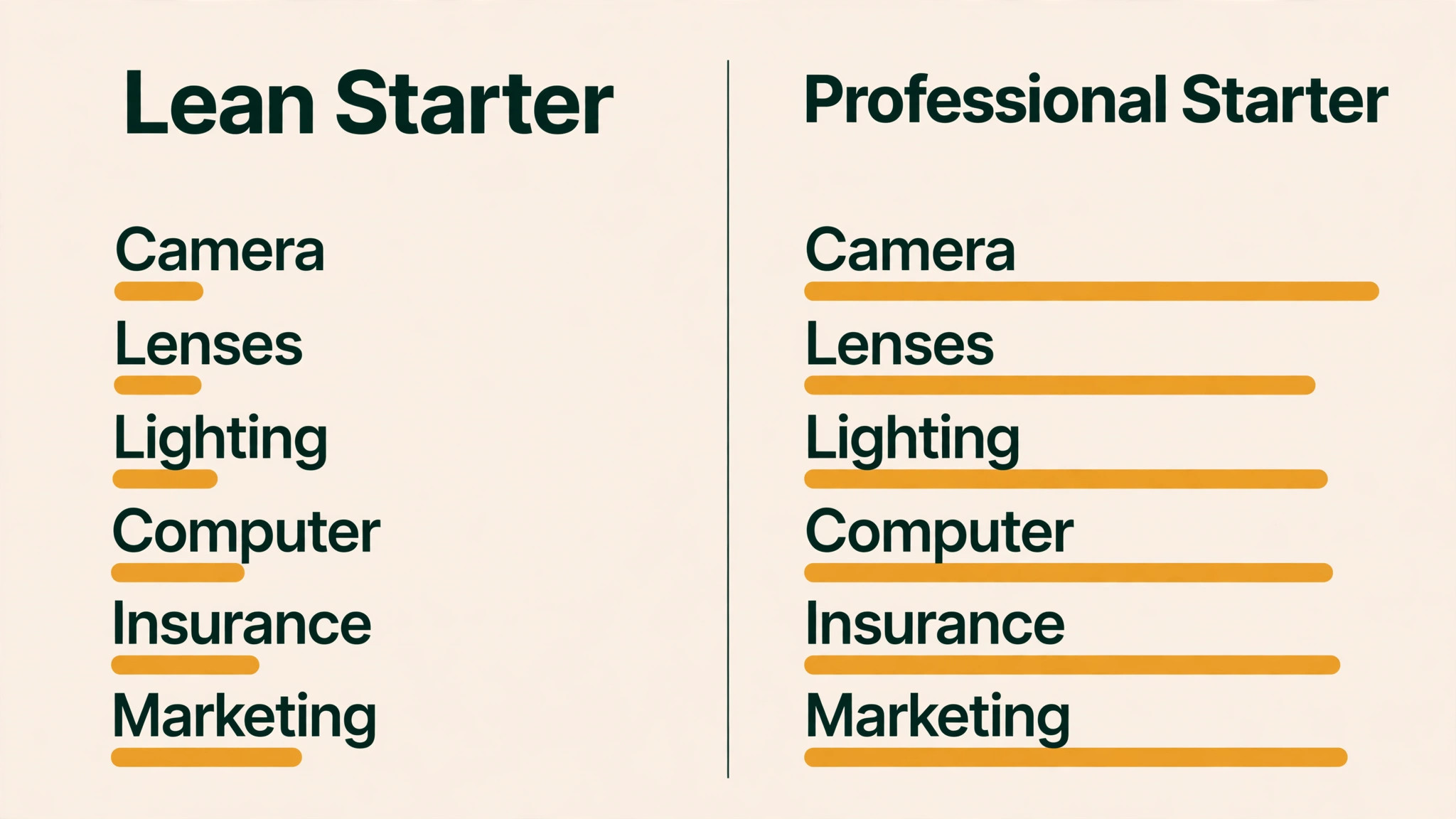
| Category | Lean starter | Professional starter |
|---|---|---|
| Camera body, one or two | 1,500 to 3,000 dollars | 3,000 to 6,000 dollars |
| Lenses, two to three | 1,000 to 2,500 dollars | 2,500 to 5,000 dollars |
| Lighting and accessories | 300 to 1,000 dollars | 1,000 to 3,000 dollars |
| Tripods, bags, cards, batteries | 200 to 800 dollars | 500 to 1,500 dollars |
| Computer and storage | 1,000 to 2,000 dollars | 2,000 to 4,000 dollars |
| Editing software per year | 120 to 600 dollars | 300 to 1,500 dollars |
| Website and hosting per year | 100 to 500 dollars | 500 to 2,000 dollars |
| Business registration | 50 to 300 dollars | 50 to 500 dollars |
| Insurance per year | 400 to 1,200 dollars | 500 to 2,000 dollars |
| Marketing and branding first year | 200 to 1,000 dollars | 1,000 to 3,000 dollars |
| Startup total range | 2,870 to 9,900 dollars and up | 10,000 to 30,000 dollars |
Lean totals reflect published summaries that place a lean startup near 2,870 to 9,900 dollars and up, while professional totals reflect fuller setups near 5,000 to 30,000 dollars with more gear, lighting, and marketing. The table is a planning range, not a shopping list, and individual choices move the total sharply. A photographer who already owns a capable computer and a camera can start near the bottom of the lean range, while a photographer starting from zero in a wedding niche will land near the professional range before the first booking. Use the table to price your niche, not an average photographer who does not exist.
Insurance, Legal, and Why They Come Before Marketing
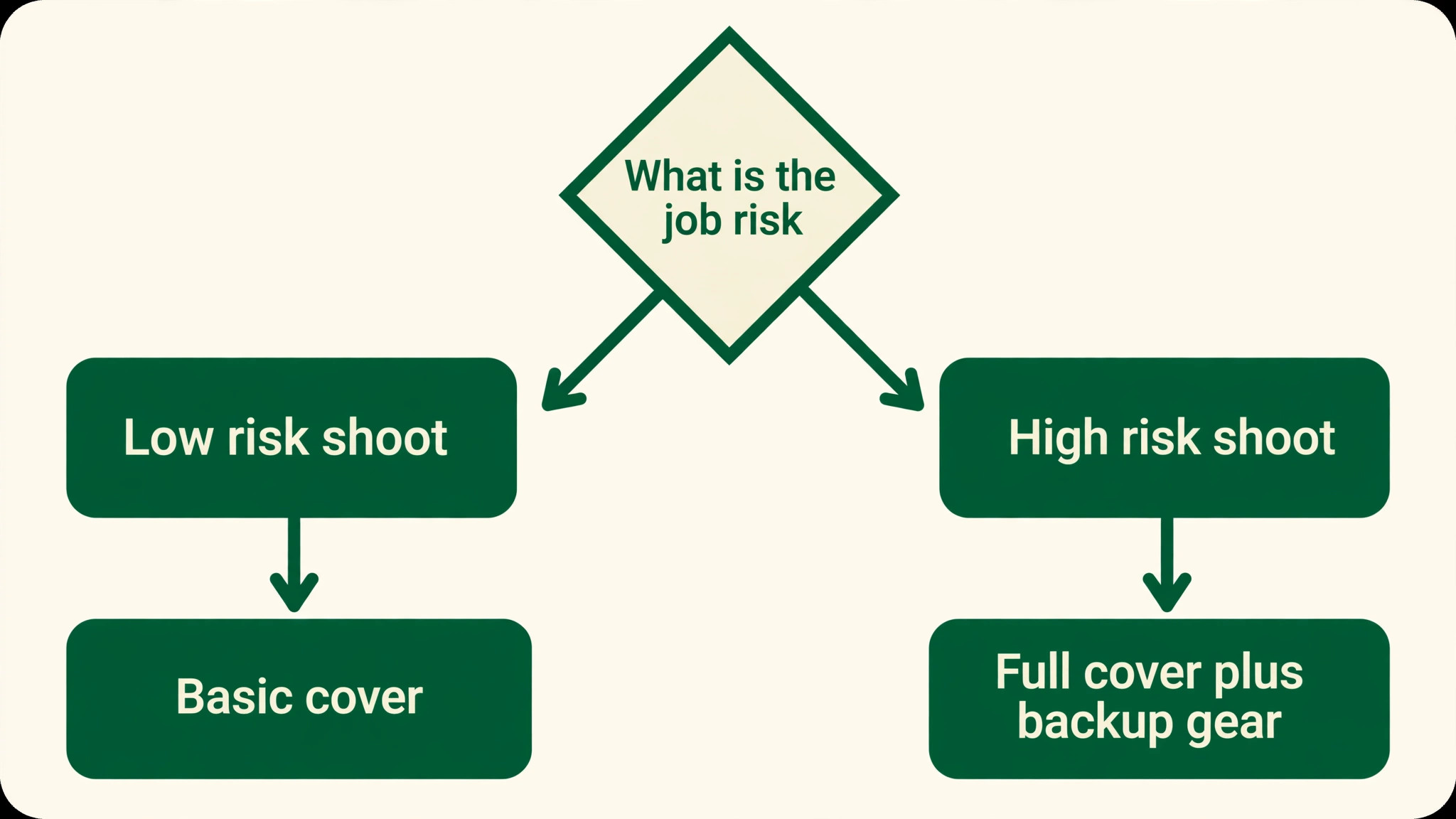
Insurance is the cost photographers most often skip, and it is the cost that protects everything else. General liability insurance, which covers third party injury or property damage, is published near 300 to 600 dollars a year, while equipment insurance runs near 100 to 400 dollars a year depending on gear value. Professional liability, sometimes called errors and omissions cover, protects against claims over lost or low quality images, missed events, or late delivery, and published averages for photographers put general liability near 29 dollars a month, professional liability near 34 dollars a month, and equipment cover near 43 dollars a month, with a bundled business owner policy near 46 dollars a month for some customers.
Those monthly figures vary by location, gear value, and claims history, so get quotes for your exact situation, but they show that proper cover is affordable compared with a single claim.
Commercial auto cover matters if you use a car for business, at a published 600 to 1,200 dollars a year, and commercial property cover for a studio runs near 300 to 800 dollars a year. Workers compensation becomes relevant when you hire assistants or second shooters, and pricing varies by state and payroll. Do not assume a home insurance policy covers business gear used commercially, since many home policies exclude business use, and a theft or damage claim denied on that basis can end a business. List all gear with serial numbers, keep purchase receipts, and confirm cover for gear in transit, at venues, and in a vehicle, since photography gear spends much of its life outside the home.
Legal setup costs are modest but necessary. Business registration commonly costs 50 to 300 dollars, with limited liability company formation fees varying by state, commonly falling near 50 to 500 dollars, plus 100 to 200 dollars for additional licences such as a general business licence or a sales tax permit where required. Contracts are equally important, and contract templates, reviewed by a local professional where possible, protect both photographer and client on deliverables, payment schedule, cancellation, image usage, and liability limits. Budget 200 to 500 dollars for contract templates and initial legal advice in year one, since a clear contract prevents disputes that cost far more than the template ever will.
Model releases, venue permissions, and drone permits where relevant add further small costs that should be budgeted per niche, not discovered at a shoot.
Finding Clients and What Acquisition Really Costs
Client acquisition is where photography budgets diverge most, because a photographer with a strong referral network spends little, while a photographer starting cold in a new city spends heavily. Published marketing ranges run 200 to 1,000 dollars for a lean launch, and 1,000 to 8,000 dollars a year for a fuller marketing programme including ads, social campaigns, print materials, portfolio books, and networking events. A website and portfolio, at 100 to 500 dollars a year for a lean setup and 500 to 3,850 dollars for a fuller initial and annual presence, is the foundation, since clients judge photographers by images before they judge price. A slow, image heavy, or confusing portfolio loses bookings that no ad budget can recover.
Referrals are the cheapest acquisition channel and the most durable, but they take time to build. Deliver excellent work, deliver on time, ask happy clients for reviews and referrals explicitly, and maintain relationships with venues, planners, and other vendors who recommend photographers. Those activities cost time rather than cash, and they compound, since each happy client can generate several more. Paid ads can accelerate early bookings, but they should be judged by cost per booked client, not by clicks or likes. If an ad campaign costs 500 dollars and books one 200 dollar portrait session, it lost money, while the same campaign booking one 2,500 dollar wedding earned its cost several times over.
Price acquisition by job value, not by channel enthusiasm.
Pricing strategy is part of acquisition cost, because underpricing to win work creates a different cost, which is burnout and inability to invest. Published niche economics illustrate the point, with portrait and headshot jobs commonly priced near 150 to 500 dollars, events and weddings near 1,000 to 5,000 dollars and up, real estate near 100 to 400 dollars, and commercial or product work near 500 to 5,000 dollars and up, with margins commonly near 30 to 50 percent after costs. Price from costs plus target margin, not from competitor low prices alone, since a competitor with lower gear costs, a home studio, or a second income can price below a sustainable level for you.
A sustainable price that books fewer clients beats an unsustainable price that books many clients at a loss, because the second path ends in exhaustion and debt.

Monthly Budget Table for Year One
| Monthly line | Lean month | Professional month |
|---|---|---|
| Insurance, averaged monthly | 35 to 100 dollars | 45 to 165 dollars |
| Software and cloud storage | 15 to 50 dollars | 30 to 125 dollars |
| Website and hosting, averaged | 10 to 40 dollars | 40 to 165 dollars |
| Marketing and ads | 20 to 85 dollars | 85 to 650 dollars |
| Gear maintenance and contingency | 25 to 85 dollars | 50 to 165 dollars |
| Transport and delivery | 85 to 290 dollars | 150 to 400 dollars |
| Phone, internet, and admin share | 30 to 75 dollars | 50 to 125 dollars |
| Monthly operating total | 220 to 625 dollars | 450 to 1,795 dollars |
Monthly operating totals exclude loan payments for gear bought on credit, studio rent where applicable, and assistant or second shooter fees per job, which vary sharply by niche. Studio rent alone can add 200 to 2,500 dollars a month depending on location and arrangement, from a shared studio share to a dedicated space, and it should be added only when bookings justify it. Many successful freelancers work without a studio in year one, using client locations, outdoor sessions, and rented studio time per job, which keeps monthly costs near the lean range while revenue builds. Rent a studio per job before committing to a monthly lease, since a lease is a fixed cost that persists through slow months.
Break even thinking turns the monthly table into a booking target. Divide monthly operating costs by average profit per job to find jobs needed per month just to cover operating costs, before gear payback or owner salary. A lean photographer with 400 dollars monthly costs and 200 dollars profit per portrait job needs two jobs a month to cover operating costs, while a professional wedding photographer with 1,000 dollars monthly costs and 1,500 dollars profit per wedding needs less than one wedding a month to cover operating costs, but needs a pipeline that delivers weddings consistently.
That arithmetic shows why niche and price matter more than monthly cost alone, since a high cost business with high value jobs can break even faster than a low cost business with low value jobs.

Mistakes That Drain a Photography Budget
The first mistake is buying flagship gear before bookings. A flagship body does not book clients, a portfolio and a reputation do, and debt for flagship gear creates monthly payments that persist through slow seasons. Start with capable gear, prove the niche with paid work, and upgrade from profit. Gear envy is expensive, and clients rarely know or care which body captured their images, provided the images are excellent and delivered on time.
The second mistake is skipping insurance and backup to save money. A single lost wedding, stolen bag, or liability claim can cost more than years of premiums and backup drives combined. Insurance and backup are not overhead, they are the product promise, especially for unrepeatable events. Budget them before marketing extras, and treat them as non negotiable in year one, even when cash is tight.
The third mistake is underpricing and overdelivering. Free shoots for exposure, unlimited revisions, and all day coverage for a portrait price all consume time that could book paying work, and they train clients to expect unsustainable terms. Set packages with clear deliverables, revision limits, and delivery timelines, and price extra work explicitly. A smaller number of well priced jobs with clear terms beats a full calendar of underpriced jobs that leave no time for marketing, editing, or rest.
The fourth mistake is ignoring editing time in pricing. A job that takes two hours to shoot and ten hours to edit costs far more than the shoot fee suggests, and photographers who price only shoot time work for very low hourly rates once editing is counted. Track shoot, travel, editing, delivery, and communication time per job type for a month, and price from total time plus costs plus margin. That discipline alone transforms many photography businesses from busy to profitable, without any new gear or marketing.

When to Upgrade, Hire Help, or Rent a Studio
Upgrade gear when a specific job type exposes a specific limit repeatedly. If low light receptions consistently produce noisy images, a faster lens or a better low light body earns its price. If a single body creates anxiety at every wedding, a second body earns its price in peace of mind alone. If editing time grows because the computer struggles with large files, a computer upgrade earns its price in hours saved. Each upgrade should name the job and the limit it fixes, and upgrades without a job behind them should wait.
Hire help when demand exceeds solo capacity or when a job needs a second angle, lighting assistance, or crowd management. Second shooters and assistants cost per job, and they should be priced into the job quote, not absorbed as a favour. A second shooter for a wedding adds coverage and safety, and clients will pay for it when the value is explained as additional angles and backup, rather than as an extra person. Build a small roster of reliable helpers before you need them urgently, and pay them promptly and fairly, since good helpers are scarce and word travels fast in local photography communities.
Rent studio time per job before signing a lease. Hourly or daily studio rental lets you offer studio portraits without fixed rent, and it tests whether studio demand justifies a permanent space. A lease makes sense when studio bookings consistently cover rent, utilities, insurance, and maintenance with margin left over, and when the location itself attracts clients. Until then, location shoots, client homes, and rented studios keep monthly costs flexible and cash flow healthier through seasonal dips.
The Cost of Starting a Freelance Photography Business by Niche
Niche decides gear, insurance, and marketing together, and pricing a generic photography business without a niche produces a budget that fits nobody. Wedding photography is the highest cost niche to enter properly, because it demands two bodies, multiple lenses, lighting for dark venues, backup workflow, and insurance that covers an unrepeatable day. A wedding starter kit near the professional range is not overspending, it is the minimum credible kit for a job where failure cannot be fixed by reshooting. Wedding marketing also costs more, since couples research extensively, expect a polished portfolio, and book months ahead, so a wedding photographer must invest in portfolio, website, and vendor relationships before bookings arrive.
Portrait and headshot photography is the lowest cost niche to enter, and the best niche for a lean start. One body, one fast portrait lens, one light and modifier, and a simple backdrop or outdoor location cover most sessions, and clients can be found locally through referrals and social proof quickly. Headshot clients, including professionals and actors, value consistency and fast delivery, so a streamlined editing and delivery workflow matters more than exotic gear. A portrait photographer can start near the lean range, prove the niche with paid sessions, and add lighting and lenses from profit as demand grows.
Real estate photography sits in the middle on gear but high on volume and turnaround. An ultra wide lens, a sturdy tripod, and a reliable editing workflow for bright, straight, well lit interiors are essential, while lighting can be simpler than portrait work if natural light and flash are balanced well. Real estate clients, usually agents, value speed, consistency, and low price per shoot, so profitability comes from volume and efficient editing, not from high per job prices. A real estate photographer who edits slowly will earn a low hourly rate even with steady bookings, so editing presets, batch workflows, and delivery systems deserve investment equal to lenses.
Commercial and product photography is the highest skill and highest price niche, but also the slowest to enter, since clients expect a portfolio of relevant work, studio capability, and licensing knowledge. Lighting control, backdrops, tethered shooting, and colour accuracy matter more than camera brand, and a product photographer may need studio space or rented studio time that other niches avoid. Licensing, usage rights, and commercial contracts add legal complexity that portrait work rarely faces. When you price the cost of starting a freelance photography business niche by niche, the lesson is to choose one niche for year one, price its kit and insurance honestly, and let a second niche wait until the first pays for it.
A niche focused start will also keep the cost of starting a freelance photography business lower than a generalist start, because it buys one lens set, one lighting approach, and one marketing message, rather than three of each for niches that may never book.
More Reading for Creative and Business Costs
If photography costs are clearer now, the wider cost guides on Stratilyze cover neighbouring creative and business budgets. The guide to running a food truck monthly compares fixed and variable costs in a physical business, the guide to hiring a virtual assistant monthly prices admin support that frees shooting time, the guide to building a mobile app for a small business covers a larger build budget, and the guide to headphones for online teaching helps you choose listening gear for editing sessions. Read the virtual assistant guide next if editing and admin are eating shooting time, since buying back hours is often cheaper than buying more gear.
Frequently Asked Questions
How much money do I need to start a freelance photography business?
Lean starters commonly need 2,870 to 9,900 dollars and up, covering a camera and lenses, lighting basics, a computer and software, a website, registration, insurance, and initial marketing. That range is the practical answer to the cost of starting a freelance photography business for most beginners. Fuller professional starters, especially in weddings or events with two bodies and more lighting, commonly need 10,000 to 30,000 dollars. Photographers who already own a camera and computer start lower, while photographers starting from zero in a high risk niche start higher. Price your niche specifically, rather than trusting an average, since gear and insurance needs differ sharply by job type.
What insurance does a freelance photographer need?
At minimum, general liability cover for third party injury or property damage, published near 300 to 600 dollars a year, and equipment cover near 100 to 400 dollars a year depending on gear value. Professional liability cover for lost or disputed images, commercial auto cover if you drive for business, and studio property cover where relevant should be added by niche. Get quotes for your exact gear list and locations, list serial numbers, and confirm cover for gear in transit and at venues, since home policies often exclude business use. A bundled business owner policy can reduce total cost for some photographers.
How much should a freelance photographer charge per job?
Price from total time plus costs plus target margin, not from competitor prices alone. Published niche ranges put portraits and headshots near 150 to 500 dollars, events and weddings near 1,000 to 5,000 dollars and up, real estate near 100 to 400 dollars, and commercial or product work near 500 to 5,000 dollars and up, with margins commonly near 30 to 50 percent after costs. Track shoot, travel, editing, delivery, and communication time per job type, and set packages with clear deliverables and revision limits, so price reflects the full job, not just hours behind the camera.
Do I need two cameras to start a photography business?
Not for every niche, but yes for unrepeatable events such as weddings, where a single body failure would be catastrophic. Portrait, headshot, and product photographers can start with one capable body and add a second from earnings, or rent a second body for occasional high risk jobs. A second body is redundancy and versatility, giving a backup and a second lens ready without swapping in the field. Budget for a second body early in wedding and event niches, and rent as a bridge while bookings build.
What are the monthly costs of running a photography business?
Lean monthly operating costs commonly run 220 to 625 dollars, covering insurance averaged monthly, software and storage, website hosting, marketing, gear contingency, transport, and admin share. Monthly discipline is what keeps the cost of starting a freelance photography business from becoming a monthly loss after launch. Professional monthly costs commonly run 450 to 1,795 dollars, before studio rent, gear loan payments, and per job assistant fees. Studio rent alone can add 200 to 2,500 dollars a month, so many freelancers avoid a lease in year one and rent studio time per job. Divide monthly costs by average profit per job to find the booking target that covers operating costs.
How do photographers find their first clients?
Start with a strong portfolio website, social proof from any paid or portfolio work done well, and explicit referral requests to happy clients, venues, planners, and vendors. Paid ads can accelerate early bookings, but judge them by cost per booked client against job value, not by clicks. Networking, styled shoots with vendors, and local community presence build referrals that compound over time. The cheapest durable channel is a happy client who recommends you, so deliver on time, communicate clearly, and make referring easy with a simple link and a thank you.
Start Small and Charge Like a Business
Photography rewards the photographer who prices like a business from day one, even with modest gear. A capable camera, a clear niche, proper insurance, reliable backup, and a portfolio that proves the work will book more jobs than a flagship camera with no insurance, no backup, and no clients. When you judge the cost of starting a freelance photography business by jobs, not by gear envy, the budget becomes a plan, with gear for the niche, insurance for the risk, and marketing for the pipeline, each funded in proportion to its return.
Start lean, track every hour and every cost, price from total time and margin, and upgrade from profit. That discipline turns a creative skill into a sustainable business, and it leaves money for the things that actually protect and grow the work, which are insurance, backup, client relationships, and time to shoot well. A photography business built that way can grow gear, clients, and prices together, without debt deciding its future.