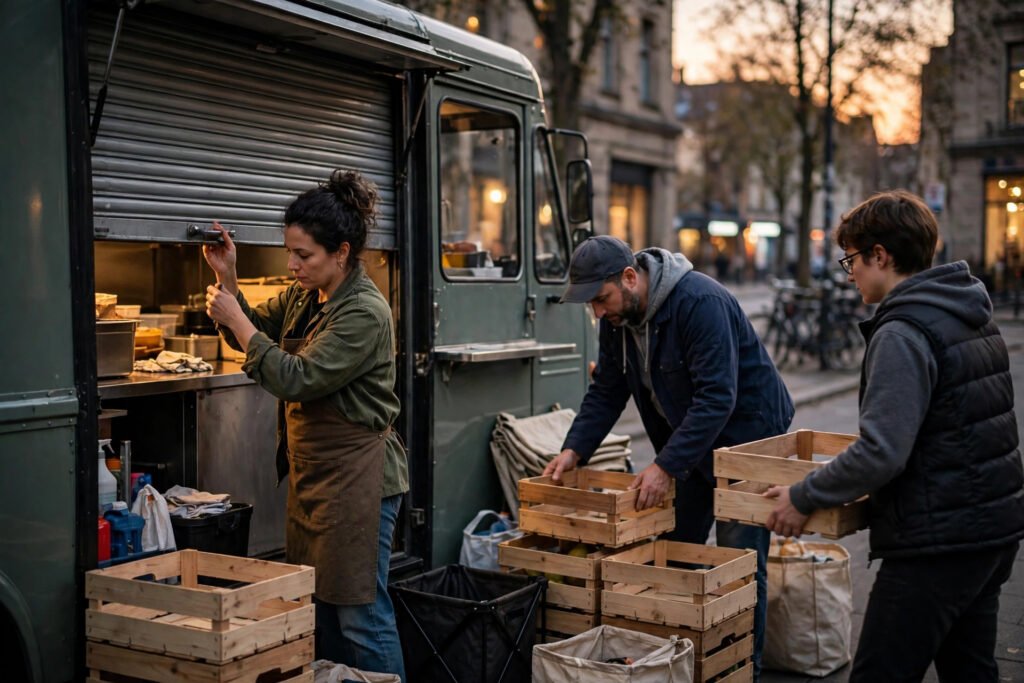
If you want to learn how to start a food truck business with AI, start with the part most guides skip: a food truck is a restaurant with wheels, a small kitchen, a moving schedule, and a local reputation to build from zero. AI can speed up the paperwork, the menu design, the social posts, and the daily maths, but it cannot cook the food, pass the health inspection, or keep a queue happy on a rainy Tuesday. The owners who do well treat AI as a cheap assistant for planning and marketing, and treat the truck, the permits, and the food as the real business.
This guide follows that order. It covers what a launch actually costs, which permits to sort first, how to pick a truck, how to price a menu that survives slow weeks, where to park for paying customers, and how to run the day to day without burning out. Every step includes what AI can do, what it cannot do, and what to check in person before you spend money.
The short answer: costs, permits, and timeline
A food truck launch is not a weekend project, and it is not a cheap shortcut to restaurant ownership. Most first time owners in the United States spend somewhere in the tens of thousands of dollars before their first paid service, with the truck itself the largest single cost. A used truck or trailer conversion usually sits at the lower end of that range. A new, fully fitted truck sits far higher. Equipment, initial stock, insurance, permits, branding, and a cash buffer for the first slow months sit on top of the vehicle price. Treat any single number you see online as a planning range, not a quote, because health rules, commissary fees, and vehicle prices vary sharply by city.
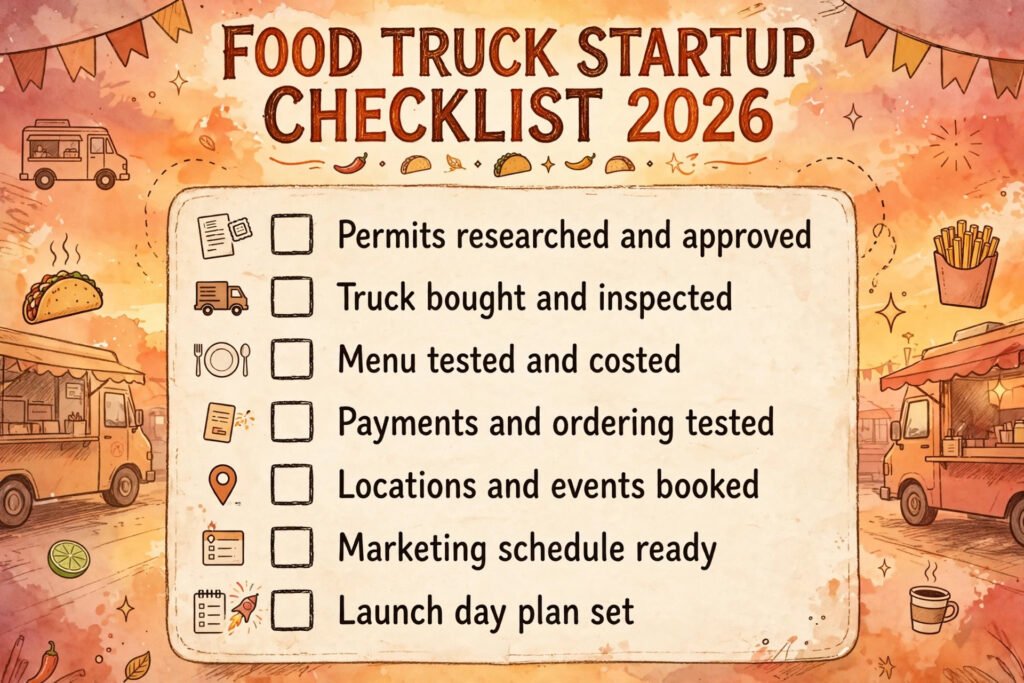
Permits are the second cost, in time as much as money. Expect a business licence, a food handler certification, a health department permit, a fire inspection for cooking equipment, and a mobile vendor permit for each city or county where you trade. Some cities also require a commissary kitchen agreement, which is a licensed kitchen where you prep, clean, and store food overnight. Start the permit research before you buy a truck, because some health departments inspect the vehicle itself and will reject a layout that does not meet their rules.
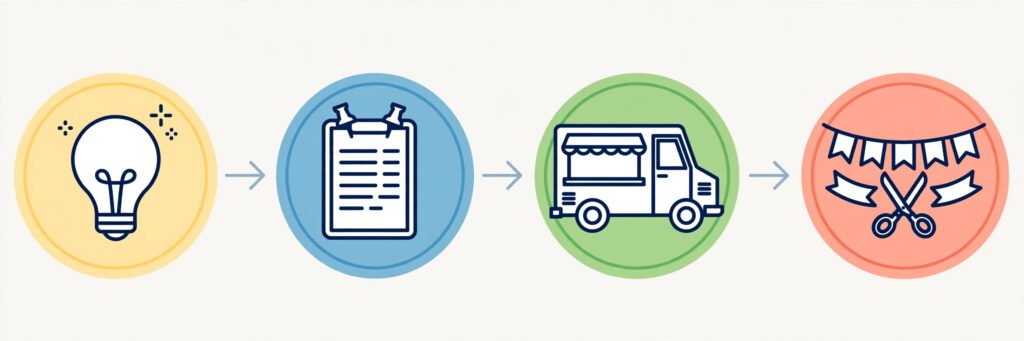
A realistic timeline from decision to first service is three to six months. Month one is research, permits, and concept testing. Months two and three are truck sourcing, fit out, and inspections. Month four is menu testing, pricing, and soft launch events. Owners who rush this usually pay twice: once for the shortcut, once for the fix. Owners who test the menu at markets and private events before signing a long lease or a loan tend to find their real best sellers before the money runs out.
AI fits into this timeline in specific places. It can draft a business plan outline, compare truck listings, write a permit checklist for your city, cost a menu from ingredient prices, draft social posts, and build a weekly schedule. It cannot confirm your local rules, so every permit claim and every price it gives you needs a check against the issuing office or the supplier.
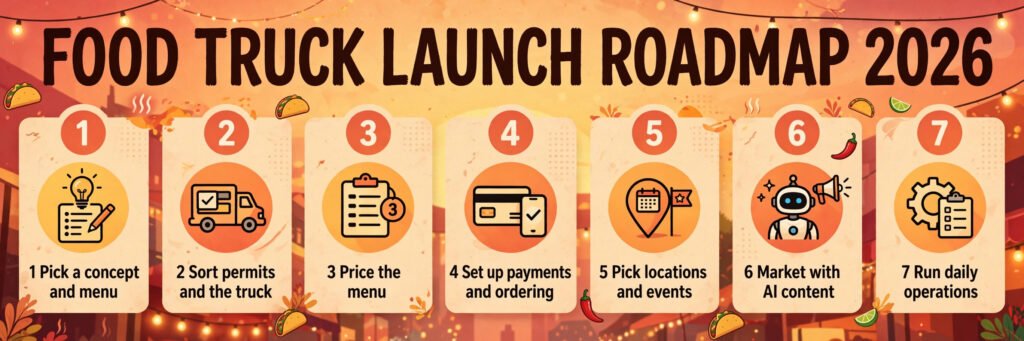
A good truck concept passes three tests. First, can a small team cook it fast in a small space? Second, can customers understand it from a menu board in ten seconds? Third, can you buy the ingredients reliably, at a price that leaves a margin after fuel, fees, and waste?
Narrow beats broad. A truck selling “burgers, tacos, pasta, and salads” needs four sets of ingredients, four cooking methods, and a long menu board nobody reads. A truck selling smash burgers with three toppings, or biryani boxes with two proteins, can prep in bulk, serve in minutes, and build a name for one thing done well. Pick a hero dish, add two or three supporting items, and keep one vegetarian option that is a real dish, not an afterthought.
Test before you commit. Cook the menu at home or in a rented kitchen, time every dish from order to handover, and invite honest tasters. A dish that takes twelve minutes at home will take longer in a truck queue, and a dish with seven garnishes will slow service to a crawl. Cut anything that needs a tool you do not have room for, or an ingredient that spoils fast and sells slowly.
Use AI here as a brainstorming partner, not a chef. Ask it for ten concept ideas for your city, for menu names, for allergen notes, and for a prep list based on your menu. Then cook, taste, and cost everything yourself. If an AI tool suggests a dish, check the cooking steps against a reliable recipe source and your own kitchen test, because invented timings and quantities are common.
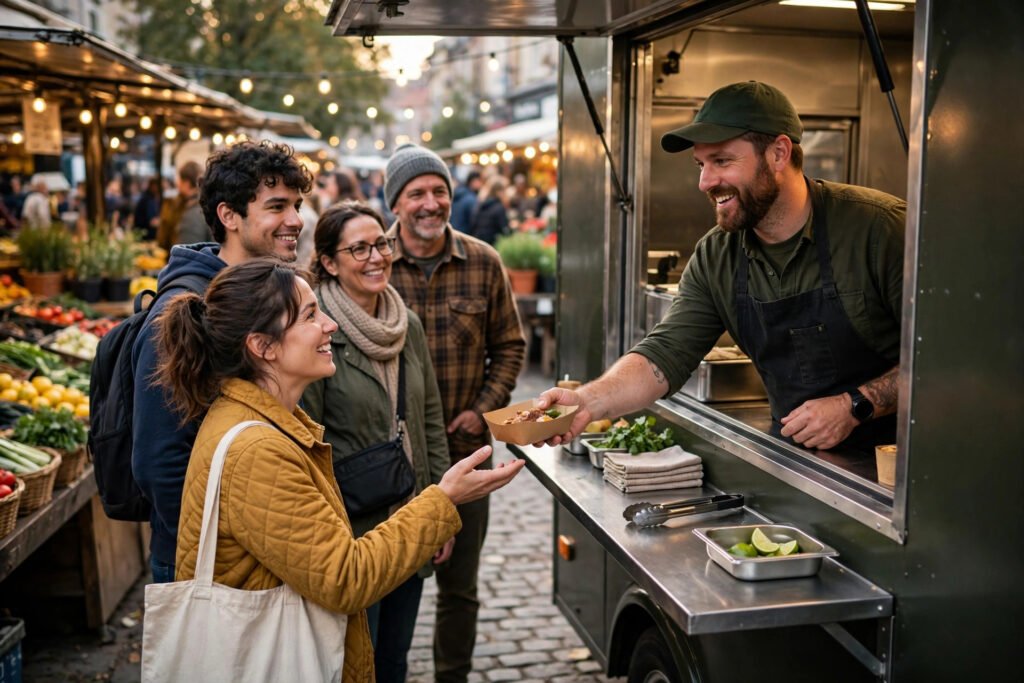
Step 2: Sort permits and the truck, in that order
Permits first, truck second. Call or visit your local health department and ask for the mobile food vendor requirements in writing: vehicle layout rules, water tank sizes, handwash sink rules, commissary requirements, and inspection steps. Ask the same questions of the city office that issues vendor permits, and of the fire department if you cook with gas or oil. Write down the name of every person you speak to and the date, because rules change and officers differ.
Only then shop for a truck. Your options are a purpose built food truck, a converted step van, or a trailer pulled by a vehicle you already own. A purpose built truck is the simplest to insure and inspect but costs the most. A conversion is cheaper but needs careful checks on electrics, gas lines, ventilation, and weight limits. A trailer is often the cheapest entry point, but it needs a tow vehicle, a place to store it, and a plan for moving it in bad weather.
Inspect any used vehicle like a business purchase, not a bargain hunt. Check the engine, the generator, the fridges, the gas system, and the water system. Ask for service records and for the previous owner’s health inspection history. Budget for repairs in the first three months, because a truck that breaks down on event day costs you the fee, the stock, and the reputation in one go.
AI can help you compare listings and draft questions for sellers and inspectors. It can also summarise a city’s permit page into a checklist. It cannot replace the inspection itself. If a seller says a truck is “health approved,” ask which department approved it, when, and for what menu, and verify it yourself.
Menu pricing is where many new trucks fail quietly. The food cost of a dish is only part of the price. You also pay for fuel, generator running costs, event fees, card processing, packaging, staff time, commissary rent, insurance, and waste. A dish with a food cost of 30 percent of its price can still lose money once those costs are added, especially at an event that charges a pitch fee or takes a percentage of sales.
Start with a simple method. Cost every dish ingredient by ingredient, using supplier prices you have actually been quoted. Add packaging. Then set a target food cost of roughly 28 to 35 percent for most items, and check the result against what customers in your area already pay for similar food. If your price lands far above the local norm, change the dish, the portion, or the supplier, not just the price. Customers will pay more for something clearly better, but they will not pay double for an ordinary burger.
Build the menu in tiers. One hero item at a full margin, one budget item that brings in price sensitive customers, and one premium item for customers who want the best version. Offer a combo that speeds up ordering, such as a main plus a drink, because a short menu board with clear combos serves a queue faster than a long list of choices.
Use AI to do the arithmetic, not to set the strategy. Feed it your ingredient costs and it can cost every dish, model what happens if a supplier price rises, and suggest portion changes. Check its maths against your own spreadsheet before you print a menu board, because one wrong ingredient price can quietly erase your margin for months.
Step 4: Set up payments and ordering before your first queue
Customers expect to tap a card or a phone and get on with their day. A modern point of sale system on a tablet, with a card reader and a receipt printer, is now the baseline, not a luxury. It also gives you sales data: which items sell, at what times, and at which locations. That data is worth more than any single day of takings, because it tells you what to prep, what to drop, and where to park next week.
Pick a system that works offline or with a weak signal, because event fields and street corners rarely have reliable wifi. Test it at home with real cards, real refunds, and a real queue of friends ordering at once. A system that freezes during a lunch rush will cost you more in lost sales and bad reviews than a month of fees.
Ordering options matter too. For a small truck, a clear menu board and a single queue is often faster than an app. Pre orders help at large events, where customers can order ahead and collect at a set time instead of standing in line. If you offer pre orders, set a firm cut off time and a simple collection system, or you will spend the event hunting for names instead of cooking.
AI tools can write your menu board text, your allergen notices, and your refund policy in plain language. They can also draft the messages for a pre order system. Keep the customer facing words short and exact, and check allergen information against your actual ingredients, because that is a safety matter, not a marketing one.

Step 5: Pick locations and events that pay, not just places that look busy
A busy street is not automatically a good pitch. What matters is how many of the people passing by are hungry, have time to wait, and can pay your prices. Office districts at lunch, weekend markets, sports grounds, university areas, and evening food events are classic truck territory, but each has its own rules, fees, and competition.
Start with a mix. Book a regular weekly pitch if you can get one, because regular customers are the base of a truck business. Add weekend events for larger takings, and use quiet weekdays for prep, maintenance, and private catering enquiries. Track every pitch in a simple log: date, location, fee, weather, covers, takings, and notes. After two months, that log will tell you more about where to park than any advice article.
Event fees deserve a hard look. Some events charge a flat pitch fee, some take a percentage of sales, and some do both. Before you accept, work out how many covers you need to break even after the fee, the fuel, and the stock. If the maths needs a perfect day just to break even, decline and use the day for a regular pitch instead. A truck that says no to bad events lasts longer than one that says yes to all of them.
AI can help you research events, draft pitch applications, and compare fee structures. It can also turn your pitch log into a weekly summary of best and worst locations. Verify event details directly with the organiser before you pay a fee, because listings go out of date and some events are advertised by third parties without the organiser’s approval.
Step 6: Market with AI content, but build the audience in person
Social media is the cheapest marketing a truck has, and the most wasted. The accounts that work post three things consistently: where the truck will be, what is on the menu that day, and proof that real customers enjoy it. A photo of today’s special, a short video of food cooking, and a pinned weekly schedule will do more than a month of generic food pictures.
Use AI to draft captions, to turn one idea into posts for different platforms, and to plan a week of content in an hour. Keep your own voice in the final post, and always check the details: date, time, location, and price. A post with the wrong location sends customers to an empty street, and that mistake is remembered longer than a good meal.
Short video is worth learning, even if it feels awkward at first. A thirty second clip of a dish being made, filmed on a phone in good light, usually outperforms a polished photo. Post it the day you serve that dish, not a week later. Customers decide where to eat lunch in minutes, not days.
For writing help, the same AI writing tools covered in our guide to best AI tools for freelance writers can draft captions and menu descriptions, but the final words should sound like your truck, not a template. And when you post on visual platforms, our guide to best AI tools for Instagram covers scheduling and caption tools that fit a small food business.
In person marketing matters just as much. A loyalty card, a stamp for regulars, a banner customers can see from across a market, and a friendly greeting for first time visitors all build repeat trade. AI cannot hand a sample to a passer by or remember a regular’s usual order. You can, and that is the advantage a small truck has over every chain nearby.
Step 7: Run daily operations like a system, not a scramble
A truck day has a rhythm: prep, travel, setup, service, pack down, clean, restock, and record. Write that rhythm down as a checklist, and use it every day. The checklist should cover fridge temperatures, gas and water levels, stock counts, cash float, card reader charge, and cleaning tasks. A written checklist prevents the small forgotten task, like an uncharged card reader, that ruins a service.
Prep in batches and label everything. Sauces, marinades, and chopped ingredients prepared the day before save service time and reduce waste. Track waste daily: what was thrown away, and why. Waste is usually a menu problem, a portion problem, or an ordering problem, and the log will show you which one within a fortnight.
Staffing, even for a team of two, needs clear roles. One person cooks, one person serves and takes payment, and both know the allergen answers. If you grow to a team, write a one page guide for each role, including what to do when the generator fails, when a fridge warms up, or when a customer reports an allergy. Emergencies are easier when the plan already exists.
Use AI for the admin tail: turning the day’s sales into a summary, drafting a supplier order from stock levels, and writing a weekly rota. Keep the food safety records yourself, in the format your health department expects, and never let an AI summary replace a temperature log or a cleaning record.
Tools compared: AI and business tools for a food truck
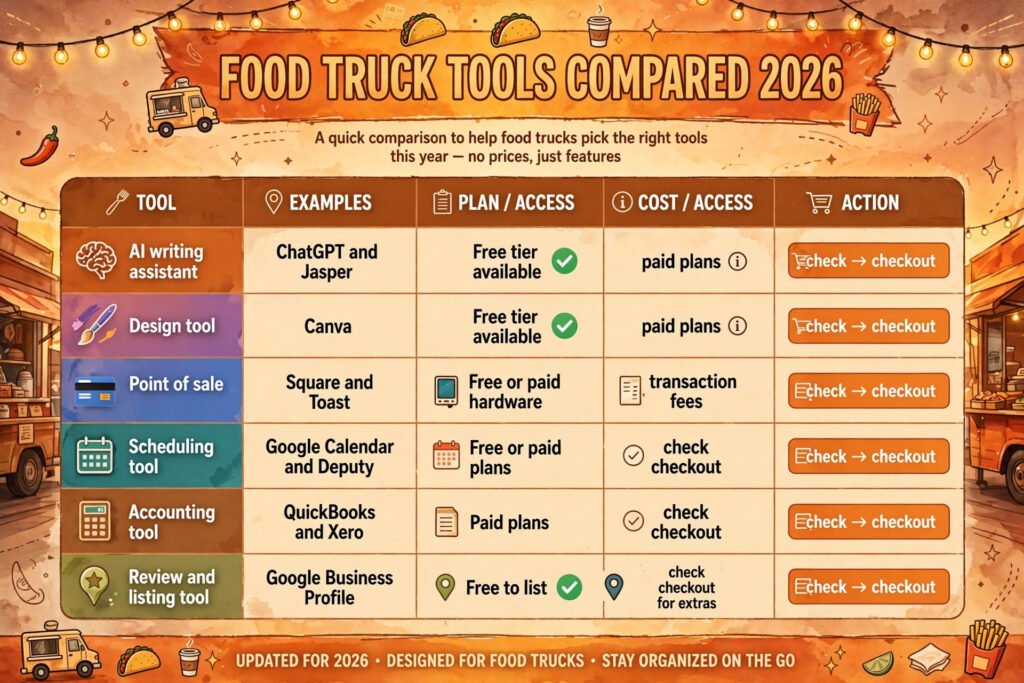
You do not need a large software stack. You need a few tools that work in a hot, busy, sometimes offline environment. The table below compares the types of tool most new owners actually use, with October 2026 pricing models. Where a vendor prices by plan, seats, or features, check the checkout page before you budget, because plans and prices change.
| Tool type | Examples | What it does for a truck | Pricing model |
|---|---|---|---|
| AI writing assistant | ChatGPT, Jasper | Menus, captions, emails, applications | Free tier available, paid plans, check checkout |
| Design tool | Canva | Menu boards, social graphics, loyalty cards | Free tier available, paid plans, check checkout |
| Point of sale | Square, Toast | Card payments, sales reports, stock basics | Free or paid hardware, transaction fees, check checkout |
| Scheduling tool | Google Calendar, Deputy | Staff rotas, event calendar, reminders | Free or paid plans, check checkout |
| Accounting tool | QuickBooks, Xero | Invoices, expenses, tax records | Paid plans, check checkout |
| Review and listing tool | Google Business Profile | Opening times, location updates, reviews | Free to list, check checkout for extras |
Try it at the official sites only: ChatGPT, Canva, Square, Toast. For the rest, search the vendor name and check the official site before you sign up, because copycat sites sell the same names with different prices.
How to choose tools for a solo owner versus a small team
A solo owner should keep the stack tiny. One AI writing tool, one design tool, one point of sale system, and one calendar is enough. Every extra tool is another login, another fee, and another thing to learn during a busy week. Pick tools with phone apps, because most truck admin happens on a phone between services, not at a desk.
A team of three or more needs a little more structure. A shared rota tool stops shift confusion. A shared drive for menus, allergen sheets, and supplier lists stops the “which version is current” problem. A simple accounting tool, updated weekly, stops a year end panic. Resist the urge to buy a full restaurant management suite in year one. Most of its features will sit unused while you pay for them.
In both cases, test a tool for two weeks before you pay for a year. Use it on a real service day, not just at home. If it slows down ordering, confuses staff, or fails without signal, it is the wrong tool no matter how good its website looks.
Mistakes to avoid
Buying the truck before checking permits is the most expensive mistake, and it happens often. A vehicle that cannot pass your city’s inspection is a very large paperweight. Research first, buy second.
A second mistake is a menu that is too long. Every extra dish adds ingredients, prep time, and waste. Start short, prove the concept, and add dishes only when customers ask for them and the kitchen can handle them.
A third mistake is pricing from gut feeling. If you have not costed every dish, you do not know whether a busy day made money or just looked busy. Cost the menu, then set prices, then recheck costs every time a supplier price changes.
A fourth mistake is ignoring the boring numbers. Fuel, fees, waste, and card charges add up quietly. A weekly review of takings, costs, and waste takes twenty minutes and catches problems while they are still small.
A fifth mistake is marketing only when trade is slow. Social posts, market bookings, and regular pitches need steady effort, including in good weeks. An audience built in advance is what carries you through a quiet month.
A sixth mistake is running without a break. Truck work is physical, hot, and long. Build rest days into the schedule, keep a backup plan for sickness and breakdowns, and protect the energy of the person cooking the food, because that person is the business.
Frequently asked questions
How much does it cost to start a food truck?
It varies by city and vehicle, but most first time owners should plan in the tens of thousands of dollars, with the truck the largest cost. Add permits, insurance, equipment, stock, branding, and a buffer for slow early weeks. Get local quotes before you set a final budget.
Do I need a commissary kitchen?
Many cities require one. A commissary is a licensed kitchen where you prep, clean, and store food, and where your truck is inspected. Check your health department’s rules before you buy a vehicle, because the requirement affects your layout and your monthly costs.
Can AI run my food truck business?
No. AI can draft content, cost menus, plan schedules, and summarise sales, but it cannot cook, pass inspections, handle allergen questions, or serve a queue. Treat it as an assistant for planning and marketing, and keep food safety and customer care in human hands.
What sells best from a food truck?
Food that is fast to serve, easy to eat standing up, and clearly different from nearby options. A short menu with one hero dish usually outperforms a long menu of average items. Test dishes at markets before you commit to a full menu.
How do I find good locations?
Start with a regular weekly pitch plus weekend events, and log every pitch: fee, weather, covers, and takings. After two months, the log shows which locations pay and which only look busy. Decline events where the fee needs a perfect day just to break even.
Should I buy new or used?
A used truck or trailer is the cheaper entry point, but inspect the engine, generator, fridges, gas, and water systems, and budget for early repairs. A new truck costs more but comes with warranties and a layout built to current rules. Either way, confirm it passes your city’s inspection before you pay.
Conclusion: how to start a food truck business with AI
Learning how to start a food truck business with AI is really about learning where AI helps and where it does not. It helps with research, writing, costing, scheduling, and marketing. It does not help with cooking, inspections, or the daily work of serving customers well. Owners who respect that line get the benefit of cheap, fast help without handing safety or quality to a machine.
Start with permits, pick a narrow menu you can cook fast, price it from real supplier costs, and test it at markets before you scale. Keep your tool stack small, log every pitch, and build a regular audience one service at a time. Do that for a season, and you will know whether the truck is a business worth growing, or a concept worth changing, before the money runs out.