You have readers who open your emails, reply to them, and forward them to friends. The problem is turning that attention into a sustainable newsletter business without losing control of your audience, your revenue or your time. The Substack vs Beehiiv choice sits at the centre of that problem, because the two platforms make opposite bets about what a newsletter writer needs most. Substack bets on discovery and simplicity: write, publish, get found inside a large network, and monetise with subscriptions. Beehiiv bets on growth tools and ownership: build your list with referrals, ads, segmentation and analytics, and monetise in several ways beyond subscriptions alone.
Neither bet is wrong, but they lead to different daily work and different long term outcomes. A writer who publishes essays and wants the lowest friction path to paid subscribers will feel at home on Substack. A writer who treats a newsletter as a media business, with growth loops, sponsors and multiple revenue streams, will feel the limits of Substack quickly and will appreciate Beehiiv tooling. This guide compares both platforms on writing, discovery, growth, monetisation, email delivery, analytics and ownership, so you can choose based on the newsletter you want in two years, not just the newsletter you have today.
Pricing is described by model rather than by a fixed price list, because plans, revenue shares and feature tiers change. Check the current pricing page and revenue terms before you commit, especially for paid subscriptions, where a percentage share compounds over time.
Substack vs Beehiiv at a Glance
| Area | Substack | Beehiiv |
|---|---|---|
| Core idea | Publish and get discovered in a network | Grow and monetise a newsletter business |
| Writing experience | Simple, focused, minimal settings | Flexible, with more growth and email controls |
| Discovery | Strong, through recommendations and the app | Growing, through referrals and ad network |
| Growth tools | Recommendations, notes and cross promotion | Referrals, boosts, segmentation, forms and automations |
| Monetisation | Paid subscriptions as the main route | Subscriptions plus ads, boosts and partnerships |
| Revenue share | Platform share on paid subscriptions | Plan dependent, check current terms |
| Analytics | Clear but simpler | Deeper, with subscriber and growth detail |
| Best for | Writers and essayists building a paid readership | Newsletter operators building a media business |
The Core Difference: Network Versus Growth Engine
Substack is best understood as a publishing network. When you publish on Substack, your work can be recommended by other writers, discovered in the app, and shared through Notes, which is Substack social layer. Readers can follow you without subscribing, subscribe for free, or pay for premium posts. That network effect is real. Writers with strong, distinctive voices often gain their first thousand subscribers faster on Substack than on a standalone email tool, because discovery is built into the platform rather than bolted on.
Beehiiv is best understood as a growth engine for newsletters. It gives you referral programmes, recommendation boosts, embed forms, landing pages, segmentation, automations and detailed analytics as core features, not extras. The Beehiiv ad network and partner programmes let larger newsletters earn from sponsorships and paid recommendations, which suits operators who think in terms of list growth rate, cost per subscriber and revenue per subscriber.
The practical consequence is about where growth comes from. On Substack, growth often comes from the network and from your writing being shared inside that network. On Beehiiv, growth often comes from systems you build: a referral reward, a paid boost campaign, a lead magnet funnel, a cross promotion with a similar newsletter, or a sponsor placement. Network growth feels easier at the start. System growth is more controllable once you learn it, because you are not dependent on one platform recommendation algorithm.
Neither platform removes the need to write well and consistently. Tools amplify a newsletter that readers already value. They do not save a newsletter that readers ignore. Publish on a schedule you can sustain, write for a clear reader, and measure growth weekly rather than daily, so normal variation does not drive panic changes.
Substack in Depth: Writing First, Discovery Built In
Substack writing experience is deliberately simple. The editor handles text, images, audio, video embeds and paywalls without demanding design decisions. That simplicity helps writers who want to focus on ideas rather than templates. You can publish an essay, a podcast episode, a discussion thread or a short note from the same account, and readers encounter them in one place.
Paid subscriptions are the heart of Substack monetisation. You set a monthly and annual price, decide which posts are free and which are paid, and offer founding or gift options on eligible setups. Substack handles checkout, subscriber management and payment processing, taking a platform share plus payment processing costs. That share is the price of simplicity and discovery. Over a year, a successful paid newsletter pays a meaningful amount in platform share, so model it before you scale: multiply your expected paid subscriber count by your price, then subtract the platform share and processing costs to see net revenue.
Discovery features extend beyond recommendations. Writers can recommend each other, readers can share posts, and the app gives readers a feed of publications they follow. For essayists, analysts and cultural writers, that feed can drive steady discovery without paid advertising. For niche business newsletters, discovery inside Substack is weaker, because the reader base skews toward general interest writing rather than every professional niche. Know where your readers already spend time before assuming network discovery will find them.
Substack limitations appear as a newsletter business grows. Segmentation, automation, advanced forms and sponsor management are simpler than on Beehiiv, and writers who want detailed growth experiments often feel constrained. Custom design is also limited compared with a full website platform, which suits writers who prefer a clean default look but frustrates brands that need a distinct visual identity.
Substack also raises an ownership question that every writer should understand. You can export your email list, which is essential, but your discovery, recommendations and app presence live inside Substack network. If you leave, you keep your list, but you lose network distribution. That trade is acceptable for many writers, because network distribution is exactly what they joined for, but it should be a conscious choice, not a surprise later.

Beehiiv in Depth: Built for Operators Who Grow Lists
Beehiiv starts with the newsletter operator in mind. The editor is clean and capable, but the surrounding tools are where Beehiiv earns its place: referral programmes that reward readers for bringing new subscribers, boosts that let newsletters pay to be recommended to similar audiences, forms and landing pages for list capture, segmentation for targeted sends, and automations for welcome sequences and subscriber journeys.
Referral programmes deserve a detailed look, because they are Beehiiv most distinctive growth lever. You can set milestones, such as a free resource, a shout out or a paid tier reward, that readers unlock by referring friends. Well designed referral programmes turn happy readers into a growth channel, especially for newsletters with a clear, shareable promise. Poorly designed programmes, with rewards nobody wants or milestones set too high, produce little. Test referral rewards with your most engaged readers first, and promote the programme in every welcome email, not just once at launch.
The Beehiiv ad network and partner features suit newsletters that have reached a viable size and want sponsor revenue alongside subscriptions. Instead of hunting for sponsors alone, eligible newsletters can access advertiser demand through the platform, with controls over which ads appear. Sponsor revenue changes newsletter economics: a free newsletter with strong open rates can earn well without forcing every reader to pay, which suits topics where paid subscriptions are hard but audience attention is valuable.
Analytics on Beehiiv are deeper than on Substack, covering subscriber growth, sources, engagement, referral performance and revenue related metrics with plan dependent depth. That depth helps operators make decisions: which lead magnet converts, which referral source brings engaged readers rather than freebie seekers, which subject lines lift opens, and which segments churn. Data helps only if you act on it. Review one growth metric and one engagement metric each week, change one variable at a time, and give changes at least a few sends to show an effect.
Beehiiv also supports paid subscriptions, so it is not only an advertising platform. Writers can offer free and paid tiers, with plan dependent revenue terms. Check current terms carefully, because the comparison with Substack share depends on your plan, your volume and whether you use platform payment tools or an outside payment setup. Do not choose on a headline share alone. Model net revenue at your expected subscriber count and price.
Where Beehiiv is weaker is network discovery for pure essayists. It has recommendations and boosts, but it does not offer the same large, app based reading network as Substack. A literary essayist who relies on serendipitous discovery may grow slower on Beehiiv at the start, unless they bring an existing audience or invest in referral and paid growth. Beehiiv rewards operators who build growth systems. Substack rewards writers who thrive inside a network.
For writers who also publish long form guides, our guide to best AI tools for freelance writers covers research, drafting and editing tools that pair with either newsletter platform.

Substack vs Beehiiv: Writing and Reading Experience
Writing experience matters daily, so test both editors with a real post before committing. Substack editor feels like a clean document: write, add headings, images and embeds, set the paywall, and publish. There are few design decisions to make, which keeps focus on words. Beehiiv editor is also clean, but offers more control over templates, forms, landing pages and email styling, which suits operators who want a branded look.
Reading experience differs in a similar way. Substack readers encounter your work in email, on the web and in the app, with comments, discussion threads and recommendations woven in. That multi surface presence helps community building, because readers can discuss a post without leaving the platform. Beehiiv readers encounter your work primarily through email and your publication website, with a focus on the newsletter itself rather than a social feed. For business newsletters, email first reading is often preferable, because the inbox is where decisions happen. For cultural writing, app and discussion reading can deepen engagement.
Paywalls and free previews need care on both platforms. Give free readers enough value to understand your voice and your usefulness, and reserve paid posts for depth, analysis, tools or access that genuinely justifies payment. A paywall that hides everything except a short introduction frustrates free readers and slows growth. A paywall that gives away the full value for free leaves paid subscribers wondering why they pay. Test a mix: some fully free posts, some free introductions with paid depth, and occasional fully paid analysis for your most committed readers.
Podcasts and audio also fit differently. Substack treats audio as a native publication type, with podcast distribution and discussion. Beehiiv supports audio embeds and newsletter centric audio, but its strength remains written newsletters with growth tooling. If audio is a core format, Substack has a natural edge. If audio is an occasional extra, either platform handles it.

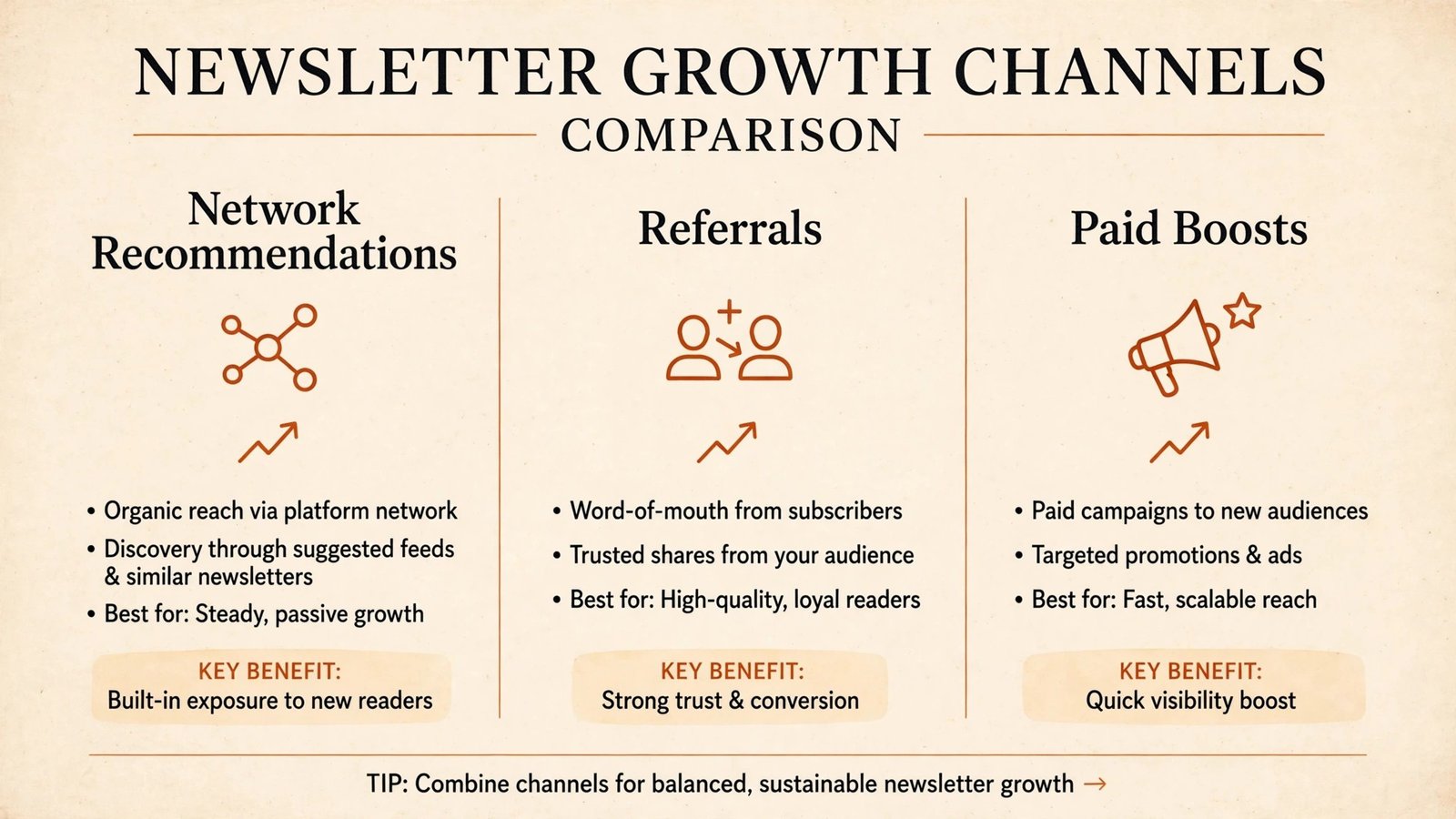
Growth Compared: Recommendations, Referrals and Paid Acquisition
Growth is where the platforms diverge most, so compare growth channels channel by channel.
Substack recommendations work through writer to writer recommendations and reader sharing. When a larger writer recommends you, a wave of interested readers can arrive quickly. Those readers tend to be engaged, because they came through a trusted recommendation. The downside is dependence: you cannot control when recommendations happen, and smaller writers may wait a long time for a major recommendation. Cross promotion with peers, guest posts and Notes activity increase your chances, but they remain partly outside your control.
Beehiiv referrals work through reader incentives. You design the programme, readers share a personal link, and rewards unlock at milestones. This channel is controllable and measurable: you see how many referrals each reader generates, which rewards motivate action, and what referral subscribers do after joining. Referral subscribers vary in quality. Some become loyal readers. Some join for a reward and never open again. Track referral subscriber engagement separately from organic subscribers, and adjust rewards if referral readers churn faster.
Beehiiv boosts add a paid channel. You can pay to be recommended to audiences of similar newsletters, with costs and results tracked inside the platform. Paid boosts suit newsletters with a proven free offer and a clear monetisation path, because you need to know what a subscriber is worth before you pay to acquire one. Do not buy boosts before your welcome sequence, landing page and first few issues are strong. Paying to send new readers to a weak first impression wastes budget and damages reputation.
Organic growth outside either platform still matters most in the long run. Search, social media, guest appearances, lead magnets and partnerships bring readers to both platforms. The platform determines how well you capture and convert those visitors, not whether they arrive. Build one reliable outside channel, such as a social account, a YouTube channel, a podcast or a community presence, and use your newsletter platform to convert that attention into subscribers you own.
List hygiene protects growth on both platforms. Remove or re-engage inactive subscribers regularly, use double opt in where appropriate, and avoid importing old lists without permission. A smaller, engaged list outperforms a large, cold list on open rates, deliverability and sponsor value. Platforms reward good sending practices with better inbox placement, and readers reward relevant content with continued attention.
Monetisation Math: Subscriptions, Ads and Sponsors
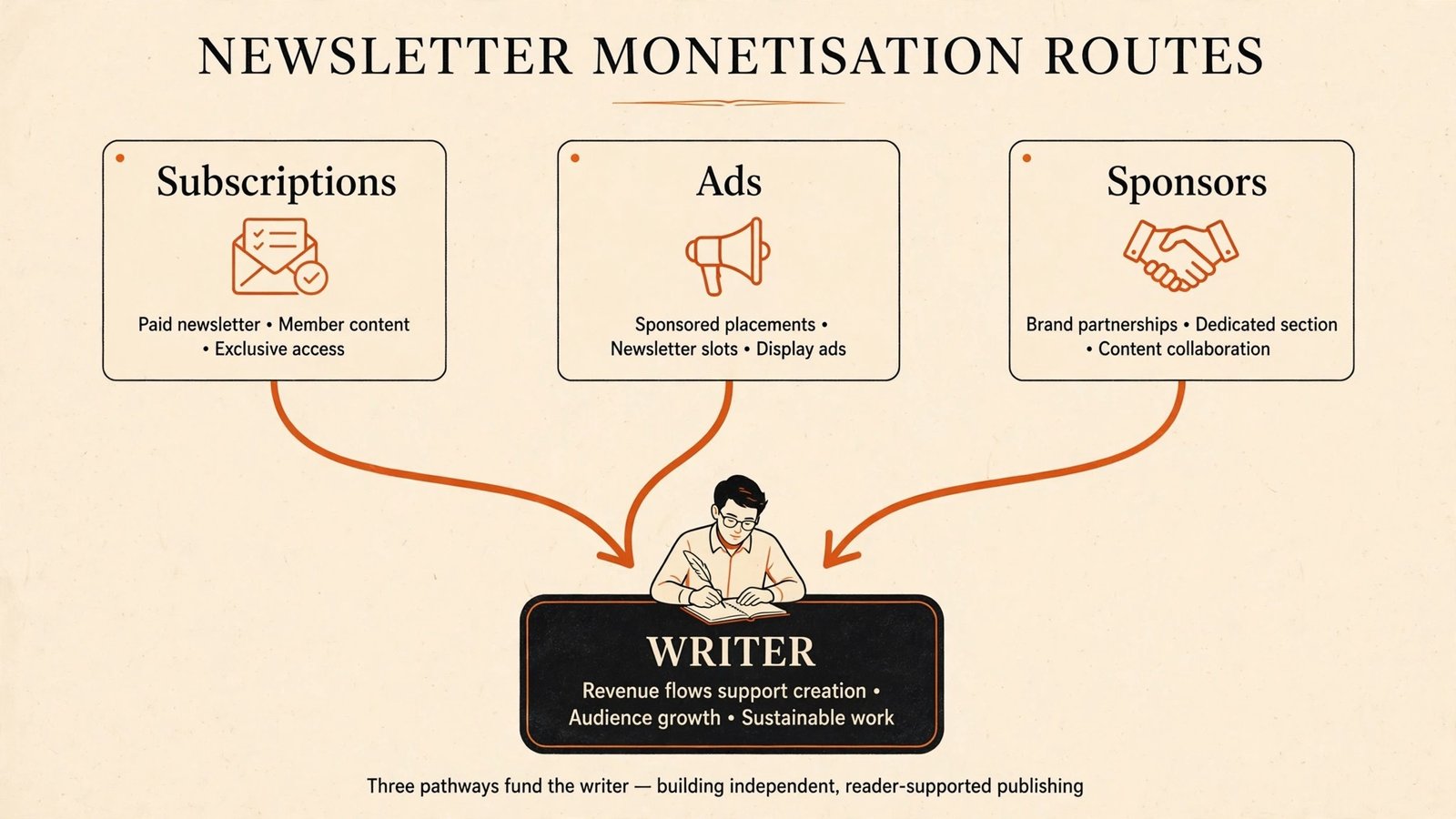
Monetisation math decides whether a newsletter can sustain its writer, so work through it before choosing a platform on features alone.
On Substack, revenue is mainly paid subscriptions minus platform share minus payment processing costs. If you charge a monthly price and gain a steady number of paid subscribers, revenue is predictable and directly tied to writing quality and audience trust. The risk is concentration: if paid growth stalls, revenue stalls, because there are fewer alternative revenue levers inside Substack.
On Beehiiv, revenue can combine paid subscriptions, advertising, boosts partnerships and sponsor placements. That diversification helps newsletters with large free audiences but modest paid conversion. A free list of 20,000 engaged readers can earn sponsor revenue even if only a small share pays, while the same list on a subscription only model earns less. Diversification also adds complexity: sponsor management, ad approvals, rate cards and reporting all take time.
Price your paid tier by value and by audience economics, not by copying another writer. A niche professional newsletter can charge more than a general interest newsletter, because readers expense it or earn from it. A general newsletter needs a larger audience at a lower price to reach the same revenue. Test annual pricing, because annual subscribers improve cash flow and retention, and offer a clear reason to choose annual beyond a small discount, such as a bonus resource or a community benefit.
Sponsor pricing follows audience quality, not just size. Sponsors pay for engaged, relevant readers in a specific niche. Track open rate, click rate, subscriber growth and audience composition, and prepare a simple media kit with those numbers before approaching sponsors. Do not inflate numbers. Sponsors test campaigns and return only if results are real.
Email Delivery, Analytics and Ownership
Email delivery is invisible when it works and decisive when it fails. Both platforms invest in deliverability, but your practices matter as much as their infrastructure. Use a custom domain, authenticate your sending domain, avoid spam trigger language in subject lines, keep your list clean, and send consistently. Sudden volume spikes, purchased lists and misleading subject lines damage deliverability on any platform.
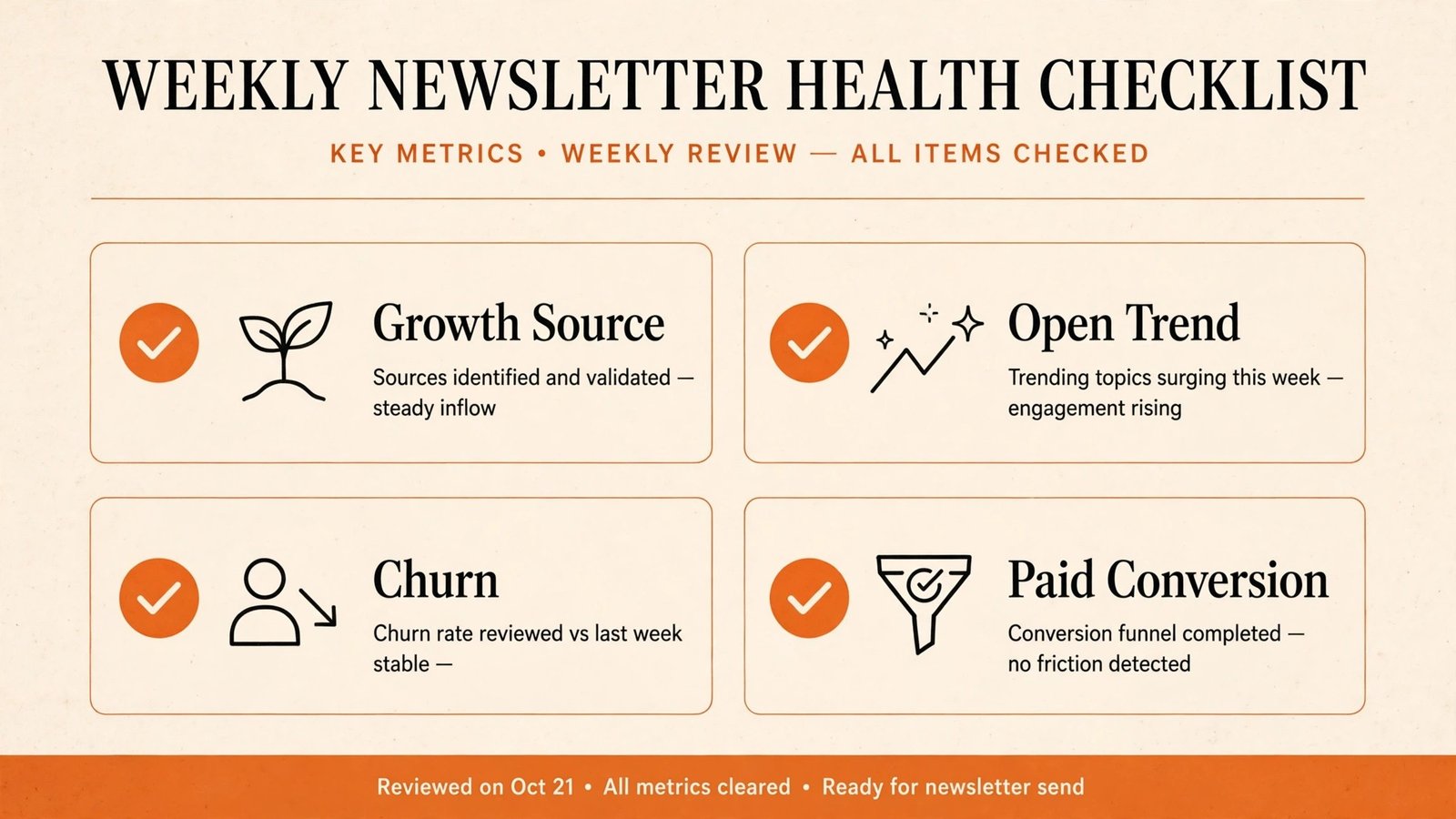
Analytics should inform writing, not just vanity metrics. Track subscriber growth by source, open rate trend, click rate, paid conversion rate and churn. A falling open rate may signal list fatigue, irrelevant topics or deliverability trouble. A high click rate on one topic signals demand for more depth on that topic. A rising churn rate after paid posts signals a mismatch between promise and delivery. Review these numbers monthly and change one thing at a time.
Ownership is the long term question. Both platforms let you export your subscriber list, and you should do so regularly as a backup, regardless of platform. Ownership also means control over pricing, design, monetisation options and data. Beehiiv gives operators more control over growth and monetisation tooling. Substack gives writers network distribution in exchange for simpler tooling and a platform share. Neither platform owns your readers if you keep a clean export and maintain an independent presence, such as your own domain and social channels, alongside the platform.
Migration between platforms is possible but not trivial. Subscriber lists, archives, paid subscriber status and payment plans need careful handling, and some readers will need to re-confirm or update payment details. Migrate between major launches, communicate clearly with readers, and test paid access thoroughly before announcing the move. Choosing well now saves that disruption, but a good newsletter can survive a migration if the writing and the audience relationship stay strong.
Best For, Watch Out For and Pricing Guidance
Best for Substack: essayists, analysts, cultural writers, journalists, authors and thought leaders who want discovery, discussion and paid subscriptions with minimal setup. Best for Beehiiv: newsletter operators, niche media builders, business writers, creators with sponsor ambitions, and teams that want referral growth, segmentation and detailed analytics.
Watch out for Substack: platform share compounding as paid revenue grows, limited growth automation, and dependence on network discovery. Watch out for Beehiiv: needing to build growth systems yourself, sponsor and ad management overhead, and slower early discovery for pure essayists without an existing audience.
Pricing guidance: compare total cost at your expected scale. A free or low cost Beehiiv plan may suit a growing free newsletter, while a higher plan unlocks automation and monetisation features that pay for themselves once sponsor or paid revenue flows. A Substack account costs little to start, but platform share becomes the main cost as paid revenue grows. Model both routes at 100, 1,000 and 10,000 subscribers to see where the economics cross. Check current terms at checkout, because revenue shares and plan features change.
The first mistake is publishing inconsistently. Readers forget irregular newsletters, and irregular sending damages deliverability. Choose a cadence you can sustain for a year, then protect it.
The second mistake is writing for everyone. A newsletter for everyone interests no one deeply. Define a reader, a problem and a promise in one sentence, and test every issue against that sentence.
The third mistake is hiding all value behind a paywall too early. Free readers need proof of value before they pay. Give generously, then charge for depth, tools, access or analysis that goes further.
The fourth mistake is ignoring the welcome sequence. The first three emails decide whether a new subscriber stays engaged. Welcome new readers, set expectations, share your best work, and invite a reply. A reply also helps deliverability and starts a relationship.
The fifth mistake is chasing subscriber count over engagement. A large cold list looks impressive and performs poorly. Optimise for opens, replies, forwards and paid conversion, not just total subscribers.
Frequently Asked Questions
Substack is easier for a new writer who wants to publish and be discovered with minimal setup. Beehiiv is better for a new operator who already has an audience elsewhere and wants growth tools from day one. If you are starting from zero with strong writing, Substack discovery helps. If you are starting with an existing audience, Beehiiv tooling helps you convert it.
Can I make money on Beehiiv without paid subscriptions?
Yes, through advertising, boosts partnerships and sponsor placements once your list reaches a viable size and engagement level. Paid subscriptions remain an option, but they are not the only route on Beehiiv, which suits free newsletters with valuable audiences.
Yes, Substack takes a platform share on paid subscription revenue, plus payment processing costs. Check current terms before launch, and model net revenue at your expected subscriber count so the share does not surprise you later.
Can I move my list if I switch platforms later?
Yes, both platforms support exporting your subscriber list, which is the critical asset. Paid subscriber status, archives and payment plans need careful migration planning, so export regularly and migrate between launches, not during one.
Which platform is better for sponsors?
Beehiiv has a stronger built in sponsor and ad ecosystem, with tools for managing placements and partner revenue. Substack writers can also run sponsors manually, but Beehiiv tooling makes sponsor operations easier at scale.
Not at first. Both platforms provide a publication website. As your brand grows, a separate site or a custom domain gives you more control over design and search presence. Start on the platform, then expand your independent presence as revenue allows.
Publish as often as you can sustain at high quality. Weekly works for most writers. Twice weekly suits news driven topics. Monthly suits deep essays. Consistency matters more than frequency, so choose a rhythm you can keep for a year.
A 90 Day Plan for Growing on Either Platform
Platform choice matters less than the first 90 days of consistent publishing and promotion, so plan those days explicitly. In days 1 to 30, focus on foundation. Publish weekly, set up a welcome sequence, create one lead magnet that solves a single reader problem, and place signup forms where your existing audience already finds you. On Substack, that means recommendations, Notes and cross promotion with peers. On Beehiiv, that means referral programme setup, landing pages and embed forms on your site and social profiles.
In days 31 to 60, focus on distribution. Guest post or appear on a podcast in your niche, exchange recommendations with two or three similar newsletters, and promote your best issue, not your signup page, because a strong issue converts better than a generic promise. Track where subscribers come from, and double down on the one channel that brings engaged readers, rather than spreading effort across five weak channels. A newsletter that grows from one strong channel beats a newsletter that stalls on five.
In days 61 to 90, focus on monetisation testing. Survey readers about what paid content, resources or access they would value. Test a paid tier, a sponsor placement or a partner recommendation, depending on your platform strengths. On Substack, test paid subscriptions with a clear paid post series. On Beehiiv, test a referral reward upgrade or a sponsor slot with a small, relevant advertiser. Measure paid conversion, sponsor response and reader feedback together. A monetisation test that angers readers is a failed test, even if it earns short term revenue.
Throughout the 90 days, protect writing quality. Growth tactics bring readers to the door. Writing keeps them inside. If growth work starts crowding out writing time, cut a tactic, not an issue. Readers subscribe for issues, not for funnels. The most successful newsletters in any niche share a boring secret: they published useful issues on schedule, for a long time, while steadily improving distribution by one channel at a time.
Review at day 90 with honest numbers. Subscriber count, growth rate by source, open rate trend, reply count, paid conversion and churn together tell the real story. If open rates are falling, fix topic relevance or list hygiene before buying growth. If growth is strong but paid conversion is weak, fix the paid offer before adding more free subscribers. If referrals drive your best readers, invest more in referral rewards. Data at day 90 beats opinions at day one.
Verdict: Writer Network or Operator Toolkit
Substack vs Beehiiv ends as a choice between a writer network and an operator toolkit. Substack wins for writers who want simplicity, discovery and paid subscriptions, and who are happy to trade some control and a platform share for network effects. Beehiiv wins for operators who want growth systems, segmentation, referrals, ads and sponsor revenue, and who are willing to build those systems actively.
Pick Substack if your strength is distinctive writing and you want readers to find you inside a large network. Pick Beehiiv if your strength is building an audience business, with multiple revenue streams and measurable growth loops. Either platform can support a successful newsletter, provided you write for a clear reader, publish consistently, protect deliverability, and keep an exported list you own. The platform amplifies your work. Your writing and your relationship with readers decide whether the newsletter lasts.