
About 8 in 10 teachers say they have received student work that was probably written by AI, and most of them have no reliable way to prove it, which is why the top 10 ai content detectors for teachers matters more than any single policy. A false accusation damages a student, while a missed case makes the assignment meaningless.
This guide compares ten detectors that teachers actually use in 2026, judged on accuracy, false positives, classroom fit, and price. Pricing here reflects vendor pages checked in late 2026, so confirm the live plan on the vendor site before buying, because prices rarely stay still.
The ten tools split into two groups. Classroom detectors like GPTZero and Turnitin are built for schools, with reports a teacher can show a student. General detectors like Originality and Winston check any text, but they need a teacher to interpret the result. Your pick should follow whether you need a classroom report or a quick check.
Why Teachers Need a Detector They Can Trust
A teacher reads an essay that sounds nothing like the student who wrote it, with perfect grammar and a voice the student has never used in class. The teacher suspects AI, but suspicion is not evidence, and the school needs more than a feeling before it acts. The essay sits ungraded while the teacher wonders what to do.
That gap is exactly what the top 10 ai content detectors for teachers is built to close. A good detector gives a score, a sentence-level breakdown, and a report the teacher can show the student and the parent. The conversation becomes about the evidence, not about the suspicion.
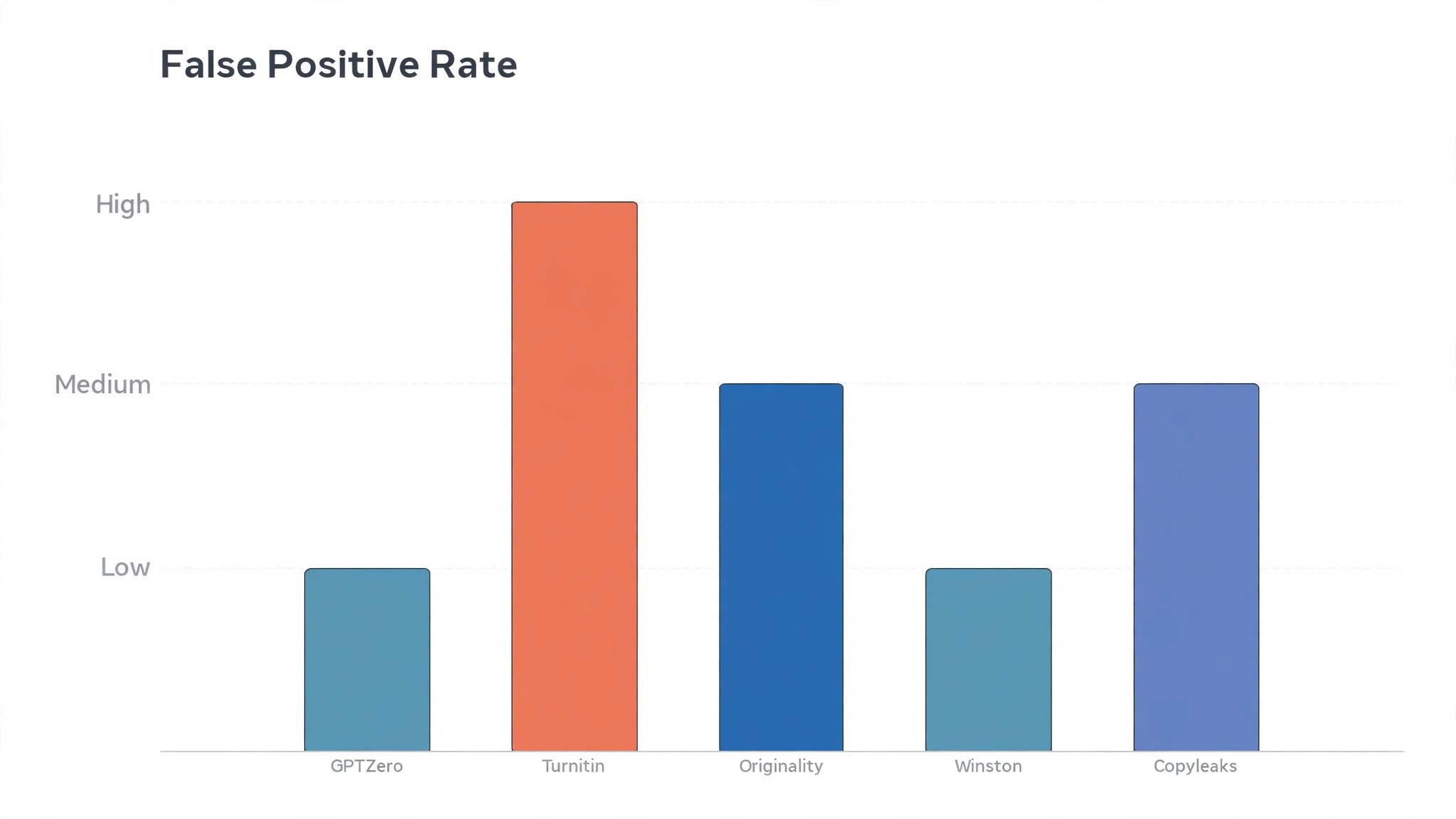
The second problem is the false positive. A detector that flags a real student essay as AI-generated creates a crisis for a student who did the work, and the teacher loses trust. A tool with a low false positive rate and a clear explanation is worth more than a tool that catches one more AI essay but accuses innocent students.
The 10 Tools at a Glance
| Tool | Main job | Best for | Starting paid price |
|---|---|---|---|
| GPTZero | Classroom AI detector | Classroom reports | about $10 a month |
| Turnitin AI | Institutional AI detection | School rollout | pricing on the vendor site |
| Originality.ai | Detailed AI and plagiarism checks | Sentence-level detail | about $13 a month |
| Winston AI | AI detector with reports | Detailed reports | about $18 a month |
| Copyleaks | Plagiarism plus AI detection | Both checks in one | about $10 a month |
| Sapling | Writing help plus detection | Non-native writers | about $25 a month |
| ZeroGPT | Cheap AI detector | Low cost | about $8 a month |
| Scribbr | Pay-per-check detector | Occasional checks | about $20 per document |
| Writer.com AI detector | Free AI detector | Free checks | free |
| Brandwell | Content AI detector | Content teams | pricing on the vendor site |
No single row in this table settles the choice, because the top 10 ai content detectors for teachers for a single classroom looks different from the right pick for a whole school. A single teacher needs low cost and a quick check, while a school needs reports and admin controls. Cost comes first in the table, and the daily workflow comes next in the detail section.
Best Pick by Job
| Job type | First pick | Second tool | Why this pair works |
|---|---|---|---|
| Single teacher, one class | GPTZero | Scribbr | Classroom reports plus pay-per-check grading |
| Whole school rollout | Turnitin AI | Copyleaks | Institutional reports plus LMS integration |
| Writing heavy courses | Originality.ai | Winston AI | Sentence-level checks plus detailed reports |
| Budget first teacher | ZeroGPT | Writer.com detector | Cheap checks plus a free detector |
| Plagiarism plus AI | Copyleaks | Turnitin AI | Both checks in one report plus school controls |
| Non-native English students | Sapling | GPTZero | Writing help plus low false positive rates |
A single teacher should start with the top 10 ai content detectors for teachers that fits a classroom budget, and GPTZero wins that job with classroom reports and a clear sentence breakdown. Scribbr sits behind it as a pay-per-check backup for the essays that need a second look.
A whole school needs institutional controls, so Turnitin AI takes the lead with LMS integration and admin reports, while Copyleaks stays on for plagiarism plus AI in one report. A writing-heavy course should run Originality instead, because its sentence-level checks are the most detailed here.
How to Judge the Top 10 AI Content Detectors For Teachers
Start with the false positive rate, not with the headline accuracy. Run ten essays you know a student wrote through each tool, and count how many are flagged. A detector that flags two of ten real essays is dangerous in a classroom, whatever its AI detection rate, because a false accusation is the worst outcome.
Next, test the report, because the top 10 ai content detectors for teachers is judged by what you can show a student and a parent. Does the report highlight the suspicious sentences, explain the score, and export as a file you can attach to a grade. A tool with a clear report turns a hard conversation into a fair one.
Then model the real cost at your grading volume, including the free tier. A tool that costs 10 dollars a month but charges per document can cost more than a 25 dollar plan with unlimited checks once you grade a hundred essays. Work out the total at your real essay volume, not just the subscription price.
The 10 Tools in Detail
The detectors below are reviewed one by one, with accuracy, price, and the limitation that matters in a classroom. Start with the pick for your teaching load, then check the runner-up, because the second detector can fit a single classroom better.
1. GPTZero
GPTZero is the classroom detector in this guide, and its strength is the teacher report. The score comes with a sentence-level breakdown that shows exactly which lines look AI-written. Pricing starts at about 10 dollars a month, with a free tier for a small number of checks. The tool is built for educators, and the reports are written for a classroom conversation.
It fits teachers who need a report they can show a student. The trade-off is scale, since GPTZero is built for teachers, not for whole districts. Best for Classroom reports. Paid plans start at about $10 a month.
A team moving from Turnitin AI should run both tools for two weeks, so no essays is lost in the switch. Keep Turnitin AI running until the first full month closes cleanly in the new tool, then cancel the old plan only after every essays record is confirmed in place, and keep a backup export on file for a month after the switch.
2. Turnitin AI
Turnitin AI is the institutional detector here, and its strength is the system. It runs inside the LMS, checks every submission, and gives the school admin controls and reports. Pricing is on the vendor site, quoted per institution, and the tool is sold with Turnitin plagiarism checking. The integration means teachers never upload essays by hand.
It fits schools that need one system for every class. The trade-off is price, since Turnitin is built for institutions, not for single teachers. Best for School rollout. Pricing is on the vendor site.
Before you leave Originality.ai, download your essays and confirm the history comes with them. A trial that covers one full billing cycle shows the true cost of leaving Originality.ai, because the first month always looks cheaper than the second month does, so keep a backup export on file for a month after the switch.
3. Originality.ai
Originality.ai is the detail specialist in this guide, and its strength is the sentence check. Every sentence gets a score, which helps a teacher see which parts of an essay look AI-written. Pricing starts at about 13 dollars a month, with credits for checks. The reports are detailed, and the tool also checks for plagiarism in the same pass.
It fits writing-heavy courses that need detail. The trade-off is the credit model, which needs watching at high volume. Best for Sentence-level detail. Starting paid price about $13 a month.
If you switch from Winston AI, export your essays first and check every record survives the move. Run Winston AI and the new tool side by side for two full weeks, so the team can compare real essays in daily work before the old subscription ends for good, and keep a backup export on file for a month after the switch.
4. Winston AI
Winston AI is the report-focused detector here, and its strength is the explanation. The score comes with a readable report that a teacher can share with a student or a parent. Pricing starts at about 18 dollars a month, with higher tiers adding checks and team seats. The tool also checks for plagiarism, which suits writing courses.
It fits teachers who need a report they can defend. The trade-off is price, since Winston costs more than the budget tools. Best for Detailed reports. Paid plans start at about $18 a month.
A team moving from Copyleaks should run both tools for two weeks, so no essays is lost in the switch. Keep Copyleaks running until the first full month closes cleanly in the new tool, then cancel the old plan only after every essays record is confirmed in place, and keep a backup export on file for a month after the switch.
5. Copyleaks
Copyleaks is the two-in-one checker in this guide, and its strength is the combined report. Plagiarism and AI detection run in one pass, with LMS integration for schools. Pricing starts at about 10 dollars a month, with institutional plans for schools. The AI detector is one of the most tested in the field, with published accuracy data.
It fits schools that want both checks in one tool. The trade-off is the interface, which is busier than GPTZero. Best for Both checks in one. The entry paid price is about $10 a month.
Before you leave Sapling, download your essays and confirm the history comes with them. A trial that covers one full billing cycle shows the true cost of leaving Sapling, because the first month always looks cheaper than the second month does, so keep a backup export on file for a month after the switch.
6. Sapling
Sapling is the writing assistant with detection here, and its strength is the writer. It helps students write better, and the AI detector flags text that looks machine-written. Pricing starts at about 25 dollars a month for Pro, with a free tier for basic checks. The tool suits classrooms with many second-language students.
It fits diverse classrooms that need a gentle detector. The trade-off is detection depth, which is lighter than Originality. Best for Non-native writers. Starting paid price about $25 a month.
If you switch from ZeroGPT, export your essays first and check every record survives the move. Run ZeroGPT and the new tool side by side for two full weeks, so the team can compare real essays in daily work before the old subscription ends for good, and keep a backup export on file for a month after the switch.
7. ZeroGPT
ZeroGPT is the budget detector in this guide, and its strength is the price. For about 8 dollars a month, a teacher gets unlimited checks with a simple score and breakdown. Pricing starts at about 8 dollars a month for Pro, with a free tier for a few checks a day. The interface is plain, but the check is fast.
It fits teachers on a tight budget who need quick checks. The trade-off is accuracy, which trails the classroom leaders. Best for Low cost. Paid plans start at about $8 a month.
A team moving from Scribbr should run both tools for two weeks, so no essays is lost in the switch. Keep Scribbr running until the first full month closes cleanly in the new tool, then cancel the old plan only after every essays record is confirmed in place, and keep a backup export on file for a month after the switch.
8. Scribbr
Scribbr is the pay-per-check detector here, and its strength is the single essay. A teacher pays about 20 dollars per document, which suits occasional checks without a subscription. Pricing is about 20 dollars per document, with no monthly fee. The report is clear, and Scribbr is a known name in academic writing.
It fits teachers who check a few essays a term. The trade-off is cost at volume, since per-document pricing grows fast. Best for Occasional checks. The entry paid price is about $20 per document.
Before you leave Writer.com AI detector, download your essays and confirm the history comes with them. A trial that covers one full billing cycle shows the true cost of leaving Writer.com AI detector, because the first month always looks cheaper than the second month does, so keep a backup export on file for a month after the switch.
9. Writer.com AI detector
Writer.com offers a free AI detector, and its strength is the price. A teacher can check an essay in seconds with no account and no fee, which suits a quick first look. The detector is free, with no monthly cost and no limits on the website check. The tool is simple, with a score and little else, so the teacher must interpret the result.
It fits teachers who want a free first check. The trade-off is depth, since the free tool gives no sentence breakdown. Best for Free checks. Starting paid price free.
If you switch from Brandwell, export your essays first and check every record survives the move. Run Brandwell and the new tool side by side for two full weeks, so the team can compare real essays in daily work before the old subscription ends for good, and keep a backup export on file for a month after the switch.
10. Brandwell
Brandwell is the content detector in this guide, and its strength is the content workflow. It checks AI content at scale for publishers and content teams, with reports built for editors. Pricing is on the vendor site, quoted per business, and the platform includes content creation tools alongside detection. The tool suits content teams more than classrooms.
It fits content teams that check many articles. The trade-off is the classroom fit, since Brandwell is built for publishers, not teachers. Best for Content teams. Pricing is on the vendor site.
A team moving from GPTZero should run both tools for two weeks, so no essays is lost in the switch. Keep GPTZero running until the first full month closes cleanly in the new tool, then cancel the old plan only after every essays record is confirmed in place, and keep a backup export on file for a month after the switch.
From Student Draft to Fair Decision in Six Moves
| Step | Job | Best tool | What good looks like |
|---|---|---|---|
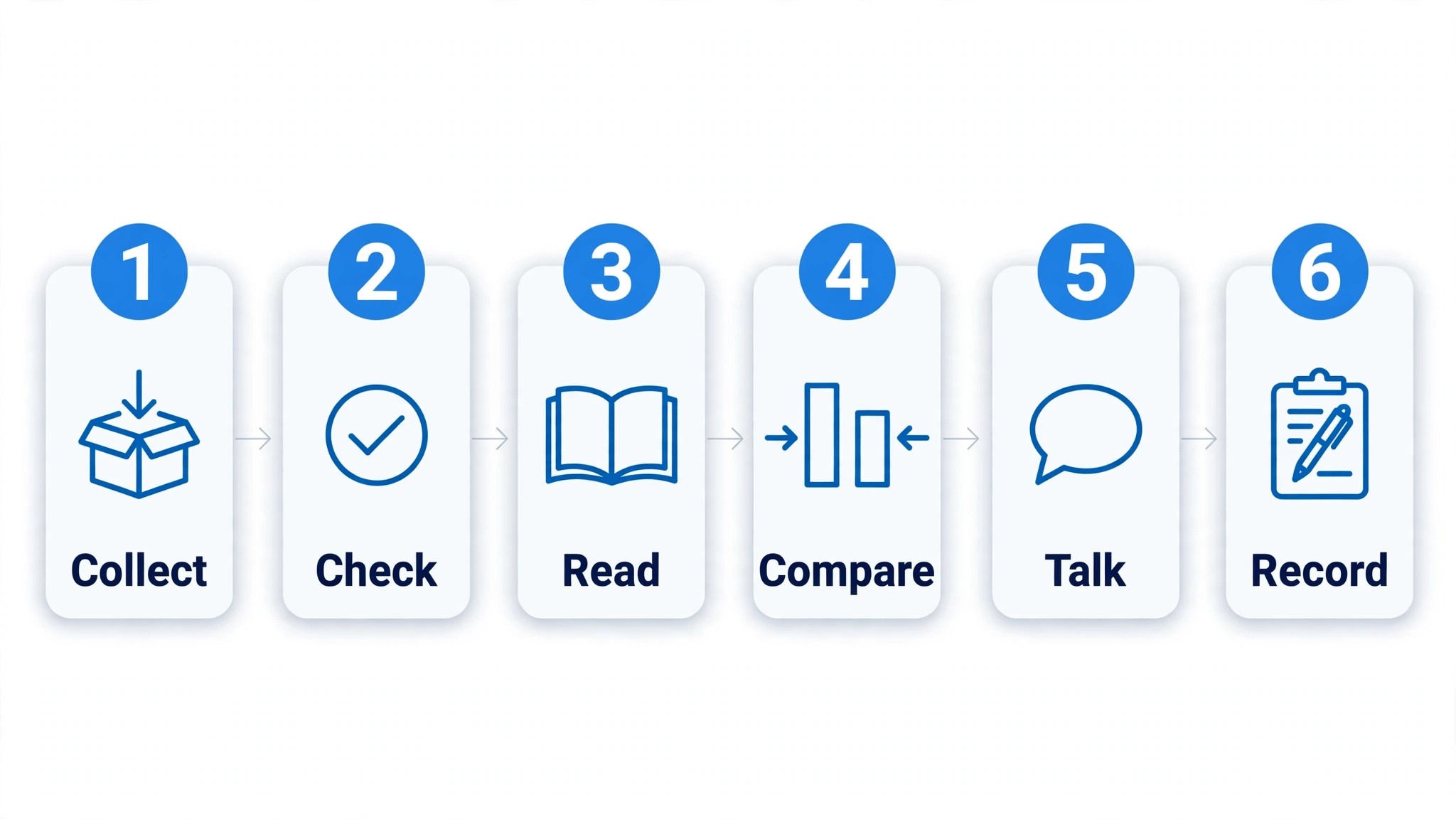
| 1 | Collect the draft | Turnitin AI | Submission through the LMS with a full record |
| 2 | Run the check | GPTZero | Score and sentence breakdown in seconds |
| 3 | Read the report | Originality.ai | Highlighted sentences with a clear explanation |
| 4 | Compare with classwork | Sapling | Student writing history shows the real voice |
| 5 | Talk to the student | Copyleaks | Report shared with the student for discussion |
| 6 | Record the decision | Winston AI | Decision logged with the report attached |
The workflow above is the real test of the top 10 ai content detectors for teachers, because a tool that handles all six moves in one place turns a suspicion into a fair decision. A teacher that runs this workflow every time treats every student the same, and the student trusts the process even when the outcome is hard.
Test the workflow on ten real essays before you use it for a grade. Collect them, check them, read the reports, compare them with classwork, talk to the students, and record the decisions, then ask yourself which step felt weak. The step that felt weak is the step your tool choice must fix.
What Detection Costs Across a School Year
| Business type | Volume | Tool stack | Monthly cost |
|---|---|---|---|
| One teacher, 30 essays a month | 300 essays a year | GPTZero plus ZeroGPT | About 120 dollars a year |
| Department, 5 teachers | 2,000 essays a year | Originality.ai plus Winston AI | About 500 dollars a year |
| Whole school, 20 teachers | 10,000 essays a year | Turnitin AI plus Copyleaks | Pricing on the vendor site |
| Writing center | 5,000 essays a year | Copyleaks plus Sapling | About 800 dollars a year |
| Budget first teacher | 500 essays a year | ZeroGPT plus Writer.com detector | About 100 dollars a year |
A single teacher can run on the top 10 ai content detectors for teachers for about 120 dollars a year, using GPTZero and ZeroGPT, and that is the right way to start. A department with five teachers pays about 500 dollars a year for Originality and Winston AI, which buys detailed reports for every essay.
A whole school pays a quoted price for Turnitin AI and Copyleaks, and a writing center pays about 800 dollars a year. The bill grows with essay volume, so model it at your real grading load, and remember that one false accusation avoided is worth more than the whole annual fee.
Detection Mistakes That Hurt Students
The first mistake is treating a detector score as proof. A score of 80 percent AI is a signal, not a verdict, and a teacher who grades on the score alone will eventually accuse a student who did the work. Use the score to start a conversation, and decide on the evidence from the student, not the number.
The second mistake is checking only the final essay, because the top 10 ai content detectors for teachers only helps if the teacher knows the student voice. A draft history, a classwork sample, and a short conversation tell you more than any detector. A student who cannot explain their own essay has a problem, whatever the score says.
The third mistake is using a detector that flags non-native English writing. Some detectors flag the formal, careful English of a second-language student as AI-generated, which punishes the students who work hardest. A tool with a low false positive rate for non-native writing is essential in a diverse classroom.
Policy matters more than the tool, because a detector without a clear school policy creates arguments. A written policy that says what AI use is allowed, what the check looks like, and what happens next protects the teacher and the student. Write the policy before you buy the tool, and share it with every class.
Draft history is the strongest evidence a teacher can collect, and it costs nothing. A student who writes in class, saves drafts, and shows their process has proof of authorship that no detector can replace. A tool that tracks versions and drafts gives the teacher that evidence without extra work.
Training is the step schools skip, and it costs them. A teacher who understands what a detector can and cannot do will use it fairly, while a teacher who treats it as a lie detector will misuse it. An hour of training on the tool and the policy prevents a year of disputes.
Privacy is the duty schools forget when they upload student work. A detector that stores essays on its servers needs a privacy check, and the school should know where the data goes. A tool with a clear data policy and school controls is worth the extra cost.
How Schools Write a Fair AI Policy
A fair AI policy starts with a simple rule that every student can understand. The policy should say what AI use is allowed, what must be disclosed, and what happens when the rules are broken, in plain language that a fourteen-year-old can read. A policy written in legal language helps nobody, because the students it governs cannot understand it.
The policy should name the tool and the process, not just the rule. A student should know that essays are checked, what the check looks like, and what happens if the score is high, including the right to explain the work and appeal the decision. A student who knows the process trusts it, while a student who discovers it after a flag feels ambushed.
Teachers need the policy as much as students do. A teacher who knows the school position can grade with confidence, while a teacher who guesses will either ignore AI use or overreact to it. The policy should give teachers a clear path, from the check to the conversation to the decision, with a colleague to consult at each step.
Parents should see the policy before the first flag, not after it. A letter home in the first week that explains the check, the appeal, and the privacy protections prevents the angry phone call that follows a surprise accusation. A school that communicates early keeps parents as partners, while a school that surprises them makes them opponents.
The policy should be reviewed every year, because the tools change faster than the rules. A detector that was accurate last year may be weaker this year, and a new AI tool may change what students can do. A yearly review keeps the policy honest, and the review should include teachers, students, and parents, not just the administration.
Privacy is the part of the policy schools forget, and it matters most. A policy that says where student essays go, how long they are kept, and who can see them protects the school as well as the student. A tool that stores essays without a clear data policy should not be used, whatever its accuracy, because the risk is not worth the check.
Your First-Month Detection Setup Plan
Use this plan when you set up detection for a classroom or a school, and keep a copy with your department notes.
- Write the AI use policy and share it with every class
- Collect a writing sample from each student in the first week
- Test the detector on ten real student essays before grading
- Set up the LMS integration so submissions flow automatically
- Build a report template for the student conversation
- Train every teacher on false positives and the appeal process
- Set up a monthly review of flagged essays and outcomes
- Review the first month and adjust the threshold for your students
Related Guides
Keep exploring with these guides on Stratilyze:
- Best AI Content Detectors (8 Tools)
- Best AI Keyword Research Tools for Content Creators (8 Tools)
- Best AI Content Planning Tools for Content Creators (12 Tools)
Frequently Asked Questions
Which AI detector is best for a single teacher?
GPTZero is the strongest pick for a single teacher, because the classroom reports and sentence breakdown are built for teachers, and the price starts at about 10 dollars a month. Scribbr is the best pay-per-check backup for the essays that need a second look. A single teacher should avoid institutional tools until the school buys them.
Can a detector prove a student used AI?
No, a detector gives a probability, not proof, and the score should start a conversation, not end one. A teacher should compare the essay with the student classwork, talk to the student, and look at the draft history before deciding. A detector is evidence, not a verdict.
How much does AI detection cost a teacher each year?
A single teacher can run detection for about 120 dollars a year with GPTZero and ZeroGPT. A department should budget about 500 dollars a year for Originality and Winston AI, and a whole school pays a quoted price for Turnitin AI. The bill grows with essay volume, so model it at your real grading load.
Does Turnitin AI work for schools of any size?
Turnitin AI is built for institutions, with LMS integration, admin controls, and reports that a school can defend. It is priced for schools, not for single teachers, so a solo teacher should use GPTZero instead. A school that already uses Turnitin for plagiarism should add the AI check.
Do detectors flag non-native English writing as AI?
Some detectors do flag the formal, careful English of second-language students, which is a known problem in the field. A tool with a low false positive rate for non-native writing is essential in a diverse classroom, and the teacher should always compare the essay with the student classwork.
What should I do if a detector flags a student essay?
Read the report, compare the essay with the student classwork, and talk to the student before you decide anything. Ask the student to explain the essay in their own words, and check the draft history. A student who can explain the work did the work, whatever the score says.
Our Verdict for Teachers
GPTZero is our pick for most teachers, because the top 10 ai content detectors for teachers is judged by whether the report is fair enough to show a student, and GPTZero gives the clearest classroom report here. A whole school should buy Turnitin AI, and a teacher on a tight budget should start with ZeroGPT.
Whichever tool you choose, write the policy first, collect a writing sample from every student, and never grade on a score alone. Detection earns its value in conversations that are fair, students who trust the process, and a classroom where the work is real. Choose the tool whose report you would show a parent, and the rest will take care of itself.