

A 200 linear foot cedar privacy fence can be quoted at 6,400 dollars on a standard tier, 9,000 dollars on an upgraded tier, and 11,600 dollars on a premium tier, using published vendor examples for the same length with different materials and finishes. That spread is not a trick. It shows how much of a fence quote depends on material choice, gate count, terrain, and finish, and why a fast single number rarely helps a homeowner decide when you use AI for fence installation quote scheduling. The business that measures the lot, explains the tiers, and books the site visit without delay is the business that usually wins the job.
Fence quoting is unforgiving because the inputs are physical and hard to change later. A missed gate, a slope section, a rocky dig, or a property line dispute can turn a profitable week into a loss, while a quote that arrives late gives the homeowner time to choose a competitor. The workflow below follows the job from first enquiry to deposit, with measurement, material choice, tier pricing, site visit booking, and deposit rules in one connected sequence. Each step reduces a specific risk, and together they turn quoting from a guessing game into a repeatable process.
This guide covers lot measurement from satellite imagery and on site checks, material options with honest per foot ranges, tier quotes that help homeowners choose, site visit slots that protect crew time, and deposit rules that fund materials. It also covers tool choices, costs, mistakes, and the numbers that show whether quoting and scheduling are actually improving.
How to Use AI for Fence Installation Quote Scheduling in Practice
A fence quote answers six questions in order. How long is the run, and where are the gates and corners. What material and height does the homeowner want. What does the ground, slope, and access allow. What will the job cost at each material tier. When can a site visit happen, and when can the crew start. And what deposit secures the materials and the start date. Tools slot into each question, but they do not replace the whole chain at once, and trying to automate everything on day one is the fastest way to create quotes that look precise and still lose money.
Most fence companies start from one of three places. Some still measure with a wheel and quote from a notebook. Some use a spreadsheet that one person understands and nobody else can fix. Some already run estimating or field service software and want satellite measurement and scheduling layered on top. The workflow in this guide works for all three, because the steps stay the same even when the software changes. What changes is how much retyping a person has to do at each step, and how much of the job history is saved for the next similar lot.
Think of the system as three helpers rather than one brain. The first helper measures, which covers lot lines, gates, corners, grade changes, and setbacks. The second helper prices, which covers per foot rates, gate lines, removal lines, and tier totals from your own rates. The third helper schedules and follows through, which covers site visit slots, quote sending, reminders, and deposit collection. When you test a tool, ask which helper it actually delivers well, because a demo that shows all three may only do one of them reliably in daily use.
Lot Measurement From Satellite Imagery and Site Checks
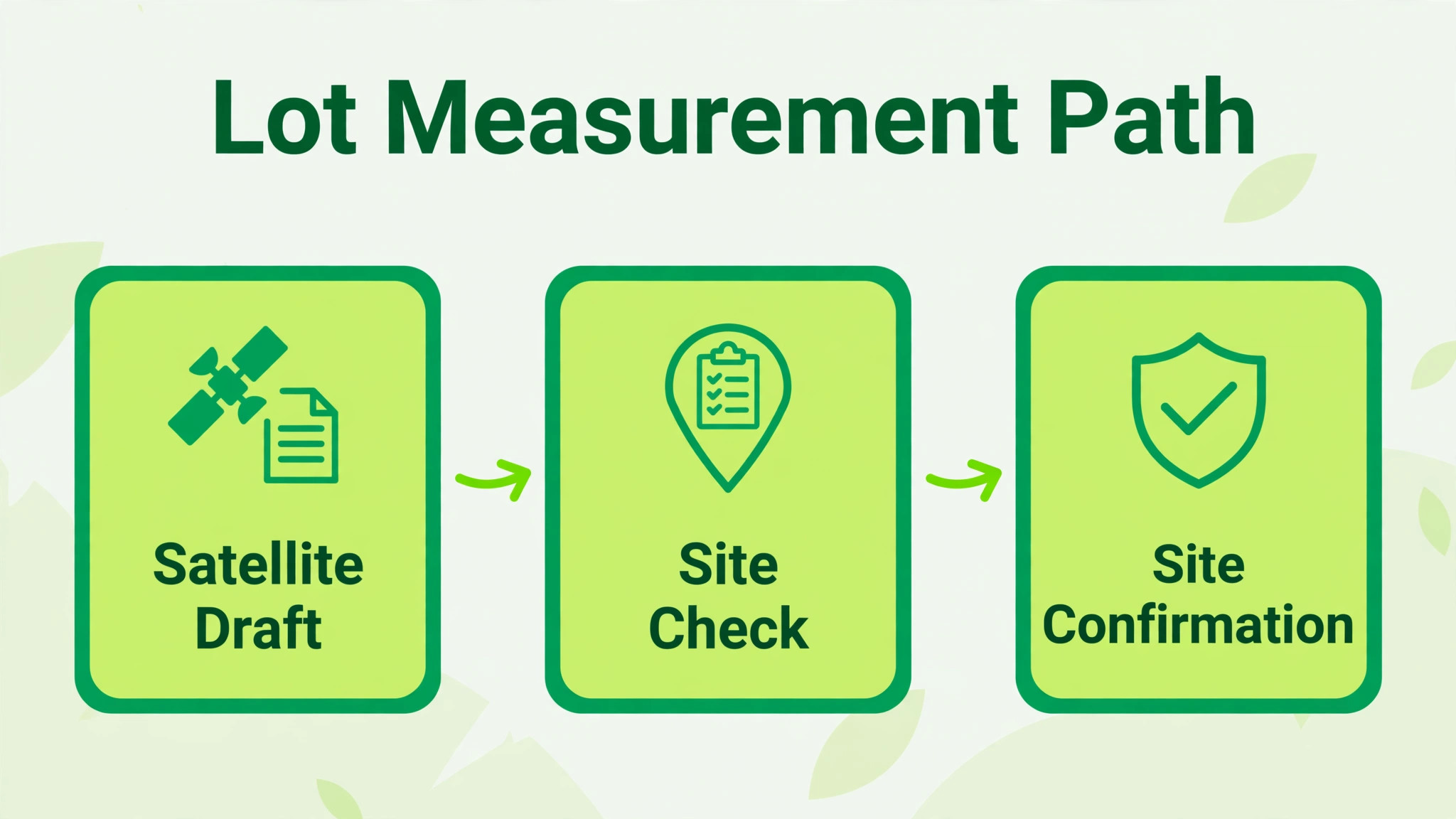
Lot measurement is where fence quotes succeed or fail, because every later number depends on total linear feet, gate openings, and corner posts. Satellite measurement tools let an estimator draw the fence line on a property image and receive total footage, segment lengths, gate openings, and corner locations before visiting the home. Vendor descriptions of this approach show a 200 linear foot residential perimeter with two walk gates and a double drive gate being pre measured in under a minute from a phone, with post count and panel count loaded before the consultation. That speed changes the visit, because the conversation becomes about scope selection rather than tape measure maths.
When you use AI for fence installation quote scheduling, satellite measurement should be treated as a strong draft, not a final survey. Tree cover, fences that no longer match the image, shared boundaries, and recent changes to the lot can all make the image wrong. The site visit must confirm the line, check for slopes, roots, rocks, and access limits, and confirm gate widths and swing directions in writing. A measurement that is only checked on screen will fail on the first post hole, and a post hole failure is expensive because the crew, the materials, and the homeowner are all already committed.
Grade and soil change the dig more than most homeowners expect, and published fence pricing guides suggest adding 15 to 40 percent for difficult terrain. Walk the line, note where the ground rises or falls, where roots or rock are likely, and where a machine cannot reach. Note easements, utility markings, and any neighbour boundary question, because those items decide whether the job can start on the planned date at all. Utility locates must be scheduled before digging, and the quote should state who arranges them and what happens if a locate delays the start. That clarity prevents the most common scheduling argument in fence work.
Material Options With Honest Per Foot Ranges
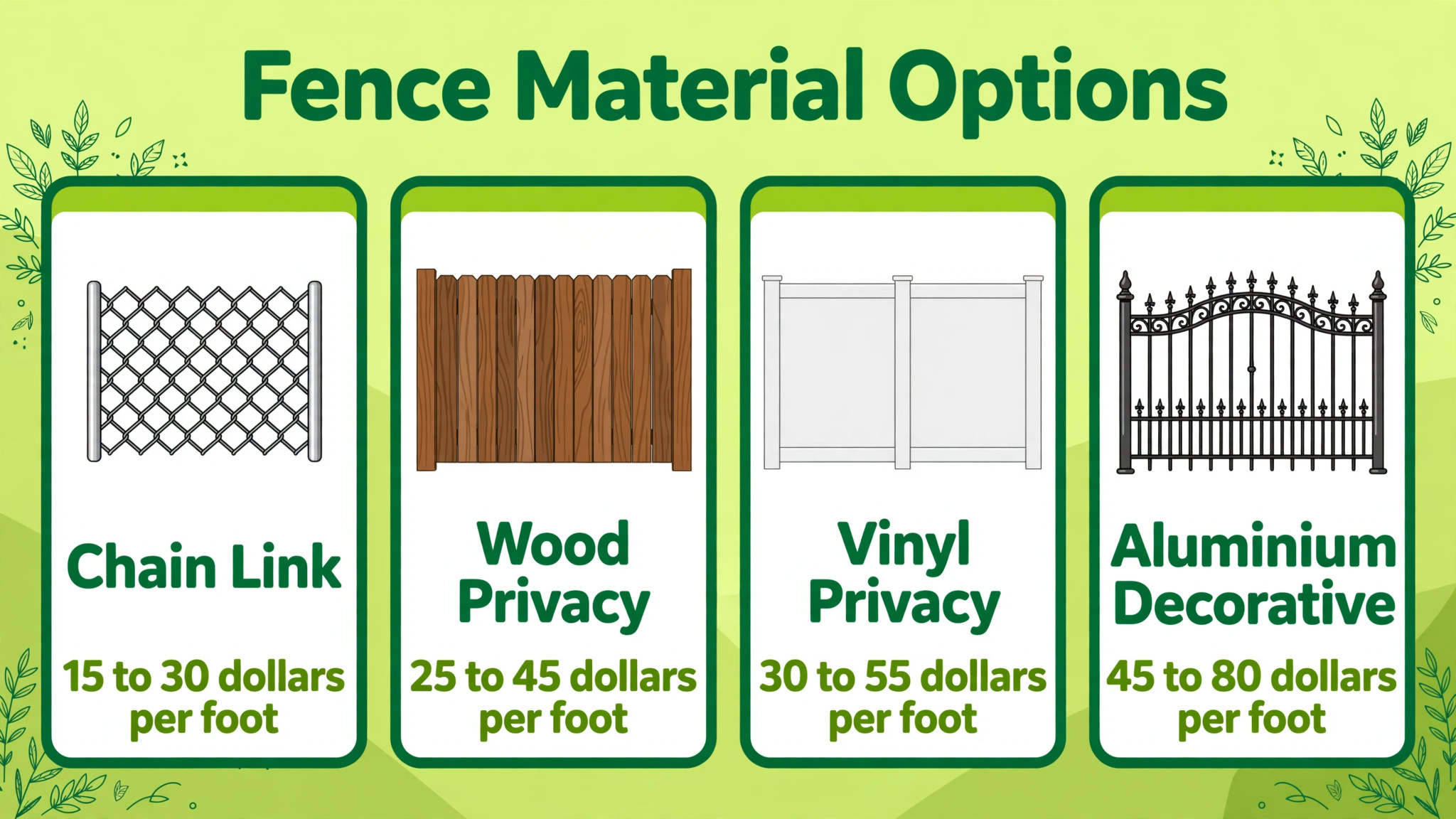
Material choice drives the fence quote more than any other single decision, so present it with ranges that reflect real supplier prices rather than a single national average. Published retail guides put chain link packages at about 15 to 30 dollars per linear foot, wood privacy packages at about 25 to 45 dollars, and vinyl panel packages at about 30 to 55 dollars, with local installers quoting similar wood and vinyl ranges. Those ranges are starting points for planning, and the vendor page or supplier quote for your area is the number that should reach the customer, because lumber and panel prices move during the year.
The table below summarises the main material families in plain terms, so a homeowner can compare them without a sales lecture. Each family has a different life, a different maintenance load, and a different look, and the quote should name those trade offs rather than hiding them behind a total.
| Material | Typical installed range | Main trade off |
|---|---|---|
| Chain link | About 15 to 30 dollars per foot | Low cost, open view, less privacy |
| Wood privacy | About 25 to 45 dollars per foot | Warm look, needs stain and upkeep |
| Vinyl privacy | About 30 to 55 dollars per foot | Low upkeep, higher upfront cost |
| Aluminium decorative | About 45 to 80 dollars per foot | Smart look, less privacy unless panels added |
Read those ranges as planning guides, not as a promise for a specific lot. Taller fences, sloped lots, hard digging, demolition of an old fence, and custom gates all push a job toward the top of a range or beyond it. Price demolition and disposal as a separate line, with published guides suggesting about 3 to 8 dollars per foot for tear out and disposal, more where posts are set in concrete. A homeowner who sees removal as its own line understands why a replacement fence costs more than a new fence on open ground, and that understanding prevents a dispute on the first day.
Quote Tiers That Help Homeowners Choose
Quote tiers work for fence work when the tiers describe different materials, finishes, and gate hardware rather than vague levels of quality. A published vendor example for 200 linear feet of cedar shows the pattern clearly, with a standard cedar dog ear privacy tier, an upgraded tongue and groove cedar tier, and a premium tier with cap rail, decorative post tops, and factory stain. Homeowners compare material quality, style, and total side by side, and vendors report that tiered presentations lift average project values because customers choose better materials when the options are clear. Treat that vendor claim as a direction to test, not as a guarantee for your market.
When you use AI for fence installation quote scheduling, tier building can start from your own per foot price book rather than a generic table. Feed the system your material costs, your labour rates, your gate prices, and your removal rates, then let it draft tier totals for the measured footage. Check the draft against a recent job of the same material and length before sending, because a per foot rate that is right for flat ground will be wrong for a sloped lot with rock. The estimator should adjust for terrain, gates, and removal on every quote, rather than trusting a tier total that assumed easy ground.
Tiers also need a clear recommendation, because three options with no guidance leave the homeowner to guess. Mark the option you would choose for that lot and that budget, and say why in one sentence. For a rental boundary, the standard tier may be the honest recommendation. For a home the customer plans to keep for years, the upgraded or premium tier may save stain and repair work later. That single sentence does more selling than a long paragraph about quality, because it shows judgment rather than upselling. Never present a tier you would not stand behind on site, because the homeowner will remember the tier you pushed long after they forget the price.

Site Visit Slots That Protect Crew Time
Site visits are where fence quoting either respects crew time or wastes it, because a visit that is booked without screening can consume half a day and produce no job. Screen before you travel, using the satellite measurement, photos of the existing fence, gate widths, and answers to short questions about slope, old fence removal, and neighbour boundary issues. A visit that arrives with a measured draft, a material shortlist, and a tier range already discussed will close faster than a visit that starts from zero, because the homeowner has already begun choosing.
Slot design matters as much as screening. Offer site visit slots in clusters by area, with travel time built in, rather than scattering visits across the whole service area in one day. A morning cluster in one neighbourhood and an afternoon cluster in another keeps driving time down and leaves room for a job that overruns. When a visit is booked, send a confirmation with the date, the time window, what the estimator needs access to, and a simple way to reschedule. A homeowner who knows what to clear and what to show will have gates, boundaries, and problem areas ready, which shortens the visit and improves the quote.
When you use AI for fence installation quote scheduling, slot booking can be offered as a self service choice, with live availability and travel buffers built in. The homeowner picks a slot, and the estimator receives a visit pack with the measured draft and the homeowner answers.
That flow works best when slot rules are honest, with enough time for a sloped lot or a long run. A slot that is too short forces the estimator to rush the line walk and miss the details that decide the price. Review slot lengths monthly against actual visit times, and lengthen slots for job types that consistently overrun.

Deposit Rules That Fund Materials and Hold Dates
Deposits protect both sides of a fence job, because materials must be ordered, posts and panels must be delivered, and a crew date must be held against other work. A common pattern is a deposit on acceptance that covers materials, with progress or balance payments tied to delivery and completion, but the exact split should match your supplier terms and your cash flow. Whatever pattern you choose, write it into the quote in plain words, with the deposit amount, the payment link, and the point at which the balance is due. Homeowners accept deposits readily when the reason is clear, and they resist deposits that appear without explanation.
When you use AI for fence installation quote scheduling, the deposit step should be built into acceptance rather than added as a separate chase. The homeowner accepts the tier, taps the payment link, and pays the deposit in the same session, while the system books the start window and sends a confirmation. That single flow removes the gap where accepted quotes sit unpaid for days while the estimator wonders whether to order materials. Check the payment terms on the vendor page for any tool you consider, because processing fees, payout timing, and refund handling differ, and those details matter more than a small difference in monthly subscription price.
Not every fence job needs the same deposit, and a flat percentage can mislead on very small or very large jobs. Set rules in advance, such as a deposit that covers special order materials in full on custom jobs, a standard deposit on typical residential runs, and a smaller deposit where materials are standard stock and the start date is near. Apply those rules consistently, and state what happens if the start date moves because of weather, utility locates, or a boundary question. A deposit rule that explains delays in advance will hold up far better than a rule that is first mentioned when a delay already happened.

Best Pick by Job for Fence Quoting Tools
No single tool fits every fence company, because a solo installer and a multi crew business buy different things even when the feature list looks similar. The table below sorts the main approaches by the business shape they suit, based on how vendors position their products and how reviewers describe their fit in daily use.
| Business shape | Best fit approach | Why it fits |
|---|---|---|
| Solo installer | Satellite measurement app plus simple invoicing | Fast lot maths, low monthly cost, little setup |
| Two to three person crew | Estimating software with scheduling built in | Shared diary, tier quotes, visits that turn into jobs |
| Multi crew company | Estimating platform with price book control | Consistent per foot pricing across estimators and crews |
| Company with many repeat clients | Field service software plus messaging | Faster follow up, clear packets, repeat work tracked |
When you use AI for fence installation quote scheduling, read that table as a starting point, not a verdict. A solo installer who plans to grow to several crews may be better starting on the platform the larger business will need, even if it feels heavy at first, because moving quote history mid growth is painful. A multi crew company that values speed over depth may prefer the simpler tool and accept manual workarounds. Demo each option with your own messy jobs, including a sloped lot, a shared boundary, and a double drive gate, and judge the tool on those cases.
Pricing also separates these tools in ways a feature list hides. Some measurement and estimating tools publish a single monthly plan, while field service platforms charge per user and add features as extras. Vendor pages reviewed for this guide show contractor estimating plans from under thirty dollars a month to well over one hundred dollars a month depending on seats and features, so treat any third party price as a starting point and get a written quote for your exact team size. Check the vendor page for current pricing before you commit, because plans and included features change during the year.
Costs and Trade Offs of Fence Quoting Software
The cost of fence quoting software is not one subscription. It is the measurement or estimating tool, any scheduling or messaging add on, the time to build clean per foot rates and tier templates, and the hours spent checking drafts in the early weeks. Companies already paying for field service software may add measurement features for a smaller increment. Companies moving from a notebook pay for the whole platform at once, plus training, and should budget for a slower first month while the team learns the new routine.
The trade offs are real and worth naming. A simple measurement app gets a solo installer quoting in days, but it may need manual workarounds as the team grows, such as tracking gate hardware outside the system. A full platform brings diary, invoicing, and customer history together, but it also brings a longer setup and a steeper learning curve.
A satellite measurement add on speeds intake, but it can also produce a confident number from an outdated image, which creates cleanup work when the estimator visits. None of these trade offs is a reason to avoid the tools. Each is a reason to match the tool to the team size you have now, with a clear path to the size you plan to reach.
Common Mistakes in Fence Quoting and Scheduling
The most common mistake is quoting from satellite footage without walking the line, because the image cannot show soil, roots, rock, or a neighbour dispute. Fix measurement first, with a satellite draft confirmed on site, gate widths and swing directions written down, and terrain and access noted on every quote. Software scales whatever you feed it, good or bad, and a fast quote from an unchecked image is still a bad quote that the crew will pay for in extra digging.
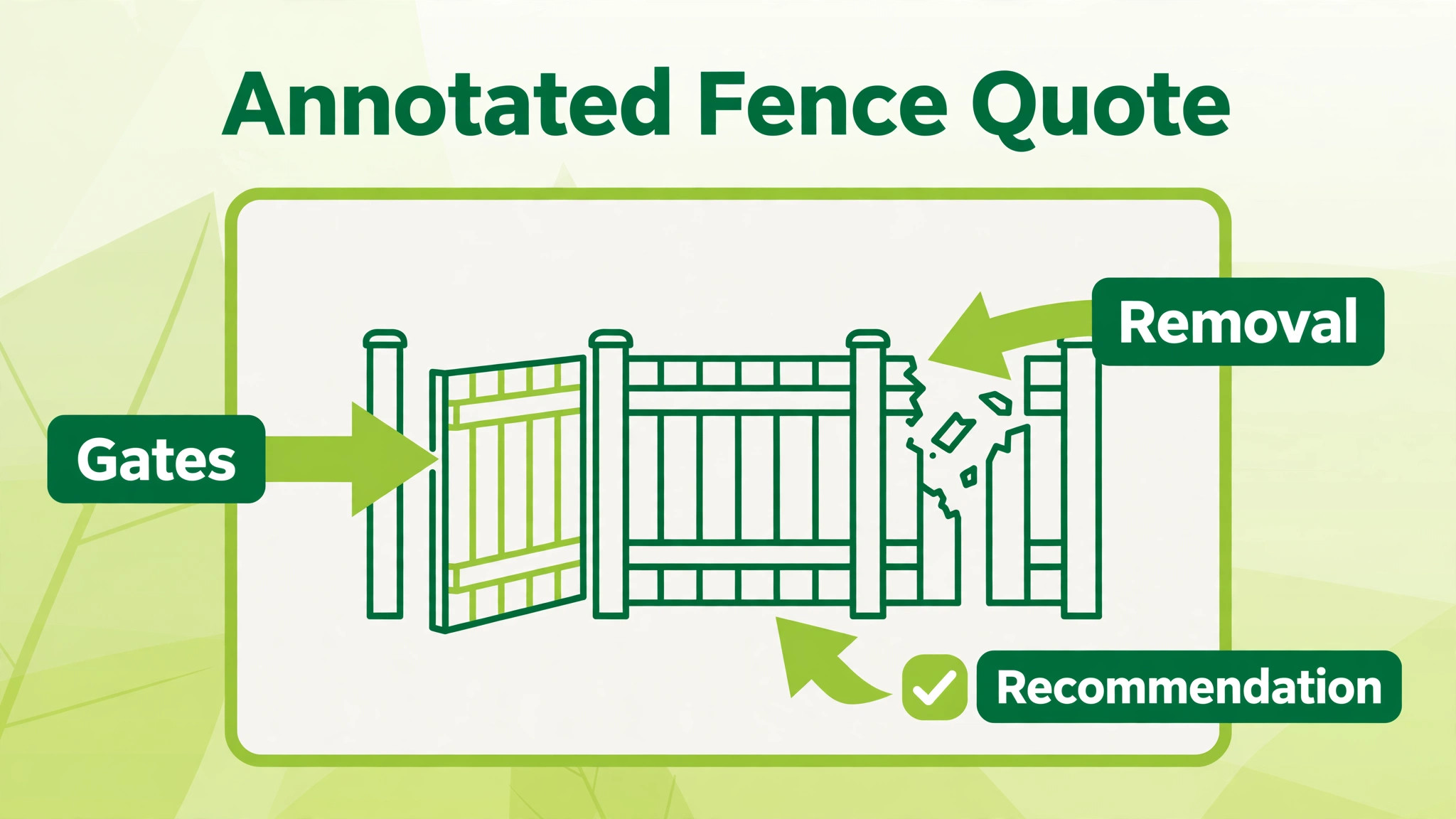
The second mistake is folding gates, corners, and removal into the per foot rate, because those items are not per foot work. Gates need heavier posts, deeper footings, hinges, latches, and bracing, while removal needs labour and disposal that vary with how the old posts were set. Price gates and removal as separate lines on every quote, so the homeowner can see why a job with three gates costs more than a straight run of the same length. That separation also makes tier comparisons honest, because the tier difference should be material and finish, not hidden gate labour.
The third mistake is sending a single total with no tiers, no material trade offs, and no start window, because that total invites a price comparison with no basis for comparison. A homeowner cannot tell whether your total includes removal, stain, or a better gate, so they assume it does not and choose the lower number. Break the total into readable lines, show tiers side by side, mark a recommendation, and give a start window that the deposit will hold. That structure takes a few minutes longer to build the first time, and then template reuse pays that time back on every later quote.
The fourth mistake is letting quotes and site visits sit without follow up, because most fence homeowners are deciding between two or three companies and the first useful follow up often wins. Set a follow up sequence in advance, with messages that add a start date, an answer to a common question, or an offer to walk through the tiers. Each message should add something rather than repeating the same request to accept. Speed without follow up is only half a quoting system, and a good tier packet that nobody follows up is a good packet that never becomes a job.
Fence Quoting Checklist for the First Thirty Days
Use this checklist to roll out a quoting and scheduling workflow without breaking the week.
- Write measurement rules for satellite drafts, site confirmation, gates, corners, slope, and access, and test them on real lots for two weeks.
- Build a per foot price book from local supplier prices, with gates and removal as separate lines.
- Create tier sets per material family, with a marked recommendation and one sentence explaining it.
- Build a site visit pack template with the measured draft, homeowner answers, and gate and boundary notes.
- Set site visit slots in area clusters, with travel time built in and rescheduling by one tap.
- Set deposit rules that cover materials, with a payment link built into acceptance.
- Run software drafts as recommendations for one week, with a person confirming every quote before sending.
- Review accepted, lost, and expired quotes weekly, and fix the top recurring cause.
That checklist is deliberately short. A longer rollout plan looks impressive and gets ignored. Eight steps, done properly, change quoting more than a fifty page manual that nobody reads.
How to Measure Fence Quoting Results
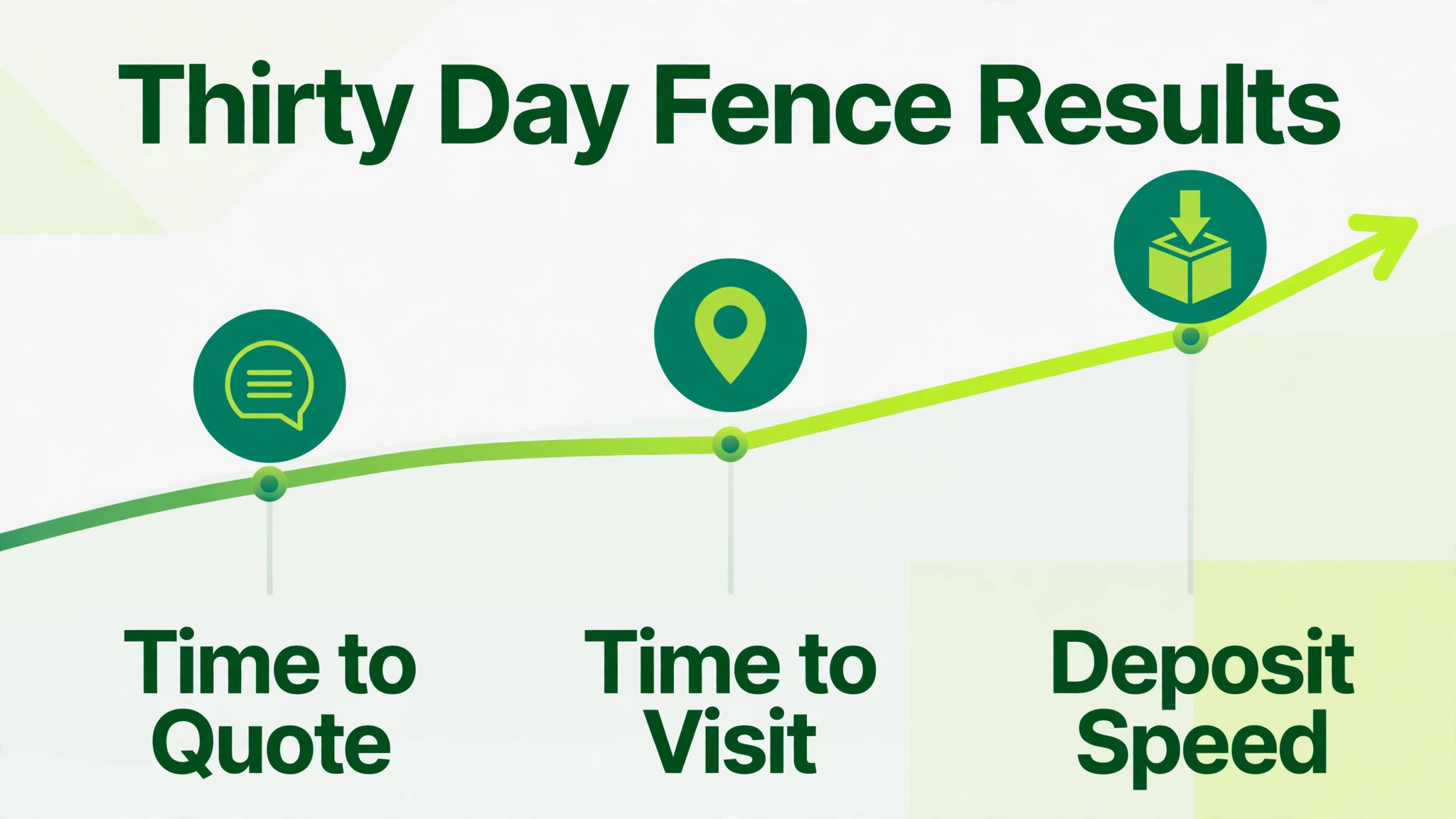
Measurement should start before the new workflow, so the improvement is visible rather than claimed. Record five numbers for four weeks on the old method. First, the time from first enquiry to quote sent. Second, the time from quote sent to site visit booked. Third, the share of quotes accepted. Fourth, the share of jobs that needed a price change after digging started. Fifth, the average days a quote sat unanswered before follow up. Those five numbers describe speed, scheduling, conversion, accuracy, and follow up in one view.
After rollout, track the same five numbers weekly, plus two more. Track how often a person changed the software draft before sending, because a falling change rate shows growing trust in sound rates, while a rising rate shows rates that need fixing. Track deposit payment speed, because a quote that is accepted but unpaid does not hold a crew date or fund materials. A business that only tracks quote count will miss the quality change, since more quotes sent badly is not progress.
Set targets that fit the starting point. A business with slow replies should aim to cut time to quote first, because speed is the easiest win and homeowners notice it immediately. A business with good speed but low acceptance should focus on tier clarity and material trade offs. A business with strong acceptance but frequent price changes after digging should focus on site confirmation and terrain notes. One priority at a time beats five targets chased at once, because the team can see which change caused which result.
Review the numbers with estimators and crew leads, not just in the office. A quote that looks efficient on a screen may ignore access, soil, or neighbour issues that the crew knows from experience. When a number improves, say which workflow change likely caused it, so the team keeps doing that thing. When a number worsens, treat it as a rule to fix, not a person to blame, because quoting improvement is a system problem before it is a people problem.
The Fence Quoting Verdict and Your First Week
Fence quoting rewards the company that measures the lot, prices gates and removal separately, shows tiers clearly, and books the visit without delay. When you use AI for fence installation quote scheduling, software helps most when it removes retyping and calculation errors, while the estimator keeps control of the line walk, the soil judgment, and the final price. That split is the whole point, because a fence quote is a promise about a boundary, and promises need a person behind them even when software drafts the numbers.
Start in week one with satellite drafts confirmed on site, a clean per foot price book, and tier templates for your two most common materials. Add slot clusters and deposit links in week two, once the quote itself is worth following up. Choose the platform that fits the team you have, with room to grow, and judge it on sloped lots and shared boundaries rather than on tidy flat lots. Measure time to quote, time to visit, acceptance, price changes, and deposit speed, and fix the worst number first. Done that way, quoting becomes a steady source of signed work rather than a weekly gamble on price.
Frequently Asked Questions
How do I measure a fence lot for a quote?
Start with a satellite draft that gives total linear feet, segment lengths, gate openings, and corner locations, then confirm every number on site. Walk the line, check slope, roots, rock, and access, and write down gate widths and swing directions. Note easements, utility markings, and any neighbour boundary question, because those items decide whether the job can start on the planned date. A satellite draft alone is a starting point, not a final survey.
How much does fence installation cost per linear foot?
Published retail guides put chain link at about 15 to 30 dollars per linear foot, wood privacy at about 25 to 45 dollars, and vinyl panels at about 30 to 55 dollars, with taller fences, sloped lots, hard digging, and custom gates pushing jobs higher. Those ranges are planning guides, and the supplier quote for your area is the number that should reach the customer, because material prices move during the year. Price gates and old fence removal as separate lines, rather than folding them into the per foot rate.
Should a fence quote show good, better, and best tiers?
Yes, because homeowners choose better when they can compare material quality, style, and total side by side. A standard tier, an upgraded tier, and a premium tier with better finish or hardware give the customer a real choice, while a single total invites a price comparison with no basis for comparison. Mark the tier you recommend for that lot, and say why in one sentence, so the choice feels guided rather than pushed.
How long should a fence quote stay valid?
Seven to fourteen days fits most fence work, because it gives the homeowner time to compare quotes without leaving the price open while material costs move. Larger jobs that need special order materials may need a shorter window, because the supplier price you quoted may only hold for a few days. Show the expiry date near the total, and recheck material prices and crew availability before you requote an expired quote.
Do I need a deposit for a fence installation?
Yes for most fence jobs, because materials must be ordered and a crew date must be held, but the deposit should match the job. A standard deposit that covers materials fits a typical residential run, while custom jobs may need a deposit that covers special order materials in full. Write the deposit amount, the payment link, and the balance point plainly in the quote, and state what happens if the start date moves because of weather, utility locates, or a boundary question.
Can satellite measurement replace a site visit for fencing?
No. Satellite measurement speeds the draft and shortens the visit, but it cannot show soil, roots, rock, access limits, or a neighbour boundary dispute. Use the satellite draft to prepare the visit pack and the tier range, then confirm the line on site before sending a firm price. A firm price sent from an image alone risks a price change after digging starts, which damages trust far more than a visit that takes an extra hour.
More Reading on Stratilyze
– Use AI for Roofing Company Estimates – Use AI for Pest Control Route Scheduling – Best Estimating Software for Contractors – Best Quote Software for Trades Businesses – Automate Small Business with AI