
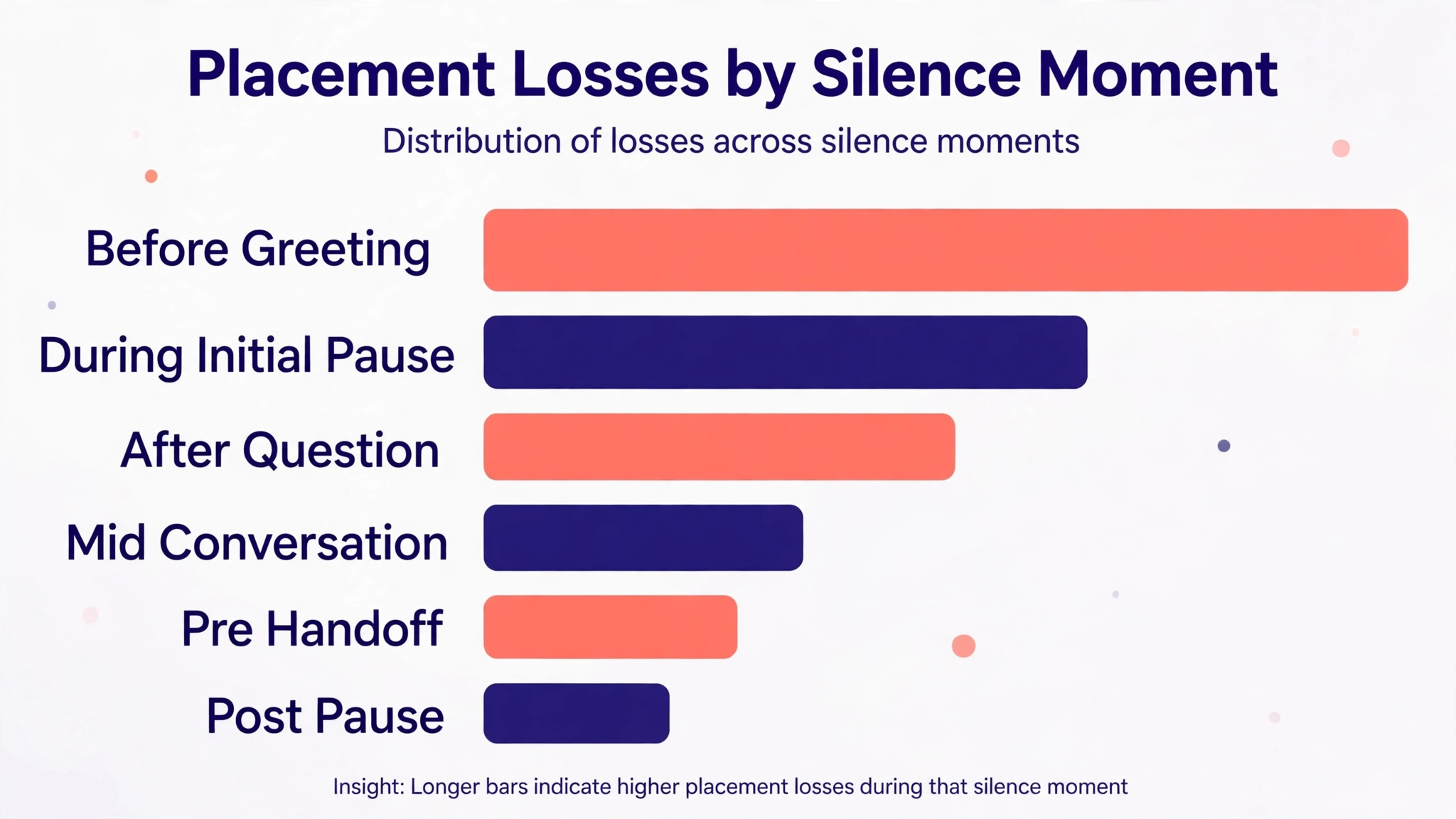
Candidates go quiet at predictable moments, and placements are lost in those silences. After applying, before interviews, after interviews, before a first shift, and during assignments, a candidate who hears nothing starts talking to another agency. Agencies that use AI for recruitment agency candidate follow-up well do not send more messages for the sake of it, they send the right message at the moment silence would otherwise begin, and they free recruiters to handle the conversations that actually need judgement.
This guide builds that system step by step, from application triage through interview summaries, offer follow up, and placement check ins, plus a candidate pipeline checklist that keeps every desk honest. It also draws a firm line around fairness and privacy, because hiring decisions affect livelihoods, and no automation should make a decision it cannot explain.
The promise is modest and measurable. Faster acknowledgements, fewer candidates lost to silence, interview notes that clients can actually use, and offers that do not stall because nobody chased the feedback. The work still belongs to recruiters, and the software simply stops the routine parts of it from falling through the cracks.
How to Use AI for Recruitment Agency Candidate Follow-Up Without Losing the Human Touch
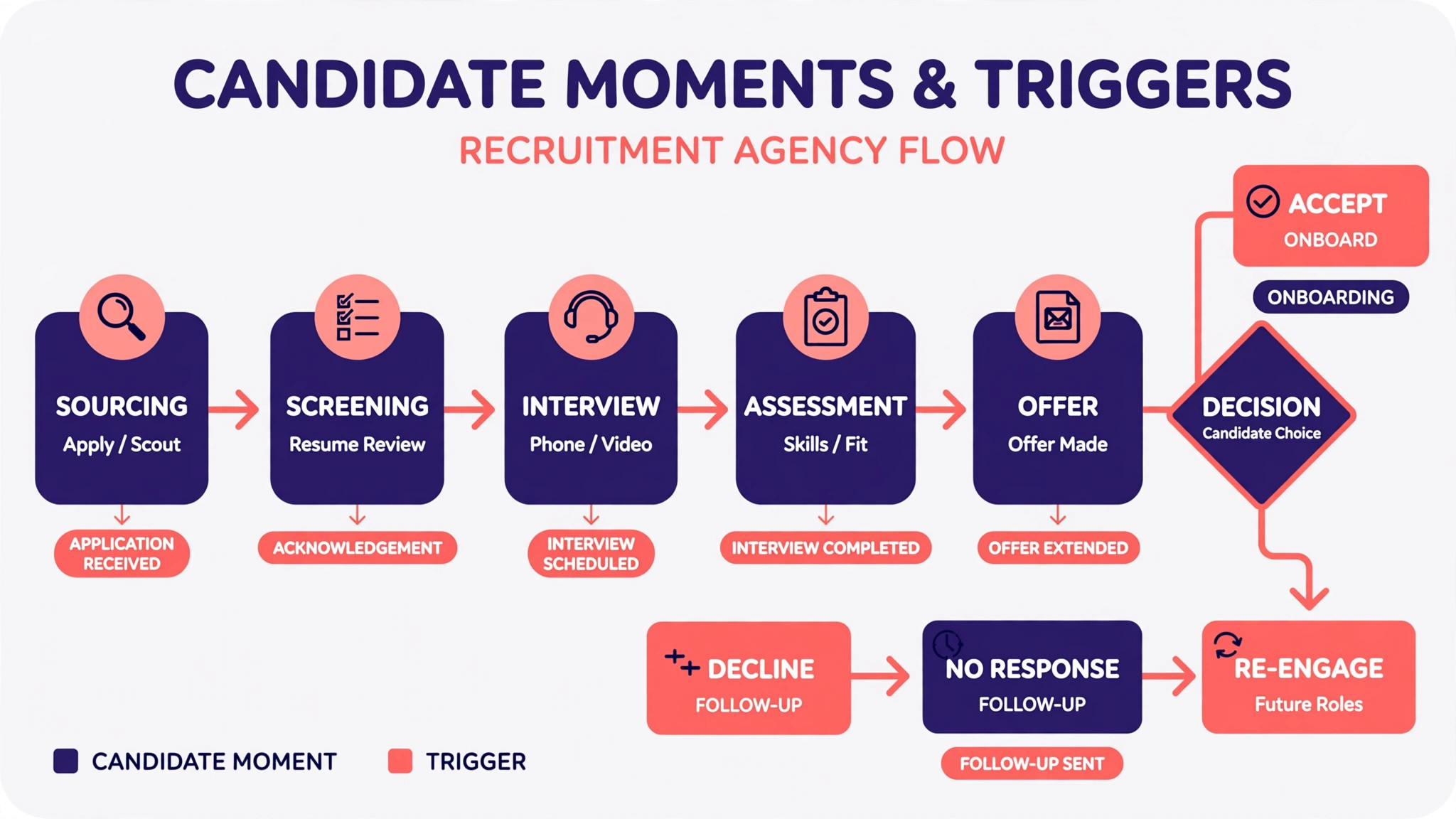
Start from the candidate journey, not from the tool catalogue. A candidate passes through a small set of stages, which are application, screening, interview, offer, placement, and assignment, and each stage has a moment where silence costs the agency something. Map those moments for your own desks first, because a temp desk loses candidates before a first shift, while a permanent desk loses them after an interview, and the same automation will not fix both equally.
The second rule is that AI drafts and recruiters decide. AI can acknowledge an application, draft a screening outcome, summarise an interview, and chase feedback, but a recruiter approves outcome messages, makes offer calls, and handles rejections that carry real disappointment. That boundary protects candidates, protects clients, and protects the agency from a message that reads as if nobody cared.
The third rule is to automate one moment at a time and measure it. Start with the easiest message, usually the application acknowledgement, because it is simple to set up and it touches every candidate. Then move to the moment that loses the most placements on your desk, and measure that moment before and after. An agency that automates seven moments at once cannot tell which one helped, while an agency that automates one at a time builds a system it understands.
Seven Moments Where Silence Costs Placements
The table below maps the moments, the trigger, and the division of labour. Use it as the design document for your automation, and add your own moments where your desks lose candidates differently.
| Moment | Trigger | AI job | Recruiter job |
|---|---|---|---|
| Application received | New application arrives | Acknowledge, explain steps and timescale | None, unless the role is urgent |
| Screening outcome | Recruiter marks a decision | Draft a specific, kind outcome message | Approve before sending |
| Interview booked | Booking confirmed | Reminders with time, link, and preparation | None, unless details change |
| After interview | Interview ends | Ask how it went, draft client feedback relay | Call for offers or rejections |
| Offer stage | Offer made or pending | Chase feedback politely, track response | Negotiate and close |
| Before first shift | Two days and half a day before | Confirm attendance and details, sort replies | Handle anyone who cannot attend |
| During assignment | Weekly in assignment | Timesheet reminder, short check in, flag problems | Handle complaints or issues |
| Assignment ending | End date approaches | Ask about next availability, suggest roles | Redeploy the best workers first |
Temp desks and permanent desks should start in different places. For a temp or shift desk, start with shift confirmations, because a confirmation turns a no show into a late cancellation that can still be covered, and then add assignment end checks, because redeploying a good worker within a week beats finding a new one. For a permanent desk, start with screening outcomes and post interview follow up, because candidates who never hear back after applying or interviewing talk about it, and the post interview window is when offers are won or lost.
Measure one number for each moment you automate. For shift confirmations, count no shows per hundred shifts for four weeks before and four weeks after. For redeployment, count the share of finishing temps redeployed within a week. For post interview follow up, count candidate complaints or reviews mentioning silence. If the number does not move, look at timing and at whether uncertain replies are being called quickly enough, because a message sent too late is barely better than no message at all.
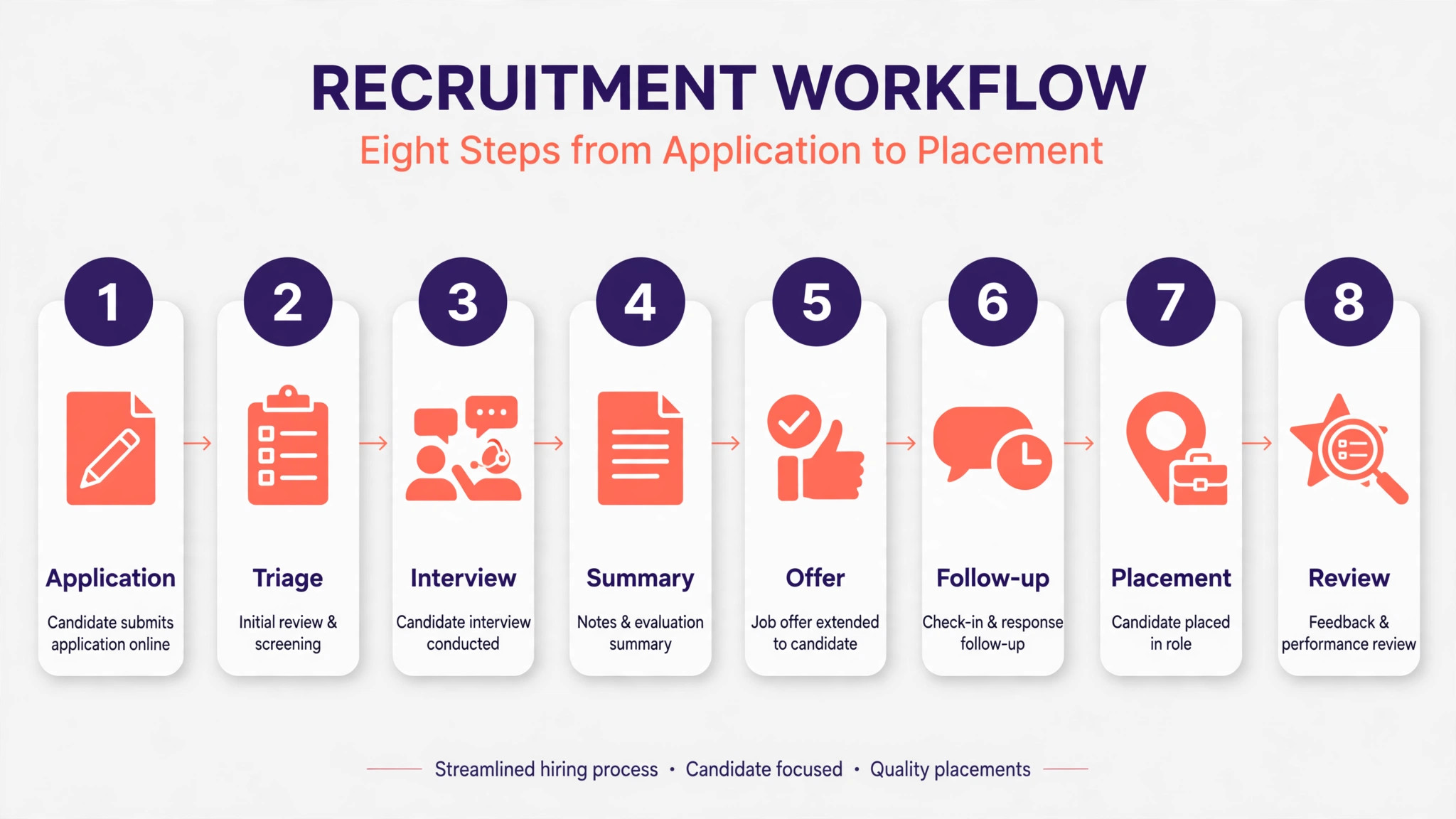
Step Workflow From Application to Placement
Work through these steps in order for each candidate. The workflow is deliberately strict about handoffs, because a candidate handed off badly is a candidate lost quietly.
- Acknowledge every application at once, with the role, the next step, and an honest timescale. An acknowledgement that promises a reply in two days must be followed by a reply in two days, or the automation has made the agency less trustworthy than silence would have.
- Triage applications by role fit, availability, and location, and sort replies so recruiters see the strongest matches first without ignoring the rest. Every applicant deserves an outcome, even when the outcome is a polite no, because a candidate treated well applies again.
- Book interviews with reminders that state the time, the format, the link or place, and what to bring, sent a day before and again a few hours before. A reminder that only states the time wastes the message most likely to prevent a missed interview.
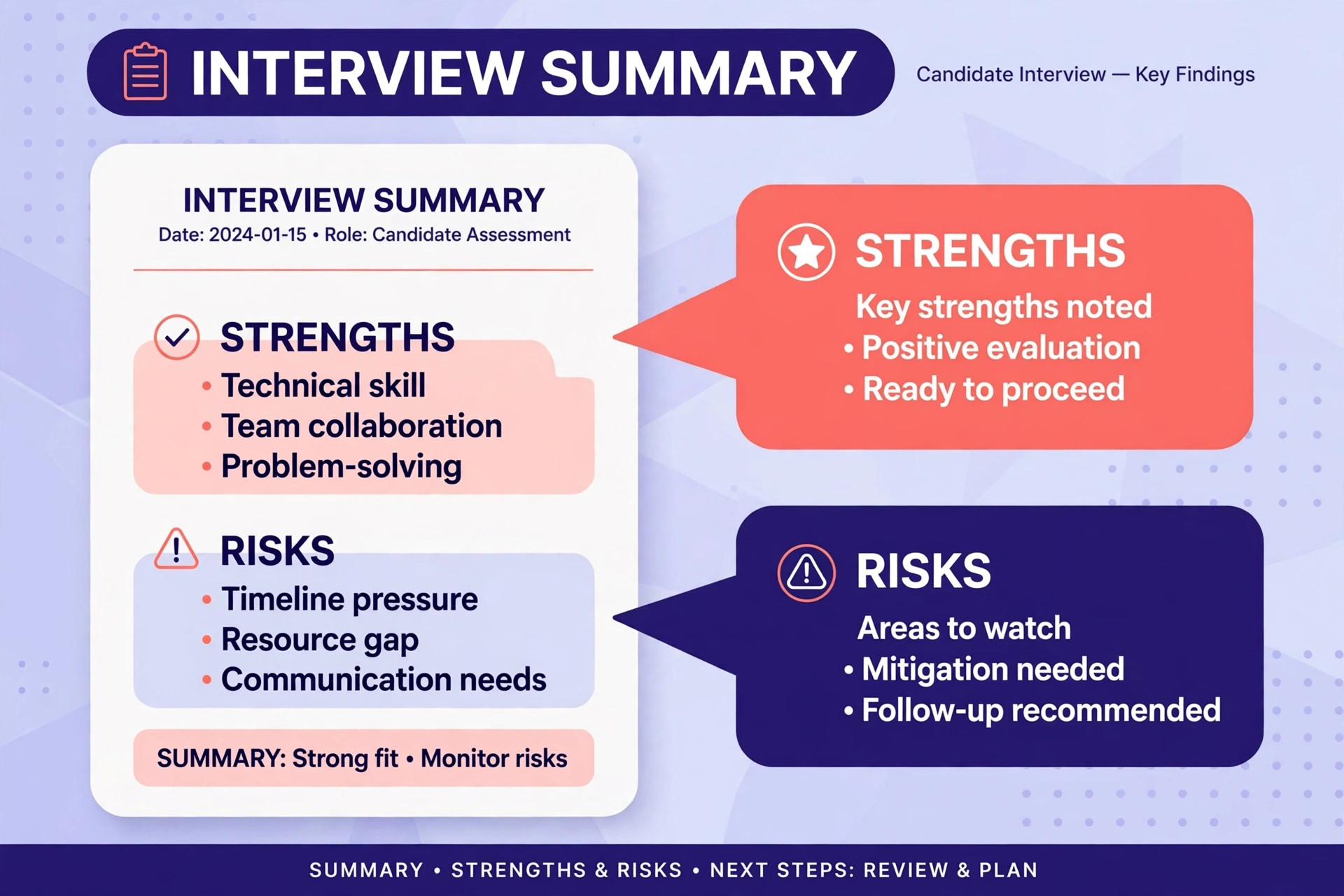
- Capture the interview with a structured summary aligned to the role, covering strengths, risks, and open questions, and sync it to the candidate record so the next recruiter does not start from scratch. A summary that only says the interview went well helps nobody decide anything.
- Relay client feedback to the candidate the same day where possible, even when the feedback is that a decision needs more time, because a candidate who hears that a decision is pending waits, while a candidate who hears nothing assumes rejection and moves on.
- Manage the offer stage with polite, timed chases for both sides, tracking who owes whom a reply and by when. Offers stall most often because nobody owns the next chase, so name the owner for each open offer every morning.
- Confirm the first shift or start date twice, at two days and half a day before, and sort replies into confirmed, uncertain, and unable to attend. Call every uncertain reply the same day, because a text conversation with an uncertain candidate rarely resolves itself.
- Check in during the assignment weekly, with a timesheet reminder and a short question about how the work is going, and flag problems for a recruiter before they become resignations. At assignment end, ask about next availability early enough to redeploy, rather than discovering a good worker is free only after they have signed elsewhere.
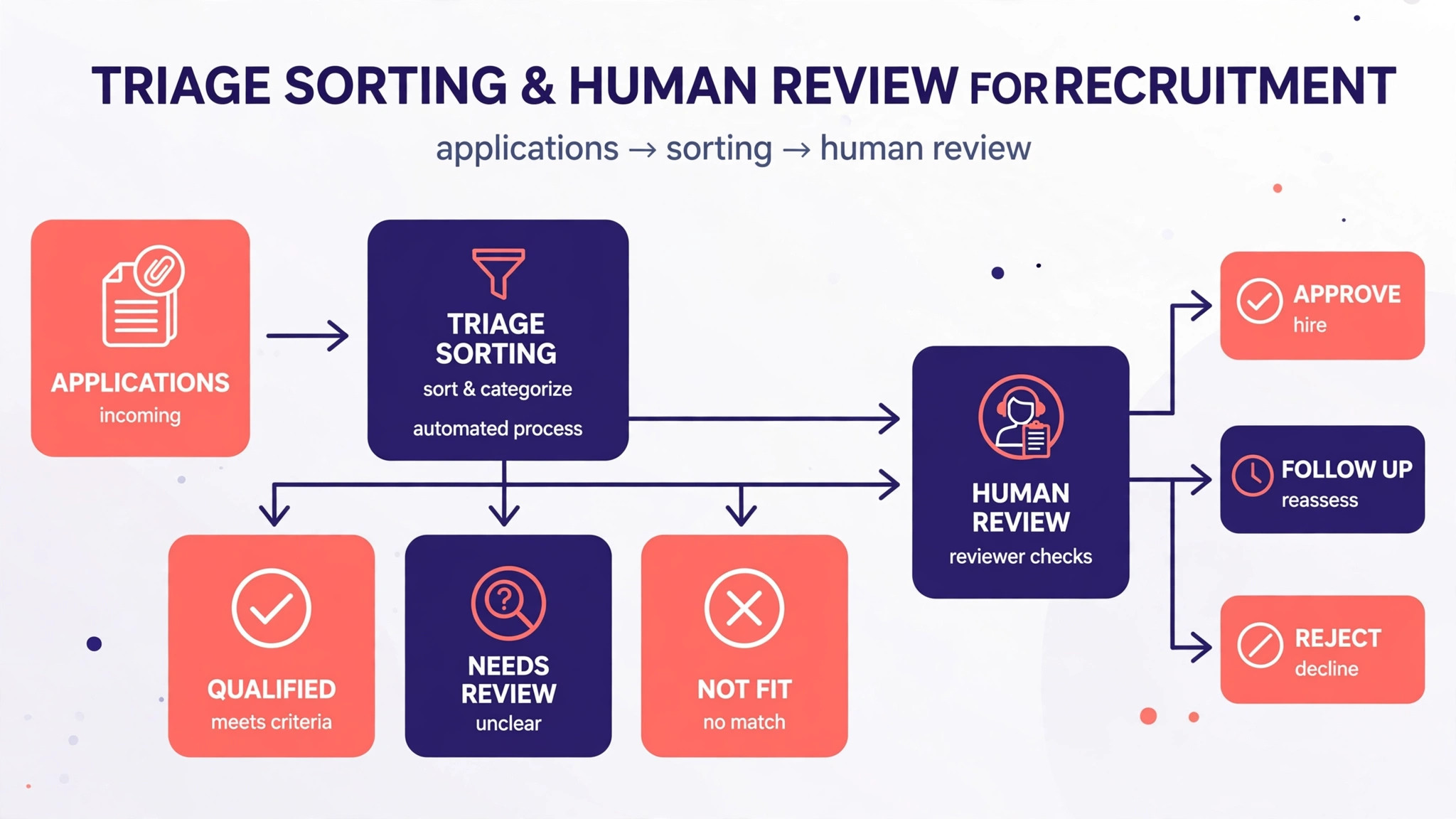
Application Triage That Treats Every Applicant Fairly
Application triage is the first automation most agencies should build, because it touches every candidate and it sets the tone for everything after. AI can sort applications by stated skills, availability, and location, draft acknowledgements, and flag matches for recruiter review, but it must not make a hiring decision on its own. Recruiting decisions belong to recruiters and hiring managers, who may accept, adjust, or override any AI output, and that rule should be written down, not assumed.
Operators who use AI for recruitment agency candidate follow-up should also audit triage for bias from the start. Check whether shortlisted candidates differ systematically from the applicant pool in ways the role does not justify, and review the criteria behind any ranking before trusting it. AI summaries and recommendations should be reviewed by an authorised recruiter before they play any part in a decision, and candidates should have a clear way to ask for an alternative process or an accommodation where the law or the client policy requires one.
Transparency matters in practice, not just in policy. Tell candidates when an AI tool supports part of the process, what it does, and that a human reviews its output before any decision. A candidate who learns about AI involvement from a surprise message will trust the agency less than a candidate who was told plainly at application. Keep the explanation short, factual, and in the acknowledgement itself, where every candidate will see it.
Triage also needs a failure rule. If AI cannot confidently read a CV, a location, or an availability window, it must flag the application for a human rather than guessing a fit. A guessed fit that advances the wrong candidate wastes an interview slot, while a guessed rejection that drops the right candidate loses a placement and risks an unfair outcome. Log the flagged applications weekly and fix the reading gaps that recur, because a repeated flag is a training gap in disguise.
Interview Summaries Clients Actually Read
Interview summaries fail in two ways, which are summaries that say nothing and summaries that say too much. A summary that says a candidate was great, with no evidence, cannot be compared with another candidate. A summary that pastes a full transcript cannot be read between meetings. The useful middle is a structured summary aligned to the role, with strengths, risks, notable signals, and next steps, written so a hiring manager can decide in minutes.
AI notetakers support this by joining interviews on major video meeting platforms, transcribing the conversation, and generating a structured summary that syncs to the candidate record and requisition. The recruiter stays present instead of typing, and the hiring manager receives a consistent format across interviewers, which makes comparison fairer. Published vendor claims suggest such tools can save several hours per recruiter each week, but treat that figure as a vendor claim to test on your own desks, not as a promised saving.
The summary template matters more than the tool. Define the competencies for each role family, require evidence for each judgement, and separate facts from opinions in the template itself. A summary that states a candidate led a team of six for two years gives a fact, while a summary that states a candidate seemed confident gives an opinion, and a client deciding between two candidates needs to tell which is which. Review summaries weekly for the first month, and rewrite any template section that recruiters consistently leave blank or fill with vague praise.
Consent and recording rules come before any notetaker is switched on. Tell candidates and interviewers that the interview will be recorded and summarised, explain how the recording is used and stored, and follow local law on consent and retention. A notetaker that joins silently without notice will damage trust the moment a candidate spots it, while a notetaker introduced plainly at the start of the call is usually accepted without fuss. Never use a recording for a purpose the candidate was not told about.
Offer Follow Up and Placement Check Ins
Offer follow up is where placements are won, because the period between offer and acceptance is when rival offers arrive and doubts grow. The workflow is simple, which is a same day acknowledgement of the offer conversation, a written summary of terms within a day, and timed chases that ask a specific question rather than a vague check in. A message that asks whether the start date works and whether anything remains unclear earns a reply, while a message that only asks for thoughts earns silence.
Operators who use AI for recruitment agency candidate follow-up should let AI track the chase and draft the messages, while recruiters make the calls that matter. A candidate who hesitates over salary, location, or start date needs a conversation, not another template, and a client who delays feedback needs a recruiter who can explain the cost of delay in placements, not a reminder email. Name the owner for each open offer every morning, and escalate any offer without movement for three working days, because an offer that sits for a week is an offer that is quietly dying.
Placement check ins follow the same discipline. Before a first shift, confirm attendance and details twice, and sort replies so uncertain candidates are called the same day. During an assignment, check in weekly with a timesheet reminder and a short question about the work, and treat any complaint or problem as a recruiter job the moment it appears, not as a message to be batched. At assignment end, ask about next availability while the worker is still engaged, because a good worker asked late has already been asked by someone else.
A useful habit is to record why offers fall through, in plain categories such as salary, location, start date, rival offer, and client delay. After a quarter, that record shows whether the agency has a chasing problem, a pricing problem, or a client speed problem, and each problem has a different fix. AI can keep the record tidy, but only recruiters can act on what it shows, and the review meeting that reads it is part of the workflow, not an optional extra.
Tools That Support This Workflow
Humanly
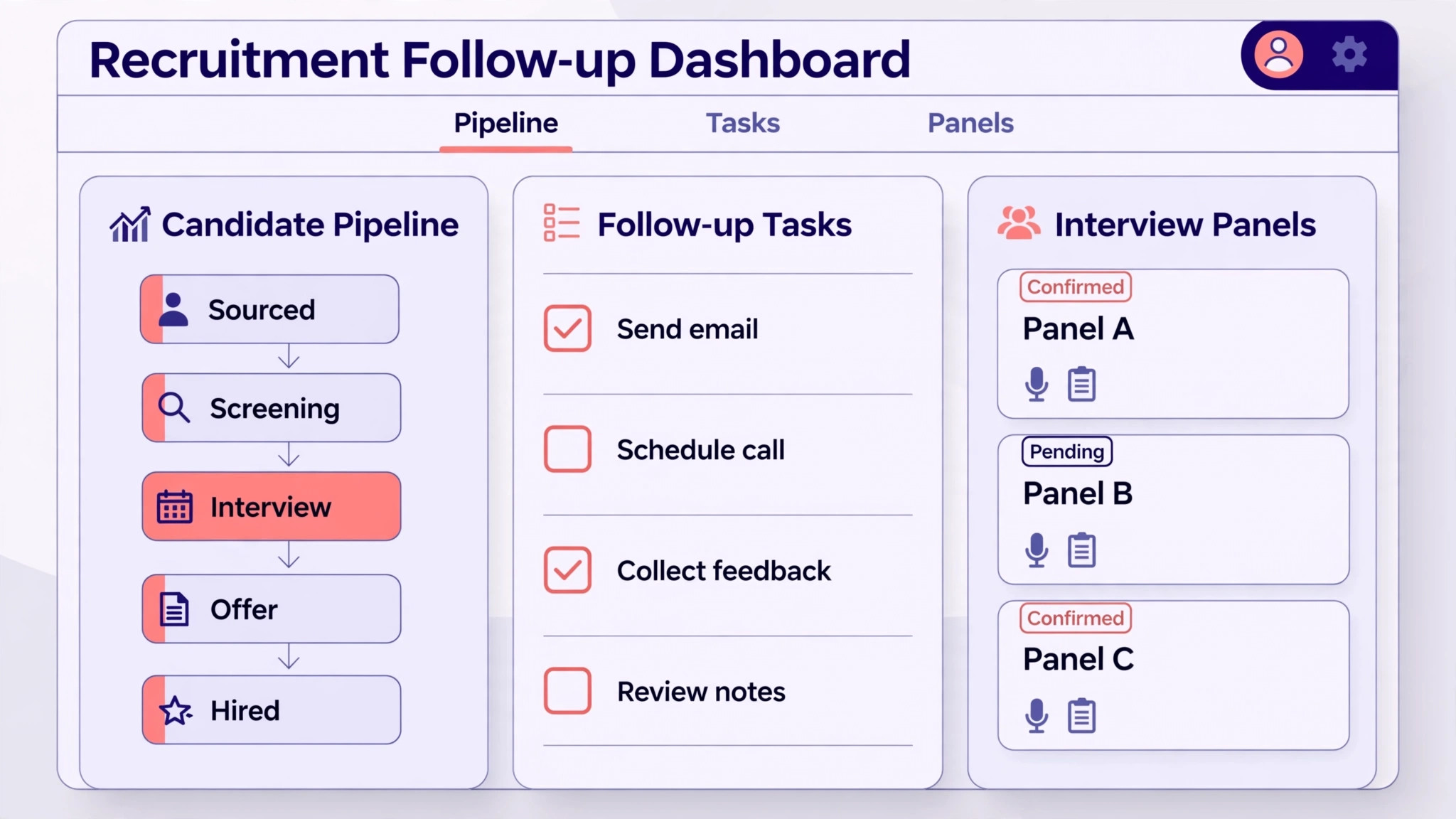
Humanly offers an AI notetaker that joins interviews on major video meeting platforms, captures the conversation, generates structured summaries aligned to hiring stage and competencies, and syncs the summary, transcript, and interview details to the candidate record. It suits agencies that lose time to note taking and inconsistent interviewer notes, because the same summary format arrives for every interviewer. Confirm pricing, retention, and consent features at checkout, and test the summary template on your own role families before rolling it out to clients.
candidate.fyi
candidate.fyi offers interview intelligence that captures structured, role aligned notes, tracks feedback completion and timeliness, and aggregates hiring signal across interviewers so decision readiness is visible before a debrief. It suits agencies and hiring teams with panel interviews, where the problem is not one missing note but five notes that disagree without anyone noticing. Confirm pricing and integration coverage at checkout, and check that its scheduling and coordination features match your existing workflow rather than duplicating it.
Zapier
Zapier connects an applicant tracking system to messaging, calendar, and automation tools where no native integration exists, and it is the practical bridge for agencies with a mixed stack. Each automated step consumes tasks, so model the monthly task count honestly from your real shift and application volume before committing to a plan. Log automation runs for the first month, and check the log weekly, because a silent automation failure looks exactly like a candidate who went quiet.
Candidate Pipeline Checklist
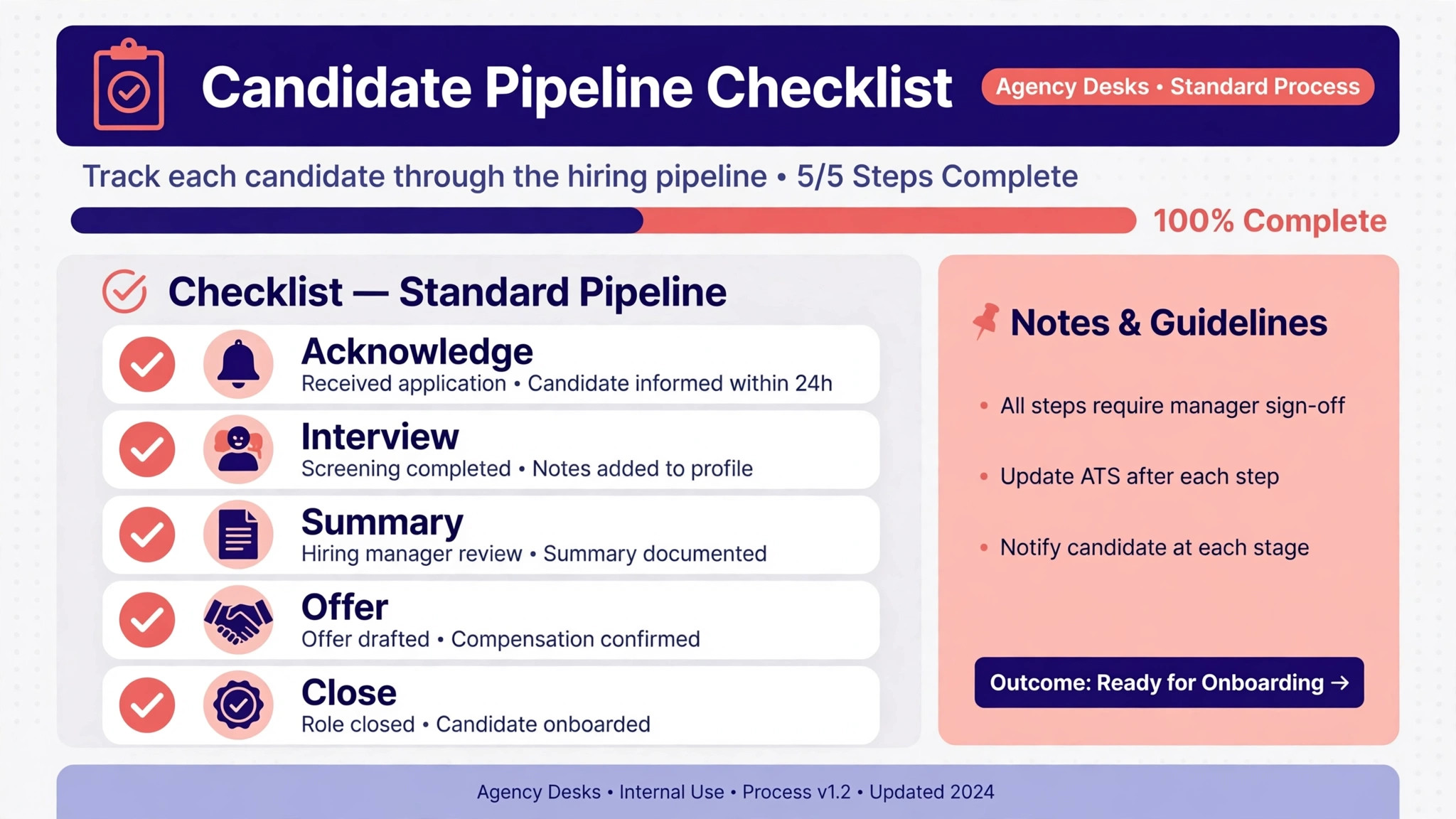
Use this checklist weekly on every desk, and keep it beside the open offers list. A checklist used only when a placement is lost is a post mortem, while a checklist used weekly is prevention.
- Acknowledge every new application with role, next step, and honest timescale
- Triage every application to a decision, including polite outcomes for unsuccessful candidates
- Confirm every interview with time, format, link or place, and preparation notes
- File a structured interview summary for every interview within one working day
- Relay client feedback to every interviewed candidate, even when the answer is pending
- Name an owner and a next chase date for every open offer each morning
- Confirm every first shift twice and call every uncertain reply the same day
- Check in weekly during assignments and flag problems for a recruiter at once
- Ask about next availability before assignment end and record redeployment outcomes
- Review automation logs, bias checks, and consent notices every month
Operators who use AI for recruitment agency candidate follow-up should treat the monthly review as the real product. The software sends the messages, but the monthly review decides which messages still work, which templates need rewriting, and whether triage criteria still match the roles. A message that worked in January may fail in June when application volume changes, and only a review catches that drift before it costs a quarter of placements.
Mistakes Agencies Make With Follow Up Automation
The most common mistake is automating rejection messages without recruiter approval, which sends a specific sounding message that is actually wrong for the candidate. The second mistake is sending reminders without a human answer path, so a candidate with a real problem replies to a message nobody reads. The third mistake is trusting an AI summary without checking it against the interview, which passes an error to the client as if it were a fact. The fourth mistake is measuring message volume instead of placement outcomes, which rewards a desk for sending more messages while losing the same number of candidates.
A fifth mistake is hiding AI involvement from candidates, which converts a manageable transparency question into a trust problem when it surfaces later. A sixth mistake is automating every moment at once, which makes it impossible to tell which automation helped and which one annoyed candidates. Fix approval, answer paths, and summary checks first, because they protect candidates and clients even when the rest of the system is still being built.
Keeping Client Feedback Moving
Client feedback is the bottleneck most agencies blame on clients, when the real problem is often an unclear ask. A message that forwards a CV and asks for thoughts will wait, because thoughts have no deadline and no owner. A message that asks for a decision by Thursday, names the interview slots available, and states what happens if the date slips will move, because it gives the client a concrete next step. AI can draft that message, but the recruiter must set the deadline and own the chase.
Build a feedback rhythm for each client, and agree it at the start of the engagement rather than discovering it mid search. Some clients decide in a day, others need a panel week, and both rhythms are workable once they are known. Record the agreed rhythm on the client record, and let AI chase against it, so a client who promised a decision in two days receives a polite chase on day three, not a panicked message on day one or a silent week that loses the candidate.
Operators who use AI for recruitment agency candidate follow-up should also share feedback with candidates in a form they can use. A relay that says the client passed, with no reason, teaches the candidate nothing and leaves the agency looking indifferent. A relay that shares the genuine reason, where the client permits it, helps the candidate improve and keeps the relationship warm for the next role. Where the client will not share a reason, say so honestly and offer the next suitable role, rather than inventing a reason that will unravel later.
Finally, protect the feedback loop from the common failure where one slow client poisons a whole desk. When a client repeatedly misses agreed decision dates, raise it as a commercial conversation, not as a series of apologetic chases. Explain, with numbers, how many candidates were lost to delay in the last quarter, and agree a faster rhythm or a smaller shortlist. Operators who use AI for recruitment agency candidate follow-up well use automation to make delay visible, and then use that visibility to have the honest conversation that automation alone cannot have.
Frequently Asked Questions
Does AI make hiring decisions for the agency?
No, AI supports the process with summaries, drafts, and recommendations, while recruiting decisions are made by recruiters and hiring managers, who may accept, adjust, or override any AI output. Write that rule down, review AI outputs before they affect a candidate, and tell candidates plainly how AI supports the process. An agency that cannot explain a decision should not have automated the step that produced it.
Will candidates mind that AI is involved in follow up?
Candidates mind silence and impersonal treatment more than they mind well explained automation, provided a human remains reachable and decisions remain human. Tell candidates at application what AI does, keep messages specific and signed by a recruiter, and offer a human contact in every automated message. A candidate who can reach a person quickly forgives an automated acknowledgement, while a candidate who cannot reach anyone resents it.
How fast should application acknowledgements go out?
At once, or within minutes, with the role, the next step, and an honest timescale. Speed matters because candidates apply to several agencies, and the first useful reply often wins the first conversation. An acknowledgement that promises a reply in two days must be followed by that reply, because a broken promise in the first message sets the tone for the whole process.
What should an interview summary contain?
A structured summary aligned to the role, with strengths, risks, notable signals, and next steps, each supported by evidence from the interview. Separate facts from opinions, so a hiring manager can compare candidates fairly across interviewers. A summary that only says the interview went well, or a summary that pastes a full transcript, both fail the hiring manager who must decide between meetings.
How do I reduce no shows before a first shift?
Confirm attendance twice, at two days and half a day before, with the time, place, and contact details, and sort replies into confirmed, uncertain, and unable to attend. Call every uncertain reply the same day, because a text conversation with an uncertain candidate rarely resolves itself. Track no shows per hundred shifts before and after, so the improvement is measured rather than assumed.
Should I automate rejection messages?
Draft them with AI, but approve them with a recruiter before sending, and make each message specific enough to feel written for that candidate. A generic rejection sent instantly reads as indifference, while a specific, kind outcome sent within the promised timescale leaves the candidate willing to apply again. Never automate a rejection that the recruiter has not seen, because an error in a rejection is remembered longer than an error anywhere else.
How do I handle a candidate who stops replying after an offer?
Chase politely with a specific question, such as whether the start date works or anything remains unclear, and call after two unanswered messages rather than sending a third. Name an owner for the offer each morning, and escalate after three working days without movement. If the candidate has accepted elsewhere, close the record gracefully and keep the relationship, because a candidate lost well may return for the next role.
When should a small agency start with AI follow up?
Start when routine messages already cost more than an hour a day, or when candidates regularly go quiet at the same stage. Start with application acknowledgements, then add the moment that loses the most placements on your desk, and measure it for a month. A desk with a handful of candidates a week may not need AI yet, and that is a fine conclusion, because automation should follow volume, not fashion.
Verdict for a Recruitment Agency
Use AI for the repetition, keep recruiters for the decisions, and measure the moments where silence costs placements. Agencies that use AI for recruitment agency candidate follow-up well end the quarter with faster acknowledgements, fewer candidates lost to silence, interview notes clients can use, and offers that close because someone owned the next chase. Start with acknowledgements, add the moment that loses most on your desk, and keep approval, answer paths, and bias checks as non negotiable parts of the system.
Candidates remember how an agency made them feel during the wait, and clients remember whether the agency delivered summaries they could act on. Review the system quarterly, retire messages that no longer earn replies, and keep the human moments human, because a follow up system is judged by the placements it saves and the candidates it keeps, not by the number of messages it sends. A follow up system that respects both, with automation doing the routine work and recruiters doing the human work, is the system that wins repeat candidates and repeat clients.