

The right research question for a startup is not whether a market exists, since most markets exist, but whether this team can win a slice of it before the money runs out. That judgement needs competitor pricing, customer complaints, regulatory friction and distribution channels, gathered fast enough to act on. An answer engine that returns cited sources in minutes changes the economics of that work, because a founder can test ten assumptions in an afternoon instead of commissioning a report that arrives after the decision. The skill is no longer finding information, it is checking it, and this guide shows how to use Perplexity for market research startups, built around that check.
The rest of this guide shows you how to use Perplexity for market research startups in a way that holds up under real use.
This guide follows the order you will actually use it. It starts with why the work pays, then compares the realistic options, then walks through the workflow in order, then gives you the research workflow and source checklist to copy, then covers costs, mistakes and the numbers that show whether it is working. Read it once end to end, then work through it with your own numbers beside you, because a guide written for everyone only helps once you adapt it to your own setup.
Why This Deserves a Proper Setup
The problem with expensive reports that arrive too late and founder guesses dressed as strategy is not that it happens once. It is that it happens quietly, week after week, while everyone involved assumes someone else handled it. By the time the pattern becomes obvious, the startup founders has already paid for it in lost time, awkward follow-ups and opportunities that went cold. Naming that pattern is the first step to fixing it, because a problem you can describe is a problem you can measure.
Done well, this work pays in the form of fewer loose ends. Assumptions getting tested against cited sources within days, not months means fewer apology messages, fewer repeated questions and fewer evenings spent reconstructing what happened during the day. That steadiness compounds, because a team or household that trusts its own routine is far more likely to keep using it when the week gets busy.
Waiting rarely makes this easier. The longer an improvised routine runs, the more exceptions pile up around it, and each exception becomes something a new tool or a new hire has to learn. Starting with a short written routine now, even an imperfect one, gives every later improvement something solid to attach to.
There is also a quiet benefit in how a written routine changes conversations with customers, clients or household members. Instead of promising to remember, you can show the checklist, the timing and the fallback, which reads as competence rather than optimism. People trust a process they can see, and that trust is worth more than any single clever tool choice.
Use Perplexity for market research startups in Practice
The first decision is not which tool to buy. It is what a good result looks like for you, written down in one sentence that names the result and the time frame, such as a one page research brief per assumption, each with sources and a confidence note. That sentence does more work than any feature list, because it turns a vague wish into something you can test after a month of real use.
Then compare a short list of options, no more than the ones in the table below, and trial the favourite with real work for a week. A demo with sample data flatters every product, while a week of real tasks shows you whether your team will actually use it. If the trial feels harder than the old way, simplify before you pay for a year.
Options Worth Comparing
The table below gives the short version of the options. Start with the option that fits your current setup, run it for a month, and only add a second tool when a clear gap appears, because stacking tools before the routine is settled creates confusion that no software can fix.
| Option | What it does | Best for |
|---|---|---|
| Perplexity | an answer engine that returns cited sources | a founder who needs fast, sourced answers |
| ChatGPT with web search | a general assistant with browsing and deep research modes | a team that also needs drafting and analysis |
| Google Search plus reports | traditional search with industry reports and databases | a team that needs depth on one market |
| Grok | a fast answer engine with live web access | a founder who wants quick takes on fast moving topics |
| Claude with research tools | long form analysis with careful source handling | a team writing detailed briefs from many sources |
Trial the favourite option with the hardest realistic task you have, not with the demo data the vendor provides. A trial that uses real names, real volumes and real deadlines exposes slow screens, missing fields and confusing messages within days, while a trial with sample data flatters every product equally. Keep the trial to one week and one clear verdict, since an open-ended trial drifts into a second system running beside the old one.
Perplexity
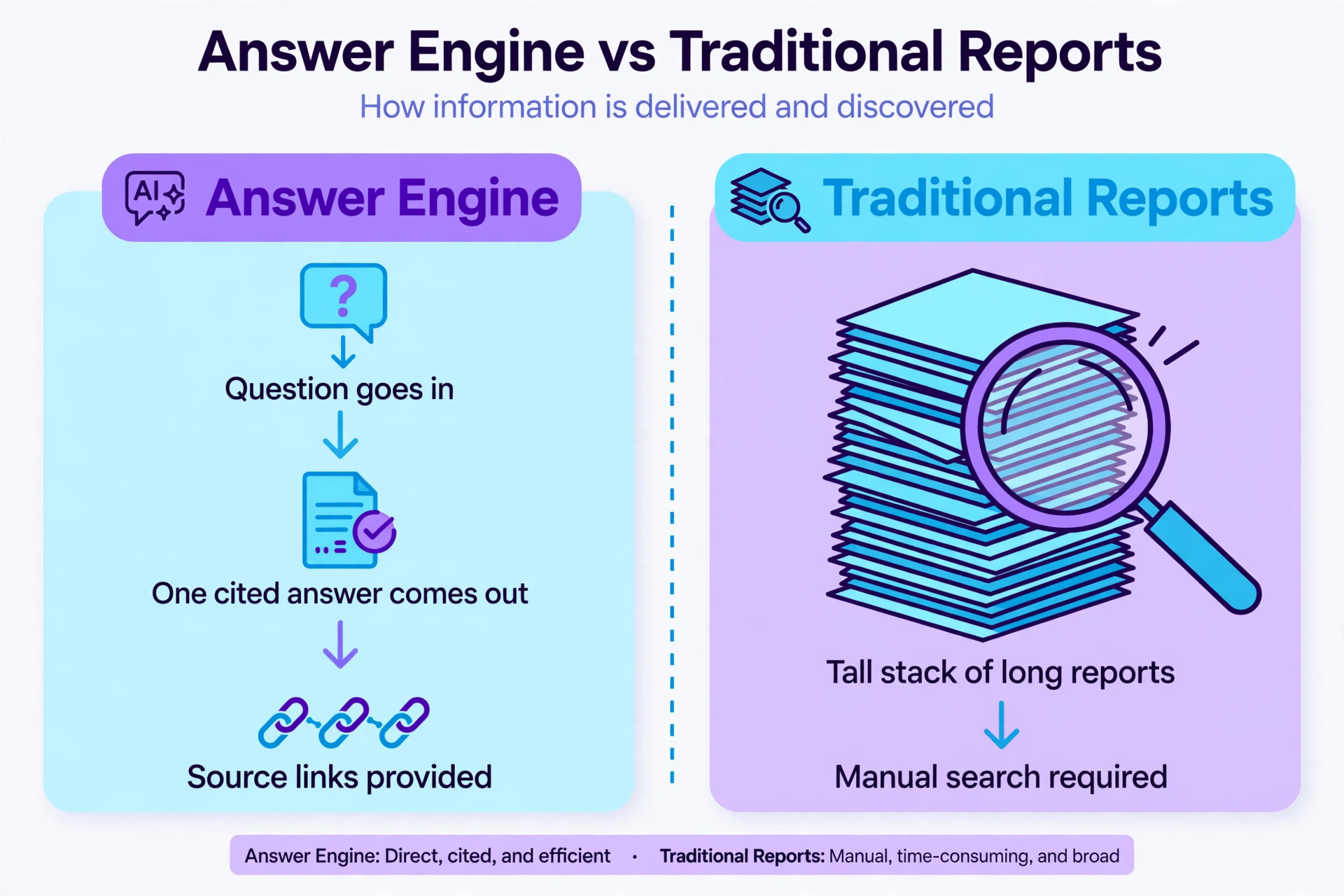
Perplexity suits early research because answers arrive with citations you can open and check, which shortens the path from question to evidence. Treat its answers as leads, not conclusions, and verify any number that will drive a pricing or hiring decision against the original source. Try it with real work for a week, judge it on whether people use it without prompting, and keep it only if it saves time or reduces errors compared with the old way.
ChatGPT with web search
A general assistant covers research plus drafting, spreadsheets and brainstorming in one place, which reduces tool switching. Its answers need the same source checking, and its deep research mode suits longer briefs, though it can be slower than a focused answer engine. Run a side by side trial against your current method for seven days, and keep the option that produces fewer errors, not the one with the longer feature list.
Google Search plus reports
Traditional search plus purchased reports still wins for deep, single market research, since databases hold data that answer engines summarise thinly. The cost is time and money, so reserve this route for the two or three assumptions where depth genuinely changes the decision. Test it with the hardest realistic task you have, not the easiest demo task, since the hardest task reveals limits that a gentle trial hides completely.
Grok
Grok works well for fast moving topics and social sentiment, where freshness matters more than depth. Its answers are best treated as a first scan, with key claims verified elsewhere before they enter a brief or a pitch. Check the total cost at the volume you expect in six months, and walk away if the pricing punishes the growth you are planning for.
Claude with research tools
Claude suits teams that assemble long briefs from many documents, since it handles extended context and careful reasoning well. It is slower for quick lookups, so pair it with a fast answer engine rather than using it for every small question. Ask two existing users what broke for them in the first month, since their answers predict your first month better than any sales page ever will.
The Workflow in Order
Use this workflow to use Perplexity for market research startups in order, because the order matters. Skipping ahead to messages or extras before the basics are recorded creates work that has to be redone, while following the steps in order means each step builds on a finished earlier step. Tick each step off, and do not move on until the current step works with a real task.
- **List the riskiest assumptions before searching.** Write down the ten claims that would hurt most if wrong, such as pricing tolerance, acquisition cost or regulatory barriers, and rank them by damage. Research without this list drifts toward interesting facts, while research guided by it answers the questions that decide survival. Write down who owns this step and what finished looks like, then test it once with a real task before rolling it out. A step that has never been tested with real work is a guess, and guesses have a habit of failing at the worst moment.
- **Ask one question per assumption, in plain language.** Turn each assumption into a single research question with a measurable answer, such as what competitors charge for a comparable tier. Vague questions produce vague answers, while a precise question lets you judge whether the sources actually answered it. Note the time this step should take and the sign that it worked, then run it twice in one week. Two clean runs tell you more than a month of theory, because the second run exposes the details the first run flattered.
- **Run the same question with two phrasings.** Search each question twice, once as a customer would phrase it and once as an analyst would, because phrasing changes which sources surface. Comparing the two answer sets exposes gaps and contradictions that a single search hides. Keep a short note of what went wrong the first time you tried this step, and fix that one thing before moving on. Small corrections made early compound into a reliable routine, while small problems ignored early grow into reasons to quit.
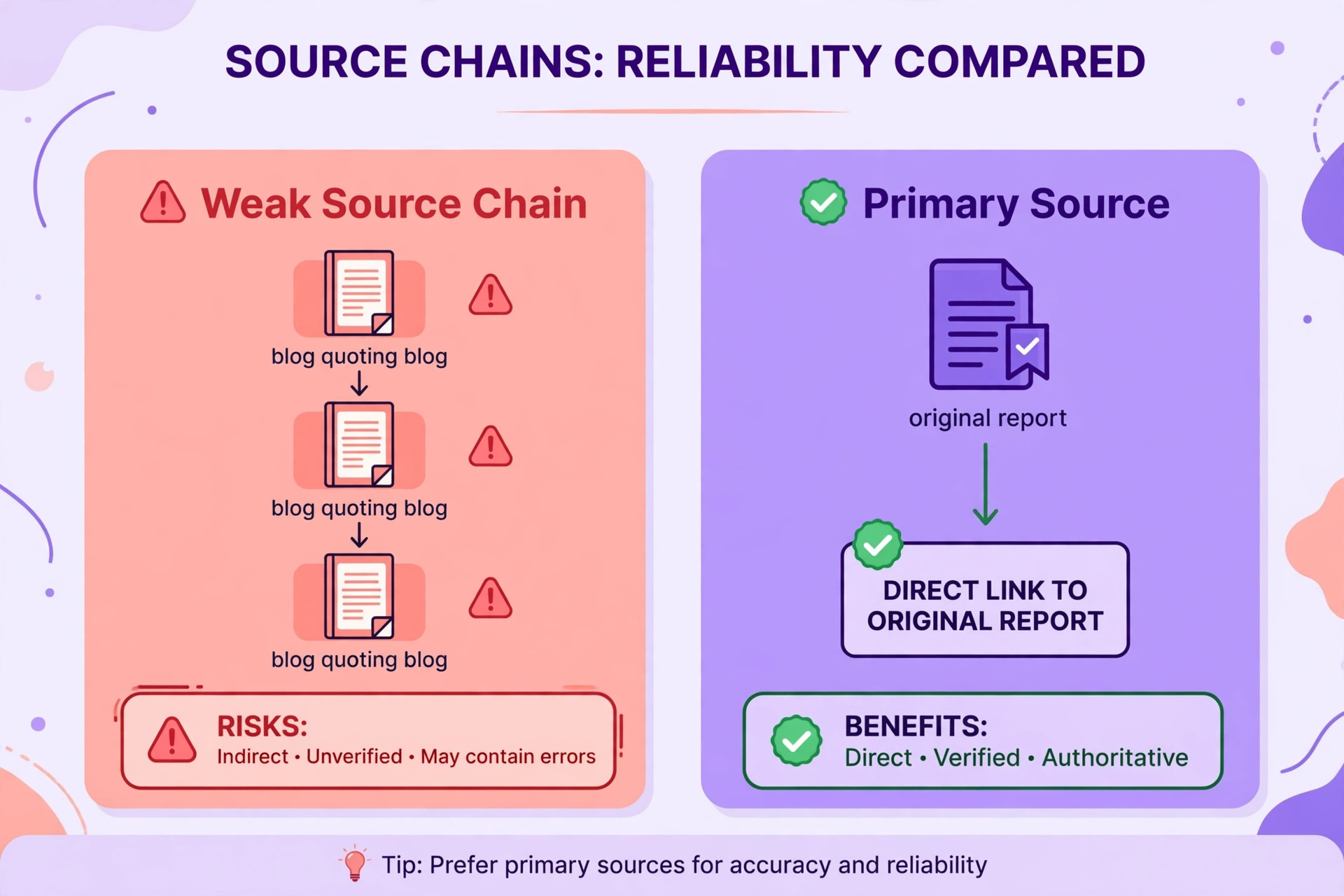
- **Open the sources, not just the summary.** Click through to the primary source for every number that matters, and note whether it is a company filing, a survey, a news report or an opinion piece. A summary that cites a weak source is still a weak finding, however confidently it is written. Ask the person who will actually do this step whether the instruction makes sense to them, and rewrite any part they hesitate over. A routine that only its author understands will not survive a holiday, a handover or a busy week.
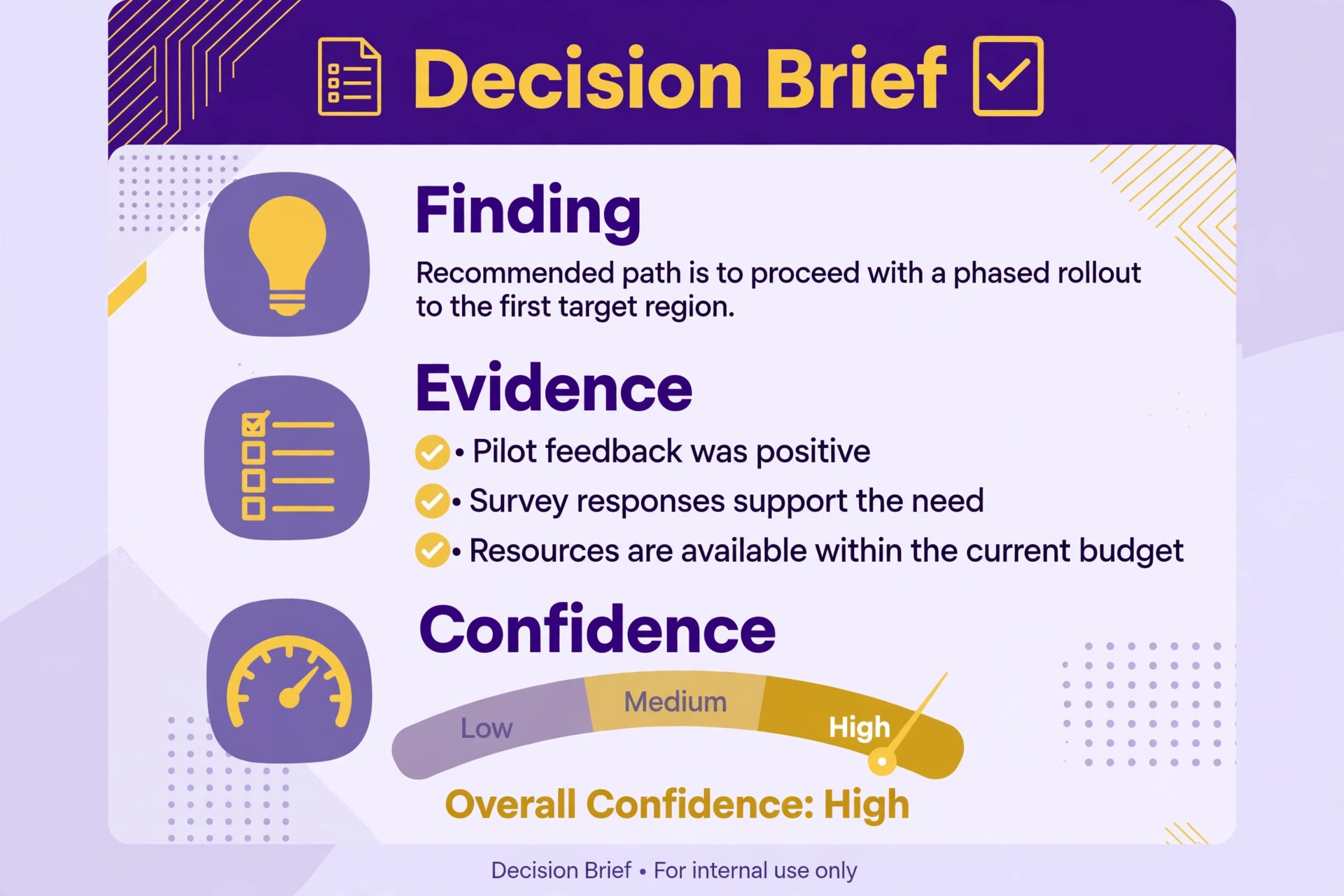
- **Record findings in a one page brief per assumption.** Write each brief with the finding, the sources, a confidence level and the decision it supports, in that order. A brief that cannot state its confidence honestly is not finished, and a brief without a decision attached is just a note. Decide in advance what you will do if this step fails, and write that fallback beside the step itself. A fallback agreed calmly beforehand beats an improvised workaround invented under pressure, when mistakes cost the most.
- **Test the finding against a customer conversation.** Take the two most surprising findings to real customers or prospects and ask whether they match lived experience. Desk research that survives contact with customers is worth ten times the research that only survives contact with other web pages. Measure this step once it runs, even roughly, so you know whether it helps or merely feels productive. A step with no measure can linger for months adding effort without adding value, and nobody notices until someone finally asks.
- **Update the brief when a decision changes.** Revisit briefs whenever pricing, positioning or target customers change, and mark outdated findings clearly. A research file that nobody updates becomes a museum, while a living file keeps the team honest about what it actually knows. Review this step after a month of real use and remove any part that nobody missed when it was skipped. A routine that shrinks toward its useful core stays alive, while one that only grows eventually collapses under its own weight.
The Research Workflow and Source Checklist
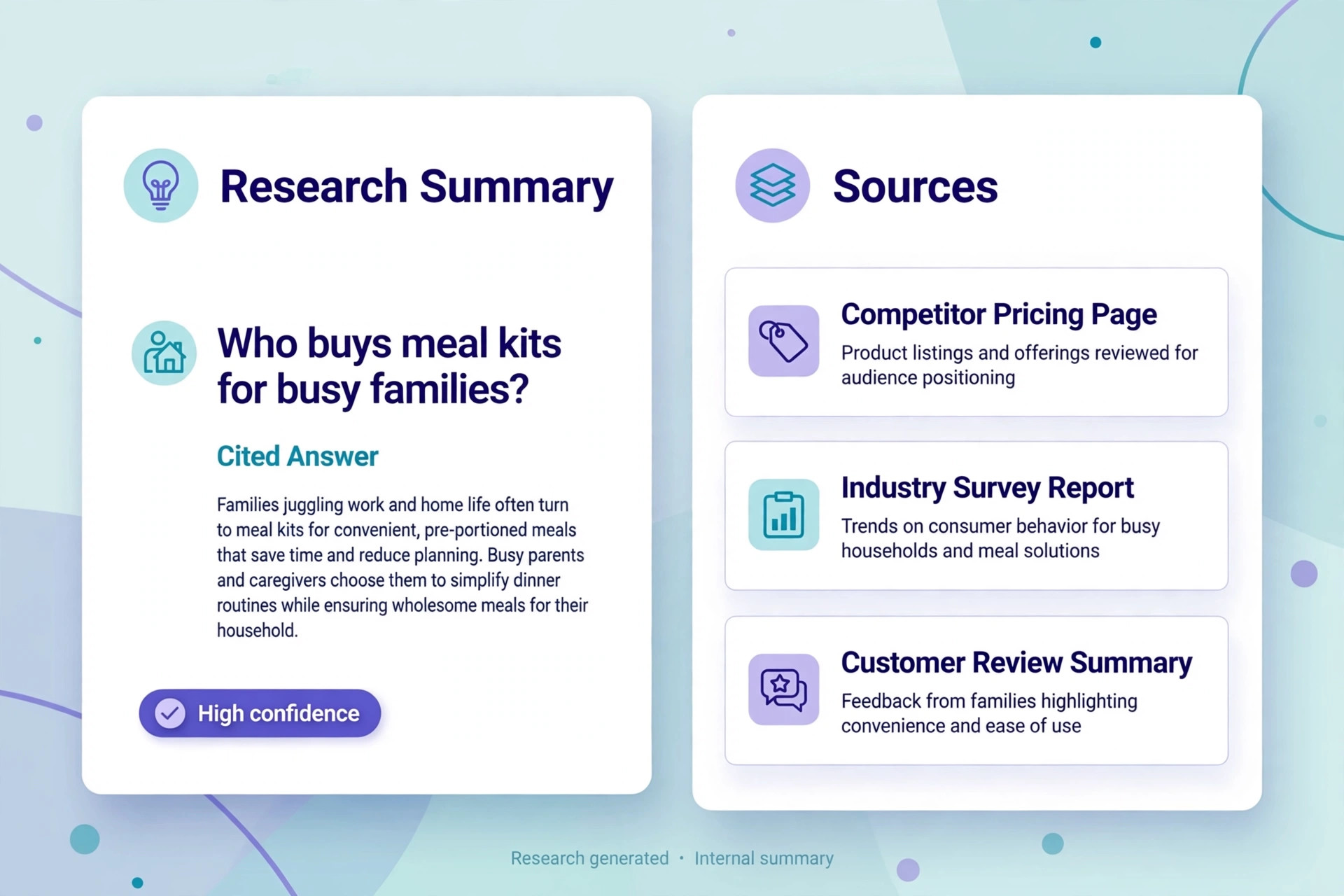
Use this research workflow and source checklist to use Perplexity for market research startups without starting from a blank page each time. Copy it, fill it in with your own details, and keep the filled version where the people who use it can see it. A template that lives in a drawer helps nobody, while one that sits beside the work becomes the way the job actually gets done.
| Item | What to write down |
|---|---|
| Assumption list | the ten riskiest claims, ranked by how much damage a wrong answer causes |
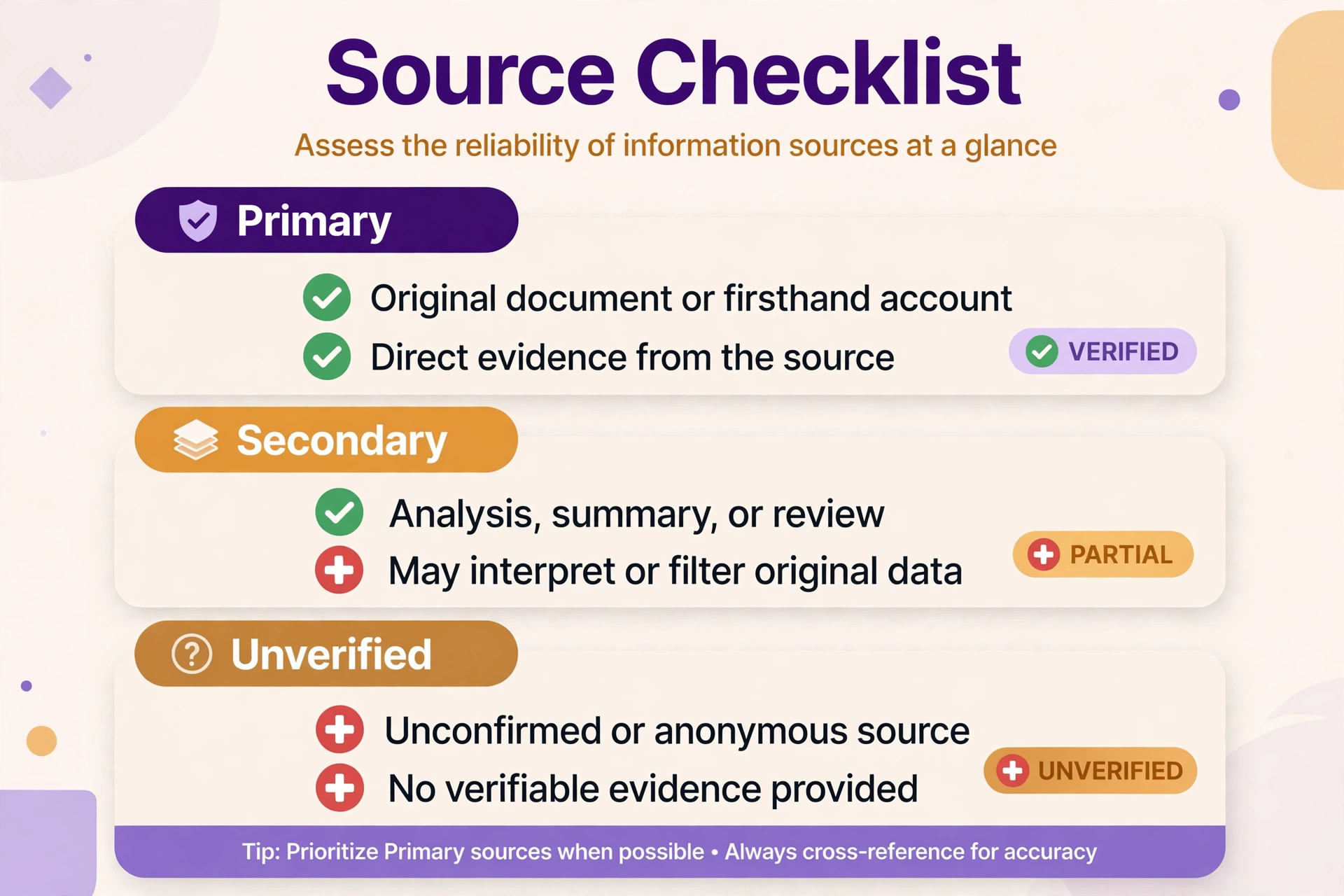
| Source tiers | primary sources first, then reputable reporting, then opinion pieces last |
| Verification pass | every key number checked against a second independent source |
| Brief format | finding, sources, confidence level and the decision it supports |
Fill the table in with real details from your own setup, not with guesses, because a plan filled with guesses gives confident answers that are wrong. If a detail is unknown, write unknown and find it before you act on that row, since a single guessed cost or time can undo an otherwise sound plan. Review the filled version every month for the first quarter, then every quarter after that, and update it when prices, people or suppliers change.
Keep the filled version where the work happens, whether that is a shared folder, a printed page or the tool itself, and name one person who owns updating it. Ownership matters because a template without an owner goes stale within a quarter, while one with a named keeper stays current through staff changes and price changes alike. When the owner changes, hand the template over explicitly, like any other responsibility.
Costs, Settings and Trade-Offs
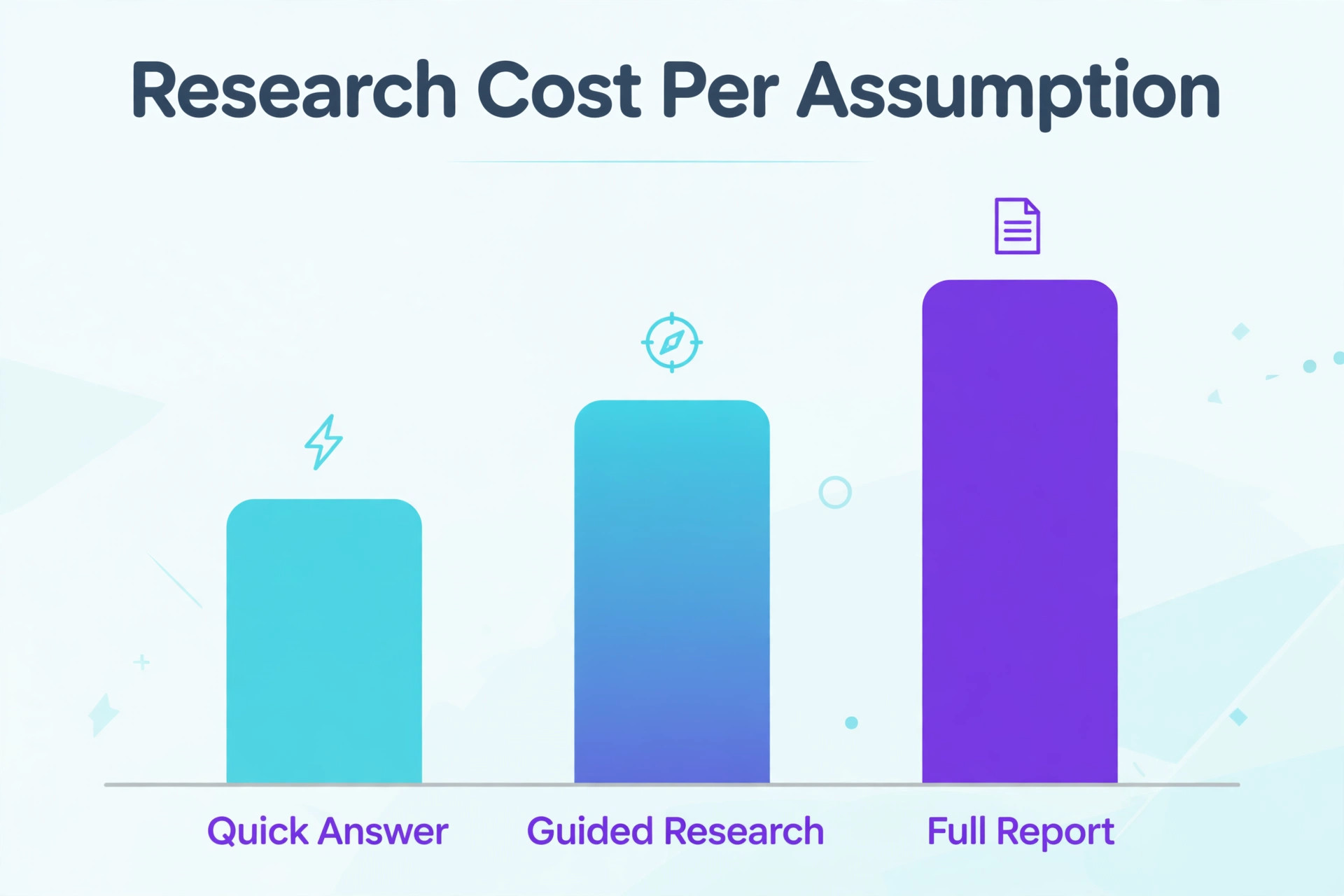
Before you commit money or time, write down the costs of the current way of working, because when you use Perplexity for market research startups you need a baseline to judge the new way against. Count staff time, analyst time, report purchases and decisions made on stale data and the price of the tool itself, then compare that total with the same total after one month of the new routine. If the new total is not lower, or the experience is not clearly better for the people involved, change one thing and measure again rather than adding more tools.
Price the tool honestly, including the monthly fee, any per person fee and the time spent learning it. A cheap tool that needs hours of maintenance each month often costs more than a pricier one that runs itself, once time is priced at a realistic rate. Always ask what happens to your data if you stop paying, because your lists, history and templates should stay yours.
Watch for the cost that appears only after launch, such as paid tiers and API usage once research becomes a daily habit. Read the pricing page for the tier you will actually land on in six months, not the starter tier you land on today, because a tool that is cheap at small volume and expensive at larger volume can punish growth. Set a calendar reminder to review the bill every quarter.
A final cost check is to ask what happens when you pause or cancel, including whether your data exports cleanly and whether the setup keeps working in a limited form. An exit that is painful is a cost too, even if it never appears on an invoice, so test the export before you depend on the tool.
Mistakes That Quietly Undo the Work
The mistakes below are common because each one feels reasonable at the time, and when you use Perplexity for market research startups it helps to name them before they happen. Read the list with anyone who will use the routine, agree which mistake your setup is most likely to make, and put one guard in place against it, because a named mistake is far easier to avoid than a vague warning to be careful.
- **Trusting the first answer.** The first answer is often the most popular, not the most accurate. Check a second source for every decision grade claim.
- **Researching without a question.** Hours of browsing produce notes but no decisions. Every session starts from the assumption list, or it does not start.
- **Citing summaries of summaries.** A summary that cites another summary is a game of telephone. Follow citations to the original source before quoting a number.
- **Ignoring contradictory evidence.** A finding that contradicts your plan deserves more attention, not less. Note it, investigate it, and record why you still disagree if you do.
- **Letting research replace customer contact.** No amount of desk research substitutes for ten customer conversations. Use research to sharpen questions, not to avoid asking them.
How to Tell Whether It Is Working
Pick a small set of numbers and track them monthly, because when you use Perplexity for market research startups you need evidence, not a feeling, about whether the change is paying. Choose numbers you can collect without extra admin, such as assumptions tested, sources verified, briefs completed and decisions changed by findings, and record them in one place on the same day each month. A trend over three months tells you far more than a single good or bad week.
Compare the new numbers with the baseline you recorded before the change, and be honest about what they say. If a number improves, keep doing what caused it and say so to the people involved, because praised work gets repeated. If a number gets worse, change one thing, not five, so you can tell what helped.
Ask the people affected directly as well, with one short question such as would you bet money on this finding without a second source. A number tells you what happened, while a short answer tells you why, and the why is what lets you fix a problem properly. Read the answers monthly and act on the most repeated point first, because that point is usually the cheapest fix with the largest effect.
Put a review in the calendar for ninety days from now, with a named owner, and treat that date as part of the launch rather than as an optional extra. Reviews without an owner drift, and a drifted routine quietly stops matching the work it was meant to support. One hour is enough for the review itself, provided the numbers and the answers are already collected, and the written decision from that hour becomes the starting point for the next quarter.
A Four-Week Rollout
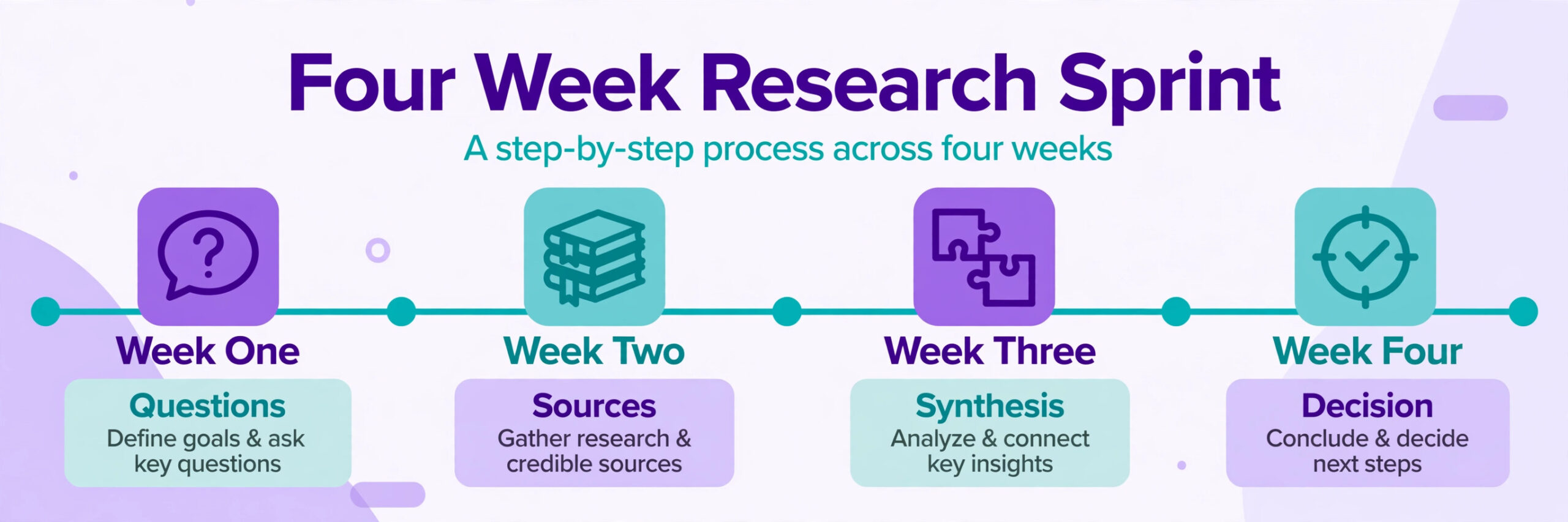
In week one, focus only on listing the ten riskiest assumptions before opening any research tool, and resist the urge to build the full system at once. A single working piece gives the team or household something to trust, while a half built system gives everyone a reason to fall back on the old way. Write down what worked and what snagged, since those notes become the specification for week two.
In weeks two and three, expand to the full workflow and start tracking assumptions tested, sources verified, briefs completed and decisions changed by findings once a week, in the same place and on the same day. Weekly tracking matters more than daily tracking at this stage, because it shows direction without turning measurement into a second job. If a number moves the wrong way, change one element and watch the next week before changing anything else.
By week four, compare the results with the outcome you wrote at the start, which was a one page research brief per assumption, each with sources and a confidence note, and decide what to keep, what to change and what to stop. A rollout that ends without a decision drifts, while one that ends with a short written verdict gives the next quarter a clear starting point. Share that verdict with everyone involved, so the routine belongs to the group rather than to one enthusiast.
What Good Looks Like After 90 Days
After ninety days, a healthy setup shows up in small, boring ways, such as assumptions tested, sources verified, briefs completed and decisions changed by findings trending in the right direction without heroic effort, and fewer messages asking where things stand. Nobody celebrates a routine that simply works, which is why it is worth naming those signs when they appear, so the team recognises the payoff and keeps funding the habit.
The warning sign is different, and it is worth watching for, which is when people start working around the setup instead of through it. Workarounds usually mean one step no longer fits reality, so ask what changed, fix that step, and prune anything the workaround replaced. A setup that adapts to one real change survives, while one that demands loyalty to an outdated step gets quietly abandoned.
When the First Version Does Not Work
If the first version disappoints, resist the urge to replace the tool immediately, since the fault usually sits in one step rather than in the whole approach. Return to the numbers you tracked, find the step where results diverged from the plan, and change that step alone. Tool swaps feel decisive, but they reset learning to zero, while a single step fix preserves everything that already worked.
If the problem persists after two single step fixes, ask the people who use the routine what they actually do instead of what the routine says. The gap between the written routine and the real routine is where the truth lives, and closing that gap, either by changing the routine or by retraining, resolves more failures than any new purchase. Document the change, test for two weeks, and only then judge whether the approach itself needs replacing.
More Reading on Stratilyze
For the systems around this one, Stratilyze also covers the Perplexity alternatives guide and the academic research guide. Read the guide that matches your next bottleneck first, because fixing the biggest bottleneck next gives a larger gain than polishing a part of the setup that already works well.
Frequently Asked Questions
How reliable are AI answer engines for market research?
They are reliable as a starting point and unreliable as a final authority. Use them to find sources quickly and to surface claims worth checking, then verify decision grade numbers against primary sources. The time saved is real, but only if the verification step is treated as mandatory rather than optional. If this answer raises a second question, test the small version first and let the result guide the bigger decision.
What counts as a good source for a startup brief?
Primary sources rank highest, such as company filings, official statistics, pricing pages and published surveys with clear methods. Reputable reporting comes next, while opinion pieces, listicles and unattributed claims rank lowest. Note the tier beside each finding so readers can judge its weight. Keep the answer short in practice too, since a simple rule followed daily beats a perfect rule followed once.
How much research is enough before launching?
Enough to test the riskiest assumptions, not to eliminate all uncertainty. When the top ten assumptions each have a brief with sources and a confidence note, further research usually delays rather than improves the decision. Launch, measure and let real customers correct the remaining gaps. Write your own version of this answer for your setup, because a generic answer only becomes useful once it carries your numbers.
Should I pay for a market research report?
Pay only for the two or three assumptions where depth changes the decision and free sources are thin, such as regulated markets or niche B2B segments. For most early questions, cited web research plus customer conversations give a better return than an expensive report that arrives after the decision. That result is the payoff for doing this in order, because you use Perplexity for market research startups step by step instead of changing everything at once. Revisit this question after a month of real use, since experience usually refines the answer in ways reading cannot.
How do I handle conflicting numbers from different sources?
Record both numbers with their sources, dates and methods, then judge which method fits your question better. If the conflict matters to the decision, seek a third source or a customer data point, and state the range honestly in the brief rather than picking the number that flatters your plan. When in doubt, choose the option that is easier to reverse, because reversible choices let you learn without paying for mistakes.
Can one person run this workflow for a whole startup?
Yes, for an early stage startup, since the workflow is designed around one founder with a few hours per assumption. The discipline that matters is the assumption list and the verification pass, both of which a single careful person can maintain. Bring in help when research becomes a daily, multi-market job. Share this answer with anyone who will use the setup, so expectations match before the first real task arrives.
Making the Call
The reason this approach holds up is that you use Perplexity for market research startups with a routine behind it, not as a one-off task. A setup that runs the same way every week will serve you better than a fancier option with no routine, and that advantage grows every month the routine runs.
Start with listing the ten riskiest assumptions before opening any research tool this week, test it with a real task tomorrow, and let the numbers over the next 90 days tell you what to improve next. Pick the first step today rather than waiting for a quieter month, because a quieter month rarely arrives.