
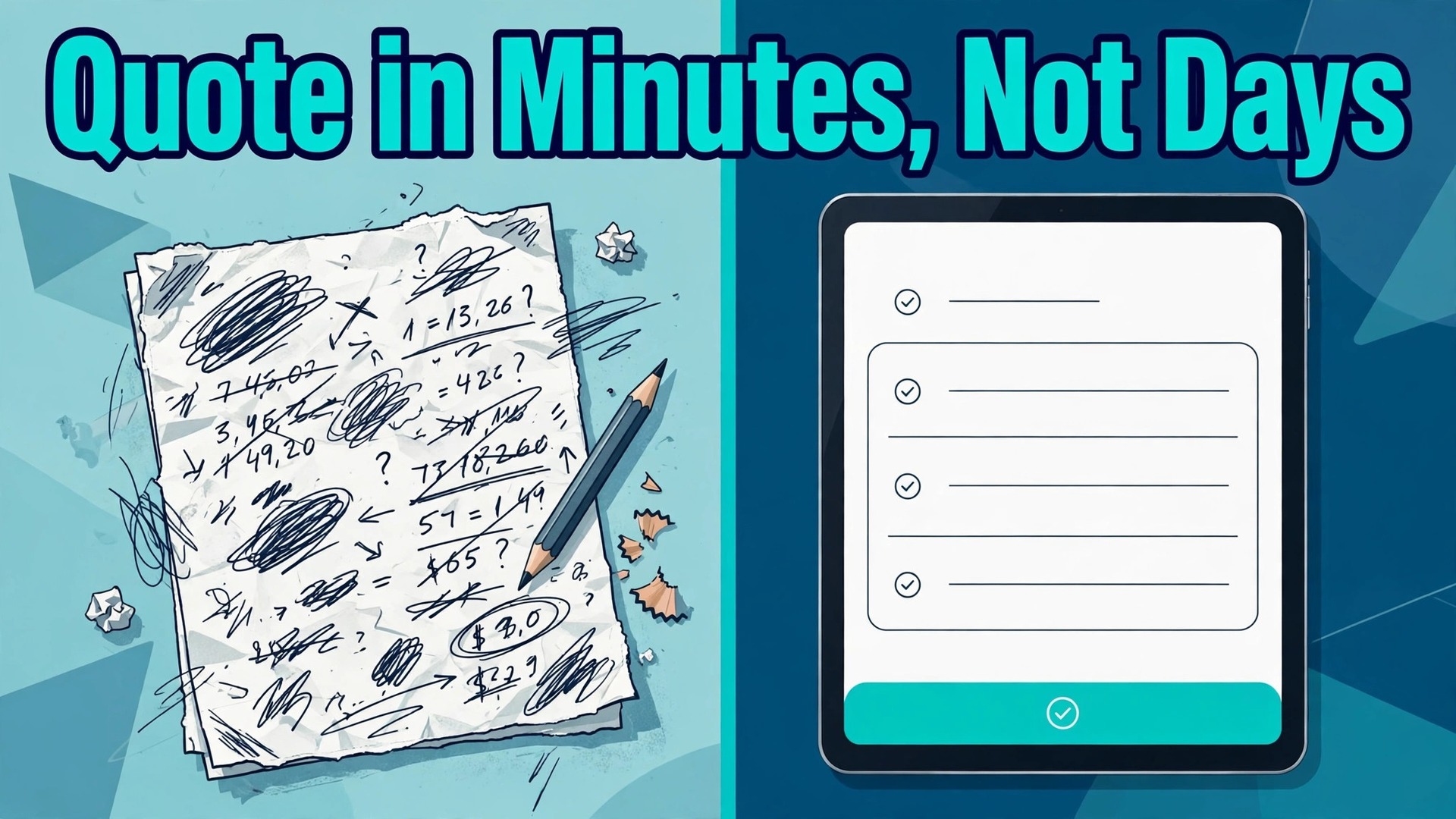
A prospect asks for a price, the estimator walks the site with a notepad, counts restrooms, eyes the floors, and then spends the evening doing maths that should have taken minutes. By the time the quote arrives two days later, the prospect has already heard from a rival who replied in an hour. When you use AI for commercial cleaning quote estimates, that delay shrinks to minutes for standard buildings, and the estimator spends site visit time on judgment, not on arithmetic.
The problem is not effort. Estimators work hard, and most know their buildings well. The problem is inconsistency, because the same building quoted by two estimators on different days can come back with prices 20 percent apart, simply because one counted a restroom differently or guessed at a production rate. Prospects notice that inconsistency, even if they cannot name it, and it reads as guesswork. A system that applies the same rates, the same production paces, and the same margin logic every time turns quoting from an art into a repeatable process.
This guide works through the full estimating workflow, from measurement to follow up, with a worked example for a 10,000 square foot office so you can check the maths yourself. Prices and production rates here come from published industry benchmarks and vendor tools at writing time, so treat them as starting points and confirm on the vendor page and against your own job costs before quoting live work.
A Worked Quote for a 10,000 Square Foot Office
Start with a building you can picture. A standard office of 10,000 square feet, with open plan areas, a few meeting rooms, a break room, and four restrooms, cleaned five nights a week. Published production benchmarks for a standard office run at about 8 minutes per 1,000 square feet per visit, with supplies at about 1 cent per square foot per visit. Those figures come from a calculator built on ISSA industry benchmarks, and they are a useful starting point, not a substitute for your own timed jobs.
Do the labour maths in the open. At 8 minutes per 1,000 square feet, a 10,000 square foot office needs 80 minutes of cleaning labour per visit, or 1 hour and 20 minutes. At a loaded labour cost of 25 dollars an hour, meaning wages plus taxes, insurance, and supervision, that visit costs about 33 dollars in labour. Supplies at 1 cent per square foot add 100 dollars per visit, which surprises newcomers, because supplies across a large office add up faster than labour on a light clean. Add a small equipment and overhead allowance, say 10 percent, and the visit cost lands near 146 dollars.
Now apply frequency and margin. Five visits a week means about 22 visits a month, so monthly cost runs to roughly 3,212 dollars. Price equals cost divided by one minus margin, so at a 30 percent margin the monthly price is about 4,589 dollars. Check that against the market band for standard offices, published at about 5 to 10 cents per square foot per month, which for this building means 500 to 1,000 dollars a month on a different basis. That mismatch is a warning, not a typo, because bands vary by what they include, so compare like with like before trusting any band.
The lesson of the worked example is not the final number. It is that every input should be visible, changeable, and saved, so a prospect who questions the price gets an answer grounded in minutes, rates, and visits, not in a feeling. When an input changes, say the office adds a restroom or drops to three nights a week, the quote should update in seconds and show exactly which line moved. That transparency is what wins commercial work, because facility managers defend a quote they can explain to their own finance team.

How to Use AI for Commercial Cleaning Quote Estimates
To use AI for commercial cleaning quote estimates well, set the rules before you switch the tool on. The AI should apply your rates, not invent them, and it should flag low confidence quotes for human review instead of sending them blindly. A useful setup has four layers. Your rate tables for labour, supplies, and margin. Your production rates by facility type and soil level. Your scope rules for what each service includes and excludes. And your review thresholds for building size, complexity, and price band.
The workflow itself runs in seven steps, and the order matters. First, capture the enquiry from web, phone, or email into one record, with facility type, size, frequency, and contact details. Second, measure the site, using satellite data, uploaded photos, floor plans, or a walkthrough, and record restroom count, floor types, and special areas. Third, apply production rates to get labour minutes per visit. Fourth, add supplies, equipment, and overhead by facility type. Fifth, apply frequency and margin to reach a monthly price. Sixth, build the quote packet with scope, schedule, terms, and signature. Seventh, send it, track opens, and run the follow up sequence.
Keep a human in the loop at two points, no matter how good the tool feels. The first is measurement for large or unusual buildings, where satellite data and photos miss soil level, access problems, and special finishes. The second is final approval for quotes above your threshold, where a senior estimator checks scope and margin before the packet leaves. AI speeds up the routine middle of the process, while humans still own the edges where mistakes cost the most.
| Workflow step | AI does | Human owns |
|---|---|---|
| Enquiry capture | Extracts size, type, frequency from messages | Qualifies fit and urgency |
| Site measurement | Satellite measure, photo counts, pace lookup | Walkthrough for complex sites |
| Labour maths | Minutes, cost, frequency totals | Loaded rate and margin decisions |
| Quote packet | Drafts scope, schedule, terms, signature | Final scope and price approval |
| Follow up | Timed reminders and replies | Negotiation and site visits |

Site Measurement Without Guesswork
Measurement is where most quote errors start, because a wrong square footage poisons every number after it. A building quoted at 8,000 square feet that actually measures 11,000 will lose money from the first month, and no margin tweak later fixes a 37 percent size error. Start with the best source available, meaning a floor plan or lease area where you can get one, satellite measurement where you cannot, and a physical walkthrough for anything large, medical, or industrial.
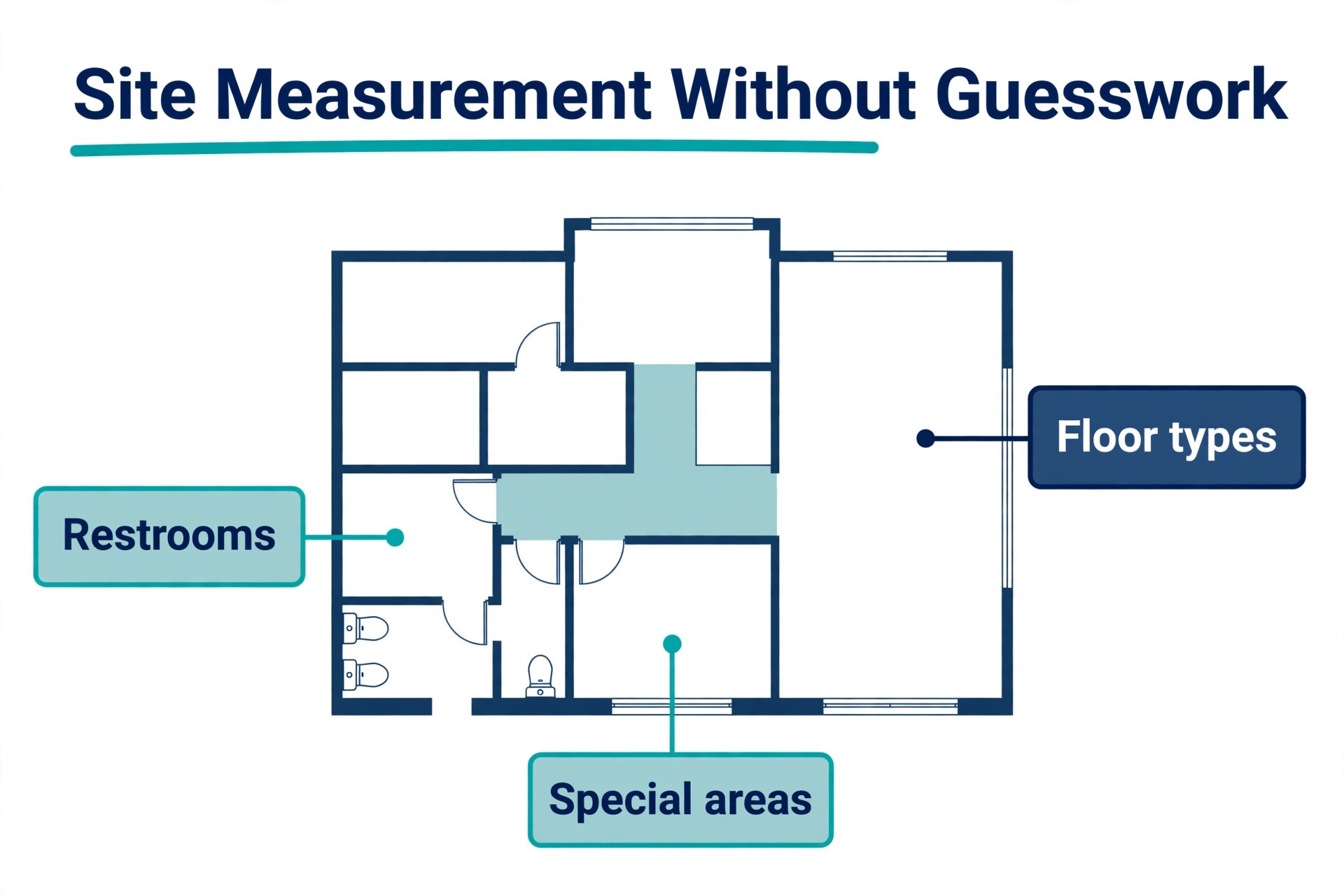
Count what matters beyond total area. Restroom count drives labour more than open floor does, because restrooms need detail work, restocking, and sanitising on every visit. Floor type matters too, because carpet, hard floor, and stone each clean at different paces and need different equipment. Note kitchens, food areas, medical areas, high dust areas, and secure areas separately, because each carries its own pace, supplies, and staffing need. A single blended rate for a mixed building hides all of that, and the crew discovers it on night one.
Photos help, but they need rules. Ask prospects for wide exterior shots, a shot of each restroom block, a shot of the main floor types, and a shot of any problem area, such as a stained carpet or a grease heavy kitchen. AI image tools can count visible features and estimate area from clear photos, with published accuracy claims of 95 to 98 percent for standard properties, yet complex commercial sites should still trigger a walkthrough. Set a confidence threshold, for example 90 percent, below which the system requests a site visit instead of sending a price.
Record measurement as a reusable asset, not as a one off note, because teams that use AI for commercial cleaning quote estimates need clean inputs to reuse. Save the measured area, restroom count, floor mix, and photos on the customer record, so the next quote for extra services, a frequency change, or a second site starts from facts instead of a fresh guess. That record also protects you at renewal, when a prospect claims the building shrank or the scope grew, because you can show the original measurement and the change log beside it.
Frequency Tiers and What Each Tier Really Costs
Frequency is the second biggest price lever after size, and prospects often misunderstand it. They ask for a lower frequency to cut cost, without realising that a building cleaned twice a week instead of five times needs deeper work per visit, more soil removal, and more restroom detail, so the per visit price rises even as the monthly total falls. Show both numbers side by side, per visit and per month, so the trade off is visible instead of hidden in a single monthly figure.
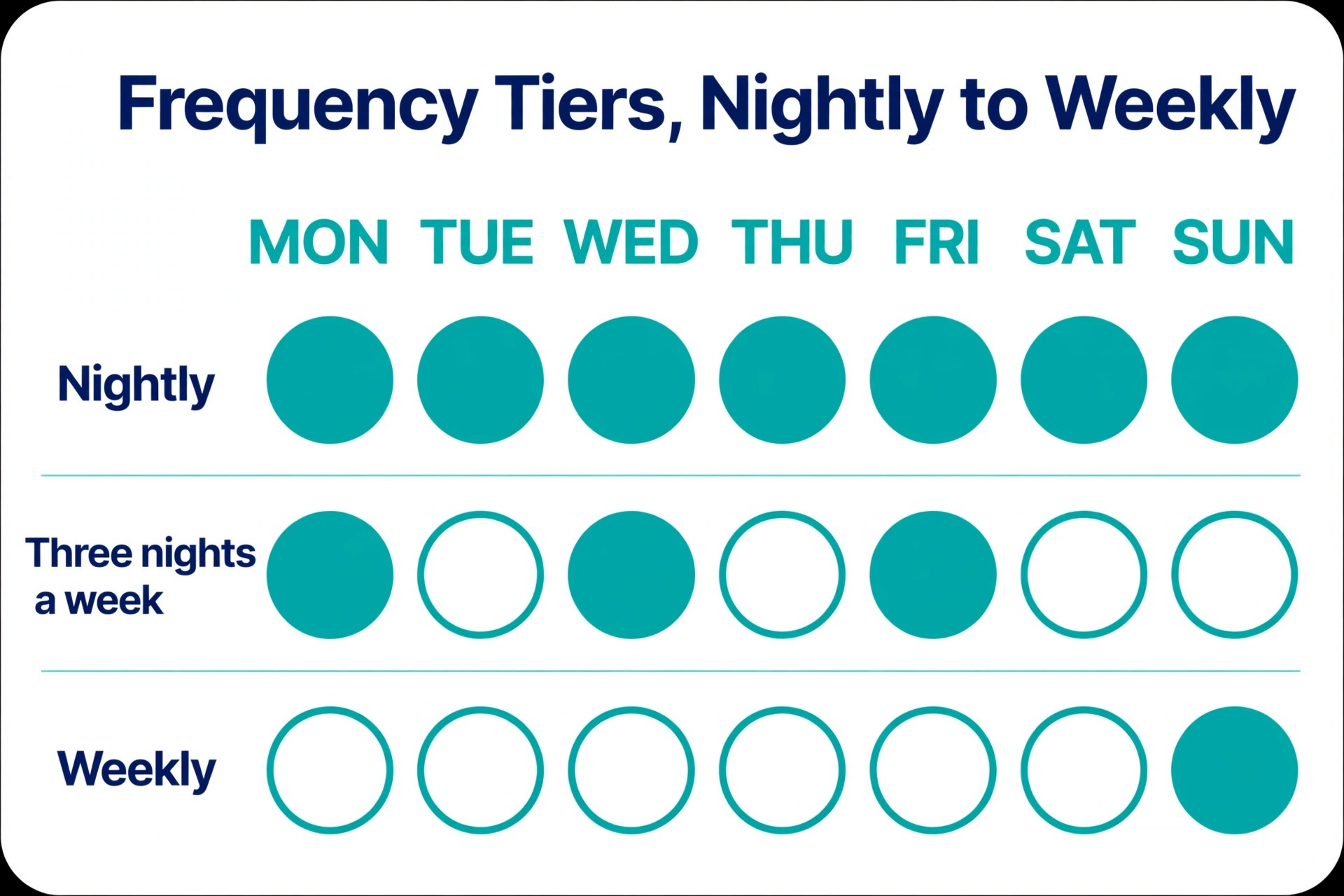
Build frequency tiers as named packages, not as ad hoc discounts. A nightly tier for offices that need a fresh start every morning, a three night tier for standard offices with moderate traffic, and a weekly tier for low traffic spaces each carry their own production pace, because soil builds between visits. Published quote tools apply frequency discounts in some residential contexts, but commercial pricing should reflect the extra per visit work at lower frequency, not simply divide the nightly price. Discounts for commitment, meaning longer contracts, are a separate lever from frequency, and mixing the two confuses prospects.
Use a simple table in the quote to show the tiers, with scope differences spelled out. A three night clean that skips detailed dusting on one visit is a different service from a nightly clean, and the prospect should see that difference before signing, not discover it in week two. That clarity also protects the crew, because they work to a written scope rather than to a prospect memory of a sales conversation.
| Frequency | Best for | Per visit reality | Monthly effect |
|---|---|---|---|
| Five nights a week | Busy offices, medical areas | Lightest per visit | Highest monthly total |
| Three nights a week | Standard offices | Heavier per visit | Mid monthly total |
| One night a week | Low traffic spaces | Deepest per visit | Lowest monthly total |
| One off deep clean | Move in, post build | Full detail visit | Single price only |
Review frequency at renewal with data, not with habit, and revisit the tiers whenever you use AI for commercial cleaning quote estimates for a renewal. If restroom complaints cluster on non cleaning days, the frequency is too low for the traffic, whatever the contract says. If the crew finishes early every visit and the building looks untouched between cleans, the frequency may be higher than needed, and offering a lower tier with a clear scope change can save the account from a rival undercutting you. Frequency should follow traffic and soil, not the calendar the account started on.
Labour Maths, Supplies and Margin That Hold Up
Labour maths only works if the loaded rate is honest. A wage of 18 dollars an hour is not an 18 dollar cost, once payroll taxes, workers insurance, uniforms, training, supervision, and travel are added. Many operators find their loaded rate lands 30 to 50 percent above the base wage, and quoting on the base wage alone guarantees thin or negative margins. Calculate your loaded rate from last quarter payroll and overhead, update it quarterly, and lock it in the system so no estimator can quietly quote on the wrong rate.
Production rates need the same honesty. Published benchmarks give a starting pace by facility type, with standard offices near 8 minutes per 1,000 square feet, executive offices near 12 minutes, medical and surgical areas near 20 minutes, restaurants near 18 minutes, and warehouses near 4 minutes for floors and offices only. Your own timed jobs should replace those benchmarks over time, because your crew, equipment, and building mix will differ. Track actual minutes per visit for your top ten buildings, compare them with the benchmark, and adjust the system rate where the gap is consistent.
Supplies scale with area and soil, not with headcount alone. A surgical suite uses far more consumables per foot than a warehouse, and a restaurant kitchen dwarfs both. Published supply figures run from about half a cent per square foot per visit for warehouses to about 3.5 cents for surgical areas, with standard offices near 1 cent. Keep supplies as a separate line in the quote, so a prospect who wants to supply their own consumables can see the saving clearly, and so your margin does not hide inside a vague materials charge.
Margin deserves a formula, not a feeling, and operators who use AI for commercial cleaning quote estimates should lock that formula in the system. Price equals cost divided by one minus margin, so a 30 percent margin on a 3,212 dollar monthly cost gives about 4,589 dollars, while a 20 percent margin gives about 4,015 dollars. The difference is 574 dollars a month, or nearly 6,900 dollars a year on one account, which shows why margin discipline matters more than winning one extra account at a thin price. Set a floor margin by facility type, flag quotes below it for approval, and never let a discount quietly eat margin without a matching scope or frequency change.
The Quote Packet That Wins Commercial Work
A quote packet is not a price on a page. It is the document a facility manager forwards to finance, operations, and sometimes a board, and it will be judged without you in the room. A strong packet opens with a one page summary, meaning monthly price, frequency, scope in plain language, start date, and contract length, so a busy reader gets the deal in 30 seconds. Detail follows for readers who want it, but the summary must stand alone.
Scope is the section that prevents disputes, so write it in verbs and frequencies. State which areas are cleaned each visit, which tasks run weekly or monthly, what is excluded, and who supplies consumables and equipment. Name restroom servicing, kitchen detail, floor care, waste removal, and window work separately, because a prospect who assumes windows are included will be disappointed when they are not. Exclusions are not negative selling. They are the reason the price is believable, because a quote that claims to include everything usually includes nothing well.
Add proof that fits commercial buyers. Insurance details, staff vetting and training notes, supervision method, quality check process, and two or three relevant references carry more weight than adjectives about quality. Include a short quality plan, meaning inspection frequency, complaint response time, and how issues are logged and closed. Facility managers buy risk reduction as much as cleaning, and a packet that shows how problems get fixed beats a packet that claims problems never happen.
Close the packet with an easy yes. A digital signature block, a clear start date, and a single contact for questions remove the last friction, while a packet that asks the prospect to print, sign, scan, and email back loses deals to rivals with one click acceptance. Send the packet as a branded PDF and as a web link, track opens, and trigger the follow up sequence from the open, not from the send date, because a packet nobody opened needs a different message from a packet that was read twice.

The Follow Up Sequence That Lifts Conversion
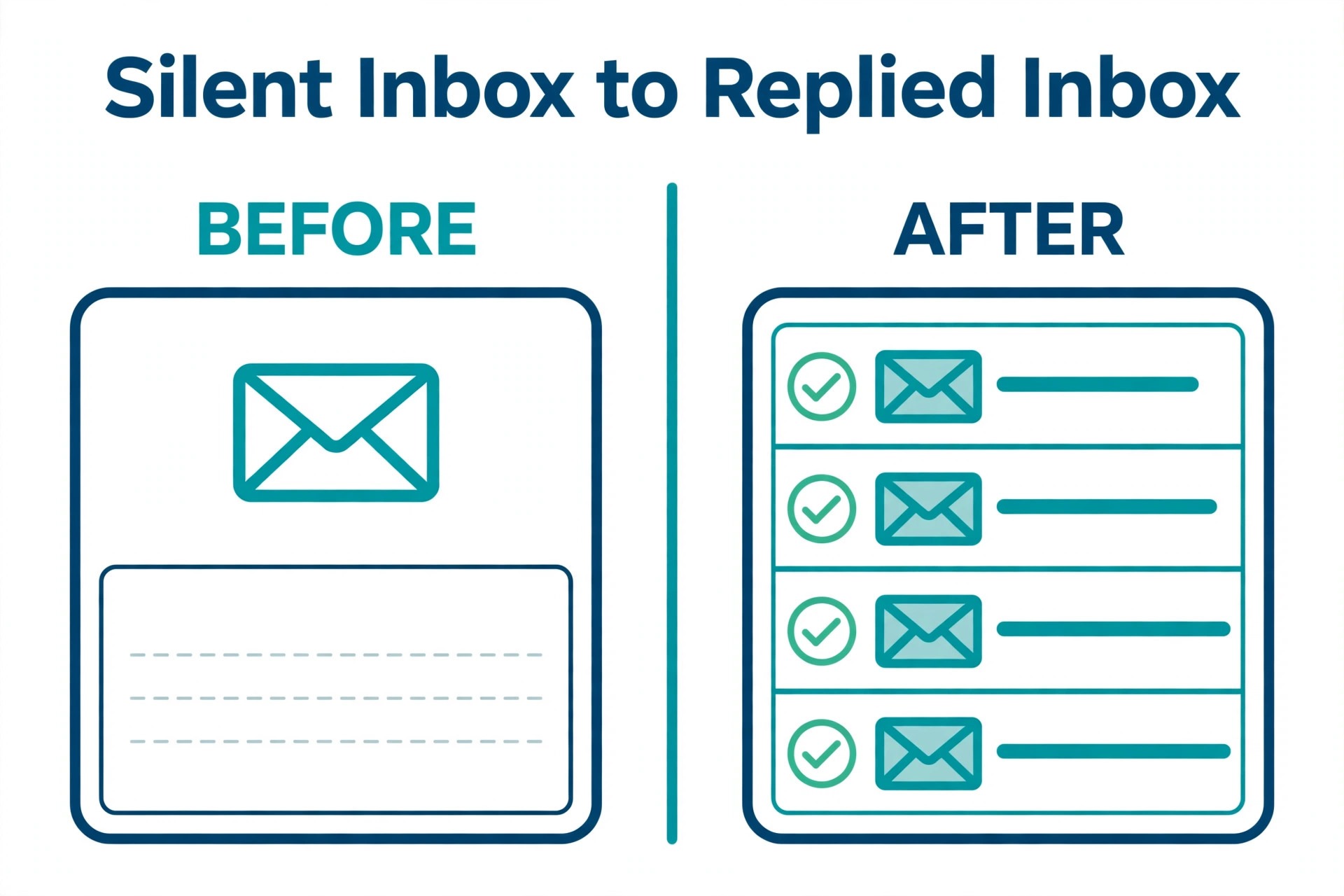
Most commercial quotes are lost to silence, not to price. A prospect who asked for a quote, read it, and then got busy will not chase you, and a rival who follows up at the right moment will win the account by default. Published quote automation claims a 34 percent lift in conversion from built in follow up sequences, and while your lift will vary, the pattern holds. Follow up is not pestering when it adds value at each touch.
Run a five touch sequence over three weeks. Touch one lands within an hour of the enquiry with acknowledgement and a timeline, even if the full quote needs a site visit. Touch two delivers the quote with a short cover note naming the scope and the next step. Touch three lands two days later and asks one question, meaning whether the scope matches what they need, which invites a reply without pressure. Touch four, a week later, shares something useful, such as a seasonal checklist or a frequency guide, rather than repeating the price. Touch five, at three weeks, offers a short site review or a trial clean window, and a clean close if the timing is wrong.
Automate the timing and the drafting, but keep approval for commercial accounts above your threshold, even when you use AI for commercial cleaning quote estimates at volume. An AI drafted follow up should read like your estimator wrote it, with the building name, the scope discussed, and the open question from the last conversation. Generic follow ups that could fit any prospect get ignored, while specific follow ups that reference a restroom count or a floor problem get replies. Save every reply on the customer record, because the next estimator should never ask a question the prospect already answered.
Know when to stop. A prospect who declines, who picks a rival, or who says the timing is next year should move to a nurture list with quarterly useful touches, not stay on a weekly chase that damages the brand. Record the loss reason honestly, meaning price, scope, timing, or incumbent, because that log tells you whether quotes are too high, too vague, or simply too slow. Follow up data is market research, if you bother to read it.
Tools Worth Shortlisting
CleanSlate AI is the most estimating specific tool found in research, with a production rate bid calculator built on ISSA benchmarks, facility type paces, supply rates, market bands per square foot per month, and a branded proposal flow with e-signature. Its free calculator is a good way to test your own rates against benchmarks before committing to a platform, and its AI back office handles lead qualification, proposals, and follow up for cleaning companies. Confirm its full pricing on the vendor page, because calculator access and platform pricing are different offers.
Fieldproxy focuses on quote automation for field services, with instant branded quotes from enquiry details, pricing rules by area and service, frequency handling, PDF proposals, and follow up sequences. Its window cleaning and cleaning blueprints show the pattern clearly, meaning capture details, apply rate tables, add height or access multipliers where relevant, and deliver a quote in under a minute for standard jobs. That speed matters most for operators handling 20 or more quote requests a week, where manual quoting eats 15 to 20 hours of admin time in published examples.
General field service platforms such as Jobber, Housecall Pro, and ServiceTitan also handle quoting, scheduling, and invoicing, and they suit cleaning companies that want one system for the whole business rather than a quoting specialist. Their quoting is usually less tailored to production rates and facility benchmarks, so check whether you can encode your paces, supply rates, and margin floors without workarounds. A general tool that forces rate tables into free text notes will not give you the consistency this guide aims for.
AI phone and chat tools are the third layer, answering enquiries after hours, collecting facility details, generating quotes from your rates, and booking site visits. They suit operators who lose enquiries overnight or on weekends, and they should always hand complex commercial jobs to a human estimator with a full note, not send a firm price on a thin enquiry. Judge them on enquiry capture quality, meaning whether the details they collect are the ones your estimator actually needs, not on how fluent the voice sounds.
Mistakes That Make Quotes Lose Money
The first mistake is quoting on unloaded labour. A price built on base wages looks competitive and loses money every month, because taxes, insurance, supervision, and travel were never in the maths. Fix the loaded rate first, before any tool or template, because every quote after that inherits the error. Review the rate quarterly, and after any wage or insurance change, because a rate that was right in January can be wrong by July.
The second mistake is sending a firm price without a confidence check. Standard offices with clear photos and a known area can take an instant quote, while medical, industrial, and large mixed buildings need a walkthrough before any number leaves the office. A system without a confidence threshold will eventually send a confident sounding price for a building it misunderstood, and the loss on that account will dwarf the time saved on ten easy quotes. Set the threshold, respect it, and explain it to prospects as diligence, not delay.
The third mistake is discounting price without changing scope. A prospect who asks for 10 percent off and gets it with the same scope teaches the market that your price was padded, and teaches your crew that margin is negotiable. Trade price for scope, frequency, contract length, or start date instead, so every concession has a visible counterpart. That discipline keeps margins intact and makes negotiations feel fair to both sides.
The fourth mistake is letting quotes die in silence. A quote sent without tracking, without a follow up sequence, and without a loss reason is a lesson never learned. Track sends, opens, replies, wins, and losses by facility type and estimator, and review the log monthly. Patterns will appear quickly, whether one estimator consistently prices high, one facility type always stalls at finance, or one follow up touch outperforms the rest.
A Decision Checklist Before You Send the Next Quote
Use this checklist on the next five quotes, and keep it until it feels automatic. Size confirmed from a plan, satellite measure, or walkthrough, with restroom count and floor mix recorded. Production pace matched to facility type and soil, not copied from the last quote. Loaded labour rate current, supplies by facility type, equipment and overhead included. Margin applied by formula, checked against the floor for that facility type. Price checked against the market band, with any gap explained in the packet, not hidden.
Scope written in verbs and frequencies, exclusions named, consumables ownership clear. Packet summary on page one, proof and quality plan inside, digital signature at the end. Follow up sequence scheduled from the open, with a named owner and a stop rule. Confidence check passed, or a site visit booked with a timeline given to the prospect. A quote that passes all nine checks is one you can defend to finance, to operations, and to your own crew, and that defensibility is the real product you are selling.
Operators who already use AI for commercial cleaning quote estimates as a discipline, not as a shortcut, find the benefit in two places. Quotes arrive faster, which wins more enquiries, and quotes hold margin, which makes the work worth winning. Start with one facility type, prove the rates on ten quotes, and then expand the system building by building, checking actual minutes against quoted minutes every month until the gap closes.

Frequently Asked Questions About Commercial Cleaning Quotes
How accurate are AI cleaning quote estimates for commercial buildings?
For standard offices with clear area, restroom count, and floor data, AI estimates built on production rates can be close enough to quote with a site confirmation step, and published photo tools claim high accuracy for standard properties. For medical, industrial, large, or mixed buildings, accuracy falls, because soil, access, and special areas vary too much for photos or satellite data alone. Use a confidence threshold, and send a walkthrough based quote for anything complex.
What production rate should I use for a standard office?
Published ISSA based benchmarks put a standard office near 8 minutes per 1,000 square feet per visit, with supplies near 1 cent per square foot per visit. Executive offices run higher, near 12 minutes, because finishes need more detail. Replace benchmarks with your own timed jobs over time, because crew speed, equipment, and building mix change the right rate for your business.
How do I price a building cleaned three nights a week instead of five?
Show per visit and monthly prices together, because a lower frequency building needs deeper work per visit, so the per visit price rises even as the monthly total falls. Build frequency tiers with different scopes, so a three night clean is not sold as a nightly clean with two nights removed. Review frequency at renewal against traffic, soil, and complaint patterns, not against habit.
Should the quote packet include a per square foot price?
It can, as a check, but do not let it become the only number a prospect compares. Per square foot bands vary by what they include, by facility type, and by frequency, so two quotes with the same band can describe very different scopes. Lead with monthly price, scope, and frequency, and use the per square foot figure as a transparency line inside the packet, with the inputs that produced it.
How long should I wait before following up on a commercial quote?
Acknowledge the enquiry within an hour, deliver the quote as promised, and follow up two days later with one specific question about scope fit. A second useful touch a week later, and a trial or review offer at three weeks, covers most buying cycles without pestering. Track opens, and tailor the message to whether the packet was opened, read twice, or never opened at all.
When should AI not send a quote on its own?
AI should not send a firm price alone for large, medical, industrial, or highly mixed buildings, for enquiries with missing size or scope data, or for quotes below your margin floor. In those cases it should draft the estimate, flag the uncertainty, and hand the job to an estimator with a site visit timeline. That handoff is diligence, and prospects respect it more than a fast price that turns out wrong.
More Reading on Stratilyze
– Best CRM for Cleaning Companies – Use AI for Cleaning Business Scheduling – Use AI for Cleaning Business Route Scheduling – How to Price Cleaning Services Small Business – Commercial Cleaning Contracts That Protect Both Sides, plain text title, link not verified at writing time – How to Win Facility Bids Without Cutting Margin, plain text title, link not verified at writing time