
FareHarbor takes no monthly fee and charges about 6 percent commission. Checkfront charges from 99 dollars a month plus a smaller online fee. Booqable charges from 29 dollars a month with no commission. The best booking software for outdoor rental businesses is not the cheapest headline price, it is the cheapest total at the booking volume and mix a real rental shop actually runs.
Outdoor rentals break generic booking tools in specific ways. Gear rents by the hour, stock is finite, sizes and conditions matter, weather cancels afternoons, and the same kayak may serve a rental in the morning and a guided paddle later. A tool that handles those realities keeps the fleet full and the counter calm, while a tour only tool creates double bookings and awkward workarounds.
This guide compares 10 tools on inventory, booking fees, waivers, deposits, and price, with clear guidance on when to choose or skip each one. Prices are reported from vendor pages and recent comparisons, and every figure should be confirmed on the vendor page before you buy, because plans and fees change.
Booking Tools and Fees at a Glance
The table below gives a fast read on price and fit. Read it as a starting point, then use the tool sections for the trade offs that decide a purchase. The best booking software for outdoor rental businesses for your shop depends on whether kayaks, bikes, or camping gear pays the bills.
| Tool | Starting price | Best for |
|---|---|---|
| FareHarbor | No monthly fee, about 6 percent commission reported | Tour led operators and walk up sales |
| Peek Pro | Quote based, Pro from 199 dollars per month reported | Operators focused on direct online revenue |
| Checkfront | From 99 dollars per month reported, plus 3 percent online fee | Mixed rentals, lessons, and tours from one fleet |
| Booqable | From 29 dollars per month billed annually reported | Rental only shops renting by the hour |
| EquipDash | 29 dollars per month reported, 1 to 2 percent direct fee | Kayak and bike shops with guided trips sharing a fleet |
| Rezdy | From 49 dollars per month reported | Reseller and business to business rental networks |
| Xola | Quote based, confirm on vendor page | Tour led operators selling through travel sites |
| Bókun | 49 dollars per month reported, plus 1.5 percent direct fee | Operators that drive their own direct bookings |
| Rentrax | 29 dollars per month for 30 transactions reported, plus setup | Multi location rental counters |
| Resytech | No monthly fee, 0.5 to 3 percent per booking reported | Small fleets that want no monthly fee |
Why the best booking software for outdoor rental businesses beats phone bookings and paper logs
Availability is the core problem in outdoor rentals. A shop has a fixed number of kayaks, bikes, or tents, and every double booking is a customer turned away at the counter or a refund on a busy Saturday. Booking software that shares inventory across rentals, guided trips, and walk ups prevents that loss, while a manual calendar or a generic booking form cannot keep up at peak.
Booking fees are the second difference, and they decide the true cost more than the monthly plan. A commission model looks free until summer revenue makes it the most expensive option, while a subscription looks dear until high volume makes it the cheapest. The right comparison is the yearly total at real seasonal volume, including card processing, not the monthly headline.
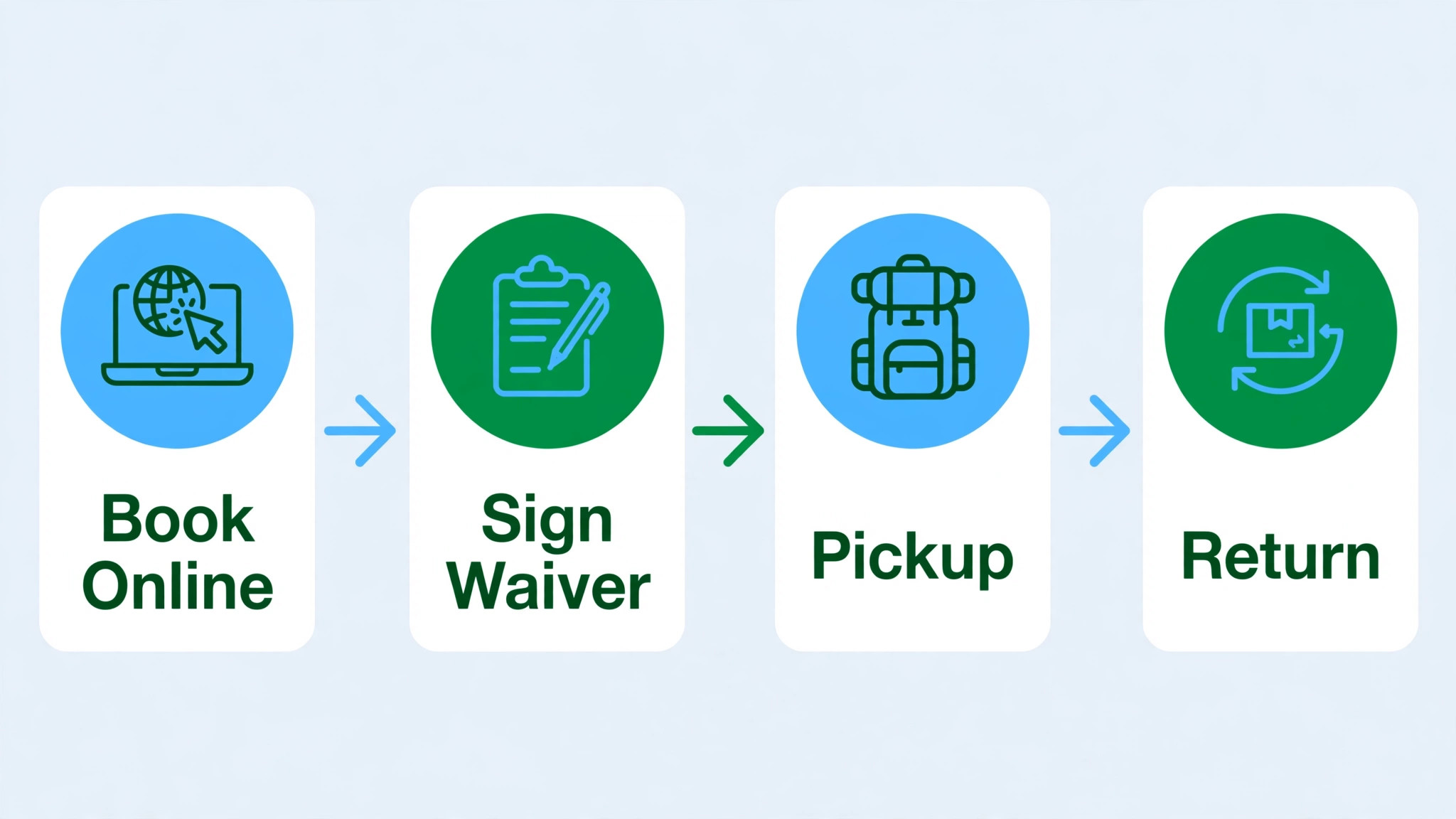
The third difference is the counter workflow. Waivers, damage deposits, equipment condition notes, and ID checks happen at pickup, and software that handles them cleanly keeps queues short. A tool that books beautifully online yet slows the counter will annoy customers at the exact moment they should be excited to get outside.
Finally, weather and cancellations test every system. Wind, lightning, and rain cancel afternoons, and a tool with weather holds, rebooking, and clear messages saves hours of phone calls. A system without those features leaves staff to rebuild the day manually while customers wait for answers.

10 Tools Compared
FareHarbor
FareHarbor suits outdoor rental businesses that also sell tours and take many walk up bookings. There is no monthly fee in the reported model, and payment processing is bundled into a commission of about 6 percent per booking in comparisons. That simplicity makes starting easy, especially for a seasonal business that does not want a monthly bill in quiet months.
The cost rises with volume, because the commission applies to bookings the operator may already have won through other channels. A kayak shop with high summer revenue can pay far more in commission than a flat subscription would cost, so model the fee at real seasonal revenue before choosing. Inventory is tour centred, so pure rental fleets should test how hourly rentals and equipment types are handled.
Pricing is reported as no monthly fee plus about 6 percent commission, with transaction details varying, so confirm the current terms on the vendor page. Compare the yearly commission total against a subscription at the same booking volume, not just the monthly figure.
Choose FareHarbor when tour led operators and walk up sales is the main job. Skip it when a different priority in this guide matters more, and test that priority first during a trial.
Peek Pro
Peek Pro suits operators that want strong direct booking, dynamic pricing, and a central dashboard for website, reseller, and walk in sales. The platform handles set departures well, which suits guided paddles and tours that share a fleet with rentals, and it supports marketing tools that help direct bookings grow. A business selling heavily through its own site will use those strengths daily.
Pricing is not published as a single figure, and reports place paid tiers from 199 dollars per month upward, with booking fees varying, so a sales conversation is needed to get a firm total. Pure rental shops should also check how hourly inventory, damage deposits, and equipment condition are handled, because the platform is tour led.
Pricing is quote based in the sources checked, so request a quote and confirm the current terms on the vendor page. Ask for the all in cost at the real booking volume, including any per booking fees, before comparing it with a flat subscription.
Choose Peek Pro when operators focused on direct online revenue is the main job. Skip it when a different priority in this guide matters more, and test that priority first during a trial.
Checkfront
Checkfront suits rental businesses that sell a mix of rentals, lessons, and tours from one fleet. Inventory can be shared across products, so a kayak used for a morning rental can be booked for an afternoon guided paddle without double booking. The flat monthly fee plus a reported 3 percent fee on online bookings, which can be absorbed or passed on, makes costs predictable across a season.
The monthly fee runs through quiet months too, which matters for a highly seasonal business. A shop that earns almost nothing in winter still pays the subscription, while a commission only tool would cost little in that period. Weigh the yearly total, not the summer month total, when comparing the two models.
Pricing is reported from 99 dollars per month, plus 3 percent on online bookings, so confirm the current plan on the vendor page. Offline bookings carry no fee in reports, which helps walk up heavy counters.
Choose Checkfront when mixed rentals, lessons, and tours from one fleet is the main job. Skip it when a different priority in this guide matters more, and test that priority first during a trial.
Booqable
Booqable suits rental only shops that rent by the hour, day, or week and need clean availability without tour complexity. Products, stock levels, and rental periods are central, and customers can book online, pay, and sign rental terms without the shop juggling a tour departure system. A bike or camping gear shop that rents gear and nothing else will find the fit natural.
The limits appear when tours, lessons, or lodging join the mix. Booqable is rental centred, so a business that grows into guided trips may need a second system or a platform change. For a pure rental shop that trade off is fine, because rental depth beats tour features that would never be used.
Pricing is reported from 29 dollars per month billed annually, or 35 dollars per month on monthly billing, with no commission in reports, so confirm the current plan on the vendor page. That no commission model rewards high volume rental shops.
Choose Booqable when rental only shops renting by the hour is the main job. Skip it when a different priority in this guide matters more, and test that priority first during a trial.
EquipDash
EquipDash suits kayak and bike shops that run hourly rentals and guided trips from one fleet. Pricing is low, the trial is generous in reports, and the system handles singles, tandems, sizes, and guided departures alongside rentals. A shop where the same boats or bikes serve both rental customers and guided groups will value that shared inventory most.
The platform is newer and narrower than the large tour platforms, so reseller networks and third party distribution are thinner. A shop that depends heavily on travel sites for bookings should check distribution before choosing, while a shop that wins most bookings direct will not miss it.
Pricing is reported at 29 dollars per month, or 23 dollars per month billed annually, plus 1 to 2 percent on direct online bookings that can be passed to the customer, so confirm the current plan on the vendor page. Model the fee with and without passing it on.
Choose EquipDash when kayak and bike shops with guided trips sharing a fleet is the main job. Skip it when a different priority in this guide matters more, and test that priority first during a trial.
Rezdy
Rezdy suits rental operators that sell through resellers, agents, and business partners as well as direct. The platform supports reseller rates, vouchers, and distribution, which helps a business that wants other sellers to fill its fleet. Direct bookings carry no commission in reports, so a shop that drives its own traffic keeps more of each sale.
The higher tiers and add-ons can raise the total quickly, and the system is broader than a pure rental counter tool. A small shop with no reseller channel may pay for distribution features it never uses, while a shop with an agent network will recover the cost through filled capacity.
Pricing is reported from 49 dollars per month in recent comparisons, with higher tiers for larger operators, so confirm the current plan on the vendor page. Ask what reseller and voucher features the starting tier includes.
Choose Rezdy when reseller and business to business rental networks is the main job. Skip it when a different priority in this guide matters more, and test that priority first during a trial.
Xola
Xola suits tour led operators that sell set departures and distribute through travel sites. The platform handles online booking, reseller connections, and point of sale for walk ups, which covers the main sales channels for a busy outdoor centre. A business whose revenue is mostly guided trips with rentals on the side will find the tour workflow natural.
Pricing is not published as a single figure, so a sales conversation is needed, and pure rental depth should be tested carefully. Hourly rentals, equipment types, and condition checks are less central than departures, so a rental first shop should run a real rental day through a trial before committing.
Pricing is quote based in the sources checked, so request a quote and confirm the current terms on the vendor page. Ask for the all in cost at the real booking volume, including any per booking fees.
Choose Xola when tour led operators selling through travel sites is the main job. Skip it when a different priority in this guide matters more, and test that priority first during a trial.
Bókun
Bókun suits operators that drive most bookings themselves and want a low monthly fee with a small direct fee. Reports place the plan at 49 dollars per month plus 1.5 percent on direct bookings, with no fee on some marketplace bookings, which can undercut commission heavy rivals at moderate volume. A shop with a strong website and repeat customers will benefit most.
The platform is less dominant in some markets than the largest tour tools, so local support and integrations should be checked. A business that relies on walk up sales and phone bookings should also test the counter workflow, because online strength alone does not run a busy rental desk.
Pricing is reported at 49 dollars per month plus 1.5 percent on direct bookings in comparisons, so confirm the current plan on the vendor page. Model the yearly total at the real direct share before comparing it with a flat subscription.
Choose Bókun when operators that drive their own direct bookings is the main job. Skip it when a different priority in this guide matters more, and test that priority first during a trial.
Rentrax
Rentrax suits rental counters at more than one launch, shop, or depot that need a shared fleet view. The system handles rentals across locations, so gear can be tracked as it moves between sites, and the transaction model suits counters with steady but not huge volume. A business with two or three rental points will value that shared view most.
The transaction cap is the watch point. Reports place the entry tier at 29 dollars per month for 30 transactions, plus a setup fee and a per transaction charge above the cap, so a busy summer can push the total higher than the headline price. Model the cap against peak month transactions, not the yearly average.
Pricing is reported at 29 dollars per month for 30 transactions plus a setup fee in comparisons, so confirm the current plan on the vendor page. Ask how over cap transactions are charged before a peak season.
Choose Rentrax when multi location rental counters is the main job. Skip it when a different priority in this guide matters more, and test that priority first during a trial.
Resytech
Resytech suits small fleets that want to start with no monthly fee and pay per booking instead. Reports place the fee at 0.5 to 3 percent per booking, set per operator, which keeps quiet months cheap and lets a new rental shop test online booking without a subscription commitment. Singles, tandems, and paddle boards with a few guided trips fit the model well.
The per booking model rises with volume, so a busy shop may eventually pay more than a flat subscription. Support, integrations, and distribution are also narrower than the large platforms, so a growing business should check each one before committing for a full season.
Pricing is reported as no monthly fee with 0.5 to 3 percent per booking in comparisons, so confirm the current terms on the vendor page. Compare the yearly fee total at peak season volume against a subscription.
Choose Resytech when small fleets that want no monthly fee is the main job. Skip it when a different priority in this guide matters more, and test that priority first during a trial.
Picks by Rental Type
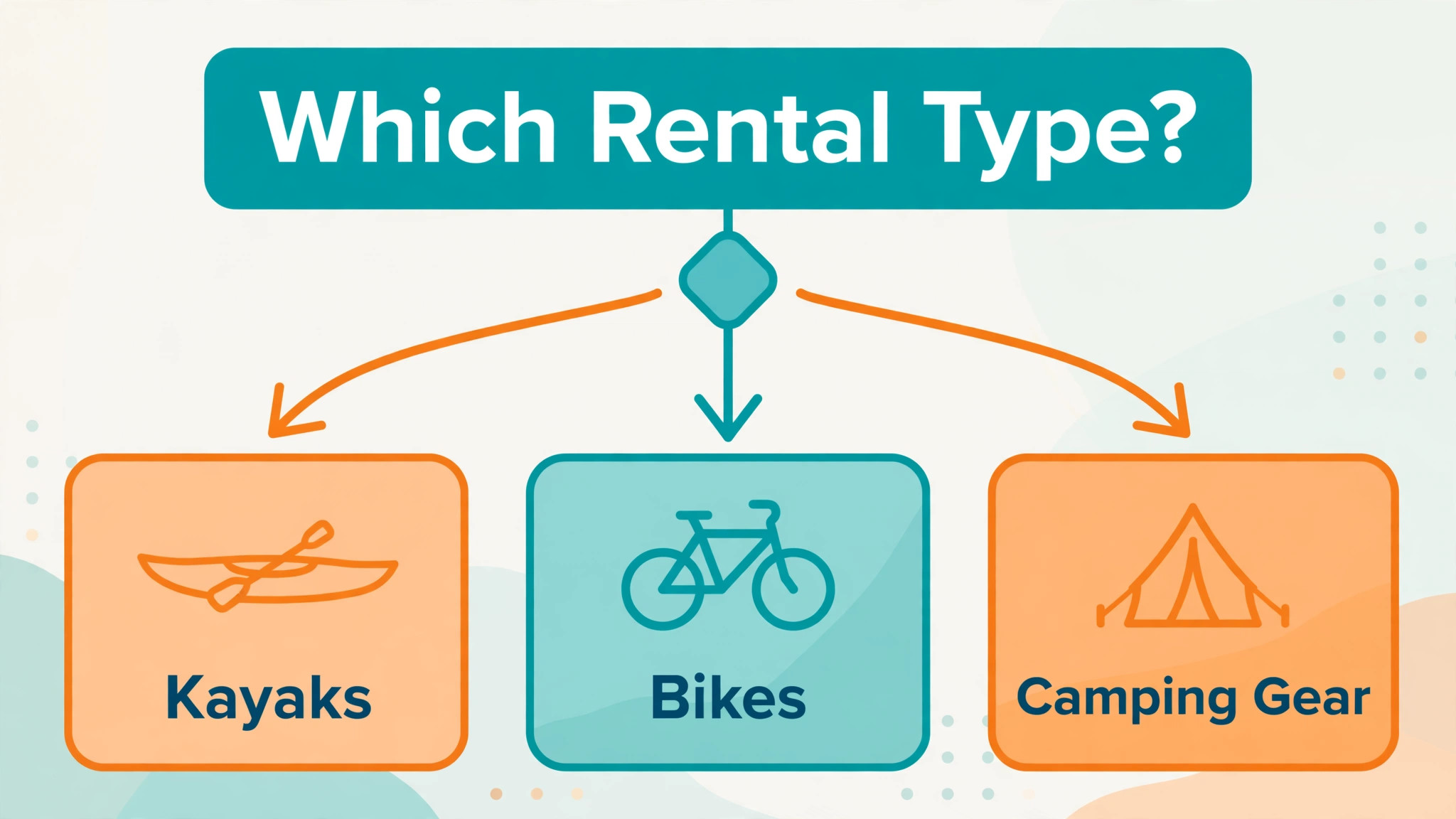
Use this table to match the tool to the rental type that pays the bills. The best booking software for outdoor rental businesses changes with the gear, so pick by rental type rather than by feature count alone.
| Job | Best pick | Why it wins |
|---|---|---|
| Kayaks | EquipDash or Checkfront | Shared fleet for rentals and guided paddles matters most |
| Bikes | Booqable or EquipDash | Sizes, workshop status, and hourly rentals matter most |
| Camping gear | Booqable or Resytech | Multi day rentals and low fees matter most |
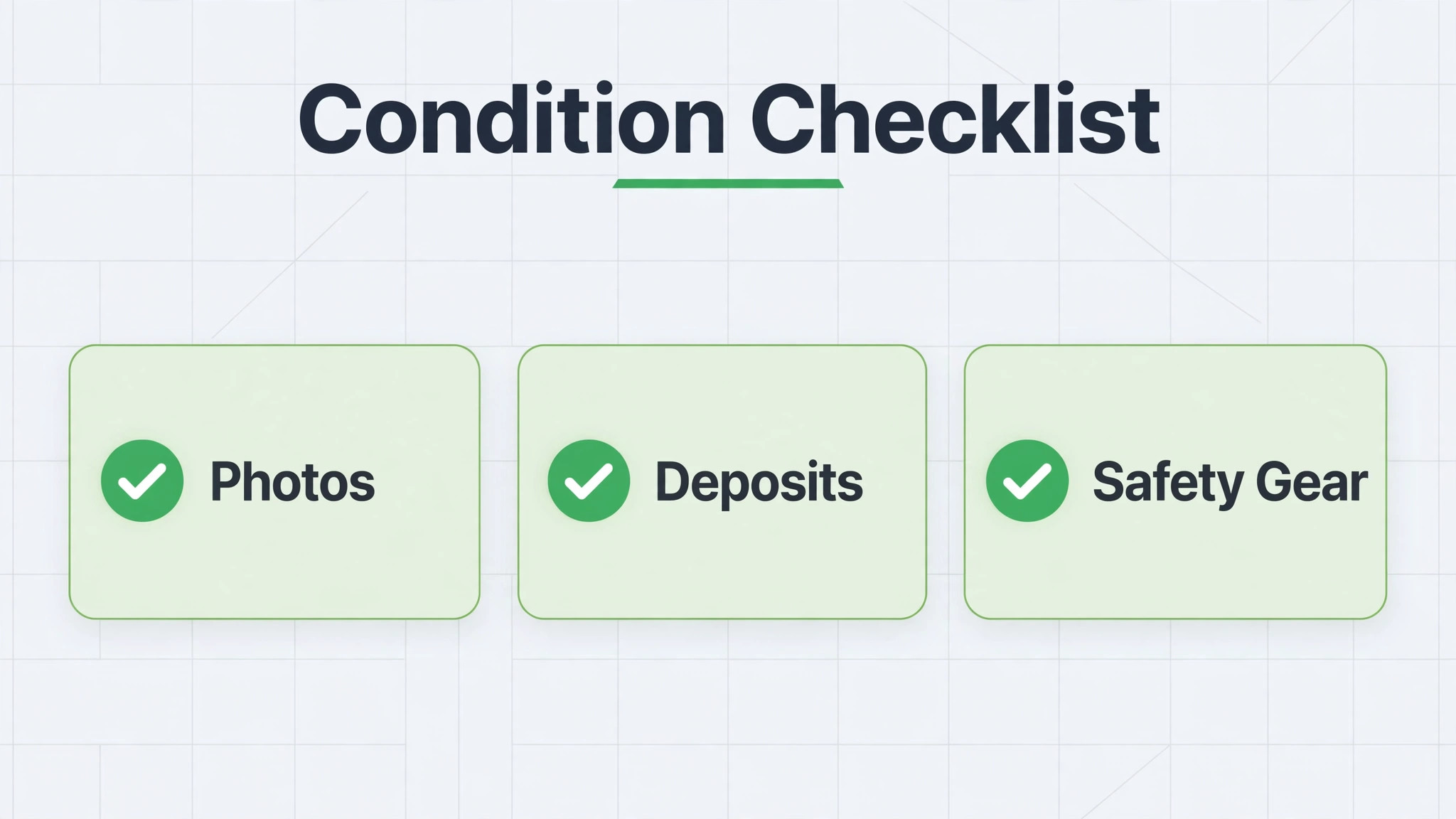
Equipment Condition Checklist Before Pickup
Run through this checklist at every pickup before you commit to a platform. The best booking software for outdoor rental businesses should record condition clearly, so damage disputes do not become arguments.
– Photograph each item at pickup and return, with time stamps the customer can see. – Record existing scratches, dents, and wear before the customer leaves, not after they return. – Confirm size, fit, and accessories for bikes, paddles, and camping kits at handover. – Collect a damage deposit or card hold, and state the damage rules in plain language. – Note return time, late fees, and cleaning charges before the rental starts. – Check safety gear, life jackets, and helmets as part of the handover, not as an afterthought. – Send a return reminder with the return location and time, so late returns fall.
What Booking Software Really Costs
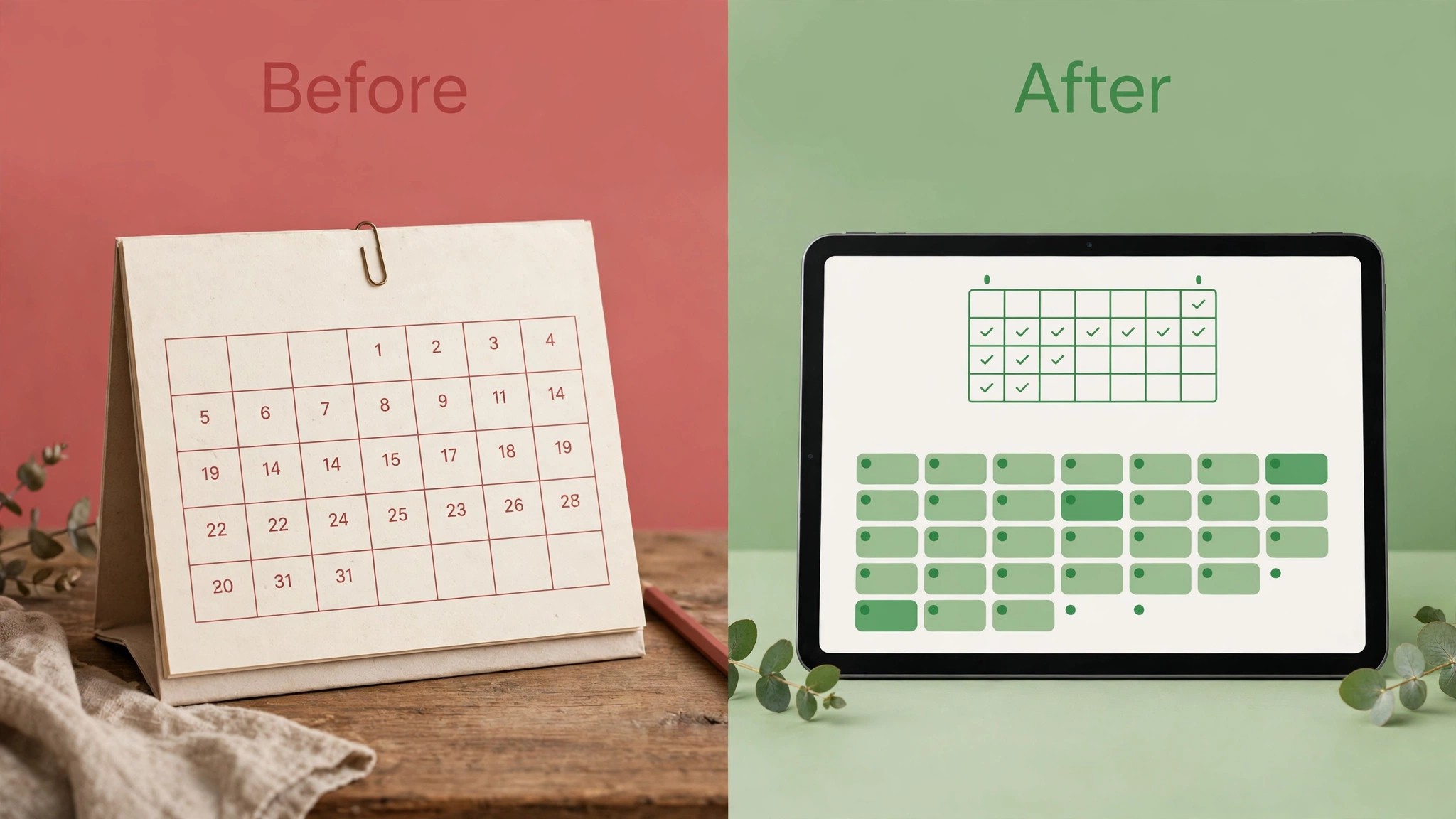
The monthly plan is only part of the bill. Add per booking fees, card processing, setup fees, and any second tool for waivers, accounting, or marketing. A no monthly fee tool can still be the expensive choice once summer commission is added, while a subscription can be the cheap choice at high volume.
Seasonality changes the maths. A subscription runs through quiet winter months, while a commission tool costs little when bookings stop. A seasonal shop should model the full year, including three quiet months, before choosing a model, because the summer only comparison flatters subscriptions.
Passing fees to customers changes the comparison again. Some tools let the shop pass the booking fee to the guest, which reduces the shop cost to the subscription alone. Check whether passing the fee is allowed and how it appears at checkout, because a surprise fee at payment can reduce conversions.
One extra booked weekend per month can pay for the system many times over, even at a higher plan price. Track booking conversion and fleet utilisation during the trial, not just the monthly fee, when you judge value, because a full fleet beats a cheap empty one.
Ask how each finalist handles a multi day camping rental, because gear that leaves for a week needs different availability rules from hourly kayaks. A system that treats every rental as a single day will double book long rentals or block gear unnecessarily. Test one multi day booking during the trial.
Test the mobile experience before anything else, because staff and customers do most of this work on phones at the counter and at the launch. If the mobile view hides key buttons, shrinks text too far, or forces endless scrolling, adoption will suffer no matter how good the desktop version looks.
Plan the migration in small steps, moving one product group at a time and checking availability before moving the next. A big move before a peak weekend creates double bookings and confused staff. Small steps take longer on paper, yet they protect the business from the one error that ruins a Saturday.
Review user permissions before launch, so each role sees only what it needs. Counter staff need booking and condition views, office staff need financial views, and customers need only their own records. Clear permissions protect privacy and prevent accidental changes to prices or availability.
Insurance and liability wording should be checked before the season starts, because rental gear carries real risk. A booking tool that records waiver acceptance with a time stamp protects the shop if a customer later disputes what was signed. Keep waiver records searchable by booking, not buried in email, so they can be found quickly when needed.
Multi location stock needs one shared view, even for a shop with only two sites. Gear that moves between a dock and a shop, or between two launch points, must show correctly at both counters, or staff will promise gear that is already out. Test a transfer between locations during the trial, with a real item, before peak season.
Booking Mistakes That Cost Outdoor Rental Shops Money
The most common mistake is choosing on monthly price alone. A shop that compares 0 dollars with 99 dollars and stops there will miss the commission total that decides the year. Model the yearly total at real booking volume, including fees and card processing, before signing.
A second mistake is ignoring the counter workflow. Online booking may look perfect in a demo, yet waivers, deposits, and condition checks can still slow a busy Saturday to a crawl. Test a full pickup and return during the trial, with a real customer record, before committing.
A third mistake is forgetting weather cancellations. A system without holds, rebooking, and clear messages forces staff to phone every affected customer manually. That work lands on the busiest, worst weather days, when staff time is already stretched.
A fourth mistake is hiding damage and late rules. Customers who discover a damage charge or late fee after return will feel misled, even if the rule was technically correct. Clear rules at booking and at pickup build trust and reduce disputes.
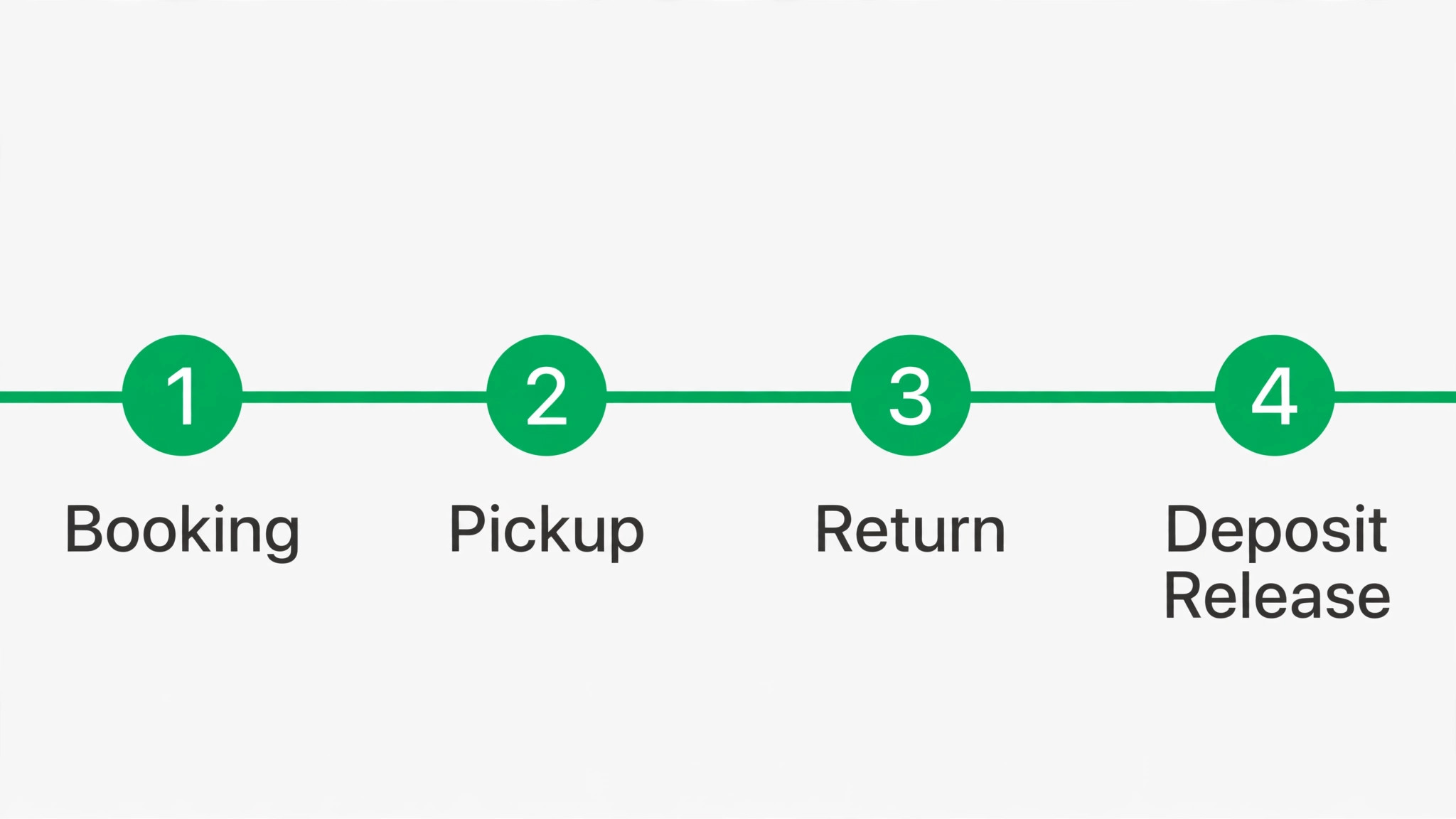
How to Test Finalists With a Real Rental Day
Pick two finalists and run the same busy Saturday through both. Include online bookings, walk ups, a guided trip sharing the fleet, a weather cancellation, and a late return. The platform that keeps availability correct and the counter moving is usually the right pick.
Ask a past customer to test the booking and waiver step. Their confusion is more useful than any feature list, because customers will face the same steps when they want to get outside quickly. A booking flow that is hard to complete will lose rentals, no matter how good the back office looks.
Check fleet reports during the trial. Confirm utilisation by item type, revenue by channel, and damage notes by item, because those reports show which gear earns and which gear costs. A booking tool that cannot report by item will hide the fleet decisions that matter most.
Finally, write down the full first year cost for each finalist, including fees at peak volume, setup, and any second tool. A clear total makes the decision easier and prevents a cheap plan from quietly becoming the expensive choice in summer.
More Reading on Stratilyze
– Best Booking Software for Yoga Studios – Best Booking Software for Fitness Studios – Best Booking Software for Tattoo Studios
Frequently Asked Questions
What is the cheapest booking tool for an outdoor rental shop?
Resytech and FareHarbor start with no monthly fee in reports, while Booqable from a reported 29 dollars per month billed annually and EquipDash at a reported 29 dollars per month are the cheapest subscriptions. The cheapest total depends on booking volume and fees, not the monthly figure alone.
Do I need rental specific software or will a tour booking tool work?
A tour tool works when guided trips dominate and rentals are a side line. A rental specific tool works better when hourly rentals, sizes, and equipment condition decide the day, because those features are built in rather than worked around.
How should I compare commission versus subscription pricing?
Model the yearly total at real seasonal volume, including per booking fees and card processing. A commission tool wins at low volume and in quiet months, while a subscription usually wins once monthly revenue passes a few thousand dollars in online bookings.
Can booking software handle waivers and damage deposits?
Yes, most tools in this guide support waivers through integrations or built in forms, and several support card holds on equipment. Check waiver signing at booking and at pickup, and confirm how damage holds are released after return.
How fast should I confirm a booking?
Immediately for online bookings, with a clear confirmation, pickup details, and waiver link. Fast confirmation reduces no shows and phone calls, and software with automated messages helps a small shop reply quickly without extra staff.
Can I switch booking tools later?
You can usually export customer records and booking history, but availability rules, waiver templates, and reseller connections rarely transfer cleanly. Ask for a sample export during the trial, and expect some rebuilding when you switch, especially before a peak season.
The Verdict for Outdoor Rental Businesses
For most outdoor rental shops, Booqable leads for rental only fleets, EquipDash leads for kayak and bike shops that mix rentals with guided trips, and Checkfront leads for mixed rentals, lessons, and tours from one fleet. FareHarbor and Resytech suit low volume or seasonal starts with no monthly fee.
Start with the rental type that pays the bills, test two finalists with a real busy day, and price the tool at peak season volume. A booking system that keeps availability correct, moves the counter quickly, and handles weather changes will fill the fleet and protect revenue all season. That is the practical way to choose the best booking software for outdoor rental businesses for the work you actually sell. That is the practical way to choose the best booking software for outdoor rental businesses for the work you actually sell.