
A client cancels an hour before the appointment, the slot stays empty, and you still pay rent, wages, and the software that booked the slot in the first place. That single gap is the problem this guide solves, and it is why learning how to write a cancellation policy small business owners can enforce matters more than any single fee figure. Without a written policy, every cancellation becomes a negotiation, and negotiations favour the person who is least prepared. With a short, fair, published policy, the same cancellation becomes a routine step, the client knows the cost in advance, and you can refill the slot or recover part of the loss without an argument.
The Five Questions Every Policy Must Answer
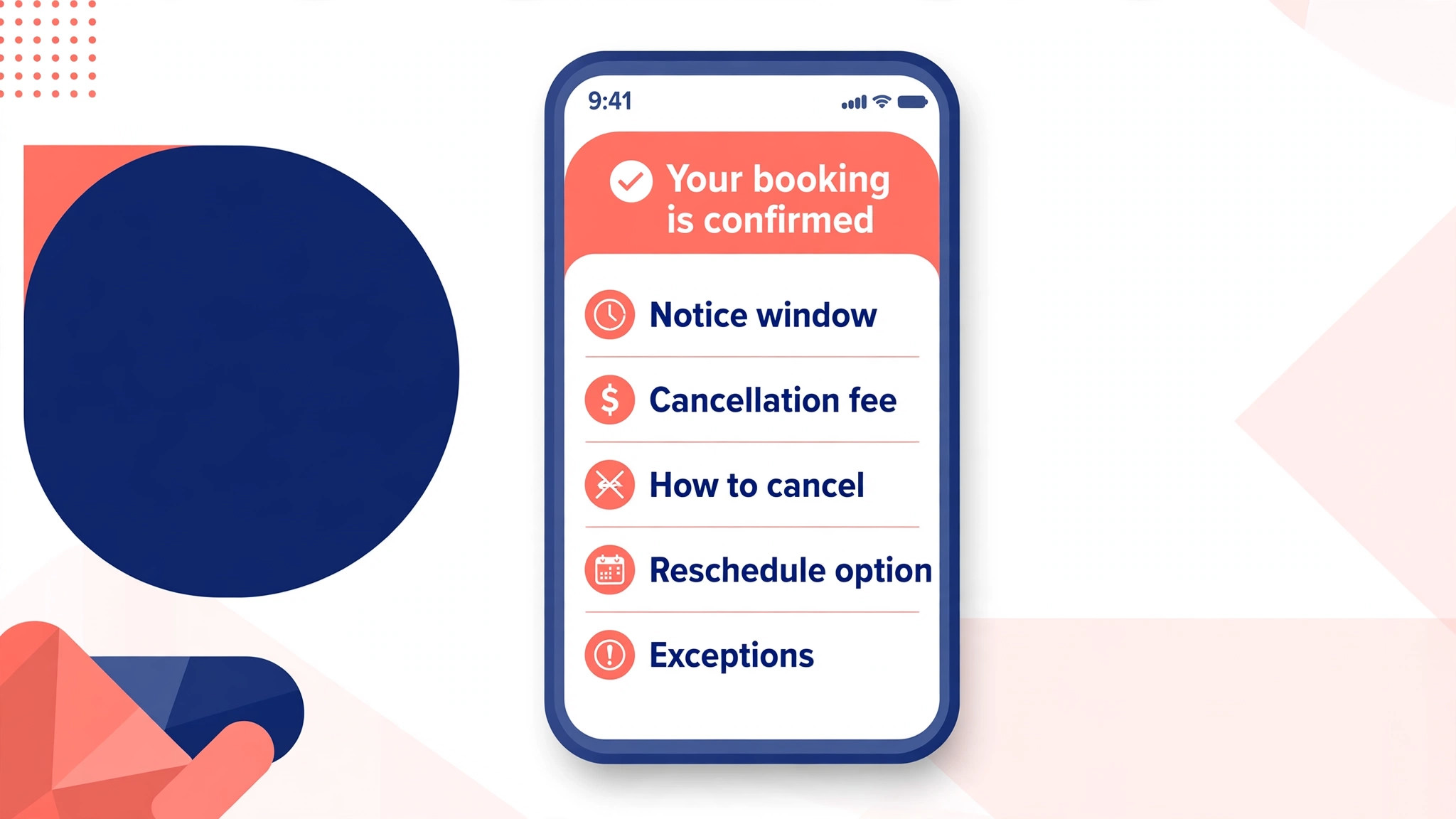
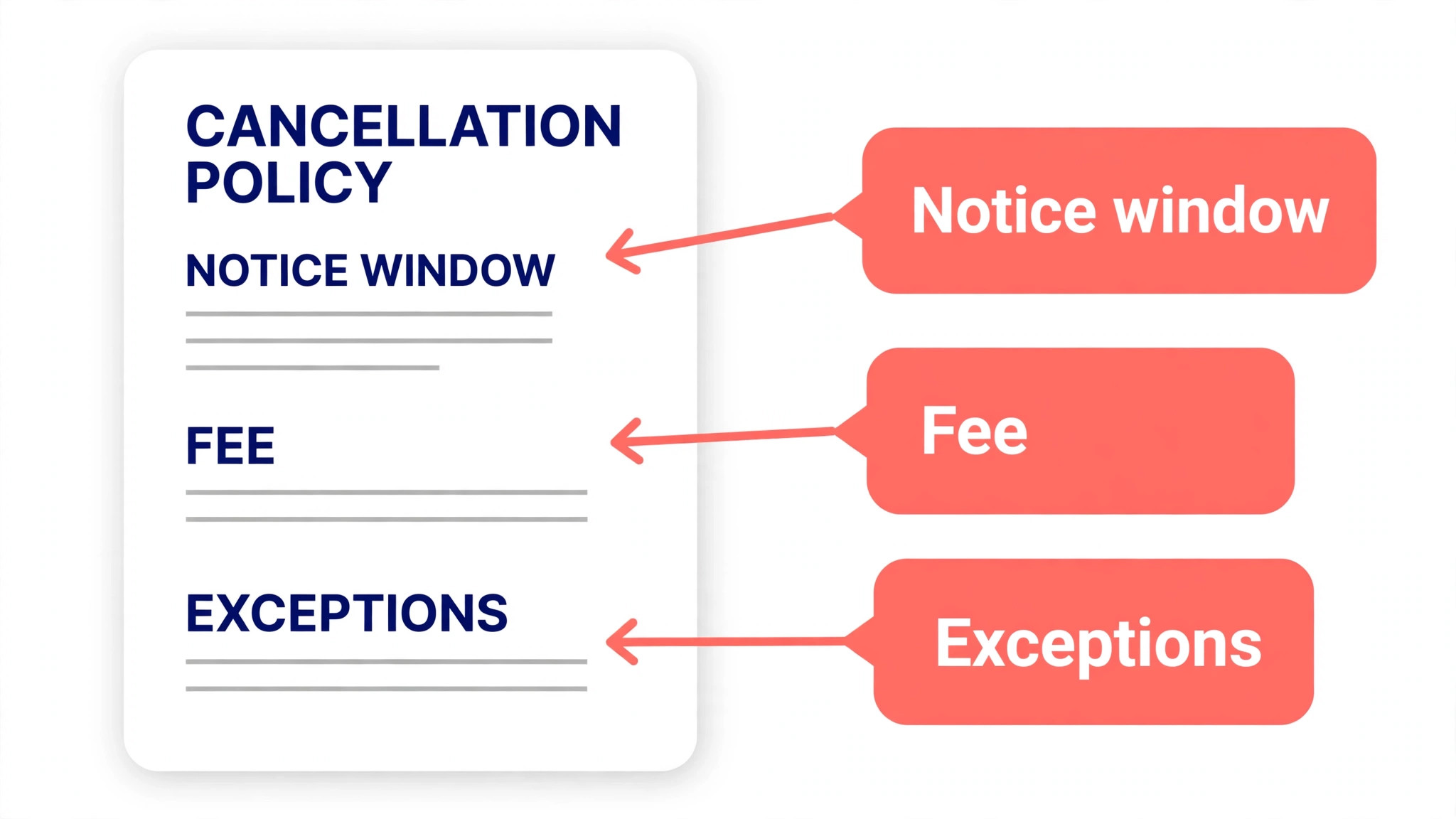
A usable policy answers five questions in plain words. How much notice must a client give. What a late cancellation costs. What a no-show costs. How a client cancels or reschedules. And when you will make an exception. If any answer is missing, clients fill the gap with their own assumption, and that assumption is almost always more generous than yours. Write the policy as answers to those five questions first, then worry about wording.
Keep the language short enough to fit on a booking page and in a confirmation email. A policy that needs a lawyer to parse will not be read, and an unread policy cannot protect you. Use hours, not vague words like soon or a day, so there is no argument about what counts. State the fee as a percentage or a flat amount, and state whether a reschedule counts as a cancellation. In most firms it should not, provided the client reschedules in time, because a rescheduled client is still a client.
The tone matters as much as the terms. A policy written as a list of threats pushes good clients away. A policy written as a simple explanation of reserved time earns respect. You reserved that time for one person, turned others away, and prepared for the appointment. Say that once, plainly, and the fee that follows reads as fair rather than punitive.
How to Write a Cancellation Policy Small Business Clients Will Actually Read
Start with your own booking data, not with a template copied from another industry. Count your last 30 appointments, note how many cancelled late, how many never showed, and how long before each appointment the cancellation arrived. That count tells you where the real loss sits. A firm losing most slots to same-day cancellations needs a different notice window from a firm losing them to no-shows with no message at all.
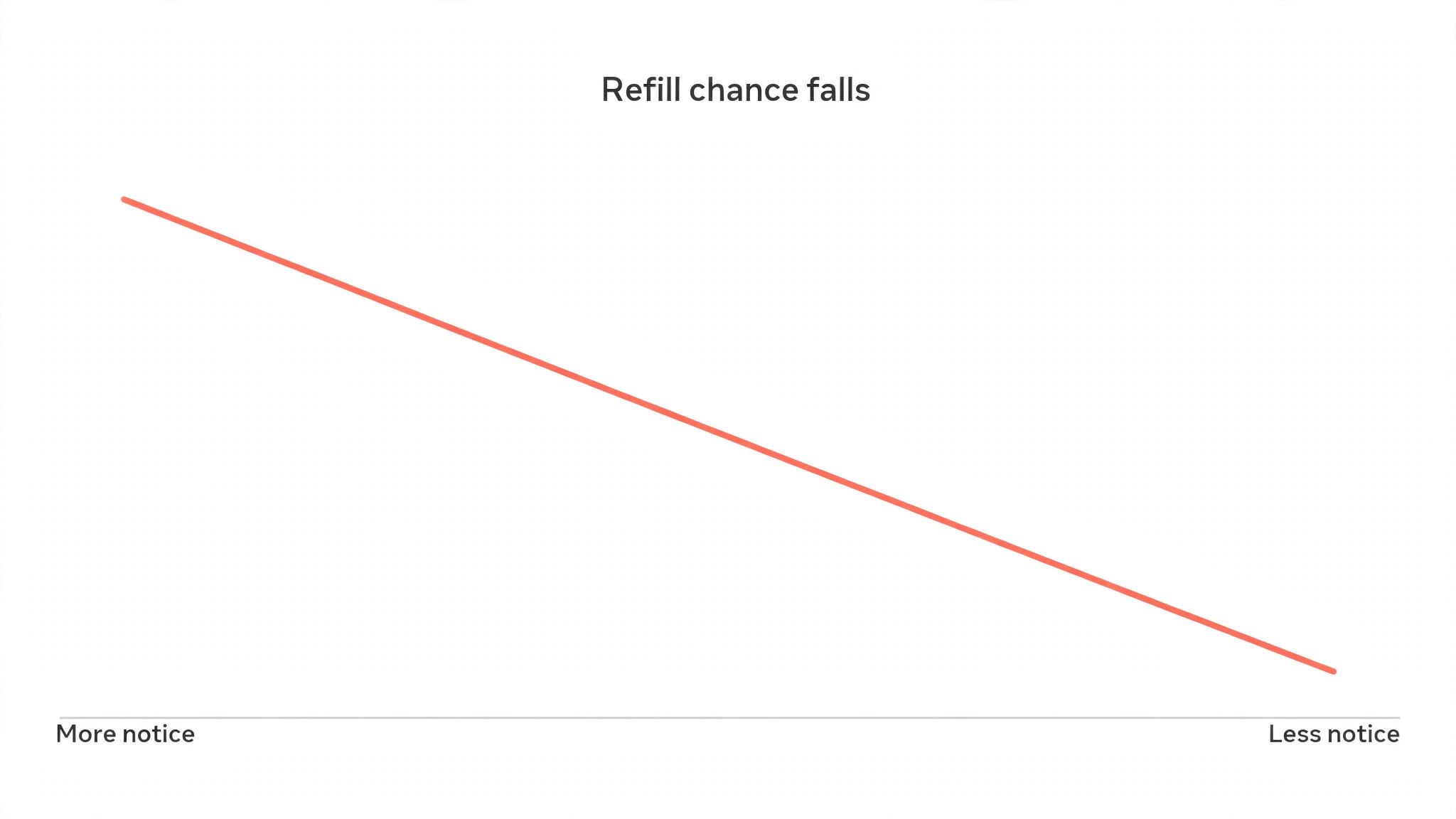
Next, check how fast you can refill a slot. If a waitlist can fill a cancelled slot in two hours, a 48 hour rule only annoys clients for no gain. If you travel to clients, prepare materials in advance, or hold a room for a group, you need more notice, because the lost slot cannot be refilled and the preparation cost is already spent. The shortest notice that still lets you refill or replan is the right notice for your firm. Anything longer feels arbitrary, and arbitrary rules are the ones clients challenge.
Then decide how you will collect any fee before you publish it. A policy that relies on invoicing a client after a missed appointment is weak, because the client has already left and has little reason to pay. A deposit at booking, a card held on file with clear consent, or payment in full for high value bookings makes the policy real. State the collection method in the policy itself, so no client is surprised by a charge they did not agree to. If you are unsure about card-on-file rules in your area, check the current guidance from your payment provider and, for larger firms, a local adviser, before you publish.
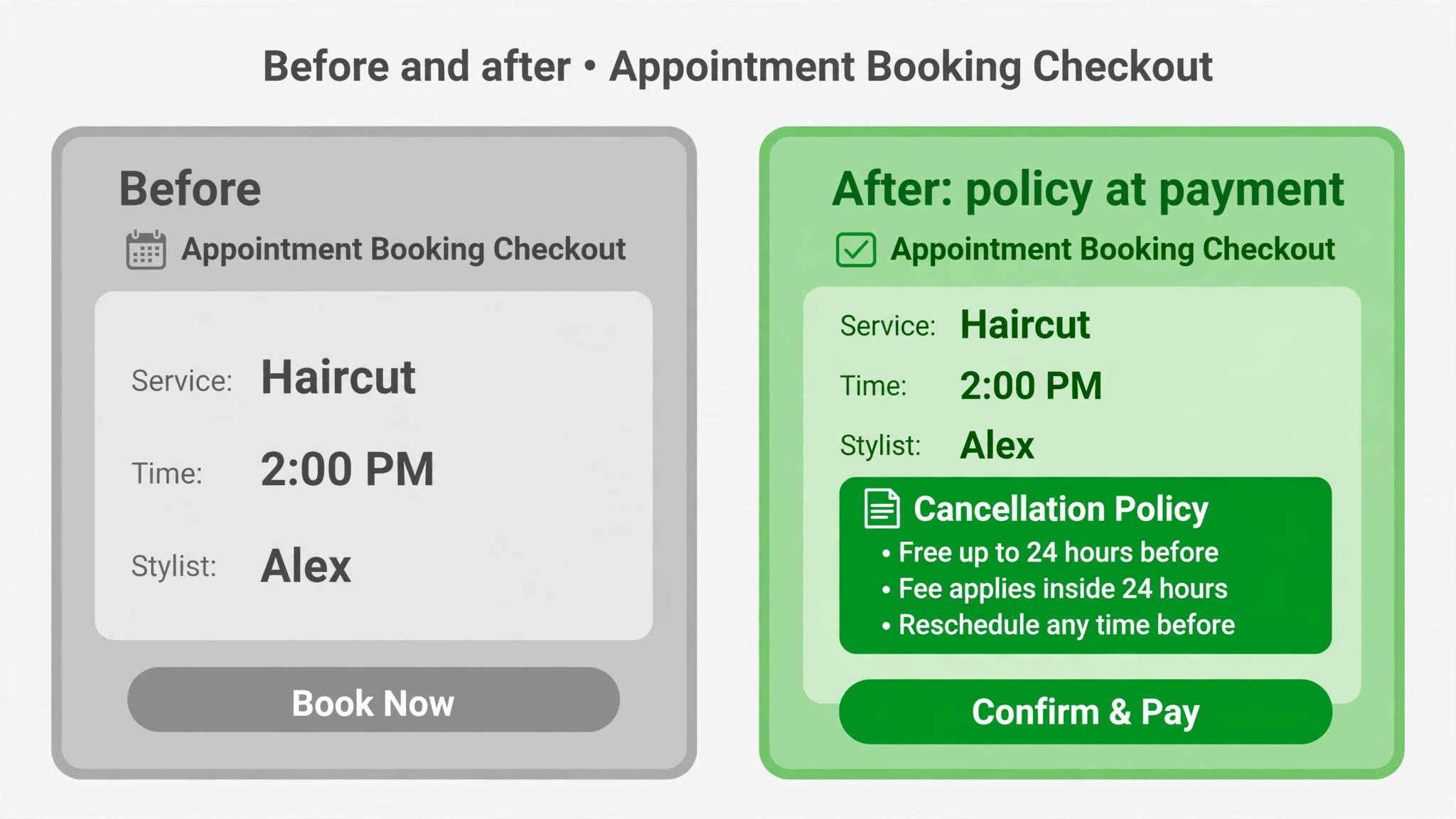
For firms that take bookings online, the booking tool should carry the policy at the point of booking, not buried on a separate page. A checkbox or a clear notice before payment counts far more than a footer link. If your booking flow cannot show the policy, change the flow or add the policy to the confirmation step, because a policy the client never saw is hard to enforce in a dispute.
Choose Notice Windows That Fit How Fast You Can Refill a Slot
Notice windows should follow refill speed, preparation time, and travel time. The table below gives starting points used widely across appointment businesses, drawn from booking and scheduling guides that commonly cite 24 to 48 hours as the typical range. Treat these as starting points to test against your own data, not as rules that fit every firm.
| Business type | Suggested notice window | Why this window fits |
|---|---|---|
| Salon, clinic, or coaching session | 24 hours | A waitlist can often fill a slot within a day |
| Home service visit with travel | 48 hours | Travel and route planning cannot be rearranged at short notice |
| Group class, workshop, or event | 72 hours, or 7 days for large groups | Materials, staffing, and minimum numbers depend on headcount |
| Multi-day project or venue booking | 7 to 14 days, with staged deposits | Preparation and lost alternative bookings are large |
| Low cost, high volume appointment | 24 hours, with a first-time waiver | Short windows keep friction low while still setting a standard |
A first-time waiver is worth considering for new clients. Waiving a first late fee, with a friendly note that the policy will apply next time, turns a penalty into education. Many firms that start with a strict rule soften it after losing a good client over a first mistake. Build the waiver in from the start, limit it to once per client, and record it, so it stays a goodwill gesture rather than a loophole.
Late arrival needs its own line. State what counts as a no-show, for example not arriving within 15 minutes of the start time, and what happens then, whether the appointment is shortened, rescheduled, or charged in full. Without that line, a client who arrives 40 minutes late for a 60 minute slot expects the full service, and the next client waits. A clear late rule protects the whole day, not just one slot.
Fee Tiers Without the Guesswork
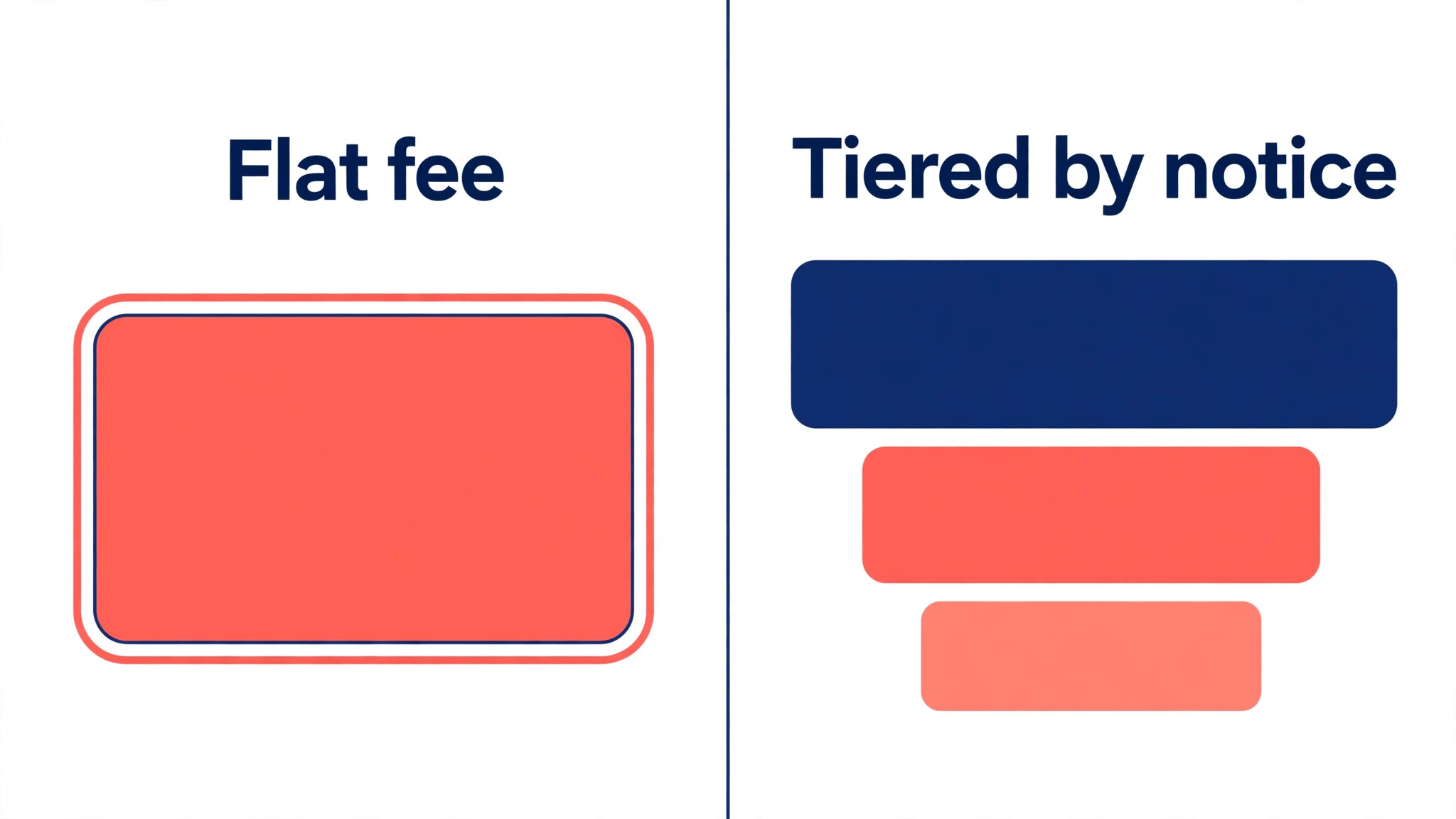
Fee tiers should rise as notice falls, because the cost to you rises in the same direction. A client who cancels a week ahead costs you little. A client who cancels an hour ahead costs you the whole slot. A flat fee for every cancellation ignores that difference and feels unfair to the client who gave good notice. Tiered fees match cost to timing, and clients accept them more readily for that reason.
| Timing | Suggested fee | What to say to the client |
|---|---|---|
| More than the notice window ahead | No fee, free reschedule | Thank the client and offer the next available slot |
| Inside the notice window, before the day | 50 percent of the service price, or a flat fee you set | The slot was reserved and could not be refilled in time |
| Same day cancellation | Up to the full service price for high preparation work | Same day slots are rarely refillable |
| No-show with no message | Full service price, or loss of deposit | No notice means no chance to refill at all |
| Repeated late cancellations | Deposit required for future bookings | Protects future slots without banning the client |
Percentages work well for services with varied prices, because the fee scales with the booking. Flat fees work well for services with one standard price, because clients can see the number at a glance. Do not mix the two in one policy without explaining which applies, or clients will assume the lower figure. Pick one method per service, state it plainly, and keep it consistent across the booking page, the confirmation email, and the reminder message.
Deposits deserve a separate decision. A deposit that moves to a rescheduled appointment, or is refunded when notice is given in time, feels fair and still protects you. A deposit kept for any cancellation, even with a week of notice, feels like a penalty for planning ahead. State what happens to the deposit in each tier, in the same table or list as the fee, so clients do not have to hunt for it.
Exceptions, Emergencies and the Line You Hold
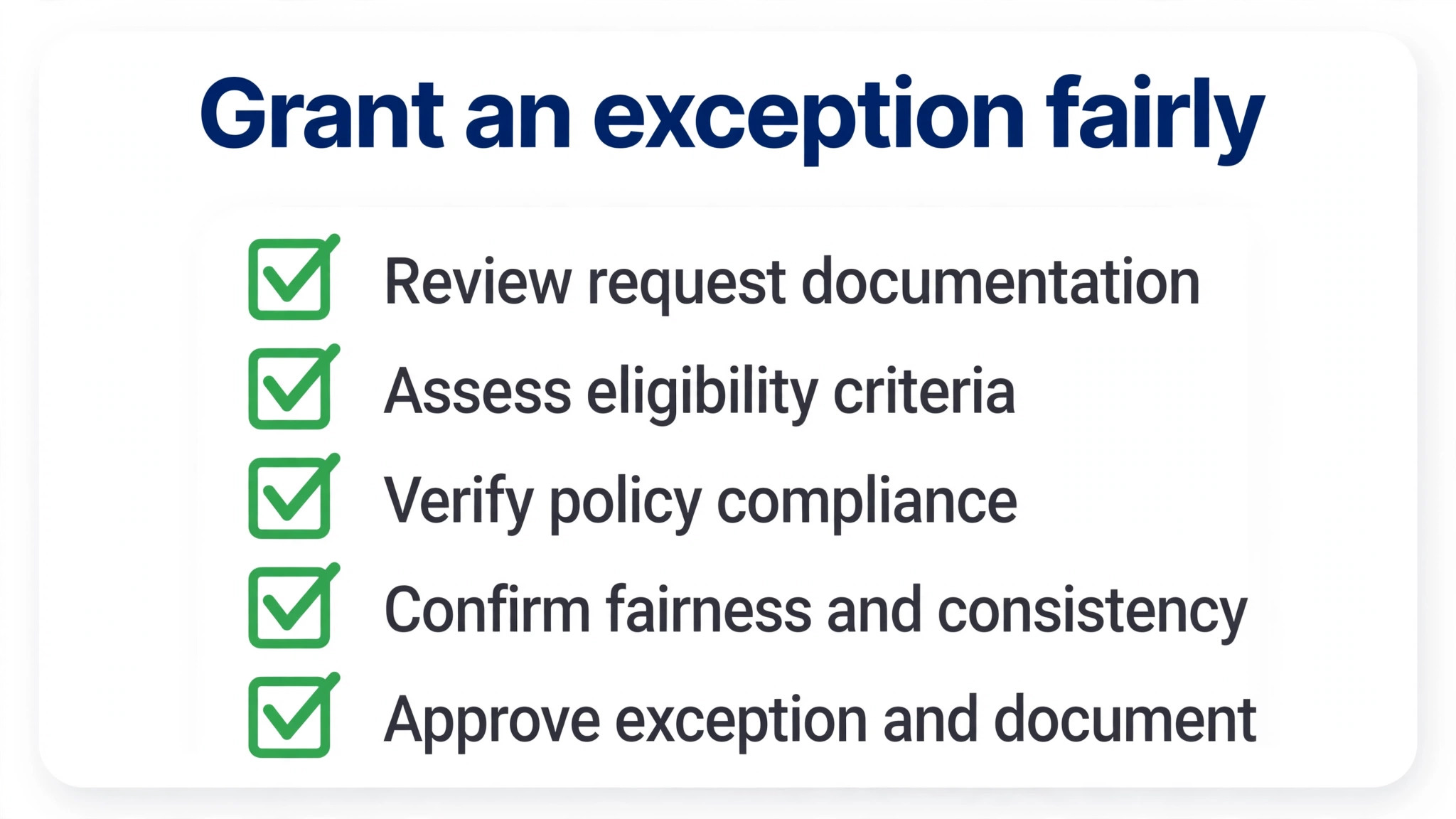
A policy with no exceptions reads as harsh, and a policy with vague exceptions invites a negotiation on every claim. Name the exceptions, limit them, and apply them the same way for every client. Illness, a family emergency, severe weather that makes travel unsafe, and a genuine technical failure on your side are the usual short list. Work, traffic, and a forgotten appointment are not emergencies, even when they feel urgent to the client, and saying so kindly is part of holding the line.
Decide in advance who can grant an exception and how it is recorded, because how to write a cancellation policy small business staff can apply depends on that decision being made before the first dispute. If any team member can waive a fee on the spot, waivers will vary by mood and by client. If one person or one simple form handles exceptions, decisions stay consistent and you can review them monthly. Record the reason, the outcome, and whether it was a first-time waiver or a named exception, so patterns show up. A client who claims an emergency every month is not having emergencies. That pattern is visible only if you record it.
Emergencies still need proof handled with care. Ask for a brief message, not for private medical detail. A short note that the client was ill or had a family emergency is enough for a small firm, and asking for more creates a privacy problem you do not need. For severe weather, check the local conditions yourself rather than debating the client. A policy that treats people decently in a real crisis earns far more loyalty than the fee it waives.
Your own cancellations need a line too. If you cancel or reschedule, say what the client receives, whether that is priority rebooking, a discount on the next visit, or a refund of any deposit. A one-sided policy that charges clients but offers nothing when you cancel undermines trust quickly. Fairness in both directions is what makes clients accept the fee when they are the ones who cancel.
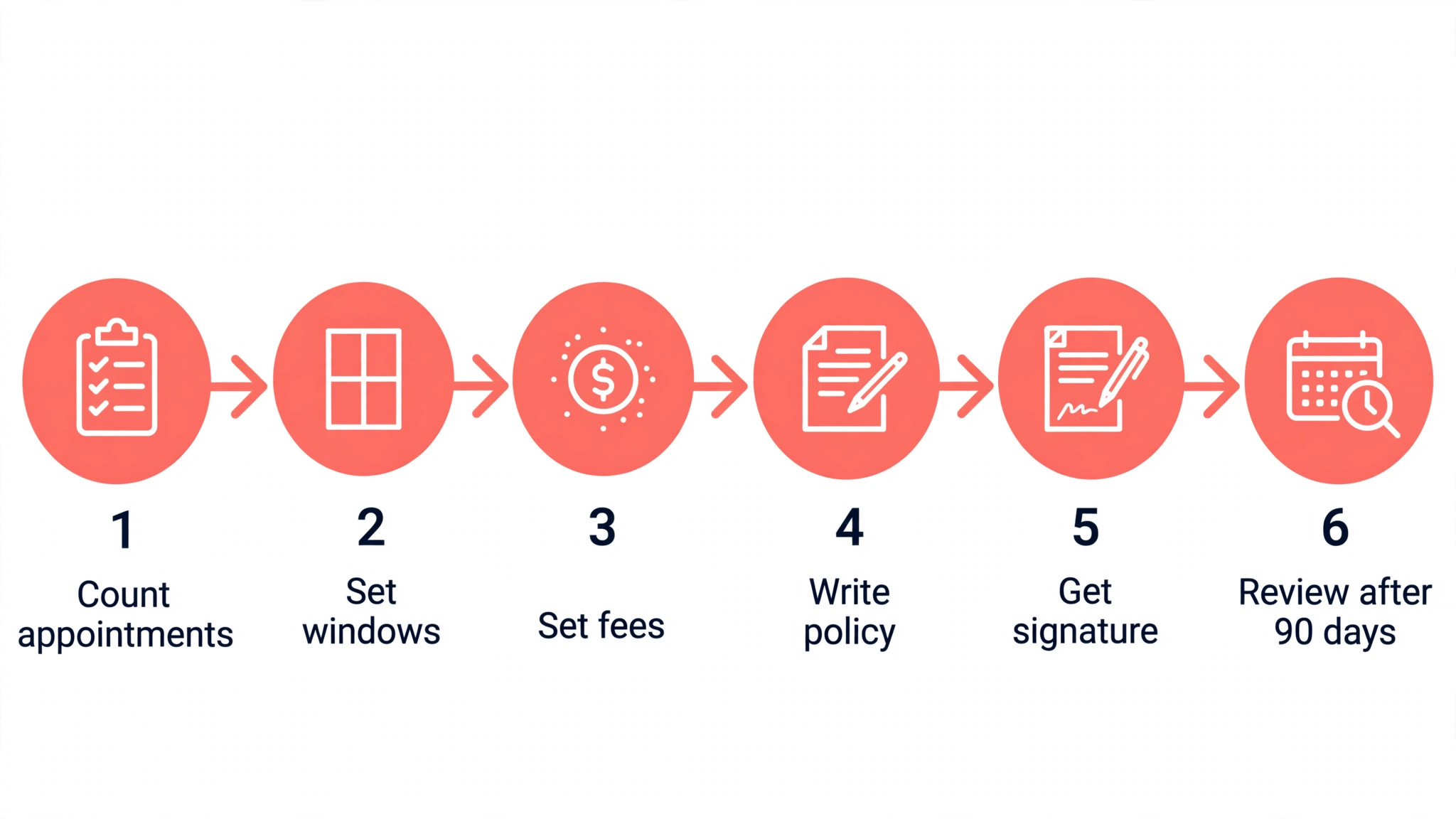
From Draft to Signed Agreement in Six Steps
Use this workflow to move from a draft to a policy clients actually agree to, rather than a document that sits in a drawer.
1. Count your last 30 appointments, noting late cancellations and no-shows. 2. Choose one notice window per service, based on refill speed. 3. Choose fee tiers that rise as notice falls, plus deposit rules. 4. Write the exceptions list and name who can grant one. 5. Place the policy at booking, in confirmations, and in reminders. 6. Review after 30 and 90 days, changing one element at a time.
Agreement matters. A tick box at booking, a signed intake form, or a clear notice with a confirmation reply all help, and the best method depends on your booking flow. For in-person services, a signed intake form at the first visit is simple and strong. For online bookings, a tick box plus a copy in the confirmation email is usually enough. Keep a record of the agreement with the booking, because a dispute months later turns on what the client saw at booking, not on what you intended.
Staff training is the step owners skip most often. Every person who answers the phone or replies to messages must give the same answer on fees, exceptions, and rescheduling. Write a one page staff script with the three most common questions and the approved answers, and review it when the policy changes. Inconsistent answers from staff undo a good policy faster than any client complaint.
Where the Policy Must Appear So It Counts
A policy that appears in only one place will be missed by the clients who need it most. Place it in at least four spots, using the same wording each time so there is no version confusion. The booking page carries the full policy before payment. The confirmation email repeats the short version with the notice window and the fee. The reminder message, sent 24 to 48 hours before, repeats the reschedule link and the deadline in one line. The intake form or first-visit paperwork carries the agreement step for clients who book by phone.
Reminder timing also reduces the need to enforce the policy at all. Research on appointment reminders, including a Cochrane review of text message reminders, found that reminders increased attendance compared with no reminder. One clinic trial in that literature cut its no-show rate from about 38 percent to about 24 percent after adding text reminders. Those figures come from healthcare, so use them as evidence that reminders help, not as a guaranteed result for your firm. A reminder with a one tap reschedule link turns a likely no-show into an early cancellation you can refill, which is a better outcome than a fee collected after an empty slot.
Booking tools that send automatic reminders and offer self-serve rescheduling make this placement far easier, and they are part of how to write a cancellation policy small business owners can actually run without extra admin every day. If you run classes, rentals, or venue bookings, compare tools that handle deposits and waitlists as well as reminders. The Stratilyze guide to the Best Booking Software for Music Schools shows how booking flows can carry policy, deposits, and rescheduling in one place, even though the example niche differs from yours.
What to Say When a Client Pushes Back
Most disputes follow a pattern, and a calm script helps staff stay consistent. When a client says they did not see the policy, point to the booking page and the confirmation email, offer to resend both, and apply the first-time waiver if it is genuinely a first offence. When a client says the fee is unfair, restate the reserved time and the preparation briefly, without debating the value of the service. When a client threatens a bad review, do not trade the fee for silence. Apply the policy, offer the reschedule, and let the record speak.
Keep every dispute reply short, polite, and factual. Long explanations invite long arguments. A reply that states the booking time, the notice given, the policy term, and the outcome is hard to dispute, because it relies on facts both sides can check. Save the message thread with the booking record, and note the outcome for your monthly review. Patterns in disputes often reveal a wording problem in the policy, such as a notice window stated in days rather than hours, and fixing the wording prevents the next ten disputes.
Chargebacks and payment disputes need a separate note. Keep the booking confirmation, the policy agreement, the reminder, and the cancellation message together, because a payment provider will ask for evidence that the client agreed to the charge. A fee charged without that evidence is hard to defend. A fee charged with a clear agreement and a clear reminder is far easier to uphold. If chargebacks become frequent, review whether the policy is visible enough at booking, rather than assuming clients are acting in bad faith.
Copy-Ready Policy Template
Copy this template, fill in the brackets, and adjust the numbers to match your notice windows and fee tiers. Keep the structure, because it covers the five questions every policy must answer. Check the wording against your local rules before you publish, since consumer and payment rules vary by place and by service type.
Cancellation and Rescheduling Policy for [Business Name].
We reserve your appointment time just for you. Please give us at least [24 or 48] hours notice if you need to cancel or reschedule. This lets us offer the time to another client.
Cancellations made more than [notice window] before your appointment can be rescheduled free of charge, and any deposit will move to your new appointment or be refunded.
Cancellations made inside the notice window will be charged [50 percent or flat fee] of the service price. Missed appointments with no notice will be charged the full service price, or the deposit will be kept where a deposit was paid.
To cancel or reschedule, use the link in your confirmation email, reply to your reminder message, or call us at [phone number] during business hours. A reschedule made in time does not count as a cancellation.
Exceptions. We understand that illness, a family emergency, or severe weather can make attendance impossible. Contact us as soon as you can in those cases, and we will reschedule without a fee. Repeated exceptions will be reviewed, and future bookings may require a deposit.
If we need to cancel or reschedule your appointment, we will contact you as soon as possible, offer priority rebooking, and refund any deposit if you prefer not to rebook.
By booking, you agree to this policy. Thank you for respecting the time we reserve for you.
That template is intentionally short, and it shows how to write a cancellation policy small business clients will read in full rather than skim past. Longer policies that list every edge case are less likely to be read, and an unread policy helps no one. Add a separate internal note for staff covering repeated cancellations, chargeback evidence, and exception approvals, and keep that note out of the client version. Clients need the rules. Staff need the handling steps.
How Staff Should Apply the Policy on a Busy Day
A policy fails on busy days when staff must decide under pressure, so give them a short routine they can follow without calling you. The routine starts with the booking record. Check the appointment time, the notice given, the policy term that applies, and whether the client has already used a first-time waiver. Those four facts decide almost every case, and they take less than a minute to check when the record is kept in one place.
The next step is the reply itself. State the facts briefly, state the outcome, and offer the reschedule in the same message. Do not open with an apology that sounds like the policy is negotiable, and do not open with a threat that invites a fight. A calm, factual reply protects the relationship far better than either extreme, and it gives the client a clear path back to a booked slot.
Learning how to write a cancellation policy small business teams can use on a busy day means writing the staff version as carefully as the client version. The client version states the rules. The staff version states the handling steps, the approved replies for the three most common cases, and the escalation path for anything unusual. Keep the staff version to one page, review it when the policy changes, and store it where the team actually works, not in a folder nobody opens.
Escalation needs a clear owner. One person should handle exception requests, chargeback evidence, and repeat cancellations, so decisions stay consistent across the team. That owner reviews exception requests weekly, notes patterns, and proposes wording fixes when the same question keeps appearing. Without an owner, exceptions drift, and drift is what clients notice first.
Finally, track the results of enforcement, not just the fees collected. Count how many clients reschedule after a fee, how many return for a later booking, and how many disputes arise each month. A policy that collects fees but loses clients is costing more than it saves, and only that tracking will show it. When you learn how to write a cancellation policy small business owners can measure, you gain the evidence to soften a harsh term or tighten a loose one with confidence, rather than guessing at the next review.
That measurement habit also answers the question owners ask most often after publishing, which is whether the policy is working. The answer is not the fee total. It is fewer empty slots, fewer disputes, and clients who rebook after a late cancellation because the process felt fair. If those three measures move together, the policy is doing its job, and how to write a cancellation policy small business clients accept becomes a routine you repeat, not a document you dread revisiting.
Frequently Asked Questions
How long should the notice window be for a small business?
Twenty four hours suits most single appointments, and 48 hours suits visits that need travel or preparation. Start from how fast you can refill the slot, not from a number you saw elsewhere. If your waitlist fills slots within hours, a longer window only frustrates clients. If preparation or travel makes refilling hard, a longer window is fair and defensible. Review the window after 30 bookings, and change it only if your own data shows late cancellations are still costing you slots you could have refilled.
Should a first-time late cancellation be charged?
Many firms waive the first late fee as a goodwill gesture, with a clear note that the policy will apply next time. That approach educates new clients without losing them over a first mistake. Limit the waiver to once per client, record it, and state it in the policy if you offer it. A waiver that is not recorded becomes a repeat waiver, and a waiver offered silently to some clients but not others creates fairness complaints. A written, limited waiver is both kind and consistent.
What counts as a no-show under a cancellation policy?
A no-show is usually a client who does not arrive and gives no notice, or who arrives so late that the appointment cannot run, for example more than 15 minutes late for a standard slot. State your late threshold in the policy, and state what happens then, whether the appointment is shortened, rescheduled, or charged. Without a late line, staff must improvise on the day, and improvised decisions vary. A clear threshold protects the next client as well as the current one.
Can a small business charge a no-show fee legally?
In general, a fee is far easier to defend when the client agreed to the policy at booking, the fee was stated clearly, and you hold a deposit or a card on file with consent. Rules vary by place, service type, and payment provider, so check the current guidance that applies to your business before you publish a fee, and keep the booking confirmation, policy agreement, and reminder as evidence. This guide is general information, not legal advice, and a local adviser is the right check for high value or regulated services.
Should rescheduling count as a cancellation?
In most firms, a reschedule made in time should not count as a cancellation, because the client is still booking and you can plan around the new time. A reschedule made inside the notice window is different, because the original slot is still lost. State the distinction in the policy, so clients know that moving an appointment early is free while moving it late carries the same fee as a late cancellation. That distinction encourages early rescheduling, which is the behaviour you want.
How do I enforce a policy without losing good clients?
Enforce it consistently, explain it briefly, and offer the reschedule in the same message as the fee. Consistency is what makes a strict rule feel fair. If you waive fees for friendly clients and charge quieter ones, word spreads and trust falls. Pair enforcement with good reminders, a one tap reschedule link, and a first-time waiver, so clients have every chance to avoid the fee before it applies. Most good clients accept a fee they could have avoided far more readily than a fee that surprised them.
Where should the policy appear besides the website?
Put the short version in the confirmation email, the reminder message, and the intake or booking form, using the same wording each time. The full version belongs on the booking page before payment, where the client agrees to it. A policy that appears only on a website footer will be missed, and a missed policy is hard to enforce. Repeat the notice window and the reschedule link in the reminder, because that is the last moment a client can still act in time.
How often should a cancellation policy be reviewed?
Review it after 30 days, again after 90 days, and then quarterly, checking late cancellations, no-shows, disputes, and the reasons clients give. Change one element at a time, such as the notice window or one fee tier, so you can tell what improved the result. Watch for patterns in disputes, because repeated questions about the same term usually mean the wording needs clarifying, not that clients are being difficult. A policy reviewed on data stays fair as the business grows.
Publish It, Then Enforce It the Same Way Every Time
A cancellation policy only works when it is published where clients book, agreed before payment, reminded before the appointment, and enforced the same way for every client. Write it from your own booking data, keep it short enough to read, tier the fees to the notice given, and name the exceptions.
Then review it on real numbers and adjust one element at a time. That routine turns cancellations from a weekly argument into a routine step, and it protects the slots your business depends on. Learning how to write a cancellation policy small business clients respect is not about sounding strict. It is about being clear early, fair in the middle, and consistent at the end.
More Reading on Stratilyze
– Best Booking Software for Music Schools – Best Booking Software for Boat Rentals – Fix Calendly Double Booking for a Small Business