
You do good work for people nearby, yet the phone stays quiet while a competitor with weaker reviews shows up first on the map. That gap is not bad luck, and it is not a sign that your work is worse. It usually means Google has clearer, more consistent, and more trusted information about the competitor, and that information is what local search rewards. A local seo strategy small service business owners can run is therefore less about clever tricks and more about clarity, consistency, and steady proof, delivered in the order Google weighs them.
Local SEO is the work of helping a business show up when people nearby search for what it does. Those searches often trigger map results, which come mainly from a Google Business Profile, not from a website alone, and they often lead to a call, a direction request, or a website visit within minutes. That immediacy is why local SEO matters so much for service businesses. The buyer is not researching for next month. The buyer has a problem now, in a place, and needs a provider who can help soon. This guide works through that system in order, from profile to reviews to website pages to citations, with a checklist you can actually finish.
How Google Decides Who Shows Up Locally
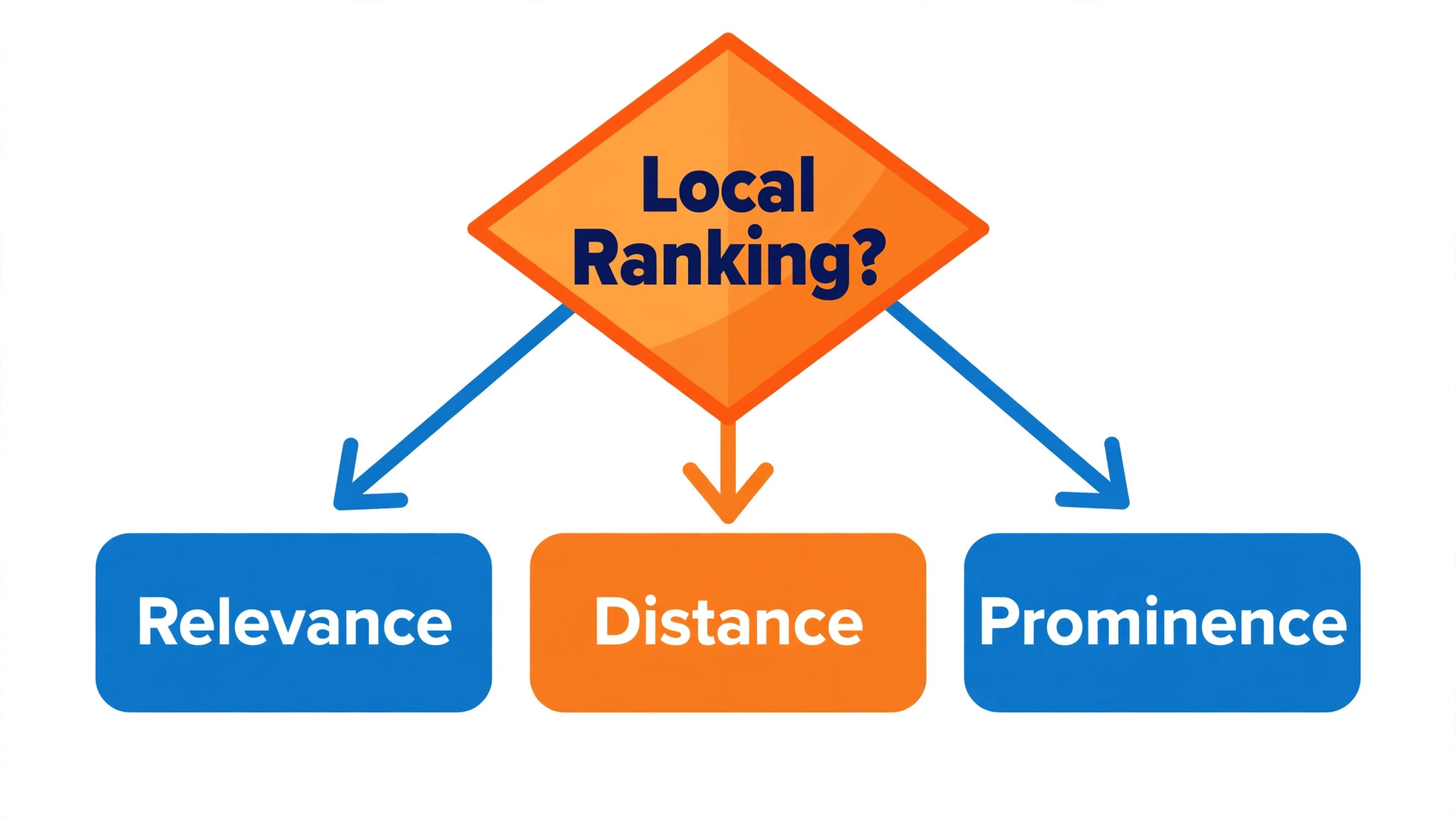
Google states that local results are mainly based on three factors, and understanding those three factors prevents most wasted effort. Relevance means how well a profile matches what someone is searching for, and you influence it through categories, services, description, and website content. Distance means how far the business is from the searcher or from the place named in the search, and you cannot change it except by serving the area honestly and by having a real presence there. Prominence means how well known the business appears to be, based on information across the web, including links, articles, directories, reviews, and ratings.
Google also states that there is no way to request or pay for a better local ranking. That sentence matters, because it rules out shortcuts that promise a top map spot for a fee. Anyone selling a guaranteed map ranking is selling something Google says cannot be bought. What you can do is improve the inputs Google says it uses, which are complete and accurate information, genuine reviews, and a website that matches the profile. Those inputs take weeks to build and months to compound, which is why local SEO should be judged at month three, not week two.
A practical consequence follows. A business that fixes its profile, collects reviews steadily, and builds one strong page per core service will usually outperform a business that buys many directory listings but leaves its profile half finished and its reviews untouched. Order matters, and the order in this guide follows the weight of the inputs, starting with the profile, then reviews, then website pages, then citations. That order also fits a small business calendar, because the profile can be fixed in a day, reviews can become a weekly habit, and pages can be built one at a time.
Claim, Verify, and Complete the Profile
Start with the Google Business Profile, because it is the asset that powers map results. Claim the profile if it already exists, or create it if it does not, and verify it using the method Google offers for your business type. Verification matters, because an unverified profile has limited control and limited trust. Keep ownership in an account the business controls, not in a past employee’s account or a developer’s personal account, because losing access later can stall every other step.
Use the exact business name as it appears on signage and official documents, without adding extra keywords. Keyword stuffing a business name may look like a shortcut, but it risks suspension and it confuses customers who are trying to recognise the business they already know. Choose the most specific primary category that fits, then add secondary categories only where they are genuinely true. The primary category is one of the strongest relevance signals, according to local search surveys of practitioners, so choose it carefully rather than picking a broad category that covers everything.
Fill in every field Google offers, accurately and completely. That includes address or service area, phone number, website link, hours including holiday hours, services or products where supported, and a business description written in plain language for customers, not stuffed with keywords. For a service area business, set the service area honestly and hide the address where appropriate, while still providing a genuine address for verification. Add real photos of the business, the team, the work, and the premises where relevant, and update them regularly, because real photos help customers trust a listing far more than stock images do.
Use Google posts for genuine updates, such as a new service, a seasonal note, or a short offer with clear terms, rather than posting filler every day. Posts do not replace the core profile work, but they keep the profile fresh and give returning searchers a reason to notice it. Check the profile weekly for suggested edits, questions, and reviews, because Google allows users to suggest changes, and an unmonitored profile can drift away from accuracy without the owner noticing.

Build a Review Engine That Customers Trust
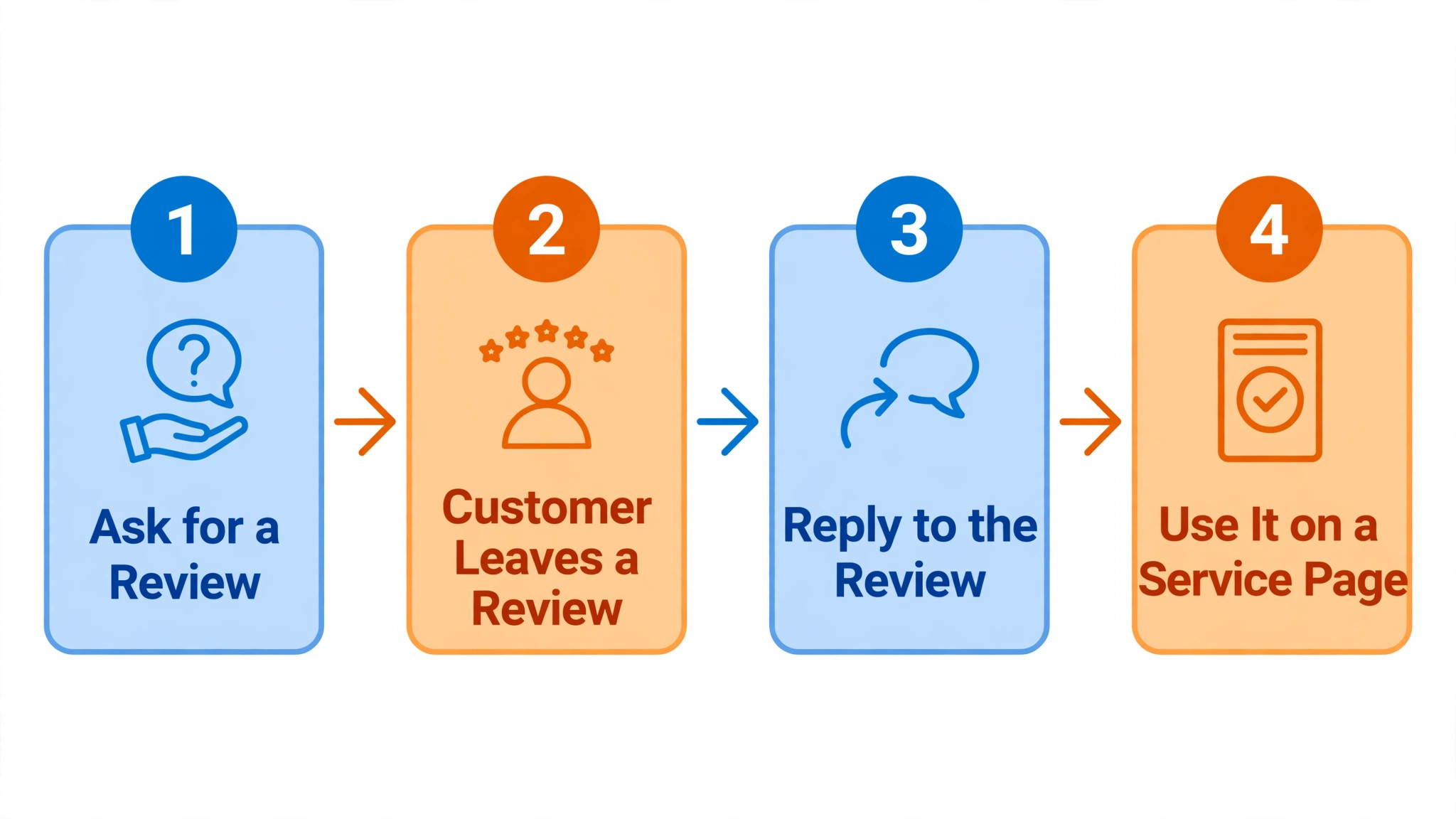
Reviews influence both where a business shows up and whether a searcher chooses it, because Google states that review count and score can contribute to prominence, and because customers read reviews as social proof before calling. A review engine is simply a repeatable habit, and it is a core part of a local seo strategy small service business owners can maintain weekly of asking, making it easy, and replying, and it beats occasional bursts of review requests every time. Bursts look suspicious, are hard to sustain, and often produce reviews that mention the wrong service or the wrong detail. A steady habit produces reviews that reflect real work, over time.
Ask every satisfied customer, not just the happiest few, and ask at the moment when satisfaction is highest, which is usually just after a job is completed well, a problem is solved, or a client thanks you. Use the short review link Google provides for the profile, and put it where the customer already is, such as a thank you message, a completion email, or a small card at the point of service.
Keep the request simple and the same for every customer. For wording that works in practice, see How to Ask Customers for Google Reviews as a Small Business. Do not offer discounts, gifts, or other incentives in exchange for reviews, and do not buy reviews, write your own, or ask staff to write them, because those practices breach Google policy and can lead to removal or restriction of the profile.
Reply to every review, positive and negative, briefly and professionally. For a positive review, thank the customer by name where appropriate and mention the specific service if it fits naturally. For a negative review, acknowledge the issue, apologise where appropriate, and move the detailed conversation offline, without arguing in public. Other potential customers read negative replies more closely than positive ones, because they are judging how the business handles problems, not just how it handles praise. A calm, specific reply to a difficult review can win more trust than several positive reviews alone.
Use reviews on the website carefully. Selected verified reviews can support a service page, provided the rating and count information shown is accurate and current, and provided the profile remains the source customers can verify. Do not display a rating that no longer matches the profile, and do not edit review wording to make it sound stronger. Accuracy here is not just good practice. It is the trust that local SEO runs on, and a single misleading claim can undo the credibility built by many genuine reviews.
Local Pages That Match Real Searches
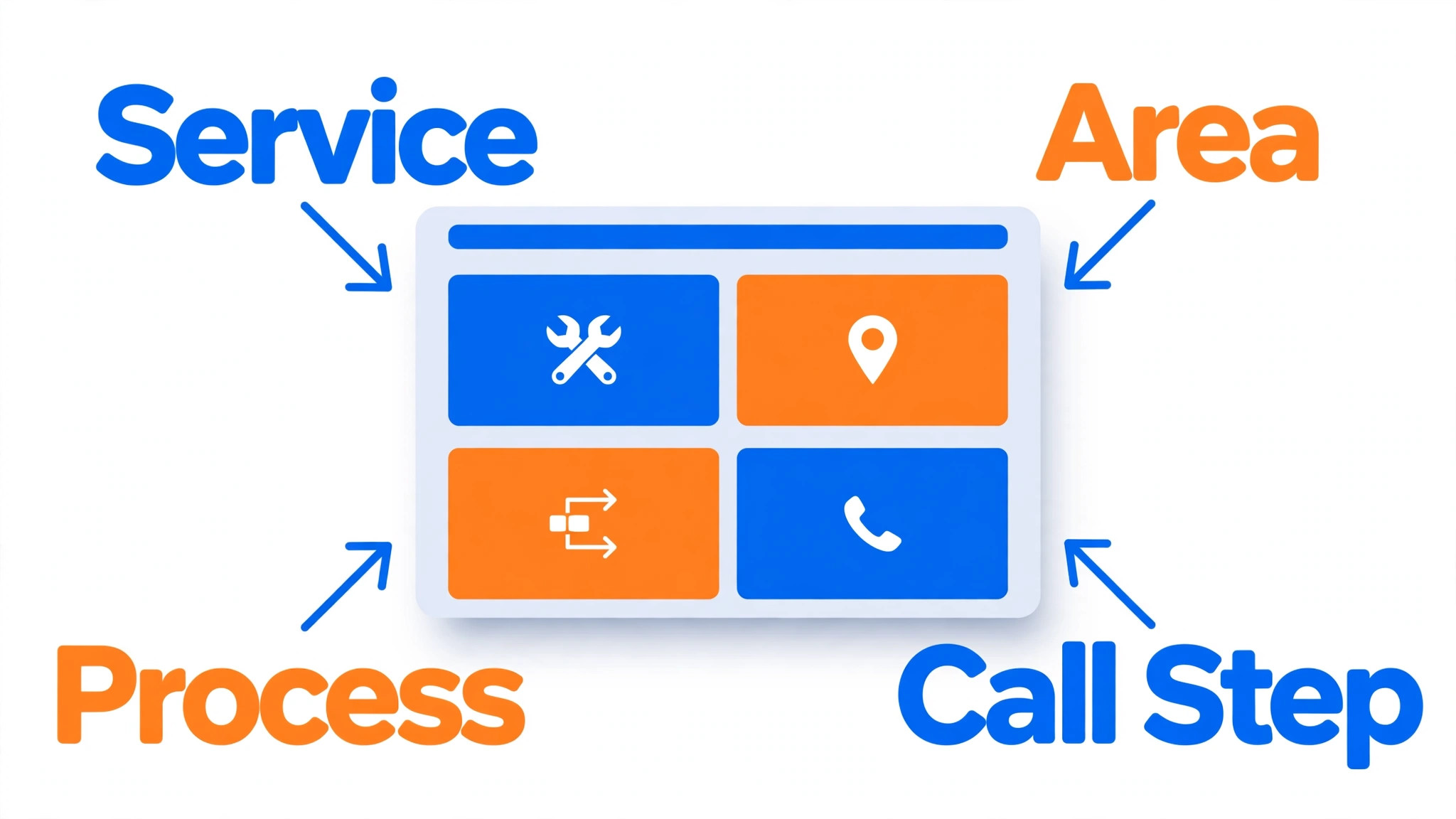
Your website should make it obvious what you do, and that clarity is central to a local seo strategy small service business owners build page by page and where you do it, in pages that match the searches customers actually make. Start with one strong page per core service, naming the service, the area served, the problem it solves, the process, the price approach where appropriate, and the next step for booking or enquiry.
A page that tries to cover every service at once will rank poorly for each one, because it matches no single search well. A page focused on one service, with real photos, real examples, and a clear call to action, matches the search and the buyer far better.
Add area pages only where you have real local proof, such as jobs completed, photos, or reviews from that area. A page for every town in a region, with identical text and only the town name changed, is thin content that helps no one and can harm trust. A smaller number of area pages, each with genuine local detail, will serve the business better. For each page, include the business name, address, and phone number in a consistent form, use a tap to call link on mobile, and make the booking or enquiry step obvious without scrolling through unrelated content.
Use structured data where it fits, such as LocalBusiness markup with address, hours, and contact details that match the profile and the visible page. Structured data does not push a page up the rankings by itself, but it removes guesswork for search systems, and it can be checked with Google’s Rich Results Test for errors. Keep the markup honest and consistent with what customers see, because markup that contradicts the visible page is worse than no markup at all. Check the pages on a phone, because most local searches happen on mobile, and a page that is hard to use on a phone will lose the call even if it ranks well.
Citations, Consistency, and the Details That Build Trust
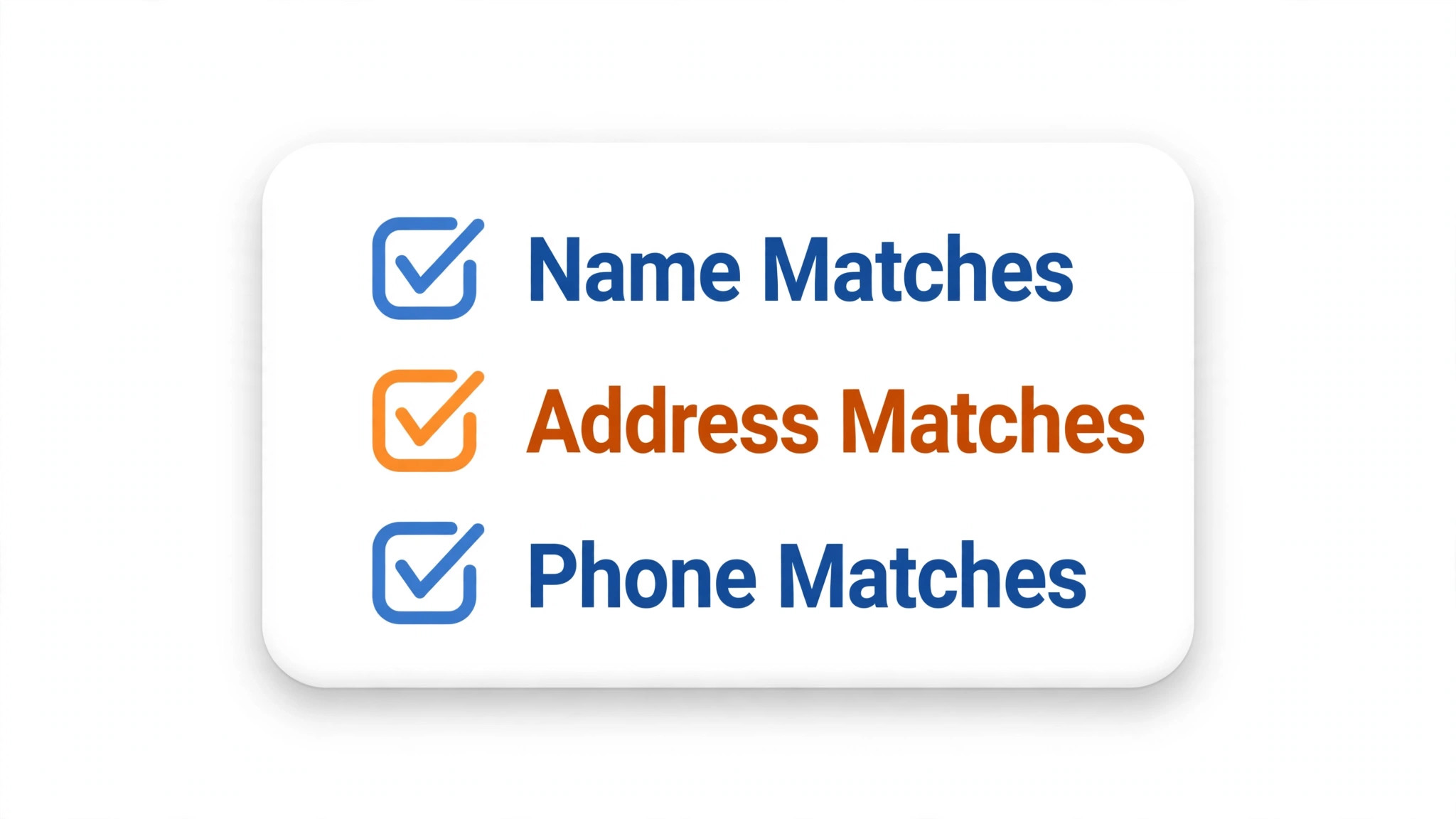
A citation is any online mention of a business name, address, and phone number, and consistency across citations helps search systems trust the details. The rule is simple to state and harder to maintain. The name, address, and phone number must be identical everywhere, not merely similar. A suite number written one way on the profile and another way on a directory, a phone number with a different format, or a business name with an extra word can all create doubt, and doubt is costly in local search, even when each listing looks correct on its own.
Start with the listings that matter most for your industry and area, rather than trying to appear on hundreds of directories at once. That usually includes the major map and search listings, key industry directories, local chamber or trade listings where relevant, and social profiles the business actually uses. Check each one against the profile, fix mismatches, and record the login details in a place the business controls, so future changes can be made without starting again. A simple spreadsheet with listing name, link, login owner, and last checked date will prevent most citation drift, and it takes less time to maintain than a large audit does to fix.
Watch for duplicate listings, old listings from a previous address or phone number, and listings created by data aggregators without your input. Duplicates can split reviews and confuse customers, while old listings can send customers to the wrong place. Claim or correct duplicates where the platform allows it, and report closed or moved listings where appropriate. Do this check quarterly, not just once, because listings change when platforms update data, when staff leave, or when a business moves, even by a small distance.
Links also contribute to prominence, but they should be earned locally and naturally, such as through a local supplier, a trade association, a community event, a local news mention, or a partner business that genuinely works with you. Avoid buying links, joining link schemes, or creating fake local pages to attract links, because those tactics risk penalties and they rarely produce the kind of trust that local customers recognise. A small number of real local links, from organisations customers already trust, will do more for prominence than a large number of low quality links that no customer ever sees.
Measure What Matters, in the Right Order
Local SEO measurement should start with business outcomes, because a local seo strategy small service business owners judge by jobs, not just by rankings, needs outcome data, not with rankings alone. Rankings move by search, by location, and by device, so a single rank check can mislead. Calls, direction requests, website visits from the profile, and enquiries from local pages are closer to what the business actually needs, and they can be tracked from profile insights, call tracking where used, and website analytics. Record a baseline before major changes, including profile views, calls, direction requests, review count and rating, and enquiries by service, so later changes can be judged against a real starting point.
Judge the plan at month three, not week two. Profile changes can register within days, and calls or direction requests often move within the first month, but rank changes across an area usually take several weeks per fix, and the full picture takes about three monthly checks. That timeline is not an excuse for inaction. It is a reason to keep the weekly habits going, reviews, one profile post, one website improvement, while the earlier fixes accumulate. A plan abandoned after two weeks because rankings did not move will never show what it could have done, and that abandonment is the most common reason local SEO appears not to work.
Review monthly, with a short checklist that covers profile accuracy, new reviews and replies, website page performance, citation mismatches, and enquiry quality. Enquiry quality matters as much as enquiry count, because a local SEO plan that brings many enquiries from outside the service area, or for services the business does not offer, needs a message or category fix, not more traffic. Use that monthly review to make one planned change, such as a new service page, a category correction, or a review request improvement, rather than many changes at once that cannot be evaluated.

A Local SEO Strategy Small Service Business Owners Can Follow
The workflow below puts the earlier sections into a practical order, with a time estimate for a single location business with a website it can edit. Times are estimates, not promises, because a messy listing history or a website that cannot be changed will take longer. Work through the steps in order, and do not skip ahead to citations or links before the profile and reviews are in place.
Step one is to record a baseline, including profile views, calls, direction requests, review count and rating, and enquiries by service. Step two is to claim, verify, and complete the profile, filling every field accurately and adding real photos. Step three is to fix the key website pages, with one strong page per core service naming the area served. Step four is to match name, address, and phone number on the listings that matter, and to fix duplicates and old listings.
Step five is to set up the review request, so it can be sent in under a minute after a successful job. Step six is to start the weekly rhythm, which is reviews, one profile post, and one website improvement, and to hold a monthly review of outcomes and enquiry quality.
| Week | Focus | Done when |
|---|---|---|
| Week one | Baseline and profile | Profile verified, every field filled, real photos added |
| Week two | Website pages | One strong page per core service, area named, call step clear |
| Week three | Citations and duplicates | Key listings match, duplicates claimed or reported |
| Week four | Review engine live | Request link ready, reply habit started, first replies sent |
| Ongoing weekly | Reviews, post, one fix | Rhythm on the calendar and actually completed |
| Monthly | Review and one change | Outcomes checked, enquiry quality noted, next change chosen |
A single location business can often complete the setup in about one working day of focused effort, spread across a week, followed by roughly two hours a week for the ongoing rhythm. That rhythm is the part most businesses skip, and it is the part that separates a profile that was once fixed from a profile that keeps earning calls. Local SEO is not a project that ends. It is a habit that compounds, and the habit is easier to keep when it is scheduled, simple, and tied to real customer moments.

Mistakes That Quietly Cost Local Calls
The first mistake is an incomplete or inaccurate profile, and it is the easiest mistake to fix in a local seo strategy small service business owners audit first, especially a wrong primary category, wrong hours, or a phone number that goes to voicemail during business hours. Customers who cannot reach a business will call the next listing, and they will rarely return to tell you why.
The second mistake is buying reviews, offering incentives for reviews, or using review stations at the premises, all of which breach Google policy and can lead to removal or restriction. The third mistake is building many thin area pages with identical text, which helps no customer and weakens the pages that do have real local proof.
The fourth mistake is inconsistent business details across listings, which creates doubt for search systems and confusion for customers. The fifth mistake is judging local SEO only by rankings, and abandoning the plan before reviews, pages, and citations have had time to accumulate. The sixth mistake is ignoring questions and messages on the profile, which are often the first contact a customer makes, and which signal responsiveness to both the customer and to Google. Check those messages as often as you check email, and reply promptly, even when the answer is a short direction to the right contact method.
Service Areas, Multiple Locations, and Seasonal Shifts
A local seo strategy small service business owners run must handle the edges honestly, starting with service area. Claim only the area you can serve promptly, with staff, stock, or travel time to match. A wide service area that produces slow responses and missed appointments will hurt reviews and repeat business far more than a narrower area that produces reliable service. If demand grows in a neighbouring area, expand the service area after delivery capacity grows, not before, and add local proof for that area before building a page for it.
For businesses with more than one location, treat each location as its own local asset. Each location needs its own verified profile, its own accurate hours and phone number where applicable, its own photos, and its own reviews. Do not copy the same description and photos across locations, because customers can tell when a listing is generic, and search systems value location specific information. Keep a simple record for each location, with its profile link, its review count, and its last check date, so no location drifts while attention focuses on the busiest one.
Seasonal shifts need planning too. A business with a busy season should update hours, posts, and service pages before the season starts, not during it, when staff are already stretched. A business with a quiet season can use that time for profile cleanup, citation checks, new photos, and page improvements, so the next busy season starts from a stronger position. A local seo strategy small service business owners can sustain treats the quiet season as preparation time, not as a pause, because local search rewards the businesses that stay accurate and active when others go quiet.
Finally, handle changes promptly. A move, a new phone number, a change in hours, or a new service should be updated on the profile first, then on the website, then on key citations, in that order. That order prevents the most common inconsistency, which is a customer finding new details in one place and old details in another. Assign one person to own those updates, even in a small team, so changes do not depend on whoever happens to remember. Consistency is a habit, and habits need an owner.
Turning Local Searchers Into Booked Jobs
Visibility without conversion wastes the work that earned the ranking, so check the journey from search to booking as carefully as the ranking itself. A searcher who finds the profile should see a clear phone number, accurate hours, recent photos, and recent reviews, and should be able to call or visit the website without confusion. A searcher who reaches the website should find the service, the area, the next step, and a simple contact method within seconds, on a phone, without hunting through menus or unrelated pages.
Test that journey yourself, on a phone, in the role of a new customer. Search for the service and area, open the profile, try to call, open the website, and try to enquire.
Note every friction point, such as a phone number that is hard to tap, a form that asks for too much information, or a page that does not state the area clearly. Fix the largest friction first, because a single friction point can lose more jobs than a small ranking gain can win. A local seo strategy small service business owners measure by booked jobs, not just by views, will naturally focus on those fixes, because views that do not become jobs are not yet a business result.
Follow up enquiries promptly, and record where they came from, so the monthly review can separate profile enquiries from website enquiries and from referrals. That record helps the business decide where to invest the next two hours a week, whether in reviews, in a new service page, or in citation cleanup. It also prevents a common trap, which is investing more in the channel that looks busiest while ignoring the channel that actually books jobs. Local SEO should end in a booked job, a completed job, and a review, and that loop is what makes the strategy compound over time.
Frequently Asked Questions
How long does local SEO take to work for a small service business?
Profile changes can register within days, and calls or direction requests often move within the first month, but rank changes across an area usually take two to six weeks per fix, and the full picture takes about three monthly checks. Judge the plan at month three, not week two.
Do I need a website to rank on Google Maps?
Map results come mainly from the Google Business Profile, so a profile alone can appear in map results, but a website that matches the profile, with strong service pages and a clear call step, supports relevance and converts searchers far better than a profile alone.
How many reviews do I need to compete locally?
There is no fixed number that guarantees a ranking, because review count is only one prominence signal among several. A steady flow of genuine, recent reviews, with replies, will usually outperform a large number of old reviews, and it will convert searchers better regardless of rank.
Should I pay for local SEO listings or guaranteed map rankings?
No. Google states there is no way to request or pay for a better local ranking, so a guaranteed map ranking is a warning sign. Spend effort on profile accuracy, genuine reviews, strong service pages, and consistent citations, which are the inputs Google says it uses.
What is the most important Google Business Profile field?
The primary category is one of the strongest relevance signals, according to local search practitioner surveys, followed closely by accurate name, address or service area, hours, phone, and services. Fill every field, but choose the primary category with particular care.
Can I hide my home address as a service area business?
Yes. Service area businesses can set a service area and hide their address on the profile, while still providing a genuine address for verification. Set the service area honestly to the area you actually serve, and do not claim areas you cannot reach promptly.
How do I handle a fake or unfair negative review?
Reply briefly and professionally, acknowledge the issue, and move detailed discussion offline, without arguing in public. Use the platform’s reporting process for reviews that breach policy, such as fake reviews or reviews from non customers, and keep evidence of the job record where relevant.
Do citations still matter for local SEO?
Yes, but consistency matters more than quantity. A smaller set of accurate, consistent listings on relevant directories, checked quarterly, will support trust better than hundreds of listings with mismatches, duplicates, or old details that confuse customers and search systems.
More Reading on Stratilyze
– How to Ask Customers for Google Reviews as a Small Business – Fix Google Business Profile Reviews Not Showing for a Small Business – Best Website Builder for Tradespeople – Cost of Semrush for Small Business Monthly