

Two service firms can offer similar skills, similar turnaround, and similar reviews, yet one charges twice as much as the other and still wins the clients both want. The difference is rarely talent alone. It is positioning, proof, and packaging, and the higher priced firm has usually done the unglamorous work of making its value easy to see before the price is ever discussed. That gap is the whole opportunity in a premium pricing strategy small service business owners can build on proof and packaging, not on hope. Buyers do not pay more because a price is high. They pay more because the risk feels lower, the outcome feels clearer, and the experience feels designed rather than improvised.
Premium pricing is not a decision to add a percentage to your current rates and hope no one notices. It is a strategy that changes who you serve, what you promise, how you prove results, and how you deliver. Done well, it means fewer clients, better margins, and work you can staff properly. Done badly, it means the same broad offer at a higher price, which buyers rightly reject. This guide works through the decision in order, starting with positioning, then the price ladder, then the proof and delivery changes that make a higher price credible.
Premium does not mean expensive for its own sake, and it does not mean luxury styling pasted over an ordinary service. In a small service business, premium means a narrower promise, delivered with more care, to a buyer who values the outcome enough to pay for certainty. The buyer is not buying hours. The buyer is buying a result, a shorter path to that result, and a lower chance of rework or delay. If your offer cannot name that result in the buyer’s language, a higher price will feel like a markup rather than a choice.
It also does not mean serving everyone at a higher price. A premium position requires saying no to work that does not fit, because broad work dilutes the expertise that justifies the price. A firm that serves every industry, every budget, and every deadline cannot credibly claim deep expertise in one of them. Narrowing the audience is uncomfortable at first, because it feels like turning revenue away. In practice, it concentrates referrals, shortens sales conversations, and makes case examples far more persuasive, because every example speaks directly to the next buyer.
Premium also requires a different standard of delivery. Response times need to be faster, communication clearer, and the first deliverable stronger than the buyer expected. Buyers who pay a premium forgive small mistakes far less readily than buyers who chose on price, and that is fair. They paid for certainty, so the business must be organised to provide it. If delivery is chaotic, premium pricing becomes a short term gain followed by a reputation problem, because disappointed premium buyers talk, and they talk in detail.
Before you change a single rate, test whether premium positioning fits your market, your costs, and your capacity. The test below is deliberately practical. Answer each question with evidence from your last twenty engagements, not with optimism about the next twenty. If the evidence is thin, the work before a price rise is to gather proof, not to announce a new rate card.
First, look at who already pays without haggling. Those buyers usually share a trait, such as a deadline that matters, a past failure with a cheaper provider, or a result tied directly to revenue. That trait is the start of your premium audience. Second, look at where your work creates measurable value. If you can point to bookings recovered, hours saved, errors avoided, or revenue protected, you have the raw material for value based pricing. If the value is vague, such as general support or general advice, premium pricing will be harder until you package the work around a specific outcome.
Third, check your costs honestly. Premium delivery often costs more, because it includes senior time, faster turnaround, better tools, and more careful review. Price the delivery you intend to provide, not the delivery you provided when you were cheaper. Many owners raise the price but keep the old delivery model, which creates a gap the buyer notices within weeks. Fourth, check capacity. A premium model with fewer, larger engagements only works if you can fill those slots. A pipeline of two ideal clients a month may be enough for a solo practice, but not for a team of five. Run the numbers for your own size before you commit.
| Question to test | Evidence that supports premium | Evidence that warns against it |
|---|---|---|
| Who pays without haggling | A clear buyer type repeats across recent wins | Every win required a discount to close |
| Where value is measurable | Hours, bookings, or revenue tied to the work | Value described only in general terms |
| What delivery really costs | Senior time and review are costed in | Price assumes junior time and no rework |
| Whether capacity fits | Fewer, larger slots match your pipeline | Large gaps between ideal clients |
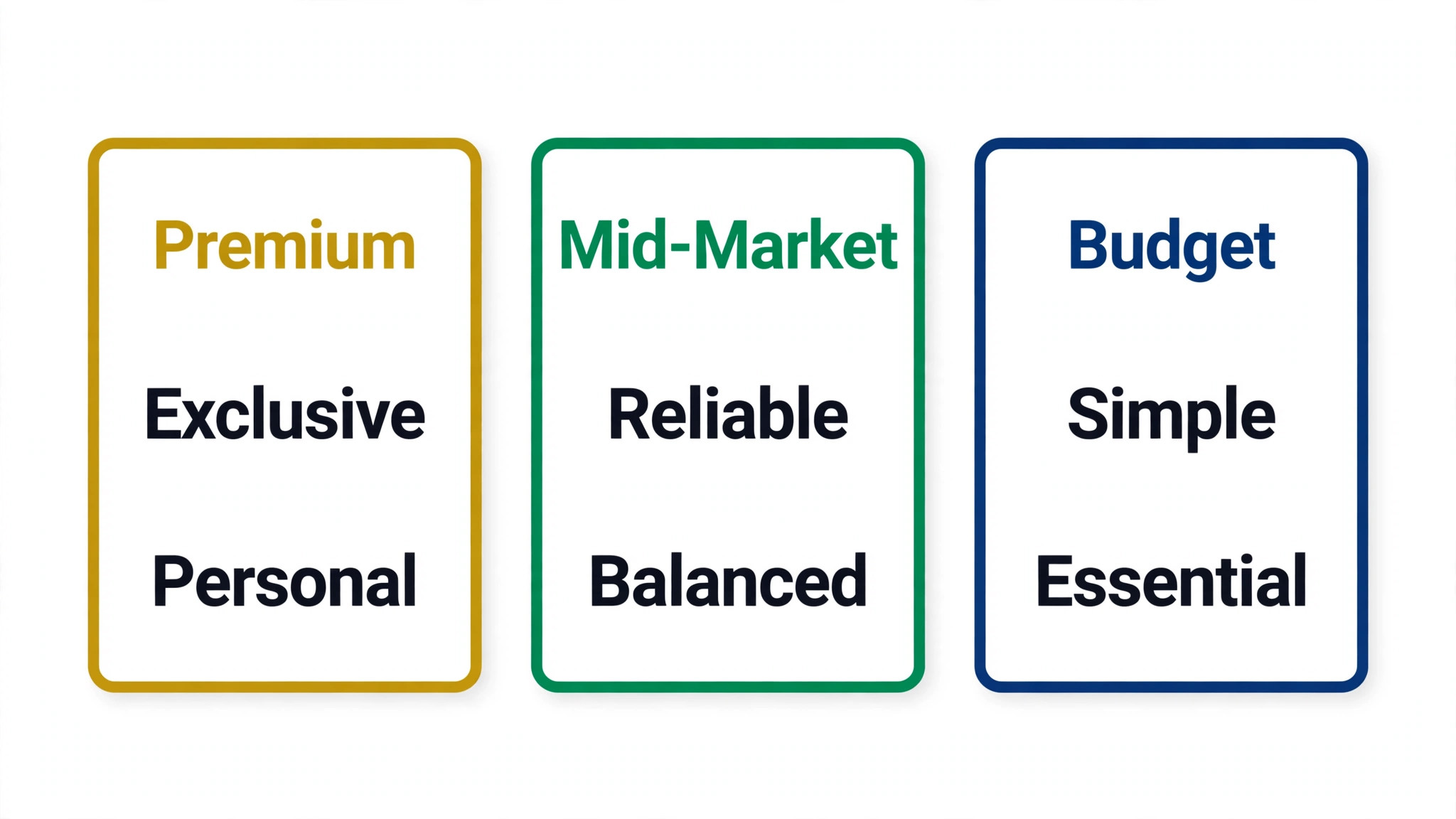
Choosing a position is easier when the trade offs are laid out side by side. The table below compares the three common positions on the factors buyers actually feel, which are audience, promise, proof, delivery, and risk. Use it as a decision tool, not as a ranking. Each position can be profitable. The costly mistake is drifting between positions, offering premium prices with budget delivery, or budget prices with premium effort that no one pays for.
| Factor | Premium position | Mid-market position | Budget position |
|---|---|---|---|
| Buyer priority | Outcome and certainty | Balance of value and price | Lowest price that works |
| Audience | Narrow, well defined | Broader, still segmented | Wide, price sensitive |
| Promise | Specific result, faster path | Solid result, fair terms | Core task completed |
| Proof needed | Detailed cases, measurable results | Reviews, examples, clear scope | Basic reviews, low friction |
| Delivery standard | Senior led, fast, proactive | Reliable, well organised | Efficient, standardised |
| Main risk | High expectations, slow pipeline | Being squeezed from both sides | Thin margin, high volume |
| Best when | Expertise is deep and provable | Market is competitive but varied | Volume and systems are strong |
A premium pricing strategy small service business owners adopt often fails at the middle row, which is proof. Buyers at the premium end need to see that you have solved their exact problem before, with numbers they can check. That does not mean inventing numbers or overstating results. It means gathering the right evidence from work you have already done, with client permission, and presenting it in the buyer’s language.
A case example that says revenue rose after a project is weak. A case example that says bookings rose by a stated amount over a stated period, for a business of a stated size, is strong, provided every figure is real and checkable. Where a figure cannot be verified, leave it out or qualify it plainly, and check the vendor’s current pricing page or the client’s own records before repeating any third party claim.
Mid-market is not a failed premium strategy. It is a legitimate choice when the market will not support premium rates, or when the business prefers steadier volume. The danger is only in claiming premium while delivering mid-market, because buyers will compare you with true premium providers and find the gap. If you choose mid-market, own it, price it fairly, and deliver it excellently. A clear mid-market position beats a confused premium claim every time.
Build the Price Ladder Before You Raise Rates
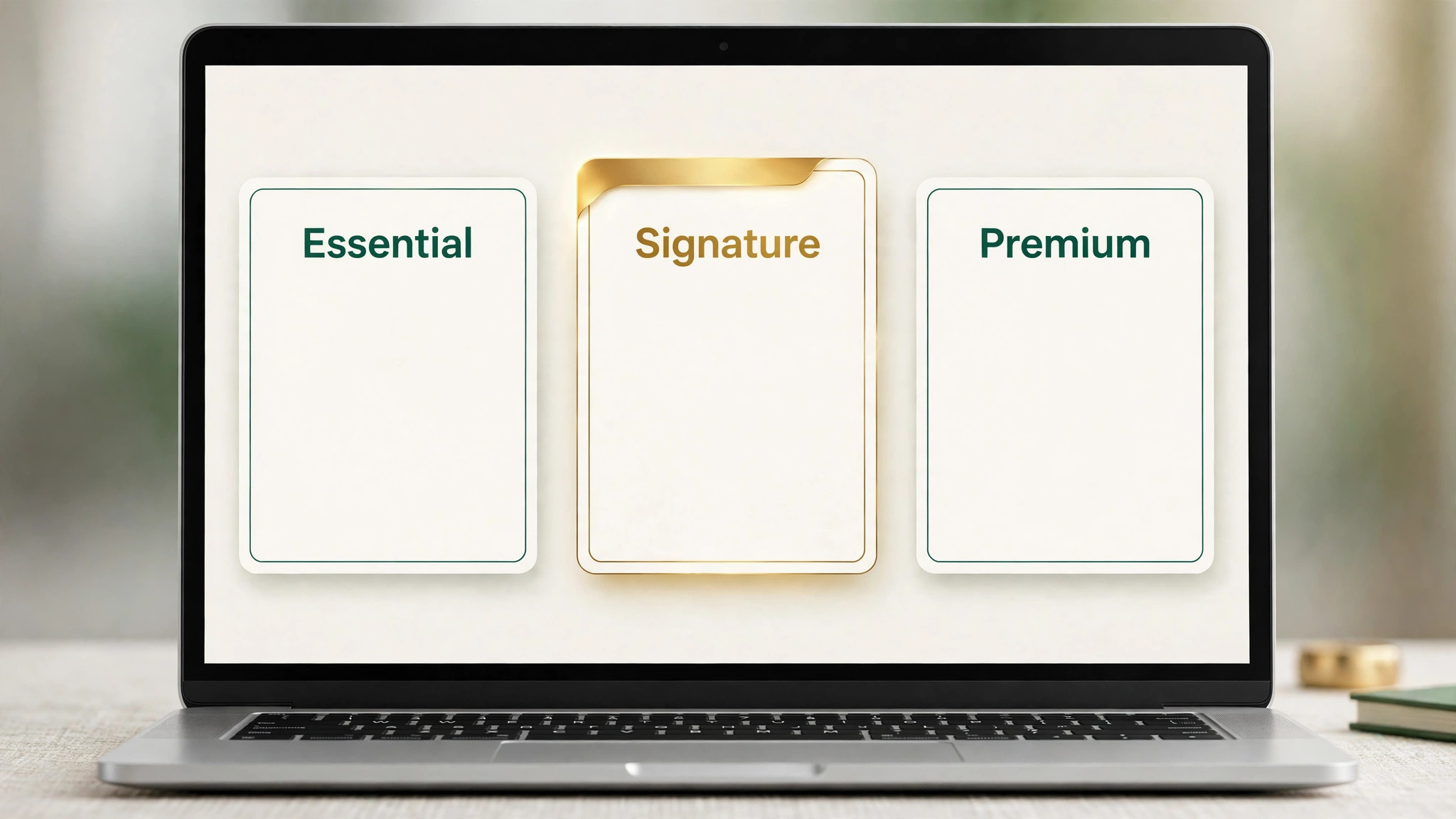
A price ladder is a set of tiers that lets buyers choose how much certainty, speed, and support they want, without forcing every buyer into a single high price. It also protects you from the most common premium pricing error, which is quoting one large number with no smaller or larger alternative. A ladder gives the buyer a way to say yes at a level that fits, and it gives you a way to show what the premium tier adds without discounting the core offer.
Start with three tiers, no more. More tiers confuse buyers and create comparison work that slows decisions. The entry tier should solve a real, narrow problem well, not serve as a deliberately weak decoy. Buyers can tell when an entry tier is designed to disappoint, and that tactic damages trust. The core tier should be the offer most buyers choose, with the scope, turnaround, and support that represent your normal excellent work. The premium tier should add outcomes that genuinely cost more to deliver, such as senior involvement, faster turnaround, priority access, a guarantee on scope, or a done for you component that saves the buyer significant time.
Price the tiers by value and cost together, not by cost alone and not by guesswork. Work out the direct cost of each tier, add a fair share of overhead, then check the result against the value the buyer receives and the prices of comparable providers. If the premium tier is only ten percent above core, buyers will wonder what is actually different. If it is three times core with no clear added outcome, buyers will assume it is padding. A gap that reflects real added work and real added certainty is the easiest gap to defend in a conversation.
| Tier | Who it fits | What it includes | What it deliberately excludes |
|---|---|---|---|
| Entry | Buyer testing fit, narrow need | One defined outcome, standard turnaround | Priority access, senior review, extras |
| Core | Most buyers, main use case | Full scope, normal turnaround, support | Fast track, done for you extras |
| Premium | Buyer who values speed and certainty | Senior led, fast track, priority support | Nothing promised that cannot be delivered |
Name the tiers by outcome, not by metal labels that tell the buyer nothing. A tier called Fast Track and Review tells a buyer more than a tier called Gold. Describe each tier in the buyer’s language, with the result first and the features second. Test the ladder on five real prospects before you publish it widely, and listen for the questions they ask. For the monthly side of this work, see How to Price Retainers for a Small Agency. If every prospect asks what the premium tier actually adds, the difference is not clear enough yet. Rewrite until the difference can be stated in one sentence.
Proof That Makes a Higher Price Believable
Proof is the bridge between a higher price and a buyer’s willingness to pay it. Without proof, premium pricing is an assertion. With proof, it is a conclusion the buyer can reach on their own, which is far more persuasive. Build proof systematically, starting with the work you have already completed, rather than waiting for a perfect case study that never arrives.
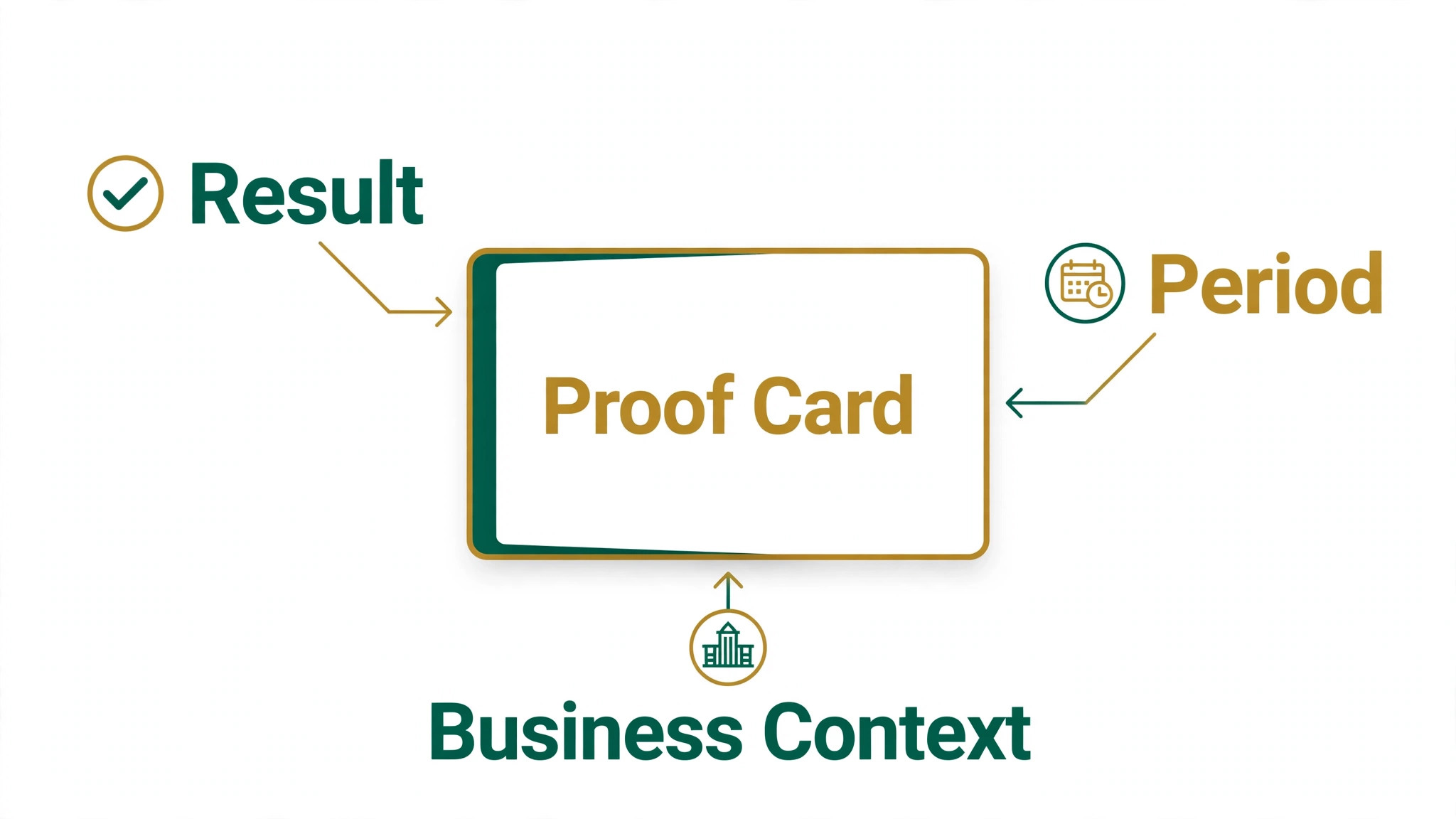
Gather three kinds of proof. The first is results proof, which shows a measurable change after your work, stated with the period and the business context that make it meaningful. The second is process proof, which shows how you work, including timelines, checklists, review steps, and communication rhythms. Process proof matters because buyers who cannot judge technical quality in advance judge the process instead. The third is social proof from the right buyers, which means testimonials and referrals from businesses similar to the buyer you want next, not generic praise from anyone who will give it.
Present proof where the buyer looks for it, which is usually before the price conversation, not after an objection. A proposal that leads with relevant results, a short process timeline, and a clear scope makes the price feel like the next logical step. A proposal that leads with price and adds proof only when challenged makes proof feel like a defence. The order matters, and it costs nothing to get it right.
Also, keep proof honest and current. Remove outdated examples, update figures when a client confirms a new result, and never present a result you cannot support if asked. A single overstated claim can undo years of careful positioning, because premium buyers are often well connected in a small market. Where a result depends on factors outside your control, say so. Buyers respect a provider who explains what they influenced and what they did not, far more than a provider who claims credit for everything.
Packaging, Naming, and the First Conversation
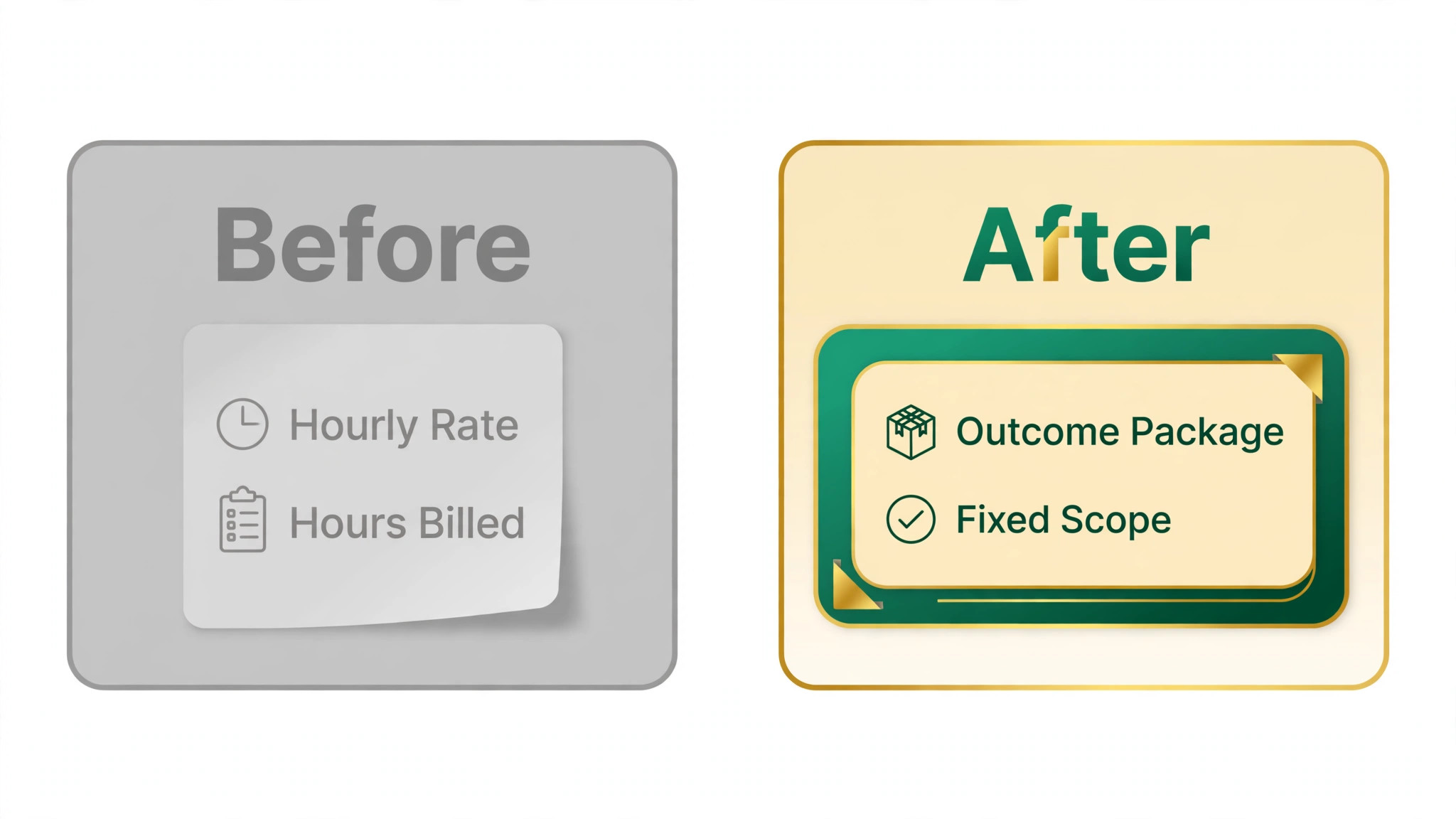
Packaging turns a service into an offer a buyer can compare, choose, and remember. Unpackaged services invite hourly comparisons, because the buyer has nothing else to judge. Packaged services invite outcome comparisons, because the buyer can see what each tier delivers and what it does not. That shift alone often supports a higher price, even before any rate change, because it moves the conversation from cost per hour to value per outcome.
Name each package by the problem it solves or the result it delivers. Avoid vague names that could apply to any firm in your field. A package called Monthly Bookkeeping Close is clearer than a package called Standard Plan, because the buyer knows exactly what will be done each month. Include the scope in plain language, the turnaround, the number of revisions or check ins, and the support channel. Ambiguity in a premium package is expensive, because it creates expectations you did not intend to set and disputes you did not intend to have.
In the first conversation, lead with diagnosis, not with price. Ask what outcome matters, what has already been tried, what it cost when it did not work, and what a good result would look like in numbers the buyer can state. Only then present the ladder, starting with the tier that fits the diagnosis, not with the cheapest tier. Starting with the cheapest tier anchors the conversation low and makes every higher tier feel like an upsell. Starting with the fitting tier anchors the conversation on fit, and the buyer can move down if needed without feeling sold to.
Handle the first premium quote with the same calm discipline as any price conversation. State the price once, clearly, then stop. Do not apologise for it, do not immediately offer a discount, and do not list features to justify it. If the buyer hesitates, return to the outcome and ask what part feels uncertain. Often the hesitation is about a specific deliverable, a timeline, or a risk you can address without touching the price. If the hesitation is genuinely about budget, offer a smaller tier or a phased start, and keep the premium tier intact for buyers who do value it.
Raising Prices With Existing Clients
Existing clients deserve a different conversation from new prospects, because they have already trusted you at a lower price. A sudden rise with no notice feels like a penalty for loyalty, even when the rise is fair. Plan the transition, give notice, and anchor the new price to value the client has already received, not to your costs alone. Clients understand costs, but they respond to results.
Give sixty to ninety days notice where contracts allow, and state the new price, the start date, and what stays the same or improves. If scope has grown over time without a price change, name that growth specifically, because many clients do not realise how much extra work they have been receiving. Offer a term option where it fits, such as a longer commitment at the current rate for a limited period, but do not make the term option feel like a threat. The goal is retention of the right clients, not retention at any price.
Expect some clients to leave, and plan for it. A price rise that loses no one was probably too small, while a price rise that loses your best clients was handled badly or priced beyond the value delivered. The clients who leave are often the ones who valued price over outcome, and their slots can be refilled with buyers who fit the premium position better. Track who leaves, why they leave, and what replaces them, so the transition can be judged on margin and fit, not just on headcount.
For clients who stay, deliver visibly better in the first month at the new price. A short progress note, a faster turnaround, or a clearer report all signal that the higher price bought something real. Clients who see no change after a rise will question it at renewal, and that questioning is fair. The first month is not the time to coast. It is the time to prove the new position.
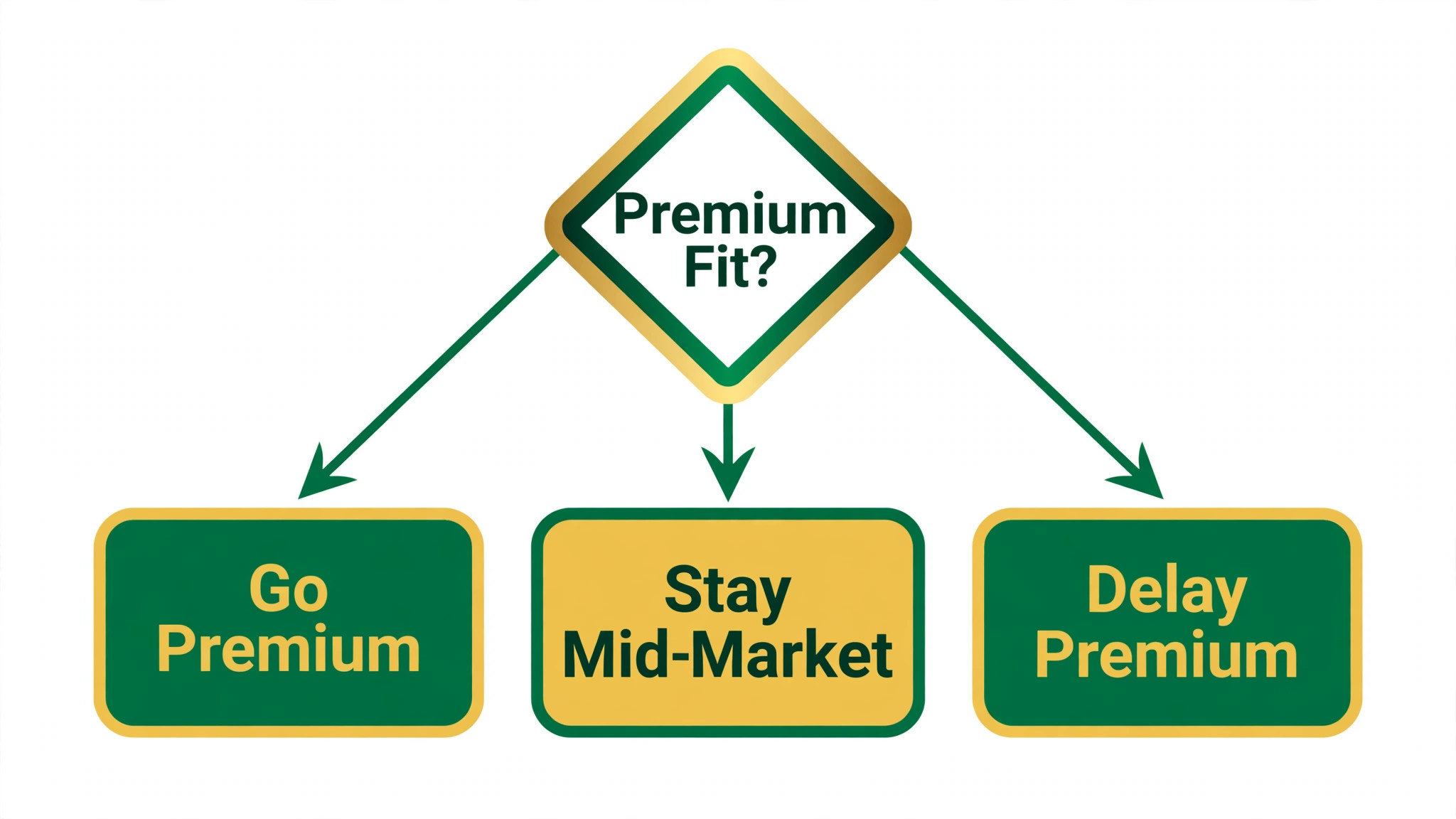
Premium pricing fails in predictable ways, and naming them in advance helps you avoid the most common ones. It fails when the market is genuinely price driven and buyers cannot tell providers apart, because no amount of positioning will persuade a buyer who only needs a basic task done cheaply. It fails when the business cannot deliver consistently at a premium standard, because a single chaotic engagement can cost more in reputation than several premium fees gain. It fails when the pipeline is too thin, because a premium model needs enough ideal buyers to fill fewer, larger slots without long gaps.
It also fails when the owner raises prices but keeps selling to the old audience with the old message. A new price with an old message reads as the same offer, only more expensive, and buyers respond accordingly. The message, the examples, the website, and the proposal all need to reflect the new position before the new price is quoted widely. That work takes time, and rushing it is the most common reason premium attempts stall.
If premium does not fit now, that is not a verdict on your business. It may mean the market needs a mid-market position, a narrower niche first, or a period of proof gathering before a rise. Use the test in this guide honestly, and revisit premium when the evidence changes. A delayed premium move that succeeds beats a rushed one that damages trust, because trust is the asset premium pricing runs on.
A Short Implementation Plan
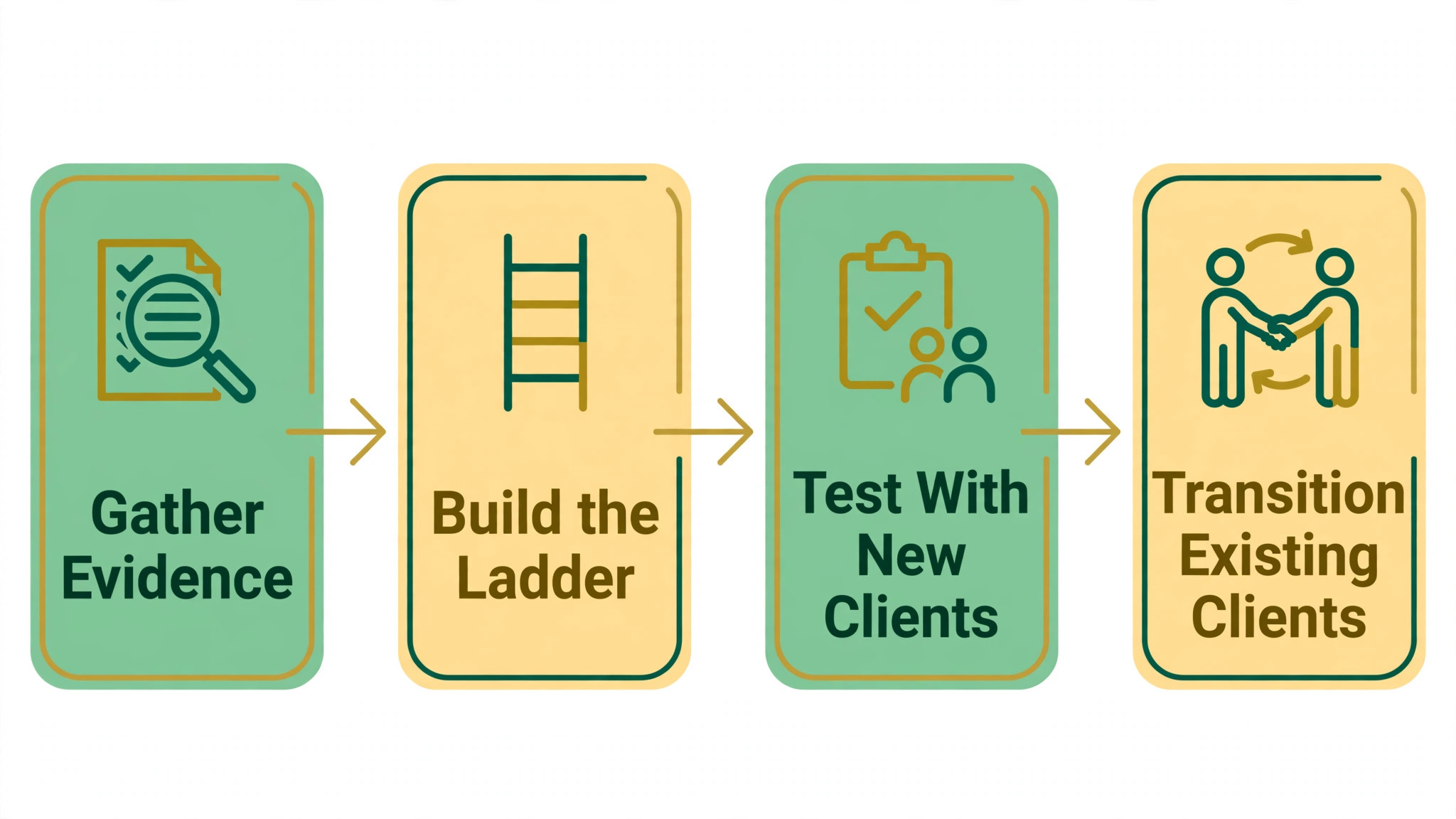
Start with one week of evidence gathering. Pull your last twenty engagements, note who paid without haggling, what measurable value each engagement created, and what delivery actually cost. That exercise alone will clarify whether premium is plausible and for whom. Next, draft the ladder and the proof set, and test them on five real conversations before publishing new rates. Listen for confusion, and rewrite until a prospect can repeat the difference between tiers in their own words.
Then, transition existing clients with notice and a clear start date, while quoting new prospects at the new ladder. Track close rate, average engagement value, margin per engagement, and client satisfaction for the first quarter. Judge the move on those four numbers together, not on any one of them alone. A higher close rate at a lower margin is not progress. A lower close rate at a much higher margin may be progress, provided the pipeline stays healthy and capacity is used well.
Review the ladder quarterly. Markets change, costs change, and proof improves. A ladder that never changes will slowly drift out of line with both. Small, planned adjustments, communicated clearly, are far easier for buyers to accept than large, sudden jumps made under pressure. That rhythm, evidence, ladder, proof, and review, is the practical core of a premium pricing strategy small service business owners can sustain over years, not just for one quarter.
The first mistake is raising the price before fixing the message. A website that still speaks to everyone, a proposal that still lists hours first, and a sales call that still opens with price will all undermine the new rate, no matter how well the ladder is designed. Buyers need to encounter a premium pricing strategy small service business buyers can recognise in every touchpoint before they hear the price, otherwise the price arrives as a surprise rather than a conclusion. Audit the website, the proposal template, and the first call script together, and rewrite them as one set, not as separate documents.
The second mistake is keeping the old delivery model. Premium buyers expect senior attention, clear communication, and a first deliverable that feels considered. If senior time is still reserved for firefighting, if replies still take days, or if the first deliverable still needs heavy correction, the buyer will feel the gap quickly. That gap is more damaging than a slow pipeline, because it turns a premium buyer into a vocal critic. Before quoting premium rates widely, test delivery on a small number of engagements at the new standard, and fix the bottlenecks those engagements reveal.
The third mistake is discounting the premium tier to win a hesitant buyer. A discount on the premium tier teaches that buyer, and anyone they talk to, that the tier was negotiable all along. If a buyer hesitates, offer the core tier or a phased start instead, and keep the premium tier intact. That discipline also protects future buyers, who will otherwise hear that the premium price was reduced on request and expect the same treatment. A premium pricing strategy small service business owners can defend depends on this consistency more than on any single sales technique.
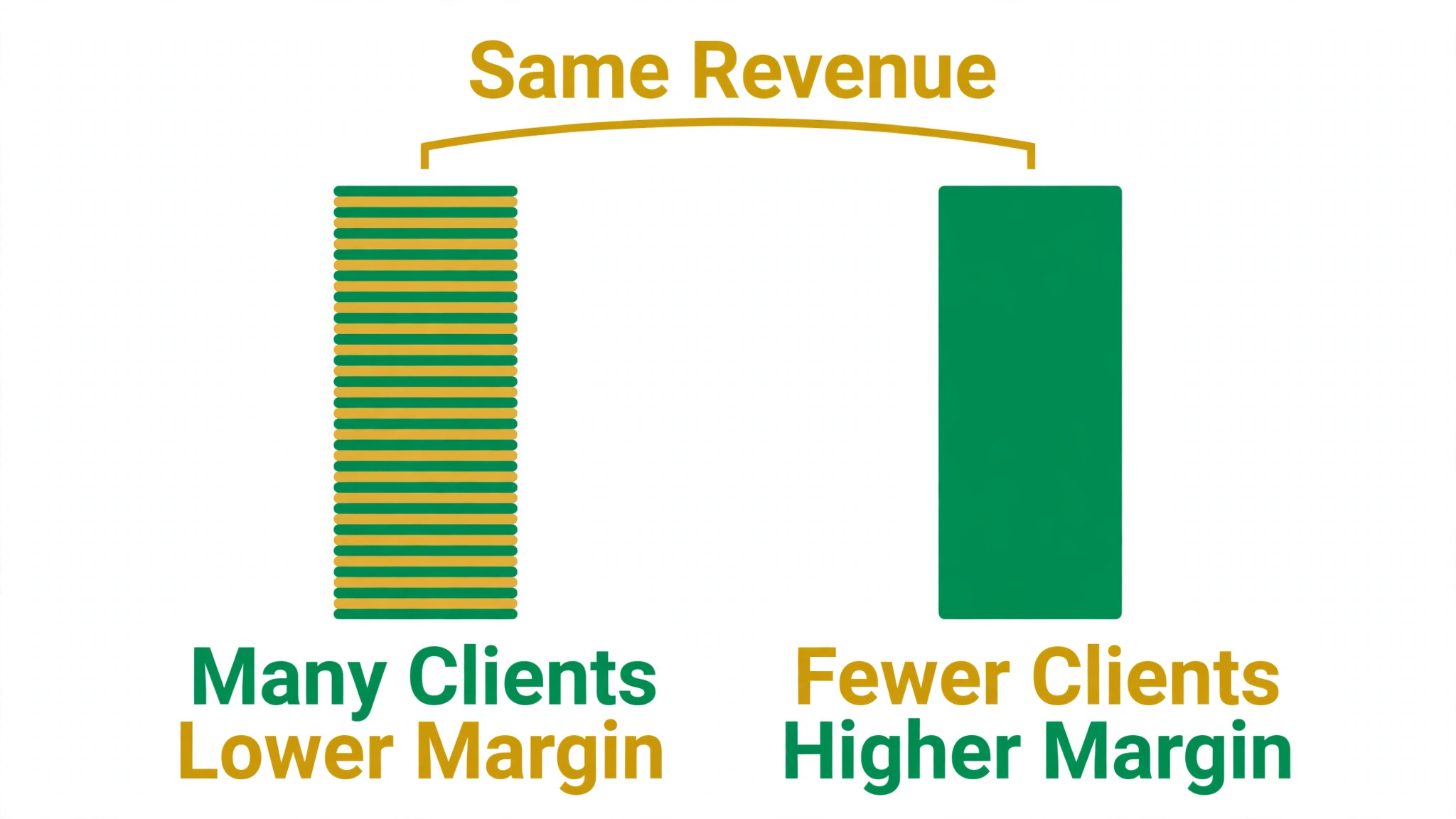
The fourth mistake is measuring success by headcount rather than by margin and fit. A premium move that loses three low margin clients and gains one excellent client can look like failure on a client count report and like progress on a profit report. Track margin per engagement, hours per engagement, referral rate, and satisfaction together, so a good transition is not mistaken for a bad one. Also track the pipeline separately from the client list, because a healthy pipeline is what makes a smaller client list sustainable.
The fifth mistake is forgetting that premium positioning needs maintenance. Markets shift, competitors copy good packaging, and proof ages. A case example from three years ago carries less weight than a recent one, even if the older result was larger. Refresh proof regularly, revisit the ladder when costs move, and ask premium clients directly what still feels premium about working with you and what no longer does. Those answers are the cheapest market research a small business will ever get, and they arrive from the buyers whose opinion matters most.
Avoiding these mistakes does not guarantee premium success, but it removes the most common reasons premium attempts fail. The pattern behind them is simple, and it explains why a premium pricing strategy small service business owners build slowly often outlasts a fast price rise. Premium pricing works when price, message, proof, and delivery all tell the same story, and it fails when any one of those elements tells a different story from the rest. Align them before you raise rates, and keep them aligned as the business grows.
Frequently Asked Questions
In a premium pricing strategy small service business buyers trust, premium pricing means charging above the market middle for a narrower, better evidenced offer, delivered with faster turnaround and senior involvement, to buyers who value outcome and certainty over the lowest price. It is a position, not just a higher number.
For a premium pricing strategy small service business owners test honestly, check whether a clear buyer type already pays without haggling, whether your work creates measurable value, whether premium delivery costs are covered, and whether your pipeline can fill fewer, larger slots. If those four tests pass with real evidence, premium is plausible.
Should I raise prices for all clients at once?
No. Quote new prospects at the new ladder first, and transition existing clients with notice, a clear start date, and an anchor to value already received. Expect some clients to leave, and judge the move on margin and fit, not headcount alone.
How many tiers should a price ladder have?
Three tiers work best for most small service businesses. An entry tier for a narrow need, a core tier most buyers choose, and a premium tier for speed and certainty. More tiers confuse buyers and slow decisions without adding real choice.
It should add outcomes that genuinely cost more to deliver, such as senior involvement, faster turnaround, priority support, a scope guarantee, or a done for you component. If the difference cannot be stated in one sentence, it is not clear enough yet.
How do I prove value without overstating results?
Use figures that are real, recent, and checkable, with the period and business context stated. Say what you influenced and what you did not. Where a figure cannot be verified, leave it out or qualify it plainly, and check the source before repeating any third party claim.
It may mean the market is price driven, the audience is too broad, or proof is still thin. A clear mid-market position, a narrower niche, or a period of proof gathering can be the right next step. Revisit premium when the evidence changes, rather than forcing a price the market will not support.
How often should I review my price ladder?
Review a premium pricing strategy small service business owners maintain quarterly against close rate, average engagement value, margin per engagement, and client satisfaction. Small planned adjustments, communicated clearly, are easier for buyers to accept than large sudden jumps made under pressure.
More Reading on Stratilyze
– How to Price Retainers for a Small Agency – Raise Your Prices Without Losing the Clients Who Matter – How to Value a Small Service Business in Real Numbers – Best Invoicing Software for Consultants